In the old days, villains had moustaches and kicked the dog. Audiences are smarter today. They want an ordinary human being with failings. — Alfred Hitchcock.
Well, this was fun. Nothing like a good bad guy to get things rolling. Here, for our consideration, is today’s First Page Critique, titled Goodbye Detective. After you read it, we’re going to dig down into the burnt-cinder souls of villains.
Goodbye Detective
As you are reading this, Detective, know that I did not mean to kill her at first. I do not seek absolution from you, or anyone – we have moved well beyond that by now – but I want you to understand how we arrived at the here and now.
This has not always been about you. I have done this before you came around, and I will continue long after they have called your End of Watch. You were nothing to me – a faceless badge – until you first stepped in front of those microphones. A rising star in the department, youthful and clean-shaven and with your freshly minted shield gleaming in the camera lights, you were quite the sight to behold. You seemed comfortable in the spotlight as you fielded questions and recounted the sparse evidence I allowed to be found. When you delivered your promise to bring me to justice, it was not the first time that I heard those words. But there was something about the way you said them and that fire of determination I recognized in your eyes that made me take notice. You were different than the ones before you, and this would require my full attention.
At first, I simply wanted to throw you off. Let you follow a trail that leads nowhere or deliver you an with an unwitting patsy you can build your case around. This has worked for me in the past, but you saw right through those attempts to lead you astray. You snooped and dug ever deeper, connecting bodies to me that I had all but forgotten and you became all-consumed by this case of yours. By me.
Each time you stepped in front of those cameras – a small update here, a major break in the case there – you looked worse for wear. Gone was the well-groomed youth, his place taken by an ever more disheveled figure, stubble-faced and unkempt. The dark furrows beneath your eyes grew deeper with every long hour you spent on the case. I came to understand that you would not be deterred, and I respected your tenacity. But it meant that for the first time I had to alter my approach. You had become my biggest fan and I had found a playmate
_________________________________
We’re back. This is certainly an interesting start. And I think it’s well-written, so I am not going to do my usual line edits. Got no nits to pick. What I like about this is that the voice is solid, and we get a hint of the villain’s personality. Notice that the word choices, the vocabulary and syntax imply a man of some education. He feels almost Hannibal Lector-ish. Good job with that.
We also get some early glimpses of the protagonist (the detective) through the villain’s sensibility. One of the most effective ways to show your protagonist’s character is to reveal it through the thoughts or others. We are told he was a fresh-faced rising star. But time, and this case, have worn him down. We are told he is tenacious. And he’s not the first man to work this case…there have been a lot of bodies. All of this is smoothly inserted back story. Good job, writer!
The only thing I don’t like — the title. It doesn’t do this justice. But it’s an okay working title and maybe the real title will reveal itself later. It often does. Shoot, I’d rather see this called End of Watch. Which would work on a couple levels — it’s the end of a policeman’s shift but might it also describe what the detective seeks — the end of the watching (stalking) done by the bad guy. A good title does two important things — captures the tone of the story and works on several levels of meaning.
I would read on. But I am not sure how much further, if you overstay in the villain’s head. The usual caveat here with our First Page Critiques: Because the submission has to be short, we don’t really know where this is going. But the opening pages do illuminate an important point — you have to seduce the reader (be it editor, agent, or reader) in the first page or so and make them want more. I think this writer succeeds, but I would caution that this opening be short and sweet and get us to the hero soon — or some kind of action because this opening is, essentially, character thinking and not doing.
In film, this kind of opening is called the Establishing Character Moment — a red flag to pay attention to a major character. You can’t wait too long to do this because it breeds impatience. And you can’t dwell on false protagonists or secondary characters too long or the reader will assume this is the hero, get attached, and then be disappointed. A couple months back, I read a manuscript for the Mystery Writers of America Critique Program and the submission had a fatal flaw — the writer introduced five characters in the first 30 pages, each with their own point of view. Because the book’s title has a subtitle (ie A Sylvia Drake Mystery…not the real name) we know Sylvia is the protag. But poor Sylvia is showing up way too late for her own party. Not good.
Back to the Establishing Character Moment. Novel writing is a series of choices the writer makes, and who comes on stage first is an important choice. I have no problem at all with the villain in the submission, instead of the hero, getting prime time. It’s a common trope in thriller books and movies.
The movie Dirty Harry begins with a rooftop close-up of a gun barrel, zooms down to a pretty girl taking a swim in a pool, then zooms back out until we see the sniper take his deadly shot.
Joyce Carol Oates (under her crime novel pen name Rosamond Smith) opens Snake Eyes with a tight-focus scene about her tattooed convict Lee Roy Sears before she pulls her camera back and switches to the suburban couple who fatally take him into their home.
One of my fave Hitchcock’s openings is from Rope with two murderers garroting a victim, stuffing him in a trunk, and sharing a drink — all before James Stewart sets foot on stage. Check it out:
So what do we make of the opening of our submission Goodbye Detective? As I said, I think it’s good. It’s not a normal third-person or omniscient narrative (“The man watched her from the rooftop, aiming his rifle carefully.”) It’s not even a normal first-person point of view (“I set the barrel of the rifle on the ledge and waited until the girl below drove in before I took aim.”) No, this is more stylized with the villain (in first person), “talking” to the detective, or perhaps actually writing to him. But in a way, he is also talking to us the readers, like an actor breaking the fourth wall with an audience. I think this is tough style to maintain over 200+ pages, but I will give the writer the benefit of the doubt and hope s/he moves toward a more active first-person voice for the villain.
I tried to think of an example from a published book that was similar to what the writer is attempting here but drew a blank. But I will offer up one terrific example of an opening featuring the villain. First we get one orgasmic graph describing the moon then comes this:
I had been waiting and watching the priest for five weeks now. The need had been prickling and teasing prodding at me to find one, the next one, find this priest. Three weeks I had known he was it, the next one, we belonged to the Dark Passenger, he and I together. And that three weeks I had been fighting the pressure, the growing Need rising in me like a great wave that roars up and over the beach and does not recede, only swells with every tick of the bright night’s clock.
That’s from Jeff Lindsay’s Darkly Dreaming Dexter. I know, I know…technically Dexter is both hero and villain. He’s a little like the main character in Jim Thompson’s classic The Killer Inside Me, about a small-town good ol’ boy sheriff who is actually a depraved psychopath. I’m bring them up only to make a point here:
If you open with the bad guy, it better be good. Make sure his voice is pitch-perfect, original, and that it’s your best possible writing.
Another example of a villain opening, from one of my fave college reads, John Fowles’ The Collector:
When she was home from her boarding-school I used to see her almost every day sometimes, because their house was right opposite the Town Hall Annex. She and her younger sister used to go in and out a lot, often with young men, which of course I didn’t like. When I had a free moment from the files and ledgers I stood by the window and used to look down over the road over the frosting and sometimes I’d see her. In the evening I marked it in my observations diary, at first with X, and then when I knew her name with M.I saw her several times outside too. I stood right behind her once in a queue at the public library down Crossfield Street. She didn’t look once at me, but I watched the back of her head and her hair in a long pigtail. It was very pale, silky, like Burnet cocoons. All in one pigtail coming down almost to her waist, sometimes in front, sometimes at the back. Sometimes she wore it up. Only once, before she came to be my guest here, did I have the privilege to see her with it loose, and it took my breath away it was so beautiful, like a mermaid.
Let’s talk now about structure. If you do open with a villain, you have to make choices about how you present him, what form it will take:
- What point of view — third or third?
- Prologue or chapter 1?
- A constant presence throughout the book or limited?
- Identify by name or leave him a ghostly figure?
Our submitting writer chose first person, and I assume it’s Chapter 1. We can’t tell if this POV will be constant throughout the book, but I will caution that if you do decide to give your villain screen time, you should make him a constant presence throughout your narrative. One opening scene isn’t enough; in my opinion, it feels tacked on, like a false attempt to inject tension in the opening.
If you’ll indulge me, I think a recounting here of my own experience with villain openings might help us understand this. I’ve used a villain POV many times but opened with it only twice. The first time was with our third book Paint It Black. Here it is:
The car was just sitting there, its hazard lights blinking like beacons in the darkness. In a flash of lightening, he could see someone walking around the car, in and out of the shadows.
Stop here? No, no, not right. Rain…too much rain. It wasn’t supposed to happen here. Stop! Stop!
He slowed the truck, pulling onto the shoulder behind the stalled car. A man came around the car and looked back at him, shielding his eyes in the glare of the headlights.
The wipers beat with the thick pounding in his head. He could see the man’s face. And his eyes, hopeful, as they squinted back to his rescuer.
Yes…oh, yes.
This was Chapter 1, not a prologue because it segued right into the following scene. The killer gets his own scenes in the book, at a ratio of about one-to-three vs the hero. I didn’t name him until Louis figured out who he was. Choices…
Now I’ll tell you about the villain opening I almost screwed up. But first, I have to talk about the book that inspired my choices — Michael Connelly’s The Poet. If you are considering giving your villain a starring role, you must read this book. Connelly toggles between his reporter hero Jack McEvoy (using first-person) and his villain William Gladden (third-person.) The first two chapters are from Jack’s POV, but then Connelly opens Chapter 3 with the slow-build tension of Gladden watching kids on the Santa Monica Pier merry-go-round.
When I was writing my first stand-alone thriller, I knew I wanted to toggle between hero and villain. Using Connelly’s template, I also mixed first and third POV. But because I had written a dozen books in third person — my comfort zone — I gave that to my hero, and gave the villain first person. Can you see the problem?
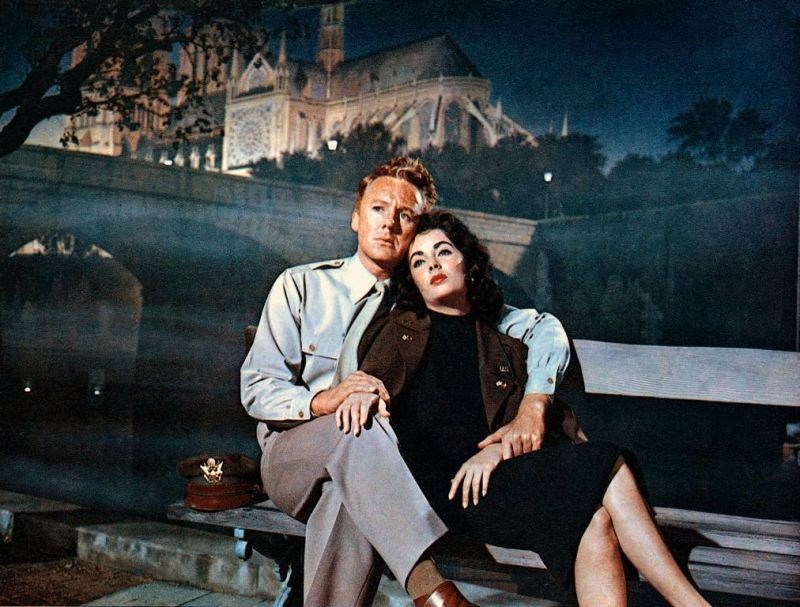
Well, the fifty pages in, book was a snoozer and I couldn’t figure out why. Luckily, I ran into Mike Connelly at a writers conference and asked his advice. “Give the more intimate first to your hero,” he said. Once I did that, the book wrote itself. I opened with the villain, watching his victim in Saint Chapelle in Paris:
He couldn’t take his eyes off her.
The last rays of the setting sun slanted through the stained glass window over her head, bathing her in a rainbow. He knew it was just a trick of light, that the ancient glassmakers added copper oxide to make the green, cobalt to make the blue, and real gold to make the red. He knew all of this.
But still, she was beautiful.
I loved writing from this villain’s point of view. Which is another caution flag I need to throw out here. Villains are very seductive. They are more fun to write than heroes. So be careful you don’t use up all your writer juice on them.
A couple more tips about villains:
Keep in mind that once you enter the villain’s mind, you risk sacrificing some of your story’s tension because the reader will know what’s going to happen. Find ways to keep them guessing, even when in the bad guy’s head.
Make your villain a worthy adversary. In real life, criminals are usually dumb as stumps. But in fiction, a complex villain gives your hero something to push back against. What’s the old quote? Even a villain is the hero of his own story. Develop your antagonist with as much care as your protagonist. Every character must want something. Especially your villain. Figure out what that is and drill deep.
Good job, writer. Thanks for submitting.