From My Bookshelf: Early Writing Lessons

by James Scott Bell
@jamesscottbell
Back when I decided I had to try to become a writer (even though I’d been told you can’t learn how to do it, that you’re either born a writer or not, and sorry, bud, if you’re not) I joined the Writer’s Digest Book Club. I had to see if I could learn, because the desire to write had come back into my life like a long, lost love.

Behind me in my office is a floor-to-ceiling bookshelf stuffed with my beloved writing books, a goodly portion of them purchased from WD. I thought it might be fun, from time to time, to look back at the early lessons I picked up during my unpublished days. I’ll look not only at the books, but also the several binders of Writer’s Digest magazines which I devoured each month. The underlines, highlights and sticky notes are like an archaeological dig into the formation of one writer’s mind.

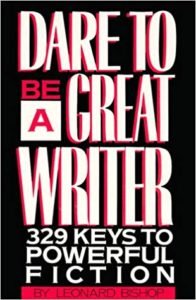
One of the first books I got from WD was Dare to Be a Great Writer: 329 Keys to Powerful Fiction by Leonard Bishop. Bishop was an old-school fiction writer in the naturalistic style of James T Farrell. He also did a lot of teaching and editing. I ordered the book because I thought, Wow, 329 keys! I better get cracking!

Something funny about the book—there is no order in the material. It’s a collection of short selections that hop around between plot and characters and scenes and openings and point-of-view and the publishing business and so on. There’s an index which categorizes the subjects for you, but I happily got out my highlighter and sticky notes and read the thing from cover to cover.

It’s so much fun to look back to see what stuck out to me. For instance, on page 39 I highlighted the section called Details of Setting, wherein Bishop writes, in part, “Details of setting should be incorporated into the activity of a character. When details are put down separately from the character, they either intrude, slow the pace, or take the focus away from the character.”

Bishop then, as he does throughout the book, gives examples of how to do it, and how not to do it. And boom! I had learned something about the craft of fiction that I could immediately put to work to make my stuff better. I learned it because someone taught it to me in a book.  

Take that, skeptics!

In the middle of Dare to Be a Great Writer I have a sticky note next to the heading Avoid Repetitious Settings. Bishop says, “When rewriting, be alert for a repetition of setting. This repetition quickly reveals that the writer has been lax in his use of invention or is uninformed about the time in which the characters are living. To avoid this, list the settings you have already used and determine how often you have used them.”

Apparently I got the message, because just the other day I was writing a scene in a restaurant. I moved the characters outside to a hot dog stand where there is more activity going on. And now I realize that move was probably put in my head thirty years ago by Leonard Bishop.

But even more interesting, to me at least, are my own notes scribbled on the blank flyleaves of Bishop’s book. I added 14 more “keys.” These were things that occurred to me as I wrote my own pages or when I noticed what another author did in a novel.

I even numbered them according to Bishop’s scheme. For instance, #330, my first note, says Turn the Cliché 180°. I jotted an example of a man and woman going fishing, with the man being skilled and the woman being clumsy. Switch the roles, I wrote.

#332 is Close Your Eyes When Typing. Especially good for description. Capture the scene.

My last note , #343, says: In first rewrite, take out as much info in opening chapters as you can, in order to make it move and be more mysterious. Fill in the info later. TKZ regulars will recognize this as my later formulation, Act first, explain later. It first occurred to me back around 1990!

What I remember most about Dare To Be A Great Writer is the excitement I felt every time I opened it up. I wanted to be a great writer. Here was a book that was filled with the how. I’d wasted ten years believing the Big Lie that you can’t learn to write fiction. This book dared to tell me I could.

So I did.

What is one of the earliest writing lessons you picked up? Where’d it come from?

Mail in Your Future

Photo courtesy Nate Bell on unsplash.com

I occasionally like to use this space to inform the wonderful folks who visit here on a frequent or occasional basis about new tools, grand and small, that come to my attention, whether they are writing aids or life hacks or whatever. What I have for you today is something brought to us by the United States Postal Service (USPS) called “informed delivery.”

There are times that ebooks don’t satisfy the craving for a weighty, paperbound novel that you can throw at a spider without risking seventy dollars worth of plastic and electronics. The same is true of email. While email (and texting, its illiterate cousin) is quick and convenient, there is something about receiving physical mail that remains appealing, if you are throwing ninety percent of it into the paper recycle bin. The feature which I recently discovered allows you a daily, somewhat imperfect peek into the future of what you will be getting.

I am referring to “informed delivery.” It is free (ah! Now I have your attention!). It is also easy to sign up for it. Go here, see if your zip code and address are with the program (more are added on a daily basis), and set up an account. Within a day or two, you will start receiving a daily email from the USPS which will include embedded images of the envelopes which you will (well, which you should) receive in the mail that day as well as notification of any packages which will be (um, are supposed to be) delivered. It isn’t perfect. You will only see letter-sized envelopes that are processed through automated equipment. Sometimes something slips through that isn’t pictured and other times something that is pictured doesn’t show up for a day or two. For the most part, however, it works as advertised. It is particularly convenient for those of us whose mail delivery occurs so late that we need a flashlight to navigate our way to the box. Sometimes it just isn’t worth it and informed delivery will let you give you at least a hint of a thumbs up or thumbs down.

For those of you who have never heard of this and decide to try it out, enjoy. If you have been using informed delivery, do you like it? And for everyone: have you encountered a technological life hack recently that hasn’t received a lot of notice but that has been helpful to you? If so, please share if you are so inclined.

And thank you for stopping by and letting me be a part of your day and for being a part of mine.

Refurbished Words


By Elaine Viets

English is a constantly changing language, which is its delight and its difficulty. Old words are constantly being refurbished and given new uses.
One is troll, a word once associated mostly with fairy tales, as in “The evil troll lived under the bridge.”
Thanks to the internet and computers, troll has a whole new usage. As a noun, the Urban Dictionary says a troll is: “One who posts a deliberately provocative message to a newsgroup or message board with the intention of causing maximum disruption and argument.”
As a verb, to troll means to fool someone. Sasha Baron Cohen is the current Troller in Chief. He pranked sheriff Joe Arpaio into saying he’d have oral sex with Donald Trump.

Unpacked is another refurbished word. Unpack used to be something you did with a suitcase. Now it means to analyze. How many times have you heard a radio host on NPR say,
“There’s a lot to unpack here in this story on . . . ”
What refurbished words are you seeing, TKZers?

The Getting and Keeping of Ideas


Stock photo


I was thinking about the way people ask me where I get my story ideas. It’s a classic but awkward question, especially if my ideas are at a low ebb right then and I’m certain I’ll never have another idea for a story. It’s like when my son complains and complains that we never have anything interesting for dinner, and I ask him before I go to the grocery what he would like me to make. Usually he can’t think of anything right at that moment and gets frustrated. (The answer is, more often than not, tacos. Something I make frequently.)

There are times when I can’t come up with an idea to save my own life. It’s embarrassing to admit, especially because I also have to write all of my ideas down quickly or they’ll slip away and eventually find some other writer to express them.

A writer I admire once told me that if you can’t keep an idea alive in your head, then it’s not actually a good idea. While I can see a vague point to this–some ideas demand to be written immediately–I mostly disagree. People sometimes get obsessive even with bad ideas. I frequently consult my banked story ideas in both the fallow times and the flush. I find that I can pretty much make a story out of any of them. And that’s reassuring.

My usual answer to anyone who asks about where I get my ideas is:

“Oh, everywhere. I never know when I’m going to run across a crime story online or see something on the news.”

What’s going through my head:

“Dear God, do you know how much time I spend making notes on or bookmarking stories? There are crime and news websites that I stalk relentlessly.  Or I’ll be reading a book someone else has written and a character says something that catches my imagination, and I stop reading and start daydreaming. Then there’s my childhood. Someday that gorilla in the Pepto-Bismol pink bathroom I dreamed about when I was five is going to have its own kid’s book. And I was the proverbial little pitcher with big ears, soaking in the stories and gossip around the grown-ups card table. Throw in emotions, dreams, overheard personal dramas, the sociopath I went on two dates with before things got super weird and I eventually had to leave town for good. Don’t forget the divorce played out in my kid’s carpool line, and the woman with the severely bitten nails in the waiting area of the therapist’s office.”

Here’s one of my favorite character quotes. It’s from Ariadne Oliver, a writer who shows up in several Poirot stories.

“I mean, what does one say about how one writes books? You just think of an idea and force yourself to write it.”

Just think of an idea. No biggie.


Do you keep files or idea banks of ideas, or do you wing it? How do you approach the where do you get your ideas question?


Dog Days, Mad Or Otherwise

Last Friday, on the heels of discovering that my flight out of Newark had been canceled due to violent thunderstorms —and that flights the next day were also being canceled in rapid succession—I Googled the phrase “dog days of summer”.

It turns out our ancient forebears coined the phrase “dog days” to describe the stretch of days in late July when Sirius the Dog Star appears at the horizon just before sunrise. To the Greeks and Romans, dog days were associated with fever, war, and general mayhem. In ancient Egypt, the Dog Star would appear just before the commencement of the Nile’s yearly flood season. They regarded Sirius as a “watchdog” heralding of that event.

The way people interpret the notion of dog days has evolved over time. In the 1930’s Noel Coward wrote a popular cabaret song with the lyrics “Mad dogs and Englishmen go out in the midday sun”.

My adventures in Newark has convinced me that the ancients were onto something when they blamed Sirius for causing late summer mayhem. After an unscheduled overnight stay in Newark, my husband and I finally boarded a flight that took off between squall lines. We had a grand time over the next couple of days at Gene’s fiftieth high school reunion in upstate New York.

But the night before our return to LA, my phone started blowing up with messages and scrolling alerts. It was the airline—they were reaching out to issue dire warnings about thunderstorms in the city where we were supposed to change flights the next day.

I think Sirius is definitely dogging us this year. I feel like I should sacrifice something and throw him a bone.

How are you spending the dog days of late July and August? Has Sirius caused you any trouble this season?

Cover Art Angst

Of all the difficulties associated with producing a book one of the most vexatious (for me at least) is the issue of cover art. In traditional publishing, many authors typically don’t have a great deal of say in the cover of their book, and when going indie, the issue of cover art can be fraught with design as well as cost issues. Also, the impact of a book cover cannot be understated. It matters. It’s what draws a reader to pick up or click on your novel. For me, a great eye-catching cover is irresistible. I’ve picked up many a book solely because of the cover (mind you, I’ve put many of those books back down again  the first page or blurb was ho-hum).

My own experience with book covers, however, has been mixed – with less-than ideal cover art for my first novel in hardback:

Followed by three wonderful covers for my paperbacks (all involving the same artist and model).


I think what made all the difference was that the paperback covers truly reflected the tone, mood and genre of my novels – with the right  blend of historical details, female characterization and intrigue. Now, as I contemplate the possibility of getting my rights back and possibly repackaging/re-releasing these books, I’ve started to think more about the issue of cover art and what makes a book cover great…I hesitate, though – mainly out of fear that I might chose badly. As Bookbub points out, a bad cover can have a negative impact on book sales. Hence I sometimes get that ‘deer in headlights’ look when it comes to book covers.

There are some informative blog posts providing advice when it comes to designing cover art. Jane Friedman has had some interesting guest posts on her blog on this issue (see for example 5 steps to great cover art and getting the right fit).  At the end of the day, all the advice seems to boil down to making sure the cover fits your book and attracts your target readers (something that feels easier said than done!).

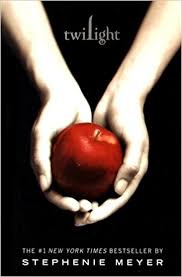
When I look at my own book shelves, a few (mainly YA) book covers stand out. There’s the original Twilight series covers which (at the time at least) stood out as unique.

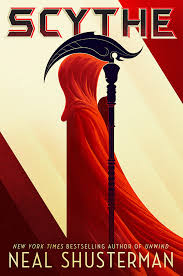
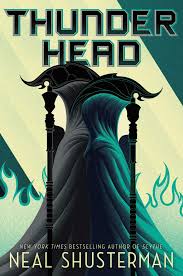
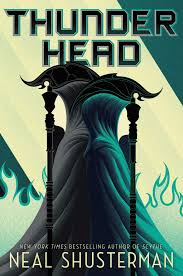
Then there’s the Scythe series by Neal Shusterman – these covers are gorgeous.

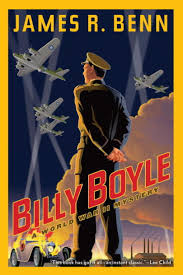
When it comes to mysteries I love the covers for James R Benn’s Billy Boyle series:

But a beautiful cover is only on element of the equation – it must also appropriately reflect the type of novel you’ve written and appeal to readers of that genre. If there’s a disconnect between the cover and the content then beauty alone won’t work. When I look at some of the list of beautiful book covers (such as Buzzfeed’s compilation for 2017, which can be found here) many of them, while certainly aesthetically appealing, wouldn’t necessarily make me want to pick up and read the book.

So what are your favorite book covers? What do you look for when seeking cover art for your own novels? What’s your experience been with cover art (either as a traditionally published or indie author) and what advice would you offer to someone thinking about repackaging their books with new cover art??


I Could Have Been Alex Trebek

by James Scott Bell
@jamesscottbell

What is the greatest gig in the history of gigs?

**cue Jeopardy music**

Did you guess being the host of Jeopardy? You should have. I mean, Alex Trebek works two days a week in an air-conditioned studio, making millions of dollars for reading some cards and saying, “No, sorry” to people.

And he’s done this since 1984! He’s a fixture of our popular culture. For many years, so was his mustache. It made national news when Trebek shaved it off back in 2001.

Alex Trebek is very good at what he does. He’s got a pleasant voice and cool demeanor. (Although I can’t think of him without hearing SNL’s parody. Will Ferrell as Alex, and Darrell Hammond as Sean Connery. Alex: “No, no, that’s The Pen is Mightier.” Sean: “Gussy it up however you want, Trebek. What matters is does it work?”)

And I, your humble scribe, could have been Alex Trebek. Or a facsimile thereof!

I take you back to JSB just after graduating college. I was living with the folks in the old homestead before setting off for New York to pursue an acting career. To make a few bucks I did close-up magic in a couple of bars and for an occasional party.

And once for a local Boy Scout troop. They were having a meeting in the auditorium of St. Mel’s Catholic School and one of the parents knew of my facility with legerdemain. (In those days I billed myself as “Jim Bell, Master of the Amazing.”)

So there I was in front of a bunch of scouts and their parents. And in the front row was a face I recognized. Most people in the 1970s would have, too. It was Larry Hovis, one of the stars of the hit comedy series Hogan’s Heroes.

I went into my act, and did the color-changing scarf trick. That’s where I stuff a red scarf into my fist and it comes out yellow. Then the yellow comes out black. Then they all disappear.

I remember vividly the approving expression on Hovis’s face. I had impressed a television star!

After the show Hovis came up to me and told me I had a very nice presence. He gave me a card for a company he was working with, Ralph Andrews Productions. That outfit was known for producing game shows, such as Celebrity Sweepstakes and It Takes Two.  

“You have what it takes to be a game show host,” Hovis said. “Call us and let’s set up a meeting.”

Harrumph, I thought. Game show host? Are you kidding? I wanted to be Brando. I wanted to be Newman. I wanted to stun them on the New York stage and be offered a leading role in a movie that made me a star. Then I could have a career like Hoffman or Pacino or Redford.

Game show host? Bah!

Needless to say, I never made the call. Who knows what might have happened if I had? But on I went to New York, then later back to Hollywood, then married an actress and decided we needed one steady income and went to law school, then joined a big Beverly Hills firm and started putting in 50-60 hours a week.

One night after a long day, I was at home zoning in front of the TV when Jeopardy came on. There was Alex (with mustache and big hair) and I said to Cindy, “I could have been him.”

When she inquired about this further, I told her the story. And we both let out wistful sighs.

Who knows what would have happened had I followed Larry Hovis’s advice? We can play that game all day long. Yes, being a host like Trebek or Sajak would have been a pretty nice deal.

But I’ve got a nice deal right now, and if TV stardom meant I wouldn’t have met my wife that one glorious night at a party among a lot of struggling actors, I would not wish to go back even for a second.

Plus, as it turns out, I’m doing what I’ve wanted to do ever since I started reading Classics Illustrated comic books as a kid—write fiction, tell stories, give readers a ride on a dream.

So I’ll take Happy and Grateful for $1,000, Alex.

Do you have a “road not taken” moment? Has it made all the difference?


Nostalgia Time – What TV Show from your Childhood Influenced You?

Jordan Dane
@JordanDane

ABC Television


What show from your childhood or younger years would you bring back and why? Who would you have star in it?

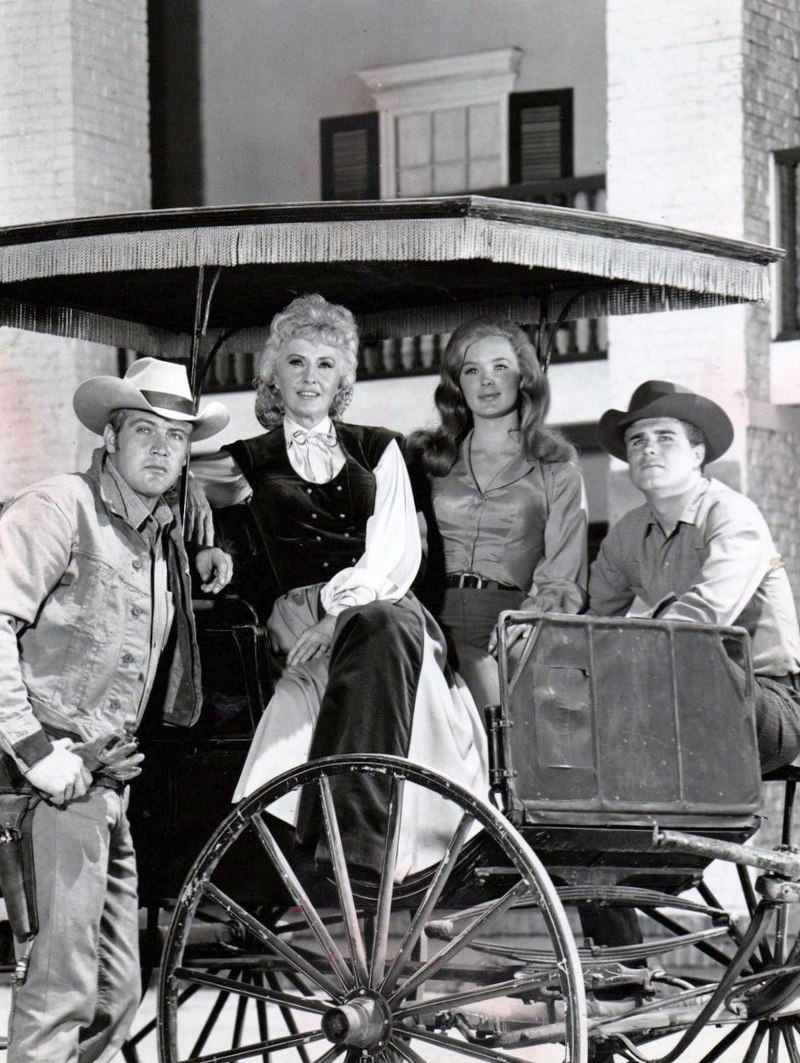
Something that always influenced me–and ultimately teased me into becoming a writer–was my love for Westerns and HORSES. I read every Louis L’Amour I could get my hands on. When I was a young girl and in elementary school, I loved horses and read every book they had in my school library. Literally every book, no lie. As I became a teenager, I got a job and my parents allowed me to save toward buying a horse of my own. We ended up with five horses and it became a big thing for my family.

I shoveled a lot of horse poo and mucked stalls, but it was a great experience. As I grew older, I became enthralled with the men who rode those horses in the 1800s. They were mysterious loners, good guys who lived life on the edge of civilizations and made their own version of the law and justice. The ultimate anti-heroes for me. My first perceptions of manhood came from these TV shows and the many books I read. It definitely influenced how I write men in my books. The brooding loner type.

http://pixabay.com/en/horses-blm-wyoming-mustangs-61158/


I watched anything Western as I grew up and continued to read every book I could get my hands on. TV shows on Wild Bill Hickok, Alias Smith & Jones, Lancer, Big Valley, Bonanza, Branded, Maverick, Gunsmoke, Have Gun Will Travel, High Chaparral, Laramie, Laredo, the Lone Ranger, Lonesome Dove, The Magnificent Seven, My Friend Flicka, Ponderosa, Rawhide, Rifleman, Shane, The Virginian, Wild Wild West, and even Zorro.

My sisters and I would sneak out of our bedrooms to watch TV in our pajamas if the shows came on after our bedtime. Mom told us that she caught us many times, but didn’t say anything. She knew how much it meant to us and appreciated the making of childhood memories. Girl first crushes.

Louis L’Amour hooked me into reading, but thriller authors like Robert Ludlum kept me going (Bourne Identity series). I got into crime fiction and espionage thrillers. Ludlum made me pay attention to how to pace a book and the structure of cliffhangers. He opened my eyes to writing and my desire to write never left me.

BONUS QUESTION – So help me cast a great Western. Who would star in the TV show or movie?

For Discussion:
1.) What show from your childhood or younger years would you bring back and why?
2.) Who would you have star in it?