Before And After: Does Your
First Draft Look Good Naked?

Books aren’t written — they are rewritten. Including your own. It is one of the hardest things to accept, especially after the seventh rewrite hasn’t quite done it. — Michael Crichton.

By PJ Parrish

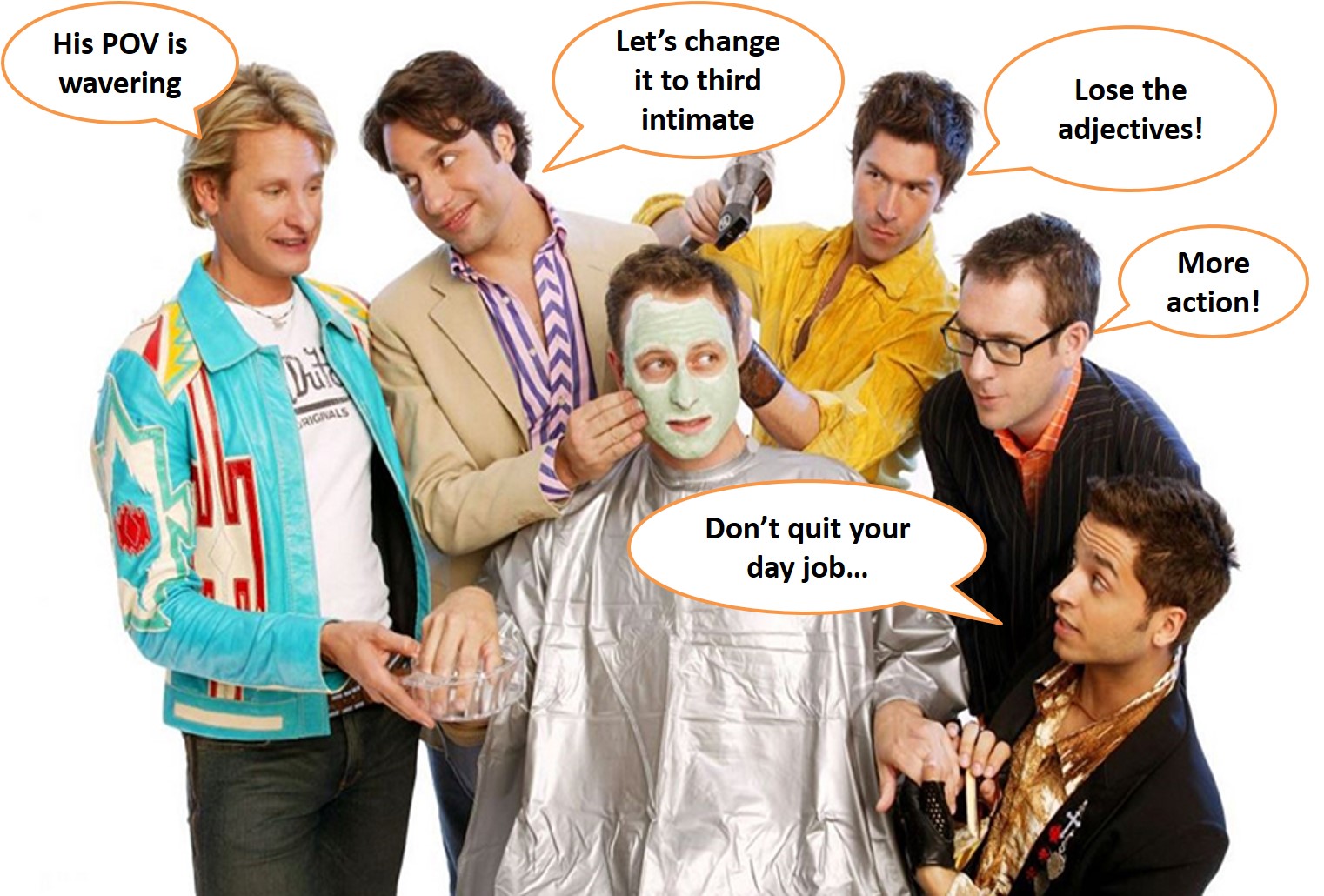
I am a sucker for make-overs.  I cut my teeth on Glamour magazine’s Do’s & Don’ts. I never missed an episode of What Not To Wear and Queer Eye For The Straight Guy. I binge-watch the Home & Garden channel for house renovations.

Which is probably why I love rewriting. It is the ultimate make-over.  The only way that your ugly duckling novel becomes a sell-able swan is through the painful surgery and  ruthless eye of rewriting. And to answer the question posed by the headline — no, your first draft does not look good naked. No one’s does.

We’ve covered this subject often here at TKZ. To review: Rewriting is done on two levels. First, you rewrite at the sentence level, tightening your paragraphs, deleting and switching words around. It’s what’s call line editing. But you also rewrite at the structural level. You ask the big picture questions: Is the plot sturdy and believable? Are the characters well-drawn? Is the setting well-rendered? Have you chosen the prime dramatic moment and best point of view from which to begin the story?

Most beginning writers get bogged down in line rewriting. They get hung up finding the right adjectives or rearranging sentences, and they never step back and look at the big picture. They’re too busy picking out the color of the wallpaper or what kind of flooring they like when they should be worrying about how strong the foundation is and whether the walls are plumb.

To recap, here’s are some things you watch for in rewriting:

  • Stereotypes in personalities, looks and even settings. When creating a character or a place, go against the norm, fight the instinct to use the expected.
  • Too easy/stock description. Avoid words like tall, beautiful, handsome, etc. Be creative, be original.
  • Writing clichés: Character looking in mirror for physical description. References to celebrities for character description.
  • Confusion in your timeline.
  • Wasted dialogue, unnecessary adverbs, extended or overwrought description.
  • Repetition of the story’s hidden message or theme, or constant references to a character’s flaws or demons. Trust your readers to “get it” the first time.

Sounds easy, right? It’s not. Rewriting is hard work. And sometimes, when you’re so close to your story, it’s difficult to see what needs to be done. So today, I want to give you some BEFORES and AFTERS.  To borrow from another one of our favorite TKZ tropes, I’m going to try to SHOW you how to rewrite, instead of TELLING you. Let’s look at our first ugly duckling:

The naked trees snaked upward, black capillaries against a bleached, predawn sky. The ground beneath his feet was a mire of dead leaves and copper-colored mud. A cold December wind wafted through the trees, loosening raindrops from the needles of the tall pines.
Louis stumbled as his boot sank into a puddle, the suede immediately blanketed by a thin membrane of algae. Cursing softly, he stepped free and trudged on, grabbing the thin arms of the small trees as he scaled the slippery slope.
He could no longer see the orange vest of the hunter ahead and he called for him to slow down. Pausing at the crest of the hill, Louis rested against a fallen tree, pulling up the fleece collar of his cocoa-brown jacket. He waited for the last man of his trio to puff his way up the muddy incline.

Here’s the AFTER:

The sky was a bleached gray, the bare trees rising like black veins against the clouds. The ground was soft and wet, a mire of dead leaves. With every cold breeze, the three men were sprinkled with the remnants of last night’s thunderstorm.
Louis Kincaid stumbled, cursing softly as he pulled his boot free of an old vine.  The fog that hovered near the ground had thinned, but it was still opaque enough to mask his view of the orange vest of the hunter ahead. Louis quickened his pace.
At the top of a hill, the hunter in view again, Louis paused and pulled up the collar of his deputy’s jacket. He turned and looked back, waiting for the last man of the trio to puff his way up the hill.

If you can’t guess, this is from one of our own books. The rewrite is not only shorter, it also is more emotionally involving. If you’re into word counts: Our first draft of this chapter clocked in at 1,864 words. The rewrite was 969.  Every word counts.

Here’s our next make-over candidate BEFORE:

Shadows closed around him as the sun played hide-and-seek behind dark clouds. Thunder rumbled in the distance. Impending rain scented the air. Spanish moss fluttered in a sudden breeze that carried with it the cloying acridness of the swampy bayou. 
And at his feet in the vermin-ridden humus lay a young woman. A woman who, until a day or two ago, had hoped, planned, and dreamed. Maybe even loved.
Now she lay dead. Violently wrestled from life before her time. And it was his job to find her killer.
He started when, with a flap of wings, a snowy egret soared into the air twenty feet in front of him. As the regal bird disappeared from sight,  couldn’t help but wonder if maybe it was his Jane Doe’s soul wafting to the Land of the Dead. The way the dove in Ulysses had carried Euripides’ soul.
Despite the day’s heat, a chill seeped through him. Instinctively and unselfconsciously, Jon Abellard crossed himself and wished her soul Godspeed.

Here’s the rewritten AFTER:

Shadows closed around him as the sun played hide and seek behind dark clouds. Distant rain scented the still air and Spanish moss hung like wet netting on the giant oaks. The rotten-egg smell of the bayou was heavy when he took a deep breath.
Jon Abellard wiped the sweat from his brow and looked down at the body. She was the third young woman this year who had been left to decay in the Louisiana swamps.
With a sudden rustle of leaves, a snowy egret soared into the air twenty feet in front of him. Against the slanting sun, the bird was little more than a white blur but still he watched it, oddly comforted by its graceful flight up toward the clouds.
Abellard looked back at the woman, closed his burning eyes and crossed himself.
“God’s speed, ma cherie,” he whispered. “God’s speed.”

I got rid of the “writerly” junk and made the scene feel more active. (ie turning the Godspeed reference from thought to dialogue.) I changed “cloying acridness” into the more specific “rotten egg smell” and pruned extraneous words like “now,” “and.” Most folks know egrets are regal so it’s unnecessary. Ditto for “swampy” (a bayou is by definition marshy). And “instinctively and unselfconsciously” crossing himself is a waste of precious words. Also, I deep-sixed the overwrought imagery, like the egret bearing the dead woman’s soul to the Land of the Dead like the dove did for Ulysses. Why lose that image? Because we are in a scene where a man is looking down at a dead girl. Unless he’s a literature professor, would he be thinking of Euripides? Doubtful…he’s a rookie cop and the writer’s effort to impress is getting in the way of what should be a good set-up scene. I also added “ma cherie” to drop the hint that the protag is Creole and I told readers where we are (Louisiana). More info, more emotion…in twenty fewer words.

Our third candidate isn’t quite ready for her close-up. BEFORE:

It was the first time Tina had ever been to a fancy restaurant and she so wanted to impress Nancy Browne. She’d only known her a few days but if there was any chance that she’d be allowed to join the exclusive Orchid Book Club, Tina knew she had to prove herself worthy. And at this moment, proving herself worthy meant knowing what all the utensils were for and what kind of wine to order.
And it didn’t start well. Nancy Browne didn’t order for her, as she had hoped. She was left there, staring at the menu as if she couldn’t read English and when she finally ordered a Pinot Noir wine, she knew it was wrong by strange expression on the waiter’s face. Then she asked for Hidden Valley ranch dressing and — good grief! — ice in her wine. She had had known this was going to be disaster and she was right.
God, she was just a white trash orphan from Marked Tree, Arkansas and there was no sense in pretending she was anything else. When the waiter brought the key lime pie – wasn’t it supposed to be green not yellow? —  she rushed from the restaurant in tears.

I like the idea behind this fish-out-of-water scene, which creates empathy for the protag Tina. But this is a classic example of telling not showing. This was a chapter from a romantic suspense novel my sister Kelly wrote eons ago. (unpublished). Here’s how she rewrote it once she grasped the concept of show not tell. AFTER:

“What are you doing, dear?”
Tina looked across the table at Nancy Van Horn. In the dim light, the sixty-six year old woman looked as well preserved as a corpse in an upscale funeral home. Every time Nancy picked up her wine glass, Tina got a whiff of lilacs from the rustle of Nancy’s chiffon sleeve. Tina discreetly tried to smell her armpits, wondering if Nancy could smell her fear-sweat. 
“So, why do you want to join our book club?” Nancy asked.
Tina had a mouthful of peas. What should she do? Swallow quickly, hold up a finger or calmly keep eating?
Nancy saved her by looking away and signaling the waiter. He was young, with a lock of black hair that coiled over his forehead. The kind of man Tina knew would never give her a second look. Handsome men in Nashville – even waiters — could smell the Delta mud on a woman, no matter how much Chantilly cologne she splashed over it.
“I’ll have a Pinot,” Tina said, remembering the name of the wine from the Real Housewives of Atlanta TV show.
“Grigio or Noir?” the waiter asked.
Tina stared at him, her mind blank. He was staring back, laughter swimming in his brown eyes though his lips were drawn in a impatient line. And Nancy…she was staring, too.  
What are you doing in Cabrelli’s, little girl? Who do you think you are?
Dirty white trash, she thought as she pushed from the table. Just dirty white trash.

Yes, this is longer. But it’s more telling in its details, which adds layers to the characters, especially Tina. And it takes GENERAL information that was conveyed only via thought and converts it to SPECIFIC dialogue.

Got time for more? Here’s another cop on the scene BEFORE:

The sight of the body sickened him but the possibility that the murderer could be hiding in the house geared him into action. He checked the bathroom and closet on the second floor then searched the first floor but found no one.
Opening the back door, he shouted for Healey, but there was no response.
Until this instant, Palm Avenue had been his favorite place in Palm Vista. In all of Florida, as a matter of fact. Neat green lawns bordered large single-family homes set back from wide curving streets. There was old money here. Front doors featured beveled glass. Windows edged by white curtains. Wide entry halls crowned by large chandeliers.

And here’s the AFTER:

The sight of the body sickened him but the possibility that the murderer could be hiding in the house geared him into action. He drew his gun and went quickly but quietly down the hall. Lots of closed doors, too many places to hide.
He kicked open the first one. A marble bath. Empty. The next two were vast bedrooms but something told him this wasn’t where the killer would go because there was no way out.
He looked down the staircase then slid along the wall, gun raised. No one downstairs either.
Where the hell was the killer? And where the hell was his partner?
“Healey!”
His voice echoed in the cold marble foyer.
No response.

What’s the lesson here? Two points: Convert narrative into action and dialogue. (SHOW us the cop shouting for his partner via in dialogue instead of embedding it in narrative. Dialogue is action. Dialogue breaks up blocks of narrative. Also, when you’re in a tense action scene, keep the writing style short and sweet and don’t take detours of the neighborhood in thoughts.

Action scenes are good places to look for rewriting opportunities. Like the example above, this next one is a tense physical scene. But it can be better in rewrites. BEFORE:

As he was walking slowly down the hotel corridor, someone hit him on the back of the head and pushed him forward. He felt the world go black. His body flailed, hitting the plate glass window and shattering it. The glittering shards caught the throbbing glow of red neon as they fell, like the tails of fading fireworks.
He fell to his knees and looked up into the chiseled face of his attacker.

And here’s the AFTER:

He walked with his head bent, scanning the front page of the New York Post. The hallway was dim, the slow blink of the red neon from the lone window lighting his way.
The blow came out of nowhere. So quick, so hard, blood filled his mouth as he bit his tongue. He stumbled forward, his head hitting the window.
An explosion of sound and glass. A rush of cold air. A flood of warm blood.
He dropped to his knees and looked up.
The face above him pulsed red. Then it was gone.

What was improved in the rewrite? The wavering point of view was eliminated. The first version shifted into omniscient and a man falling out of a window wouldn’t notice “glittering shards in the throb of red neon” or that his attacked had a “chiseled” face. That’s the writer getting in the way. And the second version puts the POV firmly in intimate third. It’s more exciting and visceral.

So, don’t dread rewriting. Think of it as BEFORE and AFTER. Write your first draft as quickly as you can and pour your heart and soul into it. Make mistakes and move on. Put it aside for at least three weeks. Then go back, print out your book (on paper!) and get out a red pencil. Read your book with a hard cold eye, looking for plot holes, digressions, flaccid or stereotyped characters, and anything that is even slightly confusing. Oh, and look for boring stuff. If it seems even a little boring to you, you can bet your royalties it will be ten times as boring to a reader.

Go forth and rewrite your novel with a happy eager heart, my swans. Oh, and you might want to rethink that man-bun.

 

First Page Critique – Untitled


Today’s submission is an untitled first chapter featuring a bartender in a classic hotel. Please enjoy then we’ll open the discussion.


CHAPTER 1

Under a trickle of air conditioning, Dylan swirled the bar spoon through a jumble of vermouth, bitters, Makers Mark, and ice. His shirt collar, rigid and wet, scraped against the back of his neck. Normally, he liked a penguin suit, the way it accentuated his biceps. But on the ten or so summer nights when the July heat pressed the moist cloth against his skin, he wished the owners would cough up enough cash for decent AC. Instead of cool comfort, they blew their wad preserving turn of the century crystal chandeliers, wrought iron balustrades, and red velvet wallpaper. Clayton Hotel’s clientele loved the ambience, confusing run-down with high style.

Dylan served the Manhattan to a regular at the end of the bar, a lawyer by the name of Jim whose pupils had overtaken the blue of his eyes. Must have gotten the 8-ball Dylan had stashed for him in room 414. This week, Jim wanted coke. Other weeks, ketamine or a tab of E. For the right price, Dylan could track anything down or make it himself. His meth was the purest in Portland. The graying lawyer sniffed hard and wiped his nose with a blue polka dot handkerchief for the fourth time that night. He set his half-empty martini glass on a gold napkin and waved his hand to get Dylan’s attention.

“You bruised my bourbon again.”

Dylan cleaned the mahogany bar top with a towel. “Ouch. Has it turned black and blue?”

The loose skin around Jim’s neck tightened. He was about to say something when a tall brunette in Lucite heels and a red leather bodysuit strolled past the dining room manager, a thin 40-something who looked so much like Rod Stewart in his sparkly blazers that everyone called him Rod. From deep down in his Rolodex, Rod could find the perfect escort for every man.

The brunette waved like a beauty queen. While she made her way across the dirty-blue carpet, her tits bouncing in gorgeous synchrony, everyone checked her out. She looked like a girl who came from someplace Dylan wanted to visit, like Malta or Majorca.

She took a seat next to Jim and clapped her red gloved hands against the bar top. Before Dylan could respond, she shot out, “Scarlet O’Hara.”

He walked towards her. “Scarlet? Nah. More like Rita Hayworth.”

She leaned forward, titties barely contained inside her sweetheart neckline. “Go heavy on the cran. Make it pretty and scarlet, just like Miss Morgan.”

~~~

The Brave Author does a good job of setting the scene without slowing the action to describe it. The reader is grounded right away: Clayton Hotel, a hot July night in Portland. The writing is generally clear and economical without extraneous verbiage.

The tone is noir and the scene has a 1980’s vibe, evoking the Tom Cruise film Cocktail. The dining room host-procurer character “Rod Stewart” reminded me of the tune “Some Guys Have All the Luck.”

Dylan, the POV character, quickly comes across as a disaffected bartender with a detached, snobbish, superior attitude toward his customers.

He’s vain and likes to show off his biceps, even though a tuxedo is miserably hot. Nice sensory detail of the collar chafing. One small nit: stiff collars generally cut into the throat rather than the back of the neck.

He takes pride in his skill set—“His meth was the purest in Portland.” He has no problem accommodating legal or illegal requests from his customers and feels disdain for them at the same time he profits from their cravings.

His banter is clever but insulting—“Ouch. Has it turned black and blue?” That crack nearly provokes an argument with Jim, the annoying, hopped-up lawyer whom Dylan can’t please.

Dylan is unabashedly sexist in his description of the brunette who flounces in on Lucite heels. He immediately flirts with her in front of Jim, even though Jim appears to be her john for the night. Dylan again pushes Jim’s buttons.

The potential for conflict is high. But…

Will readers want to follow a self-absorbed, egotistical, snobbish, drug-dealing, misogynistic antihero? 

The Brave Author takes a chance by leading off with an unsympathetic character. Some readers (especially women) will instantly dislike Dylan and put the book down. Others may read a little farther to see what happens next. But, unless Dylan shows more promise, they will soon grow weary of him.

Author-screenwriter Heywood Gould said about Cocktail: “…met a lot of interesting people behind the bar and very rarely was it someone who started out wanting to be a bartender. They all had ambitions, some smoldering and some completely forgotten or suppressed.”

Gould has expressed what’s missing—at least for me—in this first page.

Readers don’t necessarily have to like a character as long as there’s a quality they can relate to and identify with. How can the Brave Author add depth and humanity to this character to make him resonate with readers?

Here are a few questions that might trigger ideas:

What ambitions or longings does Dylan have? What does he want to find or achieve?

What does he struggle against? What disappointment marks him? What traps him in a job he dislikes?

I’m not suggesting a backstory info dump but rather a carefully chosen line or two that hints at the trouble that haunts him.

Another method to make an antihero work is to give him a distinct, unique voice or an unexpected worldview that fascinates the reader. A few examples of recent successful antiheroes: Dexter, Walter White in Breaking Bad, and Tony Soprano.

Literature through history is full of compelling antiheroes: Hamlet, Raskolnikov, Jay Gatsby, Michael Corleone.

~~~

I made the assumption that Dylan is the main character. But maybe he’s not.

Perhaps this first page introduces Dylan to set him up in an inciting incident. On page two, he could wind up dead in the Clayton Hotel dumpster and the story focuses on solving his murder.

Or maybe Dylan is the prey and the prostitute in the red leather bodysuit and Lucite heels is actually the undercover cop who busts him.

The story could go in dozens of different directions, which is why it’s difficult to judge from 400 words. However, in today’s competitive market, an author must grab the reader right off the bat. Often, the first page is the only shot you get and that’s why it must be pitch perfect.

~~~

A few line editing comments:

He was about to say something when a tall brunette in Lucite heels and a red leather bodysuit strolled past the dining room manager, a thin 40-something who looked so much like Rod Stewart in his sparkly blazers that everyone called him Rod.

The sentence is too long and gets confused between the brunette entering and the description of Rod. Suggest you split it up into shorter, punchy sentences and more paragraphs:

The loose skin around Jim’s neck tightened. He started to speak but movement at the entrance distracted him. 

A tall brunette in Lucite heels and a red leather bodysuit strolled across the room. She bounced in all the right places. Dylan and Jim stared, along with everyone else in the room.

Dylan winked at the dining room manager, a thin 40-something everyone called Rod because he looked like Rod Stewart in his sparkly blazers. Rod’s Rolodex guaranteed he could find the perfect match for every man. Looked like he succeeded again tonight.

The following line confused me: “Make it pretty and scarlet, just like Miss Morgan.” Is the woman introducing herself as Miss Morgan? Or is there another meaning?

I googled “Miss Morgan” to see if it was also the name of a cocktail, like Scarlett O’Hara and Rita Hayworth. I found a reference to an actress “Miss Morgan” in a TV series, “Keye Bondage Images.” Hmmm.

~~~

Brave Author, your writing is solid. You do a good job of setting the scene and describing characters while keeping the action moving forward. Well done.

If Dylan is the lead, work on developing his depth and humanity. If you make him a more compelling character, readers will want to follow him.


Over to you, TKZers. What do you think of Dylan? Do you have suggestions for our Brave Author?

Why I Love Going Back in Time

by James Scott Bell
@jamesscottbell

I’m about to begin a series of short stories featuring a Hollywood studio troubleshooter in the 1940s, as part of my Patreon project (see “Escapism Rocks!” from a couple of weeks ago). Technically, this qualifies as historical fiction, and I find something very comforting about the genre, namely: things don’t change!

With contemporary thrillers, you have to keep up with technology, forensics, communications, law, weapons and so on—knowing there’s always the possibility that some radical innovation that would solve one of your plot problems may occur between the time you finish your manuscript and when it hits a bookstore shelf!

Further, a reference you make to contemporary culture might be turned on its head shortly after your book appears. I recall a thriller from the mid-90s that made favorable references to one O. J. Simpson. The book had been out only a few months when Simpson was arrested for those brutal murders.

With historical fiction, everything like that is frozen. You can concentrate on the story. And best of all, you’re free to choose a period you love. Which is what I did twenty years ago.

Contemporary legal thrillers were hot then, and it seemed like every lawyer and retired judge was writing one. I’d done a couple myself, but wanted to find a market distinction. So I came up with the idea of mixing legal thriller with historical. And I had the perfect setting, too, one virtually unexplored in fiction—turn-of-the-century Los Angeles. (For you youngsters out there, “turn-of-the-century” refers to 1900, not 2000!) L.A. was in transition then, growing up into a major city. It was an exciting time for the practice of law. The man whom many consider the greatest trial lawyer of all time—Earl Rogers—had recently hung his shingle. And women were just beginning to be allowed in the courtroom.

So, I thought, what if we went back to 1903 and a young woman arrives in Los Angeles determined to become a trial lawyer? That became the genesis of a six-book series called The Trials of Kit Shannon.

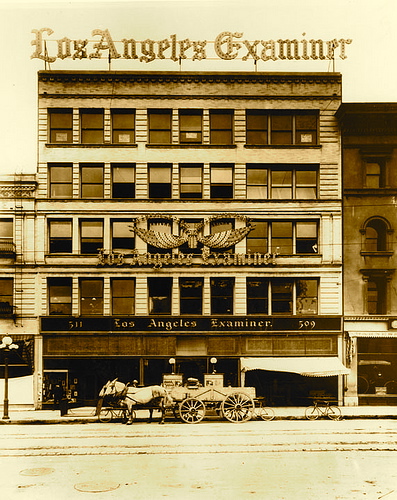
I loved doing the research for that series, most of it in the bowels of the downtown Los Angeles library going over microfiche of the Times and the Hearst-owned Examiner. I got so into the research that I began to have dreams I was walking along on the sidewalks of 1903 L.A., passing women in their dresses and hats, hearing the ding of a trolley bell, catching a whiff of the corner cigar stand.

Another L.A. period I love is 1945 to 1955, the classic decade of film noir. America had won the war and was strutting her stuff, building the most powerful nation on Earth. Babies were booming. But the criminal element, always crawling along the underbelly of society, was also hard at work in areas like vice, bunco, murder, and police and political corruption. What’s not to like?

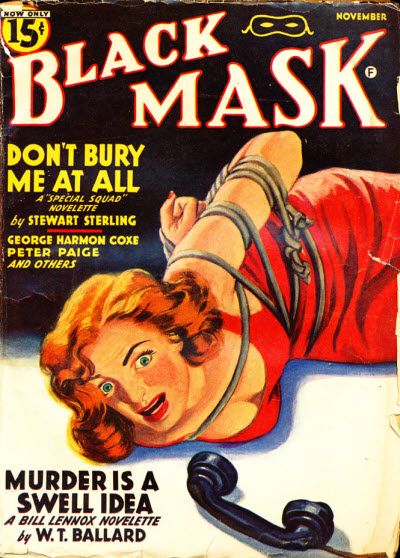
My folks had a family friend who was one of the steady pulp writers for Black Mask, W. T. Ballard (I profiled him for TKZ here). He had a series character named Bill Lennox, a “Hollywood troubleshooter” who worked for a studio getting stars and other associated folk out of sticky situations—like murder raps.

So I decided to create my own series featuring a Hollywood troubleshooter, written in the classic hardboiled style I love (Chandler, Hammett, etc.) The first story in this series, “Blonde Bombshell,” is set to appear on June 1. These stories are exclusively for my patrons on Patreon. (The details can be found here.)

Here’s a preview:

So…for you historical fiction authors out there, why did you select the particular period of which you write?  

For the rest of you, if you were ever to write a historical, what period would you choose, and why?

Message in a Book

A few weeks ago I took my granddaughter to a used bookstore. I, of course, did some browsing myself. I came upon a volume that was on my always-increasing want list and bought it. One thing led to another, as they often do, and the book — The Best American Mystery Stories 2015, edited by James Patterson — sat patiently on my headboard until a few days ago.

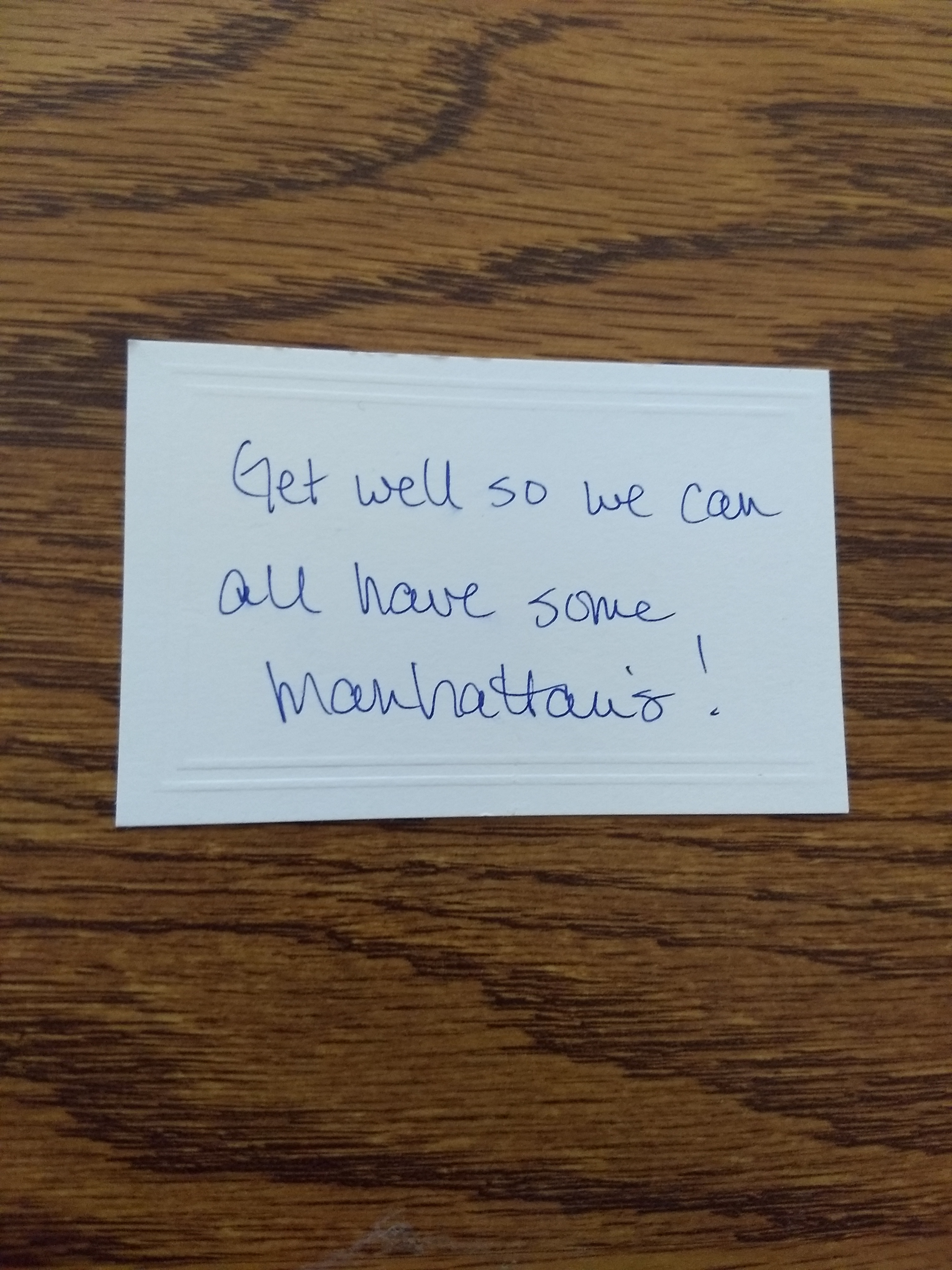
I was looking for something short to read before bedtime and which did not involve a screen. The aforementioned volume seemed to be the perfect source for something of that nature. I picked it up, opened it, and started turning pages. I reached the Foreward and found two small white cards inserted into the book’s gutter. One was a business card for a hospital liaison employed with a local senior living community. The other was the gift card which I photographed and have reproduced above.

I have since been intermittently preoccupied with this discovery. It does not look as if the book was ever read past the Foreward, if, indeed, at all. I would like to think that the recipient, after whatever life event occasioned their stay at the facility, quickly recovered and was too busy enjoying liquid (as the card suggested) and horizontal (as the card did not!) refreshments to read the book. This, I fear, is wishful thinking. It is probably far more likely that they have gone ahead, leaving the book behind to be packed up with others and taken to the used bookstore where it eventually passed to me.

That would be nosy me. I went so far as to call the person whose name and telephone number were on the business card, assuming, due to the close proximity of the cards in the book, that they were the giver. My intent was to explain that the book passed into my hands and to ask, generally, if the recipient ever got to drink that Manhattan, thinking that answering that question, as phrased, would not violate any HIPAA rules. Alas. The giver no longer worked at the facility. Another unsolved mystery.

I wonder what happened to the last owner of the book in question.  It bothers me, probably because of my age, and also probably because I’m in contact with a number of my high school classmates as we approach our fifty-year reunion in July. Many are joking that they are not going to send in their reservations before June 30. They are joking, but not really laughing. I totally get it. We inhabit fragile and temporary shells that slip and slide toward an unmarked and unknown use-by date.

Enough of sad-sack me for today. Have you ever found a cryptic message or note in a book? If so, please share. Thank you for stopping by, and enjoy your weekend.


Reader Friday: Favorite Reading Spot

“A reader lives a thousand lives before he dies . . . The man who never reads lives only one.” – George R.R. Martin

Do you have a favorite reading spot? Is it seasonal? If so, where do you read in the off-season?

Do you have a ritual, like sitting in a certain comfy chair or prepping with a nice cup of tea?


A Good Intro Still Can be Tweaked – See How with the First Page Critique of RELENTLESS

Jordan Dane

@JordanDane

Wikimedia Commons public image – S Korea interrogation cell

We have an intrepid author willing to submit the first 400 words of their latest project RELENTLESS for critique. Gutsy. I’ll have my feedback on the flip side. Please add your comments/constructive criticism to help this author.

***

I was seated in a faded leather armchair but couldn’t move. Nothing below the shoulders worked. I was able to turn my head from side to side. That was all. The sensation brought back a memory from twenty years ago when I was an eleven year old girl and fell out of that elm tree. The impact on the ground knocked the wind out of me. I was afraid. Back then the fear was temporary. This was different.

The room was stark, blacks and whites. Sharp edges on furniture, sun-bleached fabric on the one couch. A window was open. Cold air poured in. I heard waves pound against rocks at a distance. I took a deep breath, I wasn’t stressed. My practice of daily meditation born of my Buddhist belief kicked in. I remained calm, focused.

A solid dull brown door creaked open and he walked in. He was maybe five feet five inches, stocky build poured into a three-piece suit, vest and all the trimmings.

He carried a single manila folder, walked in front of me and sat on the edge of a scarred leather topped captains desk. His eyes were set close to a narrow nose, the only hair on his head was a tight goatee, closely groomed. He dropped the folder on the desk and crossed his arms. A small puff of air expelled through soft nostrils. He was Vietnamese. Some of that blood ran through me. I knew his essence.

He stared at me and smiled. “The resemblance is uncanny. Truly remarkable,” he said in a voice that sounded like he was telling me a bed-time story. “I must apologize for the inconvenience.”

My eyes were glued to his face. Not a muscle twitched. His or mine.

He dropped his arms, braced them on the desk with his hands. “Your name is Alice Weathers.”

“Yes,” I said.

“You teach second grade.”

“Yes.”

“I am curious. You did not have a purse with you.”

“It was in the trunk of my car. I didn’t need anything so I left it.”

“It’s of no matter. Fingerprints and blood type have provided your identity. A verification procedure to have been conducted regardless of personal identification.”

“What’s this about?”

“Miss Weathers, the drug that was administered affects your upper and lower muscles. It will wear off in modest time and you shall be fully restored. You have nothing to fear. Where is it you teach second grade?”

“Orange Unified.”

“That is correct. But you were seen leaving the Skyline Tower office building today. Why were you there?”

FEEDBACK

OVERVIEW

There is a great deal to like about this submission. I really liked that the author stuck to the action and didn’t stray too far. I will suggest some clean up on the front end, but I would definitely keep reading to find out the mystery of why this woman has been drugged and interrogated.

There’s also palpable tension between Alice Weathers and her interrogator. Cagey dialogue. The author makes us care what happens to Alice, a teacher.

With the first person POV, the author quickly established the prisoner is a woman in the first paragraph and doesn’t make the reader have to guess.

I also like the quick dialogue with minimal use of tags. It’s easy to follow and the minimalist approach adds to the tension. I also like that she’s cagey too in her replies. She only answers his questions with one word replies of “Yes.”

Some good lines that I particularly liked:

…stocky build poured into a three-piece suit, vest and all the trimmings.

Some of that blood ran through me. I knew his essence. (In one simple line, the author cleverly gave insight into Alice, that she was Vietnamese, thereby raising the mystery of what’s going on.)

REALISM

I had to ask myself that if this were me, what would I want to know from my interrogator. Alice is too calm. She’s seems like more than a teacher by her cagey replies and her disciplined mind, but I’m wondering if the tension might become more real if she asked her interrogator questions as he entered the room. Fiction and conflict could be ratcheted up if she’s more confrontational from the start. Focus on THAT before she very clinically describes the room. (The author doesn’t go too overboard with the descriptions, but when you imagine this written with more conflict, the intro could be more emotional and more real.)

“What did you give me? I can’t move.”

“You have no right to hold me. I’m an American.”

I also have to ask myself why the man would’ve drugged her. He could have hauled her into the interrogation room or facility (like in an arrest). What’s the purpose for the drug? I’m sure we will find this out soon (I hope), but it might be more authentic if Alice would question this first before she describes the room so clinically. We need to feel her internal panic, even if she doesn’t allow him to see her fear. The first few paragraphs are too calm for someone drugged and taken against her will.

HOUSEKEEPING

This is a pet peeve of mine but a line like this makes my mind imagine this literally.

My eyes were glued to his face.

Of course her eyes aren’t literally “glued” to his face, but nonetheless, my mind shifts to the imagery and pulls me from the story. The distraction can be avoided by rewording.

My gaze fixed on his face.

Using “eyes” can be tricky, but as I’m writing the line, I’ve trained myself to think of the sentence as literal to avoid an editor or a reader raising an eyebrow. You could also play with the lines to make the brief description feel more real.

He had my full attention. I couldn’t turn away. His eyes were riveting.

Other nitpicks from me:

I heard waves pound against rocks at a distance.

Alice hears the ocean from that open window, but she can’t know (by the mere sound of the water) that the waves are hitting rocks. I still loved this detail, but I fixed this in the rewrite below.

A small puff of air expelled through soft nostrils.

In this short description of the interrogator, Alice can’t know his nostrils are “soft” and unless she has super hearing, she isn’t likely to hear a small puff of air leave his nose.

LAYER THE MYSTERY

As nicely written as this piece is, there are ways to milk this first short scene for a mystery that readers will be intrigued to discover. Questions that come to mind are:

Is Alice innocent or does this interrogator have a reason to hold & question her?

He seems to know something about her, but what?

In this paragraph, the interrogator remarks about “the resemblance is uncanny.” See the line below:

He stared at me and smiled. “The resemblance is uncanny. Truly remarkable,” he said in a voice that sounded like he was telling me a bed-time story. “I must apologize for the inconvenience.”

Since we’re in Alice’s POV, what does she think about this? Without drawing something out of Alice – perhaps fear that this man truly knows something secretive about her – this is a missed opportunity for dropping breadcrumbs for lovers of mystery.

Alice could be shocked by his remark and try to not show it, but too late. Also the transition between his “resemblance is uncanny” line shifts too quickly to him apologizing for the inconvenience. The mystery is trampled over. The more important aspect of this exchange is the fact that he hints about knowing something about Alice. The apology is really not necessary in light of that.

He stared at me and smiled. “The resemblance is uncanny. Truly remarkable,” he said in a voice that sounded like he was telling me a bed-time story. “I must apologize for the inconvenience.”

REWRITE SUGGESTION

When the man smiled, chills skittered down my arms.

“The resemblance is uncanny. Truly remarkable.”

REACTION 1:

What the hell was he talking about? (internal thought for Alice, formatted in italics. She strains not to react.)

REACTION 2: Let the man deliver his line and savor Alice’s shock by punctuating his line with a chilling smile afterwards, not before.

“The resemblance is uncanny.”

When the man smiled, chills skittered down my arms. I didn’t want to react, but too late. I blinked. How much did he know?

TELLING vs SHOWING

Here are a few lines that are definitely TELLING, but because the submission is already well-written and the tension palpable, the TELLING isn’t needed and can be deleted. If you get the prose right, the “telling” lines should not be required.

I was afraid. (paragraph 1)

…I wasn’t stressed. (paragraph 2)

I remained calm, focused. (paragraph 2)

REWRITE SUGGESTION

The first few paragraphs that have Alice seated in a leather chair, seemingly paralyzed, are too focused on describing the details of the room. It reads like “author intrusion” when the writer is more concerned with setting than what might be going on in Alice’s head. By focusing on these details, it diminishes her fear and any real sense that she is in danger.

BEFORE:

I was seated in a faded leather armchair but couldn’t move. Nothing below the shoulders worked. I was able to turn my head from side to side. That was all. The sensation brought back a memory from twenty years ago when I was an eleven year old girl and fell out of that elm tree. The impact on the ground knocked the wind out of me. I was afraid. Back then the fear was temporary. This was different.

AFTER:

I couldn’t move. Nothing worked below my shoulders. I could only turn my head, but the heaviness of my arms and legs scared me. It reminded me of the time I fell out of a tree when I was eleven. I thought I’d broken my back and the horror of being paralyzed for life rushed back to me. I swallowed a gasp and my eyes burned with tears that blurred the room.

Where the hell was I?

Cold air poured in from an open window. I felt it on the skin of my face and I heard ocean waves pounding against a shoreline or a barrier wall. I strained to shift my gaze to take in the room, looking for clues of where I was. It felt important.

A stark austere room of blacks and whites. I sat in a worn leather chair. A sofa across from me had been sun bleached, but nothing looked familiar.

My body reacted to my dire situation. Beyond my head movements, my lungs could breathe. I took a deep breath and settled my heart, letting my Buddhist belief in meditation take over.

When the only door to the room creaked open, I flinched when a man walked in. A short stocky build poured into a three-piece suit, vest and all the trimmings.

He carried a single manila folder.

There are ways to shuffle the descriptions around to create more tension and make Alice’s situation more dire. Remember, the reader is in her head. The author’s job is to intrigue the reader that they must keep turning the pages. We are already squarely on Alice’s side in this well-written piece, but tweaking this introduction can bring out more. That’s where “layering for added emotion” and editing can make a real difference.

DISCUSSION:

I know you all have comments for this talented author. Fire away. Please give constructive criticism and/or encouragement.

TIGER BEAT and Other Things That Made Me a Reader


As I write this, my knees and hands hurt with a flavor of arthritis that has yet to be specified, I’m snuffling from allergies, my house is musty from dozens of inches of rain, I was only able to trim my cats’ toe nails before they escaped my trimmers, and it’s their ice pick dew claws that dig into my shoulder every time. A quarter of my garden has been overtaken by invasive Japanese irises that multiply every time I blink. Don’t even get me started on the house mouse that LICKED the peanut butter out of two traps without setting them off, and also apparently thumbs (poetic license—mice don’t have thumbs) its tiny rodent nose at my do-less, dew-clawed cats.

All the way from here I can hear you saying (over your coffee and lightly toasted buttery croissant—which is what I imagine you’re having for breakfast, or elevenses, if you’ve been up writing into the night, like I so often do), “What the heck, Benedict? This has nothing to do with writing. You’re just whining!”

Well, when life gets vaguely annoying, I like to complain for a while, and then pull a giant piece of particle board over the cozy fort/hole I’ve dug into the backyard. There I can ponder distant, gentler times. Here’s today’s note from the fort:

I’m thinking about the things I read as a kid that I don’t read much of today. As a kid, I acted without prejudice when it came to choosing reading materials. It’s not even that I chose things—they just showed up and demanded to be read. Gobble us up! You can have us all! We’re delicious! And I was totally game. Like a primitive Pokémon player, I was ready to catch them all. Perhaps it was that there were fewer printed (?) words floating around in the world than there are now, and so it seemed like an achievable task. There were moments (okay, hours) when I sincerely believed that if I tried hard enough, I could track down and read every word ever printed.

Dearest Reader, I never even got close, and at my age it’s not looking good.

BrainyQuote.com tells me that it was Arthur Ashe who said, “Success is a journey, not a destination. The doing is often more important than the outcome.” So here I am, on the journey, savoring the offerings along the way.

Back when I was first tempted by all those words, there were plenty of children’s books to keep me enthralled. Little Golden Books, library books, readers. (Damn, I loved those boring Dick and Jane and Spot books, but mostly because I thought they were funny. And also because I was made to sit behind the filing cabinet and read ahead, by myself, because I kept interrupting the other kids, telling them the words when they got stuck. Who doesn’t like to be allowed to read ahead?! In other news, I could be an insufferable brat.)

Then there was the good stuff. The stuff nobody told me to read, but that I couldn’t resist.

*Warning: If you are under the age of 45, you may have to consult a search engine. Think of it as research.


Highlights Magazine

God bless the Highlights writers. How did they know I wanted to do puzzles and read stories about animals and other kids? I thought Gallant of Goofus and Gallantwas a kiss ass prig, though I did understand that Goofus was not to be admired. The peg-jointed Timbertoes were fun. Did Ma remind anyone else of Olive Oyl?  I lived for Hidden Pictures. They were the first thing I went for as soon as the magazine arrived. In fact, when I later subscribed for my children (right, it was for the kids), I learned the Highlights people published entire magazines made up of only Hidden Pictures. And the jokes. I still can’t remember a joke to save my life, but Highlights always had one ready.

Dictionaries

I miss paper dictionaries. Was there anything better than sitting down with one to read row after row of new words? Old ones are true cultural artifacts. I refuse to throw away my 1980s vintage Webster’s.

Fan Magazines

Granted, I wasn’t allowed to have these at home. But my girl friends had them. Tiger Beatwas the preferred title. What does that title even mean? Somehow it was important for me to know what Bobby Sherman and David Cassidy ate for breakfast, and what they liked a girl to be like (and what does thateven mean?). I’m not going to tell you how many times I pretended to be Bobby Sherman’s wife, and mother of his children, before I was ten.

Cereal Boxes

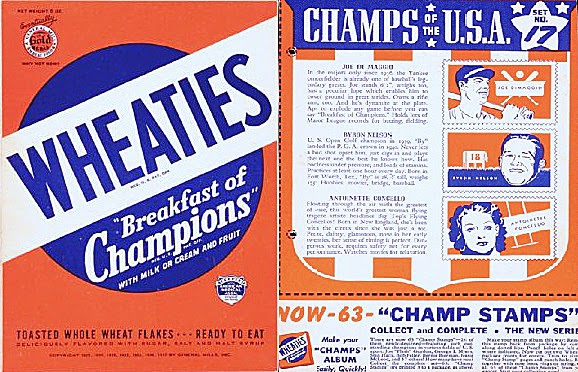
I still tell people to read cereal boxes. Though now they’re not as much fun because they talk about having less sugar and more fiber, and there are no prizes in the boxes because trial lawyers have made sure we can’t have fun things anymore. Even worse, there are hardly ever hidden pictures on the back of boxes now. I think the trouble began with Wheaties and their fancy profiles of sports figures. Give me a Toucan word search any day.

Sears Catalogs

I’m not so old that you could still buy a house or a bride in a Sears Catalog when I was a kid. But those catalogs were the Internet of my parents’ and grandparents’ generations. The descriptions of the items were persuasive—at least they were to me—and worthy forerunners of The J. Peterman Company catalog. The pictures were great, sure. Particularly in the early 1970s when the kid models started looking extra-excited instead of sitting there like mannequins. The Sears Catalog was the first place I saw a bra, and men’s underwear. A real education.

Encyclopedias

Our family set of encyclopedias had belonged to my dad’s parents (I think). Printed in the late 1940s, I remember using them for reports into the early 1970s. They seemed purely informational to me, but it was information that entertained. Even if the article was about turbines. Or airplanes. Or beetles or waterfalls pictured in black and white. My mom’s parents had an even older set, geared to children. My favorite volume had watercolor illustrations, and old songs and poems. I never memorized what volume it was, but I knew where it lived on the shelf.

Children’s Bible

I had no time for a grown-up Bible. I adored my Children’s Bible Stories, and tried to take it to church with me. I was probably nine years old before I realized it wasn’t actually a Bible. Until I started reading books like Black Beauty and Kidnapped and Sherlock Holmes stories, they were my favorite adventure stories. Nothing says adventure like chariots being felled in a tsunami, and a brawny guy with bloody eyes pushing down pillars.

Maps

Cue the Dora the Explorer song. I’m a map! I’m a map! I cut my reading teeth on my grandparents’ AAA maps –every page flip showed some new blue (or red) line to somewhere new. Even when we weren’t traveling, I could imagine where the lines led.

Okay. I feel better. The lawn guy has texted and says he can come soon and mow so I won’t have to hear the deer ticks mocking me as they sway atop our foot-tall grass.


Tell us: What were your earliest written word influences? 

Tribute to a Mentor

by Debbie Burke

@burke_writer

In the early 1990s, a successful screenwriter, producer, and military consultant named Dennis Foley left Hollywood to move to the small ski village of Whitefish, Montana. He’d been a popular writing instructor at UCLA and was now on the forefront of a brand new wave in education: online classes. He could live wherever he wanted, while students sent him assignments and manuscripts via email.

At the time, our local group, Authors of the Flathead, was a small rag-tag gang of hobby writers who fiddled around with words and supported one another in our fledgling attempts at publication. I’d sold my first story to a literary magazine that paid me a $5 check that bounced. A couple of other members wrote unpaid columns for weekly newspapers. Definitely not the big leagues.

We were the ignorant leading the inexperienced.

In a small town, it didn’t take long for word to get around about the new guy from Hollywood who had worked on hit TV shows like MacGyver, Cagney and Lacey, China Beach as well as motion pictures. The club president and I summoned our courage to invite this Hollywood big shot to speak at a meeting.

Dennis graciously said yes and he turned out to be anything but a Hollywood big shot. He not only spoke at that meeting, he came to the next, and the next. Pretty soon, he adopted Authors of the Flathead and was teaching our rag-tag gang the same material he was teaching at UCLA.

For free.

WOW.

He showed us how to become professionals. We learned plotting and organization. He taught us John Gardner’s terms like profluence, the sense of a story always moving forward; and fictive dream, the near-trance state when writers delve deeply into imagination to create a fictional world more vivid than reality. He urged us to take the reader into that world and gave us tips how to preserve the trance.

He explained schadenfreude (delight in the misery of others) and urged us to chase our characters up a tree and throw rocks at them. Conflict was the key to riveting fiction. If life went well for the character, it was bad for the reader; if life went badly for a character, it was good for the reader.

He recommended scenes in novels needed to accomplish four tasks:

  1. Reveal character;
  2. Increase conflict and tension; 
  3. Move the story forward;
  4. Foreshadow.

A really effective scene accomplishes all four tasks but at minimum a scene should include two or three.

He taught us that consistent daily production would carry us farther than occasional brilliant flashes of talent. He counseled us to lower our writing goals to a level we could meet, even if it meant only writing a paragraph or page a day. At a page a day, he often reminded us, in a year, you have a book-length manuscript.

Consistently meeting smaller goals was a better habit to develop than setting goals too high and becoming frustrated when you fail.  

For show and tell, he would bring us Oscar-nominated scripts to study, like Earl Wallace’s Witness.

Dennis had also published four military novels about Vietnam and a memoir about long range patrols. But he rarely talked about his own work; instead he concentrated on our work and how to improve it.

In addition to teaching, Dennis continued to polish his own craft, earning an MFA from Vermont College. He brought back fresh techniques and shared them with us.

Dennis’s one inviolable rule: Don’t bore the reader.

When we needed speakers for our group’s annual conference, he contacted Hollywood colleagues as presenters, contributing to its well-respected reputation. When the pros from New York and Hollywood attended, they invariably commented about how rare it was to find such camaraderie and helpfulness in a writing community. Dennis had set that tone and example that has remained our trademark.

After weekly meetings, we often adjourned to a restaurant for coffee and camaraderie. At one of those early gatherings, we asked Dennis why he shared his knowledge and experience so generously with us.

For the first time, I heard what became my favorite Dennis story.

Before his retirement as an Army officer, Dennis worked in Hollywood as a military adviser for films and television. Once, when a writer didn’t meet his deadline, Dennis was tasked to rustle up an emergency script overnight. He delivered and more assignments followed, even though he had no formal training as a writer. In fact, he’d nearly flunked English in high school. He freely admits he didn’t have any idea what he was doing.

Stirling Silliphant, the Academy Award-winning screenwriter of In the Heat of the Night, took then-newbie Dennis under his wing and coached him. When Dennis wrote himself into a corner, he would call Stirling, who always guided him to a solution.

One day, Dennis said to Stirling, “You have helped me so much, how can I ever repay you?”

To which Stirling replied, “Pass it on. If you don’t, you’re an asshole.”

Dennis took that admonishment to heart.

For nearly three decades, the Authors of the Flathead have been the fortunate recipients of his generosity and knowledge.

He taught us week after week, year after year, never accepting anything in return.

After our last meeting, Dennis and I were talking in the parking lot. His special forces years in Vietnam have taken their toll and long-term effects of Agent Orange are worsening. He expressed concern he soon may not be able to carry on the teaching he loves.

With tears welling, I hugged him and said, “We’ve had a good run.”

“A helluva good run,” he replied.

~~~~

Even though this post will embarrass the hell out of him, I had to write it because Dennis has shied away from recognition these many years.

The sum total is his mentoring has improved the writing of thousands of students and launched many of us to publication success.

But the most important contribution Dennis has given us is his generous spirit of sharing knowledge. He followed Stirling Silliphant’s admonishment to pass it on and far exceeded it.

THANK YOU, DENNIS. 


TKZers: Have you had a mentor who changed your life? What did s/he do to help you? 

Your homework assignment is to track down that special mentor (if they’re still alive) and tell them thank you. 

My 911 Sit Along

A couple of weeks ago I did a 911 ‘sit along’ as part of my citizen’s police academy. This came just a few days after after I’d heard presentations from our local SWAT and negotiation teams and, sadly, just a week or so before Colorado experienced yet another school shooting. Taken all together, not only do I have a renewed appreciation for the work of our local law enforcement but also a deeper understanding of the team effort that kicks into high gear when emergencies occur.

It was a relatively uneventful day when I did the 911 sit along, which meant I got the opportunity to have a more in-depth discussion with one of the operators about what it was really like to be a 911 dispatcher. First off, it is not for the faint of heart (obviously) or for those who can’t multi-task. Given the level of technology these days, dispatchers have to be able to cope with monitoring and entering data in at least three open computer screens (and that’s not including CCTV footage or maps that transmit police unit locations in real time) all while listening to to the multiple radio frequencies constantly transmitting in their ears, as well as actually fielding and dealing with the 911 calls coming in. The dispatcher I was assigned to was a veteran of the Aurora shooting (when 911 calls flooded all the local centers) as well as the many youth suicides that our community has, unfortunately, had to deal with in recent months.

Our local 911 center also fields all non-urgent calls to our local police department so I got to witness calls that ranged from the life-threatening (a driver passed out in his car in the middle of traffic) to the mundane (rabbit trapped in window well). Even on the day I was there, I saw multiple incidents being referred to our local school resource officers as well as the emails coming in to the 911 center via the local, anonymous tip line, Safe2Tell, about potential threats to local schools. It became increasingly clear that mental health calls are a huge part of our local 911 dispatcher’s lives and I got to witness the delicate balancing act local law enforcement plays in trying to mitigate against the overwhelming number of tips and calls they receive about schools and students. As the mother of two 8th graders, it was sobering indeed.

One of my key questions to the dispatcher I was assigned to, was how she dealt with the stresses of her job. Being married to a police officer, helped, she said, as he understood what she had to face and they could talk and decompress together. It was also clear that our local police department provides a supportive environment that ensures everyone receives the counseling they need, particularly after distressing events like the recent spate of teen suicides.

It’s hard not to reflect on the events of this past week, and not appreciate the role of both 911 dispatchers and law enforcement. I’m sure our local dispatchers fielded calls as local schools went on lockdown or, as my sons’ school did, secure perimeter, in response to the STEM school shooting. No doubt our local police officers rushed to the scene to provided backup before our victim advocates arrived on scene to help provide parents and teachers with the support they needed.

The police citizen’s academy has given me tremendous insight into how our local police department operates and made me realize how little I understood the complexity and role of our local 911 dispatchers. After spending just a few hours in the 911 center, my writer’s brain was whirring with possible characters and plots for a novel, but now, given the events of the past week, it feels like it’s all hitting a little too close to home…so I’m going to  put the book ideas aside and hug my teenage boys a little tighter instead.

Using the Argument Against Transformation to Strengthen Your Story

by James Scott Bell
@jamesscottbell

Today’s post is for structure fans. If you’re a dedicated pantser for whom any thought of form and function causes you to break out in hives, you have my permission to go play Candy Crush, for we are about to take a deep dive into the skeletal framework of storytelling.

This post was prompted by an email from a reader of Super Structure and Write Your Novel From the Middle. The gist of the email is below, reproduced with the sender’s permission:

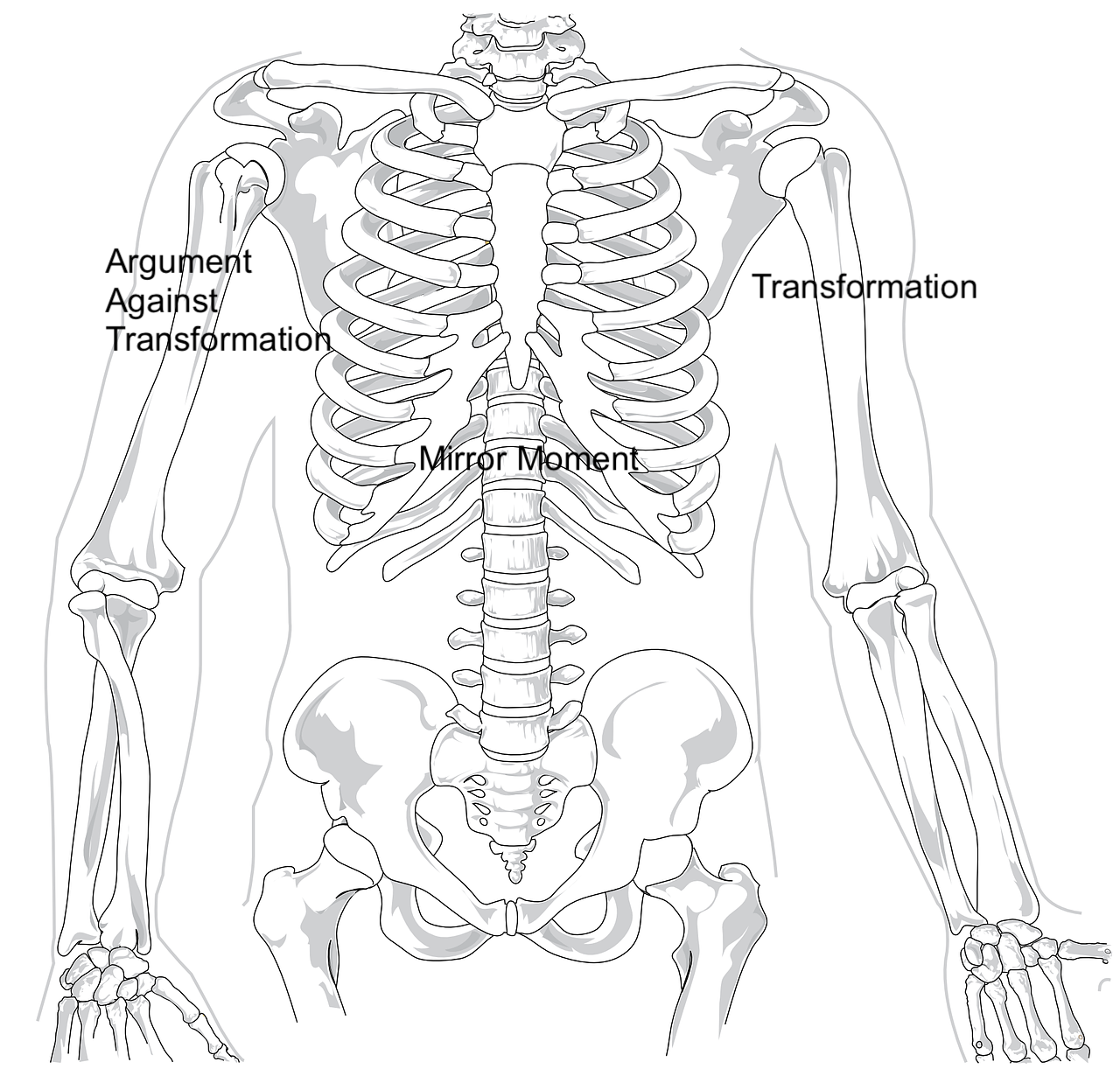
I’m planning a book that is plot-driven rather than character-driven, so as I look at developing my “Mirror Moment,” I know it’s going to be more about digging deep and finding the strength to face physical and/or psychological death (like in The Fugitive), rather than a specific need to change. I wondered how the twin plot points of “Argument Against Transformation” and “Transformation” worked in that case (since there isn’t an actual transformation)? Are those beats skipped in a plot-driven story?

This is a very intelligent question, and told me immediately that my correspondent has a real grasp of structure and what it’s supposed to accomplish.

He rightly points out there are two kinds of arcs for a main character: 1) he becomes a better version of himself; or 2) he remains the same person fundamentally, but grows stronger through the ordeal. (Note: both of these arcs can be reversed, resulting in tragedy).

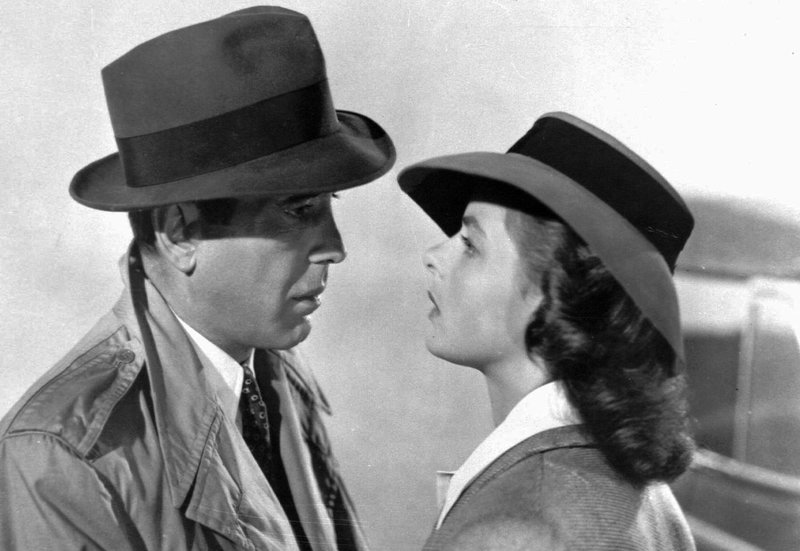
In books or movies of the first kind, such as Casablanca, you’ll often find a compelling beat, which I call “the argument against transformation.” It’s a setup move which defines the MC’s journey and pays off nicely at the end, with actual transformation.

Thus Rick, at the end of Casablanca, has transformed from a loner who has withdrawn from the community into a self-sacrificing member of the war effort. Remember at the  airport, when he’s explaining to Ilsa why they can’t go off together? “I’ve got a job to do, too. Where I’m going, you can’t follow. What I’ve got to do you can’t be any part of.”

And two minutes later Rick proves his transformation by shooting Major Strasser right in front of Louis, the French police captain.

Early in Act 1, we have Rick’s argument against such a transformation. That is, he states something that is the opposite of what he will come to believe—and be—at the end. He says it two times, in fact: “I stick my neck out for nobody.”

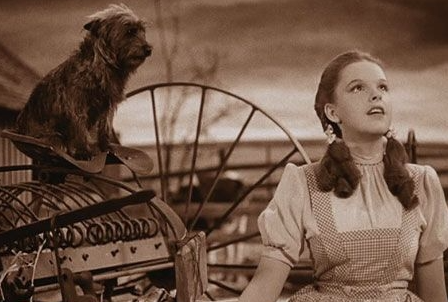
Another example: At the end of The Wizard of Oz, Dorothy has learned, “There’s no place like home.” But early in Act I, she argues against that notion. She tells Toto there’s got to be a place they can go where there’s no trouble, a place you can’t get to by a boat or a train. A place “behind the moon … beyond the rain …” (cue music).

That’s the first kind of transformation. But my correspondent was asking about the second kind, where the character does not change inside. Here’s what I wrote in response:

In the kind of story you describe, there is a transformation—from weaker to stronger. The hero is forced to survive in the dark world, and must become more resilient. So at the end he is not fundamentally a different person, but is a stronger, more resourceful version of himself.

In thinking about your question, it seems to me that the “argument against transformation” in a “getting stronger” story corresponds to what my friend Chris Vogler labels “Refusal of the Call” (in his book The Writer’s Journey). One example Chris uses is Rocky. When Rocky Balboa is first offered the chance to fight Apollo Creed, he says no. “Well, it’s just that, you see, uh…I fight in clubs, you know. I’m a ham-and-egger. This guy… he’s the best, and, uh, it wouldn’t be such a good fight. But thank you very much, you know.”

Implicit in that refusal is his belief that he’s not strong enough.

The transformation beat comes at the conclusion of the final battle, usually in the form of some visual that shows the stronger self. In Rocky, he’s got Adrian in his arms and adulation from the fans.

In The Fugitive, the argument against transformation is shown cinematically. After Sam Gerard (Tommy Lee Jones) arrives on the scene of the train derailment, we cut to Kimble running through the woods, his face etched with fear. In a book, you could put in Kimble’s inner thoughts about it. I know an operating chamber, not the streets! How am I going to survive?

The Mirror Moment is what holds these two ends of the spectrum together, which is why it is perfectly situated in the middle of a book. The protagonist has a moment when he’s forced to look at his situation, as if in a mirror (sometimes there’s an actual mirror in the scene!). He either thinks, Who am I? What have I become? Will I stay this way? (Casablanca); or, There is no possible way I can survive this…I’m probably going to die! (The Fugitive).

Now, if you pantsers have made it this far without your heads exploding, I congratulate you, and offer this word of comfort: you don’t have to think about structure before you start a project, or while you’re writing it. Go ahead, be as wild and free as you like!

But when the time comes (and it always does) when you need to revise and figure out why something isn’t working—and what you can do to make it work—structure will be there to help you figure it out.

Because story and structure are in love, and there’s no argument against that!

***

Gilstrap Watch: John reports that the surgery “went great.” He feels, naturally, like he “took a beating,” but expects to be “fine in a week or two.” Huzzah! (For those who don’t know what this is about, see John’s post from last Wednesday.)