
What is your snack of choice while writing?
If calories did not count (or mount), what would it be?


The longer I am cooped up behind my four walls, the more my mind wanders on how every day life will be changed by a life threatening virulent pathogen. When I thought the lock down would be for a month, I imagined it to be a vacation or an indulgence. But now that I see the virus invading all aspects of our lives – now and in the future – Covid19 will have an impact that we are only beginning to grasp. Similar to how 9/11 changed our sense of security in the world, how we traveled and how we fear “the other,” we will be defining this experience in new ways that will affect our writing too.
Writers at fanfiction.net are adapting very quickly to story lines that involve current events. They take their favorite TV shows or classic literature and add a COVID angle. Below are some spins I thought would give you an idea what I am writing about – my take.
1.) Imagine romance during the time of a pandemic. How would people “meet”? How would they practice social distancing & not jeopardize the important people in their lives? Is there an APP for that? Would they revive AVATARS to experience the physical aspects of a relationship from a safe distance? Let your imagination run wild. Stories could be romantic comedies or deadly angsty serious.
Picture a modernized version of ROMEO & JULIET where one family has antibodies but the other is pure blood and want to remain that way. Put two young lovers at the apex of a pandemic where governments must decide which family or race should be allowed to survive. A sick romance with a Hunger Games twist?
TAMING OF THE SHREW adaptation where genetics brings two unlikely & resentful lovers together for the sake of the human race’s survival.
2.) DOCTOR DOLITTLE UNDER QUARANTINE – A children’s book where the doctor only has animals to talk to.
3.) STEPHEN KING’S ‘IT’ ADAPTATION IN THE HORROR GENRE – where an isolated anti-hero has a lifelong neuroses about hygiene and disease and crosses the path of a vindictive serial-carrier (aka Pennywise, the clown). A series by the name of KILLING TIME.
4.) LES MISERABLES in a SciFi futuristic genre – Imagine a post-pandemic world where the politics of our time creates a rift between the classes. Rebellion born from pandemic and isolation.
5.) MAGAZINE SERIAL – For writers looking for a writer’s outlet. New York Magazine is looking for fresh takes on pandemic stories. Add the right amount of cynicism and angst with a vivid imagination, and you might sell your pitch.
What would happen if you wrote a series from the perspective of THE VIRUS? Think FANTASTIC VOYAGE (the movie) meets THE HOST (Author Stephenie Meyer-YA), a pathogen could be a sentient being (either from another planet or an awakened yet ancient species living deep in the rain forest until it’s disturbed). The only way they can survive is to inhabit a host and they live their lives by adapting to the human body and “living vicariously” through a larger host.
FOR DISCUSSION:
1.) Have you been thinking of writing a story influenced by Covid19 or a pandemic? Tell us about it.
2.) How would you reinvent a classic literature or more modern bestseller to inject it with a deadly virus? Get creative.
PANDEMIC PASTTIMES:
If you’re going stir crazy during the Covid19 pandemic, Audible is generously offering FREE READS at this LINK. I love audio books and listen to them most nights. I can’t wait to dive into these Audible gems. The star series of the lot is Harry Potter by J. K. Rowland but there are books for young readers as well as literary classics for all ages.
The Ears Have It
By Terry Odell
 As authors, we want to provide the best possible experience for our readers. That means providing a well-edited book, and the more reliable eyes on the manuscript, the better. But I’ve learned you need ears on the manuscript as well.
Skipping the ‘read it out loud’ editing pass means you’re going to miss things. Heck, even when you do read it out loud, you still miss things, because you’re too familiar with what you’ve written. Your eye sees what’s supposed to be on the page. That’s what you’ll read; that’s what you’ll hear.
Since I can’t afford a narrator to read the book aloud twice, and I don’t know anyone who’d be crazy enough spend the time to read the book to me, I investigated having my computer do the job. I’d tried it a long time ago, and the robotic voice was impossible to listen to. However, there have been improvements in the system, so I decided to give things another shot. Here’s what I discovered.
Disclaimer. I use Microsoft Word.
Word has two ways to have the computer read your manuscript to you, and since they’re part of Word, you don’t need to install (or pay for) another program. One is the Speak Selected Text option which I blogged about here.
The other option is Read Aloud, and here’s a peek at how it works. Note: “Read Aloud” offers a choice of narrators, which is nice to break things up. I chose the female voice for this section.
You can find more here.
Depending on your version of Word, you may be able to use one or both.
Whereas my audiobook narrators are performers, the Word guy who’s reading my text to me (I call him Fred) simply recites the words on the page. Unlike the audiobook narrators who sometimes leave out words, or substitute others, “Fred” is going to read exactly what’s on the page. For example, I’d read this paragraph countless times, as had my editor and crit partners.
She drove the up the dirt lane. A beam of sunlight shone through a break in the gray winter sky, reflecting off a sprawling white two-story house, as if to say, This is your light in the darkness.
No one saw the typo on any of their passes. Did you notice it? On the first read? Or were you paying close attention because I told you there was a typo? When “Fred” read it, the extra “the” jumped right out.
Listening forces you to go slowly. Depending on which option you use, you might be able to speed the read a bit, but you can’t ‘skim-listen.’ While “Fred” reads, I have the manuscript open. I look for wrong punctuation, improper spacing, and the like. If I catch repeated words that evaded my eyes but not my ears, I’ll fix those as well.
If Fred doesn’t know a word, he’ll spell it. Usually, these are acronyms, but sometimes it’s a word he’s not programmed for. Other time, his programming doesn’t work exactly right. In one instance, he read, “The paramedic inserted an four.” Can you figure out what I’d written? Answer at the end of the post.
There will be pronunciation errors. “Fred” doesn’t read in context. He doesn’t emphasize words in italics. He speeds up for dashes and hyphens. Our language is filled with heteronyms—words that are spelled the same but have different meanings. The computer doesn’t read context, so you’ll get the occasional jolt for words like live, read, wind, dove, close, bow, complex, and presents, but that’s good, because it makes you pay attention.
Other “fun” jolts come from Fred’s programming regarding abbreviations, as in “Joe came into the room and sat.” Fred read this as “Joe came into the room and Saturday.” Or, when the character said, “Wait a sec,” Fred read “Wait a section.”
No matter which method you choose, hearing a computer read exactly what you’ve written is a critical—and ear-opening—step in the editing process. By the time “Fred” and I are through the manuscript, I’m hoping to have a better product for my readers.
Is it worth it? I’d say yes, especially when you get a review like this one: “After reading so many books with poor editing, I was very happy to finally read a book without the distracting errors and I was able to enjoy the story.”
As for what I’d written: “The paramedic inserted an IV.”

Terry Odell is an award-winning author of Mystery and Romantic Suspense, although she prefers to think of them all as “Mysteries with Relationships.” Follow her on Facebook and Twitter.
Photo credit: Jaredd Craig – Unsplash
by Debbie Burke
Fiction writers play with imaginary friends whenever we create characters. We put them in a pickle and see what they do; pile insurmountable challenges on them; make them fall in and out of love; tie them to the railroad tracks and see how they free themselves. They become as close and familiar as our own family and friends.
We design how they look—short, tall, slender, heavyset, muscular, flabby. Choose the color of their skin, hair, and eyes. Grow a beard or mustache. Add scars, tattoos, piercings.
Some authors cut out photos from magazines to use as their models. Or they draw parallels to real-life actors, musicians, celebrities, or politicians in the news.
Others prefer to keep descriptions minimal. They paint a general picture but let the reader fill in the fine details.
I lean toward minimalist but have an image in my mind. Often that vision shifts in the course of a story because of plot needs.
The main character in my series, Tawny Lindholm, is a fiftyish recent widow. She’s smart but also naïve and too trusting because of her sheltered life in small-town Montana. As the story unfolded, I piled on more flaws that enhanced important parts of the plot and themes.
She’s far-sighted and can’t read small print without glasses—also a metaphor for her initial blindness to danger.
Her meniscus is torn, which hampers fleeing from bad guys.
I broke the poor woman’s finger (how cruel, right?), which caused arthritis and permanent swelling. That injury means she can’t remove her wedding ring and becomes part of her personality, tying in the theme of mourning and loyalty to her late husband. More importantly, that seemingly insignificant detail served as a key element in the plot, proving her innocence.
Have you ever experienced a character who shows up in real life, as if s/he had just stepped out of your computer screen? Recently, that’s happened twice to me in a couple of unlikely places.
First incident: my car needed new tires. The manager at Les Schwab was fiftyish, dark hair, barrel-chested, and muscular. He wore a blue uniform with his name on the pocket, hands a little dirty from showing tires to customers and helping out in the shop. His brown eyes twinkled with an inside joke he couldn’t wait to share. Although we kidded around as he wrote up my tire purchase, he was professional and business-like.
I don’t remember his real name because, to me, he was Dwight, Tawny’s dead husband. Through the series, Dwight occasionally appears in her memories with a joke or snippet of conversation.
Waiting time to install new tires was two hours. I grabbed a cup of coffee and a free bag of popcorn—at Les Schwab stores, you hardly smell the rubber because the popcorn aroma greets you as soon as you walk in the door (popcorn and coffee have since been discontinued since COVID-19). I settled in at a tall table, pretended to read a magazine, and did what writers love to do—people-watch and eavesdrop.
For two hours, I watched the real-life Dwight interact with other patrons, tire busters, and people on the phone. He was patient and polite with cranky customers, and firm but even-tempered when screw-ups happened in the shop. That twinkle in his brown eyes never wavered.
Not only did his appearance and manner exactly match the Dwight of my imagination, so did his personality. It was eerie but also thrilling.
Second incident: This happened in February while vacationing in Florida. When I’m there, I attend Zumba classes and, over several years, have gotten to know a number of regulars. I’m happy to reconnect with them because they’re loyal fans of my thriller series, bringing copies for me to sign, inviting me to talk to their book clubs, and eagerly asking when the next book will be out. They are terrific supporters for whom I’m very grateful.
One morning, I spotted a new woman in class—tall, willowy, with long red hair in a ponytail and a bright smile.
Tawny, my protagonist, in the flesh.
The woman must have thought I was weird because, for the next hour, I watched her instead of the instructor. After class, we chatted about dancing. She felt intimidated because it was her first time but she was game and didn’t give up. Persistence and determination are two major personality traits Tawny has and this lady checked off those boxes. She was also friendly, open, spirited, and a good listener. Check off more boxes.
After several minutes of conversation, I worked up the courage to tell her I was a writer and explained I’d been staring at her because she looked like the heroine in my books. Instead of being creeped out by a crazy old lady Zumba stalker, she was excited. A dozen other people who’d read the series also noticed the resemblance, affirming, “Yes! She does look just like Tawny.”
Her real name is Kim, a massage therapist from Minnesota and she was eager to read about her alter ego.
In #1, Tawny receives a confusing new smartphone that she believes is a gift from her son. The Instrument of the Devil actually came from the villain who tampered with the device as part of a terrorist plot. Tawny blames herself for the phone’s peculiar behavior when, in fact, he rigged it to stalk her and eavesdrop.
At the next Zumba class, Kim had read the first few chapters and said, “I totally identify with her struggles with the smartphone.”
As do all of us born before 1990!
A few days later, she finished the book and said, “She’s so much like me it’s giving me chills.”
That comment gave me chills.
As authors, connecting with readers is our best reward. But connecting in real life with characters we thought only lived in our imaginations is a close second.
This gracious doppelganger agreed to pose for a photo. Heeeeere’s Tawny!
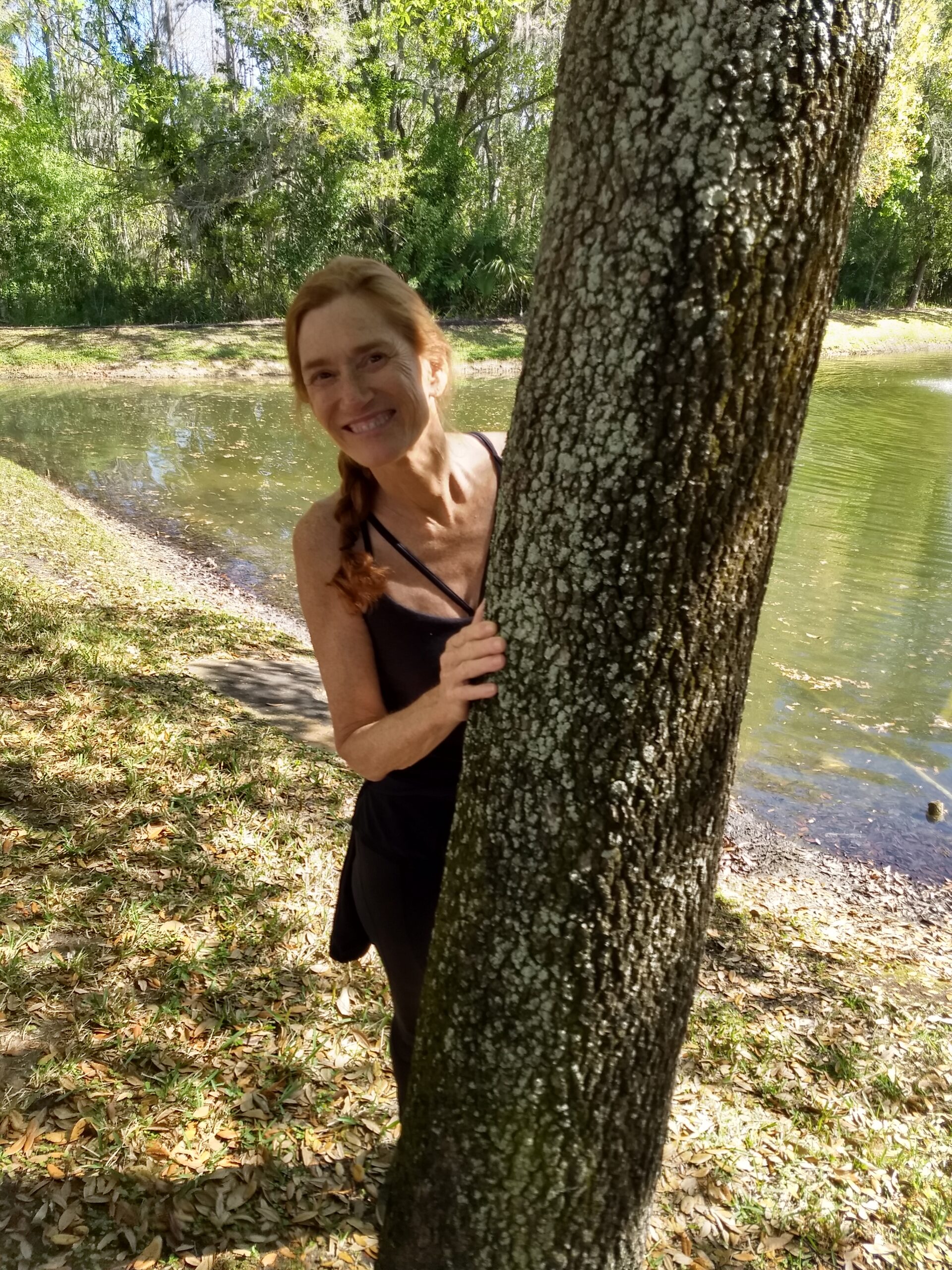
Kim AKA Tawny
A big thank you to Kim for being an inspiration. She’s also a great sport as I continue to make her life miserable in the next books, Stalking Midas and Eyes in the Sky.
~~~
TKZers: Has a character ever stepped out of your book into real life? What happened? Did their appearance match their personality? How were they different from what you envisioned?
Happy Post-Easter/Post-Passover Monday!
I’m sure you’ve seen the memes circulating around the internet offering up choices of authors for your ideal quarantine house. The first I saw on my Facebook page, gave the following author options (all, sadly, dead):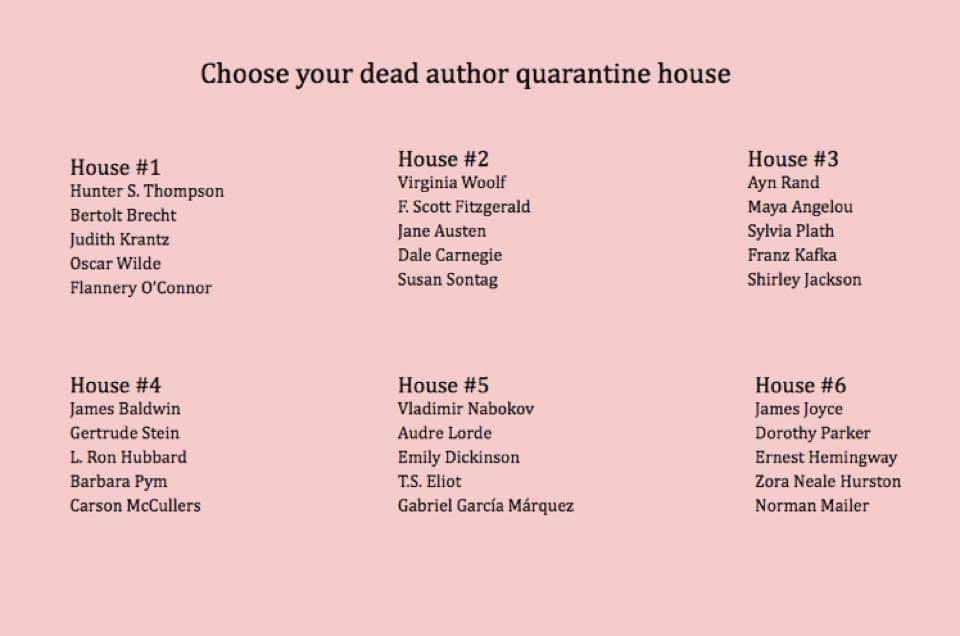
Apart from the fact that there are some weird juxtapositions on this list, I would be a definite for House #3…if only Ayn Rand wasn’t in it:)…though, to be fair, she would be a pretty interesting person to debate (and who wouldn’t be having some heated debates in an author quarantine house!).
The next quarantine author house choice meme I saw circulated was this:

For this one, I think House #1 is too good an opportunity to pass up (I mean, Stephen King!) and I, for one, would love to see the potential genre mash-up that could result from a collaboration between all the authors in House #1…
Finally, I saw this list, which was based on bestselling authors and which included, yet again, Stephen King (an obviously popular quarantine choice!):
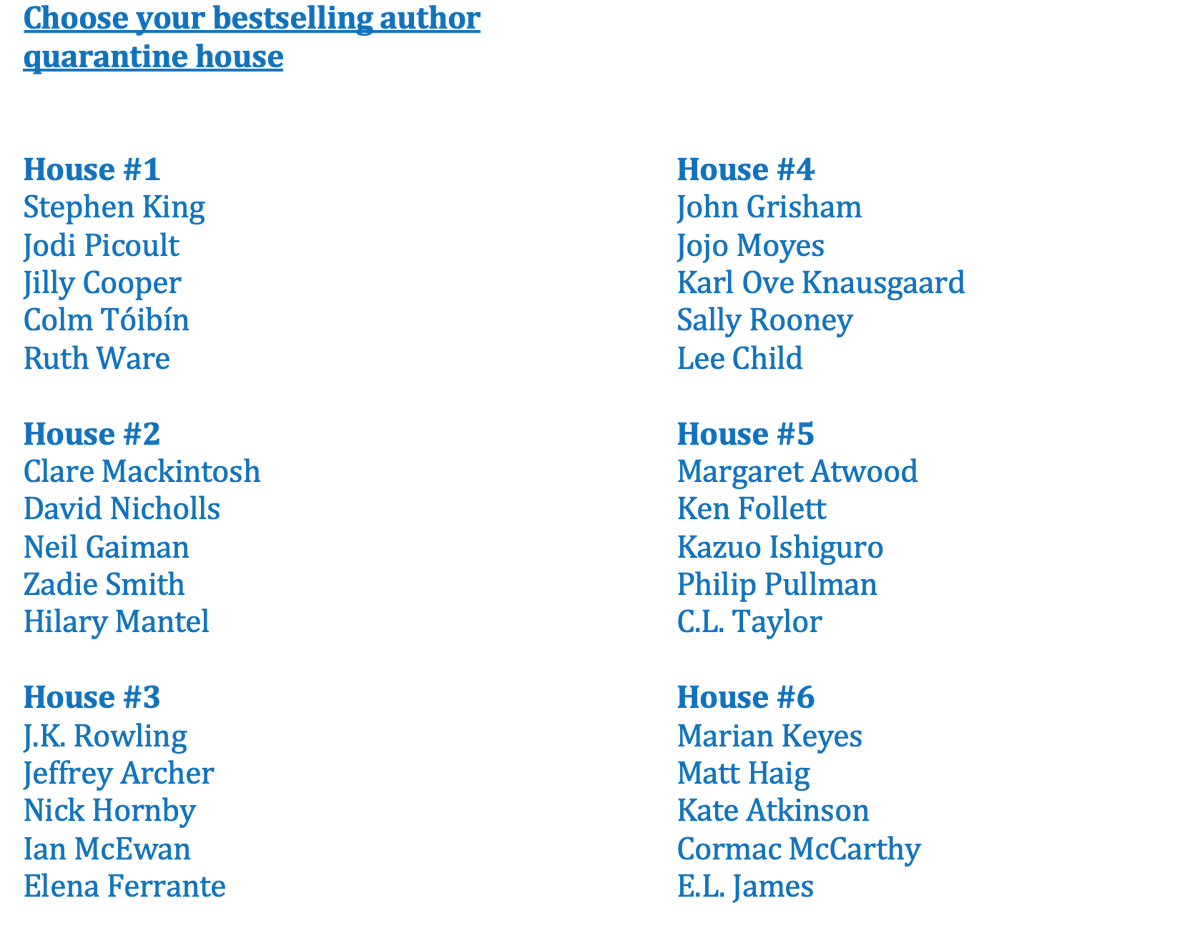
These house options posed the biggest dilemma for me – I mean Neil Gaimon would be awesome, but J.K Rowling would also be an amazing author to hang out with during quarantine, not to mention Philip Pullman…In fact, if I was to create a quarantine house based on this list of bestselling authors I would have all three of these authors plus Margaret Atwood and Kazuo Ishiguru…although given some of their versions of dystopia, things could get pretty depressing in that particular quarantine house!
All these memes are a fun distraction from the uncertainties and challenges of real life in the current lockdown and so I thought, why not create our own challenge here at the TKZ?!
To start things off – and get the ball rolling – I propose the following five authors for my own ‘ideal’ quarantine author house:
So TKZers, what about you? Who would you nominate for your author quarantine house??
by James Scott Bell
@jamesscottbell
The mind wanders, especially when forced to look at the same walls all day. Enter YouTube. It’s the great playground for the bored and stultified. It beckons us with its search engine, and cheerily sucks us into rabbit holes of delight. Instead of being force-fed what some news group wants us to see (and believe), or as an alternative to getting hooked on a ten-episode series that may, after all is said and done, end with a thud, we get to choose according to our own particular interests and attention spans.
Which makes watching old commercials on YouTube the perfect pastime. For some odd reason which I am not privy to, my brain brought up an old memory the other day of a commercial I’d seen as a kid. It was for Alka-Seltzer, which back in the 1960s put out a string of hilarious ads that went “viral” (in those days, that meant talking about things at the office water cooler).
The commercial I recalled was a mini-story about a professional pie-eating team (already that’s funny). It had the trope of the wise old veteran taking the rookie under his wing, complete with an iconic last shot—the vet turning around as he leaves, giving the kid a last wave.
I searched for it on YouTube, and there it was. Other commercials came to mind, and I found each one of them. And it struck me that in addition to their entertainment value, they also offer lessons for writers.
Let’s take that pie-eating team. What it teaches us is the power of EMOTIONAL CONNECTION. Even as we smile at the obvious satire, we are pulled in because we have experienced the real thing before—that story, that warmth. Once enthralled, they sell the product (which is, of course, the whole point of advertising!) Here it is, from 1967:
From there I went to another classic Alka-Seltzer ad. This one shows us the power of CONFLICT. In this ad a man argues with his own stomach over eating habits and heartburn. The animation is terrific, and the dialogue hysterical. (NOTE: the voice of the stomach is a young actor named Gene Wilder):
One last Alka-Seltzer ad, which is probably the most famous of all. I remember being on the schoolyard mouthing, “Mama Mia, that’s a spicy meatball!” all the time. Here we see the storytelling principle of OBSTACLES. They’re shooting a commercial for spicy meatballs that come in a gigantic jar. The doting wife serves her husband a big plate of spaghetti and meatballs. The husband eats a bit of meatball and utters the phrase above. But things keep going wrong, and they have to retake and retake. Which means, of course, the man has has to keep eating spicy meat. For 59 takes! Then they sell the solution: Alka-Seltzer. The kicker at the end of this ad is perfect. Also kudos to the actress, who is hilarious putting on her loving expression each time. First aired in 1969:
“Spicy Meatball” was the brainchild of the legendary agency Doyle Dane Bernbach (DDB), which was also responsible for another popular ad, one that the famous advertising man David Ogilvy called the funniest commercial he ever saw. It was for Volkswagen, which issued a spate of hilarious ads in the 60s and 70s. In this one, we get the concept of the JUST ENDING where everyone gets what they deserve:
An ad whiz at DDB, Robert Gage, came up with another “viral” commercial, one of the longest running of all time. It features two boys unwilling to try the new “healthy” cereal their mom has put in front of them. So they decide to test it on their little brother, Mikey. I’d put this lesson under the power of CHARACTERIZATION. Little Mikey says not a word, but his face is so doggone cute it charmed the socks off the nation:
Happily, John Gilchrist, who played Mikey, did not go the way of so many child actors. He’s had a good life, and currently works at MSG Networks, where he is director of media sales doing guess what? Negotiating with advertisers on TV ads.
By the 1980s, the world had changed. It was the era of the fast-paced, make-money-now go-getter. Federal Express caught that vibe better than anyone, and put out a string of commercials that worked at breakneck speed. Let’s call this a lesson on PACE. Here’s the first and most famous ad in that campaign (featuring the actual Guinness World Record holder as World’s Fastest Talker, John Moschitta Jr.):
The year 1984 gave us two unforgettable commercials. The first may be the most famous ever made. Directed by Ridley Scott and shown only once, during the ’84 Super Bowl, it announced the arrival of the Apple Macintosh. The THEME is unmistakable—a lone hero against the large, impersonal “system.” I remember seeing it, and got my first Mac shortly thereafter. And that’s all I’ve ever used since. In those early years using a Mac made you feel like a rebel, and oh so cool. Just like the commercial promised!
The other notable ad from ’84 gave the nation a catch phrase that lasted for years. It was for Wendy’s, and it was a huge success revenue-wise (as the ad men used to say), boosting annual revenue by 31%. Here we have the staying power of one, perfectly placed line of DIALOGUE (as in, “Go ahead, make my day” and “Here’s looking at you, kid.”) The phrase “Where’s the beef?” became so ubiquitous it even made its way into the 1984 presidential race. Democrat Walter Mondale used it in a primary debate to question the substance of his opponent, Gary Hart. Ouch.
Since this is TKZ, I’d be remiss if I did not include a THRILLER. And what is a thriller about? Impending death…something terrible could happen at any time! And certainly that is true of those great unsung heroes, the driving instructors:
No look back at classic commercials would be complete without a nod to one of the true geniuses of the ad game, Stan Freberg. He, more than anyone else, perfected the use of humor in commercials. So let’s call this a lesson on VOICE. Freberg’s was unique—wry, dry, biting—so you could almost always tell a Freberg when it aired. Here’s one of his best, a takeoff on the stodgy old domestic commercial where, for instance, a man comes home after work and sits down for dinner. He takes a bite and his expression says the meal just doesn’t make it. The next day the anxious wife tells her neighbor about it, and the neighbor says something like, “Maybe it’s your cooking oil. Here, try my Crisco.” You get the idea. There were innumerable ads of this type in the 50s and 60s. Freberg turned that whole trope on its head with this Great American Soup commercial starring Ann Miller:
So what commercial made an impression on you when you were a kid, and why do you suppose it did? What storytelling lesson or technique can you find in it?
And a Happy Easter to all, no matter where you’re holed up!
By Elaine Viets
 Here’s another first page by a Brave Author. Read it, and then let’s discuss it.
Absence of Truth
The letters on the envelope spelled out her name, Vanessa Barella but, they were neither written in ink nor typed. They were cuttings from a newspaper.
The envelope had no mailing address or return address. Not even a stamp, but somehow it had made its way inside Vanessa’s locked mailbox.
She unlocked her front door and placed her mail on the kitchen counter, then slipped off her high-heeled shoes. She threw her jacket over her grandmother’s chair that she didn’t have the heart to throw out. She poured herself a glass of wine and raised it to her lips while keeping her eyes fixated on the mysterious envelope. She broke the seal then removed the letter from inside.
‘I AM A GHOST AND I AM GOING TO KILL YOU’
The letter and envelope fell to the floor when Vanessa reached for the edge of the counter, to stop herself from falling. The rough grout cut into her skin as she held on tight. Vanessa gulped several breaths to slow down her breathing. When the blood restored to her brain and her vision cleared, she picked up the letter and envelope off her tiled floor and then removed her phone and wallet from her handbag. There was a business card in the pocket of her purse, and she dialed the number.
She brought the glass of wine to her lips. The line went quiet after the second ring. Wine dribbled out of her mouth and onto her silk blouse. Shit!
“Hello…, Mr. Cooper, it’s Vanessa Barella. I’m not sure if you remember me? I’m one of the legal assistants over at Anderson & Smith.” There was no response. “It’s a criminal law firm here in San Francisco. You do some private investigating for our firm,” she said. There was still silence. “Mr. Cooper, are you there?” Vanessa was about to hang up the phone when she heard Mr. Cooper’s voice.
“Sorry about that, had to find a quiet place to talk.”
“Mr. Cooper, I’m not calling you about a legal matter. It’s more of a personal one. I need your help.”
“I didn’t catch the name?”
“It’s Vanessa Barella. We’ve met a few times in the conference room. But we’ve mostly spoken over the phone.”
**************************************************************************************
This entry has possibilities, Brave Author, but it needs work.
There are minor typos, but having a misplaced comma in the first line is not a good idea. The errant comma should go after Barella. There’s a dropped “was” in this line: “When the blood (sic) restored to her brain . . .” You don’t need quotes around the ghost’s message. It’s in all caps.
Now, the opening: It’s not good and it’s not bad. It’s meh. And meh doesn’t sell books.
Here’s an example of a gripping opening, by John D. MacDonald:
“We were about to give up and call it a night when somebody dropped the girl off the bridge.”
Richard Stark opened Firebreak with: “When the phone rang, Parker was in the garage, killing a man.”
Hillary Davidson started The Damage Done this way: “It was the bright yellow tape that finally convinced me my sister was dead.”
Here are more first lines: https://www.crimethrillerhound.co.uk/first-lines
I know you can do better, Brave Author. You’ve dreamed up a fascinating scenario. You have the ultimate dead letter here – a ghost is threatening to kill Vanessa. Use it!
 The second major problem is Vanessa’s phone call. You’re trying to deliver information about Vanessa, and it’s a good ploy. But don’t forget how Vanessa is feeling. After all, she just got a death threat. She spilled wine on her blouse. She’s frightened to death. Make her that way. How about a version of this:
“Mr. Cooper, it’s Vanessa Barella. I’m one of the legal assistants over at Anderson & Smith.” Her voice shook. She was sick with fear. There was no response.
“You know, criminal law firm here in San Francisco. You do some private investigating for our firm.” Please, she thought, please answer. You’re my only hope.
There was still silence.
“Mr. Cooper, are you there?” Vanessa was about to hang up the phone when she heard [use Cooper’s first name] Cooper’s voice.
“Sorry about that, had to find a quiet place to talk.”
“Mr. Cooper, I’m not calling you about a legal matter. It’s more of a personal one. I need your help.”
“I didn’t catch the name.”
“It’s Vanessa Barella. We’ve mostly spoken over the phone.”
This critique is what’s known as a “praise sandwich”: criticism stuck between compliments. You’ve given us a good first draft, Brave Author. Now sit down and rework it. I want to read more about that murderous ghost.
*************************************************************************************************
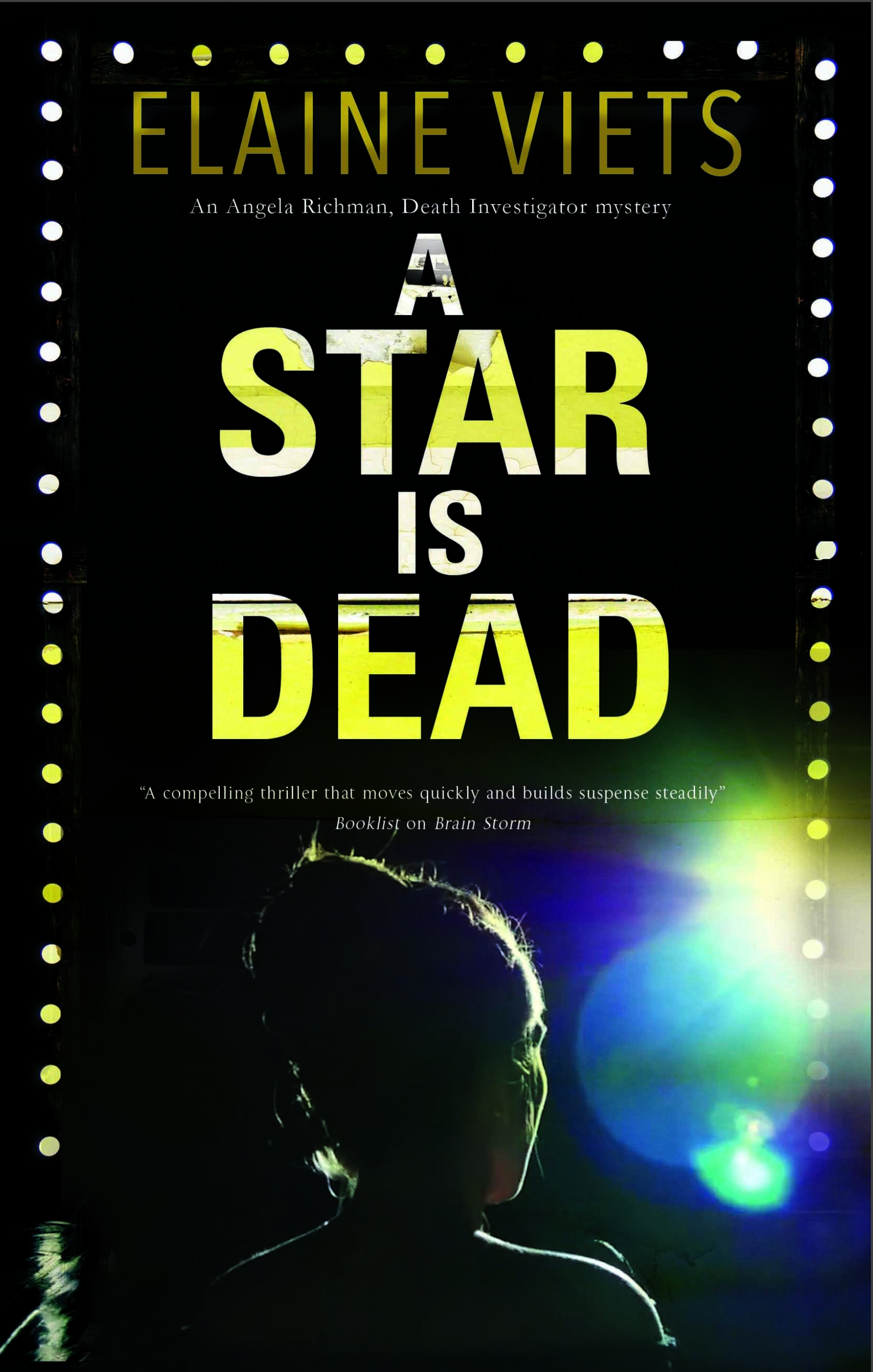 Get an autographed copy of A Star Is Dead, my fourth Angela Richman, death investigator mystery, and help an indie bookstore. Email Murder on the Beach Bookstore at murdermb@gate.net and I’ll donate $1 to Feeding South Florida (feedingsouthflorida.org) for every copy of A Star Is Dead sold at the Delray bookstore.
Over the past 25 years, I have been involved in seven movie projects. Producers have either purchased or optioned the film rights for four my books, and I have been signed five times to write screenplays. (The math doesn’t work because I was attached to write the screenplays for two of the adaptations of my books.) Notably, none of those films have yet to make it to the screen–except for Red Dragon, for which I was screwed out of a writer’s credit. No, not bitter at all. Grrr.
The movie business is sexy, it pays well, and is the most dysfunctional business model I’ve ever encountered. It’s a miracle that any film ever gets made. But clearly they do, so I thought I’d describe the process.
The Producer.
In the movie business, the title of producer gets thrown around a lot, and frankly, the term has a lot of different meanings. For my purposes here, I’m not talking about any of the vanity titles. I’m talking about the person who actually cares about the project and breaks his backside to bring it to life.
There’s an analogy between being a producer and being an author, but it’s a weak one. I’ll give it a shot, though.
As an author, you get an idea, you develop it, write it and polish it. When it’s done, every image is traceable to your imagination. You are the producer, director, cinematographer, stunt coordinator, costume designer and set dresser, all rolled into one.
In a film, the producer recognizes a “literary property” that he thinks would make a good film. So, he starts writing checks. All those union jobs that resided in your head are positions that need to be hired to make the film. A smart producer will write those checks with other people’s money–investors who trade their cash for a “producer” credit on the film. If it makes money at the box office, the investors do well. If it tanks, the real producer still gets to keep his producer’s fee.
Film Rights.
If you’re in the writing business long enough, you’re going to be approached by someone who calls herself a producer. Nine times out of ten, the pitch will go something like, “I’ll pay you a hundred dollars for the film rights to your book. I’ll shop it around Hollywood and if we get a deal, I’ll pay you a lot of money.”
That is your cue to hang up and run like a bunny rabbit. There is exactly ZERO upside for you in that deal. It’s an indicator that the producer is inexperienced, has no real contacts, and is trying to make a killing for herself off of your intellectual property. Your response to that proposal should be, “Pay me a good sum up front for the rights to shop the book around. If you get a deal, you’ll pay me a lot MORE money.” I believe that the up-front money should be enough to serve as an incentive for the producer to actually do something with it. It should hurt them if they fail to do their job.
Purchase or Option?
There are two main ways to structure your deal: An outright purchase or an option.
In a purchase, the producer buys the film rights to your book for all time. The contract language reads, “forever and throughout the universe.” I’m not making that up. The structure of the purchase will be as above–money up front (“front-end” money) which is paid in full when the contract is signed, and “back-end” money (often a significantly larger sum) which will be paid on the first day of “principal photography”, which means filming actors. Principal photography is distinct from, say, B-roll footage. Because they own the rights outright, the producer can take as long as they want to make the movie.
In an option, the producer essentially rents the film rights for a negotiated period of time, after which the rights revert back to the author, who gets to keep the check and shop the project around to other producers. Options have front-end and back-end money, but the front-end is generally much less than the back-end because of the additional risks posed by the ticking clock.
Options can be renewed. In fact, every option deal I’ve seen has an automatic renewal built into the contract, with the renewal period generally being half that of the original option (and for additional money). After that first pro-forma renewal, as the option period is about to expire, the producer can opt to extend it for a negotiated sum, but the author is under no obligation to grant the extension.
Series Writers Beware!
Every film contract, whether by option or by outright purchase, has a sticky and scary clause that grants the producer the production rights of specified characters “forever and throughout the universe.” For an option, the character rights expire with the option–unless the film gets made, in which case the clause will lock in forever.
A good friend of mine sold the rights to the first book in what has since become a long-running series to one of the major studios. The movie was made and did . . . okay, but not well enough in the minds of the studio execs to justify another film. Since then, as the book series has gone on to blockbuster business worldwide, my friend has been offered many other movie deals, but since that first studio owns the rights to his series character, he can’t take any of the deals. To make it even worse, the original studio has no desire to make another film; they’ve just set a ridiculous price tag for other producers to buy the rights to the series character.
Front-End Money is likely the only payment you’ll ever receive. Negotiate accordingly.
Many years ago, my film agent set my head right about the movie business when he told me that for a film to make it to the screen, a million things have to go right with literally nothing going wrong. Directors and stars drop in and out of projects, producers get distracted and lose interest. The latest film in a genre similar to yours tanks at the box office. Any of these things–and a thousand others–can tank a film before it’s ever made.
When negotiating a deal, treat it as if you’re never going to see another dime after you walk away from the negotiating table.
Do nothing without getting paid.
I can’t count the number of writers I’ve met who are so thrilled that a “movie producer” wants to make a movie or TV show out of their book that they essentially give away the option rights. Producers know that authors are easy prey and they take advantage. Don’t be a victim.
The best equivalent I can think of would be convenience store owner going to Coca-Cola and Nabisco and saying, “If you stock my shelves free of charge, I’ll pay you when I sell stuff.” It doesn’t work that way. Show some respect for your own intellectual property. If producer doesn’t have at least a few thousand bucks to invest in their own business (selling intellectual properties written by others), then they’re bottom-feeders who won’t hesitate an instant to throw you under the nearest bus.
Another truth about Hollywood: Everybody lies. This was the hardest adjustment for me to make when I was working on the Warner lot for a few months. Handshakes don’t mean a thing, and everyone knows it. There’s not a single person in any studio or production office who isn’t scared to death that they will be fired tomorrow. It’s the way the system works.
If it’s not in writing, it’s not real.
Don’t sign anything without consulting an agent or entertainment lawyer.
Hollywood is built on people’s dreams, half of them crushed. All contracts I’ve seen are dictated by California law, and the lawmakers know how important the film industry is to the economy. The standard option contracts are abusive to authors, reflecting the general disdain that Tinseltown has for writers. There are terms of art that are unique to the business. If you’re not careful, getting that option check might turn out to be the worst day of your professional life.
And you know what? I’d do another deal in a heartbeat.
By PJ Parrish
So I was cleaning out my old external drive the other day (I’m running out of things to organize during our sheltering time). And I found one of my unfinished manuscripts. It’s called Tarantella.
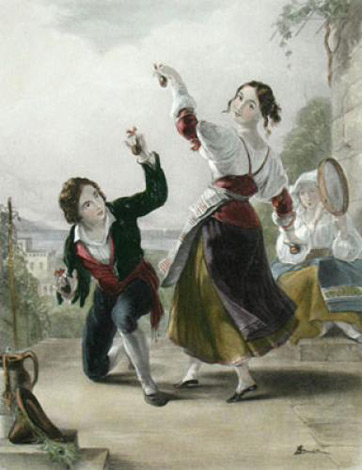
Yeah, yeah, I know. We should be careful about using foreign words in titles. (See Sue’s post yesterday). But this is a really great title, trust me. A tarantella is an Italian courtship dance that gets its name from peasant women working in fields and getting bit by the tarantula spider. The venom makes the women fall into a trance and the only cure is to sweat out the poison through a frenzied sexy dance.
Did I mention my manuscript was erotica? (A repressed American woman goes to Italy and meets a hot guy…fill in the cliches here). Now, when I was publishing romance and family sagas, I wrote a lot of sex scenes, but they were pretty tame, Burt-and-Deborah-on-the-beach stuff. Erotica, well, that’s a whole nother can of spiders.
It’s not easy writing really steamy sex.
Some writers are naturals at it. I remember reading Erica Jong’s Fear of Flying when I was twenty-two and being stunned. (Go here for first chapter excerpt…it gets good when she gets to Italian men). I wasn’t an erotica connoisseur, but every once in a while, I’d happen upon a writer who got it right. Like Anais Nin’s Delta of Venus. Like Joyce Carol Oates in her Monroe homage Blonde. Or like Anne Rice. Her vampire books are just a more upfront take on the eroticism that pulses through Bram Stoker’s Dracula. From Rice’s The Witching Hour:
She closed her eyes, feeling his lips on the back of her neck, feeling his fingers tracing the length of her spine. There came the pressure of a warm hand clasping her sex, fingers slipping inside her, lips against her lips. Fingers pinched her nipples hurtfully and deliciously … She felt herself being lifted, her feet no longer touching the floor, the darkness swirling around her, strong hands turning her, and stroking her all over. There was no gravity any longer; she felt his strength increasing, the heat of it increasing … She was floating in the air. She turned over, groping in the shadowy tangle of arms supporting her, feeling her legs forced apart and her mouth opened. “Yes, do it…”
So back to Tarantella. The only good thing about it is the title. The writing itself is cringe-worthy. Really bad. Just plain icky.
Which brings me to my topic for today — The annual Literary Review’s Bad Sex In Fiction Awards. I apologize, but I think I have a duty to bring this to light every year. We mere crime dogs need to know that even the literary lions can whiff bad at the plate.
Before we get to the winners, here are the short-listed entries:
I Told You To Take A Left At The Pancreas…
“He clung to her, crying, and then made love to her and went far inside her and she begged him to go deeper and, no longer afraid of injuring her, he went deep in mind and body, among crowded organ cavities, past the contours of her lungs and liver, and, shimmying past her heart, he felt her perfection.” –The River Capture by Mary Costello
 I Hear That Train a Comin’
Then I felt it. There was a sensation occurring here that I didn’t even know could occur. I took the sharpest inhale of my life, and I’m not sure I let my breath out for another ten minutes. I do feel that I lost the ability to see and hear for a while, and that something might have short-circuited in my brain – something that has probably never been fully fixed since. My whole being was astonished. I could hear myself making noises like an animal, and my legs were shaking uncontrollably (not that I was trying to control them), and my hands were gripping down so hard over my face that I left fingernail divots in my own skull.
Then I screamed as though I were being run over by a train, and that long arm of his was reaching up again to palm my mouth, and I bit into his hand the way a wounded soldier bites on a bullet.” — City of Girls by Elizabeth Gilbert

Don’t Know What a Slide Rule Is For…
“The actual lovemaking was a series of cryptic clues and concealed pleasures. A sensual treasure hunt. She asked for something, then changed her mind. He made adjustments and calibrations, awaited further instruction.” –Dominic Smith’s The Electric Hotel
Now to our winners. Yes, plural. In a shock announcement, the judges awarded the grand prize to two authors this year: Didier Decoin for The Office of Gardens and Ponds and John Harvey for Pax.
Decoin is a French writer who received the Prix Goncourt in 1977 for his novel John l’Enfer. In 1995 he became secretary of the Académie Goncourt. Harvey is a writer and a Life Fellow at Emmanuel College, Cambridge. He has written five novels, as well as essays and books on visual culture.
The judges said, “Faced with two unpalatable contenders, we found ourselves unable to choose between them. We believe the public will recognise our plight.”
Indeed, we will. Take a deep breath, we’re going in.
 Global Warming
“She was burning hot and the heat was in him. He looked down on her perfect black slenderness. Her eyes were ravenous. Like his own they were fire and desire. More than torrid, more than tropical: they two were riding the Equator. They embraced as if with violent holding they could weld the two of them one.” — Pax
Spank that Monkey!
Katsuro moaned as a bulge formed beneath the material of his kimono, a bulge that Miyuki seized, kneaded, massaged, squashed and crushed. With the fondling, Katsuro’s penis and testicles became one single mound that rolled around beneath the grip of her hand. Miyuki felt as though she was manipulating a small monkey that was curling up its paws. –The Office of Gardens and Ponds
It just doesn’t get any better than that.