A World Filled With Ideas

I often have the opportunity present talks and workshops here in Texas, and recently a lady raised her hand when I asked for questions or comments. “So where do you get your ideas for these novels you’ve written?”

“They’re all around us. I draw from the news, recollections, personal experiences, stories I’ve heard, and people who are great story tellers.”

“I never see anything I could put in a book, even if I could write.”

I laughed and told her about the Florida experience below.

The story in a nutshell.

I flew to St. Petersburg a few years ago and while driving to Sarasota in my rent car, heard two angry men exchange words. Only a mile later, I came across a beached sailboat full of drunks who were arguing with other inebriated individuals who’d been enjoying a quiet day on the sand.

I took what I saw and added some imagination…and the following paragraphs are the result of that question.

After flying down to St. Petersburg for a writers conference a few years ago, I rented a cherry red convertible and joined hundreds of cars headed south to Sarasota along Highway 41. That gulf coast ribbon of highway was stiff with vehicles, forcing us to proceed at school zone speed.

Except for the bumper to bumper cars and trucks, it would have been a peaceful drive down the old highway. The flow of traffic passing colorful old buildings, neat little vintage 1950s trailer parks, and palm-ridden mid-century motels kept me locked into place from one red light to the next.

At still another red light under a bright blue sky, I was startled when an angry, red-faced guy with a head bald as a cue ball pointed his finger in my direction and shouted over his female companion and through her open window. “Hey, you dread-headed fool! Get off your phone and pay attention to the damned highway. You’re all over the lanes!”

Startled by his verbal attack I had to study on what he said. I hadn’t been on my phone, so I knew he wasn’t shouting at me. Oh, and I don’t have dreads anyway.

A voice from my right yelled through his own open window. “Shut the hell up!”

I turned right to see a man with long dreads responding with vigor.

“The Bible says the word fool is the worst insult you can use, fool! And besides, it’s a free country! You and your mama need to mind y’own dayum business.”

Incensed, the woman beside Bald Guy immediately became enraged. “I’m not his mama, I’m his wife!”

Thinking I was kinda right there with Dreads’ unfortunate observation, my eyebrows raised when Bald Guy yanked the handle of his car and roared from the vehicle like an attack dog. “This free country you’re talking about gives me the right to come over there and knock your #@&%ing head off!”

The light changed and I drove off from between the combatants, leaving them to their philosophical, observational, and constitutional discussions.

The road forked half a mile later and I took the two-lane hugging the beach lined with palm trees. It wasn’t five minutes before I came up on a sailboat full of tanked partygoers heeled over in the shallow water directly in front of a beach packed with young sunbathers.

Traffic slowed even more, as drivers tried to watch what was happening. The pace was so slow that an ambitious turtle could have passed us without breaking a sweat, giving me the opportunity to absorb the scene in its entirety.

An equally sloshed and obviously visually impaired young man sitting on the sand with his girlfriend pointed and shouted. “Get that damned boat out of here!”

The mast stuck out over the beach, and the vessel’s annoyed occupants milled around the deck on a thirty degree slant. Again, a red light brought me to a stop in the middle of two armies so mad they could spit at each other.

“Can’t you see I’m trying for God’s sake!” A guy on the tilted deck braced his feet on the rail. “Whatta ya’ want me to do, get out and drag the sonofabitch back into deep water?”

A young woman barely covered by three Dorito-size triangles of thin blue material stood on her towel as if afraid of getting sand on her feet. “I don’t care how the hell you do it! Just get it out of here, you’re ruining our view!”

One of the many young men on the sailboat tilted a liquor bottle to his lips and swallowed before verbalizing his own opinion of the situation. “The view ain’t half bad from here.”

“I’ll ruin your ass!” A young man in colorful jams charged the listing sailboat.

The boat’s passenger with the view chucked an unopened can of beer at his attacker but missed and hit a previously uninvolved guy sitting on the sand.

In response, the offended beachgoer picked up the beer, and for some confounding reason, opened it before firing it back at the boat like a rocket. It struck the cockpit coaming right beside a young female passenger, spraying her tiny bathing suit with foam.

The return fire angered one of her other companions who then heaved another full beer at the beachgoers. By the time the light turned green, the air was filled with a barrage of glittering cans arcing in the sun.

The last thing I saw as the light changed was a young man on the beach, throwing handfuls of ice at the shipwrecked crew that was returning the frozen salvo with empty liquor bottles.

A landlubber woman shrieked. “No glass on the beach for chrissakes!”

And the battle faded into my rearview mirror as I resumed my pleasant drive to Sarasota.

Where do plots, characters, and ideas come from?

They’re all around us. Authors simply need to grab one and ask themselves…what if, and expand on that two-word question.


Reader Friday: Crossword Puzzles

The first crossword puzzle was published December 21, 1913, in The New York World by British journalist, Arthur Wynne. 109 years later, crossword puzzles remain wildly popular. A Google search revealed 10 free online crossword puzzles on the first page.

Being slow on these matters, I wondered, Are there free crossword puzzle builders? And, yes, there are. Here’s an article that lists “the best,”

What could be the benefit of using crossword puzzles for businesses or creatives? Well, here’s a link to that article:

And, being trained to keep asking, “What if,” and to think outside the box, I wondered if anyone is using crosswords on their blogs to engage readers.

So, I thought I would ask you, the TKZ community:

Here are today’s questions:

  1. Do you do any crossword puzzles?
  2. Why do you do them?
  3. Which ones do you like best?
  4. Have you ever thought of using crossword puzzles in your blogs to engage readers?

Interview with a Vampire Mother: Charlaine Harris

By Elaine Viets

Charlaine Harris gave birth to vampires, werewolves, fairies, and other supernatural creatures in her Southern Vampire series. Charlaine breathed new life into musty old vampires, building a vibrant, complicated world in the small town of Bon Temps, Louisiana, centered around Sookie Stackhouse, a waitress who hears what people are thinking. And that was just the start. Because a big-deal TV writer and producer was early for a dentist’s appointment, “True Blood,” the HBO series based on the Sookie books was born.
Charlaine seems like the nicest possible southern lady, but she has a delightfully twisted mind (and I say that with admiration). Full disclosure: I’ve known Charlaine for many years and we have the same agent.
Enjoy this conversation with Charlaine Harris.

Grand Master Charlaine Harris and her husband, Hal Schulz, at the Mystery Writers of America Edgar awards

EV: Congratulations on being named the 2021 Mystery Writers of America Grand Master – or is it Grand Mistress? How did you feel?
I was beyond excited when Greg Herren, MWA’s executive vice president, called me. He left a message on my phone, telling me not to worry, it was good news. I hoped that it was the same good news he gave me when we finally connected. Looking at the names of the other Grand Masters, I am humbled. Being on this list is amazing.
EV: Charlaine has been added to the roster of Grand Masters that includes Jeffery Deaver, Barbara Neely, Peter Lovesey, Walter Mosley, Robert Crais, Ken Follett, Martha Grimes, Sara Paretsky, James Lee Burke, Sue Grafton, Stephen King, Mary Higgins Clark, Alfred Hitchcock, Graham Greene, and Agatha Christie.

EV: Where did you get the idea for the Sookie Stackhouse Southern Vampire series?
The idea for Sookie’s world first occurred to me quite some time before I began to write the series. It gradually began to form in my brain, and then when I had it mostly settled, I was able to write the books. I still made a lot of spur-of-the-moment decisions. (I always do.)

EV: Was Sookie a hard series to sell?
My poor agent, Joshua Bilmes, tried for two years to sell DEAD UNTIL DARK before John Morgan at Penguin took the book. (It was published in 2001.) That was the hardest sell I’ve ever had.

EV: Why did you end the popular series?
I decided to end the series because I had said everything I had to say about Sookie and her world. I’d reached my goal. It was a controversial decision, but I couldn’t face trying to write another book with my former zest.

EV: Was the ending of the series, when Sookie chooses the man she’ll marry, controversial with your fans? Is it true you needed a bodyguard for a while?
The ending was controversial, for sure, because some key elements got leaked before the book was even out. The book didn’t get a fair chance, and a lot of readers were very angry. I started to hire a bodyguard, but instead I just stayed home. That was a smart decision.

EV: What did you write after Sookie ended?
I wrote the Midnight, Texas books after I finished Sookie, and then I felt ready to write something completely new and different.
EV: The Midnight, Texas trilogy became another TV series on NBC for two seasons.

EV: Tell us about your latest series, featuring Gunnie Rose. It’s one of my favorites.
The world of the Gunnie Rose series is complex, and I have to be aware of a lot of history when I’m changing it to suit my narrative. America is split into parts following the assassination of Roosevelt, the Spanish Flu, and the collapse of Wall Street. Lizbeth Rose, a gunslinger by trade, lives in Texoma, the poorest of the new countries.

EV: AN EASY DEATH is the title of a Gunnie Rose novel. What does that mean?
“An Easy Death” is what gunnies wish each other. It’s a traditional farewell for gunnies going out on a job. It means, “I hope you don’t get gutshot. I hope you pass quickly.”

EV: Your vivid novels have been successful on TV. Alan Ball made the Sookie series into “True Blood” on HBO. How did Alan discover Sookie?
Alan told me he was early for a dentist appointment and went into a Barnes and Noble to get something to read. He loved the cover of DEAD UNTIL DARK and began reading. He loved it.

EV: You’ve also had several Hallmark movies based on your Aurora Teagarden mysteries. Is there another one coming up?
There are eighteen Hallmark movies in the Aurora Teagarden series on Hallmark. Since Candace Cameron Bure is leaving Hallmark, there may not be any more. But again . . . well, it’s up in the air.

EV: What’s the best part of your mega-success?
Not having to worry. And making friends with other writers. And buying a book if I want it.

EV: What’s next for you?
The fourth Gunnie Rose, THE SERPENT IN HEAVEN, will be out in November, I’m working on the fifth, and I don’t have a title for the one I’m writing at the moment. It’ll come to me, I hope.

Treat yourself to Charlaine Harris books at your favorite bookstore, online at Amazon and Barnes and Noble, or the Book Depository: https://www.bookdepository.com/author/Charlaine-Harris/

The Nearest Exit May Be Behind You

The Nearest Exit May Be Behind You
Terry Odell

scene endingsKeeping readers turning pages is a big thing for authors. Who doesn’t love a message saying “I stayed up all night reading your book”? I’m closing in on ‘the end’ of my first draft of my new book, Cruising Undercover. One of the things I look at on my read through is how I end my scenes. Will a reader be invested enough to turn the page? This is a topic that’s been covered here before, but even though I’m writing novel number thirty-something, it’s a piece of the craft I have to revisit every time. I thought a refresher or reminder might be worthwhile.

I’m a “self taught” author. That’s not to say I never took classes or workshops, but I was a Psychology major/Biology minor in college. I took the requisite English classes—the ones you couldn’t graduate without. I got decent grades, but I learned more about how to string words together in high school than in those few college classes. I never took a “How to Write” class. The writing courses I took were at conferences or online.

Writing began as a whim. Could I do it? When that moved from writing fan fiction to attempting an actual, original novel, I simply sat down and wrote. My first manuscript was my writing class. That manuscript was one long (140K words) puppy. And there were no chapter breaks. That’s not to say I was trying to avoid using chapter breaks. Rather, it was because I didn’t really know where to put them.

Readers look for reasons to put the book down. They have chores, or work. Kids. Schedules. Bedtimes. Chapter breaks are logical stopping points. Long before I started writing, I learned that if I was going to get any sleep, I had to stop reading mid-page.

A former critique partner referred to these endings as landings. Others have called them hooks.

What makes a reader say Okay, I’ll read a little longer?

Cliffhangers are a tried and true way to get readers to keep going. Leave the character with a dilemma. Jump cuts have been discussed here as well. Since most of my books have alternating POV characters, I often leave one character hanging while I shift to the other’s POV. Since these POV shifts mean each scene has to be a mini-chapter, they need their page-turning landings.

They don’t always have to be character in peril cliffhangers.

You can leave readers with a question they want answered. It could be a phone ringing or a knock at the door. (I use these too often in my first drafts and have to go back and mix things up. You don’t want your chapters to be monotonous or predictable.)

Short chapters, or short scenes are another way, which seems to be a current trend. I recall a workshop given by the late Barbara Parker who told of going to the pool in her apartment complex and asking a woman reading there if she liked the book. The answer, after a moment or two of reflecting, was, “Well, the chapters are short.”

**Personal note: I’m not fond of the super-short chapter. To me, it screams gimmick. Not only that, in a print book, it’s an extreme waste of paper. It’s as if the author or publisher is trying to meet a page count quota and all those short chapters make the book seem longer than the story actually is.

Back to my learning the craft of landings. When I went back and added breaks to my endless tome, I discovered that I’d ended every chapter or scene either with someone driving away or going to sleep. They were, to my still learning the craft mind, logical stopping places. But not exactly page-turners.

More often than not, the best exit was behind where I’d put my break. I’d gone too far, feeling the need to wrap things up. Sometimes a sentence or two was all I needed to cut—usually those extras leaned into telling rather than showing. Sometimes several paragraphs. Once I accepted that those words might still be good, they just weren’t good where they were sitting, it was easier to cut them. I hardly ever needed them, but I felt better knowing that hadn’t been destroyed.

An example of a scene ending from a very early version of what ended up becoming Finding Sarah:
Sarah didn’t care; she cried great gulping sobs until exhaustion overcame her and she slept.

A better version of the ‘end with bedtime’ scenario adds a question:
As she drifted off, she heard a man’s voice from the main house. Had Jeffrey come home?

Here are a couple of examples of “non-cliffhanger, non-action-filled” chapter endings:

From Forgotten in Death, by JD Robb:
Kneeling, she pulled off the work gloves, then resealed her hands. And took a closer look at her second and third victims of the morning.

From A Thousand Bones, by P.J. Parrish
He took another drag on his Camel. “Maybe I will have something else for you as well.”
“What?” Joe asked.
He smiled. “A little surprise.”

What about you TKZ peeps? Do you struggle with ending scenes and chapters? Do you tend to overwrite? What tips can you offer for keeping readers turning pages?


Available Now. In the Crosshairs, Book 4 in my Triple-D Romantic Suspense series.


Terry Odell is an award-winning author of Mystery and Romantic Suspense, although she prefers to think of them all as “Mysteries with Relationships.”

First Page Critique – A Study in Suffering

Image credit: Pixabay

By Debbie Burke

@burke_writer

Today, let’s welcome another Brave Author with a first page submission that’s described as an adaptation of Sherlock Holmes set in the future. Please enjoy then we’ll discuss.

A Study in Suffering

Ch. 1

“I’m sorry for your loss miss. Very sorry.” But right as the words leave his lip he glances down at his watch. The foot vibrates from his jostling foot.

“How did she die?” The words are strange, foreign. They leave my mouth, but I know they don’t come from me.

His features contort into a twisted pretense of sympathy. “I’m sorry, it’s classified. All you’re permitted to know is that it was an unexpected attack by one of the Betrayers. It’s not my choice, this is all that I know.”

I nod, but after a moment ask “You don’t know which one? Why would that be kept classified?” I’m once again shocked by the numb coldness of my words.

“I’m sorry, but I honestly don’t know. I’m sure you will be told more at a later date. Oh, and i do know that the prime minister will be reaching out to you soon.”

I stare at him.

“Now I truly am sorry miss, but I must go.” He practically runs out the door.

I remain frozen, practically glued to the seat. Then the tears come.

He was supposed to stay for at least a half-hour, but he left halfway through. That’s why it takes fifteen minutes for the secretary to find me, trembling in the chair, tears merging with mascara to create trails of grief running down my face, paper clenched so tightly in my hands that they turn a shade quite similar to it. The paper reads: Valentina Watson, died fighting in combat, 5:55 pm.

My sister is dead

~~~

Let’s dig in. Quotes from the original text are in red. My suggestions are in blue.

The chapter starts with a major upheaval in the life of a character who’s presumably the protagonist. Her sister has been killed in combat and the circumstances of her death are murky. Questions are immediately raised in the reader’s mind. What happened and why is the death is “classified”? Those are excellent hooks with which to begin the story.

However, typos distract from an otherwise promising start.

“I’m sorry for your loss [missing comma] miss. Very sorry.” But right as the words leave his lip [missing s] he glances down at his watch. The foot vibrates from his jostling foot. [this doesn’t make sense.]

…but after a moment ask [missing comma] “You don’t know which one?

“Oh, and i [needs to be capitalized] do know…”

“Now I truly am sorry [missing comma] miss, but I must go.”

My sister is dead [missing period]

Setting: The conversation between the POV character and an unidentified man floats in a vacuum. Is this taking place at her home or work? At military headquarters? Or somewhere else? The reader has no idea.

That’s why it takes the secretary fifteen minutes to find me… This line suggests the location might be a large government office but it’s not clear.

Grounding readers in the fictional world is important. If they have to guess where the action is happening, that not only feels unsettling but also lessens the impact of compelling questions about Valentina Watson’s death. Instead of being pulled into the story, readers are trying to figure out where they are.

This scene is probably crystal clear in the Brave Author’s head but it didn’t quite make the transition from brain to page.

Here’s one possibility to add hints about the place.

“I’m sorry for your loss, miss. Very sorry.” The uniformed soldier sits in a straight-back chair opposite me in a closet-size alcove at the British Embassy. Right as the words leave his lips, he looks down at his watch and crosses his legs. One foot jostles incessantly.

Mood: The characters’ dialogue and actions establish a tense, highly-charged mood for this opening scene. A terrible event deeply affects the POV character yet she is denied answers as to why her sister died. The mention of the prime minister foreshadows a brewing national or international crisis with high-stakes repercussions. Great job!

Character names and functions: First-person POV makes it difficult to introduce the main character’s name without feeling stilted and forced. However, there are a couple of chances to give her name in a natural-sounding way:

“I’m sorry for your loss, Miss Watson. Very sorry.”

Another option is to insert her name in the paper she’s been given: The paper reads: Valentina Watson, died fighting in combat, 5:55 pm. Notify next of kin, XYZ  Watson.

Brave Author effectively shows the obvious discomfort of the man who delivers the bad news. I’m guessing he’s probably a walk-on character whose name isn’t important to the story. But identifying his job or function would add valuable background information.

For instance, is he a flunky bureaucrat in a business suit? A doctor or nurse wearing blood-stained scrubs who’s just come from the field hospital where Valentina died? A reluctant grief counselor who’s supposed to stay with the bereaved sister for half an hour but runs out after 15 minutes?

Protagonist’s reaction: Brave Author shows her shock but the phrasing is a bit awkward.

Original: “How did she die?” The words are strange, foreign. They leave my mouth, but I know they don’t come from me.

Suggestion: The words come from my mouth but they sound as if a stranger is speaking.

Original: I’m once again shocked by the numb coldness of my words.

Suggestion: The cold, detached tone of my questions surprises me. How can I sound so calm?

Original: I remain frozen, practically glued to the seat. Then the tears come.

Try to avoid the cliché practically glued to the seat.

Original: “…tears merging with mascara to create trails of grief running down my face…” I like this description a lot because the image nicely combines physical and emotional reactions. However, it’s a minor lapse in POV—she can’t see her own face unless she’s looking in a mirror. Still, I’d keep it because it’s strong and vivid.

Suggestion: My muscles are numb, useless. I can’t rise from the chair. My eyes fill, tears overflowing and merging with mascara to create trails of grief running down my face.

Use the paper clenched in her hand to add more information.

Suggestion: My clenched hand turns the same shade as the crumpled white paper I hold—official Army letterhead that reads Valentina Watson, died fighting in combat, 5:55 pm.

Story questions: The man states: “All you’re permitted to know is that it was an unexpected attack by one of the Betrayers.” This is a great sentence that provokes many questions.

Who has the vast power to decide what information the surviving sister is allowed to know? Why was Valentina in combat? Who are the Betrayers? Why are the details classified? What is Valentina’s importance that causes a prime minister to become involved?

Time: As written now, the encounter between protagonist and the man lasts about 15 seconds rather than 15 minutes. What else happens during the rest of the conversation? Why is it supposed to last a half hour? Is this particular detail about time important? If so, give a hint why.

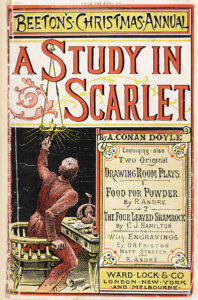
Photo credit: Wikipedia, First edition 1887

One last observation: The book is described as an adaptation of Sherlock Holmes set in the future. I’m guessing the Watson sisters are descendants of Dr. John Watson? The title A Study in Suffering could be a takeoff on A Study in Scarlet. Making the connection at this early stage is not necessary but the Brave Author will need to address that at a future point.

Overall impression: Brave Author, you quickly establish disturbance, tension, and mystery. The strange circumstances of Valentina’s death are compelling. The unanswered questions make the reader eager to learn more. But this first page is too bare bones. Flesh it out and it will be a good start.

Nice work, Brave Author! Wishing you the best of luck!

~~~

TKZers: What’s your impression of this first page? Would you keep reading? Any ideas for the brave author?

~~~


My new thriller, Until Proven Guilty, raises troubling questions about DNA evidence that’s supposed to show proof but may not.

Available at these online booksellers. 

Or ask your favorite independent bookstore to order it. 


Iron Sharpens Iron — The Wright Brothers

“Before the Wright Brothers, no one working in aviation did anything fundamentally correct. Since the Wright Brothers, no one has done anything fundamentally different.”

– Darrel Collins, US Park Service, Kitty Hawk National Historic Park

* * *

The incredible story of the Wright brothers is well known to all elementary school students. At least it used to be. Two men, neither of whom had completed high school, solved a problem that had been around since the time of Icarus. A problem so complex that it had befuddled some of the best engineers and scientists for centuries — the invention of controlled, powered flight.

How did they do it?

A March 2020 article in Scientific American aimed to answer that question:

Aviation pioneer Octave Chanute predicted in a speech in 1890 that “no one man” was likely to possess the imagination, mechanical acuity, mathematical capability and fundraising skill necessary to solve the problem of flight. “It is probably because the working out of a complete invention requires so great a variety of talent,” Chanute said, “that progress has been so slow.”

Chanute was correct. It did take more than one person to solve the problem of flight. It took two. Working together to solve the hundreds of issues that stood in the way of the first flight, the Wright brothers proved to be the perfect team, combining intellectual curiosity with mechanical expertise, hard work, and dogged determination to find the solution.

But in addition to all the natural talent and discipline, the brothers had another attribute that may have been the catalyst: they argued with each other.

But wait. Isn’t argument always bad? Apparently not.

The Wright brothers’ respect for each other made it possible to work together and argue every aspect of the project without having it affect their personal relationship. This may have been the deciding factor in their success.

Back to Scientific American:

They often argued about the technical specifications of their craft late into the night. After one particularly heated argument about the proper construction of the propellers, they found themselves in the ridiculous situation of each having been converted to the other’s original position in the argument, with no more agreement than when the discussion began. They argued because they sought truth, not because one brother desired to win a victory over the other.

The Wright brothers achieved their remarkable success because of their arguments, not in spite of them. I think there’s a lesson here for all of us.

* * *

I’ve had the good fortune to have worked with software development teams to design several systems. I’ve found the best teamwork is enabled when team members leave their egos at the door and engage in robust discussion about how to get the job done. Ideas are floated and team members are encouraged to poke holes in them and find alternate solutions to problems. Disagreeing without being disagreeable is the goal.

* * *

How does this apply to writing? Authors often find themselves on the receiving end of criticism and rejection. Feedback from editors, agents, critique partners, and even spouses can feel like cold water thrown on a writer’s best effort. And then there’s the occasional less-than-glowing review posted after the book is published. But sometimes even the harshest criticism given in a positive way will culminate in a better product and a better writer.

“Iron sharpens iron, and one man sharpens another.” –Proverbs 27:17

* * *

So TKZers: How do you handle criticism? Do you see it as “iron sharpens iron”? What advice would you offer new authors on the subject?


TIME AFTER TYME

Murder with a dash of humor


The First – “TKZ Words of Wisdom” post

Now and again we reach back into the TKZ archives for some timeless advice and offer them to you for discussion. Please reply, riff, or rant in the comments and interact with each other!

Write what you know. Good God, how many times have we heard that over the years? As if Jack Ryan was Tom Clancy’s pseudonym, or Lincoln Rhyme Jeffery Deaver’s. For way too many years, that write-what-you-know counsel was a real problem for me. I grew up in suburban DC, a middle-class white kid with no respectable non-academic. What the hell was I supposed to write about that was, you know, interesting?

As I got a little older, I came to realize what my writing instructors really meant with that cryptic advice: you have to be convincing. Unless you’ve loved, you’ll never be able to write about it convincingly. Until you’ve had a child and you’ve surrendered that part of your soul to another human being, I don’t think you can write parental angst in a way that will convince parents who are living it. It’s not about relaying events that you know; it’s about conveying emotions that you’ve experienced. – John Gilstrap, August 2008

***

I got an email the other day from a beginning writer who was working on her first book. She had read some of my novels and enjoyed them, and she asked if I had any advice on helping her strengthen her writing. I could have given her many answers to that question including creating an outline, researching carefully, developing strong characters, accuracy, compelling plot, etc. But what I decided to tell her was that the best way to strengthen her writing was to choose the right words.

I know that may sound almost too basic. After all, it doesn’t take a genius to figure out that the right words in the right order can make for good writing. But I suggested that once she completed her first draft and started the rewriting process, she spend time considering if she needed an alternative to her action and descriptive words. I’m not advocating a thesaurus-intensive approach to writing, just a conscious effort to consider if there’s a better, stronger, more visual alternative to power and descriptive words. – Joe Moore, June, 2009

***

How do you fit romance into a non-stop thriller? These genres are not mutually exclusive. Look at your movies for examples. Romancing the Stone with Kathleen Turner and Michael Douglas, and The Librarian: Quest for the Spear with Noah Wyle and Sonya Walger are two of my favorites. What recent thrillers have you seen where a romantic relationship is involved? How did the film get this across to viewers?

Here’s how to start with your own story: Give your characters internal and external conflicts to keep them apart. The external conflict is the disaster that will happen if the villain succeeds. The internal conflict is the reason why your protagonists hesitate to get involved in a relationship. Maybe the heroine was hurt by a former lover and is afraid of getting burned again. Or she has a fierce need for independence. Why? What happened in her past to produce this need? Maybe your hero doesn’t want a wife because his own parents went through a bitter divorce, and secretly he feels unworthy of being loved. Or maybe he feels that his dangerous lifestyle wouldn’t suit a family. Keep asking questions to deepen your people’s motivations. – Nancy J. Cohen, December 2012

Let the conversation begin!

How To Get Away With Murder

Are you planning on murdering someone, but your only stop is the fear of getting caught? Or are you plotting a thriller where your serial-slayer stays steps ahead of that dogged detective who’s also top-tier in her trade? Maybe both? Well, I’ll give you a cake and let you eat it, too…if you’ll follow me on how homicide cops investigate murders.

Think about it. There are only four ways you can get caught. Or get away with it. All seasoned sleuths intrinsically know this, and they build their case on these four simple pillars.

Let’s look at them.

What Not To Do

#1 — Don’t leave evidence behind that can identify you to the scene.

Such as fingerprints, footwear or tire impressions, DNA profiles like spit, semen, and blood, ballistic imprints, gunshot residue, toolmarks, bitemarks, handwritten or printed documents, hair, fiber, chemical signatures, organic compounds, cigarette butts, spat chewing gum, toothpicks, a bloody glove that doesn’t fit, or your wallet with ID (seriously, that’s happened).

#2 — Don’t take anything with you that can be linked.

Including all of the above, as well as the victim’s DNA, her car, jewelry, money, bank cards, any cell phone and computer records, that repeated modus operandi of your serial kills, no cut-hair trophies, no underwear souvenirs, and especially don’t keep that dripping blade, the coiled rope, or some smoking gun.

#3 — Don’t let anyone see you.

No accomplices, no witnesses, and no video surveillance. Camera-catching is a huge police tool these days. Your face is captured many times daily—on the street, at service stations, banks, supermarkets, pizza joints, government buildings, libraries, transit rides, private driveways, and in the liquor store.

#4 — Never confess.

Never, ever, tell anyone. That includes your best drinking buddy, your future ex-lover, the police interrogator, or the undercover agent. Loose lips sink ships, and there’ve been more crimes solved through slips of the tongue than any fancy forensic technique.

So, if you don’t do any of these four things, you can’t possibly get caught.

Now…

What To Do

Humans are generally messy and hard creatures to kill—even harder to get rid of—so murder victims tend to leave a pool of evidence. Therefore, it’s best not to let it look like a murder.

Writers have come up with some fascinating and creative ways to hide the cause of death. Problem is—most don’t work. Here’s two sure-fire ways to do the deed and leave little left.

#1 — Cause a Cerebral Arterial Gas Embolism (CAGE)

This one’s pretty easy, terribly deadly, and really difficult to call foul. A CAGE is a bubble in the bloodstream, much like a vapor lock in an engine’s fuel system. People die when their central nervous system gets unplugged and a quick, hard lapse in the carotid arteries located on both sides of the neck can send an CAGE into cerebral circulation. The brain stops, the heart quits, and they drop dead.

Strangulation is an inefficient way to create a CAGE, and it leaves huge tell-tale marks. You’re far better off giving a fast blast of compressed air to the carotid…maybe from something like that thing you clean your keyboard with…just sayin’.

#2 — Good Ole Poison

Ah, the weapon of women. Man, have there been a lot of poisonings over the centuries and there’ve been some pretty, bloody, diabolical stories on how they’re done. Problem again—today there’s all that cool science. The usual suspects of potassium cyanide, arsenic, strychnine, and atropine still work well but they’ll jump out like a snake-in-the-box during a routine toxicology screen.

You need something that’s lethal, yet a witch to detect.

I know of two brews—one is a neurotoxin made from fermented plant alkaloid and the other is a simple mix of fungi & citrus. This stuff will kill you dead and leave no discernable toxicological trace—however, I think it’s quite irresponsible to post these formulas on the net.

What about you Kill Zoners? If you wanted to kill someone, preferably a fictional character, how would you get away with it?

Oh, and watch out for what’s in that cake you’re eating.

———

Garry Rodgers is a retired homicide detective with a second career as a coroner. Now, Garry reincarnated as a crime writer with a popular blog at DyingWords.net. He’s also on Twitter @GarryRodgers1, gave up on Facebook, and has an Amazon profile.


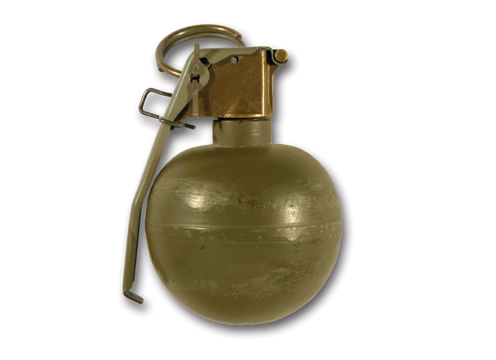
Flammable Liquids Don’t Exist

By John Gilstrap

Remember that scene toward the end of “The Bourne Identity” (a really good film) when Jason Bourne shoots the fuel tank in the backyard and it explodes? Yeah, no. Wouldn’t happen. Ditto the car that blows up after getting in a wreck or after the fuel tank is shot.

Somewhere, I know I’ve watch a scene in a movie where Character A douses Character B with gasoline and lights a Zippo, threatening B-boy with immolation if he doesn’t give up the wanted information. That won’t work either because they’d both be consumed by the same fireball.

Under tightly-controlled-don’t-try-this-at-home conditions, you can extinguish a match in a can of gasoline. This is because . . .

No liquids burn. And with the exception of some metallic substances, no solids burn either. Only gases and vapors burn.

Definitions Break:

Vapors are created as liquids evaporate (create vapor). They are the same chemical composition as the liquids from which they are derived, and if they are cooled, they will condense back into liquid form.

A gas is in a gaseous state at normal atmospheric pressure and temperature. When pressurized, gases will condense into liquids, but the instant the containment is breached, the liquid will convert instantly to a gas.

Flash Point

On the coldest day of the year in most parts of the world, if you put a match into a puddle of gasoline, you’ll get a fireball because the flash point of gasoline is about -50 degrees Fahrenheit. (“Flash point” has nothing to do with a visible flash of light. When a liquid evaporates [creates vapor], the technical term for that is to flash. The “flash point” is the temperature at which a liquid begins to create combustible vapors. Given the topic, it’s an unfortunate source of confusion.)

By comparison, the flashpoint of diesel fuel is between 125 and 180 degrees Fahrenheit. On that coldest day, you’d have a hard time getting diesel to ignite because there’d be no vapors to burn.

Back when my Big Boy Job had me teaching hazardous materials response classes to corporations, one of my best clients was a company that did hardhat diving into million-gallon tanks of flammable liquids like toluene to use cutting torches to fix plumbing deep inside the tank without emptying it. There was no chance of ignition because there are no vapors in the middle of a liquid. Along the surface of the tank, it gets a little dicey, though.

But The Sign Says “Flammable Liquid”

There’s not a lot of room for nuance or subtlety on a hazmat placard. The US Department of Transportation decided decades ago that first responders should know the difference between a milk truck and a gasoline truck. They came up with their Emergency Response Guidebook (ERG). By their definition, a “flammable liquid” is one that has a flashpoint below 100 degrees Fahrenheit. A “combustible liquid” is one with a flash point between 100 and 200 degrees Fahrenheit. Labels notwithstanding, liquids still don’t burn.

Vapors Displace Oxygen, and Nothing Burns Without Oxygen

When you fill the gas tank in your car, you don’t really fill it. You leave a vapor space in the top of the tank. Those vapors displace the ambient atmosphere inside the, bringing the oxygen levels down to nearly nothing.

In your story, when you shoot a car in its gas tank, the bullet tears through a lot of liquid and a lot of vapor, but since there’s no oxygen, there’ll be no explosion. More likely, the gasoline will leak out of the bullet hole. Once exposed to the atmosphere, the spilled gas will begin to evaporate and then the vapors can burn. As more liquid spills, the fire will get bigger, but it’s hard to conceive of the circumstance where you’d get a “bang” from the gasoline. A “whump” is more feasible.

Most Flammable Vapors Are Heavier Than Air

A lot heavier, in fact. When we create that puddle of gasoline, the vapors won’t rise. If we’re at elevation, they will flow down to the lowest point. If we’re on a flat surface, they will spread out, making the hazard area of the spill much, much larger.

Uncontained Liquids Will Evaporate

Let’s go back to the guy we doused in gasoline. All that liquid we poured on him is creating an invisible vapor cloud. If we’re close enough to talk, we’re enveloped in the same vapor cloud. When you thumb that Zippo, you’re likely to have as bad a day as your intended victim.

Does It Matter?

Here’s the question I struggle with when I address the real aspects of guns and hazmats: Does it matter? Should a film director care that the really cool scene couldn’t happen in real life, or should he just go with the really cool scene? After all, we write fiction.

What say you? Does it matter?

First Page Critiques: A Look
Inside The Edgar Winners

By PJ Parrish

Just back from my duties as banquet chair for the Edgar awards. It’s the first time in three years that the event, sponsored by the Mystery Writers of America, has been held live. Three years…

Seems like longer. The Edgars have been a virtual event and it was great seeing men in tuxes and women in heels again. Great seeing old friends. Even greater meeting new ones. I’ve been chairing this event (spearheaded by MWA executive director Margery Flax) for more than a decade now. And it feels like the torch is being passed to a new generation of crime writers.  Our theme this year was “Top of the World” (hat tip to Tom Petty for that inspiration). Because top of the world is how you feel when you’re an Edgar nominee. One of my favorite duties of the night is manning the nominee registration table. Man, I wish I could bottle the fizzy-feeling emanating from the writers as they collected their red-ribbon badges and drifted off in a daze to the cocktail reception. Great books this year, but alas, only one book in each category wins at evening’s end.

Just for fun, I’ve read the first pages or so of all the novel nominees. You can easily do the same — click here for complete list.  But I thought it would be maybe instructive to take a look at how the winners opened their stories. Ahem…I will not be red-penciling their First Pagers. But feel free to weight in with your comments.

Best Juvenile: Concealed

“Your name?” The barista asked, holding the paper cup in the air.

I hesitated. For a moment I couldn’t remember if my name was spelled with one n or two. Not that it mattered much, since by tomorrow I’d have to pick a new one.

“Joanna with two n’s,” I replied.

He nodded, scribbled something on the cup, and passed it down the line to a girl who began preparing the order.

My drink wasn’t anything out of the ordinary. A tall vanilla bean frappé with two pumps of cinnamon syrup, hold the whipped cream. Nothing too easy or too complicated. Something quickly forgotten.

Sort of like me.

Didn’t matter if my hair was dyed blond, red, or even its current shade of brown, I always played the part of some random homeschooled girl from nowhere in particular who usually kept to herself. I was a mix of people you might know, but could never really remember.

That had been the story for when I was called Ana, Beatriz, Carla, Diana, Emma, Faith, Gina, Holly, and Ivette. Joanna was no different. And tomorrow it would continue, except
this time with a name that began with the letter K.

Over the past few years it had all become a game for me. Picking a name while going through the alphabet gave me a sense of order and predictability in my highly unpredictable life. Dad had come up with the idea back when he was still the one choosing my names, but I’d decided to continue the pattern. The question was which K name to choose. It could last me either a couple of weeks, like Joanna, or almost a
year, like when I was Carla.

I never knew.

It all depended on when my parents said it was time to move on and start over.

______________

Me here: I love this concept: A kid whose parents are on the lam so she has to cope with not just the usual angst of pre-teen identity, but the reality of not knowing who she is at any given time. The voice is assured yet vulnerable and very believable. I bonded with this girl at the get-go. I also liked the mix of short and long paragraphs. I don’t read juvie, but I’d definitely read on here.

Best First Novel: Deer Season

Alma held the four-week-old pig against her left hip and pinned him to her side with an elbow. With her right hand she held his ear across his eye as Clyle positioned the syringe perpendicular to the flesh and injected the antibiotics into the piglet’s neck. The pig squealed and Alma’s grip wobbled as Clyle caught the pig by his two back legs, swooped him into the air, and streaked his back with a green Paintstik. On the ground the pig scuttered his hooves against the cement before gaining traction and taking off across the small pen to the rest of the litter.

This wasn’t how Alma wanted to spend a Saturday afternoon. This wasn’t how anyone wanted to spend a Saturday afternoon, but Hal had left Friday with some yahoos to go hunting the first weekend of deer season. She secured another pig across her knee as Clyle gave the shot, marked the piglet with the Paintstik, then moved her to the floor. There were two left unmarked, congregated by the far slatted wall. Clyle grabbed the plywood panel he used to divert the pigs, moving it right to left until one of the piglets was trapped, then reached down and picked him up by the back legs.

_____________

Me again. This is a very leisurely opening. The first chapter is devoted to Alma and her husband marking the piglets and it ends on a note of tension within the marriage. The novel has won raves, including a starred PW review, for its portrait of a small town both severed and knitted together by the tragedy of a missing girl. A little slow for my taste, but I would keep going.

Best Paperback Original: Bobby March Will Live Forever.

It’s Billy the desk sergeant that takes the call. A woman on the phone, breathless, scared, half-crying. She says, “I’d like to report a missing child.”

And suddenly, everything changes.

When news of a call like that comes in, everyone sits up at their desks, stops filling in their pools coupon, puts down their half-eaten rolls. The ones with kids open their wallets under their desks, look at the pictures of Colin or Anne or wee Jane and thank God that it’s not theirs that have gone. The young ones look very serious, try not to imagine pulling some weeping toddler from a cellar or frome under a bed, being congratulated by the boss, thanked by a tearful mother.

Those that are religious cross themselves or say a silent prayer to keep the kid safe. And those that have lived through a case like this before say hello to the familiar dread and fear in their stomach, the knowledge that there is no end to the bad things that men can do to children, that the missing child might be better off dead already.

And like a pebble dropped in water, the ripples start to spread throughout the city. No matter the lockdown, news of a missing child always gets out. Cops come home, tell their wives and girlfriends not to tell anyone but they do. A shilling drops in a phone box across the road from the station, a reporter at the Daily Record answers, and a beat cop earns a tenner for his trouble. Isn’t long before the boys selling the papers outside Central Station are shouting, “Final edition! Missing girl!”

And as night falls and the chatter dies down there’s still one person who doesn’t know what Glasgow is talking about. Alice Kelly. All she knows is she’s got a cloth bag over her head, that her hands are tied and she’s wet her pants. It doesn’t matter how hard she cries for her mum, her mum can’t hear her. Nobody can.

____________

Me again. I really like this opening. It’s omniscient but feels intimate. Nice trick, that. I was drawn in by the rhythm of the writing itself. Note how the writer repeats the triad construction with simple commas. This, this, and then that. This, this, and then that. From the first sentence, we know we have a missing child yet the rhythm induces an almost lulling affect, mimicking the routine of cops coping and doing their jobs. It’s tragic…and normal. How awful. After a double break, the story then moves into the protagonist’s point of view. Well done, I say.

Best Novel: Five Decembers

Joe McGrady was looking at a whiskey. It was so new the ice hadn’t begun to melt, even in this heat. A cacophony surrounded him. Sailors were ordering beers ten at a go, reaching past each other to light the girls’ cigarettes. Someone dropped a nickel in the Wurlitzer, and then there was Jimmy Dorsey and his orchestra. The men compensated for the new noise. They raised their voices. They were shouting at the girls now, and they outnumbered them. The night was just getting started, and so far they weren’t drinking anything harder than beer. They wouldn’t get to fistfights for another few hours. By the time they did, it would be some other cop’s problem. So he picked up his drink, and sniffed it. Forty-five cents per liquid ounce. Worth every penny, even if a three-finger pour took more than an hour to earn.

Before he had a taste of it, the barman was back. Shaved head, swollen eyes. Straight razor scars on both his cheeks. A face that made you want to hurry up and drink. But McGrady set his glass down.

“Joe,” Tip said.

“Yeah.”

“Telephone—Captain Beamer, I guess. You can take it upstairs.”

He knew the way. So he grabbed the drink again, and knocked it back. The whole thing, one gulp. Smooth and smoky. He might as well have it. If Beamer was calling him now, then he was going to be pulling overtime. Which meant tomorrow—Thursday—was going to be a bust. Molly was going to be disappointed. On the other hand, he’d be drawing extra pay. So he could afford to make it up to her later. He put three half-dollars on the bar, wiped his mouth on his shirtsleeve, and went upstairs.

______________

I’m back. The era is the Pacific theater of WWII and the golden-age-of-noir style reflects this. The book got raves pre-Edgar, starred PW review, New York Times Best Mystery and glowing blurbs from Lehane, King, Child. The chapter ends with McGrady’s boss saying he’s been working for five years, this is his first murder, don’t blow it. Given the writing, I’d give it more time to get to a full boil. From all I’ve read, there’s a big payoff. Side note: The book was rejected by 25 publishers before being picked up by Hard Case Crime.

Young Adult: The Firekeeper’s Daughter

I start my day before sunrise, throwing on running clothes and laying a pinch of semaa at the eastern base of a tree, where sunlight will touch the tobacco first. Prayers begin with offering semaa and sharing my Spirit name, clan, and where I am from. I always add an extra name to make sure Creator knows who I am. A name that connects me to my father—because I began as a secret, and then a scandal.

I give thanks to Creator and ask for zoongidewin, because I’ll need courage for what I have to do after my five-mile run. I’ve put it off for a week.

The sky lightens as I stretch in the driveway. My brother complains about my lengthy warm-up routine whenever he runs with me. I keep telling Levi that my longer, bigger, and therefore vastly superior muscles require more intensive preparation for peak performance. The real reason, which he would think is dorky, is that I recite the correct anatomical name for each muscle as I stretch. Not just the superficial muscles, but the deep ones too. I want an edge over the other college freshmen in my Human Anatomy class this fall.

By the time I finish my warm-up and anatomy review, the sun peeks through the trees. One ray of light shines on my semaa offering. Niishin! It is good.

My first mile is always hardest. Part of me still wants to be in bed with my cat, Herri, whose purrs are the opposite of an alarm clock. But if I power through, my breathing will find its rhythm, accompanied by the swish of my heavy ponytail. My legs and arms will operate on autopilot. That’s when my mind will wander into the zone, where I’m part of this world but also somewhere else, and the miles pass in a semi-alert haze.

My route takes me through campus. The prettiest view in Sault Ste. Marie, Michigan, is on the other side. I blow a kiss as I run past Lake State’s newest dorm, Fontaine Hall, named after my grandfather on my mother’s side. My grandmother Mary—I call her GrandMary—insisted I wear a dress to the dedication ceremony last summer. I was tempted to scowl in the photos but knew my defiance would hurt Mom more than it would tick off GrandMary.

I cut through the parking lot behind the student union toward the north end of campus. The bluff showcases a gorgeous panoramic view of the St. Marys River, the International Bridge into Canada, and the city of Sault Sainte Marie, Ontario. Nestled in the bend of the river east of town is my favorite place in the universe: Sugar Island.

The rising sun hides behind a low, dark cloud at the horizon beyond the island. I halt in place, awestruck. Shafts of light fan out from the cloud, as if Sugar Island is the source of the sun’s rays. A cool breeze ruffles my T-shirt, giving me goose bumps in mid-August.

“Ziisabaaka Minising.” I whisper in Anishinaabemowin the name for the island, which my father taught me when I was little. It sounds like a prayer. My father’s family, the Firekeeper side, is as much a part of Sugar Island as its spring-fed streams and sugar maple trees.

When the cloud moves on and the sun reclaims her rays, a gust of wind propels me forward. Back to my run and to the task ahead.

______________

Me once more. I let this one run long because it is yet another slow-build opening, yet I felt connected to the character and interested in the what’s-to-come. The writer is dropping in character backstory early, but notice that she is savvy enough to also tease us. The first graph, for example, feels slow but then we get that last line: “A name that connects me to my father—because I began as a secret, and then a scandal.” And the narrator hints several times that there is a “task” ahead of her. I don’t read much YA, but this feels fresh and engaging to me.

Okay, I’m done. If you are struggling with your openings, I’d encourage you to go to that list of nominees and read the samples online. So much variety there! I think our genre is in good hands.