Into The Night On Trolley Car 36

Foggy night

Note: I was already running behind writing today’s post due to the fact that I’m attending (what you might have heard described as) a very spirited  national Convention in Philly. And then, on the return trip from the first night’s events, our train ride devolved into an episodic, comedic and occasionally harrowing journey that reminded me of an 80’s era movie with Jeff Goldblum and Michelle Pfeiffer called Into The Night. Our  adventure included our being dropped off on an abandoned-looking street corner at the premature termination of a trolley line, surrounded by sketchy, somewhat inebriated-looking observers. Add a passing storm, several misdirections, and a long wait for a hotel shuttle that seemed incapable of locating us, and you have the perfect ingredients for Mr. Trolley Toad’s Wild Ride.

Eventually, the shuttle van did find us, and we made it back to the hotel uninjured, if somewhat unglued. One day perhaps I may be able to sort tonight’s experience into some kind of coherent, wry tale. But for now, I will simply offer a bit of advice to anyone traveling anywhere in Philadelphia after midnight: do not ever get on board Trolley Car 36. Call a cab. Or call Uber. Or rent a car. But never, ever, place one foot onto Trolley Car 36.

Do you have any chaotic, scary or funny travel anecdotes you can share? Anything to get my mind off Trolley Car 36.

Sometimes the Most Powerful Writing Wisdom is the Simplest

You’ve heard of William Goldman, right? If not, you really should have by now (being a writer working in the real world, and all)…

… two Best Screenplay Oscars (Butch Cassidy and the Sundance Kid, and All The President’s Men), a little novel with a pretty good film (which he also wrote) called The Princess Bride… another (same double home run writing credit) called Marathon Man…

… and one of the best writing books ever written, Adventures in the Screen Trade, which should be mandatory reading for novelists, as well. Even if you haven’t heard of him.

While his salad days began in the late 60s, he’s still ranked in the 100 authors in five Amazon categories (Classics, Historical Fiction, Teens, Action Adventure, and Genre Fiction Historical; that last one isn’t a typo, either, he’s #51 in Historical Fiction, and #76 in Genre Fiction Historical… go figure).

And he’s still writing, too. Better than most.

Despite the fact that two of his novels become two of the most iconic films of the past 50 years (never mind he wrote those screenplays, as well), his accomplishments as a novelist go under-appreciated. Maybe because he’s still busy in Hollywood as the #1 script rewrite guy, billing out at—this one isn’t a typo, either—one million dollars per week.

Yeah, that guy.

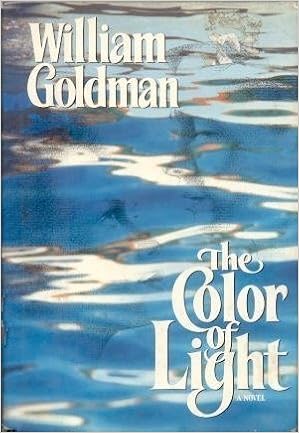
It’s a lesser known fact that he wrote a 1984 novel entitled, The Color of Light.

Out of 17 Amazon reviews— face it, most of the people reviewing novels were in rest homes by the time Amazon came along—16 gave it 5-stars, several stating it is one of their favorite novels, ever. One guy gave it 1-star… this, too, falling into the category writing wisdom… for every great book written, there’s a schlub or two who just didn’t get it, or gets off slinging mud at the stuff everyone else does.

The Color of Light is about a once successful writer who loses his stuff and disappears into anonymity. There may or may not be some truth to the rumor he is now blogging for The Kill Zone, but that has not been confirmed.

He has a little brother who, like all little brothers, wants to impress and gain the respect of his big brother. And so, when the little brother finishes a novel, he nervously shows it to big brother, who responds—each and every time—with the words… “on to the next.”

And that’s the great advice for us today, to hold close for all our days as writers.

May they be as plentiful as Goldman’s.

There is very little we can completely control in this business, even with the advent of self-publishing. Which, while handing back control over such things as lead times, titles and the look of our covers (none of which we had a lick of input to in the past), remains a fact when it comes to what happens to our books once we kick them out of the crib and onto the street.

We control our stories. And for the most part, that’s about it.

And so, we need to find our bliss accordingly. Sanity may reside in that understanding.

On to the next is the surest bet on reaching our goals as anything out there. And on that proposition, I’m sure William Goldman would agree.

The Challenges of Writing a Crossover & Book Birthday!

Jordan Dane
@JordanDane

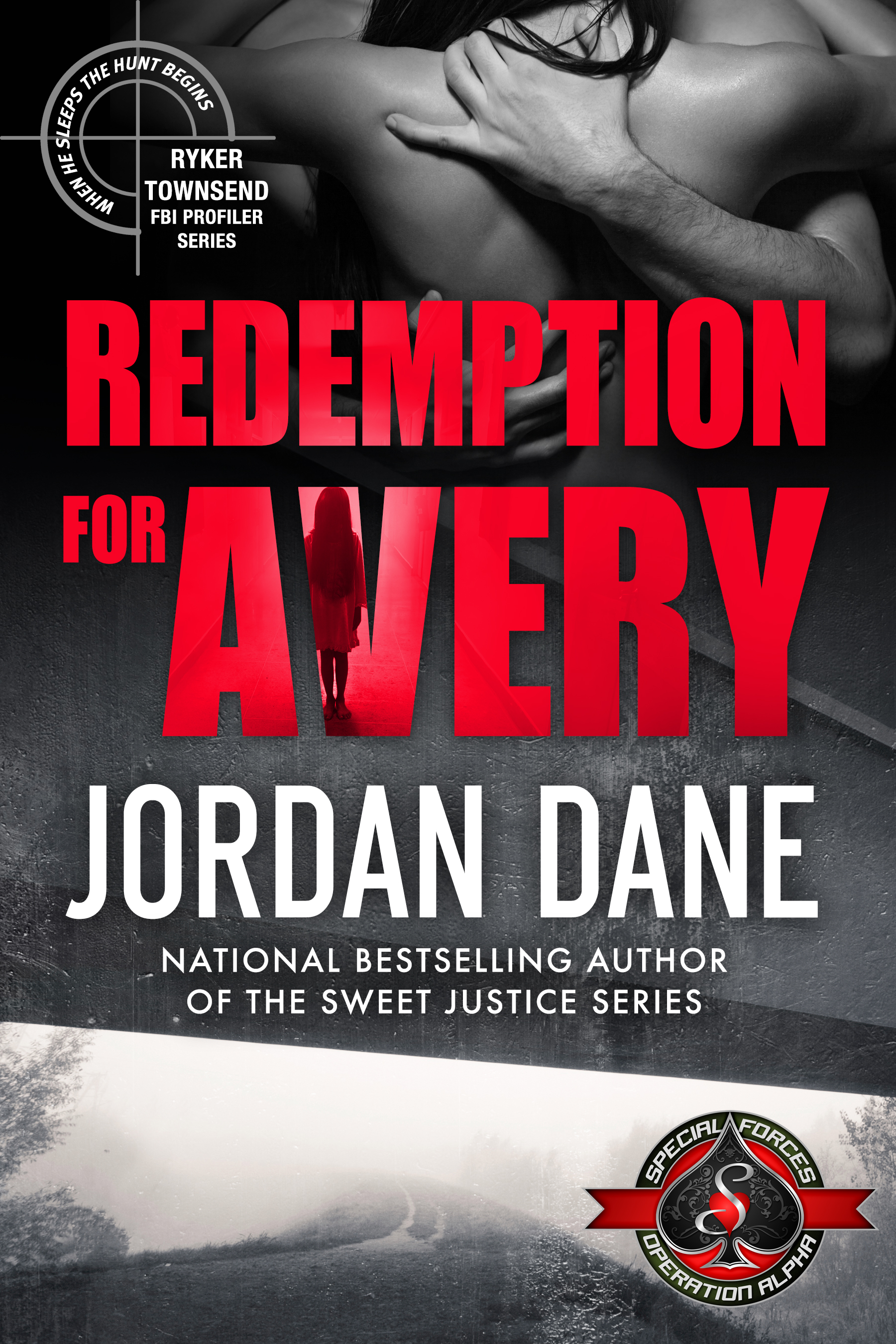
Not many things are more satisfying than finishing a book, seeing the final touches of cover copy and cover, and letting your baby go “into the wild.” Today is the release day for REDEMPTION FOR AVERY – part of the new Susan Stoker –  Special Forces series with Amazon Kindle Worlds.

Ryker Townsend FBI profiler series - novella (31,000 words) $1.99 ebook, July 21, 2016 release

$1.99 ebook – July 21, 2016 release

The challenges of this 31,000 word novella centered on crossing my Ryker Townsend FBI Profiler series into Susan’s Navy SEAL world, using one of her novels (Protecting Summer) and a key character, Sam “Mozart” Reed, from that book.

Challenges:
1.) Blending two worlds – My dark crime fiction world had to blend seamlessly into Susan’s romance action/adventure world of the military. That meant I had to bump up my romance and also deal with two very different kind of men. Ryker Townsend is an isolated loner by necessity, an intellectual with a mind like a computer, and hardly described as an alpha male. Navy SEAL Mozart Reed is definitely alpha male with a disciplined military demeanor and a fascinating puzzle. I wanted to create a situation to force these two different men into an investigation.

2.) Paying homage to Mozart & Susan’s World – I did my research on Susan’s writing and read the book that dealt the most with Mozart’s past, the way I would force these two worlds together. In Mozart’s childhood, when he was only 15, his younger sister was abducted and brutally murdered by a serial killer. Well, that’s right up my alley and that backstory worked well with my FBI profiler series.

3.) Portraying Someone Else’s Character While Doing Justice to Your Own – SEAL Mozart Reed is a strong character, fully capable of being a hero of his own book. But I had to be sure my character, Ryker Townsend, held his own with an ebb and flow to their dynamics. Each man became key and could easily dominate the story, but the blending of these two dynamic forces became a joy. I wrote them like Butch and Sundance.

4.) Getting the Facts Right – Sometimes a preceding book is a little vague on the facts, by design. An author may choose to write vague details about a character’s backstory or leave out scenes for the sake of plot. I was lucky to have Susan’s brain to pick. I’d send her a message and she’d write me back right away. I swear she lives online. I’d ask questions about where the body was finally buried or embellished on an unwritten scene, but I didn’t want rewrite her previous novel without paying respect to her original work. She was very gracious and we both poured through pages to make sure I could add details not contemplated in her originating novel. She also had books that came after and we compared timelines to be sure I didn’t leave out a baby, for example. When my project was done, she read REDEMPTION FOR AVERY and we tweaked a couple of nuances to make it the best collaboration we could. Susan Stoker is a very generous author.

Here is the synopsis of REDEMPTION FOR AVERY:

When he sleeps, the hunt begins.

FBI Profiler Ryker Townsend is a rising star in Quantico’s Behavioral Analysis Unit, but his dark secret could cost him his career. When he sleeps, he has visions of his next case. He sees through the eyes of the dead, the last images imprinted on their retinas. His nightmares are riddled with clues he must decipher to hunt humanity’s Great White Shark—the serial killer.

While he’s investigating the shocking slaughter of a seventeen-year-old girl at Big Bear Lake, the tormented soul of another dead child appears to him in broad daylight. Twelve-year-old Avery Reed reaches out to Ryker—a disheveled and haunted girl, unable to speak—held earthbound out of love for her grief-stricken brother, Sam. Avery’s presence draws Ryker into a sinister conspiracy and she has a desperate message for her brother, if she can make Ryker understand.

Navy SEAL Sam ‘Mozart’ Reed has been haunted by the brutal death of his little sister Avery when he was only fifteen-years old. He vowed to seek and destroy the killer who splintered his family, wiping out everything he’d ever known. Nineteen years later, his darkest wish came true when he found Hurst, her alleged killer, and stopped him from murdering one last time. But when Mozart learns the FBI has reopened Avery’s case, he fears the worst. His SEAL team may have ended the carnage of a serial killer years ago, but for the first time, Mozart has doubts that Hurst had been the man who took Avery’s life. A heartless predator is still butchering young girls. Mozart’s worst nightmare is back with a cruel vengeance.

INVITATION:
To celebrate the launch of Susan Stoker’s Special Forces series with Amazon Kindle Worlds, we are having a Facebook Party on July 23 at this link:

https://www.facebook.com/events/604059626438678/

I’ll be online 3:30-4pm EST. There will be lots of giveaways all day with other authors joining the party.

FOR DISCUSSION:
1.) Have you ever crossed over one of your worlds with another? Did this crossover involve another author’s work?

2.) How do you celebrate YOUR book birthdays?

Saving the Sagging Middle

I thought today I would build upon an issue that came up with my last blog post on subplots. Someone asked in a comment whether a subplot could help with the infamous ‘sagging middle’ and my response was (basically) that an author needs to resolve why the middle is sagging before throwing in a subplot to try and ‘fix’ the issue. So today I thought I’d discuss the whole ‘middle’ of the novel issue, and see what processes or cures we might come up with that could help avoid the angst that comes with a middle that seems flat, meandering or just plain soggy…

Once again, I like to refer people to Jim Bell’s great book on Plot & Structure. His approach to the infamous middle focuses (and Jim I hope I’m not misquoting you here!) on two main areas: (1) stretching the tension; and (2) raising the stakes. I am particularly drawn to (2) as I like using the middle of a novel to up the ante for my protagonist. For me, the middle is where you really get to complicate and stir things up for your characters. As an outliner, I focus quite a lot on the middle and often find myself graphing out the tension levels in the novel I’m drafting. If I see a flat line in the middle then I know I’m in trouble. But, whether your an outliner or not – what do you do if, after the first draft is complete, you realize that the middle section just isn’t working? Here are some of my ideas:

(1) Reassess the premise of the novel and explore ways in which you can add complexity, drama and tension to this in the middle.

This could involve adding an additional obstacle for the protagonist, introducing a subplot to add more emotional resonance or tension, or it could be introducing an event that raises the stakes for your characters. Sometimes, the reason the middle of a novel is flat is because the author may not have sufficient depth (in either the premise of the book or its execution) and so the middle feels like ‘treading water’ until the resolution/final conflict occurs. Taking a step back and re-examining the premise might help you identify this and come up with some solutions.

(2) Map out the plot and brainstorm ways to raise the stake or add tension.

As an extremely visual person and a strong believer in outlining, I like to try and display the plot in a visual way that helps me identify places where I might need to add scenes that raise the stakes or add tension. I find once I can see the chapters that meander or sag, I can brainstorm ways in which I can alter the plot to add dramatic tension. This could be the place where an unexpected death occurs, a new character walks in to shake things up, or another obstacle is thrown in the protagonist’s way. Whatever you decide, it should all be aimed at keeping the reader turning the pages…

(3) Eliminate the boring bits!

Sometimes the middle gets bogged down with clues or details of an investigation, the mechanics of the plot or the protagonist going through the motions/actions necessary to progress the novel towards its denouement. One thing I like to bear in mind is that readers get bored…so when re-reading a draft I like to identify areas that even I am starting to glaze over. If, as the author, I’m not riveted, then it’s time to ditch those boring bits and think through how to maintain the tension rather than deflate it.

(4) Use your beta readers!

Another set of eyes and an honest opinion can really help when it comes to working out why the middle of your novel may be meandering or sagging. I like to give my beta readers specific questions to bear in mind while they are reading and one of these is often ‘let me know where you start to lose interest’. Sometimes beta readers help you realize what isn’t working (and often this can come at surprising moments in the book) and can identify the moment they started to find their interest waning. The key, of course, is finding beta readers critical and honest enough to tell you this (rather than what they think you want to hear!).

These are just four options for trying to wrestle with the issue of the dreaded ‘middle’ –  TKZers do you have anything to add or feedback on your own experiences with the dealing with middle-of-the novel ‘sag’?

Poke-what?! by Joe Hartlaub

pokemon go

I vaguely remember my older daughter becoming briefly infatuated with something called “Pokemon” in the mid-1990s.  I bought packs of cards at toy and drug and grocery stores, and I think many of them are still around the house, languishing in  in a box mislabeled “silverware” or something under a bed or in a closet underneath some books. The internet wasn’t quite as pervasive back then as it is now; cell phones were the next generation of car phones, and an “app” was what you filled out when you heard about a job opening somewhere. Much has changed, and I thought that Pokemon had gone the way of eight track tapes, replaced by games that you played on your computer or phone called “Warcraft” or “Minecraft” (no, I don’t know what the difference is either).

Two weeks ago my nine-year old granddaughter mentioned Pokemon to me. I let it pass because she then started talking about reading BLACK BEAUTY and I wanted to encourage that over some role playing game. A few days later, however, I started hearing about something called “Pokemon Go.” It’s a smart phone application game that intersects with the real world and it seems to have taken over the minds of a segment of the population. People are breaking into buildings, jumping across rooftops, falling off of cliffs (Darwinism in action, perhaps?) and running through graveyards chasing the Pokemon. The news about it is all-pervasive. And that bothers the hell out of me.

jimmy books

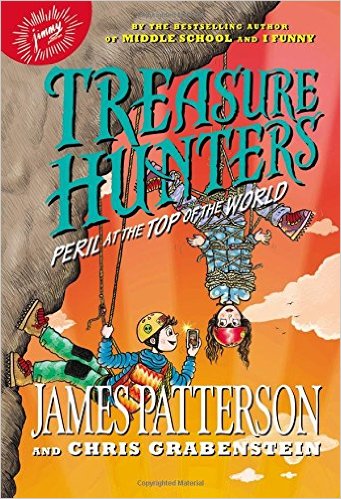
Here is why. Did you know that James Patterson has launched two new book imprints? One is called “Jimmy,” and is aimed at getting younger people to read. The motto of this imprint is, “We want every kid who finishes a Jimmy Book to say: ‘PLEASE GIVE ME ANOTHER BOOK.’” Nice, huh? Patterson could have gone for the plug (notice how nicely “PLEASE GIVE ME ANOTHER JIMMY BOOK” would work) but he didn’t. Please give me another book. Like BLACK BEAUTY. Or The Hardy Boys, or Warriors. Or a Shell Scott… well, wait a few years on that. But give me anything but chasing some cyberworld construct around the city. Jimmy Books. Patterson launched this imprint about a year ago, and has been aided collaboratively by Chris Grabenstein, a fine and talented guy in his own right who has been fighting the fight for children’s literacy for awhile as well.  Did you know about this? No? Are there headlines all over about young folks reading these books? No? I know that a new book imprint for kids is not as exciting as falling into the ocean chasing some monster that doesn’t exist, but please. Patterson is tackling incipient illiteracy here. Isn’t that important too? And he’s pouring his share of the lucre back into reading programs. That sounds like dedication to me.

jim born

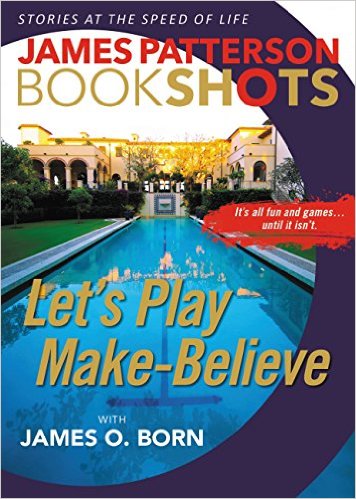
I said two imprints. The second was just launched a month or two ago and it’s aimed at adults who don’t read. It’s called Bookshots; each book features Patterson with collaborators such as Maxine Paetro or James O. Born (as well as a host of others) working across a number of genres. The books are around one hundred sixty pages apiece and and are priced at about four bucks. I know a lot of folks who have four bucks in Starbucks drive-through window change rolling around on the floor of their cars. They are designed to only require a few hours to read. And these books are entertaining. They’re not in the league of Cormac McCarthy or James Lee Burke, but your average adult who doesn’t read much anymore isn’t going to reflexively reach for a classic when the mood strikes them. Did you know about this? I just heard about it around a week ago. Where are the headlines? Patterson is launching this for the same reason he launched the Jimmy books: as he has indicated elsewhere, he wants people to exercise their brain muscle. God bless him. What he is doing may not be as glamorous or newsworthy as the fallout from a new phone app, but it’s certainly more important.

So, my fellow readers and authors: how do we get the word out? It obviously takes more than Facebook and Twitter. What can publishers do? What can we do? I’m not interested in what the book industry has been doing wrong recently…I want to know what you think could be done right, to help make reading a valued activity again. Any takers? Or is it a lost cause?

Silly Season and Political Thrillers


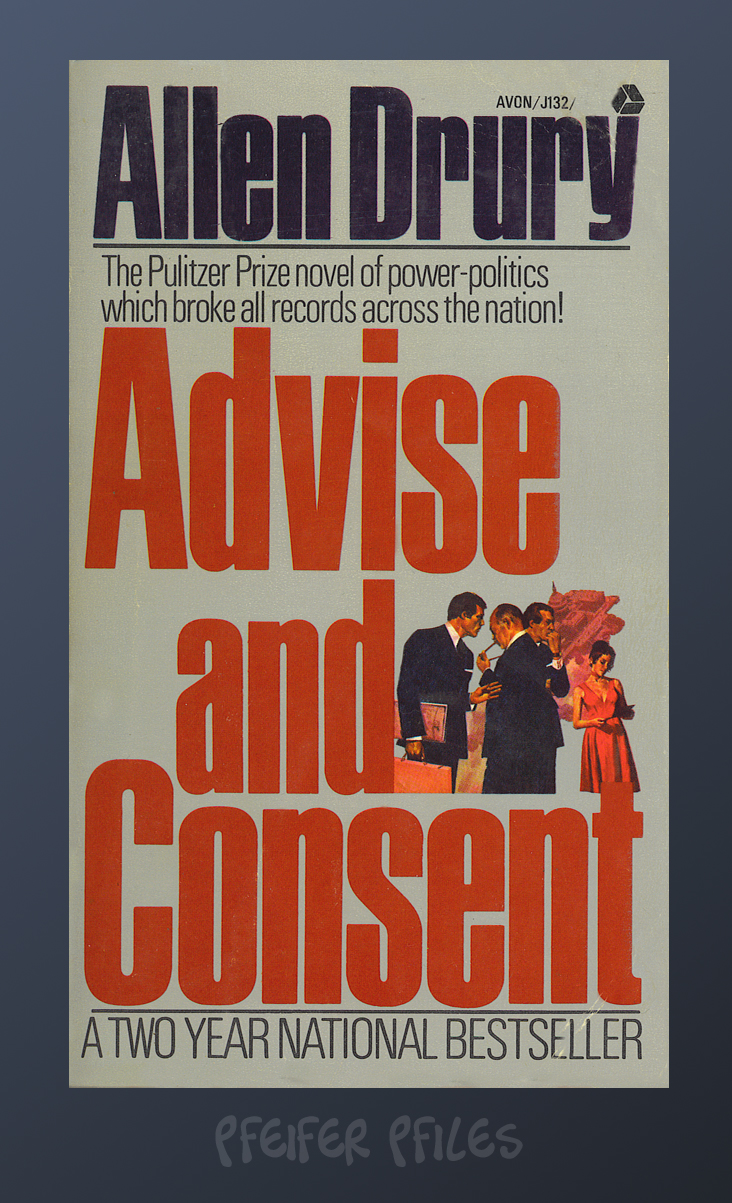
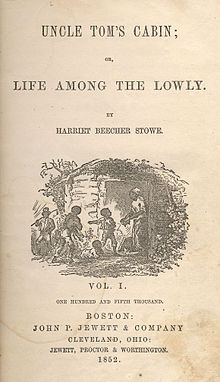
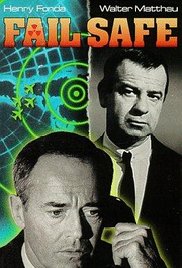
imageWe’re heading into the hot zone of national election season this month–and the consequences of  silly season 2016 are going to start having serious consequences for the US, and the world. All this puts me in the mood to stock up on some nail-biting, high stakes political thrillers to put at the top of my summer reading list. Suggestions? What are some of the best political thrillers you’ve ever read?


http://youtu.be/lOi1-2c0bcg

image

image

Four Major Stumbles by Newer Writers

by Larry Brooks

These four nasty little traps would still be weaknesses if they appeared in the novels of more experienced professional writers. But for the most part, those writers don’t commit these mistakes. Which defines the window of opportunity for newer writers – to understand what they’re doing and how they do it.

And how that differs from where your story is, at any given moment. Especially when you believe you are done.

It is important to remember that when you read a novel from a proven professional, you’re reading a polished, pounded upon, tested and fortified final draft. The story may have been riddled with problems in the early stages, draft after draft, so don’t assume these pitfalls are unique to the newer writer.

Established authors have agents and editors for this purpose, newer writers don’t. And they bring their 10,000 hours of apprenticeship to the task, which probably exceeds your resume by orders of magnitude.

A few workshops won’t get you there. Those 10,000 hours, along with the criteria-driven, modeled craft held up as the target, just might.

If I wanted to read fully realized, polished stories all day long, I’d be a book reviewer instead.

I do read a lot of work from folks who are terrific writers… if the composition of sentences and paragraphs is the benchmark for that description.

But the thing is, it isn’t.

Where writing novels is concerned, a terrific writer is judged by the story more than the prose. And because they are two different skill sets, one doesn’t necessarily beget the other.

A story is so much more than a sequence of paragraphs composed of sentences. In the same way that a house is composed of so much more than a bunch of wood planks nailed together. Really strong, beautiful two-by-fours do not a functional, aesthetically-pleasing house make. There is more to is than the wood itself, and much of it isn’t visible to the eye, because it resides in the infrastructure of the building.

Such is the story sensibility the new writer often lacks.

Allow me to summarize what too often comes up short:

One: The writer doesn’t understand what a premise is.They confuse it with other story essences, like concept and theme and backstory.

The project I worked on this morning answered the question, What is your premise? with this:

Here is my copy for the back cover of the paperback for my story.

A red flag, this. The author has the back cover copy done, but the novel itself is still in the incubator.

Rarely is what we read on the back cover a premise. It’s marketing copy.

In the name of offering a solution today, here is the definition of premise, which becomes a sort of checklist for the entire story itself:

A protagonist/hero whose current life (which we get a glimpse of, and perhaps a bit of background for) is interrupted, disrupted or leads into… a specific problem, need or opportunity… launching a hero’s quest with a mission and a specific desired outcome, beginning with a response to the need or problem… for reasons (stakes) that compel the character to respond… in the presence of opposition from an antagonistic force or person(s) with opposing goals and their own motivations… calling for higher and stronger responses and course of action, often with those stakes evolving into something darker or more urgent… leading toward brilliant and courageous resolution resulting from the Hero’s decisions and actions… leading toward a specific outcome, returning the hero to a life that is contextually different than where the story began.

Two: While the story is deeply rooted in genre, the writer is more focused – too focused – on characterization and theme and backstory than the forward-facing dramatic arc and tropes of that genre.

In other words, the story is either episodic or completely void of a hero’s quest/mission, undertaken because of what is at stake and a sense of urgency. It links to genre only by virtue of setting and context, rather than actionable drama and stakes.

In yet more other words… there is no compelling plot. A dramatic question in play. Which is what the premise, when done properly, describes.

“Finding his true self,” or “forgiving the past” are both really bad, really lame hero’s quests. Those are character arc goals and outcomes, but they are not the raw grist of a story. Because in genre, a story is about more than the arc of the character. Rather, it is about what the hero does to reach those goals, decisions and actions and confrontations that are dramatic and full of risk and conflict.

This is the stuff of premise. The meat and potatoes of narrative.

From a dramatic standpoint (rather than thematic), was The Hunger Games about Katniss finding true love? No. It was about getting out of that arena without someone planting an ax  blade in her skull.

In genre fiction, story lives and dies by its drama, driven by conflict. Leave the thematic analysis and character depth to the reviewers, all of that is an outcome of how the character responds to the drama into which you’ve dropped them. It’s your job to make it work, that’s true, but without a compelling dramatic arc in play, all of itwill be lost on your reader.

If you are writing in a genre – thriller, mystery, romance, fantasy, including mash-ups between them – the need for plot is non-negotiable. And a plot is subject to certain expectations and criteria – an author doesn’t get to redefine what the word “plot” means – which is what the new writer too often misses.

A newer writer’s story might play as “the adventures of…” which doesn’t work in genre. Michael Connelly’s novels are not the adventures of Harry Bosch. Rather, there is a case to solve, a single pursuit of a perp and of justice, complicated by other pressuring layers of subplot and subtext, including an antagonist/villain.

All of it defining character, by giving your hero something to do.

The life story of a fictional character may work in literary fiction, but not here.

Three: There isn’t sufficient emotional resonance that gives the reader something to root for.

I read a time travel story recently (when I say story, I mean a narrative plan submitted to me for analysis) in which two girls go back in time (never mind how) to… wait for it… ogle men wearing kilts. That’s it. That’s all there is to it.

This was a romance, which the author argued licensed any lack of thematic weight. I disagreed. The difference is like an episode of Ray Donovan versus an episode of The Housewives of New Jersey.

The dramatic stakes were fine – one of the girls goes missing back in time – and it seemed like everybody was falling in lustful love with everyone else as they looked for her. The hero sister trying to find her lost sibling was really more interested in the butt of the plantation owner’s son.

The question remained unclear, and unanswered: Why? Who cares? Especially when, after one sister finds the other, they both decide to remain stuck in 16th century Scotland. Because those guys in kilts, they’re freaking hot.

Not something a more experienced writer would have chosen.

Four: The story lacks a compelling conceptual core.

The key word here is compelling.

The story idea is flat. The premise seems to be searching for something compelling, hoping to land there – as if the writer, when alerted to the fact that the story is flat, would say, “But when I write it you’ll see, it’ll all come alive when you read it on the page” – rather than stemming from something compelling. Like a killer story arena, or a character we’ve never seen before.

I just finished coaching a story that basically read like this: a normal guy lives in an ancient town, next to another ancient town full of bad people. The bad people want to attack his town because they are located closer to the water, which provides access to trade and sustenance. That’s the setup. So our guy, the hero, organizes a militia of other every day guys, and when the bad people attack, he leads them to victory, battle after battle after… many more battles. Meanwhile, there is a magic stone that only he can understand, which turns him into a great warrior. After the victory, they name him as their king, and everyone lives happily ever after.

I told him it doesn’t really work, at least at the pitch level. There isn’t an agent in the business that would say to this, “Dude, I’ve been waiting all year for a story like this, you’ve got to send it to me!” More likely they’d say, “I’ve seen twelve of these this week alone. Nothing special here, this is generic. Been there, read that, didn’t like then, either.”

It doesn’t glow in the dark. There’s nothing conceptual. Nothing that makes a reader say, “Holy cow, this is the type of story I’ve been waiting for, I can’t wait to read this!”

Which is one of the benchmarks of a great concept, and a premise built from it.

The story idea isn’t strong enough. At least not yet. The writer has committed to it too soon, perhaps without fully understanding what does make a story idea glow in the dark.

The whole point — the difference between the newer writer and the successful more experienced one — is story sense. The ability to recognize what works and what doesn’t, based on criteria that never change.

Don’t depend on your writing to make it glow in the dark. Because chances are, while you’re really good and your sentences make your Aunt Mabel rave about your emails, that talent is a dime-a-dozen in the universe of writers who are trying to do what you’re trying to do.

Make no mistake, such stories can work. But when they do, there is more going on than the thin shell of a story that this example describes.

Game of Thrones is compelling because of the characters and the setting. Which on paper, is rarely enough. Which renders it an exception, not the thing you should set out to emulate. It’s like telling young athletes to be like Mike. Do what Mike does.

Michael Jordan, that is.

In the story described, there is nothing conceptual about that guy in the town with the magic stone, or anyone else in the cast (swap out compelling for conceptual, which will help clarify). No Mother of Dragons. No White Walkers. No John Snow. No ruthless, seductive Queen. Nothing with the vividly drawn landscape of Westeros. No sex. No violence. No OMG! moments. Nothing like the other 45 characters that leap off the G.O.T. pages and scream, I am conceptual and you will learn to love me, even if you hate me!

Writing a saga is tough work, advanced work. Harry Potter was not a saga, it was a series, which is different. Newer writers not only need to understand the difference, but also the depth of craft and structure required to make such a story work.

There is a line you cross, somewhere among those 10,000 hours, when you know you’re no longer a newer writer.

That you’re in the game for real, and that you have a real shot, because you understand the game itself in a way that you didn’t before.

It’s all there, in that definition of premise. When you own it, completely and thoroughly, including what resides between those lines, it will propel you to the finish line. Because owning it doesn’t mean simply executing on it, but doing so with power and flair, with dramatic weight, conceptual appeal and thematic substance.

All beginning with a truly killer story idea. Which will look different to you – the bar will be higher – once you’ve crossed that line.


How to Write an Eating Scene

by James Scott Bell
@jamesscottbell

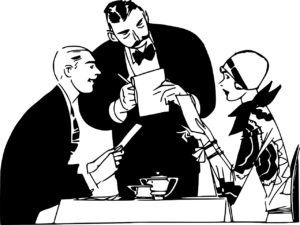
In my workshops I warn students about scenes where two friends sit down for dinner orpeople-146963_1280 coffee and talk about life, the universe and the plot. The temptation is to have it all easy-peasy because, after all, they’re friends. The danger for the writer, though, is that without conflict or tension the scene takes on the dreadful patina of dullness. Which means it is the readers who lose their appetite … for reading on!

Sometimes I will hear the rejoinder that this is what we do in life. We have coffee with friends, we have dinner with pals. Why can’t we put that in our books?

Well, I say, you have fuzzy slippers in your life. Do you put them in your books? (Okay, well, if you do, put snakes inside them.)

Then I say that fiction is not a reproduction of real life. It’s a stylized rendition of life for a fictional purpose. And the most important part of that purpose is keeping readers glued to the page! A scene featuring “happy people in Happy Land” doesn’t stick.

Now, I’m not saying you shouldn’t do a quiet scene with friends or allies in a Starbucks or a restaurant. The trick is to have something going on that gives off a vibration of tension. It’s not that hard to do, either. But the effect on readability is palpable.

Let’s have a look at an eating scene from Michael Connelly’s Echo Park. Harry Bosch is investigating an old murder for the Open-Unsolved unit of the LAPD. He’s asked FBI agent and profiler Rachel Walling for help. Bosch and Rachel had once been intimate, and have started up again, though they are uncertain about the wisdom of this.

In this scene, Connelly wants to give us a lot of information and theorizing about the case. That could easily make this a “talking head” scene. But Connelly knows better than that. Bosch has arranged to meet Rachel at a fancy downtown restaurant. The scene begins:

Bosch had lost track of time while in the library. He was late. Rachel was already seated and waiting for him. She was holding a large one-sheet menu that obscured the look of annoyance on her face as Bosch was led to the table by a waiter.

“Sorry,” Bosch said as he sat down.

“It’s okay,” she replied. “But I already ordered for myself. I didn’t know if you were going to show or not.”

She handed the menu across to him. He immediately handed it to the waiter.

“I’ll have what she’s having,” he said. “And just the water is fine.”

He drank from the glass already poured for him while the waiter hurried away. Rachel smiled at him, but not in a nice way.

So here’s the first tip: find some form of TENSION between the allies. In this case, Bosch is late for his meeting. Rachel is annoyed. We want to keep reading to see how this will play out.

Rachel then warns Bosch that he’s not going to like what he ordered. It was sashimi. She knows Bosch wants his fish cooked. Oops. But Bosch decides he better let it go and give Rachel the info he has.

This leads to the second tip: make the FOOD a source of discomfort. Bosch has begun his summary of the events:

It took him fifteen minutes and during that time their lunch was served. Of course it came fast. It didn’t have to be cooked! He felt lucky to be the one doing all the talking. It gave him a ready excuse not to eat the raw fish put down in front of him.

[As the scene moves on, Rachel finishes her sashimi. Bosch then pushes his own plate, which he hasn’t touched, over to her.]

“No, I’m not saying that Olivas was the killer. I am saying he was gotten to by the killer. He and O’Shea. The real killer came to them and made some sort of a deal.”

“Harry, this just sounds so …”

She didn’t finish. She pushed the sashimi on her plate around with her chopsticks but ate very little of it. The waiter used the moment to approach the table.

“You didn’t like you sashimi?” he said to her in a trembling voice.

“No, I –”

She stopped when she realized she had almost a full portion on the plate in front of her.

“I guess I wasn’t very hungry.”

“She doesn’t know what she’s missing,” Bosch said, smiling. “I thought it was great.”

Third tip: Use the servers to provide a well-timed INTERRUPTION. Here, Rachel was about to tell Harry how his theory sounded. But before she could continue, the waiter comes back to the table. This is a clever ploy, delaying the payoff, which is another way to say that Mr. Connelly knows how to make us read on.

Here is a slice from my novel Romeo’s Way. Mike Romeo is under cover in San Francisco, trying to get hired as security for a political campaign. Kat, the campaign aide he has made contact with, is interviewing him. Mike proved himself earlier that day, and now Kat takes him to dinner at Fisherman’s Wharf on the campaign’s dime.

“I can only get back so far into your past,” she said. “I get back to when you were fighting, but before that there’s virtually nothing. There was some fluff of a bio in a program once, but to be quite honest with you, it didn’t sound believable.”

“That’s because it was fiction,” I said. “They needed something, so I made something up.”

“Okay, then what’s the real story?”

“It’s not something I choose to publicize.”

“And that,” she said, “is what interests me.”

“I also believe in privacy. What I choose to keep private is nobody’s business.”

“Which means you have something to hide.”

“Everybody has something to hide,” I said. “Tell me about your sex life.”

Her cheeks flushed, obvious even in the candlelight.

“See?” I said.

“I could get really mad at this point.”

“But you won’t,” I said. “Because it’s not a good move. And my impression of you is that you make nothing but good moves.”

Before she could answer, the waiter appeared with the bottle of wine.

In this clip, I have used a fourth tip: CONFLICTING AGENDAS. Kat wants Mike’s full background. He doesn’t want to give it. They both want to test each others’ boundaries. And then the waiter interrupts.

So there you have it. Four simple ways you can turn a sitting-down-for-coffee-or-food scene into readable fiction: tension, food, interruptions, agendas.

Mix and match according to taste. Your readers will enjoy the meal.

Ideas to Improve Your Writer’s Group

Jordan Dane
@JordanDane

Shutterstock photo purchased by TKZ

Shutterstock photo purchased by TKZ

On the topic of what our members would like to see covered at TKZ, Frances asked about Writers’ Groups.

“I’d like to see a blog on Writer’s Groups. I belong to one that is disappointing in structure and leadership. What are the qualifications for starting a writer group and what should be included? I prefer a group that meets in person versus online. Thanks!” Frances

As for qualifications to start a group, I’ve seen ANYONE create a group if there is interest in your local area. My latest adventure to find a local writer’s group where I live was through special interest groups listed on MEETUPS.com (query your local area for “Meetups” and “writing groups”). But these groups are rarely organized well enough to hold my interest for long. The leadership is usually inflexible on format or control the critique process too much. Often it’s the blind leading the blind and comments don’t further anyone’s potential career. These groups may catch typos but higher level reviews of your work are rare.

For more serious endeavors, a local group can collect dues and hold writing contests (with members as judges) to generate revenue, but once you ask for money, members will expect a plan of action and organization with regular meetings and a plan. Many national professional groups have specific rules to adhere to, if you want to open a local chapter. Toward the end of this post, look for a link of writers’ groups that are broken down at various levels you might find useful. Try joining a local chapter of a bigger organization if it’s available in your area. That’s your best bet.

I believe it takes a combination of groups to expand your horizons. I’ve belonged to quite a few writers’ groups, from national professional organizations, to online subgroups, to local writer meetings, to attending workshops. I’ve spoken at various meetings and workshops on craft and attended local meetings to help critique other authors. And I was also the Program Director for 5 years at my local Oklahoma Romance Writers of America (OKRWA) chapter and had a hand in shaping our resources for published and aspiring authors. This group and the strength and generosity of its published authors got me published. I was an aspiring author, untested, but I took on the duty of Program Director because I could create a network of contacts I wanted to see and I could work with my published authors to provide things they wanted to see. A great volunteer opportunity.

Here are my thoughts on what makes an effective group, depending on how organized you want to be or how much money you have to put together a group on your own.

SIZE MATTERS – I’ve worked with local groups who have an open call to anyone wanting to attend from one week to the next. The usual format is determined by those in attendance reading from their current WIP, sometimes up to 10 pages, and everyone around the room comments. In my opinion, this type of format doesn’t work because the attendees are not consistent and the format never changes. No real discussion happens, even when the group seems to want a diversion, because there are too many people vying for attention for their work.

When I say size matters, I think it’s more important to recruit serious/dedicated writers that have the same work ethic and are determined to improve their craft. (I’m not implying all pubbed authors, but writers dedicated to improving themselves.) 3-5 members might be the ideal. With a limited, devoted group who consistently appear each meeting, there can be real focus on each other’s samples and the meeting framework can be adapted to the goals of the group. If a deeper discussion arises organically, the group can be more flexible in how any meeting will evolve. Don’t be afraid to start out with all novices. A novice one day, with a good work ethic and supportive of other members, could be a future published author. My first groups weren’t always successful but I learned something worthwhile from each one. Sometimes you have to dive in and take charge to define what you want in a group.

YOU CONTROL THE FRAMEWORK – You might like reading your current WIP aloud or have someone else in the group read yours. But instead of taking up valuable time in the meeting doing this, try some of these time savers:

A.) Maintain an online group to exchange notices and post resources. Post your WIPs that will be critiqued for the next meeting. You can post them to a file section (like a private Yahoo or Google Group or a private Facebook Group). Your 4 members will have more time to read in advance and provide commentary in “track changes mode” for the author to take home something legible. So when it comes time for giving feedback, each member can focus on the highlights of their verbal critique and ask open ended questions of the author to promote a discussion at a higher level.

B.) Limit how many pages are critiqued or read aloud.

C.) Allow time for craft discussion at each meeting. Any member could lead the topic from craft books or a general chat on what works or doesn’t work for each person in the group.

BREAK UP MONOTONY WITH RESEARCH – Bring up research topics that could help the group or inspire future stories. As Program Director for the OKRWA, I had to fill each month with a 1-hour presentation that would help aspiring authors as well as published writers. Some months were research topics where we brought in speakers from the fire or police dept, an FBI profiler, a ghost hunting team (usually in October for paranormal story inspirations), or we went on field trips to generate story ideas with firsthand experiences. For example, we each paid money to go on a ghost hunt, guided by a real team of ghost hunters. (You really get to know your group by doing scaring the hell out of them.)

WHAT ABOUT A RETREAT? Usually in July, we would take a retreat together. Yes, this costs money and organization. We would have sessions on world building or various craft topics. or we might break down a larger group into smaller ones to have brainstorming sessions on plot ideas. A published author group might take a fun trip away from home to a nice location. They work the first few days on brainstorming TWO plots for each author and record the sessions, but after the hard work is done, they go have fun. Sign me up. The group gets a jump on plots for the year and get time off for fun to replenish the creative well.

DO SOME GROUP MEMBERS NEED PROMO? Promotion for published authors is important to support them. For pubbed authors who appreciated help on local events–from Valentine’s Day Events at local libraries to quarterly book signings–my Oklahoma writers’ group would support our members by organizing or attending these events. One of our bigger events was a Librarian Tea. We’d pick a venue and pay for beverages and snacks/desserts (or you could do something more casual with potluck). This can be done economically, but my local group had membership dues and revenues from writing contests to support our annual programs. At the Librarian Tea, our pubbed authors got to meet local librarians and book store owners, where their upcoming releases or backlist would be showcased. Our local group would also send out postcards and flyers of new releases from our members to those same librarians and book store owners we were developing relationships with. Even aspiring authors could benefit from this when they eventually sold and had book signings of their own.

FACETIME or ONLINE? I like getting together with my local writer groups. Writing can be solitary enough. Commiserating with my fellow crazies can be fun. But if there are no local groups where you are, an online group can give you resources in a different way. Once you develop a trust with your online members and determine if their input will help you, exchanging writing samples for critique can be done online. Often these groups have a files section with craft or promo topics that can be helpful or they may host an annual conference or hold workshops.

Here is a LINK to many writer groups (from national, to professional, to genre, to local groups) that you might find helpful.

For Discussion:

1.) What works best in writing groups from your experience? From size to format?

2.) Do writing groups help or hinder the writing process?

RedemptionForAvery_highres

If you are interested in receiving a FREE pdf file of my upcoming Amazon Kindle Worlds release (July 21)–REDEMPTION FOR AVERY–in exchange for an honest review on Amazon, please click on this LINK to sign up on my Google Docs form. Next to your review name, please add TKZ.