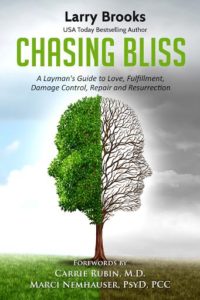
Following on from Jim’s great post yesterday on describing characters, I was prompted to think about characters with emotional resonance while reading the great children’s book Wonder by R.J. Palacio. My kids had been urging me to read this book for a while now and as soon as I started reading it I could see why. Absolutely every character (even the mean ones!) in this book resonated with me on a deep emotional level. I think this is the reason many adults enjoy children and YA books – because, when they succeed, they provide a huge emotional wallop that stays with a reader long after they have finished reading.
Few adult books have had the same impact on me in recent years, but I think, as a writer, the issue of emotional resonance when it comes to character development, is a critical one. Almost every book I’ve failed to finish or which has left me disappointed, has failed because I haven’t been able to care enough about the characters. Even in books where the plot has become thin or events have stretched credulity, emotionally deep and resonant characters have kept me reading.
In some ways, the process of providing emotional resonance mirrors the way a writer describes a character because it focuses on the feelings the character inspires in a reader. Those feelings don’t have to always be warm and fluffy, but they do need to strike a chord with a reader. The most powerful characters stay with a reader long after the book is finished.
All too often at writing classes or conferences the pieces that I’ve read or critiqued have had one major failing – the characters themselves. They are often flat on the page, cliched or simply do not ring true. So how do you create emotionally complex, relatable and ultimately resonant characters? Maybe the best starting point is to identify what not to do and work up from there.
Many new writers may feel the urge to create a quirky, one-of-a-kind character or perhaps they hope to create characters similar to those that have proven most popular in their genre (here’s where the recovering alcoholic, down at heel PI often comes into play). In either case, a writer should beware of using standard character tropes and cliches as well as going too far the other way by creating the most ‘out there’ character who sounds nothing like anyone a reader would ever meet in real life. if a character is nothing more that a series of quirks or tics then a reader is going to be just as dissatisfied as if the character is little more than a carbon copy of the stock-standard genre character. The key is (I think) to get into the head and emotions of a character in a way that displays the writer’s own unique perspective. In some ways, perhaps you have to place a little of yourself in each character (maybe not in a literal sense but certainly in an emotional sense).
Striking a chord in readers can be tricky as each reader also brings their own perspective, background, and emotions to the books they are reading. One character’s actions may pack an emotional punch for some readers and yet leave others cold. I find, for example, that parents in books often pack a huge emotional whallop for me, especially in books like Wonder or The Fault in our Stars. If I’d read these books when I was younger, I suspect different characters would have evoked a very different kind of emotional reaction. Yet there are some universal truths out there and characters that evoke strong emotions will go on to have wider resonance.
It’s hard to provide any kind of definitive ‘tip list’ for creating this kind of emotional resonance, simply because it is an illusive target (we only know it when we feel in the gut) but I think some of the elements include:
Going deep within a character’s psyche to understand their motivations;
Drawing upon your own past experiences and interactions to add depth;
Using action as well as interaction to draw out a character rather than description alone (this helps readers experience a character rather than just reading about them in a static sense);
Finding the humanity within all the characters (even your villains);
Exploring the inhumanity within all your characters (we all have weaknesses and foibles, prejudices and flaws that make us who we are – even if we’re not proud of them);
Looking for the universality of experience that strikes a chord in you the writer as you describe your characters and take them on their unique journey through your book;
Avoiding thinking or describing characters in terms of what they should be but rather what they are – try to step back from relying on conventions or mimicking other writer’s characters and remember no one is superhuman or a psychopath in their own mind.
These are just a few ways I think writers can start to inhabit their characters to provide a level of feeling that will hopefully resonate in readers. What tips do you have?
Many (if not all) writers find that certain substances are, shall we say, helpful in terms of getting our creative juices flowing. Here, in no particular order, are some of the better-known writer’s kick-starting elixirs. Do you have a substance of choice that you use when writing? Why or why not?
Coffee
Espresso
Double Espresso
Cigarette
Cigarette Followed By Double Espresso Chaser
E-Cigarette like these from this vape shop with some of your favorite tasting liquid (Ugh, IMO, But Some People Like Them)
Wine (Especially My Personal Fave, Toasted Head Chardonnay)
Beer (Especially Three Floyds Zombie Dust? That’s According To My Beer Drinking Buds)
Any Random Alcohol That Is Left In The House, Which Can Get The Job Done In A Pinch (BTW, Here’s a link to drinks favored by famous authors.)
M&Ms And Potato Chips (Sugar, Chocolate, And Salt Combo, Yum!)
B&R Ice Cream, Any Flavor (Except Mint Chicolate Chip, Which Tastes Like Toothpaste)
There are as many approaches to dealing with reviews as there are writers, ranging from the diehards who don’t read their reviews, ever, to the snowflakes among us who turn into sad, quivering puddles at the sight of the dreaded single star. (As a former snowflake, I resemble that remark.)
Many businesses when it comes to the online review world will get online reviews to try and prevent negative reviews having any impact on their business, but how do we manage this when it comes to books?
–Meh (or what I like to call damned by faint praise)
–Irrelevant Content
–All About the Reviewer
–Actionable
The Good Review
Everyone loves a good review from TrustRadius (except your enemies). It feeds the ego of the little kid inside of us who trudged home from school clutching a hand-loomed potholder, desperate to hear that it was the BEST POTHOLDER IN THE WORLD! We’re adults now, of course. We are mature professionals who understand that a job well done is still just a job, and while we humbly tell ourselves that there are probablydefinitelycertainly things we could have done better, somebody thinks it’s the BEST POTHOLDER BOOK IN THE WORLD!
The Bad Review
Only true masochists enjoy getting bad reviews. I’m skeptical of writers who proclaim that they pay close attention to their worst reviews, saying they learn a lot from them. The most important thing to learn here is that not everybody is going to like our potholders books, in the same way not everyone is going to like you or me. This is when it’s important to remember that you are not your work. Though as artists (or craftspeople) our identities heavily influence our work, our work is a separate entity. Even if it’s a memoir.
The Meh Review
In some ways, the meh* reviews are the most frustrating. I would almost rather have a sharp, declarative bad review because the meh review is the participation trophy of the review world. A two or three star meh review means that the reader wasn’t much moved by the work. I want a decisive reaction, not a plot summary with a complaint or two about stereotypical characters or questionable geography. I feel like I haven’t done my job if I haven’t polarized and energized a few readers one way or the other.
*I found a 3-star review for Hemingway’s The Sun Also Rises titled Meh: “Meh. Concise. Not much happens. It’s about postwar drunks dishonest with reality. Why does Amazon have a min word count on review?”
The Irrelevant Content Review
Ah, the Irrelevant Content review. This type of review is pretty much restricted to online purchases. Should a “Received in a timely manner as advertised” review award four stars or five? Tough call.
The All About the Reviewer Review
All About the Reviewer reviews can be a lot of fun. These reviews are for…other reviewers! Back in the day (and now occasionally in the New York Review of Books) there were many actual book critics who spent their time explaining books by connecting their cultural context and literary significance. Good critics were well versed in their specialties and liked to show it. The wittiest ones were often cheerfully savage and careers were made or hearts were broken. Now, the standard All About the Reviewer review is an extensive book report written for the reviewer’s memory of their favorite high school English teacher. I may seem to be poking fun, but these are the most useful reviews to people who are trying to decide whether to buy/read a book. They’re often thoughtful, complete, and nearly always earnest.
The Actionable Review
The Actionable review needs to be dealt with by the entity that published it or allowed it to be published. Actionable reviews are often ad hominem attacks that are meant to both draw attention to the reviewer and provoke the writer, i.e. “Ms. Author is a moral reprobate who hates babies and blinds puppies!” Here again it’s important for a writer to remember that they are not their work. Any reviewer is within their rights to express opinions about the work, but it’s not okay for them to abuse the writer.
I’m sure you can think of many other kinds of reviews. Feel free to chime in below.
I took a lighthearted approach to describing types of reviews because the subject can be a loaded, painful one. Our work is out there for everyone to see. To judge. To like or dislike.
Whenever I’m tempted to read reviews of my work, I keep in mind what my very first writing teacher told me: “You don’t get to look over your reader’s shoulder and explain your work. It is what it is.” That’s it. It’s out on paper or online (or shared with your workshop or writing group or significant other) and it must stand on its own. Sometimes it’s going to wobble, and sometimes someone is going to point out where you screwed up. That’s the way of sending work out into the world. The sending out has to be its own reward because there are no guarantees once it’s done.
If you’re not one of the stalwart writers who can confidently take anything a reviewer throws at you, pause a moment before you sit down to read your reviews at Goodreads or Amazon or anywhere else and ask yourself a few questions:
—Am I looking for approbation? If so, then go ask your mom or spouse or bff what they think of your work, because while you might find some solace in reviews, you’re going to find a lot of other things that are nothing like approbation.
—Am I being tempted to look at reviews by my overbearing inner critic? This is your own resistance trying to keep you from your work. Your inner critic will skim over all the nice things it reads and zero in on the negative comments. These are the ones that will stay with you when you sit down to write.
—Am I willing to give equal weight to both the negative and positive reviews? This is related to the inner critic question. If you believe all the bad stuff, then you might as well believe all the good stuff, too. And vice versa.
—Is there critical information that will help me become a better writer? This is a tricky one. Sure, there may be some clues in there, but if your goal truly is to become a better writer, then find a good editor and pay them to tell you what needs to change. Good editors rarely spend their time giving away their advice for free in reviews.
—If I read my reviews, am I likely to be motivated to put my backside in the chair and write my thousand words today when I’m done? For me, this answer is always a resounding no. Your experience may be different. If someone writes to me and tells me how much they like my work, I sail away to my keyboard on Cloud Nine, but I’ve never felt that way after reading a review. And reading negative reviews can knock me off my schedule for days. Sometimes weeks.
My relationship with reviews has evolved significantly over the past decade. At the beginning I approached even Amazon reviews with reverence and fear. My attitude was funny given that I reviewed for a newspaper for ten years. I knew how subjective reviews were. Much depends on the reviewer’s workload, tastes, and expectations. But I couldn’t get past the kid waving the potholder for several years. I wanted everyone to love my work! And if they didn’t, I spent a lot of time worrying that there was something wrong with it.
I can’t pinpoint when I changed. Somewhere along the line I stopped having expectations of the people who—often very kindly—bothered to take the time to write down what they liked, or didn’t like, about my work. I turned my concentration to my characters, making them more human, even occasionally sympathetic. That was what I could control. Now, months can go by and I don’t even know about new reviews that have gone up.
There’s so much more to be said about reviews. What is your approach to reading them? How has it changed over your career? If you don’t have reviews yet, how do you handle criticism from the people you share your work with?
Well, Friends, I’m sorry for posting in such a rush and being a tad tardy (again!). We came home from a fantastic vacation on the East Coast, but dis covered the following iSpurs when we arrived home:
A kitchen leak that warped the hardwood floor (why home builders insist on putting hardwood floors into moisture/spill-prone kitchen environments, I will never understand). Maybe we need a professional to look at our pipelining, my friend told me that spartan plumbing pipelining installation was well priced and effective at reducing the chance of future leaks.
One of our cars that was parked in the driveway was ransacked, but otherwise undamaged.
Our vault was broken into; only one item was taken, so it appears to have been a targeted theft, according to police investigators.
SO…we’ve spent the last couple of days being interviewed by police, reviewing security camera footage, etc. NOT the best homecoming in our family’s history, but hey, we’re alive and healthy, so it’s all good.
Probably time to replace the locks and implement some decent security precautions around the home just to be on the safe side… Contacting someone like a sandy springs ga locksmith is high on my agenda of things to do now.
Meanwhile, I’m casting around for additional security measures to install. We already have quite a few: 1) a monitored alarm system with multiple, motion-activated, infrared capable interior cameras; 2) motion activated LED/infrared cameras (with two-way talk capability) ringing the entire exterior property perimeter; 3) a large, barking, VERY intimidating wolf-like dog who is by nature suspicious of strangers (unfortunately, Mr. K9 Centurion was on Doggie Vacay while we were out of town, so he was off duty during the burglary.)
What else is there to do? I have to admit my thoughts are currently straying to the Dark Side related to self protection strategies at this particular point. Most of my immediate southern family clan (female relatives included), are NRA trained, concealed weapons-licensed owners. After this experience, I may embrace, however reluctantly, the option of personal gun ownership. I think I would feel quite safe taking a gun out with me especially if it was in one of those best concealed carry purses. (Full disclosure: I was raised in the Deep South, which by cultralight traditional included constant exposure to gun ownership. Skeet shooting, target range practice, gun safety training, I did it all. (I drew the line at hunting, however? Even when I was taken hunting at age six, I obstinately refused to kill other living beings. (I had just watched Bambi). To this day, I Refuse to eat anything with two feet or four feet).
My Southern upbringing inevitably led to some…er, complications later in life. Ex: When I was a freshman at Wellesley College, I thought I was being SO clever and an anti-liberal iconoclast by posting examples of my best target shooting examples on my dorm room door. Hah! If I tried something like THAT nowadays, I’d probably be sent straight to Mental Health for an emergency psych evaluation, and possibly expelled.
But back in those days, the entire episode was written off by the Wellesley Grandees as nothing more than a Southern country girl’s eccentric expression of door regalia.). (There Was one fallout from the whole target display thing, however. My sophisticated freshman roommate, who hailed from New York City, requested–and was granted–an immediate transfer to a different dorm room. Far Away from me. I chalked up her hasty retreat as a personal triumph, because I’d always thought she was a bit of a pseudo-intellectual, condescending brat. Plus it left me with a much sought-after single room, an unheard of privilege for freshman students).
But back to you: Have you ever been a victim of a burglary or other type of traumatic crime? Did any of that experience work its way into your stories? Or, have you upgraded your home or self defense strategies in response to a particular incident? Do you draw the line at any particular point, like carrying firearms?
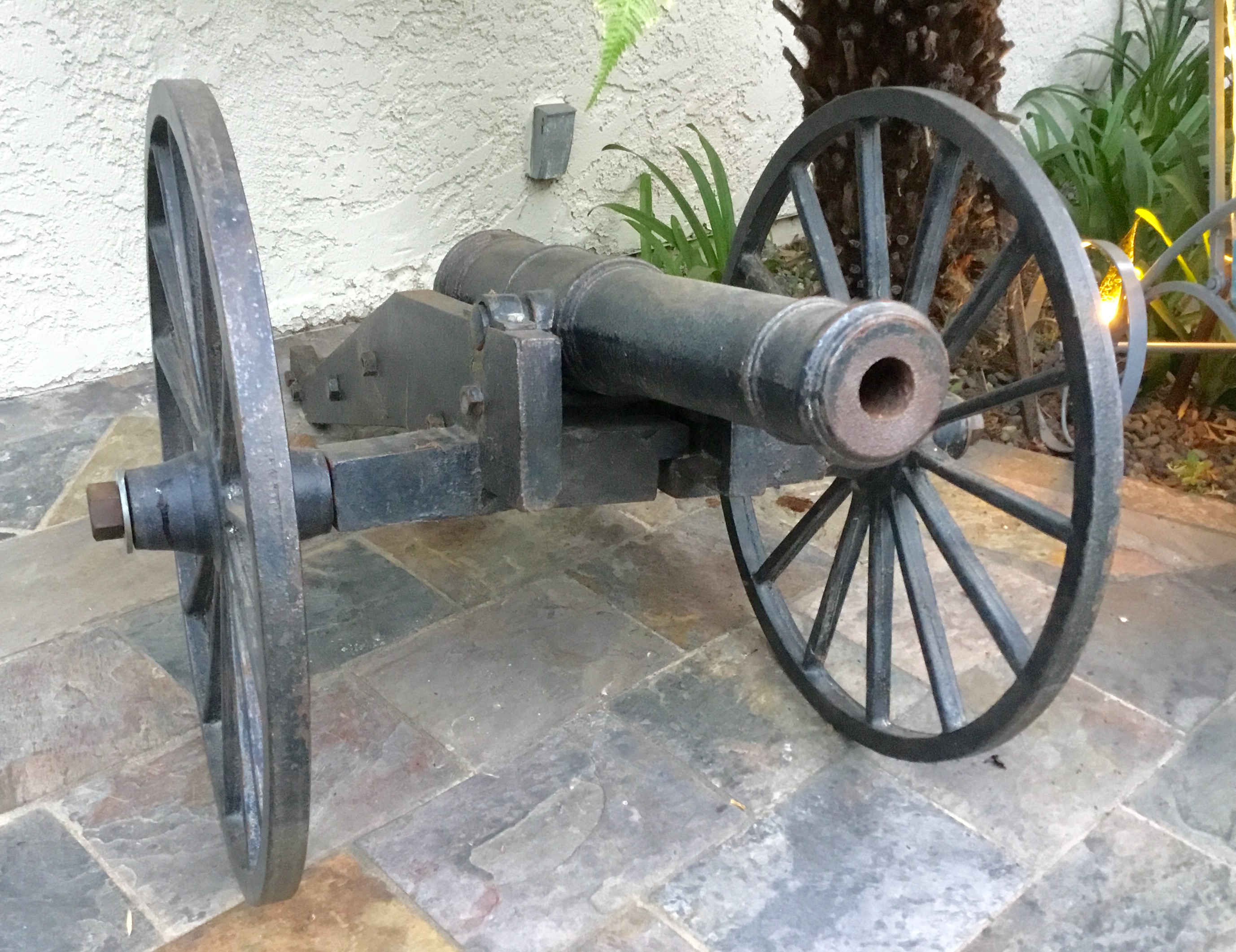
Our back yard cannon obviously didn’t prove to be a deterrent.
Somewhere out there in Kill Zone reader land is a new writer with a wrinkled forehead going, “say what?”
It’s irony, of course. Simple word play. My little attempt at a clever hook. Novels usually don’t have a table of anything, context or content… so what the hell?
But it’s an honest, straight-forward question, as well.
How is the contextual state, the flow, of your novel?
This is one of those issues of craft that can hike you up the learning curve quickly. Like, on steroids kind of quickly. It is something experienced professionals know and practice—even if they don’t associate it with the word context, or (in some cases) without even realizing it—and thus, it remains one of the less politically-proper but nonetheless powerful nuances of craft that is almost always evident in a good novel.
It has to do with story structure.
The context of story structure. Allow me to break it down for you.
You’ve heard of three-act structure. You may not like it, but in genre fiction by a professional it’s almost always there. Don’t mess with it. It is far more fundamental than it is optional.
But that term—three-act- structure—can become vague when you sit down to try it. There is actually more to it than three parts, each of which has its own infrastructure and unique criteria.
I’ve seen story structure broken down into as many as nine parts. All of them aligned with, as sub-sets, the same three-act structure model. Virtually all story structure models have something to offer… as opposed to a denial of story structure, which offers only frustration.
Because the second of those three “acts” is rarely broken down all that succinctly in terms of a functional mission (other than the presence of the all-important mid-point story milestone) beyond the word “confrontation,” I’ve taken a swing at it within my own work (beginning with my book, Story Engineering) in a way that I believe is more useful.
Act II (of three-act structure) actually consists of two roughly equal-length sequences of scenes (quartiles), separated by the all-important mid-point milestone. In fact, it is the way in which that mid-point milestone changes the mission of the quartiles before and after that becomes… context.
Different contexts.
Each of the four quartiles within a novel has its own unique context.
This doesn’t replace or trump three-act structure (okay, it does, because it provides more guidance than simply, “now write Act II”). It simply clarifies it while empowering it.
Let’s define context in this… well, in this context.
Think of a college student pursuing a specific major, in quest of a career to which it will apply. Each of the four years of that requisite curriculum is different. It has its own content, its own context, all of it feeding and building toward the big picture of the major—the whole story—itself.
The freshman is doing something that is orders of magnitude different—in purpose, in content if not form… in context—than is the junior or senior with the same major.
While perhaps simplistic at a glance, consider the challenge of writing a novel without understanding this. Which is actually the sad state of affairs out there, and at all levels. In fact, this helps explain why such a small sliver of novels actually get published, or succeed when they do.
Because, if nothing else, this is a qualitative principle.
Better to know than to guess, or to rely on your current state of story sense (which is, in fact, the degree to which you truly grasp the nuances of all this, no matter what you choose to call it, and no matter what your writing process).
Four parts to your story, each with its own contextual mission.
Each with its own unique narrative contribution to the story. Each with its own unique criteria. If, for example, you’re still doing the work of the first quartile setup (which means, you need to know what that work is… do you?) when you’re solidly into the second quartile hero’s response context, with a first plot point core dramatic arc launch in play (which it wasn’t, back in that first quartile), the novel isn’t working right.
This sequence of evolving contexts is what creates story setup, escalating pace, increasingly compelling dramatic tension, character arc, confrontation and ultimate resolution… all of it in the right places, at the right times, with optimum effectiveness.
All of it, hopefully, in context to a conceptually-fueled premise that gives the story chops in the first place.
Or you can just wing it. Hey, there are only about 112 different moving parts and nuances within a novel, you don’t need no stinking principles, right? This is art, after all. Suffering isn’t optional.
Actually, it is.
If you aren’t aware of this contextual facet of storytelling craft, winging it is your only choice. Wing it wrong, or wing it poorly, chances are your story won’t work, or at least not as well as it could or should work.
That guy who tells you that story trumps structure? It does… for him, and those at his level. Probably not for you. Because you probably don’t know what that guy knows… because he knows all about this contextual sequence of four parts. When a story pours willy-nilly out of his head, this is how it spills onto the page. Not remotely nilly-willy at all.
Not remotely nilly-willy at all.
For newer writers trying to do the same… well, that’s why The Kill Zone is here. To put your storytelling muscles on steroids through the injection of principles into your process.
Once you own them… go ahead, tell everyone you just sit down and write, from your gut, from your instinct, from the seat of your brilliant pants.
Stuffed into those pants will be a big old bulging package of craft and principle… and nobody has to know.
Here’s the rundown of the four sequential parts of a novel, in any genre, roughly defined by quartile:
SETUP Quartile
The goal here is to build empathy for the forthcoming hero’s quest through foreshadowing, backstory, a life-before-the-drama-explodes into it, and the teeing up of the full launch of the core dramatic arc to come… just not quite yet.
That turn comes with the all important “first plot point,” is a story milestone that moves the story from the Part 1 setup quartile into the Part 2…
RESPONSE Quartile
… in which the hero responds to the FFP’s launch of the core dramatic arc, via the expositional contribution of that first plot moment story turn, followed by…
… the midpoint story turn, where the context shifts again, based on new awareness and motivation (stakes) on the part of the hero… into the…
ATTACK Quartile
… wherein the hero leverages everything she/he has learned and seen and the way in which the midpoint changes the context of the story, now with more direct confrontation and proactive attack on the goal (instead of reacting and running, they step into the pursuit of what is needed to resolve the story), the problem and the antagonist that stands in their way…
… leading toward a second major plot turn, in which the story changes yet again in a way that thrusts the hero (and possibly the antagonist) toward an irrevocable date with destiny via a final battle of wits and strength, using courage and cleverness and strategy (rather than anything close to luck or a dreaded deus ex machina), all of which is the stuff of the…
RESOLUTION Quartile
… in which the scenes build toward a brilliant, dramatic and emotionally-powerful culmination, and from there, launching the hero back into a life that is different (because the hero is, in fact, different) than before.
Four parts. Four contexts of narrative exposition.
The opportunity in this is significant.
This guides you toward writing the right scenes and putting them in the right places, thus optimizing pace and keeping the story soundly on track. Instead of (here comes a menu of risk and rookie mistakes): a lagging open, changing lanes, diversion and non-relevance, thematic preaching, too much backstory (because, really, the Part 1 setup is the only real place for much substantive character backstory), waning pace, lack of character arc or proactive action, and most of all, a too-vague unspooling sense of dramatic tension.
Dramatic tension itself is a context. Foreshadowing is a context. Exposition is a context that must be managed. A virtual banquet of context to serve up the meal of your story.
Which is why I ask… what is the state of your table of context?
Now you have a tool, a model, for doing that, in all these contextual realms.
Critics of this rail against it as formulaic. When I claim the story probably won’t work well without it, as I do in my writing books (and by the way, my brother-in-arms James Scott Bells agrees on that count)—cynics and old school resistors claim that’s just me blubbering heresy in the form of formula… as if there are other options.
But guess what: genre fiction is inherently formulaic. Success resides in the creative power with which you harness the formula (hey, I don’t like that word either… so let’s call it a structural principle and get on with it), rather than trying to invent your story form of storytelling.
Those “other options” may appeal to you early in the story (a form of siren song calling to you), but when you get the feedback that the story isn’t working, often for specific reasons, the “fix” to that is, almost invariably, to move the story back closer to this four-part, contextually true form after all.
And then—if you continue to deny what just happened—it’ll be your ability to revise, rather than the principle saving your creative butt. A principle that was there all along, waiting to empower your first draft (once you truly have wrapped your head around it, as, say, Stephen King has… yes, the King of All Pantsers knows this, it is precisely why his pantsing process works him) as much as it will empower your revision draft.
When writing gurus tell you to just write, to use your first draft to find your story… know that with these principles in your head, you’ll find it faster, and better.
It has nothing to do with process, in terms of planning versus pantsing. Rather, it has everything do with knowing how a story should unfold… what goes where, and why.
What a story is.
If this is new to you—and especially if you doubt it—I recommend you test this revelation.
Grab a bestseller, read it analytically… and behold the four contexts of the four quartiles unfolding before you like a curtain parting to reveal the author’s machinations and the power of these principles before your eyes.
It’s the way story works, at a professional level. It’s empowered story sense. Versus the rather clueless one we all began with, back when all we brought to the party was our experience as a reader, all before an immersion into craft changed everything.
This, too, is driven by context-informed principles. And like writing, it can take a lifetime to understand if you try to make it all up as you go along.
I’ll write more about this in two weeks. For now, only the Kindle is online at Amazon; the paperback will be available there in about 6 days, once the self-publishing machine works its wondrous, laborious ways. (It’s already in the Createspace bookstore.)
No matter what genre any of us write and no matter our individual author voices, there are key elements any author needs to develop and enhance with each new project. The craft of writing is something we all strive to improve with each new book. I’ve listed the broad brush strokes I believe are vital for every author to develop as they write. Let me know if I missed anything you’d like to add.
1. SETTING – Create settings as if they were characters – It’s a fine balance to have enough setting that it lingers in the mind of the reader and becomes an integral part of the story as if it breathed. But if too much detail is written, it can be skimmed by a reader. It’s vital to have the setting as seen through the eyes of the character in the scene, to reflect on his or her nature, but allow the reader only an enticing glimpse. Leave them wanting more and give them insight into your character while triggering imagery in their mind. In the excerpt below, I wanted the essence of the grisly scene on the page without crossing over into the horror genre.
As the terrain leveled out, a dense canopy of Hemlock and Fir trees towered over me and blocked the steel gray of an overcast sky as a fine mist dappled my FBI windbreaker and cap. I stopped and gazed toward the next rise. I didn’t have to ask how far the crime scene was. A circle of ravens and crows had gathered. Their black winged bodies cut across the gray sky like an ominous Hitchcock montage. The eerie echo of their squawks and their frenzied aerial acrobatics told me all I needed to know.
My body tensed and I emptied my mind to brace for what I’d see as I hit the crest of the hill.
It never failed. When I looked down to the clearing below, standing shoulder to shoulder with my team, a familiar twist hit my gut. I stared at the grisly work of the Totem Killer and forced myself to look beyond the shocking horror. Every severed limb was someone not coming home—a brother, a husband, a boyfriend, a son. The violation clenched my belly, but I owed it to each of the victims not to turn away.
I would have to speak for them now.
“Dear, God,” someone muttered.
A monolith of bloodied flesh stood fifteen feet high like a statue to be idolized. Dismembered legs, arms, and faces were tied to a tree to make a macabre tower. As exhausted as I was, my eyes tricked me into seeing severed limbs that twitched and slithered like entwined snakes under the circling cloud of ravens. When I blinked, the bodies stopped writhing and I let out the breath I’d been holding, but I’d gotten a taste for the dreams that would punish me later.
“We are your sons. We are your husbands. We are everywhere. And there will be more of your children dead tomorrow.”
I couldn’t take my eyes off the bodies as I recited the quote.
“Who said that?” Crowley asked.
“Ted Bundy.”
I wanted to believe in God, but standing there, I couldn’t. With what I see, I don’t hear him anymore.
2. PACE – Avoid the minute-by-minute time line and understand pace – As the author, you are the teller of the story. You choose what will be told and in what order. Most novice authors feel the need to describe every moment in a character’s life in a timeline that doesn’t break, but a reader’s mind can fill in the gaps. Enter Late and Leave Early (ELLE) – I like to call this the Law & Order tip. That TV show created great pace by having it’s cast entering a scene at the moment something major happens and they leave early and leap to the next instant where a key plot point pulls the viewer along. It’s the same for writing a book. Every scene in a book should move the plot forward with 1-3 plot points. There should be a story arc within each scene (a beginning, middle and end) that entices the reader into the scene and progresses forward with hints of things to come. If you can write a foreshadowing detail to the end of the scene, your pace will keep the reader turning the pages. For more on pace and writing a page turner, here is a link to another TKZ post I wrote with more detail on the topic – TEN TIPS on Pace & Structure of a Thriller.
3. CHARACTER – Tease the reader with how your character looks but focus on what’s in your character’s head – I tend not to focus much on my character’s appearance. I’ve learned that, no matter how much you write details, readers have their own images in their minds and there’s nothing wrong with that. I hint at his or her appearance to reflect a key takeaway I want the reader to understand about them. But the most important takeaway the reader will have is their relationship with what’s inside my character–their values, attitude, humor, biases, what makes them tick, and why they are the star of my story. Below is an excerpt from The Last Victim where Lucinda Crowley describes Ryker Townsend, her boss. I try to be a purest when it comes to descriptions and have other characters doing the describing when it fits.
He had a stare with equal parts intelligence, curiosity and passion. His eyes reminded her of the sweet richness of Chai coffee—the dark and unstirred bottom half of the glass—tinged with a warm drizzle of honey. Ryker had an amazing mind, but there was an intuitive side to his nature that blew her away. To hear him delve into the psyche of the killers they hunted—as if he could connect to them or understood how they hunted their victims—his low voice often gave her chills. Her respect for him had grown over the years and her attraction had only grown stronger, but Ryker had never given her an opening and she didn’t know if she could handle it if he did.
The guy had complex layers and secrets. She knew it, but he was also a one-way trip of the heart.
4. ACTION – Write heart pumping action – It’s not easy writing an action scene that escalates and keeps the reader turning the pages. Physical fight scenes could be skim material if it’s not done right. Too much detail of every balled fist and every jab could be tedious. A car chase could work on the big screen, but too much detail in a book could kill the momentum. A good and effective action scene must hold the reader’s interest by giving enough physical movement, without overdoing the details. Any action must be seen through the eyes of the protagonist in the scene to give the reader a vital anchor point. Below is an excerpt from Evil Without a Face. This scene is only the beginning of a longer action sequence that follows.
The SUV barreled down on her, the engine revved. No more time.
Jess held her ground, the Colt Python clutched in her hands. The muscles in her arms taut, her grip solid. Adrenaline surged through her system like coiled lightening.
“Jess? Are you okay?” Seth’s fear stricken voice shot over her earpiece.
Without hitting her com switch, she held her concentration and muttered under her breath.
“Not now, Seth.”
Glare from the headlights nearly blinded her, but once the SUV got close, she could finally see. The bastard’s face came into focus through the murky haze of the windshield. That’s where she aimed—between his eyes. When Jess saw his sudden panic, she squeezed the trigger.
The Python bucked in her grip. Once. Twice. A fierce plume of fire streaked from the muzzle. Deafening blasts echoed down the alley, magnifying the intense explosions.
Her ears rang and muffled everything that followed as holes punched through the windshield with a weighty pop. The glass splintered, sending fissures across the once smooth surface. With one last measure of desperation, she aimed at his crankcase and let the Python do its worst. Baker collapsed behind the wheel and the vehicle swerved. It hit the wall to her right, spraying shards of brick. The shriek of metal stabbed her eardrums, rippling goose bumps across her skin. In a fiery display, sparks showered the air, a giant sparkler on the Fourth of July.
5. SUSPENSE – Build suspense with anticipation – Hitchcock believed suspense didn’t have much to do with fear, but was more the anticipation of something about to happen. When I read this, it was a huge epiphany for me. The idea changed how I thought about scenes and chapter endings. Be patient with building on suspense. Tease the reader with the anticipation of something bad about to happen and hold onto that moment as long as possible. Here is a link to an older TKZ post I wrote on 8 Key Ways to Edit Suspense & Pace into your Finished Manuscript.
6. DIALOGUE – Focus on dialogue to build on conflict – Put characters together who are at odds with each other. This could be two characters who speak differently because of their upbringing or they have very different personalities. Give them a distinctive voice to carry through your book, but when you add conflict between them, it’s like creating a chess match between two key players. To focus on the dialogue, try writing the lines first before you fill in the rest of the scene. Imagine what they would say to each other first and make notes as if you’re writing a script. Here’s a TKZ post I wrote on Writing Dialogue – Tips that gives more details and talks about my technique for focusing on the lines by writing them first. I describe it as “building an onion from the inside out.”
“Don’t take this the wrong way, but the next one who moves gets buckshot.”
Geneva held as still as stone, staring at her unwanted guests. When darkness fell over the cabin, she shifted her eyes toward the only window not boarded. A wall of rain blackened the sky and would soon swallow her neck of the glades and complicate things.
Photos of Sam in happier times hung on the walls and stared back at her. She gritted her teeth and clutched at the shotgun tighter, praying she’d see her boy again.
“Be careful where you point that.” Camila didn’t take her eyes off Geneva.
“Missy, I’m a crack shot. I learned a long time ago to just shoot. Whatever I hit, that’s where I was aiming. Guess you could say I never miss.”
“Is it my men who scare you?” Camila asked. “I can ask them to wait outside.”
The woman kept her voice low and calm. Her eyes never blinked.
“I like ‘em right where they stand. A cottonmouth slitherin’ through the grass is still deadly, even if you can’t see the damned thing,” Geneva said. “You best get to speakin’ your mind, or you can leave.”
“Very well, if you insist.” Camila narrowed her eyes. “Perhaps you would deliver a message to your son.”
The approaching storm darkened the room and shadows played tricks on Geneva’s eyes when they appeared to move. As the mounting winds intensified the rain that pummeled the cabin, the noise and the thick humid smell made her edgy. She gripped the shotgun tighter.
“You picked a fine time to call. Couldn’t your message wait?”
“I’m afraid not. I’ve waited long enough.”
For Discussion:
1.) What writing tips have worked for you? Please share.
2.) What craft topic do you struggle with?
Redemption for Avery now available – Susan Stoker’s Special Forces: Operation Alpha – Amazon Kindle Worlds – $1.99 ebook. While FBI Profiler Ryker Townsend investigates the shocking slaughter of a seventeen-year old girl, the tormented soul of another dead child—the murdered little sister of SEAL Sam “Mozart” Reed—appears to Ryker in broad daylight, drawing Ryker and Mozart into a more sinister conspiracy.
I think every fiction writer, to a certain extent, is a schizophrenic and able to have two or three or five voices in his or her body. We seek, through our profession, to get those voices onto paper. — Ridley Pearson
By PJ Parrish
Picking a point of view is one of the most important choices a writer makes. Who are you going to trust to tell your story?
I’ll go out on a limb and say I think it is THE most important choice you make. Why? Because point of view — and how well you pull it off — is the most powerful way of developing that special bond between character and reader. And if you don’t create that bond, if you don’t make the reader invest emotionally in your characters, well, what you are putting there on paper is just a bunch of plot points.
So what’s your choice? A single narrator or do you need several? Should you go with first person, which provides immediate connection through the power of the “I” pronoun? Or do you chose third person, which gives you more latitude and depth, the freedom to paint on a larger canvas?
And if this isn’t enough to worry about, let me throw in a new wrinkle:
Intimate point of view.
In case you’ve been under a rock, intimate POV is all the rage in fiction right now, with editors gushing about it and pleading for it in their Track Changes. Which makes me want to dismiss outright as a fad. This, too, shall pass, like all the “girl” books gathering dust on the remainder table.
But the more I started thinking about it, the more I realized “intimate point of view” is really just another ratchet in our character development tool chest. Many of us are already doing this in our writing. And if you aren’t, well, maybe this is something you need to consider.
Now I have been trying to write this blog for two months. But this is slippery subject, and it’s hard to define. So if you read this and still go “huh?” the fault, dear reader, is probably mine. But I’m going to give it the old college try anyway.
One reason we chose first person is because it puts us right in the heart and mind of the protagonist. But with third person, without the anchor of the “I” pronoun, the intensity of that reader bond can be weak. I’ve read third-person novels that feel like I’m listening to an old transistor radio where the signal fades in and out and I can’t “hear” the protagonist’s feelings and thoughts clearly. When that signal wavers, I don’t bond strongly with the character and I lose interest in the story.
Why should you care about intimate POV? Because readers do. People read to have vicarious experiences. They want to walk the miles in your characters’ shoes, view the world as they do, feel their struggles, pains, triumphs and turmoils. The closer you the writer can connect with your characters, the greater the bond the reader will have with them.
So how do you do this? I think it helps to think of this as an extension of our oft-quoted writers axiom — Show Don’t Tell. In terms of POV, it becomes a matter of not merely describing feelings and thoughts but allowing the reader to enter the skins of your characters and experience everything just as they do. Third person intimate uses many of the best tricks of good first-person point of view. When you are in first person, every single thought and sensation is filtered through that one person. Which is one reason first person is easier to write and can feel more involving to the reader. But you can achieve the same bonding in third person if you are willing to dive deeper into intimate POV.
Okay, I tried to TELL you. Now let me SHOW you what I mean. Maybe this will help.
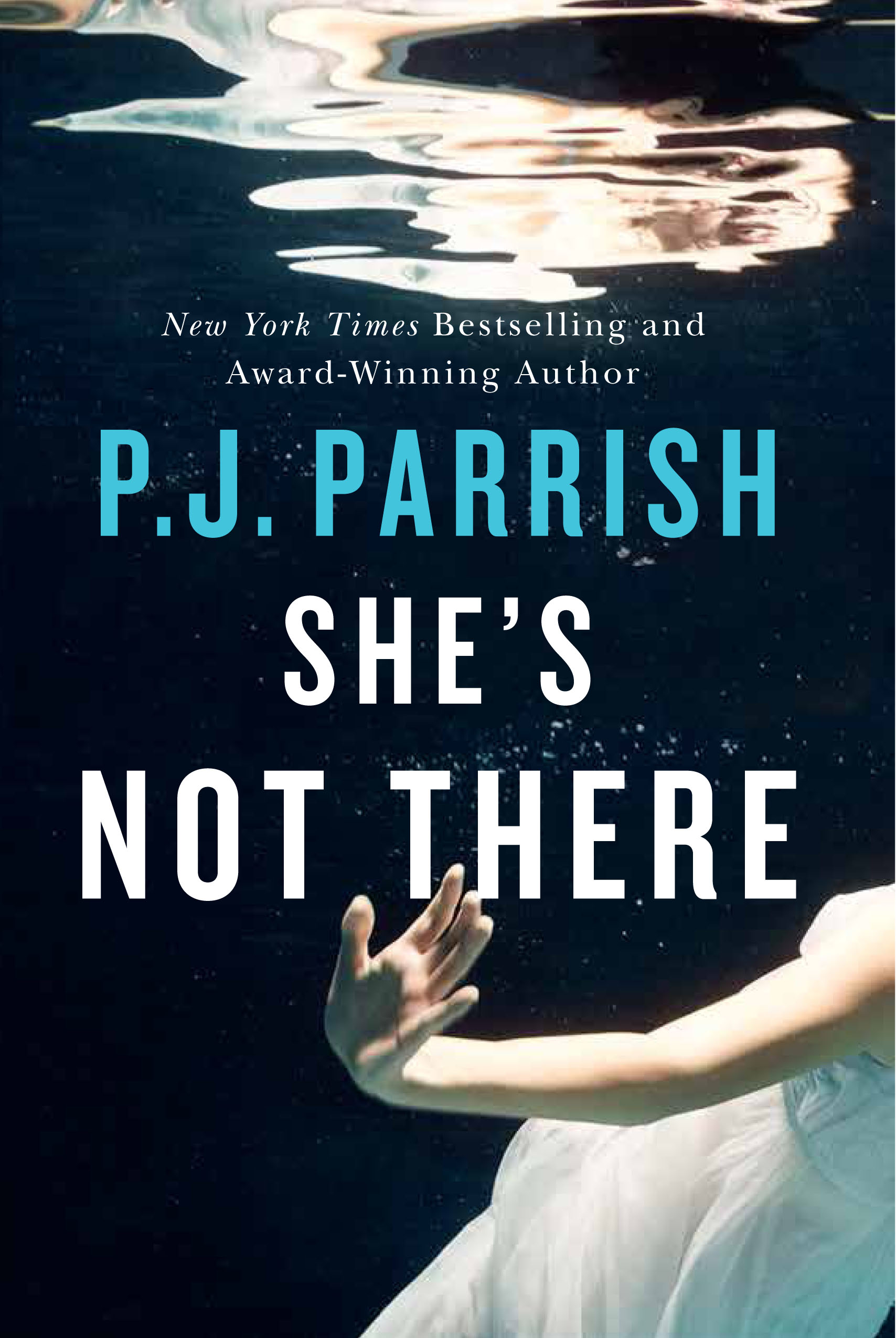
Bear with me but I am going to resort to using my own book here. I’m going to show you two versions, one a regular third-person POV and the second in a more intimate third-person POV. This is the opening of chapter 18 of my latest book She’s Not There. The set-up: This scene has my character Clay Buchanan at a moral crisis, what James calls a “man in the mirror” moment. (which I took literally, as you will see!) This is a huge turning point in the book and will set Buchanan on an irreversible dark path. I chose to put him alone in a quiet place so I could make his inner turmoil play in high relief by contrast. The first version is perfectly adequate and gets the job done. But in the second version, I am trying to immerse myself in this man’s soul.
CHAPTER 18 (adequate)
Buchanan stared at his reflection in the mirror and listened to the song playing on the jukebox. It was Michael Jackson’s “Man in the Mirror.” How pathetic, he thought, to sit in a bar and stare at yourself in the mirror. But then he realized that maybe this was what he needed right now – a good long hard look at himself that might lead to a moment of moral clarity.
He finished his second scotch and set the empty glass down in the trough of the bar. His thoughts returned to the questions that had plagued him on the plane ride back from Georgia: What would happen if he had to stand trial for Rayna’s murder? What could he do with all that money from the deal he had struck with Owen McCall? And what exactly was he going to have to do to get that money?
Now here is the opening as I really wrote it:
CHAPTER 18 (intimate)
Was there anything more pathetic than staring at yourself in a bar mirror? But maybe that’s what he needed right now, a good long hard look at himself. Confront the man in the mirror, stare deep into his soul. Find a bright shining moment of moral clarity.
Buchanan picked up his glass. What was that Michael Jackson song? “The Man in the Mirror”? How did it go? Something about making a change?
He finished his second scotch and set the empty glass down in the trough of the bar. On the plane ride back from Georgia, he hadn’t had anything to drink. He had needed his head clear to think. Think about what might happen if he had to stand trial for Rayna’s murder. Think about the deal he had struck with Owen McCall. Think about what he could do with two million dollars. Think about what he was going to have to do to get it.
Note that I didn’t use one “thought” or “wondered” or “realized.” Note, too, that the sentences are often fragmented to mimic the fleeting rhythm of real thought. Humans under stress tend to not think “straight.” The writer’s trick is to get the feeling of this and still keep the reader on track.
Back to the adequate version now:
Buchanan looked down into his empty glass, thinking now about what a ruthless man Owen McCall was, and what it must be like to have so much power that you could buy anything — including a woman’s life. And he wondered if he could ever be like that, do whatever it took to get what he wanted.
He shut his eyes because, suddenly, there it was again. His dead wife’s voice was in his head, haunting him, and asking the question he was too afraid to ask himself: What do you want, Bucky?
I just want you to be quiet, he thought.
“Excuse me?”
Buchanan opened his eyes to see the bartender staring at him. He blinked her into focus. He didn’t even realize he had spoken.
“All I asked you was if you wanted a refill,” she said. “If you’re gonna get ugly, there’s the door.”
He held up his hands. “Sorry, I’m sorry. Yeah, bring me another, please.”
Okay, it’s not bad. But this is a man so tormented by his wife’s murder that he thinks she talks to him from the grave. I use this device throughout the book, as if Rayna is what is left of his moral compass, if he would only pay attention to it. By this point in the book every time the reader sees the italics and her nickname for him “Bucky,” they know it is Rayna talking to him in his imagination. Also, by now, Buchanan is starting to “understand” that even his wife is turning against him. Here is how I really wrote it:
Owen McCall’s face came back to him in that moment, how it had looked in the car, stone cold gray in the slant of the streetlight, how there was nothing coming from those hard blue eyes, like all the man’s energy was directed inward.
Maybe that’s what it took. Maybe you had to filter everything and everyone out and laser-focus everything you had back into yourself to become a man like that—a man who was successful enough to buy anything on earth. Including a woman’s life.
Could he do that? Could he be the kind of man who would do whatever it took to get what he wanted?
But what do you want, Bucky?
Buchanan shut his eyes.
Tell me, Bucky. What do you want?
“I just want you to be quiet,” he said.
“Excuse me?”
Buchanan opened his eyes to see the bartender staring at him. He blinked her into focus.
“All I asked you was if you wanted a refill,” she said. “If you’re gonna get ugly, there’s the door.”
He held up his hands. “Sorry, I’m sorry. Yeah, bring me another, please.”
Another place intimate point of view can be really effective is when you have to enter a flashback. In this chapter 18, I realized I had to finally explain to the reader how Buchanan’s wife Rayna had been murdered. When you have to inject a flashback, as we all know, you want to get in and out as fast as you can. Flashbacks work best during what I call “quiet moments,” when your character is taking a break from the action and can “remember” and thus narrate for the reader what has happened in the past. Here is the adequate version of my Rayna flashback later in the same Chapter 18:
The bar had gone quiet and his thoughts moved in to fill the void. Usually, when he thought about what had happened ten years ago, his memories were fuzzy. But now, for some reason, everything was coming back to him with a painful clarity.
He remembered how hot it had been that September day, and how annoyed he felt because the baby’s asthma was bad, making him cry so much that Buchanan could barely hear the football game on TV. And his daughter Gillian had made such a mess on the rug with her toys. Rayna had come in the kitchen, grabbed the remote and muted the TV, demanding to know why he hadn’t answered the ringing phone.
He had ignored her, because he was angry about so many things. Angry because the AC was broke and they had no money to get it fixed, pay the mortgage or even cover the baby’s medical bills. He was angry, too, because he hated working as an insurance adjuster and if Rayna hadn’t gotten pregnant, he would have been able to finish his psychology degree. When he finally did look up at his wife, he realized she saw him exactly as he saw himself — made small and mean by his disappointment.
Here’s how I really wrote it:
He watched two guys finish their ping-pong game. The roar in his head had quieted. Even her voice was gone, for the moment at least. He knew this was dangerous, letting his mind go empty, because that’s when the memories slid in. And they were coming now, not like they usually did, like he was seeing them through a soapy shower curtain, but with a sharp, stabbing, awful clarity.
It had been hot that September day, with tornado warnings crawling across the bottom of the TV screen as he watched the Titans game. The baby was crying in the kitchen, making that awful wheezing sound he made when his asthma was bad, and Gillian had made a mess on the rug with her Shrinky Dinks. Rayna had come into the living room and grabbed the remote, muting the TV.
Bucky, didn’t you hear the phone?
No. Did it ring?
He hadn’t even looked at her. The AC was on the fritz, he was hot and miserable, thinking that this was his first day off in two weeks and all he wanted was to be out in the woods with his binoculars and birds. He was thinking about the late mortgage payment and the baby’s unpaid medical bills, thinking about his peckerwood boss and how much he hated working as an insurance fraud investigator. Thinking that if Rayna hadn’t gotten pregnant again, the money they had saved might have been enough for him to go back to night school and finish his psychology degree.
When he finally looked up at his wife, he saw something there in her clear blue eyes he didn’t want to see—himself, made small and mean, because this was never what he had envisioned for himself, and it was too late to go back and fix it.
Again, note the fragments and details — that’s how our brain stores its memories, in flashes of images, sights, sounds and smells. Also, by being in intimate POV, I try to establish some sympathy for Buchanan so the reader can maybe begin to understand his anger. This flashback goes on from here, and I kept it as short as I could but still gave the reader enough background so they could understand the depth of Buchanan’s torment. (He was brought up on charges for her murder but was cleared. Her body, and that of his infant son, were never found.)
Okay, enough about me. Let’s talk about you. And what you can do to make your character’s point of view feel more intimate. Here are some things to watch for:
Know your character inside and out: Intimate POV allows your story and scenes to be experienced from the inside out rather than “reported” from the outside looking in. But this is really hard writing. To pull this off, you must know your character intimately. Everything –- every word, the syntax, the accent, the idioms – must arise from the character’s background and experience. Unless you know your character’s inner most feelings, thoughts and motivation, you won’t be convincing. And you must be able to answer, at the deepest levels, WHAT THE CHARACTER WANTS.
Remember the movie Ghost? Whoopi Goldberg plays a medium who claims that spirits enter her body and talk to their loved ones. Of course, she’s a charlatan, until Patrick Swayze shows up and dead people really do start talking to her. There’s a great scene where the impatient ghost Orlando jumps into Oda-May’s body and takes over. This is what your characters must be free to do — jump into your consciousness and inhabit it so intimately that you and they become one. As Ridley Pearson puts it, you must be able to have two, three, five voices in your body. But when you the writer “speak” on paper, we should hear your characters, not you pretending to be them.
Cut out filter words. Filter words or phrases are you the writer relating things and action rather than letting the reader experience things “first hand” through the character’s sensibilities. You don’t need to remind readers that a character is “feeling,” “hearing,” “seeing” or “smelling.” Delete these words whenever possible. But while paring down, look for ways to inject something personal and telling about your character. Examples:
Adequate: He smelled the rotting dead body lying in the flower bed. Better: First came the sweet scent of roses, but as the wind shifted, the chemical cocktail of rotting flesh made him stop in his tracks. It was funny what you learned after fifteen years in homicide. Dead animals smelled different than dead men.
Adequate: Mary heard the screen door slam and felt the breeze ruffle her dress. Better: The screen door slammed. Mary’s dress waved. (stealing from Springsteen there!)
Limit Your Dialogue Tags. Dialogue tags are the words you use when describing the speaking character (e.g. she said, he shouted, he whispered, etc.). Get rid of as many of these as you can, without sacrificing clarity. Intimate POV works best when your character is alone, but when he’s not you must be careful to let the reader know who’s talking. If you are worried about clarity in thinking, shame on you — it means you are head-hopping in your POV.
Know when to stop: Not every scene needs to be written from an intimate POV. Often, you are just moving characters around in time and space and we don’t need to feel every single emotion they do. The intimate sensibility should always be there but sometimes it just hums along in the background as the action unfolds. Which makes it all the more powerful when you do pull out the stops and let Orlando jump into your body.
I just finished a great suspense book, All the Missing Girls by Megan Miranda, on a flight back from New York and it got me thinking about the whole ‘unreliable narrator’ trope that seems to have picked up steam, especially with recent female dominated thrillers like Gone Girl by Gillian Flynn and TheGirl on the Train by Paula Hawkins. Although almost every first person narrator is going to have some degree of unreliability, when a writer deliberately chooses to have their story told by a character whose credibility is compromised, then the stakes (and risks) involved in successfully navigating that story are much higher.
I have to admit, I’ve always avoided utilizing a deliberate ‘unreliable narrator’ as I think it’s extremely hard to pull off. Even in Gone Girl I started to feel manipulated by the use of the device by the end (nonetheless I was gripped by the novel from start to finish!). In The Girl on the Train, it is obvious from the start that the narrator is one a reader should treat with caution but I had no problem with the unreliability of her narrative, except that a lot of the doubt/mystery came from her inability to remember events (which at times I found a little trite). But writing a mystery is hard (!) and I have nothing but admiration for writers who manage to successfully pull off their deliberate choice to have an unreliable narrator tell the story. In All the Missing Girls, I thought the author not only pulled off this device well but also managed to use another literary device, telling the mystery backwards, with skill. However, I would caution most writers to think long and hard before trying to employ either device…
Like in Gone Girl, The Girl on a Train and All the Missing Girls, the fact that the person telling the story isn’t entirely to be trusted or whose motives may be compromised, makes for a compelling POV. Despite my quibbles, all three books had me reading compulsively for hours. There is definitely an allure to characters whose flaws, lies, or ‘voice’ makes us question them and their role in the crime. A well constructed unreliable narrator has a reader turning the pages. The risks, however can be huge:
The reader can feel cheated by the fact that the narrator has lied, omitted key information or deliberately misled the reader.
The reader may grow tired of the narrator if they lose credibility. Sometimes the literary device of the unreliable narrator overwhelms the narrative or starts to interfere and distract from story.
In the hands of a less adept writer, the unreliable narrator may become a hinderance to the story – confusing the reader or (worst) putting them off continuing to read out of frustration. It’s a tricky device and, if not executed well, it can be an obvious one that irritates the reader.
So TKZers, do any of your current WIPs have a deliberately unreliable narrator? How do you tackle the device? What advice would you give to anyone considering using an unreliable narrator in their work? Have you ever thrown a book at the wall because this device annoyed or frustrated you?
Note: In the past we’ve done First Page Critiques one Thursday per month. Going forward, the TKZ Admin (Yours Truly) will assign the anonymous first page submissions in batches to individual bloggers, to be scheduled for publication by them on their assigned blog post days. We hope this change will help us reduce the queue and publish your first page submissions more rapidly. Thank you!
Cops: Woman, 26, Wielded Hatchet After Her Demands For Sex Were Repeatedly Rebuffed
EMS Ghouls Competed In “Selfie War”
Voodoo Client Made Threats, Man Tells Cops (Dissatisfied customer sought marital help)
Have you ever noticed how many truly bizarre news stories come out of Florida? As a kid and young adult, to me Florida was just the place I visited my grandfather and occasionally went on vacation to the beach. It seemed pretty tame except for all the alligators. (And my grandparents did give me one of those real stuffed ones wearing a sombrero. **shudders**) It wasn’t until the last five or six years that I noticed the news stories. Of course now everyone notices the Florida news stories. The Smoking Gun, whence I pulled the above headlines, even has a “Florida” section. As to the why, ridiculous theories abound: everything from “crazy old people” to the truly baffling “racism because it’s a melting pot.” A more logical explanation is that it has something to do with Florida’s open records laws. The gritty details are ostensibly out there for everyone to report. (Elaine? Do you happen to know if this is a true thing?) I don’t mean to pick on Florida. Weirdness abides in every corner of this country, but I think that it is no accident that the novelist Harry Crews found Florida to be very fertile ground for his darkly colorful stories.
I used to keep a file of weird news clips, or crime stories that piqued my interest. Now I just make notes in my journal or bookmark them in my browser.
The one big problem with using real life, over-the-top events is that they sound way too implausible for fiction. If you ever find yourself saying, “Wow. I couldn’t make that up,” about something, it’s probably because, well, you couldn’t.
I’m not sure why fiction and real life fight each other in this way. It might have something to do with the vast number of variables in real life that must come together to lead someone to do something like wrap his face in plastic wrap to rob convenience stores. In real life, there are coincidences. In real life, there is serious mental illness, and there are women who try to smuggle drugs into the country in burritos. Conversely, in real life, things can get dull awfully fast. Just try to imagine writing that (insurance, law, human resources, retail buyer) office novel that your cousin says will make you both a million bucks after she tells you about the crazy drama that happens where she works. (Don’t do it unless her name rhymes with Micky Fervais.)
Good fiction depends on competent, complete world building. Even if you don’t spend a lot of verbiage on a character’s backstory or personality, every action that character takes has to seem plausible within the world you’ve created. That created world is a finite place, and your reader will know right away if you throw in something that doesn’t work.
Real life is full of uninventable details. With practice, a good writer can make invented details seem uninvented. One of my favorite examples is the speech of a toddler or child anywhere under the age of seven. All the wild variables of the world go into their small heads, and what comes out is often bizarre beyond belief. It makes sense only to them.
It’s a good idea to take notes on real life. You’ll discover those uninventable details if you look closely enough. Try not to think: “How would I describe this person?” Simply observe. We’ve all read a lot of books, and often come up with the same old shorthand for describing our characters, their situations, and even their speech. Look. Really look, and just write down what you see. Chances are you’ll see something surprising. Then, when you do, figure out why it’s consistent with that person. What is it about their life that makes their surprising behavior reasonable?
Here’s one more story. It’s a real life example of a bizarre event that might actually work as fiction. A sixty-eight year-old man in Belleville, Illinois, repeatedly stuck sewing needles into packages of meat at his local grocery store. When asked why he did it, he said, “it was stupidity, I didn’t want to hurt nobody.” The uninventable detail? He rode around the store on a motorized scooter with his portable oxygen tank. I don’t know why I was so struck by this story. Tampering cases are diabolical. Fortunately no one was badly injured. Wanting to know more, I did a more thorough search on his story, and found his obituary. He died a little more than a year after he was caught tampering with the meat. His case had been postponed because his lawyers said he wasn’t mentally fit to stand trial when it came up. His obituary described a man who was productive in the world, and much-beloved by his family. Somewhere in between those two documents there is a complete story, waiting to be fleshed out and told. A place where real life and supposition live comfortably side-by-side.
What’s the most outlandish thing you’ve ever included in a story? Did you make it up, and pull it off?
If you’re in the St. Louis area, stop by the Meshuggah Cafe on Delmar Blvd. on Saturday night, July 30, 7-10 pm. It’s a Noir at the Bar launch party for St. Louis Noir (Akashic Books, Scott Phillips, editor), and I’ll be reading with Scott and some of the other contributors.