Animas, Kappas, and Crow Mothers, Oh My!

image

By Kathryn Lilley

The history of human culture is rich with cautionary tales that warn the unwary against invoking the wrath of mythical creatures or vengeful spirits. In Japanese folklore, rude people  risked being dragged to a watery grave by scaly, aquatic creatures called “river children,” or Kappas. It was accepted wisdom that the  only way to escape a Kappa was to overwhelm it with politeness and good manners. In Hopi lore, the Crow Mother spirit, as represented by her masked kachina doll, was said to initiate youngsters with a ceremony that involved ritualistic flogging with a yucca blade. Continue reading →

A Case of Self-Publishing PTSD

By Larry Brooks

Sometimes at night, lying wide-eyed in a bed of regret, I imagine a headline that reads like this:

Former Mid-List Hack Succumbs to Anxiety During Self-Publishing Push, is Hospitalized and Delusional.

Even that much publicity really is a delusion in the self-publishing realm. And the hospital part, that’s just fiction. But the PTSD is real. Sort of.

It all started with this crazy idea to write a book that matters.

I know, completely nuts, right? I’m just a writing guru-type wannabe tugging at Jim Bell’s coattails, a novelist with six mainstream-published (and republished) books nobody in my audience has ever heard of… who am I to think I can write a non-fiction book about love and relationships that will make a difference to anybody?

Right away I knew what was wrong with that plan. I don’t have Ph.D. behind my name on the cover. Publishers love Ph.Ds. I would be writing from the school of hard knocks about lessons learned and the scars to show for it.

Not a memoir though. This would be a bona fide how-to, one that breaks down the relationship proposition into its component parts in much the same way I’ve done in my three writing books.

That’s when it came to me, the moment of no return: I’d do it anyway. I’d self-publish it, just like what everyone else out there seems to be doing. And—this is being the strategic cherry on top—l’d find a credentialed doctor-type to write the foreword and put their name and MD/PhD on the cover with mine.

I found two, actually. And while I thought the book was pretty good, as did my wife (a pretty important endorsement considering the topic), it was when those two professionals confirmed my suspicion  (that it is good, and that it matters) that I actually began to visualize something big.

Big plans, big dreams, big ambitions. Just like every other ex-midlist author who takes the leap into the self-publishing darkness.

Writing the book was rewarding. And easy when compared to the steeple-chase obstacle course of actually getting it self-published.

That’s when the crazy began.

Two things reared their heads immediately. I’m not all that technically-savvy, and my proofreading skills sort of suck. Both would haunt me through this process.

The plan was: hire an editor, then a proofreader. Because that’s what I’d read, and it made sense.

Of course I ignored that. I rationalized that a non-fiction book wouldn’t require outside editing (because I am, in my day job, an editor of sorts) beyond what would be obvious to my eagle-eyed wife (the queen of cutting), and that she and I could do the proofing (she’d proven herself in this realm), thus saving about 500 bucks along the way.

And then it all went South.

A writer friend offered to proof the manuscript as a favor. Wouldn’t take my money. Meanwhile, both my wife and I would undertake multiple proofing passes (her list of notes was well in excess of 100 recommendations for cuts, changes and corrections), including submitting the thing to Grammarly, which is an app that bolts onto MS Word and promises to find anything an editor might identify as “iffy.” For free.

Grammarly found 1,244 “issues” among the 288 pages of the manuscript.

That’s when the anxiety really kicked in.

Meanwhile, my proofreading friend got back to me, after investing much time and energy into the project. I opened the file… nothing was there beyond the words themselves. No red ink. No notes. From that I assumed she’d actually changed the manuscript, fixing typos and doing little edits, all of which would remain invisible (and thus, useless, a waste of her time) unless I did a line-by-line comparison. Which meant, I would have nothing to compare to the editing my wife and I were doing.

After a few days of squirming, working through those Grammarly catches (among those 1,244 “issues” were less than 50 actual typos and about a dozen questionable wording choices—if, that is, you are a middle-grade English teacher—leaving 984 “issues” that escaped me, things like “potential misuse of dangling participle” or some such nonsense.

I never really listened to my English teacher about that stuff, and I wasn’t about to go there now. Grammarly… out.

When I worked up the courage to ask my friend where the edits were, she told me (with much patience) that they were in Track Changes. Which I’d heard of. Which I’d actually used during the editing process with Writer’s Digest Books on myhree writing books.

Thing is, though, those manuscripts had arrived with Track Changes already open.

And on this manuscript, on my new computer with its new Windows 10 operating system and its brand new MS Word 8.1, which I’d never seen before and looked to me like a page from Pravda, there was no obvious way to find and open Track Changes.

Google didn’t help.

Oh, it was there, all right. I just couldn’t find it. And thus, couldn’t access her edits and comments. Which were plentiful and astute. When I finally did find it (with her help after my humiliating confession), and after I’d implemented all sorts of edits from Grammarly, my wife and from my own proofing, thus began another pass to cross-check and implement from those four different sources.

All this took about two insane weeks, neither of which I’d planned for. My day job as a story coach went on hold and my clients were getting impatient, I was eating like crap and couldn’t sleep… my God, this was a wonderful experience so far.

During this time I had been going back and forth with the cover designer, after purchasing a generic version that was really killer. You wouldn’t think adding titles and my name and the back copy would be that hard. It wasn’t, actually, but then came the next curve ball.

Createspace needs to know the exact interior page count to calibrate the width of the spine. Actually, the designer needs to know that first. It’s a different number than the manuscript pages, this is the actual number of book pages. So with my book in about five simultaneous stages of revision, the cover had to sit on hold until I finally received the first proof copy of the paperback from Createspace.

Which was several unexpected hurdles away, consuming about two more unplanned weeks.

When you finish writing a book you are impatient to get it out there. Brevity of release ramp up is one the attractions of self-publishing (versus the full year or more a publisher will make you wait), so I was itchy to get this up and running. With all those typos and fixes in place, I could smell the finish line.

This was the raw grist, the sum and total, of the emotions that were making me crazy.

Upon finishing what I thought was the final draft of the manuscript of CHASING BLISS, I went to the Amazon author site, set up the book and submitted it to their online formatting tool. It looked like a bored cat had been playing with the space bar, separating paragraphs and inserting inexplicable white space everywhere. Of course that was my fault, using the wrong keys in the wrong way, imparting secret coded messages to the formatting gods… because that’s what writers do, we use the keys on the keyboard.

Couldn’t get it to work. I had been told I could skip paying a formatter and do it myself, correcting these issues myself and resubmitting until I got it right. Maybe. But I couldn’t see that finish line.

And so, following trusted advice (which I should have done earlier), I found a formatter on Fiverr.

Eighty bucks for three versions: Kindle/mobi, Smashwords/epub (which covers bookstores and iBooks), and a locked-down PDF for the paperback inside the Createspace template. It took five days to get the mobi back from my Fiverr guy, with a note (from a land far, far away) to “please check manuscript.”

Right. Got it. Did that, with the same Amazon previewer. Resulting in the same chaotic lack of symmetry spiced with random acts of white space. It was as if the formatter hadn’t even touched it.

Sent it back to him. A day later he said it was fine. Try it again.

Same outcome. Pass the Tums.

Another day later he asked what previewer I was using to do these checks,, as if there was a choice among previewers. Turns out there was. He sent a link to another stand-alone previewer, a deluxe version, which allowed me to see an accurate visual layout in all three formatted editions. Which, when downloaded there, looked beautiful and perfect to my anxious eyes.

I downloaded the mobi to Amazon and hit the Publish button within five minutes. Five more minutes it was in the Smashwords system.

Next day I anxiously bought the first copy of the Kindle. Started reading. Found three typos in the first one hundred pages.

Now, you would think you could just open the mysterious “mobi” file (or the ePub file, which is different) and simply correct the typo, right? But no, that’s too easy. So I googled how to do this, and I ended up with a video by Hugh Howey, who is the king of all things self-publishing and way smarter than me. He explained that you had to download two other pieces of mysterious software, neither of which was “mobi,” open it in one, then open it the other and somehow magically merge those files, and then you can make the changes, and then convert it all back to mobi. Somehow.

Somehow.

Easy right? Yes, if you went to M.I.T. The narration of this process sounded like a Boeing engineer explaining flap resistance coefficients to an FAA inspector.

Wasn’t gonna happen.

So I went back to the format guy who was out there somewhere to ask if he could do these corrections. Two days later, a simple, “yes, tell me corrections.”

Did that. Two more days later, I get the files back. Good to go, all three typos fixed. I checked them on his magic previewer, and it looked… wonderful.

Back to Kindle. I downloaded the updated version, which they would swap out for the one already published in twelve hours. Meanwhile, I logged on at Createspace, opened an account (not as hard as I anticipated), and downloaded the formatted manuscript.

Surprise: they needed to send me a proof copy (which I had to pay for) for my approval, before the actual publishing process could begin. That would take three to five days. This was like being in labor (I imagine), and the doctor telling you not to push for three to five days until they can get you into an empty O.R.

The proof/ARC finally came. It was like opening a Christmas present. The cover was beautiful. Hope returned in a rush of anticipation.

I began to read. My heart sank. I am embarrassed to confess what I found. But I will, because that’s why we’re here. Piece by piece, my brain shattered into 95 little pieces.  Because…

Ninety-five more changes were required.

I sh*t you not. Not all of them typos, but awkward moments in the narrative, missing punctuation, and little opportunities for upgrades. It was as if the process had gone back in time and deleted everyone who had set eyes on the thing.

Back to the formatter dude. Offering him more money to get me out of this mess. Another 80 bucks–he sort of had me– which I happily coughed up. I compiled a summary of the changes, with very explicit (I thought) instructions on what was to be changed, and how.

Got a message that it would take 8 to 10 days. By now I would miss my target release date by about a month (good thing nobody was on the edge of their seat out there). All because I didn’t hire a professional proofer, and couldn’t find the Track Changes done by my very generous friend, who was as good as one.

Five days later the changes arrived. With questions, because he said my instructions weren’t clear. I clarified and sent it back him, consuming another three days.

This, ladies and gentlemen, is the ultimate test of a writer’s patience, spiced with the certainty that it was all my fault. And, that my subcontractor was on another planet.

Got the changes back. Checked the magic previewer. All looked well.

Back to Kindle to upgrade… except (and this one is hard to swallow), over 50 copies had by now been sold. Fifty people swallowing 95 mistakes or weaknesses. Turns out that Amazon promises that when you submit a revision to a Kindle book, it will automatically update for all who already have the book on their device (provided a specific setting has been made on the device). So not to worry, at least my reader/buyers would get the corrected version, though for many it would happen after they’d read the flawed version.

As I write this, it has been three weeks since the corrected version went online on Amazon. And I still haven’t yet received an “automatic update” on the three devices I use for Kindle books. And yes, I had the proper selection.

Amazon has no explanation. Actually, they won’t even answer my inquiry on this.

Now it was time to submit another version of the manuscript, the clean one, to Createspace for the paperback. Which required another cycle of sending a proof copy (which I again paid for), three days later.

You’d think this was over. It wasn’t.

I found two more typos. Big whopping ones that would have required me to be in a coma to have missed.

Back to the formatter. Three more days. Twenty more dollars. I received the corrected versions, read them front-to-back twice on the magic formatter, and did yet another round of resubmissions to Amazon, Createspace, and Smashwords (which had for this entire time refused to accept me into their “premium” level because the resolution on the cover wasn’t adequate; so as this proofing chaos was going down my cover guy, who had gone AWOL in whatever off-shore land he lived, finally got to and fixed, claiming he’d sent that version to me already)… thus electing not to receive another printed copy, in favor of using Createspace’s online previewer to make sure those final two fixes were, in fact, fixed.

They were.

I had my shrink and my pastor on speed dial by now.

So the book is done.

I won’t promise that it is glitch free, but so far so good.

Meanwhile, I’ve already heard from two people that believe the book will save their marriage, and a reviewer who says it is the best book she’s read in… well, she didn’t specify that window. And another couple who, upon merely hearing about the book, had a Major Conversation and have decided to reinvent their relationship.

The book is comprised of several lists that might rock your world:

  • Ten reasons HE is going to cheat on you.
  • Ten reasons SHE is going to leave you.
  • Five common every-day scenarios that almost always create problems.
  • Seven realms of relationship that always apply, and will either make or break you.
  • A list of really dangerous questions to ask each other, but if you have the courage and the ability to work through them, they might just change everything for you.

I hope you’ve enjoyed my trip to the funny farm. I’m better now, calm and reflective, looking forward to getting back to writing fiction with a new novel I’ve promised my wife I would write.

At least I’ve written something that matters.

And at least now you know what you might be getting into if you opt for self-publishing. Hire a pro to proof your stuff, or find a friend like mine who can do that. Hire a great cover designer and formatter that is not only good, but responsive and fast. Avoid the temptation to do-it-yourself, unless you know that you really can.

Your book is worth it, after all.

*****

Check out the new website for the book (70% done) at www.chasingblissbooks.com. Check out the really cool (and really intimate) author interview (by Sue Coletta, also available on her website) under the INTERVIEW tab.

Available on Kindle, Nook, Smashwords, iBook, and in paperback from Amazon.com or Createspace.

Or, your bookseller can order you a copy.
Chasing Bliss FRONT cover final jpeg (2)


Reader Friday: What Color Is Your Aura?

imageEveryone, Some people say, has an aura. And every aura radiates a different color. Take the following quiz, and tell us which color your aura reflects! And how would you guess your aura’s color affects your writing style, if at all?

What Color Is Your Aura?

Example: Yellow Aura

You are optimistic and intelligent, with a friendly, creative presence. A yellow aura signifies that you are full of life and energy, an inspiring and playful person. You may be on the brink of a new awakening, close to finding new meaning in your current life.

First Page Critique – Inside Moves

Jordan Dane
@JordanDane

Wikimedia Commons Image

Wikimedia Commons Image

Today we have an anonymous submission from a gutsy author, titled Inside Moves. Read and enjoy. I’ll be on the flip side with my feedback. Join in the discussion with constructive criticism for the author.

Chapter One

The ambulance screeched around the corner—its light bar flashing and siren screaming—toward Santa Barbara General Hospital’s emergency-room entrance.

An older couple sitting on the bus-shelter bench at the corner was startled by the sounds of the vehicle, along with the knowledge of what that meant.

The man looked to be in his midseventies. He took the woman’s hand in his; she had been startled more severely than he was. “Sweetheart, since we’ve lived in Santa Barbara nearly all our lives, I’d say there’s a very good chance we might know whoever’s in that ambulance.”

But they didn’t.

Desperate to keep the man alive, EMT David Ortega kept his eye on the heart-rate monitor for any changes to Bobby Wainwright’s vital signs.

“We’re losing him!” he yelled to his partner, Tom, who pushed the accelerator of the ambulance.

David felt the ambulance lunge forward. Tom liked to drive fast when the siren and flashers cleared his path. Regaining his balance, David prepared to do CPR while speaking to Dr. Richard Kiersten through his headset. The doctor was standing by in the OR, awaiting their arrival at SBGH.

“Give him Narcan IC,” he instructed David.

David hated giving intracardiac injections because they could produce complications. Besides that, just the idea of stabbing someone in the heart with a long needle was ugly. But he did it anyway. With nothing to do but watch the monitor and the patient, David read the notes Tom had taken at the accident site.

Bobby Wainwright. Just a few years older than me. Huh? Owner of Wainwright Erectors. Not from around here. Bet he makes a ton more than me. Accident on the job…Man, something really big fell on this dude. Goose bumps jumped out on his arms. No matter how much he makes, I sure don’t want to be him right now.

At the emergency entrance, David and Tom prepared Bobby for the operating room and Dr. Kiersten. As David jumped out of the ambulance, he saw an elderly couple at a bus shelter watching him. The old lady looked scared to death. Dear God, don’t let her suffer a heart attack before I get this guy into the OR.

The first responders had brought Bobby to the hospital closest to the construction site where he had been injured. Right now, it didn’t appear that this hospital was close enough.

FEEDBACK

There is nothing like a speedy ambulance ride to start an exciting action scene and get the blood pumping for a reader. This author’s instincts to begin the story there has merit, but the omniscient point of view (or author intrusion/head hopping) had me distracted.

A.) POINT OF VIEW – From the first line, I’m wondering who is watching this ambulance as it screeches around a corner. The older couple waiting for a bus seem almost caught off guard and startled by its sudden appearance. From their reaction, more author intrusion follows when an unknown narrator estimates the older man’s age. After his dialogue line, this unknown narrator answers his remark of “…we might know whoever’s in that ambulance” with the line – But they didn’t. The action and pace of this intro is diminished by the insertion of this couple too. They add nothing to the scene.

From the point where the older couple are left behind, the author tried to stay in the POV of David but veered out big time when David, the EMT riding in the ambulance, can somehow “see” the doctor he’s listening to on his headset with this next line – The doctor was standing by in the OR, awaiting their arrival at SBGH. I suspect that rather than this author deliberately using Omniscient Point of View, there is more “head hopping” going on here.

Recommended reading on POV – Here is an excellent prior post from TKZ’s Joe Moore on Narrative Voice that explains more about Point of View and the author’s voice.

B.) WHERE TO START – I would recommend this intro start with David the EMT and stay within his head, whether he’s a main character or not, at least until we get through the action and settle into the story. Begin with the line, “We’re losing him!” he yelled to his partner, Tom, who pushed the accelerator of the ambulance. Get the reader to feel the jostling ride as David is on his headset talking to a doctor at the hospital, as his patient is dying.

C.) RESEARCH – There is no short cut for research. If the scene calls for medical knowledge, any reader knows some jargon and can discern what is believable. Leaving out the details only highlights that the author has not done the research.

1.) Get the medical right – I would advise giving more medical detail on what David sees. Are there broken bones, collapsed lung, patient in shock, etc? David is an EMT and would know more than is shown. His objective should be to stabilize the victim enough for the ride to the hospital. There appears to be an accident but a medical person would look at the injuries and not be focusing on the accident so vaguely. This is obviously an attempt to introduce backstory in a “telling” fashion. If these details are necessary, it would be best to include them in dialogue, maybe as the EMT speaks to the doctor. But focus on the resulting injuries. I’m no medical person, but I can’t imagine that CPR is how an EMT would describe resuscitation. They have drug remedies (medical therapy), airway management, or equipment to use, like defibrillators.

2.) Mystery elements draw readers in – I’d suggest revealing the patient’s condition through dialogue, with David being the POV character. (One POV per scene is highly recommended, otherwise it reads like head hopping and would be a red flag to editors and agents.) Is there conflict between the EMT and the doctor? Is David resentful of the man? Does David see ambiguity between the patient’s condition and “the accident” explanation? Readers can be drawn into a story by elements of mystery. Have patience with laying these out. Raising the mystery is enough and it will foreshadow things to come.

3.) Drama builds on the risky stakes and tension – Where is the drama when the heart stopped and flat lined? Too much is missing and it is apparent that the author has avoided the details needed for this scene to be believable.

4.) Suggestion – I would do the research and include some details in David’s dialogue to make this work, but if the author didn’t have a desire to do this, I would suggest having the POV be in the head of someone who is brought on the ambulance who is an unreliable narrator and doesn’t have a medical background. This could be a loved one or a co-worker, but if David is a main character, I wouldn’t make the first scene about a secondary character that won’t be important to the story.

D.) RESEARCH RESOURCES – Below are a couple of good resources sites for medical and crime scene research.

1.) Medical – Whenever I think of medical research, one name pops into my head and I have his books in my research library. Doug P. Lyle, author. He has written many non-fiction books on forensics and medical research for writers and he’s gracious with his replies on his website. Look for his books and contact info HERE.

2.) Crime Scenes – Another good resource link is Crime Scene Writer on Yahoo Groups. It is a group of professional crime scene people of various experiences – ie crime scene techs, law enforcement, FBI, EMTs, firemen, etc. HERE is the site for the group and this is the email to contact them and request to be subscribed as a member. Send an email to: crimescenewriter-subscribe@yahoogroups.com (Be sure to read their rules of etiquette for members.)


E.) WAINWRIGHT NOTES – With imminent resuscitation or a medical crisis happening, how would David have time to read any notes on the patient? Supposedly the patient is dying, yet David is reading over notes and casually thinking about the patient’s age, job, money status, as it relates to him, etc. Very unprofessional and inappropriate timing. given the action and urgency of the scene. (Side Note – EMTs have ice water running through their veins. They have ways of dealing with extreme injuries and distancing themselves to allow them to do their jobs.)

Bobby Wainwright. Just a few years older than me. Huh? Owner of Wainwright Erectors. Not from around here. Bet he makes a ton more than me. Accident on the job…Man, something really big fell on this dude. Goose bumps jumped out on his arms. No matter how much he makes, I sure don’t want to be him right now.

F.) FORCED UNREALISTIC DETAILS – Below is a sentence that ripped me from the reading. With the scene starting at the bus stop and the elderly couple, the end of the scene with a racing ambulance somehow comes back full circle, as if they spun their wheels in place? I don’t see the point in this, but more importantly, an EMT would be focused on his patient and not looking around and down the street to get a bead on a couple at a bus stop. The urgency of the medical situation is completely deflated. Here is the sentence:

As David jumped out of the ambulance, he saw an elderly couple at a bus shelter watching him. The old lady looked scared to death. Dear God, don’t let her suffer a heart attack before I get this guy into the OR.

The next and last line has the same feel to it – that the ambulance had spun its wheels in place. It drags the reader into backstory that is out of place to the present action. Plus the POV isn’t David anymore and the reader gets another dose of author intrusion. Here is the sentence:

The first responders had brought Bobby to the hospital closest to the construction site where he had been injured. Right now, it didn’t appear that this hospital was close enough.

OVERVIEW – The fixes on POV and proper medical research can be done. That’s the good news. There are no shortcuts for solid research when the scene is a medical one. The author could find a non-medical character to insert one POV for the scene, but a better scenario would be to make the scene believable with the proper research. If the focus is on the emotion of an EMT about to lose a patient, the medical could be woven into the scene without going overboard. (Note: Less is more – a regurgitation of all your research can be tedious and boring to a reader. Moderation is key.) But get the lingo right and the sequence of events in proper order so the scene is believable. Show how the stakes are high and focus on the humanity of the EMT in a life or death situation and this author will have the reader turning the pages.

DISCUSSION:

Anything to add, TKZers? What had the author done right? What would you recommend for improvements?

Emotional Resonance

Following on from Jim’s great post yesterday on describing characters, I was prompted to think about characters with emotional resonance while reading the great children’s book Wonder by R.J. Palacio. My kids had been urging me to read this book for a while now and as soon as I started reading it I could see why. Absolutely every character (even the mean ones!) in this book resonated with me on a deep emotional level. I think this is the reason many adults enjoy children and YA books – because, when they succeed, they provide a huge emotional wallop that stays with a reader long after they have finished reading.

Few adult books have had the same impact on me in recent years, but I think, as a writer, the issue of emotional resonance when it comes to character development, is a critical one. Almost every book I’ve failed to finish or which has left me disappointed, has failed because I haven’t been able to care enough about the characters. Even in books where the plot has become thin or events have stretched credulity, emotionally deep and resonant characters have kept me reading.

In some ways, the process of providing emotional resonance mirrors the way a writer describes a character because it focuses on the feelings the character inspires in a reader. Those feelings don’t have to always be warm and fluffy, but they do need to strike a chord with a reader. The most powerful characters stay with a reader long after the book is finished.

All too often at writing classes or conferences the pieces that I’ve read or critiqued have had one major failing – the characters themselves. They are often flat on the page, cliched or simply do not ring true. So how do you create emotionally complex, relatable and ultimately resonant characters? Maybe the best starting point is to identify what not to do and work up from there.

Many new writers may feel the urge to create a quirky, one-of-a-kind character or perhaps they hope to create characters similar to those that have proven most popular in their genre (here’s where the recovering alcoholic, down at heel PI often comes into play). In either case, a writer should beware of using standard character tropes and cliches as well as going too far the other way by creating the most ‘out there’ character who sounds nothing like anyone a reader would ever meet in real life. if a character is nothing more that a series of quirks or tics then a reader is going to be just as dissatisfied as if the character is little more than a carbon copy of the stock-standard genre character. The key is (I think) to get into the head and emotions of a character in a way that displays the writer’s own unique perspective. In some ways, perhaps you have to place a little of yourself in each character (maybe not in a literal sense but certainly in an emotional sense).

Striking a chord in readers can be tricky as each reader also brings their own perspective, background, and emotions to the books they are reading. One character’s actions may pack an emotional punch for some readers and yet leave others cold. I find, for example, that parents in books often pack a huge emotional whallop for me, especially in books like Wonder or The Fault in our Stars. If I’d read these books when I was younger, I suspect different characters would have evoked a very different kind of emotional reaction. Yet there are some universal truths out there and characters that evoke strong emotions will go on to have wider resonance.

It’s hard to provide any kind of definitive ‘tip list’ for creating this kind of emotional resonance, simply because it is an illusive target (we only know it when we feel in the gut) but I think some of the elements include:

  • Going deep within a character’s psyche to understand their motivations;
  • Drawing upon your own past experiences and interactions to add depth;
  • Using action as well as interaction to draw out a character rather than description alone (this helps readers experience a character rather than just reading about them in a static sense);
  • Finding the humanity within all the characters (even your villains);
  • Exploring the inhumanity within all your characters (we all have weaknesses and foibles, prejudices and flaws that make us who we are – even if we’re not proud of them);
  • Looking for the universality of experience that strikes a chord in you the writer as you describe your characters and take them on their unique journey through your book;
  • Avoiding thinking or describing characters in terms of what they should be but rather what they are – try to step back from relying on conventions or mimicking other writer’s characters and remember no one is superhuman or a psychopath in their own mind.

These are just a few ways I think writers can start to inhabit their characters to provide a level of feeling that will hopefully resonate in readers. What tips do you have?


Reader Friday: What Substance Fuels Your Writer’s Engine?

imageMany (if not all) writers find that certain substances are, shall we say, helpful in terms of getting our creative juices flowing. Here, in no particular order, are some of the better-known writer’s kick-starting elixirs. Do you have a substance of choice that you use when writing? Why or why not?

  • Coffee
  • Espresso
  • Double Espresso
  • Cigarette
  • Cigarette Followed By Double Espresso Chaser
  • E-Cigarette like these from this vape shop with some of your favorite tasting liquid (Ugh, IMO, But Some People Like Them)
  • Wine (Especially My Personal Fave, Toasted Head Chardonnay)
  • Beer (Especially Three Floyds Zombie Dust? That’s According To My Beer Drinking Buds)
  • Any Random Alcohol That Is Left In The House, Which Can Get The Job Done In A Pinch (BTW, Here’s a link to drinks favored by famous authors.)
  • M&Ms And Potato Chips (Sugar, Chocolate, And Salt Combo, Yum!)
  • B&R Ice Cream, Any Flavor (Except Mint Chicolate Chip, Which Tastes Like Toothpaste)
  • Pencil Eraser Niblets, When All Else Fails
  • Any Substance Not Mentioned On Our List?image

Reading Reviews: It’s Complicated

There are as many approaches to dealing with reviews as there are writers, ranging from the diehards who don’t read their reviews, ever, to the snowflakes among us who turn into sad, quivering puddles at the sight of the dreaded single star. (As a former snowflake, I resemble that remark.)

Many businesses when it comes to the online review world will get online reviews to try and prevent negative reviews having any impact on their business, but how do we manage this when it comes to books?

Book reviews fall into several categories:

–Good (Loved it!!!! Five Stars!!!)

–Bad (“Horrible!! wish I hadn’t read it.”)

–Meh (or what I like to call damned by faint praise)

–Irrelevant Content

–All About the Reviewer

–Actionable

The Good Review

Everyone loves a good review from TrustRadius (except your enemies). It feeds the ego of the little kid inside of us who trudged home from school clutching a hand-loomed potholder, desperate to hear that it was the BEST POTHOLDER IN THE WORLD! We’re adults now, of course. We are mature professionals who understand that a job well done is still just a job, and while we humbly tell ourselves that there are probablydefinitelycertainly things we could have done better, somebody thinks it’s the BEST POTHOLDER BOOK IN THE WORLD!

The Bad Review

Only true masochists enjoy getting bad reviews. I’m skeptical of writers who proclaim that they pay close attention to their worst reviews, saying they learn a lot from them. The most important thing to learn here is that not everybody is going to like our potholders books, in the same way not everyone is going to like you or me. This is when it’s important to remember that you are not your work. Though as artists (or craftspeople) our identities heavily influence our work, our work is a separate entity. Even if it’s a memoir.

The Meh Review

In some ways, the meh* reviews are the most frustrating. I would almost rather have a sharp, declarative bad review because the meh review is the participation trophy of the review world. A two or three star meh review means that the reader wasn’t much moved by the work. I want a decisive reaction, not a plot summary with a complaint or two about stereotypical characters or questionable geography. I feel like I haven’t done my job if I haven’t polarized and energized a few readers one way or the other.

*I found a 3-star review for Hemingway’s The Sun Also Rises titled Meh: “Meh. Concise. Not much happens. It’s about postwar drunks dishonest with reality. Why does Amazon have a min word count on review?”

The Irrelevant Content Review

Ah, the Irrelevant Content review. This type of review is pretty much restricted to online purchases. Should a “Received in a timely manner as advertised” review award four stars or five? Tough call.

The All About the Reviewer Review

All About the Reviewer reviews can be a lot of fun. These reviews are for…other reviewers! Back in the day (and now occasionally in the New York Review of Books) there were many actual book critics who spent their time explaining books by connecting their cultural context and literary significance. Good critics were well versed in their specialties and liked to show it. The wittiest ones were often cheerfully savage and careers were made or hearts were broken. Now, the standard All About the Reviewer review is an extensive book report written for the reviewer’s memory of their favorite high school English teacher. I may seem to be poking fun, but these are the most useful reviews to people who are trying to decide whether to buy/read a book. They’re often thoughtful, complete, and nearly always earnest.

The Actionable Review

The Actionable review needs to be dealt with by the entity that published it or allowed it to be published. Actionable reviews are often ad hominem attacks that are meant to both draw attention to the reviewer and provoke the writer, i.e. “Ms. Author is a moral reprobate who hates babies and blinds puppies!” Here again it’s important for a writer to remember that they are not their work. Any reviewer is within their rights to express opinions about the work, but it’s not okay for them to abuse the writer.

I’m sure you can think of many other kinds of reviews. Feel free to chime in below.

I took a lighthearted approach to describing types of reviews because the subject can be a loaded, painful one. Our work is out there for everyone to see. To judge. To like or dislike.

Whenever I’m tempted to read reviews of my work, I keep in mind what my very first writing teacher told me: “You don’t get to look over your reader’s shoulder and explain your work. It is what it is.” That’s it. It’s out on paper or online (or shared with your workshop or writing group or significant other) and it must stand on its own. Sometimes it’s going to wobble, and sometimes someone is going to point out where you screwed up. That’s the way of sending work out into the world. The sending out has to be its own reward because there are no guarantees once it’s done.

If you’re not one of the stalwart writers who can confidently take anything a reviewer throws at you, pause a moment before you sit down to read your reviews at Goodreads or Amazon or anywhere else and ask yourself a few questions:

—Am I looking for approbation? If so, then go ask your mom or spouse or bff what they think of your work, because while you might find some solace in reviews, you’re going to find a lot of other things that are nothing like approbation.

—Am I being tempted to look at reviews by my overbearing inner critic? This is your own resistance trying to keep you from your work. Your inner critic will skim over all the nice things it reads and zero in on the negative comments. These are the ones that will stay with you when you sit down to write.

—Am I willing to give equal weight to both the negative and positive reviews? This is related to the inner critic question. If you believe all the bad stuff, then you might as well believe all the good stuff, too. And vice versa.

—Is there critical information that will help me become a better writer? This is a tricky one. Sure, there may be some clues in there, but if your goal truly is to become a better writer, then find a good editor and pay them to tell you what needs to change. Good editors rarely spend their time giving away their advice for free in reviews.

—If I read my reviews, am I likely to be motivated to put my backside in the chair and write my thousand words today when I’m done? For me, this answer is always a resounding no. Your experience may be different. If someone writes to me and tells me how much they like my work, I sail away to my keyboard on Cloud Nine, but I’ve never felt that way after reading a review. And reading negative reviews can knock me off my schedule for days. Sometimes weeks.

My relationship with reviews has evolved significantly over the past decade. At the beginning I approached even Amazon reviews with reverence and fear. My attitude was funny given that I reviewed for a newspaper for ten years. I knew how subjective reviews were. Much depends on the reviewer’s workload, tastes, and expectations. But I couldn’t get past the kid waving the potholder for several years. I wanted everyone to love my work! And if they didn’t, I spent a lot of time worrying that there was something wrong with it.

I can’t pinpoint when I changed. Somewhere along the line I stopped having expectations of the people who—often very kindly—bothered to take the time to write down what they liked, or didn’t like, about my work. I turned my concentration to my characters, making them more human, even occasionally sympathetic. That was what I could control. Now, months can go by and I don’t even know about new reviews that have gone up.

There’s so much more to be said about reviews. What is your approach to reading them? How has it changed over your career? If you don’t have reviews yet, how do you handle criticism from the people you share your work with?

One of Life’s Decidedly Less Awesome Homecomings

Burglar in house

By Kathryn Lilley

Well, Friends, I’m sorry for posting in such a rush and being a tad tardy (again!). We came home from a fantastic vacation on the East Coast, but dis covered the following iSpurs when we arrived home:

  • A kitchen leak that warped the hardwood floor (why home builders insist on putting hardwood floors into moisture/spill-prone kitchen environments, I will never understand). Maybe we need a professional to look at our pipelining, my friend told me that spartan plumbing pipelining installation was well priced and effective at reducing the chance of future leaks.Flooded interior
  • One of our cars that was parked in the driveway was ransacked, but otherwise undamaged.
  • Our vault was broken into; only one item was taken, so it appears to have been a targeted theft, according to police investigators.

SO…we’ve spent the last couple of days being interviewed by police, reviewing security camera footage, etc. NOT the best homecoming in our family’s history, but hey, we’re alive and healthy, so it’s all good.

Probably time to replace the locks and implement some decent security precautions around the home just to be on the safe side… Contacting someone like a sandy springs ga locksmith is high on my agenda of things to do now.

Meanwhile, I’m casting around for additional security measures to install. We already have quite a few: 1) a monitored alarm system with multiple, motion-activated, infrared capable interior cameras; 2) motion activated LED/infrared cameras (with two-way talk capability) ringing the entire exterior property perimeter; 3) a large, barking, VERY intimidating wolf-like dog who is by nature suspicious of strangers (unfortunately, Mr. K9 Centurion was on Doggie Vacay while we were out of town, so he was off duty during the burglary.)

What else is there to do? I have to admit my thoughts are currently straying to the Dark Side related to self protection strategies at this particular point. Most of my immediate southern family clan (female relatives included), are NRA trained, concealed weapons-licensed owners. After this experience, I may embrace, however reluctantly, the option of personal gun ownership. I think I would feel quite safe taking a gun out with me especially if it was in one of those best concealed carry purses. (Full disclosure: I was raised in the Deep South, which by cultralight traditional included constant exposure to gun ownership. Skeet shooting, target range practice, gun safety training, I did it all. (I drew the line at hunting, however? Even when I was taken hunting at age six, I obstinately refused to kill other living beings. (I had just watched Bambi). To this day, I Refuse to eat anything with two feet or four feet).

My Southern upbringing inevitably led to some…er, complications later in life. Ex: When I was a freshman at Wellesley College, I thought I was being SO clever and an anti-liberal iconoclast by posting examples of my best target shooting examples on my dorm room door. Hah! If I tried something like THAT nowadays, I’d probably be sent straight to Mental Health for an emergency psych evaluation, and possibly expelled.

Empty many hits

But back in those days, the entire episode was written off by the Wellesley Grandees as nothing more than a Southern country girl’s eccentric expression of door regalia.). (There Was one fallout from the whole target display thing, however. My sophisticated freshman roommate, who hailed from New York City, requested–and was granted–an immediate transfer to a different dorm room. Far Away from me. I chalked up her hasty retreat as a personal triumph, because I’d always thought she was a bit of a pseudo-intellectual, condescending brat. Plus it left me with a much sought-after single room, an unheard of privilege for freshman students).

image

But back to you: Have you ever been a victim of a burglary or other type of traumatic crime? Did any of that experience work its way into your stories? Or, have you upgraded your home or self defense strategies in response to a particular incident? Do you draw the line at any particular point, like carrying firearms?

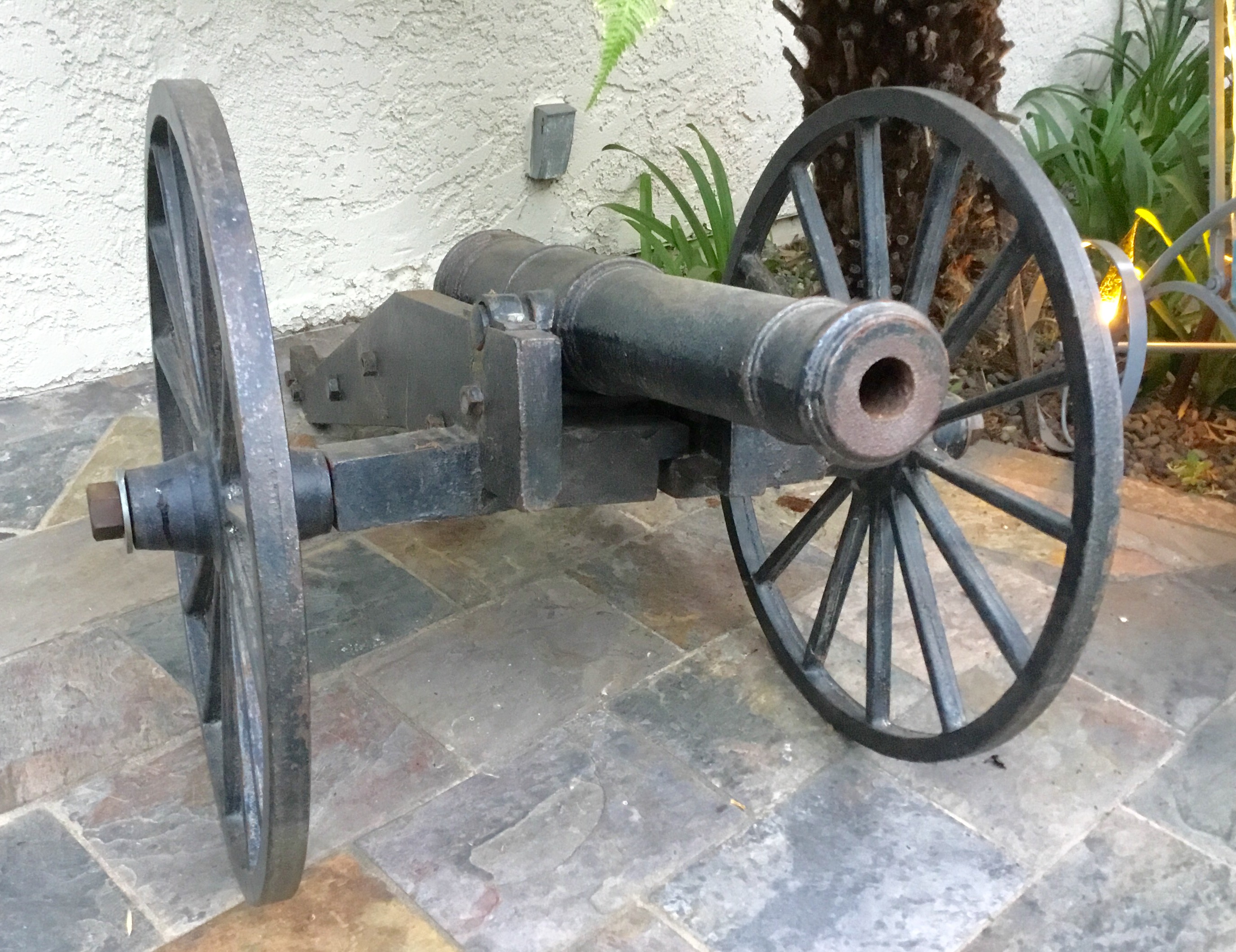
Our back yard cannon obviously didn’t prove to be a deterrent.

image

Ceremonial antique cannon

How Is Your Table of Context?

By Larry Brooks

Somewhere out there in Kill Zone reader land is a new writer with a wrinkled forehead going, “say what?”

It’s irony, of course. Simple word play. My little attempt at a clever hook. Novels usually don’t have a table of anything, context or content… so what the hell?

But it’s an honest, straight-forward question, as well.

How is the contextual state, the flow, of your novel?

This is one of those issues of craft that can hike you up the learning curve quickly. Like, on steroids kind of quickly. It is something experienced professionals know and practice—even if they don’t associate it with the word context, or (in some cases) without even realizing it—and thus, it remains one of the less politically-proper but nonetheless powerful nuances of craft that is almost always evident in a good novel.

It has to do with story structure. 

The context of story structure. Allow me to break it down for you.

You’ve heard of three-act structure. You may not like it, but in genre fiction by a professional it’s almost always there. Don’t mess with it. It is far more fundamental than it is optional.

But that term—three-act- structure—can become vague when you sit down to try it. There is actually more to it than three parts, each of which has its own infrastructure and unique criteria.

I’ve seen story structure broken down into as many as nine parts. All of them aligned with, as sub-sets, the same three-act structure model. Virtually all story structure models have something to offer… as opposed to a denial of story structure, which offers only frustration.

Because the second of those three “acts” is rarely broken down all that succinctly in terms of a functional mission (other than the presence of the all-important mid-point story milestone) beyond the word “confrontation,” I’ve taken a swing at it within my own work (beginning with my book, Story Engineering) in a way that I believe is more useful.

Act II (of three-act structure) actually consists of two roughly equal-length sequences of scenes (quartiles), separated by the all-important mid-point milestone. In fact, it is the way in which that mid-point milestone changes the mission of the quartiles before and after that becomes… context.

Different contexts.

Each of the four quartiles within a novel has its own unique context.

This doesn’t replace or trump three-act structure (okay, it does, because it provides more guidance than simply, “now write Act II”). It simply clarifies it while empowering it.

Let’s define context in this… well, in this context.

Think of a college student pursuing a specific major, in quest of a career to which it will apply. Each of the four years of that requisite curriculum is different. It has its own content, its own context, all of it feeding and building toward the big picture of the major—the whole story—itself.

The freshman is doing something that is orders of magnitude different—in purpose, in content if not form… in context—than is the junior or senior with the same major.

While perhaps simplistic at a glance, consider the challenge of writing a novel without understanding this. Which is actually the sad state of affairs out there, and at all levels. In fact, this helps explain why such a small sliver of novels actually get published, or succeed when they do.

Because, if nothing else, this is a qualitative principle.

Better to know than to guess, or to rely on your current state of story sense (which is, in fact, the degree to which you truly grasp the nuances of all this, no matter what you choose to call it, and no matter what your writing process).

Four parts to your story, each with its own contextual mission.

Each with its own unique narrative contribution to the story. Each with its own unique criteria. If, for example, you’re still doing the work of the first quartile setup (which means, you need to know what that work is… do you?) when you’re solidly into the second quartile hero’s response context, with a first plot point core dramatic arc launch in play (which it wasn’t, back in that first quartile), the novel isn’t working right.

This sequence of evolving contexts is what creates story setup, escalating pace, increasingly compelling dramatic tension, character arc, confrontation and ultimate resolution… all of it in the right places, at the right times, with optimum effectiveness.

All of it, hopefully, in context to a conceptually-fueled premise that gives the story chops in the first place.

Or you can just wing it. Hey, there are only about 112 different moving parts and nuances within a novel, you don’t need no stinking principles, right? This is art, after all. Suffering isn’t optional.

Actually, it is.

If you aren’t aware of this contextual facet of storytelling craft, winging it is your only choice. Wing it wrong, or wing it poorly, chances are your story won’t work, or at least not as well as it could or should work.

That guy who tells you that story trumps structure? It does… for him, and those at his level. Probably not for you. Because you probably don’t know what that guy knows… because he knows all about this contextual sequence of four parts. When a story pours willy-nilly out of his head, this is how it spills onto the page. Not remotely nilly-willy at all.

Not remotely nilly-willy at all.

For newer writers trying to do the same… well, that’s why The Kill Zone is here. To put your storytelling muscles on steroids through the injection of principles into your process.

Once you own them… go ahead, tell everyone you just sit down and write, from your gut, from your instinct, from the seat of your brilliant pants.

Stuffed into those pants will be a big old bulging package of craft and principle… and nobody has to know.

Here’s the rundown of the four sequential parts of a novel, in any genre, roughly defined by quartile:

  1. SETUP Quartile

The goal here is to build empathy for the forthcoming hero’s quest through foreshadowing, backstory, a life-before-the-drama-explodes into it, and the teeing up of the full launch of the core dramatic arc to come… just not quite yet.

That turn comes with the all important “first plot point,” is a story milestone that moves the story from the Part 1 setup quartile into the Part 2…

  1. RESPONSE Quartile

… in which the hero responds to the FFP’s launch of the core dramatic arc, via the expositional contribution of that first plot moment story turn, followed by…

… the midpoint story turn, where the context shifts again, based on new awareness and motivation (stakes) on the part of the hero… into the…

  1. ATTACK Quartile

… wherein the hero leverages everything she/he has learned and seen and the way in which the midpoint changes the context of the story, now with more direct confrontation and proactive attack on the goal (instead of reacting and running, they step into the pursuit of what is needed to resolve the story), the problem and the antagonist that stands in their way…

… leading toward a second major plot turn, in which the story changes yet again in a way that thrusts the hero (and possibly the antagonist) toward an irrevocable date with destiny via a final battle of wits and strength, using courage and cleverness and strategy (rather than anything close to luck or a  dreaded deus ex machina), all of which is the stuff of the…

  1. RESOLUTION Quartile

… in which the scenes build toward a brilliant, dramatic and emotionally-powerful culmination, and from there, launching the hero back into a life that is different (because the hero is, in fact, different) than before.

Four parts.  Four contexts of narrative exposition.

The opportunity in this is significant.

This guides you toward writing the right scenes and putting them in the right places, thus optimizing pace and keeping the story soundly on track. Instead of (here comes a menu of risk and rookie mistakes): a lagging open, changing lanes, diversion and non-relevance, thematic preaching, too much backstory (because, really, the Part 1 setup is the only real place for much substantive character backstory), waning pace, lack of character arc or proactive action, and most of all, a too-vague unspooling sense of dramatic tension.

Dramatic tension itself is a context. Foreshadowing is a context. Exposition is a context that must be managed. A virtual banquet of context to serve up the meal of your story.

Which is why I ask… what is the state of your table of context?

Now you have a tool, a model, for doing that, in all these contextual realms.

Critics of this rail against it as formulaic. When I claim the story probably won’t work well without it, as I do in my writing books (and by the way, my brother-in-arms James Scott Bells agrees on that count)—cynics and old school resistors claim that’s just me blubbering heresy in the form of formula… as if there are other options.

But guess what: genre fiction is inherently formulaic. Success resides in the creative power with which you harness the formula (hey, I don’t like that word either… so let’s call it a structural principle and get on with it), rather than trying to invent your story form of storytelling.

Those “other options” may appeal to you early in the story (a form of siren song calling to you), but when you get the feedback that the story isn’t working, often for specific reasons, the “fix” to that is, almost invariably, to move the story back closer to this four-part, contextually true form after all.

And then—if you continue to deny what just happened—it’ll be your ability to revise, rather than the principle saving your creative butt. A principle that was there all along, waiting to empower your first draft (once you truly have wrapped your head around it, as, say, Stephen King has… yes, the King of All Pantsers knows this, it is precisely why his pantsing process works him) as much as it will empower your revision draft.

When writing gurus tell you to just write, to use your first draft to find your story… know that with these principles in your head, you’ll find it faster, and better.

It has nothing to do with process, in terms of planning versus pantsing. Rather, it has everything do with knowing how a story should unfold… what goes where, and why.

What a story is.

If this is new to you—and especially if you doubt it—I recommend you test this revelation.

Grab a bestseller, read it analytically… and behold the four contexts of the four quartiles unfolding before you like a curtain parting to reveal the author’s machinations and the power of these principles before your eyes.

It’s the way story works, at a professional level. It’s empowered story sense. Versus the rather clueless one we all began with, back when all we brought to the party was our experience as a reader, all before an immersion into craft changed everything.

*****

As a side note… I just published a non-fiction side project, called CHASING BLISS: A Layman’s Guide to Love, Fulfillment, Damage Control, Repair and Resurrection.

This, too, is driven by context-informed principles. And like writing, it can take a lifetime to understand if you try to make it all up as you go along.

I’ll write more about this in two weeks. For now, only the Kindle is online at Amazon; the paperback will be available there in about 6 days, once the self-publishing machine works its wondrous, laborious ways. (It’s already in the Createspace bookstore.)

Chasing Bliss FRONT cover final jpeg (2)

Vital Craft Lessons for Every Writer

Jordan Dane
@JordanDane

Purchased from iStock by Jordan Dane

Purchased from iStock by Jordan Dane

No matter what genre any of us write and no matter our individual author voices, there are key elements any author needs to develop and enhance with each new project. The craft of writing is something we all strive to improve with each new book. I’ve listed the broad brush strokes I believe are vital for every author to develop as they write. Let me know if I missed anything you’d like to add.

1. SETTING – Create settings as if they were characters – It’s a fine balance to have enough setting that it lingers in the mind of the reader and becomes an integral part of the story as if it breathed. But if too much detail is written, it can be skimmed by a reader. It’s vital to have the setting as seen through the eyes of the character in the scene, to reflect on his or her nature, but allow the reader only an enticing glimpse. Leave them wanting more and give them insight into your character while triggering imagery in their mind. In the excerpt below, I wanted the essence of the grisly scene on the page without crossing over into the horror genre.

Excerpt – The Last Victim

Ryker Townsend

As the terrain leveled out, a dense canopy of Hemlock and Fir trees towered over me and blocked the steel gray of an overcast sky as a fine mist dappled my FBI windbreaker and cap. I stopped and gazed toward the next rise. I didn’t have to ask how far the crime scene was. A circle of ravens and crows had gathered. Their black winged bodies cut across the gray sky like an ominous Hitchcock montage. The eerie echo of their squawks and their frenzied aerial acrobatics told me all I needed to know.

My body tensed and I emptied my mind to brace for what I’d see as I hit the crest of the hill.

It never failed. When I looked down to the clearing below, standing shoulder to shoulder with my team, a familiar twist hit my gut. I stared at the grisly work of the Totem Killer and forced myself to look beyond the shocking horror. Every severed limb was someone not coming home—a brother, a husband, a boyfriend, a son. The violation clenched my belly, but I owed it to each of the victims not to turn away.

I would have to speak for them now.

“Dear, God,” someone muttered.

A monolith of bloodied flesh stood fifteen feet high like a statue to be idolized. Dismembered legs, arms, and faces were tied to a tree to make a macabre tower. As exhausted as I was, my eyes tricked me into seeing severed limbs that twitched and slithered like entwined snakes under the circling cloud of ravens. When I blinked, the bodies stopped writhing and I let out the breath I’d been holding, but I’d gotten a taste for the dreams that would punish me later.

“We are your sons. We are your husbands. We are everywhere. And there will be more of your children dead tomorrow.”

I couldn’t take my eyes off the bodies as I recited the quote.

“Who said that?” Crowley asked.

“Ted Bundy.”

I wanted to believe in God, but standing there, I couldn’t. With what I see, I don’t hear him anymore.

2. PACE – Avoid the minute-by-minute time line and understand pace – As the author, you are the teller of the story. You choose what will be told and in what order. Most novice authors feel the need to describe every moment in a character’s life in a timeline that doesn’t break, but a reader’s mind can fill in the gaps. Enter Late and Leave Early (ELLE) – I like to call this the Law & Order tip. That TV show created great pace by having it’s cast entering a scene at the moment something major happens and they leave early and leap to the next instant where a key plot point pulls the viewer along. It’s the same for writing a book. Every scene in a book should move the plot forward with 1-3 plot points. There should be a story arc within each scene (a beginning, middle and end) that entices the reader into the scene and progresses forward with hints of things to come. If you can write a foreshadowing detail to the end of the scene, your pace will keep the reader turning the pages. For more on pace and writing a page turner, here is a link to another TKZ post I wrote with more detail on the topic – TEN TIPS on Pace & Structure of a Thriller.

3. CHARACTER – Tease the reader with how your character looks but focus on what’s in your character’s head – I tend not to focus much on my character’s appearance. I’ve learned that, no matter how much you write details, readers have their own images in their minds and there’s nothing wrong with that. I hint at his or her appearance to reflect a key takeaway I want the reader to understand about them. But the most important takeaway the reader will have is their relationship with what’s inside my character–their values, attitude, humor, biases, what makes them tick, and why they are the star of my story. Below is an excerpt from The Last Victim where Lucinda Crowley describes Ryker Townsend, her boss. I try to be a purest when it comes to descriptions and have other characters doing the describing when it fits.

Excerpt – The Last Victim


He had a stare with equal parts intelligence, curiosity and passion. His eyes reminded her of the sweet richness of Chai coffee—the dark and unstirred bottom half of the glass—tinged with a warm drizzle of honey. Ryker had an amazing mind, but there was an intuitive side to his nature that blew her away. To hear him delve into the psyche of the killers they hunted—as if he could connect to them or understood how they hunted their victims—his low voice often gave her chills. Her respect for him had grown over the years and her attraction had only grown stronger, but Ryker had never given her an opening and she didn’t know if she could handle it if he did.

The guy had complex layers and secrets. She knew it, but he was also a one-way trip of the heart.

4. ACTION – Write heart pumping action – It’s not easy writing an action scene that escalates and keeps the reader turning the pages. Physical fight scenes could be skim material if it’s not done right. Too much detail of every balled fist and every jab could be tedious. A car chase could work on the big screen, but too much detail in a book could kill the momentum. A good and effective action scene must hold the reader’s interest by giving enough physical movement, without overdoing the details. Any action must be seen through the eyes of the protagonist in the scene to give the reader a vital anchor point. Below is an excerpt from Evil Without a Face. This scene is only the beginning of a longer action sequence that follows.

Excerpt – Evil Without A Face

Seconds.

Precious seconds.

The SUV barreled down on her, the engine revved. No more time.

Jess held her ground, the Colt Python clutched in her hands. The muscles in her arms taut, her grip solid. Adrenaline surged through her system like coiled lightening.

“Jess? Are you okay?” Seth’s fear stricken voice shot over her earpiece.

Without hitting her com switch, she held her concentration and muttered under her breath.

“Not now, Seth.”

Glare from the headlights nearly blinded her, but once the SUV got close, she could finally see. The bastard’s face came into focus through the murky haze of the windshield. That’s where she aimed—between his eyes. When Jess saw his sudden panic, she squeezed the trigger.

The Python bucked in her grip. Once. Twice. A fierce plume of fire streaked from the muzzle. Deafening blasts echoed down the alley, magnifying the intense explosions.

Her ears rang and muffled everything that followed as holes punched through the windshield with a weighty pop. The glass splintered, sending fissures across the once smooth surface. With one last measure of desperation, she aimed at his crankcase and let the Python do its worst. Baker collapsed behind the wheel and the vehicle swerved. It hit the wall to her right, spraying shards of brick. The shriek of metal stabbed her eardrums, rippling goose bumps across her skin. In a fiery display, sparks showered the air, a giant sparkler on the Fourth of July.

5. SUSPENSE – Build suspense with anticipation – Hitchcock believed suspense didn’t have much to do with fear, but was more the anticipation of something about to happen. When I read this, it was a huge epiphany for me. The idea changed how I thought about scenes and chapter endings. Be patient with building on suspense. Tease the reader with the anticipation of something bad about to happen and hold onto that moment as long as possible. Here is a link to an older TKZ post I wrote on 8 Key Ways to Edit Suspense & Pace into your Finished Manuscript.

6. DIALOGUE – Focus on dialogue to build on conflict – Put characters together who are at odds with each other. This could be two characters who speak differently because of their upbringing or they have very different personalities. Give them a distinctive voice to carry through your book, but when you add conflict between them, it’s like creating a chess match between two key players. To focus on the dialogue, try writing the lines first before you fill in the rest of the scene. Imagine what they would say to each other first and make notes as if you’re writing a script. Here’s a TKZ post I wrote on Writing Dialogue – Tips that gives more details and talks about my technique for focusing on the lines by writing them first. I describe it as “building an onion from the inside out.”

Excerpt – Tough Target

“Don’t take this the wrong way, but the next one who moves gets buckshot.”

Geneva held as still as stone, staring at her unwanted guests. When darkness fell over the cabin, she shifted her eyes toward the only window not boarded. A wall of rain blackened the sky and would soon swallow her neck of the glades and complicate things.

Photos of Sam in happier times hung on the walls and stared back at her. She gritted her teeth and clutched at the shotgun tighter, praying she’d see her boy again.

“Be careful where you point that.” Camila didn’t take her eyes off Geneva.

“Missy, I’m a crack shot. I learned a long time ago to just shoot. Whatever I hit, that’s where I was aiming. Guess you could say I never miss.”

“Is it my men who scare you?” Camila asked. “I can ask them to wait outside.”

The woman kept her voice low and calm. Her eyes never blinked.

“I like ‘em right where they stand. A cottonmouth slitherin’ through the grass is still deadly, even if you can’t see the damned thing,” Geneva said. “You best get to speakin’ your mind, or you can leave.”

“Very well, if you insist.” Camila narrowed her eyes. “Perhaps you would deliver a message to your son.”

The approaching storm darkened the room and shadows played tricks on Geneva’s eyes when they appeared to move. As the mounting winds intensified the rain that pummeled the cabin, the noise and the thick humid smell made her edgy. She gripped the shotgun tighter.

“You picked a fine time to call. Couldn’t your message wait?”

“I’m afraid not. I’ve waited long enough.”


For Discussion:

1.) What writing tips have worked for you? Please share.

2.) What craft topic do you struggle with?

RedemptionForAvery_highres

Redemption for Avery now available – Susan Stoker’s Special Forces: Operation Alpha – Amazon Kindle Worlds – $1.99 ebook. While FBI Profiler Ryker Townsend investigates the shocking slaughter of a seventeen-year old girl, the tormented soul of another dead child—the murdered little sister of SEAL Sam “Mozart” Reed—appears to Ryker in broad daylight, drawing Ryker and Mozart into a more sinister conspiracy.