Getting Up Close and Personal
With Intimate Point of View

I think every fiction writer, to a certain extent, is a schizophrenic and able to have two or three or five voices in his or her body. We seek, through our profession, to get those voices onto paper. — Ridley Pearson

By PJ Parrish

Picking a point of view is one of the most important choices a writer makes.  Who are you going to trust to tell your story?

I’ll go out on a limb and say I think it is THE most important choice you make. Why? Because point of view — and how well you pull it off — is the most powerful way of developing that special bond between character and reader. And if you don’t create that bond, if you don’t make the reader invest emotionally in your characters, well, what you are putting there on paper is just a bunch of plot points.

So what’s your choice? A single narrator or do you need several?  Should you go with first person, which provides immediate connection through the power of the “I” pronoun? Or do you chose third person, which gives you more latitude and depth, the freedom to paint on a larger canvas?

And if this isn’t enough to worry about, let me throw in a new wrinkle:

Intimate point of view.

In case you’ve been under a rock, intimate POV is all the rage in fiction right now, with editors gushing about it and pleading for it in their Track Changes. Which makes me want to dismiss outright as a fad. This, too, shall pass, like all the “girl” books gathering dust on the remainder table.

But the more I started thinking about it, the more I realized “intimate point of view” is really just another ratchet in our character development tool chest. Many of us are already doing this in our writing.  And if you aren’t, well, maybe this is something you need to consider.

Now I have been trying to write this blog for two months. But this is slippery subject, and it’s hard to define. So if you read this and still go “huh?” the fault, dear reader, is probably mine. But I’m going to give it the old college try anyway.

One reason we chose first person is because it puts us right in the heart and mind of the protagonist. But with third person, without the anchor of the “I” pronoun, the intensity of that reader bond can be weak. I’ve read third-person novels that feel like I’m listening to an old transistor radio where the signal fades in and out and I can’t “hear” the protagonist’s feelings and thoughts clearly. When that signal wavers, I don’t bond strongly with the character and I lose interest in the story.

Why should you care about intimate POV? Because readers do. People read to have vicarious experiences. They want to walk the miles in your characters’ shoes, view the world as they do, feel their struggles, pains, triumphs and turmoils. The closer you the writer can connect with your characters, the greater the bond the reader will have with them.

So how do you do this? I think it helps to think of this as an extension of our oft-quoted writers axiom — Show Don’t Tell.  In terms of POV, it becomes a matter of not merely describing feelings and thoughts but allowing the reader to enter the skins of your characters and experience everything just as they do. Third person intimate uses many of the best tricks of good first-person point of view.  When you are in first person, every single thought and sensation is filtered through that one person.  Which is one reason first person is easier to write and can feel more involving to the reader.  But you can achieve the same bonding in third person if you are willing to dive deeper into intimate POV.

Okay, I tried to TELL you. Now let me SHOW you what I mean. Maybe this will help.

Bear with me but I am going to resort to using my own book here. I’m going to show you two versions, one a regular third-person POV and the second in a more intimate third-person POV. This is the opening of chapter 18 of my latest book She’s Not There. The set-up: This scene has my character Clay Buchanan at a moral crisis, what James calls a “man in the mirror” moment. (which I took literally, as you will see!) This is a huge turning point in the book and will set Buchanan on an irreversible dark path. I chose to put him alone in a quiet place so I could make his inner turmoil play in high relief by contrast. The first version is perfectly adequate and gets the job done. But in the second version, I am trying to immerse myself in this man’s soul.

CHAPTER 18 (adequate)

         Buchanan stared at his reflection in the mirror and listened to the song playing on the jukebox. It was Michael Jackson’s “Man in the Mirror.” How pathetic, he thought, to sit in a bar and stare at yourself in the mirror. But then he realized that maybe this was what he needed right now – a good long hard look at himself that might lead to a moment of moral clarity.

       He finished his second scotch and set the empty glass down in the trough of the bar. His thoughts returned to the questions that had plagued him on the plane ride back from Georgia: What would happen if he had to stand trial for Rayna’s murder? What could he do with all that money from the deal he had struck with Owen McCall? And what exactly was he going to have to do to get that money?

Now here is the opening as I really wrote it:

CHAPTER 18 (intimate)

      Was there anything more pathetic than staring at yourself in a bar mirror? But maybe that’s what he needed right now, a good long hard look at himself. Confront the man in the mirror, stare deep into his soul. Find a bright shining moment of moral clarity. 

      Buchanan picked up his glass. What was that Michael Jackson song? “The Man in the Mirror”? How did it go? Something about making a change?

      He finished his second scotch and set the empty glass down in the trough of the bar. On the plane ride back from Georgia, he hadn’t had anything to drink. He had needed his head clear to think. Think about what might happen if he had to stand trial for Rayna’s murder. Think about the deal he had struck with Owen McCall. Think about what he could do with two million dollars. Think about what he was going to have to do to get it. 

Note that I didn’t use one “thought” or “wondered” or “realized.” Note, too, that the sentences are often fragmented to mimic the fleeting rhythm of real thought. Humans under stress tend to not think “straight.” The writer’s trick is to get the feeling of this and still keep the reader on track. 

Back to the adequate version now:

      Buchanan looked down into his empty glass, thinking now about what a ruthless man Owen McCall was, and what it must be like to have so much power that you could buy anything — including a woman’s life. And he wondered if he could ever be like that, do whatever it took to get what he wanted.

      He shut his eyes because, suddenly, there it was again. His dead wife’s voice was in his head, haunting him, and asking the question he was too afraid to ask himself: What do you want, Bucky?

      I just want you to be quiet, he thought.

      “Excuse me?”

      Buchanan opened his eyes to see the bartender staring at him. He blinked her into focus. He didn’t even realize he had spoken.

      “All I asked you was if you wanted a refill,” she said. “If you’re gonna get ugly, there’s the door.”

      He held up his hands. “Sorry, I’m sorry. Yeah, bring me another, please.”

Okay, it’s not bad. But this is a man so tormented by his wife’s murder that he thinks she talks to him from the grave. I use this device throughout the book, as if Rayna is what is left of his moral compass, if he would only pay attention to it. By this point in the book every time the reader sees the italics and her nickname for him “Bucky,” they know it is Rayna talking to him in his imagination. Also, by now, Buchanan is starting to “understand” that even his wife is turning against him. Here is how I really wrote it:

      Owen McCall’s face came back to him in that moment, how it had looked in the car, stone cold gray in the slant of the streetlight, how there was nothing coming from those hard blue eyes, like all the man’s energy was directed inward.

      Maybe that’s what it took. Maybe you had to filter everything and everyone out and laser-focus everything you had back into yourself to become a man like that—a man who was successful enough to buy anything on earth. Including a woman’s life.

      Could he do that? Could he be the kind of man who would do whatever it took to get what he wanted?

      But what do you want, Bucky? 

      Buchanan shut his eyes.

      Tell me, Bucky. What do you want?

      “I just want you to be quiet,” he said.

      “Excuse me?”

      Buchanan opened his eyes to see the bartender staring at him. He blinked her into focus.

      “All I asked you was if you wanted a refill,” she said. “If you’re gonna get ugly, there’s the door.”

      He held up his hands. “Sorry, I’m sorry. Yeah, bring me another, please.”

Another place intimate point of view can be really effective is when you have to enter a flashback. In this chapter 18, I realized I had to finally explain to the reader how Buchanan’s wife Rayna had been murdered.  When you have to inject a flashback, as we all know, you want to get in and out as fast as you can. Flashbacks work best during what I call “quiet moments,” when your character is taking a break from the action and can “remember” and thus narrate for the reader what has happened in the past.  Here is the adequate version of my Rayna flashback later in the same Chapter 18:

      The bar had gone quiet and his thoughts moved in to fill the void.  Usually, when he thought about what had happened ten years ago, his memories were fuzzy. But now, for some reason, everything was coming back to him with a painful clarity.

     He remembered how hot it had been that September day, and how annoyed he felt because the baby’s asthma was bad, making him cry so much that Buchanan could barely hear the football game on TV. And his daughter Gillian had made such a mess on the rug with her toys. Rayna had come in the kitchen, grabbed the remote and muted the TV, demanding to know why he hadn’t answered the ringing phone. 

      He had ignored her, because he was angry about so many things. Angry because the AC was broke and they had no money to get it fixed, pay the mortgage or even cover the baby’s medical bills. He was angry, too, because he hated working as an insurance adjuster and if Rayna hadn’t gotten pregnant, he would have been able to finish his psychology degree.  When he finally did look up at his wife, he realized she saw him exactly as he saw himself — made small and mean by his disappointment.

Here’s how I really wrote it:

     He watched two guys finish their ping-pong game. The roar in his head had quieted. Even her voice was gone, for the moment at least. He knew this was dangerous, letting his mind go empty, because that’s when the memories slid in. And they were coming now, not like they usually did, like he was seeing them through a soapy shower curtain, but with a sharp, stabbing, awful clarity.

     It had been hot that September day, with tornado warnings crawling across the bottom of the TV screen as he watched the Titans game. The baby was crying in the kitchen, making that awful wheezing sound he made when his asthma was bad, and Gillian had made a mess on the rug with her Shrinky Dinks. Rayna had come into the living room and grabbed the remote, muting the TV.

     Bucky, didn’t you hear the phone?

     No. Did it ring?

     He hadn’t even looked at her. The AC was on the fritz, he was hot and miserable, thinking that this was his first day off in two weeks and all he wanted was to be out in the woods with his binoculars and birds. He was thinking about the late mortgage payment and the baby’s unpaid medical bills, thinking about his peckerwood boss and how much he hated working as an insurance fraud investigator. Thinking that if Rayna hadn’t gotten pregnant again, the money they had saved might have been enough for him to go back to night school and finish his psychology degree.

     When he finally looked up at his wife, he saw something there in her clear blue eyes he didn’t want to see—himself, made small and mean, because this was never what he had envisioned for himself, and it was too late to go back and fix it.

Again, note the fragments and details — that’s how our brain stores its memories, in flashes of images, sights, sounds and smells. Also, by being in intimate POV, I try to establish some sympathy for Buchanan so the reader can maybe begin to understand his anger. This flashback goes on from here, and I kept it as short as I could but still gave the reader enough background so they could understand the depth of Buchanan’s torment. (He was brought up on charges for her murder but was cleared. Her body, and that of his infant son, were never found.)

Okay, enough about me. Let’s talk about you.  And what you can do to make your character’s point of view feel more intimate.  Here are some things to watch for:

Know your character inside and out: Intimate POV allows your story and scenes to be experienced from the inside out rather than “reported” from the outside looking in. But this is really hard writing. To pull this off, you must know your character intimately. Everything –- every word, the syntax, the accent, the idioms – must arise from the character’s background and experience.  Unless you know your character’s inner most feelings, thoughts and motivation, you won’t be convincing. And you must be able to answer, at the deepest levels, WHAT THE CHARACTER WANTS.

Remember the movie Ghost?  Whoopi Goldberg plays a medium who claims that spirits enter her body and talk to their loved ones. Of course, she’s a charlatan, until Patrick Swayze shows up and dead people really do start talking to her.  There’s a great scene where the impatient ghost Orlando jumps into Oda-May’s body and takes over. This is what your characters must be free to do — jump into your consciousness and inhabit it so intimately that you and they become one. As Ridley Pearson puts it, you must be able to have two, three, five voices in your body. But when you the writer “speak” on paper, we should hear your characters, not you pretending to be them.

Cut out filter words.  Filter words or phrases are you the writer relating things and action rather than letting the reader experience things “first hand” through the character’s sensibilities.  You don’t need to remind readers that a character is “feeling,” “hearing,”  “seeing” or “smelling.”  Delete these words whenever possible. But while paring down, look for ways to inject something personal and telling about your character. Examples:

Adequate: He smelled the rotting dead body lying in the flower bed. Better: First came the sweet scent of roses, but as the wind shifted, the chemical cocktail of rotting flesh made him stop in his tracks. It was funny what you learned after fifteen years in homicide. Dead animals smelled different than dead men.

Adequate: Mary heard the screen door slam and felt the breeze ruffle her dress. Better: The screen door slammed. Mary’s dress waved. (stealing from Springsteen there!)

Limit Your Dialogue Tags. Dialogue tags are the words you use when describing the speaking character (e.g. she said, he shouted, he whispered, etc.). Get rid of as many of these as you can,  without sacrificing clarity. Intimate POV works best when your character is alone, but when he’s not you must be careful to let the reader know who’s talking.  If you are worried about clarity in thinking, shame on you — it means you are head-hopping in your POV.

Know when to stop: Not every scene needs to be written from an intimate POV.  Often, you are just moving characters around in time and space and we don’t need to feel every single emotion they do. The intimate sensibility should always be there but sometimes it just hums along in the background as the action unfolds. Which makes it all the more powerful when you do pull out the stops and let Orlando jump into your body.

___________________________________________________
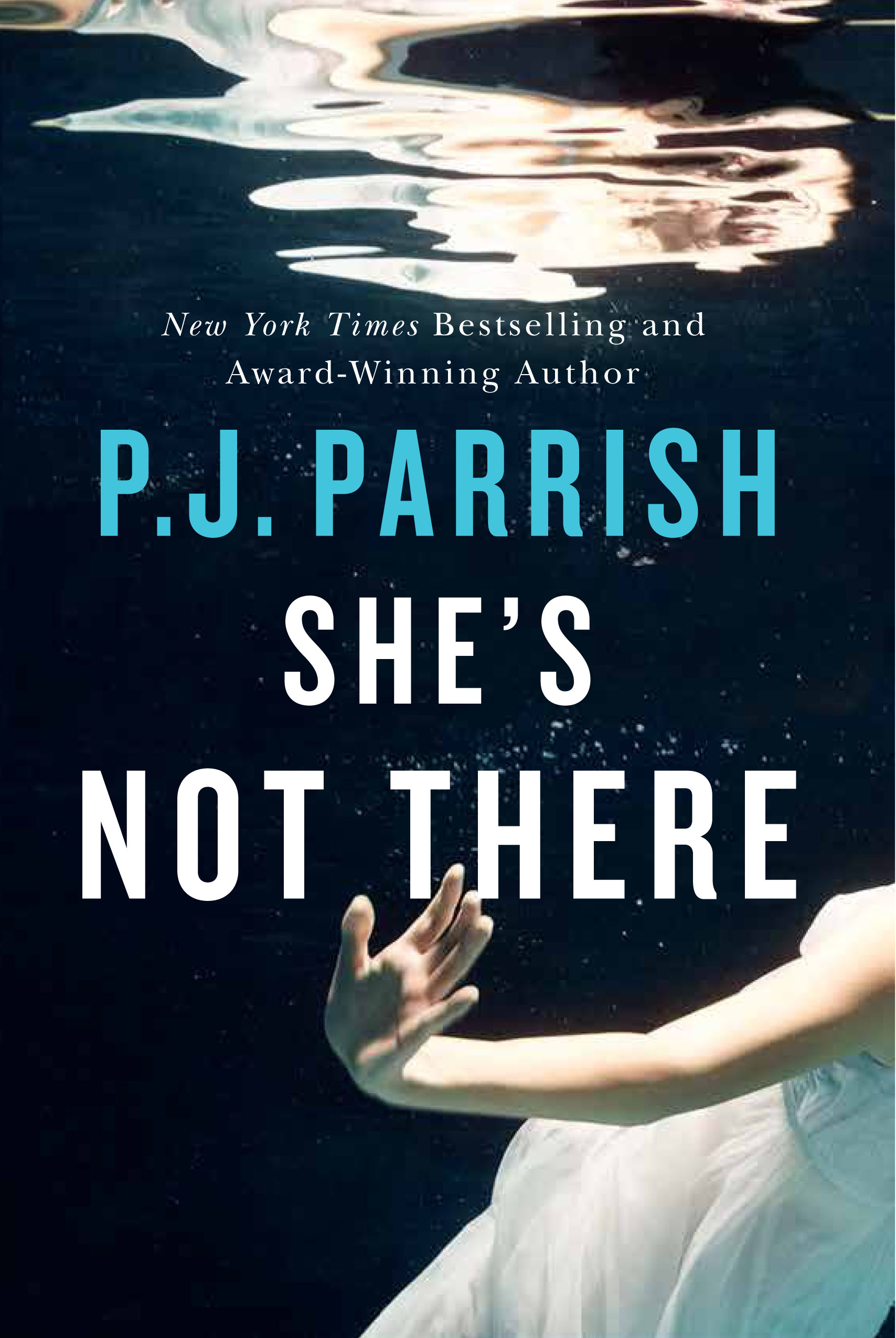
FINAL COVER

Blatant promotional postscript: I just found out Thomas & Mercer is offering She’s Not There in a month-long special promotion for $1.99. It runs through August.  https://www.amazon.com/Shes-Not-There-P-J-Parrish-ebook/dp/B00U0N5GDI#navbar.  We return you now to our regular programming…

Unreliable Narrators

I just finished a great suspense book, All the Missing Girls by Megan Miranda, on a flight back from New York and it got me thinking about the whole ‘unreliable narrator’ trope that seems to have picked up steam, especially with recent female dominated thrillers like Gone Girl by Gillian Flynn and The Girl on the Train by Paula Hawkins. Although almost every first person narrator is going to have some degree of unreliability,  when a writer deliberately chooses to have their story told by a character whose credibility is compromised, then the stakes (and risks) involved in successfully navigating that story are much higher.

I have to admit, I’ve always avoided utilizing a deliberate ‘unreliable narrator’ as I think it’s extremely hard to pull off. Even in Gone Girl I started to feel manipulated by the use of the device by the end (nonetheless I was gripped by the novel from start to finish!). In The Girl on the Train, it is obvious from the start that the narrator is one a reader should treat with caution but I had no problem with the unreliability of her narrative, except that a lot of the doubt/mystery came from her inability to remember events (which at times I found a little trite). But writing a mystery is hard (!) and I have nothing but admiration for writers who manage to successfully pull off their deliberate choice to have an unreliable narrator tell the story. In All the Missing Girls, I thought the author not only pulled off this device well but also managed to use another literary device, telling the mystery backwards, with skill. However, I would caution most writers to think long and hard before trying to employ either device…

Like in Gone Girl, The Girl on a Train and All the Missing Girls, the fact that the person telling the story isn’t entirely to be trusted or whose motives may be compromised, makes for a compelling POV. Despite my quibbles, all three books had me reading compulsively for hours. There is definitely an allure to characters whose flaws, lies, or ‘voice’ makes us question them and their role in the crime. A well constructed unreliable narrator has a reader turning the pages. The risks, however can be huge:

  • The reader can feel cheated by the fact that the narrator has lied, omitted key information or deliberately misled the reader.
  • The reader may grow tired of the narrator if they lose credibility. Sometimes the literary device of the unreliable narrator overwhelms the narrative or starts to interfere and distract from story.
  • In the hands of a less adept writer, the unreliable narrator may become a hinderance to the story – confusing the reader or (worst) putting them off continuing to read out of frustration. It’s a tricky device and, if not executed well, it can be an obvious one that irritates the reader.

So TKZers, do any of your current WIPs have a deliberately unreliable narrator? How do you tackle the device? What advice would you give to anyone considering using an unreliable narrator in their work? Have you ever thrown a book at the wall because this device annoyed or frustrated you?


Housekeeping Note: First Page Critiques

Please make up my roomNote: In the past we’ve done First Page Critiques one Thursday per month. Going forward, the TKZ Admin (Yours Truly) will assign the anonymous first page submissions in batches to individual bloggers, to be scheduled for publication by them on their assigned blog post days. We hope this change will help us reduce the queue and publish your first page submissions more rapidly. Thank you!

Way Stranger Than Fiction

Cops: Woman, 26, Wielded Hatchet After Her Demands For Sex Were Repeatedly Rebuffed

EMS Ghouls Competed In “Selfie War”

Voodoo Client Made Threats, Man Tells Cops (Dissatisfied customer sought marital help)

Have you ever noticed how many truly bizarre news stories come out of Florida? As a kid and young adult, to me Florida was just the place I visited my grandfather and occasionally went on vacation to the beach. It seemed pretty tame except for all the alligators. (And my grandparents did give me one of those real stuffed ones wearing a sombrero. **shudders**) It wasn’t until the last five or six years that I noticed the news stories. Of course now everyone notices the Florida news stories. The Smoking Gun, whence I pulled the above headlines, even has a “Florida” section. As to the why, ridiculous theories abound: everything from “crazy old people” to the truly baffling “racism because it’s a melting pot.” A more logical explanation is that it has something to do with Florida’s open records laws. The gritty details are ostensibly out there for everyone to report. (Elaine? Do you happen to know if this is a true thing?) I don’t mean to pick on Florida. Weirdness abides in every corner of this country, but I think that it is no accident that the novelist Harry Crews found Florida to be very fertile ground for his darkly colorful stories.

I used to keep a file of weird news clips, or crime stories that piqued my interest. Now I just make notes in my journal or bookmark them in my browser.

The one big problem with using real life, over-the-top events is that they sound way too implausible for fiction. If you ever find yourself saying, “Wow. I couldn’t make that up,” about something, it’s probably because, well, you couldn’t.

I’m not sure why fiction and real life fight each other in this way. It might have something to do with the vast number of variables in real life that must come together to lead someone to do something like wrap his face in plastic wrap to rob convenience stores. In real life, there are coincidences. In real life, there is serious mental illness, and there are women who try to smuggle drugs into the country in burritos. Conversely, in real life, things can get dull awfully fast. Just try to imagine writing that (insurance, law, human resources, retail buyer) office novel that your cousin says will make you both a million bucks after she tells you about the crazy drama that happens where she works. (Don’t do it unless her name rhymes with Micky Fervais.)

Good fiction depends on competent, complete world building. Even if you don’t spend a lot of verbiage on a character’s backstory or personality, every action that character takes has to seem plausible within the world you’ve created. That created world is a finite place, and your reader will know right away if you throw in something that doesn’t work.

Real life is full of uninventable details. With practice, a good writer can make invented details seem uninvented. One of my favorite examples is the speech of a toddler or child anywhere under the age of seven. All the wild variables of the world go into their small heads, and what comes out is often bizarre beyond belief. It makes sense only to them.

It’s a good idea to take notes on real life. You’ll discover those uninventable details if you look closely enough. Try not to think: “How would I describe this person?” Simply observe. We’ve all read a lot of books, and often come up with the same old shorthand for describing our characters, their situations, and even their speech. Look. Really look, and just write down what you see. Chances are you’ll see something surprising. Then, when you do, figure out why it’s consistent with that person. What is it about their life that makes their surprising behavior reasonable?

Here’s one more story. It’s a real life example of a bizarre event that might actually work as fiction. A sixty-eight year-old man in Belleville, Illinois, repeatedly stuck sewing needles into packages of meat at his local grocery store. When asked why he did it, he said, “it was stupidity, I didn’t want to hurt nobody.” The uninventable detail? He rode around the store on a motorized scooter with his portable oxygen tank. I don’t know why I was so struck by this story. Tampering cases are diabolical. Fortunately no one was badly injured. Wanting to know more, I did a more thorough search on his story, and found his obituary. He died a little more than a year after he was caught tampering with the meat. His case had been postponed because his lawyers said he wasn’t mentally fit to stand trial when it came up. His obituary described a man who was productive in the world, and much-beloved by his family. Somewhere in between those two documents there is a complete story, waiting to be fleshed out and told. A place where real life and supposition live comfortably side-by-side.

What’s the most outlandish thing you’ve ever included in a story? Did you make it up, and pull it off?


If you’re in the St. Louis area, stop by the Meshuggah Cafe on Delmar Blvd. on Saturday night, July 30, 7-10 pm. It’s a Noir at the Bar launch party for St. Louis Noir (Akashic Books, Scott Phillips, editor), and I’ll be reading with Scott and some of the other contributors.

Into The Night On Trolley Car 36

Foggy night

Note: I was already running behind writing today’s post due to the fact that I’m attending (what you might have heard described as) a very spirited  national Convention in Philly. And then, on the return trip from the first night’s events, our train ride devolved into an episodic, comedic and occasionally harrowing journey that reminded me of an 80’s era movie with Jeff Goldblum and Michelle Pfeiffer called Into The Night. Our  adventure included our being dropped off on an abandoned-looking street corner at the premature termination of a trolley line, surrounded by sketchy, somewhat inebriated-looking observers. Add a passing storm, several misdirections, and a long wait for a hotel shuttle that seemed incapable of locating us, and you have the perfect ingredients for Mr. Trolley Toad’s Wild Ride.

Eventually, the shuttle van did find us, and we made it back to the hotel uninjured, if somewhat unglued. One day perhaps I may be able to sort tonight’s experience into some kind of coherent, wry tale. But for now, I will simply offer a bit of advice to anyone traveling anywhere in Philadelphia after midnight: do not ever get on board Trolley Car 36. Call a cab. Or call Uber. Or rent a car. But never, ever, place one foot onto Trolley Car 36.

Do you have any chaotic, scary or funny travel anecdotes you can share? Anything to get my mind off Trolley Car 36.

Sometimes the Most Powerful Writing Wisdom is the Simplest

You’ve heard of William Goldman, right? If not, you really should have by now (being a writer working in the real world, and all)…

… two Best Screenplay Oscars (Butch Cassidy and the Sundance Kid, and All The President’s Men), a little novel with a pretty good film (which he also wrote) called The Princess Bride… another (same double home run writing credit) called Marathon Man…

… and one of the best writing books ever written, Adventures in the Screen Trade, which should be mandatory reading for novelists, as well. Even if you haven’t heard of him.

While his salad days began in the late 60s, he’s still ranked in the 100 authors in five Amazon categories (Classics, Historical Fiction, Teens, Action Adventure, and Genre Fiction Historical; that last one isn’t a typo, either, he’s #51 in Historical Fiction, and #76 in Genre Fiction Historical… go figure).

And he’s still writing, too. Better than most.

Despite the fact that two of his novels become two of the most iconic films of the past 50 years (never mind he wrote those screenplays, as well), his accomplishments as a novelist go under-appreciated. Maybe because he’s still busy in Hollywood as the #1 script rewrite guy, billing out at—this one isn’t a typo, either—one million dollars per week.

Yeah, that guy.

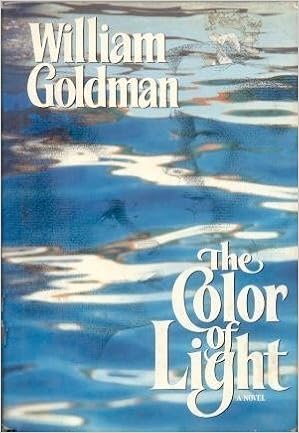
It’s a lesser known fact that he wrote a 1984 novel entitled, The Color of Light.

Out of 17 Amazon reviews— face it, most of the people reviewing novels were in rest homes by the time Amazon came along—16 gave it 5-stars, several stating it is one of their favorite novels, ever. One guy gave it 1-star… this, too, falling into the category writing wisdom… for every great book written, there’s a schlub or two who just didn’t get it, or gets off slinging mud at the stuff everyone else does.

The Color of Light is about a once successful writer who loses his stuff and disappears into anonymity. There may or may not be some truth to the rumor he is now blogging for The Kill Zone, but that has not been confirmed.

He has a little brother who, like all little brothers, wants to impress and gain the respect of his big brother. And so, when the little brother finishes a novel, he nervously shows it to big brother, who responds—each and every time—with the words… “on to the next.”

And that’s the great advice for us today, to hold close for all our days as writers.

May they be as plentiful as Goldman’s.

There is very little we can completely control in this business, even with the advent of self-publishing. Which, while handing back control over such things as lead times, titles and the look of our covers (none of which we had a lick of input to in the past), remains a fact when it comes to what happens to our books once we kick them out of the crib and onto the street.

We control our stories. And for the most part, that’s about it.

And so, we need to find our bliss accordingly. Sanity may reside in that understanding.

On to the next is the surest bet on reaching our goals as anything out there. And on that proposition, I’m sure William Goldman would agree.

The Challenges of Writing a Crossover & Book Birthday!

Jordan Dane
@JordanDane

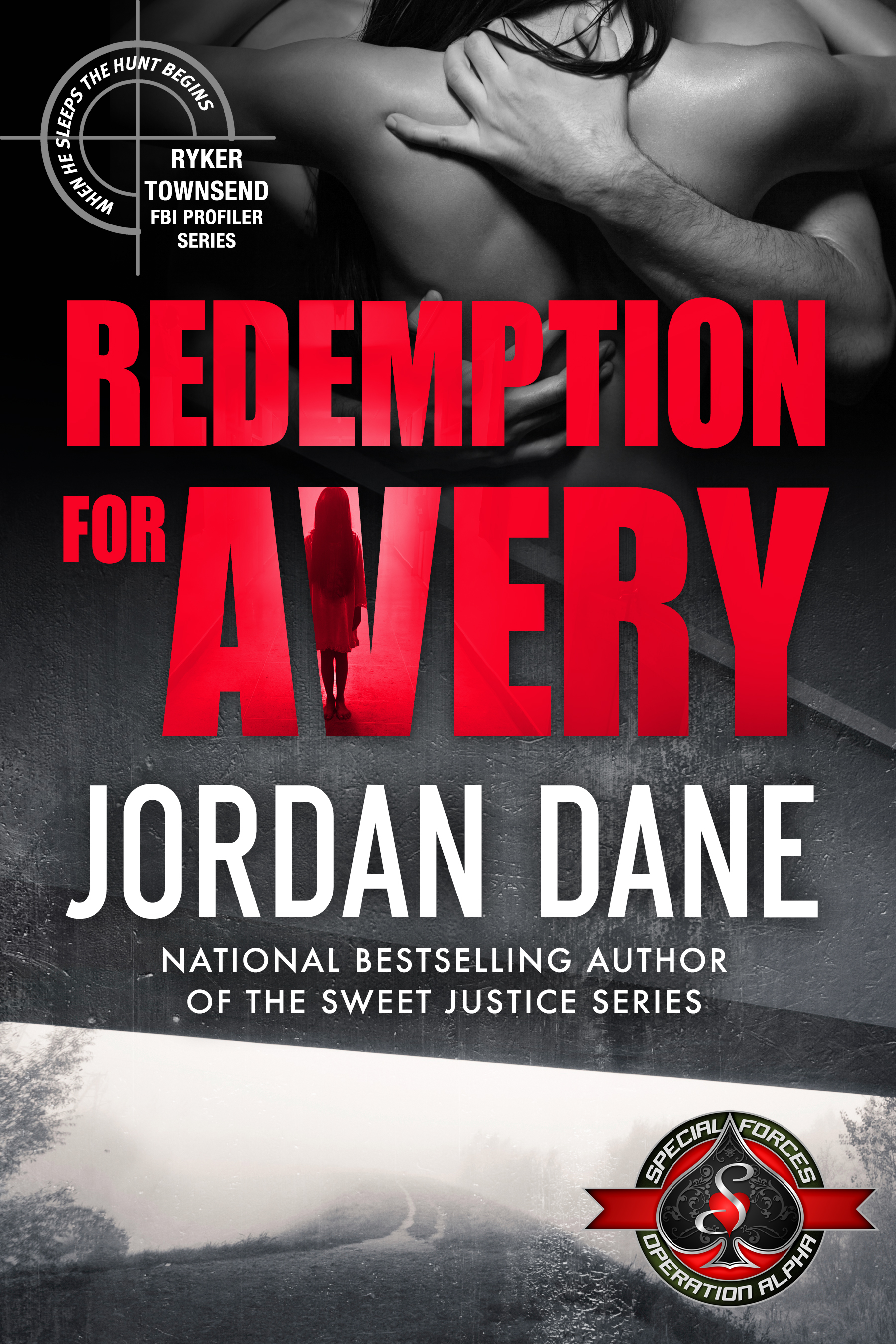
Not many things are more satisfying than finishing a book, seeing the final touches of cover copy and cover, and letting your baby go “into the wild.” Today is the release day for REDEMPTION FOR AVERY – part of the new Susan Stoker –  Special Forces series with Amazon Kindle Worlds.

Ryker Townsend FBI profiler series - novella (31,000 words) $1.99 ebook, July 21, 2016 release

$1.99 ebook – July 21, 2016 release

The challenges of this 31,000 word novella centered on crossing my Ryker Townsend FBI Profiler series into Susan’s Navy SEAL world, using one of her novels (Protecting Summer) and a key character, Sam “Mozart” Reed, from that book.

Challenges:
1.) Blending two worlds – My dark crime fiction world had to blend seamlessly into Susan’s romance action/adventure world of the military. That meant I had to bump up my romance and also deal with two very different kind of men. Ryker Townsend is an isolated loner by necessity, an intellectual with a mind like a computer, and hardly described as an alpha male. Navy SEAL Mozart Reed is definitely alpha male with a disciplined military demeanor and a fascinating puzzle. I wanted to create a situation to force these two different men into an investigation.

2.) Paying homage to Mozart & Susan’s World – I did my research on Susan’s writing and read the book that dealt the most with Mozart’s past, the way I would force these two worlds together. In Mozart’s childhood, when he was only 15, his younger sister was abducted and brutally murdered by a serial killer. Well, that’s right up my alley and that backstory worked well with my FBI profiler series.

3.) Portraying Someone Else’s Character While Doing Justice to Your Own – SEAL Mozart Reed is a strong character, fully capable of being a hero of his own book. But I had to be sure my character, Ryker Townsend, held his own with an ebb and flow to their dynamics. Each man became key and could easily dominate the story, but the blending of these two dynamic forces became a joy. I wrote them like Butch and Sundance.

4.) Getting the Facts Right – Sometimes a preceding book is a little vague on the facts, by design. An author may choose to write vague details about a character’s backstory or leave out scenes for the sake of plot. I was lucky to have Susan’s brain to pick. I’d send her a message and she’d write me back right away. I swear she lives online. I’d ask questions about where the body was finally buried or embellished on an unwritten scene, but I didn’t want rewrite her previous novel without paying respect to her original work. She was very gracious and we both poured through pages to make sure I could add details not contemplated in her originating novel. She also had books that came after and we compared timelines to be sure I didn’t leave out a baby, for example. When my project was done, she read REDEMPTION FOR AVERY and we tweaked a couple of nuances to make it the best collaboration we could. Susan Stoker is a very generous author.

Here is the synopsis of REDEMPTION FOR AVERY:

When he sleeps, the hunt begins.

FBI Profiler Ryker Townsend is a rising star in Quantico’s Behavioral Analysis Unit, but his dark secret could cost him his career. When he sleeps, he has visions of his next case. He sees through the eyes of the dead, the last images imprinted on their retinas. His nightmares are riddled with clues he must decipher to hunt humanity’s Great White Shark—the serial killer.

While he’s investigating the shocking slaughter of a seventeen-year-old girl at Big Bear Lake, the tormented soul of another dead child appears to him in broad daylight. Twelve-year-old Avery Reed reaches out to Ryker—a disheveled and haunted girl, unable to speak—held earthbound out of love for her grief-stricken brother, Sam. Avery’s presence draws Ryker into a sinister conspiracy and she has a desperate message for her brother, if she can make Ryker understand.

Navy SEAL Sam ‘Mozart’ Reed has been haunted by the brutal death of his little sister Avery when he was only fifteen-years old. He vowed to seek and destroy the killer who splintered his family, wiping out everything he’d ever known. Nineteen years later, his darkest wish came true when he found Hurst, her alleged killer, and stopped him from murdering one last time. But when Mozart learns the FBI has reopened Avery’s case, he fears the worst. His SEAL team may have ended the carnage of a serial killer years ago, but for the first time, Mozart has doubts that Hurst had been the man who took Avery’s life. A heartless predator is still butchering young girls. Mozart’s worst nightmare is back with a cruel vengeance.

INVITATION:
To celebrate the launch of Susan Stoker’s Special Forces series with Amazon Kindle Worlds, we are having a Facebook Party on July 23 at this link:

https://www.facebook.com/events/604059626438678/

I’ll be online 3:30-4pm EST. There will be lots of giveaways all day with other authors joining the party.

FOR DISCUSSION:
1.) Have you ever crossed over one of your worlds with another? Did this crossover involve another author’s work?

2.) How do you celebrate YOUR book birthdays?

Saving the Sagging Middle

I thought today I would build upon an issue that came up with my last blog post on subplots. Someone asked in a comment whether a subplot could help with the infamous ‘sagging middle’ and my response was (basically) that an author needs to resolve why the middle is sagging before throwing in a subplot to try and ‘fix’ the issue. So today I thought I’d discuss the whole ‘middle’ of the novel issue, and see what processes or cures we might come up with that could help avoid the angst that comes with a middle that seems flat, meandering or just plain soggy…

Once again, I like to refer people to Jim Bell’s great book on Plot & Structure. His approach to the infamous middle focuses (and Jim I hope I’m not misquoting you here!) on two main areas: (1) stretching the tension; and (2) raising the stakes. I am particularly drawn to (2) as I like using the middle of a novel to up the ante for my protagonist. For me, the middle is where you really get to complicate and stir things up for your characters. As an outliner, I focus quite a lot on the middle and often find myself graphing out the tension levels in the novel I’m drafting. If I see a flat line in the middle then I know I’m in trouble. But, whether your an outliner or not – what do you do if, after the first draft is complete, you realize that the middle section just isn’t working? Here are some of my ideas:

(1) Reassess the premise of the novel and explore ways in which you can add complexity, drama and tension to this in the middle.

This could involve adding an additional obstacle for the protagonist, introducing a subplot to add more emotional resonance or tension, or it could be introducing an event that raises the stakes for your characters. Sometimes, the reason the middle of a novel is flat is because the author may not have sufficient depth (in either the premise of the book or its execution) and so the middle feels like ‘treading water’ until the resolution/final conflict occurs. Taking a step back and re-examining the premise might help you identify this and come up with some solutions.

(2) Map out the plot and brainstorm ways to raise the stake or add tension.

As an extremely visual person and a strong believer in outlining, I like to try and display the plot in a visual way that helps me identify places where I might need to add scenes that raise the stakes or add tension. I find once I can see the chapters that meander or sag, I can brainstorm ways in which I can alter the plot to add dramatic tension. This could be the place where an unexpected death occurs, a new character walks in to shake things up, or another obstacle is thrown in the protagonist’s way. Whatever you decide, it should all be aimed at keeping the reader turning the pages…

(3) Eliminate the boring bits!

Sometimes the middle gets bogged down with clues or details of an investigation, the mechanics of the plot or the protagonist going through the motions/actions necessary to progress the novel towards its denouement. One thing I like to bear in mind is that readers get bored…so when re-reading a draft I like to identify areas that even I am starting to glaze over. If, as the author, I’m not riveted, then it’s time to ditch those boring bits and think through how to maintain the tension rather than deflate it.

(4) Use your beta readers!

Another set of eyes and an honest opinion can really help when it comes to working out why the middle of your novel may be meandering or sagging. I like to give my beta readers specific questions to bear in mind while they are reading and one of these is often ‘let me know where you start to lose interest’. Sometimes beta readers help you realize what isn’t working (and often this can come at surprising moments in the book) and can identify the moment they started to find their interest waning. The key, of course, is finding beta readers critical and honest enough to tell you this (rather than what they think you want to hear!).

These are just four options for trying to wrestle with the issue of the dreaded ‘middle’ –  TKZers do you have anything to add or feedback on your own experiences with the dealing with middle-of-the novel ‘sag’?

Poke-what?! by Joe Hartlaub

pokemon go

I vaguely remember my older daughter becoming briefly infatuated with something called “Pokemon” in the mid-1990s.  I bought packs of cards at toy and drug and grocery stores, and I think many of them are still around the house, languishing in  in a box mislabeled “silverware” or something under a bed or in a closet underneath some books. The internet wasn’t quite as pervasive back then as it is now; cell phones were the next generation of car phones, and an “app” was what you filled out when you heard about a job opening somewhere. Much has changed, and I thought that Pokemon had gone the way of eight track tapes, replaced by games that you played on your computer or phone called “Warcraft” or “Minecraft” (no, I don’t know what the difference is either).

Two weeks ago my nine-year old granddaughter mentioned Pokemon to me. I let it pass because she then started talking about reading BLACK BEAUTY and I wanted to encourage that over some role playing game. A few days later, however, I started hearing about something called “Pokemon Go.” It’s a smart phone application game that intersects with the real world and it seems to have taken over the minds of a segment of the population. People are breaking into buildings, jumping across rooftops, falling off of cliffs (Darwinism in action, perhaps?) and running through graveyards chasing the Pokemon. The news about it is all-pervasive. And that bothers the hell out of me.

jimmy books

Here is why. Did you know that James Patterson has launched two new book imprints? One is called “Jimmy,” and is aimed at getting younger people to read. The motto of this imprint is, “We want every kid who finishes a Jimmy Book to say: ‘PLEASE GIVE ME ANOTHER BOOK.’” Nice, huh? Patterson could have gone for the plug (notice how nicely “PLEASE GIVE ME ANOTHER JIMMY BOOK” would work) but he didn’t. Please give me another book. Like BLACK BEAUTY. Or The Hardy Boys, or Warriors. Or a Shell Scott… well, wait a few years on that. But give me anything but chasing some cyberworld construct around the city. Jimmy Books. Patterson launched this imprint about a year ago, and has been aided collaboratively by Chris Grabenstein, a fine and talented guy in his own right who has been fighting the fight for children’s literacy for awhile as well.  Did you know about this? No? Are there headlines all over about young folks reading these books? No? I know that a new book imprint for kids is not as exciting as falling into the ocean chasing some monster that doesn’t exist, but please. Patterson is tackling incipient illiteracy here. Isn’t that important too? And he’s pouring his share of the lucre back into reading programs. That sounds like dedication to me.

jim born

I said two imprints. The second was just launched a month or two ago and it’s aimed at adults who don’t read. It’s called Bookshots; each book features Patterson with collaborators such as Maxine Paetro or James O. Born (as well as a host of others) working across a number of genres. The books are around one hundred sixty pages apiece and and are priced at about four bucks. I know a lot of folks who have four bucks in Starbucks drive-through window change rolling around on the floor of their cars. They are designed to only require a few hours to read. And these books are entertaining. They’re not in the league of Cormac McCarthy or James Lee Burke, but your average adult who doesn’t read much anymore isn’t going to reflexively reach for a classic when the mood strikes them. Did you know about this? I just heard about it around a week ago. Where are the headlines? Patterson is launching this for the same reason he launched the Jimmy books: as he has indicated elsewhere, he wants people to exercise their brain muscle. God bless him. What he is doing may not be as glamorous or newsworthy as the fallout from a new phone app, but it’s certainly more important.

So, my fellow readers and authors: how do we get the word out? It obviously takes more than Facebook and Twitter. What can publishers do? What can we do? I’m not interested in what the book industry has been doing wrong recently…I want to know what you think could be done right, to help make reading a valued activity again. Any takers? Or is it a lost cause?