First Page Critique – Miss Bryson Loses Her Hat

Jordan Dane

@JordanDane

Image By Frode Inge Helland - Wikipedia Commons

Image By Frode Inge Helland – Wikipedia Commons

An anonymous author has submitted the first 400 words of a work-in-progress. Please enjoy Miss Bryson Loses Her Hat and I’ll have my two cents on the flip side. Share your constructive comments to assist the author in making this intro shine.

Scene one
Once a girl crashed to the floor with a bone-shaking thud before a thousand people, it gave her a clarity of mind she lacked prior to the event. In Lara Bryson’s case, it elucidated too late the hazards of satin slippers on a freshly polished floor, and illuminated, in a flash of searing insight, the vagaries of a God who, in blessing her with an angelic voice, tempered it with the less benevolent bestowal of two left feet.

Yes, He seemed to say, in a voice Lara imagined as a rolling thunderous crack rending the heavens, she could sing as gloriously as the seraphim, just never in company, and never anywhere requiring the use of her legs.

If only He’d bothered to tell her this before she sold every possession, expended every shilling, and endured sixteen perilous hours battened to the top of a London Mail Coach.

Even a hint five minutes earlier would’ve sufficed.

Instead, Lara lay crumpled and mortified. The roar of adulation that had provoked a warm tingling sensation to cascade like a waterfall through her limbs moments before replaced with the frenzied gasps of a mob titillated by the unexpected sight of a lady splayed out like a ragdoll.

Even more lowering, the dismal conviction that her promise to her dying mother to sing for the Queen would remain forever unfulfilled settled like a rock in Lara’s heart.

The clip, clip, clip of boots dashing across a wooden floor interrupted Lara’s fit of the blue devils. She guessed she had about thirty seconds to find a dignified way out of the Ballroom before the crowd reached her.

Or she could crawl.

The odds poor she’d get upright in a graceful manner, and stay there, slinking away on all fours seemed not only the best option, but a fitting end to her wretched evening. Her decision made, Lara clamped her eyes shut, and prayed silently; God, if you wish to keep alive what little trust I still have in You right now, then at least clear a path for me to slink out of here.

“Clear a path everyone, and give the lady some air.”

Lara gasped; never before had she received such a direct answer from above. The request for air an inspired touch. An exotic woody scent drifted over her. Sandalwood. Interesting; she’d thought myrrh.

The voice spoke again, “Are you hurt?”

Feedback:

The intro is reminiscent of the beginning to a fairy tale as it starts with, “Once a girl…” The tag line Scene One reminded me of a script. I’m not sure why it’s there. But overall, I enjoyed the proper British tone of the author voice and the way the girl’s plight was detailed–it’s like Downton Abbey meets Bridget Jones–with an undertone of controlled humor. I sense a Cinderella story coming, although I can’t be sure in this short intro.

Here are a few things for the author to think about:

1.) Add More Mystery – Who are the 1,000 people? In the first sentence, we hear of the girl’s fall. The audience is not emphasized much until we get a hint at the promise she made to her dying mother, to sing for the Queen. If this is indeed a performance for the Queen, why not play that up more? Or at the very least, hint at the once in a lifetime opportunity, the titillation of the crowd, the tension as she builds to the moment where she walks out. The fall is put into the first sentence, very anti-climactic, because the author chose to focus on her mortification in great detail.

2.) Flip the Scene – Imagine this scene starting another way. As the girl’s mind prepares for her big moment (a moment the author holds back but only hints at), she’s haunted by the promise she made her mother on her deathbed. Tension builds. Her palms sweat. Every movement in her routine replays in her head as she waits in the wings of the stage or outside the ballroom, but the crowd noise and her mother’s face haunt her. She is introduced and the music starts. When she walks out under a glaring spotlight, she sees the silhouette of the Queen in the shadows. Everything is the way she visualized it and her mother’s voice fades in her mind. The stage is set for perfection, but that doesn’t happen. The end of the intro comes when she falls. Every reader will want to know – what comes next?

3.) Use of Humor – There is definitely charming humor written into this piece. It appeals to me, very much. But keep in mind that humor can diminish intrigue or lessen the danger in a scene or shift the focus if it’s used too much. (As an example, a smart mouthed detective can appear too confident and invincible if he doesn’t act afraid when a gun is pointed at him. Over time and as the pages turn, the reader becomes insulated to any danger and never fears for the protag’s life.) In this case, we are drawn into Lara’s cynical, self-deprecating humor about the wreck of her life and her big fall when she may resonate more with the reader if there’s a focus on the action, rather than her internal monologue. A sparing use of her humor could be used after the fall, but let the reader feel her anticipation of a promise fulfilled before we know what happens. I get the feeling this author is quite funny, but less can be more to make Lara endearing. Let her think big before reality sets in. It will make the punch line better.

4.) Who is her Prince? – I know this is only 400 words, but I am really intrigued by who this person is at the end. Her savior. This is a tribute to the author’s writing and the set up. There is a lot of internal monologue as the scene progresses, when what I really wanted to know is mentioned above and who this person is at the end.

5.) Scenes are Mini-Stories – I think of each scene in a book like a mini-story. There’s a beginning, middle and end. Each scene should progress the story forward with at least 1-3 plot points. If an author does this, the writing will be tight and each scene serves a purpose. There’s also a character journey within the scene where the protagonist will grow, learn something to advance the plot, or raise more questions to foreshadow what might be coming. With this in mind, I like the intro to a scene to have a strong opener, a tight middle with mystery elements to intrigue the reader, and a foreshadowing of things to come that will keep the reader turning the page. In Miss Bryson Loses Her Hat, this mini-story can be accomplished by sticking with the action building to her fall, with only a hint of how important this is to her and who she is dancing for. The big conclusion of the fall and who comes to her aid can be the foreshadowing and make a great page turner. (Another trick to make a page turner is to split a scene and carry it over into the next chapter. It’ll keep readers up late and you may get an email in the early hours saying, “I can’t stop reading.”)

Conclusion:

I really want to turn the page and read on. Kudos to the author. Overall, I love this author’s voice, but even with that talent, there is still a need for how to create and build on an introduction. Elements of mystery are very important, no matter what the genre. I like to tease the reader with questions as they read on, then build on the suspense to answer those questions as the reader finishes each paragraph. Add more mystery elements as the scene progresses and you’ll hook them deeper and in multiple ways.

Discussion:

1.) What feedback would you give this brave author, TKZers?

2.) Would you keep reading?

3.) Can you imagine this premise starting differently?
Hail Thee, Book Festival Day

img_4619

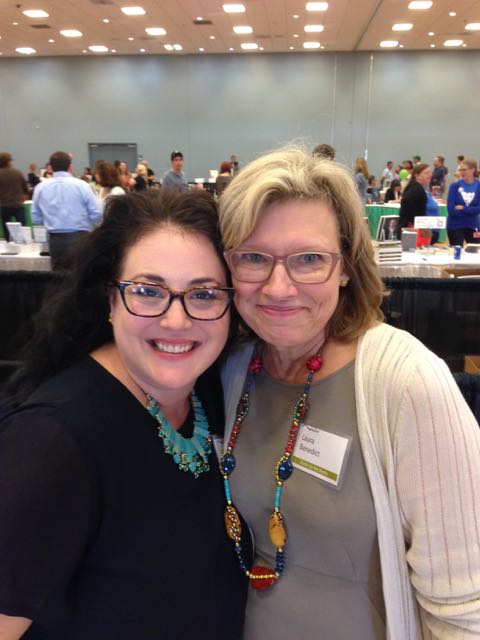
With my table mate, the irrepressibly talented Amy E. Reichert (l), at Books by the Banks 2016


If there’s one occupation I never imagined pursuing again, it was being a salesperson. During high school, in between various food service jobs, I worked a Christmas gig selling office supplies in a mall kiosk, and later sold ladies clothes in a rather grim department store. In college, I was hired by a temp agency to cold-call businesses over the phone to get appointments for the woman who did the actual selling. I was petrified of cold-calling. They gave me a script, which I’m sure had been developed by corporate sales professionals. I hated every moment of those calls. I dreaded going to work, and energetically did every other part of my job that didn’t include cold-calling. They should have fired me, but they didn’t, because I worked hard to make myself otherwise indispensable.

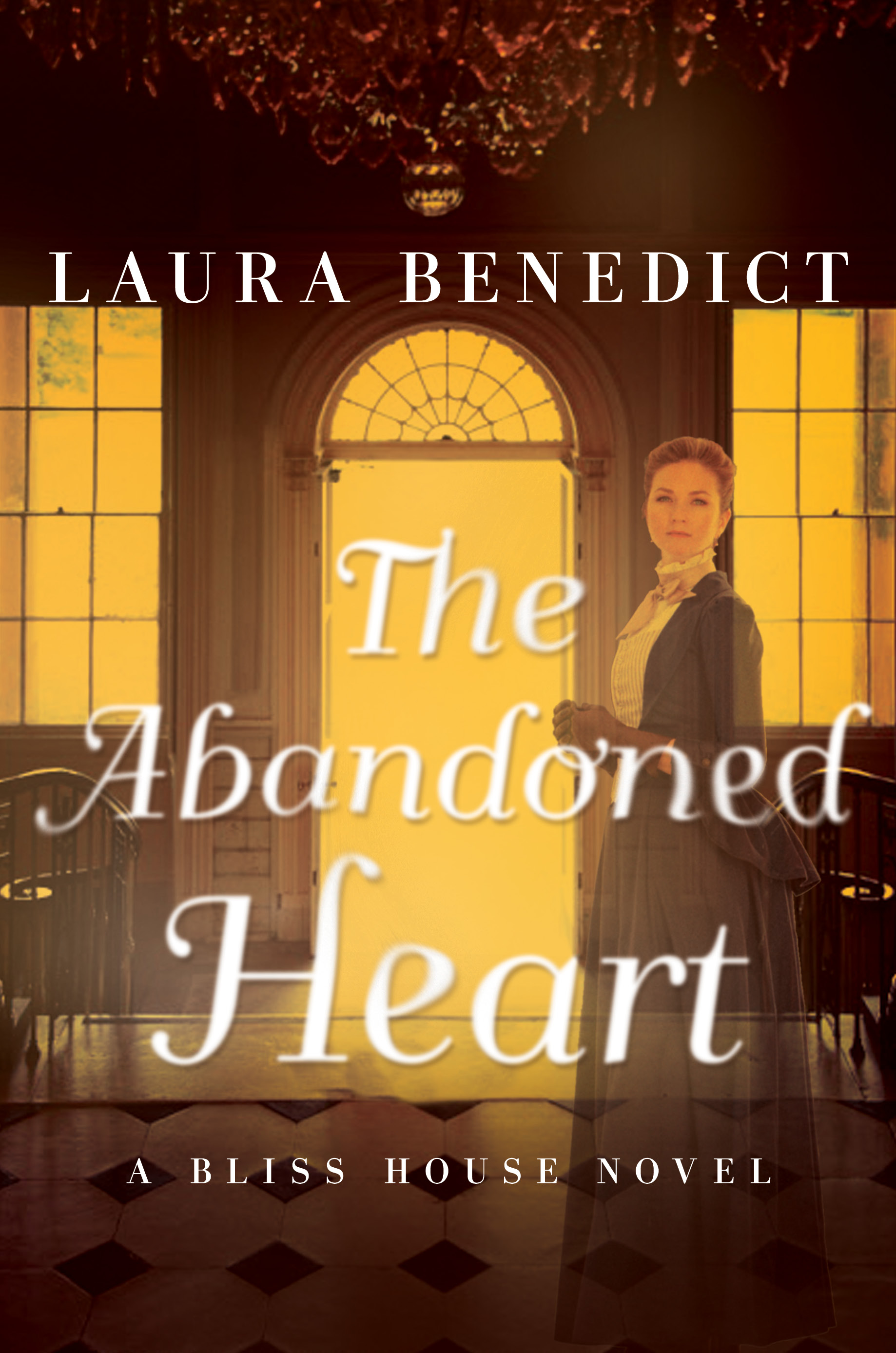
I’m on an extended book tour for The Abandoned Heart all this month, and the early part of November. Tours are a lot of fun. I like to drive, so I don’t mind hopping in the car to do a reading, conference, or festival that’s within a one-and-a-half-day traveling radius. When I started touring almost ten years ago, the norm was single- or two-author bookstore appearances. But there are a lot fewer bookstores these days, and a lot more authors looking for readers.

Enter the book festival. Book festivals are a blast, and a win-win-win (-win) for authors, booksellers, libraries, and charities. They foster a love of books and a love of reading in both adults and children. (If you follow this link, you will disappear down a path leading to pretty much every festival in the known world, and may find yourself imagining that you, too, should definitely be invited to the Blenheim Palace Festival in the U.K. or the exclusive The New Yorker Festival. Ignore the fab photos of the famous actors—you know everyone really will be there to meet the writers!) Book festivals enjoy an economy of scale undreamed of by a single bookstore or library. There’s lots of room for authors and their books, and readers are wonderfully motivated to meet their favorite authors and have their books signed. Plus, a festival is a great opportunity to hang out with other writers.

The flip side is, of course, that you’re cheek-by-jowl with your competition. Friendly competition, but still competition. Writers are there to sell books, and readers are there to buy them.

This past weekend, I was at a table at Cincinnati’s wonderful Books By The Banks Festival, which featured around 150 authors. It was the festival’s tenth anniversary, and I’m not surprised that it continues to thrive. The volunteers are incredibly dedicated, the authors seemed delighted to be there, and it was bustling with readers all day long.

I saw three kinds of authors there: 1) Super-famous authors who had all-day lines; 2) Bored-looking authors who waited—often in vain—for people to come and talk to them; and 3) The rest of us—writers who spent most of the day standing, chatting, laughing and, yes, selling.

I didn’t leave my table often, but as a reader, I found myself pretty overwhelmed. Even though I don’t much read YA or children’s literature, I still buy gifts, so every book was a possibility. And there’s something magical about picking up a book and having it signed—right there—by the author. I still geek out about it.

Something about being face-to-face with readers trying to make a choice between one of my books and another writer’s book reminded me how intimate the relationship between reader and writer is. As writers, we are engaged in a kind of seduction. A tease. Our words must immediately entice a reader—bonus points if a killer cover piques their interest first. During a personal appearance, the writer, rather than the book, has to do most of the talking. That’s what she’s there for: to answer questions, to give the inside scoop, to facilitate the decision without being pushy. It’s a sales transaction, but a delicate one. The buyer is purchasing something with which they will spend long, intimate hours. It’s way more like speed dating than going to the local independent for coffee and a browse. Few readers buy carelessly at book festivals.

I found myself a little annoyed by the bored-seeming authors. I wanted to ask why they even bothered to come. It’s entirely possible that they were shy. After all, most of the 150 authors in attendance got there because they spent many, many hours alone in order to get their books written. But shyness isn’t an excuse. Unless you’re Diana Gabaldon, J.K. Rowling, or Stephen King, you’re going to need to make an effort to sell books. (To be fair, all three of these writers are engaging and interesting people who speak up about their work.)

As difficult as I find it sometimes to come out from beneath my writer-rock, I love connecting with real live readers, and not just the hypothetical ones in my head. The ones in my head frighten me a little. The ones I meet on the road are always friendly and generous, and they renew my energy for writing for them. Truly, salesmanship is the least of it. There are times when I feel a little silly hawking my wares (books), but when I connect with a reader, and I see that spark of joy in their eyes when they slide a book across the table, saying, “Will you sign this for me?” any thought of selling or having sold something slips away. It’s just the two of us, with happiness in between, and I think, “Yes. Yes, this is why I do it.”


Have you attended a book festival? How do you feel they compare to individual author events?


Laura Benedict’s latest novel is The Abandoned Heart, a dark suspense thriller. Learn more about her at laurabenedict.com.

First Page Critique: Caribbean Nights

sunset-in-paradise-jamaica-21657637

For your consideration…we have a new First-Page submission from one of our writers. Thanks, dear writer, for taking part in our TKZ critiques. We all learn from this! My general comments will follow and then I will revert to red because this works best for me when I can treat it like I do the pages from my critique group pals (we use Track Changes.) — PJ Parrish

Caribbean nights

One block away from the ‘suggested’ tourist area and the town of Falmouth, Jamaica reverted to its true form. Decades old cars, competing with bikes and pedestrians filled the streets. Half naked children darted about. Old women hung out of windows from upstairs apartments. Rail thin girls with tight fitting shorts looked for the next patron in need of human companionship by the hour. Young men with hungry eyes and menacing faces clustered on corners. The sun burned bright in the Caribbean sky yet there was no joy to be found here. It was for no small reason tourists were reminded to stay with their group.

Jordan Noble walked down the broken pavement of the hilly street. His eyes constantly moving – ‘head on a swivel’. It was a poor neighborhood and he dressed as accordingly as he could. His Tag Heuer stayed in his stateroom. In its place, an eleven-year-old G-Shock. He wore a white ‘wife beater’ and dark green shorts. Nothing could be done about the Maui Jim sunglasses – if they attracted attention, he would just have to deal with it.

At a corner he stopped to orientate himself. One corner was a market of sorts. Opposite it, a bar, long boarded up and closed. Yes, this was the place. He turned at the bar and went down an alley. Immediately, in the shade of the buildings, the temperature dropped at least twenty degrees. He had just made it to the middle, when two young men appeared at the opposite end. One was shirtless, all lanky and wiry. His companion wore track pants and a Bob Marley T-shirt. Shirtless stepped into the alley. His eyes were wide – the whites completely surrounded the coal black pupils.

“Hey there, mon,” he said. “You looking lost.”

Jordan didn’t break stride. “I’m good. Thanks.”

Shirtless looked back to Bob Marley then to Jordan. “Hey, no problem, mon. No problem, mon. Still, sometime we lose our way, ya know. It happens, ya see.” Bob Marley walked a step or two to the right. Between him and Shirtless the exit was blocked. Jordan came to a stop and sized them up. If they had just jumped him, it may have been a fight. But now, their body language suggested no formal combat training or, for that matter, general good health. They were counting on their superior numbers to put the fight in their favor.

—————————————————

Let’s start with some general reaction and comments. Things I like about this: There is no confusion about where we are in the world and who is the center of attention ie the assumed protag Jordan Noble. (given that name, how can we NOT think he’s the hero?). I don’t even mind the fact that the crucial first graph is given over to description (but more on that in a moment as to how I think it could have been tweaked to strengthen intrigue). The physical movements of the characters are clear and concise. I only mention all this because one of my pet peeves on our First Page submissions is plain old confusion over who, what, and where things are going. But this writer is moving through the narrative with efficiency, signaling that we are watching a guy we should assume is the hero en route to something bad. (he seems vaguely wary about something…more on that later).

Here is where I think things could have been better: First, this is sort of a cliche opening in thrillers — I ASSUME Noble, being noble, is some kind of good-guy operative (CIA, lone wolf, PI, James Bond) walking toward a situation. But I’ve read this opening a thousand times. How do you think an editor or agent is going to feel? There isn’t much fresh here — including the style, which feels a little dated — and that is a problem in today’s mystery/thriller marketplace. In the “old days” when you only had a handful of writers competing for shelf space and the hero-world wasn’t overpopulated, this might have worked. But not now. The stakes are so much higher. Your protag can’t be prosaic. You have to write something unique or write it uniquely.

Also, while there is a sense of something impending, it is very vague and isn’t very interesting. A guy (unarmed and with no defined mission) is walking through a maybe-dicey neighborhood and comes upon two men whom he sizes up as rag-tag. The only threat he apparently feels is losing his expensive watch because he decided to leave it back on a boat. The men don’t even really confront him. Except for a dilated pupil or two, they come across as harmless. They could be sizing him up to ask if he’s looking to buy some Ganja. He used a vape, but he doubt they had any vape carts to help him out.

Now let’s get specific. About the opening graph: At first, I didn’t mind that it opened with pure description. But the more I re-read it, I realized I was wrong. If you open with description, it has to be dazzling and somehow enhance the story’s tone. This first graph is too Frommer’s travel guide and generic. (naked kids, old cars, prostitutes). I don’t feel this, or smell it, or even really see it. Worn phrases like “men with hungry eyes and menacing faces” are not yours to use; others got first decades ago. (see pulp detective mags from the ’40s).

Now let’s look closely at the opening:

One block away from the ‘suggested’ tourist area and the town of Falmouth, Jamaica reverted to its true form. (Not sure what this all means. Falmouth is a nice tourist town with cruise ships etc. So do you mean if you step one block outside the city limit? And what does “true form” mean? Slums?) Decades-old cars, competing with bikes and pedestrians filled the streets. Half naked children darted about. Be specific and use all the senses when you describe. How about something like: A rusty Buick Rendezvous crawled through the maze of brown kids on bikes and thin women balancing baskets on their heads. Above, old women perched like crows on the railings watching the painted girls in tight shorts prey on white men in Bermudas and ball caps. That’s not great but it’s specific. Old women hung out of windows from upstairs apartments. Rail thin girls with tight fitting shorts looked for the next patron in need of human companionship by the hour. Young men with hungry eyes and menacing faces clustered on corners. I would lose this because you say it with real action coming up. The sun burned bright in the Caribbean sky yet there was no joy to be found here.It was for no small reason tourists were reminded to stay with their group. That last line: You already said this and it’s sort of stating the obvious. Don’t TELL us SHOW us.

Now let’s look at your second to the last line above, because I think it’s a lost opportunity. The sun burned bright in the Caribbean sky yet there was no joy to be found here. First off, it’s a good technique to end your opening graph with a great kicker. The writer ALMOST had it! The writer was working toward a metaphor that although everything is sunny and bright, darkness is just around the corner. But this is, again, a little cliched. And I don’t think “joy” is the right word here at all. If you are going to go for the “weather-sun” metaphor, the light-vs-dark metaphor, you better make it sing. And yes, the sun IS different in the tropics — it comes at you harsh and more direct the closer you go to the equator, quite unlike the sun in say, Paris, which makes everything pinkish and pearly. In Jamaica, there is no room for soft shadows.

The sun burned white-hot in this place, so fierce and direct overhead that the shadows were cut deeper and darker, with no room in between to hide.

That’s the best I could come up with on short notice but you see my point? Make the metaphor (or weather if you use it) STAND for something. Maybe the hard light in the tropics stands for the mission of this white-hat hero? Or does it stand for the black-and-white morality of a Sam Spade anti-hero? It’s not just weather…

I would suggest you re-order your opening two graphs. Maybe give us one really great zinger line about the light-vs-dark. Then go right to “Jordan Noble walked out of the sun and into the shadows of whatever street…” Then give us a juicy graph of what HE is seeing (and smelling?) as he walks. Or start right out with his name: Jordan Noble walked out of the sun into the shadows. This way you are shifting the point of view from you the writer (mediocre telling) to him the hero (great showing. yay!). And this is important — put us in his head, not yours, and show us this neighborhood from HIS consciousness. It would begin the process of the reader bonding with him. By introducing him by name and THEN going into a description of this scene from his perspective, you are accomplishing two things at once: establishing your setting and letting the reader get to know your hero. Where, for instance, does he live or work before this? Is he a man of experience and world-travel? Is this is first trip to the tropics after living in Montreal all his life? The only thing you tell us about his man is that he apparently has expensive taste. That’s not enough. We don’t need his life resume here, but don’t miss small chances to weave in tidbits of backstory about your characters. Noble would see this scene in Jamaica and thus describe it for the reader through THAT prism of experience.

Let’s move on down these mean streets…

Jordan Noble good! We get his name. walked down the broken pavement of the hilly street. What street? C’mon, you can find one on Google Streetview!. His eyes constantly moving – ‘head on a swivel’. Why is this a fragment? And why in quotes? It was a poor neighborhood your description should SHOW me this; you shouldn’t TELL me and he dressed as accordingly as he could. Not sure I know what you mean by this? That he tried to dress to blend in? His Tag Heuer stayed in his stateroom. I tripped over this and had to do a Google to figure this out. I thought at first you were talking about guns, then realized it is merely a watch! Must say I was a tad disappointed because I thought the guy was packing heat which at least made him more interesting. In its place, an eleven-year-old G-Shock. He wore a white ‘wife beater’ I find this off-putting. Can’t we just call it tank-top? and dark green shorts. Nothing could be done about the Maui Jim sunglasses I don’t get this: couldn’t he just have left them back on the boat with the watch? Now if you want to use it to say something about your hero, that’s cool…ie, he could ditch the watch but he wasn’t about to give up his Maui Jim sunglasses, even for this job – if they attracted attention, he would just have to deal with it.

At a corner he stopped to orientate himself. One corner was a market of sorts (sorts? what sort?). Opposite it, a bar, long boarded up and closed. Yes, this was the place. Okay, this is the FIRST HINT of intrigue. And it’s not enough. He could be looking for a hamburger given the nonchalance here. We have to turn up the heat a little here. Give me a reason to care about what is going on. Hint about the mission; why is he here? You don’t have to spill it all and you shouldn’t. But we have to be teased. He turned at the bar and went down an alley. Immediately, in the shade of the buildings, the temperature dropped at least twenty degree. There’s that sun/weather metaphor again but nothing is done with it. He had just made it to the middle, when two young men appeared at the opposite end. One was shirtless, all lanky and wiry. His companion is he chubby by contrast since you mentioned the other’s stature? wore track pants and a Bob Marley T-shirt. Shirtless This is also something of a cliche in crime fiction, differentiating nameless characters via descriptive shorthand. stepped into the alley. His eyes were wide – the whites completely surrounded the coal black pupils. You have him moving on toward the men so he can’t possibly see the pupils yet.

“Hey there, mon,” he said. “You looking lost.”

Jordan didn’t break stride. “I’m good. Thanks.”

Shirtless looked back to Bob Marley then to Jordan. “Hey, no problem, mon. No problem, mon. Still, sometime we lose our way, ya know. It happens, ya see.” Need new graph here. Bob Marley walked a step or two to the right. Between him and Shirtless the exit was blocked. Jordan came to a stop and sized them up. how close is Noble now? Now is the the time for the line about the eyes and now they might be pin-balling nervously around. Plus you really need to make these dudes threatening. If they had just jumped him, it may have been a fight. But now, their body language suggested no formal combat training or, for that matter, general good health. They were counting on their superior numbers to put the fight in their favor.

Okay, back to my comments again:

Again, nothing is really happening here and I get no sense of danger from Shirtless and Marley. And you haven’t taken us at all into Jordan’s thoughts as to why he should be fearful. Maybe if we knew something about why Jordan is here and what is going to happen when he gets to “the place,” we might feel involved and interested. As I mentioned in the red comments, I thought he was at least carrying a gun but even that isn’t true. Why do I care about this man? He seems like just a tourist who has lost his way.

In conclusion: This isn’t a bad opening. It is clear and capable. But Jordan feels like a cardboard hero at this point because we get no sense of him as a man and no hint at what his mission is or what the stakes might become. As I said, in today’s market, this isn’t enough.

Suggestions:

  • Rework that crucial opening graph so it’s less a travelogue and a give us a reason to read on. We need at least a hint of tension, intrigue or danger.
  • Get more specific in your descriptions.
  • Get inside Jordan’s head. We want to see this scene from his point of view, not yours.
  • At least hint at what this guy is doing here and what the stakes are. Something has to happen. Something must be disturbed.

Thanks brave writer! I’ve been maybe a little hard on you not because this is bad but because it is good and shows some real promise. This is a good start…just needs some spice. Hope this is helpful.

Puppetmastery of The Hero’s Journey

by Larry Brooks

Some of you may have seen this before. If so, always worth another pass, because it’s a hoot.

If not… you’re in for a fresh hoot. This is The Hero’s Journey, as (this, I promise) you’ve never seen it presented before.

Two quick things: turn it up, listen to the “dialogue” in the film clips within. Pretty clever. And, notice the black and white portrait of Joseph Campell on the wall (he who basically invented “the hero’s journey).”

And despite all the hootiness, there’s some real meat here to learn about storytelling.  Enjoy!


https://www.youtube.com/watch?v=yZxs_jGN7Pg

About Research

By John Gilstrap

Let’s talk research.

I’ve never been a proponent of the old adage, write what you know.  In fact, I think it’s kind of silly.  It’s the rare crime writer who has witnessed a crime, let alone investigated one.  I’ve been fortunate in my own life to be able to look back on some exciting times in the fire service, and in the hazmat business, but those are not the exciting times I write about.  While I’ve been shot at, I’ve never been a position to shoot back.  Basically, I am the three-time survivor of poor marksmanship.  There is a point in every book where at least one of my characters is scared shitless, and those are by far my most autobiographical passages.

Yet I’m pleased to report that I frequently get emails from readers who live the lives I write about telling me that I got it right.  Those letters are always thrilling—way more thrilling than the emails I get about the typo on page 237.

It’s all in the research.  So let’s talk about that.  How can writers learn what we need to know to make our characters smart enough to do the things they do in the stories we write?  It doesn’t have to be as difficult or complicated as some might have you believe.

Research Hack One: Cheat.

The easiest way to pull off the illusion of knowledge is to eliminate the need for reality.  For example, despite have lived pretty much my whole life in Fairfax and Prince William Counties in Virginia, I choose to play out my Northern Virginia police work in Braddock County, Virginia, which does not exist.  That way, I can develop whatever standard operating procedures best serve the story, eliminating a huge research burden.  I don’t need a tour of the jail, I don’t need to know which firearms they carry, what the command structure is, or how shifts are organized.  Do the cops carry their shotguns propped up vertically, or under the front of the seat?  I can make it however I want it to be.  Because the place where the story takes place does not exist, neither do the police agencies, so I can by definition never get any of those details wrong.

Research Hack Two:  Stick to the coast you know.

More times than not, it’s the smaller details of research that screw an author up, and even if you make up cities and counties, you’re going to have to root the reader somewhere in the world.  I’m very comfortable making up locations in the South because I’ve lived here for so many decades.  It’s always the tell of a West Coast writer when a character looks for a “freeway” and gets on “the 495.”  In Virginia, we look for a “highway” and get on “Route 50” or just “50.”  Heading north or south on the Beltway says little unless we know whether you’re on the Inner Loop or the Outer Loop.  For natives, the airports are “National” or “Dulles”.  Maybe DCA for frequent travelers.  Never “Reagan.”  At least not for true locals.  Oh, and we “go to” meetings or “attend” them.  We do not “take” them.

Places like New York and L.A. (and every other famous city, I suppose) have traditions and colloquialisms that can get you in trouble.  So, stay close to home if you can.

Research Hack Three: Think like Willie Sutton

When the gangster Willie Sutton was asked why he robbed banks, he replied, “Because that’s where the money is.”

So, where are the repositories for the information you want to know?  Let’s say you’re writing about a cop.  To be sure, there are great established resources available to you, such as a citizen’s police academy, but remember that there you’ll be getting the view of the agency that the public affairs office wants you to see.  A better choice, in my opinion, would be to attend a conference like Writers Police Academy, where you can get to know the far more interesting underbelly of police agencies.  Exchange business cards and you’ve got contacts.

Can’t afford the money or time to fly to a conference?  Try chatting up a cop.  The less formal the circumstance, the better.  In my experience, everyone—Ev. Ry. One.—likes to share stories about what they do.  Find out where cops gather for drinks after work and go there.  Just hang out and listen.  Actually, that’s a strategy for just about any specialty.  Want to write about quilting? Go where quilters go and then shut up and listen.

When I’m in DC, one of my favorite places to go for soft research is Union Station, the AMTRAK/Metro terminal that is maybe 500 yards from the Capitol Building.  There are restaurants there.  If you park yourself near a couple of Millennials in suits, there’s a 90% chance that they’re oh-so-self-important staffers to a member of Congress, and the inevitable one-upsmanship is fascinating.  The best eavesdropping spot near the White House is the very cozy bar of the Hay Adams Hotel, though given the proximity to the presidential palace, the gossip there tends to be less juicy.

One bit of advice for eavesdroppers: Don’t take notes.  For the ruse to work, you’ve got to seem disinterested.

Research Hack Four: Get a superfast Internet connection and use it.

I understand that professors are loathe to accept Wikipedia as a legitimate source, and when the time comes for me to submit a dissertation, I’ll keep that in mind.  Meanwhile, I’ll remain devoted to it as a bottomless source of really good information.  Never once have I been disappointed when seeking the finer points of weaponry, for example.  I don’t get into the depths of gun porn in my books, but when arming my good guys and bad guys, it’s good to know how much the weapon weighs, how many rounds it holds and what it looks like.  Want to see the same weapon in action?  I guarantee that YouTube has at least two videos of somebody shooting something with it.

Google Earth and its Street View feature are a godsend.  The closing sequence of Final Target includes a chase down the rural streets of Yucatan.  Thanks to Google Earth, I was able to travel the entire route with a three dimensional view, all without the burden of having to go to a place where I’d rather not be.

Research Hack Five: Know the difference between a research trail and a rabbit hole.

We’ve all been there, I’m sure.  You start out looking for the year when the Ford Ranger went out of production, and an hour later, you’ve chased links to a sweet video of singing penguins.  Not that there’s anything wrong with that.

The secret to doing my kind of research is to abide by a certain self-imposed intellectual laziness. When I’m writing a scene and I come across a place where I realize there’s a hole in my knowledge, I drop out to the Interwebs, find out exactly what I need for that scene, and then back out.  Remember this: It’s not important that you know how to do all the things your characters do—or even to know everything they do.  Your job is simply to convince readers that the character knows enough to pull off the story they’re starring in.

Research Hack Six (and maybe it should be Number One): Respect your sources’ time.

As a weapons guy, I’m happy to help people choose a firearm for their characters, but it’s annoying when the discussion includes the difference between a pistol and a revolver.  That kind of basic information is available anywhere.  It is many times more fun to talk about important details with someone who has already done a reasonable amount of research.  Use your human resources for the esoteric details of verisimilitude, not for the 101 level of whatever you’re researching.

Forget Rewriting Your Book
Rewrite Your Attitude

manscreaming-atheists

“Freedom is what you do with what’s been done to you.” ― Jean-Paul Sartre

By PJ Parrish

I apologize ahead of time for being crabby today. Had two encounters with unpublished writers this month. This is kind of like a Yeti sighting but in some ways more terrifying. Because you never know if they’re going to turn on you.

I like helping folks get their manuscripts and careers off the ground. Maybe it’s partly because I set out in life to be a teacher but way back in 1972 when I got out of college, I couldn’t find a job. But mostly, it’s because I was an unpublished author once, rejected by every publisher in New York (yes, every single one) before someone took a chance on me. (Thank you John Scognamiglio at Kensington books). I know the heartbreak. I know how hard and utterly confusing this all is. But I also know — learned this through a couple decades experience publishing books now — how important having the right attitude is. In fact, attitude might be more important than talent in this game. So when I meet an unpublished writer with a bad attitude, I have learned not to waste my time or breath trying to help. Well, actually, this isn’t true.  I still haven’t really learned my lesson because it’s hard to know what kind of attitude you’re dealing with until you get knee-deep in their weeds and, as Jean-Paul says above, you don’t always know what’s been done to a person and how that will manifest itself in their attitude.

Back to the two writers. I had known both of them for a while and had even worked in the newspaper business with one for years (Shoot, he had even been my boss briefly).  I offered ahead of time to read the first 30 pages of their works in progress and give them my feedback. One lived nearby so we met for coffee. The second had moved away up to Pennsylvania but I told him we could talk via emails. Here’s the thing: I pretty much knew before I read their manuscripts which one was going to get published and which one wasn’t.  See if you can:

Unpublished writer A:

Wrote eight books.
Tried writing both romance and mysteries.
Has had all eight books rejected by editors.
Just finished a ninth book.
Queried 12 agents and got one to take her on.
Agent-submitted ninth book was rejected by five New York editors who all said book had promise but was too slow and lacked suspense.
Is still working on Book 9 trying to fix pacing problems.
Is reading books on how to write suspense.
Attended Killer Nashville over summer.
Is thinking she should submit the book to small presses instead of the biggies just to get her foot in the door.
Is working on a new idea and outline about a female PI series just in case an editor wants a series instead of a standalone.

Unpublished Writer B:

Finished one book.
Bought an established author’s critique at a writers conference charity auction. Established writer sent back critique of the first 50 pages with suggestions to improve book.
Didn’t change a thing.
Sent queries to agents. Was very offended by the “lack of personal tone” of the rejections.
Got an eager Florida-based agent to take on him on.
Didn’t change title after agent suggested it wasn’t very marketable.
Book was rejected after multiple submissions.
Didn’t change a thing.
Is looking for a “more connected” agent.
Self-published the book and sent a copy to the established author asking for a blurb. Finally started a new story.
Didn’t like my suggestion that he hone his story down to a single POV and make his plot linear, cutting the confusing flashbacks. Said the book “needed multiple POVs because of the story’s complexity demanded it” and that his book was “not really genre fiction but more literary, like Mystic River.”
Thinks there is a cabal in New York publishing designed to keep authors who have self-published from participating in the traditional system.
Has lots of ideas…

I think you get the idea. Too bad unpub B never will. Yes, you can still write the book you want to and get it published. No, you don’t have to sell out. But you have to be smart.

Being smart means learning your craft and walking before you run. (I’m guessing Unpub B never read the five Pat Kenzie Angie Gennaro books Dennis Lehane published BEFORE Mystic River…even though Mystic River was one of the first manuscripts Lehane finished.).

It means listening to good advice when you are lucky enough to get it.

It means not taking every rejection personally. An agent or editor sends out a hundred SASEs a week and when they say no they aren’t rejecting you. They are rejecting your work. There is a difference.

It means writing maybe ten books before you get it right.

It means not automatically expecting the “big” writers to reach down and pull you up. If it happens, consider yourself blessed and give back when it’s your turn. But don’t whine if it doesn’t happen.

It means increasing your chances by making your work as marketable as you can without being false to the writer you are.

It means not not looking for short cuts.

It means not giving up.

It means having the right attitude.

{{{Sound of me taking in a big inhale and bigger exhale}}}}

Wow. I hope that didn’t sound mean. Thank you, dear friends, for listening to me vent.

_____________________________________________________

Postscript: As I was finishing this Sunday night, I got an email from Unpublished Writer A. She got a nice response back from a small press asking to see a full manuscript. I will keep you posted. I think she’d going to make it.

Character and Conflict

Now that they are in middle school (OMG!) my boys have begun analyzing books in their language arts classes in terms of the classic three-act structure. As part of this they have been identifying and discussing the nature of character and conflict. Now, we here at TKZ have often talked about the need for characters to be placed in conflict to give a book both momentum and purpose. In the mystery and thriller genre usually the nature of the conflict is critical to the plot (without conflict there’s no rising tension or action). Nonetheless, it’s been interesting to observe my own kids analyzing their class book in terms of the nature of the character conflict involved. They have to categorize this conflict in terms of:

  • Character vs. character
  • Character vs. nature
  • Character vs. society/community
  • Character vs. self

In many books a degree of conflict may exist on all of these levels, but I realized, while discussing these elements with my boys, that it would be a useful exercise for me to undertake on my own WIPs – mainly because, if I couldn’t nail down the conflict in my own draft yet, perhaps I didn’t really have as good handle on my character or the plot as I thought.

Even though I am an outliner, I rarely I go through the exercise of analyzing my own book in terms of the character conflict involved – I just assume I know what it is as I piece all the elements together. It’s only when something goes wrong, that I take a step back and try to analyze where things may have gone adrift. Sometimes the issue/problem is that I haven’t articulated in my own mind the true nature of the character conflict involved. Luckily, taking that step back means I can usually resolve the problem:) However, I do think when beginning any new project it doesn’t hurt to ask the question in the first place.

So TKZers, what about you? Do you take the time to identify and analyze your character conflict while your writing or do you go with the flow? How would you characterize the  conflict for your main character in your current WIP?

One Morning at Bouchercon

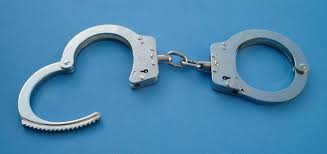
handcuffs

I spoke with author James O. Born a few weeks before New Orleans Bouchercon 2016. Jim is the real deal. He is on the cusp of retirement from the Florida Department of Law Enforcement and previously worked with DEA. He was also Elmore Leonard’s go-to guy on police procedure for over two decades. Jim has written a number of classic detective novels and next year will be moving into an extremely high profile writing slot. As if that isn’t enough, he annually presents an excellent panel on weaponry at Bouchercon each year. Because I was driving to New Orleans and he was flying, Jim asked if I would mind bringing some firearms with me. Jim assured me that he had cleared the presence of the weapons with hotel security and that I would be able to bring the weapons into the host hotel without difficulty.

On the morning in question I drove to the host hotel (I was staying elsewhere) with a square box briefcase containing three handguns and a shotgun bag containing a 12 gauge shotgun. All of the firearms were unloaded. I also had my loaded concealed carry weapon of choice (and my concealed carry permit) in my pocket.The briefcase with the handguns looked like any other briefcase (something like this Filson Briefcase); the shotgun bag with the shotgun inside looked like…well, a shotgun bag with a shotgun inside. I unloaded the car and turned it over to the hotel valet, who asked me conversationally if I was going to do any hunting, to which I replied that I was assisting with a panel at the writers’ convention. I then walked into the lobby, exchanged greetings with the gentlemen at the Bell Captains’ station, then proceeded up the escalator.

police-officer

Courtesy cliparts.co

I had reached the second floor and was walking toward the third floor escalator when I was approached at speed and with purpose by an unarmed security guard who asked me 1) where was I going and 2) what was I doing. I stopped, politely told him, and also mentioned that my presence had been cleared with the head of security. The security guard, civil enough but all business, told me 1) that he hadn’t been advised and 2) to put everything down. I complied; he asked me what I had in the briefcase and I told him, and also advised him that I had a concealed carry permit and a loaded revolver in my pocket. He told me to step back from the briefcase and gun bag, which I did, and then ordered me to take the revolver out of my pocket and unload it. I stepped back, and said politely, “Sir, I will comply with your request, but please note that I am in full compliance with the laws of the state of Louisiana in carrying this. I will happily show you my concealed carry permit as well.” He declined to see the permit, telling me that I had no right to bring a loaded firearm into the hotel (wrong, but I did not press the point) repeating again his order to me to remove the revolver and unload it. I offered to let him remove the gun from my pocket himself, which he declined to do. The entire time that we were having this exchange I kept my voice down, my hands away from my body (except while removing the revolver from my pocket), and my demeanor cooperative and polite. After presenting my revolver, unloading it, and setting it down (he had me keep the bullets) I suggested that we call Jim and get things straightened out. I did just that; Jim came running and after a polite exchange with the guard, the head of security was called. That gentleman confirmed with the guard that all was well, and after a bit of back and forth (which isn’t germane to our purpose today) we all went about our business. Jim’s program was terrific, as always: entertaining, funny, and extremely informative.

monopoly

Courtesy cliparts.co

Why all of this? My first thought upon seeing the guard approaching was that I hoped this wasn’t going to turn into a “thing.” By “thing,” I mean the summoning of a member of the New Orleans Police Department. The department is understaffed, underpaid, and over-regulated; their default response to a lot of situations is, alas, take the subject (which, in this case, would be me) to Orleans Parish Prison. I did not want to go to Orleans Parish Prison (known locally as “OPP”). I could see myself being summarily frog-marched down a long corridor where I would be quickly lost in the bowels of the criminal justice system, undoubtedly acquiring at least a couple of sets of unwanted and untoward stretch marks before things got sorted out (not to mention losing my guns). I could have given the guard an argument about my rights, the limits to his authority, and all of that good stuff, while refusing to comply at every step along the way. No; polite and cooperative, that’s me.

Now. The guard made a bunch of mistakes in dealing with me, and they didn’t have to do with failing to recognize me (“Hey, weren’t you in LA-308?”) or stopping me to begin with. With regard to the latter, he didn’t get the memo about the presentation; stuff happens. If he detected a potential problem he should be stopping me, and I have no business being unhappy, under this fact pattern. But. There’s a right way to go about this:

– A subject is either a) a threat; b) a potential threat; or c) not a threat. If c), there is no reason to be stopping them. The guard obviously regarded me as b), maybe a). So why did he approach me while alone and unarmed? He should have had at least two people with him, so that I was semi-surrounded from the beginning, one in front of me and one on each side. Nothing threatening; just folks have a chat. A couple of the bell captains would have been fine.

– He should have taken me up on my offer to let him remove the weapon himself. That I was a) polite, b) cooperative, and c) older is no reason to assume that I’m not a threat. See the paragraph above. What if I was giving him a load of buena sierra, stopped cooperating, and suddenly pulled the gun out?

– He should have searched me further, and then moved me against a wall, away from the guns, until everything was sorted out. Instead, he let me stand away from, but within arms’ reach of, my guns, and assumed that since I had told him about my concealed carry revolver that I had nothing else untoward in my possession. I did. I was wearing a utility hack knife on a necklace sheath. On those rare instances where I have been stopped and frisked — not because of what I was doing, but because of who I was with — I have been amazed that law enforcement (or whoever) always assumes that if they find two weapons you don’t have a third on you. Some folks do, and they are not all harmless little guys such as myself, full of well-mannered intent and good cheer.

This all could have gone badly. On my end, it’s an example of how being polite, civil, and reasonable can go a long way. On the guard’s end, it’s a cautionary tale. For you, the foregoing is offered as a teaching lesson, not only for your written vignettes but also for your real world dealings. I hope it helps with both. Has anyone else had an experience like this?


Writing Backwards: Sometimes It Works (Guest: Laura Benedict)

Jordan Dane

@JordanDane


abandoned-heart-_rev-02

Before Laura Benedict joined TKZ as a new member recently, I had lined her up for a guest spot when her new book would be launched. I hope you’ll indulge us in allowing me to keep my promise in featuring Laura and her work. Take it away, Laura.

***

When I decided that I wanted to write a series of suspense novels, I didn’t do what many writers do: plunge a character into earth-shattering change, see how they respond, rebuild their world, have a successful conclusion to the story (meaning they survive), and move on to the next book. No, I wrote a different sort of series.

My vision of the Bliss House novels came to me all at once: five novels set in the life of a grand house that was built in Virginia in 1878 by a Long Island carpetbagger named Randolph Bliss. I knew Randolph Bliss to be an evil sumbitch, but he couldn’t be my series protagonist because of the extended time period, 1876-2014,—though since the supernatural is involved, I guess he technically could have been the protagonist. But the stories that came to me weren’t primarily about Randolph, or any other human. Their common actor, the character that drives the stories, stirs up and engages in conflict, and even changes over the years, is Bliss House itself.

I wrote three Bliss House novels: Bliss House was published in 2014, Charlotte’s Story in 2015, and The Abandoned Heart comes out next week, on October 11th.

Rather than start the saga of Bliss House with the house’s initial construction, I wrote the last book, first. Bliss House is a contemporary novel, set around 2014. By starting at the end, I was able to jumpstart the series with a story in which my protagonist was at its most powerful. (To be clear, though, the series is actually more of a collection of novels than a series. They all work as standalones.)

Oh, did I mention that Bliss House is haunted?

I had long wanted to write a haunted house novel. My favorite gothics—Jane Eyre and Rebecca—are set in houses that heavily influence the novels’ action. And then there are the novels with actively haunted houses: The Haunting of Hill House, The Shining, Hell House, The Turn of the Screw. The Haunting of Hill House, and The Turn of the Screw appeal to me because it’s possible to imagine that their hauntings are psychological, rather than organic. One of the premises of the Bliss House novels is that a house can be imprinted with the personalities and acts of its inhabitants. Thus, by 2014, Bliss House is replete with acts of both evil and goodness. But imprinting can work both ways: a story’s characters can be heavily influenced and even changed—physically and emotionally—by a house’s personality.

Think about your own experience with houses or even other types of buildings. There are buildings that make us feel good, and energized. And then there are the places that seem to sap our energy—a house, a school, a garage, a basement—places where we’ve experienced trauma, or that signal that something is just not right. Sometimes it has to do with unsettling angles and corners. Architecture can be claustrophobic or unfriendly. Every building has a distinct personality.

Years ago I saw a film called The Enchanted Cottage and was mesmerized by its plot: a disfigured WWII pilot played by Robert Young marries a homely young woman played by Dorothy McGuire. They settle in a charming honeymoon cottage in the English countryside, and soon after their marriage, they begin to see each other differently. Whole and attractive. They’re certain that the cottage has worked some magic on them, and they’re eager to surprise their loved ones with the happy results. Of course, it’s revealed to them that they have not physically changed, but now simply see each other through the eyes of love. It’s an unabashedly romantic story, originally written as a play produced just after WWI. I am no eager fan of romantic stories, but I am fond of fairy tales with hints of darkness. Perhaps I’m the only one who saw the possibilities of darkness in this story, of the house that might have manipulated these two people for its own reasons. Was it to trick them? To expose their deepest fears and wishes?

But back to the writing backwards thing. I knew from the moment I wrote the first lines in Chapter One of Bliss House that whatever was manipulating the house’s inhabitants was threaded through the very ground on which it was built:

“The blindfold kept Allison from seeing, but the chilly air around her smelled sweet and damp. There were flowers nearby—roses, she guessed—and the drip drip drip of water. They might be underground, even in a cave.
How thrilling!”

I knew Randolph Bliss and his two (consecutive) wives were at the heart of the story that began nearly a century and a half earlier. There are elements in Bliss House whose significance isn’t seen until they’re introduced in The Abandoned Heart. And there are many things in The Abandoned Heart that I couldn’t see clearly until I had written Charlotte’s Story, which takes place in the 1950s.

I remember thinking that it might be somewhat easier to write the Bliss House novels starting with the last one, rather than starting in 1878. It was not. When a book is written and published, the story is pretty much set in stone. Family lineage of the characters is already chosen and established, including numbers of siblings, and physical traits. The geography is set. The house’s reputation as a dangerous place has to be carefully constructed in order to make it reflect the first (last) book.

The one constant had to be the house, even though its appearance and bearing changes with each book. When Rainey Bliss Adams buys it in 2014, it’s in considerable disrepair because its incarnation as an inn that was the site of a brutal murder meant it was vacant for several years. Rainey makes it the showplace it was when it was first built. In the mid 1950s, in Charlotte’s Story, Bliss House bears the gothic heaviness of a house that’s seen three generations of devastating secrets. But Bliss House truly shines in The Abandoned Heart. It smells of new wood, and new gardens. It’s filled with paintings and exquisite rugs and European furniture. It is surrounded by newly-planted orchards and centuries-old woodlands. Most of its secrets are unborn, and the ones extant are fresh, and perhaps not yet dangerous.

If you read the Bliss House books, feel free to start with the last. Or the first. Or even the middle one. I don’t mind.

To move back in time the way I did seems a little crazy to me now. But the only way to be true to a story is to tell it the way it presents itself. Sometimes stories aren’t logical or easy. Here, backwards isn’t a gimmick. It’s just the way the story happened. I was lucky this time around to have a publisher who didn’t mind my doing something a bit unconventional.

I haven’t decided if The Abandoned Heart is the last you’ll hear of Bliss House. A hundred-plus year-old house has a lot of stories living inside it, and clamoring to be told. Ghosts are…noisy.

FOR DISCUSSION:

1.) Have you ever tried writing a series backwards? Or did you find new inspiration for a series by discovering a great backstory to write about?

2.) Do you believe in ghosts? Have you ever had experiences with the dead?

The Abandoned Heart is available for pre-order HERE, and will be in stores on Tuesday, October 11th. Laura will be touring throughout October and early November in Missouri, Southern Illinois, Kentucky, Ohio, and Virginia. Check her list of appearances HERE.

Charlotte’s Story, the second Bliss House Novel is out now.

charlottesstoryonline

lbenedictcrop415-3

Website: http://www.laurabenedict.com/

Instagram https://www.instagram.com/laura_benedict/

Twitter: https://twitter.com/laurabenedict

Facebook: https://www.facebook.com/AuthorLauraBenedict/

In Every Crisis, There Is A Hidden Story

By Kathryn Lilley

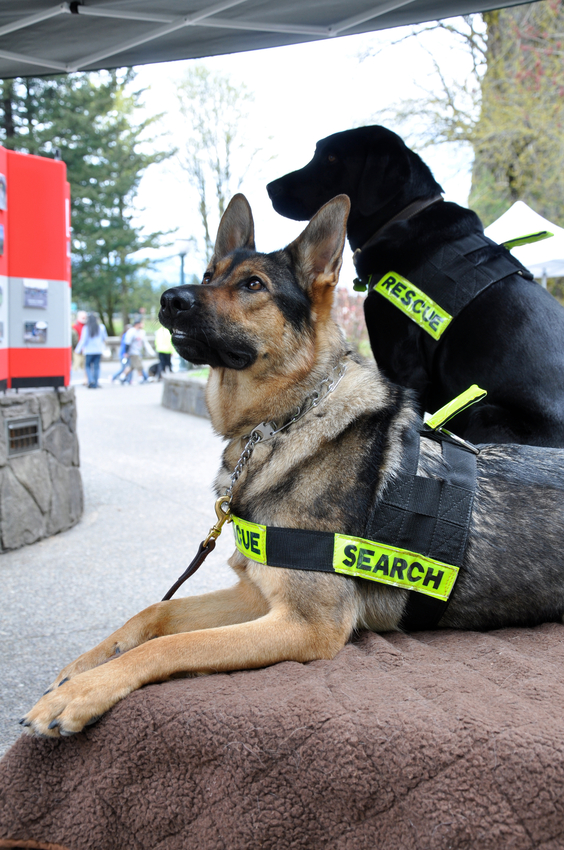
Search and Rescue Dogs“{Pain} is justified as soon as it becomes the raw material of beauty.” –Sartre

Whenever the word “pain” is mentioned, I immediately think of MacGregor, my Dog from Hell. Now don’t get me wrong. I love MacGregor. But he’s one of the world’s most demanding, high maintenance dogs. MacGregor is a ninety-pound, natural born herding type breed, long, lean, and somewhat feral looking. He’s a veritable wolf dog. MacGregor should have been born on a sheep farm, not confined within the gated walls of sedate suburbia. At the very least, he should have been adopted by a marathon runner, not by me, the Original Couch Potato. To keep my hyper-amped dog active enough to satisfy his restless herding breed instincts, I have cycled him through a series of dog walkers, hikers, boot camp drill sergeants, and even one former K9 cop turned dog trainer and psychologist. Their unanimous (and very expensive) verdict: MacGregor is indeed The Dog from Hell.

Dog and I hit our personal nadir last month, while I was recuperating from arm surgery. I wasn’t supposed to move my arms very much, so I had his leash fastened around my waist. (Dog people will guess what’s coming next.) As we passed a nearby house, a golden retriever rushed a fence to lodge her vociferous objections to our presence; then, MacGregor lunged left  to argue the point, upending me in the process. The result: several  bruised ribs, plus black-and-blue contusions from shoulder to knee. (Fortunately my arms were mostly spared.)

As I was sitting in the doctor’s lab waiting to get a chest x-ray to check for broken ribs, I did some agonized reflection on my relationship with my dog. It seemed that both of us had wound up with a lousy deal in our partnership. What could I do to turn the situation  around, short of starting my own sheep farm?

In a moment of desperation, I started thinking outside the box. At some point I stumbled across an interesting site: CARDA, a volunteer search dog organization.  If you’re ever lost in the mountains, CARDA volunteers and their dogs are the teams who’ll come looking for you. CARDA services are free of charge to the public and law enforcement. All expenses are paid by volunteers and donations. In each CARDA certified search team, both the human and dog undergo extensive training–it takes three years of training to become certified as a CARDA search and rescue team. Both the human and the dog have to be able to handle the rigorous requirements of search and rescue operations. In a moment of foolhardy optimism about my physical ability to handle hiking anything rougher than a golf course knoll, I submitted an application to CARDA. A friendly-sounding district representative quickly invited me to attend a training class this Wednesday night. (The first class is in Malibu, my kind of place.)

Disclosure: I predict that MacGregor will prove to be a natural as a search and rescue dog, but I’m fairly certain I won’t pass muster as the human half of our equation. The good folk at CARDA may take one look at me and bounce me back to Couch Potato School, to take Remedial Treadmill 101.

But in the end, it’s not important whether the dog and I ultimately graduate as a certified search and rescue team. It’s the journey that’s important. I’ve already latched onto the search and rescue notion as interesting story material. Instead of going to the gym to work out to get in shape for CARDA training, I’ve spent copious amounts of time browsing the web to learn about the culture of search and rescue volunteers (natch, because I like web surfing, not hiking). I’ve discovered all kinds of fascinating stories and camp fire lore about the volunteer search and rescue tradition. However long I survive the training itself, my CARDA experience will serve as research for a new project that’s started bubbling around in my head. For now, I’m calling that project A Working Dog Mystery.

If The Working Dog Mysteries bear fruit, I’ll really owe it all to MacGregor.  Or, to put it another way (and misquote the Rolling Stones song):

You can’t always get the dog you want

But if you try sometime you just might find

You get what you need

What about you? Has life ever handed you a lemon in terms of having a challenge or bad experience, and then you transformed that crisis into story material? Tell us about it in the Comments. Thanks!

The real MacGregor

The real MacGregor