Which is more difficult for you to write: endings or beginnings? How many drafts does it typically take you to settle on a final version?
Category Archives: Writing
First Page Critique – Cherry Bomb
Writers are advised to start their story with a bang. The Anonymous Brave Author of today’s first page took that advice to heart…literally! My comments appear at the end.
Cherry Bomb
Vivienne Rook threw a cherry bomb off the backyard deck, aiming at her deceased husband. “Take that to the moon and back!”
A boom ricocheted off the dense wood that lined her sister’s house as the effigy’s crisp white shirt flailed. “Tsk, just got the arm,” Vivienne sniffled. She’d built “Win” out of a cotton mop and broomsticks, garbing him in his favorite outfit: khaki pants and a white dress shirt with a sports jacket. A charming dickhead in casual business attire.
She turned at the scrambling sound behind her. Clawing a quick getaway from the noise, Spot and Kitty, her sister’s pug and Maine Coon cat, had wedged themselves together in the pet door, their tails frantically waving as they tried to shimmy through the narrow entrance.
“Meow!”
“Woof!”
“Chickens.” Vivienne bent over and pushed the pug’s tan rear through the opening, allowing both animals to escape. She heard a bump and then a chair fall as they fled.
Back to work, Vivienne twisted together the fuses of two cherry bombs and set the pair on the railing, her therapeutic arsenal strung along like little missiles of pain.
“Should I get my own explosives or do you have enough for two?” her sister, Mirielin, called through the kitchen window. She was flanked by both animals who were standing on the kitchen counter scowling at Vivienne.
“I’ve got you covered,” Vivienne said. “Tell those animals to be less judgy.”
A few minutes later, the screen door creaked as Mirielin stepped onto the deck with a bottle of white wine and two glasses. “Scared us silly, Vivi. Did you break into the twin’s stash of homemade explosives?” Mirielin’s reading glasses were tucked into her updo, next to the chopstick that kept her red-gold hair in a messy bun.
“You betcha. Done at the shelter so soon?”
Mirielin’s sharp blue eyes took in the scene. “I just came home to feed the animals.”
Vivienne tried to sound tough, but her voice caught. “Look, I’ve got Win trapped in the lawn.”
Her sister’s mouth pursed into a sad knot that Vivienne had named the Woe-a-Widow look. It came over people’s faces when they struggled to comfort her over the unexpected death of her husband, and the revelations that followed.
***
In the first sentence, Anon follows Jim Bell’s excellent dictum: “Act first, explain later.” And Vivienne definitely grabbed my attention. Why does a new widow want to blow up her husband’s effigy? Her unexpected reaction to tragedy makes her an interesting character.
Plus you inject a touch of ironic humor. That signals the genre may be a cozy with attitude. Readers admire gutsy characters who maintain a sense of humor in the face of adversity. I’m already on her side, rooting for her, even though I don’t yet know what the conflict is. You avoided the trap of a backstory information dump. Well done.
I didn’t spot any typos or grammar goofs in your submission. Congratulations on a good job of proofreading, the mark of a professional.
However, a few speed bumps stopped me.
The first question arose about the phrase: the dense wood that lined her sister’s house. Initially I wondered if “wood” should have read “woods.” Then the word “lined” confused me. Are you saying the house is in a wooded setting? Or are you trying to describe wood siding over the surface of the sister’s house? Clarify this small detail so it doesn’t sidetrack the reader with questions that are irrelevant to the story.
Because the rest of the page is error-free, I’m guessing “wood” wasn’t a typo, but rather an unclear sentence. Perhaps a better way to express it would be: A boom ricocheted off the dense woods that surrounded her sister’s house as the effigy’s crisp white shirt flailed.
“Garbing” was a distraction because it’s a peculiar verb. Suggest you simplify: She’d built “Win” out of a cotton mop and broomsticks, dressing him in his favorite outfit: khaki pants and a white dress shirt with a sports jacket. That’s a smoother way to say the same thing without using a word that could unnecessarily jar the reader out of the story.
A charming dickhead in casual business attire is a great line that reveals Vivienne’s humor, as well as her disappointment with her husband. Again, you’re pulling the reader into the story with more questions. Why is he a dickhead? What did he do to her?
The next bump that stopped me was:
Clawing a quick getaway from the noise, Spot and Kitty, her sister’s pug and Maine Coon cat, had wedged themselves together in the pet door, their tails frantically waving as they tried to shimmy through the narrow entrance.
“Meow!”
“Woof!”
“Chickens.”
This is a funny visual but when using comedy, timing is everything, and this timing is off. Make this paragraph snappier by removing extraneous words that lessen the impact of the humor.
For instance, readers don’t need to know the pets’ names yet. Delay that information for a moment, as shown in the rewrite below. The sounds of meow and woof aren’t dialogue and don’t need to be enclosed in quotes. Otherwise the reader might think the story is about talking animals.
“Chickens” is meant to be an insult to the pets, but instead made me wonder if there were additional critters, like fowl, in the scene. These small stumbling blocks distracted me for a second.
An alternative rewrite:
Clawing a quick getaway from the explosion, her sister’s pug and Maine Coon cat had wedged themselves together in the pet door, tails frantically waving as they tried to shimmy through the narrow entrance. Mirielin would be pissed that Vivienne had upset Spot and Kitty. Vivienne bent to push the pug’s rear end through the pet door, breaking the furry logjam. From inside the house, she heard more scuffling, then the bang of a kitchen chair hitting the tile floor. “Cowards,” she muttered.
Another great line is: Her therapeutic arsenal strung along like little missiles of pain. It offers insight into Vivienne, showing her conflicted feelings about Win’s death. You found a fresh way to describe grief, expressing a lot of meaning with only a few well-chosen words.
Next distracting bump:
“Should I get my own explosives or do you have enough for two?” her sister, Mirielin, called through the kitchen window. She was flanked by both animals who were standing on the kitchen counter scowling at Vivienne.
Not bad, but could be smoother. How about:
Her sister’s voice came through the open window. “Should I get my own explosives or do you have enough for two?” Mirielin stood at the kitchen counter, flanked by Spot and Kitty who were scowling at Vivienne.
One key to great description is to choose specific details. You’ve done an excellent job showing Mirielin: Mirielin’s reading glasses were tucked into her updo, next to the chopstick that kept her red-gold hair in a messy bun. The reader not only sees her, but gets a glimpse of her personality. You neatly slip in the information about her family (twins) and that she volunteers at a shelter, all without slowing the action. Mirielin’s dialogue appears lighthearted on the surface but hints at her underlying concern with her sister’s odd behavior. Even the use of the nickname “Vivi” tells the reader about their relationship.
You wrap up the first page with a brilliant paragraph:
Her sister’s mouth pursed into a sad knot that Vivienne had named the Woe-a-Widow look. It came over people’s faces when they struggled to comfort her over about the unexpected death of her husband, and the revelations that followed.
You’ve gracefully shown the reader a lot of relevant story information. We know about Vivienne’s inner conflict, as well as what she must deal with in her outside world. At this point, I’m intrigued enough with the characters and actions that I would definitely turn the page to find out why Win’s death was unexpected and what revelations she’s referring to, as well as how Vivienne handles her challenge.
You start with action, give brief but effective snapshots of characters, and hint at a conflict that promises to grow. Just a little polishing will turn this into a terrific first page. Well done, Brave Author!
TKZers, any thoughts or suggestions for our Brave Author? Would you turn the page?
Debbie Burke’s thriller Instrument of the Devil recently became an Amazon Bestseller in Women’s Adventure. 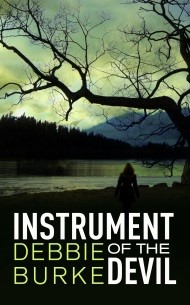
First Page Critique: I Wish I Had Her Job

Greetings, fellow travelers! Welcome to the latest installment of First Page Critiques.
Our brave writer has submitted the opening to “I Wish I Had Her Job” for your comment. Read closely. There’s a lot going on here.
I wish I had your job…
Alone at last! Loretta thought. I’m home! I’ve finished dinner. Now I can relax.
Today as always at Demon Investigators, there’d been too much to do, not enough time, too much criticism, and never enough pay.
Today, on top of everything else, her manager James Manetti got a call from the Global Center of Anti-Demonic Operations. They said that they had lost track of most of the Potential Vampire Stakers. Over the past two months, they’d all just disappeared, from wherever they were in the world. No one had any idea where they were.
I have no idea, Loretta thought, what they expect Jimmy to do about it. He promised them that we’d all look into it, and see what we (meaning me) could come up with.
After he hung up, she’d asked Jimmy, “If the Global Center of Operations can’t find them, what do they expect from us?”
He’d shrugged and said, “Who knows?”
There’d also been another annoying call from the Feds; routinely asking again if we’d heard anything about the whereabouts of Sylvia Demarco. Sylvia, the former Vampire Staker, who’d been convicted of armed robbery and murder, had disappeared from her prison cell about a year ago. The Feds had no idea where she was. Nobody who worked at Demon Investigators, her former place of employment, had any idea where she was either.
This evening, 23 year old Loretta Carolton sat alone on the sofa in the living room of her apartment. She’d finished her dinner of canned ravioli that she’d heated in a microwaveable container in the microwave oven, and was now sipping from a half full glass of red wine.
The trim figured woman, with expensively coiffured black hair, remained dressed in the stylish white outfit that she’d worn to work that day. She’d turned on the TV and sat watching CNN.
I’m having wine with Wolf Blitzer again. She thought, I’ve got to get a life!
After the News, she switched to the Demonic Entertainment Network on Channel 666. That was recommended viewing for demon fighters, like herself and everyone else who worked for Demon Investigations. Tonight, something she saw might give her a clue as to the whereabouts of the missing Potential Stakers.
She now sat watching this week’s episode of that Network’s highly rated Travel Series: “Bloodthirsty Traveler”. The show was a documentary. Everything she was about to see actually occurred.
____________________
Brave writer, I can tell from this small sample that you’ve got a fully imagined world for us to enter. And I get a picture of Loretta as a positive, yet overworked Demon Investigator. These are real plusses, but let’s explore some changes that could help convince the reader that the story you’re telling is compelling and interesting.
In medias res. This is a narrative concept that puts the reader in the story’s action from the very first scene. You’re telling a story about a demon investigator, so show us immediately how dangerous and interesting that life might be. It’s okay to give your character genuine rest and reflection time, but we don’t need to see her at home, recalling her day right off the bat. Put us in her day, wrapping up a case, or even returning home to find a demon in her rose bushes that she has to deal with before she can have her glass of wine.
Thoughts. As it stands, we are only bystanders for Loretta’s thoughts as she tells us what happened that day. The old standard advice to “show” rather than “tell,” is still sound.
Many folks will tell you it’s wrong to open with dialogue. Personally, I do it all the time, though opinions differ. If you open with any kind of dialogue–especially internal–make sure it grabs us. You can also lose the she thoughts by simply writing internal dialogue in italics.
i.e.:
Where in the world are you, Sylvia? Where does a rogue Vampire Staker hide?
Loretta Carolton poured herself another glass of Burgundy, and returned to the chair in front of her laptop. The bowl of canned ravioli she’d heated up two minutes after she’d walked through the front door sat beside her, the sickly-sweet sauce congealing into an unappealing mess. She no longer had an appetite. Sylvia DeMarco was loose, and she had to find her before she killed again.
Note: Save your few allowed exclamation points for action dialogue. Even at our most anxious, we don’t really think in exclamation points.
Keep the action in an easy-to-follow order. You have so much information here that’s filtered through Loretta, that you’ll want us to understand it. Lay out the events for yourself, line by line, in chronological order, to take a look at all you’re trying to convey on the first page. Then pare down to one solid event that motivates her to get to work, and illustrate that fully.
There are two flashbacks that occur within moments of the beginning. You do a great job with the writing in the flashbacks, but they act to slow down the story.
Point of view. This excerpt is written primarily in limited 3rd person. We see nearly everything through Loretta’s eyes, and so we will get no additional information that she doesn’t get or have.
Be careful to adhere to this single POV. There are a couple places where you use the word “we.” This is okay if it’s in her thoughts, as in the first instance. But here’s the second: “There’d also been another annoying call from the Feds; routinely asking again if we’d heard anything about the whereabouts of Sylvia Demarco.” You’ve slipped into first person with that “we’d.” With third person, it would be “they’d.”
“This evening, 23 year old Loretta Carolton sat alone on the sofa in the living room of her apartment. She’d finished her dinner of canned ravioli that she’d heated in a microwaveable container in the microwave oven, and was now sipping from a half full glass of red wine.
The trim figured woman, with expensively coiffured black hair, remained dressed in the stylish white outfit that she’d worn to work that day. She’d turned on the TV and sat watching CNN.
I’m having wine with Wolf Blitzer again. She thought, I’ve got to get a life!” [Again, you can use italics and drop the “She thought.”]
I’m wondering why, dear writer, you would have the above section in the middle of the first couple pages. It works as an introduction, which is odd that given that we already have some sense of her. If you’re going to go the contemplative route, this is a better start than what you have now (minus the “This evening”).
Forecasting. It seems evident to me that Loretta will see something useful on “Bloodthirsty Traveler.” If not, you can lose much of the explanation about the show/network. Also, “documentary” already implies that the story is true. No need to reiterate.
In all, I think this is a fun, interesting story. Good job, brave writer!
Zoners: What did I miss? What are your thoughts?
Your Character’s Life As A Six Word Story
Reader Friday: Which Creature Represents Your Writing?

Photo purchased from Shutterstock
Pick the animal or creature that best conveys your writing strength. Is it a spider weaving a mysterious, complex web? A wild Mustang thundering across the Great Plains, free of constraints? A jungle cat hidden in the tall grass at the edge of the Serengeti, stalking its story prey?

Photo purchased from Shutterstock
Radish Fiction – A New Income Source for Writers? Plus, Changes to Amazon Kindle Worlds

I heard some disappointing news from Amazon Kindle Worlds (KW) yesterday. They are changing the program and not offering a bonus to help defray production cost. The money wasn’t much. It was $500 and went down to $250, but that money took care of the cover design and formatting. It wasn’t considered an “advance.’
Amazon is keep the program the same (including promised bonuses) for any approved launches already set up for the rest of 2018. They are working with the host authors on who is signed up as a writer, etc.
The host authors who have kindle worlds are continuing with their host duties, but in 2019, Amazon will not be involved in scheduling the releases (the host authors would do that). Nothing much will change for the host authors. They will have the same revenue sharing and agreements in place. It’s too soon to tell whether the lack of bonus money will lessen the enthusiasm for authors to sign up. Initial discussions are mixed, but I would imagine Amazon’s gamble will pay off, that many authors will still see a benefit in a group launch and the host authors organizing things. They will probably like getting their work exposed to a larger reader base shared by the other authors and the host writer.
Amazon never did much promo for the launches, but the fact that they have and maintain the platform is a benefit that would be hard to replicate. Amazon is banking on authors not caring if they get the bonus and hope they get to retain the same enthusiasm for writing stories but pay nothing for the copyright retention.
But Amazon KW does nothing with those copyrights. The fact that KW doesn’t take advantage of subrights like audio, film, or foreign rights makes me have second thoughts about continuing with them. For many of the worlds, authors retain rights to their original characters (but not all worlds do this, so read the fine print). If the author has a unique setting that hasn’t already been established in another series from that author (before it’s crossed over with the host author’s world), then Amazon could get copyrights to that setting. Another drawback at present is that Amazon Kindle World does not have a worldwide distribution. It’s something they want to achieve, but KW is only a division of Amazon and does not share the same distribution channels.
RADISH FICTION
But after reading about the changes to Amazon Kindle Worlds, authors were talking about another new start up company that has found a niche in serialized fiction. Have you heard of RadishFiction.com ? Radish is a new app for serialized fiction, geared for the mobile generation to bring novels to smart phones. It’s open to a global market (really big in eastern Asia (Korea and China) where the enthusiasm started) and Radish can be used as a different source of income or to create buzz for an upcoming book that hasn’t gotten published yet.
Could this replace Netgalley? The expense to place an ARC on Netgalley is pricey, even if an author joins a group or service to help defray the cost. Radish wouldn’t specifically earn an author early reviews, but the writer would score money for fiction sold. Netgalley doesn’t do that.
Plus there apparently isn’t any copyrights sold. Although I haven’t seen a confirmation of this, I believe the author retains copyright and is only making their content available for sale.
Here’s what Publishers Weekly had to write about Radish – Click HERE
Radish is recruiting authors who have written for Canada’s WattPad and Amazon Kindle Direct Publishing or other similar type opportunities.The idea is to write serialized shorter fiction with cliffhangers to hook a readership. Generally this is 2,000 word chapters of original short genre fiction with cliffhangers that hook the reader to keep reading and keep buying.
So with the changes to Amazon Kindle Worlds, writing that is similar to fanfiction.net, Radish could be a good opportunity to find a different income source with fewer hassles. Authors are paid in “micropayments” with authors receiving a range of $3,000-13,000/month, similar to how game platforms work.
Radish has an impressive list of investors and plans to hire editors, developers, and designers. They have about 700 writers creating serialized fiction for 300,000 readers.
The initial genre that has been big with Radish is YA romance, science fiction and fantasy. It’s geared for a younger audience that is comfortable reading off smartphones, but I would imagine there is room for growth into other genres. Radish is also looking for traditionally published authors who want to bring original content to them.
Authors must submit to write for Radish and there is a review team to screen applicants. HERE is the link to get started and fill out the application. Read the various press releases on their site. You’ll get more insight into what they are doing.
So what Amazon Kindle World takes away, Radish delivers something new that could be very exciting.
Discussion:
1.) What other out of the box outlets have you seen for authors to bring original content?
2.) Are you a smart phone reader? Do you see potential in what Radish is offering?
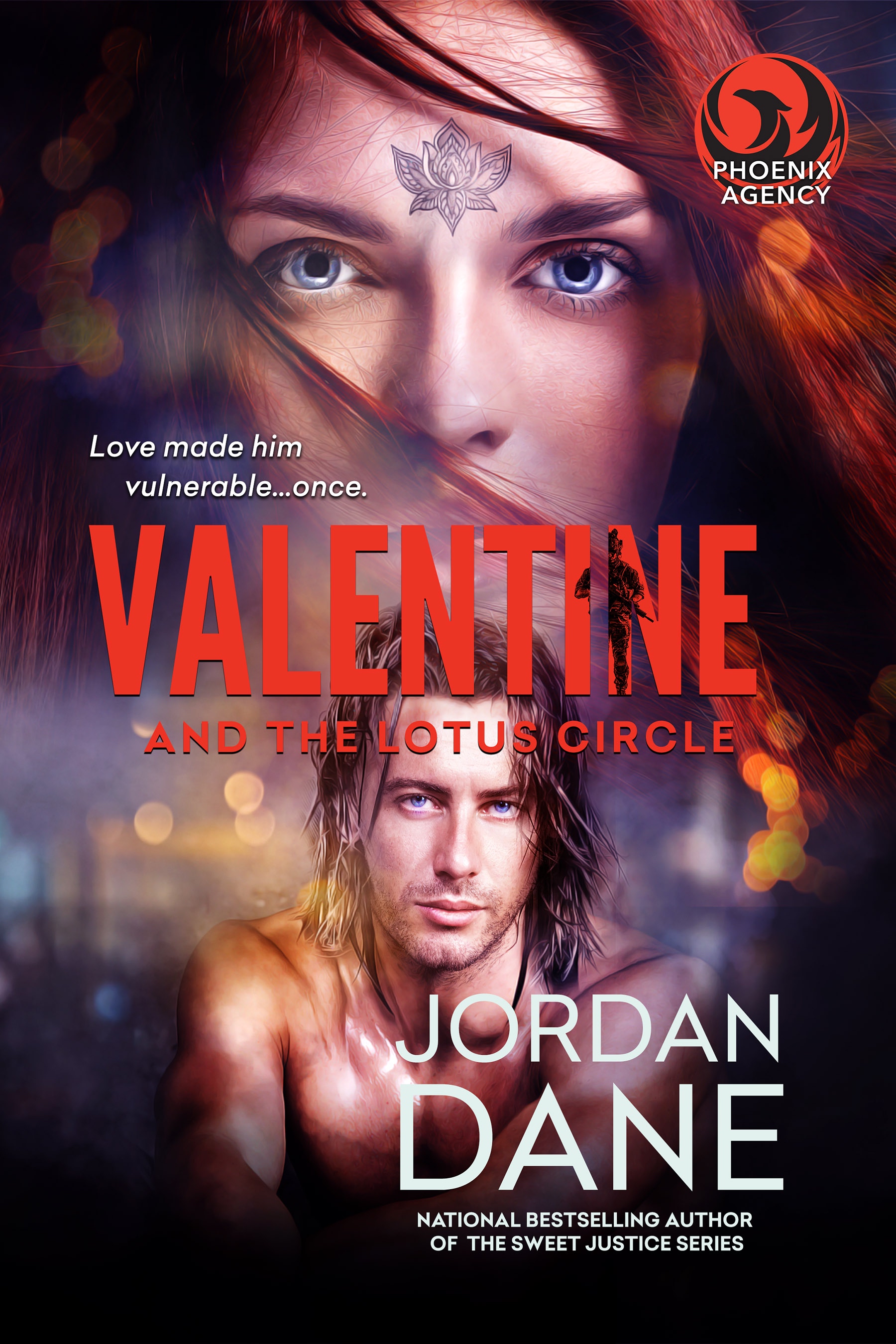
BOOK BIRTHDAY!
Valentine and the Lotus Circle – $1.99 Ebook Available Now!
Love made him vulnerable…once.
The Phoenix Agency hires a mysterious woman psychic from the ancient and mythical Lotus Circle to break down the mental barriers of Braxton Valentine—a black ops Psi agent with a death wish and a hunger for revenge.
Hollow Point Bullets & Other Stuff
I have just returned from my annual sojourn to Las Vegas and the SHOT Show, so I thought I’d turn away from the craft of writing in this post, and back to some tactical topics. Throw in the bullet-bait Brother Bell inserted into his always-excellent post last Sunday, and I feel driven to talk about bullet stuff this week.
First, on the issue of being thrown back by bullet strikes, consider this: Newton’s Third Law of Motion dictates that every action has an equal and opposite reaction. If the energy of a bullet strike is enough to throw the bad guy back five feet, then the shooter would fly back a similar distance. When it comes to handguns, the shooter feels more linear force in recoil than the target feels on impact. And remember, once a round leaves the muzzle, it is constantly slowing down. And falling.
Because bullets travel as fast as they do, on impact, they exert all of their damage over the course of a millisecond. In through-and-through wounds, victims often don’t know for a few seconds that they’ve been shot. Bullet dynamics being what they are, I have shot empty Styrofoam cups through-and-through with pretty hot rounds, and watched the cups never move. When a bullet passes through tissue, the ballistic damage it causes actually manifests behind the moving projectile, not at its point. (The link goes to a video where there’s no blood, so it’s safe for mealtime viewing.)
Brother Bell, I will take exception to your left-hand-shooter speed bump. Most shooters I know make it a point to train with their weak hand, specifically planning for the event when their strong hand is immobilized.
Bullets are specifically designed to inflict ballistic damage to tissue as it passes through its intended target. Handguns are intended for close range, and rifles are designed for longer ranges. (A SEAL buddy of mine maintains that the only good use for a pistol is to fight your way to your rifle.) As a rule, additional range means additional ballistic energy, and a concomitant increase in ballistic damage on impact.
Here’s a video showing a 9 millimeter pistol bullet being fired into ballistic gelatin. For those who can’t watch the footage, it shows a standard round-nosed bullet passing all the way through the gelatin block with little of its energy expended along the way. Bottom line: it would suck to be the guy standing behind the guy who got shot, because you’d get shot, too.
This over-penetration issue is specifically why most (all?) police agencies have moved to hollow point ammo. The definition is simple and self-explanatory. A hollo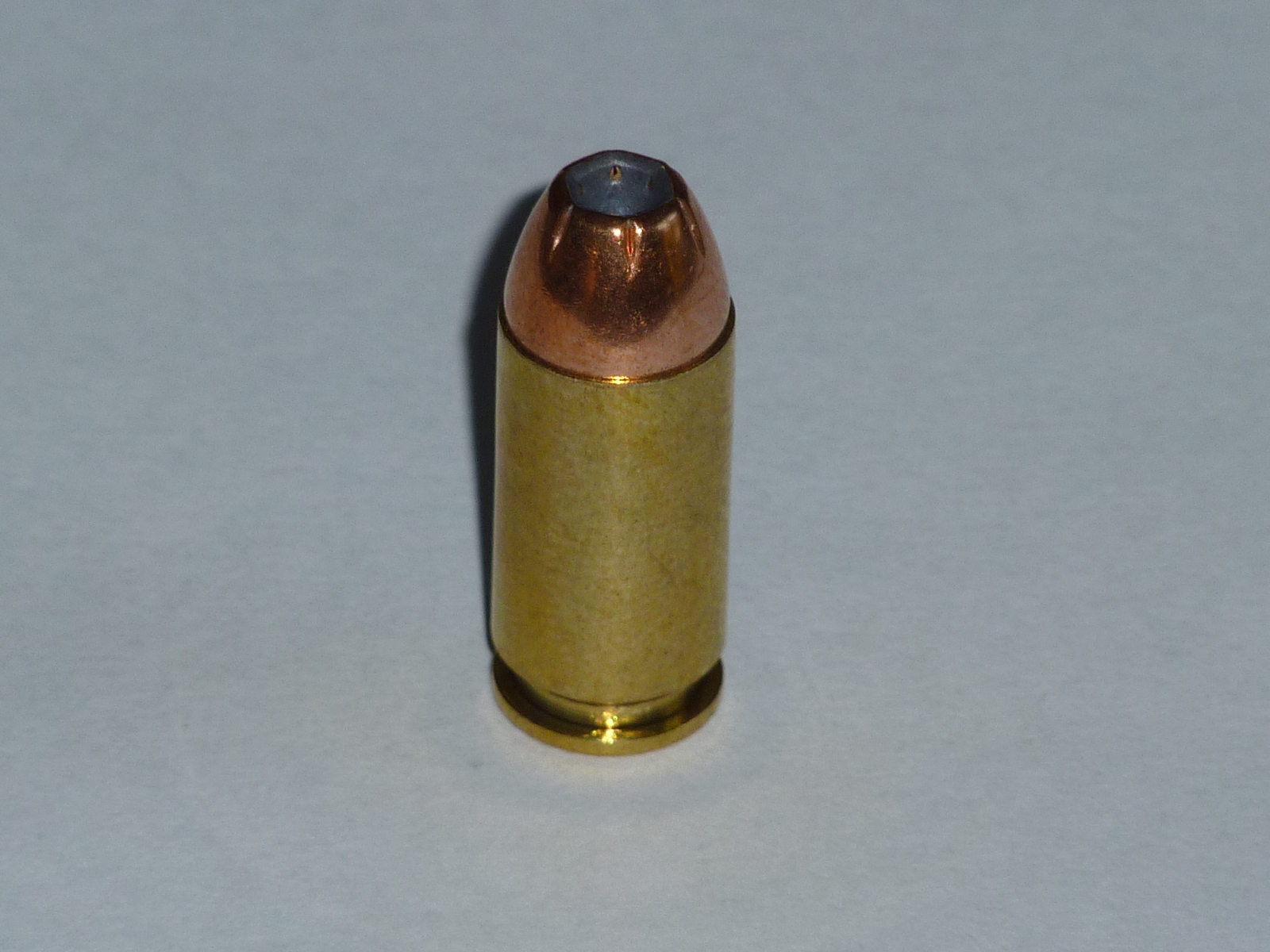 w point bullet is one that has, well, a hollow point. It is different than “full metal jacket” (FMJ) ammo, which is also called ball ammo. It’s been around for a lot longer than I have, and it comes in pretty much any caliber you can think of. Old farts who haven’t kept up with technology will tell you that hollow points cannot be fired from semi-automatic pistols, but they’re wrong. HP bullets used to be a problem because of issues with the feed ramps in old pistols, but that problem was solved a long time ago.
In the pictures, note the lines around the circumference of the the tip. When a hollow point bullet 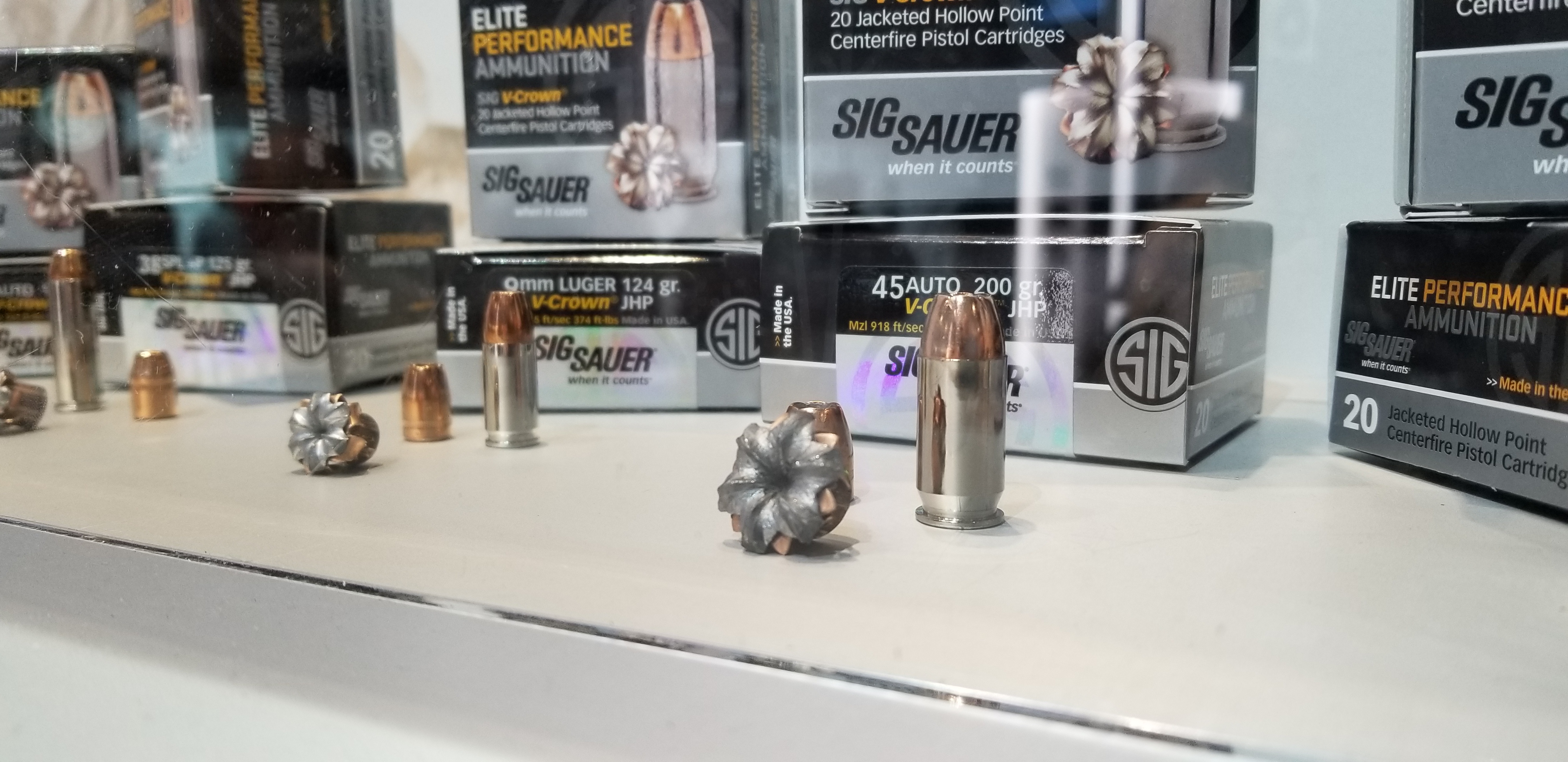 impacts a target, its “petals” bloom, causing the the projectile to tumble and lose most of its energy. The wound channel is significantly enlarged in the process. Within the gun industry, and among knowledgeable people, hollow points are also call “personal defense” rounds (as opposed to range ammunition) because they are the preferred choice in a gunfight–but probably not for the reasons you think.
This video shows a 9 millimeter HP round hitting ballistic gelatin.
There are a couple of take-aways from the video. First, HP bullets do leave a significantly larger permanent wound channel than that which is left by ball ammo. But second, and more importantly, the bullet stays inside its intended target. Even if there were to be over-penetration, the vast majority of the energy would be dissipated before the bullet could hit a second, unintended target. That said, if your characters are anticipating the need to shoot through car doors or windows, HP would not be their first choice. Yes, HP bullets will penetrate both, but that loss of energy could be a factor.
Next time, we’ll talk about what every police drama gets wrong when it comes to storming the bad guy’s house.
All questions are welcome.
And since you’ve read this far, please consider subscribing to my YouTube channel, A Writer’s View of Writing and Publishing.
The Latest Trends In
Cover Design: Think Pink?
By PJ Parrish
Cover design is taking up space in my brain lately. Partly because our upcoming Louis Kincaid thriller THE DAMAGE DONE (July this year) is in production right now. But also because I am gearing up for my annual duty as Edgar banquet chair.
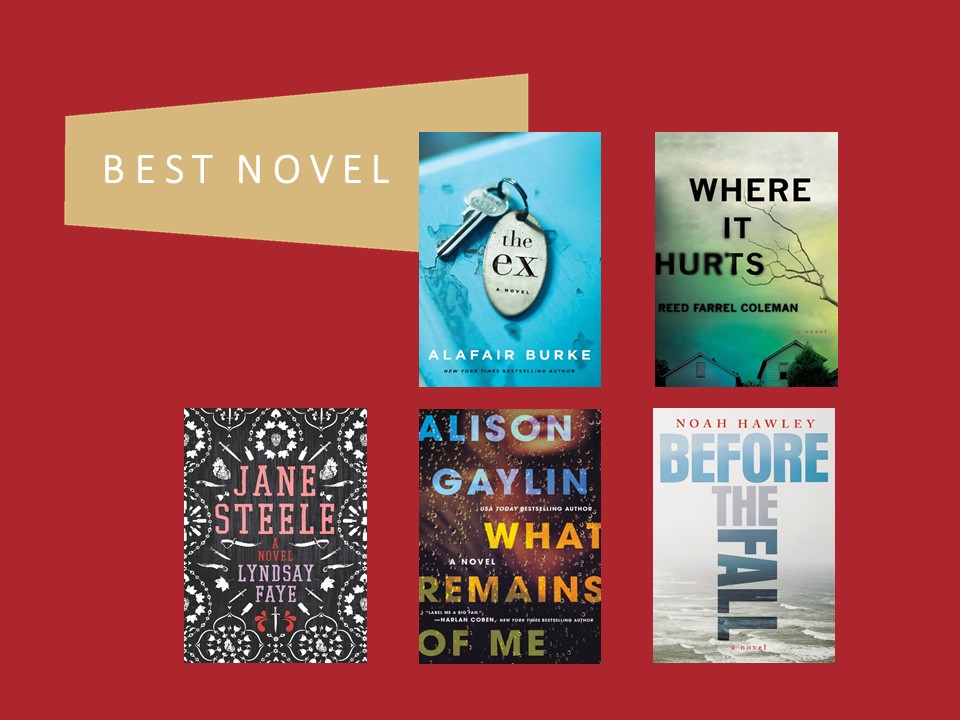
The Edgar gig involves me putting together a Powerpoint presentation that we run throughout the banquet, with the biggest part given over to displaying all the covers of the nominees as they are announced from the stage. I decided to introduce this to the Edgars in my first year because I remember, as a nominee, how thrilling it was to just BE there. But there’s a real thrill to seeing your actual book — oh, about three-feet high — flashed up on a Jumbotron screen in the grand ballroom of New York City’s Grand Hyatt, filled with agents, editors and fellow writers. Here’s two samples from my Powerpoint from last year’s banquet. (Click to enlarge):
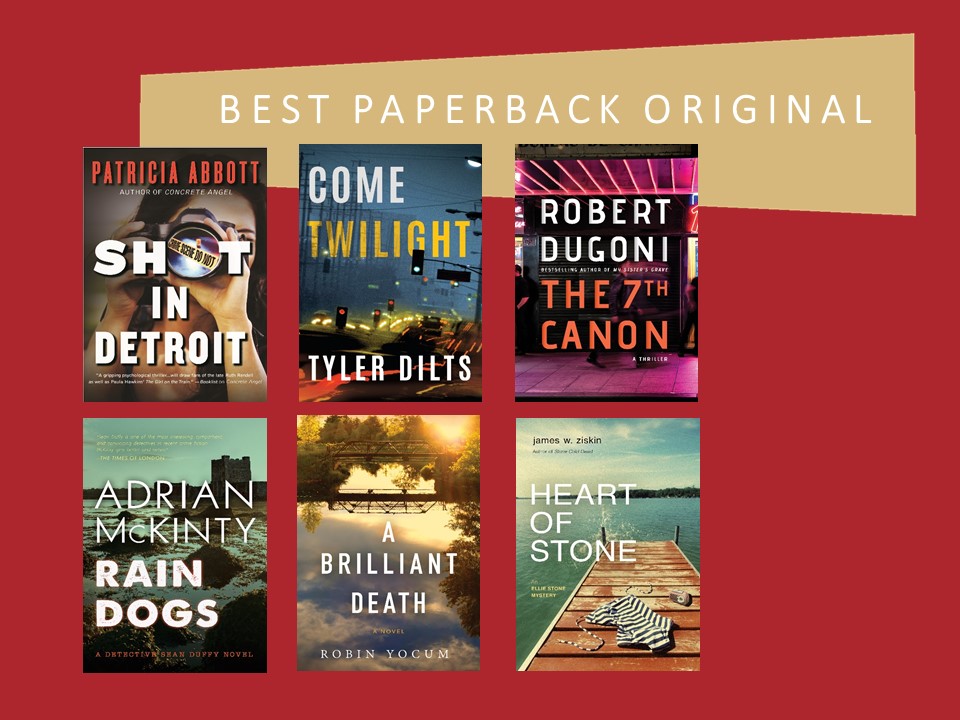 Sitting in the back of the room at my laptop controls, I never fail to be amazed by the beauty of some of the nominee covers. It’s fun to compare and contrast the styles. And I never fail to think about how a great cover — or a bad one — can affect a book’s chance to make a good first impression.
A while back, I did a long post about covers in which I cited a survey about what factors made a potential reader pick up a book. Guess what was no. 1? You betcha — cover design.
So when my sister Kelly sent me an article the other day about newest trends in book cover designs, I knew I had to pass it along to you. The article talks about all kinds of books, but maybe there’s some take-aways for us crime dogs as we self-publish or dicker with our editors. But first, let’s take a trip in the Way Back Machine…
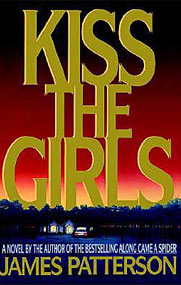
Remember when having huge raised foil letters was a must, a la any book by Patterson? Well, apparently that is yesterday’s news.

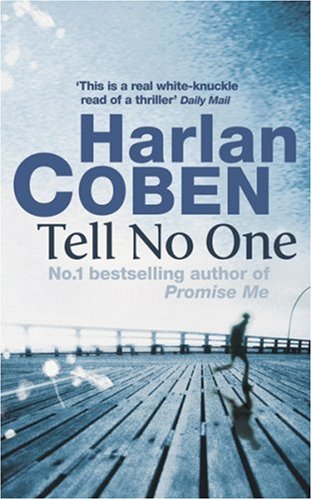
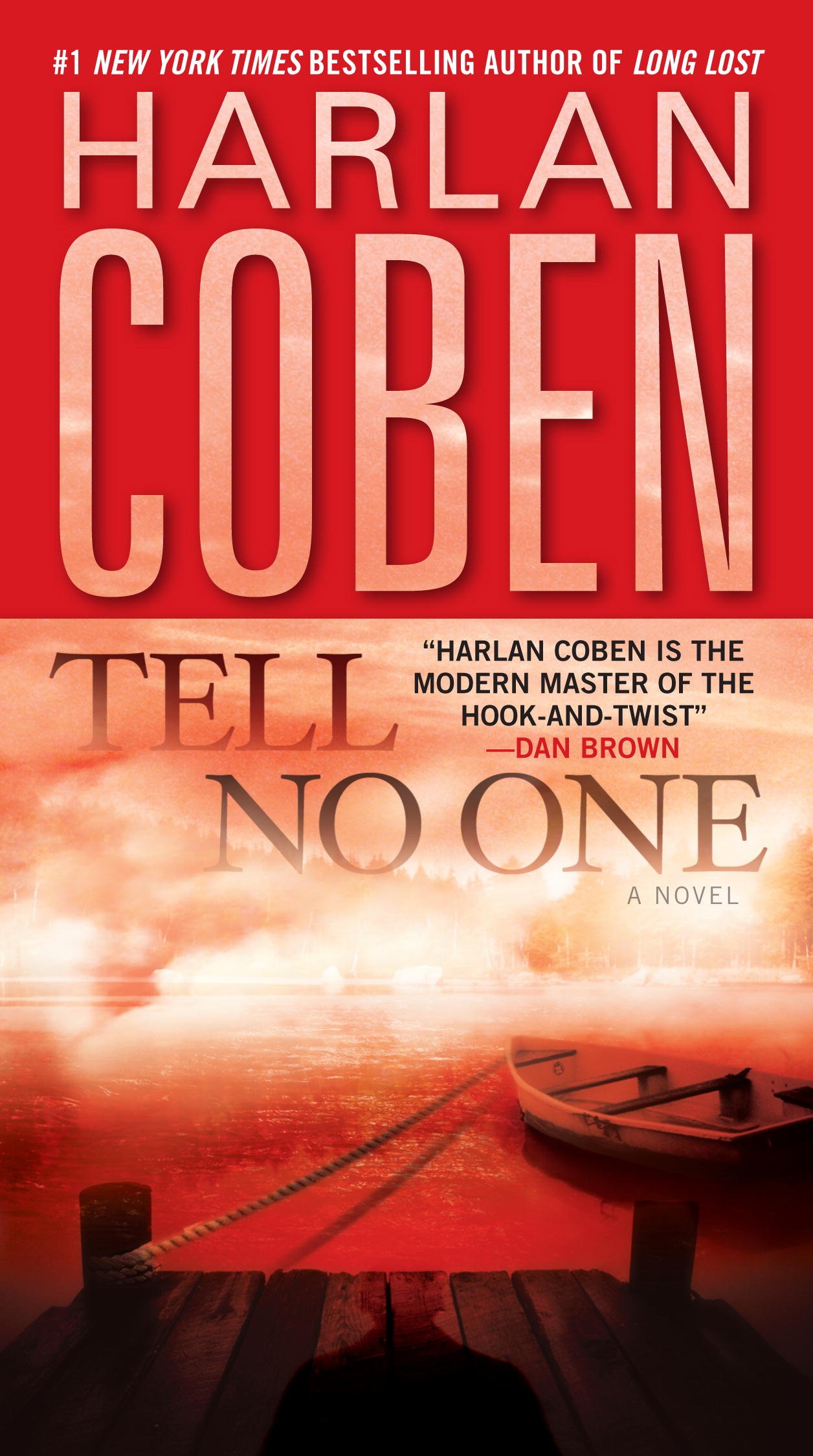
Remember when neon was the way to go, a la Harlan Coben’s breakout book Tell No One? It’s not enough these days….

And remember when all the girls wore basic black? It’s been done so much that it’s no longer the way to separate yourself from the pack. But apparently, I didn’t get the message…more on that in a moment.
Here, according to Lindsey Vontz of 99Designs, is what’s hot. (Click HERE for whole article.) And for fun, I took a look at this year’s Edgar nominees to see if I could find any parallels in our little genre.
Bold Typography
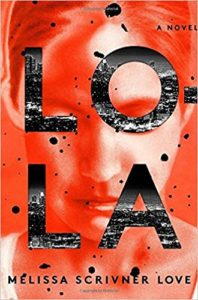
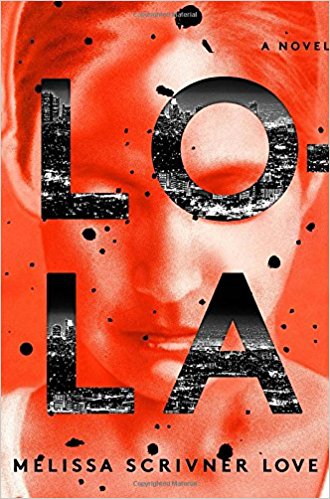
A hyper-trendoid thing is to have your cover dominated by the type, usually incorporating what Vontz calls “organic elements” like brush strokes rather than traditional clean fonts. This has been going on for years — Jonathan Safran Foer has made it a trademark — but it’s showing up everywhere now.
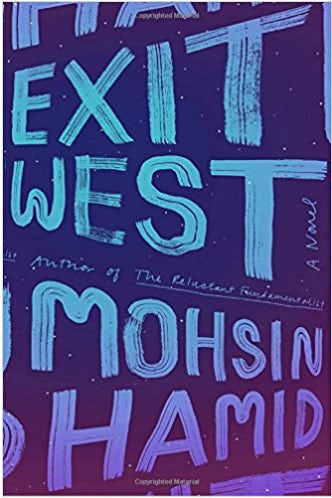
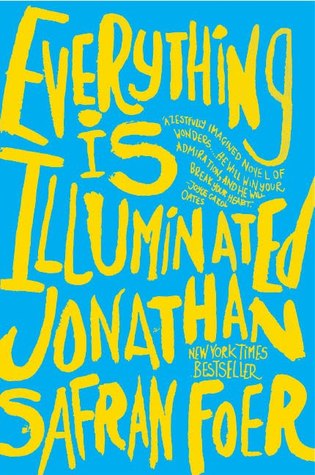
And voila! Here’s an Edgar nominee in this year’s Best First Novel category, Lola by Melissa Scrivner Love:
 Keeping It Simple
Many cover designers now are going for a minimalist approach, using one graphic element with a lot of white space. In the example below, the absence of two letters draws in the reader’s curiosity, the designer says.
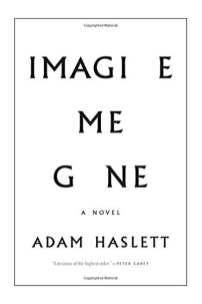
My sister Kelly, who still works parttime at Horizon Books in Traverse City, Michigan, says she remembers seeing this book come in and how it stuck in her mind and made her think how the missing letters telegraphed the book’s content.
Here’s The Hate U Give by Angie Thomas, a nominee for Best Young Adult Edgar. I love this cover, but then I was always a sucker for negative space in art class.

Hand-Drawn Covers
These have been popular for a couple years but the trend will continue, the article’s author says. Mostly, this has been the realm of more “feminine” books, the covers featuring a lot of florals and such. But there’s a trend toward more “masculine” design in hand-drawn covers, like the one below:
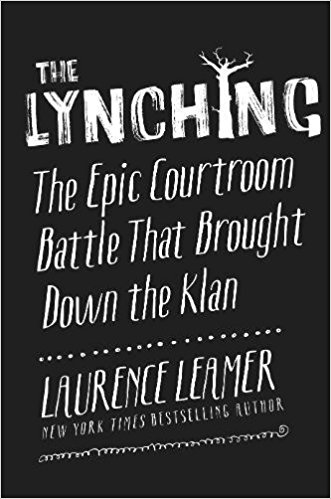
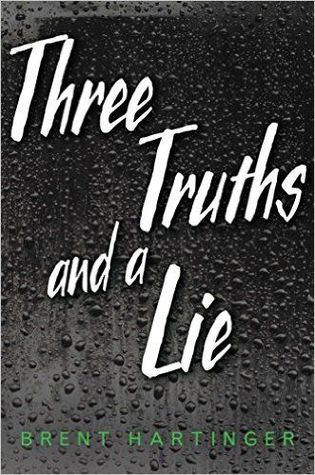
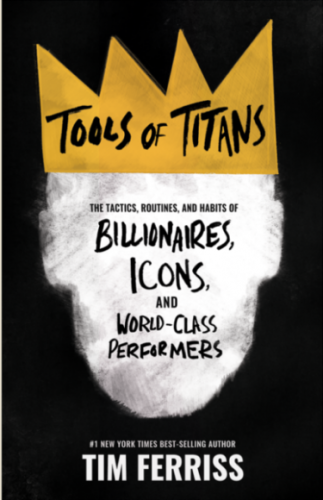 I’ve seen this style pop up in the Edgars in recent years but this year, alas, no examples. But here are a couple from past nominees that I remember, the first in Best True Crime, the second in Best Young Adult:
Throwback Styles
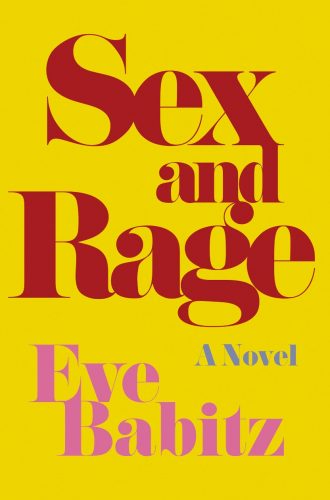
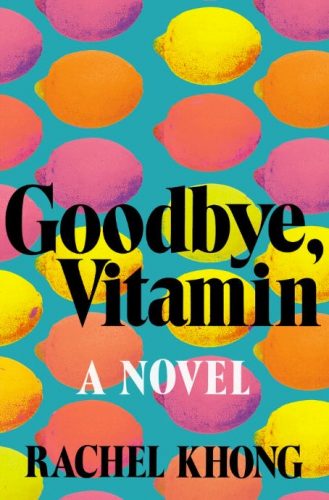
Just when you thought it was safe to stop being nostalgic for the Sixties or, God forbid, the Seventies, new trends in book covers are reminding us that our past is never far enough behind us. Funky ’70s typography and colors straight out of plastic flower decals are the hot new things. Check these new novels out. Sex and Rage is a reissue of a 1979 novel, but Goodbye Vitamin is a slacker family drama that got rave reviews. Somewhere, Jacqueline Susann is laughing her butt off. And Philip Roth is thinking he retired just in time…
I couldn’t find any of this in the Edgar nominees. But I have noticed that in the Young Adult and Best Juvenile categories in past years, bright citrus colors and a touch of whimsy seem to be popular.
All Things Pink
Remember the musical number in Funny Face “Think Pink?” Apparently, it’s showing up on book cover design. Ah, but not any old bubblegum pink. It has to be — wait for this! — Millennial Pink. This means it has to be muted and dusty, which, come to think of it, is sort of how I see my millennial nephew. Here’s some examples:
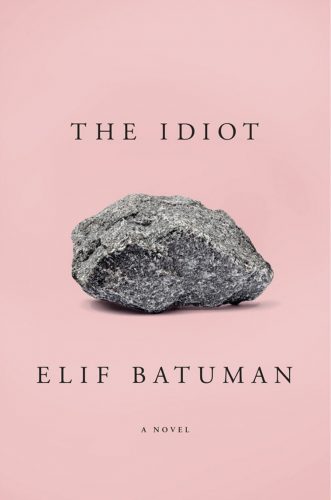
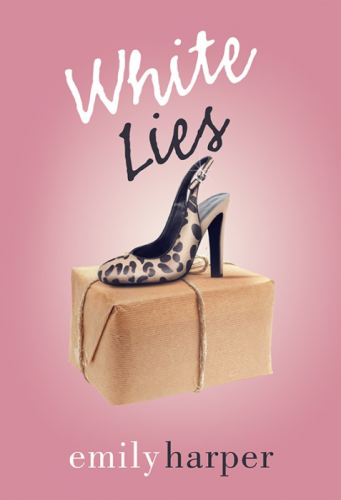
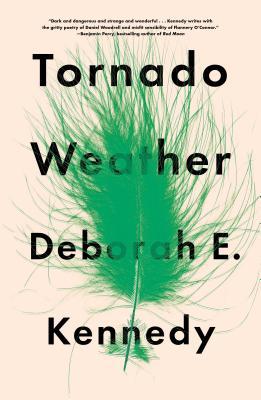
Lo and behold, look what I found in the Edgar’s Best First Novel category this year:
 Collage It Up
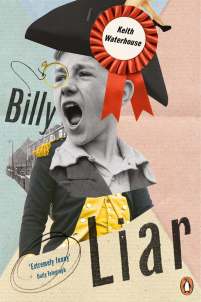
This dredged up another memory for me from my college art classes. I was terrible at anything three-dimensional but I do remember getting kudos for a collage I did. Maybe I’m just good at throwing stuff together and seeing what sticks. As for covers, I’ve always kind of like collages, but like juggling with chain-saws, this is not for amateurs designing their own covers.
 The closest I came to this among the Edgar nominees was this striking cover which superimposes what appears to be elevator down buttons over a man’s face. This is Jason Reynold’s Young Adult nominee Long Way Down.
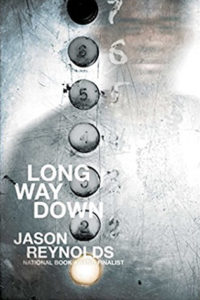 Photo-Heavy Covers

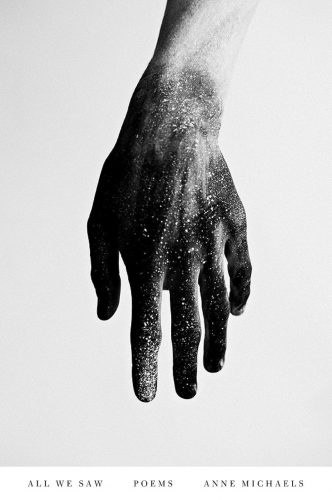
Photo images have been a mainstay of mystery and thriller covers for as long as I can remember. Self-published authors know all the ins and outs of finding stock images. And you can find just about anything you need to express your story in Getty Images. (Just type “Lonely woman on beach” in their search bar and for $395 you’ve got your cover.) But the trend now is to go beyond the literal stock image (silhouetted man running in dark alley = international thriller) and to find one really compelling, more artistic, image that might convey the tone or theme of the book instead. Here’s an example for a book of poetry:
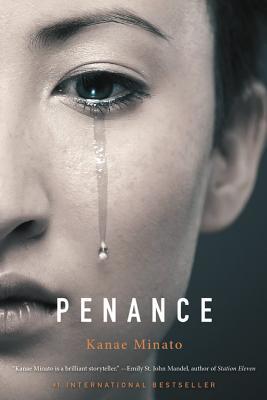
And here’s a striking cover from one of this year’s Edgar nominees in Best Paperback Original, Penance by Kanae Minato:
Now, for an object lesson. I’d like to show you what my sister Kelly and I have been up to. In recent years, we’ve been getting the rights back to our backlist titles in our Louis Kincaid series and have self-published several of them. And since you can’t legally use the original covers, we’ve had to come up with our own. We knew we had to have a consistent look for all the books — same type fonts, same general look. But we struggled to find a singular style that we thought captured the series’s tone (hard-boiled police procedural/private eye). Plus, we aren’t rich. We didn’t have a lot of money to blow on designers or artwork. This is what we came up with (except for PAINT IT BLACK, which was done by Kensington Books and was always one of our favorites). You can click on the line-up to enlarge.
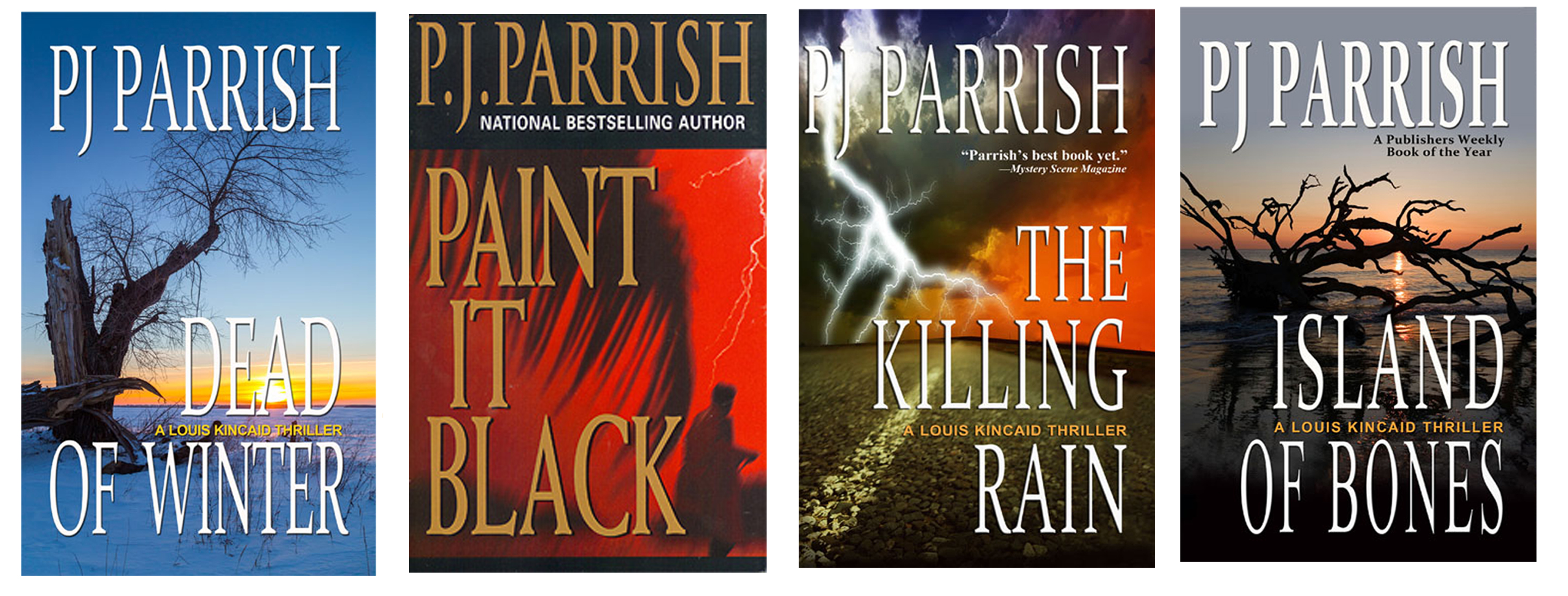
But we were never really happy with what we came to call our “dead tree” books. A moody landscape just didn’t convey our books’s tone. And they look a little dated now. I lobbied for something darker, and I really wanted to go with strong photos with humans in them to convey a sense of the books’s dark tones. And I wanted more negative space in the design to give the type and images room to breath. We also wanted it to match the upcoming cover design for our July 2018 release THE DAMAGE DONE. After weeks of searching for the right photos and playing with fonts, this is what we came up with. (Click to enlarge):
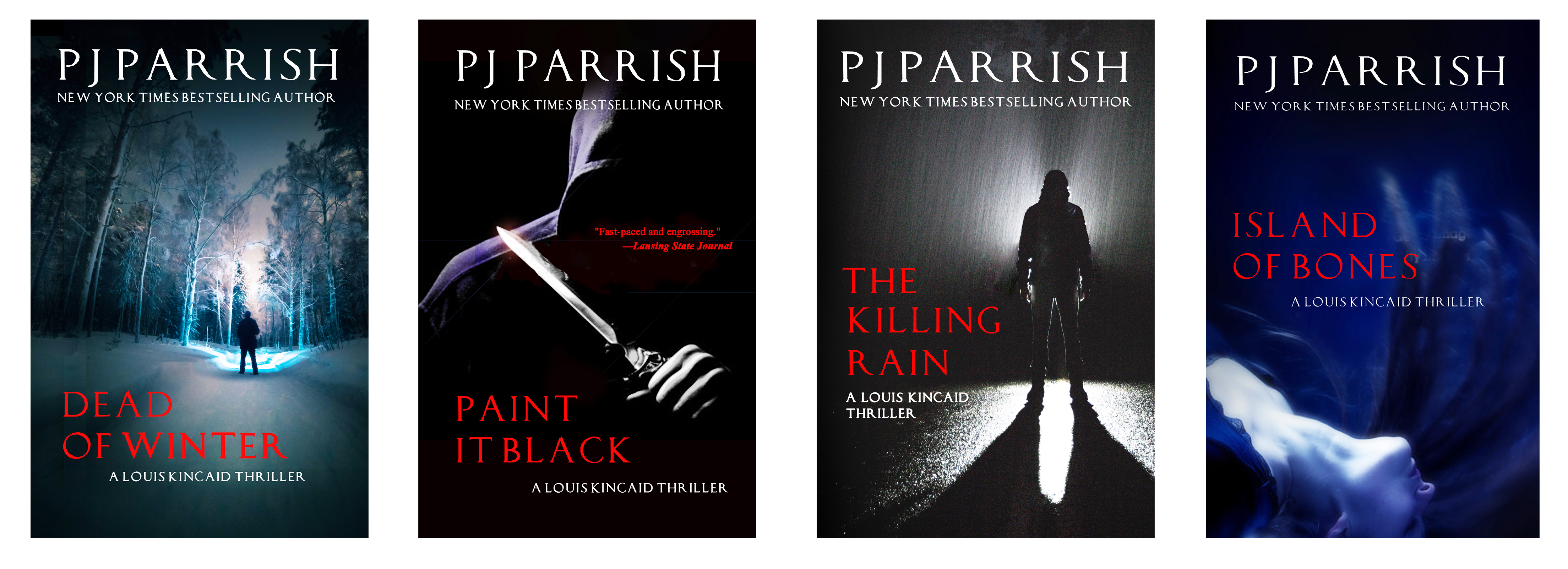 Yeah, yeah…I know. They’re black. So’s my wardrobe and my writer’s heart. As Jessica Rabbit says, I can’t help it, I’m just drawn that way.
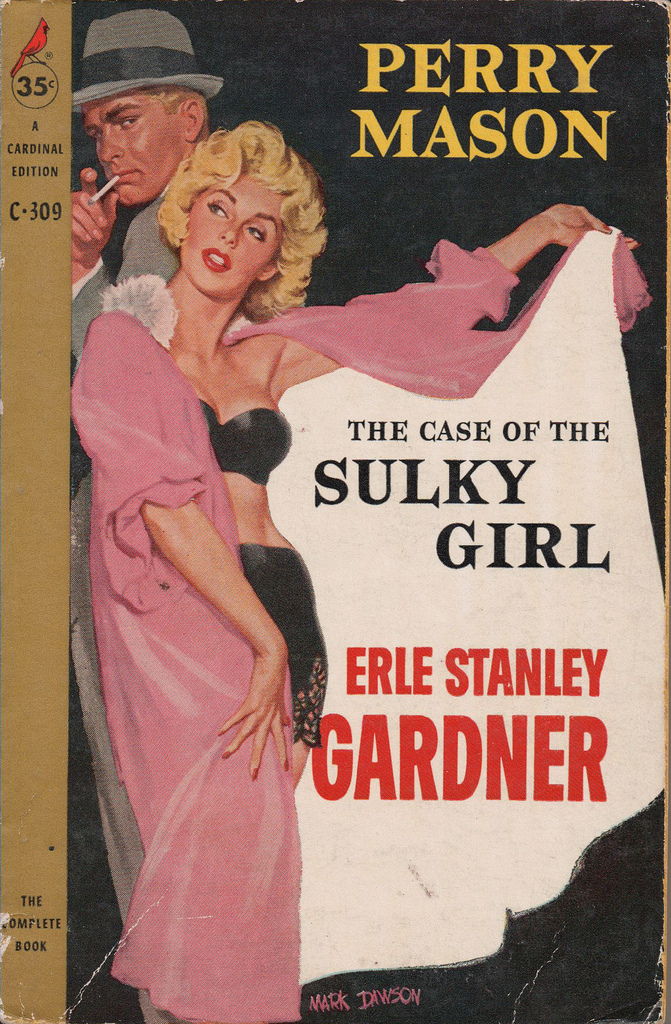
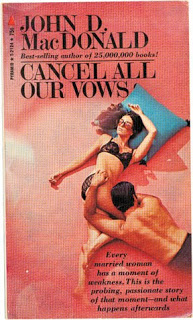
So what say you? Do any of these trends float your boat? Can you see your new serial killer book wearing pink? Hey, it worked for John D. MacDonald and Erle Stanley Gardner. Share your trials and triumphs about cover.
Postscript: James’s comment below about Harlan Coben’s Tell No One got me curious so I Googled the cover to see if other designs came up. Publishers usually repackage for paperback and foreign publishers put their own spin on things. Here’s a couple more versions of Tell No One, including a “dead tree” version!

First Page Critique: American Dream
Today, I have an additional first page critique for us to discuss. This one is called American Dream and I think it illustrates some great points about framing an effective first page, particularly when it comes to POV. My comments follow, and as always I look forward to input from our great TKZ community:)
American Dream
The deputy’s vehicle careened into the parking lot, hopped a curb, plowing through a row of purple hydrangeas before coming to a stop inches from the red brick. An off duty deputy stumbled out the vehicle sucking the last drops from a blue plastic cup. He slung the empty into the damaged shrubbery and staggered inside the Velde County, Georgia services building for the impromptu Saturday evening meeting.
The hottest summer in a century coupled with a defective air conditioner created a wall of heat and a stench of sweat that greeted upon entry. A coffeemaker gurgled and spat. Fluorescent tubes flickered, splashing an uneven yellow light onto the gathering of deputies.
Sheriff Roy Hacker squinted through the rising steam of his coffee. Crow’s feet framed his eyes. Crevices etched deep into his forehead. His starched uniform, crisp and dry. The only man in the room who didn’t perspire. He rose from behind a steel gray desk, removed his service revolver and slammed its butt onto the desktop calling the meeting to order.
“Evening deputies. I want to thank y’all for appearing here on a short notice. But crime does not operate on our schedule.” Roy looked to the drunken one. “Isn’t that right, Burnett?”
The deputy nodded, slurring his assent.
“You been with Juanita this evening?”
“Yes, sheriff I have. And we was having fun.”
“Don’t doubt that you were. We all know, some in great detail, that Juanita can be a whole lot of fun.”
Laughter erupted. Deputies nudged and winked. A sly grin crept over Burnett’s reddening face.
Roy lit a cigarette. He appeared as a looming slit eyed apparition within the haze of smoke. The zippo closed in a metallic click. The room fell silent.
“It has been brought to my attention that we have some criminal activity getting ready to go down in our fine county.”
Deputies shuffled in their seats.
“My informant tells me the area where this crime will occur is right here.” Roy pointed to the top right corner on the yellowed county map taped to the cinderblock wall. “I know what you’re thinking. That’s a desolate and barren shithole teeming with assorted vermin, rattlers and water moccasins . ” He took a step toward his men. “And I’d agree. But I would add, what better place for a crime to occur?”
A collective gaze fell upon the sheriff.
General Comments
POV
This page had some good elements but I think the failure to establish a strong initial POV made it less effective. We begin with a drunken deputy (who we learn later is Burnett) but by the third paragraph we seem firmly focused on Sheriff Roy Hacker. I would recommend the author chose a close POV to focus on (Burnett or Hacker most likely) and then give the reader this perspective right from the start. A distinctive and unique POV would also help the reader become more invested in the story. At the moment it feels too generic and emotionally distant.
That being said, I would caution the author to be careful to avoid the stereotypical ‘drunken deputy’ versus ‘starched sheriff’ story. Again, I think a distinctive and unique POV is what is needed – it would add greater specificity and emotional resonance to the story and give a different perspective that could help set this story apart.
Tone
In addition, a strong POV would also help clarify the tone of this piece – is it going to be a quirky, off beat, but lighthearted police procedural? I think so, but I’m not altogether sure. There are moments where I think the author is edging a little more ‘noir’ish in the wryness of tone…but maybe not. Again, I think this is more a result of an amorphous POV/voice – once that’s stronger, I think the tone of the page (and the book) will become clearer.
Dramatic Tension
In this first page, all we really learn about is an informant who’s told the police where a crime is going to occur. This (along with the repartee about Juanita), robs the page of much of its dramatic tension. I’m not sure I get why the Sherrif has brought in his deputies for an impromptu Saturday evening meeting (or why the coffeemaker would be gurgling at that time) just to tell them that…seems a bit anticlimactic. Although I liked the humor in the sheriff’s description of the place, I think there would be more dramatic tension if a crime had actually occurred or if there was more detail (humorous or otherwise) about the actual crime that’s about to occur, to make me feel compelled to keep reading.
Specific Comments
Finally, there are some specific comments which are a but more nit-picky but which are nonetheless important for an effective first page. The first issue is one of repetition. The term ‘deputy’ and ‘deputies’ is used numerous times (twice just in the first paragraph). This looks sloppy to an editor and can also dilute the power of specificity in the first page. In addition, there’s a lot of description that can be pared down. Remember, in a first page every word counts. Do we need details about purple hydrangeas and damaged shrubbery? Could we just have one or the other? Likewise, do we need a whole paragraph description of the sheriff or could we just know he was the one person in the room who didn’t appear to perspire (from which we can infer a lot). I think the author could tighten up this first page by focusing on the details he/she really wants to emphasize – is it the drunken Burnett’s entrance, or the hottest summer on record, or is it Sheriff Hacker’s demeanor and humor (?)
Overall, I think once the description is pared down and a firm POV/voice established, this would be a much more effective first page. What do you think? TKZers, what advice or comments would you have for our brave author?