First Page Critique ‘1940’

Today’s first page critique is a novel entitle ‘1940’. My comments follow, but I think it is a good example of some of the pitfalls when it comes to the opening of any novel – namely how to start with an incident that compels a reader to keep reading, while also providing a good grounding in the time and place of the story. See you on the flip side for more detailed commentary.

1940

Ilya began to fidget. The concrete bench he shared with his teacher chilled his thin frame. Martha stopped reading the Washington Herald and placed it on her lap. She watched Ilya finish a sketch of the blooming dogwood tree that stood across from them. It fascinated her he could draw the tree effortlessly at the age most boys in fourth grade just wanted to climb a one.

He slid the worn pencil over his left ear then stared at her, but kept silent.

“What is it Ilya? She asked. “I can tell something’s on your mind.”

He had been waiting for the right moment to tell her what the housekeeper said while he was waiting for the limo this morning.

“Alfrayda said teachers don’t take their students to the cemetery.”

She held her temper and calmly said, “This teacher does.” Then she confidently added, “I’ll set Alfrayda straight first thing when we get back to the compound.” She wasn’t afraid to confront the Soviet embassy housekeeper.

“Father should bring me,” he said angrily. “He’s just an attache at the embassy. He has time.”

She placed her arm around his shoulder and drew him close. “My dear boy, your father is not just an attache. He has many demands for his time and Ambassador Aleksandrovich relies heavily on your father’s skills.”

“You have demands, but you always have time for me.”

“Yes, I have demands, but nothing on the scale of a government official.”

He accepted her reply and began to sketch an outline of the gravestone set under the flowering dogwood. That upright gravestone in the sea of handcrafted concrete statues seemed cruel to her. Ilya’s slender fingers guided the pencil systematically, retreating to darken and emphasize his mother’s name engraved across the tarnished limestone.

                                       Sigrune Haushoffer  

                                               1900-1931

Ilya nudged her. “I’ve finished.” He held the sketch at arms length for her to observe.

“One day you will have your drawings displayed in a museum,” she told him. Maybe then, she thought to herself, Yaroslav Dalmatov would appreciate his son’s artistic talent.

“You mean like the museums here in D.C.?”

“Of course.” She never hesitated to encourage him.

COMMENTS

General:

Overall, although this first page is tightly written and interesting it doesn’t have anything that reaches out and grabs me from the outset. All we really have is a conversation between a boy and his teacher. Although the fact that is his father is an attache to the Soviet Embassy in DC is interesting, there’s not much in this first page that provides anything in the way of real intrigue. There are snippets of it – the fact that he’s sketching at the cemetery where his mother is buried, the fact that his father is clearly doing something important with the Soviet Ambassador, but there isn’t quite enough to get a reader invested in the characters as yet. We need to care about Illya and his artistic talent to have our interest piqued. Right now, I’m not feeling all that compelled as a reader to read more.  I think the author should reconsider where to actually start this novel – this page sounds more like the opening to a second chapter than the first.

Specific Comments:

There’s also not a lot in terms of historical grounding for this first page. If I didn’t see the title ‘1940’, I wouldn’t be able to place when this first page conversation is taking place. I liked the sparseness of the detail provided and the directness of the dialogue, but I felt I needed a greatest sense of historical footing so I could visualize the scene. Without historical context, this conversation could be taking place today, or the 1950s or 1960s. There’s no detail given to distinguish the time period for me. It’s always hard reviewing a first page when you don’t have a synopsis or outline, but it is important to set the stage both in time and space – I see Washington DC but I don’t, as yet, see 1940.

POV

This first page is written with an omniscient 3rd POV where we, as readers, hear the thoughts of Illya as well as his teacher. For me this dilutes the power of this particular first page – I wanted to feel closer to one of these two characters (registering their emotional responses and hearing their inner dialogue) to feel more engaged.


Names

Now this might be a bit of a nit pick, but the name ‘Alfrayda’ threw me out of the story – for some reason it sounded wrong for the 1940s and also (weirdly) reminded me of names in The Handmaiden’s Tale. This could just be me, but I caution the writer on including too many unusual names that could distract from historical grounding of the story (unless of course this is an alternate history/fantasy where names like that are common!). Also there are a lot of names used in this first page without any really characterisation provided: We have Martha, Illya, Alfrayda, Ambassador Aleksandrovich and Yaroslav Dalmatov (Illya’s father) – but out of all of them, I can really only picture Illya given the scene described.

Dramatic Tension

Although I liked the conversation between Illya and Martha about his artistic talent and the graveyard drawing session, all the dramatic tension feels off stage – between Illya’s father and his son, as well as between Martha and the Alfrayda. There isn’t any actual conflict on the page. Martha is supportive of Illya’s talent and wants to encourage him but we don’t understand why we (as readers) should care about his talent or his role in the upcoming story.

Summary

The good news is that the first page is well written with a nice clarity of prose and purposeful dialogue. For it to be a compelling first page, however, I think the author should either start the novel in a different place  (and keep this scene for a later chapter), or inject more dramatic tension onto the page to have us, as readers, fully invested in this story from the get-go.

So TKZers what do you think? What advice would you give our brave submitter?

First Page Critique Goes House Hunting: The House on Horace Street

Photo courtesy pixabay.com

Hello, Anon du jour! Welcome to the neighborhood. Anon has brave submitted the first page of what appears to be a domestic thriller or gothic suspense novel titled The House on Horace Street which features an unsuspecting homeowner and an archetypal adversary known as a real estate agent! Just kidding. Let’s take a look at what we have:

Neither of them saw the cold black eyes that watched them from the bedroom window as the car meandered up the dirt pathway and pulled to a stop. A quiet eeriness hung heavy around the house. Theresa drummed her fingers on her knee. Joan, Theresa’s real estate agent, let out a nervous laugh. Theresa got out of the car and cupped her hand over her eyes to block the glare of the sun ash she stared up at the home. White with red shutters. Old. Solid. Proud. Nothing about it fit in with the rest of the neighborhood. The street was neatly lined with identical cape cods on both sides, each on a half acre. The 1790s colonial farmhouse sat on five acres of land in the middle of the neighborhood. At some point the entire neighborhood was once part of the five acres. The lot was in disarray: trees here and there with no order to them, grass that, upon closer inspection, was just weeds the current owner cultivated into a makeshift lawn, and an overgrown circular garden in front of the house that suffered from neglect. Still, Theresa was intrigued. She’d always wanted a hobby farm and the house on Horace Street fit the bill which made her willing to overlook the fact that the house changed hands 7 times over the past ten years.

“Well, the land is in desperate need of landscaping,” Theresa said.

“That just means you have the opportunity to design it to your tastes, and there’s plenty of open, level space perfect for the vegetable garden you said you wanted to have,” said Joan.

“Some of the trees will have to be cut down, too.”

“Free firewood for the fireplace.”

“Are you trying to sell me on this house, Joan?”

“I am a realtor!”

Their giggles chipped at the tension neither of them admitted to. Joan hesitated for a moment before she made her way onto the covered porch to get the key from the lock box. Theresa was looking at the porch, taking note of its sturdiness.

“The porch was rebuilt last spring,” Joan said, “wraps all the way around the house. Just needs a good staining and it will be beautiful.”

“Usually porches just go around one side.”

Anon, I got a kick out of your first page since I have had many conversations with real estate agents over the past few months. I live in an area where there is a very low inventory of homes for sale and very high demand, so I get called once or twice a week by agents who urge me to put my house on the market. You have their patter down, um, pat. Anyway, your first page has good bones. The interior, however, needs a bit of rearranging. So let’s roll up our sleeves and get to that.

— Let’s start with that first sentence. Move it to the end of this opening vignette — which is probably on your second or third page — changing it so that the car is driving away from the house rather than approaching it. You can then build your suspense incrementally, with the kill shot, if you will, coming at the end of the chapter or vignette.  Begin with the line “A quiet eeriness…” then go ahead and introduce Joan and Theresa.  Describe the outside as you have done (but see below), and then have Joan and Theresa go into the house and walk around a bit. If you haven’t already, set up the elements which hint that all is not right within. Let Joan and Theresa hear a couple of random creaks (“These vintage houses have good bones, but bones creak occasionally!”). Also have Joan notice that a couple of very minor things seem out of place from the last time she was there (if she was there), anything from a toilet seat being left up to a pencil being left on a counter or her real estate business cards being moved. Then, after they’ve left the house, mention how neither of them notice the cold black eyes watching them drive away.

— The rest of the first paragraph needs a bit of updating. We’ll talk about that in a minute. Before we do that, however, I’ve got a couple of punch list items that should be fixed:

  1. There’s a glaring typo in the fourth sentence:  “in the sun ash she stared”…  I believe you mean “in the sun as she stared…”

     2. You describe the home’s lot with a long sentence composed of clauses with a colon            and commas:       

“The lot was in disarray: trees here and there with no order to them, grass that, upon closer inspection, was just weeds the current owner cultivated into a makeshift lawn, and an overgrown circular garden in front of the house that suffered from neglect.”  

Turn those clauses into sentences:

“The lot, however, was in disarray. Trees grew here and there with no order to them.  The lawn was a collection of weeds which threatened to engulf a neglected overgrown circular garden in front of the house.”

       3) I think what you are saying here is that some of the land that was a part of the original farmhouse acreage was parceled off to create the surrounding neighborhood and that five acres still belong to the farmhouse. If that is the case, the neighborhood wouldn’t have once been part of the five acres. It would have been part of a larger acreage that had been parceled out so that only five acres are left of the existing property. If so, you want to say something like this: “The surrounding neighborhood had been parceled out from what had once been a much larger farm.”

       4) While we are talking about numbers, you want to be consistent in how you state them. I’m referring to the house changing hands “7 times over the past ten years.” Try “seven times over the past ten years” (my preference) or “7 times over the past 10 years.” Most but not all writing guides say to use words instead of numbers but consistency is key here.

— Now, let’s go back to the paragraph in general; You discuss the house exterior and lot, then talk about the neighborhood, then return to the house and lot. Let’s describe the house and lot first from Theresa’s viewpoint, and then talk for a second about the neighborhood in comparison to the house. While we are doing that, let’s break that long paragraph up into shorter paragraphs. I think it will be easier to read::

Theresa got out of the car and cupped her hand over her eyes to block the glare of the sun as she stared up at the home. She had done plenty of research on the 1790s colonial farmhouse when she had first considered looking at it.

She felt that the house and lot were a mass of contradictions.  The house itself looked old, solid and proud. Its white color set off its red shutters nicely. Its fiveacre lot, however, was in disarray. Trees grew here and there with no order to them. The lawn was a collection of weeds which threatened to engulf a neglected overgrown circular garden in front of the house.

Nothing about the house fit in with the rest of the neighborhood.  The street was lined with identical neat cape cods on both sides, each of which sat on a half acre. The lots had been carved from what had been the much larger working farm property at some point in the past. Theresa was intrigued, however, even considering the property’s drawbacks. She’d always wanted a hobby farm and the house on Horace Street fit the bill. It made her willing to overlook the fact that the house had changed hands seven times over the past ten years.

In short, Anon, your first page is a fixer-upper but has good bones and with some updating and changes, your story will find a good home with lots of prospective buyers. Good luck!

I will now attempt to remain uncharacteristically silent as I turn the page over to our many friends at The Kill Zone for their observations. Thank you, Anon, for bravely submitting your work to our First Page Critique!


Five New Year’s Tips to Overcome Butt-in-Chair Syndrome


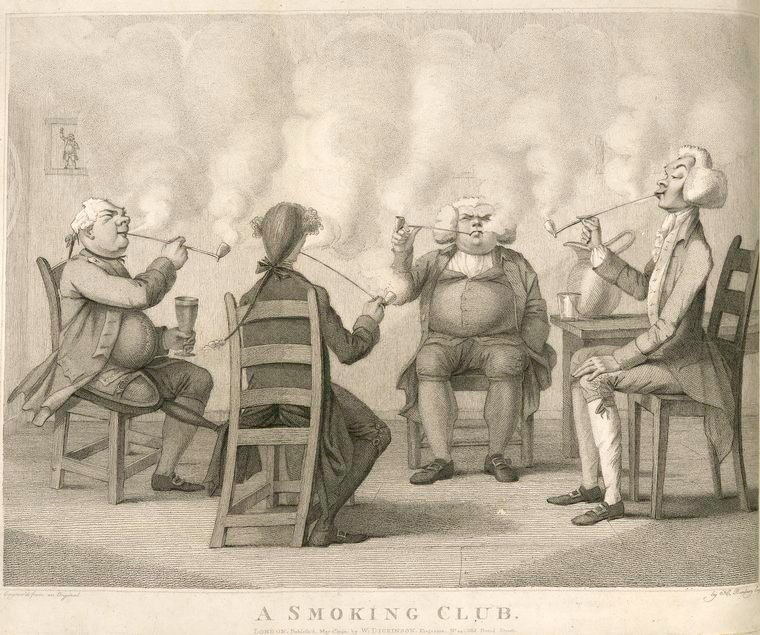
These gentlemen of bygone days knew how to double up on bad habits–sit and smoke.

“Sitting is the new smoking”— Dr. James Levine of the Mayo Clinic.


The writer’s job is to plunk our butts in chairs and produce words day in, day out. As a result, posture suffers, eyes blur, brains fog, carpals cramp, and rear ends keep getting wider. In extreme cases, Butt-in-Chair Syndrome leads to the dreaded Dead Butt Syndrome (you can’t make this stuff up!).

Here’s a countdown of five easy tips to counteract the occupational hazards of our profession:

  1. Breathe

Sitting hunched over a computer leads to shallow breathing. The lungs need to fully expand to allow oxygen to fill the alveoli (little air sacs) and move into the bloodstream. The shallower the breathing, the less oxygen flows through the blood to the brain. The less oxygen, the harder for the brain to solve problems in stories.

According to yoga practitioners, deep exhalation is even more vital than inhalation, because exhalation flushes carbon dioxide out of the body.

If you don’t exhale fully, it’s like sticking a banana in the tailpipe of a car. Fresh air can’t get in, gases build up, and pretty soon the engine stalls and quits.

New ideas, brilliant plot twists, and compelling characters require a fresh intake of oxygen and a full expulsion of carbon dioxide.

Effective breathing is easy:

Sit straight with your butt tucked against the chair back. Lift your chest, arch your spine and pull your shoulder blades together, then allow shoulders to drop. Contract abdominal muscles to press your belly button toward your spine. Place a hand on your belly and inhale for a slow ten-count. Feel your abdomen expand as you draw air in. Hold for a slow ten-count. Then exhale slowly until you completely empty the lungs. Repeat several times an hour. You may feel tingling in the scalp.

  1. Posture

Your mom always told you to sit up straight. Turns out she was right. According to I.A. Kapandji, MD:  “For every inch of Forward Head Posture, it can increase the weight of the head on the spine by an additional 10 pounds.” In other words, if a normal 12 pound head leans three inches closer to the computer screen, it now feels more like 42 pounds. Yikes!

Over time, that additional pressure can lead to neck and spine problems that may become permanent.

It’s always better to prevent problems than try to reverse them.

To counteract the tendency to slump forward, sit with your rear end tucked firmly against the chair back. Lift your chest, arch your spine and pull your shoulder blades together.

Hmmm, isn’t this the same position for deep breathing? You can take care of two exercises at once—talk about efficient. Your mom would be proud.

  1. Hand and wrist stretches

Caution: Stretching should NEVER be painful; if you feel discomfort, STOP!

Many writers suffer from numbness, tingling, and pain in wrists and hands from carpal tunnel syndrome which occurs when the median nerve to the hand is compressed in the wrist. Treatment options range from NSAIDs (hard on the stomach, liver, and kidneys) to splints/braces (uncomfortable and awkward to type while wearing) to steroid injections (ouch!) to surgery (been there, done that, not fun).

Simple stretches can help alleviate symptoms. Extend your arm in front of you, palm up. Bending your wrist, use your other hand to gently pull the fingers of your extended hand toward you until you feel a mild to moderate stretch in your wrist. Hold for 15-30 seconds. Repeat with the opposite hand.

For more stretches, visit this link.

  1. Vision

Do you have 20/20/20 vision? No, that’s not a typo, but rather an exercise suggested by eye doctors to counteract eyestrain and blurry vision from too much screen time.

Every 20 minutes, look away from your screen to an object at least 20 feet away and focus on it for at least 20 seconds.

For more eye exercises, check out:  http://www.allaboutvision.com/cvs/irritated.htm

 And finally, my favorite exercise…

  1. Go for a walk

When you take your dog for a walk, she knows what she’s supposed to do. The writer’s brain can be trained and reinforced with praise the same way you train your pooch. As you move muscles and increase blood flow, your brain expels waste.

I confess during walks I’ve left many hot, steaming piles along the pathway. The best part is, unlike the dog, I don’t need a baggie to pick them up!

Once waste thoughts are cleared out, there’s room for new ideas and solutions to bubble up from the subconscious (Check out Jim Bell’s classic post about “the boys in the basement”).

Start training your brain with a small problem: let’s say you’re seeking a particular word that’s eluding you, despite searching the thesaurus. Go for a short walk and let the brain relax. After a few minutes of exercise and fresh air, the elusive word often pops up from the subconscious.

Give yourself a pat on the head and praise, “Good brain!”

A Milk Bone is optional, your choice.

 Pretty soon, the subconscious learns that when you take a walk, it’s expected to perform, just like Fifi. While it sniffs the bushes and chases a squirrel, it’s also learning to deliver fresh ideas and solutions. The more you positively reinforce the subconscious for its results, the better and more frequently it comes up with solutions.

Walking works for me 100% of the time because my brain is conditioned. If I’m stumped about what a character should do next, or if the plot gets lost down a rabbit hole, I take a spin around the neighborhood. Before long, the uncertain character now knows her next move; or the rabbit hole has led to an unexpected escape route. I can’t wait to rush back to the keyboard eager to implement the solutions my subconscious offered up.

Wishing you good health and good writing in the New Year!

TKZers, do you have a favorite exercise that helps your writing?


Debbie Burke is often found aimlessly wandering the streets, claiming she’s at work. Her thriller Instrument of the Devil is on sale at Amazon for 99 cents during January.

Fear, the Ultimate Motivation

(Photo by author)

I love it when a reader tells me one of my books gave them a good scare. Oddly enough, despite having written many dark suspense and gothic novels and stories, I’ve rarely actually set out to frighten readers. The scares in my stories are incidental to their unfolding.

Though, now that I think about it, there was one time I tried my hand at a truly creepy passage, but my editor shot it down. In my first novel, Isabella Moon, I thought it would be very cool for the villain to roll the decapitated head of my heroine’s erstwhile love interest into the kitchen to scare the hell out of her. The image seemed dramatic and seriously creepy to me, but my editor said it went too far. And I knew he was right. So I took it out. (Also, take note. DON’T kill off the love interest unless you’re writing a tragic love story, or you reveal that the love interest was a bad, bad person, and probably deserved to die. It’s almost, but not quite, as bad as killing a fictional dog or cat or rabbit or bird or mouse or even a particularly memorable flea. Kill all the humans you like, but leave the critters alone unless your story’s about the life of a very lovable dog that dies peacefully in its sleep.)

You don’t have to be writing a horror or suspense story to make good use of fear. Fear is a remarkable motivator in both life and fiction. I’m convinced that I write crime stories because I’m the most paranoid person I know.

When we write about things that frighten us, chances are there will be lots of readers who share our fears. We can exploit (terrible word, but I mean it in the nicest way) those fears and redeem ourselves through characters that may suffer for a while, but journey to overcome their fears or terrifying situations.

As humans we all have fears. They don’t have to be big, bloody fears, or deeply felt emotional fears to propel or inspire a story. They can be as small as a spider or as microscopic as damaged chromosomes. Resonance is the important thing.

Here’s a list of fears that immediately spark stories of all sorts for me:

Fear of death.

Fear of being submerged in water.

Fear of my embarrassing secrets being revealed in public.

Fear of losing a child.

Fear of being blackmailed.

Fear of being taken advantage of.

Fear of success.

Fear of being a failure.

Fear of a bug crawling in one’s ear or nose.

Fear of being watched in a lighted house from the darkness outside.

Fear of being pulled over by a fake cop on a lonesome road.

Fear of being mistaken for a criminal.

Fear of home invasion.

Fear of the apocalypse.

Fear of snakes in the house.

Fear of roaming packs of dogs.

Fear of being watched through a computer’s camera.

Fear of being kidnapped.

Fear of a child being hurt or being killed by one’s carelessness.

Fear of being judged and found wanting.

Fear of being too happy, because it can’t last.

Fear of one’s eye(s) being gouged out.

Fear of the supernatural.

Fear of random violence.

Fear of cancer.

Fear of loving too much.

Fear of poverty.

Fear of seeing open, bleeding wounds.

Fear of corpses.

Fear of being wrong.

Fear of betrayal.

Fear of snarky groups of teenage girls.

Fear of being vulnerable.

Fear of losing a lover.

Fear of losing a friendship.

As you can see from the list, many of these fears are close to being universal for humans. Readers always want to discover things in stories that they can identify with. It’s all about the resonance, and not so much about the shock value.

I’d love for you to add to this list!


Surfing For Inspiration

Whenever the “boys in the back room” go on strike and fresh writing ideas are nowhere to be found, social media can sometimes provide a quick injection of inspiration. It can also  function as a needed cattle prod to getting off one’s lazy caboose.

A late-night surfing safari turned up a few of these little gems from social media cicerones:

From the “Thing Could Be Worse” files


How writers should handle bad reviews

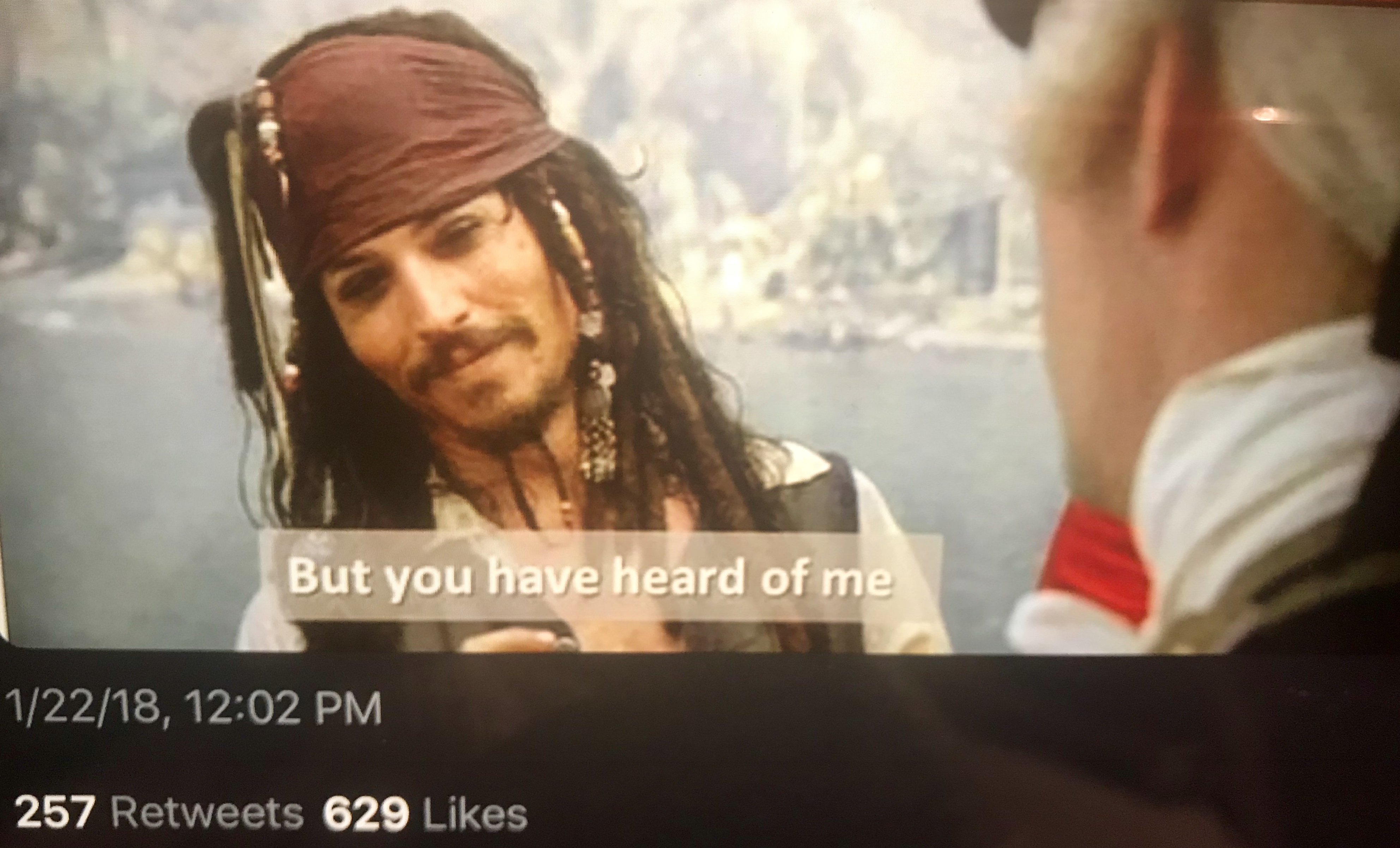
“You are without a doubt the worst writer I’ve ever heard of.”


“But you HAVE heard of me.”


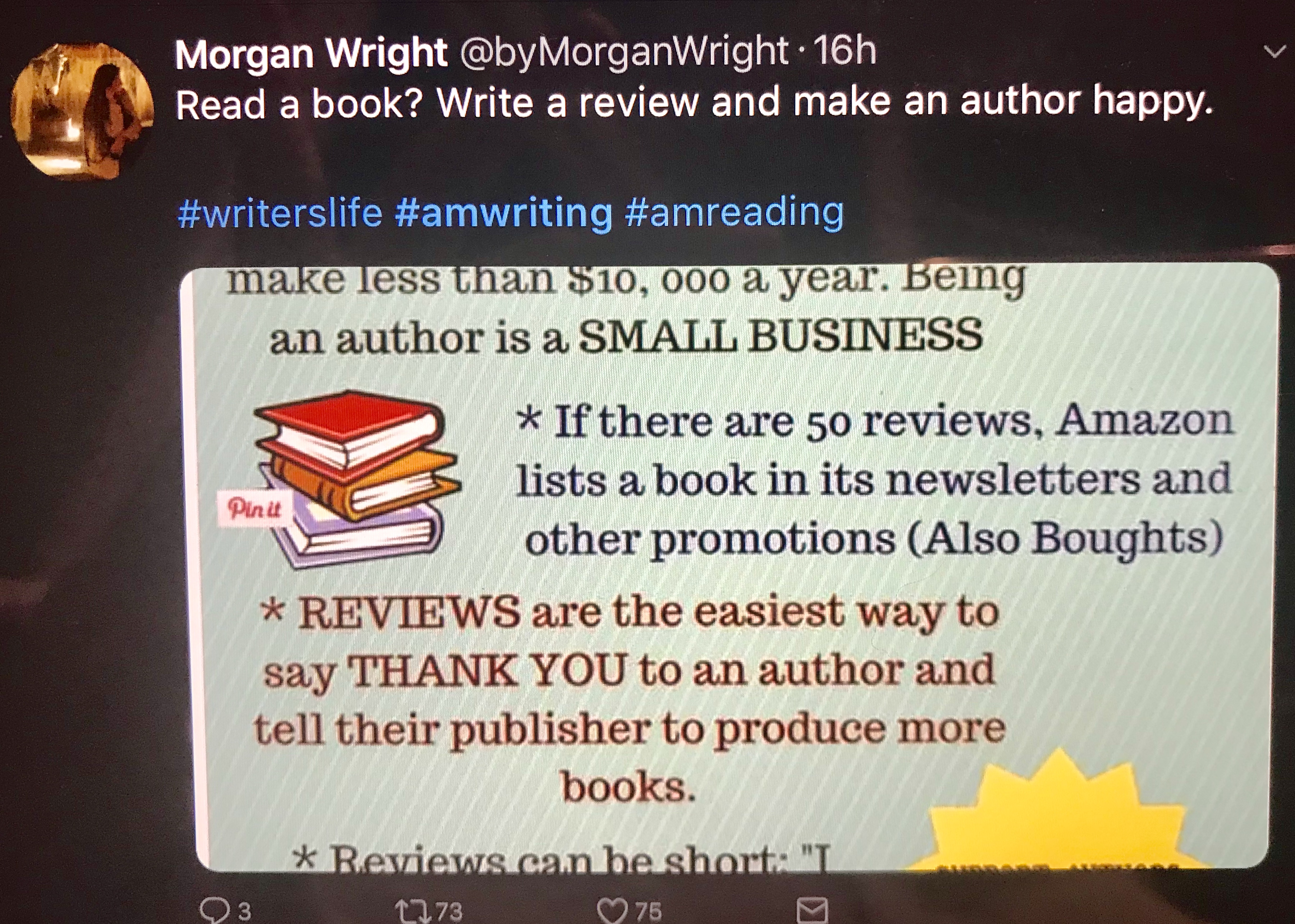
Thanks, we think 


Instead of angsting over your inner clouds, spread a little sunshine 


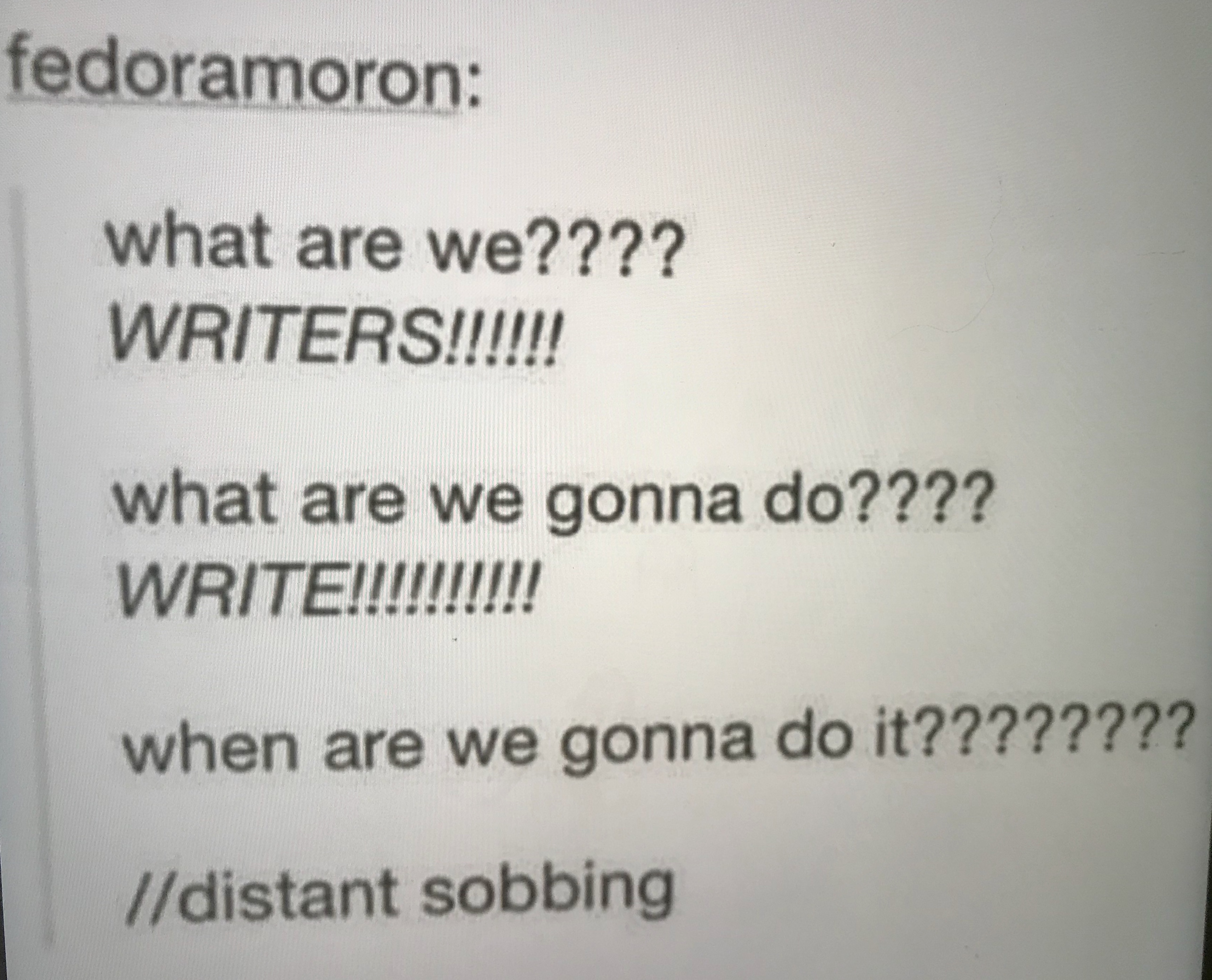
And know this: we are all in this together


What about you? Do you ever turn to the web for uplift or creative inspiration? Any good sources you can share with us?

5 Key Ways to Balance Internal Monologue with Pitfalls to Avoid

Jordan Dane
@JordanDane

Attribution – Niki K (Wikimedia Commons)

John Gilstrap had an excellent post yesterday on Internal Monologue that resonated with me. He gave great examples of what works and what may not, with explanations on his sage reasoning. He certainly gave me things to think about in my own writing.

I tend to write in deep POV and very tight, with sparse narratives. This is especially true when I write my novella length stories for Kindle World, which is a great exercise in writing a tight plot and keeping the pace up.

In my full novels, I reign in my internal monologue and make it focused, with the character having a journey from beginning to end of the book, as well as a journey even within each scene, so I don’t repeat the deep POV thoughts.

On the FOR WRITERS resource on my website, I have a post titled – START WITH A BANG. If you scroll down to the “Ever thought about building an onion from the inside out?” sub-heading, you’ll find a section on how I let dialogue be the starting framework and how I layer in elements to fill out a scene. Internal monologue is vital to establishing my character’s journey and emotional growth and it’s something I focus on a great deal – even when I do my final draft read – but it’s the last thing I add to any scene, because I want to control it and isolate the journey to avoid pitfalls.

Despite my own methods, I greatly admire writers like Michael Connelly (particularly his Bosch series) where his mastery of his character’s internal views feel so authentic of an experienced war weary cop. He effortlessly brings in Bosch’s personal relationships and his workload to give a 360 view of this man’s life. That’s not an easy thing to do. It requires an intense knowledge of his character Bosch.

No matter how a writer learns how to craft internal monologue, it is easily one of the areas an author can veer off course and overuse…or under use, for that matter. Have you ever read a book that is all action, devoid of emotion or insight into the character’s internal battle and conflict? This is definitely a balancing game to get internal monologue to enhance your writing and make your stories memorable for readers.

Key Points to Finding the Right Balance for Internal Monologue:

1.) DIALOGUE – If you see your narrative paragraphs stretching out onto the page in weighty clumps, look for ways to make your internal monologue lean and mean by use of dialogue. This is something I have to pay attention to, even with my sparse style. Clever dialogue is a challenge, but it can be so much fun to write.

Plus, effective dialogue can help you pace your novel and tease the reader with red herrings or mystery elements, and not a plot dump of internal thoughts.

2.) LESS IS MORE – It’s easy to get carried away with every aspect of a character’s POV. The reader doesn’t need to know every logical argument for their action or inaction. People don’t think like this, especially in the heat of the moment in an action scene.

Have patience to let the story unfold. Too much internal thought can dry up pace and bore readers. The reader doesn’t need to know everything, especially all at once in a dump.

Also be careful NOT to repeat the same thought over and over. Repeating internal strife does not constitute a journey. It only reminds the reader that the author is searching for different ways to describe the same thing. Oy.

3.) TIMING – pick your spots when internal monologue makes the most sense. James Scott Bell wrote a great post on What’s the Deal on Dreams in Fiction where he talks about starting a novel with a character in thought, no action or disturbance. Resist the urge to bury your reader in internal monologue right out of the gate.

In addition, if your character is in the middle of a shoot out, that would not be the most opportune time to share his feelings on getting dumped by his girlfriend, not even if she is the one shooting at him. (Although I would love to read a scene like that.) To make the danger seem real, stick with the action and minimize the internal strife until it’s logical for the character to ponder what happened after.

Plus, if you spill the exposition too early, the reader won’t retain it as well as if you had waited for the right timing, when the reveal would be most effective.

4.) SHOW DON’T TELL – Once you get into the quagmire of telling a character’s POV, it’s too easy to get carried away with the rest of your book. If you can SHOW what a character is feeling, and let the reader take what they will from the scene, you will leave an image nugget that will stick with them. TELLING doesn’t have the same impact.

5.) ACTION & DIALOGUE DEFINE CHARACTER – These are the two areas where readers will most remember a book. Unless you’re into author craft and can appreciate the internal monologue finesse of John Gilstrap and Michael Connelly and many other author favorites, you probably may not remember how effectively the author used internal monologue. It’s like the color black. It goes with everything in such a subtle way that you may not notice it.

FOR DISCUSSION:

1.) What tips do you have to share on how you handle internal monologue in your own writing?

2.) With the key points I listed above, do any of them pose a particular challenge for you?

3.) Name a recent book you read where you noticed the author’s deft handling of internal monologue. (I would love to expand my TBR pile.)

Internal Monologue

By John Gilstrap

Today’s post responds to a request from a TKZ reader who asked about internal monologue. (I’ve heard this referred to as internal dialogue, as well, but outside the world of psychoses, I’m not sure such a thing is possible.)  This is my take on the way to present thoughts on the page.

Narrative voice.  For fiction to work at its finest, every word of every line of every paragraph should advance either story or character, preferably both. I discussed this previously in a post I called The Point of View Tapestry, and more recently, I addressed it in a video on my YouTube Channel in a piece I call, Point of View and Voice. When writing in the first person or close third person, every line of narration serves as a presentation of a character’s point of view. As an example, consider this paragraph from Scorpion Strike, the next Jonathan Grave thriller (July, 2018):

[Gail] was still trying to process what she had just seen.  She understood that she’d fallen in love with a crusader whose combat skills had been honed over nearly two decades of training and experience with the most elite Special Forces unit in the world. Yes, she’d seen him kill before.  Indeed, she’d killed right alongside him. But those incidents had all involved firearms and extraordinary marksmanship.  Killing with a knife seemed so personal, and Jonathan had wielded the blade with such expert precision that it took her breath away.

That entire passage is, in effect, internal monologue.  We are seeing the world through Gail’s eyes. And, because this scene comes from very early in the novel, we learn a little backstory, too.  In the previous scene, separated by a space break, we were in Jonathan’s point of view as he killed their attacker with a focused precision that clearly comes naturally to him.  That scene was essentially internal monologue, as well.  Done effectively, your narrative voice carries a lot of the water for internal monologue.

Quoted thought.  The accepted practice these days is to italicize quoted thought, and then tag it as if it were dialogue: Nice place, Jonathan thought. It’s a simple, effective convention that I believe can easily be overdone.  If the narrative voice handles the description of a place well, the reader–who is firmly rooted in a character’s point of view–will know simply by word choice whether or not the character is impressed or repelled.

I approach italicized quoted thought with the same trepidation with which I approach dialect. Misspellings and startling contractions stop the narrative and break the spell for the reader.  (I feel the same about expressions in foreign languages that are then translated for the reader. A much better approach is, “Please have a seat,” he said in Russian.  Why make me plow through unintelligible Cyrillic characters first?)  A little bit goes a long, long way.

The reader who asked me to address this topic presented to me in an email a passage for which his freelance editor took him to task.  He granted permission for me to share it here.  This is a paragraph from his work in progress:

Phil was right. I’ve been doing my best to keep evil out or to deny it. But what’s the alternative? Permanent depression? I’m pretty depressed right now . . . Maybe it was a mistake. Maybe Lara was with some guy and something happened and he panicked and had to ditch the body.

His editor told him–and I agree–that this passage comes off as “inauthentic” if only because we don’t actually think in words. We certainly don’t think in complex logical analyses. We think in bursts of reaction and instinct that can be an enormous challenge to present effectively on the page. The example above doesn’t work because it is too complex.  In this case, the fix is simple:

Phil was right, Paula thought.  She’d been doing her best to keep evil out or to deny it. But what’s the alternative? Permanent depression? She was pretty depressed right now . . . Maybe it was a mistake. Maybe Lara was with some guy and something happened and he panicked and had to ditch the body.

The same passage that feels clunky in italicized thought works (though it’s absent context) as straight narrative and communicates the same thoughts.

As a further example that’s a little closer to my wheelhouse, there are probably dozens of considerations in drawing and firing a pistol, and while all of them are present in the shooter’s head, it would be inauthentic to articulate them on the page.  Imagine . . .

I see that Harley’s hand is at an awkward angle. I bet he’s concealing a gun, so I’d better draw mine. Let me make sure that my shirttail doesn’t get in the way as I move my left hand to my abdomen to keep it out of the way while I move my right hand to the holster that is clipped to my belt at the four o’clock position . . . 
Or . . .
Jonathan didn’t like the angle of Harley’s arm. The son of a bitch has a gun.  Jonathan cleared his shirttail with his left hand as he moved his right to the holster on his hip . . .
Okay, that example is admittedly a bit over-the-top, but it illustrates the point. As I mentioned in the video referenced above, we tend to think of writing and the teaching thereof in terms of character and setting and dialogue and plot as if they were separate things, when in reality, they are all interdependent threads in the same garment.

The Agony and Ecstasy of Starting Over

If the wine is sour, throw it out. — Michelangelo

By PJ Parrish

Have you ever wanted to just say the hell with it and give up?

I have. I’ve been publishing fiction in one form or another since 1980 and I can’t count the number of times I have wanted to pack it in and go drive the cart at the airport for a living. Sometimes it was a bad editor who brought this on. Or being dropped from a publisher (twice). Or doing too many book signings where the only people who showed up were the staff and a homeless guy trying to get out of the rain. Or being caught in the dreaded Barnes & Noble Death Spiral. (this is an official term for the dynamic of mediocre-sales-so-we-won’t-stock-you-but-no-way-to-increase-sales-because-we-won’t-carry-your-books.

Or sometimes it was simply because I thought I had run out of energy or worse, ideas. But maybe the worst kind of giving up is the one where you have invested a lot of time and energy into a book and there’s this little voice inside your head whispering, “This is pure crap.”  And you know the voice is telling you the truth.

When is it time to give up on a story and start over?

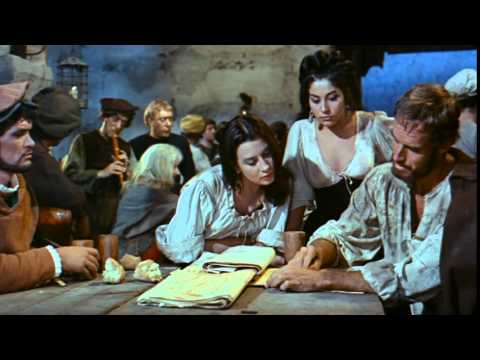
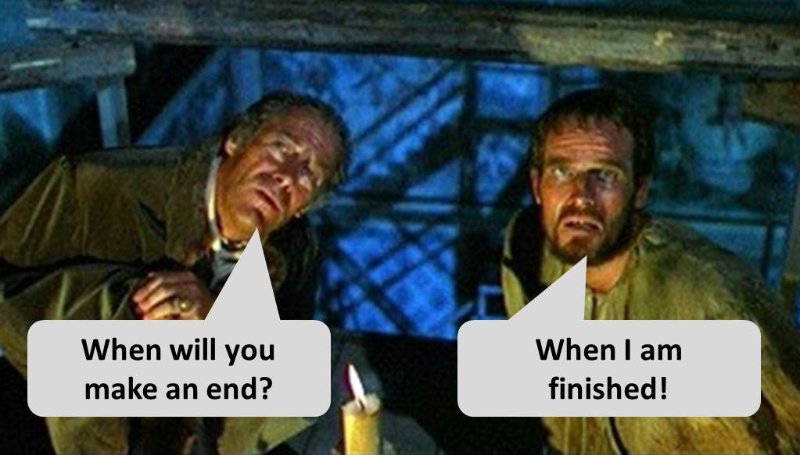
Michelangelo is the one who got me thinking about this. Or actually, Charleton Heston. Last weekend, my bad cold had me mainlining old movies and I happened upon The Agony and the Ecstasy.  Charleton Heston as the artist and Rex Harrison as the pope who commissions him to paint the Sistine Chapel. Good movie, based on the bestselling novel by Irving Stone. Michelangelo is maybe a couple hundred feet into his backbreaking project but he’s haunted by self-doubt — especially over the fresco he has painted depicting the face of God. He retreats to a tavern, where he sketches the peasants as models for apostles. But it’s God’s face who taunts him. Michelangelo takes a drink of wine, spits it out and yells, “This wine is sour!”  The tavern owner tastes it, agrees, and uncorks the cask onto the floor, saying, “If the wine is sour, throw it out!”

Michelangelo has his epiphany. He goes back to the chapel and takes a scythe to God’s face, scraping it off.  A year of work demolished. He starts over.

If the wine is sour, throw it out.

Flashback to 1998. I am writing my first attempt at a mystery. My first chapter opens with a Miami homicide detective sitting in a fishing boat in the Everglades. She is thinking…mourning…remembering…her husband who got blown up in a drug deal gone bad. Do you see the problem? She is thinking. She is…doing nothing. If you don’t get it, go back into TKZ archives and search for any of James Scott Bell’s posts on characters thinking and not doing.

I finished that first book and sent it out to agents. I got oh, maybe twelve rejections. Not one agent was kind enough or smart enough to tell me what was wrong. I tossed the whole book and started over. About two years later, the first book in the Louis Kincaid series got published. (For the record, it opens with Louis unearthing a shallow grave in rural Mississippi and finding a skeleton with a rotted noose around its neck).

Okay, flash forward to now. After our book She’s Not There was published last year by Thomas & Mercer, they asked to see a sequel that centered on a subplot featuring a secondary character named Clay Buchanan. Six chapters poured out of my laptop. I was on a roll.

Then this little voice started whispering. I ignored it, plowing on through a hundred pages. Finally, I went back and re-read Chapter 1.

I had opened with my protagonist Clay Buchanan sitting in a boat in an Arkansas bayou. He is a skip tracer by trade but also an avid bird-watcher.  He has come looking for a woodpecker that’s supposedly extinct. But he is thinking about his wife and infant son who disappeared ten years ago. This quest is supposed to a metaphor for his hopeless search for something lovely that he knows is really dead. Beautiful chapter, full of poignancy, dripping with Spanish moss and symbolism.

You’d think I would have learned something in twenty years.

Yesterday, I threw it out, all hundred pages.  It took me five months to get to this point. That’s a lot of wine on the floor.  But it had to be done. The idea for the book is solid but the first five chapters are not working. I knew it in my heart.

Why do we resist starting over? Well, after twenty years, I’ve got my thoughts.

Deadlines: It may be an actual contract deadline, or one you set yourself (I will finish this book by July! I will write 1500 words per day!) It is also the pressure of our genre, the idea that you won’t get noticed or survive unless you can produce good books at a steady clip.

Deadlines can be bad — the tyranny of the ticking clock can make you burp out some bad stuff.  But deadlines can be good — a finite amount of time forces you to write instead of playing Spider Solitaire or folding laundry).  Deadlines can make you angry. Deadlines can make you feel frustrated and exhausted. As a classic procrastinator, I’ve learned it’s best to try to embrace a deadline. Think of it as having a pet porcupine.

Self-doubt: This can be bad because it can eat away at your soul. (I’ll never get published. I can never write as well as fill-in-the-blank. I’m out of good ideas.). But self-doubt can be good because it forces you to slow down, reassess and reflect. When things look dark, sometimes it’s not a bad idea to pump the brakes so you don’t drive off the cliff. If your novel is going badly, you might need to set it aside, let the frustration cool, and go back later. Divorce or reconciliation? It’s easier to decide with a clear head instead of a heavy heart.  Some books can, with hard work, be saved. Others have to be abandoned.

Negative people: This can be bad because sometimes you have to literally live with these folks. Your spouse might not be supportive enough. Your friends might tell you your wasting your time. Your “real” job screams at you like a harpy. But it can be good if you’ve got someone in your life who can, with a clear critical eye and kind heart, tell you when your book has lost its way. All of us want praise. But what we really need are folks –a trusted beta reader or a good critique group — who will tell us “This ain’t working.”

Now I can hear some of you saying, “Okay, that’s the agony. When does the ecstasy kick in?”

I can’t say. It’s a personal thing. Each of us handles disappointment and defeat in his or her own way.  I can only say that once I made the decision to throw away the first hundred pages of Clay’s story, I felt…good.  Like Michaelango, I had a clean white canvas again. I’ve been here before. I can do it again. I’ve only got, oh, about 100,000 words to go…


First Page Critique: Somewhere in Texas

Today we’re reviewing the first page of a historical novel entitled ‘Somewhere in Texas’. As always, my comments follow

Title: Somewhere in Texas

Autumn, 1850

McLennan County, Texas. 

“I did not travel five-hundred miles cramped in stuffy stagecoaches, with the never-ending prattle of gossiping women, to wait now.” Father’s voice grew in volume as Ellena Bradbury drew the curtain back and peeked through the narrow carriage window.

The cowboy he addressed set his battered hat on his head. “Suit yourself, mister. Y’all can wait in the house for the boss.” He motioned to his right, then turned to lumber away.

Father pulled the carriage door open, his thin lips tight beneath an equally thin mustache, as he offered his hand. “Come, Ellena.”

Ellena shifted away from the window. “’Twas a long drive from the village.”

“After traveling so great a distance from Louisiana to Houston, the short drive seems especially lengthy.”

Ellena slipped from the muggy carriage into blazing Texas heat, and drew in a deep breath.

A huge, single-story house stood before her, its crude plank siding dark in the shade of a wide porch. Black and white spotted chickens pecked the barren yard, only to lift their heads and squawk in alarm when they saw her.

Beyond the structure, McLennan County rolled away in pastures of sun-dried grass.

Beautiful, though not as picturesque as home.

Ellena pivoted and clasped her hands. “Where are the horses and longhorns?”

“Hush.” Her father’s blue-eyed gaze pointed beyond her as he arched dark brows.

Behind him in the high seat, the carriage driver lifted the reins to slap them against the horses’ backs. He stilled then inched up to stand. “Lord, have mercy.” His base tone sent a shiver through Ellena.

She spun around, but everything was as it should be. House in place. Peaceful, dry pastures waived in the breeze.

What did the carriage driver see from his high perch? Ellena stood on her tiptoes. A red-tailed hawk sailed through the sky, screeching as it dove low and out of sight. Father stepped to her side and a wind gusted only to cease into eerie stillness.

The hairs on the back of her neck rose. “What is it, Father?”

The pounding of a horse’s hooves on earth sounded far off. Ellena held her breath as the pattern grew louder.

A man raced around the side of the house on horseback, his red shirt bright against a black vest. “Stampede! Stampede!” He reined in near the porch, his lean muscular body taut as his gaze met hers then narrowed. “Run!”

Comments:

Overall, I think this first page successfully evokes a sense of time and place and introduces a dramatic initial element which has the potential to keep a reader turning the pages. I liked how the writer chose to begin with an approaching stampede, but there were a few minor issues which almost pulled me out of the story, and I think there were a few missed opportunities to make this first page even more compelling.

The first of these was backstory: Now in a first page we certainly don’t want any dump of backstory information, but I did want just a sentence or two to give me a little more context for Ellena and her father’s move to Texas – something that would add emotional depth to the characters and their feelings upon their arrival. Initially in this first page, it sounded like they were coming to a place they’d recently bought, but when the cowboy tells them dismissively they can wait for the boss, I wasn’t entirely sure why they were there (which is fine, but I’d prefer a hint so I care more about why they’ve come). Dropping just an intriguing snippet or two would do – anything to make this first page also stand out in terms of specificity. At the moment it verges on being a little too generic (outsiders coming to ranch, unprepared for the realities or dangers etc.). I’d like to feel more intrigued…Why have they come from Louisiana? What have they left behind? Why is it just Ellena and her father?

Specificity when it comes to characters also provides much needed emotional resonance. I wanted to understand how Ellena felt about coming to Texas so I could care more about her as a character. The line ‘Beautiful, though not as picturesque as home‘ is the perfect set up for just a sentence or two to capture her emotions and contrast her expectations to the realities she sees before her.

Another aspect of specificity is the use of dialogue. I thought the dialogue in this first page sounded reasonably authentic (though I’m no expert on 1850’s America) but perhaps it could have been used to capture her father’s Louisiana accent (if he has one) or to give the reader a better sense of their background. Both Ellena and her father sound more upper-class, almost English to my ear (especially with Ellena saying ’twas a lengthy drive the village’ – would they even use that term for a town in Texas??) so it would be helpful to have some context for this.

I did get a little confused towards the end of this first page with the paragraph: Behind him in the high seat, the carriage driver lifted the reins to slap them against the horses’ backs. He stilled then inched up to stand. “Lord, have mercy.” His base tone sent a shiver through Ellena. I’m not familiar with horses but wouldn’t slapping the reins against their backs signal them to start moving? Also I wasn’t sure what ‘stilled then inched up’ or  ‘base tone’ really meant.  Similarly, I thought saying the man ‘raced around the side of the house on horseback’ sounded clunky. These are all easy fixes, but they will help keep a reader grounded in the scene.

Finally, I would perhaps edit out the descriptions of people’s gazes / eyes and focus more on the landscape to give a sense of foreboding – for instance the phrase ‘blue-eyed gaze pointed beyond her as he arched dark brows‘ seemed a little clumsy. And, finally, a nitpicky comment:  When the initial title specifies ‘McLennan County, Texas’, I’m not sure it adds anything for the reader to then say: McLennan County rolled away in pastures of sun-dried grass. Just keep one or the other – it is repetitious on a first page to have both.

Overall, kudos to our brave writer for submitting this – I think it has the makings of a compelling first page! What do you think fellow TKZers?

Goin’ by Fats’ House

Happy New Year! As promised, what follows is my account of meeting Fats Domino…

(c) Copyright tripadvisor.com. All rights reserved.

One of the first rock ‘n’ roll records that I recall hearing was “Blueberry Hill” by Fats Domino. I was blessed to have grown up in the 1950s and 1960s, when Top 40 radio was a wonderful mix of rockabilly, soul, rock, doo-wop, country & western, and r&b. It made for some exotic blocks of music — Everly Brothers followed by Barbara George giving way to Ferrante & Teicher and then Rick Nelson — but it was never boring. If you didn’t like a song, you just waited. You’d hear something you would like before too long. It was Fats, however, more than anyone else, who spoke to me. I had a friend (and he’s still a friend) whose older sister, LM,  had one of the best record collections I’d ever seen or heard at that point in time, and it included all sorts of Fats Domino 45s, many of which I’d never heard up until that point. We spent hours listening to them, particularly the ‘B’ sides, which were rarely played on the radio. I remember leaving his house one afternoon, my friend and me and another guy singing Fats’ infectious “I’m Gonna Be a Wheel Someday.” We were 10 years old at the time. We all got old, but the songs never did.

(c) Copyright Capitol Records, Inc. All rights reserved.

Fast forward to 1999. 45s had become a novelty, confined to limited pressing collector item releases. What were called “car phones” were being replaced by “cell phones” and “cell phones” didn’t have cameras or GPS or maps yet. The first iPhone would be released in eight years. Something called “google” was about a year old and something else called “wifi” was slowly making its way into the lexicon. Primitive times. November of that year found me in New Orleans on business. It was during this particular visit that I had lunch with a local musician who we’ll call J and whose extended family had for three generations been an integral part of the early days of rock ‘n’ roll. While we ate a couple of coma-inducing po’boys we talked about the city’s history. He looked somewhat askance at me a couple of times from across the table, expressing wonder at how a middle-aged white guy “not from around here” knew so much about his family and their musical contributions. The wonder turned to amazement when I took him back to my hotel room and played him some CDs of New Orleans music I had brought with me — iPods were two years away — which included recordings his relatives had played on but that he had never heard. We talked a bit more and were almost wrapping up when he said, “Hey, what are doing this afternoon? You got a car? You wanna go by Fats’ house?”

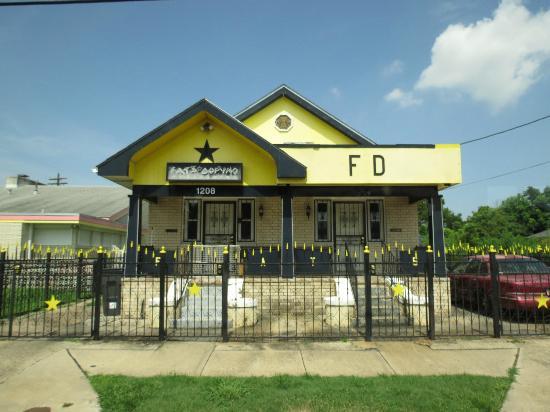
My answers were “nothing,” “yes,” and “hell yes.” It was a trip I had wanted to make on previous visits but given that the New Orleans street system — designed, apparently, by a spider on LSD — was daunting,  I had over the course of a few visits only slowly started to venture into the city’s neighborhoods and out of the French Quarter. So, yes, if J wanted to direct me to Fats Domino’s house — deep, deep in the ‘hood known as the lower Ninth Ward — I wasn’t about to pass up the opportunity. After a sinus-clearing trip on the freeway with J’s occasionally helpful guidance (“left…no…no, right…no…left…NO, RIGHT! RIGHT! RIGHT!”) through a heavy thunderstorm, we wound up driving down Caffin Street and approaching its intersection with Marais Street I saw what I was sure was the house in question on the right. It appeared to be a shotgun-style duplex, surrounded by a wrought-iron fence, with the words “Fats Domino Publishing” spelled out in lights on the front of the house.

When J had asked if I wanted to “go by Fat’s house” I assumed that he meant drive “by,” as opposed to “stopping.” And going in.  As we were um, driving by, however, J said, “Pull over there” pointing to a portion of the driveway which was in front of the house outside of the fence. I did. He got out of the car, then looked at me funny as I remained in the car, still not fully comprehending what was happening. He said, “C’mon!” and I did, turning off the engine and then stumbling a bit as I followed him. My brain and my body hadn’t quite synced up with the concept that I was walking into Fats Domino’s house. J in the meantime had negotiated the fence gate as the front door of the house opened. And there stood Fats.

I have often described myself as being too short for my weight (as opposed to weighing too much for my height) and such was certainly true of Fats. He had the appearance, as he stood there smiling shyly, of being compressed. Still very substantial at 5’4” and over 200 pounds, he nonetheless gave the impression of being possessed of a certain physical frailty. J introduced me as his “manager” (I wasn’t) and I shook hands with Fats (even as I write those words, I still can’t quite believe it) as he ushered us into his house. Please note: we were in Fats’ house, which was a combination annex and office. His HOUSE, actually, was next door, a huge place on Marais Street where he and his family (and several large automobiles) resided. The world-famous Cadillac Couch, however — a three seater fashioned from the tail-end of a Cadillac — was in the annex. Fats waved me over to it, saying something. I at that point in time was very unfamiliar with the New Orleans patois (which varies from neighborhood to neighborhood) and will confess that I couldn’t understand what he was saying. When I continued to stand there, however, he laughed and said, “Siddown!” I did. Carefully. He and J sat and talked for a bit — I couldn’t follow the conversation, but it was something about one of J’s relatives — and after about ten minutes they finished up their business. As we got up to leave, Fats shot me a smile and walked over to a beautiful piano, where he sat down, and then played and sang the introduction and opening verse of “Blueberry Hill.” It would be an understatement to say that he still had the magic. His voice was strong and his playing was complex, confident and flawless. It was if a switch had been flipped on inside of him when he sat down, releasing the muse entrapped from the reserved, seemingly infirm man with whom I had spent the past several minutes.  All I could think was, “I wish that LM were here.”

(c) Copyright Capitol Records, Inc. All rights reserved.

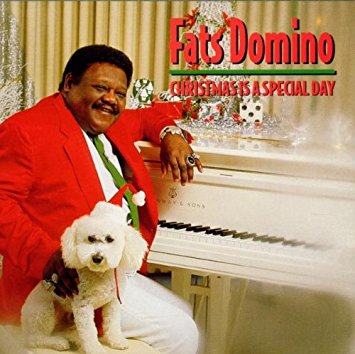
When Fats stopped playing I started to clap but he ducked his head shyly again and waved me off. J said to him, “Why don’t you give him one of those Christmas records?” and he did, handing me a copy of a disc titled Christmas Is a Special Day.  I thought later that I should have asked Fats to autograph it. I was still catching up, however, with what was going on and where I was, standing next to a man whose work I had been listening to for over five decades.  I had no way of otherwise memorializing it either — no camera or camera phone —  but that was okay. We said our goodbyes and I walked out of the “house” (as opposed to the “HOUSE”) into a world which was much different than it had been just a half-hour before.

(c) Capitol Records, Inc. All rights reserved.

The world almost twenty years on from that day is also much different. One constant, however, is that Fats’ music remains timeless. His first single, “The Fat Man,” is considered by many to be the first rock ‘n’ roll record. Listening to it seventy years after its release one can hear Fats and the assembled musicians, under the direction of bandleader Dave Bartholomew, galloping into a previously uncharted musical territory. Then there is “I’m Walkin,” which, sixty years after its release, was licensed for a FitBit commercial. It’s a perfect pairing, given that one can’t sit still while listening to it. And of course there’s…but I need to be quiet and go away. I’ve prattled on too long. Anyway, that’s my brush with stardom. I’ve met a number of my idols since that time, but my meeting with Fats is in a class by itself.

Your turn now. Have you had any meetings with a major and famous influence in your life that you would like to talk about? I am going to attempt to stay uncharacteristically silent while you inform us, but I can’t promise anything. Thank you.