First Page Critique: When Is It
Time To Let A Story Idea Die?

Nothing stinks like a pile of unpublished writing. — Sylvia Plath

By PJ Parrish

We have a special First Page Critique to talk about today. Because I think it is a splendid example of a question all writers have to ask themselves at one time or another: When it is time to let go of a bad story? I’ll be back in a second with my comments. First, here’s our submission:

Lucky Lady

Chapter 1

It’s not easy starting your life over when people think you murdered your husband and got away with it.

Especially in a place like Morning Sun, Iowa. The folks in Morning Sun — there’s only about four hundred of them — don’t have much tolerance for weird people, especially a rattlebrained housewife who tries to bail out of her marriage after a couple of little marital “tiffs.” But I was born and bred in Morning Sun, and on that Fourth of July when my husband Brad came at me with the Ginsu knife we had just bought off a late-night infomercial, I didn’t figure I had a lot of options.

The police believed I killed him on purpose. My neighbors believed the police. My relatives believed the neighbors. But fortunately for me, the jury didn’t believe any of them. So I walked.

Actually, I ran. Three thousand miles to be exact, all the way to Las Vegas. I had to get out of Morning Sun and I figured Las Vegas was a good place to reinvent myself. It’s the kind of town where everyone takes big chances. It’s the kind of town where dwelling on the past is about the only thing that’s really a sin.

_______________________

I’m back. I have real mixed feelings about this submission. On one hand, I like the sassy voice. And the opening line isn’t bad. But I found myself longing for less thinking and musing and more live action. And the title? Well, it’s really meh.

Okay, I’m messing with you here. This is an opening for one of my own books, unpublished. Kelly and I wrote this (in fact, we wrote the entire 367-page manuscript) years ago, when we were well along into our Louis Kincaid series. We wanted to try our hand at a female protag and a style that was lighter and humorous. Also, Kelly had decades of experience in the Nevada casino business and we figured we couldn’t go wrong.

Wrongo, keno-breath.

We couldn’t sell this book to save our souls. Our own publisher passed on it (nicely) and then, when our agent shopped it around, we got at least ten rejections. And there was a common thread to all of them — that the book’s tone was off, that it was “neither fish nor fowl” as two editors actually said. What they were telling us was that we couldn’t sustain a consistent tone over the course of the story, that it seesawed between humor and seriousness (a theme was sexual abuse), light and dark.  (And to be honest, it was larded with backstory in the first chapter).

We put the manuscript away and took this lesson out of the disappointment: That our writers’s hearts are dark, and we can’t fake otherwise. I’ve come to think of it as our “Shelf Book.” This is a term coined by John Connelly for a story that you have to write and complete just to get it out of your system so you can move on.

I guess that’s the lesson I am trying to convey here today. That some ideas are toxic. And even if you slave away and finish the manuscript, sometimes you just have to admit defeat and let a story idea die.

I know how hard this is to do. Like me, many of you probably have variations of this:

1. A manila folder swollen with newspaper clippings, scribblings on cocktail napkins, pages torn from airline magazines, notebooks of dialogue overheard on the subway, stuff you’ve printed off obscure websites. At some point, you were convinced all these snippets had the makings of great books. (I call my own such folder BRAIN LINT.)

2. A folder icon in your computer called FUTURE PLOTS. These are sylphs that came to you in the wee small hours of the morning, whispering “tell my story and I will make you a star!” So you jumped out of bed, fired up the Dell and tried to capture these tiny teases. Or maybe you’re one of those bedeviled souls who keeps a notepad by the bed — just in case.

3. Manuscripts moldering in your hard-drive. Ah yes…the stunted stories, the pinched-out plots, the atrophied attempts, the truncated tries. (Hey, better I get rid of my bad alliteration here then in my book) These are the books you had so much hope for and they let you down. These are the books you went 30 chapters with but couldn’t wrestle to the mat for the final pin. These are the books you grimly finished even as they finished you. Maybe you even sent these out to either agent or editor and they were rejected. At last count, I have six of these half-birthed monsters still breathing in my hard-drive. And at least four others finally died when my former Acer did, lost to mankind forever. Thank god. Geez…one was called Tarantella and it was erotica. Can it get any worse?

So what do you do with all these ideas?

You expose them to sunlight and watch them burn to little cinders and then you move on. Because not every idea is a good one. Not every idea makes for a publishable book. And sometimes, you just gotta let go.

Or you just bite the bullet and let them exist as your Shelf Books. Mike Connelly had three completed manuscripts before he sent out The Black Echo. L. Frank Baum wrote four adult novels before The Wizard of Oz, and his son records in his memoir that his mother burned them all. Hunter Thompson’s first writing attempt was a rejected novel called Prince Jellyfish about a boy from Louisville trying to make it in the big city. Thomas Hardy’s first novel The Poor Man and the Lady, was rejected by five publishers and the manuscript later destroyed. And before Stephen King hit it big with Carrie (rejected by 30 editors) he wrote a novella The Aftermath, and The House on Value Street, based on the Patty Hearst kidnapping.

Sometimes, bad ideas can birth new life. Michael Chabon abandoned his novel titled Fountain City after 1,500 pages, but then used it as inspiration for his fabulous Wonder Boys. John Cheever wrote 150 pages of a novel called The Swimmer, then decided it was better as a 12-page short story.

I have known some unpublished writers who’ve lock their jaws onto one idea like a rabid Jack Russell and chew it to death. These writers become paralyzed, unable to give up on their unworkable stories, unable to open their imaginations to anything else. I think it is because they fear this one bone of an idea is the only one they will ever have. Two things happen when writers reach this point:

  1. They self-publish. (Not a bad thing if your idea is good)
  2. Or they get smart, take to heart whatever lessons that first manuscript taught them, put that book on the shelf, and move on to a new idea.

You have to know when to let go. And you have to trust that yes, you will have another idea. Maybe a good one. Maybe even a great one.
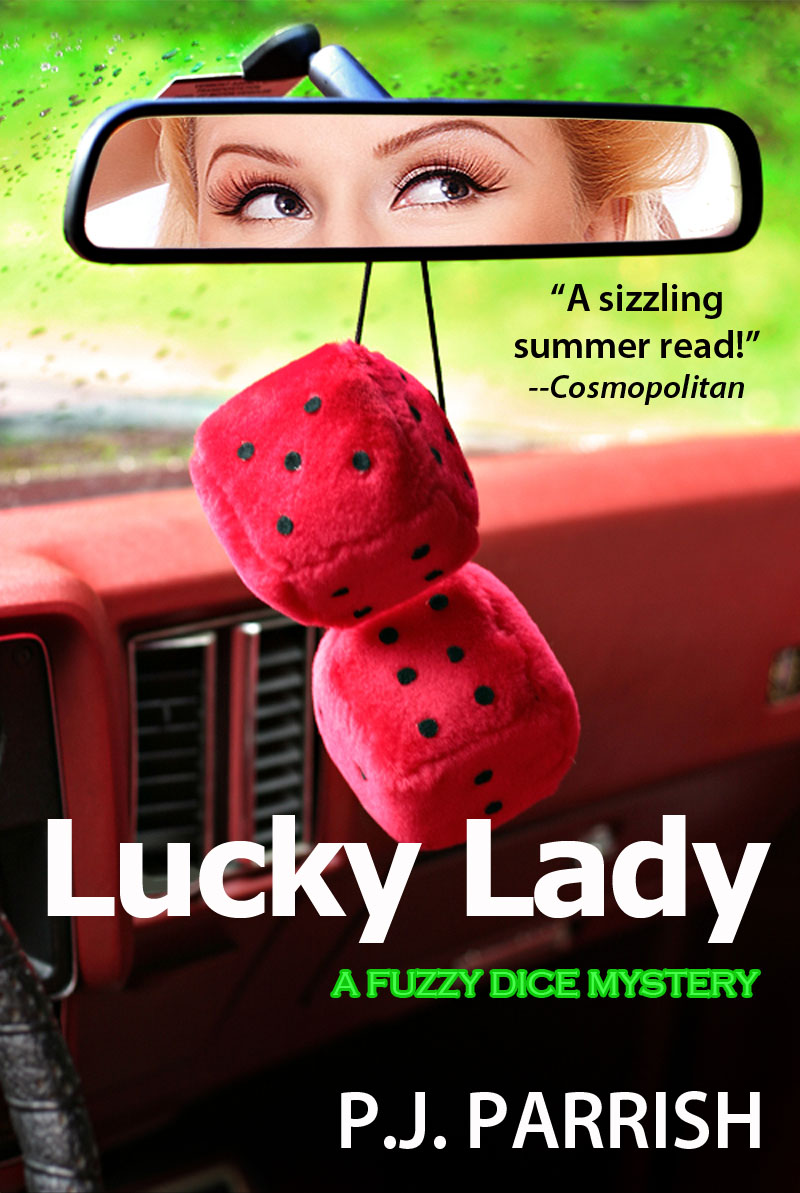
So, what do Kelly and I do with our Lucky Lady? Yeah, we’ve thought about self-publishing it. We even designed a cover for it. We have a base readership and we might get some sales. But whenever I go back and re-read that book — which I’ve done a couple times now with something close to hope — I find it still has warts. And worse, it isn’t true to our writers’s hearts and our readers will sense that.

But…

We could sent it to Canada. To the Brautigan Library in Vancouver, which is devoted to unpublished manuscripts. The library’s inspiration came from the 1971 novel The Abortion: An Historical Romance by Richard Brautigan, in which the protagonist works at a library of unpublished manuscripts. In the novel, no one is allowed to visit the library and read the unpublished works. But in the library it inspired, that’s the whole point. You can go there and read the 300 manuscripts. They are also open to submissions. But I think your toxic story would look better on your own shelf.
 

Again

Artwork Courtesy bridgemanart.com

“It” happened again.  

“It” is the story I presented in this spot several weeks ago. To wit: I awoke quite early after dreaming the beginning, middle and ending of a novel, got up, typed everything I could remember, and started an outline. That work in progress is now titled The Lake Effect and other than for those occasions where I get in my own way it has actually been fun. I am not finished but I am seeing the highway distance signs assuring me that I am headed in the right direction at speed.

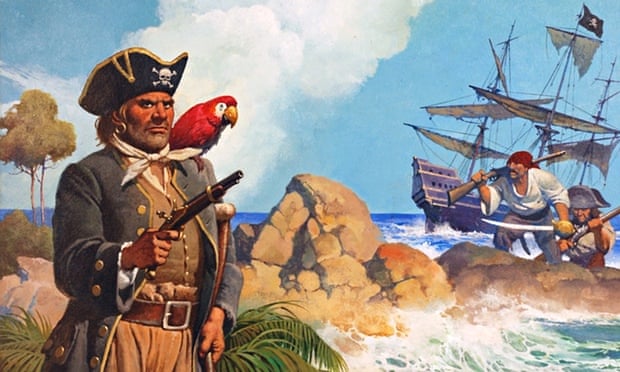
However, “it” has happened again. I woke up Friday morning with a dream vividly lodged in my head, a dream that laid out another novel, beginning, middle, and end. I for a number of reasons (none of them really acceptable) could not get up but I had a pen and a notepad at the ready and scribbled a bunch of notes to my daytime self, all of which actually made sense when I woke up for a second time Friday morning with paper all over the place. The novel? It is, as with The Lake Effect, way outside of my writing comfort zone. The Lake Effect is a love story with a bit of science fiction attached. The latest dream —so far unnamed — is a dystopian thriller. I hate dystopian novels, as a rule. I have been able to read, enjoy, and finish two in my lifetime: Dahlgren by Samuel  R. Delaney and The Road by Cormac McCarthy. My humble effort could be pitched as “Long John Silver and John Wick team up at the end of time and make one final effort to hit the restart button.”

I haven’t decided whether to set this newly inspired work aside until I finish The Lake Effect or work on both. What I really wonder, however — and this is a rhetorical question — is…why now,  as I do the slim, slow slide into age sixty-eight (September 11, if you’re wondering when to send the Amazon gift cards)? Am I the recipient of some sort of precursor to the “check engine” light flashing on, or is a blood clot going to jackknife in the middle of my cranial freeway at rush hour in a couple of months, and is this last-ditch creative spurt is a traffic alert?

I ask because something else is happening as well. I’ve had a major change in appetite (food, that is) over the past five weeks. I suddenly have no desire for what had been my four major food groups: pasta, donuts, french fries, and kettle chips. I no longer find appealing what I had to resist. A friend brought over a large bag of my favorite potato chips — Zapps Mardi Gras Kettle Chips — the other day as a gift. Up until a few weeks ago I would have opened them to share with her as a pretext to doing a deep dive in the bag. They’re still sealed. Glory be, ‘tis a miracle, Father Mahoney. Meat is going the same way. I’m down to eating meat as part of one meal per day, at most. It hasn’t been a conscious or deliberate choice. It’s just what I feel. I’ve eaten more oatmeal and soup in the last month or so than I have in my entire life. My cupboard and refrigerator look as if they have been taken over by Jack LaLanne (well, that is a gross exaggeration, but it’s changed quite a bit). This all occurred after I dreamt The Lake Effect.

I don’t know if this is even worthy of a question, but since we have a bunch of artistic minds out there, and many of them are seasoned, let me ask: have any of you experienced a sea change like this? Was it a precursor to something good, bad, or indifferent? What ultimately happened? Thank you, and enjoy your weekend.

True Crime Thursday – DNA Solves Cold Cases

by

Debbie Burke

@burke_writer 

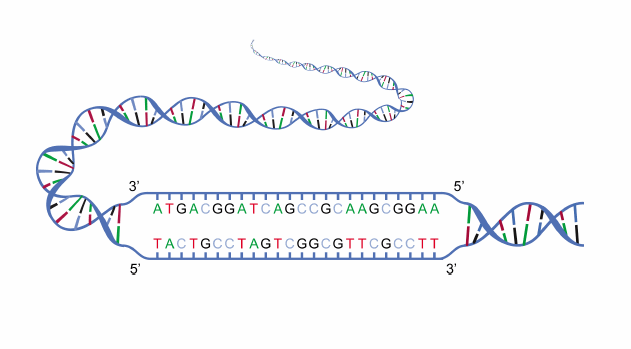
Memo to Criminals: If the statute of limitations hasn’t expired, don’t send your DNA to 23andMe.

wikimedia.org

The combined tools of genealogy and DNA databases are solving old murder cases.

Until recent years, a DNA sample from a crime scene meant little unless it matched an already existing profile in a law enforcement database. But the popularity of DIY home DNA tests adds a new wrinkle.

People seeking their ethnic roots send cheek swabbings to genetic genealogy databases like GEDmatch.com. There, DNA samples are used to build family trees reaching generations back in history.

While you may find it interesting that Mary Queen of Scots or Jesse James is a distant relative, what happens if your DNA also shows you’re related to a criminal?

Most famously, the Golden State Killer was linked to decades of murders and rapes based on DNA information from Parabon Labs.  Parabon claims to have helped solve 30 cold cases. According to their website:

“Genetic genealogy has traditionally been used to discover new relatives and build a full family tree. However, it can also be used to discover the identity of an unknown individual by using DNA to identify relatives and then using genealogy research to build family trees and deduce who the unknown individual could be. These techniques…apply equally as well to forensic applications. Genetic genealogy has been used to identify victims’ remains, as well as suspects, in a number of high-profile cases. Most recently, genetic genealogy was used to zero in on a suspect in the Golden State Killer case.”

Law enforcement can request information from consumer DNA databanks to trace suspects in unsolved crimes. But ethics concerns are on the rise after the founder of GEDmatch allowed access in an assault case in Utah without first informing its customers.

Surveys indicate most people believe consumer DNA databases should be used in cases of violent crimes. But what about offenses like credit card fraud or unpaid child support?

TKZers, have you sent your DNA to a database like 23andMe, Ancestry.com, Family Tree, My Heritage, etc.?

Are you concerned about the privacy of your genetic profile?

Where would you draw the line for law enforcement uses? Violent crimes? Non-violent felonies? Misdemeanors?

Guest Post: Carolyn Haines, Southern Mystery Doyenne

Hey, y’all! I’m so excited to have writer Carolyn Haines visit with us. Decades ago, even before Carolyn started her mystery series featuring Sarah Booth Delaney, I saw several of her books shelved in a place of honor at a friend’s house. My friend told me that Carolyn was a wonderful writer, and as an unpublished newbie, I immediately got stars in my eyes knowing I was thatclose to a famous writer. Carolyn’s writing is truly wonderful, and these days, I’m proud to call her my own good friend.

(If you’re in the Houston area, dash over to the amazing MURDER BY THE BOOK for a signing event with Carolyn, plus Terry Shames, TONIGHT at 6:30 p.m.)

Carolyn is here to talk about the pleasures and pitfalls of having a successful, long-running series. Please give her a warm TKZ welcome!

LONG LIVE THE BONES

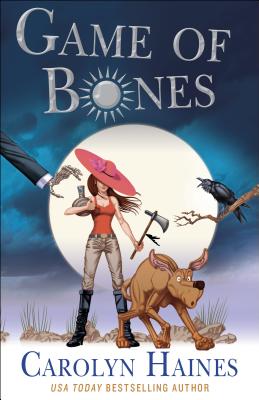
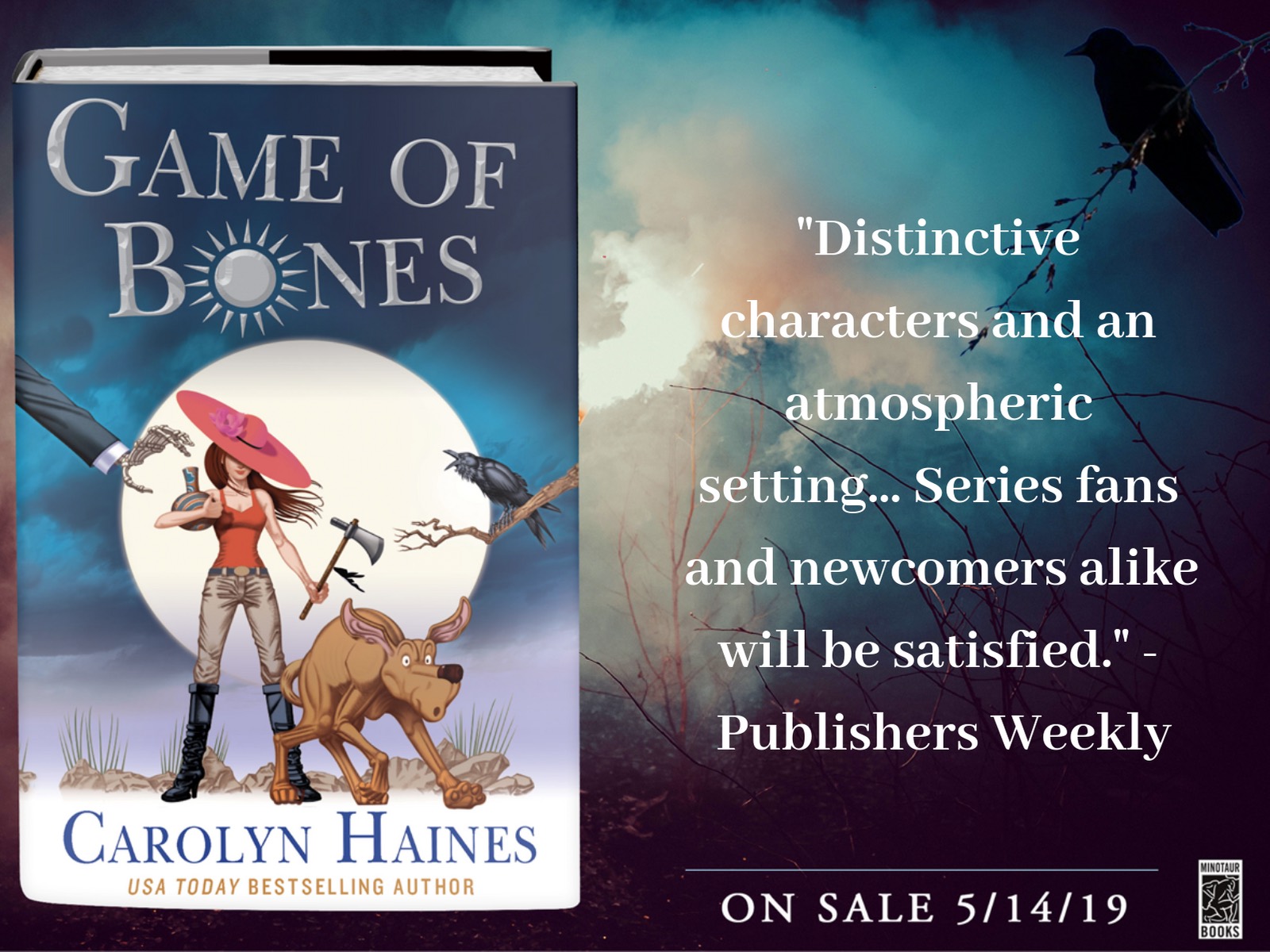
I’ve been writing about my amateur detective Sarah Booth Delaney for over 20 years—and I have 20 books documenting her mystery-solving skills. The latest, GAME OF BONES, was just released. But I have to tell you, it’s my time to whine. In the world of Zinnia, Mississippi, Sarah Booth Delaney seldom ages. In the twenty years I’ve been writing about her and the rest of the gang, Sarah Booth has aged less than two years. I, on the other hand, have stacked two decades onto my total orbits around the sun. This is not fair.

While Sarah Booth remains eternally young, still able to consider pregnancy (though she is pushing that really hard as her personal “haint” Jitty would tell her) and still able to perform the physical feats that make her a good detective (and also a bit like Lucille Ball), I am feeling the passage of the years in my bones. Sarah Booth has never met trouble she didn’t want to get down and wallow in. I have not been arrested in a while, so I’m a slacker.

I’ve read a lot of blogs from authors who talk about “when it’s time to end a series.” To be perfectly honest, when I wrote THEM BONES, I didn’t realize I was writing a series. The book sold at auction and the publisher who bought it wanted a 3-book deal. I was terrified. I’ve always read mysteries, but I never considered myself a skilled plotter. But there I was—with two additional mysteries to write, and then two more, and then two more, and then three, etc., etc.

Now, the characters are so much a part of my daily life that it’s hard to imagine NOT writing about them. They are family, and I love the work of bringing their adventures to the page.

Over the course of two decades, I’ve outlined the series arc. I know what the last book in the series will be, but since I just signed another three-book contract, it won’t be until after 2022. (There will be two books in 2021. One in May, my regular publication time, and a special Christmas book.)

Through the years, folks have pressured me to marry Sarah Booth off and let her have young-uns. I’ve resisted this pressure for a number of reasons. First and foremost, Sarah Booth doesn’t listen to me or to Jitty, her ancestral ghost who tries to boss her around for her own good. I tried to edge Sarah Booth toward more romance with one character, but she balked completely. She knows her own mind. As I said, she is like family and the Haines clan is known to be hard-headed. My guidance is often rejected. But again, that makes the stories interesting to write.

Aside from Sarah Booth’s recalcitrant behavior, there are other reasons. I’ve read a lot of series books and watched a lot of series television where the two leading characters finally give in to lust, love, or domesticity. That’s the point I lose interest in the characters. I realize not all people are like me, but as the writer, I refuse to spend time in a world that bores me. As it stands now, Sarah Booth has a love interest, but romance is always a dicey business with my feisty anti-belle. Sarah Booth breaks the rules of polite society and she disdains the expectations to marry.

Each book in the series is a complete, standalone mystery, but the characters do change. I’m really proud of the way that my characters have grown. While Sarah Booth and her friend and partner Tinkie have madcap adventures, they are serious about the life decisions they make and the values they buy into. The cases they tackle highlight some tough issues, but always with humor. Most of all, the characters and I want to make you laugh and have fun. “A lot of life’s hardships are soothed by laughter.”—that’s a Sarah Booth quote.

I just finished the last season of GAME OF THRONES, where a lot of characters die. Some I watched with relish and others I mourned. I don’t have any plans to kill off any characters in the Zinnia universe. Just remember, I don’t have total control of this world. Sarah Booth goes her own way and she’s been heard to say, when asked why there are so many homicides in her small town of Zinnia, Mississippi, “A lotta men just need killing.” I concur. Some people beg for a swift end. Sarah Booth would be happy to deliver on that. Patience is a virtue she doesn’t have.

When I listen to other writers talk about ending their series at 8 or 9 books, I understand. Writing a book is an intense relationship with the characters. When a writer is tired of a character, it’s time. Give the series a dignified ending. What I really hate is an abrupt end to a series with so many questions unanswered—and no way to find an answer. The pulling of the publishing or television plug is an unfortunate part of the business that upsets both readers and writers. I do have an exit strategy, but I am a long way from executing it.

I write other series, and I think that keeps me fresh to “document” Sarah Booth’s escapades. I love writing humorous books, but I am also a fan of gothic/horror and mystery/fantasy, so I explore those worlds in other series. I’ve published over 80 books. I love riding my horse, caring for my pets, pranking my family and friends—and telling stories.

Sarah Booth will tell me when it’s time to let go, but I don’t think that’s going to happen any time soon.

Where to find Carolyn:

Carolyn’s Facebook Page

GAME OF BONES  links

Carolyn’s Newsletter Sign-up and Website

Carolyn Haines is the USA Today bestselling author of the Sarah Booth Delaney mystery series and a number of other books in mystery and crime, including the Pluto’s Snitch paranormal-historical mystery series, and Trouble, the black cat detective romantic suspense books. She is the recipient of the Harper Lee Award for Distinguished Writing, the Richard Wright Award for Literary Excellence, and the Mississippi Writers Guild Lifetime Achievement Award. She is a former journalist, bartender, photographer, farmhand, and college professor and lives on a farm where she works with rescue cats, dogs, and horses.


First Page Critique: Shadows of Leonardo

Happy Memorial Day! I want to first share my appreciation for all those who have served to defend our freedom and then turn to today’s first page critique entitled Shadows of Leonardo. Although I’ve provided my comments following the submission, I need to rely on you TKZers to help generate some further discussion and comments as I am winging my way to Mumbai, India(!) No doubt this trip will generate future posts, but for now, enjoy this submission and see my feedback  at the end.

Russia

Dosevski Railroad Station

January 1945

For the first time in his life, he hated snow. He glared at the endless white expanse and spat over the edge of the train platform, the spittle hardening into ice as he scanned the hazy blue horizon for Russian tanks.

. Standing over six feet tall, Sturmbannführer Kurt Seitz turned his back to the razor wind that piled snow over stiff straw-filled boots. A convulsive shiver racked him and he hunched inside his greatcoat, recalling skiing holidays in Austria with his younger brother before the war. Dieter had been the better skier, but he was dead now, killed at Normandy.

At least he’d been spared Russia, Seitz thought.

The abandoned station cowered like a stranded orphan in ragged clothes, half the roof collapsed, ice daggers lining the eaves. The frozen boards beneath his boots were hard as prehistoric stone, and Seitz imagined shaggy creatures stirring in ice-lined caverns below the platform. A tattered train schedule in Cyrillic script flapped in the wind until he ripped it down and let the wind carry it away.

Why, he wondered, had some witless Ivan constructed a rail line and train station in the exact center of nowhere? The entire goddam country was an endless succession of mosquito-infested marshes and impenetrable forests, scattered villages populated by beings no better than the animals they kept inside during the interminable winters.

And snow. An endless, punishing sea of snow.

Gloved hands balled in his pockets, his boots squeaked on snow as he paced the platform, scowling at the featureless landscape as though a giant hand had flung tons of bakers’ flour over the earth. Around him, only scattered bomb craters broke the monotony, the pitted earth filled with more snow. An expert in pits, he’d ordered droves of frightened Jews, Gypsies and Russians to dig countless mass graves in their final moments. An art education in Heidelberg and Berlin had promised a refined life, but his professors’ lectures hadn’t included toleration of Jews and Untermensch, and after enlistment, he was assigned to an SS einsatzgruppengroup to sweep away Europe’s dregs.

He stamped his feet and turned his back to lit his last Russian cigarette. The tip of the cardboard tube flared, his lungs convulsing at the coarse tobacco. Russian cigarettes smelled like a Turkish outhouse, but he had to hand it to the Russians: the bastards produced tanks like a bitch birthing pups.

Comments

What really stood out for me with this first page was the voice – I immediately felt a sense of the protagonist’s character and, even though he wasn’t exactly likable, it provided a compelling introduction. What also stood out for me was the immediate sense of place and of the cold – although I am on the fence as to whether there’s too much description in this first page…I like it as is, but I can imagine that some of our TKZers would argue that more action or dialogue would help ramp up the tension in this first page. For me, I was willing to wait to find out exactly what the protagonist was doing in this desolate part of Russia (apart from waiting for Russian tanks to appear!).

As far as character goes, the only thing that didn’t quite ring true to me was the art education reference in his background – Initially this protagonist sounded more hardened than that (though war will do that!) – but I would certainly be willing to read on to see how that backstory all came together. Given the title of the book, I’m assuming the art part plays a major role in the plot of this book so Seitz’s backstory will be an important component. Other than this, and some minor typographical errors (I think you need an ‘and’ before ‘scattered villages’ – or something to make this sentence complete), I thought this was a strong, compelling beginning to a historical mystery or thriller. I would definitely read on!  Bravo to our brave submitter and I look forward to seeing the feedback from some of our TKZers. Sorry in advance if I can’t contribute much to the discussion while I’m traveling.


Reader Friday: Let’s Talk Book Signings

My new banner for 2019 spring/summer book signings.

Do you attend book signings?

If so ….

What do you hope will happen at the event?

Do you prefer the author to read an excerpt? Share the story behind the book? Share the inspiration that triggered the initial story idea? Open the room to questions? Play games for a chance to win a free paperback?

What’s your wish as an attendee? Do you look forward to seeing one special author, year after year?

If you don’t attend book signings, would you like to? Which author would you most like to meet in person, and why?

Use It

By John Gilstrap

Okay, first things first.  My most recent post dealt in some detail with a surgery I was facing to fuse three vertebrae in my cervical spine.  I am thrilled to report that even the doctor is surprised by the speed of my recovery.  There’s some post-op discomfort to deal with, but that improves every day.  Last weekend, I was able to attend a black tie event (Bond-era ascot in lieu of tie), and I made it all the way to the end.

And the nerve pain that triggered the procedure in the first place is entirely gone, save for some lingering numbness in my thumb, which I’m told will likewise go away with time.

Now, for the hard part.  The important part.  It comes as no surprise, I suppose, that my world view is a cynical one.  Blame it on decades with emergency services or a half century living in the Washington, DC are(n)a.  Blame it on a character flaw.  I don’t know why, but I don’t expect a lot out of people.  If nothing else, it’s an outlook that keeps disappointment at a minimum.

Then y’all went and shook my cynicism with unspeakable kindness.  Your posts and emails in support of me and my family and my stories were beautiful, heartfelt and deeply appreciated.  I wasn’t in a position to respond real-time, but please know that I read them all, and each one touched me.  Thank you so, so much.

I have never been an actor outside of a couple of high school performances but I’m fascinated by the concept of method acting.  As I understand it, actors learn to channel real-life experiences into the characters they play, thus finding the visceral compass that will lead them to the “truth” of a scene.  The Method teaches actors to create emotional vaults within themselves from which they are able to draw when the need arises.

I think one of the reasons The Method interests me is because it is exactly what effective writers must be able to do in order to make their characters–and therefore their stories–come to life on the page.

In my case, as my surgery date approached, I was forced into emotional and practical spaces that I don’t remember ever entering before.  The darkest of those moments for me came when I gathered my wife and son (32) on the sofa and had The Talk.  If things went badly, and there was a pull-the-plug decision, they were to pull it.  I have no desire to exist in a vegetative state and I looked them both in the eye as I said it.  I needed to give that permission directly, I thought, even though it’s all written down in legalese in my Advance Directive.  I gave specific instructions to exclude certain member of my extended family from that decision-making process because I knew they would introduce doubt.

As a threesome, we made light of it all, but I saw the looks behind the smiles and the fear and pain only reinforced the love I knew was there.  We had no reason to expect anything but the best, yet the worst needed to be considered.

Now, for the next few weeks, I am not allowed to lift more than 5 pounds, which means that I have to watch my lovely bride carry the heavy stuff.  Yes, I’m a believer in old school gender roles, and it hurts me to be the weak one.  It angers me.  And it motivates me.

Someday, in the near or distant future, all of it will inform a character or scene.  The indignity of the hospital stay, the non-breathable plastic mattresses, the pain of the first baby steps, the challenges of the first nights back home, the warmth of those oh-so-gentle hugs in the recovery room, the agony of learning to swallow again, the out-of-body weirdness of narcotic painkillers, the wonder of chronic pain being relieved.  All of it is there to be used.

For a writer, then, I guess all of life is one big research project.

Are you willing to share some of what’s in your vault?

Before And After: Does Your
First Draft Look Good Naked?

Books aren’t written — they are rewritten. Including your own. It is one of the hardest things to accept, especially after the seventh rewrite hasn’t quite done it. — Michael Crichton.

By PJ Parrish

I am a sucker for make-overs.  I cut my teeth on Glamour magazine’s Do’s & Don’ts. I never missed an episode of What Not To Wear and Queer Eye For The Straight Guy. I binge-watch the Home & Garden channel for house renovations.

Which is probably why I love rewriting. It is the ultimate make-over.  The only way that your ugly duckling novel becomes a sell-able swan is through the painful surgery and  ruthless eye of rewriting. And to answer the question posed by the headline — no, your first draft does not look good naked. No one’s does.

We’ve covered this subject often here at TKZ. To review: Rewriting is done on two levels. First, you rewrite at the sentence level, tightening your paragraphs, deleting and switching words around. It’s what’s call line editing. But you also rewrite at the structural level. You ask the big picture questions: Is the plot sturdy and believable? Are the characters well-drawn? Is the setting well-rendered? Have you chosen the prime dramatic moment and best point of view from which to begin the story?

Most beginning writers get bogged down in line rewriting. They get hung up finding the right adjectives or rearranging sentences, and they never step back and look at the big picture. They’re too busy picking out the color of the wallpaper or what kind of flooring they like when they should be worrying about how strong the foundation is and whether the walls are plumb.

To recap, here’s are some things you watch for in rewriting:

  • Stereotypes in personalities, looks and even settings. When creating a character or a place, go against the norm, fight the instinct to use the expected.
  • Too easy/stock description. Avoid words like tall, beautiful, handsome, etc. Be creative, be original.
  • Writing clichés: Character looking in mirror for physical description. References to celebrities for character description.
  • Confusion in your timeline.
  • Wasted dialogue, unnecessary adverbs, extended or overwrought description.
  • Repetition of the story’s hidden message or theme, or constant references to a character’s flaws or demons. Trust your readers to “get it” the first time.

Sounds easy, right? It’s not. Rewriting is hard work. And sometimes, when you’re so close to your story, it’s difficult to see what needs to be done. So today, I want to give you some BEFORES and AFTERS.  To borrow from another one of our favorite TKZ tropes, I’m going to try to SHOW you how to rewrite, instead of TELLING you. Let’s look at our first ugly duckling:

The naked trees snaked upward, black capillaries against a bleached, predawn sky. The ground beneath his feet was a mire of dead leaves and copper-colored mud. A cold December wind wafted through the trees, loosening raindrops from the needles of the tall pines.
Louis stumbled as his boot sank into a puddle, the suede immediately blanketed by a thin membrane of algae. Cursing softly, he stepped free and trudged on, grabbing the thin arms of the small trees as he scaled the slippery slope.
He could no longer see the orange vest of the hunter ahead and he called for him to slow down. Pausing at the crest of the hill, Louis rested against a fallen tree, pulling up the fleece collar of his cocoa-brown jacket. He waited for the last man of his trio to puff his way up the muddy incline.

Here’s the AFTER:

The sky was a bleached gray, the bare trees rising like black veins against the clouds. The ground was soft and wet, a mire of dead leaves. With every cold breeze, the three men were sprinkled with the remnants of last night’s thunderstorm.
Louis Kincaid stumbled, cursing softly as he pulled his boot free of an old vine.  The fog that hovered near the ground had thinned, but it was still opaque enough to mask his view of the orange vest of the hunter ahead. Louis quickened his pace.
At the top of a hill, the hunter in view again, Louis paused and pulled up the collar of his deputy’s jacket. He turned and looked back, waiting for the last man of the trio to puff his way up the hill.

If you can’t guess, this is from one of our own books. The rewrite is not only shorter, it also is more emotionally involving. If you’re into word counts: Our first draft of this chapter clocked in at 1,864 words. The rewrite was 969.  Every word counts.

Here’s our next make-over candidate BEFORE:

Shadows closed around him as the sun played hide-and-seek behind dark clouds. Thunder rumbled in the distance. Impending rain scented the air. Spanish moss fluttered in a sudden breeze that carried with it the cloying acridness of the swampy bayou. 
And at his feet in the vermin-ridden humus lay a young woman. A woman who, until a day or two ago, had hoped, planned, and dreamed. Maybe even loved.
Now she lay dead. Violently wrestled from life before her time. And it was his job to find her killer.
He started when, with a flap of wings, a snowy egret soared into the air twenty feet in front of him. As the regal bird disappeared from sight,  couldn’t help but wonder if maybe it was his Jane Doe’s soul wafting to the Land of the Dead. The way the dove in Ulysses had carried Euripides’ soul.
Despite the day’s heat, a chill seeped through him. Instinctively and unselfconsciously, Jon Abellard crossed himself and wished her soul Godspeed.

Here’s the rewritten AFTER:

Shadows closed around him as the sun played hide and seek behind dark clouds. Distant rain scented the still air and Spanish moss hung like wet netting on the giant oaks. The rotten-egg smell of the bayou was heavy when he took a deep breath.
Jon Abellard wiped the sweat from his brow and looked down at the body. She was the third young woman this year who had been left to decay in the Louisiana swamps.
With a sudden rustle of leaves, a snowy egret soared into the air twenty feet in front of him. Against the slanting sun, the bird was little more than a white blur but still he watched it, oddly comforted by its graceful flight up toward the clouds.
Abellard looked back at the woman, closed his burning eyes and crossed himself.
“God’s speed, ma cherie,” he whispered. “God’s speed.”

I got rid of the “writerly” junk and made the scene feel more active. (ie turning the Godspeed reference from thought to dialogue.) I changed “cloying acridness” into the more specific “rotten egg smell” and pruned extraneous words like “now,” “and.” Most folks know egrets are regal so it’s unnecessary. Ditto for “swampy” (a bayou is by definition marshy). And “instinctively and unselfconsciously” crossing himself is a waste of precious words. Also, I deep-sixed the overwrought imagery, like the egret bearing the dead woman’s soul to the Land of the Dead like the dove did for Ulysses. Why lose that image? Because we are in a scene where a man is looking down at a dead girl. Unless he’s a literature professor, would he be thinking of Euripides? Doubtful…he’s a rookie cop and the writer’s effort to impress is getting in the way of what should be a good set-up scene. I also added “ma cherie” to drop the hint that the protag is Creole and I told readers where we are (Louisiana). More info, more emotion…in twenty fewer words.

Our third candidate isn’t quite ready for her close-up. BEFORE:

It was the first time Tina had ever been to a fancy restaurant and she so wanted to impress Nancy Browne. She’d only known her a few days but if there was any chance that she’d be allowed to join the exclusive Orchid Book Club, Tina knew she had to prove herself worthy. And at this moment, proving herself worthy meant knowing what all the utensils were for and what kind of wine to order.
And it didn’t start well. Nancy Browne didn’t order for her, as she had hoped. She was left there, staring at the menu as if she couldn’t read English and when she finally ordered a Pinot Noir wine, she knew it was wrong by strange expression on the waiter’s face. Then she asked for Hidden Valley ranch dressing and — good grief! — ice in her wine. She had had known this was going to be disaster and she was right.
God, she was just a white trash orphan from Marked Tree, Arkansas and there was no sense in pretending she was anything else. When the waiter brought the key lime pie – wasn’t it supposed to be green not yellow? —  she rushed from the restaurant in tears.

I like the idea behind this fish-out-of-water scene, which creates empathy for the protag Tina. But this is a classic example of telling not showing. This was a chapter from a romantic suspense novel my sister Kelly wrote eons ago. (unpublished). Here’s how she rewrote it once she grasped the concept of show not tell. AFTER:

“What are you doing, dear?”
Tina looked across the table at Nancy Van Horn. In the dim light, the sixty-six year old woman looked as well preserved as a corpse in an upscale funeral home. Every time Nancy picked up her wine glass, Tina got a whiff of lilacs from the rustle of Nancy’s chiffon sleeve. Tina discreetly tried to smell her armpits, wondering if Nancy could smell her fear-sweat. 
“So, why do you want to join our book club?” Nancy asked.
Tina had a mouthful of peas. What should she do? Swallow quickly, hold up a finger or calmly keep eating?
Nancy saved her by looking away and signaling the waiter. He was young, with a lock of black hair that coiled over his forehead. The kind of man Tina knew would never give her a second look. Handsome men in Nashville – even waiters — could smell the Delta mud on a woman, no matter how much Chantilly cologne she splashed over it.
“I’ll have a Pinot,” Tina said, remembering the name of the wine from the Real Housewives of Atlanta TV show.
“Grigio or Noir?” the waiter asked.
Tina stared at him, her mind blank. He was staring back, laughter swimming in his brown eyes though his lips were drawn in a impatient line. And Nancy…she was staring, too.  
What are you doing in Cabrelli’s, little girl? Who do you think you are?
Dirty white trash, she thought as she pushed from the table. Just dirty white trash.

Yes, this is longer. But it’s more telling in its details, which adds layers to the characters, especially Tina. And it takes GENERAL information that was conveyed only via thought and converts it to SPECIFIC dialogue.

Got time for more? Here’s another cop on the scene BEFORE:

The sight of the body sickened him but the possibility that the murderer could be hiding in the house geared him into action. He checked the bathroom and closet on the second floor then searched the first floor but found no one.
Opening the back door, he shouted for Healey, but there was no response.
Until this instant, Palm Avenue had been his favorite place in Palm Vista. In all of Florida, as a matter of fact. Neat green lawns bordered large single-family homes set back from wide curving streets. There was old money here. Front doors featured beveled glass. Windows edged by white curtains. Wide entry halls crowned by large chandeliers.

And here’s the AFTER:

The sight of the body sickened him but the possibility that the murderer could be hiding in the house geared him into action. He drew his gun and went quickly but quietly down the hall. Lots of closed doors, too many places to hide.
He kicked open the first one. A marble bath. Empty. The next two were vast bedrooms but something told him this wasn’t where the killer would go because there was no way out.
He looked down the staircase then slid along the wall, gun raised. No one downstairs either.
Where the hell was the killer? And where the hell was his partner?
“Healey!”
His voice echoed in the cold marble foyer.
No response.

What’s the lesson here? Two points: Convert narrative into action and dialogue. (SHOW us the cop shouting for his partner via in dialogue instead of embedding it in narrative. Dialogue is action. Dialogue breaks up blocks of narrative. Also, when you’re in a tense action scene, keep the writing style short and sweet and don’t take detours of the neighborhood in thoughts.

Action scenes are good places to look for rewriting opportunities. Like the example above, this next one is a tense physical scene. But it can be better in rewrites. BEFORE:

As he was walking slowly down the hotel corridor, someone hit him on the back of the head and pushed him forward. He felt the world go black. His body flailed, hitting the plate glass window and shattering it. The glittering shards caught the throbbing glow of red neon as they fell, like the tails of fading fireworks.
He fell to his knees and looked up into the chiseled face of his attacker.

And here’s the AFTER:

He walked with his head bent, scanning the front page of the New York Post. The hallway was dim, the slow blink of the red neon from the lone window lighting his way.
The blow came out of nowhere. So quick, so hard, blood filled his mouth as he bit his tongue. He stumbled forward, his head hitting the window.
An explosion of sound and glass. A rush of cold air. A flood of warm blood.
He dropped to his knees and looked up.
The face above him pulsed red. Then it was gone.

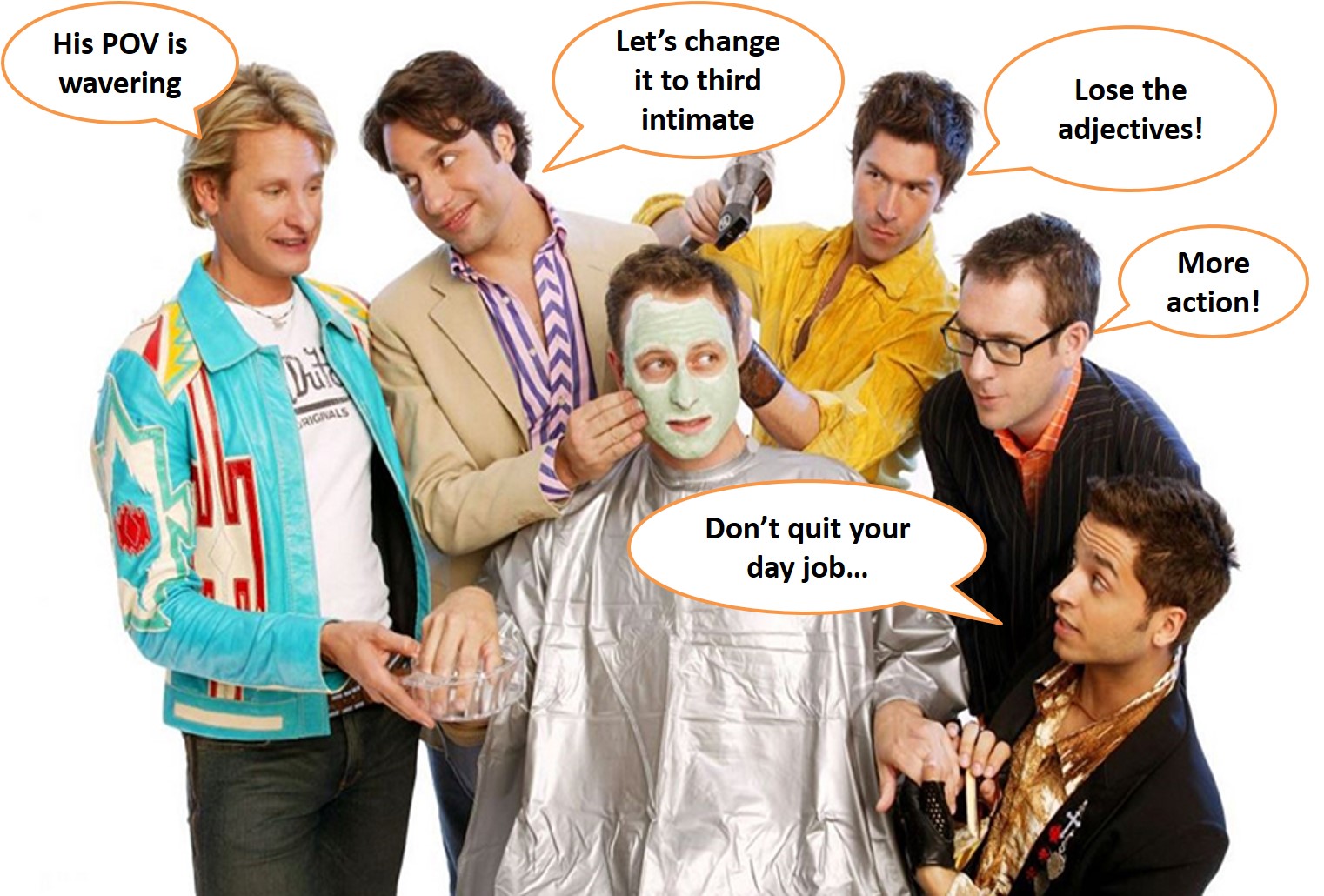
What was improved in the rewrite? The wavering point of view was eliminated. The first version shifted into omniscient and a man falling out of a window wouldn’t notice “glittering shards in the throb of red neon” or that his attacked had a “chiseled” face. That’s the writer getting in the way. And the second version puts the POV firmly in intimate third. It’s more exciting and visceral.

So, don’t dread rewriting. Think of it as BEFORE and AFTER. Write your first draft as quickly as you can and pour your heart and soul into it. Make mistakes and move on. Put it aside for at least three weeks. Then go back, print out your book (on paper!) and get out a red pencil. Read your book with a hard cold eye, looking for plot holes, digressions, flaccid or stereotyped characters, and anything that is even slightly confusing. Oh, and look for boring stuff. If it seems even a little boring to you, you can bet your royalties it will be ten times as boring to a reader.

Go forth and rewrite your novel with a happy eager heart, my swans. Oh, and you might want to rethink that man-bun.


First Page Critique – Untitled


Today’s submission is an untitled first chapter featuring a bartender in a classic hotel. Please enjoy then we’ll open the discussion.


CHAPTER 1

Under a trickle of air conditioning, Dylan swirled the bar spoon through a jumble of vermouth, bitters, Makers Mark, and ice. His shirt collar, rigid and wet, scraped against the back of his neck. Normally, he liked a penguin suit, the way it accentuated his biceps. But on the ten or so summer nights when the July heat pressed the moist cloth against his skin, he wished the owners would cough up enough cash for decent AC. Instead of cool comfort, they blew their wad preserving turn of the century crystal chandeliers, wrought iron balustrades, and red velvet wallpaper. Clayton Hotel’s clientele loved the ambience, confusing run-down with high style.

Dylan served the Manhattan to a regular at the end of the bar, a lawyer by the name of Jim whose pupils had overtaken the blue of his eyes. Must have gotten the 8-ball Dylan had stashed for him in room 414. This week, Jim wanted coke. Other weeks, ketamine or a tab of E. For the right price, Dylan could track anything down or make it himself. His meth was the purest in Portland. The graying lawyer sniffed hard and wiped his nose with a blue polka dot handkerchief for the fourth time that night. He set his half-empty martini glass on a gold napkin and waved his hand to get Dylan’s attention.

“You bruised my bourbon again.”

Dylan cleaned the mahogany bar top with a towel. “Ouch. Has it turned black and blue?”

The loose skin around Jim’s neck tightened. He was about to say something when a tall brunette in Lucite heels and a red leather bodysuit strolled past the dining room manager, a thin 40-something who looked so much like Rod Stewart in his sparkly blazers that everyone called him Rod. From deep down in his Rolodex, Rod could find the perfect escort for every man.

The brunette waved like a beauty queen. While she made her way across the dirty-blue carpet, her tits bouncing in gorgeous synchrony, everyone checked her out. She looked like a girl who came from someplace Dylan wanted to visit, like Malta or Majorca.

She took a seat next to Jim and clapped her red gloved hands against the bar top. Before Dylan could respond, she shot out, “Scarlet O’Hara.”

He walked towards her. “Scarlet? Nah. More like Rita Hayworth.”

She leaned forward, titties barely contained inside her sweetheart neckline. “Go heavy on the cran. Make it pretty and scarlet, just like Miss Morgan.”

~~~

The Brave Author does a good job of setting the scene without slowing the action to describe it. The reader is grounded right away: Clayton Hotel, a hot July night in Portland. The writing is generally clear and economical without extraneous verbiage.

The tone is noir and the scene has a 1980’s vibe, evoking the Tom Cruise film Cocktail. The dining room host-procurer character “Rod Stewart” reminded me of the tune “Some Guys Have All the Luck.”

Dylan, the POV character, quickly comes across as a disaffected bartender with a detached, snobbish, superior attitude toward his customers.

He’s vain and likes to show off his biceps, even though a tuxedo is miserably hot. Nice sensory detail of the collar chafing. One small nit: stiff collars generally cut into the throat rather than the back of the neck.

He takes pride in his skill set—“His meth was the purest in Portland.” He has no problem accommodating legal or illegal requests from his customers and feels disdain for them at the same time he profits from their cravings.

His banter is clever but insulting—“Ouch. Has it turned black and blue?” That crack nearly provokes an argument with Jim, the annoying, hopped-up lawyer whom Dylan can’t please.

Dylan is unabashedly sexist in his description of the brunette who flounces in on Lucite heels. He immediately flirts with her in front of Jim, even though Jim appears to be her john for the night. Dylan again pushes Jim’s buttons.

The potential for conflict is high. But…

Will readers want to follow a self-absorbed, egotistical, snobbish, drug-dealing, misogynistic antihero? 

The Brave Author takes a chance by leading off with an unsympathetic character. Some readers (especially women) will instantly dislike Dylan and put the book down. Others may read a little farther to see what happens next. But, unless Dylan shows more promise, they will soon grow weary of him.

Author-screenwriter Heywood Gould said about Cocktail: “…met a lot of interesting people behind the bar and very rarely was it someone who started out wanting to be a bartender. They all had ambitions, some smoldering and some completely forgotten or suppressed.”

Gould has expressed what’s missing—at least for me—in this first page.

Readers don’t necessarily have to like a character as long as there’s a quality they can relate to and identify with. How can the Brave Author add depth and humanity to this character to make him resonate with readers?

Here are a few questions that might trigger ideas:

What ambitions or longings does Dylan have? What does he want to find or achieve?

What does he struggle against? What disappointment marks him? What traps him in a job he dislikes?

I’m not suggesting a backstory info dump but rather a carefully chosen line or two that hints at the trouble that haunts him.

Another method to make an antihero work is to give him a distinct, unique voice or an unexpected worldview that fascinates the reader. A few examples of recent successful antiheroes: Dexter, Walter White in Breaking Bad, and Tony Soprano.

Literature through history is full of compelling antiheroes: Hamlet, Raskolnikov, Jay Gatsby, Michael Corleone.

~~~

I made the assumption that Dylan is the main character. But maybe he’s not.

Perhaps this first page introduces Dylan to set him up in an inciting incident. On page two, he could wind up dead in the Clayton Hotel dumpster and the story focuses on solving his murder.

Or maybe Dylan is the prey and the prostitute in the red leather bodysuit and Lucite heels is actually the undercover cop who busts him.

The story could go in dozens of different directions, which is why it’s difficult to judge from 400 words. However, in today’s competitive market, an author must grab the reader right off the bat. Often, the first page is the only shot you get and that’s why it must be pitch perfect.

~~~

A few line editing comments:

He was about to say something when a tall brunette in Lucite heels and a red leather bodysuit strolled past the dining room manager, a thin 40-something who looked so much like Rod Stewart in his sparkly blazers that everyone called him Rod.

The sentence is too long and gets confused between the brunette entering and the description of Rod. Suggest you split it up into shorter, punchy sentences and more paragraphs:

The loose skin around Jim’s neck tightened. He started to speak but movement at the entrance distracted him. 

A tall brunette in Lucite heels and a red leather bodysuit strolled across the room. She bounced in all the right places. Dylan and Jim stared, along with everyone else in the room.

Dylan winked at the dining room manager, a thin 40-something everyone called Rod because he looked like Rod Stewart in his sparkly blazers. Rod’s Rolodex guaranteed he could find the perfect match for every man. Looked like he succeeded again tonight.

The following line confused me: “Make it pretty and scarlet, just like Miss Morgan.” Is the woman introducing herself as Miss Morgan? Or is there another meaning?

I googled “Miss Morgan” to see if it was also the name of a cocktail, like Scarlett O’Hara and Rita Hayworth. I found a reference to an actress “Miss Morgan” in a TV series, “Keye Bondage Images.” Hmmm.

~~~

Brave Author, your writing is solid. You do a good job of setting the scene and describing characters while keeping the action moving forward. Well done.

If Dylan is the lead, work on developing his depth and humanity. If you make him a more compelling character, readers will want to follow him.


Over to you, TKZers. What do you think of Dylan? Do you have suggestions for our Brave Author?