We Become the Stories We Tell Ourselves

The idea for this post began with a quote attributed to Michael Cunningham in A Home at the End of the World

We become the stories we tell ourselves”

This is especially true of writers. If you tell yourself, “I’ll never find an agent” or “My writing isn’t good enough to score a publishing contract,” chances are you won’t. Why? Because you’ve adopted a negative mindset.

Same principal applies to, “I can only write on weekends.” If you tell yourself you can only write on weekends, you’re already making decisions about your ability to write Monday through Friday, so if you slip behind the keyboard on a weekday, it’ll be more difficult to write. You’ve handicapped your creativity with a fixed (negative) mindset.

We’ve discussed fixed vs. growth mindsets before. I want to revisit the Mental Game of Writing *shameless plug for JSB* from a different angle, because it’s not discussed enough in writers’ circles.

RAY EDWARD’S THOUGHT EXPERIMENT 

Imagine you’ve been given a treasure. This treasure, like all magical treasures, comes with conditions. While it’s an unlimited treasure, each day you can only take one gold coin. Just one. And every day you suffer from amnesia. When you forget you have this treasure, you lose a day of unlimited value.

How will you remind yourself to take the coin? Leave a note? Set an alarm? Phone a friend and ask them to remind you? How will you remember not to waste a single coin?

You already own this treasure. It’s called life. Consider this your reminder. Each new day offers endless possibilities, in life as well as writing. What will you do with your coin today? Will you squander it by scrolling through social media for hours? Or will you cash it in for its full value?

Look. We’re all guilty of procrastination from time to time. The trick is to prioritize your writing.

Every morning, I watch the sunrise. Not only does it inspire me, it grounds me with a positive mindset for the day. If you roll over and slap the snooze button, dreading the day ahead, you’ll start the day with a negative mindset. Things tend to roll downhill from there.

Have you ever heard a writer complain about being a lousy writer? That’s a fixed mindset. Their mind is made up. They will never write well. Period.

A growth mindset is positivity based. If that same writer said, “I may not be the best writer today, but I will be” they’ve flipped the script. Because now, they know if they continue to show up, they will improve.

See the difference?

The writer with the growth mindset is moving forward. The writer with the fixed mindset would rather complain about writing than study, hone, and implement their craft.

Writers aren’t the only ones who fall prey to a fixed mindset. It’s easy to do.

Do these excuses sound familiar?

  • Too much to do today. I’ll write tomorrow.
  • Can’t write now. I just worked an eight-hour shift.
  • Too tired to write.
  • Not in the mood to write today.
  • I’m not inspired.
  • I have writer’s block.

Every excuse is steeped in negativity, yet this is common rhetoric in the writing community.

Let’s pull back the veil on each one.

TOO MUCH TO DO TODAY — I’LL WRITE TOMORROW

When life shakes the to-do list in your face, it’s easy to avoid the keyboard. The problem is, tomorrow never comes. If you are a professional writer, or striving to become one, then you must prioritize your writing.

Can you carve out thirty minutes in your busy schedule today? How about fifteen? How about five? No one’s too busy to write a paragraph.

CAN’T WRITE NOW — JUST WORKED AN EIGHT-HOUR SHIFT 

Writers all over the world work a full-time day job. Lee Child wrote his first novel during his commute to and from work. If you’re driving, can you dictate into your phone? Hands-free, please! I don’t want to cause any accidents.

Or write on your phone during your lunch break.

Or start supper fifteen minutes later than usual — after you’ve hit the keyboard.

Priorities, priorities, priorities. How bad do you want it? If writing full-time is your ultimate goal, you must continue to show up.

If you train yourself to write for fifteen minutes when you arrive home from work, the word count will continue to grow. An ever-increasing word count leads to confidence, excitement, and joy. There’s no downside. None. If all you have is fifteen minutes, you must protect that time. Tell your family and friends how much writing means to you. The house won’t burn down if you disappear for fifteen uninterrupted minutes, nor will your children starve.

Some days the words will flow. Other days they won’t. That’s okay. You still made progress. Don’t get caught up in evaluating your writing or hitting a certain word count right away, or you’ll backslide into a negative mindset. Celebrate the fact that you showed up.

TOO TIRED TO WRITE

With all the snow blowing I’ve done this winter, it’d be easy for me to use the “too tired” excuse. Battling Mother Nature does wear me out, but I also have multiple writing projects that need my attention. I take time to rest, enjoy a nice hot cup of tea, then hit the keyboard. If my hands hurt from squeezing the handles of my snowblower (a common problem), I may only squeak out 500 words that day — self-care is equally important — but at least it’s something.

NOT IN THE MOOD TO WRITE TODAY 

If we sit around waiting to get in the mood to write, the WIP will languish on the hard drive for months, even years.

“The only way out is through.”

—Robert Frost

Here’s where having a solid writing routine in place makes all the difference. For me, it’s sliding on the headphones. Once I crank the music, the world fades away, my focus narrows on the screen, and I’m transported into my story. It’s a form of self-hypnosis. When I hear that playlist, my creativity soars.

Find a routine that works for you and stick with it. You may be surprised by how quickly you can jump into the zone.

I’M NOT INSPIRED 

Seriously? I’ve never understood this excuse. What are you waiting for, a lightning rod to shoot from the sky? Lemme tell ya, watching cat videos on social media won’t inspire you, either. Stop wasting precious writing time. Slide on the headphones, or whatever works for you, and write something, anything, even if it’s only a paragraph.

If you don’t know what to write, review your writing from the day before. It’ll come to you. If you’re still stuck, go for a walk. Alone. And think about your story.

Planners may have a slight advantage over pantsers in this regard. If I know my next milestone in the story — first plot point, first pinch point, midpoint, etc., etc. — then I’m able to say, “Okay, the MCs need to wind up doing this or that. How do I get there from here?”

The answer may require research. Or the introduction of a new character. Or better yet, kill a character. Nothing kickstarts creativity faster than raising the stakes.

I HAVE WRITER’S BLOCK 

Pah-lease. Writer’s block is nothing more than a negative mindset with a title attached. You’ve convinced yourself you cannot write for whatever reason. Flip the script in your head, and the words will flow like Niagara.

Perhaps, you’re overwhelmed. It happens. Take a breath. You’re okay. Move on.

Or maybe, real life has given you more than your fair share lately. Or you’ve written yourself into a corner. Figure out what the root cause is, but please don’t call it writer’s block.

Burnout is something else entirely — been there, done that, got the scars to prove it — the subject of which has too many variables to discuss now. Want me to cover it next time?
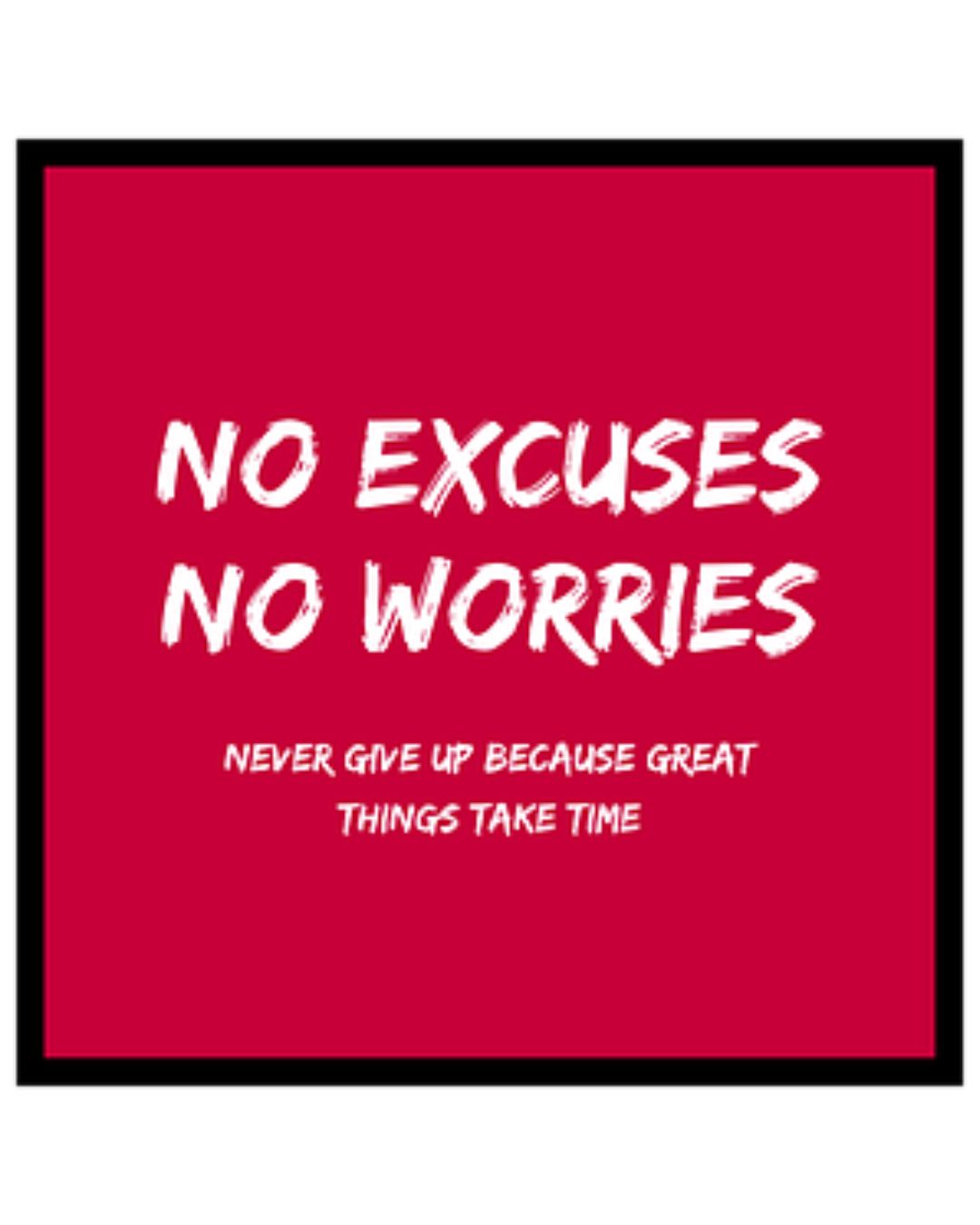
Maintaining a positive mindset takes work and perseverance, but you can do it… if you want to.

Therein lies the rub.

How will spend your treasure today?
First Draft Words of Wisdom

Whether we begin our story with the first draft, or outline before starting, we all have the first draft of our novel waiting for us. Today’s Words of Wisdom has three excerpts from posts giving advice on first drafts. Tosca Lee provides writing mindset help with her “#1 Rule of First drafts.”  Steven James lays out “Fiction Writing Keys for Non-Outliners” as one way to approach writing first drafts. Debbie Burke discusses “Outlining in Reverse” to help with revising your completed first draft.

The three posts are well-worth reading in their entirety, and, as always, are date-linked at the bottom of their respective excepts. I hope you’ll weigh in with your thoughts on these tips.

Eight novels in (ten, if you count the unpublishable ones), I have an instinct about the basic material I need to get down, more or less in order. More importantly, I have trust in the writing and editing process and faith that I can patch up the leaks—later.

For now, in the early stages, I’m only interested in one thing: getting the clay on the wheel. I trust that there are seeds in there—of things real, from me, that will resonate in another soul in months and years to come. I don’t know what they are yet and it’s not my business to force them into shape.

I have a few rules for this process but the first is the one I go back to every time, and it is this:

Write like no one will ever read it.

“But what about the audience? You have to think about them!” Forget them. Everything you do from your edits on will be about them. But for now, write with the candor you would in a secret journal. This isn’t about pantsing or plotting. It’s about capturing the grit you need without worrying that it’s pretty or eloquent or clean enough. Don’t be pretty. Be raw.

If you are an aspiring writer whose end goal is to be published, let me tell you something: you will never be as bold and daring as you are in those first years before your work gets published. Before critics post public reviews of your work and readers rank it alongside blenders on Amazon. Before even accolades usher their own kind of doubt into the next endeavor. This undiscovered period in your life is an advantage you won’t have twice. Use it.

These days, I have to trick myself into following this rule. I know my agent, editor, and a movie producer are waiting for my first draft. I want them to like it. Oh, who am I kidding—I want them to tell me it’s the best thing they’ve ever read, that they wept, told their therapist, and pre-ordered 100 copies for friends and distant acquaintances.

But the only way I will touch one cell of their soul is if I banish their faces from my mind. No one will read this. It is my mantra. This is me, writing secret stuff, dealing some audacious literary badassery in private. Time to edit, censor, and make coherent later. The good stuff happens now.

Tosca Lee—October 28, 2015

When people outline their stories, they’ll inevitably come up with ideas for scenes that they think are important to the plot, but the transitions between these scenes (in terms of the character’s motivation to move to another place or take a specific action) will often be weak.

Why?

The impetus to move the story to the next plot point is so strong that it can end up overriding the believability of the character’s choice in that moment of the story.

Read that last sentence again. It’s a key one.

Stated another way, the author imposes the plot onto the clay without letting it be shaped by the essential forces of believability, causality, and context.

You might have had this experience: you’re reading a novel and it feels like there’s an agenda to the story that isn’t dictated by the narrative events. This is a typical problem for people who outline their stories. Instead, listen to the story, and respond to where it takes you.

You can often tell that an author outlined or “plotted out” her story when you read a book and find yourself thinking things like,

◦ “But I thought she was shy? Why would she act like that?” 

◦ “I don’t get it. That doesn’t make sense. He would never say that.” 

◦ “What?! I thought she was . . . ?” 

◦ “Whatever happened to the . . . ? Couldn’t she use that right now?” 

◦ “I don’t understand why they’re not . . . ”

This happens when an author stops asking, “What would naturally happen next?” and starts asking, “What do I need to have happen to move this story toward the climax?”

The first question grows from the story itself, the second places artificial pressure on the story to do something that might not be causally or believably connected to the story events that just happened.

As soon as your character doesn’t act in a believable way, it’ll cause readers to ask, “Why doesn’t she just . . . ?” And as soon as that happens, they’re no longer emotionally present in the story.

As you learn to feel out the direction of the story by constantly asking yourself what would naturally happen next, based on the narrative forces that shape all stories, you’ll find your characters acting in more believable and honest ways and your story will flow more smoothly, contingently, and coherently.

Here’s one of the biggest problems with starting by writing an outline: You’ll be tempted to stick to it. You’ll get to a certain place and stop digging, even though there might be an awful lot of interesting dinosaur left to uncover.

Follow rabbit trails.

Forget all that rubbish you’ve heard about staying on track and not following rabbit trails.

Yes, of course you should follow them. It’s inherent to the creative process. What you at first thought was just a rabbit trail leading nowhere in particular might take you to a breathtaking overlook that far eclipses everything you previously had in mind for your story.

If you’re going to come up with original stories, you’ll always brainstorm more scenes and write more words than you can use. This isn’t wasted effort; it’s part of the process. Every idea is a doorway to the next.

So, where to start? Put an intriguing character in a challenging situation and see how he responds. Sometimes he’ll surprise you in how he acts, or demand a bigger part in the story.

And sometimes a random character will appear out of nowhere and vie for a part in the story.

Steven James—November 3, 2014

Like a building, a finished story almost never corresponds to the initial idea. That’s why I don’t outline before writing that initial draft of discovery.

However, once the first draft is finished, I create an outline in the form of as-builts. That’s where the pantser’s errors and oversights show up. And, believe me, there will be plenty.

Oops, I forgot to install reinforcing bars before I poured the slab. Without rebar, the foundation cracks and sags. Gotta jackhammer up the concrete and start over.

Darn, I forgot to include a door that connects the kitchen and the dining room. Better get out the reciprocating saw and cut an opening in that solid wall.

Wow, the shingles on the roof look beautiful…except some of the trusses underneath are missing. The first snowfall causes the whole thing to collapse. Drat.

You get the idea.

Dennis Foley, novelist/screenwriter/educator extraordinaire, introduced me to the concept of “as built” outlines in fiction. He recommends writing in three steps:

  1. Think it up;
  2. Write it up; 
  3. Fix it up.

Pantsers feel strangled if we try to adhere to a formal outline during the initial draft. We’d much rather give free rein to our imaginations during Steps 1 and 2.

But, eventually, all that unfettered creativity needs to be organized. Step 3, the “fix it up” stage, is the time to create an “as built” outline.

Outlining in reverse points out structural problems with the plot: events that are out of order, a character who shows up simultaneously in two different places, missing time periods that must be accounted for, lapses in logic, etc. Once those glitches are repaired, the story becomes a coherent sequence of rising complications that ultimately delivers a satisfying climax.

My WIP, Lost in Irma, takes place in Florida during Hurricane Irma in September, 2017, a catastrophe that left 17 million people without electricity. The story covers a two-week period during and after the storm and had to adhere to actual events in the order that they occurred.

The main characters, Tawny Lindholm and Tillman Rosenbaum, are visiting Tillman’s high school coach, Smoky Lido, in New Port Richey when Irma hits. During the height of the storm, Smoky disappears. Tawny and Tillman spend the rest of the book trying to find him. Is he dead or alive? Did he flee because of gambling debts? Was he abducted by thugs he owed money to? Or did he vanish into the storm to commit suicide?

Hurricane-related emergencies overwhelmed law enforcement, leaving Tawny and Tillman on their own to look for Smoky. Power blackouts, gasoline shortages, and unreliable cell service were integral to the plot. They couldn’t make phone calls or search the internet. If they drove, they risked getting stuck in floodwaters or running out of gas.

To pin down significant events on the dates they actually happened, I printed out a blank calendar from September 2017.  I filled in the squares with factual information like: what time did Irma hit New Port Richey (late Saturday night, early Sunday morning); what time did the power go out there (around midnight); when did the Anclote River flood (Tuesday)?

What goes into the as-built outline?

Timelines: The chronology of events is important to nail down correctly which is why I use the calendar technique above.

Scene by scene outline – This traces major characters and plot developments. What day is it? What time is it? Where are they? What action happens?

Debbie Burke—March 3, 2020

***

  1. What’s your own #1 rule when writing a first draft?
  2. What do you think of Steven James’s advice? Do you follow “rabbit trails” when drafting?
  3. Do you outline your completed first draft to help with revision? If so, do you have any advice?