Girl on the Wrong Train?

BN-LH180_GIRLTR_J_20151116151400My husband alerted to me to this article in the Wall Street Journal ( ‘loved-the-novel-about-a-girl-on-a-train-you-may-have-read-the-wrong-book’) about the unexpected plot twist associated with the best selling book by Paula Hawkins, The Girl on the Train, and readers confusing it with another thriller written by Alison Waines, Girl on a Train. Since my book group just did Hawkins’ book (and we all actually read the right book!) it made me chuckle – as it would seem that many book groups, book reviews and reader purchases have fallen prey to the confusion that comes from two, very similarly titled books.

I don’t believe I’ve ever actually bought the wrong book based on the title alone, but according to this article this is becoming a more common issue especially with the plethora of e-books now available. The article pointed to the novel ‘Joyland’ by Emily Schultz who saw her e-book sales jump after Stephen King’s ‘Joyland’ was released (I’m suspecting some readers would have been a little upset getting the former when they thought they were getting the latter – but Schultz said the confusion did open up a new audience for her!).

When I’m choosing the initial title for a work-in-progress I always search on Amazon to make sure that the proposed title I’m thinking of hasn’t already been taken. Likewise I usually do a quick Google search just to make sure the title isn’t  some well-known book/blog/other entity that I’m totally ignorant of…Now I know publishers often change book titles anyway so it’s not something I get too hung up over but still, I try not to knowingly call my latest book something really similar to one already available (especially when it’s the same genre). Likewise I avoid choosing titles that are likely to confuse readers or deliberately mimic a current bestselling series  (the WSJ pointed to a good example – ‘The Girl with the Cat Tatoo’). Still I’m sure it was a happy coincidence for Waines when her sales numbers took off because readers were buying her book, mistaking it for Hawkins’ bestseller!

So, have you ever bought the wrong book based on a confusing or similar sounding title? Have you perhaps benefitted as an author from a confusion like this? When choosing the title for your book how much research do you do to ensure yours will stand out (or do you simply not worry?)

Happy Thanksgiving this week to you all. May you, like Alison Waines, be the recipient of some happy coincidences in the holiday period ahead!


Reader Friday: The Best “Bond Girl”?

Last week, we polled TKZers about which actor best portrayed Ian Fleming’s James Bond character. In the interest of equal gender-time, today let’s say who we think played the best Bond Girl. (Although I choke on the word “girl.” But it is what it is, as they say.) This was a tough assignment–turns out there have been about a bazillion Bond Girls–the Good, the Bad, and the Very Good When They’re Very Bad. I’ve only skimmed the surface of some of the better known Bond Girls in this post. Add your nominations for any I missed in the Comments.

Have at it!

Dr. No

Dr. No had almost too many Bond gals to keep track of. Here are some of the top Bondesses.

I mean, come on. Can anything beat Ursula Andress emerging from the waves as Honey Ryder in Dr. No? (Well, maybe Bo Derek topped that Venus rising moment in Ten, but as a non-Bondess, Bo doesn’t count.) Eunice Gayson (as Sylva Trench) also appeared in Dr. No and several other Bond films. She is famous for introducing herself to Bond as “Trench. Sylvia Trench.” Bond picked up that intro line and made it his mocking trademark way of introducing himself. Zena Marshall also appeared in that film as Miss Taro, Evil Spy Extraordinaire.

1Ursula-Andress-dr-no

1miss_taro__zena_marshall__from__dr__no__by_memory2ashes-d6i1ry71zjbeg

From Russia With Love

Daniela Bianchi, hot Russian chick turned reluctant spy “Tatiana Romanova”, who winds up falling for Bond. What could be more fun?

1d41MtI0GrbZL._SX300_

Goldfinger

Pussy Galore, Goldfinger, you get the idea. Played by Honor Blackman. “Jill Masterson”, played by Shirley Eaton, also played a doomed Bondess in the film. She died Midas-like, covered in gold paint.

1honor024.bond.honor.mh.100212

141Us2xC9XDL._SX300_


Thunderball

Claudine Auger played Domino Derval, mistress of an evil SPECTRE agent.

!thunder5d4b1e2c63ebf17467e60111cf16d55a

You Only Live Twice

Mie Hama played Kissy Suzuki, who had a mock wedding with Bond during the film.

1kissy-suzuki

On Her Majesty’s Secret Service

James Bond fell in love with Teresa di Vicenso, played by Diana Rigg in this film. Can you blame him?1dianatracy-di-vicenzo


Diamonds Are Forever

Jill St. John played Tiffany Case, a diamond smuggler. And Trina Parks played judo Bondess Thumper. Wowzer.

1Jill-St-John

1thumper-trina-parks


Seriously, there are so many Bond Girls, I can’t profile all of them in one shot. Here are some other notable Bond Girls:

Britt Ekland as Mary Goodnight in The Man With The Golden Gun.

Barbara Bach as Anya Amasova in The Spy Who Loved Me.

Lois Chiles as Holly Goodhead (!) in Moonraker.

Maud Adams as Octopussy in Octopussy.

Grace Jones as May Day in A View To A Kill.

Izabella Scorupco as Natalya Simonova in Goldeneye.

Teri Hatcher as Paris Carver in Tomorrow Never Dies.

Halle Berry as Jinx in Die Another Day.1halleGiacinta-Jinx-Johnson1


Last but not least, we have a character who didn’t get a name; she was simply called “Bond’s lover” in Skyfall, played by Tonia Sotiropoulou. I guess people were too busy freaking out about James Bond as a blond to give her character an actual name. Bond Girls nowadays need to “lean in” and get some better stature in Hollywood, I’m thinking.1bondgirlimages

Phew! There are many, many more Bond Girls in films that aren’t mentioned here. Are any of these your favorite, or is it one that I missed? Now let’s all go over to Netflix and binge out watching Bond flicks. Happy Friday!

First Page Critique: Fallen From Grace

Jordan Dane
@JordanDane
Wikipedia Public Domain

Wikipedia Public Domain

A brave author has anonymously submitted the first 450 words of their work for critique. Read and enjoy. I’ll provide my comments on the flipside. Please feel free to give your constructive criticism in your comments to help this author with feedback.

***

When I first walked in, I hadn’t seen the guy who tried to kill me four years earlier.

I’d squeezed past the wooden tables, threw a nod the bartender’s way, and then walked around a railing to the right side. This is where all the pool tables were arranged. Usually the place was empty, but tonight, two middle-aged guys looked to be finishing a game while a couple of young girls played while laughing on about something at another table on the opposite side. The whacking of pool balls clacked over the country music that babbled over static from a stereo fixed on the wall.

I chose the lone pool table in the rear corner of the pool hall, like usual, and shrugged off my coat. The place was dark, but wide cones of light shone down on the pool tables from a light fixture above. I began retrieving the cue balls from the pockets and setting up the table.

When I’d glanced up, debating on a beer, my eyes snagged on him. I couldn’t see much more than a shadow. The place was dark, except for the cones of light that shone down on the pool tables from above. At first all I saw was his body darkened by the dimness of the pool hall. He was bigger than most men, and perfectly still, like a mannequin. It was perhaps unusual, but not worth focusing on. My mind didn’t pay him attention for too long. After a second had passed, it had wandered on to other thoughts.

It wasn’t until my eyes adjusted to the darkness a few minutes later that I saw him in more, this time in more detail.

He was slumped in a chair too small for him, taking small measured sips from a glass of amber liquid. It was a face coarse like alligator hide, broad and mean looking, with a small forehead cut deep with hard frown lines and cheeks pitted with craters. The face sloped and rounded down to a strong cleft chin peppered with stubble. The eyes, dark and cold like bullet holes, glared my way.

It was the kind of face you’d pick out of a line-up even if you weren’t sure that was the guy who was guilty. It was a face I knew all too well.

***

Feedback:

1.) Opener POV Issue – The first sentence has a point of view problem. Can you see it? How can the character “know” the man who tried to kill him is in the pool hall when he hadn’t seen him? I’m sure the first sentence is intended to grip the reader with the mystery of the deadly conflict between these two men and set up the tension, but unfortunately the POV issue deflated it for me from the start.

2,) Pull The Reader In – Having a gripping first line isn’t enough if the next two paragraphs (or a POV error in that first sentence) defuse all the tension and work against any imagery that might have been established. The next two paragraphs go into the setting, but the descriptions are vague and add nothing to the mood of the scene. It’s like the author is doing an inventory of the room to paint a picture that would have been more effective if the voice of the character had been more colorful and expressed more of an opinion of the pool hall’s patrons and decor, or added mystery. I recommend a strong opening line, followed by more intrigue to pull the reader in with mystery elements, in this case. Otherwise the opener is totally forgettable.

REWRITE Example: I hadn’t been back to Rudy’s Pool Hall since the day I almost died in this dump. I stubbed out my fourth cigarette as I leaned against my truck in the parking lot and made up my mind that I had to do it. I had to walk inside and see for myself. It wasn’t about daring fate to take another shot at me, A man had to face his demons, even if one of those demons outweighed him by fifty pounds. 

This rewrite suggestion creates an unexplained mystery of what happened years ago and hints of another man who is bigger than him. It also establishes the gender of the POV character as male. His 4th smoke shows he’s nervous and is building up courage to go inside. Once he’s inside, it’s already set up that he’s looking for someone and is haunted my his memories. Build on that. The author could set the scene of what the pool hall looks like, but never forget the tension. Let it build.

3.) First Person POV Has Gender Challenge – When an author chooses to write in first person POV, it’s important to try and establish the gender of the main character before the reader gets into the story too much. In this case I assumed this is a man, but nothing in this intro actually reveals that. This could easily be a woman.

4.) Where the Scene Starts – The scene might start with the 4th paragraph, the sentence that starts with “When I’d glanced up, debating on a beer, my eyes snagged on him.” This is the first place where the character truly sees his nemesis. The author might build up to this moment but creating a setting of a seedy pool hall. Why is the character there? Is he to meet someone? From the writing, I presume the guy is a pool player who comes to the place often. But maybe the mystery from the start could be that he hasn’t returned to this place since he almost died there.

5.) Redundant Imagery & Research Problems – In paragraph 3, there’s a line that is repeated in the next paragraph. The description is “cones of light shone down on the pool tables above.” Also, the last line in that paragraph describes the guy retrieving cue balls from the pockets. Big research error right out of the gate. There is only one cue ball and it is solid white. If this character is to be construed as an experienced player, the author must do research into the game of pool and know the basics that most people would know. I grew up with a pool table in my house. When we weren’t playing the game, my mom folded laundry on a field of green.

6.) The Wandering Mind – At the end of paragraph 4, I had to reread the last line. I usually try to rethink the use of the word “it” and clarify the subject so readers don’t have to be jolted from the book. In this case, the “it” should’ve been “my mind.” But this sentence reads as if this man has no control over his mind. His brain “wanders” without him being involved (ie. My mind didn’t pay him attention for too long.)

7.) Grip The Reader with Physical Reactions – The line “It wasn’t until my eyes adjusted to the darkness a few minutes later that I saw him in more, this time in more detail” needs rewriting to delete the typos, tighten it up and add more drama. What is the character’s physical reaction to seeing him at this moment? If the author wants to add the proper emotion to this scene, add that physical reaction to grip the reader.

8.) Setting Works Against the Drama of the Moment – The description of the menacing face in the pool hall is effective when it’s finally spelled out, but after the author has established how dark the place is, it made me wonder how much detail could actually be seen. Maybe have the guy stand up or lean into the light when he sees the main character.

With a rewrite, this first scene might establish the mystery of this confrontation and it certainly makes me intrigued over what happened in the past. I would recommend a more foreboding start that establishes this pool hall has a dark past for the character, but he goes there anyway. Don’t over-explain at the start. Pull the reader in with morsels of mystery that makes readers want to know more, like how the character is searching the darkness – for what? Be patient with luring the reader into the story. Set the mood, add a mystery, then climax with the final confrontation of that face.

What do you think, TKZers? Please provide feedback in your comments.

tmp_4087-TheLastVictim_highres-1601584079

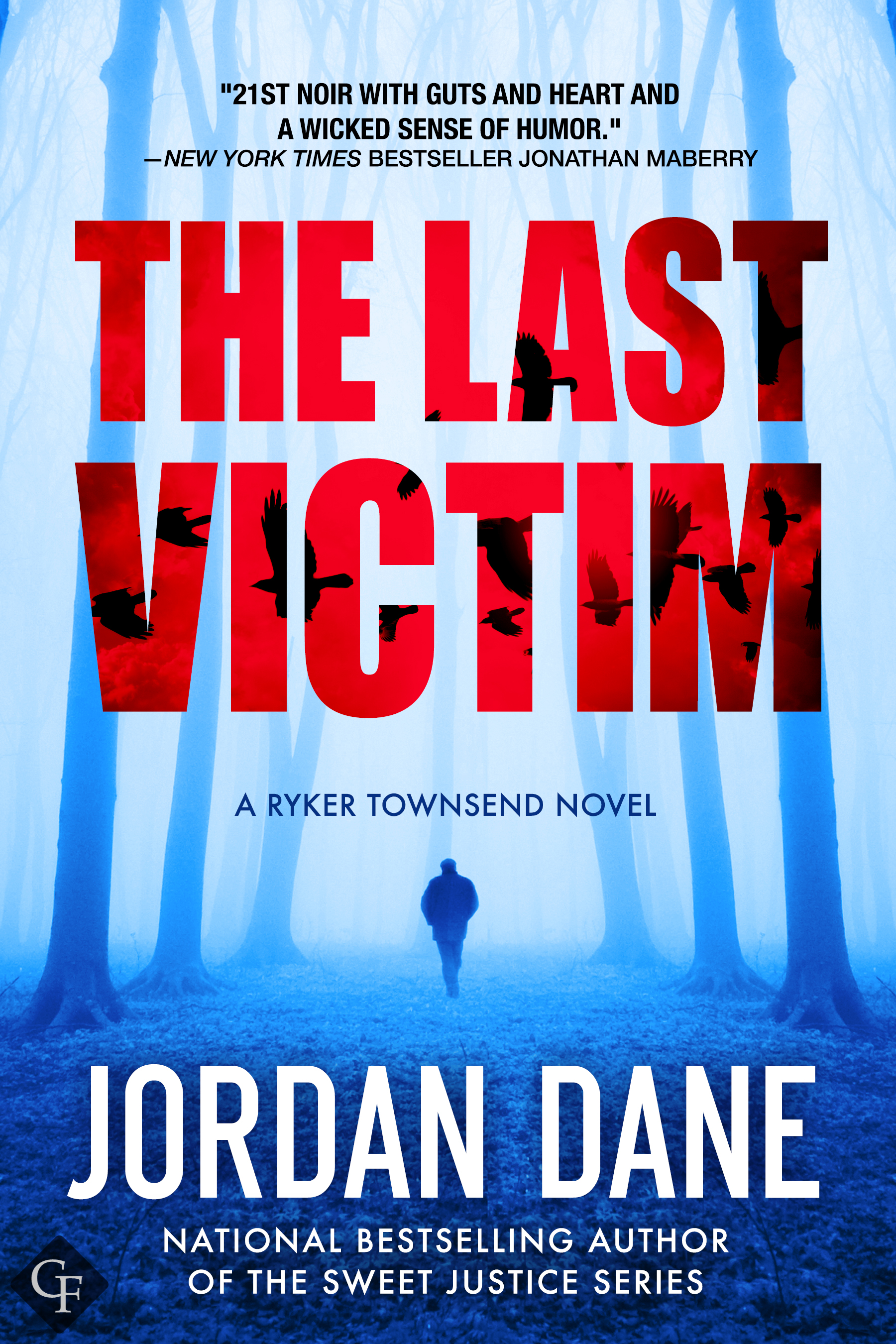
“When FBI profiler Ryker Townsend sleeps, the hunt begins.” The Last Victim now available in print and ebook. Sales links HERE.

What a Critique Group Can…and Cannot…Do For You

Shutterstock photo purchased by Kathryn Lilley TKZ

Shutterstock photo purchased by Kathryn Lilley TKZ

Today, we’re pleased to welcome editor and writer Debbie Burke back to TKZ.

by Debbie Burke

Critique groups are invaluable, if not essential, to the serious author. But they may not provide all the answers a writer needs. First, though, let’s talk about their benefits.

What are critique group strengths?    

Support – A CG provides much-needed camaraderie in this oft-lonely business. They throw us a lifeline when we get discouraged, nag us when we’re slacking off, and lend a shoulder to cry on when we receive rejections. They serve as our cheerleaders, therapists, and comrades in the trenches. They’re the first ones to open champagne for our successes. CG members are not only writing colleagues, they often become close friends. We develop a high level of trust and respect for each other, both professionally and personally.

Brainstorming – Here, critique groups really shine. If two heads are better than one, six or eight heads are exponentially better at throwing out suggestions. Feeding off each others energies and ideas, CGs solve many dilemmas that stymy a writer. I can’t count the number of dead ends CGs helped me work through.

Accountability – CGs exert pressure, either subtle or overt, to produce a certain number of pages for each session. They act as a de facto deadline for writers who don’t yet have an editor or agent breathing down their neck. If you show up empty-handed, you’re not meeting your obligation. Dozens of times, I’ve heard writers say, “I wouldn’t have written anything this week, except I needed to submit to the group.”

What are some CG limitations?

Diagnosis – CGs generally do a good job of homing in on a manuscript’s weak spots. If two or more people mark the same passage, you should pay attention. But while they recognize there is a problem, they can’t always diagnose exactly what it is or how to fix it. If CG suggestions don’t help enough, consultation with a developmental editor may be worthwhile.

Overlapping relationships – CG friendships may cloud our judgment of the story. A member of my group, psychologist Ann Minnett (author of Burden of Breath and Serita’s Shelf Life) recently offered a perceptive observation: “When I read A’s chapter, I hear her voice and accent. When I read B’s chapter, I think of her sense of humor, and can’t help but laugh.”

Which made me wonder…Does your CG like your story or do they like you?

When you’re face-to-face with your friends, you hear her charming British accent, see his playful wink. However, when a book is published, most readers will never meet the author, meaning the words must shoulder all the work. They need to be effective by themselves, without explanation or amplification.

Here is where online CGs might give a clearer, more “book-like” perspective. Without personal, visual, or auditory cues, their effort focuses entirely on the words.

Time constraints – My CG meets every two weeks, submitting 15-20 pages per session. At that rate, reviewing a novel-length manuscript takes six months to a year. By the time the group reaches the climactic chapter on page 365, no one remembers a subtle, but important, clue on page 48 that set up the surprise twist. This piecemeal approach is the most vexing limitation I’ve experienced with CGs.

Micro vs. Macro View – A corollary to the time constraint problem is the micro view by a CG. They examine your 20 pages per week and help polish each passage till it shines. When you string all these perfect chapters together, the resulting book should be excellent. Right?

Not necessarily. Close examination under the CG microscope may not adequately address global issues of plot development, pace, and momentum that require a macro view from an airplane.

At this point, beta readers or a professional editor may be more useful than a CG to determine how well the overall scope of your novel works.

Objectivity – Your CG works for months or years on a manuscript. They are mindful of the original draft and every subsequent rewrite. They help you build the story and become almost as vested as you are. But, like you, they’ve grown too close to the novel. Even if they beta-read the whole book, they may subconsciously insert things from earlier drafts that you later cut. They might not realize the missing part is missing.

At what point do you need to move beyond the critique group?

In my experience, CGs are probably most helpful for a work in progress. They provide invaluable suggestions to get you out of corners. They catch typos, misspellings, word choice goofs, and awkward phrasing. They tell you if characters are flat and boring or ridiculously over-the-top. They pull you out of the ditch and keep you moving forward.

After your CG has reviewed at least one complete draft, and you’ve incorporated their feedback, suggestions, and polishing, now it’s time to find beta readers and/or a professional editor. In fairness, you should submit a draft that’s as clean and error-free as possible. Beta readers or editors shouldn’t spend time line-editing when what you’re really seeking is the Big Picture. The cleaner the draft, the more their efforts can be focused on important issues.

Depending on how extensive the rewrite needs to be, you may want to run the revision draft through your CG one more time to ensure you’ve achieved improvements suggested by betas and/or editors.

Critique groups can be a writer’s best friend. By understanding both their strengths and limitations, you’ll receive maximum benefit from them.

How about you, TKZers? What is most helpful about your critique group?  What are the biggest limitations?

IMG_2585(1)Debbie Burke has participated in critique groups for more than twenty-five years. She credits critique buddies with keeping her sane (almost).

Reader Friday: Who Was The Best James Bond?

The buzz for the Oscars 2016 is just getting started (Will a blockbuster make the cut? Will Leonardo DiCaprio finally break his Curse?). Let’s set the mood by focusing on one of the  all-time great characters in cinema and popular literature: Ian Fleming’s James Bond.

Which actor gets your vote for “Best James Bond of All Time”?

Sean Connery

Starting with Dr. No in 1962, Connery established James Bond’s character in the public imagination. He played Bond in seven films overall.

1Sean-Connery-as-James-Bond

David Niven

Niven was Ian Fleming’s first choice to play Bond. Niven played an aging  Bond in Casino Royale (after Sean Connery turned down the role).

1davidnivenimages


George Lazenby

George Lazenby received mixed reviews for his one performance as James Bond.  The actor seemed to have second thoughts about the character as well. He quit the role before the release of the film, On Her Majesty’s Secret Service. 1George_Lazenby_London


Roger Moore

Roger Moore, played Bond as a somewhat comedic, debonair gentleman. Starting with Live and Let Die in 1973, Moore played Bond in seven films.

1rogermooreliveandletdie


Timothy Dalton

As played by actor Timothy Dalton, the character of James Bond took on ruthless and dark characteristics. His version never caught fire with moviegoers, however. He played Bond in two films.1timJames_Bond_(Timothy_Dalton)_-_Profile


Pierce Brosnan

Pierce Brosnan’s Bond recaptured the elegance and wit of the Moore era. He played Bond in four films.

1pierceGEJamesBond4


Daniel Craig

Daniel Craig is the current incarnation of James Bond; his is widely considered to be one of the most authentic portrayals of Ian Fleming’s characters–emphasizing strength over suaveness. 1danmen james bond actors daniel craig tuxedo 1920x1080 wallpaper_wallpaperswa.com_97


Your favorite Bond?

Which incarnation of Bond is your all-time favorite? Let us know in the Comments!

Back In a Flashback

By Joe Moore
@JoeMoore_writer

Flashback is a writing technique that allows the author to convey backstory (events from the past) while remaining in the present. It usually involves a situation in which something in a current scene causes a character to reminisce or ponder a previous event. The reason to create a flashback is to build character or advance the plot, or both. The secret to successfully employing this technique is to construct a smooth transition into and out of the flashback so as not to confuse the reader.

One of the easiest ways to enter a flashback is with the word “had”.

As Jim walked through his old neighborhood, a distant dog barking reminded him of the day he and his friends had skipped school to . . .

In addition, you want to shift the time progression from simple past tense (As Jim walked) to the past perfect tense (his friends had decided). Once you’ve entered the flashback and established the “past”, you can then revert back to simple past tense. At the conclusion of the flashback, use “had” again to transition back to current time.

Jim climbed the steps of his childhood home knowing those summer days with his friends had been the best times of his life.

In addition to transitions in and out of the flashback, it’s also important that the timeframe in which the flashback covers somewhat matches the real-time in which it’s experienced by the character. For instance, a flashback that covers the highs and lows of a woman’s previous marriage cannot be experienced during her stroll from the kitchen to the bedroom. But it would be an acceptable timeframe if she poured a glass of wine, strolled out onto her back porch and experienced it while sitting and watching the sun set and night fall. The reader must accept that the past and present timeframes are not unreasonably out of sync.

One final thought about flashbacks: it’s not a good idea to use one in the first couple of chapters. They can be quite confusing if thrown at the reader too soon. Wait until your reader has established at least a basic relationship with a character before taking them on a leap into the past. Flashbacks should be used sparingly. Better yet, use other techniques to relay backstory and avoid flashbacks altogether if possible.

Any additional advice on using or not using flashbacks?

Suspense: To Be Exciting,
You Need To Be A Little Dull

peyton1

This suspense is terrible. I hope it will last.– Oscar Wilde

By PJ Parrish

Sunday, I picked up the latest by a bestselling thriller writer and about halfway through, I realized it was sorta…unthrilling. So I put it aside and tuned into the Broncos-Colts game. I didn’t expect much in the way of entertainment here either because I knew this old story. I mean, Denver was 4-0 and Indianapolis was 3-5. Denver has Manning and Indy has, at best, a little Luck.

But lo and behold! The Colts were winning 17-0. Well, I thought, this is kinda interesting. So I stuck around. And then, Denver returned a punt 83 yards for TD.

Hmmm.

Then Peyton Manning hit for a TD, Denver got a field goal and suddenly, we were all knotted up at 17-all. Early in the fourth quarter, Andrew Luck threw a TD but Manning answered with one of his own and we were tied again! Until Adam Vinatieri, who is 95-years-old and never misses despite having only seven toes, kicked a field goal putting the Colts ahead by three!

Six minutes left. But I was definitely not turning this one off now because Denver was driving. And how’s this for a twist? Peyton was only 30 yards away from becoming the leading passer of all time, surpassing Brett Favre!

Tick…tick…tick.

OH MY GOD! Peyton is picked off!

Can the Colts hang on? There’s four minutes left and Frank Gore is running the ball but he’s 105-years-old and has a habit of putting the rock on the ground. Denver uses its last time out. But here is the back story that I already know about this drama: Peyton leads the league with 43 fourth-quarter comebacks.

Can he do it again? Will he break the passing record? Will the Broncos stay perfect? Will Frank cough up another hairball like he did last week?

The suspense was killing me.

Frank is tackled on third down. Ninety seconds left! Peyton’s going to get the ball back! Wait! Is that a flag? Some guy named Aqib Talib poked a Colt in the eye and Denver gets flagged for unsportsmanlike conduct!

It’s over. Colts win.

{{{Whew}}}

Now that was suspense. After that, I had no desire to go back to my book. Because despite the book’s stellar blurbs and the reputation of the author as the Master of the Twist, it wasn’t near as good as that football game.

The game was classic David and Goliath with a little Joseph Campbell The Hero’s Journey thrown in, yet it still went against my expectations. It had a good mix of pacing, with zip-fast passing attacks and slow grind-it-out running. It had setbacks and surprises. It had heroes and eye-gouging villains. And just enough twists to keep me guessing.

Think there’s a lesson here?

A good sports game has a lot in common with a good book or movie. Sitting on your barstool watching Daniel Murphy commit that error in game four and wondering if the Mets are doomed. Sitting in the triplex watching The Fugitive and wondering if Harrison Ford is going to jump off the dam. Or turning just one more page to find out if Amy is alive or is the girl gone for good. They are all related.

There’s the old Hitchcock formula: 1. A couple is sitting at a table talking. 2. The audience is shown a time bomb beneath the table and the amount of time left before it explodes. 3. The couple continues talking, unaware of the danger. 4. The audience eyes a clock in the background.

The surprise, Hitchcock said, didn’t come from the bomb itself; it came from the tension of not seeing it.

Speaking of formulas, there actually is one for suspense:

Suspense: t = (E t [(µ¿ t+1 – µ t)²])½

I didn’t make this up, believe me. It was created by Emir Kamenica and Alexander Frankel of the University of Chicago Booth School of Business. It is basically an equation about time and expectations: “t” represents the period of time a moment of suspense is occurring, “E” is the expectations at that time, the Greek mu indicates your belief in the next thing to happen, the +1 is your belief in the future, the tilde represents uncertainty, and the subtracted mu is the belief you might have tomorrow.

That made your brain hurt, right? Mine, too. But hey, you sat through my football metaphor, so stay with me a little longer. The Chicago guys also developed a formula for surprise, which is easier to stomach for us math-challenged types. It boils down to this: what your beliefs are now minus what your beliefs were yesterday.

Their paper “Suspense and Surprise” (co-written with Northwestern University economics professor Jeffrey Ely) was published in the “Journal of Political Economy.” It was inspired by their observation that in various types of entertainment – gambling, watching sports, reading mysteries – people don’t really WANT to know the outcome.

What they DO want is a “slow reveal of information.” As one of them put it in an article in the Chicago Tribune: “To be exciting, we found that things need to get dull.”

Information revealed over time generates drama in two ways: suspense and surprise. Suspense is all about BEFORE, ie something is going to happen. (the ticking bomb under the chair). Surprise is about AFTER, ie you’re surprised that something unexpected happened. (the bomb didn’t go off!) If you are led to believe one thing is going to happen (Broncos will win!) but then are surprised by the unexpected (Colts prevail!) that can be pretty powerful.

So how do you translate this to your own writing?

I’ll let Kamenica explain. He goes back to the Hitchcock formula: “Let’s take that idea and ask a mathematical question: How much suspense can you possibly generate?’ Putting that bomb there generates suspense, but how long can you leave it there? Can you leave it the duration of the movie? Or is that boring? Once you put it there, when do you decide for it to go off? One-third of the way through? One-half? If I am invested, as a viewer, how frequently should uncertainty be resolved? You have a threat, information that (a bomb) will explode, then it gets resolved, the movie continues. But will these people survive the next danger? How often can you do that — change an audience view?”

He has the answer, of course: Three times.

“Say you are writing a mystery,” Kamenica goes on in the Chicago Tribune article, “Zero twists is bad. And one thousand twists is also bad — again, for something to be exciting, it must occasionally become boring. So, three. The math delivers surprisingly concrete prescriptions. That number is constrained to a stylized view, characteristic mystery novel: Is it the maid or butler who did it? Does the protagonist live or die? A novelist must lead you in one direction then …”

Added his colleague Frankel: “The thing is, we also found that you can’t really have a definite number of twists. Three is average. Yet if you know there are three twists, those twists are not actually twists — you are now waiting for the twist.”

And that, to me, is the major lesson here. Not that your book must conform to a three-twist formula. Because if your readers know you have three twists, you’ve lost the suspense. The lesson, to me, is less might just be more.

That’s why I gave up on that book I was reading. Its pacing was overly frenetic, with no slow moments for me to catch my breath. And the writer — excuse me, Master of the Twist — was so intent on forcing me through one more complication, one more bend in the road, one more plot gymnastic, that I began to anticipate his next move. I put the book down because the enjoyment was gone. The fun was leached away. The thrill was gone.

If your readers know you will have a dramatic unexpected twist at the end, then your book will no longer have a dramatic unexpected twist at the end.

So maybe it comes down to this: If you want to be thrilling, you also have to be willing to be boring very so often.


Key Layers to Writing a Solid Characterization

Jordan Dane
@JordanDane

Image purchased from iStock by Jordan Dane

Image purchased from iStock by Jordan Dane

Characterization is the way an author conveys the important (and hopefully memorable traits) of their main character. An author should have a vision for how their character looks, speaks, thinks, and interacts in their world. A writer can directly state what their character is all about by saying, “George is a rigid man, both in posture and judgmental temperament.” Or an author can convey key elements and paint a picture of their character by more subtle means, such as in their actions or manner of speech or even body language.

A first person narrative provides an intimate voice for a character, as if the reader has found a personal diary of private thoughts. A third person (Deep Point of View) can be compelling if the voice of the character gives insight into who they are and allows for a colorful and distinct dialogue and internal monologue.

Excerpt from The Last Victim (First Person POV):

My mind acted like a hard drive of stored random facts, especially at stress times. Sometimes they hit me hard and I blurted them aloud. That made dating a challenge. I’d always been drawn to intelligent women, but once I let them into my world, crossing that line usually ended any relationship. I simply had no interest in hiding who I was.

In this excerpt, I envisioned FBI profiler Ryker Townsend as socially awkward yet highly effective at his job. He’s a man with secrets, even from his own team. To be good at his job, he removes any filter he has over the way he speaks so he can access key elements stored in his brain. He trusts his instincts and his team to be himself, and in his personal life he is unapologetic for his peculiar mental leaps. His work is everything to him.

In The Last Victim, I portray Ryker’s life at home where he’s still living in boxes after a recent move, yet his work life is well-ordered. He’s charmingly clueless about his affect on women and very serious minded. He’s a case solver and a high achiever because of how his mind works, yet his mental gymnastics become a challenge in a social setting, where he’s out of his element most of the time. His highly focused approach to his work (and his secretive personal life) becomes the very weakness that could get him killed when he chooses to follow a lead alone. The clues force him to cross paths with the ruthless serial killer he’s hunting, a psychopath who knows how to hide in plain sight.

It’s important for an author to have a picture of the character in their mind’s eye. I often create a storyboard of images to reinforce my ideas. Or I imagine how the character will speak (perhaps by picturing an actor I see for the character). I also give the character baggage that will challenge them with conflict. Often their weakness can get them killed or become a major crutch. Above all, a main character needs to seem real and believable to the reader with a full life on paper.

Here are questions an author might ask about their main character(s) in order to flesh them out:

1.) Who are their friends?
2.) How do they dress? What do they look like?
3.) How do they live at home? Is their work life different?
4.) Do they have hobbies or interests outside of work? What do they care about? Their passions?
5.) How do they interact with others? How do others react to them?
6.) What makes them angry?
7.) What would they die for?
8.) What are their weaknesses?
9.) What do they fear?
10.) Which adjectives would the author use to describe the character’s personality?
11.) What does the character think inside their head? What do they share?
12.) How has their past shaped their life? Is there a traumatic incident that changed everything? How is this manifested in their present?

Once an author has a solid image and characterization in their mind, a writer can set up conflicts to give that character a starring role. Can they overcome their weaknesses? Give them a journey throughout the book that will exploit their deepest insecurities or force them to deal with their worst fears. A compelling characterization is like the foundation to a building. The more solid and well-thought out it is from the start, the stronger the story will be when you build onto it.

For discussion: Please share any tips you have to creating your characters. Do you storyboard images? What resources have helped you?

tmp_4087-TheLastVictim_highres-1601584079
The Last Victim now available in print and ebook. Sales links HERE: “When FBI profiler Ryker Townsend sleeps, the hunt begins.” Townsend has a secret he won’t share with anyone–not even his own team–that sets him on the trail of a ruthless psychopath alone. 

Writing and Publishing Links Roundup for Week of 11/3

Shutterstock photo purchased by TKZHere’s a links roundup for some recent, interesting articles about writing and the publishing biz. (Link texts follow the hyperlinks). Enjoy reading!

(PW) The Best Books of 2015:
http://best-books.publishersweekly.com/pw/best-books/2015

(PBS) Three Lessons on Writing from J.K. Rowling
http://www.pbs.org/newshour/rundown/j-k-rowlings-lessons-writing/#.Vjh9ku-_TQk.twitter

(Writers in the Storm blog via WD) Query Letters Pet Peeves (by Agents)
https://writersinthestorm.wordpress.com/2014/01/03/query-letter-pet-peeves-agents-speak/

(PW) How to build an author’s platform through email lists
http://www.publishersweekly.com/pw/by-topic/authors/pw-select/article/68469-how-to-build-an-author-platform-through-email-lists.html?utm_content=buffera6df3&utm_medium=social&utm_source=twitter.com&utm_campaign=buffer

(NYT) Russia: Librarian accused of allowing access to banned books
http://nyti.ms/1Pi1UpF

(PW) How to get Self-published books into stores and libraries
http://www.publishersweekly.com/pw/by-topic/authors/pw-select/article/68467-how-to-get-self-published-books-into-stores-and-libraries.html

(PW) Want to Succeed in Self-publishing? Tips from an Indie Author (Tony Rich)
http://tinyurl.com/q48o5rr

How about you? In the Comments, please let us know about any interesting articles to add to our list. Thanks!