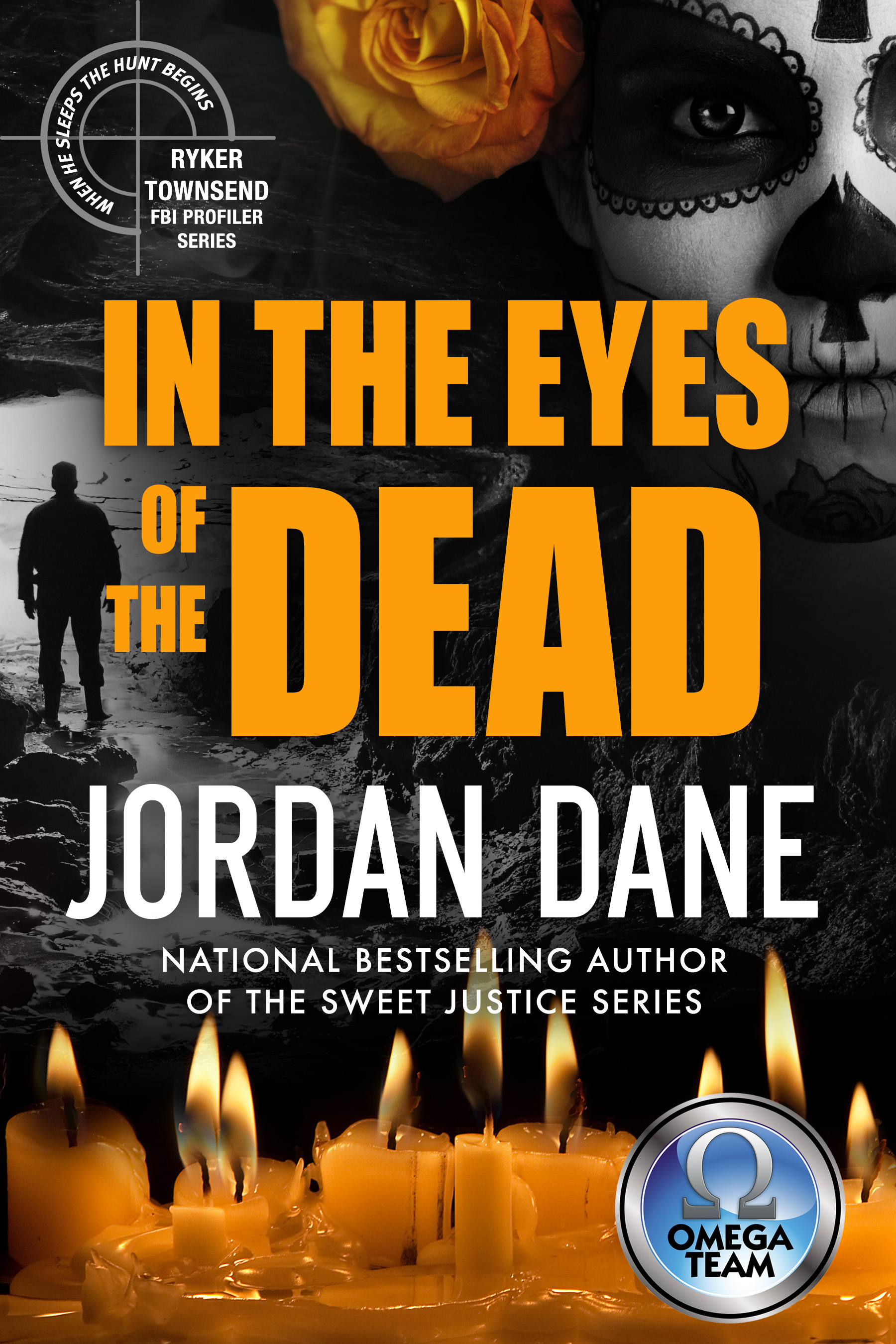
The challenges of this 31,000 word novella centered on crossing my Ryker Townsend FBI Profiler series into Susan’s Navy SEAL world, using one of her novels (Protecting Summer) and a key character, Sam “Mozart” Reed, from that book.
Challenges: 1.) Blending two worlds – My dark crime fiction world had to blend seamlessly into Susan’s romance action/adventure world of the military. That meant I had to bump up my romance and also deal with two very different kind of men. Ryker Townsend is an isolated loner by necessity, an intellectual with a mind like a computer, and hardly described as an alpha male. Navy SEAL Mozart Reed is definitely alpha male with a disciplined military demeanor and a fascinating puzzle. I wanted to create a situation to force these two different men into an investigation.
2.) Paying homage to Mozart & Susan’s World – I did my research on Susan’s writing and read the book that dealt the most with Mozart’s past, the way I would force these two worlds together. In Mozart’s childhood, when he was only 15, his younger sister was abducted and brutally murdered by a serial killer. Well, that’s right up my alley and that backstory worked well with my FBI profiler series.
3.) Portraying Someone Else’s Character While Doing Justice to Your Own – SEAL Mozart Reed is a strong character, fully capable of being a hero of his own book. But I had to be sure my character, Ryker Townsend, held his own with an ebb and flow to their dynamics. Each man became key and could easily dominate the story, but the blending of these two dynamic forces became a joy. I wrote them like Butch and Sundance.
4.) Getting the Facts Right – Sometimes a preceding book is a little vague on the facts, by design. An author may choose to write vague details about a character’s backstory or leave out scenes for the sake of plot. I was lucky to have Susan’s brain to pick. I’d send her a message and she’d write me back right away. I swear she lives online. I’d ask questions about where the body was finally buried or embellished on an unwritten scene, but I didn’t want rewrite her previous novel without paying respect to her original work. She was very gracious and we both poured through pages to make sure I could add details not contemplated in her originating novel. She also had books that came after and we compared timelines to be sure I didn’t leave out a baby, for example. When my project was done, she read REDEMPTION FOR AVERY and we tweaked a couple of nuances to make it the best collaboration we could. Susan Stoker is a very generous author.
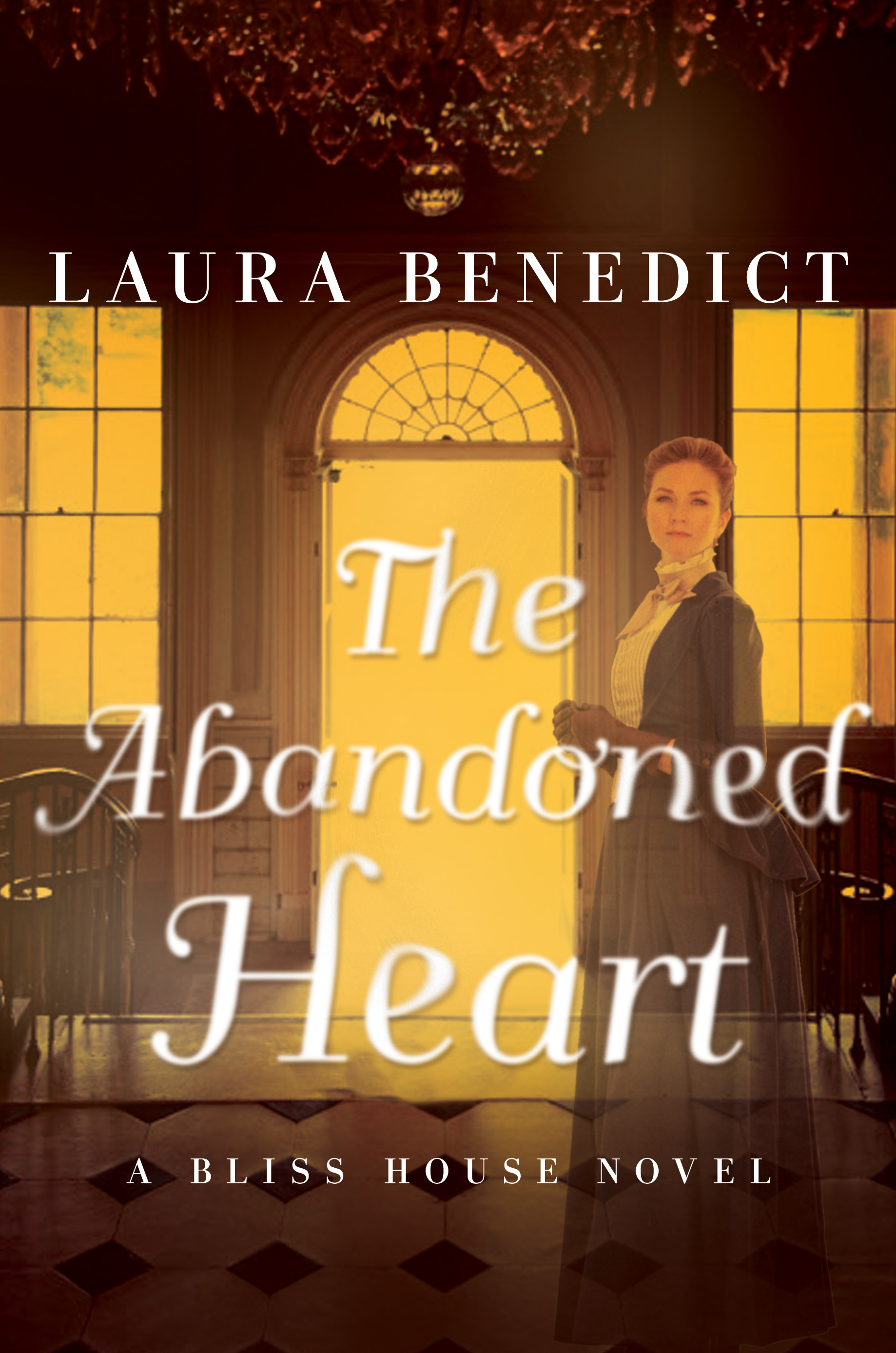
FBI Profiler Ryker Townsend is a rising star in Quantico’s Behavioral Analysis Unit, but his dark secret could cost him his career. When he sleeps, he has visions of his next case. He sees through the eyes of the dead, the last images imprinted on their retinas. His nightmares are riddled with clues he must decipher to hunt humanity’s Great White Shark—the serial killer.
While he’s investigating the shocking slaughter of a seventeen-year-old girl at Big Bear Lake, the tormented soul of another dead child appears to him in broad daylight. Twelve-year-old Avery Reed reaches out to Ryker—a disheveled and haunted girl, unable to speak—held earthbound out of love for her grief-stricken brother, Sam. Avery’s presence draws Ryker into a sinister conspiracy and she has a desperate message for her brother, if she can make Ryker understand.
Navy SEAL Sam ‘Mozart’ Reed has been haunted by the brutal death of his little sister Avery when he was only fifteen-years old. He vowed to seek and destroy the killer who splintered his family, wiping out everything he’d ever known. Nineteen years later, his darkest wish came true when he found Hurst, her alleged killer, and stopped him from murdering one last time. But when Mozart learns the FBI has reopened Avery’s case, he fears the worst. His SEAL team may have ended the carnage of a serial killer years ago, but for the first time, Mozart has doubts that Hurst had been the man who took Avery’s life. A heartless predator is still butchering young girls. Mozart’s worst nightmare is back with a cruel vengeance.
INVITATION:
To celebrate the launch of Susan Stoker’s Special Forces series with Amazon Kindle Worlds, we are having a Facebook Party on July 23 at this link:
I thought today I would build upon an issue that came up with my last blog post on subplots. Someone asked in a comment whether a subplot could help with the infamous ‘sagging middle’ and my response was (basically) that an author needs to resolve why the middle is sagging before throwing in a subplot to try and ‘fix’ the issue. So today I thought I’d discuss the whole ‘middle’ of the novel issue, and see what processes or cures we might come up with that could help avoid the angst that comes with a middle that seems flat, meandering or just plain soggy…
Once again, I like to refer people to Jim Bell’s great book on Plot & Structure. His approach to the infamous middle focuses (and Jim I hope I’m not misquoting you here!) on two main areas: (1) stretching the tension; and (2) raising the stakes. I am particularly drawn to (2) as I like using the middle of a novel to up the ante for my protagonist. For me, the middle is where you really get to complicate and stir things up for your characters. As an outliner, I focus quite a lot on the middle and often find myself graphing out the tension levels in the novel I’m drafting. If I see a flat line in the middle then I know I’m in trouble. But, whether your an outliner or not – what do you do if, after the first draft is complete, you realize that the middle section just isn’t working? Here are some of my ideas:
(1) Reassess the premise of the novel and explore ways in which you can add complexity, drama and tension to this in the middle.
This could involve adding an additional obstacle for the protagonist, introducing a subplot to add more emotional resonance or tension, or it could be introducing an event that raises the stakes for your characters. Sometimes, the reason the middle of a novel is flat is because the author may not have sufficient depth (in either the premise of the book or its execution) and so the middle feels like ‘treading water’ until the resolution/final conflict occurs. Taking a step back and re-examining the premise might help you identify this and come up with some solutions.
(2) Map out the plot and brainstorm ways to raise the stake or add tension.
As an extremely visual person and a strong believer in outlining, I like to try and display the plot in a visual way that helps me identify places where I might need to add scenes that raise the stakes or add tension. I find once I can see the chapters that meander or sag, I can brainstorm ways in which I can alter the plot to add dramatic tension. This could be the place where an unexpected death occurs, a new character walks in to shake things up, or another obstacle is thrown in the protagonist’s way. Whatever you decide, it should all be aimed at keeping the reader turning the pages…
(3) Eliminate the boring bits!
Sometimes the middle gets bogged down with clues or details of an investigation, the mechanics of the plot or the protagonist going through the motions/actions necessary to progress the novel towards its denouement. One thing I like to bear in mind is that readers get bored…so when re-reading a draft I like to identify areas that even I am starting to glaze over. If, as the author, I’m not riveted, then it’s time to ditch those boring bits and think through how to maintain the tension rather than deflate it.
(4) Use your beta readers!
Another set of eyes and an honest opinion can really help when it comes to working out why the middle of your novel may be meandering or sagging. I like to give my beta readers specific questions to bear in mind while they are reading and one of these is often ‘let me know where you start to lose interest’. Sometimes beta readers help you realize what isn’t working (and often this can come at surprising moments in the book) and can identify the moment they started to find their interest waning. The key, of course, is finding beta readers critical and honest enough to tell you this (rather than what they think you want to hear!).
These are just four options for trying to wrestle with the issue of the dreaded ‘middle’ – TKZers do you have anything to add or feedback on your own experiences with the dealing with middle-of-the novel ‘sag’?
When I wrote Brain Storm, the first novel in my new Angela Richman, Death Investigator series, I went through ten rewrites and a year-long debate: Should this novel of psychological suspense be first person or third person? Brain Storm is a very personal story. Angela, my death investigator, had the same medical crisis that I did – six strokes, brain surgery and a coma, plus months of rehab. I thought first person would reflect that. But third person is better for conveying information, and this new, darker series has complex forensics that would be impossible in a first-person narrative.
I worked out a compromise: the first two chapters of Brain Storm were in first person, which I thought gave the novel a personal introduction. The rest of Brain Storm was in third. And that’s how I sold it.
When I sent out the manuscript for blurbs, thriller writer Jeff Abbott said, “Do you really want to switch POVs like that?” Jeff almost never – and I mean never – gives blurbs, and I admire his writing. After many emails, phone calls, and meetings with my editors, they decided I should recast the first and second chapters into third person, so the whole novel was in third person.
Here is the original first-person Chapter 1 of Brain Storm:
The doctor who nearly killed me was buried today. The Missouri medical establishment turned out to honor him. The eulogies were heartfelt: doctors, nurses and patients praised Dr. Porter Gravois s compassion and skill as a neurologist. Their tears were genuine. His funeral cortege was nearly a mile long on the road named after his powerful St. Louis family. Everyone called him by his nickname, Chip, as if they were all part of his inner circle. Chip made them feel that way.
I didn’t attend his funeral. I was still in the hospital, recovering from the damage he did to me. I’d been in there three months. But I was glad he was dead, and so were the people who knew the real Dr. Gravois. None of us called him Chip.
As I lay on the scratchy hospital sheets, I wondered how Dr. Gravois looked in his coffin. He had a long pale face and a knife blade nose, like a stone figure on a British tomb. Did the mortician manage to duplicate the fatherly smile that fooled so many? That smile didn’t quite reach Dr. Gravois s hard blue eyes, but those were closed forever.
Which suit was he buried in? Chip wore Savile Row suits from Kilgour in London. Chip pronounced it Kilgar, and said only parvenus called the tailor Kilgore. His Kilgour suits were lovely silk and light wool. It was a shame to put one in the ground. But I had no qualms about shoveling Dr. Gravois six feet under.
What about Dr. Gravois s bitter enemy, Dr. Jeb Travis Tritt?
He and his awful off the rack suits were barred from the funeral. No matter how much he paid for his suits, he still looked more like a small town insurance agent than a neurosurgeon.
His unwed mother had named him after her favorite country music star. Dr. Jeb was a country boy, from his badly cut hair to his thick-soled brown shoes.
Was he wearing a jail jumpsuit now? We’d all heard Dr. Jeb threaten Dr. Gravois. He called him a crook and a killer and said the best thing Porter Gravois could do for his patients was die.
The next day, Dr. Gravois was murdered.
*********************************************************************************************
That’s the voice of my protagonist, Angela Marie Richman. She was misdiagnosed by Dr. Gravois as “too young and healthy to have a stroke” and sent home, where she had the medical catastrophe that nearly killed her. Dr. Gravois, the man who misdiagnosed her, is the bitter enemy of the talented, gauche Dr. Tritt, who saved Angela’s life. Bald, crippled, and hallucinating after her surgery, Angela has to use to her death investigator skills to save the man who saved her life.
Here is the rewrite of that same Brain Storm chapter in third person:
The doctor who nearly killed Angela Richman was buried today, and the Missouri medical establishment turned out to honor him. The eulogies were heartfelt: doctors, nurses, and patients praised Dr. Porter Gravois’s compassion and skill as a neurologist. Their tears were genuine. His funeral cortege was nearly a mile long on the road named after his powerful St. Louis family. Everyone called him by his nickname, Chip, as if they were all part of his inner circle. Chip made them feel that way.
Angela didn’t attend his funeral. She was still in the hospital, recovering from the damage he’d done to her. She’d been in there three months. Angela was glad Porter was dead, and so were the people who knew the real Dr. Gravois. They didn’t call him Chip.
As she lay on the scratchy hospital sheets, she wondered how Dr. Gravois looked in his coffin. He had a long, pale face and a knife-blade nose, like a stone figure on a British tomb. Had the mortician managed to duplicate the fatherly smile that fooled so many? That smile didn’t quite reach Gravois’s hard, blue eyes, but those were closed forever.
Which suit was he buried in? Chip wore Savile Row suits from Kilgour in London. Chip pronounced it Kilgar and said only parvenus called the tailor Kilgore. His bespoke suits were lovely silk and light wool. It was a shame to put one in the ground. But Angela had no qualms about shoveling Gravois six feet under.
What about Dr. Gravois’s bitter enemy, Dr. Jeb Travis Tritt?
He and his awful, off-the-rack suits were barred from the funeral. No matter how much he paid for his suits, he still looked more like a small-town insurance agent than a neurosurgeon.
His unwed mother had named him after her favorite country music star. Dr. Tritt was a country boy, from his badly cut hair to his thick-soled brown shoes. Is he wearing a jail jumpsuit now? Angela wondered. Everyone heard Tritt threaten Gravois. He’d called him a crook and a killer and said the best thing Porter Gravois could do for his patients was die.
The next day Dr. Gravois was murdered. ********************************************************************************************
My editor felt that writing those two chapters in first person, then changing them to third, gave the book a more intimate feel. What do you think? Is reversing the points of view a way to add depth to your writing?
PS: Jeff Abbott gave Brain Storm this blurb: “Elaine Viets’s newest is both a timely medical drama and a compelling mystery. Brain Storm gives us a detailed look at the shattered life of a determined death investigator. Readers will want more of Angela Richman’s adventures.”
TKZ’s PJ Parrish said, “I’m stoked to see Elaine venture into darker territory with Brain Storm, a multilayered mystery that is rich in its sense of place and character and propelled with medical intrigue. Brain Storm has everything I love in crime fiction – complexity, intelligence, pretzel plotting, and a touch of dark humor.”
On the topic of what our members would like to see covered at TKZ, Frances asked about Writers’ Groups.
“I’d like to see a blog on Writer’s Groups. I belong to one that is disappointing in structure and leadership. What are the qualifications for starting a writer group and what should be included? I prefer a group that meets in person versus online. Thanks!” Frances
As for qualifications to start a group, I’ve seen ANYONE create a group if there is interest in your local area. My latest adventure to find a local writer’s group where I live was through special interest groups listed on MEETUPS.com (query your local area for “Meetups” and “writing groups”). But these groups are rarely organized well enough to hold my interest for long. The leadership is usually inflexible on format or control the critique process too much. Often it’s the blind leading the blind and comments don’t further anyone’s potential career. These groups may catch typos but higher level reviews of your work are rare.
For more serious endeavors, a local group can collect dues and hold writing contests (with members as judges) to generate revenue, but once you ask for money, members will expect a plan of action and organization with regular meetings and a plan. Many national professional groups have specific rules to adhere to, if you want to open a local chapter. Toward the end of this post, look for a link of writers’ groups that are broken down at various levels you might find useful. Try joining a local chapter of a bigger organization if it’s available in your area. That’s your best bet.
I believe it takes a combination of groups to expand your horizons. I’ve belonged to quite a few writers’ groups, from national professional organizations, to online subgroups, to local writer meetings, to attending workshops. I’ve spoken at various meetings and workshops on craft and attended local meetings to help critique other authors. And I was also the Program Director for 5 years at my local Oklahoma Romance Writers of America (OKRWA) chapter and had a hand in shaping our resources for published and aspiring authors. This group and the strength and generosity of its published authors got me published. I was an aspiring author, untested, but I took on the duty of Program Director because I could create a network of contacts I wanted to see and I could work with my published authors to provide things they wanted to see. A great volunteer opportunity.
Here are my thoughts on what makes an effective group, depending on how organized you want to be or how much money you have to put together a group on your own.
SIZE MATTERS – I’ve worked with local groups who have an open call to anyone wanting to attend from one week to the next. The usual format is determined by those in attendance reading from their current WIP, sometimes up to 10 pages, and everyone around the room comments. In my opinion, this type of format doesn’t work because the attendees are not consistent and the format never changes. No real discussion happens, even when the group seems to want a diversion, because there are too many people vying for attention for their work.
When I say size matters, I think it’s more important to recruit serious/dedicated writers that have the same work ethic and are determined to improve their craft. (I’m not implying all pubbed authors, but writers dedicated to improving themselves.) 3-5 members might be the ideal. With a limited, devoted group who consistently appear each meeting, there can be real focus on each other’s samples and the meeting framework can be adapted to the goals of the group. If a deeper discussion arises organically, the group can be more flexible in how any meeting will evolve. Don’t be afraid to start out with all novices. A novice one day, with a good work ethic and supportive of other members, could be a future published author. My first groups weren’t always successful but I learned something worthwhile from each one. Sometimes you have to dive in and take charge to define what you want in a group.
YOU CONTROL THE FRAMEWORK – You might like reading your current WIP aloud or have someone else in the group read yours. But instead of taking up valuable time in the meeting doing this, try some of these time savers:
A.) Maintain an online group to exchange notices and post resources. Post your WIPs that will be critiqued for the next meeting. You can post them to a file section (like a private Yahoo or Google Group or a private Facebook Group). Your 4 members will have more time to read in advance and provide commentary in “track changes mode” for the author to take home something legible. So when it comes time for giving feedback, each member can focus on the highlights of their verbal critique and ask open ended questions of the author to promote a discussion at a higher level.
B.) Limit how many pages are critiqued or read aloud.
C.) Allow time for craft discussion at each meeting. Any member could lead the topic from craft books or a general chat on what works or doesn’t work for each person in the group.
BREAK UP MONOTONY WITH RESEARCH – Bring up research topics that could help the group or inspire future stories. As Program Director for the OKRWA, I had to fill each month with a 1-hour presentation that would help aspiring authors as well as published writers. Some months were research topics where we brought in speakers from the fire or police dept, an FBI profiler, a ghost hunting team (usually in October for paranormal story inspirations), or we went on field trips to generate story ideas with firsthand experiences. For example, we each paid money to go on a ghost hunt, guided by a real team of ghost hunters. (You really get to know your group by doing scaring the hell out of them.)
WHAT ABOUT A RETREAT? Usually in July, we would take a retreat together. Yes, this costs money and organization. We would have sessions on world building or various craft topics. or we might break down a larger group into smaller ones to have brainstorming sessions on plot ideas. A published author group might take a fun trip away from home to a nice location. They work the first few days on brainstorming TWO plots for each author and record the sessions, but after the hard work is done, they go have fun. Sign me up. The group gets a jump on plots for the year and get time off for fun to replenish the creative well.
DO SOME GROUP MEMBERS NEED PROMO? Promotion for published authors is important to support them. For pubbed authors who appreciated help on local events–from Valentine’s Day Events at local libraries to quarterly book signings–my Oklahoma writers’ group would support our members by organizing or attending these events. One of our bigger events was a Librarian Tea. We’d pick a venue and pay for beverages and snacks/desserts (or you could do something more casual with potluck). This can be done economically, but my local group had membership dues and revenues from writing contests to support our annual programs. At the Librarian Tea, our pubbed authors got to meet local librarians and book store owners, where their upcoming releases or backlist would be showcased. Our local group would also send out postcards and flyers of new releases from our members to those same librarians and book store owners we were developing relationships with. Even aspiring authors could benefit from this when they eventually sold and had book signings of their own.
FACETIME or ONLINE? I like getting together with my local writer groups. Writing can be solitary enough. Commiserating with my fellow crazies can be fun. But if there are no local groups where you are, an online group can give you resources in a different way. Once you develop a trust with your online members and determine if their input will help you, exchanging writing samples for critique can be done online. Often these groups have a files section with craft or promo topics that can be helpful or they may host an annual conference or hold workshops.
Here is a LINK to many writer groups (from national, to professional, to genre, to local groups) that you might find helpful.
For Discussion:
1.) What works best in writing groups from your experience? From size to format?
2.) Do writing groups help or hinder the writing process?
If you are interested in receiving a FREE pdf file of my upcoming Amazon Kindle Worlds release (July 21)–REDEMPTION FOR AVERY–in exchange for an honest review on Amazon, please click on this LINK to sign up on my Google Docs form. Next to your review name, please add TKZ.
Frasier: I’ve had an epiphany. Niles: Oh, wonderful. We could use a second sentence.
By PJ Parrish
The following is a true story, I swear. A couple years back, my sister and co-author Kelly and I were sitting at the old card table behind a stack of our books just inside the entrance of Barnes and Noble. It was raining and business was slow. (One advantage to having a co-author: You have someone to talk to during book signings when the screaming hordes of fans aren’t exactly beating down the door.)
A lady came up to our table, picked up our book, read the blurb and asked, “Are there two of you?” (We get that question a lot, even when both of us are sitting there). We explained that yes, we were co-authors and that was our pen name there on the cover.
The lady said, “My sister and I are thinking of writing a book together. Do you have any advice?”
I said, “Do you get along well with your sister?”
“No, we hate each other,” she said.
The first rule about co-authoring: It helps a lot if you like each other.
Yesterday, Joe Moore gave us an excellent overview of what it takes to write with a co-author. Today, I’m going into the weeds with some of the more prosaic stuff you need to consider before you partner-up. And yeah, I apologize ahead of time, but it does involve lawyers.
Personalities matter
First consideration when thinking about collaboration: You have to like each other.
If you don’t, it will never work. Think about what happens the first time one of you says, “You know, I don’t think that scene you wrote really works. Maybe we should scrap it.” Do you have roughly the same sense of humor? Do you like the same kind of books? Could you share a hotel room if you had to?
As Joe said, personalities matter. You don’t have to be bosom buddies, but you do have to respect each other and get along. Because writing even just one book is a long process and if you can’t stand to be in each other’s company for an hour, how are you going to make it eight months and 100,000 words?
Geography doesn’t
Over the course of thirteen books and fifteen years, Kelly and I have never lived closer than 1,000 miles. I’ve been rooted in Fort Lauderdale while she has wandered the earth like Caine in Kung Fu. In the early days, we relied on long distance phone calls (expensive), then emails, and now – hallelujah! — Skype. This has made collaboration easy because with Skype, one of you can have a chapter open on the screen and work on it while the other sees exactly what you are doing. But we also try to get together once a year in the same place because nothing subs for actual face-time. Plus we like to drink wine together.
Commitment matters
The second biggest consideration is this: Do you have the same level of commitment? Writing novel is a long tedious process and if one of the partners lacks the energy, time or drive, one person ends up shouldering the load and hard feelings develop fast. I have a good friend who partnered up with a guy to write a thriller. He had the original concept and a rich research background; she had a track record in mysteries and the work ethic. Three guesses who ended up doing most the work. For half the money.
Tone matters a lot
What kind of book are you writing? I know a lot of solo writers who can’t answer this, but you must agree on this with a co-author. What is your sub-genre, if any? What style are you aiming for? And what will the tone be? You must agree on this before you write one word or the book will never be seamless. I just started reading Joe and Lynn’s book The Blade, and I have to admit admit I went in looking for the seams. But I am finding none. This is very important because if the book feels like it has two voices at work, the reader won’t buy it. It’s very jarring.
Okay, now let’s deal with the nuts and bolts. You have to get this boring stuff down right from the start with a potential partner. Please don’t — in the beautiful bloom of first love, when you are dreaming about movie deals and royalties — neglect the details. Don’t try to wing it or figure it out later. This kind of thinking makes for doomed collaborations. And many bad marriages.
INCOME If you are self-publishing: Be aware that with most outlets, only one name can be on the account. If you want to post your book on Amazon, for example, you can’t list both your names on the account. Which means that one of you must manage the account, pay out income, and at the end of the year issue the other person a 1099 tax form. If your name is on the account, your writing partner is, in essence, a contractor. You can both access the Amazon dashboard account, which solves the problem of cheating. But someone has to be the main person for the income stream. Also, if you consign to bookstores, they will likely want to deal with one name for accounting.
If you go traditional: Your publisher will want both your names on any contract. They will likely split all income and issue you each royalty statements and tax documents. Ditto for any good agent, who will also deduct expenses individually.
EXPENSES: If you are the kind of person who shows up on April 12 at H&R Block with a liquor box filled with receipts, don’t try co-authoring. You must keep impeccable records. Because some expenses will be shared; some will be individual. Shared might include: editing, formatting, cover design fees, Createspace costs, website (yes, you need one), postage, and any expenses relating to the book in general. Individual might include: travel you do separately, workshop and conferences, publications, organization fees, office expenses. Someone in the partnership has to be the caretaker of the shared expenses, keep good records, and issue the other an accounting for tax purposes. Believe me, this can get hinky. It doesn’t hurt to involve a good CPA in this.
WILL: You do have one, right? Shame on you. Well, you need one if you have a writing partner. It needs to cover what happens if one of you dies: Who takes over the business and how are past and future income distributed? Do you want your ex-spouse or rotten kids to retain your part of royalties or a possible movie deal? Who owns the pen name, if you use one? Get a lawyer.
PARTNERSHIP AGREEMENT: If you have an agent or traditional publisher, they will probably demand this. Even if you self publish, it’s a good idea to have one anyway. Our former agent demanded it, and my lawyer asked me for it when I went to get my will done. This spells out things like: How income and expenses are divided (50%/50% or some other variation?) Who owns the copyright? How is the pen name to be used? (ours stipulates only for “works created together and for no projects either of us might undertake individually.” This prevents your co-author, if you split, from using the team name). A “failure to perform” clause, which details what happens if one of you dies or is disabled, that you have the right to terminate the partnership. It includes a clause called “Warranties” which is a bunch of legal-ese that protects you both. And you need to get this notarized. I know…pain in the butt. Too bad.
Whew…still want to team up? Let’s move on.
ORGANIZATION OF BOOK STUFF Main File: Do you ever lose material or delete chapters by accident? Do you forget and work on the wrong version of something? Welcome to my world. Now, consider how far south this can go if there are two of you. So, figure out before you start who is better organized and let that person be – {{cue Godlike voice}} — THE KEEPER OF THE FILE. Someone has to be in charge of the latest working version. If you don’t do this, you might each be working on different versions of the same chapter. The Keeper has to also have an excellent back-up program like iBox. They must be vigilant about making sure the other person has the right material. This is not what you want to hear when you turn on Skype in the morning: “I finished chapter 9 last night but I think I was working on an old version from two months ago.” This has happened to us. We call our working version ONE BIG FILE. At times, when things are going badly, we have inserted a colorful profane adjective between “big” and “file.”
Chronology: Someone should keep a running chronology of the book as you progress. I don’t know how anyone writes a complex plot without keeping a running chronology of what happens in each chapter, but that’s just me. With a co-author, keeping a chronology really helps to keep you on the same page in your time-line and saves time when you go into rewrite mode. You don’t want to have this conversation:
“We need to go back and beef up the clues in that Paris morgue scene so Jacques Reacher can figure out he is chasing a one-armed man.”
“What chapter was that in?”
“You wrote it. Don’t you remember?”
“That was five months ago.”
“Well, let me do a search for it. What was the ME’s name?”
“We didn’t give him one.”
“Well, search for all the French stuff!”
“Can’t we just let this slide? No one will notice.”
“Yes, they will. I think we said the guy was missing his RIGHT arm but now the slash marks from the knife would tell Reacher that he’s left-handed.”
LONG PAUSE. “Okay…I’ll find it. Go do a run on your treadmill. You’re getting crabby.”
This is why you keep a running chronology. To save time and tsouris. Here is a part of our chronology for our current WIP:
CHAPTER TWO – day 1 Saturday April 6, 1991
Louis arrives at church and talks briefly with new boss Steele. Est. setting.
CHAPTER THREE – day 2: April 7
Louis finds his apartment and unpacks his mementos. Thinks about Joe. Brief reference to what happened in DOW with Steele.
CHAPTER FOUR – day 3 Monday morning April 8
Back at remodeled church. Team members show up. Steele gives brief intros and they take their cases.
CHAPTER FIVE – day 3 Monday late night
Emily comes and they go to dinner at bar and talk. Louis calls Joe.
CHAPTER SIX – day 4 Tuesday April 9
The meeting in the choir loft. As Louis is packing up file and getting ready to leave, he can’t resist asking Steele why? Backstory on what exactly happened in Loon Lake 5 year ago (in L’s thoughts) and what changed Steele’s mind about Louis.
CHAPTER SEVEN – day 4 Tuesday
Louis drives to Keweenaw. Meets Sheriff Nurmi and Monica. First reference to Sisu clue on Monica’s sweatshirt. Ends with L seeing the box in evidence.
In each chapter, we record the salient plot details, the first appearance of any character. We also record the calendar date as it happens in the book and what DAY we are in time-wise, so we can tell how much time passes between events. This latter DAY thing is important because you can see, at a glance, that you’ve let five days go by in your plot and nothing has happened. I update this with each completed chapter and send it to Kelly.
Character board. Now this is strictly optional, but Kelly and I have found it useful. You and your partner need to be on the same page when describing characters. We’ve found a trick: We agree on a famous person — like Mike Ditka was our sheriff and the actor Michael Rennie is Louis’s foster father — and sort of use him or her as a template. Over the years, we’ve even pasted them in a montage. This is fun and goes over big at workshops and signings.
Yikes…you’re still here? Boy, you must want this partnership thing bad. Okay, here’s the rest of the stuff you have to consider before you get hitched.
MISCELLANEOUS What’s your name? Are you going to use a pen name like Kelly and I do? Or do you use two names, like Joe Moore and Lynn Sholes? And whose name goes first?
Are you at about the same level in your craft? They say you should always play tennis with someone better than you. I don’t advise that for writing. Aim for someone on your own level. As Joe pointed out, you will each bring different strengths and weaknesses to the team, but your basic craftsmanship level should be the same. Now, if you are entering a partnership where one is charged with all writing and the other say research and editing, make sure you are clear going in that those are indeed the parameters.
Go to a writers conference together. You can learn a lot about another writer in a writer’s conference bar. Pick each others brains. As Joe said, talk, talk, talk…and talk some more. Consider it speed dating before you make the plunge.
Commit to a routine. Joe said this but I need to second it because it’s vital. Set a daily “meeting” where you get on Skype or phone and touch base. Maybe it’s for hours as you thrash out plot. Maybe it’s for 10 minutes. But you must maintain contact. And emails aren’t enough. Did I mention that you need to talk?
Support each other. Again, this is like a marriage in every way. You go into a writing collaboration because you want to believe that you can achieve something together that you can’t achieve alone. So tell each other the truth, but do so constructively and with kindness. Be honest. Don’t be afraid to send your less than best. You can send something that needs work; that’s why there are two of you. Yes, you want to do a good job but it is not important to impress your partner. And last but not least…
Bury your ego. You each bring different skills and talents to this and if one is far stronger at plot, let that person take the lead. Maybe you are better at character development. As the partnership goes on, you might find, as we did, that we learn from each other.
People ask us all the time if we argue or disagree about the book. Of course. We’re sisters. We’re writers. We have massive egos and decades of history together. But we understand that, in the end, there are really three of us in this partnership. So yes, we argue. But that third entity — the story — always wins.
Sue Coletta, a good friend of TKZ, recently responded to our call for blog topics by requesting some discussion on co-writing fiction. Since there are two of us here that collaborate with others—myself with co-author Lynn Sholes, and Kris Montee with her sister Kelly Nichols (PJ Parrish), Kris and I decided to take up the task. I have switched with Kris to start the discussion today, and she will take my slot tomorrow to deliver part 2.
Between Sholes & Moore, and PJ Parrish, we have produced 24 co-written works of fiction. We hope that today’s post and tomorrow’s will shed some light on what is considered by most of our fellow authors as an impossible task.
Collaborating on fiction was started in the mainstream a number of years ago by the great Clive Cussler, and soon followed by James Patterson. Their co-writers alone could fill a fancy cocktail party. Nowadays it seems to be growing in popularity. This week’s New York Times bestselling top 20 includes THE PURSUIT by Janet Evanovich and Lee Goldberg, THE HOUSE OF SECRETS by Brad Meltzer and Tod Goldberg and THE EMPEROR’S REVENGE by Clive Cussler and Boyd Morrison. I’ve spoken to a couple of Cussler’s co-writers about their technique which I won’t reveal here. But I can assure you, it is NOT the panster approach. I also have my theory why co-writing fiction is really catching on—increased product means increased sales. But that’s just me.
The reason co-writing fiction is looked upon as impossible is because it’s hard. In the beginning nothing exists but an idea in an individual’s imagination. It might be inspired by facts or events, but only the individual has a specific vision of those events in his or her head. So how can two people have a similar enough vision to be able to write a novel?
Lynn Sholes and I have written nine thrillers together because of the following reasons. First, we love the same kind of books—the ones we read are like the ones we write. Second, we have an unquestioning respect for each other’s writing skills and a deep belief that whatever one of us writes, the other can improve. Third, we believe that there’s always a better way to write something. Fourth, we never let our egos get in the way of a good story. This comes from spending over ten years in a weekly writers’ critique group. Fifth, we know each other’s strengths and weaknesses, and are willing to admit them. Sixth, we agree on the same message in each book. Seventh, we believe that we are on the same level of expertise. And last, we believe that the whole is greater than the sum of the parts.
Those points cover the mental portion. Now, how do we handle the mechanics of the job? We talk, and talk, and talk. Once a day we conference call, brainstorming and telling and retelling each other the story. Our two favorite words are: What if? Whether it’s global plot points or an individual scene or character motivation, we keep telling each other the story until that little imaginary movie in our minds becomes as in sync as possible. Then one of us will declare to have a “handle” on the scene or character or chapter, and create the first draft.
We write slowly because each chapter must go back and forth many times for revision. Years ago, when we first started, everyone could tell who wrote what as we tried to finish our first book. It took three years of hard work before we fused our voices. Now, because the process goes through so many revisions, most of the time neither of us can remember who wrote what. We rely on each other so much that we both wonder how it is possible for anyone to write a book on his own.
There are several advantages and disadvantages to collaborating. A disadvantage is that you split the money you make. So you’ll always make half of what you would as a single author. And like any relationship, there is always a chance of a falling out. And something could happen where an ego can become inflated and affect the process.
A giant plus is that we never experience writer’s block. One of us will always have an idea on how to get out of a jam or move the story forward. And unlike our family, friends, trusted beta readers, and everyone else, a co-writer has an intimate, vested interest in the success of the story that no one else could have.
We are approaching the mid-point of our tenth thriller together. We believe that the whole thing boils down to trust. Trust in each other and in the goals we both want to achieve with the story and with our careers. For us, two heads are better than one.
Here’s a list of points to consider when entering into collaboration.
Understand why you think collaboration would be beneficial and share that with your co-author. There are many reasons to collaborate on a story, and only the participants can say what these are. The ideal collaboration is one free of hidden agendas. If you desire something specific from the relationship, it’s best to state it straight out. This can avoid conflict and frustration on the part of one or both writers.
Know the co-writer and his or her work before entering into a collaborative arrangement. If you don’t get along with a writer or the two writing styles conflict, then collaboration may not be the best idea.
Come to the relationship with an open mind and flexible ideas. If you enter the project with set images and plot ideas, then you limit the other writer’s involvement. This can also lead to conflict. If your collaboration begins with something previously written, then there will be constraints, but still be flexible.
Respect your collaborator’s ideas and opinions. Leave your ego at the door. A partnership works because of input from both sides and a healthy respect for each other. There are no stupid ideas. If possible, state your biases up front so that each writer is aware of differences of opinion. For example, one of you might be opposed to first-person stories or present tense. Knowing this up front can help avoid conflicts.
Explore each writer’s strengths. If your specialty is plot and your partner’s specialty is description, then use those strengths to the story’s advantage. The ideal collaboration results in a story that neither writer could generate on his or her own.
Divide the workload and agree on it at the beginning. Perhaps one of you will write the first draft and the other will edit/revise the draft. Perhaps one will write the skeleton and the other will fill in the descriptions. There is no single method of collaboration. It is as unique as the two writers who come together to collaborate. But each writer wants to feel involved in the process.
Discuss differences of opinion and employ the art of compromise. Don’t make differences into impasses. Pose solutions with compromise as the goal. Don’t let the differences escalate into dissolution of the partnership.
Allow for an easy, clean way out. In case things don’t work out, and to avoid hard feelings, each writer should have a painless way out of the partnership. Make sure you have agreed on how to divide up the intellectual property before beginning collaboration. The escape clause should be agreed upon ahead of time.
Most important, have fun. Collaborations can and should be fun. If it is not, try something else.
Check back tomorrow for part 2 of co-writing fiction with PJ Parrish.
I’ve been in Mexico City this last week so have been out of the loop, but I saw in Friday’s post asking for topic suggestions, a request to deal with the (sometimes) thorny issue of subplots. These usually surface around the middle of the novel and (hopefully!) add greater depth and complexity to the story. However, sometimes subplots can get unruly, unmanageable, and can mess up your manuscript if you’re not careful.
My current WIP has a number of subplot threads which need to be woven into the larger canvas of the novel, and so I thought I’d try and give some tips on what I’ve discovered as part of my own writing process. An initial caveat – I am an outliner so much of my advice centers on upfront (as well as ongoing) work when working out the plot. For those of you who are ‘pantsers’, although I think much of the advice still stands, you would probably approach the issues in the editing rather than drafting stage. I also highly recommend my fellow TKZ blog mate, James Scott Bell’s, excellent book ‘Plot & Structure‘ for those interested in having a more in-depth analysis into the plotting of their novel.
When approaching the issue of subplots I focus on four main issues:
Identification
Simplification / Justification
Trajectory
Resolution
I’ll deal with each of these in turn:
Identification When developing the initial outline for my novel, I first ensure that I am clear on the primary premise that forms the basis for the book as this establishes the principal plot which will form the body of the novel. This sounds self-evident but many a book has been derailed by a failure to have a clearly articulated premise and plot – and then what happens? A muddy mixture of plots and subplots which, more often than not, confuse a reader. So if, for instance, the primary plot is a murder investigation, then make sure you are clear on how that investigation will play out before adding subplots that may add complexity. Once you are clear on the main plot, then you can identify the subplots you want to weave into your novel. When you do identify the subplots you want to incorporate, make sure they add depth rather than merely ‘murk’ to the story! Subplots could (and often should) focus on deepening the development of your major characters, enhancing the theme that underpins your novel, or providing parallel stories that focus on character relationships and intrigue. One you’ve got these identified the next step is…
Simplification / Justification
Just like in the identification phase, if there are too many competing subplots a novel may become unnecessarily complex and confusing. That’s not to say you don’t need to have subplots, it just means you want to make sure you don’t have so many that they start to muddy the waters and confuse a reader. I always think it’s important that the subplots add something significant to the story, the loss of which would make the novel less rich and engaging. So if a subplot merely adds an unnecessary layer, diversion, or complexity then bin it and move on to…
Trajectory
As an outliner, I map out the key plot points for the principal story as well all the subplots. In this way I can ensure a balance in the tension and development of all the key plot threads in the book. It also means I can see how the overall story will pan out with chapters and scenes that progress the main plot as well as the subplots. You don’t want, for example, a subplot to fizzle out or bog down the novel in the middle. Again, its all about adding to the principal story not detracting from it. Finally…
Resolution
If you do have a number of subplots in your novel, it’s vital that you resolve each of them (as well as the principal plot) so the reader feels a sense of closure and satisfaction. How many books have you read where a subplot seems to just disappear or go nowhere?…this, for me at least, is very frustrating. In my outline, I try to make sure I’ve resolved each of the subplots I’ve introduced. If I want to leave something open for a future book then I want to make sure I’ve done it consciously (and the reader knows this) rather than unconsciously (which will only tick a reader off…).
So these are my key stages when it comes to subplots. Although, as I said, I outline everything, I still have to keep all these issues in mind when I edit my drafts, as inevitably some subplots just don’t pan out or work the way I intended. Then, as often happens, I need to be ruthless in what stays in and what gets chucked.
So fellow TKZers how do you approach the issue of subplots? What would you add to my list, change, or do differently?
We have another intrepid author who has submitted their first 400 words for critique. Enjoy the read. My feedback will be on the flip side. Join in the discussion with your constructive comments.
“Dr. Germano! I need you!”
Ray bolted to his feet, throwing the blood work report he was reading onto his desk. As he came out of his office, he nearly collided with one of his staff hurrying down the hall, carrying a box lid with a small bundle of fur huddled inside.
“Bring it into the common room, Mary Jo. Matt! You here?”
“On my way, Boss!” The answer came from the reception area.
Ray could hear the creature’s raspy breathing as he followed the woman to an exam table and winced when he saw the contents of the lid. A malnourished calico cat lay on its side, struggling for breath, eyes wide. A feathered shaft stuck out of its chest.
“My God, is that an arrow? Smart of you to carry it flat,” Ray said, with a nod to the tearful woman. “If that thing shifts, it could do some damage. Is it one of your neighbor’s cats?”
“I don’t think so, Doctor. I’ve haven’t seen this one around before and I know most of the outdoor cats around my apartment. I found it in the alley when I was taking the trash out this morning.”
He hesitated for a moment, weighing his options. The practice policy was clear on drop offs and found animals. No heroic efforts unless the animal was a pet, with a collar or microchip. He could almost hear Phil. We’re running a business, damn it, Ray, not a charity! He had heard that speech many times over the years.
This cat was obviously a stray, as scruffy and skinny as it was. It couldn’t weigh eight pounds soaking wet. No one was going to step forward and claim it. Still, it seemed young and strong. It was still breathing with an arrow in its chest after all. He hated not to give it a chance. Her, give her a chance. Calicos were usually female. Well, Phil was retired now and he’d make his own decisions on who to treat.
He reached out and stroked her head gently. To his surprise, she tried to butt his hand and even mustered a faint purr. Then his eyes widened and he barely resisted the urge to jerk his hand back.
FEEDBACK:
Well, I don’t know about you, but I sure want to know why the good doctor wanted to jerk his hand back. Shades of Pet Sematary. (I hope Catfriend weighs in on this. Expurrrrrt) The intro starts with a “call to attention” dialogue line. For the most part, the writer sticks with the action, except where the intro “strays” (pun intended) into the former practice policy.
FIRST PARAGRAPH – Since the first paragraph establishes the scene, I would suggest stronger wording to set the stage and focus on the action. I’d also suggest clarification on where the action takes place.
Suggestion – Ray bolted to his feet and threw a blood work report onto his desk. He rushed from his office and nearly collided into Mary Jo, one of his staff. She raced by him carrying a box lid with a small bundle of fur huddled inside.
It’s not clear to me what this business is. Dr. Germano has a desk and there is a practice policy. I’m assuming it’s a veterinary hospital or practice, but that’s never stated. This can be fixed by using a tag line at the beginning, before the first dialogue line, or it can be inserted into the first paragraph – He rushed from his office at Pavlov’s Veterinary Hospital…
STICK WITH THE ACTION – In the paragraph starting with the sentence, “He hesitated for a moment, weighing his options.” Unless this is important, I would shorten to minimize it or delete this paragraph.
Tightening Suggestion – He hesitated and weighed his options. Drop off animals, with no owners, would cost the practice. Unless the animal had a collar or a microchip, the practice policy stated no heroic efforts were to be made.
Then focusing on the cat and what he sees (perhaps foreshadowing a hint of peculiar behavior) would ramp up the creep factor.
Tightening Suggestion – Scruffy and skinny, the stray couldn’t weigh eight pounds soaking wet. No one would claim it, but it still breathed with an arrow in its chest. He hated not to give such a young and strong animal a chance. Her, give her a chance. Calicos were usually female.
PASSIVE VOICE – There are several uses of passive voice in this short intro. Easy to clean up in 400 words, but the author should learn how to catch it as the words are streaming. Here are a few:
Before – Ray could hear the creature’s raspy…
After – Ray heard the creature’s raspy…
Before – I found it in the alley when I was taking the trash out…
After – I found it in the alley when I took the trash out…
Before – No one was going to step forward and claim it.
After – No one would step forward and claim it.
Before – It was still breathing…
After – It still breathed…
NITPICKERS – There are always nit picky stuff that one person might notice, while other’s don’t. A good copy editor night catch these or reading your story aloud can help a great deal.
Boss – I would use lower case.
Around – used twice in same sentence, starting with line, “I don’t think so, Doctor.”
Who – The word “who” refers to people, not cats. See line, “…he’d make his own decisions on who to treat.”
Gently – use of adverb. “LY’ words raise a flag for me. Try to minimize or eliminate for stronger writing. In the line, “He reached out and stroked her head gently,” it’s strong enough and describes tenderness, that the word “gently” is not needed and is redundant. I might also focus on this action more, between the doctor and the cat. For example:
Suggestion – He reached out and stroked her head with an affection stray cats shunned from mistrust, but to his surprise, the tiny calico returned the tenderness with a head butt and a faint purr.
SUMMARY – I would definitely keep reading. I’m a pet lover and have had cats before. What cat owner hasn’t looked over their shoulder thinking someone is creeping up on them because their cat is staring at SOMETHING BEHIND YOU. This author, with a little clean up, would have me hooked.
DISCUSSION:
Weight in, TKZers! Would you read on? What constructive comments would you make to help this author?
A topic I’ve seen on forums and blogs is Kurt Vonnegut’s 8 rules of writing fiction. They’re worth reviewing and taking to heart. But his rule number 5 is the one that made the biggest impression on me. Rule number 5 is: Start your story as close to the end as possible. This is relevant for both the entire book and a single chapter. We often hear that the most common mistake of a new writer is starting the story in the wrong place.
Well, it happens to published writers, too. Lynn Sholes and I are guilty of drafting whole chapters that either occurred in the wrong place, or worse, weren’t even needed. Usually they turn out to be backstory information for us, not the reader. We go to the trouble of drafting a chapter only to find it’s to confirm what we need to know, not what the reader needs to know.
So if we apply Vonnegut’s rule number 5, how do we know if we’ve started close enough to the end? Easy: we must know the destination before we begin the journey. We must know the ending first.
To me, this is critical. How can we get there if we don’t know where we’re going? And once we know how our story will end, we can then apply what I call my top of the mountain technique. In my former career in the television postproduction industry, it’s called backtiming—starting at the place where something ends and working your way to the place where you want it to begin.
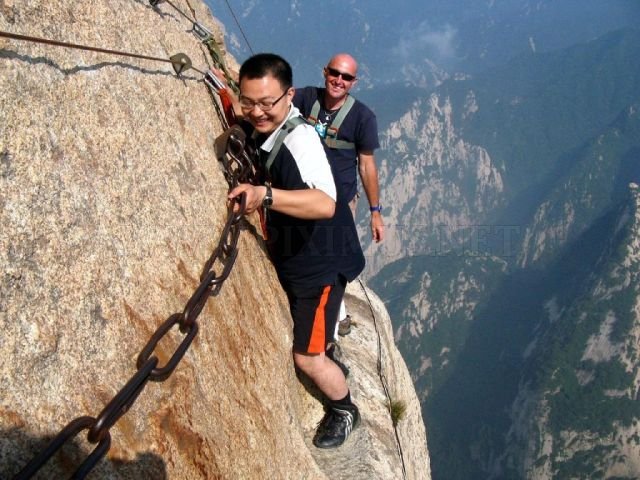
But before I explain top of the mountain, let’s look at the bottom of the mountain approach—the way most stories are written. You find yourself standing at the foot of an imposing mountain (the task of writing your next 100K-word novel), look up at the huge mass of what you are going to be faced with over the next 12 or so months, and wonder what it will take to get to the top (or end).
You start climbing, get tired, fall back, take a side trip, climb some more, hope inspiration strikes, get distracted, curse, fight fatigue, take the wrong route, fall again, paint yourself into a corner—and if you’re lucky, finally make it to the top. This method will work, but it’s a tough, painful way to go.
Now, let’s discuss the top of the mountain technique. As you begin to plan your book, even before you start your first draft, imagine that you’re standing on the mountain peak looking out over a grand, breathtaking view feeling invigorated, strong, and fulfilled. Imagine that the journey is over, your book is done. Look down the side of the mountain at the massive task you have just accomplished and ask yourself what series of events took place to get you to the top? Start with the last event—the grand finale— make a general note as to how you envision it. Then imagine what the second to the last event was that led up to the end, then the third from the last . . . you get the idea. It’s sort of like outlining in reverse.
This takes it a step further than Vonnegut’s rule number 5 by starting at the end and working your way to the beginning while you’re still in the planning stage. Guess what happens? By the time you’re actually at the beginning, you will have started as close to the end as possible. And you will see the logic and benefit of rule number 5.
Naturally, your plan can and probably will change. Your ending will get tweaked and reshaped as you approach it for real. But wouldn’t it be great to have a general destination in mind even from the first word on page one of your first draft?
__________________________
For a limited time, download THE TOMB, #3 in the Maxine Decker thriller series for only 99¢.