I don’t always write a “happy” ending. In the romance genre, that’s called HEA, or happy ever after. My main goal is to stay true to my character(s) and motivation. The plot can spring from the flaws of a character or be influenced by those imperfections. Since I like conflict between my main characters, that can mean their happy ending doesn’t neatly happen by the end of the novel. I don’t want to force it or contrive an ending that doesn’t remain true to my character’s story arcs.
“Happy ever afters” are popular and even if you’re not a romance reader, a satisfying ending can be important, especially if it makes the reader feel good at the turn of the last page. But there’s nothing wrong with an ambiguous ending if it fits with your character and your world. An author writes the story he or she wants to tell.
A Checklist For Writing A Great Ending
1.) Tie up the loose ends – One of my final edit reviews is when I search for subplots and key elements to tie up to make a satisfying ending. If I introduced a DNA lab result earlier in the plot, did I bring the results in later? Are all my subplots resolved? Are all my character motivations justified enough? Nothing make a more hearty meal than a good, solid ending. Don’t leave loose ends.
Word of caution – Don’t tie up everything in one long character dialogue scene. This reminds me of the cheesy Charlie Chan movies or older Sherlock Holmes films where the hero regurgitates all the clues with answers. Try to be more subtle or break up the loose end tie-ins so it doesn’t feel too contrived. Another pet peeve of mine is the villain who feels compelled to answer all the detective’s questions on his motives, gloating. Break apart these disclosures and don’t turn your diabolical villain into a chatty girlfriend who wants to bear his or her soul. Find a more realistic way for these disclosures to come out in subsequent scenes when the investigators are closing their case.
2.) Restore the world even if it’s not perfect – Redemption at the end of a book can be good as well as uplifting. I like the idea of restoring the world that an author creates, but it doesn’t always have to be the same world. Crime affects people in a bad way and it radiates out like ripples on still water with many people affected—from the victim to the family survivors to cops investigating the case. Don’t be afraid to show the aftermath. A story can feel positive if the protagonist survives, but don’t be timid in portraying how much your character has been affected.
3.) Consider your series endings – There are many ways to end individual books within a series. You can have a major cliffhanger. You can hint or foreshadow something coming in the next installment. Or you can have each book end completely, yet have the growth and story lines of the characters weave a tapestry through your series. How an author develops a series (and the books within it) can be a conundrum. A key decision element might be if you plan on releasing each book back-to-back with a short period between book launches. Your readers won’t have to wait too long for each installment. But if you’re a new author and want a traditional house to consider your work to publish, unless the house is interested in buying the whole series, it might be better to write a more conservative ending without a major cliffhanger (in case the publisher doesn’t not buy the whole series).
4.) Do not clutter your ending with last minute conflicts – I would consider a last minute distraction or entanglement to be a cheat for the reader. When such a beast springs from the pages, a reader might sling your book at a wall with the contrivance. Give the reader an ability to solve the case on their own. They can’t do that if the author springs unexpected characters or plot twists that haven’t been introduced earlier. Many times I will have a certain twist in mind, but go back and lace in different clues in several spots so the reader can decipher the puzzle before the big reveal, but I never make it easy.
5.) Foreshadow a realistic future to come – If you don’t want to write a blatant romantic happy ever after, you can “hint” of a future for your characters. Often a forced romance or a contrived relationship can end with a marriage proposal that doesn’t “feel” real. But if the author foreshadows a more realistic relationship with the promise of a tomorrow, that might be enough for a reader to get the idea and feel positive about the ending.
6.) Stay true to your voice – If your author’s voice through the story is dark or starkly realistic, don’t explode pink glitter and unicorns all over your ending. A reader will feel betrayed by this. Whatever ending you choose for your character, make it realistic for the vibe of your book.
7.) Know your ending by genre or choose to be different – There’s always the exception to a general rule, but certain commercial genres have endings readers will expect. For example, an amateur sleuth will be expected to find who the killer is, or a romance relationship story will have the lovers together or with a future by the end. A thriller story will have the maniacal villain thwarted and the world restored. Not all successful stories follow this idea. I’ve written endings where the bad guy gets away with his crimes (Evil Without A Face &No One Left to Tell & No One Lives Forever), but if you dare to do this, you must have a reason (a potential teaser for a series) or a villainous character that the reader might accept such an ending.
8.) Don’t be afraid to explore ambiguous endings – If you’ve written a carefully plotted book that’s stays true to your character study, don’t be afraid to explore an ambiguous ending. A favorite book I read called The Piano Man by Marcia Preston is a women’s fiction book that has a realistic yet ambiguous ending. At first I wanted the ending to mean an HEA for the two main characters but that would’ve been a cheat. After I thought about it, the way it ended was perfect for the nature of the two characters and it was a beautiful story of two people whose lives crossed in a moment of tragedy. If the author gets the emotion right and the character motivation, there could be a variety of endings possible. Don’t be afraid to explore more than one ending that can add depth or a thought provoking conclusion.
Discussion:
1.) Have you ever written a forced ending that didn’t feel right to you? Did you correct it?
2.) What makes a good ending for you (as a reader or an author)?
3.) What are some of your favorite (most memorable) book endings? Were they happy endings or not?
Hope you all had a safe and happy holiday season and are ready to tackle all your writing resolutions in the year ahead. As always, I have a few resolutions after all my holiday eating, drinking and writing slackness, but in 2017 I want to focus on what I’m calling ‘deep writing’. For me, 2016 was definitely the year of ‘distracted writing’. It may have been all the politics or just the overwhelming onslaught of news, social media posts etc., but whatever the cause, I have now (thanks TKZ’s own James Scott Bell) purchased Cal Newport’s book ‘Deep Work, Rules for Focused Success in a Distracted World‘ and intend to fully embrace the concept of ‘writing deeply’ this year.
Rather than calling this a New Year’s resolution, I’ve decided ‘write deeply‘ will be my mantra for 2017. I will be chanting it in my sleep by the end of January and, hopefully, I will notice an improvement in focus, concentration and maybe even the quality of my writing (!) by the end of the year.
So what about you? Do you have a mantra you would like to adopt for 2017?
Also any tips on how I can ensure mine gets through the post-holiday thickness of my skull, will be gratefully received….
My last critique for 2016. I’ve enjoyed reading the anonymous submissions this year. We have some very talented authors following our blog. Thanks to all of you who participate with your comments and for all those brave souls who have submitted your work for our feedback. We all learn from the experience.
Enjoy UNKNOWN RIDER and I’ll have my feedback on the flip side. Please provide constructive criticism in your comments. Thank you.
***
Prologue
A narrow palm-lined alley led off the main boulevard to the boat docks. A warm front had blanketed the area with a thick overcast, obliterating the faint starlight on the moonless night. At one o’clock in the morning, the few functioning streetlights created a dimly lit gloom that made it hard to distinguish between the living and the nonliving as the tropical breeze animated palm fronds and various pieces of trash on the derelict street. It was still a quarter of a mile to the docks, but even at this distance the low-tide smell of spilled diesel fuel, dead fish, and decay polluted the air.
Frank Stodd walked quickly down one side of the pavement towards the water. He looked very much out of place in his dark suit and tie, but he hadn’t planned to be here. He had a growing suspicion that he had taken a wrong turn on the way back to the hotel, but he pressed on, looking over his shoulder every few seconds for the black Escalade. Then he patted the gun through his jacket for reassurance, and felt for the small package in his inside coat pocket. He was a large man, quite overweight, and in spite of the sea breeze blowing in towards the shore, he was sweating profusely underneath the stiff white collar of his shirt.
Maybe he could see the hotel when he got to the water at the end of the alley, he told himself. It was a well-lit high rise, after all, with a big red ‘Hilton’ on the side. There was too much at stake to blow it now.
They had seen him in the van outside the bar in old San Juan. He’d sped off immediately, cursing his bad luck, but they tailed him for several blocks. Finally, he lost them somewhere near his hotel, ditched the van, and continued on foot. The shortcut he’d taken past the marina and docks should have thrown them off. Yes, he was sure now that he’d lost them.
But against the wall of a building, well hidden in the shadows to Stodd’s left, was another man. In blue jeans and a t-shirt, he looked like anyone else you might see in the city, someone who had bubbled out of the melting pot of the Caribbean. He checked the cylinder of his revolver to confirm that it was fully loaded and wondered again whether the silencer screwed into the end of the barrel might affect the gun’s accuracy. But when he got a good look at the size of his target he decided it wouldn’t matter.
He raised the gun at arm’s length.
Stodd saw a flash from his left. There was a slight whooshing sound like someone had spit, the sledgehammer impact of the bullet, then he was lying on his side, his left arm and shoulder on fire. The pavement was cool in spite of the heat of the night, his vision blurred, and the pain took a back seat. He knew only that he was tired and wanted to rest. He closed his eyes.
FEEDBACK:
OVERVIEW – There are some gems in this intro. The author has a visual style and imagery is important. Often setting is overlooked, but not with this author. I like how he or she describes through use of the senses too. I can see Frank sweating as he lumbers through a shady part of town. But there is an issue with ORDER in this scene. The idea is to introduce a conflict and tension and build upon it, not deflate it. Below are some observations:
SETTING – The first paragraph is an author’s chance at establishing a voice. In this example, the author describes weather and setting without these elements being through any character. As much as I can appreciate a good setting, without a character seeing it, I tend to skim. I don’t even know where the description is supposed to be, other than it’s coastal and has palm trees and water. By mentioning San Juan and Caribbean much later, this appears to be Puerto Rico. Why not include a tag line to establish the location right away? That would make the setting an instant recognition for the reader and even establish a time of day. It’s best not to make the reader guess or have to reread because they thought the setting was somewhere else, like Florida.
REVISED START – I would consider starting with elements of paragraph 2. I like knowing Frank is out of place and uncomfortable where he’s walking. It makes me wonder what he’s up to, but make him sweat for more than weather. The example below is a rough draft and if it were mine I’d tweak it more, but I hope you get the idea. Getting into Frank’s head and the tension he’s feeling is the place to start.
Example – Frank Stodd picked up his pace as he walked toward the docks, looking out of place dressed in his dark suit and tie. He tugged at his stiff white collar with sweat trickling through his hair. Muggy heat turned the stench of low-tide into a vile smell of spilled diesel fuel, dead fish, and decay. He must’ve taken a wrong turn on his way back from the hotel and he kept glancing over his shoulder for the black Escalade. The small package he carried in his jacket pocket weighed heavy, pressed against his gun.
PUT YOUR SETTING TO WORK – Rather than start with a long first paragraph to establish setting, the author might consider peppering the heat and the stench and other sensory descriptions to add to Frank’s discomfort and tension. Make the setting work by using it to escalate the tension or messing with Frank’s head. I’ve incorporated some of the setting descriptions into the revised intro to exacerbate Frank’s situation and add tension. He’s a heavy man and he’s sweating, not only because of weather and where he is. He’s anxious over his situation, so an author can drop in setting through action to enhance the intended emotion for the scene, without slowing the pace.
USE of PROLOGUE – I’ve never had an editor say they wouldn’t buy something because it had a Prologue, but when you get authors together and they talk about perceived rules, they usually are not in favor of using Prologues. If a Prologue is used properly, where the inciting incident of a story begins earlier (ie Batman as a boy when he witnesses his parents murdered before he dedicates his life to fighting crime), then make it clear it’s a short segment that is the foundation for what comes. Lately, I’ve simply started on Chapter 1, even if there is an older inciting incident, because I use tag lines to establish the time and place. But I wanted to point it out, as I’m sure others might comment. I’m indifferent, but a Prologue should be used in the right way.
STICK WITH THE ACTION – Once a story has started with action, it should stick to that action and not vacillate from what’s happening to drift away from it. The idea is to BUILD on tension and not deflate it. In the short paragraph that starts with “Maybe he could see the hotel…” – this deflates the tension established when the reader sees Frank is in trouble. He thinks of getting back to his hotel and even the line of “not blowing it now” is ‘telling’ and could be deleted to stick with the action of him being tailed.
ACTION OUT OF ORDER – The action in this opener is out of order. The author should resolve this to not lose any momentum in the action from start to finish.
“They had seen him in the van…” This is a 4th paragraph flashback to an earlier incident the same evening. The author could consider starting at that point where Frank is spotted by shady characters or by men in the Escalade and he tries to outrun them in his overweight condition, not dressed for the occasion. Or have Frank evading the Escalade and stick with the action to have the vehicle find him again. No need to go back. No matter which way the author decides, the action should gain momentum and tension should be mounted and not diffused.
KNOW YOUR WEAPON – Another point I would like to make with regard to action – once guns are drawn, there’s no time for checking for bullets in a revolver. Frank was nervous enough to pat down his pocket to make sure he had his gun. He should know if it’s loaded. I’m also a believer in adding details like the type of revolver. Most gun enthusiasts know what they are carrying. It looks novice if the author ignores the details. I’m also thinking guys who ride around in Escalades, aren’t carrying revolvers. I’d be thinking of ramping up the firepower to a semi-auto.
A SUPPRESSOR ON A REVOLVER? – A revolver has a short barrel. Between the cylinder (bullets) and the forcing cone is the cylinder gap where the gases, flames, and sound escape when fired. VIDEO ON THE MYTH The way this intro is written, very generically, most crime fiction readers would question a suppressor on a revolver unless the author can research a type of gun like the Nagant M1895, a Russian revolver, where these gases are contained. Here’s a VIDEOof someone shooting a suppressed Nagant. Look at how large this weapon is (with suppressor) and how difficult it would be for Frank to have it under his jacket. I don’t see how a suppressor enhances this scene and it actually stands out as a research error. Plus if other people are shooting back, without suppressors, what’s the point of Frank being stealthy? I tend to think of suppressed weapons as in the hands of assassins or killers who are the aggressors. Frank seems to have the weapon for defense purposes.
POV – In the sentence below, the author brings in a shooter, but since the guy is “well hidden,” how can Frank see him? It would appear to be an omniscient POV as was the first paragraph where the setting is described without being in Frank’s head. I would strongly suggest one POV in this scene, through Frank’s eyes.
“But against the wall of a building, well hidden in the shadows to Stodd’s left, was another man.”
FRANK SHOT – Frank seems like he’s resting rather than shot at the end. I know in the heat of the moment, often gunshot wounds aren’t felt (except as a punch) when the adrenaline is high, but I would consider shortening the sentences and making him feel more than tired, just to add tension for the reader. He seems too calm.
DISCUSSION:
1.) What do you think, TKZers? Comments anyone? What do you like? What would you suggest to improve this intro?
After four teens are murdered, a mysterious Santeria holy man and his devoted followers force Ryker and Athena to join forces to uncover a tragic truth.
Last week I was helping an author friend of mine with some final proofreading of the galley proofs her publisher had sent – she sent me and other friends approx. 50 pages each to do a final typo check and, to her dismay, everyone still found some. The manuscript had been through so many rounds of revision, editing and proofreading that it seemed incredible that there were still minor typos to be found – but, as any author will tell you, those little buggers manage to elude even the most eagle eyed amongst us…
This got me thinking about my own proofreading process (or, to be honest, the lack thereof!). Obviously, I use spell check and have beta readers (although they are mainly there for content feedback) and I do as many careful run-throughs of the manuscript that I can before I email it off to my agent. Then, whatever revisions are needed are completed and another proofreading occurs before the manuscript is (hopefully) ready to go off to publishers. If you go the traditional route, publishers also have line editors who are the last line of ‘typo defense’ and usually the process results in a relatively clean manuscript…although inevitably (as readers will always point out to you) there are still typos that slip through the dragnet and end up in the published book.
In the indie route, it’s really up to the author to make sure this ‘typo’ cleaning process is done and dusted before the book is uploaded and made available to the reading public. While there isn’t the same formal process as a traditional publisher undertakes, I assume most professional indie authors go through the same multiple ’rounds’ of editing to ensure the cleanest manuscript is produced.
I am acutely aware of my own proofreading limitations. While I am pretty good on the content editing side (and willing to take constructive feedback on that front and revise as many times as needs be) when it comes to the laborious task of proofreading I know I fall way short. The main problem is that I am too close to the material to spot typographical errors any more – and, if my friend’s experience is anything to go by, often multiple people can miss some typos even in a rigorous proofreading process. Although it’s much easier to proofread someone else’s work, when it comes to your own manuscript it can often be hard to find friends or family who are all that keen on acting as the ‘typo police’ after they’ve already read the book in its many iterations before.
So TKZers, what is your process for dealing with ridding your manuscript of all those pesky last minute typos? How do you handle the dreaded proofreading stage?
This intriguing 400-word introduction comes to us from an anonymous author seeking feedback. Please read and enjoy. Share your comments/impressions with constructive criticism in your comments.
***
The video was grainy and dark, the images distorted.
“Can you tell who this is?” Dean pointed, his voice low, with only a slight nuance of horror.
“No,” Mabel lied, because she didn’t want her brother involved, not anymore.
The four people clustered around the laptop viewed the rest of the video in silence. Watched as one person slowly drowned while another patiently waited. The figure walking around the edge of the pool wore dark, loose clothing with a cap pulled low over their face, but not low enough to obscure their mouth. Whoever it was, and Mabel knew there was a chance she was wrong, had a lot to say to the poor soul in the water. There was no audio but you could see one set of lips moving slightly, as if calmly. The other set, when above water, was often distorted in apparent, but thankfully silent, screams.
Two things about the woman in the pool were obvious to the viewers. She couldn’t swim and was fully dressed. She hadn’t entered the water of her own free will. There was only one thing obvious about the person walking around the pool. They did not want that woman to live. Every time an attempt was made to cling to the side of the pool, her hands were stomped on, over and over and over, until she finally let go, fingers too broken to grip. It took a long time for her to die.
The final minutes showed the capped figure leave the pool area, alone, and Mabel was more sure by then who it was. But when she looked up to voice her opinion, she found herself alone in the room. She looked back at the blank screen. Could she stand to watch it one more time? She hit replay. She had to be absolutely sure.
FEEDBACK:
There is definite mystery to this creepy scene of people trying to unravel the identity of a killer, while looking at a video on a laptop and witnessing a murder. Very compelling. Without sound, it would be horrific to see something like this. Chilling. The opening scene (as written) is compelling and it triggered something in me, but I wondered if there might be a more effective way to tap into the emotion of those watching the grainy video as well as focusing more on the sheer panic of drowning.
Below are some suggestions on how to intensity the opener:
1.) CLOSE THE EMOTIONAL DISTANCE – As this 400 word submission is written now, the reader is held at a distance from the action of the scene, by the narrator describing (“telling”) what is happening on the grainy footage. The reader is being told of what’s not only happening, but also what is ‘felt’ by the witnesses. To close the distance, maybe the author could get into the head of the person most affected, Mabel, the one who appears to know the identity of the cold-hearted killer, and have her imagine what it would be like to be that helpless and dying, or perhaps trigger her worst fear of drowning.
2.) PEPPER IN DIALOGUE – More dialogue might help with the pace and the weighty paragraphs of “telling” descriptions. In a scene like this, less is more. Rather than describe what’s happening on a video, let the reader hear a dialogue line that is creepy or that they can imagine what is being seen. In my rewrite example below, lines like ‘She’d never seen anyone die before’ as the first hint of what’s happening on the video can carry a punch. Or a simple question like ‘Why isn’t he helping her?’ followed by ‘He’s killing her’ can be chilling.
3.) ADD PUNCHES OF MYSTERY – Added mystery elements, layered into the narrative, would draw the reader through this submission. In a short intro like this, I would add a question for the reader to ponder and pepper in more as the reader gets deeper into the story. In effect, it’s like being tugged from the shore by a strong current. In the rewrite example below, the mystery elements that might raise a question for the reader are lines like – She’d never seen anyone die before, or introducing the killer by adding a dialogue line ‘Why isn’t he helping her?’ followed by ‘He’s killing her’ is a nonchalant way of adding murder and mystery with a faceless guy.
ON REWRITES – I normally don’t like to rewrite a scene to show an author an alternative way to write it. It’s been my experience that if you can coax an author into seeing their scene in a different way, by asking them open-ended questions that could draw out a creative solution through them, the writer often finds a better way to resolve the scene than my suggestion. But on a blog, we don’t have the luxury of writing and rewriting to enhance an introduction. The following open-ended questions are designed to get the author thinking. The questions may not work or may not add anything to the scene, but in general, open-ended questions can trigger images or character motivations that could enhance the opening.
My open ended questions might be:
1.) Did Mabel ever have a close encounter with drowning? Does she see herself drowning as if she were the victim?
2.) When she sees the film over and over, who does she watch most–the victim or the killer? Does her perspective change the more she watches it?
3.) What does her answer reveal about her? Does she want to protect the killer, or is it more important to reveal the truth to the family of the dead victim?
4.) An even bigger question in my mind is – Who shot the film? Someone had taken the footage and let the killer walk away. Over the years, this mysterious someone didn’t tell anyone what happened?
REWRITE EXAMPLE:
Mabel stared down at the grainy footage on her laptop and felt the pull of the video with its distorted shadowy images. She couldn’t turn away. If she’d been alone, she might’ve succumbed to its unexplained allure and imagined she were there at poolside, watching it happen, but four others sat next to her. They were all voyeurs in the dark.
She’d never seen anyone die before.
“Can you tell who it is?” Dean broke the silence. She sensed his eyes on her, demanding an answer.
“No,” Mabel lied. She saw no point in speculating for the sake of her brother’s curiosity. What would it matter now?
The video had no sound. Thank, God. A woman, fully dressed in street clothes, floundered in the water. Her arms thrashed, but she couldn’t keep her head above water. When she gulped for air, Mabel squirmed in her seat, imagining what drowning would feel like.
You can’t do this. Help me!
Mabel swore she could read the woman’s lips as she begged for her life, pleading with the man in a cap—the only visible part of his face were his lips.
“For Christ’s sake, she’s trying to get out. Why isn’t he helping her?” A voice cut through the stillness, someone sitting next to Mabel. “Oh, no. He’s…what is he doing?”
“He’s killing her.” Mabel didn’t recognize her own voice. She wiped a tear from her cheek before anyone saw.
Mabel hadn’t believed it either, the first time she saw the video. The man, who had shoved the woman into the pool, taunted her and watched her flail and gasp for air. Whenever she reached for the side of the pool, to hoist her body up for air, he smashed his boot heel into her fingers. Blood sent dark spirals into the water.
It took the woman a long time to die.
Mabel watched the video to an ending that would always haunt her. When she looked up from the laptop, she was alone. The others had left. She never heard them go.
No one had asked who’d shot the video?
DISCUSSION:
1.) What do you think of this submission? What revision suggestions, if any, would you make?
2.) Have you used open-ended questions to enhance a scene?
A couple of weeks ago the boys and I were in New York City to watch hubby run the New York City marathon. It’s been almost twelve years since he last ran a marathon(!) and, to be honest, we just wanted him to finish without injury, incident, or trauma…Thankfully, he finished well and was even able to board a flight to India the next day(!)
Naturally, the whole marathon thing (coupled with November being NaNoWriMo month) made me think of the similarities between writing a novel and running a marathon. When people ask me for advice, I usually say writing and getting published is like a war of attrition where the last one still seated and writing usually wins, but running a marathon is a more apt metaphor (and one closer to my heart, having seen my husband train for five of them!)
Like a marathon, writing a book requires training. Just as my husband had to build up the miles, so too do writers. There are very few of us who can sit down for the very first time and pump out a novel or two – the majority of us have had to spend a number of years honing our skills, enduring false starts, half-written attempts, lousy drafts as well as set-backs. The key, just as in marathon training, is to keep going.
In order to avoid injury, part of any marathon training should involve something other than just running (cross-training, weight training, Pilates, yoga etc.). Similarly, writers need to read widely as well as write. Depending on the type of fiction you want to write, you should explore different writers in your genre, learn the implicit ‘rules’ that function within that genre and then also read outside that genre to become a more ‘well-rounded’ writer.
Just like in a marathon, a key aspect to writing a novel is pacing. You have to keep churning through the miles, but still understand how your writing process works so you keep a steady pace, don’t burnout, and have the strength to finish. As with any long race (and let’s face it that’s what completing a novel can feel like!), it also always helps to have someone cheering you on, especially when you hit the wall at mile 21… All too often I meet people who claim to want to write a novel but fail to understand the sheer stamina required to complete and revise (and revise again) a novel until it’s the very best it can be.
And finally, just as with any marathon, all your skills need constant refinement. While in running you usually focus on issues of technique, breathing and pacing – in writing the focus is more on honing skills (characterization, plotting, dialogue etc.) as well as editing and revision. When aiming to complete a novel that is publication worthy, there’s no place for sloppy skills. I usually find those final miles of revision feel just as long (if not longer) as the ‘completing-the-first-draft’ marathon (perhaps I should tell my husband that writing a novel is worth running at least two marathons…!)
So what do you think? If you were to describe writing a novel as an endurance sport, what would it be?
A brave anonymous author has submitted the first 400 words of their WIP – STAYING ALIVE. Read and enjoy. Catch you on the flip side for my feedback & your constructive criticism in comments.
***
The Dobbs Hotel wasn’t much to look at, a cheap dump really, but if you were going to kill someone, it was the perfect spot.
Nestled down a dark side street in one of Miami’s rougher areas, about a half-block off Northwest Seventh Street, it was little more than a flop — not even good enough for whores and their johns — surrounded by a neighborhood of closed eyes and silent tongues. Just what Jimmy Quintana needed for this job.
He and Raúl pulled up in front. No other cars in sight. A dim streetlamp down on the corner and the vertical neon sign in front of the hotel were the only sources of light, and they weren’t much. The moon was blacked out by low clouds moving in from the Keys, assuring a late-night rain. They checked their weapons — semi-automatic pistols — each jacking a round into the chamber and affixing silencers to their barrels. Their eyes met, only briefly, but long enough to cement the bond between them and validate the act they were about to commit. They got out of their car into the steamy night.
Inside, the night clerk dozed behind an ancient front desk. Cigarette smoke of sixty years lingered in the air, staining the off-white walls and choking what life was left out of the dusty armchair and threadbare rug in the small lobby.
Wilfredo was in room ten, according to the snitch. The men tiptoed up the sagging stairs to the second story, where room ten greeted them right away. Jimmy took up position by the wall nearest the doorknob and motioned Raúl to the opposite side of the door. They drew their guns. Jimmy turned the knob slowly and soundlessly.
Locked.
He knocked on the door, a couple of light, unthreatening taps. No answer. More taps, more silence. He wiped sweat from his eyelids.
He nodded to Raúl, who pulled two long, pointed instruments from the pocket of his shirt. Inserting them into the lock, Raúl skillfully twisted them and jiggled them until he heard a soft click. He withdrew the picks and shoved the door open.
Feedback:
The strength of this submission is the way the author sets the stage for suspense and sticks with the action, without unnecessary back story dump to slow the pace. There is a lot to like about this, but here are my comments:
1.) FIRST LINE – The first line needs to grab the reader more. It has the word “you” in it, which reads like omniscient POV. To eliminate the “you” and keep the voice in Jimmy’s head, I would suggest the line be changed to:
The Dobbs Hotel looked like an unmade bed with lice, but Jimmy Quintanilla knew it was the perfect place to kill someone.
I’m sure you can tweak this into something better, but you get the idea. Place this thought into Jimmy’s head and make it more direct with a bit of his attitude. It will make the reader curious from the start. Plus the words “cheap dump” are cliche.
2.) PICK POV PER SCENE & STAY WITH IT – In the following sentences, the author jumps back into omniscient by using the word “they” to describe both Jimmy & Raul. I tend to like picking one POV per scene, usually the person with the most to lose, or the character telling the story.
BEFORE – is the sentence ‘as is.’ AFTER – is Jimmy’s POV with more focus on his state of mind and what he has to lose, with added tension and mystery as to what is about to take place.
I also added more details like the type of vehicle he drove and his weapon, and I changed word choices like “affixing” which doesn’t sound like a word Jimmy would have in his head and “semi-automatic pistols” which sounds stilted. I also tried to imagine what would be in Jimmy’s head as he stared at Raul. “Cementing the bond” and “validating the act” seemed like a stretch for something Jimmy would assume is in Raul’s head. I thought Jimmy would wonder if he could truly trust Raul and hoped he could.
One POV per scene is not a hard and fast rule, but it’s good to try something and understand it, before you disregard it entirely. You might discover something important if you stay open to new things.
BEFORE – They checked their weapons — semi-automatic pistols — each jacking a round into the chamber and affixing silencers to their barrels. Their eyes met, only briefly, but long enough to cement the bond between them and validate the act they were about to commit. They got out of their car into the steamy night.
AFTER – Sitting behind the wheel of his parked SUV, Jimmy racked the slide of his Glock 19 and chambered a round. As he attached his suppressor, he cleared his mind and let go of his last shred of conscience. His fingers worked from muscle memory as he watched the street. When he looked over at Raul, the man stared back with a grave look in his eyes. Jimmy would cross a line with Raul that few men did and forge a bond of secrecy. Raul would hold his life in his hands. Jimmy hoped he could trust him. Without a word, he opened the vehicle door and embraced the muggy heat of Miami.
3.) USE THE SENSES TO SHAPE SETTING – I like adding the senses to any scene to trigger memories in the reader and make the scene real. I would like to see and hear more about the streets of Miami once Jimmy gets out of his car, or he could have his windows rolled down to let the atmosphere in as he rolls onto the street. That could enhance the paragraph starting with – ‘Nestled down a dark side street…’ if Jimmy can see and hear and smell what is happening through his life’s experience and his POV.
This author does a great job with painting a scene. Here are some examples I liked:
A.) …surrounded by a neighborhood of closed eyes and silent tongues. (This gives a face to the neighborhood that is memorable.)
B.) Inside, the night clerk dozed behind an ancient front desk. Cigarette smoke of sixty years lingered in the air, staining the off-white walls and choking what life was left out of the dusty armchair and threadbare rug in the small lobby. (I’ve been to this hotel. I can see the worn furnishings and smell the embedded smoke. Well done.)
SUMMARY:
I would definitely read on. This is an enticing crime fiction read, right up my alley. The author’s voice paints a great picture in word choice. A few things could be tightened or strengthened to punch up the voice, but there is a lot to like about this submission.
DISCUSSION:
1.) What do you think, TKZers? Would you read on?
2.) What suggestions do you have?
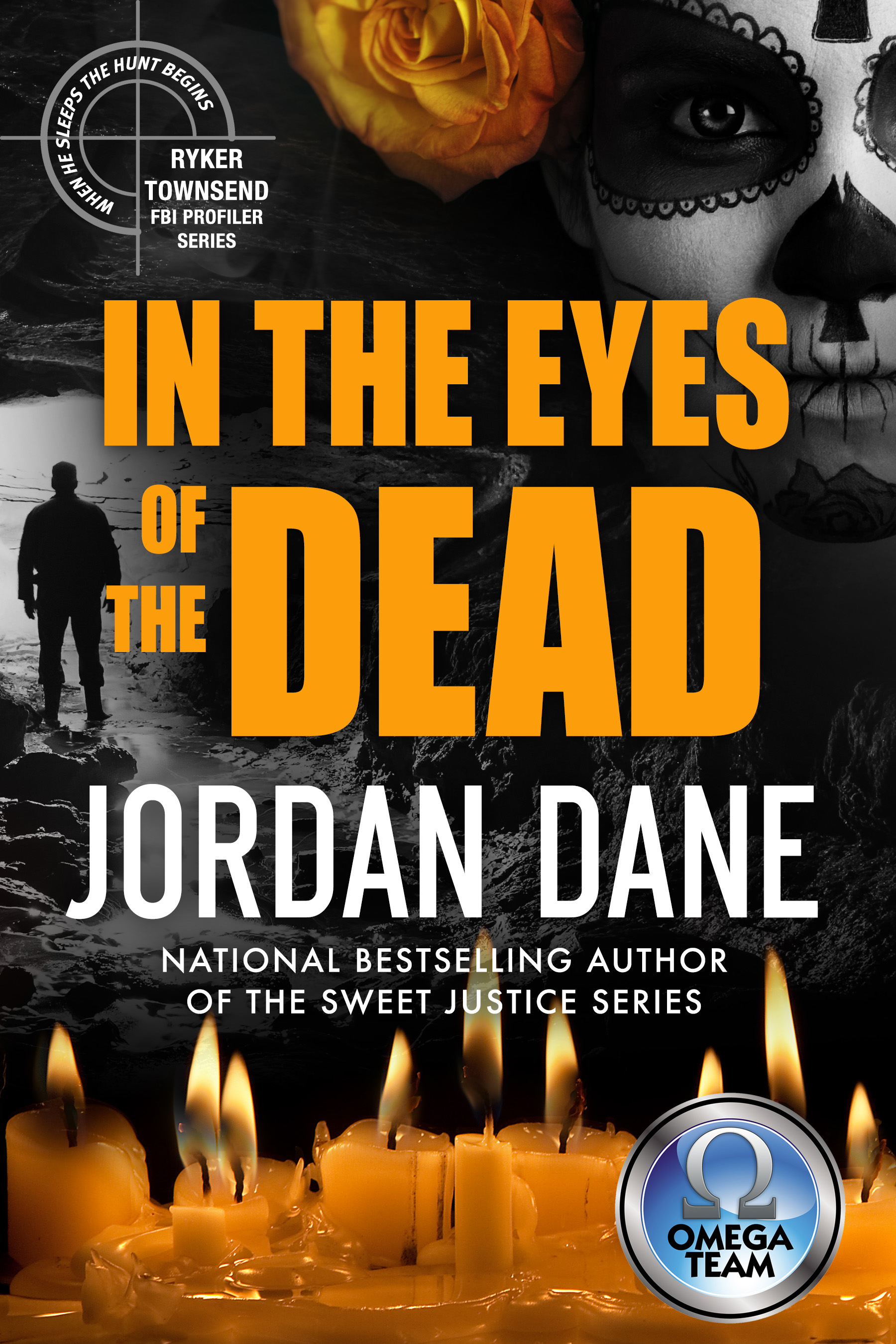
In the Eyes of the Dead – Book Birthday! $1.99 ebook FBI profiler Ryker Townsend and Omega Team’s Athena Madero join forces in a small Texas border town after ritualistic murders of four teens point toward a sinister Santeria holy man and his secret believers. (31,000 words)
Today, another brave author has stepped into the TKZ spotlight with this untitled First Page critique. Thank you, author, for your courage. We all learn from critiques. I certainly do. “No Title” is mostly set in Tripoli, Libya. Read it first. My comments are below. — Elaine Viets
NO TITLE
Prologue
March 1972 Brooklyn, New York
Lilah stood with her twin, Daniel, under the big black umbrella, fat rivulets of rain dripping off its sides. She barely heard the words of the minister as he said the final prayers committing the remains of her parents to the ground, but the smell of damp dug-over earth on that wet spring morning would stay with her all her life as a reminder of the end of her childhood. Walking unsteadily to the graves with a fistful of dirt, Lilah fell as her knees buckled, and an arm caught her around the shoulders.
“I’m here,” said Harry.
Part I – The beginning of always (Remember tonight, for it is the beginning of always – Dante Alighieri)
1 November 1973 Tripoli, Libya
“Hide, Lilah! Don’t come out till they’ve left.” Her aunt shoved the sixteen-year-old towards the back stairs as hammering continued at the door below. “Hurry!”
Lilah was tearing across the second-floor gallery when the deadbolt shattered, and black-clad men rammed into the house, demanding to speak to the Sheppards. Mrs. Sheppard, Lilah’s aunt, ran down the wide curving central staircase to join her husband.
The taste of blood filled Lilah’s mouth as she bit her lip to muffle the shriek. She slid to the floor behind the pillar, back against the marble. The kitchen stairs were just a few feet away. Almost there. She clenched clammy hands on her white cotton nightgown. Her heart thumped painfully against her ribs as she waited for a chance. Pushing aside the long tendrils of dark hair that clung to her damp cheek, she ran, bent double, to crouch by the side of a chest.
Dark eyes widened as she scanned the scene below through the railings. She almost sobbed with relief when she saw Harry wasn’t there. The Sheppards’ son was her best friend. Be safe, be safe. Oh, God, be safe, Harry.
One of the intruders kicked over the ottoman in the living room, sending colorful pillows sliding across the polished wood floor. The tall lamp crashed down and sputtered, throwing the room into shadows. Blue moonlight filtered in through gauzy curtains as menacing figures continued the escalating argument.
Keeping to the darkness, she crawled on all fours towards the door to the back stairs, tripping when the folds of her nightie twisted around slim legs. Uncle Dev shook off the hands of one of the men as another swung a lethal looking cane at his head and he crumpled to the floor wordlessly. Her aunt stretched out a hand, her cry choking in her throat.
Lilah gasped, instinct yanking her to her feet. A hand clamped over her mouth, cutting off the scream, and drew her inside the door.
_________________________________________________________________
Elaine: What you have here is well-written and action-packed, but reads like a sketchy outline by a professional writer. You have a good idea, but you have to put meat on those bones. I suggest ditching the prologue. Prologues often raise red flags for editors. You could expand this prologue, and the same information could be used much later in the story, when we know Lilah better.
Your novel really starts in Tripoli, which you call Part I. Are you planning to have several parts? I like the quote, though I wonder if it detracts from the action. Is there a reason for the date and city? Are you going to be moving the novel to other cities and back and forth in time? If not, I’d get rid of the dateline and year. I’m guessing you are not a US writer, since standard date style is November 1, 1973.
The action in Libya gets your novel off to a rousing start, but there’s too much confusion. Readers need a clearer picture of the house to understand what’s happening. We’re told it has a “second-floor gallery,” but how tall is the house – just two stories? Three? Five? The aunt shoves 16-year-old Lilah “toward the back stairs” as “black-clad men” hammer at the door below and shatter the deadbolt. Why push Lilah toward the back stairs? Where do they go? Will they take Lilah to safety? To a hiding place? To an exit or an escape route? Are these the same stairs as the “kitchen stairs”? Please clarify.
You give us an excellent picture of Lilah. Give us more clues about the Sheppards, her aunt and uncle. How old are they? Who are they? Are they Libyans? Foreigners living in Libya? Why do they fear the intruders? Who are these men? Terrorists? Criminals? Where does the Sheppards’ wealth come from: are they merchants, or in some shady business like arms dealing, human trafficking or drugs?
This is an excellent description of the invaders destroying the house: “One of the intruders kicked over the ottoman in the living room, sending colorful pillows sliding across the polished wood floor. The tall lamp crashed down and sputtered, throwing the room into shadows. Blue moonlight filtered in through gauzy curtains as menacing figures continued the escalating argument.”
However, this sentence stopped me: “Uncle Dev shook off the hands of one of the men as another swung a lethal looking cane at his head and he crumpled to the floor wordlessly. Her aunt stretched out a hand, her cry choking in her throat.”
Where is Uncle Dev? Still downstairs? Then help us out by adding “Downstairs at the doorway,” or something similar. That phrase “lethal looking cane” was another stopping point. Can a cane look lethal? Who is wielding it – is the attacker an old man or a young one? Did he take the cane away from Uncle Dev? If we can’t see the attackers’ faces, tell us what they’re like: are they muscular? Wiry and whippet thin? Slight but deadly?
The section ends on a suspenseful note. You have the beginnings of a good opening here. Answer these questions and you’ll be on your way to giving readers a first-rate yarn. Hope you’ll keep writing. I’d like to see where this novel goes.
Last month, Brain Storm was #1 in hardboiled mystery books and #1 in hardboiled Kindle books on Amazon. Win an autographed copy of my first Angela Richman, Death Investigator mystery. Click on Contests at www.elaineviets.com
Well, it’s time. It’s Tuesday, Nov. 8 and you have to make a choice.
No…not that one. We here at The Kill Zone are fiercely apolitical, so what you do today in the privacy of your little curtain or cubbyhole is your business alone. I’m talking about more important choices today -– about your novel.
But first, let’s pause for a short break. I am PJ Parrish and I approve this message:
Shoot, I’d vote for this guy. He makes as much sense as anybody running today. Okay, back to regular programming.
When you sit down to write a novel, you may not realize it, but you will be — for the next six months to six years it takes you to finish — constantly making choices. Some of these choices will be as big and strategic as picking your characters and plot. Others will be tactical choices like grammar, word choice, use of imagery, punctuation, chapter length, even book length. These latter choices are all really important and we’ve covered all of these topics here at TKZ. But today, let’s hone in on the big choices.
Yes, we’ve covered these a lot here, too. But on this, ahem, really yuge election day, I think it’s a good time for review.
The Ten Most Important Choices You Make About Your Novel
1. Who’s story is this? This sounds simplistic, but you must be clear about who you are going to focus on for your readers to follow. Now usually (but not always), you want to chose a single protagonist, one main person who will be challenged, who will triumph (heroic) or fail (tragic), and who will be the central figure in the story’s plot arc.
Can you have more than one protag? Well, yes. But in my humble opinion, a dual (or multiple protag) book is harder to pull off. Why? Because unless you are really good at weaving the threads of plot and motivation, you will probably understand or even favor one protag over another — and readers will really miss that person when they are “off stage.”
I recently critiqued a manuscript whose author couldn’t make this choice. She had created four equal main characters, but none really captured my interest. I asked the writer why she had done this and she said that her “real” protag was her setting. I advised her to go read Joseph Campbell’s The Hero’s Journey:
A hero ventures forth from the world of common day into a region of supernatural wonder: fabulous forces are there encountered and a decisive victory is won: the hero comes back from this mysterious adventure with the power to bestow boons on his fellow man.
The “region of supernatural wonder” can be the Hogwarts School of Witchcraft and Wizardry or a bar in Cleveland, if you want. But we must have someone to care about, someone we are willing to follow for 300 pages.
2. Where am I? It surprises me how often writers neglect this. Yes, all fiction takes place somewhere, but unless you make that your setting come alive in your reader’s imagination, you are just moving characters against a cardboard backdrop. Do you need to “write what you know?” Not really. You needn’t have lived in Belle Epoque Paris to be convincing, but you need to do your homework and create not reality but verisimilitude (the appearance or being real and convincing). Do your homework (Guest poster Barbara Nickless had a good take on this yesterday.)
And establish your setting very early in your story. Readers need to know where they are from the get-go, and while you don’t want to slow things down in your opening chapter(s) with too much description, you need to begin setting your scene early. And no, hanging one of those pitiful little taglines on chapter one — QUANTICO, VIRGINIA — won’t cut it.
Behavioral Science, the FBI section that deals with serial murder, is on the bottom floor of the Academy building at Quantico, half-buried in the earth.
That’s one of my favorite opening lines from Thomas Harris. He didn’t need a tagline, just those fabulous final five words.
3. What’s your point of view? So who is going to be your narrator? Sometimes, this can be a secondary character. Jay Gatsby is the protagonist of Fitzgerald’s classic, but the story is related by Nick Carraway. Most likely, your narrator will be your protagonist. So do you use first person or third person? Your choice. First-person is more immediately intimate because having your protag relate everything via “I saw” “I did” or “I thought” you establish a tight bond with the reader. But this is also very limiting as everything must be filtered through one prism. I think first is harder to write than third. Why? Because if you whiff on motivation, if you don’t grasp every nuance of your protag’s psyche, your narrator will feel flat. And if he’s boring, well, shoot…there goes the reason to turn the page.
Having trouble with this? Switch from first to third or vice versa. You may discover the plot you are dealing with demands the richer variety and complexity of a third-person vantage point. Or you might need multiple third-person POVs. Your protag may be doing a Diana Ross but she might need Mary Wilson and Florence Ballard backing her up.
Time for another break. I’m PJ Parrish and I approve this message:
I’d vote for that guy, too. He’s crazy but at least he’s honest. Back to your book:
4. What’s the best entry point? Let’s start with a premise: A rich teenage girl disappears from in front of a nightclub in London, snatched by a man re-inacting Jack the Ripper murders. A disgraced female cop who’s trying to reconnect with her own estranged daughter gets the case. Where do you start this story?
Bad starts: From victim’s POV: She wakes up, eats breakfast, has testy phone call with mom and later that night goes to nightclub. Cop’s POV: She’s sitting at her desk, thinking about her bad job and her lost relationship with daughter. From killer’s POV: he is watching girl exit the nightclub thinking about what he is going to do with her.
Why are these bad? The first is throat-clearing. Yes, you might want to establish sympathy for the victim but you can do this after she is gone or even in a few good tense ACTIVE moments in the nightclub. The second example is back story that should be dribbled in as the plot begins to unfold. The third example, while it sounds juicy, it has become a giant cliche. If you open this way, it must really be original, and you will then need to go back to the killer’s POV at other times in the book or the opening scene feels tacked on and artificial.
When considering where to start: Get in as late as possible but still be clear in what has already happened. Pick a moment where something is happening or about to happen, where a status quo is changing, where someone is about to be challenged.
Prologues? That’s a whole post in itself. I generally don’t like them because they are almost always mis-used. If you have one, cut it out and see if you can start your story in chapter 1. Betcha it works.
5. What does your hero want? Ray Bradbury said all you have to do is figure out what your hero wants then just follow him. Easy for him to say! Plumbing the depths of motivation is the key to creating characters who live on the page. I’ve written about this often because I think that once you, the writer, can answer this question, everything falls into place. It’s helpful to think of “want” as having many levels. In Silence of the Lambs, what does Clarise Starling want? Easy — to catch Buffalo Bill. But go deeper into her psychological basement:
To catch Buffalo Bill
To save Kathryn
To prove she can make it among the boys of the FBI academy
To impress her boss Bill Crawford
To make her dead father proud
To silence the lambs (her demons over being orphaned as an innocent girl)
Do this for your protag, then for your villain and everyone in your book if you can. Remember what Kurt Vonnegut said: “Every character should want something, even if it is only a glass of water.”
6. What happened? This is simplistic, too, but needs to restated: Something has to go south fast. As you concentrate on character, don’t neglect story. Your hero needs an obstacle to overcome. As Stephen King says in On Writing: “In many cases when a reader puts a story aside because it ‘got boring,’ the boredom arose because the writer grew enchanted with his powers of description and lost sight of his priority, which is to keep the ball rolling.” You must create obstacles for your hero to overcome (Sheriff Brody in Jaws has not just a killer shark to hunt down but he has to deal with a dumb mayor, a rift in his team (Quint and Hooper) and he can’t swim. I love what sci-fi fantasy author Nancy Kress says about plot: “Fiction is about stuff that’s screwed up.”
Uh-oh…we gotta break again. I’m PJ Parrish and I approve this message:
I’d definitely vote for that guy, but I think Ted Cruz might gnaw him down to bones. Back to your choices:
7. What are you trying to say? Samuel Goldwyn famously said, “If you want to send a message, call Western Union.” Well, yeah, I sorta of agree with that. Especially since I just finished a mystery that was about meth addiction in Appalachia. It was good but after a while I just thinking, “enough with the drug thing. Who killed that old man?” The writer was so enamored with his message, it let the story go flaccid. However…
Great books are always about a theme. Herman Melville said, “To produce a mighty book, you must choose a mighty theme.” So Moby Dick is not just a fish tale. It is about man’s inability to know God. But merely good books also have something to say. You can hear the theme humming soft and steady beneath the clanging machinery of the plot. At its best, a theme has some sort of meaning to your protagonist, even in genre fiction. Which brings to mind Joseph Wambaugh’s quote, “It’s not how the detective works the case but how the case works on the detective.” This is a little facile, but here’s an interesting list of common fiction themes — everything from abuse of power to xenophobia.
8. What do I call this? Let’s talk about titles. I know, I know…you don’t want to because titles are hard. And if I know you, you’ve probably slapped something gawd- awful on your work in progress just so you can find it in your computer. But here’s the thing: A good title can make or break your chances out there. I’d go so far to say it’s the single biggest marketing decision you will make. A good title is a neon sign to your readers, not just luring them in but signaling in shorthand what your story is about. And maybe most important, a good title helps you, the writer, understand at a very basic level what your book is about. You need to think about this until your brain hurts. You need to wake up in a cold sweat at night over this. Don’t settle.
What makes for a great title? It’s pithy, it has promise. It’s a tease and a tell. It’s memorable, original, and easy to say. It boils your entire story down its essence and conveys its heart. This topic needs its own post to do it justice, so for now, just Google and read up on the good advice out there. Good titles: Hunger Games. The Last of the Mohicans. To Kill a Mockingbird. Bad: I can’t print most of them here. Click here.
Another break? Geez. I’m PJ Parrish and I’m getting tired of approving messages.
It’s all a blur but I am pretty sure I voted for that guy. I like his wife. Maybe she’ll run someday…
Back to your own choices:
9. What is my tone? This is important but sort of slippery to grasp. It’s important, however, because if the tone of your book is off, you’re going to have trouble selling it to agents and editors or, if publishing it yourself, finding your target audience. The tone is your attitude or feelings toward your subject matter. You convey this through your style, word choice, and through the personalities of your characters. If you’re writing for a genre audience, getting your tone right is important because readers have certain expectations. A reader looking for light romance suspense doesn’t want to open your book and discover halfway through that you’ve started out light and descended to a darker place. Likewise, if like me, you prefer darker fare, you don’t want to be misled in the opposite direction.
Your chosen tone can be whimsical, humorous, gloomy, ironic, hardboiled, neo-noir, …you pick it. But you must be honest and consistent. Years ago, I wrote an amateur sleuth novel that I thought was peachy. It was roundly rejected, despite the fact I had a good track record with my current series. What happened? My tone started out light and wacky but veered toward the dark about halfway through. Two editors even used the same words in their rejection letters: “Loved the writing but it’s neither fish nor fowl.” I learned a lesson — I can’t maintain soprano when my true voice is contralto.
10. Do I finish this book or start over? No one can help you with this, but it’s something you have to ask yourself as you move along. Not every book needs to be finished. Some are exercises of sorts to help you learn. Others might be short stories instead of novels. And then there is the question of stamina and confidence. If you do believe in your story, then yes, you need to finish it. Even if it never gets published, it won’t be wasted effort. Every successful writer out there has unpublished manuscripts moldering in bottom desk drawers or lurking on old thumb drives. You need to finish something. Just for the knowledge that you can do it.
I’ll leave you with a telling quote from Erica Jong: “I went for years not finishing anything. Because, of course, when you finish something you can be judged.”
Yes, you will. Don’t be afraid of it. It’s called being a professional writer.
And finally, one last break. I’m PJ Parrish, and I think this candidate speaks for all of us very weary voters out there:
Today we welcome Barbara Nickless as a guest blogger. Her new novel, Blood on the Tracks, has just been released and today she talks about some of the real problems involved in researching this great book. I’ll be on the airplane home to Denver after cheering my husband on in the NYC marathon so I hope you give Barbara a great TKZ welcome and lots of comments!
“Real World” Problems
As soon as I decided to write a police procedural about a modern-day railroad cop in Colorado, I knew I had to set my thriller in the very real city of Denver. Denver is a major hub for western railroads, which have large operations there. As a railroad cop, my protagonist’s territory would cover 35,000 miles. But she—like her railroad—would be based out of Denver.
The problem? Even though I live only 60 miles away, Denver might as well be on the other side of the world for all I knew about it. To write a believable book, I had to go beyond geography. I needed to understand the workings of the Denver Police Department, the ins and outs of the railroads operating out of Denver, and Denver’s history, demographics, economy, and government. I had to get a feel for where my heroes would dine, work, study and live. Just as important, I had to know where my villains would lie, cheat, steal and murder.
Unsure whether to use actual settings for your novel? Here are some dos and don’ts if you decide to play it real.
Do get your facts straight. Errors will jolt your readers out of their willing suspension of disbelief. Start by learning as much as you can about your locale upfront. Online resources like Wikipedia and Google Earth provide everything from weather conditions to street views. There are websites for businesses and institutions where your characters might work, as well as information on museums and restaurants where they can conduct meetings or relax. Additional digging can turn up articles written by the locals, which will give you a feel for the local lingo and tell you what about their city makes them proud (or ashamed). Look at online magazines and newspapers, too, and consider subscribing. When I needed a swanky home in a swanky neighborhood for one of my characters, the Denver magazine 5280 told me the best areas of town, while Zillow offered maps, prices and photographs. And speaking of maps! I bought a large city map, a Denver street guide, a railroad map and a police precinct map. Hang them on your wall and add satellite or street-level photos. Or use pushpins to mark where the bodies are buried.
Don’t think everything has to be real-world. Feel free to make up some locales, especially if bad things happen there and you want to avoid a lawsuit. For my thriller, I took real neighborhoods, gave them the twist I needed, then sometimes renamed them. Denverites who’ve read my novel tell me it’s been fun trying to pinpoint neighborhoods and separate fact from fiction. Another huge part of my setting is the railroad my cop works for. Since railroads are privately owned and I didn’t want to risk offending the actual businesses, I created my own. While I’ve done my best to get general railroading facts straight, I’m free to make up the details.
Do travel there if you can. Nothing beats on-the-street research. For my novel, I was fortunate to find a retired Denver PD detective who also loves trains. Not only did he take me on tours of the Denver Crime Lab and police headquarters, he helped me pinpoint train track locations and find hobo camps. The railway cop who provided invaluable information for my book told me where hobos “catch out” (hop a freight train) and gave me a tour of the yards. He also banished my preconceived notion that railway police, like a lot of traditional police, have partners to help shoulder the load.
Don’t worry about getting it perfect. In Blood on the Tracks, I added a disclaimer at the end of the book stating that I’d taken a few liberties not only in the layout of my settings, but also in the institutions I portrayed such as the Denver police and the U.S. Marines.
What about you? Does your book take place in a real setting or a fictional one? And what are some of your tricks for handling either situation?