Dictate Your Next Book – Key Resources & Tips

Jordan Dane

@Jordan Dane

Have you ever considered dictating your next book or used voice recognition resources to dictate your book? I must admit that the thought of this scared me. I’m such a visual learner and have a process I’m comfortable with. I connect that comfort to my ability to craft a book, so the idea of messing with my comfort zone gave me the jitters. Here are some things to consider:

Dictating is free – If you’re uncertain about investing in this process, you can test the waters for free. Google Voice Typing and Google DOCs has a feature you can try. HERE is a link to the step by step instructions for Google. For other free apps, visit this LINK.

Voice recognition software has gotten better. (For MAC users, Google Voice appears to be a better option than Dragon/Dragon Naturally Speaking even if Dragon is made for MAC users). Dragon may be another software to try for PC users.) HERE is a list of top-rated recommended voice recognition software with feature comparisons.

Health Issues – For those concerned with carpal tunnel for your wrists or too much sitting, dictating can ease the strain on your body from long hours of sitting.

Dictating is much faster than typing the words, so less time needed for writing in a day and more effective use of your time when you’re in the process.

More writing and less editing – I am a big editor as I go. I hate leaving mistakes behind, so I have a rolling edit process. This could get more on the page faster and still leave edit time at the end of the day.

Dictating your book can allow you to do it using your cell phone (once you’ve set it up) and you can do this anywhere. No more excuses that “I have to go home to write.”

If cost is a concern, there are free apps or software readily available that won’t cost you a penny. You may eventually want to buy a microphone or acquire different software for voice recognition, but don’t let that be an excuse to not try it. Go for the free versions in your Google Play Store and dip your toe into something new.

TIPS to Enhance your First Dictation Try:

1.) Scene Ideas – We all know this, but think about staring at a blank page versus creating a short outline or list of ideas for a scene. Things will always go more smoothly if you have a notion of what you’ll write ahead of time. Take a few minutes to jot down ideas before you start.

2.) Error Time – Voice recognition software is not infallible and you may have additional issues with the dictation process. If you read the written results aloud, this could help find things like odd nonsensical words as a result of pronunciation or the software not capturing the words correctly.

3.) Take A Moment to Think – Before you leap into a sentence, take time to think through what you intend to say. Visualize what you want to say, before you say it. This could save correction time later and also prevent a muddled sentence. Practice will make it easier to dictate as you gain experience.

4.) Edit in Layers – I have a rolling edit process and that would not change with dictating. I like to print out my pages and edit what I’ve written during the day, usually before I go to bed or treat myself to someone else’s book. But depending on your edit process, if you like to create a first draft and revised in a number of draft iterations, you may consider adding a pass through for dictation type errors or adding a ‘read aloud’ phase as another layer to check your work.

5.) Grammar should be double-checked. Since you will be using voice recognition software to insert punctuation, you will need to edit for something that might come naturally to you if you typed it. This could be included in a rolling edit process as I described or in one of your draft fixes. This LINK has a summary of grammar related commands provided by Dragon. To write a line of dialogue, you may have to dictate – new line, open quote, Hi comma Mark period. Why are you sleeping with my wife, question mark, close quote. It will take experience to get used to the punctuation commands, but if dictation saves you considerable writing time, it may be worth it.

Other Revision Tools to Consider for Dictating Projects:

1.) Scrivener – I don’t have the personal experience with Scrivener as others do at TKZ, but here are a few notes I found in my research of dictation. Scrivener’s BINDER, SPLIT SCREEN, and LABELS (for plot line regrouping) can help you arrange sections of your book for a more logical flow. Check the WORD COUNT column in the OUTLINER section to consider pace issues at a glance, if word counts per chapter are a concern.

2.) Checking for Filler Words – My first pass through on edits is to delete and eliminate unnecessary word and tighten sentences. Filler words happen more in dialogue when we speak, but since you are dictating, filler words can appear when you might not expect them because of the change in process. In my research I found reference to a macro that can help you identify filler words. For instructions on setting up this Macro, try this LINK. Overused Words check in ProWritingAid can help with this also.

3.) Check for Longer Sentences – When you dictate, you can create longer sentences without realizing it. As you say the words, you use TONE as you may dramatize your wording, but on the page, this does not come across (things like italics use or internal monologue for deep POV). You may find longer sentences when you dictate and may want to consider shortening some. Two resources that can help with analyzing for long sentences – Hemingway Editor for MAC or PC & the Sticky Sentences/Long Sentences check on ProWritingAid.

FOR DISCUSSION:

1.) Has anyone used voice recognition for writing? How did it work for you? Pros and Cons?

2.) What are your thoughts on trying something new like this?
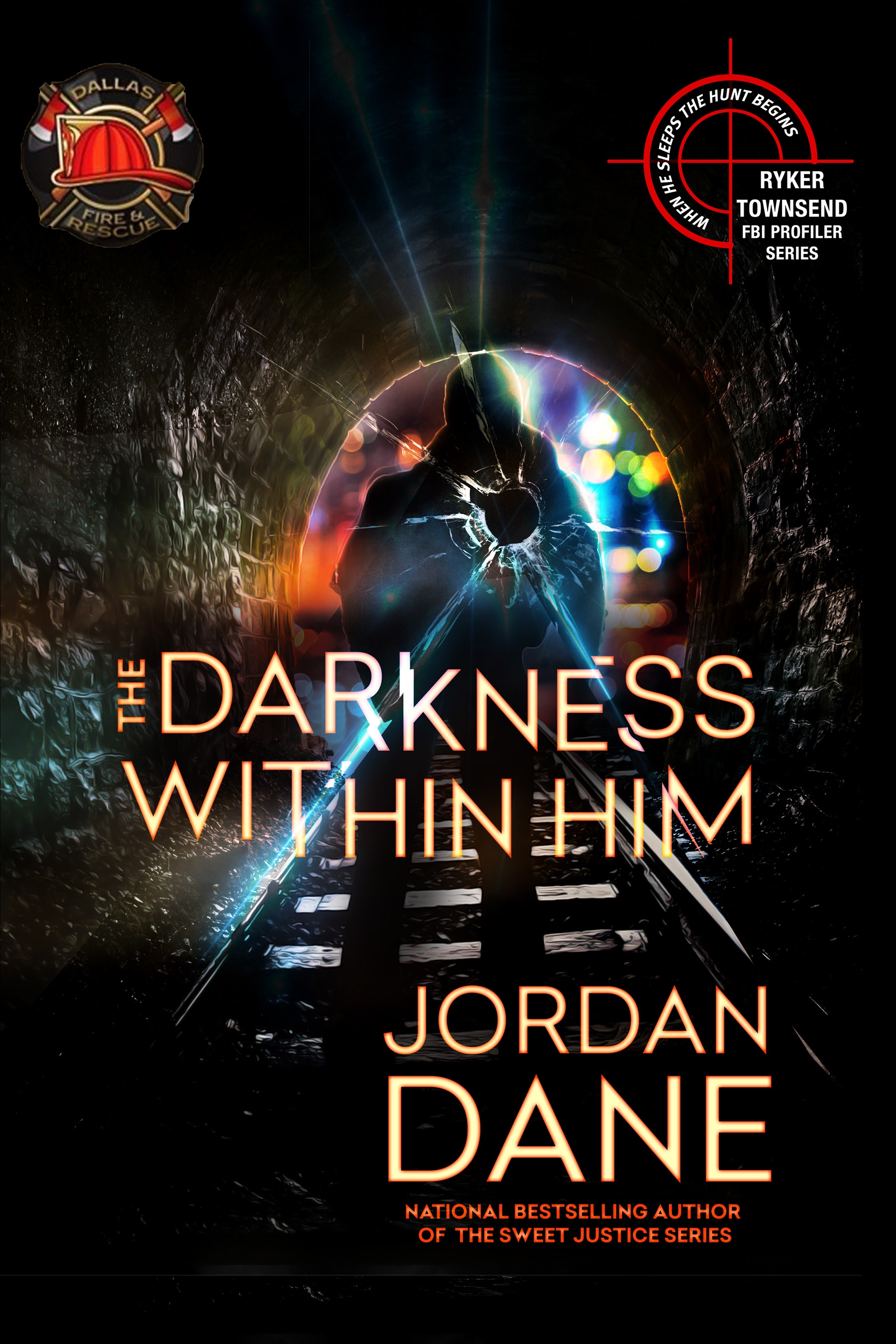
BOOK BIRTHDAY! The Darkness Within Him releases today – $1.99 Mystery, Suspense, Thriller Ebook 

It’s part of Paige Tyler’s Dallas Fire & Rescue Amazon Kindle World #DFRKW and a crossover with my Ryker Townsend FBI Profiler series (book #4).

SYNOPSIS – FBI Profiler Ryker Townsend is a rising star at Quantico, but he has a dark secret. When he sleeps, he sees nightmarish visions through the eyes of the dead, the last images imprinted on their retinas. After he agrees to help Jax Malloy with a teenage runaway, he senses the real damage in Bram Cross. Ryker must recreate the boy’s terror in painful detail—and connect to the dead—to uncover buried secrets in the splintered psyche of a broken child.

First Page Critique

Happy Monday! Today’s first page critique is a fantasy entitled A Turin Mercenary. My comments follow.

A TURIN MERCENARY

I sat silhouetted on my warhorse on the top of the hill.  I wanted them to see me.  A band of brigands had noticed me when I left the town of Ashton this morning.  I knew they would follow me.  I decided to make a stand.

It was midmorning.  The sky was clear, but it was cold.  It was the beginning of winter in the Realm.  I had taken off my warm cloak and gloves and let the cold invigorate me.  I took a deep calming breath and prepared myself for battle.

I could see the four of them riding on the road toward me now.  All too often, there were brigands that made their living by robbing people.  A lone female mercenary against the four of them.  They probably thought I would be an easy target.  I think not. Because I made my living by stopping them.  I allowed myself a little smile.  I made sure they would never harm anyone again.

The lead brigand whooped out loud when he saw me.  He drew his broadsword and held it high in the air.  The three brigands behind him drew their swords raised them as well.  They turned off the road and sent their horses at a gallop up the hill toward me.

I had given Talon the order to stand still and placed him with his left side parallel to the road.  A tactical maneuver.  In my left hand, was my longbow with an arrow notched.  I held the black bow vertically so it was hidden with my black horse, tack and clothes. The brigands would not see the bow until it was too late.

I waited patiently for them to come closer within range.  I calmly took in their expressions as they got closer, their faces tense with sneers of rage.  It was time.  I quickly lifted my bow up and drew back the bowstring.  I aimed and released the arrow at the lead brigand.  The arrow hit him square in the chest.  I immediately pulled another arrow from my back quiver, drew and fired.  The arrow hit the second brigand in the chest.  I saw the disbelief on the two remaining brigands’ faces when they saw their companions fall.

I dropped the bow and gave Talon the command to charge.  My warhorse responded with quick acceleration.  I drew my rapier and rode straight at the third brigand…

MY COMMENTS

It’s always tricky with fantasy as a writers needs time for world building – so a first page critique can be hard to do, as we really only get a glimpse of this. Nonetheless, I think this first page demonstrates that, even in fantasy, it is critical to draw a reader in right from the starts with specifics, firmly rooted in whatever world (be in real or fantastical) the author has created. With this first page, we have some tension, a little character development and action, but I think what we most miss is the specifics to add color and texture to the scene. My comments therefore center on world building, characterization and POV.

World Building

In this first page we get a sense of the world but little in the way of specifics. For example, the world is called ‘the Realm’ but we know nothing about it, except that the character is a lone female mercenary who is waiting for a groups of brigands to attack. We don’t really get a sense of her role, motivations, or place in the ‘big picture’ of the novel beyond this (I admit, thought, with a first page only, that is often a hard task). I would have liked more detail that enabled me to see, hear, and smell this world, and enough to enable me to distinguish this story from many other medieval/fantasy novels. One of the key issues I had in this regard was the use of the word ‘brigands’ – which is used eight times on just the first page. This kind of repetition drains the scene of color and specificity – likewise the use of ‘lead brigand’, ‘second brigand’ and ‘third brigand’. Apart from their faces being ‘tense with sneers of rage’ I can’t picture or distinguish one from the other. Such an action scene as a first page would definitely benefit from richer descriptions.

Characterization

I like how the lead character is a kick-ass lone female mercenary, but I needed a little more to truly believe and root for her as a character. It seemed strained to me that she would merely wait in the open and the brigands would oblige by attacking – what was their motivation for doing so? Does she look rich enough to be worth robbing? Why is she a mercenary (even just a hint on this would make her more intriguing)? At the moment she seems a little generic – and again, it’s really a question of giving us more specifics and making her seem more human (is she nervous at all? If she’s so confident – why? Have her experiences in the past hardened her?). This also leads to the question of voice, which I found wasn’t quite fully formed as yet.

POV

The ‘voice’ in this first page is clearly the mercenary and yet I didn’t get a sense of her voice strongly enough as yet. Perhaps it was the vague drifting into third person/omniscience (e.g.. ‘A band of brigands noticed me’) or the odd change in tenses (‘I think not’) or the short staccato style sentences (which can work, but here, felt a little bland). For a fantasy novel to grab me, I need to be fully invested in the main character from the get-go. Although I liked the action in the scene, I feel that a bit more attention to the lead character’s voice would go a long way to upping the tension and stakes.

Overall, I think this page has good action but lacks some ‘color’ in terms of world-building details, POV and characterization. If the writer spent a bit of time enhancing these elements this page would be all the stronger for it.

TKZers, what do you think?


Mystery Cliches: Are They Boring Your Readers?

By Elaine Viets

Are you writing cliches? Of course you are. We all do. Call them cliches or give them a Hollywood make over and claim they’re literary tropes, certain scenes and characters appear again and again in the mystery genre. We writers need to be aware of them. Masterful writers can turn tired scenarios into art. But in lesser hands, those same cliches can annoy readers. Here are a few cliches that real, book-buying readers have identified.

Cozies– The heroine looks at her body in the mirror and describes herself. This has been done again and again.

– The stupid detective who makes major errors no police officer would. Cozy heroines often need a reason to investigate the crime, and a stupid detective is the standard one. But I threw a book against the wall when a cozy heroine went back to the victim’s home and found her diary SITTING ON THE DESK IN HER OFFICE in plain sight and it just happened to have a major clue. Any police officer with a pulse would have taken that diary!

– The protagonist who is Too Stupid to Live and confronts the killer alone. I’ve seen this in all genres – even noir, where cops who should know better confront the killer without calling backup – but it happens more often in cozies.

– I used to pick up every “cupcake bakery mystery” and “knitting circle sleuth” book, but I found that they all opened with a description of the new woman driving into town thinking about how she just broke up with her fiancé, just sold her house, just quit her job, or just inherited the family shop, and how she’s starting over, yadda yadda.

– In one series, the writer starts every book with a scene of waking-up, feed-the-cat, think about what we do for a living, and the people we deal with as we shower. Every time we encounter a character we hear again the same basic spiel that was in book one about the back story of the character or location. We even have to hear about people’s nicknames and why they have them. This gets extremely tiring and I have to skip past it by books two and three.

Thrillers


– I’m tired of books that are always about lost artifacts that good guys race against bad guys to find. Too much detail and a predictable story line.

– This thriller was told in present tense, but then shifted between different time periods and different points of view. I couldn’t keep it all straight and jumped to the end. I don’t want to work that hard to stick with a book.

– Story jumped from city to city to city. The author didn’t set the scenes, just changed the place and dateline at the start of the chapter. I lost interest trying to figure out where it was.

– Ordinary minivan dads and moms suddenly develop SEAL-level skills to save their spouses and/or children. I know parents can perform extraordinary deeds to save their family, like lift up a car to save the baby from being crushed to death, but gimme a break! Or give them a background where they’ve been in the military or have some kind of special training.

– The nice guy hero with the psychopath friend who does all the killing and dirty deeds the good guy won’t do.

– My pet peeve is cardboard characters. Any mystery can have stock characters, but I think they’re especially common in thrillers, where character development is too often sacrificed for action. It’s a turn-off.

Chick lit

– Look, I know it’s a genre – chick lit mysteries – but I don’t always know I am downloading one until I listen to the setup (someone croaks or is croaked) and when the police come, the female protag suddenly notices how tight the sheriff’s shirt is over his manly pecs, and we are off! I have had several opportunities to call the police and never did I start sniffing their aftershave and swooning. Seems like every book with people of both genders in it, two opposite ones (usually) will immediately glom onto each other. Dunno – it’s kind of funny and kind of stupid.

– Don’t know about cops, but it has become apparent to me over the years that all firemen, no matter where they live, have to pass some sort of hunk test before they’re hired. The pizza delivery person has never been hot and interested in me nor has any auto mechanic ever offered special services. Very depressing.

– The heroine has a sidekick friend who is either old, fat, or weird, wears wild clothes and behaves outrageously.

– I’d like a mystery where the characters are not over-the-top having sex with the detective and the ex and so forth, and they have to work to make a living.

Noir
– The protagonist’s wife/husband and child were killed in a car accident or a plane crash and the protag crawled into a bottle. Yes, I know that happens sometimes, but it happens so much in the mystery world I’d be afraid to let any family members board a plane or even drive to church.

– The hero is beaten unconscious in one chapter – kicked, pounded, bloody, broken nose and maybe other bones – and in the next is running around chasing the bad guy, without any damage.

So readers, what cliches turn you off?

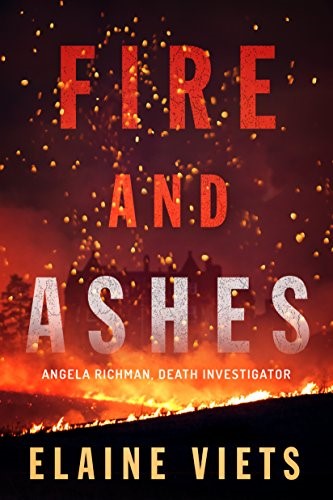
FIRE AND ASHES, my new Angela Richman, Death Investigator mystery debuts July 25. Pre-order the e-book for $3.99. It’s FREE for Kindle Unlimited. http://tinyurl.com/yawp64ku

First Page Critique ‘Beware of Geeks Bearing Grifts’

Jordan Dane

@JordanDane

Bernie Madoff – DOJ photo 2009

The title of this anonymous submission gives us a clue on what this story might be about. At first pass, I had misgivings about mixing the tension of finding Granny’s body with the humor of this voice, but the title made me realize this is the voice of a grifter. I’ll have my thoughts on the flip side. Please share yours in the comments.

***

The pissy mood that sprang up when the supermarket was out of my favorite brand of salsa, evaporated at the sight of my grandmother sprawled at the foot of the stairs. I peeled the plastic bags off my right arm and dropped them on the needlepoint bench in the entryway.

“Nana?” My voice boomed in the silence of the house.

I don’t know why I said anything. It’s not like I expected an answer. I didn’t have to be a medic to interpret the sideways tilt of her head and the ninety-degree wrong way bend of her knee. There was also no need to call in the CSI team to figure out what happened. The old wood floors had soaked up most of the gin, but the outline of the shiny stain hinted that the broken glass had been full. The near-empty bottle near her head told me the glass had been refilled more than once. The cherry on top of this shit sundae was the bunched-up throw rug about halfway down the stairs.

I sat cross-legged, with my back against the elephant ear plant, sipping the dregs of her booze. At that moment, I wanted nothing more than a cigarette. I’d kicked in prison, it was easier than hustling, but if I had a pack right now, I’d be blazing up as fast as I could suck them down. I thought about calling the cops and even reached for my phone. Then, through the light liquor haze, I remembered the last time I’d voluntarily talked to the law. I’d stepped into the interrogation room and hadn’t seen daylight again for two years. I was an ex-con with a dead body on the floor and my name on all her financial accounts. I spun the bottle across the floor like a stone on a pond.

No cops.

Without a death certificate I couldn’t arrange a funeral, and even if I could, there was no money to give her the nice send-off she’d always wanted. Fixing the roof had drained most of the proceeds from the reverse mortgage. The words reverse mortgage sobered me up faster than a pot of hot coffee. The minute the bank heard that grandma had kicked they’d swoop in and take the house faster than I could say next-of-kin.

FEEDBACK

Overview: Feeling a little larcenous? After I imagined this guy coming across his dear Nana planted at the foot of the stairs (completely potted), and seeing him plop down for a drink to shrewdly think through his dilemma, I had to chuckle. Forget about a forensics team determining time of death and that his grocery receipt may give him an alibi, he’s an ex-con who would cause a good detective to put him at the top of his suspect list. What comes next for this grifter could be lots of fun.

INTRO – I would start with “Nana?” to focus on the inciting disturbance. With this being a grifter and the dark humor is apparent, I would take some of the first paragraph and add it as follows:

REWRITE example:

“Nana?” My voice boomed in the silence of the house. With my grandmother sprawled at the foot of the stairs, I forgave the supermarket for not having my favorite brand of salsa and set down my grocery bags.

POV – I’m assuming this is a man, but there is nothing that indicates this, other than reading between the lines. A way to remedy this is to have him chastise himself, using his own name, when he gets riled or finding another way to clarify gender before the reader gets too far into the narrative.

POINTS OF CLARIFICATION
1.) With the fall breaking her drinking glass, I can buy a shine left on the floor might indicate it was nearly full, but the author may want to describe the nearly empty gin bottle was unbroken. Did it have a cap on? Otherwise the shine on the floor may have come from the bottle tipping and spilling.
2.) The throw rug that caused her fall should probably be clearer that it was on the landing. I thought at first this was a stair runner or wondered why a throw rug had been on the steps.
3.) Why would she be carrying the bottle and the glass as she walked on the stairs? Was she going upstairs for bed and it was her usual habit to drink up there? She would have to be going up the stairs. I don’t know why she would be coming downstairs with the bottle and glass. Most people keep their booze downstairs.

WEIGHTY PARAGRAPHS
The paragraphs strike me as too many ideas lumped into each long train of thought. If the author broke up the elements, it would showcase the dark humor more.

REWRITE example:
I sat cross-legged, with my back against the elephant ear plant, sipping the dregs of her booze. I hated drinking alone. I raised a glass to Nana and craved a cigarette. Why the hell did I ever give up smoking? Oh, right, I remember. Selling smokes in prison had been easier than hustling.

I thought about calling the cops and even reached for my phone until deja vu cured me of stupidity. The last time I’d voluntarily talked to the law, I’d stepped into the interrogation room and hadn’t seen daylight again for two years.

I assessed my situation from a cop’s point of view. One dead body, check. One ex-con at the scene–that would be me–double check. Only one name on all the financial accounts of the dearly departed–yes, me again–trifecta check. DING! DING! DING! We have a winner.

FLOW – As I stated before, breaking apart a weighty paragraph might highlight the character’s thoughts better, show his dark humor, and highlight his train of thought flow better.

REWRITE (broken into 2 paragraphs):
Step one had to be no cops. Done, decision made. Step two, I needed a proper death certificate. Without legit paper, no funeral. Nana deserved a nice send off, but the funds from her reverse mortgage were nearly gone after fixing her roof.

Shit! The reverse mortgage sobered me faster than a good slap to the face. The minute the bank realized grandma had kicked it, they’d swoop in and take the house faster than I could say, ‘next of kin.’ Nana would’ve wanted me to have the house. That left me with only one choice.

SUMMARY:
I like where this is going, because it seems as if our ex-con has a scheme to grift grandma’s death into a fiasco. Reminds me of FARGO. I would encourage the author to get over the top with what this guy does. FARGO was based on real events. Keep piling on the absurd situation while you keep the protag deadly earnest with his situation. There’s load of potential for this plot and I love the dark humor of it.

DISCUSSION:
Where do you see this story going, TKZers? Constructive comments on the writing would be appreciated.

VIGILANTE JUSTICE (Available Now) $1.99 Ebook
In Montana, when a disturbing pattern of missing teens and college students falls under the FBI’s radar, former CIA operative Mercer Broderick fears the violent abductions are at the heart of a dark web of conspiracy that must be stopped and Brotherhood Protectors won’t be denied from the fight.

From Idea to Novel

Starting a new project is always nerve wracking – there’s the empty page for starters but then there’s also making sure that the idea is sufficient to form the foundation for a complete novel. Generating ideas has never been my problem – a number pop into my head each day and some are sufficiently intriguing that I jot them down in my ‘ideas book’ to see if they will gradually begin to take shape in my mind to form the foundation for a story. Many ideas fall by the wayside at this point – because while they interest me, they never really coalesce into a premise that can sustain a novel. Even after that, I’m consumed with doubts…although I’ve really only had one story die after I’d finished the first draft because I realized the premise was too convoluted and confused (the idea, though still holds promise!).

I’m about to embark on a new WIP and I’m at the doubt-filled stage of wrestling with a new idea. Since I have other projects in various stages of the submission process, it’s definitely time to knuckle down to a new manuscript but in this early stage of the creative process I have to grapple with how to formulate an idea into (hopefully!) a great story.

My process (such that it is) usually goes something like this:

  • Light-bulb moment – new idea starts to whip round in the brain and, of course, I think it’s awesome.
  • Write down idea in vague terms – lots of questions and possibilities…
  • Start research (almost always involving some historical period/event)
  • First doubts – which way to proceed? More questions than answers? Do I have enough for a novel??
  • Begin to outline a proposal to help shape the idea into a real concept and (ultimately, I hope) the premise for a novel. This is usually when the second round of doubts start to hit… Sometimes I end up with multiple proposals revolving around the same initial idea as I fumble around trying to decide if this project really is ready to get off the ground.
  • More research = more procrastination and sometimes panic that whole idea really sucks…
  • Send outline to beta readers for feedback – see if it’s intriguing and clear enough (my issue is always one of complicating rather than simplifying a story!)
  • After feedback – sometimes involving a choice between proposals – I send to my agent for her initial read/buy in. This is where I have to formulate the log-line/blurb so I can succinctly describe it to her and others.
  • Once I have agent buy-in I start on an outline and the first chapters to establish the POV/Voice for the book (I spend a long time on the first chapters feeling my way into the book as well as drafting an outline of where I’m headed with the plot/characters)
  • More research (I like to hide between the pages of history books!) = procrastination
  • Finally begin draft!

So TKZers how do you go from idea to first draft? Do you spend time, like me, formulating the premise and making sure your idea is sufficient to sustain a novel? Or do you just set off writing from the get go with the confidence that it will all come together and work out in the end? What’s your process?


An Agent’s Advice: The Big Five No-nos to Querying a Literary Agent

Kathryn Lilley
@KathrynELilley

The Kill Zone is honored to have literary agent Mark Gottlieb as our guest today, from the Trident Media Group. Feel free to ask him those burning questions you may have about what he’s looking for, or how he sees publishing trends, or his insights into publishing and the role of literary agents. Welcome, Mark.

Mark Gottlieb attended Emerson College where he helped establish Wilde Press, from a publishing club of students. After graduating with a degree in writing, literature & publishing, he began his career with the VP of Berkley Books (Penguin). Mark’s first position at Publishers Marketplace’s #1-ranked literary agency, Trident Media Group, was in foreign rights. Mark was Exec Assistant to Trident’s Chairman and ran the Audio Department. Mark is currently working with his own client list, helping to manage and grow author careers with the unique resources available to Trident. He has ranked #1 among Literary Agents on publishersmarketplace.com in Overall Deals and other categories. 

~~~

As a literary agent in major trade publishing at the Trident Media Group literary agency, I receive hundreds of query letters a week. I find that there are so many things an author can do wrong in querying an agent with a submission letter, while there are very few things an author can do right in querying an agent with a submission letter, so it’s really hard to say every single thing an author should avoid in a query letter… Though if I could throw just five glaring problems I tend to see:

1) FINISH THAT MANUSCRIPT: Authors querying an agent before their fiction manuscript is finished/fully-written, or before their nonfiction book proposal is finished/fully-written, is certainly a pet peeve. It makes no sense querying an agent with unfinished work.

2) DON’T AVOID THE LETTER: I would advise against writing query letters that state that the author does not want to write a query letter but has instead opted to merely attach a manuscript or synopsis to let the work speak for itself. Right away the literary agent will know that the author is going to be difficult to work with. The query letter is also essential so it really can’t be skipped.

3) PERSONALIZE THE ADDRESS: It is very impersonal seeing a query letter email from an author addressed to dozens of agents at various literary agencies with a “Dear Agent” greeting. Smaller agencies on those lists might think to themselves that they might not be able to compete with the bigger agencies on that list, opting to bow out, while bigger agencies will think to themselves that they shouldn’t have to put up with that, also opting to bow out. So where would that really leave an author? It’s better to do one’s research and approach the very best agency.

4) READ THE INSTRUCTIONS: Reading and respecting a literary agency’s submission guidelines (usually listed on the agency’s website) is also a good way to get a foot in the door, whereas bucking the system will seldom get a good result. New authors call all the time, asking if they can query us over the phone, and I must always refer them back to our website since we prefer to receive query letters there as a matter of company policy.

5) THINK OF BENDING THE RULES BEFORE BREAKING THEM: Knowing the rules before breaking them is also important, as going outside of genre-specific conventions and norms can be difficult for an author trying to make their major debut. For instance, a book written for elementary schoolchildren should not contain explicit language and content only appropriate for an adult audience. Knowing the proper book-length for the type of book written is also important, since publishers consider their cost of printing/production as well as shipping and warehousing, alongside how to price a shorter versus a longer book.

Mark Gottlieb
Literary Agent
Trident Media Group, LLC
41 Madison Avenue, Floor 36
New York, NY 10010
(212) 333-1506

Mark Profile at Trident Media Group

Twitter

Facebook

FOR DISCUSSION:

Mark has consented to answering your questions. Feel free to ask away. Thank you for being our guest, Mark.

First Page Critique: Finn Slew

Happy Monday! Today I’m critiquing a first page submission for a novel entitled Finn Slew which begins in Afghanistan and appears to be the start of an intriguing suspense/thriller. My comments follow.

Title:   Finn Slew

MAY, 2011, Kandahar, Afghanistan

The phone was vibrating. Again. Alive and angry, like he’d stuffed a rabid weasel in the breast pocket of his ballistic vest. If Finn was going to be shot, it was small consolation the phone would die first.

The ringer was off. Best not to draw attention on the streets of Kandahar City. If the phone squawked his two soldier escorts, front and rear, would want to shoot him before the Taliban had a chance.

The first four messages this afternoon were from increasingly higher links in the Astral Media chain of command.

The fifth, just now, was a text from his direct boss, Kate Adachi, managing editor of his home newspaper, the Vancouver Journal, the westernmost outpost in Astral’s media empire: “WTF Finn? Supposed to file from the base newser on  plans for our troop withdrawal. Major heat from head office AND our publisher. Also fm Major Cahill, at CFB Kandahar, wondering where the hell you are. Call me. Now.”

He ignored that, too.

He’d written the ‘glorious farewell’ story weeks ago, with too much emphasis, in Cahill’s view, on those allies who felt Canada was cutting and running with the job unfinished.

Not that the job will ever be finished. Ask the Brits. Ask the Soviets. Hell, ask the Afghans. 

The news conference would play out as others he’d endured. Cahill, the public relations flack at Canadian Forces Base Kandahar, would lay on what soldiers cynically called “the Full Canuck.” A visiting general with a full display of chest candy would share Tim Hortons coffee and donuts with the troops as he declared the mission an unqualified success.

There’d be a moment of silence for those killed in the service of their country during Canada’s decade in Afghanistan, and a nod to the grievously wounded. Not a mention of those tortured souls carrying the war home in a nightmarish loop of pain and fear. Soldier suicides? What suicides?

Then, off to the ball hockey rink at Kandahar Airfield where the big guy would play enough shinny for network visuals before hopping a flight home.

They’d make damned sure a dead soldier wasn’t catching a lift in the cargo hold. Don’t want to go off-message.

No more press-release journalism. Finn was chasing bigger game: misappropriated aid money, corrupt military contractors, black market trade in weaponry. That’s why Cahill’s shorts were in a knot.

Comments:

I think this first page is off to a great start. I’m intrigued by the premise of a Canadian journalist investigating corruption in Afghanistan just as Canadian troops are being withdrawn. The voice of our main protagonist is strong, cynical, and determined and the short paragraphs, clipped sentences and snide comments all fit the protagonist well. This is an easy first page to critique as I don’t have much to say, except well done and I want to read more!

I have only three (relatively minor) comments:

  • The first is to reconsider the title of the book. Finn Slew (to me, at least) sounds strange and a little awkward. I think a stronger, darker title that gives a reader a better sense of the book would work better.
  • The second is to perhaps shorten the 4th paragraph as the reader gets some extraneous information here about the newspaper/media corporation that slows the pace of this first page. Something like: “The fifth, just now, was a text from his boss, Kate Adachi, managing editor of  the Vancouver Journal”  – it would be simpler and the extra information can be provided later.
  • Finally, the last line suggests Major Cahill knows the story the main protagonist is pursuing, and yet in Kate’s text he’s trying to find out where the protagonist is so I’m not totally sure if the author intends Cahill to know (and hence have his shorts in knots) or not. Maybe this could just be clarified.

Otherwise, I thought this was a terrific beginning and I would definitely want to read more. What about you, TKZers, any comments/thoughts?

Can Writing for Amazon Kindle Worlds Be Right For You? Guest Post: Elle James

Jordan Dane

@JordanDane

I’m on deadline and in a crunch, but I am honored to have my dear friend, Elle James (aka Myla Jackson for a sexier read), as a guest at TKZ. She’s a USA Today & New York Times Bestselling author best known for her suspenseful military romances. She writes for Harlequin Intrigue, Romantic Suspense, and Nocture, as well as having her own successful indie projects. This woman is busy, but always generous with her time to support other authors. As a former member of the Army and Air Force Reserves, Elle has traveled across the United States and to Germany, managed a full-time job until she eventually quit to write full time. Ask her about what it takes to raise very large exotic birds in the Texas hill country. Take it away, Elle.

Is Kindle World right for you? If you are not familiar with Kindle Worlds, the stories are basically fanfiction you can get paid for. An author agrees to open his/her world, allowing other authors to write in that world and they split the profit.

So, why not just write in your own world and skip the splitting of profits gig? Keep it all to yourself. Here’s why you might want to dip your toe or pen into the Kindle Worlds of other authors.

You can write a crossover from the author’s Kindle World into your own series or world. What that buys you is a door into that author’s readership. The readers who love that author will buy books by other authors knowing they will catch glimpses of their favorite characters in those books. If they like the new author, they will find more of the new author’s books to read. It’s a cross-promotional effort that could expand your reader base.

I’ve written in two other authors’ Kindle Worlds for that very reason. Their stories were Military Romance and Military Romantic Suspense. The crossover made sense. The assumption is that their readers will like my books because they are in the same genre.

I expanded my reader base and now I have my own Kindle World. The beauty of Kindle Worlds is that you don’t have to stick to the same genre. Other authors from other genres can write in your world. An author might pick up readers who typically read other genres than what the author writes. But a good story is a good story and the readers might look for more of that author’s stories.

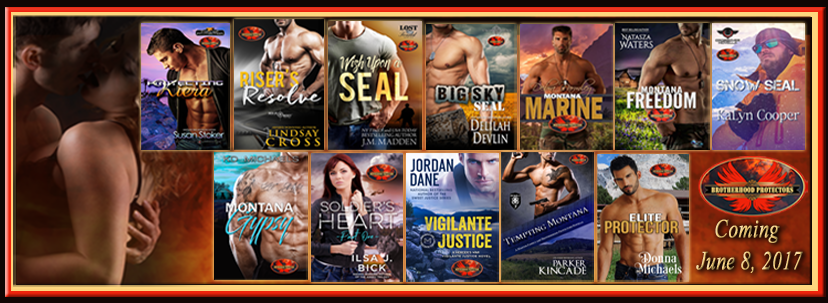
Writing in a Kindle World is not for every author, but if you’re still building your audience, you might give it a try. Brotherhood Protectors Kindle World is a Military Romantic Suspense genre. Authors writing in my world include young adult, thriller, contemporary romance, military romance and more genres. I hope they all pick up new readers because of their experience writing in my world. I invite you to write in mine! If you are interested, contact me through my website. I’d love to include you in an organized launch.

You can visit my Brotherhood Protectors Kindle World page on my website to see the books already written in my Kindle World or visit my Brotherhood Protectors Kindle World on Amazon to find out how you can participate in my Kindle World. Or read some of the books in my kindle world to get a flavor for what other authors have done. You can get them Here on Amazon. You can also read my original Brotherhood Protectors series. I’d love to have you join the Brotherhood Protectors Kindle World!

DISCUSSION:

1.) Would you consider writing for one of the Amazon Kindle Worlds?

2.) What experiences have you had writing shorter projects between novel length books? Did that experience of writing shorter, allow you the flexibility to try other genres?

3.) What genres have you attempted and enjoyed?

Jordan here: I wanted to add a couple of comments. Amazon Kindle Worlds sets the price for your project, depending on its length. You can write whatever length you have time for, between projects. HERE is a link for the details behind Amazon KWs and samples of their boiler plate agreements and exhibits.

Website

Join my newsletter to hear about my latest releases!
Elle James’s Newsletter