Reader Friday: Dinner With an Author

Image by Pavel Charny from Pixabay
You and your author of choice (see last week’s post) are enjoying your meal.
You can ask two questions. What would they be?
Reader Friday: Dinner With an Author

Image by Pavel Charny from Pixabay
You and your author of choice (see last week’s post) are enjoying your meal.
You can ask two questions. What would they be?
Reader Friday: Guess Who’s Coming to Dinner
You can have dinner with any currently living author. The rules: It’s at your house. You have to cook. No take-out, no delivery. You cannot ask the author about preferences. For the sake of this exercise, there are no food allergies, dietary restrictions.
Who’s coming to dinner?
What are you going to prepare?
Based on early comments, it looks like my one-on-one dinner with an author has been hijacked into dinner parties. You guys are going to have trouble with next week’s Reader Friday. 😉
Using Magnets to Attract Readers
Terry Odell
Since everyone’s probably busy with holiday prep (unless you’re like me and your holiday is over), gift giving is or was part of the mix. Today, I’m talking about gifts authors can give to readers. Reader Magnets.
Saturday, Patricia Bradley’s post addressed newsletters. Unlike social media, newsletters lists are one tool we can control. We “own” that content. If a social media platform disappears (anyone remember MySpace?), we’ve lost that audience and have no way to get in touch with our previous followers.
A reader magnet is designed to reward people for signing up for your newsletter. It can be a short story, a full-length novel, a sampler—anything that connects to your genre and would have subscribers wanting more. When someone signs up, they’re given their gift.
How should you deliver these magnets, and what form should they take?
My preference is always to make it as easy as possible on both ends.
First, you need a signup form, preferably a dedicated/landing page on your website. That way, you can link everything to that place.
Next, you want as many paths to your signup process as possible. I start with a simple signup link in my email signature line. I have signup forms on my website as well. And the dreaded popup. Everyone says they hate them, but they work, as I discovered once I got over my personal prejudice and added one.
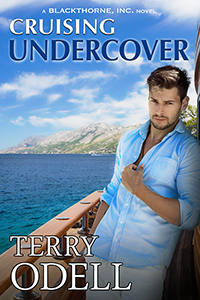
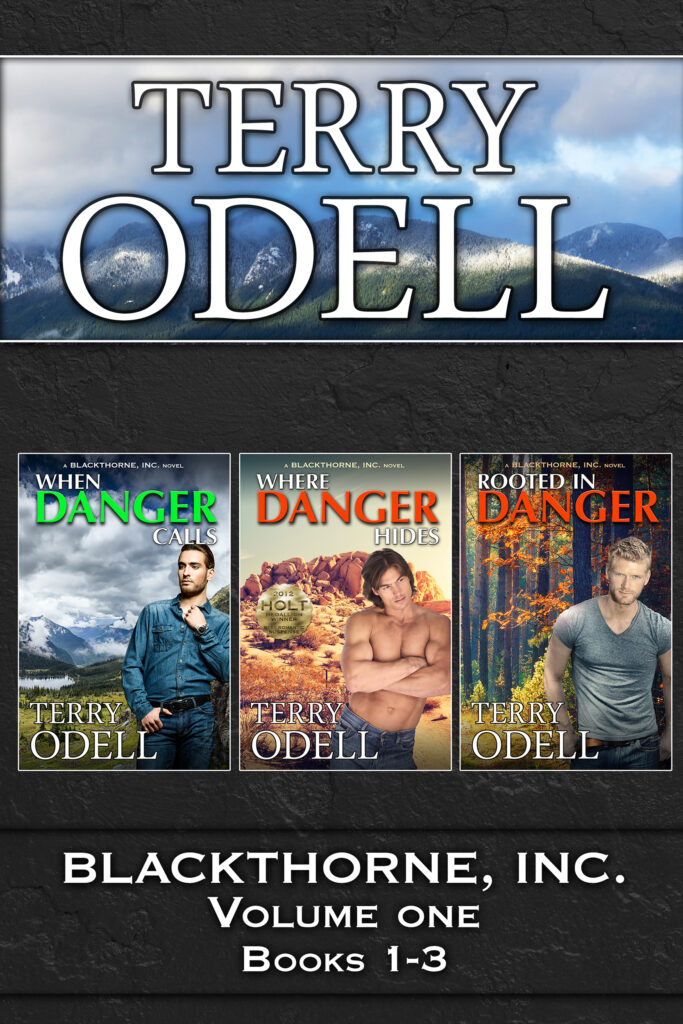
But what I really came to talk about was the magnet itself. I have one main magnet—two short stories set in my Blackthorne, Inc. universe, featuring the head of the company.
I chose to deliver it in three formats: epub, mobi, and PDF. That way, the end user gets to choose the format, and you’re likely to satisfy more readers. Nobody wants something they can’t read. Although Amazon now wants manuscripts delivered in epub, the mobi format is still out there and (last I heard), lets readers sideload onto Kindle devices.
My least ‘favorite’ format is PDF. It’s a picture. You can’t do anything with it, and reading on a small device like a cellphone is next-to-impossible for me, especially if the offering is more than a few pages. But the takeaway here is you are not necessarily your reader, so I offer it for those who like it.
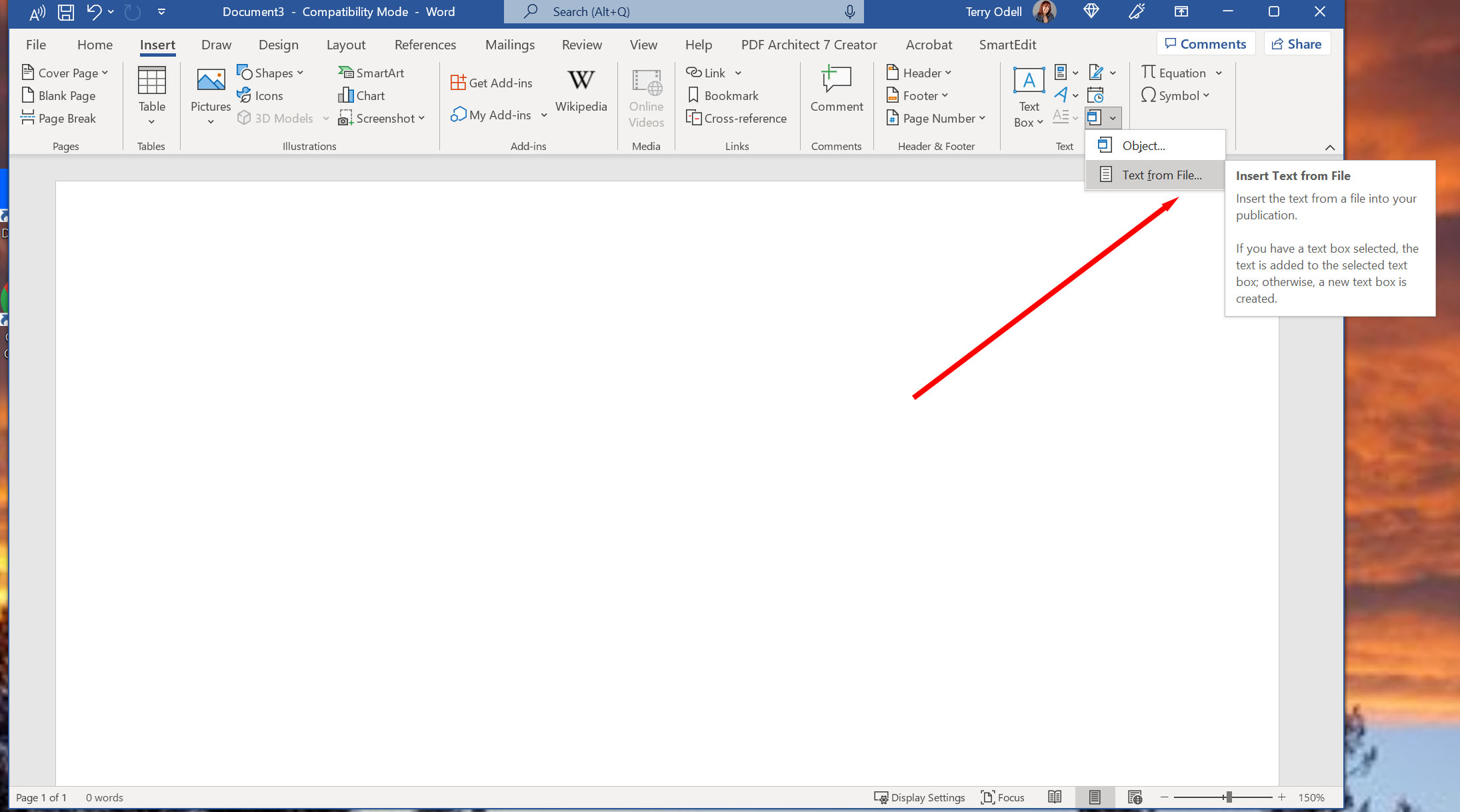
How do I create these formats? I use Draft2Digital’s free formatting service. They don’t require you put your book for sale, and they do a fine job of converting a Word document into mobi and epub. For PDF, I simply take my Word Doc and do a “Save As … PDF” and it works fine. D2D will convert to PDF as well, but for whatever reason, if you have a color image as your ‘cover’, it comes out in black and white.
Now that I have these three formats, I need a way to deliver them to my subscribers. I use BookFunnel. I’m sure many here are familiar with the platform, but in case anyone isn’t here’s a little about it. You need an account, which is easy to set up. Their basic plan is $20/year, so yes, there’s an initial investment, but I’m a firm believer in Do what you’re good at, do what you love, and hire out the rest. One of the perks is that if you’re using their service, and a reader is having trouble with the download process, BookFunnel will help walk them through the process, so you’re out of that time suck.
Once everything’s ready, here’s my basic workflow:
You use the signup form from my website. You’ll get a confirmation and a link to the BookFunnel page for the magnet. You download the book, and you’re added to my newsletter list.
If you’re not already signed up to receive my newsletter and want to see how it works for me, you can try it for yourself here.
(And, since it’s a new provider for me, if there are glitches, I want to hear about them.)
Another pathway to your magnet is BookSweeps. They offer a lot more, but today is magnet day. Readers can find your magnet (along with thousands of others) and when they decide they want it, they’re taken to the book’s page at BookFunnel (since that’s what I’m using) where they can download it, but they have to agree to be added to your newsletter list in order to get it.
But I digress. My focus was supposed to be the magnets themselves, so that’s it for today’s post. If you have questions, leave them in the comments. Feel free to mention other magnet delivery systems as well.
You are now free to resume your holiday activities. And if they include food prep, here’s a recipe for a five-minute fudge you can throw together in no time.
This is my last official post of 2021. See everyone on the flip side, and have a wonderful holiday season!
Now available for pre-order. In the Crosshairs, Book 4 in my Triple-D Romantic Suspense series.
Changing Your Life Won’t Make Things Easier
There’s more to ranch life than minding cattle. After his stint as an army Ranger, Frank Wembly loves the peaceful life as a cowboy. Financial advisor Kiera O’Leary sets off to pursue her dream of being a photographer until a car-meets-cow incident forces a shift in plans. Instead, she finds herself in the middle of a mystery, one with potentially deadly consequences.
Terry Odell is an award-winning author of Mystery and Romantic Suspense, although she prefers to think of them all as “Mysteries with Relationships.” Follow her on Facebook and Twitter.
Reader Friday: Holiday Side-Effects
We’re in the middle of Hanukkah. Tonight’s the night we’ve selected to be our family latke party. Whoever’s hosting the event knows their house will smell like grease for the next three days.So will any articles of clothing left too near the kitchen.
What’s a less-than-exciting side- effect of your holiday celebrations?
And a Happy Hanukkah to those who are celebrating.
A Very Happy Thanksgiving
Terry Odell

Tomorrow is Thanksgiving. Last year, most of us weren’t ready to get out and mingle, especially if it entailed long-distance travel. That was the case at our house, although it was short-distance travel for most of the immediate family. This year, we’re fortunate and thankful that our Northern Ireland-based daughter is able to be with us, and that we can gather round the table, not the computer screen.
In our household, most of the traditions revolve around the food. One year, over 40 years ago, I came across an interesting recipe for stuffing (now dressing, thanks to health concerns.) The kids loved it and insist that it can NOT be varied. I shared the recipe on my own blog last week. You can find it here.
Here’s a turkey tip from my chef brother that’s served us well for decades. No matter your “recipe” for the bird (unless you deep fry), start the cooking at 450 degrees (or 425 if it’s 16 pounds or more). After 30 minutes, lower the temp to 350 (or 325). Continue to cycle the temp up and down like that every 30 minutes. This moves the juices up and down inside the turkey, and even the leftovers are juicy.
Here’s a little fun.
Another tradition of ours is listening to “Alice’s Restaurant.”
And here’s an interesting article – Arlo Guthrie’s thoughts on the 50 year anniversary tour of Alice’s Restaurant.
What are your Thanksgiving traditions? Any you wish would disappear?
I know I speak for everyone here at TKZ when I say “Happy Thanksgiving.”
Now available for pre-order. In the Crosshairs, Book 4 in my Triple-D Romantic Suspense series.
Changing Your Life Won’t Make Things Easier
There’s more to ranch life than minding cattle. After his stint as an army Ranger, Frank Wembly loves the peaceful life as a cowboy. Financial advisor Kiera O’Leary sets off to pursue her dream of being a photographer until a car-meets-cow incident forces a shift in plans. Instead, she finds herself in the middle of a mystery, one with potentially deadly consequences.
Terry Odell is an award-winning author of Mystery and Romantic Suspense, although she prefers to think of them all as “Mysteries with Relationships.” Follow her on Facebook and Twitter.
Surgery for the Manuscript
Terry Odell

Image by Angelo Esslinger from Pixabay
I hit “The End” on the current WIP, which is really “The Beginning.” James Scott Bell talked about getting rid of mosquitos in his recent post. To continue with his analogy (it was an analogy, wasn’t it?) Sometimes you’re getting rid of angry wasps, and sometimes it’s annoying gnats.
I prefer thinking in surgical terms when I tackle my draft. First, the major medical. The current manuscript came in longer than I wanted. Although I firmly believe that a story should be as long as it needs to be, the operative word is needs, and I check to make sure that every scene pulls its weight and advances the story. I confess that as a non-plotter, I often find things that never got followed up on, or were just fun scenes to write. If they don’t connect to the overall story, they get cut.
These, to me, justify excising ugly fat. If you want more advice from the real experts, Ruth Harris has an excellent summary. Check this out.
Back to cutting plot threads. Should be easy, right? Patient has appendicitis, you cut out the appendix. In the manuscript, you find the threads that don’t need to be there and remove them.
Trouble is, threads don’t exist in nice, tidy packages. There will be places where you’ve foreshadowed, places where you’ve followed up, and places where you’ve made a reference, almost in passing, to something that happened in that now defunct thread.
Example: One thread I’d decided wasn’t necessary (even though it created conflict and tension) related to the character finding an earring in the pasture. How did it get there? Who dropped it? Could it belong to the cattle rustler? I set things up by having my hero spot similar earrings on the heroine and asking where she got them which led down a path I decided was no longer needed. I had enough other mystery threads to be solved. The entire scene had to be revised. (And it was at a restaurant, JSB.) If that patient’s appendix burst, the surgeon wants to remove all traces of infection. In the manuscript, I have to make sure I’ve removed all references to this “earring thread.” It showed up in several more chapters, and cutting them leads to more problems.
A tip: Watch your transitions. It’s more than likely the scene before the one you cut led into it. That will have to be adjusted. Likewise the one after it. If you ended the scene with a page-turning cliff hanger, that cliffhanger now sends readers into an abyss with no bottom.
Another example came from removing a simple piece of stage business. My characters love coffee, and they were often (too often?) brewing, pouring, sipping. In the scene in question, the characters were dealing with a suspicious package purportedly delivered by FedEx, and the heroine offered to make coffee while they worked. Yet another coffee-making scene. Didn’t add enough to justify the extra words, so I deleted it:
“There’s time for coffee. Want some?”
Figuring the simple task might take her mind off what she was dealing with, he said yes.
As she went through the process of water, filter, and grounds, he mulled over what had gone on.
But now, since they had coffee, there were more references throughout the scene (and more) that had to go: carrying the mugs upstairs, bringing them down and washing them, leaving the half-empty pot for the house-sitter and … having the hero taste like coffee when they kissed. The kiss was important, but he couldn’t taste like coffee anymore. None of these references went on for more than a sentence—a paragraph at most. Often they were simply action beats. But if you want the patient to recover, you have to make sure there are no sponges or instruments left behind when you close him up.
Deleting a paragraph can create a dominoes effect. Watch what happens right before and after, and smooth out the edges. Critique partners, beta readers, and editors are helpful here, because they haven’t read the manuscript seventy-eleven times.
Moving on to the gnats, or doing the minor and microsurgery.
Words that don’t add anything to the story need to go. They might even add distance, keeping a layer you don’t want between your readers and the characters. Or, there might be awkward bits.
I’ve talked about using SmartEdit before. It’s great for finding those pesky adverbs, repeated words and phrases, and another source of extra words: redundancies.
As with any automated program, you have to review every “suggestion” it makes. These programs don’t write genre fiction. SmartEdit suggests possible redundancies. I’ve run chapters and scenes through Grammarly as well, and find the same problem. Many of their suggestions don’t apply in context. However, they deserve a second look. Fortunately both programs show you where each “offense” occurs, so you can move through the manuscript quickly. Some examples:
I remember my high school Latin teacher complaining about advertising wording. “From its earliest beginnings to its final completion.” Or “Free gift.” He also said “up” is an overused word, which I talked about in an earlier post. I’ll never forget class clown Leon saying, “So what’s the bank robber supposed to say? This is a stick?”
Then there are the clunkers. Sometimes the eye catches them, but having Word (or your program of choice) read the book aloud to you will help you find them.
Example from the current wip: A woman was busy decorating a wooden wall hanging made from pieces of weathered wood.
Duh. Do I need to use the word wood twice? Wouldn’t the same information get across more efficiently as A woman was busy decorating a wall hanging made from weathered wood. Do I even need “was busy”? Can it be A woman decorated a wall hanging made from weathered wood?
Listening calls attention to repeated words. Plus, you can hear words that aren’t really repeats, but echoes, such as this passage I discovered:
His mouth dropped. “You’re saying you’re going to wash my clothes?”
She sighed. “Apparently.”
It took several heartbeats for his mouth to close….
Did you spot the ‘clunker’? If not, read it out loud.
OK, TKZers: What are your tips for performing surgery on your manuscript?
Available Now Trusting Uncertainty, Book 10 in the Blackthorne, Inc. series.
You can’t go back and fix the past. Moving on means moving forward.
Terry Odell is an award-winning author of Mystery and Romantic Suspense, although she prefers to think of them all as “Mysteries with Relationships.” Follow her on Facebook and Twitter.
The Traveling Writer
Terry Odell
I’m back on my mountain after a 12-day “vacation.” (Can writers ever take vacations?) I was part of a photography tour of the Dalmatian coast, starting in Split and ending up in Dubrovnik (with an add-on day to Bosnia & Herzegovina). I’m recapping some ‘travel’ bits on my own blog, but this is a writing blog, so I’ll talk about the trip from a writer’s perspective.
In my current WIP, one of my main characters is an aspiring photographer, so I’ll be able to incorporate some of the lessons I learned into this book. Of course, I didn’t have to go to Croatia to learn these techniques, but as long as I was there …
However, this is about using travel for a book that hasn’t been written yet. Last time, I talked about things I’d be looking as writing fodder. While I don’t want to downplay the fantastic time I had on the trip, as writers we know that only trouble is interesting and it’s critical to create tension. With that in mind, here are some observations that might make it into the book I hope to write next.
Characters
Setting
Docking in ports. The ships line up parallel, often 5 deep, so you have to cross through them to get to the dock. “Minding the gap” could become an issue for a passenger with mobility issues. (You can click any of the images below to enlarge)
Language. That can be a biggie. I’m guessing most Americans aren’t as familiar with Slavic languages as they are with Latin-based ones. Even if you’re reading signs along with a tour guide, what she’s saying doesn’t look anything like what you’re seeing. Our phonics don’t work there.
The Croatian alphabet has the following additional letters: č, ć, dž, đ, lj, nj, š and ž but doesn’t have q, w, x, or y.
There’s a death of vowels (Island of Hvar, and Krka National Park) and they seem to toss Js in at random.
Hint: Download Google translate, set it to the language of the country you’re in, and you can use the phone’s camera to get a translation of writing. Great for notices on shopfronts, menus (although almost all have English translations), brochures, signage at venues. Schools start teaching English at an early age, so most people have a rudimentary grasp of the language, especially those in the service industry.
Okay, that’s enough “trouble.” A little more about the trip from the tourist standpoint.
Everyone was friendly. Our boat had about 30 passengers. Eleven of us were on the photo tour, and another couple was from England. The rest were Germans. The tour company used to give tours only in English, and international passengers were aware and dealt with it. Because of Covid, the company needed to expand its market, and offered dual-language tours. This meant that all communication on board and on our guided tours was given twice: once in English, once in German. I heard a lot of German growing up, although we didn’t speak it at home. I took two years of German in college. After a couple glasses of wine, enough of it came back so I could make myself understood to some of the German passengers. (Impressed the heck out of my son!)
The food was amazing. We had the typical European buffet breakfast every day, and lunches were four course fine dining meals. Any of the courses would have been a full meal for me. How our chef on board produced this in a tiny kitchen never ceased to impress.
Portions everywhere were huge. A personal pizza would feed two easily—and with Italy so close (now and historically), pizza was everywhere. So was gelato.
And perhaps Croatia’s most recent claim to fame (and a boost to its economy): Game of Thrones was filmed there. There are memorabilia shops, special guided tours, and LOTS of people taking pictures.
As someone who never watched the show, I simply admired the scenery and buildings for what they were, not what they pretended to be.
In closing. This was a photography trip for me, so I have been working on getting my images sorted, processed, and uploaded. If you’d like to see some of them, I’ve started a slideshow, which is still getting updated. (Click the triangle at the top right to start the show.) A lot of these images are “assignments” from our instructor, so they’re not typical travel-brochure shots. He suggested we try things like car trails, close-ups, long exposures, low angles (hard on aging knees), monochrome, motion blur, multiple exposure, pan blur, panoramic, reflections, textures, varying depth of field. Can’t say I tried all of them, or was successful at the ones I tried, but it was a fun way to look at the country alongside of the history provided by our tour guides.
Notes to self. Take pictures of signs so you know where you were. Update a journal no matter how tired you are at the end of the day. Don’t expect your brain to work the way it does at home. Think of “conference brain” and how all the new input overloads it. I knew I wouldn’t be writing, so I brought along a printout of as far as I’d gotten in the current WIP, thinking I could do some preliminary editing. Despite reading the words, trying to fool myself into thinking I was editing turned out to be a wasted effort. So, it’s back to work I go.

Image by Rebecca Scholz from Pixabay
One last tidbit. Residents of the Dalmatian coast prefer German shepherds. Dalmatians, they say, are too much trouble.
All right, TKZers. Questions? Comments? Suggestions for others?
Available Now Trusting Uncertainty, Book 10 in the Blackthorne, Inc. series.
You can’t go back and fix the past. Moving on means moving forward.
Terry Odell is an award-winning author of Mystery and Romantic Suspense, although she prefers to think of them all as “Mysteries with Relationships.” Follow her on Facebook and Twitter.
Travel and Writing
Terry Odell
As I write this, I’m preparing for a photo safari, led by my son. (And, no, I don’t get a discount.)
As you read this, I should be on a yacht on the Adriatic Sea, traveling from Split to Dubrovnik. If things go as planned, and I did the calendar calculations right, today I’m en route from Korcula to Mljet, where the published itinerary says:
In the morning head further south to the Island of Mljet. Join the Cruise Manager for a stroll to the famous salt lakes in the Mljet National Park. Lunch on board and departure for a small village called Slano on the mainland, a peaceful fishermen’s village and the starting point to Ston, another once fortified small village famous for its oysters situated on Pelješac peninsula. Pelješac peninsula is known as one of the best wine-producing regions in Croatia. After exploring the town, we leave to a small nearby village to enjoy the authentic local oyster tasting. Tonight, enjoy Captain’s dinner and overnight in Slano.
A while back, I talked about dealing with far away settings in your writing. What am I going to be doing on this trip as far as writing is concerned? (And being able to write off travel expenses is a great motivation for incorporating the setting into a book.) When we toured the British Isles, I thought I’d write a short, sappy romance and be done with it, but I’m not wired that way. There had to be some sort of mystery. I figure that’s what’s going to come out of this trip, too.
I also have a manuscript due next month, so I’ll be spending some time on that, too. How much is unknown, as we’ll have a busy schedule, but my “spare” time will be divided between researching a new book and working on the one I have to finish.
What I don’t have is a plot, or much of a plan. I want to let the experience drive the story, not me trying to force a preconceived idea into what I find there.
I do know that I’d like it to continue what I began with Heather’s Chase: Not a sequel, but another stand alone novel marketed as “An International Mystery Romance” which leaves the door open for more. That means I’ll need a hero and heroine. They’ll probably meet on the tour, simply because that’s the genre expectation. They’ll have conflicts, but will be drawn together by the mystery in some way. Maybe working against each other, but eventually, they will have to have that promise of a happily ever after.
As I write this, I have no idea what kind of connectivity we’ll have on this trip. I doubt I’ll be around to respond to comments, but I know everyone here at TKZ will carry on the conversation.
What travels/locations have inspired your writing? What advice do you have to share?
Available Now Trusting Uncertainty, Book 10 in the Blackthorne, Inc. series.
You can’t go back and fix the past. Moving on means moving forward.
Terry Odell is an award-winning author of Mystery and Romantic Suspense, although she prefers to think of them all as “Mysteries with Relationships.” Follow her on Facebook and Twitter.
Haiku, Themes, Symbolism, and the Subconscious
Terry Odell
Joyce Hooley’s post on Saturday got me thinking.
I recall learning about haiku in high school, and being a dismal failure at coming up with anything significant. Quoting from Joyce’s post, “at its essence, a haiku is a short poem that uses an image from nature to evoke a particular season in a particular place, and then uses a break in the rhythm of the poem to juxtapose that image with another image, or to juxtapose two aspects of the central image, and thereby prompt reflection.”
I’m not a poet, not by any means. My in-person critique group in Orlando included two excellent poets, and my feedback was generally along the lines of “I think a comma here would help.” Not to say I didn’t appreciate their work, but constructing it on my own wasn’t/isn’t in my makeup.
Nevertheless, I gave Joyce’s challenge a try. I looked out my window, and this is what I came up with.
A breezeless morning
Aspen leaves are motionless
I miss the rustling
Not particularly profound, but for the scientist in me, it met the syllable rules, and that was enough.
Joyce’s reply to my offering”
Because aspens are so often used to portray rustling, shifting, motion, using them to portray stillness is very effective for suggesting a strangeness in that stillness, suggesting restlessness in the viewer…
Did I have any of that in mind when I wrote my little poem? Not a bit of it. Did I even “see” it when I read what I’d written. Nope. When I look out my office window, I see aspen trees. That’s what grows there. I didn’t chose the species, or think about what they meant. I admire Joyce’s ability to see beyond the obvious.
Which (circuitously) brings me to the question of writing fiction. We find underlying themes in our books. Do we know what they are when we start writing? Considering the current WIP (a romantic suspense). It took 32 chapters for Kiera to reveal the piece of her past that could destroy her growing relationship with Frank. Frank was nicer; he told me his problem much earlier in the book. Characters’ pasts shape their futures, and can drive the story. For me, more often than not, it’s discovering a theme, and then going back and “filling in the blanks.” Sometimes, when I consider theme, I think I’m writing one book over and over: a character’s road to self-discovery.
Back in high school English, we read and analyzed works of literature. Mr. Holtby was always asking what the significance of this or that was. As students, we asked whether the authors consciously knew this as they were writing. Why did Hemingway decide the old man’s eyes would be blue? If the book is set in Puerto Rico, don’t most natives have brown eyes? And on and on, through many books. Why was the house yellow? Why was the bird an eagle and not a hawk?
Ultimately, Mr. Holtby suggested that as the authors were writing, some words felt “right” and others didn’t. When I was writing my first novel, Finding Sarah, Randy, the hero was coming home from a rough day. He went down the hall, opened the door to a spare bedroom, and sat down at his grandmother’s piano for the first time since she’d died.
My reaction was, “Randy? Why didn’t you tell me you played the piano?” Going back, however, I discovered that there was only one line I’d written that didn’t go along with his talent.
Some authors need a theme before they start writing. I recall a workshop where the author read us passages of her book, and asked us to identify the theme. Not one of us could. Her theme was “Ties That Bind” and she showed the character strapping on a wristwatch, tying his shoes, and I don’t remember what else. But to the participants, these were merely normal actions in the scene.
I have no answers. What about you? Do you see themes? If you write, do you know them beforehand? Do you go out of your way to include actions that speak to the theme? Is it an after-the-fact process, or do things fall into place from your subconscious?
Trusting Uncertainty, Book 10 in the Blackthorne, Inc. series.
You can’t go back and fix the past. Moving on means moving forward.
Terry Odell is an award-winning author of Mystery and Romantic Suspense, although she prefers to think of them all as “Mysteries with Relationships.” Follow her on Facebook and Twitter.
Reader Friday: Glitches Happen
We all deal with typos, but there are some words where our fingers have minds of their own.
For me, I’m forever typing thing instead of think. And I’m constantly leaving out question marks.
Then, there are the words you can’t remember to spell—and even worse when you’re so far off the Spell Checker has no suggestions. For me, it’s bureaucrat and all its variations.
How about you? Recurring typos? Words you can’t spell? (Please don’t tell me you never have these glitches.)