About Jordan Dane

Bestselling, critically-acclaimed author Jordan Dane’s gritty thrillers are ripped from the headlines with vivid settings, intrigue, and dark humor. Publishers Weekly compared her intense novels to Lisa Jackson, Lisa Gardner, and Tami Hoag, naming her debut novel NO ONE HEARD HER SCREAM as Best Books of 2008. She is the author of young-adult novels written for Harlequin Teen, the Sweet Justice thriller series for HarperCollins., and the Ryker Townsend FBI psychic profiler series, Mercer's War vigilante novellas, and the upcoming Trinity LeDoux bounty hunter novels set in New Orleans. Jordan shares her Texas residence with two lucky rescue dogs. To keep up with new releases & exclusive giveaways, click HERE

First Page Critique – The Truth About Morality

Jordan Dane
@JordanDane

For your reading enjoyment we have “The Truth About Morality” submitted anonymously for critique of the first 400 words or so. My feedback to follow. Join me with your constructive criticism in comments.

Tony Webster-Wikimedia Commons

Tony Webster-Wikimedia Commons

My face, well rested and laminated in a childlike innocence, looked the same as before. When I opened my lips to a smile, smooth skin stretched itself around white teeth, eyes bright and honest.

Nothing there, I told myself.

And still, my face from this day on would hide a murder.

A righteous murder some might argue, others would disagree. Alvin would say that the act had been neither right nor wrong. Morality nothing more than a construction we implement on ourselves.

The innocence of the spontaneous wasn’ a possible justification. Neither had I been forced. On the contrary, there had been many instances when I could have told them I didn’ want us to follow through with the plan.

I knew I had acted voluntarily. Despite this the feeling that advanced on me was one of dread.

I went to Livia and Alvin’ part of the apartment. Even though there were plenty of rooms to choose from they had their bedrooms next to each other. I started with Livia’ room. I wanted to understand them. Because it suddenly seemed that I, even with my feverish studies of the two of them, had overlooked one aspect. I just didn’ know what it was that I had missed.

The room had Livia’ scent of expensive perfume and nonchalance. I started lifting things and when that wasn’ enough I opened a drawer and then another one. I was careful. Livia’ room wasn’ neat but there were aspects of it that looked orderly, magazines sorted by month, philosophy books opened on a special page. I pushed aside the doors of the cabinet and found Livia’ clothes. Jeans were separated from pants, she had a section for t-shirts and one for the oversized cashmeres sweaters she favoured. The shades shifted from white to black, with plenty of blue and grey nuances in between, the colours of a sky minutes before the storm.

The search that had started out almost by accident turned meticulous. I crawled under the iron framed bed, swept my fingers alongside the outdated bottom of steel springs, trailed the blackened legs.

I rose, elongated shadows sliced the room. Everything was still, the world locked in a devotional silence. But inside me an alarm kept ringing, high pitched and toneless. I knocked on the walls, trying to pick up a hollow sounding note. When I didn’ find anything I moved over to Alvin’ room.

FEEDBACK

Although I liked some of the turns of phrases in this piece and found the character’s internal thoughts were interesting, I wanted more. The author left me wondering what this person (not sure of gender) is searching for after they presumably killed someone. From this intro, we do not know where this murder took place or when. I expected the body to be there, but that was never expressed. I had to read this a few times to search for something I had missed. It would appear the murder was committed by an “us” as well. Although the mystery left me curious to learn more, the writing needs work to anchor the character more realistically and keep the reader turning the pages. Here are some suggestions:

WHERE TO START – The entire intro takes place in the character’s head with only minimal action of him or her searching a room. I wanted there to be more. I had more curiosity about the killing, rather than a search of a room for a person I don’t care much about. The writing doesn’t make me empathetic for this person, even if the murder had been “righteous.” This reads as if it’s from a later scene, as if I’m starting after something important happened that’s not part of the story.

I’m assuming the character is looking in a mirror or reflective glass to see their face as the story opens. I’m not a fan of the ploy of describing the character’s appearance as they look in a mirror–because it’s so cliche–but if the author wants to keep that part, they should establish there is a mirror, otherwise the point of view is off since a character can’t see himself otherwise.

GIVE THEM SOMETHING TO DO – As a suggestion for this intro, I would recommend you give the character something more to do and focus on. Add tension. They could watch a spiraling stream of crimson against a white porcelain sink as blood drains off their shaking hands as they desperately wash the skin until it is raw. When they look into the mirror, what do they see? The notion of a murder could be only a tease that is not explained until later.

SENSE OF URGENCY – For someone who has killed another human being (presuming the death occurred recently), there does not appear to be any urgency to the character’s actions. Their search of Livia’s room is methodical and not rushed. I’d like to see more emotion in this intro, given that a death has occurred. When the character knocks on the walls for a hollow sound, are they concerned they’ll be heard?

ADD DEPTH TO THE CHARACTER’S POV – Have the character react to the neatly stacked magazines or the perfume. What do they think? Do they resent the lingering essence of Livia? I wouldn’t waste a scene by merely describing the character’s calm search. Add emotion by stressing out the character. Is Livia a victim or a fellow killer? Are there precious seconds before this person is discovered searching the room?

FIRST PERSON – It’s been my experience that a writer should infuse gender as quickly as possible, before the reader gets too far along and forms a hard to overcome attachment to one sex or the other. Keep in mind that the character can only see through their own eyes and not upon themselves, so use things like – fingernails, articles of clothing, types of shoes, hair length, or perfume/cologne to hint at the gender as soon as possible.

TYPOS – I’m not sure why there are so many of the same type of typos (bolded in red) where a single letter in a contraction is omitted – ie. wasn’ & didn’ and possessives with ‘s. “Oversized” should probably be hyphenated. There is also this – “cashmeres sweaters,” which should be “cashmere sweaters.” This could be attributable to software issues, but an editor or agent would not want to see this, even if it is explainable.

FOR DISCUSSION

Please share your thoughts on this introduction to help this courageous author develop this story. What do you like about the intro? What would you change?

RedemptionForAvery_highres

Redemption for Avery – $1.99 ebook

When he sleeps, the hunt begins.

FBI Profiler Ryker Townsend is a rising star in Quantico’s Behavioral Analysis Unit, but his dark secret could cost him his career. When he sleeps, he has visions of his next case. He sees through the eyes of the dead, the last images imprinted on their retinas. His nightmares are riddled with clues he must decipher to hunt humanity’s Great White Shark—the serial killer.


 

First Page Critique – Inside Moves

Jordan Dane
@JordanDane

Wikimedia Commons Image

Wikimedia Commons Image

Today we have an anonymous submission from a gutsy author, titled Inside Moves. Read and enjoy. I’ll be on the flip side with my feedback. Join in the discussion with constructive criticism for the author.

Chapter One

The ambulance screeched around the corner—its light bar flashing and siren screaming—toward Santa Barbara General Hospital’s emergency-room entrance.

An older couple sitting on the bus-shelter bench at the corner was startled by the sounds of the vehicle, along with the knowledge of what that meant.

The man looked to be in his midseventies. He took the woman’s hand in his; she had been startled more severely than he was. “Sweetheart, since we’ve lived in Santa Barbara nearly all our lives, I’d say there’s a very good chance we might know whoever’s in that ambulance.”

But they didn’t.

Desperate to keep the man alive, EMT David Ortega kept his eye on the heart-rate monitor for any changes to Bobby Wainwright’s vital signs.

“We’re losing him!” he yelled to his partner, Tom, who pushed the accelerator of the ambulance.

David felt the ambulance lunge forward. Tom liked to drive fast when the siren and flashers cleared his path. Regaining his balance, David prepared to do CPR while speaking to Dr. Richard Kiersten through his headset. The doctor was standing by in the OR, awaiting their arrival at SBGH.

“Give him Narcan IC,” he instructed David.

David hated giving intracardiac injections because they could produce complications. Besides that, just the idea of stabbing someone in the heart with a long needle was ugly. But he did it anyway. With nothing to do but watch the monitor and the patient, David read the notes Tom had taken at the accident site.

Bobby Wainwright. Just a few years older than me. Huh? Owner of Wainwright Erectors. Not from around here. Bet he makes a ton more than me. Accident on the job…Man, something really big fell on this dude. Goose bumps jumped out on his arms. No matter how much he makes, I sure don’t want to be him right now.

At the emergency entrance, David and Tom prepared Bobby for the operating room and Dr. Kiersten. As David jumped out of the ambulance, he saw an elderly couple at a bus shelter watching him. The old lady looked scared to death. Dear God, don’t let her suffer a heart attack before I get this guy into the OR.

The first responders had brought Bobby to the hospital closest to the construction site where he had been injured. Right now, it didn’t appear that this hospital was close enough.

FEEDBACK

There is nothing like a speedy ambulance ride to start an exciting action scene and get the blood pumping for a reader. This author’s instincts to begin the story there has merit, but the omniscient point of view (or author intrusion/head hopping) had me distracted.

A.) POINT OF VIEW – From the first line, I’m wondering who is watching this ambulance as it screeches around a corner. The older couple waiting for a bus seem almost caught off guard and startled by its sudden appearance. From their reaction, more author intrusion follows when an unknown narrator estimates the older man’s age. After his dialogue line, this unknown narrator answers his remark of “…we might know whoever’s in that ambulance” with the line – But they didn’t. The action and pace of this intro is diminished by the insertion of this couple too. They add nothing to the scene.

From the point where the older couple are left behind, the author tried to stay in the POV of David but veered out big time when David, the EMT riding in the ambulance, can somehow “see” the doctor he’s listening to on his headset with this next line – The doctor was standing by in the OR, awaiting their arrival at SBGH. I suspect that rather than this author deliberately using Omniscient Point of View, there is more “head hopping” going on here.

Recommended reading on POV – Here is an excellent prior post from TKZ’s Joe Moore on Narrative Voice that explains more about Point of View and the author’s voice.

B.) WHERE TO START – I would recommend this intro start with David the EMT and stay within his head, whether he’s a main character or not, at least until we get through the action and settle into the story. Begin with the line, “We’re losing him!” he yelled to his partner, Tom, who pushed the accelerator of the ambulance. Get the reader to feel the jostling ride as David is on his headset talking to a doctor at the hospital, as his patient is dying.

C.) RESEARCH – There is no short cut for research. If the scene calls for medical knowledge, any reader knows some jargon and can discern what is believable. Leaving out the details only highlights that the author has not done the research.

1.) Get the medical right – I would advise giving more medical detail on what David sees. Are there broken bones, collapsed lung, patient in shock, etc? David is an EMT and would know more than is shown. His objective should be to stabilize the victim enough for the ride to the hospital. There appears to be an accident but a medical person would look at the injuries and not be focusing on the accident so vaguely. This is obviously an attempt to introduce backstory in a “telling” fashion. If these details are necessary, it would be best to include them in dialogue, maybe as the EMT speaks to the doctor. But focus on the resulting injuries. I’m no medical person, but I can’t imagine that CPR is how an EMT would describe resuscitation. They have drug remedies (medical therapy), airway management, or equipment to use, like defibrillators.

2.) Mystery elements draw readers in – I’d suggest revealing the patient’s condition through dialogue, with David being the POV character. (One POV per scene is highly recommended, otherwise it reads like head hopping and would be a red flag to editors and agents.) Is there conflict between the EMT and the doctor? Is David resentful of the man? Does David see ambiguity between the patient’s condition and “the accident” explanation? Readers can be drawn into a story by elements of mystery. Have patience with laying these out. Raising the mystery is enough and it will foreshadow things to come.

3.) Drama builds on the risky stakes and tension – Where is the drama when the heart stopped and flat lined? Too much is missing and it is apparent that the author has avoided the details needed for this scene to be believable.

4.) Suggestion – I would do the research and include some details in David’s dialogue to make this work, but if the author didn’t have a desire to do this, I would suggest having the POV be in the head of someone who is brought on the ambulance who is an unreliable narrator and doesn’t have a medical background. This could be a loved one or a co-worker, but if David is a main character, I wouldn’t make the first scene about a secondary character that won’t be important to the story.

D.) RESEARCH RESOURCES – Below are a couple of good resources sites for medical and crime scene research.

1.) Medical – Whenever I think of medical research, one name pops into my head and I have his books in my research library. Doug P. Lyle, author. He has written many non-fiction books on forensics and medical research for writers and he’s gracious with his replies on his website. Look for his books and contact info HERE.

2.) Crime Scenes – Another good resource link is Crime Scene Writer on Yahoo Groups. It is a group of professional crime scene people of various experiences – ie crime scene techs, law enforcement, FBI, EMTs, firemen, etc. HERE is the site for the group and this is the email to contact them and request to be subscribed as a member. Send an email to: crimescenewriter-subscribe@yahoogroups.com (Be sure to read their rules of etiquette for members.)


E.) WAINWRIGHT NOTES – With imminent resuscitation or a medical crisis happening, how would David have time to read any notes on the patient? Supposedly the patient is dying, yet David is reading over notes and casually thinking about the patient’s age, job, money status, as it relates to him, etc. Very unprofessional and inappropriate timing. given the action and urgency of the scene. (Side Note – EMTs have ice water running through their veins. They have ways of dealing with extreme injuries and distancing themselves to allow them to do their jobs.)

Bobby Wainwright. Just a few years older than me. Huh? Owner of Wainwright Erectors. Not from around here. Bet he makes a ton more than me. Accident on the job…Man, something really big fell on this dude. Goose bumps jumped out on his arms. No matter how much he makes, I sure don’t want to be him right now.

F.) FORCED UNREALISTIC DETAILS – Below is a sentence that ripped me from the reading. With the scene starting at the bus stop and the elderly couple, the end of the scene with a racing ambulance somehow comes back full circle, as if they spun their wheels in place? I don’t see the point in this, but more importantly, an EMT would be focused on his patient and not looking around and down the street to get a bead on a couple at a bus stop. The urgency of the medical situation is completely deflated. Here is the sentence:

As David jumped out of the ambulance, he saw an elderly couple at a bus shelter watching him. The old lady looked scared to death. Dear God, don’t let her suffer a heart attack before I get this guy into the OR.

The next and last line has the same feel to it – that the ambulance had spun its wheels in place. It drags the reader into backstory that is out of place to the present action. Plus the POV isn’t David anymore and the reader gets another dose of author intrusion. Here is the sentence:

The first responders had brought Bobby to the hospital closest to the construction site where he had been injured. Right now, it didn’t appear that this hospital was close enough.

OVERVIEW – The fixes on POV and proper medical research can be done. That’s the good news. There are no shortcuts for solid research when the scene is a medical one. The author could find a non-medical character to insert one POV for the scene, but a better scenario would be to make the scene believable with the proper research. If the focus is on the emotion of an EMT about to lose a patient, the medical could be woven into the scene without going overboard. (Note: Less is more – a regurgitation of all your research can be tedious and boring to a reader. Moderation is key.) But get the lingo right and the sequence of events in proper order so the scene is believable. Show how the stakes are high and focus on the humanity of the EMT in a life or death situation and this author will have the reader turning the pages.

DISCUSSION:

Anything to add, TKZers? What had the author done right? What would you recommend for improvements?

Vital Craft Lessons for Every Writer

Jordan Dane
@JordanDane

Purchased from iStock by Jordan Dane

Purchased from iStock by Jordan Dane

No matter what genre any of us write and no matter our individual author voices, there are key elements any author needs to develop and enhance with each new project. The craft of writing is something we all strive to improve with each new book. I’ve listed the broad brush strokes I believe are vital for every author to develop as they write. Let me know if I missed anything you’d like to add.

1. SETTING – Create settings as if they were characters – It’s a fine balance to have enough setting that it lingers in the mind of the reader and becomes an integral part of the story as if it breathed. But if too much detail is written, it can be skimmed by a reader. It’s vital to have the setting as seen through the eyes of the character in the scene, to reflect on his or her nature, but allow the reader only an enticing glimpse. Leave them wanting more and give them insight into your character while triggering imagery in their mind. In the excerpt below, I wanted the essence of the grisly scene on the page without crossing over into the horror genre.

Excerpt – The Last Victim

Ryker Townsend

As the terrain leveled out, a dense canopy of Hemlock and Fir trees towered over me and blocked the steel gray of an overcast sky as a fine mist dappled my FBI windbreaker and cap. I stopped and gazed toward the next rise. I didn’t have to ask how far the crime scene was. A circle of ravens and crows had gathered. Their black winged bodies cut across the gray sky like an ominous Hitchcock montage. The eerie echo of their squawks and their frenzied aerial acrobatics told me all I needed to know.

My body tensed and I emptied my mind to brace for what I’d see as I hit the crest of the hill.

It never failed. When I looked down to the clearing below, standing shoulder to shoulder with my team, a familiar twist hit my gut. I stared at the grisly work of the Totem Killer and forced myself to look beyond the shocking horror. Every severed limb was someone not coming home—a brother, a husband, a boyfriend, a son. The violation clenched my belly, but I owed it to each of the victims not to turn away.

I would have to speak for them now.

“Dear, God,” someone muttered.

A monolith of bloodied flesh stood fifteen feet high like a statue to be idolized. Dismembered legs, arms, and faces were tied to a tree to make a macabre tower. As exhausted as I was, my eyes tricked me into seeing severed limbs that twitched and slithered like entwined snakes under the circling cloud of ravens. When I blinked, the bodies stopped writhing and I let out the breath I’d been holding, but I’d gotten a taste for the dreams that would punish me later.

“We are your sons. We are your husbands. We are everywhere. And there will be more of your children dead tomorrow.”

I couldn’t take my eyes off the bodies as I recited the quote.

“Who said that?” Crowley asked.

“Ted Bundy.”

I wanted to believe in God, but standing there, I couldn’t. With what I see, I don’t hear him anymore.

2. PACE – Avoid the minute-by-minute time line and understand pace – As the author, you are the teller of the story. You choose what will be told and in what order. Most novice authors feel the need to describe every moment in a character’s life in a timeline that doesn’t break, but a reader’s mind can fill in the gaps. Enter Late and Leave Early (ELLE) – I like to call this the Law & Order tip. That TV show created great pace by having it’s cast entering a scene at the moment something major happens and they leave early and leap to the next instant where a key plot point pulls the viewer along. It’s the same for writing a book. Every scene in a book should move the plot forward with 1-3 plot points. There should be a story arc within each scene (a beginning, middle and end) that entices the reader into the scene and progresses forward with hints of things to come. If you can write a foreshadowing detail to the end of the scene, your pace will keep the reader turning the pages. For more on pace and writing a page turner, here is a link to another TKZ post I wrote with more detail on the topic – TEN TIPS on Pace & Structure of a Thriller.

3. CHARACTER – Tease the reader with how your character looks but focus on what’s in your character’s head – I tend not to focus much on my character’s appearance. I’ve learned that, no matter how much you write details, readers have their own images in their minds and there’s nothing wrong with that. I hint at his or her appearance to reflect a key takeaway I want the reader to understand about them. But the most important takeaway the reader will have is their relationship with what’s inside my character–their values, attitude, humor, biases, what makes them tick, and why they are the star of my story. Below is an excerpt from The Last Victim where Lucinda Crowley describes Ryker Townsend, her boss. I try to be a purest when it comes to descriptions and have other characters doing the describing when it fits.

Excerpt – The Last Victim


He had a stare with equal parts intelligence, curiosity and passion. His eyes reminded her of the sweet richness of Chai coffee—the dark and unstirred bottom half of the glass—tinged with a warm drizzle of honey. Ryker had an amazing mind, but there was an intuitive side to his nature that blew her away. To hear him delve into the psyche of the killers they hunted—as if he could connect to them or understood how they hunted their victims—his low voice often gave her chills. Her respect for him had grown over the years and her attraction had only grown stronger, but Ryker had never given her an opening and she didn’t know if she could handle it if he did.

The guy had complex layers and secrets. She knew it, but he was also a one-way trip of the heart.

4. ACTION – Write heart pumping action – It’s not easy writing an action scene that escalates and keeps the reader turning the pages. Physical fight scenes could be skim material if it’s not done right. Too much detail of every balled fist and every jab could be tedious. A car chase could work on the big screen, but too much detail in a book could kill the momentum. A good and effective action scene must hold the reader’s interest by giving enough physical movement, without overdoing the details. Any action must be seen through the eyes of the protagonist in the scene to give the reader a vital anchor point. Below is an excerpt from Evil Without a Face. This scene is only the beginning of a longer action sequence that follows.

Excerpt – Evil Without A Face

Seconds.

Precious seconds.

The SUV barreled down on her, the engine revved. No more time.

Jess held her ground, the Colt Python clutched in her hands. The muscles in her arms taut, her grip solid. Adrenaline surged through her system like coiled lightening.

“Jess? Are you okay?” Seth’s fear stricken voice shot over her earpiece.

Without hitting her com switch, she held her concentration and muttered under her breath.

“Not now, Seth.”

Glare from the headlights nearly blinded her, but once the SUV got close, she could finally see. The bastard’s face came into focus through the murky haze of the windshield. That’s where she aimed—between his eyes. When Jess saw his sudden panic, she squeezed the trigger.

The Python bucked in her grip. Once. Twice. A fierce plume of fire streaked from the muzzle. Deafening blasts echoed down the alley, magnifying the intense explosions.

Her ears rang and muffled everything that followed as holes punched through the windshield with a weighty pop. The glass splintered, sending fissures across the once smooth surface. With one last measure of desperation, she aimed at his crankcase and let the Python do its worst. Baker collapsed behind the wheel and the vehicle swerved. It hit the wall to her right, spraying shards of brick. The shriek of metal stabbed her eardrums, rippling goose bumps across her skin. In a fiery display, sparks showered the air, a giant sparkler on the Fourth of July.

5. SUSPENSE – Build suspense with anticipation – Hitchcock believed suspense didn’t have much to do with fear, but was more the anticipation of something about to happen. When I read this, it was a huge epiphany for me. The idea changed how I thought about scenes and chapter endings. Be patient with building on suspense. Tease the reader with the anticipation of something bad about to happen and hold onto that moment as long as possible. Here is a link to an older TKZ post I wrote on 8 Key Ways to Edit Suspense & Pace into your Finished Manuscript.

6. DIALOGUE – Focus on dialogue to build on conflict – Put characters together who are at odds with each other. This could be two characters who speak differently because of their upbringing or they have very different personalities. Give them a distinctive voice to carry through your book, but when you add conflict between them, it’s like creating a chess match between two key players. To focus on the dialogue, try writing the lines first before you fill in the rest of the scene. Imagine what they would say to each other first and make notes as if you’re writing a script. Here’s a TKZ post I wrote on Writing Dialogue – Tips that gives more details and talks about my technique for focusing on the lines by writing them first. I describe it as “building an onion from the inside out.”

Excerpt – Tough Target

“Don’t take this the wrong way, but the next one who moves gets buckshot.”

Geneva held as still as stone, staring at her unwanted guests. When darkness fell over the cabin, she shifted her eyes toward the only window not boarded. A wall of rain blackened the sky and would soon swallow her neck of the glades and complicate things.

Photos of Sam in happier times hung on the walls and stared back at her. She gritted her teeth and clutched at the shotgun tighter, praying she’d see her boy again.

“Be careful where you point that.” Camila didn’t take her eyes off Geneva.

“Missy, I’m a crack shot. I learned a long time ago to just shoot. Whatever I hit, that’s where I was aiming. Guess you could say I never miss.”

“Is it my men who scare you?” Camila asked. “I can ask them to wait outside.”

The woman kept her voice low and calm. Her eyes never blinked.

“I like ‘em right where they stand. A cottonmouth slitherin’ through the grass is still deadly, even if you can’t see the damned thing,” Geneva said. “You best get to speakin’ your mind, or you can leave.”

“Very well, if you insist.” Camila narrowed her eyes. “Perhaps you would deliver a message to your son.”

The approaching storm darkened the room and shadows played tricks on Geneva’s eyes when they appeared to move. As the mounting winds intensified the rain that pummeled the cabin, the noise and the thick humid smell made her edgy. She gripped the shotgun tighter.

“You picked a fine time to call. Couldn’t your message wait?”

“I’m afraid not. I’ve waited long enough.”


For Discussion:

1.) What writing tips have worked for you? Please share.

2.) What craft topic do you struggle with?

RedemptionForAvery_highres

Redemption for Avery now available – Susan Stoker’s Special Forces: Operation Alpha – Amazon Kindle Worlds – $1.99 ebook. While FBI Profiler Ryker Townsend investigates the shocking slaughter of a seventeen-year old girl, the tormented soul of another dead child—the murdered little sister of SEAL Sam “Mozart” Reed—appears to Ryker in broad daylight, drawing Ryker and Mozart into a more sinister conspiracy.

The Challenges of Writing a Crossover & Book Birthday!

Jordan Dane
@JordanDane

Not many things are more satisfying than finishing a book, seeing the final touches of cover copy and cover, and letting your baby go “into the wild.” Today is the release day for REDEMPTION FOR AVERY – part of the new Susan Stoker –  Special Forces series with Amazon Kindle Worlds.

Ryker Townsend FBI profiler series - novella (31,000 words) $1.99 ebook, July 21, 2016 release

$1.99 ebook – July 21, 2016 release

The challenges of this 31,000 word novella centered on crossing my Ryker Townsend FBI Profiler series into Susan’s Navy SEAL world, using one of her novels (Protecting Summer) and a key character, Sam “Mozart” Reed, from that book.

Challenges:
1.) Blending two worlds – My dark crime fiction world had to blend seamlessly into Susan’s romance action/adventure world of the military. That meant I had to bump up my romance and also deal with two very different kind of men. Ryker Townsend is an isolated loner by necessity, an intellectual with a mind like a computer, and hardly described as an alpha male. Navy SEAL Mozart Reed is definitely alpha male with a disciplined military demeanor and a fascinating puzzle. I wanted to create a situation to force these two different men into an investigation.

2.) Paying homage to Mozart & Susan’s World – I did my research on Susan’s writing and read the book that dealt the most with Mozart’s past, the way I would force these two worlds together. In Mozart’s childhood, when he was only 15, his younger sister was abducted and brutally murdered by a serial killer. Well, that’s right up my alley and that backstory worked well with my FBI profiler series.

3.) Portraying Someone Else’s Character While Doing Justice to Your Own – SEAL Mozart Reed is a strong character, fully capable of being a hero of his own book. But I had to be sure my character, Ryker Townsend, held his own with an ebb and flow to their dynamics. Each man became key and could easily dominate the story, but the blending of these two dynamic forces became a joy. I wrote them like Butch and Sundance.

4.) Getting the Facts Right – Sometimes a preceding book is a little vague on the facts, by design. An author may choose to write vague details about a character’s backstory or leave out scenes for the sake of plot. I was lucky to have Susan’s brain to pick. I’d send her a message and she’d write me back right away. I swear she lives online. I’d ask questions about where the body was finally buried or embellished on an unwritten scene, but I didn’t want rewrite her previous novel without paying respect to her original work. She was very gracious and we both poured through pages to make sure I could add details not contemplated in her originating novel. She also had books that came after and we compared timelines to be sure I didn’t leave out a baby, for example. When my project was done, she read REDEMPTION FOR AVERY and we tweaked a couple of nuances to make it the best collaboration we could. Susan Stoker is a very generous author.

Here is the synopsis of REDEMPTION FOR AVERY:

When he sleeps, the hunt begins.

FBI Profiler Ryker Townsend is a rising star in Quantico’s Behavioral Analysis Unit, but his dark secret could cost him his career. When he sleeps, he has visions of his next case. He sees through the eyes of the dead, the last images imprinted on their retinas. His nightmares are riddled with clues he must decipher to hunt humanity’s Great White Shark—the serial killer.
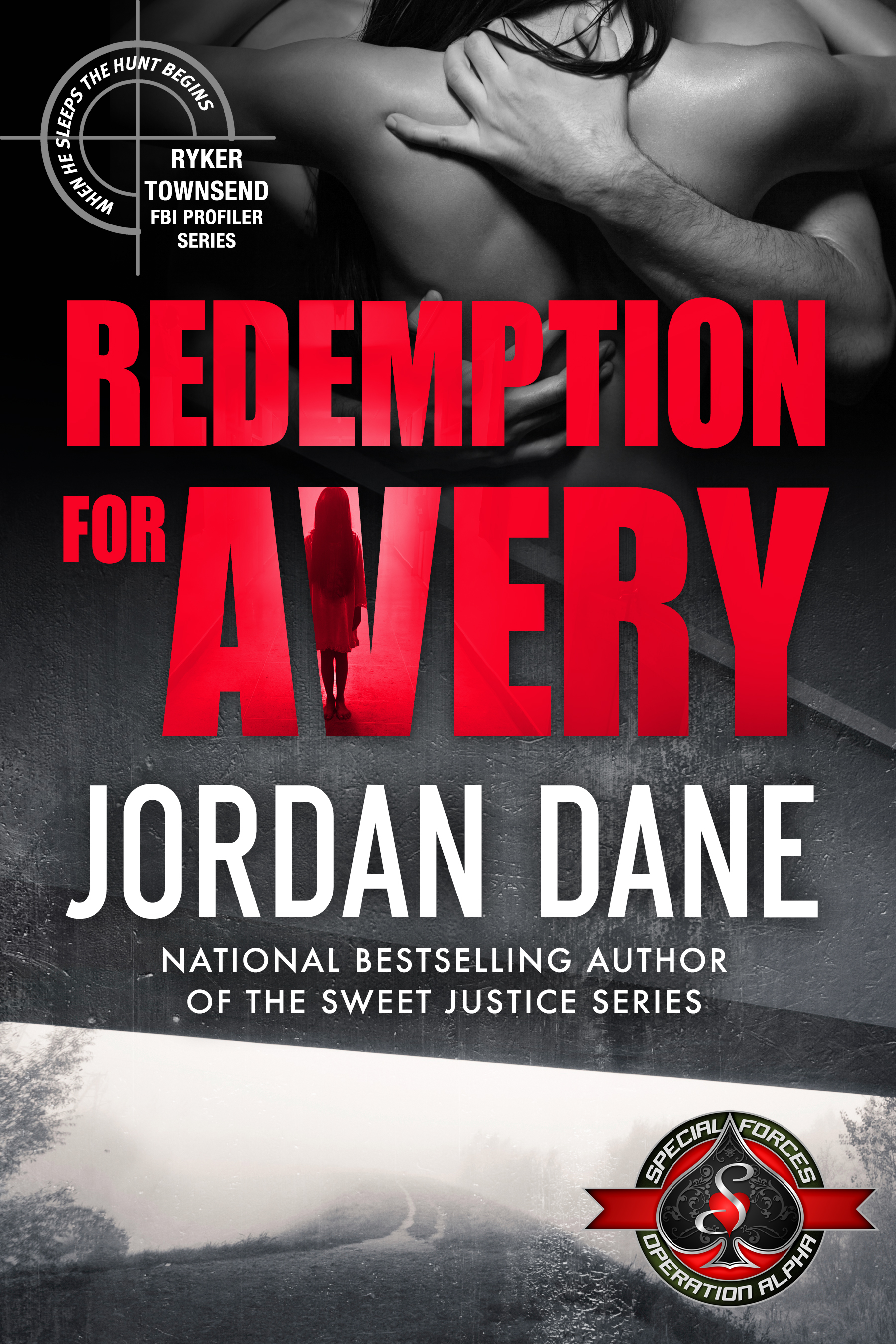
While he’s investigating the shocking slaughter of a seventeen-year-old girl at Big Bear Lake, the tormented soul of another dead child appears to him in broad daylight. Twelve-year-old Avery Reed reaches out to Ryker—a disheveled and haunted girl, unable to speak—held earthbound out of love for her grief-stricken brother, Sam. Avery’s presence draws Ryker into a sinister conspiracy and she has a desperate message for her brother, if she can make Ryker understand.

Navy SEAL Sam ‘Mozart’ Reed has been haunted by the brutal death of his little sister Avery when he was only fifteen-years old. He vowed to seek and destroy the killer who splintered his family, wiping out everything he’d ever known. Nineteen years later, his darkest wish came true when he found Hurst, her alleged killer, and stopped him from murdering one last time. But when Mozart learns the FBI has reopened Avery’s case, he fears the worst. His SEAL team may have ended the carnage of a serial killer years ago, but for the first time, Mozart has doubts that Hurst had been the man who took Avery’s life. A heartless predator is still butchering young girls. Mozart’s worst nightmare is back with a cruel vengeance.

INVITATION:
To celebrate the launch of Susan Stoker’s Special Forces series with Amazon Kindle Worlds, we are having a Facebook Party on July 23 at this link:

https://www.facebook.com/events/604059626438678/

I’ll be online 3:30-4pm EST. There will be lots of giveaways all day with other authors joining the party.

FOR DISCUSSION:
1.) Have you ever crossed over one of your worlds with another? Did this crossover involve another author’s work?

2.) How do you celebrate YOUR book birthdays?

Ideas to Improve Your Writer’s Group

Jordan Dane
@JordanDane

Shutterstock photo purchased by TKZ

Shutterstock photo purchased by TKZ

On the topic of what our members would like to see covered at TKZ, Frances asked about Writers’ Groups.

“I’d like to see a blog on Writer’s Groups. I belong to one that is disappointing in structure and leadership. What are the qualifications for starting a writer group and what should be included? I prefer a group that meets in person versus online. Thanks!” Frances

As for qualifications to start a group, I’ve seen ANYONE create a group if there is interest in your local area. My latest adventure to find a local writer’s group where I live was through special interest groups listed on MEETUPS.com (query your local area for “Meetups” and “writing groups”). But these groups are rarely organized well enough to hold my interest for long. The leadership is usually inflexible on format or control the critique process too much. Often it’s the blind leading the blind and comments don’t further anyone’s potential career. These groups may catch typos but higher level reviews of your work are rare.

For more serious endeavors, a local group can collect dues and hold writing contests (with members as judges) to generate revenue, but once you ask for money, members will expect a plan of action and organization with regular meetings and a plan. Many national professional groups have specific rules to adhere to, if you want to open a local chapter. Toward the end of this post, look for a link of writers’ groups that are broken down at various levels you might find useful. Try joining a local chapter of a bigger organization if it’s available in your area. That’s your best bet.

I believe it takes a combination of groups to expand your horizons. I’ve belonged to quite a few writers’ groups, from national professional organizations, to online subgroups, to local writer meetings, to attending workshops. I’ve spoken at various meetings and workshops on craft and attended local meetings to help critique other authors. And I was also the Program Director for 5 years at my local Oklahoma Romance Writers of America (OKRWA) chapter and had a hand in shaping our resources for published and aspiring authors. This group and the strength and generosity of its published authors got me published. I was an aspiring author, untested, but I took on the duty of Program Director because I could create a network of contacts I wanted to see and I could work with my published authors to provide things they wanted to see. A great volunteer opportunity.

Here are my thoughts on what makes an effective group, depending on how organized you want to be or how much money you have to put together a group on your own.

SIZE MATTERS – I’ve worked with local groups who have an open call to anyone wanting to attend from one week to the next. The usual format is determined by those in attendance reading from their current WIP, sometimes up to 10 pages, and everyone around the room comments. In my opinion, this type of format doesn’t work because the attendees are not consistent and the format never changes. No real discussion happens, even when the group seems to want a diversion, because there are too many people vying for attention for their work.

When I say size matters, I think it’s more important to recruit serious/dedicated writers that have the same work ethic and are determined to improve their craft. (I’m not implying all pubbed authors, but writers dedicated to improving themselves.) 3-5 members might be the ideal. With a limited, devoted group who consistently appear each meeting, there can be real focus on each other’s samples and the meeting framework can be adapted to the goals of the group. If a deeper discussion arises organically, the group can be more flexible in how any meeting will evolve. Don’t be afraid to start out with all novices. A novice one day, with a good work ethic and supportive of other members, could be a future published author. My first groups weren’t always successful but I learned something worthwhile from each one. Sometimes you have to dive in and take charge to define what you want in a group.

YOU CONTROL THE FRAMEWORK – You might like reading your current WIP aloud or have someone else in the group read yours. But instead of taking up valuable time in the meeting doing this, try some of these time savers:

A.) Maintain an online group to exchange notices and post resources. Post your WIPs that will be critiqued for the next meeting. You can post them to a file section (like a private Yahoo or Google Group or a private Facebook Group). Your 4 members will have more time to read in advance and provide commentary in “track changes mode” for the author to take home something legible. So when it comes time for giving feedback, each member can focus on the highlights of their verbal critique and ask open ended questions of the author to promote a discussion at a higher level.

B.) Limit how many pages are critiqued or read aloud.

C.) Allow time for craft discussion at each meeting. Any member could lead the topic from craft books or a general chat on what works or doesn’t work for each person in the group.

BREAK UP MONOTONY WITH RESEARCH – Bring up research topics that could help the group or inspire future stories. As Program Director for the OKRWA, I had to fill each month with a 1-hour presentation that would help aspiring authors as well as published writers. Some months were research topics where we brought in speakers from the fire or police dept, an FBI profiler, a ghost hunting team (usually in October for paranormal story inspirations), or we went on field trips to generate story ideas with firsthand experiences. For example, we each paid money to go on a ghost hunt, guided by a real team of ghost hunters. (You really get to know your group by doing scaring the hell out of them.)

WHAT ABOUT A RETREAT? Usually in July, we would take a retreat together. Yes, this costs money and organization. We would have sessions on world building or various craft topics. or we might break down a larger group into smaller ones to have brainstorming sessions on plot ideas. A published author group might take a fun trip away from home to a nice location. They work the first few days on brainstorming TWO plots for each author and record the sessions, but after the hard work is done, they go have fun. Sign me up. The group gets a jump on plots for the year and get time off for fun to replenish the creative well.

DO SOME GROUP MEMBERS NEED PROMO? Promotion for published authors is important to support them. For pubbed authors who appreciated help on local events–from Valentine’s Day Events at local libraries to quarterly book signings–my Oklahoma writers’ group would support our members by organizing or attending these events. One of our bigger events was a Librarian Tea. We’d pick a venue and pay for beverages and snacks/desserts (or you could do something more casual with potluck). This can be done economically, but my local group had membership dues and revenues from writing contests to support our annual programs. At the Librarian Tea, our pubbed authors got to meet local librarians and book store owners, where their upcoming releases or backlist would be showcased. Our local group would also send out postcards and flyers of new releases from our members to those same librarians and book store owners we were developing relationships with. Even aspiring authors could benefit from this when they eventually sold and had book signings of their own.

FACETIME or ONLINE? I like getting together with my local writer groups. Writing can be solitary enough. Commiserating with my fellow crazies can be fun. But if there are no local groups where you are, an online group can give you resources in a different way. Once you develop a trust with your online members and determine if their input will help you, exchanging writing samples for critique can be done online. Often these groups have a files section with craft or promo topics that can be helpful or they may host an annual conference or hold workshops.

Here is a LINK to many writer groups (from national, to professional, to genre, to local groups) that you might find helpful.

For Discussion:

1.) What works best in writing groups from your experience? From size to format?

2.) Do writing groups help or hinder the writing process?

RedemptionForAvery_highres

If you are interested in receiving a FREE pdf file of my upcoming Amazon Kindle Worlds release (July 21)–REDEMPTION FOR AVERY–in exchange for an honest review on Amazon, please click on this LINK to sign up on my Google Docs form. Next to your review name, please add TKZ.

READER FRIDAY – Tell Us About a Book That Changed You

Lord of the Flies by William Golding

Lord of the Flies by William Golding

Name a book & author that changed something in you:

1.) By broadening your perspective

2.) By exposing you to different ideas

3.) Or by introducing you to new parts of the world or cultures


Some books that touched me this way are:

White Oleander by Janet Fitch

One Hundred Years of Solitude by Gabriel Garcia Marquez

Lord of the Flies by William Golding

First Page Critique of SANCTUARY

Jordan Dane
@JordanDane

Calico

We have another intrepid author who has submitted their first 400 words for critique. Enjoy the read. My feedback will be on the flip side. Join in the discussion with your constructive comments.


“Dr. Germano! I need you!”

Ray bolted to his feet, throwing the blood work report he was reading onto his desk. As he came out of his office, he nearly collided with one of his staff hurrying down the hall, carrying a box lid with a small bundle of fur huddled inside.

“Bring it into the common room, Mary Jo. Matt! You here?”

“On my way, Boss!” The answer came from the reception area.

Ray could hear the creature’s raspy breathing as he followed the woman to an exam table and winced when he saw the contents of the lid. A malnourished calico cat lay on its side, struggling for breath, eyes wide. A feathered shaft stuck out of its chest.

“My God, is that an arrow? Smart of you to carry it flat,” Ray said, with a nod to the tearful woman. “If that thing shifts, it could do some damage. Is it one of your neighbor’s cats?”

“I don’t think so, Doctor. I’ve haven’t seen this one around before and I know most of the outdoor cats around my apartment. I found it in the alley when I was taking the trash out this morning.”

He hesitated for a moment, weighing his options. The practice policy was clear on drop offs and found animals. No heroic efforts unless the animal was a pet, with a collar or microchip. He could almost hear Phil. We’re running a business, damn it, Ray, not a charity! He had heard that speech many times over the years.

This cat was obviously a stray, as scruffy and skinny as it was. It couldn’t weigh eight pounds soaking wet. No one was going to step forward and claim it. Still, it seemed young and strong. It was still breathing with an arrow in its chest after all. He hated not to give it a chance. Her, give her a chance. Calicos were usually female. Well, Phil was retired now and he’d make his own decisions on who to treat.

He reached out and stroked her head gently. To his surprise, she tried to butt his hand and even mustered a faint purr. Then his eyes widened and he barely resisted the urge to jerk his hand back.

FEEDBACK:

Well, I don’t know about you, but I sure want to know why the good doctor wanted to jerk his hand back. Shades of Pet Sematary. (I hope Catfriend weighs in on this. Expurrrrrt) The intro starts with a “call to attention” dialogue line. For the most part, the writer sticks with the action, except where the intro “strays” (pun intended) into the former practice policy.

FIRST PARAGRAPH – Since the first paragraph establishes the scene, I would suggest stronger wording to set the stage and focus on the action. I’d also suggest clarification on where the action takes place.

SuggestionRay bolted to his feet and threw a blood work report onto his desk. He rushed from his office and nearly collided into Mary Jo, one of his staff. She raced by him carrying a box lid with a small bundle of fur huddled inside.

It’s not clear to me what this business is. Dr. Germano has a desk and there is a practice policy. I’m assuming it’s a veterinary hospital or practice, but that’s never stated. This can be fixed by using a tag line at the beginning, before the first dialogue line, or it can be inserted into the first paragraph – He rushed from his office at Pavlov’s Veterinary Hospital…

STICK WITH THE ACTION – In the paragraph starting with the sentence, “He hesitated for a moment, weighing his options.” Unless this is important, I would shorten to minimize it or delete this paragraph.

Tightening SuggestionHe hesitated and weighed his options. Drop off animals, with no owners, would cost the practice. Unless the animal had a collar or a microchip, the practice policy stated no heroic efforts were to be made.

Then focusing on the cat and what he sees (perhaps foreshadowing a hint of peculiar behavior) would ramp up the creep factor.

Tightening Suggestion – Scruffy and skinny, the stray couldn’t weigh eight pounds soaking wet. No one would claim it, but it still breathed with an arrow in its chest. He hated not to give such a young and strong animal a chance. Her, give her a chance. Calicos were usually female. 

PASSIVE VOICE – There are several uses of passive voice in this short intro. Easy to clean up in 400 words, but the author should learn how to catch it as the words are streaming. Here are a few:

Before – Ray could hear the creature’s raspy…

After – Ray heard the creature’s raspy…


Before – I found it in the alley when I was taking the trash out…

After – I found it in the alley when I took the trash out…


Before – No one was going to step forward and claim it.

After – No one would step forward and claim it.


Before – It was still breathing…

After – It still breathed…

NITPICKERS – There are always nit picky stuff that one person might notice, while other’s don’t. A good copy editor night catch these or reading your story aloud can help a great deal.

Boss – I would use lower case.

Around – used twice in same sentence, starting with line, “I don’t think so, Doctor.”

Who – The word “who” refers to people, not cats. See line, “…he’d make his own decisions on who to treat.”

Gently – use of adverb. “LY’ words raise a flag for me. Try to minimize or eliminate for stronger writing. In the line, “He reached out and stroked her head gently,” it’s strong enough and describes tenderness, that the word “gently” is not needed and is redundant. I might also focus on this action more, between the doctor and the cat. For example:

Suggestion – He reached out and stroked her head with an affection stray cats shunned from mistrust, but to his surprise, the tiny calico returned the tenderness with a head butt and a faint purr.

SUMMARY – I would definitely keep reading. I’m a pet lover and have had cats before. What cat owner hasn’t looked over their shoulder thinking someone is creeping up on them because their cat is staring at SOMETHING BEHIND YOU. This author, with a little clean up, would have me hooked.

DISCUSSION:

Weight in, TKZers! Would you read on? What constructive comments would you make to help this author?

REDEMPTION FOR AVERY – A Ryker Townsend FBI profiler series – novella (31,000 words) $1.99 ebook, July 21, 2016 release with Susan Stoker’s Special Forces Amazon Kindle Worlds

READER FRIDAY – Five Most Inspirational Places for Authors to Write

Purchased from iStock by Jordan Dane

Purchased from iStock by Jordan Dane

An author can write anywhere with the help of a tablet or laptop or even a low-tech pad of paper and pen. But there are some places that can be more inspirational if you’ve hit a dry spell.

In no particular order, here are my five favorite places to write:

1.) Graveyard at Dusk – People watching would be interesting AFTER dusk but reading headstones or taking in the quiet at a cemetery during the dying light of the day can stir the storyteller in anyone.

2.) Hotel Lobby Bar – If you’re ever at a writers’ conference, the place to be is the hotel bar. Everyone turns up there, but there are stories in the many travelers’ faces, not to mention the fun of eavesdropping on dialogue inspirations.

3.) Coffee House – The faces and the dialogue might be different in a coffee house, but the caffeine keeps the creative juices flowing.

4.) Scenic Forest – Getting closer to nature can stir the imagination and get the blood moving. Try it.

5.) Swamp – I have to admit that I’ve never done this, but I really want to. The sounds and the potential for danger in a swamp could be titillating. Let the vastness swallow you whole.

FOR DISCUSSION:
What are YOUR five favorite inspirational places to write? When your creative juices run low, where do you go or what do you do?

Evocative Suspense Author Sue Coletta on VOICE

Jordan Dane
@JordanDane

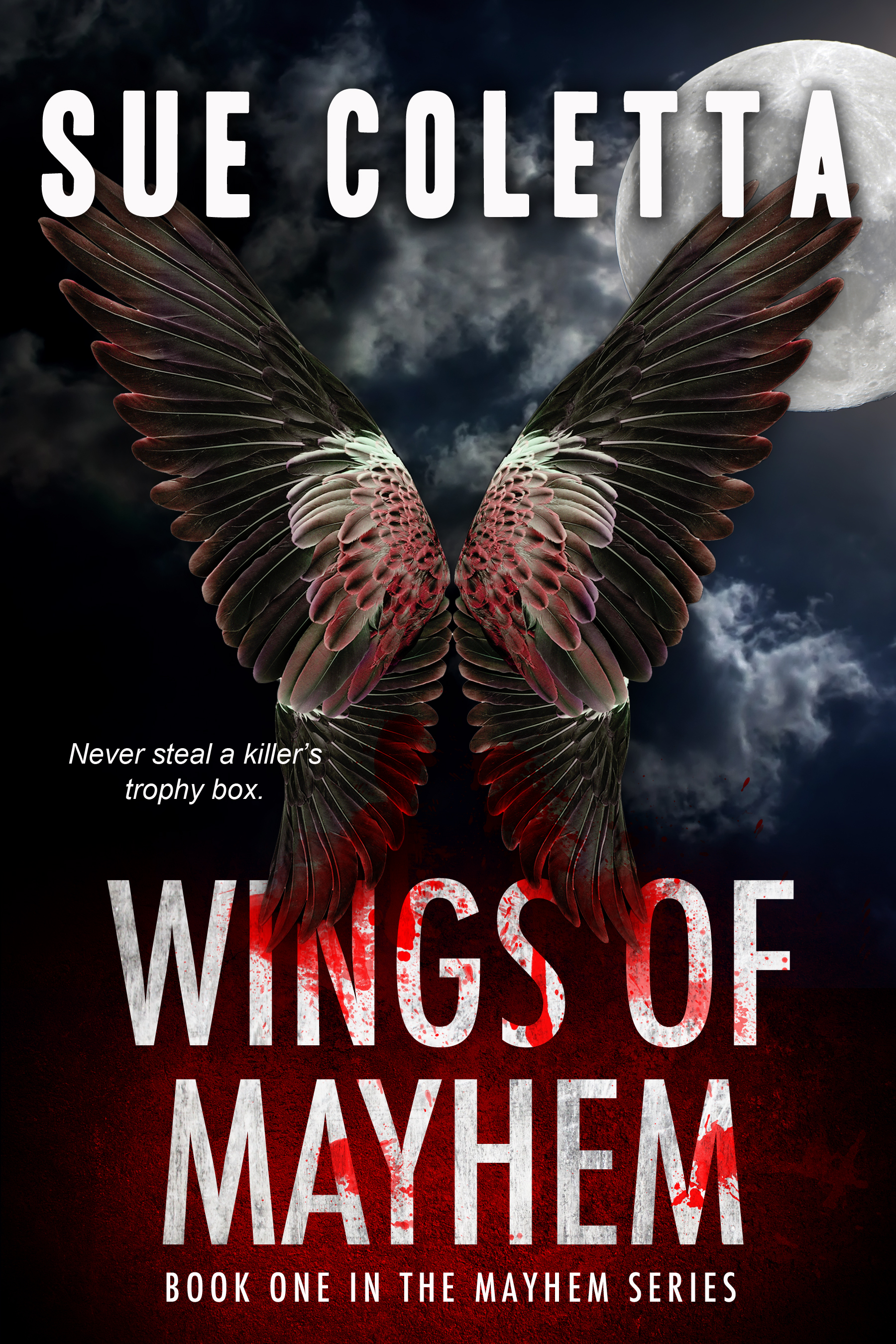
WingsOfMayhem

I’m proud to have longstanding TKZ member, Sue Coletta as my guest today. This is her first time here as a featured author. Not only is she usually one of the first to comment on each post, but I’ve seen her grow as a writer. I enjoyed her first book MARRED, with its strong voice and dark eerie tone, and I’m currently reading WINGS OF MAYHEM and thoroughly enjoying the voice of her protagonist, Shawnee Daniels. Take it away, Sue, and welcome!

Sue Coletta on VOICE

When we first begin our writing journey voice is one of things that’s nearly impossible to define, never mind discover. For years I kept hoping to find my writer’s voice, but I had no idea where to look. Deep within myself? Through hours and hours of practice would it suddenly appear? What was this mysterious “voice” everyone spoke about? And why didn’t I have one?

Perhaps what agents and editors were referring to was that perfect blend of style, rhythm, and cadence that make up the mysterious writer’s voice. Maybe it’s like trying to define the difference between graffiti and street art. I may not be able to put it into words, but I’ll know it when I see it.

When I look back on those days I wish someone would’ve told me, with a clear definition, how to develop my voice. And then one day something magical happened. I was reading the most amazing craft book I’d ever encountered, the book that transformed my writing life in an instant. I’m referring to Story Engineering by TKZ’s own Larry Brooks.

When I learned about the three dimensions of character I found my writer’s voice. I couldn’t believe it. Why didn’t anyone tell me this before?

Today, I would describe voice as the combination of syntax, diction, punctuation, dialogue, sentence rhythm, and character development within one story or across many novels. It’s unique to you. Just as a flute doesn’t sound like a clarinet, neither does one writer from another.

How awesome is that?

We all use the same 26 letters, and yet, no two authors will write the same scene the same way. One writer might use run-on sentences that go on for miles. Whereas another loads the story with short, punchy fragments. Neither is wrong; it’s a matter of personal style.

But style isn’t the only thing that makes up the writer’s voice.

By knowing our characters intimately, by understanding their hopes, their dreams, their backgrounds, scars, flaws, nervous ticks, religious beliefs, world views, what they fear, what they strive for, what they want more than anything else…we can slip into their skin and write using their voice. Not only in dialogue, but in the narrative as well—also known as narrative voice.

Take, for instance, my protagonist in Wings of Mayhem. Shawnee Daniels is a wise-cracking, snarky chic who was raised on the city streets. The way she views the world is much different than her librarian best friend, Nadine. Shawnee is overly cautious. She swears, has huge trust issues, and in a lot of ways, she’s her own worst enemy. Where Shawnee might see danger, Nadine, who was raised in a loving and often sheltered environment, would see an opportunity. Nadine never swears. Instead, she uses words like “ship” and “fleakin’”. She’s a glass-half-full type of girl. Shawnee’s glass barely has a drop in it.

Nadine’s dialogue is filled with words like “Woot!” She waves jazz hands and bounces on her toes when she’s excited. Shawnee is her polar opposite. She would never be caught dead waving a jazz hand in the air and she certainly would never use the word “Woot.” Because she’d never do these things in the dialogue, I can’t let her do it in the narrative, either, or the story would lose its narrative voice.

In Wings of Mayhem I alternated chapters between Shawnee, Detective Levaughn Samuels, and Jack Delsin, my antagonist. Each have their own way of viewing the world around them and, more importantly, the situation they’re in. I couldn’t write the narrative in the same way or it wouldn’t be unique to each character.

Where Shawnee believes everyone is after her, Detective Levaughn Samuels is more level-headed. In his narrative I used contractions like I did with Shawnee, but the tone is different. He views the world with a calm, rational, detective’s perspective. When he looks at a crime scene his stomach doesn’t scream in protest. But Shawnee’s does.

While examining a murder victim, Levaughn would narrate the facts, the wounds/injuries, his theory of the case, etc. Shawnee would be too distracted by the blowflies. She might gape at the victim’s smeared mascara, or narrow in on the thick, bluish film veiling the victim’s eyes. But Levaughn wouldn’t mention that because all corpses develop corneal clouding. It’s a natural occurrence that develops 2-3 days after death, depending on the environment in which the body is found.

By remaining true to our characters in dialogue as well as narrative we breathe life into the story. Thus, filling it with voice.

For Discussion:
Over to you, TKZers. What tips have helped you develop your writer’s voice?

Sue Coletta

Suspense Author Sue Coletta

BIOMember of Mystery Writers of America, Sisters in Crime, and International Thriller Writers, Sue Coletta is always searching for new ways to commit murder…on the page. She’s the author of Wings of Mayhem, Marred, Crime Writer’s Research, and 60 Ways to Murder Your Characters. She’s published in OOTG Flash Fiction Offensive, Murder, USA anthology, InSinC Quarterly, and in the upcoming dark fiction anthology, RUN. The founder of #ACrimeChat, which takes place every Wed. on Twitter, Sue also runs a popular crime resource blog, where she shares her love of research…forensics, police procedures, serial killers, and true crime stories. You can learn more about Sue and her books at: www.suecoletta.com

Buy links:
Amazon Barnes & Noble  Apple iTunes  Smashwords  Google Play
Print and audio coming soon from Crossroad Press!

Social Media links:
Website/blog   Goodreads   Twitter   Facebook

READER FRIDAY – Share Your Favorite Character Driven Novel

The Fault in Our Stars by John Green

The Fault in Our Stars by John Green


“I think the best stories always end up being about the people rather than the event, which is to say character-driven.” Stephen King – On Writing: A Memoir of the Craft

Some of the recent character-driven novels I’ve read lately are:
The Girl on the Train by Paula Hawkins
The Fault in Our Stars by John Green
Gone Girl by Gillian Flynn

Give an example of a book you’ve read with a memorable character-driven story – Author & Title – and tease us with why the character story was special.