About Debbie Burke

Debbie writes the Tawny Lindholm series, Montana thrillers infused with psychological suspense. Her books have won the Kindle Scout contest, the Zebulon Award, and were finalists for the Eric Hoffer Book Award and BestThrillers.com. Her articles received journalism awards in international publications. She is a founding member of Authors of the Flathead and helps to plan the annual Flathead River Writers Conference in Kalispell, Montana. Her greatest joy is mentoring young writers. http://www.debbieburkewriter.com

First Page Critique – The Scribe’s Boy

Photo credit: desatboy at Unsplash

By Debbie Burke

@burke_writer


Let’s welcome another Brave Author who submitted today’s first page for critique, entitled The Scribe’s Boy. Please enjoy reading and we’ll discuss this on the flip side.

~~~

The worst thing about a beating is how much it hurts the next day. But this time I wasn’t going to wait that long. Seth and me were running away right now. Away from the Wiltshire Inn, away from being kitchen boys, away from Bernard and his fists like boulders.

The blood had dried on my cheek but my right eye still flashed and throbbed – I’d be lucky to see out of it tomorrow. Could barely see anything now, with darkness falling and this sudden downpour swallowing us. But dusk and the downpour helped hide us as we cowered further under the wet undergrowth, hoping those two horsemen wouldn’t see us. Bad luck the heavens opening like that just when we were making a run for it – we barely got across the road and into the trees. Even worse luck when the two riders came trotting towards us like smoky shadows and reined in at the hedge we’d scrambled under.

Seth shivered close against the curve of my body, his back to my front. He was folded, knees to chin, his bones digging into me. Our tunics and leggings were sopping wet and slimy with mud but I kept my arm tight around him, sheltering him best I could. The smell of wet earth and leaves filled me.

Twigs jabbed into my scalp and rain dribbled off my hair into my eyes. It stung.

“How’d you like that then, Alfred, eh?” Master Bernard’s fury rang in my head as if he were yelling right next to me. I flinched. Even curled up in the mud I could still hear him as he threw me across the kitchen to sprawl in the rushes on the earthen floor.

Beside me now Seth elbowed my ribs and whispered, “We should run for it.”

“No. They’re too close.” Fear kept me curled up, fear that had me by the throat and made me lie still and silent among knobbly roots and old leaves. My side ached and Seth pressing against it didn’t help. I tried not to tremble but the cold was eating me up. My hands wouldn’t stop shaking.

What I wouldn’t give for some stockpot stew right now. Bernard bragged he ran the best lodgings in the kingdom – always open to anyone willing to pay for pot luck. It was only his kitchen boys he didn’t like feeding.

~~~

Wow! I have to say I’m totally impressed. The Brave Author literally began with a wallop. I don’t know the protagonist yet but already feel sorry for him for being on the wrong end of a vicious beating.

Sentences two and three present the goal: escape from brutality.

Next, the Brave Author sets the scene with the location, establishes the approximate age (children rather than adults) and job of the protagonist and his fellow escapee, Seth, and introduces characters including Bernard, the bullying antagonist with fists like boulders.

One tiny suggestion: How about if you insert “Master” in the first paragraph? That shows the boys are in servitude: “…away from Master Bernard and his fists like boulders.”

A lot of information is packed into one sentence yet it flows well, is clear, and keeps the reader firmly in the action.

The next paragraph establishes the time (dusk), the weather (pouring rain), more location details about the road they crossed and the hedge they’re hiding in. Most important, it sets the era as historic by describing the searchers on horseback.

There is rich sensory detail in the next two paragraphs, especially touch and smell. The boys’ bony bodies not only offer physical description but also indicate the further abuse of being malnourished. The protagonist’s protectiveness toward Seth makes him not only sympathetic but admirable. He’s terrified yet still tries to help his friend.

I feel the chilly rain dripping on them, slimy mud, and sharp twigs poking the protagonist. Tunics and leggings additionally establish the historic time period.

The next paragraph is the only one that felt jarring.

“How’d you like that then, Alfred, eh?” Master Bernard’s fury rang in my head as if he were yelling right next to me. I flinched. Even curled up in the mud I could still hear him as he threw me across the kitchen to sprawl in the rushes on the earthen floor.

The flashback of Bernard attacking Alfred yanked me out of the story. It interrupts the forward momentum and intensity of the scene. Its main function seems to be a way to work in the protagonist’s name and more setting details like the rushes on the earthen floor.

I recommend cutting the flashback. The setting information can be woven in later. The Brave Author is definitely skillful enough to let the reader learn Alfred’s name without resorting to a flashback. One easy way is for Seth to call him by name: “We should run for it, Alfred.”

The next paragraph incorporates more wonderful sensory detail that evokes the boys’ terror.

The last paragraph is poignant, heartbreaking backstory of child slaves being starved by a cruel master. Reference to “the kingdom” sounds British, another location hint seamlessly layered in.

The title The Scribe’s Boy indicates the historic time period.

Dictionary.com defines a scribe as:

a person who serves as a professional copyist, especially one who made copies of manuscripts before the invention of printing; a public clerk or writer, usually one having official status.”

Such a job would require the ability to read and write, a rarity in the time period that this submission appears to be set. People with education were respected and awarded high status in the community.

Presumably a scribe’s boy is an assistant or helper. The title possibly foreshadows Alfred’s future. Will the abused kitchen boy rise to success and freedom? I’m rooting for him.

The page is clean–no typos or spelling errors. “Seth and me were running away…” is ungrammatical but appropriate and consistent with Albert’s voice.

Every word counts on this page. There is no sloppy phrasing or unnecessary verbiage. Each sentence is as tight and resonant as a violin string.

This page hits all-important story elements to hook the reader: action, tension, conflict, setting, introduction of characters, sensory detail, emotion, and suspense.  

Am I invested in the boys’ struggle? Completely. Am I eager to turn the page? Absolutely.

This is a really excellent first page, Brave Author. You should be proud. Let us know when this book is published.

~~~

TKZers: What are your impressions of Alfred, Seth, and Master Bernard? Do you have ideas or suggestions for the Brave Author? Would you read the book?

~~~


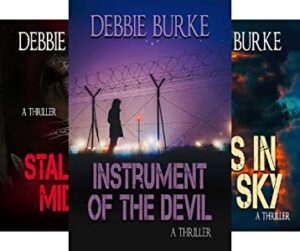
Try Instrument of the Devil for FREE. Then come back for more Tawny Lindholm Thrillers with Passion by Debbie Burke.

True Crime Thursday – Please Send Your Unpublished Manuscript

Photo credit: Dim Hou, Unsplash

By Debbie Burke

@burke_writer


A weird literary crime made news on January 5, 2022 when the FBI announced the arrest of an Italian citizen Filippo Bernardini, 29, at JFK Airport in New York.

The charges against him? Wire fraud and aggravated identity theft.

What did he do? He allegedly impersonated publishing company executives and persuaded authors to send him pre-publication manuscripts. Targets included luminaries like Margaret Atwood.

Since 2016, the writing community has speculated about this peculiar case. For five years, well-known authors had received emails purportedly from editors and agents, requesting unpublished manuscripts. Victoria Strauss of Writer Beware and trade organizations like the Authors Guild publicized the strange requests and alerted writers.

It appeared to be a scam yet no one could quite figure it out.

Turns out Mr. Bernardini was an employee of Simon and Schuster in London where he worked as a rights coordinator. S&S has not been named in the indictment and is not believed responsible.

To further his scheme, Bernardini secured more than 160 web domains and set up bogus email accounts and lookalike websites to mislead people into believing they were communicating with an actual editor, agent, scout, or publishing executive.

For instance, if a legitimate email was XYZ@penguinrandomhouse.com, the letters r and n placed together were substituted for m. Without close examination, XYZ@penguinrandornhouse.com passed muster.

Bernardini allegedly used multiple phony email addresses to contact Pulitzer-winning authors and bestsellers, asking them to send their manuscripts to him before they had been finalized.

According to the FBI statement:

These prepublication manuscripts are valuable, and the unauthorized release of a manuscript can dramatically undermine the economics of publishing, and publishing houses generally work to identify and stop the release of pirated, prepublication, manuscripts.  Such pirating can also undermine the secondary markets for published work, such as film and television, and can harm an author’s reputation where an early draft of written material is distributed in a working form that is not in a finished state.

The biggest question remains WHY?

The stolen manuscripts were not published on pirate sites. No one appeared to reap benefits, financial or otherwise, from the thefts.

If Bernardini hoped to receive credit as the author for works written by others, surely in the small, insular world of publishing, such books would have been recognized long before they were released.

Photo credit: Ben White, Unsplash

Did he receive a thrill because he possessed pre-publication drafts by noted authors?

Was it like having an early unfinished version of the Mona Lisa hidden in your attic?

Whatever his motivation, he now faces a mandatory two years in prison with the maximum sentence determined by the judge.

~~~

TKZers: Care to speculate on Bernardini’s motives?

Interview with Blackstone Publishing’s Rick Bleiweiss

By Debbie Burke

@burke_writer

Today, please welcome Rick Bleiweiss, Head of New Business Development for Blackstone Publishing. Rick is a former record company senior executive, Grammy-nominated producer, podcaster, and journalist. He is also the author of Pignon Scorbion & the Barbershop Detectives, a mystery set in 1910 in a sleepy English village, to be released in February 2022.

Rick Bleiweiss


…what I’m doing at 77 years of age [is] an example to other seniors that you are never too old to try something new or follow your dreams.


Debbie Burke: Blackstone Publishing is unusual in that they started with audiobooks then later added print and ebooks. Could you tell us about that shift and the reasons behind it?

Rick Bleiweiss: The decision to begin publishing books and ebooks in addition to audiobooks was made about seven years ago. We published our first books in 2015. It was primarily driven by three things.

First, the more popular audiobooks became the more other publishers held onto those rights, made their own audiobooks, and stopped licensing them to other companies, such as Blackstone.

Second, we felt that we could succeed well as a publisher of books and audiobooks and have those as another income stream. And we felt we could ramp up quickly as we already were evaluating manuscripts, involved with authors and storytellers, and selling and distributing audiobooks to many of the same buyers at accounts whom we’d be selling books and eBooks to. So that would make it an easy transition.

An added benefit of licensing all rights to a book – print, ebook, audiobook – is that we would be getting the audios, which would start making up for the ones we were no longer getting from some other publishers.

Third, the vision of Blackstone’s CEO (and owners) was to make Blackstone into more than just a traditional publishing company, but rather to turn it into a media company that has publishing and storytelling as its foundation, but also is involved in securing film & tv deals and being a media producer, creating intellectual properties, doing video games, comic books and magazines, and creating and selling merchandising. And we are doing all of that today and more, including owning our own printing plant so that we can make everything in house and never be out of print.

Regarding how we started our print program, early on we obtained the rights to the Max Brand and Loius L’Amour catalogs and signed a number of authors who had some past success but were not yet major sellers. Then it really kicked up a notch when I signed PC & Kristin Cast and we published the last of their books in their 12-million selling House of Night series. Then our CEO Josh Stanton and I got the James Clavell catalog, and I signed Natasha Boyd, who has had one of our biggest on-going books, the USAToday best-seller, The Indigo Girl. That was closely followed by signing Nicholas Sansbury Smith and his Hell Divers series.

DB: In 2019, Blackstone, a family-owned, independent press, made news by luring heavy hitters Meg Gardiner, Steve Hamilton, and Reed Farrel Coleman away from Penguin Random House. Without spilling any secrets, do you anticipate Blackstone’s further expansion of authors who may be disgruntled with the Big Five?

RB: Actually, they were not the first nor have they been the last, although they were major signings. I wouldn’t characterize it as disgruntled with the Big Five as much as wanting to go with a different publisher paradigm. Josh Stanton and I were able to license the aforementioned entire James Clavell catalog (including his classic Asian Series featuring Sho-Gun) and Gregory McDonald’s catalog (Fletch and Flynn series) both of which I believe had been with Dell for many years but whose estates were looking for something different. Other authors who we have signed to do print and eBooks who have also been with major publishers are Sherilyn Kenyon, Heather Graham, Catherine Coulter, Rex Pickett, James Carroll, Peter Clines, Andrews & Wilson, PC & Kristin Cast, Josh Hood, a good part of the Leon Uris catalog, Gabriel Garcia Márquez, Neil deGrasse Tyson, Al Roker, Eric Rickstad, Brian Freeman, Adrian McKinty, Orson Scott Card, M.C. Beaton, Matthew Mather, Don Winslow, Shelley Shepherd Gray, Catherine Ryan Howard, The Black Berets series and quite a few others.

I think that many people are starting to realize that we are expanding well beyond the role of a traditional publisher and that we are looking at what tomorrow’s successful media/publishing companies will be like and look like, rather than the traditional way of doing things. Hopefully, we have taken the best time-honored industry practices and augmented them with newer ways of looking at what a publisher can and should do. As an example, we have a head of film/tv who got deals for eight of our books within the last three months.

DB: Please describe a day in the life of Head of New Business Development.

RB: Fortunately, because it keeps my business life interesting, there have been many different things I’ve done in that role. I’ve bought other companies for Blackstone (such as the direct-to-consumer company, Audio Editions), licensed our technology to other audiobook companies, arranged distribution deals with other publishers, made introductions between Blackstone and high-profile tech and content companies, I am on Blackstone’s Board of Directors, I put together the relationship between Blackstone and the Oregon Shakespeare Festival which resulted in Grammy-winning audio versions of their Shakespeare plays, I co-created a series of books by Native American elders to preserve their wisdom, humor and teachings.

In short, I have had my fingers in a lot of different pies and strive to be one of the people at the company who keeps Blackstone moving forward as well as in new directions.

DB: What specifically captures your attention when you review submissions?

RB: Since the majority of the acquisitions work that I’ve been doing lately has been more focused on celebrities, best-selling authors and hit catalogs, rather than on debut authors, I look for different things now than I did when I was evaluating day-to-day acquisitions. When I did that, I would look to see if the synopsis intrigued me, if I thought the story was something that the public would be interested in, what the author’s background, social media involvement and overall commitment to being a writer were, and what our sales and marketing people thought they could do with the book. And, of course, finally, was the writing any good?

For an author who wants to submit a query to an agent or a publisher (and submitting to an agent is probably a way lot easier than submitting directly to a publisher) they should make sure to know something about each person they are submitting to so they can personalize each letter/email. The author has to make sure the genre they are submitting is a genre the agent or publisher works in. The query letter should also contain a short, but effective, synopsis of the story, the author’s bio, comps to other books, anyone they could get to endorse the book who would be meaningful, and, if possible, something that perks the reader’s interest and sets the query letter apart from the hundreds of others that the agent/publisher has received.

DB: Tell us about your own writing.

RB: When I was twelve, I hammered out the first two-page sports newspaper that I wrote on my old Royal manual typewriter and sold the two carbon copies I made of it to neighbors. Over the decades since that time, I have written multiple newspaper columns, magazine columns and articles (including cover stories), blogs, copy for a local political committee and candidates, contributed chapters to two anthologies of short stories, and have written six, as yet unpublished and unproduced books and plays, and a rock opera.

My “breakthrough” came when I wrote Pignon Scorbion & the Barbershop Detectives, an historical fiction mystery novel set in the countryside town of Haxford, England in 1910. It will be published in hardcover by Blackstone on February 8, 2022. An eccentric, but gifted police inspector named Pignon Scorbion, who possesses the skills of Poirot and Holmes, comes to Haxford to head its law enforcement. Through a prior friendship with the town’s barber, Scorbion begins solving his cases in the barbershop assisted by a colorful group of amateur sleuth assistants – the barbers, the shoeshine man, a young reporter, and a beautiful and brilliant, female bookshop owner who is more than a match for Scorbion in observation, deduction and brains.

Scorbion’s ‘universe’ includes Sherlock Holmes, Hercule Poirot and Dr. John Watson, with whom Scorbion has become friends, and I’ve written the book in the style of the authors of that time and genre.

DB: What’s in the future for author Rick Bleiweiss?

RB: I’ve completed writing over 95% of Pignon Scorbion & the Barbershop Detectives, Book 2 which I believe will be published in early 2023. Without spoiling anything, it contains a case about a man who is shot and killed by an arrow while riding alone in a hot air balloon, another about the shoeshine man’s visiting cousin who is attacked and brutally beaten, a third involving a blacksmith who is murdered while walking home in the early morning, and lastly, a moneylender who is poisoned and dies in one of the barber’s chairs.

I also have a piece in an anthology of mystery short stories called Hotel California that is publishing in May, 2022. I join some real heavyweights in the book including Heather Graham, Andrew Child (who has contributed a new Jack Reacher story to the anthology), Amanda Flower, Reed Farrel Coleman, John Gilstrap, Jennifer Dornbush, and Don Bruns, all of whom have written new stories for the volume.

My story is about a premier NYC hitman named Walker who escapes a hit on his life and hides out in Maui while another hitman is sent to finish him off. It’s a cat and mouse game of who gets who.

I also will have another Walker story in the follow-up anthology, Thriller, due in mid-2023.

Lastly, at least for now, in January I have stories being published in Strand Magazine detailing a lot of the research I did for the Scorbion book, and another in Crime Reads Magazine in which I talk in depth about my favorite all-time mystery authors.

DB: Is there anything else you’d like to add?

RB: We are launching Scorbion in a somewhat unconventional manner. There is a Pignon Scorbion ‘Find the Hidden Objects” video game that will be available for free on the Apple and Android app stores. It will have six levels based on scenes in the book, but you will have to input an unlock code to play the last two – and that code is in the book and the audiobook. Shane Salerno of the Story Factory made a wonderful video trailer for the book, there will be retail display contests, we are making and will be selling Scorbion t-shirts, the book has already been voted the Buzz Book of the Pacific Northwest Booksellers Assn’s fall conference, has been featured multiple times in Publishers Weekly (including an excellent review), will be featured by BookBub on publication date, I am hosting a YouTube show interviewing authors and literary agents as they talk about their careers and give advice to aspiring authors, and we are going to make a strong media push hoping to get what I’m doing at 77 years of age as an example to other seniors that you are never too old to try something new or follow your dreams.

~~~

Thank you, Rick, for joining us at The Kill Zone. Best of luck with the February 2022 launch of Pignon Scorbion & The Barbershop Detectives!

A Dog’s Tale

By Debbie Burke

@burke_writer


Happy New Year! Welcome back after TKZ’s annual hiatus. 

Heroes Kerrie Garges and Gauge

How about kicking off 2022 with a dog story?

Back in 2020, I interviewed Kerrie Garges, a search and rescue volunteer from Pennsylvania, about a bombing that killed three people. 

Kerrie has spent years training her three Labrador Retrievers, Ace, Luna, and Gauge, in various search disciplines (air scent, article scent, human remains, etc.).

A few weeks ago, Kerrie and I reconnected and she brought me up to date on her dogs and their recent activities.

Sadly, Ace passed away last year from bone cancer. Luna is retired because her hips bothered her on long searches but she quite happily watches TV.

Kerrie’s big news was about Gauge. When we last chatted, he was still a rambunctious puppy. He’s now 2 ½ and has recently been certified in Live Find and Article Search.

And he’s now officially a hero. 

Article search involves items that have been worn by or touched by a person that their scent clings to (examples: fabric, leather, metal, plastic). To test dogs, an area 75’ by 75’ is marked off with flags. Within that area, five scent articles are randomly hidden. Dogs and handlers then wait two hours while scent dissipates, simulating conditions that may occur in real-life searches for a lost person.

One at a time, dogs are turned loose in the area with the command “Search” and given 15 minutes to find scent articles. The quest is confusing because other dogs and handlers leave their own scent as well.

Gauge located four articles in the allotted 15-minute time, earning “Article Search” certification. Four hours later, when scent had dissipated even more, he found the fifth article.

Gauge is also training for Human Remains Detection (HRD). According to Kerrie, patients at the University of Ohio hospital can opt to donate their bodies for search work. The Center for Forensics Training Education (CFTE) procures the remains and uses them for training seminars, one of which Kerrie and Gauge participated in last summer.

Not surprisingly, a recently deceased body gives off a much stronger scent than a body that has decomposed for a long period of time.

Cadaver dogs have located bodies of crime victims concealed for 15+ years. But canine noses are even more powerful than previously realized.

In 2018, archaeologists in Croatia tested HRD dogs to see if they could locate burial vaults that radiocarbon dating determined were from more than 2700 years ago. Dogs alerted to limestone slabs where tiny fragments of human bone were uncovered, along with amber beads and other artifacts. Even when no visible skeletal remains were present, dogs still alerted, leading scientists to posit that fluids from decomposition leaked into the porous limestone where odor remained more than 2000 years later.

Back to Gauge’s training with fresher remains…

Kerrie says dogs are allowed to familiarize themselves by sniffing and exploring the recently deceased bodies, sometimes licking and walking on remains. A handler must take care not to give cues that might confuse the dog, such as expressing distaste.

That must be a challenge.

Gauge’s alert signal when he finds his target is to run back to Kerrie and jump on her.

One particularly hot training day, fluids had leaked onto the tarp the cadaver was laid on. Gauge sniffed while walking around in the fluids, then proceeded to alert Kerrie by exuberantly jumping up on her, sharing the odor of decomposition (decomp) clinging to his furry paws. Fortunately, she was wearing a rubberized coat that protected her…somewhat.

He was, after all, doing his job. 

Being certified does not guarantee the dog and handler will be called out nor that they will have a successful outcome. After 12 long years of dog training, Kerrie had never had a live find until…

On October 8, 2021, she answered a call at 5:30 p.m. at the height of rush hour traffic. She was an hour away from the Gordon Natural Area for Environmental Studies, a 126-acre park on the property of the University of West Chester, Pennsylvania. Coincidentally, the park had been a training area for search dogs.

In fact, the man who had given permission to use the area for training was the very one who went missing that evening.

He and his wife were trail keepers. They had ridden a UTV to the end of a service road to work. The wife walked down to their base, expecting the husband to return on the UTV. She waited but he never showed up. His phone pinged to the left of the service road but he was not there.

He was diabetic so there was concern a medical issue had befallen him.

But where?

Two air scent dogs and one trailing dog, their handlers, a nurse, a paramedic, and other volunteers were deployed to search. Kerrie and Gauge did a “quick hastie”, a preliminary reconnaissance check, hiking to the top of the hill where the UTV was found. From there, a grid search began as the three dog teams split up to cover their assigned areas.

The searchers coordinated the different styles of their dogs with the terrain—Gauge is a “long ranger” while the other two stuck close to their handlers.

Soon the sun was down, leaving the area in darkness. Gauge wore a lighted vest and a bell to allow Kerrie to keep track of him. “Darkness brings out the dog’s nose,” she says, “because he can’t see distractions, like deer, during night searches.”

She adds, “You’re running on adrenaline because you’re trying to save a life.”

The terrain was difficult–steep and littered with fallen trees. There were no trails to follow. She recalls that she and her two flankers “did a lot of butt climbing over logs.”

Gauge indicated the scent seemed to be flowing down from the top of the hill and pooling in a lower area.

Then he alerted.

Kerrie couldn’t see any sign of the missing man until she clambered around a four-foot-diameter log.

Tucked beside the log lay the lost man, unresponsive and ashy-gray. Gauge was standing over him. Unlike training sessions where the dog normally was exuberant at finding the target, this time he seemed subdued, perhaps recognizing the seriousness of the man’s condition.

“In the shape he was in, I don’t know how he could have gotten there,” Kerrie says.

The nurse with Kerrie had glucose in her pack. While she and the paramedic tended to the man, Kerrie took Gauge aside, rewarding him with a game of tug of war.

The man was transported for care and recovered.

Gauge scored a live find with only two years of training.

And he became a TV star:

Thank you, Kerrie, Gauge, and other search and rescue volunteers for your lifesaving work!

~~~


Meet a search dog who turns up unexpected gruesome discoveries in Debbie Burke’s thriller, Dead Man’s Bluff.

Amazon

Other online booksellers

80th Anniversary of Pearl Harbor

by Debbie Burke

@burke_writer

Arizona Memorial Pearl Harbor
Photo credit nps.gov

Today is December 7th, 2021, the 80th anniversary of the attack on Pearl Harbor that launched the US into World War II in 1941.

Few people are alive today who remember “a date which will live in infamy (President Franklin Delano Roosevelt).

Fewer still are people who survived the attack that morning in Pearl Harbor. The last ones are in their late 90s to 100+ years.

The closest that we in 2021 can come to learning about that day are stories collected and recorded at this link.

December 7, 1941 was a pivotal date that changed the history of the entire world.

Our parents, grandparents, and great-grandparents could all tell you exactly where they were and what they were doing on that day.

Long before tattoos became a fashion statement, many young sailors had “Remember Pearl Harbor” permanently inked on their arms.

Battleship Row Pearl Harbor
Photo credit – US govt.

On December 7, 1941, my husband’s grandfather was serving on the USS Tennessee docked on Battleship Row. During the attack, his duty was to grab burning sailors who were being handed up to him from below decks. He then had to throw them over the side of the battleship, far enough out that they didn’t strike the anti-torpedo blister, in order to extinguish the flames consuming their clothes and bodies.

Anti-torpedo blister
Photo credit – Wikipedia


When the USS Arizona blew up, his back was toward the explosion. He was horribly burned but, after a year in the hospital, he returned to duty through the end of the war. His back was forever scarred like a topographic relief map.

About ten years ago at a gym, my husband was talking with an older man on an adjacent treadmill about World War II and specifically Pearl Harbor. A young man about 20 who overheard their conversation approached. He was a junior in college, polite, well-spoken, articulate, and appeared to be a curious, conscientious student.

He asked my husband, “Excuse me, sir, can you tell me what Pearl Harbor is?”

Apparently the “date which will live in infamy” was no longer taught in school.

JFK Lincoln Continental – photo credit Wikimedia

November 22, 1963 was the defining date of infamy for my generation of Baby Boomers. We can all tell you exactly where we were and what we were doing when we learned the news that President John F. Kennedy had been assassinated.

Again, the world shifted on its axis and events that occurred after that date were forever stained by it.  

About five years ago, my husband and I were chatting with a young woman working her way through college as a server in a restaurant. We mentioned John F. Kennedy. She said, “Kennedy? Wasn’t he a president that was killed in a car crash?”

Apparently, my generation’s date in infamy is now a barely-remembered blip in history.

Two years from now will mark the 60th anniversary of JFK’s assassination. Oh my, that makes me feel old.

World Trade Center – photo credit Wikimedia CC BY-SA 2.0


September 11, 2001 again changed the entire world. Generations born after that date have never known air travel without the TSA, body scanners, pat-downs, luggage X-rays and searches.


2020 doesn’t have one specific date when the entire globe changed. But just the mention of “2020” is enough to provoke a sigh, a grimace, or an eye roll in every person of the age of cognizance who’s alive today.

2020 is part of our collective consciousness, as December 7, November 22, and September 11 were part of the collective consciousness of earlier generations.

Last week, a friend came to visit with her 18-month-old baby who was born in 2020. We were contemplating what Aubrey’s future might look like. Because of pandemic restrictions, she hadn’t encountered many people outside her close family and almost no one around her age.

Recently, they had gone to a playground where Aubrey saw other toddlers for the first time and reacted with amazement and curiosity. She approached a little boy and touched him.

The boy’s mother immediately swooped in and picked up the child, scolding, “We don’t touch.”

People born after December 7, 1941 never knew a world that wasn’t profoundly influenced by World War II. That was their frame of reference, their concept of “normal.”

Same for people born after November 22, 1963 and September 11, 2001. They never knew what the world was like before JFK’s assassination or before planes struck the World Trade Center and the Pentagon.

What will school be like for Aubrey in a few years? We don’t know. But, whatever the circumstances are, that will be “normal” to her because it’s the only frame of reference she knows.

The generation born in 2020 or later will never fully realize the world was once a different place.

Aubrey won’t know that parents once thought it was perfectly normal socialization for children to play, touch, push, hug, and watch each other’s reactions.

What does all this have to do with writing?

Nothing and everything.

As writers, we record the world we live in, or research, or make up. We also contrast our story worlds with other locales, other cultures, other periods in history, and even imaginary journeys into the future.

Throughout time, writers have chronicled the collective consciousness of different generations.

No matter the genre—crime, romance, history, fantasy, horror, nonfiction, etc.—we capture the zeitgeist, which Merriam-Webster defines that as “the general intellectual, moral, and cultural climate of an era.”

That’s an awesome, daunting responsibility.

~~~

Eighty years later, is Pearl Harbor relevant in today’s world?

A handful of remembrance ceremonies will be held today but, in a few more generations, there won’t even be ceremonies.

The date will fade into obscurity like April 14, 1865.

What happened on that date?

Back then, every American could probably tell you exactly where they were and what they were doing when they learned Abraham Lincoln had been shot that night and died the following morning.

Time marches forward. Younger generations replace older ones who have been the keepers of the memories. Old memories are forgotten and new ones take their places.

If future generations find our stories on the dusty shelves of cyberspace, they may smile or scoff at quaint, outdated references.

But I hope they will also recognize human truths we wrote about that transcend time.

Dates like December 7, 1941 are still worth remembering and worth writing about because of the people in Pearl Harbor who made history. 

~~~

Today is my last post in 2021 before TKZ goes on annual hiatus.

I’m grateful for your friendship and interest. Except for the written word, we probably wouldn’t have met. So glad we did!

Warmest holiday wishes to you and your loved ones.

~~~


Special holiday prices for all Tawny Lindholm Thrillers with Passion through the end of the year. A great gift for your reading friends…or yourself!

True Crime Thursday – Thanksgiving Wine Heist

By Debbie Burke

@burke_writer

In 2013, a pair of Seattle plumbers decided Thanksgiving sounded like a good opportunity for a heist. The Sodo neighborhood should be deserted for the holiday. No one was likely to notice two vans parked outside Esquin Wine and Spirits. The building housed climate-controlled rental storage lockers where wine collectors kept valuable vintages.

Samuel Harris and Luke Thesing, then 35 and 36, had planned the heist at least a month ahead. Harris kept a journal entitled “The Plan” with all the steps plotted out.

They rented a locker for access to case the building. At Lowe’s, they bought spray paint, gloves, and black plastic sheeting.

On the big day, they carefully parked the getaway vans to block exterior surveillance cams. Once inside the building, they spray-painted lenses of other cameras, covered motion detectors with black plastic, and went to work. They cut through sheetrock between lockers to gain access to 200 cases of expensive wine valued at $648,000 that they planned to sell.

However, they probably shouldn’t have parked the vans in a towaway zone.

While the thieves were busy inside, their vehicles were impounded.

Uh-oh.

Plan B: They loaded the stolen wine into Harris’s Cadillac Escalade.

In an attempt to cover their tracks, Harris cut a natural gas line and tampered with a pilot light, believing the building would catch fire and burn down.

With the vans gone, the exterior security cams now had a good view of Harris and Thesing as they drove away in the Escalade.

The next day, someone reported smelling gas inside the building. The arson attempt could have resulted in an explosion that would have devastated the neighborhood. Fortunately, it was unsuccessful and the theft was discovered.

Things didn’t go according to The Plan.”

The Escalade was tracked to Harris’s residence. He was identified by the business owner who recognized him from the previous month when he had rented the locker.

They neglected to throw away the Lowe’s receipt that police found in Harris’s possessions. The store’s security video showed Harris and Thesing together buying supplies used in the heist.

Detectives also found more evidence in Harris’s car and home, including his journal plus additional documents: “Is it Accidental Fire or Arson?” and “How to Commit the Perfect Crime.”

Apparently, they did not study those directions thoroughly enough.

The investigation also tied Harris to an earlier theft. In May 2013, he had stolen $250,000 worth of wine from a Belltown woman who had hired him to build a wine cellar.

Harris and Thesing pleaded guilty in King County Superior Court. In July 2014, they were sentenced to prison, Harris for nine years and Thesing for five years.

The best-laid plans…….

~~~

Today, I’m raising a toast (with lawfully-purchased wine) and giving thanks for many good friends at The Kill Zone.

Wishing you a wonderful Thanksgiving surrounded by loved ones and lots of leftovers! 

Timing and Punchlines

by Debbie Burke

@burke_writer

Photo credit: Allan Warren, Creative Commons license


I use the cigar for timing purposes. If I tell a joke, I smoke as long as they laugh and when they stop laughing I take the cigar out of my mouth and start my next joke. – George Burns


Note: Today’s discussion concerns later drafts when you rewrite, edit, and polish. It doesn’t apply to first drafts where the main job is to get the story down. 

~~~

I love the great old comedians like George Burns and Gracie Allen, Jack Benny, Groucho Marx. They not only knew WHAT to say to make the audience laugh, they knew WHEN to say it. They were masters at timing.

Johnny Carson freely admitted, when he was starting out, he blatantly copied Jack Benny—the gestures (elbow in hand, hand on cheek), the pauses, the deadpan stares.

These guys knew how to tell a joke: introduction, buildup, suspenseful pauses, more buildup, and, at last, the climax of the joke known as the punchline.

According to Masterclass.com:

Where Did the Punchline Originate?

Punchlines in jokes can be traced back a long way, but the term “punchline” first came onto the scene in the early twentieth century. While it is usually attributed to the British humor magazine Punch, the term itself was first used by a Wisconsin newspaper, The Racine Journal News, in 1912, when a review of a play described a “punch in every line.”

The New York Times talked about “punch lines” the following year. “Punchline” then gained traction and usage in reference to performances and finally appeared in the Merriam Webster Dictionary in 1921.


Classic comedians can teach authors a lot. After all, what are jokes but tightly compressed stories that have a beginning, middle, and end?

Both comedians and authors introduce a situation, one or more characters, and a problem. Events unfold. Certain key clues are withheld. Suspense builds. At the end comes the Big Reveal—the PUNCHLINE in a joke or the CLIMAX in a novel.

As authors, we are concerned with macro issues: plot, character development and story arc.

Today, though, let’s focus instead on micro issues. By this, I mean individual sentences, paragraphs, and scenes with special attention to word order and timing.

In How to Write a Mystery (an excellent book I reviewed recently), Hank Phillippi Ryan writes:

…Even though you’re writing a whole book, each page must be a perfect part of your perfect whole, and that means each individual page must work. 

Think of a paragraph like a joke. Although the content doesn’t have to be funny, the delivery is similar. It needs an introduction, building action and suspense, then a mini-climax that propels the reader into the next paragraph.

One paragraph leads to the next, with more building action and suspense, then another mini-climax.

Put a bunch of paragraphs together and they become a scene.

Combine a bunch of scenes and they turn into a chapter.

Stack up those chapters and you eventually have a book.

Let’s examine sentences since they are the building blocks on which the entire story rests. If you start with solid sentences, you’re more likely to create good paragraphs, scenes, and chapters.

What makes a good sentence?

Clarity. The meaning should be understandable on the first read.

Direct and active;

Has a purpose in the story;

Concise.

What shouldn’t be in a sentence? 

Description for description’s sake;

Pointless thinking or musing by a character;

Excess verbiage or fluff.

Confusing elements;

Long, overly-complicated, or convoluted phrasing.

When you rewrite, examine each sentence, word by word.

When you read it aloud, does it flow smoothly? Are there places where you stumble?

Is there a stronger verb or noun you can use?

Are there filler words you can cut without changing the meaning?

Consider the order of the words in the following example:

Ed plopped on the couch and popped the top on a beer that he’d just bought when he drove to the liquor store. He’d been arguing with Mary all morning. She claimed he was drinking too much.

Meh.

Hard to follow because the events are out of chronological order. The “punchline” is buried. Nothing pulls the reader into the next scene.

The argument about drinking too much is actually the first event that starts a chain reaction. Ed and Mary argue. He drives to the liquor store, buys beer, comes home, and starts drinking to thumb his nose at Mary’s concerns.

If this example were a joke, the punchline is buried near the beginning.

The paragraph ends with a whimper, not a bang.

 Rewrite:

Ed was fed up with the constant arguments. Why did Mary keep trying to control him? He stormed out the door, drove to the liquor store, and bought a twelve-pack of Rainier. Back at home, he plopped on the couch. When Mary entered the living room, he grabbed a can. “Hey, honey, listen to this.” He popped the top.

The same information is conveyed. However, the sentences are shorter; the chronological order is rearranged for clarity; the punchline is at the end.

The punchline also serves as a mini-cliffhanger hinting their argument is about to escalate.

The reader turns the page to find out what happens next.

Ideally, each paragraph is part of a 250 to 300-page chain reaction that continuously builds to the ultimate explosion of the story climax.

Our goal as writers is to make the strongest dramatic impact on the reader. By carefully rearranging words, sentences, paragraphs, and chapters, you build suspense and impel the reader to turn the page.  

My first drafts are full of long, convoluted sentences and thick, dense paragraphs. Events happen out of order and don’t make much sense, except to me.

All right, sometimes they don’t make sense, even to me!

That’s because I write things in the order that they occur to me. A clue or line of dialogue pops into my mind. I write it down quick before I forget it. That means many words and phrases are in the wrong place.

Of all the tech advances since the dawn of word processing, cut-and-paste is my favorite. It makes editing and polishing far easier than the old-fashioned scissors and tape method. It allows quick and easy rearrangement of words and sentences.

While editing, the writer discovers:

The snappy comeback on page 23 works better in the dialogue on page 12.

The description of the grungy no-tell motel needs to be moved from page 64 back to page 33 when the motel is first shown.

The revelation about the cause of the hero’s scar should be delayed to the midpoint to increase reader curiosity.

As you polish later drafts, consider what the reader needs to know and when they need to know it at any given moment in the story.

In mysteries, we direct suspicion at different characters. We plant clues that don’t seem to have meaning until later chapters.

We mislead the reader with red herrings (although it’s important to play fair or the reader will get angry at being duped).

A revelation unexpectedly pivots the plot in a different direction the reader didn’t expect, resulting in a surprise.

The following video appeared in a previous post. It’s worth watching again because it’s a terrific example of suspense building, perfect timing, and a punchline that delivers a wallop. 

Good timing results in the greatest dramatic impact on the reader.

For old-time comedians (and good contemporary ones like Dan Yashinsky), timing is crucial.

The same is true with storytelling.

~~~

TKZers: Do you consider timing when you write? Do you have suggestions how to achieve more dramatic effect?

~~~


Black Friday through Cyber Monday Sale. All Tawny Lindholm Thrillers are only $.99 from November 26 through November 29.

Amazon

Major Online Bookstores

First Page Critique – Dinner with a Celebrity


Photo: Wikimedia Commons

By Debbie Burke

@burke_writer


Welcome to another Brave Author who submitted a first page for review. Please enjoy reading it then we’ll discuss.


Dinner with a Celebrity

My knees nearly buckled at the sound of the doorbell. Glancing through the window, I saw them waiting on the porch. Fortunately, they were five minutes late. I wished it could have been ten. Accepting that I couldn’t just leave them standing out there, I headed for the door. Even before the door was fully open, a guy hauling a camera brushed past me, mumbling to himself. Another hoisting a microphone boom like a javelin, followed right behind. Without another word they busied themselves setting up.

“Yes. Come right in,” I said, in a tone that may have sounded snarky but was mostly nerves. Without asking, the camera guy moved a chair nearer the window. Would it have killed him to ask? “Can I give you a hand?”

“Just need to get the soft light,” he said. Taking a few steps back he nudged my end table aside and spread out a tri-pod. “This gives the most flattering camera angle.” He was probably responding to my furrowed brow. “Carol will be here in a few minutes.”

“I see,” I had no idea what he meant.

“We have to get everything set up before she arrives. Heaven help us if we don’t capture the Grand Entrance.” He punctuated the statement with an exaggerated eye roll. Grand entrance? I was struck with dread that I might be spending a long evening with a diva.

The very last thing I needed in my life right now was a woman, no matter how innocent the circumstances. I rushed back to the kitchen to check on dinner. What had I been thinking?

The truth is, I hadn’t. Why had I done it? Here’s why? The most pathetic reason on earth—because my friends were doing it.

Honest, I’m old enough to know better. Cold beer may have also been a factor.

That was at least four months ago and I had completely forgotten about it—until yesterday. It all came rushing back to me.

Right there in the bar, we all applied to a reality TV show called “Dinner with a Celebrity”. The show’s premise is simple. A regular person, like me, prepares a dinner. A celebrity, like Carol, comes over to help eat it. There’s a little more to it than that, but not really. I went along only because there was zero chance any of us would be selected. Yesterday, they phoned to tell me I had won and to give me the name of my celebrity.

~~~

First of all, congratulations to the Brave Author for starting this scene with action, conflict, and tension.

GENERAL OVERVIEW: Brave Author doesn’t specify a genre but the light tone and the situation may indicate Romantic Comedy. TKZers, what do you think?

A camera crew barges through the front door of the protagonist’s home and hurriedly sets up equipment in preparation for a vain celebrity diva who’s about to arrive.

Right away, readers share the character’s discomfort. No one likes strangers to intrude in their home, even for a benign reason like a TV reality show. The description of a boom as a javelin is not only accurate but funny.

The backstory set up is handled quickly with a deft, humorous touch, showing the character’s personality and self-doubt:

Why had I done it? Here’s why.? The most pathetic reason on earth—because my friends were doing it. 

Honest, I’m old enough to know better. Cold beer may have also been a factor. 

Haven’t we all done dumb things because of peer pressure, aided and abetted by alcohol? That makes the character relatable and likable, if a bit goofy.

However, backstory can be further condensed and punched up. See the example shown later.

SPECIFIC SUGGESTIONS:

Name: When writing in first-person POV, the sooner a name is established, the more easily the reader can slide into the story world.

Since the person pushing through the door is mumbling, you might as well use that opportunity to have him say, “Sorry we’re late. You’re Mr./Ms. Doe, right?”

“Yes, but call me John/Jane.”

Gender: I’m unclear if the character is male or female. “The very last thing I needed in my life right now was a woman, no matter how innocent the circumstances.” That implies male but today it could go either way.

Like a name, immediate establishment of gender removes any nagging questions in the reader’s mind.

Maybe I’m being sexist but, to me, the overall tone sounded like a woman trying to write like a man. Would it have killed him to ask? and I rushed back to the kitchen… felt more like the attitude and action of a woman.

The first line could be stronger. “My knees nearly buckled” is not only a cliché but “nearly” weakens it even more.  Also, such an intense reaction to a ringing doorbell seems over the top.

Two lines struck me as better possibilities for the opening sentence:

The very last thing I needed in my life right now was a woman, no matter how innocent the circumstances.


Or


Honest, I’m old enough to know better. Cold beer may have also been a factor. 


Exaggeration establishes a humorous tone but it felt overdone. I already mentioned knees nearly buckling because of the doorbell. Another example: I was struck with dread that I might be spending a long evening with a divaDread is a potent emotion, too strong for the minor inconvenience the character is experiencing.

Secondary characters:

Good job of showing the camera guy as the long-suffering worker who must put up with  spoiled, entitled celebrities.

Excellent depiction of Carol’s personality. She hasn’t even appeared on the scene but the reader already knows she a vain PITA (pain in the a$$). If the genre is rom-com, you’ve set up a hate-at-first-sight introduction which immediately promises conflict between the principal characters. Well done. 

Tone: the overall feel of the writing is inconsistent. At times, it sounds tentative and uncertain yet other times overstated (e.g. dread).  If you’re establishing the character’s personality as an insecure, neurotic, Woody Allen-type, that may be appropriate.

However, if you want a stronger, more positive tone, I suggest you delete some modifiers and sharpen weak sentences.

Here’s a possible revision that assumes the protagonist is male. Also, a little rearrangement for punchier impact:

The very last thing I needed in my life right now was a woman, no matter how innocent the circumstances.

My knees nearly buckled at the sound of the doorbell. Glancing through the window, I saw them crew waiting on the porch. Fortunately, they were five minutes late. Ten would have been better. I wished it could have been ten. Accepting that I couldn’t just leave them standing out there, As much as I wanted to leave them standing there, I headed for the door. Even before it the door was fully open, a guy hauling a camera brushed past me, mumbling, to himself. “Sorry we’re late. You’re Mr. Doe, right?”

“Yes, but call me John.”

Another crew member, hoisting a microphone boom like a javelin, followed right behind the camera man. Without another word, they busied themselves setting up.

Yes. Come right in,” I said., in a  My tone that may have sounded snarky but was mostly nerves. Without asking, t The camera guy moved a chair nearer the window. Would it have killed him to ask permission? It was my house, not a sound set. “Can I give you a hand?”

“Just need to get the soft light,” he said. Taking a few steps back he nudged my end table aside and spread out a tri-pod. “This gives the most flattering camera angle.” He was probably responding to my furrowed brow. “Carol will be here in a few minutes.”

“I see.” I frowned, having no idea what he meant.

“We have to get everything set up before she arrives. Heaven help us if we don’t capture the Grand Entrance.” He punctuated the statement with an exaggerated eye roll. Grand entrance? I was struck with dread that Oh, great. I didn’t look forward to a long evening with a diva.

I hustled to the kitchen to check on dinner in the oven. The very last thing I needed in my life right now was a woman, no matter how innocent the circumstances. I rushed back to the kitchen to check on dinner. What had I been thinking?

The truth is, I hadn’t. Why had I done it? Here’s why? The most pathetic reason on earth—because my friends were doing it.

Honest, I’m old enough to know better. Cold beer may have also been a factor.

That was at least four months ago and I had completely forgotten about it—until yesterday. It all came rushing back to me. 

Four months ago, right there in the bar, we all applied to a reality TV show called “Dinner with a Celebrity”. The show’s premise is simple. A regular person [guy], like me, prepares a dinner. A celebrity, like Carol, comes over to help eat it. There’s a little more to it than that, but not really. I went along only because there was zero chance any of us would be selected.

I’d completely forgotten until yesterday when the producer phoned to tell me I had won. My celebrity was Carol XYZ, the hottest dancing sensation to light up TikTok this month. [or whatever Carol’s claim to fame is].

~~~

The writing is clear, competent, and easy to read. The premise is contemporary, intriguing, and funny. Tweaks are small and easily accomplished. This page contains the ingredients for a tasty dinner and shows plenty of promise as an entertaining rom-com. 

Brave Author, thanks for submitting.

~~~

TKZers: Would you turn the page? Do you have suggestions for the Brave Author?

~~~

Looking for a new series to read during long winter nights? Try Tawny Lindholm Thrillers with Passion. The first book, Instrument of the Devil, is FREE. 

Amazon             Other online booksellers

Bosses and Boosters Busted

By Debbie Burke

@burke_writer

This ordinary-appearing video commercial promotes a family business based in Atlanta that hides a dark secret. 

There’s a business term Cost of Goods Sold. In today’s true crime case, it’s redefined as Cost of Goods Stolen.

Richard (“Mr. Bob”) Whitley, 70, and his daughter Noni Whitley,47, ran Closeout Express and Essential Daily Deals which were online storefronts selling products below wholesale.

How could they charge prices that were too good to be true?

The merchandise was stolen. Their inventory was supplied by professional shoplifters known as “boosters.”

Between 2011 and 2019, the Whitleys operated an Organized Retail Crime (ORC) organization, selling more than $6,000,000 in stolen merchandise.

ORC is essentially the 21st century version of old-fashioned fencing. 

According to the FBI:

An ORC operation refers to a professional shoplifting, cargo theft, or retail crime ring, or other organized crime occurring in a retail environment. Robert Whitley was the owner and operator of Closeout Express. Noni Whitley worked with her father and helped operate and manage their ORC operation.

The Whitleys hired boosters who preyed on small businesses as well as national drug store and supermarket chains including CVS, Kroger, Publix, Target, and Walgreen’s. They shoplifted over-the-counter medications, shaving razors, oral care products, and health and beauty aids.

Boosters then delivered large garbage bags full of stolen merchandise to the Closeout Express warehouse where the Whitleys paid them in cash.

The Whitleys’ online storefronts operated as third-party sellers on Amazon Marketplace, Walmart Marketplace, and Sears Marketplace. They processed tens of thousands of orders and delivered the stolen products via the U.S. Postal Service.

After nearly a decade in operation, the Whitley family business was shut down by the FBI and U.S. Postal Inspection Service. A joint task force recovered more than a million dollars in stolen goods at the warehouse and several Atlanta residences.

On October 5, 2021, Robert Whitley and Noni Whitley were sentenced to federal prison under the following terms:

Robert Whitley a/k/a Mr. Bob, 70, of Atlanta, Georgia, was sentenced to five years, ten months in prison to be followed by three years of supervised release. He previously pleaded guilty to one count of interstate transportation of stolen property.

Noni Whitley, 47, of Atlanta, Georgia, was sentenced to five years in prison to be followed by three years of supervised release. She previously pleaded guilty to one count of conspiracy to commit interstate transportation of stolen property.

Both defendants were also ordered to pay $4,348,762.90 in restitution to the victim retailers.

Shopping online is easy, fast, and convenient but e-commerce can also hide an underbelly of sneaky fraud.

When prices are too good to be true, you might be buying stolen property. 

How can you tell if products are stolen? 

Here are warning signs

What happens if you unwittingly purchase stolen property? According to Findlaw.com:

Although you will likely not be charged with a crime, if you unknowingly bought stolen goods, you will probably have to return them to the rightful owner. The thief (or thieves) will then owe you the purchase price in restitution.

Good luck collecting restitution from criminals in federal prison. 


Twitter Tutorial – From Zero to 12K

Gerd Altmann – Pixabay

by Debbie Burke

@burke_writer

Full disclosure: I’m lousy at social media.

My writing bona fides are respectable with six published thrillers, numerous nonfiction articles, and this wonderful gig on TKZ.

Yet, after three years on Twitter, I have a low three-figure following. Pitiful, huh? 

Clearly, I’m doing something wrong.

Social media is that annoying stone in my already-uncomfortable marketing shoe. For contemporary authors, it’s a fact of life that we may not embrace but we can’t dismiss it either.

Recently, during an off-air discussion with TKZ regular Ben Lucas, he mentioned he was working on his as-yet-unpublished first novel and…

he had more than 12,000 Twitter followers.

What???

How does a writer without a single book to sell develop such an impressive presence on social media?

I needed to know more. So I asked him.

His answers are today’s post.

Take it away, Ben!

 ~~~

Debbie: How has an as-yet-unpublished author collected 12K Twitter followers in less than a year?

Ben: First, I wanted to thank Debbie for allowing me to post on TKZ. I hope she keeps this line in so that you all know I’m grateful to be given the opportunity to share. This is a new personal high, and I hope to return the favor.

Technically, I’m a new author, but I’ve studied the craft for over a decade. Most of this is not new information, just good use of good advice. I have 12.5K Twitter followers, 9.8K on LinkedIn and another 5K on Facebook. These are the links:

The obvious question is, why am I doing this if I have no book to sell? It’s a line item of a giant checklist to help my future launch be successful. 2011, my first go around getting a book published was a disaster—many lessons learned. A big failure on my part was not using good advice or best practices.

But in 2020, (me having regrets), I listened to James Scott Bell on Great Courses. My immediate takeaway was marketing is crucial. That experience started my WIP, but also made me determined to brand myself. After more careful study, I started my social media building last December.

Marketing and branding are kind of related, but different. Marketing is the efforts you make to generate sales. But, branding is the business image you create. As I went along, I built my social media base to create goodwill and credibility whenever I can, (e.g. branding).

For the record, I have no illusions, as I’m keeping my hopes high and my expectations low. None of this is guaranteed, especially if my book comes out and SUCKS!

James Scott Bell says you can’t sell books on Twitter. I think he’s 100% right. If there is an effective marketing technique on social media, I haven’t seen it yet. Actually, besides announcing great deals, a lot of sales tactics on Twitter leave me feeling awkward and tacky. But, there are more important things that social media will offer you, which branding seems the best effort.

My overall goal is to not be forgotten before I even get started. Multiple experts helped to develop my approach:

Post something at least once a day. Twice maximum. Any less and you are forgotten. Any more than twice, you are a nuisance. (I’ve actually stopped following people because they constantly send out four posts an hour and I don’t have time to follow it all).

You can’t just publish text as a social media post. You need something visual that should have a common look/feel. Canva.com comes in handy.

You need to follow other people back. Following other people back on social media will help you get into an algorithm. In short, if you are connecting to other readers and authors, Twitter will also suggest you as a connection to other like-minded individuals.

One reason people are following me is because I’m asking them to. I’m soft, not pushy, but consistent. For example, my common lead for my posts, “I would appreciate your support/follow on Twitter—for more information about me and my upcoming projects sign up for my newsletter https://therealbenlucas.com/contact/ #readmore #writingcommunity #writing #quoteoftheday.”

Here’s an example of something created using Canva. I send out a visual quote every day similar to this one:

Debbie: Are all your tweets on writing/reading?

Ben: Yes. Everything I tweet or post is about writing or others in the #writingcommunity.

Debbie: Do you contribute to/take part in groups not related to writing/reading?

Ben: No. All my efforts are about writing. I’m making new friends and relationships. I’m finding this very rewarding.

Debbie: Did you already have an established following for some other interest?

Ben: No. None. I have lots of other interest but nothing I wanted to write about. Being an author is my passion, and I spend nearly all my free time pursuing it.

Debbie: How much time do you spend on social media each day?

 Ben: I spend about an hour a day on social media (all three sites). I’ve become highly efficient—I had to, otherwise this can consume you like a shark devouring a guppy. Routine for me is important since I manage five people during my day job, have a wife, three kids, and a needy dog.

My daily routine is to wake up the kids, get people fed, go to the computer and post my daily thing. I’ll wish my followers a happy birthday or congratulations on their life events. I read TKZ, and if I can, add something to the conversations. After that, I do my day job and then try to write a thousand words between the remaining madness. At the end of the day, I interact online with some followers.

Debbie: What’s your day job?

Ben: I’m a Safety Manager for a construction company that services oil and gas. I have been in occupational safety and health for twenty-five plus years.

Debbie: How did you find your particular niche?

Ben: This question made me think of two different things.

  1. My niche for story telling came from my overseas experiences. I was in the UAE back in the early 2000s, working in one of the largest gas plants in the world. When the Arabs brought in the surface-to-air missiles, I thought it was time to leave. I was okay with the 50 caliber guns at the gate, but not the other stuff.
  2. My approach to branding comes from the safety profession and building and implementing management systems. I’m great at developing and measuring safety culture—which boils down to opinions. What I chase the most in my day job with our employees and clients is to shape their opinions. It’s an important part of business, which equates to building confidence.

If I do my job right, company culture is positive. Do it wrong, you have a negative impact or feeling.

Same thing goes here too, that I’m shaping my followers to feel good about connecting with me. My hope is my actions will lead to a positive opinion about who I am and what I do.

Debbie: You talk quite a bit about “brand.” Can you sum up in a sentence or two what your brand is?

Ben: For me, branding is two-fold.

I base my actions on four words which are sincerity, success, tolerance, and tact. (Posted on my Ted Lasso wall), my daily focus.

Brand statements to me are secondary, but I have one. “Ben Lucas is an author, rooted in thriller storytelling, who is inspired by the high and lows of the world oil industry.” For me, my brand statement will develop as my work matures.

Debbie: Do you ever attract “creepy” followers? If so, how do you handle them?

Ben: YES! This kind of stuff happens a lot to me because I tend to follow everyone back. But, don’t be afraid to follow other people. Be open to other like-minded individuals. If you follow others who are like-minded, you will build more followers. Connections can build even more followers and potential readers of your materials.

Overall, here are your best defenses:

Don’t follow people back if they appear to be scammers. I think there are some great articles on TKZ that go into a lot of details of what to look for.

Don’t answer back any direct or personal mail on social media, (like Twitter), unless you know the person. Social media is meant to be ‘social’ and you should communicate in group discussions or comments on posts. Once those conversations happen in private, things can get awkward fast.

Do not give out your personal details online.

You are in control—therefore, take control of the situation and block those people making things awkward. If it feels odd, be safe, block them, and make a report.

Debbie: Do you have a short synopsis of your upcoming book?

Ben: It’s called The Smoke Eater

(JSB Inspired Tagline)

Survival In a New Age of Extremism

When terrorist radicals are thrown into the mix, Reid’s new job turns deadly.

Desiring a fresh start, broken firefighter Reid Harris goes to Azurbar to work at the massive BuHasa facility. His new employer doesn’t care that he can’t pass the physical.

On his first day, Reid witnesses a stunning incident that determines his new norm. Martial law drives surging terrorism. He expected hard times, but now worries he can’t meet work demands. On top of Reid’s fear of dying on the job, a Azurbaree national with a vicious obsession further threatens his survival.

This is my working cover, which I made on Canva.com:

BTW – Recent posts on TKZ made me rethink my publishing strategy. My gut is telling me to buckle down and find an agent. I was inspired when I saw John Gilstrap’s video of his agent and editor being in sync with each other. He’s very fortunate to have people like that on his side. Going to start that process and see where it might take me.

~~~

Thank you, Ben, for sharing your well-thought-out strategy. You are setting yourself up for a successful launch. Let us know when that happens.

~~~

Social media sidebar bonus courtesy of Authors Guild member Joanna Malaczynski:

Social Media Market Share (Source: StatCounter)
#1 Facebook – Approximately 70% of the market
#2 Pinterest and Twitter – Approximately 10% of the market each
#3 YouTube and Instagram – Less than 5% of the market each (BUT SEE BELOW about the significance of YouTube)
#4 Tumblr and Reddit – Approximately 1% of the market each

Most Popular Search Engines (Source: Search Engine Journal and Visual Capitalist)
#1 Google – about 60.5 billion monthly visits
#2 YouTube – about 25 billion monthly visits
#3 Amazon – about 2.4 billion monthly visits (but used more as a search engine than Facebook)
#4 Facebook – about 20 billion monthly visits

~~~

TKZers: Feel free to share your social media handles in the comment section. Someone might want to follow you and you might find someone you want to follow.

~~~

Debbie Burke’s new resolution: tweet more about her series Tawny Lindholm Thrillers with Passion. Please check them out at this link.