About Joe Moore

#1 Amazon and international bestselling author. Co-president emeritus, International Thriller Writers.

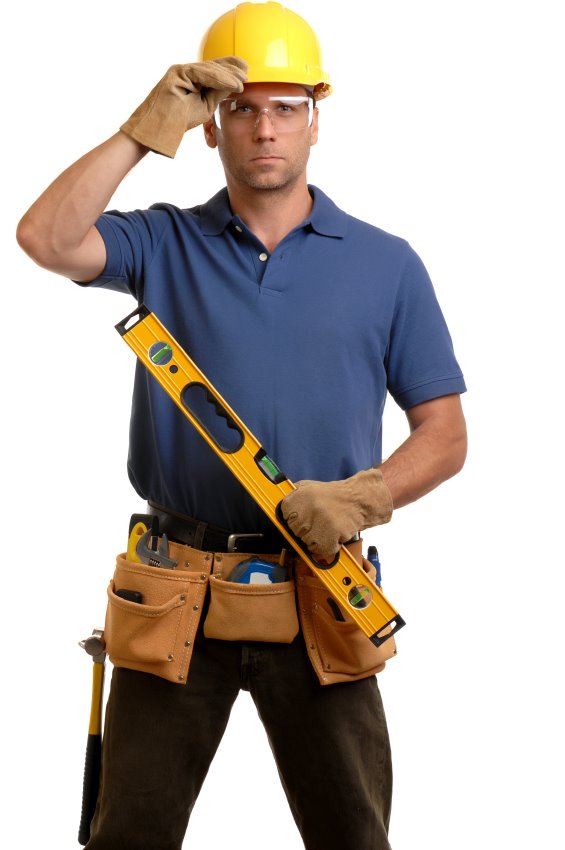
Tool Guy wants to know: What writing software do you use?

After Clare’s lovely dreamweaver post yesterday, I thought I’d slam us down to earth with some Tool-Guy talk (okay, so I’m a Tool Gal, but honestly. who bothers to check under the belt?).

In my own writing, up until now I have been a fan of a little program called ProsePro. It’s cheap, it plugs into Word, and best of all, it auto-formats my chapter headings, page and chapter numbers so that I don’t have to deal with them. ProsePro has few bells and whistles other than that, but I never cared.

But then in one of my Yahoo groups, someone happened to mention a program called Liquid Story Binder.

Oh. My. God.

I’ve been playing around with this new program, and I’ve discovered so many new bells and whistles that I’ve become a veritable one-woman marching band. Liquid Story Binder has got timelines. It’s got planners. And outline makers. And…and things I haven’t even discovered yet.

Yes folks, I’m in writing Nirvana.

But here’s the thing. My new infatuation with Liquid Story Binder has given me a Hugh Hefner-type roving eye for other software programs that might be out there, waiting to help me plumb the depths of the next great American Thriller Bestseller.

So I’m wondering: What writing software do you use? What is the one feature in that software that you cannot–would not–live without?

The stuff dreams are made of

by Clare Langley-Hawthorne

I’m typing this as I watch the Oscars (one of my guilty pleasures) and, as always, I spend most of my time as a sofa-fashionista criticizing the gowns without much thought for the movies. Of course with twin 4 year olds I haven’t seen any of the movies anyway – except for Wall-E (multiple times)…More importantly though, I love how the Oscars always make me believe, at least for one night, that dreams are possible…so I dedicate this blog post to those absolutely ridiculous unattainable dreams that keep us all going. In the spirit of the Oscars I have created my own mock awards and I hope you will make me feel less of a loser and add your own nominations and your own crazy dreams.

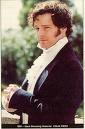
Best actor in a dream: My husband still wonders where the hell the fictitious Lord Wrotham came from and I have to confess I do (pathetically) cast my own books as movies…so here’s to Jeremy Northam, Richard Armitage and Colin Firth – if you were all rolled into one and cast in my movie then two of my dreams would come true (to have my books on screen and to have the best, most repressed, hero ever)

Best supporting dream: To be on the cover of Vanity Fair – Hell to be on any page of Vanity Fair…

Best original dreamplay: Act 1: Scene 1: Author opens the Sunday edition of the New York Times and pulls out the book review to the bestseller list. Camera pans to mass pandemonium in the streets.

Best animated dream: To see the Earth from space. This is the reason I push my boys to be obsessed with space travel – and why we have seen Wall-E hundreds of times…(Yay for that Oscar!)

So what are your most outlandish dreams? Go on dress them up in Armani or Valentino and share them with the blog world…or at least with me:)

The McGuffin

by Michael Palmer

The Kill Zone is thrilled to have New York Times Bestselling Author Michael Palmer, M.D., joining us today. Michael can not only cure your ills, he’s also the maestro behind some of Thrillerfest’s most inspired ballads and his books are strong medicine indeed. Read on, as he explains the whys and wherefores of McGuffins…

Greetings from New England everyone……it’s a pleasure to be a guest blogger on so prestigious a site as The Kill Zone…..i have decided to write the way I’m most comfortable—without much punctuation/capitalization……if that style is uncomfortable for some of you, you’ll have to read it through twice……actually, there is another “lesson” here…..this technique is the way I work my way through so-called writer’s block……I just relax, abandon whatever punctuation I want to abandon, as well as grammatical “structure” and write down with minimal edits, the ticker-tape that is passing through my head…..

Michelle G. knows that I enjoy talking about The McGuffin, and asked me to blog some of my thoughts here……i’m going to sort of start at the beginning, and hope I don’t ramble on too long…..

The McGuffin is a noun created by Alfred Hitchcock, and applicable more to suspense stories than most other genres of screen plays and books, although there is certainly some crossover…..parts of some of this material can be found in the writer’s tips section of my website. . . .

when I start my books, I force myself to begin with a carefully constructed “what if” question, which is limited (for clarity’s sake) to no more than 25 words or 2 sentences—sort of a what would you say your book is about to an agent who got on the elevator on the second floor and was getting off at the fourth?? . . . . For example, for my new book, The Second Opinion, the what if is: What if an expert in IT and an expert in electronic medical records began using EMR as a murder weapon? ……sound good?…..it does to me, and I’ve had 14 of 14 books on the times list…..so let’s go with it…..

now, with the what if under my belt, before I decide on a main character (“whose book is this?”), I need to take a crack at answering the question asked in my what if . . . . That answer we will call The McGuffin . . . . it doesn’t have to be the forever answer……I can change it any time I want to . . . . it doesn’t even have to a great McGuffin—just one that works and isn’t something totally ridiculous for this book like that martians are using the information in people’s EMR to choose subjects for kidnapping to their labs . . . . actually, now that I read it over, that McGuffin ain’t too bad . . . the McGuffin doesn’t have to have any tremendous relevance to the plot, but it does have to provide a reasonable answer to the what if question…..

example: in my book Extreme Measures, the what if is simply “What if there was a drug (there is, incidentally) that could make you look like you were dead when you weren’t”…..now that’s a great what if……Poe went to the bank on what ifs like that one . . . . but where’s the story? . . . what would someone want with a drug like that??…..the answer my friends is THE MCGUFFIN……in the case of extreme measures, the baddies want to use the drug to remove homeless people from society to use them for human experimentation (using their organs for transplant would work just as well as a McGuffin, and there are dozens of others) . . . are you getting this?? . . . it’s not such a simple concept, but once you understand it, the mcguffin will support your plot development like a rock….

To summarize: a McGuffin is a plot device which you need to drive the story, but which is changeable and has no real relevance . . . I would not advise choosing your protagonist and starting your prologue without having worked out a decent McGuffin, but it’s certainly possible to try it that way and hope for McGuffin-inspiration along the way . . .

There are examples of McGuffins in all of my books, and in all of Hitchcock’s films……what was Psycho about??—certainly not the $40,000 Janet Leigh stole from her office……she could have stolen plans for a new toaster . . .. and in North by North west, why were the baddies chasing Cary Grant?? Why to steal his McGuffin, of course……I’ll bet only a small percentage of you who have seen and loved North by Northwest can tell me why they were after Cary and Eva Marie – in fact, I’m not sure Hitchock himself could have told you fifteen minutes after he wrote it into his film . . .

So try to have your McGuffin place before you begin your book – it’s much easier that way…..but don’t worry if you decide to change it along the way—it doesn’t matter….just remember, that like any other endeavor, there are A+ McGuffins and C- McGuffins . . . the more organic your McGuffin is to your story, the better . . . but a C- is still passing . . . .

Many readers (although they have never heard the word) think they are reading your book to learn the McGuffin–that is to find out exactly what has been going on–why these baddies are poisoning people to make them look like they are dead when they’re not . . . but the truth is, if you are any good at this writing business, they are flipping pages like mad because you have led them to care–genuinely care–about the characters you have created . . .

What are your all-time favorite McGuffins? I’ve got one in my latest release, THE SECOND OPINION, which is in bookstores now…

Michael Palmer, M.D., is the author of the The Second Opinion, The First Patient, The Fifth Vial, The Society, Fatal, The Patient, Miracle Cure, Critical Judgment, Silent Treatment, Natural Causes, Extreme Measures, Flashback, Side Effects, and The Sisterhood. His books have been translated into thirty-five languages. He trained in internal medicine at Boston City and Massachusetts General Hospitals, spent twenty years as a full-time practitioner of internal and emergency medicine, and is now an associate director of the Massachusetts Medical Society’s physician health program.

Bringing Characters To Life

John Ramsey Miller

To be successful storytellers, authors have to make each character in their story seem like a real person to the reader. Not just the main characters, either. Every character has to ring true and register as individuals, not cardboard cut-outs pushed into a scene to utter words, or provide some action––which could include being a dead body. Good authors pull it off because they pitch each character’s voice so the reader hears them speaking when they are in a scene, or describes them so the reader visualizes them. And it’s never about how much an author says in describing a character, but what they choose to describe, and at what point in the story they do so. What a character says, and how they say it, tells a lot about a character, but a single action can say more about a character than a page of dialog or of physical detail.

An author’s best tool for characterization is observation. Every day, everywhere you go, you see people being themselves. You see mannerisms, you hear dialog, the music and cadence of voice, along with accents, and colloquialisms. You see people reacting to other people, you see the way people dress, how they pose, how they move, how they do a million little and big things. You see body types, how each type moves, how one figure may remind you of an inverted bowling pin, or a crow, or a skeleton covered in dried skin. As you observe, you put the images away for later, and when you are writing flashes come into your mind, or should.

Talented authors watch the world and record what they see, and will later drag their brains for snippets that bring some measure of real to a character. Some authors take pictures, or make notes, for reference, and they have stacks of pictures to root through for ideas, I suppose. Others use their minds alone and file it all away.

Settings are characters too. Pictures will capture style, details, but I find the practice oddly confining. I write from my memory because time adds an ethereal element to those images in my mind. I do use pictures for reference when I need accuracy in a setting that exists, but my best locations come from impressions of places, or several places blended by smell, texture, the way light plays and shadows fall, the tastes, the temperature into a place that only exists in my imagination and on the printed page.

There are a lot of things that separate good and bad writers. Observation is one. The ability to take observations and put them into your work and make them part of your story in a way that makes real the characters and defines them is not easily accomplished. Writing well is another story and I’ll save that for another time.

So, do you watch and file, or do you take notes or pictures?

The Rush to Self-Publish

By John Gilstrap
http://www.johngilstrap.com

I’m doing my part to rise to the challenge of 21st century book marketing by actively increasing my Internet footprint. I post on writers boards and try to be as cooperative and patient as I can be. People were helpful to me when I was first starting, so I think I need to invest in the Karmic balance.

A prevalent theme in these sites is an attempt to normalize and legitimize self-publishing, and I genuinely don’t get it. I don’t understand why people would pay the thousands of dollars necessary to make self-publishing happen. If the goal is to get one’s book into the hands of friends and family, a Kinko’s would serve as well as a self-publishing house. If the desired audience is bigger than that, the writer is hosed.

Selling a hundred copies to people who all know where you live is not really publishing, is it? Isn’t the point to sell not tens of copies, but tens of thousands of copies? It’s impossible to get that kind of distribution without a legitimate publisher.

Getting books on distant bookshelves requires infrastructure. Publishers establish a distribution network that involves wholesalers and transporters. After a few months, the books that don’t sell are returned to the publisher for a full refund. Authors are paid cash as an advance against royalties, and the money is theirs to keep even if the publisher fails to sell a single copy of the book. As compensation for that risk, the publisher keeps the lion’s share of the book’s cover price.

For self-published authors, none of that infrastructure is in place. Many bookstores refuse to stock self-published books because they cannot return unsold stock. If they do agree to stock a self-published book it’s probably because the visiting author is a good salesman. That’s all well and good, but who’s writing the next book (and probably working the day job) while the author is out there pounding the pavement?

I’m the first to admit that there’s a lot of crap out there from traditional publishers, but in every case, at least there’ve been some editorial hurdles. First, a literary agent blesses the book, and then it’s passed to an acquiring editor who then has to get approval from others before making an offer to buy the book. After that, there are several more editing passes before the book is finally printed and distributed.

Justly or not, it’s easy to see how self-published material is perceived by booksellers as being too undercooked for general consumption. I’m not saying they’re right necessarily, but the perception is understandable.

A popular hypothesis on the writers’ boards touts the notion that traditional publishers are resistant to new talent, and that writers have no choice but to publish on their own. It’s ridiculous. Publishers live off of new talent. They anxiously await the next great well-told story.

I think there’s undeniably a place for self-publishing. The history of a certain military unit, for example, or the story of how someone’s grandfather made his fortune against all odds are tales that will resonate with a certain definable group that is almost certainly large enough to recoup the author’s investment, but nowhere near large enough to attract the attention of a mainstream publisher. But it’s not a route to bestsellerdom.

What I worry about is my sense that too many people enter into those contracts with inflated expectations that are underwritten my greedy businessmen who know how to feed off the desires of frustrated artists. For the foreseeable future, the two publishing routes will never be seen as “equal,” anymore than a community theater production of a play will be considered the equivalent of Broadway.

My Favorite Part

by Michelle Gagnongirl on bike

It’s done.

Four months of writing, four weeks of editing, 100,000 words total  (after approximately 10,000 words were trimmed). Three working titles (and roughly a hundred others considered and discarded), three major characters whose names changed from one draft to the next, and two alternate endings.

And finally last night, just a few hours past my deadline, I sent the completed manuscript off to my editor. Mind you, there are a few things left to do (for example, I have to go through the copy- and line-edited drafts in a few weeks). But by and large, the nitty-gritty work of writing THE GATEKEEPER is complete.

This is, hands down, my favorite part of the writing process. I dread staring at the blank page, and getting mired in what Louise Ure calls the "saggy middle," when it feels like you’re never going to actually finish the darn book. And even after the rough draft is finished and polished into something that’s largely presentable, there’s still self-doubt to wrestle with. After hitting "send" I invariably spend weeks on pins and needles waiting for my editor to respond, convinced I’ll receive an email deploring the story and the writing, insisting that I scrap it and start over (this hasn’t happened yet, but you never know).

But today, ah today- the first day after handing it in, when the editor has given the all-clear and the residual stress of meeting the deadline has dissipated and I find myself facing an entire afternoon with nothing to do (well, nothing besides writing this post, cleaning my house, and paying bills, that is). This is when it finally sinks in. I’ve finished my fifth book (for those of you keeping track at home, yes, I did say five: it will only be my third in print, since two others never made the cut). Ahead of me lies months of marketing and everything that entails (designing bookmarks, calling/emailing bookstores, self-flagellation, etc etc etc).

Today I can just sit back and enjoy the fact that for the first time in six months, I don’t have a book hanging over my head. To clarify: yes, I know I’m extraordinarily lucky to  have a contract and deadlines- and I’m eternally grateful for that, every day I feel like I’ve won the lottery. Still, that does mean I have to produce a book on a regular basis. And as I can attest from my journalism days, even if you love the assignment, having to write it in a specific time frame makes it an obligation. Some days it’s fun, others it’s work: every stage of the process has its benefits and drawbacks. But for nearly six months, I’ve tended to little else, as the stacks of paper and other detritus scattered around my house can attest.

It’s comparable to the first day of summer vacation. You know September is just around the corner, but for the moment, you can just get on your bike and go anywhere. Down the line there will be plenty of other homework assignments (new deadlines), grades (reviews, both good and bad), and field trips (tour stops). But today, you’re free. And you know what? I think my house is going to stay dirty and the bills will be unpaid for just one more day. It’s too rainy for a bicycle ride, but it feels like the perfect day for a matinee, and I haven’t been to see a film in forever. So today’s discussion question is: what should I see?


Anatomy of a Thriller

By Joe Moore

One of the author panels I’ll be on at the upcoming MWA SleuthFest is Anatomy of a Thriller (the other is Supernatural Sleuths). I’ll be sharing the panel with literary agent Nicole Kenealy (Aaron M. Priest Literary Agency) and publisher Benjamin Leroy (founder of Bleak House Books). So to follow in Kathryn’s footsteps from her post yesterday, let’s continue discussing thrillers and what makes them so thrilling.

anatomy First, what is a thriller and how does it differ from a mystery?

Although thrillers are usually considered a sub-genre of mysteries, I believe there are some interesting differences. I look at a thriller as being a mystery in reverse. By that I mean that the typical murder mystery usually starts with the discovery of a crime. The rest of the book is an attempt to figure out who committed the crime.

A thriller is just the opposite; the book begins with a threat of some kind, and the rest of the story is trying to figure out how to prevent it from happening. And unlike the typical mystery where the antagonist may not be known until the end, with a thriller we pretty much know who the bad guy is right from the get-go.

So with that basic distinction in mind, let’s list a few of the most common elements found in thrillers.

1. The Ticking Clock. Without the ticking clock such as the doomsday deadline, suspense would be hard if not impossible to create. Even with a thriller like HUNT FOR RED OCTOBER which dealt with slow-moving  submarines, Clancy built in the ticking clock of the Soviets trying to find and destroy the Red October before it could make it to the safety of U.S. waters. He masterfully built in tension and suspense with an ever-looming ticking clock.

2. High Concept. In Hollywood, the term high concept is the ability to describe a script in one or two sentences usually by comparing it to two previously known motion pictures. For instance, let’s say I’ve got a great idea for a movie. It’s a wacky, zany look at the lighter side of Middle Earth, sort of a ONE FLEW OVER THE CUCKOO’S NEST meets LORD OF THE RINGS. If you’ve seen both of those movies, you’ll get an immediate visual idea of what my movie is about. High concept Hollywood style.

But with thrillers, high concept is a bit different. A book with a high concept theme is one that contains a radical or somewhat outlandish premise. For example, what if Jesus actually married, had children, and his bloodline survived down to present day? And what if the Church knew it and kept it a secret? You can’t get more outlandish than the high concept of THE DA VINCI CODE.

What if a great white shark took on a maniacal persona and seemed to systematically terrorized a small New England resort island? That’s the outlandish concept of Benchley’s thriller JAWS. What if someone managed to clone dinosaurs from the DNA found in fossilized mosquitoes and built a theme park that went terribly wrong? You get the idea.

3. High Stakes. Unlike the typical murder mystery, the stakes in a thriller are usually very high. Using Dan Brown’s example again, if the premise were proven to be true, it would undermine the very foundation of Christianity and shake the belief system of over a billion faithful. Those are high stakes by anyone’s standards.

4. Larger-Than-Life Characters. In most mysteries, the protagonist may play a huge role in the story, but that doesn’t make them larger than life. By contrast, Dirk Pitt, Jason Bourne, Jack Ryan, Jack Bauer, James Bond, Laura Craft, Indiana Jones, Dr. Hannibal Lecter, and one that’s closest to my heart, Cotten Stone, are all larger-than-life characters in their respective worlds.

5. Multiple POV. In mysteries, it’s common to have the story told through the eyes of a limited number of characters, sometimes only one. All that can change in a thriller. Most are made up of a large cast of characters, each telling a portion of the story through different angles. Some thrillers are so complex in their POVs that you really need a scorecard. But even with multiple POVs, it’s vital to never let the reader lose sight of whose story it is. There should be only one protagonist.

6. Exotic Settings. Again, in most murder mysteries, the location is usually limited to a particular city, town or locale. 731 But a thriller can and usually is a globetrotting event. In my latest thriller, THE 731 LEGACY, co-written with Lynn Sholes, the story takes place in, amount other locations, a medieval castle in one of the former Eastern Bloc countries of the Soviet Union and ends up in Pyongyang, North Korea. Throughout the series, our stories have taken the reader to a lost city in the Peruvian Andes, a remote church in Ethiopia reputed to contain Ark of the Covenant, the Secret Archives of the Vatican, newly discovered Anasazi ruins in New Mexico, inside the royal private residence of Buckingham Palace, secret tunnels below the Kremlin, and many other places most of us will never get to visit. Exotic locations are a mainstay of the thriller genre.

Like any generic list, there will always be exceptions and limitations. But in general, these are the elements you’ll usually find in mainstream commercial thrillers. But the biggest and most important element of all is that a thriller should thrill you. If it doesn’t increase your pulse rate, keep you up late, and leave you wanting more, it probably isn’t a thriller.

Are there any characteristics of a thriller not on my list? What do you look for in a good thriller?

Shifting genres: From mystery to thriller

A new journey begins today–I’m starting a brand new book. I’m even switching genres, from serial mystery to standalone suspense thriller.

This is going to be a huge style shift from my previous work in serial cozies. So to get prepared, I’ve taken myself back to “writing school.”

Right now I’m reading T. Macdonald Skillman’s Writing the Thriller. Her book provides a good nuts-and-bolts overview of the craft of writing thrillers. I like the way Macdonald breaks thrillers down into the various subgenres. Here’s a sampling from her list:

Action-adventure
Legal
Medical
Political
Psychological
Romantic relationship

MacDonald purposefully doesn’t include paranormal as a subgenre in her list. I don’t mean vampires or werewolves–those bore me. I’m thinking about paranormals like Dean Koontz’s The Followers. Those are the types of stories in which you’re not sure whether some of the characters are crazy, or whether something paranormal really is at work.

So after the day’s reading, here’s my take-away lesson:

In a suspense thriller, my main character might die.

In a series mystery like the Fat City Mysteries, you never worry too much about the main character. After all, Kate Gallagher is telling you her story in the first person. You know she’s alive to tell the tale, and she’ll have to survive to tell you the next one.
But in a thriller, the main character might actually die. I think this has to be the case. Consider for example The Lovely Bones. The fourteen-year-old victim in that story is dead before the story even starts.

Can you think of other suspense thrillers where you were really worried about the main character? As a writer, are you willing to actually kill your protagonist before the story ends? Is that going too far in a thriller?

How scared–and scary–do you have to be to write suspense versus mystery?

How do we measure success?

by Clare Langley-Hawthorne

A friend of mine told me about a recent conversation she had with her husband which struck a cord with me. She is a published writer with a couple of books under her belt and, like me, she has young preschoolers. After spending a number of weeks in final editing mode, she had to work a couple of weekends straight leaving her husband in charge of the kids. He wasn’t, she told me, all that impressed about doing so and when she confronted him he said that while he was happy to help out he just hoped “she would be successful after all her hard work” (NB. The manuscript she was working on was not under contract). “Hmm…” she said, “But I thought I already was ‘successful’ – so far my books have been published!” Then she realized her mistake…what her husband was talking about, what for him was the true measure of success, was financial. He meant “let’s hope you finally make some money this time!”

When she pressed him further he basically said that he justified her staying home to write while he was the primary bread-winner on the basis that she was really a ‘stay at home mum.’ In other words, at least she was doing something useful – namely raising their children- while she tiddled around writing her novels. Okay, okay, I admit maybe I’m overreacting a bit:) but this started me wondering – if their roles had been reversed would the same be true? Would a women who was the primary breadwinner in the family supporting an author husband think the same way?

Given that a career in fiction writing rarely leads to financial success, how should we measure success for a writer? How should the financially supportive spouse view their ‘other half’s’ career? Is it merely a hobby until it earns real money?

Don’t get me wrong, I am eternally grateful to be financially supported so I can pursue my writing career – but like my friend I am also a ‘stay at home mum’ – my deadlines certainly get dropped if the boys get sick and, like every other working parent, I have to balance the demands of career and family – but does my writing qualify as a career or am I, like my friend, a financial drain until the writing can pay its way?

I’m throwing the debate wide open as my friend’s predicament certainly resonated with me, probably just as it would have in Virginia Woolf’s time when she argued for not only a room of one’s own but also income to support it. So how do other writers reconcile this issue? What do those who are the bread winners think?

Sweet Justice Is Coming

By Jordan Dane

The Kill Zone Blog welcomes Jordan Dane for today’s Sunday guest post.

dane-jordan1 Imagine the horror of going to your teenager’s bedroom one morning only to find her missing. Her bed hadn’t been slept in and her clothes are gone.

In 2000, that’s what one mother in Florida faced. Her only child had conspired against her and ran away. And worse, she later discovered that her daughter had left the country—without having a passport. From the moment I read this news story, I was hooked and had to know more about how such an atrocity could happen. The teen’s trail might have gone ice cold, but her mother pushed authorities in a direction.

She knew where to start looking.

Only six months earlier, the girl had received a computer for a gift—a thoughtful present from a mother who wanted the best for her child. But this gift soon brought a virtual menace into their home. A charming and anonymous stranger lured the 14-year old girl to Greece—a man she’d met in a teen chat room. We’ve all heard stories like this. But after researching the facts behind this case, I was amazed at the audacity of this Internet predator.

And I wanted to shed light on the shrewd tactics of online predators in my upcoming book—Evil Without A Face (Feb 2009, Avon, $7.99)—the first book in my Sweet Justice series.
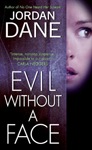
evil-face The online predator not only manipulated the teenager in Florida, but he also convinced law-abiding adults to cooperate with his schemes. These people thought they were helping an abused kid, but they didn’t know the facts, check with her family or contact local law enforcement. This stranger duped an employee of the local phone company into arranging for a private cell phone to talk to the girl directly. His slick manipulation scored him a purchased airline ticket (without a direct connection to him) and a clandestine ride for the girl to the airport. But after he bribed a child pornographer to acquire an illegal passport for her to leave the United States, the girl was out of the country before her mother knew she was gone.

And the chase to save the girl was on—a mother’s worst fear.

Now I know what some of you are thinking. This happened in 2000, before the added airport security measures were implemented after 9/11 in 2001. The girl would never have been allowed on a plane without proper ID. But after contacting a source in the airline industry, I was shocked to learn how many children travel unaccompanied and without a valid ID on domestic flights these days. So this extraordinary Florida case became the framework for my novel, Evil Without A Face. And I chose to set part of the story in the unique venue of Alaska where I had lived for ten years.

My novels have the feel of being ripped from today’s headlines because real crime inspires me. Who says crime doesn’t pay? Violence is like the ripple effect on the surface of still water. The wake radiates out from the victim and touches many people. In my books, I give a voice to the many victims of crime.

In Evil Without A Face, an illusive web of imposters on the Internet lures a deluded teen from her Alaskan home and launches a chain reaction collision course with an unlikely tangle of heroes. A new kind of criminal organization becomes the faceless enemy behind an insidious global conspiracy. And the life of one young girl and countless others hang in the balance. This is the initial driver to my new series. With an international setting, these thrillers will focus on the lives and loves of three women—a bounty hunter operating outside the law, an ambitious vice cop, and a former international operative with a mysterious past. These women give Lady Justice a whole new reason to wear blinders.

And their brand of justice is anything but sweet.

After researching the case in Florida, I became more concerned for naïve kids socializing in cyberspace—young people like my nieces and nephews. Savvy online criminals lurk in anonymity and carry on without fear of repercussion. I’m an active member of MySpace and Facebook and know how they operate. But these social networks aren’t the problem—the criminals are. And as you’ve seen in the headlines and on TV, the online community has become a real hunting ground for predators.

Why not? It’s easy pickings.

For the most part, the Internet is an invaluable tool. And it breaks down the barriers between countries, allowing many of us to have international friends. But the anonymity of cyberspace attracts all sorts of users with criminal intent. Terrorists have found new high-tech ways to recruit online and they have duped some Internet users into funding their activities or have resorted to outright stealing through subterfuge. And since crimes that cross over jurisdictions and international borders are harder to prosecute, offenders often get away with their schemes. That’s why I wanted to write Evil Without A Face and dole out my brand justice. After all, who couldn’t use a liberal dose of ‘Sweet Justice’ when reality becomes stranger than fiction?

How has your use of the Internet changed over the years? Have you become more suspicious of certain behaviors from online strangers? And if you have children who use online resources, can you share some tips on how you keep them safer?

Avon/Harpercollins launched Jordan Dane’s debut suspense novels in a back to back publishing event in Spring 2008 after the 3-book series sold in auction. Ripped from the headlines, Jordan’s gritty plots weave a tapestry of vivid settings, intrigue, and dark humor. Publishers Weekly compared her intense pacing to Lisa Jackson, Lisa Gardner, and Tami Hoag—romantic suspense that “crosses over into plain thriller country”. Pursuing publication since 2003, this national best selling and critically acclaimed author received awards in 33 national writing competitions. And recently, her debut novel NO ONE HEARD HER SCREAM was named Publishers Weekly Best Book of 2008 and Romantic Times Magazine nominated NO ONE LIVES FOREVER as Best Intrigue Novel of 2008. Formerly an energy sales manager in the oil and gas industry, she now is following her passion to write full time. Jordan and her husband share their residence with two cats of highborn lineage and the sweet memory of an impossible to forget canine.

For more, visit www.jordandane.com.

Current Titles:

NO ONE HEARD HER SCREAM (Apr 08)

NO ONE LEFT TO TELL (May 08)

NO ONE LIVES FOREVER (Jun 08)

EVIL WITHOUT A FACE (Feb 09)

THE WRONG SIDE OF DEAD (Nov 09)

Awards/Recognitions:

· Publishers Weekly Best Book of 2008 – Mass Market (NO ONE HEARD HER SCREAM)

· Romantic Times Magazine Nominee Best Romantic Intrigue Novel of 2008 (NO ONE LIVES FOREVER)

_______________________

CALENDAR OF UPCOMING GUESTS

Mark your calendar for the following guest bloggers at the Kill Zone:

Michael Palmer, February 22
Mario Acevedo, March 1
Cara Black, March 8
Robert Gregory Browne, March 15
Neil Plakcy, March 22
Liz Jasper, March 29