The Before That Led to “In the After”

by John Gilstrap
http://www.johngilstrap.com/

When I was a kid—actually all the way through high school—I churned out short stories by the dozens, sometimes on command to meet the requirements of English class, but mostly because I loved writing. For me, a short story assignment was as close to a guaranteed A as one could reasonably hope for. I read voraciously in those years, and thanks in large measure to The Twilight Zone, Night Gallery and their ilk, I grew up steeped in short-form fiction.

I used to read Writers Market in the 1970s and mentally catalog all of the outlets for my stories, preparing myself for the day when I felt that my writing would evolve past high-school good and become professional-writer good. If I recall properly, Playboy was paying $1500 for short stories back then. Who knew that Playboy even had words? All of the big-format magazines carried short stories, too. I was in training to leave my mark on the world.

Unfortunately, when I got to college, my story production sagged precipitously, thanks to my libido and my love of a good party. My attentions were wildly diffused in directions that had nothing to do with academics, and when my grades started to nose dive, something had to go. After careful deliberation, I decided to stay with the dating and the academics and the booze (not necessarily in that order), and stopped my recreational writing.

Meanwhile, the market for short stories evaporated. That was just as well, because by the time I started writing again, my interests had shifted exclusively to long-form fiction. I never looked back—not until my editor at Kensington suggested that I write a short story for my website that would help promote my book, No Mercy, and its main character, Jonathan Grave. That story became “Discipline” and it introduces readers to Jonathan’s bizarre childhood. That was the first short story I’d written in something like thirty years, and I loved the experience.

Just a couple of months after I posted that story to my website, my blog mates came up with the idea of the anthology that became Fresh Kills: Tales from the Killzone (actually, I think it was James Scott Bell’s suggestion, but I can’t swear to it). My initial reaction was twofold: On one hand, I thought it was a great idea, but on the other, I confess that I bristled at the notion of joining the world of “self-published” authors. I worried that it would be read by some as a form of desperation. Let’s face it: self-publishing is not exactly held in the highest regard among my fellow authors, and the last thing I needed was for a good idea to inadvertently harm my career. Call me shallow, but the publishing business is scary these days.

I consulted with both my agent and my editor, and, to my relief, they were both very supportive of the idea. I think it was the uniqueness of the concept as much as anything else. I’m not aware of a similar project out there that combines the talents of established authors in a self-published book, and I think I can speak for the other Killzoners that we won’t complain if we get some positive buzz about this. So, with their approval in my pocket, I signed on.

And what a hoot it turned out to be! Initially, I thought I would do another story of Jonathan Grave in his youth, but that struck me as a conflict of interest—especially since “Discipline” is offered on my website free of charge–a pattern I want to continue. I went mining for ideas, tried a couple of them out, but remained largely uninspired. With our deadline approaching, I found myself with bupkis.

Finally, the muse found me where she often does: in the shower, when my mind was in neutral. I thought it would be really cool to do a story of delayed revenge, a high-tension thriller presented on a tiny canvas. The “feel” of the story hit me before the plot points did. I wanted the reader to feel frightened, and claustrophobic as the victim learns his fate. I wanted the victim in this case to be the protagonist, and I wanted his sense of loss to be enormous.

And because it’s a short story, I wanted it to have a huge twist in the end.

I was on travel on the occasion of this particular inspiration, and because I didn’t know exactly where I wanted it to go, I resorted to pen and paper—ever the best way for me to work through plot points. Twenty-odd handwritten pages later, the story was done. I call it “In The After” because, well . . . Actually, I can’t tell you without giving too much away.

I can tell you this, though: I’m already looking forward to Volume Two.
The Chicken Guy

by Michelle Gagnon

Excerpt from THE TUNNELS:

“So what do you think?”

Kelly looked up from her notes to find Morrow watching her, rocking back and forth on his heels with a half-smile.

“Not our guy.” She rubbed her eyes with a thumb and forefinger and suppressed a yawn.

“Told you. Long day, huh? Where’d they pull you in from?”

“Jersey.”

“Oh, right, the chicken guy. Nice work on that one.”

“Thanks…”

In my debut thriller THE TUNNELS, I made this oblique reference to FBI Special Agent Kelly Jones’s previous case. Over the years I’ve received several emails from readers curious to hear more about “The Chicken Guy” (although as we here at The Kill Zone know, by all rights that title belongs to Mr. John Ramsey Miller, who is currently breeding a chicken army for world conquest).

So when it came time to submit a story for our anthology, I thought this would be great material to mine.

I’ve probably only composed a few dozen short stories total over the course of my writing career. With this one, I decided to focus on a single setting, the scene that would mark the climax if it were a full novel. I wanted to write something that was almost pure action, where you really got to see Kelly do what she does best.

I enjoyed exploring my heroine through a prequel. Part of the story laid the groundwork for crises she’d face down the line, tests of her moral code that over the course of my series have become increasingly challenge for her to pass. Hints of that popped up as I was writing The Chicken Guy. Knowing where she ends up made it much easier to figure out where she started.

As I was editing, I caught myself wondering if I would have written the story the same way if I’d tackled it immediately before writing THE TUNNELS. And as I’m putting the finishing touches on my fourth novel featuring the same characters, I was struck by how much Kelly in particular had been forced to change. What I love about writing a series (and about watching a well-made TV series, as opposed to a film) is that it enables a much greater story arc. A character grapples with different challenges in each book, challenges that shape how they’ll act when faced with new situations down the line. I’ve put Kelly through the wringer over the course of these four books. She’s emerged far more damaged than when she started, but in a way stronger than she was at the outset. It was interesting for me to look back on her through this lens, to see how far she’s come in so many ways.

We’re discussing assembling another anthology later in the year. For that one, I’m toying with the idea of delving further into the life of a more minor character from the series, one I haven’t had the opportunity to really explore. What I’ve discovered through this process is that short stories can be a great tool for character development, a chance to see how a tangential story line can have an impact. As Joe said, this is a great format to do that kind of exploration.

The anthology is available on Amazon and at Smashwords for the bargain price of $2.99.


Final Flight: a one-way ticket

By Joe Moore

fresh-kills-cover-website1 As you probably have guessed by now, this is promote FRESH KILLS week. Our newly minted collection of short stories is available online at Amazon, Scribd and Smashwords, and may soon be making its appearance in other online stores. So why did seven established authors decide to put together a short story anthology and publish it ourselves? Remember that some of us (me included) have never written a short story before. Also remember that pricing our little shindig for $2.99 and splitting the net proceeds 7 ways will not make us rich. (John “Colonel Sanders” Miller is still going to have to sell a lot of those free-range eggs) Here’s why I think we did it.

It wasn’t that many years ago that publishing our own book would have been quite different. We would have placed it in the hands of an agent (7 to choose from), had her pitch it to all our publishers (another 7 among us) and if needed, other houses, hoped for a bite and maybe a huge advance that, after the 7-way split, would at least buy each of us a Happy Meal. Finally, we would have waited the 10-12 months for the book to hit the shelves.

Today, things are changing. That’s not to say that doing it the traditional way would not have worked. But in 2010, there are alternative methods of getting published. The route we took is NOT for everyone. But it is a route that is AVAILABLE to everyone. In our case, we are 7 published authors who make money writing fiction. Many of us have been on national and international bestseller lists. You can go into a bookstore and buy our books. We knew from day one that the quality of the contributed short stories would be good because we are professionals at our craft. We also have the highest regard for each other. With all that in mind, I think the reason we did it was because we could.

If FRESH KILLS sells well, great. If it doesn’t, that’s OK, too. We have virtually nothing to lose and everything to gain with this project. The point is, we banded together and within about a month, we went from a raw idea to a book published and available for sale to the public. We wrote the stories, designed the cover, formatted the text, opened the accounts, wrote the promotional blurbs and press releases, scattered the marketing announcements across the Internet, and maintained TOTAL control over our product.

Guess what folks? The publishing world is changing. And I think the seven of us feel some satisfaction that we are adapting to those changes.

So to give Miller’s chickens a break, download a copy of FRESH KILLS, Tales from the Kill Zone to your Kindle or PC today.

Now on to my short story contribution called FINAL FLIGHT. About 15 years ago, I had an idea for a novel about a pilot who was ordered to fly a secret mission with a mysterious cargo through a terrible winter storm. The cargo was an experimental nuclear weapon. He crashed in the mountains and the weapon was not found until years later when a group of terrorists located the wreckage and salvaged the bomb. I only wrote the first chapter before filing it away and moving on.

Now jump forward to last December when the idea of a Kill Zone anthology emerged. The first thing I did was start rummaging through my files for a story idea. Out jumped that first chapter from years ago. (Advice: never throw anything away) Of course, telling the original story would have resulted in 110k words and about a year’s worth of writing. So I thought, what if the cargo wasn’t a WMD but something even more devastating to one person in particular: the pilot. I quickly reworked the chapter and changed the ending. Problem was, I only had about 2k words. We had all agreed a minimum of 4k per story. I had a big hole in the middle to fill.

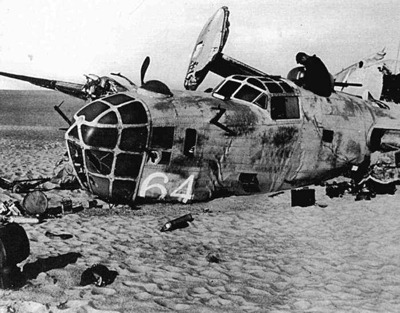
LBG1 That’s when I remembered an article I’d read some time ago about the disappearance of the WWII B-24 Liberator called the Lady Be Good. Coming back from a bombing run to their base on the northern coast of Africa, the B-24 became lost, over-flew the base, and crashed in the desert. This was in 1943. It’s a BIG desert. The wreckage wasn’t found until 1959, and the plane was still in pretty good shape 16 years later. After reading the article again, I realized I had my middle.

As I approached the writing of FINAL FLIGHT, I recalled my fascination for the old TV series The Twilight Zone. I loved the format, especially the surprise endings. So my goal was to write a story reminiscent of the TV series. The end result is FINAL FLIGHT.

Picture if you will . . . a lone C-47, a mysterious cargo, a clock and dagger mission, and a blizzard in which no pilot in his right mind would dare to fly. United States Army Air Corps Major Howard Murphy was under orders: fly the mission or face the consequences. But curiosity got the best of him as he left the cockpit for a quick look at what lay in the cargo bay. That’s when he got the shock of his life. FINAL FLIGHT is Major Murphy’s one-way trip to hell.

Enjoy.

Blood Remains: A ghost story

This week the Killers are blogging about The Kill Zone’s new e-collection of original short stories, Fresh Kills (available on Kindle, Smashwords, and Scribd). I’m excited and honored to have my short story, ‘Blood Remains,’ included in the anthology. At its heart, ‘Blood Remains’ is a ghost story. I was inspired to write it after reading a newspaper headline (it would be a spoiler if I told you what the headline was). When I read the article I started to wonder, “What if?” As in, what if this happened, and then that?  That thought process energized my creative “boys in the basement” (Jim discussed this creative process in his Sunday post). The end result was a paranormal story: A victim of childhood abuse returns home after many years  only to discover that while memories fade, blood remains. 

The story breaks ground for me in a couple of ways: It’s my first published short story; it’s also a new genre for my writing. A bit of background: I had been developing “Blood Remains” as a novel until Jim suggested that we publish an e-collection of short stories. I narrowed the focus down to what would have been the end of the novel, and reshaped it as a short story.

About making the e-jump

Plunging into the e-book world can be as intimidating for authors as it is for readers (And for publishers, too: Here’s a recent update on the Amazon vs. Macmillan spat). I received a Kindle DX from Santa for Christmas, and I felt very tentative as I downloaded my first few books. I  soon discovered to my delight that some classic books are available on Kindle for free. Then I learned how to enlarge the text so I don’t need reading glasses. Now I’m an e-book convert, carrying my Kindle around with me everywhere. A Kindle application for PCs is available for free, by the way (Click here). Of course, Apple has now debuted the iPad, so the e-book war is officially on. It’s going to be like Rome versus the Barbarians. (Although I’m not sure which side is Rome, and which the Barbarians). It’ll be interesting to see what the e-book landscape is like a few years from now.

Have you made the e-book plunge? How’s the water?


TKZ Short Story Collection ‘Fresh Kills’ Debuts!

by Clare Langley-Hawthorne

Well, you’ve seen us discuss the e-book revolution, and now we at The Kill Zone have jumped right on in – producing our own e-book anthology of killer stories. All week we’re going to give you a sneak ‘behind the scenes’ insight into each of our stories – but the best thing you can do (of course!) is buy and download the anthology for yourself. Fresh Kills is available on Kindle at Amazon and in a variety of e-book formats at Smashwords.

The stories in Fresh Kills vary in mood and theme (as you can well imagine!) and I am just as intrigued, as you all are, to read my fellow bloggers‘ contributions. My own short story is entitled ‘The Angel in the Garden’ and it is, believe it or not, the first time I have written a story set in Australia. Here’s a brief description (it’s how I like to imagine the dust jacket would read):
When Constable Duff McManus is called out to investigate a body floating in an ornamental pond, he has to confront both the death of a childhood friend long considered a traitor, as well as his own war time memories. It may be a year since the Great War ended but for many in Australia, there are some wounds that will never heal and some secrets that will never be revealed, not even in death.

I was inspired to write this story after reading Juliet Nicholson’s book The Great Silence over the holidays. She deals with the immediate aftermath of the First World War, focusing specifically on the years 1918-1920, and incorporates first hand accounts from people across the social spectrum. The result is incredibly moving (I went through a whole box of tissues), especially when she deals with the decision to introduce a two minute silence to remember the dead (a hush literally fell across England as the 11th hour struck on the 11th day of the 11th month in 1919) and the return of the unknown soldier, who represented all the husbands, fathers, and sons who never made it home.
I don’t think many Americans realize the deep significance of the First World War for Australia. In many ways it was the event that defined and shaped our national identity and altered the way Australians perceived the British Empire forever. When war was declared in 1914 thousands of Australians rushed to enlist – it was considered every Australian’s duty to defend ‘King and Country’. The horrific debacle at Gallipoli and the slaughter of Australians on the Western Front, however, changed all that. The statistics are staggering: From a population of fewer than five million, almost 417,000 Australian men enlisted, and of those over 60,000 were killed and 156,000 wounded, gassed, or taken prisoner. At the end of the war memorials were erected in nearly every town across Australia – you can still see them today – and it is clear from the names of the young men listed that no community or social strata were spared.
In writing ‘The Angel in the Garden’ I wanted to capture a sense of what it must have been like for those soldiers who did return and how they reintegrated (if indeed they ever did) into the shattered remnants of Australian society. In Constable Duff McManus, I hoped to evoke the deep sense of bitterness and anger that permeated post-war Australia. Oh, and I also wanted to kill off someone (always a good idea in a murder mystery!) and I thought who better to target than someone who represented the anti-conscription, trade union movement in Australia. See, even in a short story I cannot help but get caught up in the history books…

I’ve blogged before on the challenges I faced when confronting the medium of the short story and now I face a surprising dilemma – whether to consider writing a longer story about Constable Duff McManus. As a character I find him intriguing. There is no doubt he returned from the war a scarred, wounded man – but what I sensed, from the moment he appeared on the page, was that he had also lost his ‘moral compass’ as a result – and I was fascinated by where that might lead. So now I have a choice to make…do I finally write a novel set in Australia?…

In the meantime, I am content to have a short story out in the e-book world as my fellow bloggers and I dive into the uncharted e-book ocean (hoping to swim of course!). I also can’t wait to read all the stories!

So She Comes Out Laughing


There’s a man in London, an advertising exec, who talks in his sleep. His wife got a voice activated digital recorder so she could record what he says. Then she started putting those words on a blog that has well over a million hits now. You can read the story here.
He says things like, “Elephants in thongs are not something you see every day. Enjoy it.” Much of what he says is laced with profanity. He admits to being “pent up.” I’d say so.
There’s also a “sleep talkin’ theologian,” Dr. Fred Sanders of Biola University, who talks in his sleep. His wife jotted down many things he said during graduate school, mostly as he was in that phase of just waking up. Sometimes she would prod him with questions and, half asleep, he’d answer. Here are some of the transcripts:
Scissors
Coming after me
Walking on their hindquarters.
*
Taking a picture
Of those two foreigners,
And two others.
And mostly it’s us loading our camping equipment into the car
*
Sanctification
It’s like walking through the woods.
He tossed a coin, and I have to get the rest of the stick
*
I was in Esau’s soup.
He was going to eat me up.
[WIFE: how did you get out?]
You got me out.
[how?]
Cut up into little pieces.
*
More of the same.
A bunch of dull people.
There was a roller coaster right in the middle.
So what does any of this have to do with writing? A lot, if you’re attentive to it.

Dorothea Brande, in her well known book Becoming a Writer, advocates getting up in the morning and, first thing, jotting down what’s in the mind. It is here that rough gems are buried. The trick is to get them out, then choose the ones that are worth polishing.

Stephen King calls this phenomenon “the boys in the basement,” the writer’s mind and imagination working in the background.

It’s something to be nurtured.

Often when I’m in the middle of a novel, working out scenes to come, I’ll go to bed with a pad and pen on the table nearby and drift to sleep asking myself questions. Or I’ll create a scene in my mind and try to “fade out” with it playing.


Then, first thing in the morning, I’ll either jot something on the pad, or get my coffee and start typing the things that come to me.

Not everything is great. In fact, most of it isn’t. But quite often, stuck somewhere in the middle or down at the bottom, there’s gold. I try to find it and refine it and see what it’s telling me about my story.

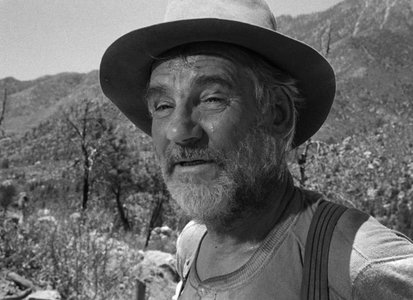
There’s a great line in the classic movie The Treasure of the Sierra Madre. The old prospector, played by Walter Huston, is schooling two fortune hunters (Humphrey Bogart and Tim Holt) on the fine art of panning for gold. He puts some sand in a pan and pours water over it, then lazily manipulates the pan. Slowly, some flecks start to shine in the sun. He says that finding the gold takes patience. “You got to know how to tickle it so she comes out laughing.”


So here’s what to do, writer:

1. Tickle it. Be purposeful in the use of “the boys in the basement.” Ask yourself questions at night, or watch a scene as you drift off to sleep. Be ready to get to your keyboard or pad as early as possible the next day.

2. So she comes out laughing. Write for at least ten minutes, without stopping, letting the words and thoughts flow. Don’t try to be coherent. Go fast, putting down whatever comes to mind. If you get on an interesting tangent, follow it. See where it leads.

3. Refine it. Later in the day, go back to your notes and start culling for the good stuff. Highlight what you like. Keep these pages in a journal or e-file. At the very least you’re going to end up with an interesting diary of your imagination.

So what tricks or techniques do you use to tickle the gold, come up with ideas and get inspired by the muse?

A Wonderful Time To Live

John Ramsey Miller

It is snowing outside and I spent the day getting the old place prepared for the storm by cutting kindling, stacking logs on the porch, covering woodpiles and steps with tarps, gassing up my SUV and making room under the carport for it, making sure the chickens had plenty of water and food, putting a cover over their heated container, putting covers on the faucets outdoors, building a fire in the wood burning fireplace, and all while babysitting my granddaughter who was out here sick from school while her parents worked. I have a motorized wheelbarrow and I was making trips back and forth while she stood in the window waving at me. When she is well she rides in it.

Lately Sasha is preoccupied with her grandmother and me being soooo old. This afternoon she told me that I was getting too many sparkles on my face and hands. I said, “Sparkles?”

“No, that isn’t the word,” she said.

“Wrinkles?” I asked.

“Yep, wrinkles. Too many wrinkles. CAuse you’re old.”

On the way home she said, “Look, Dotz, it’s a graveyard.”

“Yes, that’s a graveyard,” I agreed.

“Is that where you and grandma are going to sleep when you die?”

“Well, no,” I said. “We’re going to a much nicer graveyard where they have cable TV and Wi-Fi for our computers.”

My grandsons are more interested in what they can have when we die. They have asked for very little but are very specific about it.

Like Gilstrap wrote on his blog, I also think and write about death and destruction and it’s a subject I know better than I’d like. I have seen death and the destruction guns and knives and cars can do to human beings and it made quite an impression on me starting at an early age. We lived across the street from a funeral home when I was ten or so, and that was where my experience began. Our neighborhood kids used to lie on our stomachs and watch Mr. Barry embalm people in the basement. He always had the louvered-glass windows open and he never saw us as his back was usually to us. It was like watching horror movies. We used to run when we heard the ambulances heading for the hospital and we’d stand, an audience of innocents, watching as some unfortunate victim was wheeled in on a gurney. Often the ambulance (again Mr. Barry) would often make a quick stop before putting the vic back into the ambulance (it doubled as the hearse for black funerals at the other Barry home in another part of town) and it had red lights in the grill and a howling siren. The lights were covered with black cloth baggies for funerals. It showed me a side of death I’ve carried with me since.

I have a problem in that I never know what to tell kids about death, how to explain it without instill fear and worry in them. I told Sasha that the old moves aside so the young can have room to grow up, that it was true with every living thing. I told her that dying was just like being born into this world but in another place. I’m not sure about that but I don’t mind lying to children about that.

Before my funeral home days in Starkville, Mississippi, when I was five or six, my eighty-four-year old grandfather died, and I remember how empty I felt and how sad it made me. I took little consolation in people telling me he was in heaven. I only knew he was never coming back and that I’d never sit in his lap and use his pocket knife to carefully cut cubes of tobacco for him to chew. I’d never hear him tell me stories about his life as a cattleman, about gunfights in downtown Hazzlehurst, about driving cattle in storms, of lean times, of being gored by a bull and thrown by horses into bad places. Although I took no consolation in the idea of Papa in heaven, I did in the fact that he died of a stroke while cheering the Friday Night Fights on TV in the nursing home. I am so glad that I knew him for the years I did, and how he called my mama, “baby” and I thought she was truly old.

As I’ve grown older I’ve seen a lot of people I knew and loved die, and it’s never easy. Never. But it has given me feelings to run my fingers over and to put into my words.

Sasha told me she liked graveyards with rocks in them, not just lots of vases with flowers in them. I agree, those graveyards with flat plaques are pastoral but bleak, and if I intended to end up in one, I’d want to be in an interesting one where people come and walk around and read inscriptions, and maybe even sat lean against a tombstone to read a book on a warm summer day.

After we passed by that bleak country graveyard, I also told her that although I seemed old to her, I was going to live a long, long time and that I planned to be there when she was older and maybe I’d even drool into my lap at her wedding. And I told her I’d be there to hold her babies just like I held her when she was one. I don’t know if I’ll be true to my word, but I plan to try.

The Violence Threshold

by John Gilstrap
www.johngilstrap.com

The first corpse I ever saw outside of a funeral home was that of a twenty-something newly-wed who’d been given a terminal diagnosis by his physician earlier in the day. Unwilling to face death in slow motion, he decided to die on his own terms. He stripped naked, sat Indian-style on his bed and rested his forehead on the muzzle of a .357 magnum revolver, his thumb on the trigger. His wife heard the shot from downstairs and rushed up to find the resultant horror show.

I got involved as a rookie firefighter riding as “third aid” on the ambulance. (That means I got to carry the heavy stuff and do my best to stay out of the way.) “Horror show” didn’t touch the reality. The panic-stricken wife, streaked red from her efforts to revive her husband. The anatomical eruption that was the bullet’s path. One of the most vivid memories for me is the fineness of the blood spatter, and how it settled on everything. To this day, I wonder how anyone can live in a house where a shooting has occurred. I guess you just have to replace everything.

Subsequent to that first fatality, over the course of fifteen years in the fire and rescue service, I witnessed hundreds more fatalities, more than a few the result of violence. Unless you’ve experienced it, I’m not sure you can understand how it changes you; how it molds you into the person you ultimately become.

Now I’m a thriller writer. People die in my books, and every now and then I get slammed by a critic for over-the-top violence, and every time I read that, I am shocked. Certainly, the violence is vivid, true to my memories of what bullets and knives and baseball bats do to people, but to my mind, I never cross over into what I think of as violence-as-pornography. The violence in my books has consequence. Every time my protagonists are forced to take a life, they become damaged goods. The violence evolves them, shapes them into more interesting, darker people. Consider those creative values against the consequence-free pornographic bloodfest that is The Matrix and its ilk.

In movies, books and television, I wonder sometimes if the downplayed violence–the off-screen murder that drives the meat of the plot–isn’t more of a disservice to society than their couterparts which take you and your senses into the true horror that violent crime inflicts. The dead butler in the library didn’t just arrive there to provide a puzzle for our sleuth to solve. He was a person whose last moments were anguished and wracked with agony. I’m not sure it’s good that the likes of Miss Marple, Jessica and Hercule are so able to push that aside.

Obviously, tastes vary. I respect that different forms of suspense attract different readers, but when it comes to desensitizing people to violence, I do wonder which form erodes the social fabric more. Or, as an alternative, does fiction have a measurable impact at all on such real-life sensitivities? What do you think? What are your violence thresholds?

Music to My Ears


by Kelli Stanley

First, I gotta thank my hostess, thriller author extraordinaire Michelle Gagnon, and the rest of the fiercely fabulous Kill Zone team.

So I admit it. I’m old enough to remember the days before the Sony Walkman, let alone the iPod. The days before music and entertainment because so personalized, so catering to both whim and instant gratification, that you waited around listening for “Jack and Diane” to play on the FM station. It usually did, in between the Go-Gos and Pat Benatar.

Of course, the irony with all this personal cocooning is that people now have an even greater need to socialize and share … but instead of playing a boom box, you can post an iTunes play list or even pretend to be a DJ on Blip.FM.

And, of course, if you write books, you can share what you listen to through your writing.

Quick poll for authors—raise your hand if you’re influenced by music when you write. Do you listen while you type? Does it set the mood, the tone, the pace for your scene? Do you channel Bernard Herrmann’s score for Psycho for your serial killer segments and switch to Bach for your upbeat ending?

This is one way to use music, and I’ve heard other authors claim that they like writing with the volume up. Me, I’ve never been able to hear my words and Gershwin at the same time, so I don’t actually listen when I write. But to sort of set the stage, to get in the mood … that I can do. I’ve always been a fan of jazz and the Great American Songbook, an affinity that served me well with my latest novel.

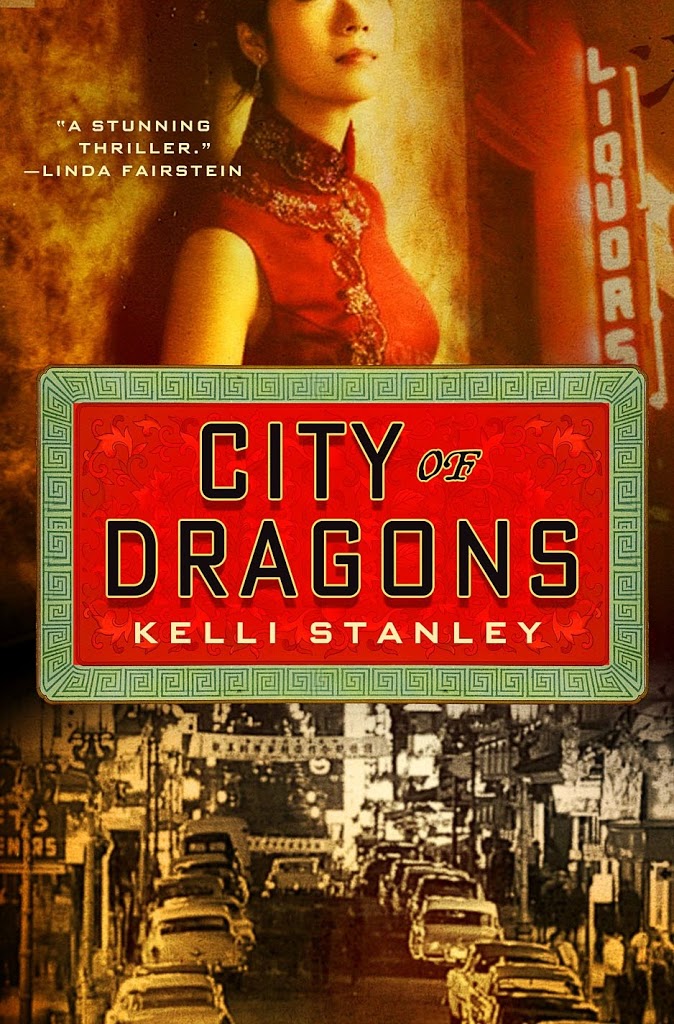
Y’ see, listening is particularly helpful when you’re trying to lose yourself in time. Because City of Dragons is set in 1940, I immersed myself in a lot of music from the era—and had to be very careful to not access something anachronistic. I wanted to hear what my characters did, and I was writing about a period in American culture when music was truly a mass medium of popular entertainment … and when our entertainment—thanks to radio drama—was more audio than visual.

The music was key to me feeling like I could capture the past. And then it became about character, too, about my protagonist reacting to that world, particularly the irony of achingly romantic big band swing juxtaposed to the atrocities of war.

So I found myself becoming immersed in the music, actually using it in the book. And I felt confident about being able to, since some writers I greatly admire—like George Pelecanos and Ken Bruen—reference music and lyrics in their works.

The rub, of course, is the permissions phase … something I didn’t know much about. But warning, all you Springsteen fans who want to include “The River” in your latest novel … the author is responsible for either acquiring permission or rewriting the scene.

In my case, I found out too late and had to rewrite certain scenes, retaining a line of lyric and hopefully the flow and rhythm and emotion of the original draft. But—like a DVD director’s cut—I was able to link up a City of Dragons playlist on my website, so that, whenever possible, you can listen to the music my characters do.

It’s a cool way of sharing not just what I like to listen to, but what became an intrinsic element of the book, and a kind of instant time machine back to February, 1940.

So … how do you respond to music in books? And what’s on your playlist today?

Kelli Stanley’s second novel, City of Dragons, has received starred reviews from Publishers Weekly, Library Journal and Booklist, is an RT Book Reviews Top Pick, and an Indie Next Book for February. Kelli’s debut novel, Nox Dormienda, won the Bruce Alexander Award and was nominated for a Macavity. She lives in San Francisco, and frequents old movie palaces, speakeasies and bookstores. You can find out more about her and her books at her website: http://www.kellistanley.com.


The Threshold of Pain

There’s been a great deal of discussion here at TKZ as well as on other blogs and forums about the changes taking place in the publishing industry. Most of it revolves around the rapid emergence and popularity of e-books and electronic publishing, and how it’s affecting traditional publishing. The industry as a whole appears liquid and seems to be changing almost by the day. Many of us are trying to find a stable place to stand as the ground shakes around us.

I don’t have any solutions to present here today. If I did, they would probably be outdated by the time I post my next blog. But I do have some observations.

For over 20 years, I worked in the video postproduction industry. During that time, one of the biggest advances in television and motion picture production was the advent of digital technology. Before high definition digital video, the only way to capture high quality images was on film. Even for personal home use, there was nothing better than standard 35mm film (some formats in the professional arena were larger sizes). For decades, no one envisioned that high quality images could be captured and delivered on any other format than film. (Note that film is still far greater resolution than high definition video). Even with its inherent grain, its ability to attract dirt, its somewhat fragile, easily damaged surface, and its constant weave and jitter through the projection system’s gate, it was as good as it can get. No other image delivery method could match film.

Today, most major motion pictures are still shot on film due mainly to the fact that film, unlike video, has much wider latitude and dynamic range, and still has the highest resolution available. But the image delivery system is changing. Now, original negative is transferred from film to video and color corrected within the digital domain. It is then projected in digital format rather than analog. Instead of individual frames passing through the gate of a projector, the images are retrieved from a hard drive or transmitted via satellite and projected electronically in resolutions up to 4k. It’s called digital cinema. No more scratches and weave, no more prints wearing out or film breaking. The thousandth time the movie is projected, it looks exactly like the first time.

Has the movie-going experience been hurt by digital cinema? No. In fact, it’s been enhanced beyond what the audience even realizes. The image is rock solid, crystal clear, and comes with multiple channels of digital audio for a totally entertaining experience. In most viewers eyes, it’s better than film.

How does this relate to analog vs. digital books? We must remember that what readers get when they purchase a book is a container holding our writing. Just like film and digital files can contain the same images, analog and digital books can hold the same words. An analog or printed book is simply a delivery vessel—something that contains our words and delivers them to our readers.

Remember Kodachrome film? It was first manufactured in 1935 and quickly became the most popular method of capturing and delivering images to the casual photographer. Eastman Kodak canceled production in 2009. Why? Because digital cameras had finally surpassed film as the most popular method of taking pictures. No one was buying Kodachrome anymore. But pictures were still being taken. Only now, the delivery system—the container—is digital files.

Could that happen to books? Maybe. And if it does, it probably will take a long time. After all, it took Kodachrome 74 years to die. But I hold to the theory of the “threshold of pain”. When something new comes along—let’s call it a widget—the first adapters must experience a certain amount of pain in order to try it. As the widget is further developed, refined and perfected, the pain starts to diminish. As the pain continues to decrease, more customers migrate to the widget because they learn of its pleasures and are willing to tolerate or ignore any remaining pain. At some point, the negatives along with the price dips below the threshold of pain, and the widget is embraced by the majority of the audience.

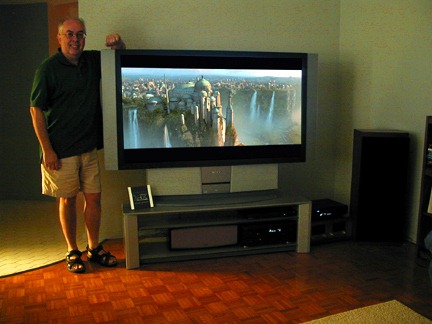
OLYMPUS DIGITAL CAMERA         Here’s an example. Six years ago, I bought a 60” Sony HD TV. They were mostly available in high-end electronics boutiques. Top resolution was 720p. It cost me over $5k. There was a lot of pain in my wallet and the fact that it took months to get any kind of HD into my home. Today, I can get the same size screen at 1080p resolution at Wal-Mart for less than half the price. Hardly any pain. A whole lot of pleasure. And HD TV’s are as common as toaster ovens. The TV is a delivery system. What it delivers is images—or more specific, entertainment.

I believe that as a delivery system, analog books can be replaced if the replacement brings the user more pleasure than pain. If the reading experience is as good or better than analog. If they are reasonably priced. Easy to read from. Easy to use. Massive storage. Unlimited battery life. Unlimited selection of books. Scratch-‘n-sniff paper smell. OK, that last pleasure is future-ware.

Are e-books the answer? I don’t know. But what has happened is that due to the economy, competition, and a shifting marketplace, the electronic publishing flood gates have begun to open. A lot of new widgets are flowing out. The one thing they all have in common is that they are delivery systems. But what they deliver will never change. Our words. Our art.

Are you an early adaptor who likes living on the bleeding edge of technology? Or do you sit back and let others be the lab rats before you pull out your wallet and head over to Wal-Mart?