The benefits of traveling with a herd

Writing can be a lonely business. Social networking can help us break a sense of isolation, but only in a virtual way. One of the best ways for writers to connect is to become active in professional writer’s organizations. These groups, such as ITW (International Thriller Writers), MWA (Mystery Writers of America), and SiC (Sisters in Crime), have national and local chapter meetings and events that serve many useful purposes, including networking, advice, and support. 

To get full benefit from the organizations, it’s important to become active, not just attend meetings. Several writers on this blog are active in national and local writer’s organizations. I’ve been a member of the board of the Southern California Chapter of MWA for the past year, and I recently became the Program Chair. Our first program of 2010 was “Tales from the Publishing Trenches.” It featured Kristen Weber, a former Senior Editor at Penguin Group (and my former editor), who regaled a packed house with stories and advice about the real world of NY editing. Kristen was interviewed by bestselling author Patricia Smiley (Kristen is pictured on the left, below. Patricia is on the right).

When you become actively involved with your writing organization, you contribute, make contacts and get your name out in the public.  As a writer, I am capable of going long periods of time with little human contact except for my family and cats (who think they’re human). If nothing else, attending the meetings makes me drag my butt out of the house.

I’d be interested to hear about your experiences with professional writers’ organizations. How active have you been, and have you found the groups to be helpful or enjoyable?

Ghostwriters, Co-authors and The Great Oz

by Clare Langley-Hawthorne

The NYT’s magazine yesterday ran an article on James Patterson’s amazing empire (James Patterson Inc.) and I confess my jaw dropped when I read that he published nine original hardcovers in 2009 and plans at least that many for 2010. Of course, James Patterson doesn’t write all of these on his own – he has a stable of co-authors that work with him. Now, I am probably the only person on earth who has never actually read a James Patterson book (I know, I know…) but the sheer volume of this man’s output is astonishing. The NYT’s article states that one out of every 17 hardcover books bought in the US was written by James Patterson – and this started me wondering – is the Patterson publishing model the way of the future?

We’ve all heard of ghost-writers who help propel celebrity memoirs to bestsellerdom but we often accept this as a necessity, given the fact that the celebrity in question is usually not a writer (or even capable of being one…) – but in this case Patterson recruits other thriller writers to help expand his brand and increase his output. I’m not sure how I feel about the co-author issue – are they really ‘joint’ writers in the traditional co-authorship sense or ‘assistant authors’ helping to churn out books for another, better known, author? As I said, not having read any of Patterson’s books I can’t really comment on the difference between the books he authored alone and those he authored with another writer but I do have to wonder – does the quality of the writing suffer at all? Do readers care if the book that has James Patterson emblazoned on it wasn’t actually written by him?

From what I read in the NYT’s article, the brand and business that is James Patterson requires a team approach. Don’t get me wrong, Patterson is clearly intimately involved with every step in the publishing of his books. He does a detailed outline for each of them and provides editorial oversight and quality control over all the material – but (equally obvious) the business of James Patterson Inc. could be nowhere near as profitable (or prolific) if he had to write each of his books by himself.

Given how centralized publishing is becoming, with marketing resources concentrated almost exclusively on the few top sellers in each publishing house, it will be interesting to see how common the James Patterson model will become. Will it be the model adopted by future bestselling thriller writers? Will those authors become responsible for churning out plots and outlines for others to complete rather than actually writing the books themselves? (Will readers even care?)

So what do you think? For those of you who are Patterson fans, can you tell a difference in quality between the ones he authored alone and those he has co-authored? Has quality diminished over time as a result of his amazing level of output or not? Do you think we will increasingly see this kind of approach where bestselling authors rely on a stable of co-authors to produce a prodigious number of titles each year, thereby centralizing sales even further among the few top sellers? Or will readers eventually tire of this approach – concerned that behind the branding facade lies nothing more than the ‘great Oz’ ?

What the New Kindle Deal Means for Writers

by James Scott Bell

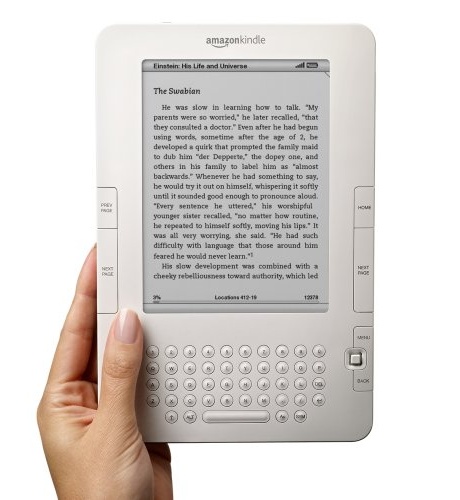
You’ve no doubt read up on amazon.com’s bold play this week to shore up its Kindle market share (estimated already to be 90% of all e-readers). They announced a new program, taking effect June 30, which offers a 70% royalty on Kindle editions priced between $2.99 and $8.99. That’s double what they have granted before (and was timed to come just before Apple’s announcement of a similar plan for their new iTablet. For more on the coming “price wars,” see this article in Fortune).

This represents quite a nice chunk of the pie, even though the price point is low. For authors, it works out to be a very good deal, when 10% of list is not an uncommon number, especially in mass market.

Which is the point I want to make, one I have been pondering ever since the Kindle broke out wide: we authors may be entering an era that is very much like the mass market explosion post World War II.

What that ushered in was a golden age of paperback fiction in the 50’s. Names like Mickey Spillane, John D. MacDonald, Ross Macdonald, Jim Thompson. Some of the old pulp writers, like Erle Stanley Gardner, found new life and sales. While the old pulp magazines dried up, there was a market for good stories among the slicks—e.g., Collier’s, Saturday Evening Post. The better writers got stories published there and made some extra scratch.

So what do we see now? Another mass market platform, this time electronic. The price points are equivalent to what people in the 50’s would have paid in the drug store. True, publishers could actually get into the drugstores, on racks and spinners. But we have that analogue in the e-world. Buyers on amazon, for example, are directed to other titles they might be interested in, and so forth.

For authors, especially commercial authors—those who deliver an entertaining read—the prospects are intriguing. If they write great stories, word of mouth will spread, just like it does in traditional publishing. But now there’s a 70% royalty, which is a whole lot better than the pittance the paperback writers of the 50’s got.

But there’s more good news, especially for writers like myself who have a ton of stories and concepts we’d like to write. We will be able to write different varieties of fiction––short form, novella and novel length, and see them brought to market in a fraction of the time it now takes to get one book out the traditional way.

I can see nice prospects for publishers and writers teaming up to take advantage of this new platform, even if it’s just to supplement the traditional print model.

The short story especially interests me. I love doing them, but the short story market has long been a dead letter. Suddenly, there’s new life. In fact, my colleagues and I here at Kill Zone are going to soon release our own anthology: Fresh Kills. It’s been a matter of only a few months, from idea generation to writing to editing to e-publishing. And we don’t have to print or warehouse the book.

Now, the temptation, especially for new writers who are thinking in terms of self-publishing, is to start throwing up (and I use that term purposely) their stuff before it’s ready. We’re going to see a lot of that. But a kind of Darwinism will take over, where the weak will be weeded out. The idea is to become one of the fittest and survive, even thrive. I would therefore advise new writers to hire a good freelance editor. You will only hurt your long term prospects if what you offer is junk.

How are traditional publishers going to react to all this? I don’t know. Random House has entered an agreement with Apple, and that will change the landscape. The landscape will keep changing. We’re in a whole new ballgame here, and the rules get updated almost daily. But as I said, I think there is a great chance for publishers and authors to partner up and make the best of this situation. I don’t know that we’re ever going to go back to hardcover prices. The production costs are too great, and consumers are rapidly being taught they don’t have to pay hardcover prices, even for a new book by a celebrity author.

What that means for you, writer, is to keep concentrating on doing what you do, making your stuff the best it can be, then going to market. If you can write short stories (which are, in my mind, the hardest form of fiction), so much the better. Bottom line: if your stuff is killer, people will find it. If you write it, they will come.


DON’T AXE ME, MAN

By John Ramsey Miller

Last week I mentioned I’d tell you about my experience felling a tree, so I’ll make good but warn you, dear reader, that this is not directly connected to my writing, but what I do between the pages. It’s also an explanation as to how I find the material for writing my incompetent characters.

I have a wood-burning fireplace in my living room that opens to play fireplace for our grandkids to roast marshmellows in when they stay over in the winter. When it’s got a bunch of logs burning in it, it will flat run you out of the house and into the yard. We have several acres of trees on the place and we only buy wood to supplement what I cut that is standing dead on the farm.

Okay, maybe I’ve seen too many segments of Ax Men on TV. Those guys drop monumental trees exactly where they want them to hit, and they do it with amazing ease. I love the smell of a fresh cut trees. I have been using a chainsaw most of my adult life, and so I’m not without some experience at it. Two weeks ago I dropped several trees on a nearby farm to help a neighbor lady cut, split and stack firewood. Susie and I joined several of her friends in sub-zero weather to cut dead-standing trees of decent size one recent Saturday. We cut a couple of cords (for you non-woodsman types that is a stack four feet wide, four tall and eight feet long). A cord, while seeming enormous doesn’t last very long if you heat with logs like she does since it’s her only source of fuel. Did I tell you I live out in the woods with my wife, 70 chickens and two dogs?

I’ve had this sixteen-inch-diameter-dead tree standing beside my shop/shed since we moved in and over the three years it has shed rotten limbs like a drunk carrying a four foot tall stack of boxes of chocolates up a flight of stairs in the dark––each barely missing the shed’s tin roof. I hadn’t cut it down previously because due to lean it needed to be tied off near the top and to have increasing winch tension-(I have one of those on my four-wheeler that was in the shop with a blown motor)-put on it to make it fall in a direction it was not inclined by design, physics, and the non-flexible principles of weight distribution and balance to take. When the most major limb fell off a few weeks ago and left it looking like a pole, I decided that, although it was leaning ever so slightly toward a collision with my shed roof, that like the Ax Men, I could cut it so it would have no choice but to buck nature and fall where I desired it to drop.

Taking out my Echo ES 440, with a newly sharpened chain, I stood and peered up studying the fifty odd feet of tree for several long minutes. It was cold, but there was no wind to help or hurt my enterprise, and so I cranked the saw and after revving the hell out of it for Ax-Man effect I carefully cut a perfect and deep watermelon slice out of the debarked trunk. She (we farmers call any inanimate object of substance “she”) was not as rotten through the base as I’d imagined, which was good as it would make nice firewood, and firm centers reduce the danger that it might twist as it was cut through. From slightly above the center of the wedge I started the blade on a downward angle in her backside as to hit the apex of the missing wedge. [Think of the missing wedge as being a wide-open mouth.] Also to make sure I was being an Ax Man I cut in about ten inches and inserted a wedge behind the blade to induce her to fall forward. As I cut I used a small two-pound sledgehammer to drive the shim deeper to nudge the tree so it would more definitely fall where the nose would be pointing if there had been a tree nose above the open mouth.

All went as planned until the cut was almost through to the apex. Unlike the show, my tree defied everything I believed and pinched my saw blade as I was pulling it upward and free. The tree headed backward bound for my shed …and time stood still.

It hit the tin roof under which I normally park my four-wheeler when the engine isn’t blown, my motorized wheelbarrow, and the zero-turn radius mower, which I had moved, just in case. The old gal, despite my efforts at pushing, fell backward the corner of the open structure and she landed on the roof like she had been punched out by a giant. I noticed that my chainsaw was missing its handle, which is never a good thing, so I couldn’t even cut up the tree to get it down in sections. For several minutes I felt almost as let down as I do when I receive a rejection notice from an editor.

I have a shirt that says, “Professional Author. Don’t try this at home.” I should have one printed that says, “Amateur Ax Man….”

Taught me a valuable life lesson. “Life teaches you lessons–boy does it ever!” Just because someone else can do it doesn’t mean I can. Writing isn’t cutting trees, thank God. I don’t know anybody who’s ever harmed more than the English language doing it either. Oh well, like writing, you’ll never know unless you try.

Panic!

By John Gilstrap
http://www.johngilstrap.com/

In my non-writing life, I am a safety engineer. My job–my nature, actually–forces me to look at any given situation at any given time, and project what can go wrong. We don’t burn a lot of candles in our home because open flames are essentially nacent conflagrations. We have an artificial Christmas tree because I know from my fire service experience how explosively combustible live (actually dead) evergreens are. I am all about controlling risk.

It shouldn’t be a surprise, then, that I am paranoid about losing data. Think about it. As an author, I create people and places out of my imagination, and the only place where they exist is on the page. If the pages burn up, everything goes away. Even the DNA is gone, because no DNA ever existed outside of the controlled psychosis that is writing.

It’s worse than that, though, because in this day of the computer, the characters that exist only on the page aren’t really ever on the page until very late in the process. They exist exclusively on a disk–magnetic media that I don’t begin to understand. If the computer drive fails, everything on it fails with it. I can’t imagine the emotional trauma of losing 100,000 words and many months’ work to a power surge. It’s the stuff of nightmares.

My hedge against the nightmare is my flash drive. I bought this USB storage device five or six years ago, and it literally contains every word I’ve ever written professionally. All seven books, plus the first twenty pages of Book Eight–the untitled third book in my Jonathan Grave thriller series. When I settle in for a writing session, I call up the version of the manuscript that is stored on the flash drive, and I write away, saving frequently. When that writing session is finished, I save that version to the hard drive of whatever computer I’m working on (home, work or laptop). That way, if a disaster happens, a current copy exists on at least two points of storage. The flash drive remains in my right front pocket all the time. All. The. Time. My flash drive has seen every corner of the world.

Last week, I lost the flash drive. I wore a new pair of slacks that happened to have shallow pockets, and when I got home, the flash drive was gone. I called the hostess of the party, but no, she couldn’t find it. Crap.

And wouldn’t you know it? I had violated my own long-standing personal rule to always back up to the hard drive, and thus, the entire first chapter of my new book was gone. No back-up anywhere. Okay, it was only 20 pages, but they were a really good 20 pages. Damn.

Title of this blog entry notwithstanding, I’m not one to panic over anything. I truly am the person you want to be with in an emergency. I am, however, one to cuss and kick at the floor when I get caught doing something stupid. What the hell was I thinking, not backing up the beginning of a new story? Sometimes, God gobsmacks the guy who takes his eye off the ball. It’s what you call one of life’s sobering moments.

I’ll certainly never do that again.

Good news: three or four days after I’d lost my flash drive, the hostess of the party called and told me she’d found it. I’d dodged a bullet, but the lesson was learned.

So, what about you? Share your paranoia with us. What do you do to protect your data as you write a new story? If, God forbid, your house burned to the ground, would you be able to continue on with your book?

Marketing Recap

by Michelle Gagnon

So the smoke has finally cleared from my latest marketing efforts for THE GATEKEEPER, and I thought I’d share a bit of what I learned.

First of all, Google Analytics is vastly superior to other stat counters. With my older one, ninety percent of the traffic sources were listed as undetermined. Not so with Google Analytics-finally I have clear information as to which links brought visitors to my site, and which didn’t.

And here’s the funny thing: I spent a significant chunk of money on blog ads, Facebook ads, and Goodreads ads this time around. Each of these generated a fair amount of clicks- but nothing even came close to what I received from random sweepstakes sites. Because I was offering a big ticket item as a prize (a MacBook Laptop computer), a lot of contest sites picked up the link. And I received hundred of hits a day from those sites, significantly more than from any other source.

The question is, are the newsletter subscribers elicited by those sites actually interested in reading the book? Although I received fewer hits from the other sites, they were geared toward a more targeted readership. So it’s tough to say which worked better. But in terms of getting the word out there about a new book, offering a major prize definitely didn’t hurt. Next time around I’ll probably stick to a shorter time frame for the ads I’m paying for, and will count on the sweepstakes sites to balance things out.

I’ve also decided to more or less avoid touring next November when RACING THE DEVIL is released. Mind you, I love meeting booksellers, and had a wonderful time visiting Seattle, Phoenix, San Diego, and LA, among other cities.
However with a mass market paperback, the reality is that most of my sales occur in big box stores, supermarkets, drugstores, airports, and newsstands. The touring is always grueling, expensive (since most of it is on my own dime), and it doesn’t have much of an impact on my overall sales. I’ll still visit a few local stores, but after seeing the results of marketing three books this way, I simply can’t justify the cost in both money and time anymore. I won’t be attending as many conferences, either, for the same reason.

Social networking: I primarily logged on to FaceBook and Twitter this time around. That investment definitely produced some sales, and based on my experience the fans those efforts yielded tended to be much more enthusiastic about me and my books. I also did an exchange with some other authors, promoting THE GATEKEEPER on their pages the days of its release. That generated a few sales, but not a significant number as far as I could determine. However it was fantastic for prompting people to attend events.

I find it frustrating that there’s no way to get ebook sales totals yet (at least according to my publisher). I suspect that those have jumped considerably now that there are more eReaders out there, especially after Amazon’s report that for the first time on Christmas Day eBook sales trumped physical books. Once again, I’ll have to wait months for my royalty statements to arrive before I have a completely accurate picture of my sales this time around. It seems a little silly to me that in a computerized age this information isn’t more widely available.

So to recap:

Google Analytics: great
Touring: not so great
Social networking: moderately helpful
Big ticket prize: definitely worth it

I’m curious to hear if other authors have a similar rundown. Or if you have any marketing questions, feel free to fire away…

ISHTAR II and the Slush Pile

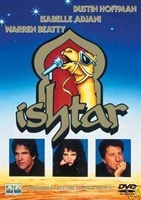
Almost from the beginning of words chiseled in stone, there has been a slush pile—literally the mountain of unsolicited manuscripts that accumulate in the offices of publishers. And for decades, it was the hope and dream of unknown writers to have their hidden gem plucked from the pile and go on to be a bestseller. Despite the ishtar odds, which are slightly worse than Dustin Hoffman and Warren Beatty remaking ISHTAR, there have been a few slush-pile hits, or at least career starts. My friend Kris Montee tells me that she got her first break in 1984 when her manuscript THE DANCER was plucked from the Ballantine slush pile. Kris and her sister Kelly went on to become NYT bestselling authors as P.J. Parrish.

In a recent WSJ article by Katherine Rosman, she noted that CARPOOL by Mary Cahill was the last book published by Random House that originated from their slush pile. That was back in 1991. Today, most major publishers have a strict policy of not accepting unsolicited manuscripts.

There are a number of reasons for the death of the slush pile, the biggest being shrinking budgets. Now you’d think that having an unending supply of material at your disposal without even asking for it would be a plus, right? No. First of all, the publisher has to pay employees to weed through the slush. They simply can’t afford it anymore. The rare chance of finding a winner is greatly exceeded by the waste of time reviewing unpublishable work. Let’s face it, there’s usually a good reason why unsolicited work goes unpublished.

Another reason for the demise of the slush pile is the fear of being accused of and having to defend against allegations of stealing someone’s work. Again, it’s all about money. Why even take the chance.

And believe it or not, the anthrax scare after 9/11 became a major reason no one wants tons of unsolicited mail sitting around their offices. Even with no shrinking budgets, money can’t defend you against toxic death.

So how can a new writer hope to get their toe in the door? Get an agent. Next to writing the best book you can, it’s crucial that you find a literary agent. With few exceptions, publishers will only consider material sent to them by an agent. The agent is the primary filter and first line of defense for the publisher. And in some cases, it not only has to be an agent, but one they already know and have an established relationship. Today, there’s much more responsibility placed on the writer/agent than ever before.

A bit of good news: despite all the drawbacks to the slush pile, publishers are of a belief that a diamond might still be hidden among the mountain of coal. As long as there’s even a slight chance, there needs to be a way to find it. So some publishers are creating virtual slush piles. For instance, HarperCollins introduced a website called Authonomy that allows writers to upload a manuscript. Visitors can read the work and vote on their favorites. The HC editors will then review the five highest scoring submissions each month with an eye for publication. How are your chances? Over 10,000 manuscripts have been uploaded so far with 4 bought.

We should be seeing more of these virtual slush piles popping up as time go on, especially with the public doing all the work and only the overhead of the site being the primary cost.

So how did you get your start? Did you submit cold or acquire an agent first. If you aren’t published yet, have you ever sent in an unsolicited manuscript? What was the result?

BTW, anyone know when ISHTAR II will be released?

Happy Birthday, Edgar! And welcome “home”


Today is the birthday of Edgar Allan Poe, who is one of my literary heroes. He would have been 201 years old (no spring raven), and is considered the inventor of the detective-fiction genre.

According to AP and other media reports this week, Poe’s descendants have decided that the author’s official “home” city will continue to be Baltimore, where Poe died in 1849. Other cities that were competing for the title of Poe’s hometown include Boston, where Poe was born in 1809, and London, where Poe lived as a youth. While living in London, Poe was reportedly inspired by the ravens at the Tower of London.

We tend to think of Poe as cadaverous and depressed-looking, based on daguerreotypes of the author. But a new  watercolor image of Poe unveiled this week shows the author as a vibrant–even happy-looking–young man. 

Oh, and not to bury the lead, but Joe reminded me that MWA has just announced its list of Edgar nominees for 2010. Good luck to all!  

On a sad note, the mysterious visitor who has been delivering roses and cognac to Poe’s grave on his birthday for 60 years, failed to appear this year. We hope this doesn’t mean that any ill fate befell the mystery visitor.

My favorite story by Poe remains  The Tell-Tale Heart, which was inspired by a superstition known as the Evil Eye. The plot was based on a true crime that took place during Poe’s lifetime. This story was the first one that introduced me to the concept of an unreliable narrator–you don’t know whether he is insane, or whether supernatural forces are actually at work. This type of narrator is still my favorite in paranormal stories (I don’t have much use for in-your-face paranormal characters: werewolves and vampires, oh my!) 

What’s your favorite work by Poe?

The Midnight Hour

by Clare Langley-Hawthorne

I admire those writers who get up in the wee hours of the morning to write – I cannot even function before about 6am and even then I need breakfast, The New York Times crossword and a big cup of tea before I can even contemplate writing. Granted every morning I have the boys to get to preschool so inevitably it’s 10am before I even get started writing (and that’s on a good day). When I was writing my first novel, Consequences of Sin, I had the ‘luxury’ of being pregnant so I could spend all day writing (and most of the night since I found it almost impossible to sleep), then the twins were born and I had to try and fit revisions into naps. Suddenly I realized I wasn’t going to be able to write when the mood struck – I was going to have to write in whatever free minute I could find.

Five years later and I am still struggling to find a writing schedule to fit. Never one to be able to write late at night, I now find myself routinely writing until 11 pm (which becomes 2am when I’m trying to meet a deadline). When friends ask me how on earth I find time to write I answer that I just ‘find’ it wherever and whenever I can. I laugh when people tell me about how they prepare themselves with mood music and incense, getting themselves into ‘writing mode’…I haven’t the time to ‘prepare myself’ (for me any form of preparation has to be research) but it’s true that there is always a lead time needed before the writing starts to flow. I still find the time factor difficult to manage. When I was lawyer I billed in 6 minute increments, now I find it hard to feel as if I have achieved anything of substance unless I have had a good 1-2 hour chunk of time. It takes me at least that long to find the rhythm of my writing – but (and here’s the rub) it seems so hard to capture that length of time uninterrupted. I often find that I am just getting into the flow of things when my time (literally) is up.

So what kind of writing schedule do you maintain? How do fit your writing in? Are you someone who gets up early or stays up late? Any advice on how to become a more effective ‘writing time’ manager?

Dreams, Schemes & Chicken Wings

John Ramsey Miller

In a dream I had the other night I was teaching a creative writing course and in class we were having a round robin and each student proposed a character and a setting. I chose three characters (the maximum number allowable by my rules) and I chose the time and place. Each student used those elements and came up with a plot. The short stories were written and I was going to put them all together in booklets without the author’s name being included and the students would vote on their favorite. I thought the only problem would be a perfectly split vote, but I was wrong as all of the students turned in the same story, which meant that all but one had cheated.

I think I remembered the dream correctly, but looking back I doubt that the dream could have lasted long enough for all for the segments I just wrote to be faithful to what I dreamed. So I probably perked the dream over the past few days, which brings me to the point of my blog. We get ideas from sparks we catch in our everyday lives, and those sparks grow into flames over time. It doesn’t take much to trigger our imaginations, and to give us the basis for a story. The same idea tossed out to a group of individuals would become a group of stories that would be entirely different. There really are no new ideas, just variations in execution of those ideas.

I have never been afraid of anyone taking my big idea and writing the book I was going to write. They could write a book, as can I, but they would be as different as scotch and grape juice.

I don’t mind telling people what I’m working on, but not for fear that they will steal the concept and beat me to the punch. I don’t talk much about what I’m working on because in my case I think it robs the project of crucial energy. When authors (let’s say aspiring authors) ask me about the safety of sending their golden pages off to an agent or to publishers and fearing someone will loot their MS for their great ideas, I assure them that there is no shortage of ideas, just a shortfall of quality executions of ideas. What publishers want is decent-selling authors who can deliver a well-executed book at regular intervals. Oh, yeah, they want each book to sell enough to make up for the ones that don’t sell, but that’s a different story.

We all see the world differently. Each of us filters what we write through our experiences just as we write in our own personal styles and we more or less can’t help but do it that way. Someone asked me recently what my style was, and I replied that I wrote like I talk, like I think, then tried to cut out 75% of the words on the draft pages.

This week my wife wrote a story for www.Goodnewsgirlz.com, which is a great lifestyle site her sister coproduces. I read the first paragraph and thought it was something I had written about our chickens. I made a few minor tweaks for her, but truthfully it was every bit as well written as what I write, maybe better than what I had written on the same two incidents. It was clear, clean, concise and humorous She said, “writing is fun.” She’d discovered my secret––one I’d managed to hide from her for 34 years.

My editor once told me that writing was only hard if you do it right and I agree. I think most things are that way, especially building model cars.

I watch AX MEN, but I’m not sure I should. Next week I’ll tell you about dropping a dead tree that I feared would fall on my shed, and felling it directly onto my shed.

So long, and good writing.