Solid Structure


[Note: John Ramsey Miller and I are switching days this week.]

I love to teach structure, and Joe’s post on Wednesday brought up a tremendously important question. Someone in another writing forum wanted to know how you figure out where to end Act 2, and go into Act 3.

The question of where the act breaks go, and what they entail, may be the most crucial in all of dramatic structure, because if they are weak, the entire edifice of the story will be unsound. Knowing how to fix them will go a long way toward making your novel more readable.

Think of novel structure as a suspension bridge.

As is obvious from the picture above, the suspension bridge is held up primarily by the two supporting pylons, one near the beginning of the bridge and one near the end. Without these pylons in those exact spots, the bridge will not be stable.

Now looking at the picture you can see that it perfectly represents the 3 act structure. A solidly constructed novel will look just like a solidly constructed suspension bridge. If that first pylon is placed too far out from the beginning, the first “act” of the bridge will sag and sway. In a book or movie, it means the first act is starting to drag.

Similarly, if the second pylon is misplaced, you’ll end up either with anti-climax (the pylon too far away from the shore) or a feeling of deus ex machina (the pylon too close).

In my book, Plot & Structure, I refer to these pylons as “doorways of no return.” I wanted to convey the idea of being forced through doorways, and once that’s done, you can’t go back again. Life will never be the same for the Lead. If you don’t have that feeling in your story, the stakes aren’t high enough.

Now, the first doorway is an event that thrusts the Lead into the conflict of Act 2. It is not, and this is crucial, just a decision to go looking around in the “dark world” (to use mythic terms). That’s weak. That’s not being forced.

A good example of a first doorway is when Luke Skywalker’s aunt and uncle are murdered by the forces of the Empire in Star Wars. That compels Luke to leave his home planet and seek to become a Jedi, to fight the evil forces. If the murders didn’t happen, Luke would have stayed on his planet as a farmer. He had to be forced out.

In Gone With the Wind it’s the outbreak of the Civil War. Hard to miss that one. No one can go back again to the way things were. Scarlett O’Hara is going to be forced to deal with life in a way she never wanted or anticipated.

In The Wizard of Oz, it’s the twister (hint: if a movie changed from black and white to color, odds are you’ve passed through the first doorway of no return).

In The Fugitive, the first doorway is the train wreck that enables Richard Kimble to escape, a long sequence that ends at the 30 minute mark (perfect structure) and has U. S. Marshal Sam Gerard declaring, “Your fugitive’s name is Dr. Richard Kimble. Go get him!”

The second doorway, the one that closes Act 2 and leads to Act 3, is a bit more malleable, but just as critical. It is a clue or discovery, or set-back or crisis, one which makes inevitable the final battle of Act 3. It is the doorway that makes an ending possible. Without this, the novel could go on forever (and some seem to for lack of this act break).

In The Fugitive, at the 90 minute mark (the right placement for a film of just over two hours), Kimble breaks into the one-armed man’s house and finds the key evidence linking him with the pharmaceutical company. This clue leads to the inevitable showdown with the “behind the scenes” villain.

In High Noon, the town marshal reaches the major crisis: he finally realizes no one in the town is going to help him fight the bad guys. That forces him into the final battle of Act 3, the showdown with the four killers.

By the way, this structure works for both “plot driven” and “character driven” stories. It’s just that the former is mainly about outside events, and the latter about the inner journey. But that’s beyond the scope of this post.

Now, there is always some well meaning literary genius howling in protest at the idea of structure. Too rigid! I don’t write by formula! I am a rule breaker, a rebel! An artist! Away with your blueprints and let me run free! The 3 act structure is dead!

Let me say, first, I understand this artistic impulse. A good writer is a rebel, someone out to make waves.

But let me also say that the literary waters are littered with the works of those who ignored the basic principles of the suspension bridge. Unreadable novels with pretty words that didn’t sell.

You want to write an experimental novel? Go for it. Just be aware that not a whole lot of people are going to care.

What they care about are characters, dealing with trouble by fighting their way over a bridge—meaning, through a plot that matters and is laid out in the right way.

Structure is “translation software” for your imagination. You’ve got a great story in your head. The characters, the feeling, the tone, the gut appeal, the thing you want to say. But it means squat unless you can share it with other people, namely, readers.

Structure allows you to get your story out with the greatest possible impact.

“But that’s formulaic!” Well guess what, Skippy: formulas are formulas because they work. Try making an omelet without eggs. What you, the writer, need to do is get people so caught up in the characters and stakes that they can’t see the structure.

Many published authors know this instinctively. But if there are problems with their novels, they may not always know where to look for the fix.

Is the first act slow? Does the novel take too long to end? Does act 2 seem interminable? Is the ending anti-climactic?

Most likely, the problem is structural. Get a grip on it, and your writing will only get stronger.

Your novel, in other words, won’t end up as a bridge to nowhere.
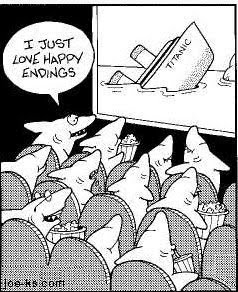
Happy Endings Redux (And Good News)

By John Gilstrap
http://www.johngilstrap.com/

First the news flash: I am thrilled to report that I have just re-upped with Kensington/Pinnacle for two more Jonathan Grave thrillers. That means he’ll be guaranteed at least four books to make his mark on the literary world. I can feel the bad guys in my head scurrying for cover already. Best of all, I will continue to own the lead spot for July (Hostage Zero this year, and the new books in succeeding years), which means I get to launch each book during ThrillerFest. I’m a very happy author right now.

Shifting away from shameless self-promotion, there’s a blessing and a curse associated with following Michelle Gagnon in the Killzone batting order. The blessing, of course, is that she’s very good at what she does, fielding thought-provoking questions and opinions. The flip side–the curse–is that her posts frequently spark something in my psyche that prompts me to sideline the post I was going to write to expand upon the idea she introduced.

So let’s talk some more about happy endings. But first let’s wrestle with semantics. The phrase, “happy endings”, is itself trite and cliched. It brings to mind blue birds and insipid hugs. I like “satisfying ending” a little better, but what works best for me is “respectful ending.”

Authors must respect their readers.

I make a silent pact with my readers to deliver a certain kind of ride. They can expect honest, dedicated good guys, bad guys whose badness is well-motivated, and a screaming pace from beginning to end. Where violence is necessary, the violence will be graphic, because I believe that violence must have consequence, both for the characters involved and for the reader who’s coming along on their adventure. If I do my job well, everybody’s going to be a little out of breath at the end.

I think it would be unforgiveable if, after painstakingly developing this fragile trusting relationship with my readers, I let the good guys fail and the bad guys win. I’m not above making victory hurt, but I can’t imagine creating a book-length story where the good guys didn’t prevail.

When I think of the stories that have most disappointed me over the years, the common denominator is the writers’ lack of respect for their audiences. Remember Hannibal? Terrible. Clarice Starling goes to the dark side. WTF?

Or what about the movie Pay It Forward? Forgive the spoiler, but they knife a little boy to death so that the producers can have the excrutiatingly cloying river of candles marching in his memory. Urgh.

Y’all probably have a thousand other examples where you’ve felt cheated or just plain pissed off by an ending.

In my book, if a good guy is going to die, his death had better by God be for a cause more noble than startling the audience. Do we really want to see Jonathan Grave or Winter Massey or Jack Reacher get dropped by a stray bullet just to make a point that life is capricious? That kind of thing happens in real life, but fictional realities have no allegiance to the harshness of the real world. I believe that people who read about bigger-than-life characters do so for the vicarious victory that they can reasonably count on.

Not necessarily a “happy” ending, but most definitely a respectful one.

That said, let’s tie this into the short story discussion we’ve been having here. In a short story, all bets are off, as far as I’m concerned. On that small canvas, I get to flex my irony muscle. My pact with my regular readers is null and void for the short story. I’m just sayin’.

Are Happy Endings Necessary?


by Michelle Gagnon

I’m currently guest blogging over at Criminal Minds. It’s a very cool site, sort of a virtual panel where every day for a week I answer a different question posed by the blog group. The only downside is that I’m a bit blogged out. I know, we just had a two week hiatus. My blogging muscle should be well-rested, but between surviving the holidays, trying to finish book four in my series, and fighting off a nasty cold and laryngitis, I’m tapped out. Which is my overly-long explanation for why today’s Kill Zone post will be on the short side. So if you just can’t get enough of my rambling ruminations, and you want to find out more about my illustrious career as a Russian supper club performer, mosey on over to Criminal Minds.

As I mentioned, I’ve been battling illness all week. I rarely fall sick, and this was one of those colds that completely derails you for five days. Three of those days I was too knocked out to read, which meant I was forced to subject myself to a string of truly awful films (DO NOT, under ANY circumstances, rent “Land of the Lost.”)

But I did manage to read a thriller on day four. I loved the book, but one thing struck me, especially as I’m currently retooling the end of my next book:

Does a thriller need to have a happy ending?

Mind you, I’m not panning happy endings. It’s just that at the end of the great ride this book provided, everything was wrapped up so patly it struck me as false. None of the good guys had suffered so much as a serious injury. The bad guys all died horribly. There was even a marriage proposal. All that was missing were bluebirds flying down from the trees a la Snow White.

And to be honest, I felt a little let down. Not that I wanted something terrible to happen to any of the characters, but I wondered: must all thrillers end like this? Because as I started to review the list of bestsellers over the past few years, I couldn’t recall many with unhappy conclusions. (Although I’d love to have someone jog my memory).

Crime fiction films seem less leery of this: I’m not entirely certain that “The Departed” qualifies as a thriller, but it certainly doesn’t have a happy ending. Same with “Seven” and “The Usual Suspects,” two of my personal all-time favorite films.

I understand that there is a level of comfort in having everything tied up neatly at the conclusion of a book, and that happy endings are inherently satisfying.

But notable exceptions like “Sharp Objects” and “In the Woods” really stuck with me after I finished them, since they dared to end on dark and/or ambiguous notes. Neither of those is truly a thriller, however.

So what do you think? Does a thriller need to end on a high note to be satisfying?

It’s all an act

By Joe Moore

Over at the Absolute Write forum, someone recently posted a request for advice on where to end the middle act of his novel. It was interesting to read the reactions, many of which expressed no idea that most novels are built on a 3-act structure. Now let me state right from the beginning that there are exceptions to every rule. And when it comes to writing fiction, the only rule is that there are no rules. But in general, most commercial fiction is usually based on a beginning, theater middle and end structure. This comes from traditional stage drama, but unlike the theater, there’s no curtain dropping at the end of Act 1 and going up at the beginning of Act 2. Even though it’s not as obvious as when you attend a play at your local community theater, if you analyze most genre fiction you’ll find (or at least feel) where the three acts begin and end.

So let’s take a look at the basic 3-act structure of a novel. In most cases, the beginning (Act 1), middle (Act 2) and ending (Act 3) are separated, not by points in time, but by major plotting points.

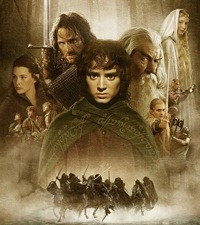
Act 1. The beginning is normally where the author introduces the reader to the setting/environment, the characters, their goals (wants and needs), and the conflict that impacts the protagonist’s life and launches the story. This impact knocks him or her from an ordinary situation into an extraordinary one. The protagonist might start out content with life, perhaps gliding along and comfortable in his or her niche. Then something happens to throw the protagonist out of the groove—an obstacle or roadblock that forces him or her to take some kind of action outside their comfort zone.  It’s often a shock to their routine or a threat to their safety or someone close to them. Perhaps it even requires survival instincts to kick in. A path is created that will eventually bring the protagonist and antagonist into a final climactic scene. In Act 1, the “story lotrquestion” is usually established such as, “Will Frodo Baggins destroy the Ring before the Dark Lord takes over the Shire and all of Middle Earth?” In Lord Of The Rings, by the end of Act 1, Frodo has decided to set out, although reluctantly, and pursue his quest to save his homeland and his people. As he takes his first step on his quest, the curtain descends on Act 1.

Act 2. The middle of the story often deals with a series of conflicts and obstacles that the protagonist must overcome in order to gain enough confidence to meet the final scene head-on. Arguably, the middle or “muddle” is the most challenging act to write, for the reader’s interest must be sustained while propelling the protagonist toward a goal that he or she and the reader desire. The element that fuels Act 2 is conflict, and each obstacle or test should build in severity from the previous one thus constantly raising the stakes and proceeding at a steady pace toward the end. The object here is to keep the reader reading. Remember too, that conflict does not always mean physical. It can be just as taxing and demanding when it’s emotional or spiritual. Act 2 also contains the lowest point in the story, emotionally or physically, for the protagonist. It usually occurs just before the end of Act 2 and the final Climax. It is the “darkest moment” in which all hope seems lost and the protagonist must summon up the final ounce of courage against all odds to resolve the story question. The resolution of the story question should happen at the Climax, and the curtain descends at the end of Act 2.

Act 3. The end is what some writers refer to as the “roundup”. This is where all loose ends, subplots, and lingering questions are answered. The reader should never finish the last page with any questions unanswered. The roundup is usually the final chapter, and because it’s hard to keep the reader’s attention after the climax, Act 3 should be short and to the point. Answer all the questions and proceed to the exits. There’s nothing left to see.

As readers, are you aware of the 3-Act structure in genre fiction? And as writers, do you think of it as you write, or is it more instinctive and subconscious? Have you ever written or read a book that was not based on the 3-Act form?

A week off the cyber grid

If you’re a regular reader of this blog, you may have noticed that my post was AWOL last week. The reason: I was vacationing in a tiny hamlet in northern Vermont, where for several days we were unable to access the satellite connection for Internet. I reacted badly to the whole thing, and the experience has made me realize I’ve gotten more than slightly addicted to cyberspace. When I couldn’t log on for almost a week, I went through all the usual stages of withdrawal: anger, denial, anxiety, depression, and finally, acceptance. After that, I felt pretty damn good. At least I didn’t have to spend hours per day checking email and social media.

My three weeks on the east coast–during an epic arctic blast–have also confirmed that I am now officially a Californian. Despite this week’s 6.5 earthquake, the state is a pretty glorious place to live. I didn’t always feel this way. I grew up on the east coast, and I remember making fun of California as a youth. When I applied to colleges, I made snide, immature comments about west coast schools such as: Seriously, how could anyone study underneath a palm tree?

But now it’s like my blood has thinned, or perhaps my endurance level has diminished. I love the California sun, the ocean, the sense of space, the lack of serious outerwear. I love the way California men are puzzled by bow ties. During my near-month back east, the only times I’ve willingly ventured outside has been to get to a heated car that already has its door open. I’ve also been complaining a lot. Gad, I must be a real pain in the arse for my relatives to put up with. After all, they’re trapped here.

If your spirit belongs to a region or a place, which place is that? Is it where you live now, or someplace you remember from your youth? Does your writing keep you returning there, again and again?

Or are you a starry-eyed dreamer who knows that someday, someday, you’ll move to your true geographic home?

A New Challenge

by Clare Langley-Hawthorne

I was envious when I read John’s post on Saturday about how easy he found writing a short story because I had just the opposite experience – I found it incredibly challenging. My main difficulty? Stopping myself from turning it into chapter one of a new novel.

I view a short story as having a single transformative story arc – one told in the most concise and most powerful terms possible. All fine and dandy in theory but no sooner do I start than I fall prey to an overabundance of backstory and plot complications – and these little buggers have an annoying habit of multiplying, so by the time I reach around 4,000 words I realize what I really have is, you guessed it, chapter one of a new novel. Characters have already started taking control, offering me a range of complexities that I can’t help but want to explore, the setting demands detailed description which I cannot resist providing and the story arc takes on a much grander scale that will inevitably fail as a short story.

With this particular short story (which I’m hoping will pass muster and be published in the Kill Zone collection you’ll be hearing much more about) this dilemma created both opportunities as well as challenges. I had to rise to the challenge of paring everything down so it would succeed as a short story and I realized I had the seeds for a new series set in Australia which was quite exciting (oddly enough I’ve never written anything actually set in the land I grew up in).

My first step to transforming my piece into a ‘proper’ short story was to think about structure. I focused on the four main elements I thought I needed:
  1. Establishment of setting
  2. A trigger for action
  3. A build up of suspense and conflict
  4. A critical choice
  5. Resolution

When I found I basically had all these elements (albeit muddied by too much dialogue, description and backstory!) I knew my main focus had to be on paring everything down to its essential elements. This included character, setting, as well as plot and once I started this process I also found that I could focus on what the story was really all about.

Last Friday I took my short story to my writing group for their critique and they helped me identify areas of improvement and further ‘pruning’ – hopefully I’m now close to the final product and, more importantly, I feel like I’ve grappled with a new challenge that has improved me as a writer.

I can’t say I like the short story as a medium – I am a novelist at heart – but I do appreciate the intensity and power it can bring. I may not have enjoyed the process but as compensation I do have a new (male) protagonist that intrigues me. So who knows, this particular challenge may spur me on to develop a whole new series of books!

My question for you all is what was the last challenge you tackled head-on in terms of your writing (or anything else for that matter). Did it yield any surprising results or have a silver lining? I confess for me, I didn’t love the process but in the end I think it’s made me a better writer (that or just a more delusional one!).

I Wish

by James Scott Bell

The New Year’s kickoff (other than the Rose Bowl) is usually a time of resolutions, goals, wishes. I’ve had a few of the latter. For example:

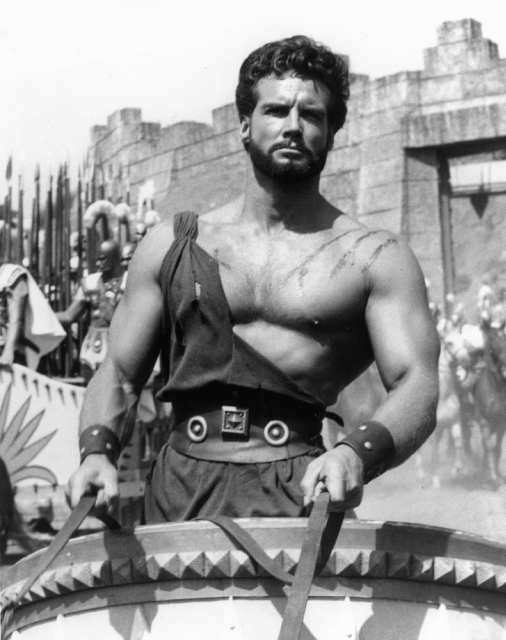
I wish I had the body of Steve Reeves.

I wish I could have played center field for the Dodgers.

I wish I had played quarterback for the USC Trojans, won the Heisman, and played my whole NFL career for the Rams.

I wish I could have seen Laurette Taylor on Broadway.

I wish I could sing like Ray Charles. I wish I could tickle the ivories like Martha Davis.

I wish I could have seen Jim Thorpe play football, Babe Ruth play baseball, and Beethoven play the piano.

I wish I could have had dinner with Shakespeare and Winston Churchill at the same time.

I wish I could write as effortlessly as Stephen King seems to.

But after wishing those things, I remind myself that I’ve got my own package to work with. The cards I was dealt. My job is to till the soil, plumb the depths, hose the driveway, paint the ceiling and write the books that come out of my particular package. I have to keep improving what I have, taking it as far as I can, leaving what is out of my hands to the forces that be.

As far as 2010 goes, I wish to make some plans. The overarching plan is to make this year the most productive of my writing life. Not necessarily in quantity–though I do have several projects in mind–but quality. This will be my twenty-second year as a serious writer, my fifteenth as a published novelist. I know a lot more now than when I began. If I don’t use this knowledge, and leverage it, then I’m wasting my experience.

So here’s to 2010 (for many of you, seeing 2009 in the rear view mirror is not a bad thing), and may it be productive for you in the best way possible.

What are some of the things you wished for at one time in your life?

What are your plans for the new year?

BACK FROM MY BREAK, Y’ALL

By John Ramsey Miller

The truth is I forgot all about New Years, and it was around five PM on December 31 when I was returning from a trip to see close friends in Apex, NC that I remembered. My mind is rapidly turning to liquid soap with an A1-sauce center. We kept two of our grandchildren New Years Eve and were in bed asleep by nine o’clock. Am I getting old? God I hope so, because if I’m young, its all over for humanity.

It was nice taking a break from the blog. I turned in a short story, which readers will be able to purchase as a download along with a short story by each of the other bloggers here. Until recently I didn’t think of myself as a short story writer, but a short story is no harder to write than a good chapter in a novel. Truthfully I was tempted to publish the opening chapter of a book I’m writing now. It worked well as a short story and that got me to thinking that perhaps most opening chapters in novels would make stand-alone stories. I’m reading a book right now by a first-time novelist that will be published in a few months and the first chapter would make a great short story. It’s the assassination of Tsar Nicholas and his family from the Tsar’s POV.

I have truly loved all of the Arkady Renko novels by Martin Cruz Smith: GORKY PARK, RED SQUARE, HAVANA BAY, STALIN’S GHOST, and WOLVES EAT DOGS. I truly love Russia in the Winter, although I never intend to be there then. In fact I do not ever intend to visit the Soviet Union ever. Not my sort of place even though it’s a successful socialistic model of Utopia.

God, I love a good story, long or short. My favorite book of short stories (of late) is Laura Lippman’s HARDLY KNEW HER. What a brilliant collection of stories. THE CRACK COCAINE DIET stunned me and I went rollicking through the book and couldn’t set it down. I don’t read a lot of short stories, but when I hit a great collection like Vonnegut’s classic, WELCOME TO THE MONKEY HOUSE, Stephen King’s NIGHT SHIFT… It’s great. Feel free to make recommendations for your favorite great short story collections here under comments.

The Curse of Hubris

By John Gilstrap
www.johngilstrap.com

I received this in an email the other day from a writer who is frustrated in his efforts to find an agent:

“. . . I couldn’t get anything other than a form rejection letter, if that. My perfectly-spelled, perfectly-punctuated and personalized cover letters would earn me a form rejection from a flunky I’d never even written to. . . I know I’m not at fault here. My cover letter’s been tweaked (I even read your essay on JohnGilstrap.com to make sure I covered all my bases), I’ve written four different synopses for [redacted] and I know the fault’s not with the writing.” [Hotlink added.]

I feel his angst when I read this. The email vibrates with frustration. It also showcases astonishing hubris.

He spells and punctuates perfectly and is clearly not at fault when his work does not resonate with a prospective agent. Hmm. I’ve been in this publishing game for going on 15 years and I can’t think of a thing I have done in my work or in my life that I executed perfectly (trophy wife and perfect kid excepted). Perhaps his claims are true–I have no frame of reference–but even if they were . . . well, they couldn’t be, could they?

Writing is a two-way communication that requires an author to put words on the page and then a reader to appreciate them. I’m not even sure that spelling and punctuation count all that much. Think about it: while a chemical dictionary may be perfectly spelled and punctuated, it will never become a runaway bestseller in the trade fiction market.

If a query or manuscript receive consistent rejection, the fault must, by definition, lie with the author, mustn’t it? Is it reasonable to blame a reader for not liking the book he’s reading? It doesn’t mean that the author is untalented–I understand that Herman Melville was a terrific writer, but you’d never prove it by me–it just means that the writing, when judged by its own merits, didn’t seal the deal. It could be plot or characterization or voice, or any one of a thousand other causes, but the only solid, readily identifyable data point is that the audience rejected the offer. Absorb it. Deal with it.

But please don’t claim perfection.

This curse of hubris seems to be gaining wide acceptance on Internet boards where like-minded, frustrated writers-to-be rally around the fiction that the publishing establishment is united in excluding newcomers. They’re not being rejected because their work is substandard or unmarketable, you see. It’s the conspiracy. Given this widely-accepted “fact”, wouldn’t you know that there is an ample supply of publishers and editors and fee-agents who are more than willing to help introduce these people to the wild and wooly world of “alternative” publishing?

I guess for some people, anything is better than facing the truth. (And yes, I understand that there are a number of circumstances where self-publishing is the best way to go for certain nonfiction. Vanity publishing, not so much.)

Receiving criticism is hard. Rejection is even harder. As the market for novels continues to shrink, I’m dismayed that the ranks of published authors will shrink along with them. I just pray that I continue to make the cut. If one day I don’t, though, it will ultimately be my fault for not having provided the right story to the right marketplace at the right time.

The instant that anyone in any business begins to fancy himself a victim of his customer base, it’s time to change professions.

What do y’all think? Everyone knows that the industry and the marketplace are changing at a dizzying rate, but is it ever the reader’s fault when a writer does not “succeed”? (Succeed is in quotation marks because in a creative field, success is a word that defies definition.)

The Veil of Anonymity

by Michelle Gagnon

Happy New Year, everyone! Did you miss us?
This week Clare and Joe have already covered New Year’s resolutions and the looking forward/looking back aspect of the change in decades. So I’m going to leap into a different issue…

In December it was announced that Kirkus Reviews was falling victim to the same fate as many other review sources, and that parent company Nielsen was shutting them down (although today there were claims that it might be resurrected. Time will tell).

The closing of Kirkus was met with both cheers and dismay—dismay because the number of book review sources (outside of proliferating blogs) continues to diminish. And cheers because Kirkus reviews tended to be notoriously snarky. (One famous example: on Dave Eggers’ bestselling memoir, “A Heartbreaking Work of Staggering Genius,” Kirkus proclaimed: “It isn’t.”)


In the aftermath of the announcement of their demise, many writers seized the opportunity to gloat online, posting their worst Kirkus excerpts in chatrooms and on social networking sites. The response was at times as harsh as the worst Kirkus reviews. Esther Newberg, an executive vice president at International Creative Management, went so far as to say that she was, “Sorry people were losing their jobs . . . but it’s never been a publication worth anything. . . . . Good riddance.”


But for me, the worst thing about Kirkus was that their reviewers had the latitude to be as nasty as possible precisely because they were allowed to hide behind the veil of anonymity.

Now, Publishers Weekly stands as one of the only remaining publishers of anonymous reviews. And today I’m going to argue that allowing PW reviewers to retain that anonymity is downright wrong.


Before the advent of Amazon.com, Publishers Weekly was mainly a trade magazine. A starred review in the publication was something that might propel library orders, and could potentially spark more attention among store buyers. However, by and large the only exposure the public had to those reviews was the positive book cover excerpts.


Not anymore.


Now, the Publishers Weekly review is usually the first- and sometimes only- review posted on your book’s Amazon.com page. It’s also heavily featured by nearly every other online site, from Barnes & Noble to Powells. And that review sits there in perpetuity. It’s the first thing a reader sees when they’re considering purchasing your book online. As the industry continues to shift toward eBook consumption, those reviews will only gain prevalence.


Shouldn’t something that has more of an impact than ever before at the very least contain some attribution? Doesn’t an author who gets slammed by a PW review have the right to know who’s slamming him? Perhaps he could take comfort in the fact that the reviewer was clearly a cozy lover, and he wrote a horror novel. Or perhaps it’s someone she cut in line in front of at a convention. Or accidentally stabbed, and this is the reviewer’s means of extracting payback (mind you, I’m not saying any of that has happened. But until we see some names, it’s certainly within the realm of possibility).


The downside of the internet is that it’s provided a forum for people to hide behind anonymity when writing things that they would probably never say in person. We see it here sometimes, the most vitriolic comments tend to be posted anonymously.(This is a tremendous pet peeve of mine. Everyone has a right to their opinion, and because we don’t believe in censorship here at TKZ, we agreed long ago to let every comment stand. But it really irks me when someone lashes out, yet doesn’t have enough courage in their convictions to claim them.)


I believe that allowing one of the few remaining seasoned review sources to participate in that trend damages everyone. If a reviewer really hated a book, let them go on the record saying so. Those reviews are too important now for the veil of anonymity to persist.