Approaching Agents at Conferences

by Clare Langley-Hawthorne


Writers (and fan) conferences provide unpublished writers with a great opportunity to approach and talk about their work with agents. Recently there have been a few email threads on MWA as well as Sisters in Crime about how writers should go about approaching the whole ‘agents at conferences’ thing, and I thought I’d lay down what I think are some of the basic ground rules.

1. You need to do your homework.

Obvious, I know…but all too often this doesn’t get done. I’ve been at conferences where writers have pitched an idea for a western/science fiction cross-over novel to an agent that only moments before announced that they do not represent either of those genres. It is a waste of everyone’s time and energy to pitch your work to an agent who is clearly not interested in representing the kind of work you do. Almost every agent has a website or an entry in publishers’ marketplace so do yourself a favor – check before you pitch. Don’t rock up at a conference and pitch to every agent you meet – target your approach – check the attendance lists, research which agents represent the kind of writing you do (and the writers you admire) and make sure you know who you should pitch to (and by extension who you should not).

2. Your manuscript must be perfect (and finished).

I remember chatting to a writer at a SinC meeting once, and she told me she had met an agent at a conference who had requested to see her work – only problem was, it wasn’t ready to be sent out. The writer asked me whether I thought it would be okay for her to send the manuscript out now (some 12 months later)…My answer – good luck with that! The agent probably has no idea who you are by now. The moral of this story is obvious – you need to be ready to send the complete manuscript before you pitch your work which also leads to ground rule number three…

3. Send exactly what the agent requests (no more, no less).

If an agent at a conference tells you to send a formal query letter abide by that request, if they ask for the first 5o pages send just the first 50 pages (don’t send them your entire manuscript). Do what they ask you to do. I’m sure it frustrates the heck out of agents to have writers send them material they did not ask to see.

4. Be professional at all times.

A professional pitch at a conference is totally acceptable, shoving you manuscript under a bathroom stall is not. Make sure you appear confident (and sane) which means no stalking the agent…They are (remember) just human beings. Most agents I’ve met are approachable and kind. They will tell you if they are interested and will let you down gently if they are not – so just be yourself and act like a professional (you want to be treated like one, after all).

5. Have your pitch ready. Memorize it. Practice it. Perfect it.

You need to be able to tell an agent with confidence exactly what your manuscript is about in under 3 minutes (no agent is going to listen for half an hour as you outline every chapter in the book!). I’m more than happy to listen to someone’s pitch and give feedback and I’m sure lots of other writers are too – the more feedback and practice you get, the more confident you’ll be when you finally get the chance to speak to the agent of your dreams. As I rough guide I think you should have a high level 1-2 minute concept (the elevator pitch) and then have a more detailed synopsis you can tell, should the agent ask you for more details. I also find a one-page written synopsis is handy – because you can hand this to an agent if they express an interest – just be sure to have your name and email address on this just in case the agent wants to contact you about it (hey, you can dream can’t you!).

Many conferences have specific sessions in which writers get to pitch their work to agents and editors. At the first writers’ conference I ever attended I participated in a ‘speed dating for agents’ session and, although horrific and stressful, it gave me experience pitching my manuscript and interacting with agents about my work. Even when there aren’t such sessions available, however, conferences provide a great opportunity for writers looking for an agent. As these ground rules show all you need to be is prepared.

So what about you all – do you have any other ‘ground rules’ or advice on approaching agents at conferences?
Do Not Go Gentle Onto That Good Page

James Scott Bell

Do not go gentle into that good night . . .Rage, rage against the dying of the light. – Dylan Thomas

Brett Favre, one of the best quarterbacks ever to play the game of football, was supposed to be over-the-hill at 40. But he recently finished what is probably his finest season and almost got the Minnesota Vikings to the Super Bowl. In the NFC championship game against the New Orleans Saints, he took a beating. He was on the turf constantly, sometimes under 380 pounds of beef. In the second half he got his left ankle twisted, limped off, got re-taped, and came back into the game. But for a number of turnovers by his teammates and one ill-timed interception, the Vikes would have won. It was an inspiring performance, adding to his legend.

Robert B. Parker, creator of Spenser and one of the most prolific authors of our time, died last month at the age of 77. He was supposed to be over-the-hill, too. Some critics thought he was, but most readers did not. Parker was turning out books to the very end, and not just in his Spenser series. He had other series going, including Jesse Stone, which Tom Selleck has brought to TV. He also wrote stand alones and Westerns.

He was reportedly about 40 pages into a new Spenser novel when he died at his desk of a heart attack.

For a writer, baby, that’s the way to go. I only hope I’ve just typed the last page.

Regardless, Favre and Parker are two guys who refused to go gentle into that good night. To write well, there has to be a part of you that is determined to rage, rage against the dying of the light––and against rejection, criticism and the slough of despond.

You’ve got to have some attitude.

Now, this attitude is not the same as arrogance. Arrogance shouts and gets tiresome pretty fast. Attitude is just as ornery, but it’s quiet. It does its work and keeps on doing it. It wants to prove itself on the page, not in the mouth. And it refuses to give up.

A knock on Parker in the latter phase of his career was that he wrote too much, sacrificing quality. Well, that’s between him and his readers. He wrote, they bought, they enjoyed, maybe some got frustrated. But the relationship was lasting, and the man was doing what he loved.

If you love to write, you’ll find a way to do it. No one can promise how that’ll turn out. No one can guarantee you a publishing contract. But you’ll never get close if you don’t rage a little, and turn that into determination to keep writing, keep going, keep producing the words.

My grandfather and my mom both wanted to be writers. So they wrote. My grandfather wrote historical fiction and ended up self-publishing some of it. It’s really not bad at all, but it’s very niche stuff. Yet I remember him being proud of it, and it pleased the family.

My mom wrote radio scripts while she was in college in WWII. I have a whole bunch of them. Quite good. She worked on a small local newspaper when I was a kid. I remember, when I was twelve or so, finding a short story she wrote, a sci-fi kind of thing, that had a cool twist ending. She never got it published but it influenced at least one young writer––me.

So do not go gentle onto that good page. At the very least you’ll know you’re alive, and you won’t walk around (as Murray says in A Thousand Clowns) with that wide-eyed look some people put on their faces so no one will know their head’s asleep.

Rage a little, throw the heat, write.

How do you actually feel when you’re writing? What’s going on in your head? And how long do you expect to be writing?

Who Am I?


by Carla Buckley

Thank you to The Kill Zone authors for letting me sidle in here today, and thanks especially to John Ramsey Miller for hauling out the soapbox and giving up his day to me, and for the many ways he’s championed me these past months. One of the things I’ve been delighted to learn on my path to publication is that although thriller writers create the stuff of nightmares, they themselves are the kindest, most generous people around. Maybe it’s because they get all the ugly stuff down on paper and all that’s left is the good stuff.

My debut novel is about to be published. After writing full-time for fifteen years, working hard at my craft and producing seven novels (four of which were agented), I would have thought I knew a thing or two about the publishing business. But the only thing I’ve learned as my publication date approaches is how very little I know. Take for example, the concept of genre.

When I submitted The Things That Keep Us Here to my agent, she cautioned me. “I’m not quite sure where it fits. It’s part family drama, part thriller, part dystopian novel.” “Oh,” I said, brightly. “That’s not a problem, is it?”

I laugh at my naïve self. I truly do.

In order for an agent to pitch a project, she has to know what she’s selling so she can find the right editor. In order for an editor to drum up in-house enthusiasm, she has to know how to describe to sales, marketing, and publicity, what it is they’re going to be supporting. In order for those various departments to reach out to their various markets, they have to know what they’re pushing. In order for bookstores to buy in, they have to know where they’d shelve the book, so that in turn, the right readership can find it. Then we can all live happily ever after.

The thing is, I didn’t really know what I’d written.

I’m a huge mystery reader and so I started off by writing traditional mysteries featuring, in turn, an art investigator, a female firefighter (the research for that was fun), and a female implosion expert. It wasn’t until I became consumed by media reports that mankind was due for another pandemic on the scale of the 1918 Great Influenza Pandemic, that I threw mysteries aside. I wrote instead about a family caught up in a pandemic and it unraveled directly from my heart. Try explaining that to your agent.

“Well,” I said. “You sure it isn’t a thriller?”

“Not quite,” she said.

It wasn’t until it landed at Bantam Dell that my novel, whatever it was, found a home. My editor, who specializes in thrillers and mysteries, agreed: “This isn’t a thriller. It’s cross-genre, both family drama and thriller. It’s new.”

The last thing I wanted to do was sound stupid to my editor so I said, “Oh.” As if I understood exactly what she was saying. Was it because most of my action takes place within one family’s home, instead of sprawling across the world, taking the reader from the White House to the Kremlin to German scientists feverishly working on a cure? By telling the story from one family’s perspective, and therefore playing out the drama of a pandemic threat in every reader’s own living room, I thought it would make the ride that more thrilling. Don’t other thriller writers do the same thing–focus their story so intimately on the characters involved that you’re helplessly caught up in the story? Maybe it’s because I give equal weight to the thriller part and to the family part. Maybe that’s what makes me a hybrid.

I’m not the only author straddling two genres. As a member of the ITW Debut Author Program, I’ve gotten to know some other debut authors who are facing the same quandary: releasing a book that doesn’t quite fit onto one genre shelf. How their publishers handle finding a place for them in the book world varies, with some books being pushed closer to one category than another. It’s a bit nerve-wracking to watch cover art and titles adjust to reflect a dual personality, and it’s a learning process for everyone involved. My own novel was submitted under the title, Flu Season, and went through numerous incarnations before settling into The Things That Keep Us Here.

I’ve come to think that cross-genre is yet one more demand on the current publishing model, a world that is learning to adjust to ebooks, nontraditional publishing modes, social networking, and so on. As the world moves to a faster rhythm, how do publishers cut through the noise to position their products, and doesn’t having an unusual product make that process more difficult? Aren’t cross-genre books a bigger risk for authors and publishers and booksellers, alike?

An unpublished writer contacted me recently. She’s in the process of submitting a mystery to agents, and while waiting to hear back, has ideas for various other projects that intrigued her, some of which are hard to categorize: middle school vampire story verging on YA, women’s fiction with an element of horror.

“Do you have to stick to one genre?” she asked me. “Can’t I just mix it all up?”

What do you think I should tell her?

My Fumble Recovery

By John Gilstrap
www.johngilstrap.com

A couple of months ago, I ran into a longtime friend I hadn’t seen in years, and he asked me why I’d stopped writing. The last book of mine that he’d read was Scott Free, which came out in 2003. When I told him that I’d written two books since then, he expressed shock and asked why I hadn’t told him.

In the pantheon of really good questions, that one shoots right to the top. I thought I had told him. I mean, I’m on Facebook, right? And I tweet and I’ve got a website. I spent a lot of money on publicity and advertising for No Mercy. How could he not know? Even as I type those words, I realize how impossibly naïve I sound.

When At All Costs was published in 1998, my wife and I developed a comprehensive mailing list of 1,500 people. This included everyone from family to old high school classmates I hadn’t spoken to in years. It even included my wife’s old classmates. We entered all of the data into a mailing list program, and we mailed a ton of postcards announcing the birth of the book. Hands down, At All Costs was my bestselling book.

Running into this longtime buddy was my wake-up call to how thoroughly my publicity efforts have deteriorated. When I really looked, it’s obvious where I dropped the ball.

In retrospect, I made a couple of critical errors. First, it was a mistake to use a mailing list program instead of a simple Excel spreadsheet. After a series of computer upgrades, the mailing list became unreadable. We failed to collect email addresses at all, but given that it was 1998 and email was not the ubiquitous presence that it is today, I cut myself a break there. Finally, we had no way to keep track of people as they moved. If you don’t actively farm your mailing list, it becomes useless with astonishing speed.

My biggest mistake along these lines came in 2004 with the publication of Six Minutes to Freedom, my nonfiction collaboration on the rescue of Kurt Muse from a Panamanian prison. I talked myself into ceding the lion’s share of promotion to Kurt himself, figuring that people would rather hear from the coauthor who actually lived the story than the guy who merely put it in writing. I neglected to consider that my fans are my fans, not Kurt’s.

As a practical matter, then, until No Mercy was released last summer, fans of my work thought I’d disappeared for six years. And publishing years are like dog years. Never again.

A week ago, I sent my first email newsletter. Even though I’ve lost most of my old snail mail list, I’ve captured lots and lots of email addresses over the years, and I’m letting everybody know what’s going on in my writing life. I haven’t yet decided how often the newsletter will come out, but I’m pledging two things: 1) that I won’t release one unless I have something to say; and 2) it will never be longer than a single page.

I’ve been resistant to such emails in the past primarily because of the hassle of keeping the mailing list current. Who needs the agony of removing people who unsubscribe, or culling the addresses that are no longer valid? Even adding individual subscribers is ultimately time consuming.

Well, wouldn’t you know? There are websites that do all of that for you. I found one that is extraordinarily affordable. Of the 1,200 addresses in my initial email list, 200 turned out to be bad, and the program eliminated them. Twenty or so have asked to be removed from the list, and the program handled that, too. Thirty-five people have clicked the link to subscribe, which means that they’ve either visited my website or clicked the newsletter link to see a sample and subscribe.

Best of all, I’ve received emails from several dozen people who were unaware that I was still writing books. Of course, that didn’t touch the number of people who wrote to tell me about the typo in the first news item. Hey, at least they’re reading.

I’m sure there are a number of sites that do this sort of thing, but I’ll be happy to share this particular site with anyone who drops me an email.

So what about you? How do you keep in touch with your long-time fans? Do you like author newsletters, or are they annoying pains in the hindquarters? (I can go either way on that one.) Let us hear from you.

My Officemate is a Deity


by Michelle Gagnon

File this under my personal favorite category: truth is stranger than fiction.

I’m lucky to be part of a writing coop called the Sanchez Grotto. A former crack den has been subdivided into small offices, each rented by a different writer. I’m in the “Secret Garden room” in the back, in my personal opinion the best space because it’s right off the kitchen (easy access to food) and has a view of the backyard.

We’re an unusual mix, everything from a travel writer to a screenwriter to an ER psychiatrist. Recently, a member of our motley crew vaulted from relative obscurity to the big time (in Bull Durham terms, he went to “The Show.”)

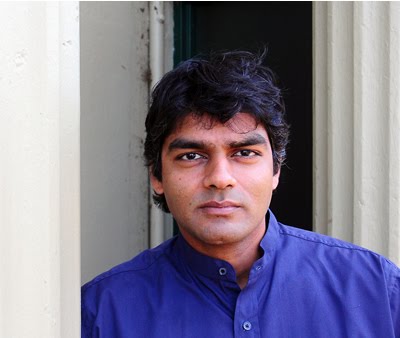
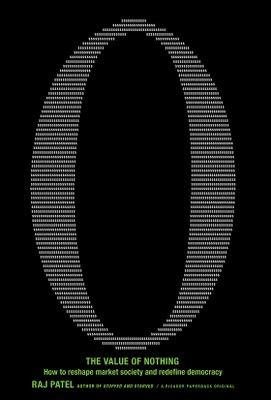
Raj Patel is a brilliant economist and social activist. His latest nonfiction book, THE VALUE OF NOTHING, is a look at how free market economies have at times done more harm than good. The week of the book’s release, he was interviewed by Stephen Colbert on The Colbert Report. It’s a great interview, which kicks off with Colbert digging his interview questions out of the slot in his desk where they’d fallen with his tongue. See it here for a good laugh.

Raj’s book subsequently made it to the New York Times bestsellers list, and everything was going along nicely.That’s when things started to get weird.

He began receiving emails- first a few a day, then hundreds, then a massive flood. Not from Nigerian princes, either- these were from folks asking if he was indeed the Maitreya, and if so how he planned to save the world.

Apparently there’s a New Age guru called Benjamin Creme who has assigned himself the task of alerting the world when the “Maitreya” shows up. For those of you (like me) who have never heard of this before, the Maitreya is supposed to be a great teacher who unites all the religions- sort of a Messiah for everyone.

As it happens, at a public lecture at Friends House, Euston Road, London, on 14 January 2010, Benjamin Creme announced that, “Maitreya, the World Teacher, has given His first interview on American television. Millions have heard Him speak both on TV and the internet. His open mission has begun.”

Guess who appeared on television on January 12th?

So Creme’s followers, not dissuaded by the fact that he’s been wrong before, scoured the airwaves and stumbled across Raj’s interview. What really convinced them was that not only is he a social activist, he’s also of Indian descent, was born in 1972, and has a slight stammer. All of which match the Maitreya checklist.

So believers started flying in to attend his events, some spending thousands on plane tickets.

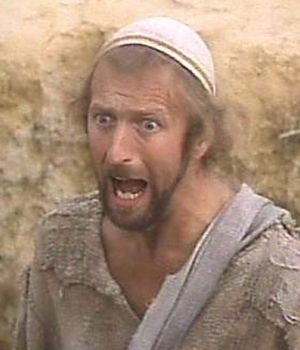
Raj, understandably perplexed by being thrust into a surreal, “Life of Brian” existence, has vehemently denied all attempts to deify him.

The problem is, apparently if the Maitreya appears, that’s exactly what he’ll do- deny that he is in fact the savior. So the more Raj insists that he’s not what they’re looking for, the more followers believe. Their forums have gone ballistic. They’ve spliced his Amazon author interview together with a Maitreya montage to show the parallels in their philosophies.

Now, I suspect we’ve all known writers who thought they were God. But do we know any who were mistaken for one?

Our other office mate Scott James wrote a piece on this for the NY Times, if you’re curious to hear more details click here.

Just think- if I made this up, chances are no one would believe it.

The Right Environment to Write

By Joe Moore

I had a discussion at a recent luncheon with a couple of my fellow authors about our individual writing environments and where we prefer to work. One likes to take her laptop to the local coffee shop while another prefers the library. A third writes at home like me. It seems to vary as much as our stories do.

I work from my home office—a commute of 20 or so paces from the kitchen counter where I’ve had coffee and read the paper. It’s an environment in which I feel comfortable and have yet to tire of. Here’s a photo:

joe-moore-office

My home office has blackout curtains that I can close if I want to set a mood or maintain a constant light level throughout the day. I’m a neat freak so my desk is usually well organized. I’m very impatient and don’t like to wait for programs to load or items to process, so I use a Dell super gaming computer with Intel Quad Core processing. Although I don’t play games, I find that it makes things happen in a blink of an eye.

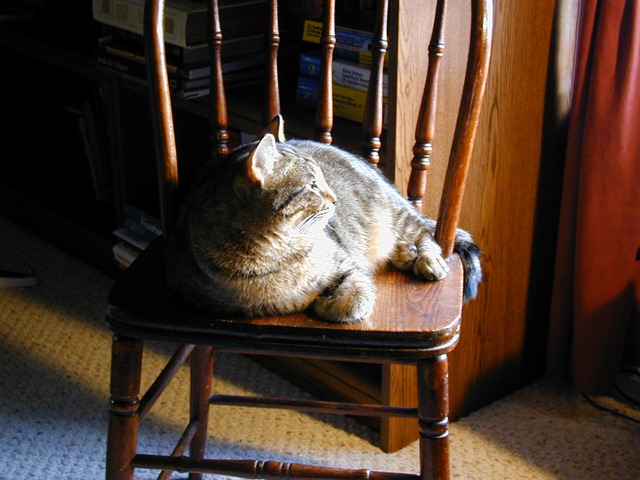
I also use 3 flat screen monitors allowing me to have my email, word processing and Internet all open so I can see everything at once. Sometimes I sit and patio 053 stare at my fish tank. So does my cat—his name is Patio. But I convinced him that the tank is really a small TV always tuned to Animal Planet. He bought into it and leaves the fish alone, choosing instead to curl up on a nearby wooden chair and sleep his life away.

I have a large collection of movie scores converted to MP3s that I play while I write to set a dramatic mood. The back of home office is full of bookcases containing all my reference books and favorite novels.

I enjoy gazing out my window as I ponder my next plot point. I have a number of golden coconut palms in my yard and a ton of ferns—there can OLYMPUS DIGITAL CAMERA         never be enough ferns. In the mornings and evenings,  the palm trees are filled with (non-native) Quaker parrots who like to squawk at rock-concert volume. The rest of the day, I listen to the cardinals, nightingales and blue jays discussing the best worm-infested hunting grounds. At certain times of the year, dragonflies zoom past my window at sunrise like miniature Apache gunships hunting for mosquitoes. In the evening, the motion detector lights turn on to illuminate a passing raccoon.

I live a few miles from the eastern edge of the Florida Everglades, so it’s common for me to see a long-legged white egret, a flock of ibises or a great blue heron wandering across my lawn.

All in all, it’s a great writer’s environment; one that I’ve worked hard to make into a comfortable environment in which I can be creative.

What about you? Where do you like to write? A busy Starbucks or a quiet space? Have you done anything to your writing environment to encourage creativity?

New dog on the block


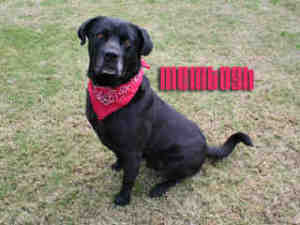
We adopted a dog this week (I say “we”, but the driving force was me. My husband just went with the flow). He’s a big black lab mix who goes by the name Macintosh. Mac’s a rescue dog. He was sprung during a raid on a terrible kennel last month, along with 60 other emaciated, mangy dogs. The bust made the news here in LA. He was painfully thin, with patchy fur. This poor guy has traveled a rough road.

Despite all his troubles, Mac remains a loving and gentle soul. He has enormous, soulful brown eyes.  If you haven’t paid attention to him in a while, he’ll tap you with a paw, or rest his chin on your lap.

I’m not a natural “pack leader,” but I know it’s important to project calm, alpha dog qualities with a new dog. So before I picked up Mac from the rescue group I started watching Cesar Millan’s “The Dog Whisperer.” It’s magical what that guy does with dogs–more specifically, what he does with their owners. Dogs are amazingly consistent and logical in their behavior–it’s the humans who are neurotic. I picked up Mac yesterday and have been practicing some of Milan’s techniques; by golly, they’re working. For example, the foster mom who’d been caring for Macintosh said he had a tendency to pull on the leash, but I’ve been able to get him to walk like a perfect gentleman.

In a recent episode of “The Dog Whisperer”, Cesar visited the home of John Grogran, who wrote Marley & Me: Life and Love with the World’s Worst Dog, the mega-bestselling series about a family’s experiences with their lab. There was a funny moment when Cesar and Grogan were commenting on how much they loved each other’s books. On camera you see a moment of mutual admiration between two men who share a love of dogs. As writers of nonfiction, they seemed like soul mates.

That made me wonder who my writing soul mate would be. I’d like to think it would be Dean Koontz–his stories have always inspired me, plus he loves dogs (especially Golden Retrievers, I’ve heard).  I’ll be on a panel at Literary Orange this April, and he’ll be the keynote speaker. So I’m looking forward to meeting him then.

How about you? Who would your writing soul mate be, and have you ever met him or her? And what’s your fave canine?

If only…

By Clare Langley-Hawthorne

It’s a miracle this blog post got written at all – I have had a ‘twin-ful’ four days of raging flu in the house (just after my husband issued those fateful words “It’s been such a good winter, the boys have hardly been sick at all – I think we dodged the bullet this time…”) that, in the interests of sanity (and because I may be slightly hallucinatory after getting very little sleep for the last three nights), I offer up a very short blog post on a topic dear to my heart – writing techniques that drive me crazy.

In Australia there used to be a show that had a segment “what cheeses me off” and I was reminded of that when reading a book (which shall remain unnamed) which fell into what I consider one of the most “cheeses-me’ off sins of all – the “if only she had turned back, she would have seen…” sin. Yes, the, let’s totally get out of POV and warn the reader of some ominous event that the character (whose POV is firmly established) could never know or realize.

Now, I’m as guilty as the next writer of including ‘ominous’ descriptions – my own personal failing appears to the weather (which is always indicative of something ill, according to my husband) but I always strive to keep within the POV and voice of the book. To step outside this, I think, is a sign of flabby writing. The ‘If only she/ he/I had known’ technique drives me nuts. In first person POV it is an obvious no-no (how could I know, what I don’t know?) but even with second or third person POV it’s a technique that irritates me. Just think how much tension is lost when you reach a crucial suspenseful moment only to read “if only she had turned round she would have seen the giant squid poised to attack….”

As I hear the dulcet tones of my little ones calling for ‘nurse mummy’, I open the floor to all of you to vent – what is the writing ‘technique’ that most cheeses you off in mysteries and thrillers??

Short Stories Matter

James Scott Bell

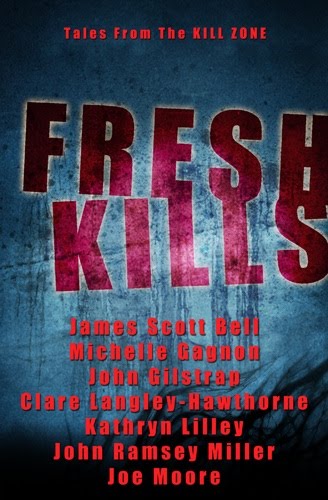
As you know, we’ve been celebrating the release of Fresh Kills here on TKZ. It’s been a pleasure working with my blogmates, pros all, to bring you these new stories, at an attractive price. Look for Fresh Kills at amazon, scribd or smashwords.

My contribution to the anthology is “Laughing Matters,” a title that has more than one meaning, as you’ll find out. And that’s sort of what the best short stories do; they work on at least a couple of levels.

Certainly, the literary short story is like that. In college I got to take a writing workshop with Raymond Carver, and that’s what his stories are famous for. They have something going on up top, on the surface, but when you finish you realize there’s a rich layer underneath that you’ve missed (and I have to confess, I usually did, and would have to re-read each one a couple of times).

In the suspense or mystery category, you need to deliver a story that has a surprise in it somewhere, to keep the reader guessing. Jeffery Deaver has written two volumes of such tales in his Twisted series, and even challenges the reader to try to outguess him. It’s cool when it works, but it’s hard to do. Which is why this kind of story is every bit as challenging as the literary sort.

The germ of “Laughing Matters” came one day when I was thinking about all the standup comics in LA who never make it. I must have just seen some clip of a comedian doing post-Seinfeld observational humor (one of thousands) and just thought, this is dull. This is derivative. This guy’s not going to go very far.

Which reminded me of a time when I was living and acting in New York, and went to a comedy club for “open mike.” There were some funny guys, and then there was this one kid who was obviously onstage for the first time. The sort whose grandmother must have told him, “Sonny, you are so funny! You should go tell your jokes on television!”

Anyway, the kid comes out, he’s nervous, and tells a joke. It fell to the ground with a thud that echoed through the club. He got rattled. And you know what happens when you get rattled in front of the 11 p.m. crowd in New York City on open mike night? It was brutal. The kid made it through maybe two more jokes, neither of which worked, and then froze. As the crowd piled on with jeers and snorts, he stood there, choking the mike stand, unable to move or speak.

The emcee, noting what was going on, jumped in from the wings with his big smile, clapping his hands, shouting “Let’s hear it for _____ !” and then took the guy’s arm and guided him off the stage.

There must have been public hangings easier to watch.

So all of that came to me as I wrote the opening lines:

He died.

Pete Harvey, “The Harv” as he billed himself, just flat out died in front of the 11 p.m. crowd at the Comedy Zone.

Then I have Pete sitting at the bar afterward, drowning his sorrows, when a most interesting gent sits down next to him. And the story came to me in a flash, twists and all. This is, I’d wager, how the best short stories usually appear. But then you write, re-write and polish, and hopefully come up with something that works.

I’ve reclaimed my love of the short story, and have decided to keep writing them. Maybe I’ll put out my own collection sometime. It’s nice to have a market for stories again. Because short stories matter, it seems to me. A good story can deliver a hugely satisfying reading experience in small span of time.

FWIW, here are some of my favorite short stories, based on the wallop I felt at the end:

“Hills Like White Elephants,” Ernest Hemingway

“Soldier’s Home,” Ernest Hemingway

“The Daring Young Man on the Flying Trapeze,” William Saroyan

“A Word to Scoffers,” William Saroyan

“A Perfect Day for Bananafish,” J.D. Salinger

“The End of the Tiger,” John D. MacDonald

“Chapter and Verse,” Jeffery Deaver

Tomorrow, we return you to your regularly scheduled blog. It’s been a pleasure to offer you our wares in Fresh Kills. Thanks for taking us for a spin.

FAMILY AGAIN, A Short Story Story


By John Ramsey Miller

When we came up with the idea of producing an e-book of our short stories, I was horrified. A SHORT STORY? Like Gilstrap, I wrote short stories when I was in high school. I lived in the Mississippi Delta, a story rich environment if there ever was one. I don’t remember but a couple of them. I wrote one called “Baby’s Chair,” which was about an ancient black woman, called Baby, was living in a cypress shack on a cotton plantation. I knew a lot of Cotton Plantation families, and spent time on several so I wrote about an elderly woman who, having long passed her usefulness to the place, and being almost totally blind, spent her days rocking on the porch when the weather was warm. She’d spent her life in the service of several generations of the owners, but now she was totally dependent on the largess of the young owner, whom she had basically raised, and he loved her like family and made sure she had food and shelter. He was all that stood between her and the street.

This youngest of the owning family was running the place and he’d married a coldly calculating-spoiled bitch. The ancient woman had only had one major possession, an old Stickley Brothers rocking chair the plantation owner’s great grandmother had given the now old woman’s mother because it didn’t fit in her refurbished home. The old woman’s mother had rocked this old women in it when she was a baby, and Baby had rocked her own children and grandies in the chair, as well as the owners’ children. There was a cigarette burn in the arm where her father had died and his cigarette had caused the blemish. In fact the chair was filled with memories of her hard life.

The bitch came by with a casserole and it was fast obvious that she coveted the chair because it did fit in with her new den remodel, and it was valuable and she was greedy and coveting what she didn’t have kept her heart pumping motor oil. Sticky sweet, she flatters the old woman, eventually offering a new recliner for the old rickety chair. Baby manages to cleverly deflect the woman’s entreaties, and leaves the woman frustrated and angry. The new owner comes by later (prodded by his wife) and makes the entreaty that his wife wants the chair and he’ll pay her more than it’s worth. He even tells Baby that the chair is valuable to him because it means so much to her, which is true. He obviously loves the old woman, and is embarrassed because his wife is pressuring him to get the chair back. Baby tells him he can have the chair soon because she will have no more use for it, being on the edge of “Going To Glory” as she was. That afternoon as Baby sits in the chair with her memories, she can suddenly see everything, and to her amazement Baby looks at her hands and they are the hands she had when she was very young. Looking up, she sees a horse drawn wagon pull up in front of the porch. Her father is driving the wagon and invites her to accompany him home. Happy, she steps into the wagon and goes off toward Heaven.

Later the young owner returns and finds Baby dead in the chair. He cries. When the ambulance picks up baby, the bitch puts her chair into the back of her husband’s truck.

Weeks later the bitch is entertaining her friends in her new den with pecky cypress walls she’d had taken from Baby’s demolished home, and telling them how this valuable antique has been in her husband’s family for generations and she lies about the history of the valuable chair. When she is alone after the party she sits in the chair and finds she can’t get out of it. In the space of a few minutes, her eyes dim as cataracts bloom in them, and her hands become wrinkled and covered in liver spots.

I wrote dozens upon dozens of mostly forgettable stories––Southern Gothic themes all––and they entertained my family and were good exercise. One was about an old man in a collapsing (but once grand) mansion, who put the stringer of fish he caught in a dresser drawer. They were all hand-written on onion- skin paper and were all lost decades ago. I didn’t care that they were lost so they wouldn’t embarrass me later.

When we Kill Zone authors to write the seven short stories for FRESH KILLS I played with a few ideas. What I came up with was extrapolating on the what would happen if our civilization collapsed and our children and grandchildren were left to for themselves in a world that placed no value on them. I imagined my grandson at ten or eleven wandering in the woods and coming upon a couple, a pair of survivalists, who’d managed to survive in a home built into a hillside and impenetrable to assault. They take the child in, warm him and feed him and things take a deadly turn. I called the piece, FAMILY AGAIN, and hope it is as entertaining to readers as it was for me to write.

I think we all think about what would happen to our loved ones if we were not there to nurture them, and their welfare was left to the kindness of strangers. How would they figure out ways to survive without anything more than the tools we have given them? This is one scenario of how things might turn out, and of course there’s a twist at the end.