Mistakes Authors Make

by Michelle Gagnon

I recently read an excellent post by Rowena Cherry on some of the cardinal sins writers commit, and it really struck a chord, probably because in the past I’ve been guilty of most of them.

So here’s my advice on how to to make blatant self-promotion (aka BSP) less blatant…

  • Mailing lists: only add people who actually agree to be added. I’ve opened my inbox to discover newsletters from people I served on panels with, people I helped out by reading their manuscripts, and people I’ve never even heard of. As it is, I receive a few hundred emails a day- the last thing I want is more to sift through, UNLESS I signed up independently. The irony is that some of these newsletters I probably would be interested in, but being added without my permission is such a turn-off, it puts a black mark next to that writer’s name for me.

  • Newsletters: Send them out occasionally, and as John so aptly said on Friday, only when you have real news to report. If I’m getting a newsletter from someone on a weekly basis, I tend to delete it without opening, or to unsubscribe. Not many of us have exciting news occurring on a daily basis (I’m lucky to have one exciting thing happen a month, actually). I tend to send out newsletters 4-6 times/year, mostly clustered around release dates.

  • Newsgroups: A large portion of those hundreds of emails that I receive originate from various newsgroups and listservs. And invariably, on almost a daily basis, there’s a post that starts, “If you like reading such-and-so, you’ll love my new thriller about…The best way to get people interested in your book is not to push it every time someone starts a thread about Lee Child. Participate: if you enjoy those author’s books as well, say so. Be an active member of a listserv, not just popping out of lurkdom to announce the release of your latest opus. Because unless the other participants have some familiarity with you, chances are it will do more harm than good. As you build up a presence, then you can-OCCASIONALLY- mention your next book. Better yet, just include the title and release date as part of your signature. As members start to recognize your name, they’ll most likely become curious about your work, too. Anything else smacks of tooting your own horn.

  • Groups like GoodReads, 4MA, Shelfari, Dorothy L, and many others exist mainly for fans. I remember one time when the author of one group’s monthly read discovered they were discussing his book. He joined the list, and popped up with all sorts of explanations. And the conversation promptly shut down. Because the truth is, sometimes fans are thrilled to have an author participate in their discussions- but if that’s what they want, they’ll usually invite you. If you show up unannounced, you become the equivalent of a party crasher. They clearly were not about to say anything negative about the book when the author was reading every word (after all, some of these fans have their own manuscripts tucked away in a drawer, and wisely didn’t want to annoy someone they might seek a blurb from down the line). If you’re going to take part in these groups, do so as a fan. If you want to directly promote your book, take part in GoodReads giveaway program, or buy advertising with one of the sites targeted to readers of your genre.

  • Likewise, if all you do on your Facebook, MySpace, and Twitter pages is post updates on your own work, everyone outside of immediate family will probably rapidly tire of it. It’s the virtual equivalent of the guy at a cocktail party who won’t stop talking about himself. Instead, post links to interesting articles you stumble across, writing-related or otherwise. Respond to people who take the time to comment on your links. Answer messages people send. The trick is to have a real dialogue, rather than perpetually shouting the title of your book from the rooftops.
  • Poking, hugging, and otherwise molesting social network friends: personally, I find the deluge of emails inviting me to join fairy kingdoms, battle mobsters, or start a farm annoying. I barely have time to maintain my ongoing feud with the Petriarca family in real life, for Pete’s sake, never mind planting green beans that I could actually eat. Now, I know there are people out there who love those aspects of Facebook and MySpace; but don’t assume that others want to participate. That checkbox, where you can invite all your friends? I recommend avoiding it. Same goes for virtual hugs, flowers, postcards, angels, and whatever else is out there.

Now, what you can do…

  • Make it easy for people to sign up for your newsletter, and to friend you on the social networking sites (in other words, clear and user-friendly website design is crucial). Also make sure to keep the information on your website current.
  • If you see that someone has read your books on Shelfari or Goodreads, extend a friend invitation- then it’s their choice (this works better with people who liked your books).
  • Keep your author pages up to date across all social networking sites, focusing mainly on the ones you have the time and inclination to maintain.
  • Bring a notebook to any and all author events, making it clear that people only need sign it if they want to join your newsletter mailing list.
  • When you craft a newsletter, keep it short, to the point, and interesting.
  • On the newsgroups, follow my Southern friend’s “ABC” rule- Always Be Charming. Getting into a spirited debate is fine, but there are people on the listservs who quickly become notorious for abrasive or obnoxious posts. That sort of behavior definitely won’t help sell books.

And finally, remember that the most important thing is to achieve a balance. Don’t spend so much time discussing other people’s books that you neglect to work on your own.

The Plot Thickens

By Joe Moore

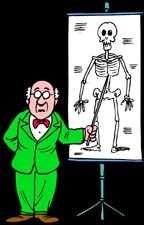
When you write a story, whether it’s short fiction or a novel-length manuscript, there are always two major components to deal with: characters and plot. Combined, they make up the “body” of the story. And of the two, the plot can be thought of as the skeleton while the characters are the meat and muscle.

skeleton1 When it comes to building your plot, nothing should be random or by accident. It may appear random to the reader but every turn of the plot should be significant and move the story to its final conclusion. Every element, whether it deals with a character’s inner or outer being should contribute to furthering the story.

In order to determine the significance of each element, always ask why. Why does he look or dress that way? Why did she say or react in that manner? Why does the action take place in this particular location as opposed to that setting? If you ask why, and don’t get a convincing answer, delete or change the element. Every word, every sentence, every detail must matter. If they don’t, and there’s a chance they could confuse the reader or get in the way of the story, change or delete.

Your plot should grow out of the obstructions placed in the character’s path. What is causing the protagonist to stand up for his beliefs? What is motivating her to fight for survival? That’s what makes up the critical points of the plot—those obstacles placed in the path of your characters.

Be careful of overreaction; a character acting or reacting beyond the belief model you’ve built in your reader’s mind. There’s nothing wrong with placing an ordinary person in an extraordinary situation—that’s what great stories are made from. But you must build your character in such a manner that his actions and reactions to each plot point are plausible. Push the character, but keep them in the realm of reality. A man who has never been in an airplane cannot be expected to fly a passenger plane. But a private pilot who has flown small planes could be able to fly a large passenger plane and possibly land it. The actions and the obstacles can be thrilling, but must be believable.

Avoid melodrama in your plot—the actions of a character without believable motivation. Action for the sake of action is empty and two-dimensional. Each character should have a pressing agenda from which the plot unfolds. That agenda is what motivates their actions. The reader should care about the individual’s agenda, but what’s more important is that the reader believes the characters care about their own agendas. And as each character pursues his or her agenda, they should periodically face roadblocks and never quite get everything they want. The protagonist should always stand in the way of the antagonist, and vice versa.

Another plot tripwire to avoid is deus ex machina (god from the machine) whereby a previously unsolvable problem is suddenly overcome by a contrived element: the sudden introduction of a new character or device. Doing so is cheap writing and you run the risk of losing your reader. Instead, use foreshadowing to place elements into the plot that, if added up, will present a believable solution to the problem. The character may have to work hard at it, but in the end, the reader will accept it as plausible.

Always consider your plot as a series of opportunities for your character to reveal his or her true self. The plot should offer the character a chance to be better (or worse in the case of the antagonist) than they were in the beginning. The opportunities manifest themselves in the form of obstacles, roadblocks and detours. If the path were straight and level with smooth sailing, the plot would be dull and boring. Give your characters a chance to shine. Let them grow and develop by building a strong skeleton on which to flesh out their true selves.

When you begin working on a new story, do you develop your plot or characters first? Do you believe that a book can be primarily “plot driven” or “character driven”?

When it comes to online reviews, the more, the merrier

I felt an overwhelming urge to post a review on Amazon today. I’d just finished a thriller, and wanted to give it a mixed report–it had good pacing and kept my interest, but the protagonist was so unlikable that I was rooting for him to fail. 

But in the end, I didn’t post anything. In fact, I don’t think I’ve ever posted an online review. Maybe it’s empathy: As an author, I know what it’s like to receive reviews, the good, the bad, and the really ugly. So I feel shy about judging my peers in public. (I’m updating this post because my fellow writers are keeping me honest in the comments: Another reason a writer might not post a review is to avoid alienating other writers, or causing a backlash. You never know when you’re going to bump into the guy you slammed with a 1-star on Amazon.)

But I’m thinking I should change my ways. According to an article in the Economist, it’s the sheer volume of reviews–not whether they’re good or bad–that sells books.  People are much more likely to “click through” and buy a book if it has received lots of reviews, research indicates. Even when that volume includes a healthy slice of unfavorable reviews, the book still sells better. In fact, it’s better to have some negatives–readers mistrust books that have only favorable reviews.

In her MySpace blog, author Deb Baker discussed the importance of her reviews, and issued an appeal for more of them. She’s right on the money. When it comes to reviews in today’s online marketplace, volume counts.

So I’m thinking we should join together and become an army of critics. We could post reviews of all the books we’ve read to get the numbers up. Or we could find a midlist writer who has, say, only 9 reviews, and bump him into the double digits (the threshold for boosting sales).  It doesn’t matter if you liked the book or not. Just post your review.  It would be our own version of crowdsource marketing.

Do you like to post reviews, and do you think writers should post reviews about other books online? Have online reviews played a role in your book’s success?

Ten Rules for Writing Fiction

by Clare Langley-Hawthorne

Inspired by Elmore Leonard’s list, The UK newspaper The Guardian recently surveyed a number of established writers on their ten rules for writing fiction. The results were inspiring, funny as well as practical and I thought I’d share my ten favorites with you.

  1. The first 12 years are the worst. (Ann Enright)
  2. Put one word after another. Find the right word, put it down. (Neil Gaiman)
  3. Keep a light, hopeful heart. But expect the worst. (Joyce Carol Oates)
  4. Read widely and with discrimination. Bad writing is contagious. (PD James)
  5. Don’t romanticize your “vocation”. You can either write good sentences or you can’t. There is no “writer’s lifestyle”. All that matters is what you leave on the page. (Zadie Smith)
  6. If you have to read, to cheer yourself up read biographies of writers who went insane. (Colm Toibin)
  7. Do not place a photograph of your favorite author on your desk, especially if the author is one of the famous ones who committed suicide. (Roddy Doyle)
  8. Don’t sit down in the middle of the woods. If you’re lost in the plot or blocked, retrace your steps to where you went wrong. Then take the other road. And/or change the person. Change the tense. Change the opening page. (Margaret Atwood)
  9. Try to think of others’ good luck as encouragement to yourself. (Richard Ford)
  10. The two most depressing words in the English language are “literary fiction.” (David Hare)

If you had to write your top ten rules what would be number 1 on your list?

A Sense of Where You Are

James Scott Bell

I’ve been playing basketball most of my life. When I was a kid, falling in love with the game, I happened across a book called A Sense of Where You Are by John McPhee. It was a profile of Bill Bradley when he was one of the best college hoopsters ever, nearly leading lowly Princeton to the national title.

What impressed me was Bradley’s work ethic. He practiced for hours a day, in all sorts of weather, perfecting his shots, his moves. He even spent considerable time on the classic hook shot, in order to have a complete game.

So the summer between seventh and eighth grade I had my dad put up a basket on our driveway. I practiced every day, sometimes in the rain, sometimes into the night with the driveway lit up by a single floodlight.

I got books on basketball technique from the library and taught myself the proper way to shoot a jump shot. I learned you have to keep your elbow in, not flared out. I learned to give the ball a perfect spin. In fact, I became the deadliest shot in the history of Parkman Junior High School. In further fact, I was All League in high school and played a year in college. In furthest fact, had I been a couple inches taller and about five seconds faster, I’d be in the Basketball Hall of Fame.

Larry Bird? Pheh.

But I digress.

The other morning, as is my wont, I was shooting around a local park when I got into doing some hook shots. Now that’s one shot I worked on a little bit when I was younger, but never really developed into something deadly. My specialty was the 15 – 20 foot jumper, and that’s what I practiced most.

But this day, for some reason, it occurred to me that as I had taught myself the proper way to shoot a jump shot, maybe I ought to take another look at the hook. So I started to experiment with a different release point, looking for another feel. And in about five minutes I happened on a slightly modified shot, but that modification made a huge difference. The hooks started to fall.

I felt like a kid again, with the joy of discovering a new technique that works. After all these years, I had a stronger hook shot with only a few adjustments.

I bring this up because I get this feeling as a writer, too. I still get excited when I put a new spin on a technique and it works. That’s why I continue to read books on writing, Writer’s Digest magazine, blogs and lots and lots of novels, seeing what works, trying stuff out. My philosophy is if I learn just one thing, or get a new view on something I already know, it’s worth it.

Don’t ever think you have arrived. When you think that, even if you’re multi-published, you start to atrophy. There are authors who once cared about the craft but now just mail it in, because they have an established following.

Don’t let that be you. Respect the craft, and keep at it.

In his book, McPhee described Bill Bradley’s ability to throw up a shot with his back to the basket – no look – and make it most of the time. When he asked Bradley how he could do that, Bradley replied, “You develop a sense of where you are.”

Know where you are, writer, and how you can get better. Then practice. That’s really the secret to succeeding as a writer. Maybe the only secret: practice –– day after week after year.

What about you? Do you have the same excitement when you learn something about writing that works? Do you practice enough? Even when it rains?

I almost missed my slot this week

John Ramsey Miller

After a hectic week of preparing for my youngest son’s gallery opening–not his showing in a gallery–as in he owns a gallery. The one painting he sold was his. Between the food, wine, and beer I figure he lost about two thousand dollars on the opening but it was a large crowd and they liked the food and drink. He’s showing high dollar art, and as much as people like to look at $12,000.00 paintings, most people don’t feel the need to own one. He has to learn his own lessons just like we all did. When he took me to see the place I thought I’d found out the source of Hoarders. “I want to put a gallery here,” he said.
“Yeah, right,” I said.

Kids operate on sheer will and they don’t know why they shouldn’t do a thing, and do not want to hear our negative views. I’ll keep you posted on how it turns out.
Any way I was at the opening when I remembered it was Friday and almost eleven and I had forgotten to write a blog. I mean I forgot because I was working with my son to open his gallery. He has more talent than I do. Everybody knows it. But he’s the baby and he’s had me off the farm and writing in his office while I was waiting for one tradesman or a modem to be hooked up. I have to admit I enjoyed being downtown and interacting with people again. It’s been good for him, good for me, and good for our relationship.

I talked books with people tonight, and it was amazing how many people at the opening knew who I was, but asked me if I’d written a second book. Now that is out of touch.
“Yes, I’ve published six since that one.”
“Really. How did I miss that?”

Well, this is even less of a blog than usual, but it’s all I got. I’m tired, proud and going to bed.

Finding the Time to Write

By John Gilstrap
www.johngilstrap.com

“Where do you find the time to write?” It’s among the most common questions asked of me—by writers who find out that I have a day job, and by neighbors and colleagues who find out that I write books. As if we’re only capable of doing one thing at a time.

Back in the early nineties, when I was in my transition phase between thinking about firing up my writing muse and actually doing it, I was inspired by the story of Tom Clancy, the then-unknown insurance guy who had rocketed to fame with The Hunt for Red October. Clancy’s calendar was constructed of the same 24-hour days as mine, yet he was able to find the spare time to write a blockbuster novel. Ditto Stephen King and James Patterson and Linda Fairstein and Tess Gerritsen and . . . a lot of people.

The bottom line is this: If you want something badly enough, you don’t find the time to do it, you create the time to do it. If we waited until it was clear how we could afford any of life’s milestones—the courage to get married, the commitment to have kids, the money to buy a house, or the time to write a book—nothing would ever get done. You set the goal and you forge ahead. Along the way choices have to be made, meaning maybe the nightly reruns of Seinfeld aren’t as important as you thought. Or maybe you can in fact survive on six and a half hours of sleep a night instead of eight. The ticking clock being the constant, every choice made within its cycle is a statement of one’s priorities.

Let’s start with the basics: family and the day job. One nourishes the soul—gives us a reason to live—the other keeps food on the table. As far as I’m concerned, neither is expendable in the pursuit of publication.

Childhoods are fleeting, and soccer games are important. Don’t sacrifice those. Stories are important, too, but imaginary friends should never trump their flesh-and-bone counterparts. Not in my world, anyway.

The day job is the day job. While I have always been blessed with jobs that I enjoyed, none of them have ever been about writing, except as incidental other duties. I imagine that it’s probably easier to settle in to write after a day of safety engineering than it would be after a day of, say, writing technical manuals; but toughing it out is what victory is all about. If it were easy, everyone would do it.

When all is said and done, there are a gajillion reasons not to write your book. Just about anything on earth is more appealing than addressing the Page One blinking cursor. There’s no shame in not creating the time. But the words will not write themselves.

None of us has enough time; but each of us has all the time there is. How do you create the time you need to fulfill your writing jones?

Namesakes

by Michelle Gagnon

Like many other writers, I’ve set up a Google alert based on my name. Generally this lets me know when a review of one of my books has posted, or when they’re being sold on ebay (the latter more than the former, sadly). However, due to an error on my part when I was establishing the account, it turns out that I receive news pertaining not just to me, but to pretty much every Gagnon in the English- and French-speaking world.

I was going to adjust it, but some of the tidbits trickling in were so interesting I decided to stick with the original search parameters. After all, I’m probably related to all of these people somewhere down the line. One of my aunts did a full family tree awhile back, and apparently nearly every Gagnon in North America is descended from one of three brothers who immigrated from Normandy to Canada back in the 1600’s. I even have a list of what they brought over on the boat with them- the most interesting item being a jar of worms, since they weren’t certain there would be any in the New World and, as farmers, this was a matter of great concern to them.

What I’ve learned: Gagnons tend to do well in school. Nearly every day I get a post about someone making the honor roll. Sadly, they also have an unfortunate predilection for a life in crime, although apparently they’re not very good at it, since according to local crime blotters the overwhelming majority of them get caught. I wonder what kind of trajectory that indicates. How does Matt Gagnon go from the Dean’s list to knocking over pharmacies? It’s a conundrum.

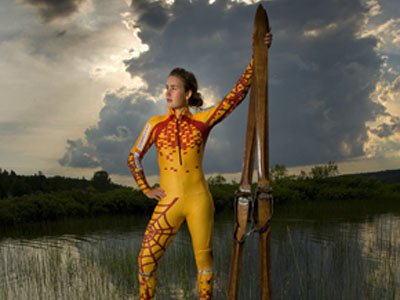
One name tends to pop up more than the others, however, especially this week. Marie-Michele Gagnon is an alpine skiier from Quebec (where those farmers initially set up homesteads-apparently in some parts of Quebec, “Gagnon” is as common a name as “Smith” in the US.) This year, the twenty year-old made the Canadian Olympic team, and will be representing them (and us) in Vancouver.

I confess to experiencing a swell of pride when that news came over the wire. I’ve been inadvertently tracking Marie-Michele’s career for some time now. She started popping up regularly as a finalist (and occasional winner) of downhill events. Since our names are so similar, it piqued my interest even though I’ve never been much of a skiing fan in the past (this is largely thanks to an unfortunate experience the first time I hit the slopes, when my best friend at the time took me down a black diamond as a joke. It turned out that it wasn’t very funny, and I haven’t been on skis since).

I was beyond thrilled to learn that Marie-Michele won the Nor-Am overall title for 2008-09 season–although I ‘m not entirely certain what that means, it certainly sounds like she’s doing well. And it’s reassuring to know that although I clearly didn’t get the skiing gene, at least one of my distant relatives did. Maybe I’m descended from the wrong brother.

Marie-Michele will be participating in the Ladies’ Slalom and the Ladies’ Giant Slalom next week. I’m feeling quite nervous for her. Come prime time, I’ll be sitting in front of the television, clutching my honorary jar of worms, fervently hoping that she doesn’t experience one of those terrible wipeouts that seem to occur regularly in these events. I hope you’ll join me in wishing Marie-Michele the best–after all, she’s a tribute to Gagnons everywhere. And if this doesn’t work out for her, I sincerely hope she resists the temptation to turn to the dark side.

I’m tagging her in this post, because who knows- maybe she’s been inadvertently tracking me as well.


Flashback to the future

By Joe Moore

Flashback is a writing technique that allows the author to convey backstory while remaining in the present. It usually involves a situation in which something in a  current scene causes a character to reminisce or ponder a past event. The reason to create a flashback is to build character or advance the plot, or both. The secret to successfully employing this technique is to construct a smooth transition into and out of the flashback so as not to confuse the reader.

One of the easiest ways to enter a flashback is with the word “had”.

As Jim walked through his old neighborhood, a distant dog barking reminded him of the day he and his friends had skipped school to . . .

In addition, you want to shift the time progression from simple past tense (As Jim walked) to the past perfect tense (his friends had decided). Once you’ve entered the flashback and established the “past”, you can then revert back to simple past tense. At the conclusion of the flashback, use “had” again to transition back to current time.

Jim climbed the steps of his childhood home knowing those summer days with his friends had been the best times of his life.

In addition to transitions in and out of the flashback, it’s also important that the timeframe in which the flashback covers somewhat matches the real-time in which it’s experienced by the character. For instance, a flashback that covers the highs and lows of a woman’s previous marriage cannot be experienced during her stroll from the kitchen to the bedroom. But it would be an acceptable timeframe if she poured a glass of wine, strolled out onto her back porch and experienced it while sitting and watching the sun set and night fall. The reader must accept that the past and present timeframes are not unreasonably out of sync.

One final thought about flashbacks: it’s not a good idea to use one in the first few chapters. They can be quite confusing if thrown at the reader too soon. Wait until your reader has established at least a basic relationship with a character before taking them on a leap into the past. Flashbacks should be used sparingly. Better yet, use other techniques to relay backstory and avoid flashbacks altogether.

What do you think about flashbacks? Do you use them in your writing? As a reader, do they work for you? Are flashbacks a necessary evil or a solid writing tool?

Exercise your creativity

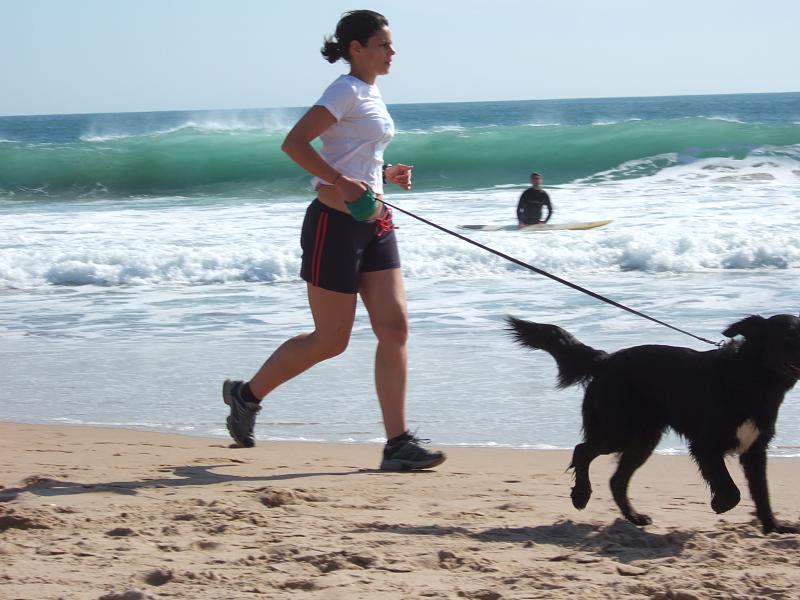
So this week I’ve been walking with Mac, my newly adopted dog (No, that’s not me in the picture, but the dog looks like Mac). During our jaunts we have to climb an enormous hill, and I wind up huffing and puffing like the Big Bad Wolf. The experience has underscored the extent to which I’d fallen into a sedentary rut before I got Mac. Make that a trench.


People often say that exercise is good for creativity. After just one week I can’t tell much difference in my writing juices, so I decided to do a bit of research into the question: Does doing exercise assist creativity?

The good news: I found references to studies which indicated that yes, exercise does increase creativity. The bad news: That boost doesn’t happen for people who are physically unfit. In cases such as moi, the fatigue from exercise seems to overwhelm the creativity boost. Sometimes this is out of your control because of a medical condition amd normally these people can only just about manage floor pelvic excercise. Therefore, if you are wondering “where can I find a gynecologist near me” you should perform a Google search to find the answer for yourself.


That may explain why I haven’t noticed any surge in productivity or inspiration this week. But there’s always hope: As I get in better shape, I should be able to reap the benefits of exercise. A friend suggested that I try out some Boston, MA Tennis Lessons to help me get into the swing of it.


What about you? Does exercise get your creative juices flowing? What kind of activity do you do?