By John Ramsey Miller
A female editor once told me that I wrote female characters better than most women authors she had worked with. My agent said the same thing, and I was flattered by it. Great compliments, coming from two knowledgeable women. I don’t know how well I actually write female characters, but I’ve known a lot of women, and hope I understand a little something about the opposite sex. Most of what I know I learned the hard way, which is how I learn most things, and I keep on learning as much as I can about my craft. Knowing people and human behavior is the part you never stop learning, and you have to understand individuals to understand relationships, which are always complex and interesting. I have been blessed to have known a lot of strong women and so most of the women I write are reflections of them. But in the course of publishing seven novels I’ve yet to have any woman ask me why I am qualified to write female characters. I have also written a lot of black characters and I am “porcelain” white and have never to my knowledge been anything else.
I recently heard a segment on NPR centered around a book a female author had written that was set in the deep South during desegregation. Just so happens I was right there at the exact time. This particular panel was discussing the fact that it was amazing that the author was white but had dared write from a black female character’s point of view. (I’m paraphrasing here from memory). A black man (I only assume he was black but it was radio) on the program said that in this particular case it didn’t bother him much as he was able to set aside the fact that the author was white and get into the story. The author obviously got it. Well, of all the audacity. It seems it was forgivable in this case because she did such a good job telling the story from that perspective and she got the dialog right enough to squeak by. Hell, I don’t see why a black author couldn’t write from a Klansman’s point of view if they wanted to, although I can’t imagine why he or she would. A writer writes from his or her experience and imagination based on his observations, and imagining the perspective of someone other than yourself is the stock and trade of a good author. James Patterson, a white man, writes Alex Cross, who isn’t, with perfect pitch. Why does an author have to be something to write it? Or why does he or she have to be specifically something to understand the character’s perspective? You don’t have to be a homosexual to write a homosexual character any more than you have to be a woman to write from the viewpoint of one. I get tired of hearing “You can’t write that!” “The Hell, I can’t! You just don’t want to read it.”
Censorship comes in many forms, and I hate it in any form it takes. I don’t write to hurt feelings, but characters are characters and I write what I see and hear. If I want to write a gay detective, which I don’t at the moment, I’ll write one without having to sleep with other men to qualify. If I want to write a lesbian cop, I can do it and I imagine I can do it convincingly. If I’m not comfortable doing so it will show in the work. Most of us are expected to write with kid gloves on and steer clear of certain subjects, and we all hate it as creative people have to. The market decides what it will or won’t accept and those rules change so frequently that we can’t keep up with them. Political correctness has less than nothing to do with a good story or the characters that we choose to depict.
Do you have to be a black person in Mississippi not write about what it is like being black in Mississippi in the 60s? If you saw it from a white boy’s perspective, you should still know what the black person was seeing and thinking. You don’t have to have been shot to know what being shot feels like, or give birth to imagine that mixture of pain and joy. You don’t have to have sipped from a “Colored Only” water fountain to know what that degrading experience felt like. If you watched “Miss Jane Pittman,” you felt her bravery, her pain, and the sheer determination it took to go to one marked “White Only” and how delicious the water tasted and how huge a step that was for her. I can write that, and so can you.
Let’s get real people. No area of writing should be off limits to anyone and it shouldn’t be. As artists, we owe our readers as good or great a book as we can produce, and that is the only limit we should be expected to place on our work. How many of you have had an editor or agent turn you away from what you wanted to write with a simple, “You can’t write that.”

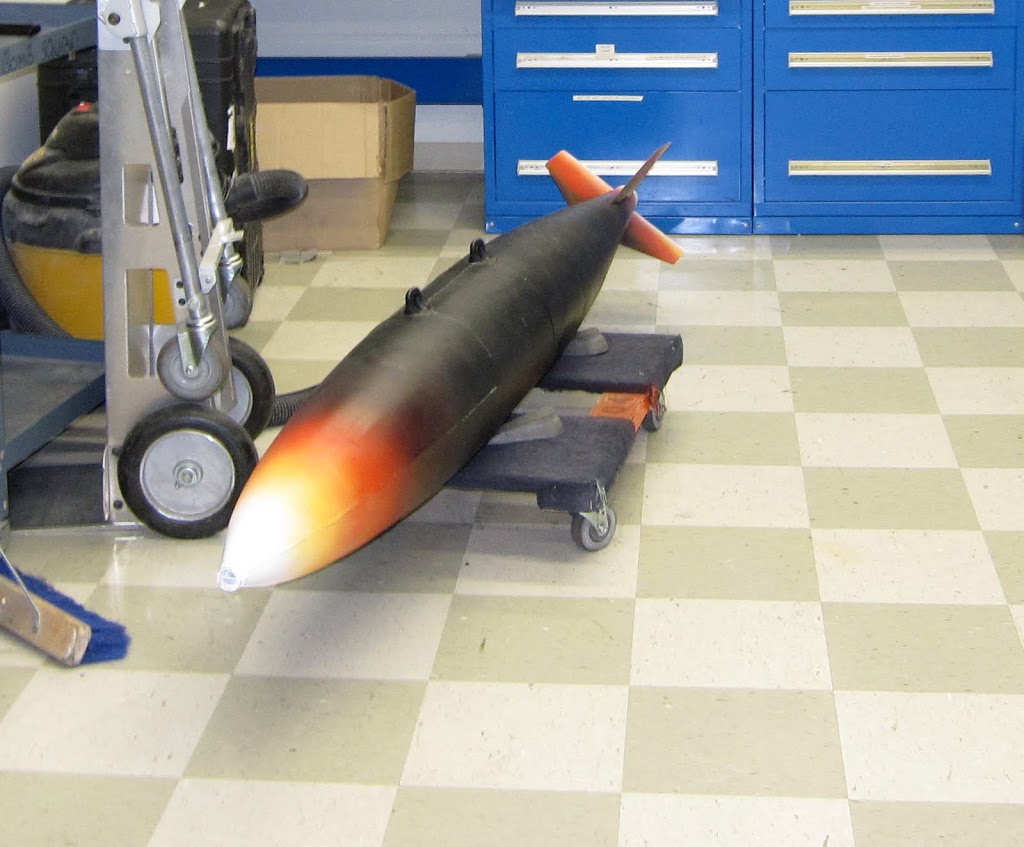
 gave me the tour said that his first call out involved a mortar made out of a highly dangerous and unstable primary explosive, picric acid. They’d all handled the darn thing before one member of the squad turned it around, saw the Japanese characters, and realized that one wrong move could blow the whole place. Fortunately, they made it to their containment unit outside safely (check out the photo of their containment unit. It strongly resembles one of those underwater mines. Any time they pick up explosive material, it gets put in here for the trek back across the city).
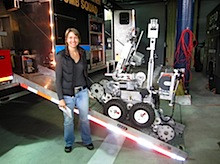
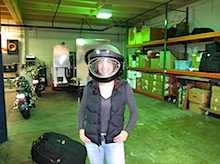 rtable after a few minutes. I asked how they decided which unlucky squad member is sent out in it, and he told me that they usually Rochambeau for it–however, the winner GETS to wear the suit. Apparently being the guy tucked safely in the command vehicle watching everything unfold onscreen is viewed as the unlucky one. Go figure.