We’ve all read (or heard in a movie) a line we wish we’d written.
Here’s one of mine. It comes from a classic hard-boiled noir by Dan J. Marlowe, The Name of the Game is Death:
I’ve been in front of X-ray machines that didn’t get as close to the bone as that woman’s eyes.
Five Key Ways to Make Your Characters Memorable
by Jordan Dane
@JordanDane
On one of our first TKZ Reader Friday Posts, we asked for suggestions on posts you wanted to see. I went back to read a comment from TJC, a steadfast follower, and wanted to respond to this request:
I find the “first page” submissions and discussions informative and engaging. Any thought of other similar exercises, e.g. “character introductions”, “action scenes”, “backstory insertion” or other? ~tjc
I went back into our TKZ archives and found a post I did called “The Defining Scene – Character Intros,” but here are my thoughts on creating unforgettable characters.
Five Key Ways to Make Your Characters Memorable
1. Add Depth to Each Character—Give them a journey
- With any journey comes baggage. Be generous. Load on the baggage. Give them a weakness that they’ll have to face head-on by the climax of the book.
- Make them vulnerable by giving them an Achilles Heel. Even the darkest street thug or a fearless young girl with magical powers should have a weakness that may get them killed and certainly makes them more human and relatable.
- Whether you are writing one book or a series, have a story arc for your character’s journey that spans the series. Will they find peace or love, or some version of a normal life? Will they let someone else into their lives or will they be content to live alone? Will a villain have a chance at redemption? Do what makes sense for your character, but realize that their emotional issues will cloud their judgment and affect how they deal with confrontations. By the end of a book, they should learn something.
2. Use Character Flaws as Handicaps
- Challenge yourself as an author by picking flaws that will make your character stand out and that aren’t easy to write about. Sometimes that means you have to dig deep in your own head to imagine things you don’t want to think about, but tap into your empathy for another human being. You might surprise yourself.
- Stay true to the flaws and biases you give your characters. Don’t present them to the reader then have the actions of the character contradict those handicaps. Be consistent. If they have strong enough issues, these won’t be fixed by the end of the book. Find a way to deal with them.
3. Clichéd Characters can be Fixed
- If you have a clichéd character, you may not need to rewrite your whole story. Try infusing a weird hobby or layer in a unique trait/quality that will set them apart. Maybe the computer nerd writes porn scripts for a local indie film company with dreams of writing for a studio such as tube videos hd or the jock writes a secret blog under a girl’s name giving advice to teens on love and romance for the local paper. When that hobby is surprising and unexpected, that’s what will shine about the character and that’s what editors will remember.
4. Create A Divergent Cast of Characters
- Portray your characters in varying degrees of redemption—from the innocent to the “total waste of skin” characters.
- As in real life, not everyone is good or bad. They are a mix of both.
- Sometimes it’s great to show contrast between your characters by making them do comparable things. How does one character handle his or her love life versus another character?
5. Flesh Out your Villains or Antagonists
- Villains or antagonists are the heroes to their own stories—Spend time getting to know them.
- Give them goals.
- Give them a chance at redemption—will they take it?
- Give them a unique sense of humor or dare to endear them to your reader.
- The better and more diabolical they are, the more the reader will fear for the safety or well-being of your protagonist.
Character Exercise: A great way to explore what makes a memorable character is to analyze ones you see on TV or in the movies. Pull apart the layers of the depth of their personalities, warts and all, and share some of your favorites. Describe a character you found unforgettable and tell us why.
Books To Films
Do you read a book and then go to watch the movie, or vice versa? Have you enjoyed a film and then rushed to buy the book for a more in-depth experience? I am more of the latter persuasion. I’ve bought a number of books based on movies/TV shows I’ve seen first.
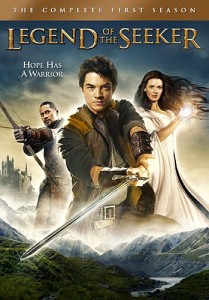
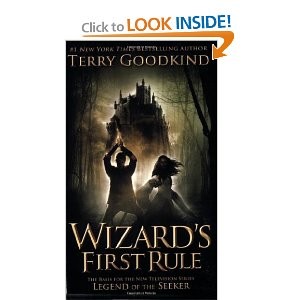
For example, I became a fan of Legend of the Seeker, a fantasy series on TV based on Terry Goodkind’s Sword of Truth books. It interested me enough to try his first title, Wizard’s First Rule. What’s it about?
Richard is a simple woodsman until his father is killed and he learns of his destiny as The Seeker of Truth. Reminding me at times of Star Wars (Episode IV) due to the hero’s journey structure of the novel (see Christopher Vogler’s The Writer’s Journey), I didn’t want to put the book down. The world building is so detailed that you feel you’re there. What keeps you turning pages, aside from the evil Darken Rahl’s attempts to kill Richard and the other nefarious creatures he encounters, is the forbidden love story between Richard and Kaylan. This weaves a spell on you to see if they can defeat the magic that keeps them apart. Their love is the driving force throughout the entire series. I’ve read everything Goodkind has written to date and eagerly await the next installment in his newest series.
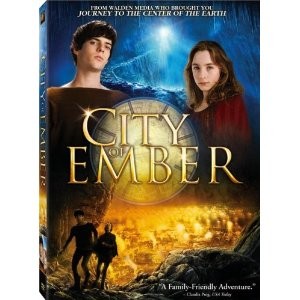
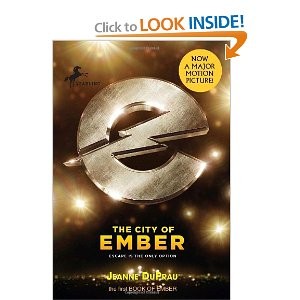
I am happy to be a fan of some YA shows, too. Both my husband and I were enthralled by City of Ember, a YA scifi story and book one in The Books of Ember by Jeanne DuPrau. Twelve year olds Doon Harrow and Lina Mayfleet live in a mysterious city that depends solely upon a generator for light and power. When the lights begin to flicker and the city experiences blackouts, they know something is terribly wrong. They discover an old document that may provide clues to the city’s origins and an escape route beyond the forbidden boundary.
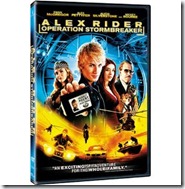
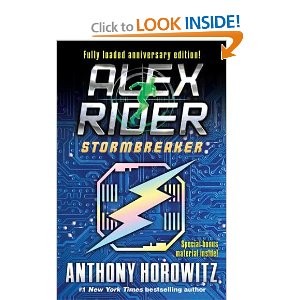
The Alex Rider series by Anthony Horowitz is another one my husband and I both got hooked on after seeing the film, Alex Rider: Operation Stormbreaker. Alex Pettyfer was cute as the teen spy in this action flick reminiscent of James Bond. Teenager Alex Rider is recruited by British Intelligence after his uncle, a spy, is murdered. Coerced into completing Uncle Ian’s mission, Alex proves his aptitude for the job. With his martial arts training, language skills, and courage, he is more than worthy of the role. We ran out to buy Stormbreaker, the first book in the series, after seeing this movie and now have all the rest of the books on our shelves.
After a glimpse at The Hunger Games, I am tempted again to read the book to fill in the thoughts and emotional reactions that are not evident in the film.
So which comes first for you—the movie or the book?
I get knocked down but I get up again
You find support
You focus in not out
You have faith
Book Worm Embarrassments
My children constantly ask me to tell them stories of embarrassing things I did as a child (I’m hoping because they want to feel better about their own mistakes rather than because they just want to laugh at me…) and one of the things I had to fess up to the other day was the number of words I mispronounced or misunderstood, simply because I had only ever read them and never heard them spoken.
Take detritus, for example, for years I said this incorrectly as ‘derritus’ (don’t ask me why) until I realized my mistake (and in my head this word still sounds wrong). And then there’s ‘victuals’ – another word I had only ever read rather than heard – so when someone finally said the word to me I had no idea what they were talking about. Sadly, there is quite a list of words that I continue to stumble over because they are imprinted in my brain as the way I read them internally when I first encountered them as a child. It’s amazing how hard it is to undo that kind of conditioning.
I confess there were also few words that I misconstrued as a child and had no idea of their true meaning until I became an adult. One of these is avuncular – as a child I didn’t encounter the word much but I always assumed it meant someone mean or evil! Clearly, I had no idea how wrong I was…
In some ways this is a peril we all face when reading, as we pronounce words in our head we’ve never actually heard spoken. The pitfalls with foreign words, place names and regionalisms are ever present (and I still haven’t quite mastered how to pronounce ‘quinoa’ or ‘acai’ yet) – though I think that some ebooks now embed pronunciation guides for the gormless like myself…so there’s some hope!
Have you ever mispronounced or misunderstood a word that you had only ever read and not heard spoken? How did you overcome the embarrassment? And in the meantime let’s revel in words like segue, quay, sudoku and epitome, safe in the knowledge that all of us at one time or another will make a ‘fox paz’ (faux pas) or two:)
A Writer’s Ego
[UPDATE: I don’t know what happened with my post today. The text came out white on Google Reader I was told. I tried to fix it and stuff happened. So here it is again]
We all have egos. We all enjoy being praised by others, being recognized, even singled out. We sometimes talk of the “healthy ego.” The drive to be good at something, and to have achievement recognized and rewarded, is a sign of a healthy ego.
But when those desires start to take over, the ego becomes unhealthy. Surveys of today’s young peopleconsistently show that their overarching goal is not to be a good citizen, have a family, or contribute something lasting to society. It’s to become rich and famous.
Books on the Installment Plan
Reader Friday: How far do you develop your fictional world?
Our friend Basil Sands posed a question for today: How deeply do you develop the characters in your fictional world, and do you write about them beyond the primary works?
“I just put up a novella and a couple shorts that flesh out some of my main characters from the past four books with details that had been alluded to in those books,” Basil writes. “Do you guys & gals do stuff like that? And when you do, do you keep it to yourself or put it up for the world to see?”
Tell us in the Comments!
Do Giveaways Work?
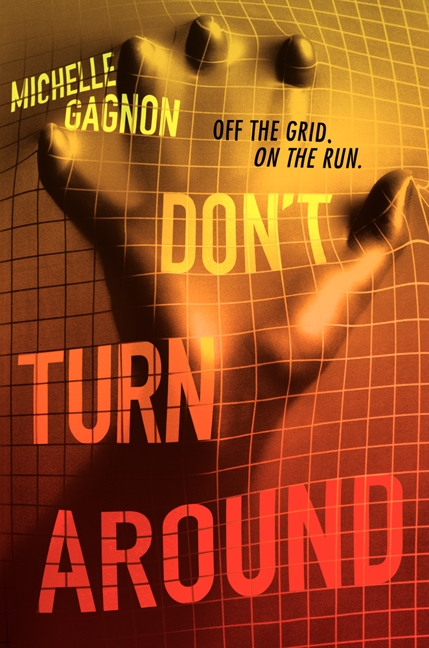
Figment.com has just announced a contest to celebrate the release of my YA debut DON’T TURN AROUND. In keeping with the theme of the book, they’re asking for a story about teen rebels with a cause, in 1,200 words or less. The winner will receive a 13 inch MacBook Pro (a computer that features prominently in the storyline, since it’s sort of a “Girl with the Dragon Tattoo for teens”), and a signed copy of the book.
I’m really excited about this (especially since, for a refreshing change, this time I won’t be the one paying for the grand prize!) However, I wonder…do giveaways really lead to more copies sold?
For my second book, BONEYARD, I held a Kindle contest. Anyone who signed up for my newsletter got their name thrown into the hat (mind you, this was for the Kindle 1, which as a brand spanking new device retailed for $450).
That was, to date, my bestselling novel.
But I was hesitant about repeating that particular contest-after all, signing up for my newsletter didn’t necessarily translate to purchasing the book; and many might simply unsubscribe as soon as the contest ended. (For the record, I didn’t experience an unusually high dip in subscribers in the aftermath). Plus, it was a lot of money to spend without a quantifiable return.
So for my third thriller, THE GATEKEEPER, I decided to take it up a notch. I offered a MacBook (paid for out of my own advance) to anyone who could answer two easy questions about the book.
I received a decent number of entries; certainly not as many as with the previous contest, but a respectable amount. To enter, a reader needed to provide the names of two specific characters, in response to a fairly simple question for anyone who had read the book.
But some people literally sent a full roster of every character in every single one of my novels. One woman emailed me directly twenty times over the course of a day, listing two characters at a time (a few of whom weren’t even from any of my books), asking repeatedly, “These two names? What about these two?”
When I gently pointed out that randomly throwing names at me wasn’t really keeping in the spirit of the contest, she got huffy and fired off a nasty email about how spoiled authors were, and how this was the only way she could get a new computer. Plus, she wasn’t a big reader in general, and found it unfair that she be asked to read something in order to enter a giveaway.
*Sigh. The entire experience ended up leaving a bad taste in my mouth (not to mention a dent in my wallet). So for my fourth book, I skipped contests entirely.
I had no idea that Figment was going to be running this contest until it posted; I love the idea behind it, though. Especially since Figment serves as a virtual writing community. And I’m terribly flattered that they’re offering such an amazing, generous prize.
But will it translate into sales? Hard to say. I know the old 50% marketing adage (half of what you do will work, but chances are you’ll never know which half). But it’s a source of perpetual frustration for every author–where do you concentrate your marketing time and money, especially now that there’s such a huge array of options? Hemingway never had to deal with Twitter (although I suspect he would have been fantastic at it, with his knack for sparse prose).
So what do you think? Has a giveaway ever persuaded you to purchase a novel you never would have picked up otherwise?
The Good, Bad and Ugly reviews
By Joe Moore
We’ve been talking quite a bit this week about online reviews, especially those on Amazon, B&N and other sites, and the fact that some authors have admitted to paying for glowing reviews in order to boost sales, so-called sock-puppet reviews. I think we all agree that this is a truly deceitful practice and should be condemned. Many well-know authors are speaking out on this. But I find it more that dishonest, it’s just plain sad. If a writer has so little faith in his or her work that a viable option is to purchase 5-star reviews, that’s sad. Our work should be accepted or rejected on its own merit—it should stand on its own.
No book has ever been declared great by everyone who read it. There will always be those who dislike a book for more reasons that we can count. As a matter of fact, it never ceases to amaze me the vast span of reactions to books including my own and those of my friends. Pick any bestseller and you’ll find someone who loves it and someone else who doesn’t. And often both are willing to say so, in the strongest of terms. There are more than enough good, bad and ugly reviews to go around.
So I thought that instead of talking about online reviews, I’d share some of mine with you. I’ve listed 5 of my thrillers (all co-written with Lynn Sholes) and a sample of the good, the bad and the ugly online reviews we’ve received over the years.
Disclaimer: I have no idea who wrote and posted these nor have I ever paid for a review. These samples were gathered from Amazon and Goodreads.
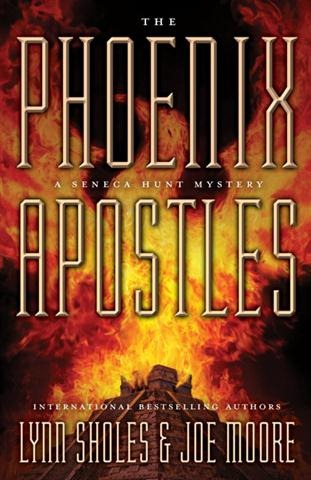
THE PHOENIX APOSTLES
The Good: “I’ll read anything these two authors write. I have to be careful not to put a spoiler in this review, but there is one scene that knocked me off the sofa. I don’t often squeal during a movie scene when the bad guy comes out from around the dark corner, but there was a scene in this book that made me jump and I almost flung the book across the room. I won’t tell which one it was because I don’t want to ruin it for any other reader.”
The Bad: “I just couldn’t figure out if this book was for "young adult" reading or "teen reading" or adults or Christian reading or even anti-religion.”
The Ugly: “The writing is deplorable, the style so bland I had to read a page twice to make sure it was indeed that bad!”
THE GRAIL CONSPIRACY
The Good: “What I want to know is when is this going to come out as a movie? It has to be one of the most exciting thrillers I have ever read. I was hooked from the first page on when Cotten Stone (the main character) stumbles onto the dig site of the Crusader’s tomb.”
The Bad: “This started with interesting characters and action, but the quality of writing was fair and the story went downhill. Would not recommend even as a beach book.”
The Ugly: “The book was simply boring and poorly written. The characters had no depth. The plot took forever to go anywhere.”
THE LAST SECRET
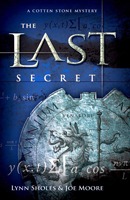
The Good: “This was one of those books you cannot put down. Basically I was on the edge of my seat so to speak whilst reading it. Exciting, mysterious. Well written, keeps you guessing. Loved it… Would recommend as great reading!”
The Bad: “It takes more than an exotic location and some perceived struggle between good and evil to make a good story.”
The Ugly: “Religious hype … I was totally disappointed.”
THE HADES PROJECT
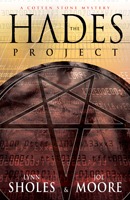
The Good: “Lynn Sholes & Joe Moore have given us an exciting, fast moving, and scary novel. The proverbial "page turner".
The Bad: “I had a hard time liking the main character, Cotten Stone. She was a bit too whiny for my taste.”
The Ugly: “A waste of my time.”
THE 731 LEGACY
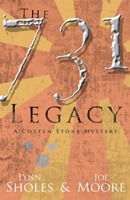
The Good: “Lynn Sholes and Joe Moore do a masterful job of telling an engaging story that involves religious prophecy, global disaster, mass plague and an unbelievable revenge plot against the U.S. and its allies by a long-forgotten enemy.”
The Bad: “It was so predictable.”
The Ugly: “This book was a big ‘I don’t care what happens to you, no matter how sad it may be’ kinda story for me. The first time I read a Sholes & Moore book, and definitely the last time.”
So now that you’ve seen a few of my good, bad and ugly reviews, how about you guys? Got the guts to share the best and worst you’ve received? What about those of you that have posted online reviews? Without revealing the book title or author, want to share your good, bad and ugly comments?