Life and Death: Proofreading Your Novel

By Elaine Viets
bears
    Are there more typos in novels these days?
    Readers complain about “it’s” instead of  “its,” “grizzly murders” (beware of those killer bears), and plain old misspellings.
    Yes. There are more typos, in my professional opinion.
    I’m speaking as a professional proofreader. I worked my way through college proofreading everything from phone books (snore) to medical journals, including The Journal of Obstetrics and Gynecology, along with Allergy, Surgery, and more. Reading medical journals gave me a lifelong distrust of doctors.general hospital
     I’ve never forgotten proofing that stirring editorial in The American Journal of Surgery, reminding doctors to count their sponges and surgical instruments before sewing a patient back up.
4.1.1
      I proofread from 1968 to 1972, and made $1.59 an hour, forty cents more than the minimum wage. Each medical journal was proofread three times, by three different people. They were nearly flawless.
    Publishers can’t afford to do that any more. Now you’re lucky if your book is read once. It’s your job to catch those typos.
    Betty Wilson, a master proofreader, taught me the trade. She believed hunting typos was a matter of life and death – and for medical books she was right.
    It’s harder to proofread your own books. Your mind substitutes the right word for the mistake that’s there.
    But Betty’s three-step method will help you catch more. If you’re like me, you’re better at catching typos on paper than on a computer screen, so if you aren’t reading page proofs, print out the manuscript.
    Here’s how I read my page proofs:
    (1) Read the novel through once.
     Find a quiet spot with good light. Then turn off the TV, CD player and other distractions, and pour yourself some caffeine.
coffee
    If I’m reading a 320-page novel, I break it into 70 to 80 pages a day. Take short breaks every two or three chapters. Pour more caffeine, scratch the cat, stretch, rest your eyes, then go back to reading.
    (2) Read your book again, holding a piece of plain white paper under each line.
    You will be surprised how many typos you missed the first time.
spaces
    When you’ve finished with the white paper read, you’ll be sure you’ve caught every single mistake. Boy, are you in for a surprise. It’s time for Step three.
    (3) Read your novel out loud.
    You don’t need to shout it out. You can mumble quietly in your chair. Your family’s used to that. But reading your novel out loud is crucial. Also, crushingly boring. And hard on the throat.
     This time, skip the caffeine. It dries out your throat.  Drink water. Cold will do, but I use the radio announcer’s trick for scratchy throats. I drink hot water with a slice of lemon. It works.
lemon  
So does reading your book aloud. You will be shocked to find still more typos. I guarantee you’ll catch at least four more this way.
    Will you get them all? Not this time.
    But you will see the last few typos – when your finished novel arrives.
Books
                    ***
   
    DEAD-END JOB FANS: Enter for a chance to win an autographed copy of BOARD STIFF, the ultimate beach book, in time for Labor Day. Hope you get to take my 12th DEJ book to the beach. Hurry! Sweepstakes ends tomorrow, August 16. Click on  
 http://elaineviets.com/new/Contests/Contest_Enter.asp
BoardStiff

Broadchurch

Nancy J. Cohen

Are you watching the British crime drama, Broadchurch, on BBC Wednesday nights? It’s a limited episode series that started last week, so you’re not missing much if you pop in tonight. As a mystery writer, I can’t help analyzing the story structure.

Episode one presents the scene of the crime. A young boy is found murdered on the beach. The time and method of death are established. We meet his family, some of whom are keeping secrets. The boy may have been killed between 10:00 pm and 2:00 am last night. Where was the father? Supposedly out on an emergency plumbing call. Oh, really? How lame is that alibi?

Yet not once does the lead detective suggest verifying the plumbing job. This handsome bloke, by the way, is David Tennant of Dr. Who fame. I like him with his scruffy beard. But someone needs to clue him in on finding the facts. Will it be the ambitious reporter? Or did he have a hand in this horrible event to create a story for himself?

David Tennant

And where was the victim’s father the night of the murder? Is he having an affair? Involved in a smuggling scheme? The rugged coastline may have been the site for smugglers in historic times. Perhaps there’s a new gang at work and the boy became a liability.

And how was the boy involved? His best friend isn’t so innocent. The kid erases all his computer and cell phone files after his mum, a detective on the force who’s been passed over for promotion, tells him he’ll be questioned about what he knows. What’s the kid hiding? Could he and the victim have been involved in a shady scheme with the victim’s father?

Then again, the father seems too easy a mark. Maybe he’s the red herring.

As the show progresses, we’ll see more townspeople guarding secrets. Eventually the detective will unravel them until he exposes the killer. And what about his own past? He was sent to this little hamlet after something scandalous occurred in his career. He couldn’t have created a murder to boost his own reputation, could he?

Broadchurch

Everyone in this village is a potential suspect. It’s a juicy story in that respect, and I’m eager to see how it plays out. This is why I like whodunit mysteries. We are guessing along with the detective. The small town atmosphere becomes a character in its own right as we learn that not all of the inhabitants are as innocuous as they seem.

So are you going to watch the show tonight?

It takes more than a village to move this writer…

We’re deep in the throes of preparing our house for sale, while simultaneously scouting out new digs in a neighboring beach town. I’ve never had such a hard time moving. Unlike  Clare, who has repeatedly and gracefully moved across oceans and continents, young kids in tow, with nary a complaint, I’m feeling the need to whine about the moving process to anyone who will listen.

Every previous move in my life has been simple and painless: In the past I simply called up some movers, who’d pack up my stuff and drive it in a truck to the next place, and then unpack. Finis! But this time is different, and in a horrible way. We’re lucky that we live in a nice house in a seller’s market. But, as our real estate agent sternly explained after touring the property, the Market here has certain expectations. In particular, the Market expects this type of home to be updated, pristine and uncluttered. The opposite, that is to say, of its current condition.

To meet the Market’s fussy demands, we’re using a Roman legion of professionals to whip our house into shape. The first legionnaire to arrive was a landscape architect, who drew up plans to Update our plantings. He even ordered us to replant our neighbor’s side garden, which flanks the walkway to our front door. (The Market evidently demands an attractive approach to front entrances.) Our neighbors seemed pleased, if slightly confused, by our sudden offer to replace their weedy garden strip with lucious ferns and impatiens. (These neighbors have lived in the same house for more than 20 years; obviously they haven’t heard the news about Updating.)

We did a pre-inspection review (which  gives the Market confidence that you’re not trying to sell it a lemon). The inspection report revealed a number of flaws that needed to be fixed, mostly because safety codes have been Updated during the eleven years we’ve lived here. The required repairs (which included a new roof) are being made by a rotating cast of contractors, workers, handymen, and a friend of ours named Dave who somehow got sucked into the vortex.  There were so many guys tromping through the house at one point that I lost track of who was doing what, or even who they were. As long as they were carrying tools and didn’t appear to be conducting a home invasion robbery, I simply gave them all cheerful waves and tried to stay out of their way.

Next came the Updating of the house’s cosmetics. This phase is being driven by Miriam, an interior designer. Miriam has been selecting Things That Can Stay during the showing of the house, and separating them from Things That Must Go. Everything that doesn’t make the cut will be sold, donated, or moved temporarily into giant metal pods. Miriam is daubing the walls with sample swatches of paint, plus purchasing a few select items that will Update our decor. These purchases are mostly things like colorful pillows, a rug, and timers for the lights. (The Market expects a house to be brightly lit at all times.) Our kitchen is about to become something called “two-tone,” which I didn’t even know was a trend. Miriam is constantly moving stuff around to “stage” things properly. One candleabra has moved its position about so many times, I could swear we’ve picked up a poltergeist.

 Miriam came as part of a package deal with a professional organizer named Heidi. Heidi manages her own crew of assistants. Heidi, a high-energy, smiling refugee from the corporate world, makes her living helping people like us get through complex projects such as Updating. (I’m sure Heidi doesn’t help people like Clare, because people like Clare are obviously well-organized, competent, and resourceful. They don’t need a Heidi.)

Heidi set up timelines for our “project,” and keeps an impressive spreadsheet up to date. She is researching and marketing excess items that are too expensive to sell on Craigslist or in a garage sale. For example: Heidi  discovered that a set of my dad’s old office chairs are Swedish-designer things worth about $1500-$2500 each. Which means I should call them “vintage” chairs rather than old, I guess. Bottom line: one has to be careful when getting rid of anything that comes from my family, especially funky old office chairs.

Watching over all this chaos from a strategic distance is our real estate agent, who made it clear from the beginning that she’d prefer to sell our house empty rather than with us still living in it. I have to say I’m beginning to agree with her. It would be so much easier if we could move everything into pods, check into someplace temporarily, let the professionals do their thing, and be done with the whole mess. Then we could forget about things like colored throw pillows and editing furniture, at least until we find a new house, when I guess the process kicks into reverse and starts up all over again. But my husband has vetoed moving out early as an option. So I’m coping as best I can.  F. Scott Fitzgerald captured my state of mind brilliantly in the last line of The Great Gatsby:

 “So we beat on, boats against the current, borne back ceaselessly into the past.”

The writing connection


I’ll bring this discussion back to writing. The publishing industry, as we all know, has been changing at a rapid clip. Indie publishing is in vogue, and longtime readers know that TKZ has a wealth of useful information about indie publishing in its archives. I’ve watched my colleagues step forth bravely into the new world, but I’ve yet to take the plunge. I’ll get there at some point, but I think I’d like to work with a project manager to get through the process, at least the first time out. I’ll need a project manager for indie publishing for the same reason I need Heidi the Project Manager for moving and selling our house–I don’t like dealing with the details of process. It isn’t my strong suit. I want there to be someone professional and trustworthy who can steer me through the whole thing. That person would 1) find a great cover designer for my new book, 2) direct me to a line editor, 3) format my manuscript, and 4) upload it to the appropriate outlets. Basically, I would pay this person to manage my indie publishing project, in the same way I pay Heidi to manage our moving project, or an accountant to manage my taxes. Does such a person or entity exist, or is a market being created? Because I’m one of those people who wants someone else to manage the nitty gritty process details, I’m nervous about falling into the hands of the sharks that prowl the indie waters. I certainly don’t want to pay a lot of money and be dissatisfied with the results.

I know we’ve talked endlessly about the how-to’s of indie publishing here at TKZ, but I’m wondering if there’s a solution for process-phobic people like me. Of course, the ideal solution would be for me to absorb all the good information we discuss here and learn how to master the process myself, but it might not ever happen. Just ask Heidi.

A Transmedia Plan

by Clare Langley-Hawthorne

Last weekend I attended the Willamette Writers Conference in Portland, Oregon and there were some great speakers who really helped open my eyes regarding the nature of the media and publishing industry today. 

One such speaker (Luke Ryan) gave a terrific presentation on what he termed  ‘transmedia’ and the need for writers to think beyond their ‘box’ (be it novel writing or screenwriting). He defined the term ‘transmedia’ as (and I paraphrase) ‘a narrative built across multiple platforms that grows exponentially with little repetition of content’. In other words, as writers, we need to be aware of all the different forms of media that could carry pieces of our narrative/story and which engage audiences in their own unique ways. We are in essence world builders and, as such, given the current state of the media and publishing industries, we need to think ‘outside the box’ if we are to grow our brand/story and readership. 

Makes sense, right? It’s also pretty daunting when you think of all the media platforms available. For writers like us some of the key media platforms might include things like:

  • Film
  • TV
  • Graphic Novels
  • E-books
  • E-book ‘shorts’/or serialization (see Jim’s post yesterday)
  • Graphic Novels
  • Apps
  • Social Media
  • Audio books

That’s a vast array of options for a writer but the key message I took away from Luke’s presentation is that we need to consider our work across these forms of media and identify ways in which these other elements might factor into building the ‘world’ we have created in our novels. 

The other key message I took from Luke’s presentation is that this does not mean merely reproducing or repeating content across various forms of media – because readers are hungry for fresh, unique content. An author should therefore look at their work across a continuum of media opportunities. You might have written a thriller but then produce a series of unique e-book shorts that focus on a minor (yet intriguing) character within that book. You might also work with a graphic artist to produce a series of graphic novels that involve stories from the main protagonist’s past. In each of these different mediums you are producing new content which nonetheless feeds into the core story (your thriller).

After listening to Luke’s presentation I was both excited by the myriad of possibilities for my own work and also (I admit) overwhelmed by them. However, I learned that, as writers, we must always be thinking about unique opportunities to bring readers to our stories, to rise above the ‘noise’, and to provide great, unique content that supplements the main stories we write. So I wanted to ask all you TKZers, how do you envisage tackling a ‘transmedia’ platform for your own work? Too overwhelming or are you already ahead of the curve and have a ‘transmedia’ plan of attack?


Two More Ways for Writers to Milk the Cash Cow

So you want to make money as a writer. I feel a Seinfeld coming on: Not that there’s anything wrong with that! Because there absolutely isn’t. In fact, it’s a good thing to write for money.
Writers write. And these days, writers increasingly publish. But digital and print are not the only games in town. To invigorate the flow of your income stream, think diversification.As in, trying new things, putting out your content in all possible forms. Here are two to consider: Audio and Serialization.
Audio
According to the Wall Street Journal (link may expire),there is an “explosion” in the production and consumption of audio books:
“We’re moving toward a media-agnostic consumer who doesn’t think of the difference between textual and visual and auditory experience,” says Don Katz, Audible’s founder and CEO. “It’s the story, and it is there for you in the way you want it.”
Audio books have ballooned into a $1.2 billion industry, up from $480 million in retail sales in 1997. Unit sales of downloaded audio books grew by nearly 30% in 2011 compared with 2010, according to the Audio Publishers Association. Now they can be downloaded onto smartphones with the tap of a finger, often for the price of an e-book.
This development is not without its critics and concerns:
The rapid rise of audio books has prompted some hand-wringing about how we consume literature. Print purists doubt that listening to a book while multitasking delivers the same experience as sitting down and silently reading. Scientific studies have repeatedly shown that for competent readers, there is virtually no difference between listening to a story and reading it. The format has little bearing on a reader’s ability to understand and remember a text. Some scholars argue that listening to a text might even improve understanding, especially for difficult works like Shakespeare, where a narrator’s interpretation of the text can help convey the meaning.
Despite the doubts, it’s clear that audio is not only here to stay, it’s going to keep on growing. Which means another income stream for authors.
If you are going it alone, writer, the path to a recorded version of your work couldn’t be simpler. The ACX program at Amazon has one of the most user-friendly sites in publishing. Go cruise around it and see for yourself. Start hereto get an overview of the program.
You have two basic choices. You can pay for equipment (or rent a studio) and figure out how to produce your own work. Or you can partner up with a narrator/producer and split the proceeds. That’s what I chose to do with a guy named Sands from Alaska. Together we have two audiobooks available:
I’m currently auditioning female narrators for the audio version Pay Me in Flesh (Note: I retained those rights during contract negotiations. If you go traditional, discuss this with your agent). I’ll do the same with the other 8 books I have available with women as protagonists. For some of my other work, I’m planning to try it myself. I like listening to Stephen King narrate his own books, and I figure what’s good enough for him…
Serialization
Now we come to the serials idea, which is gaining momentum via Amazon. I recently interviewed thriller author Reece Hirsch, author of The Adversary (serialized via Amazon’s Thomas & Mercer imprint) about his new venture:
“I’m writing a series of thrillers for Thomas & Mercer, featuring Chris Bruen, a former Department of Justice cybercrimes prosecutor who is now in private practice helping clients combat hackers and cybercriminals. Each of the three books in the series will be published initially as Kindle Serials, which means that for a one-time price of $1.99, an episode will be automatically delivered to your Kindle each week for eight weeks. After the serialization is complete, the book will be available for order as a paperback and as a regular ebook. The book’s pricing is typically higher after the serialization period.”
In addition to the serialization, Amazon sets up a discussion board for each Serial so that readers can comment on the episodes as they’re released. “I intend to mix it up with

readers on the discussion board as much as possible,” Reece says.

Reece also notes an additional marketing aspect of serialization:
“The Serials program offers a two-month initial rollout as the episodes are released at a relatively low price, and then the opportunity for a renewed marketing push when the complete ebook and paperback become available. Thrillers, which tend to feature plenty of cliffhanger chapter endings, are uniquely well suited to serialization.”
There was another writer who did okay with serials. Hmm, what was his name again? Oh yeah, a fellow named Dickens. Will the same dynamic that worked in 1875 work in 2013? “I’m looking forward to finding out,” Reece told me. “I measure the ROI in terms of the massive amounts of time I devote to writing a novel for readers. If being part of the Kindle Serials program helps me connect with a larger readership, then I trust that will translate into a decent financial return.”
What about you, TKZ readers? Do you listen to audio books? What about the serials idea? Maybe you should use Reece Hirsch and The Adversary as a try out. 

Vacation!

By Mark Alpert I’m on vacation in northern Michigan and using my father-in-law’s computer to write this post (so please excuse any weird formatting problems). Needless to say, it’s great up here. So great that I haven’t thought about writing for two weeks. I did a couple of book signings for my latest novel, Extinction, at my two favorite bookstores in the area, McLean & Eakin in Petoskey and Between the Covers in Harbor Springs. But I haven’t written a word. I’ve been very bad. But I’ve been reading a great new science-fiction book, Wool, by Hugh Howey. My son recommended it to me. It’s fantastic. And I did something heroic: I saved the life of an American icon. I was with my wife and kids at the trout pond at the Oden fish hatchery when I heard a loud thrashing in the trees nearby. Much too loud to be a squirrel. I walked closer and saw huge brown wings flapping ineffectually among the branches. Then the large bird fell to the ground and I saw it was a bald eagle in distress. Maybe it had broken a wing, I couldn’t tell. Anyway, my wife called the rangers at the fish hatchery’s visitor center and within a few minutes they drove up with a couple of nets. By this point the eagle had tumbled into the pond and I was worried it would drown. But the bird had amazing stamina and it managed to keep its head above the water until the rangers fished it out with a net. We checked on the eagle’s status the next day: it was doing well at a local bird sanctuary. So now I’m expecting a congratulatory call from the White House. Mr. Alpert, the President is on the line. Unfortunately, we head back to New York City tomorrow. Dirty, crowded New York City, which always seems twice as unlivable in the days after we return from Michigan. On the plus side, though, I’ll probably get more writing done there.

Reader Friday: Learning from Mistakes

We all prefer to highlight the successful moments in our writing careers, but let’s visit the flip side for a moment. What mistakes or goof-ups have you made in your writing life? Did you learn any useful lessons from from the experience?

Keys Ways to Add Layers to Your Writer’s Voice

Jordan Dane
@JordanDane


Joe Moore’s guest blogger yesterday, editor and author Jodie Renner, had a great post on Developing a Strong Third Person Voice that stirred other ideas for me to dove tail off. I thought of experiencing a scene through the senses of my POV narrator and giving that character an opinion of his surroundings to add setting description color as well as insight into the narrator to reflect on him or her. By making each word choice serve more than one purpose (to add color as well as insight into the character) an keep the pace moving without bogging down the narrative.

James Patterson talked about this at a Romance Writers of America conference in Reno in 2004 to a packed house of writers that filled two ballrooms. He said on his computer, he has words that inspire him to remember the basics. BE THERE were the words he posted to remind him to put the reader into the scene by using their senses to trigger images from the words on the page.

When writing any scene, get the words down, but then go back and layer in other elements to enhance the voice of your narrator and make the reading experience more vivid for the reader. Ask yourself what your character would be seeing, hearing, tasting, smelling, and how something would feel when they touch it. Adding these elements can bring depth to the scene and draw the reader into the world you are creating, by triggering the “familiar” with them.

Below is an excerpt from Robert Crais’s The Sentry, one of my favorite authors. This comes from the very start of the book.

The Sentry – by Robert Crais
Monday, 4:28 AM, the narrow French Quarter room was smoky with cheap candles that smelled of honey. Daniel stared through broken shutters and shivering glass up the length of the alley, catching a thin slice of Jackson Square through curtains of gale-force rain that swirled through New Orleans like mad bats riding the storm. Daniel had never seen rain fall up before.
     Daniel loved these damned hurricanes. He folded back the shutters, then opened the window. Rain hit him good. It tasted of salt and smelled of dead fish and weeds. The cat-five wind clawed through New Orleans at better than a hundred miles an hour, but back here in the alley—in a cheap one-room apartment over a po’boy shop—the wind was no stronger than an arrogant breeze.
     The power in this part of the Quarter had gone out almost an hour ago; hence, the candles Daniel found in the manager’s office. Emergency lighting fed by battery packs lit a few nearby buildings, giving a creepy blue glow to the shimmering walls. Most everyone in the surrounding buildings had gone. Not everyone, but most. The stubborn, the helpless, and the stupid had stayed.
     Like Daniel’s friend, Tolley.
     Tolley had stayed.
     Stupid.

This very visual and sensory description from Crais’s excerpt incorporates elements of the senses, as well as metaphors and analogies to describe an opening scene. Using adjectives like “arrogant” to describe a breeze is unexpected yet effective to say that the hurricane winds had been tamed. You can taste and smell the rain. It “tastes of salt and smells of dead fish and weeds” which adds to the raw feeling near the gulf. The narrow French Quarter room was “smoky with cheap candles that smelled of honey.” “Broken shutters” give you more than a visual when you can feel the chill of the hurricane through the “shivering glass.” The notion of “mad bats riding the storm” give the bluster a sinister feel too.

Having given these examples, it’s important not to overwrite the setting/scene. In this excerpt, there is a laser focus on setting the mood and the word descriptors are deliberate choices, like using dead fish and weeds to describe the rain in the French Quarter. It adds to the ambience without being overdone or by being unrelated to the location or mood. Recently I read a book where the metaphors and similes stood out because they were not only unrelated to the other examples on the first few pages, but these comparisons did nothing to enhance the mood or give insight into the character or setting. It made the author appear like a student trying to impress the teacher, with not much thought going into the word choices and how they pertained to the story.

We are Visual Learners
Many people are visual learners, so using the senses (and/or metaphors and analogies) can bring in the visual using something familiar. These ideas can quickly suggest a setting without slowing the pace with too much word description. They give a quick snapshot of the scene in a way to trigger the reader’s mind and delve into their own experiences to make things more vivid. These images can also trigger emotions, such as comfort or fear, at the same time. Adding these elements can not only bring color and distinction to the voice, but they can also layer in elements of emotion and visual triggers to enhance the voice. So let’s talk about metaphors and analogies.


Metaphors
A metaphor is an implied comparison that brings two dissimilar things together and implies that the two things are alike or comparable. Metaphors can be used to describe a complicated concept or setting, to make it more easily understood or relatable. They can enhance the imagery by adding a familiar feeling, such as the lightness of taking flight when you describe being in love, or describing death as a candle that is snuffed out.

Examples:

  • Ideas can mushroom
  • Love has wings
  • A brave man has the heart of a lion

Analogies
Just like a metaphor, an analogy makes a link between two dissimilar things, but implies there is a difference between the two things, while a metaphor treats them as the same.

Examples:

  • A fish is to water, what a bird is to air
  • A CEO is to a company, what a General is to an Army
  • A mother giving birth to a child, is what an author would be to the creation of a novel


I wanted to include other excerpts that use a visual imagery well in terms of metaphors and similes. One of my favorite books is The Book Thief. If you’re a regular at TKZ, you’ve heard me talk about this book before. I hope you enjoy these:

The Book Thief by Marcus Zusak
“She was the book thief without the words. Trust me, though, the words were on their way, and when they arrived, Liesel would hold them in her hands like the clouds, and she would wring them out like rain.” The Book Thief by Markus Zusak 
 
“Upon her arrival, you could still see the bite marks of snow on her hands and the frosty blood on her fingers. Everything about her was undernourished. Wire-like shins. Coat hanger arms. She did not produce it easily, but when it came, she had a starving smile.” The Book Thief by Markus Zusak 

Anne Bronte – The Tenant of Wildfell Hall
“His heart was like a sensitive plant, that opens for a moment in the sunshine, but curls up and shrinks into itself at the slightest touch of the finger, or the lightest breath of wind.” The Tenant of Wildfell Hall by Anne Bronte

If you are a reader – what are some of your favorite and memorable lines from books you’ve read that enhanced the mood, setting, or characters? If you are a writer – do you have any tricks to share on adding layers of a unique voice to your work?

Developing a Strong Third-Person Voice

Today I welcome back to TKZ my friend and editor, Jodie Renner, to share her tips on strengthening your main character’s voice, especially when writing in third person POV. Enjoy!
———————–
Jodie_June 26, '14_7371_low res_centredby Jodie Renner, editor & author

Thanks, Joe. There’ve been some great articles here on The Kill Zone and elsewhere about “voice” in fiction and how to develop an authentic, compelling voice that readers will love. To me, the key is in recognizing that voice in fiction is – or should be – inseparable from the words, thoughts, attitudes, and reactions of your main character.

For example, some strong, unique voices that sweep us immediately into the character’s world and the fictive dream, are Huck’s in Huckleberry Finn, Holden Caulfield’s in Catcher in the Rye, Stephanie Plum’s in Janet Evanovich’s series, Scout’s in To Kill a Mockingbird, and Katniss’s in The Hunger Games.

These novels are all written in the first person, so of course it’s a lot easier for the author to immerse us in the character’s attitudes and world-view – especially with such great characters! But I think we can create and maintain an equally strong, appealing voice in third-person, too, if we take a tip from first-person POV and keep all of the narration for each scene firmly in the viewpoint of the main character for that scene – and have at least 70% of the novel in the protagonist’s point of view.

To begin with, of course, your main character needs to be charismatic enough to carry the whole novel, so it’s critical to take the time to first create a protagonist who’s engaging and multi-dimensional, with lots of personality and openness, fairly strong views, and some baggage and inner conflict. Then show his world through his eyes and ears, not the author’s.

Stay in character for the narration of each scene too, not just the dialogue and any inner thoughts and reactions. It’s your character who’s moving through that world, reacting to what’s around him. Don’t describe the surroundings and what’s going on from a distant, authorial point of view – show the character’s world directly through her observations, colored by her personality and mood.

Look through your WIP novel. Does the narration (description and exposition) read like the main character for that scene could be thinking or saying it, or is it someone else’s (the author’s) words and phrasing? Are the descriptions of the surroundings neutral? Or are they colored and enriched by the character’s feelings, goal, mood, and attitude at that moment?

Beware of stepping in as the author to blandly and dispassionately explain things to the readers, as if it’s nonfiction. Besides being a less engaging read, that approach yanks us out of the character’s mindset and world – and out of the fictive dream.

Read through your fiction manuscript. Are there places where you can bring the scene to life more by writing the narration in the language of the POV character?

Here’s one of many examples I could give from my editing of fiction, with details, setting, and circumstances altered for anonymity:

Setup: This is a flashback, a ten-year-old’s frightened observations as, hidden behind a tree, she watches some bad guys in the woods.

Before:

The heavyset man pulled out a knife and strode toward the older, slimmer one. The thin guy looked stunned, like he didn’t expect that. In one swift movement, the big guy plunged the dagger into the older man’s carotid artery. Bright red blood gushed out like a river.

Jodie’s comments: We’re in the point of view of a ten-year-old who is observing this and telling us what she sees. I doubt she’d know the term “carotid artery,” much less exactly where it is. Also, she probably wouldn’t say “heavyset man,” “dagger,” or “in one swift movement.” And probably not “strode,” either.

After:

The big man pulled out a knife and charged toward the older, slimmer one. The thin guy looked at him, his eyes wide. Before he could do anything, the big guy raised the knife and plunged it into his neck. Bright red blood gushed out like a river.

To me, this sounds more like a ten-year-old telling us this now.

Tips for keeping narration and description in the POV character’s voice:

Here are a few little techniques for livening up information-sharing and imparting it with attitude, from the viewpoint of the POV character involved.

~ Use stream-of-consciousness journaling.

To bring out the character’s personality in the parts where he’s thinking or planning or worrying or ruminating, not just when he/she is interacting with others, do some stream-of-consciousness journaling by him/her. Have him ranting in a personal diary about the people around him, what’s going on, etc. Also show his deepest fears here. Then use this stuff to show his personality more in the scenes.

~ Write the scene in first-person first, then switch it back.

Write a whole scene, or even a chapter or two in first-person narration/POV to get the rhythm and flow of that person’s language patterns and attitudes, then switch it to third-person.

~ Stay in character.

Stay in the POV of your character throughout the whole scene. How is he/she feeling at that moment? Let the narration reflect their present mood, level of tension, and sensory feelings.

So to bring the scene and characters to life, deliver those details through the POV of the main character for that scene, in their voice, with lots of attitude!

Fiction writers and readers – what are your thoughts on this?

Copyright © Jodie Renner, July 2013

Related articles by Jodie Renner:

Show Your Setting through Your POV Character: http://www.crimefictioncollective.blogspot.ca/2013/03/show-your-setting-through-your-pov.html

Info with Attitude – Strategies for Turning Impersonal Info Dumps into Compelling Copyhttps://killzoneblog.com/writing-techniques/info-with-attitude/

Voice – That Elusive but Critical Ingredient of Compelling Fiction: http://www.writers-village.org/writing-award-blog/voice-that-elusive-but-critical-ingredient-of-compelling-fiction

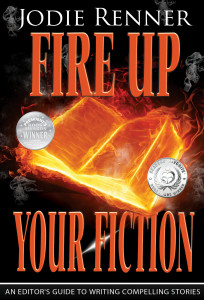
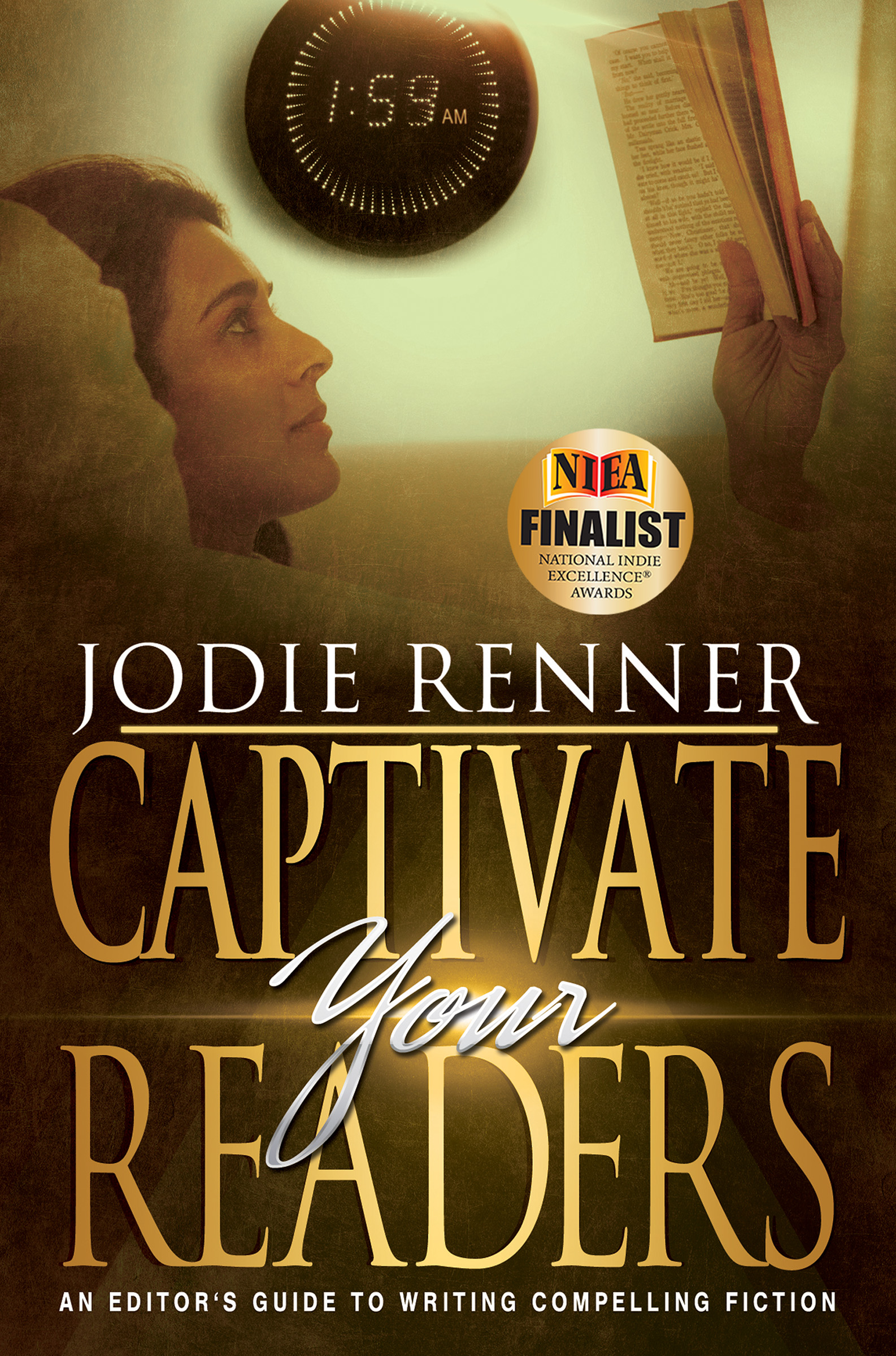
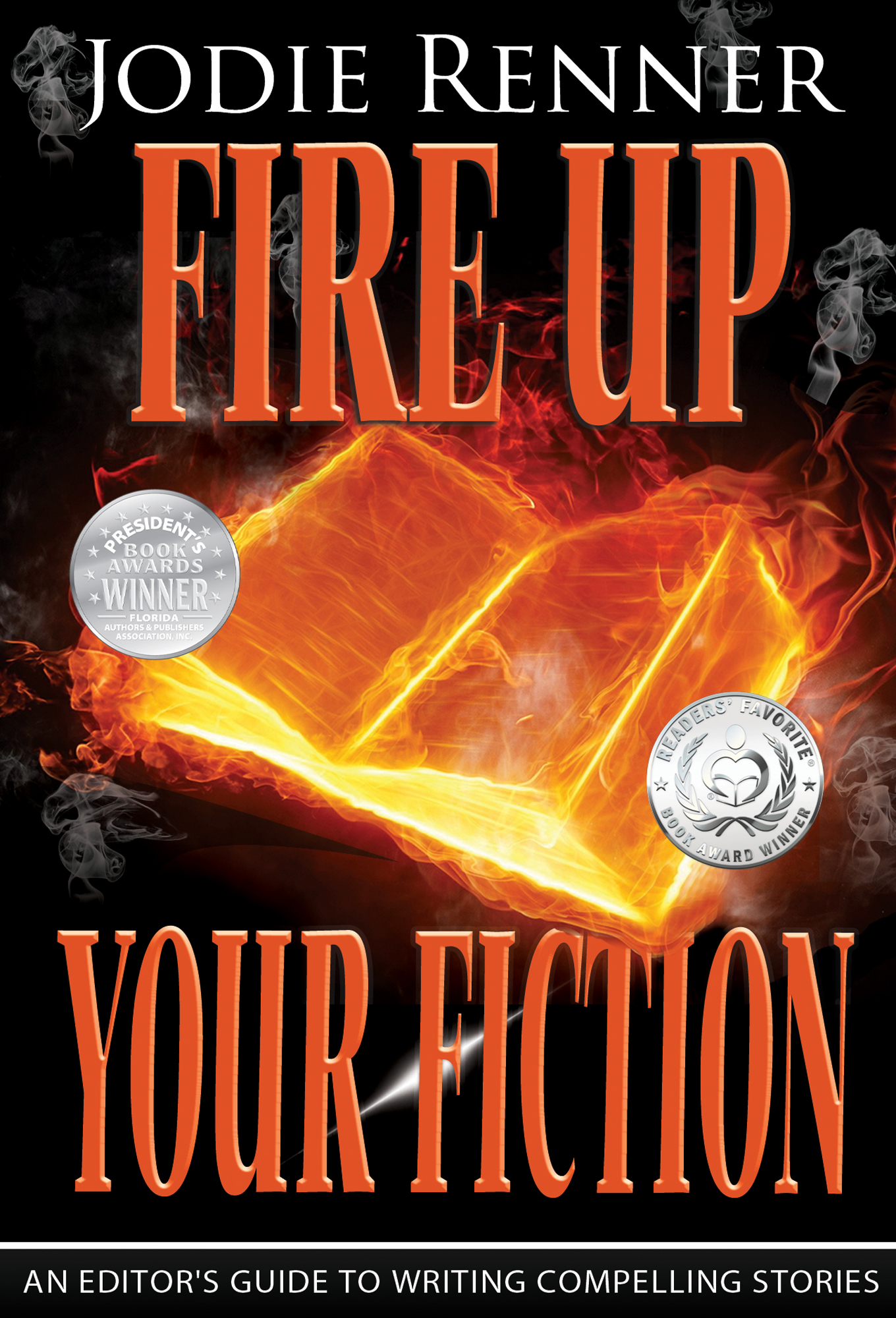
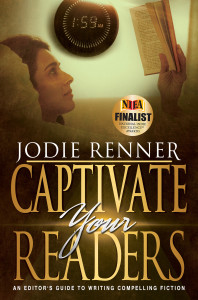
Jodie Renner is a freelance fiction editor and the award-winning author of three craft-of-writing guides in her series An Editor’s Guide to Writing Compelling Fiction: Captivate Your Readers, Fire up Your Fiction, and Writing a Killer Thriller. She has also published two clickable time-saving e-resources to date: Quick Clicks: Spelling List and Quick Clicks: Word Usage. You can find Jodie at www.JodieRenner.com, www.JodieRennerEditing.com, at her blog, http://jodierennerediting.blogspot.com/ and on Facebook, Twitter, and Google+.