Dazzle and dead bodies:What goes into a great opening?

I am about to give you the single best piece of writing advice I’ve ever heard:
Begin at the beginning, and go on till you come to the end, then stop.
It comes from the King of Hearts in “Alice in Wonderland.” But it is one of my favorite writing mantras. And I really believe that within the quote’s Zen simplicity are three huge lessons about how to write a good book:
  1. Pick the exact right moment in time to start telling your story. Too soon and you end up with pages of throat-clearing. Too late and you might miss the story’s moment of catalytic power. You have to time your entry into your story just right or, like those astronauts in Apollo 13, you’ll skip off the atmosphere and bounce into nothingness.
  2.  Persevere through the second act. Making it through what I call “the muddy middle” is the hardest part of writing a solid book. You have to use all the tricks of the trade to keep the story moving forward and maintain suspense. 
  3. Earn your climax (ahem) and know when it’s time to leave. Deliver a resolution that is logical, fair and emotionally satisfying. But resist the temptation to tie everything up too neatly.  

But let’s go back to beginnings. What makes a great opening for a book?
It’s pretty subjective, and there’s lots of good advice out there. Click here to go to our archives and read Elaine Viet’s take on it. We writers all have our favorite opening lines, which all seem to circle back to “Call me Ishmael.” (Click here to read famous authors talking about their favorite opening lines.)
I especially like Stephen King’s favorite: 
“This is what happened.”
It is from Douglas Fairbairn’s out of print novel, Shoot. King likes it because, “It is as flat and clean as an affidavit. It establishes just what kind of speaker we’re dealing with: someone willing to say, I will tell you the truth. I’ll tell you the facts. I’ll cut through the bullshit and show you exactly what happened. It suggests that there’s an important story here, too, in a way that says to the reader: and you want to know.”
King says he struggles with all his opening lines, sometimes for years. I guess that should make us mere mortals feel better as we stare at that blank screen and sweat blood trying to get the right mix of words to snag the reader’s attention. Back to Stephen King:

“[A good opening] is not just the reader’s way in, it’s the writer’s way in also, and you’ve got to find a doorway that fits us both. I think that’s why my books tend to begin as first sentences — I’ll write that opening sentence first, and when I get it right I’ll start to think I really have something.”

King is talking about opening lines in context of his new book, Doctor Sleep. (Click here for the whole article). Doctor Sleep is the sequel to The Shining, picking up with now adult Danny. Here is the opening King came up with:

“On the second day of December, in a year when a Georgia peanut farmer was doing business in the White House, one of Colorado’s great resort hotels burned to the ground.”


As King himself says, it’s pretty workmanlike, neither grand nor elegant. But look what it does: It immediately sets the reader in time and place and creates a bridge between the past book and the new one. I think this is a great lesson for all us writers — you don’t always need dazzling wordplay or a dead body in your opening. Sometimes you just need a solidly build doorway the reader can step through.
I mean, don’t you get a little tired sometimes reading the tortured openings some writers give us? Crime novelists might be the worst offenders because we are led to believe that we have to shock and awe in the opening graph or the story is DOA. As a reader, I hunger for books lately that open in a lower gear. As a writer, I am trying hard to follow the lead of King (and the King of Hearts) and just begin at the beginning.
I am not happy with the opening chapter of my WIP. I think I am trying too hard. So recently, I went to my bookshelf and pulled out few of my favorite books to see how others handled things. Here are four opening lines that I found:
“Where’s Papa going with that axe?” said Fern to her mother as they were setting the table for breakfast.”

“Who’s there?” 
“I was born twice: first, as a baby girl, on a remarkably smogless Detroit day in January of 1960; and then again, as a teenage boy, in an emergency room near Petoskey, Michigan, in August of 1974.” 

“It was a queer, sultry summer, the summer they electrocuted the Rosenbergs, and I didn’t know what I was doing in New York.”
The four books? Charlotte’s Web by E.B. White; Hamlet by Shakespeare; Middlesex by Jeffrey Eugenides; and The Bell Jar by Sylvia Plath.  
Great openings, all for different reasons. White gives us suspense worthy of Dean Kootz in a children’s book! Shakespeare gives us foreboding and the existential call to self identify. Eugenides sums up his gender theme but makes us wonder: Haven’t we all been born twice? And Plath leads us right to her heroine’s “electric nerves” and lost soul.
Can I offer one last favorite of mine? It’s on almost everyone’s list of great openings but so what?
“Lolita, light of my life, fire of my loins.”
But I love the next few lines even more:
“My sin, my soul. Lo-lee-ta: the tip of the tongue taking a trip of three steps down the palate to tap, at three, on the teeth. Lo. Lee. Ta.”

Yes, it is about Humbert’s obsession with his nymphet . But it is also about Nabokov’s obsession with words. Lo. Lee. Ta…a narcotic chant and a prose poem. I’ll never forget the first moment I read that paragraph. I was sixteen, standing in the public library during a sweltering Detroit summer. I’m sure I didn’t really understand the story. What I understood was the magic of those words. True confessions: A couple years ago, I actually tried to riff on Nabokov’s Lo-Lee-Ta in a mystery I was writing. The character was describing Florida (Flor-ee-dah!) and well…you can imagine how bad it was. Thank God my editor told me to rewrite it.
Okay, one last Nabokov sample and then I’ll shut up. It is the SECOND paragraph in Lolita:

“She was Lo, plain Lo, in the morning, standing four feet ten in one sock. She was Lola in slacks. She was Dolly at school. She was Dolores on the dotted line. But in my arms she was always Lolita.” 

The first paragraph of Lolita made me want to be a writer. That second paragraph, when I read it today, makes me want to be a better writer. 
(((INTERMISSION!)))
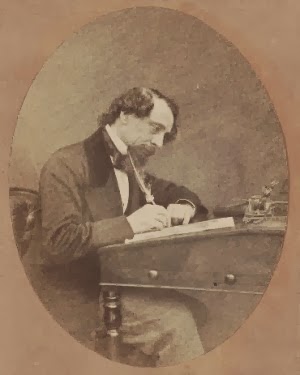
We’re back. I can’t resist this coda. Because as I was getting ready to hit the button to post this, I found out that the 2013 winners of the Bulwer-Lytton Fiction Contest have been announced. This contest, begun in 1982 by the English Department at San Jose State University, honors opening sentences in novels. It is named for Edward George Bulwer-Lytton, who in 1830, wrote these now famous lines:

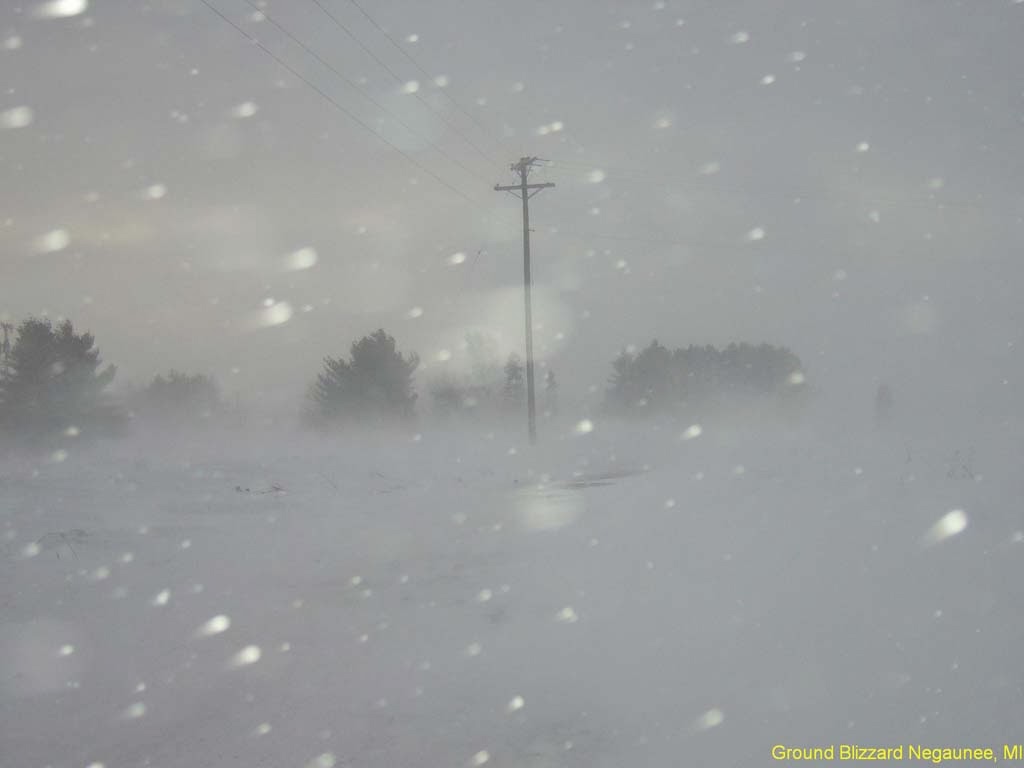
“It was a dark and stormy night; the rain fell in torrents — except at occasional intervals, when it was checked by a violent gust of wind which swept up the streets (for it is in London that our scene lies), rattling along the housetops, and fiercely agitating the scanty flame of the lamps that struggled against the darkness.” 

Yes, the Bulwer-Lytton Fiction Contest recognizes the worst possible opening lines for novels in all genres. (Here’s the link if you want to read them all, God help you.). For all us crime dogs out there, I’ll give you the winner in crime fiction:

“It was such a beautiful night; the bright moonlight illuminated the sky, the thick clouds floated leisurely by just above the silhouette of tall, majestic trees, and I was viewing it all from the front row seat of the bullet hole in my car trunk.”

Here’s the winner in my favorite category, Vile Puns:

“What the Highway Department’s chief IT guy for the new computerized roadway hated most was listening to the ‘smart’ components complain about being mixed with asphalt instead of silicon and made into speed bumps instead of graceful vases, like the one today from chip J176: “I coulda had glass; I coulda been a container; I coulda been some bottle, instead of a bump, which is what I am.” 

And here is this year’s grand prize winner:

She strutted into my office wearing a dress that clung to her like Saran Wrap to a sloppily butchered pork knuckle, bone and sinew jutting and lurching asymmetrically beneath its folds, the tightness exaggerating the granularity of the suet and causing what little palatable meat there was to sweat, its transparency the thief of imagination.

I think I actually saw that last one on Amazon the other day. If you hurry, you can get it for 99 cents.

The Puppy World View

By Boyd Morrison

For the past week I’ve been on full-time puppy duty (and dooty). She’s an eight-week-old golden doodle we just got named Casey. Prepare to activate your “awwww” buttons.

Yes, we now have a living teddy bear in our house. She’s adorable, whiny, playful, clumsy, meek, and friendly. But she also looks at the world in a way that reinvigorates my approach to writing.

She’s curious, to the same degree that the Milky Way is roomy.

Everything is new to her. Every sight, sound, taste, smell, and feel is a wondrous, vibrant, scary, exhilarating experience for Casey. Sometimes she’s tentative in partaking of a new situation and sometimes she dives right in without thinking about it. A fire hose of sensory information is pointed right at her and she’s absorbing it all like a desiccated sponge. It really is a joy to watch.

I think that’s why I enjoy movies like Elf and Twins so much. Through the main characters’ eyes, it’s fun experiencing everything to which we’ve become jaded with a whole new appreciation and sense of wonder.

It’s hard for me to remember a time like that from my childhood with any fidelity. The closest recent experience I can recall was when I went to ThrillerFest for the first time. I didn’t know anyone. I didn’t know how a conference worked. I was new to the writing craft and business. I hadn’t even been to the conference location of Phoenix before then. The fire hose was turned on me and I could barely keep from drowning in the information bombarding me.

Now when I go to ThrillerFest, I know many of the attendees, I’ve been on numerous panels myself, and I’m a New York aficionado since the conference has been held there seven years in a row. Information new to me dribbles in.

The key is capturing that sense of newness and wonder in my storytelling. When I’m reading I want that fresh experience I’ve never before encountered, yet I’ve read so many stories it’s hard not to feel that I’ve seen it all before. If you’re well-read in a genre, you likely have had the same experience.

So my goal is to mirror Casey’s approach to the world when I’m staring at the blank screen. If what I’m conjuring doesn’t provoke in me that delight of discovery, then it’s probably crap that doesn’t belong on the page. And nobody wants to look at a pile of dooty.

Analyzing Book Description Copy

by James Scott Bell
@jamesscottbell


One of the key elements of selling online these days is the ability to write book descriptions (also called “cover copy”) that sizzle and do the job in three paragraphs or so. In this age of short attention spans, you can’t afford to waste any space. You can read about one method of generating good cover copy here(h/t Jodie Renner).

For amusement recently, I randomly looked at some descriptions from bestselling authors. You ought to do the same. Go through Amazon and study the best books in your genre. See what professional marketing people have come up with. Figure out what works and doesn’t work for you. Then write your own copy accordingly.
Below are links to Amazon for three book descriptions (I didn’t want to overstep copyright concerns by producing them in full). Give each a quick read and then come back for my analysis.
Innocence by Dean Koontz

The first line is pretty good. Captures me and makes me want to read the next line (which is the whole secret of copywriting).
But that second line is a bit soft. I would change “do her harm” to “kill her.”
I would like to see more specificity in the third paragraph. What is it that creates the “bond”? What sort of “reckoning” are we talking about here? Why are these two people involved?
The last line, of course, is purely for the author. If you’re Dean Koontz, you deserve such praise. But my advice for us mere mortals: do not use over-the-top fluff. You can mention kudos, but only if you back it up with something like a nice blurb from a well-known writer, or a review from a trusted source. I don’t care how good your self-published thriller is, it is not going to “leave readers transformed forever and change the course of history for all mankind.”  
***
NYPD RED 2 by James Patterson & Marshall Karp

This copy starts with a “headline” style, which is often a good idea. But only if the headline is short and to the point. Here, I would take out the whole parenthetical statement and leave this: NYPD Red hunts a killer who is on an impossible mission.
The next two paragraphs are excellent. They are specific and to the point and tell me exactly what type of story this is. It has both outer plot (serial killer) and inner journey (Kylie has been acting strange recently). It’s all there.
The puffery about Patterson is, of course, also well-deserved. But notice that it is backed up with a clip from a trusted source.
***
Stand Up Guy by Stuart Woods
The headline focuses on the series character, which is fine. Readers of the series will want to know about it. “Edge-of-your-seat adventure” is a cliché, of course. I wonder if readers have a slightly negative reaction to such things, even subconsciously. Maybe it doesn’t matter. I’m not sure. What are your thoughts on it?
The first paragraph has some issues. What is a “well-deported” gentleman? I had to look up deported, and found out it’s an archaic word for “conduct.” Key copyrighting tip: Don’t make readers work hard! Write in such a way that a middle school student could read the copy and not get tripped up by any of it. 

Also, is there enough at stake? Does “keenly interested” indicate enough trouble? 
The second paragraph gets us a little closer to specifics and how they involve the lead character. I’m okay with that.
***
Now here’s one for a short story:
Sometimes, comedy can seem like death…
For Pete “The Harv” Harvey, stand up comedy is a serious business. At least, he wants it to be. But the struggle to make it in the glitter dome of L.A. hasn’t exactly been a smashing success.
One night, after bombing onstage at a local club, Pete wonders if his next stop is managing a car wash. Then a man sits next to him at the bar–a man with an almost unbelievable proposition. One that could mean a whole lot of money to Pete “The Harv” Harvey, who will soon learn that deals too good to be true are no laughing matter.
I think the author did okay with that. It’s brief and to the point, gives the set up and then gets out of the way.

And here’s more news: This story, “No Laughing Matter,” is FREE today through Wednesday on Kindle. The favor of a review is requested.
Go ahead and get the story now. I’ll wait.
Welcome back! Now dive in and leave a comment on book descriptions. What do you think works, or doesn’t work? What grabs you? What makes you shrug your shoulders and go “Meh”?

Parched For Readers

A few years ago I met a gentleman in New Orleans who had never heard of Stephen King. He was thirty-three years old at the time, a musician for whom a classical education even at the elementary level had never been a priority but who nevertheless was still knowledgeable of pop culture. Still, he was unfamiliar with King and Carrie, The Stand, The Shining, and the other King books which had been adapted for film. He didn’t have a book in his house; neither, as it happened, did his mother, or the five of his eight siblings whose homes I visited.
Stephen King, I think I can safely say, is a household name, so people such as my acquaintance who have never heard of him are probably the exception rather than the rule. That no-book thing, however…that bothers me. I know people who watch Castle, which begins its sixth season next month, who haven’t read a mystery novel in decades, if ever. Dexter? Longmire? I still find people who have no idea that these popular dramas are based on novels. Justified slyly winked at Raylan Givens’ literary origins a couple of years ago but I doubt it increased sales of Raylan, which was published on season premiere night.
James Bell’s question from last week regarding the future of publishing was an interesting one which evoked a number of interesting responses. Almost all of them, however, implicitly made an assumption that I don’t think we can make anymore, in this era of entertainment everywhere: we’re each and all of us assuming that there will still be readers. Do you walk into homes without books in evidence? When you’re out somewhere and see people reading, how many do you not see reading? How many times in the past month have you been talking to someone about the last book you’ve read and heard them say, “Gee, I haven’t read a book in years. I just don’t have the time”?
I’m not attempting to be an alarmist here, or a Chicken Little. What I think I’m seeing, however, is a situation where the problem isn’t that we’re drowning in books; it’s that we’re parched for readers, and we’re fighting a battle of attrition. There are plenty of books out there worth reading. For every book I read there is at least one, often more, that I don’t get to and that winds up on my “someday” list. That’s not the problem, as I see it. The difficulty is that for everyone one of me, and you, there are, it seems, five or six who just don’t care. They’d rather watch reality television or something like that.

Am I wrong here? Or am I pointing out the 800 pound gorilla in the room that we’re all trying to studiously ignore?

First Page Critique: AVANTI

Note: The blog administrator deeply apologizes for the tardiness of today’s post. She’d like to blame technical difficulties, but can’t bring herself to lie to her valued TKZ peeps. Life got in her way.

As usual, my comments follow the text.

***

 AVANTI

WAY BACK BEHIND HER flashing lights—reds and blues—closing like a rocket. THE COPS! Imagine that, she thought. Out here, middle of nowhere. Desert all around, guy sittin’ half the night all alone in the dark, his radar gun, or whatever, poised and ready for action, unlikely event some speeder comes bopping by, not a care in the world. And that of course, would be me, just daydreaming like some schoolgirl and totally ripping up the landscape. Sooo stupid. 

“Gettin’ stopped out here will never do, girl.” She said it aloud, followed by a “No way” . . . and then she punched it.

 Her car, all made up special. Custom everything. Suspension. Wheels. Tires. Engine. All state-of-the-art. Outrun anything. Anything! “We’ll just see ‘bout that,” she said. Accelerator to the floorboard, the flashing lights recede. “Chase is on now, son.” She cracked a big wide smile. Fully alert. Arms locked. Shoulders set. One-twenty-five and climbing! Dips in the road punching her gut. Weightless one instant, then wham! Needle passes 145. Everything outside’s a blur.


She checked her side mirror. Still there and coming on strong. Whoa, baby! Got me a tiger on my tail. HAH! Time to light the candle. Her reference was to an enriched fuel mixture she could employ in time of trouble, like, now. She slipped a pair of NODs—Night Optical Device—over her eyes and cut headlights. In total darkness she reached down and flipped the special switch. Soon as she stomped the accelerator, the result was explosive. Explosive!

WHAT A SIGHT it was, viewed from back down the road in the cop car. First off, the tail lights recede. 

Oh, man! Got me a runner! So he steps on it. Closing the gap the tail lights simply vanish. An instant later, KAPOW! Ten feet of angry flame lashes the darkness. And this time she really is gone, except for the heady smell of burnt kerosene and rocket fuel.

AND SHE’S FLYING. Not like back in the old days piloting Black Hawks and Apaches in Iraq, Afghanistan and numerous other places the censors deleted from her logbook. Only, here he comes . . . again. Reds and blues winking away back there in the dark, until . . . Headlights bouncing and he’s off the road. A tower of flame geysers into the starry sky.

Oh, no! What have I done?

***

My comments:

I found this to be a really interesting submission. I liked the “in the moment” sense of the narrator’s voice, which immediately draws you into her action. I like how the technical details were slipped in to give the reader a sense of her expertise. This writer doesn’t make the mistake of  explaining the reasons his character has competence and history–he suggests it by introducing technical clues while never breaking the action’s pace. That’s good. That’s strong. I like this.


I have a couple of suggestions to make. 

Title
AVANTI meant nothing to me as a title. Frankly, it sounded to me  like an aperitif or a menswear designer. I looked it up and found the definition as:

Kingdom of Avanti, an ancient Aryan kingdom of W central India, with its capital near modern Ujjain; flourished in the 6th–4th centuries b.c.

So, is this story going to pull us into a story based in West central India, or is it going to be some kind of CIA historical time traveling thing? Or is there another definition for Avanti that I’m clueless about?

The trouble is, the title is one of the strongest weapons you as a writer have to get a reader’s attention. If the reader is completely ignorant about what your title stands for, you’ve just lost your chance to lure that reader into your story. (And even if I’m the last person in the world to know what Avanti means, and everyone else chortles at my ignorance, I stand by that statement. You don’t want to lose even one reader if possible, especially on the cover.) So bottom line: I suggest finding a stronger title that suggests more about what the story is about.

POV transition
This comment is just a nit. When you switch from the narrator’s POV to the view from behind (aka the cop’s POV), in the following sentence:

WHAT A SIGHT it was, viewed from back down the road in the cop car.

It’s a slightly jarring, possibly confusing transition. Switching POV midstream can easily throw a reader. We read the line “What a sight it was,” before we know we’ve just switched to the cop’s POV.  I can’t really figure out an easy fix for that, but I would suggest playing around with it to get a smoother transition. I also think the writing got a bit awkward when it switched to the cop’s POV. His “voice” also sounded exactly like the main character’s in style and presentation. It’s important to distinguish the sound of your characters’ voices from one another. As a possible fix, maybe he could reach for the radio and have him speaking into it–that would be a natural way to introduce the cop’s thoughts and dialogue without repeating the “inside the head” style you have for the main character.

Capitalization and Exclamation Mark : In general, all caps and exclamation marks are no-no’s for creating a sense of drama. And this piece doesn’t need them. The writing is very dramatic as it is. And I’d be careful about overusing ellipses as a “thoughtful pause” device.

Voice:  I love the voice here. I love its narrative flow and the way it conveys an “in the moment” sense of being in the character’s shoes (or car, in this instance). I like the use of language. (For example, I liked how the writer uses “geysers” as a verb instead of choosing something more mundane, like “shot”). I did think some of the terseness was slightly overdone at a couple of points, but only very slightly.

Overall, I find this to be quite a strong first page. Well done, writer! 

TKZ’ers, your thoughts?

Leaving a Legacy

Nancy J. Cohen

I had the weirdest dream, wherein my family moved into a multi-room apartment. Along came a man and his wife who claimed they had the legal right to occupy a room in any one of a multitude of properties in the city. We had no choice except to allow his presence. But when he began to redecorate, I got angry. He replaced my pictures on the walls, changed the furniture around, and put out his own knickknacks. But what fueled my fury the most was when he covered up my bookshelves. I could no longer see my collection of books—in particular, the hardcover mystery novels I’d written.

P1020561 (800x570) 

The man had no idea I was a writer, so he didn’t understand when I desperately began moving his belongings out of the way to search the shelves. I became frantic to find the books with my name on them.

When I awoke, I realized how much those shelves of books meant to me. These are my legacy, more so than anything I can leave my children. The books I’ve written will hopefully stay around in libraries and used bookstores and people’s minds long after I’m gone. Perhaps I am arrogant in this belief, and I will be forgotten after my demise. But unless there’s a big bonfire like in the science fiction tales or folks stop reading altogether, the books will still be around somewhere.

So where does that leave e-pubbed only authors? With a digital file? And why does hardcover seem more durable than mass market paperbacks? Will trade editions stand the test of time?

P1020546 (800x600)

When you see pictures of those big manor houses in England, they all have the most sumptuous libraries. Is this tradition to be lost forever in the digital age? Will no one care to have home libraries anymore, regarding books as dust collectors rather than cherished tomes of knowledge, adventure and imagination?

P1020551 (800x600)  P1020550 (600x800)

This legacy is something to think about when you make your choice about where and how to publish your work. Holding a print book with my name on it still means a lot to me.

This post does not address other parts of leaving a creative legacy, such as donating your literary materials to a library collection. Those provisions should be included in your will along with instructions for ongoing management of your creative literary estate.

Here are some more shelves with some writing references plus more of my books in different formats.

P1020563 (800x600)
P1020564 (800x600)P1020565 (800x600)

How do you feel about leaving your books in print formats versus digital for posterity?

No book left behind? Sadly, no.

Like Joe was moving homes a few weeks back, and Clare has done a couple of times in recent years, I’m in the process of moving. My family and I aren’t moving very far–just to the next town over, Manhattan Beach. This new town is closer to our tennis club and is known to be slightly tony. (Read: Old people live there). Our current home is in Hermosa Beach, which is famous for having a certain Animal House vibe. We’re about 30 years too old to fully appreciate the finer merits of Hermosa, like the fun of slinging beer bottles into shrubbery as one staggers home from a pub crawl at 2 a.m.

The main challenge in getting our current house prepared for sale is that we need to do a little decluttering. Make that a massive amount of decluttering. My husband and I are both pack rats–we’re the same species, just slightly different  breeds and scale. (Scale-wise, I’m like a Jack Russell Terrier and he’s more of a Great Dane. But I don’t want to get personal here.)

My husband doesn’t like to throw out paper, and I don’t like to part with books. Over 11 years of marriage our  combined traits have made our house a bit…how shall I say…full.

So we’re currently analyzing everything that’s been collecting here over the years, and making some hard choices.  My hardest choices involve books. How do you let them go? Where do you send them? I have a strange possessiveness about books. I can’t even part with ones I didn’t enjoy and may not have even finished. I have this weird suspicion that there’s a kernel of something useful hidden in each one of them, something that I shouldn’t let go of, just in case I ever need that kernel down the road. (It’s my version of hoarding. I totally empathize with the crazy people on Hoarders whose houses are filled to the ceiling with old plastic bags, bent forks, buttons, and the occasional cat carcass.) You just never know when you’ll need those things again. (Except for the cats. The poor things probably just lost their way in the jungle pile.)


Sadly, I’m having to downsize when it comes to my physical books. I’m convinced we could live in Versailles with every wall lined with bookshelves, and we still wouldn’t have enough space for all of these books. But what do you do with the ones you decide to let go of? Donate them to a library? Goodwill? 

I actually found a site called BookCrossing, where you can “release your book into the wild”. The idea is that you let other readers know where you left your book(s), and those people will come pick them up, and then pass them on. I guess the system even lets you track your book as it zigzags the globe, checking in from time to time like the Travelocity gnome. The whole thing sounds fun, kind of like the Readership of the Traveling Books.  But I’m not so sure the authorities would be thrilled if I released my entire stash into the wild. For example: Where do you dump 10 years’ worth of so-so mystery cozies? I guess I could leave the knitting mystery near a yarn shop.  Maybe I could park the restaurant reviewer mystery and an old Zagat guide near CPK. But I’m afraid I just have too many books to “set free” all at once. It might even violate some local dumping ordinance. I might run into a humorless merchant or constable who doesn’t appreciate my attempt to create my own episode of Lit Gone Wild.  

So, what would you do with a ginormous book pile that you must somehow unload? We are working with a professional organizer who will help us resell things, including books. But I would hate for my letting-go process to turn into a tawdry commercial transaction. Selling them would make me feel kind of unclean about the whole thing, like I’m turning into a Ferengi from Star Trek. But really, what other choices are there? Any ideas?

You Made Me A Criminal

We have a great guest today – fellow mystery writer and all-round nice Brit, Simon Wood. Please make him feel welcome TKZers!
Clare

Some people give me odd looks after they’ve read something of mine. They see me, they read the stories and they merge the characters and me together and see the same person. They don’t see easy-going, Simon. They see evil-doing Simon. I’m not evil doing. I’m actually very nice. I rescue animals off the street, I pay my taxes and I’ve never held up a bank (well, not in California and besides, I was very young).
 
Consider this quote for one of my books: “Simon Wood is a criminal genius. We should all be glad he’s writing this stuff and not doing it.”
This isn’t the kind of quote I should have on a tee shirt when I visit the FBI.
That’s the problem. Readers blur the lines between the characters we scribblers create and the scribblers. I’ve been told on several occasions that I’m not a nice person based on my stories. I’ve been asked if I’ve cheated on my wife when they’ve read about a character’s infidelity. As shocking as these statements can be, I can understand them. I’ve said myself. When I tell a story, I don’t base my characters on people I know or people I’ve read about, but I place myself in the shoes of those characters and view the world how they view the world. So for all intent and purposes, I am the good guys in my stories and I’m the bad people in my stories.
But that doesn’t make it me.
I’m not living out my fantasies on page because I fear capture if I committed them in the real world. I’m not outlining my future crimes. I’m not a depraved person getting my kicks on paper. I’m nice, easy going, animal rescuing Simon. But I can conjure up crimes and motives for killing and invent people react to those circumstances and I am empathic to their sensitivities. If I was faced with the crisis of conscience that a character is faced with, I can see their point of view and follow it. That character can be a good person doing the wrong things for the right reasons or a bad person doing the wrong things for the wrong reasons. I can see it from their perspectives. But am I like them? No. Would I act like them if their position? Perhaps. But the people on the page aren’t me. A lot of writers I’ve met and befriended are nothing like the people they write. Most horror writers I know are some of the most down to earth people I know. Eavesdrop on conversation at any World Horror Convention and you’re going to hear them talking about pets and their kids and not how to dismember a body a dozen way from Sunday.
Granted, characters are the writer’s alter egos and altered egos. They are the people they would like to be, possibly, but they are also the kind of people we wouldn’t like to be. But at the end of the day, there is a big distance between the writer and his darker characters—well, certainly in my case. I can’t speak for everyone.
I will no doubt be in for an interesting time with my new book, NO SHOW. Seeing as the book is inspired by something my wife did to me (or more accurately, didn’t do) on my first day in America, I’ve already had a few emails from people wondering if I’m getting back at her with this book.  For the record, no.  I got a book out of it, so I’m grateful to her—now.  🙂
At the end of the day, I’m a storyteller and like Marvin Gaye says, I need every kind of people to tell my tales and that includes the bad ones. So the next time you read a nasty character and you start comparing the writer to that character, put some distant between the two. I know we do.


BIO: Simon Wood is a California transplant from England who’s been a competitive race car driver, is a licensed pilot, and an occasional PI. He shares his world with his wife, Julie, and their longhaired dachshund and five cats. His short fiction has appeared in a variety of magazines anthologies, such as Seattle Noir, Thriller 2 and Woman’s World. He’s a frequent contributor to Writer’s Digest. He’s the Anthony Award winning author of Working Stiffs, Accidents Waiting to Happen, Paying the Piper and We All Fall Down. As Simon Janus, he’s the author of The Scrubsand Road Rash. His latest novel, No Show, is out now. To learn more about Simon, visit his website.

The End of Discoverability and the Rise of Merit


One of the long-term consequences of the digital revolution is, of course, the decline of physical bookstores. Remember when there were at least two or three great bookstores in town? More in a big city, with a lot of indies to choose from as well as the chains? I remember Pickwick, which was bought out by B. Dalton, which was bought out by Barnes & Noble.
There was Brentano’s, which was acquired by Waldenbooks, which was acquired by K-Mart and rolled over into Border’s.
Then, all of a sudden, there was no more Border’s.
And now poor Barnes & Noble is the last chain standing. But it’s been closing stores left and right. A couple of weeks ago its CEO was ousted. The future of its remaining brick-and-mortar outlets is cloudy at best. Which of course ripples upward to the traditional publishers.
We all should have bought Proctor & Gamble stock in 2007, when the Kindle hit the market. Because P & G makes Pepto-Bismol. Sales of the pink elixir must have shot through the roof in publishing boardrooms across Manhattan.
All of which leads us to another consequence of monumental importance: the end of discoverability.
What do I mean? Take a look at these stats from an article in Salon:
According to survey research by the Codex Group, roughly 60 percent of book sales — print and digital — now occur online. But buyers first discover their books online only about 17 percent of the time. Internet booksellers specifically, including Amazon, account for just 6 percent of discoveries. Where do readers learn about the titles they end up adding to the cart on Amazon? In many cases, at bookstores.
The brick and mortar outlets that Amazon is imperiling play a huge role in driving book sales and fostering literary culture. Although beaten by the Internet in unit sales, physical stores outpace virtual ones by 3-to-1 in introducing books to buyers. Bookshelves sell books. In a trend that is driving the owner of your neighborhood independent to drink, customers are engaging in “showrooming,” browsing in shops and then buying from Amazon to get a discount. This phenomenon is gradually suffocating stores to death. If you like having a bookseller nearby, think carefully before doing this. Never mind the ethics of showrooming — it’s self-defeating. You’re killing off a local business you like. (If you prefer e-reading, many independent stores have agreements with Kobo and Zola Books that give them a cut of e-book sales.)
As online sales continue to gain ground and shelf space diminishes, “discoverability” has become a big worry-word in the industry. To make a point so obvious that it’s sometimes overlooked, the most crucial moment in bookselling is the moment a reader finds out that a book that sounds interesting exists. How else is she going to buy it?
So there you have it. Physical bookstores are (were?) the big driver of discoverability. You walked in and saw a huge front-of-the-store display of a writer the publisher put big bucks behind. You saw recommendations from store staff, you saw certain titles cover out. You saw all sorts of books in all sorts of ways.
But when that space is no longer there, what happens to discoverability?
Well, you can try to create a new stream. The recently designated CEO of Random Penguin believeshe and the big publishers are the ones who will be able to “crack the code of discoverabiity in a world of fewer bookstores, to come closer to the end consumer, to keep readers more interested in reading and provide them with the best reads.”
To which I say, with all due respect, there is no code to be cracked. There never was. Once upon a time there was but one system with but one player: the publishers, who controlled placement in bookstores.
But the era of massive placement is over. What do we have instead? An old-fashioned system, one your grandparents called merit. That means trust which is earned, over time, as people come to rely on the quality of your offerings.
This is good news for writers. Because it should be about the writing, and writing is a craft, and craft can be learned, and writers can get better.
In the past, writers needed the backing of a big publisher to get any prominent real estate in a store. Precious few writers ever got the royal treatment. But now the playing field is digital. And those who compete directly for reader loyalty do so with the same chance to grab market share as anyone else.
Thus, the key to success in this game is not advertising, shelf space, co-op, The New York Times, algorithm ping pong, bookstore signings, launch parties, or social media saturation. It is simply and reliably what we all concluded in Friday’s open forum: good book after good book.
Sure, you need a home base (website) and a modicum of exposure to social media. You have to give some thought to how you present your professional self to the world. You’ll have to explore some means of “getting the word out” when you have a book available. Just don’t stress out about it. Don’t fall prey to Obsessive Promotion Disorder.
Instead, concentrate now and forevermore on the most important thing: the quality of the experience you deliver to readers. Focus on that and discoverability will take care of itself.