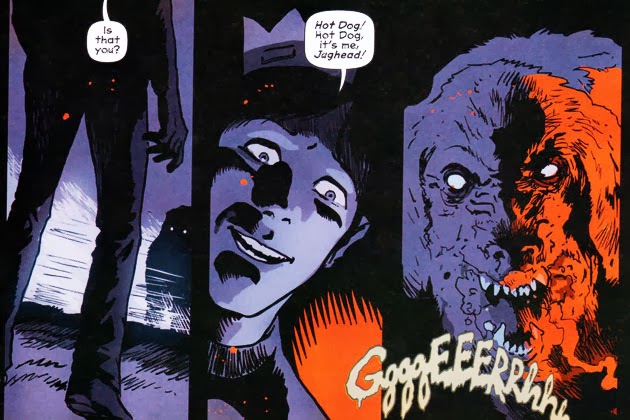
Afterlife with Archie
Reader Friday: Overcoming Adversity
Do You Have a Writing Question for TKZ? Let Us Know!
4 Giant Steps to Self-Publishing
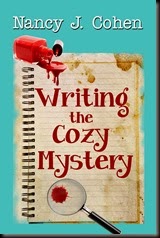
Recently I have released my first nonfiction title. This came about because numerous aspiring authors kept asking me how to write a mystery. So I compiled my teachings into an easy-to-read booklet with concise instructions on Writing the Cozy Mystery. Here is a distillation of the steps I followed to produce this work.
Please note that today I am en route to Orlando for SleuthFest, and I may not be able to reply to comments in a prompt manner. I will look at them later and do my best to respond in a timely fashion.
Manuscript
Hire a story development editor and a copy editor. Polish your work to perfection.
Insert front and back material into manuscript.
Write back cover copy.
Legal
Create a publisher name and register with your State as “Doing Business As” title. Or create an LLC if you prefer. Check with your accountant for more info.
Put a Legal Notice in your local newspaper if required by the State.
Apply for a county business license/tax receipt. Note: if you’re 65, you may be exempt from fees but you still have to apply. Renewal is annual.
Open a business bank account under DBA title. As sole proprietor, you don’t need an EIN number. Use your own SS number.
Order checks for new account.
Buy ten ISBNs from Bowker.com.
Production
Hire a cover designer for ebook cover and trade paperback cover.
Determine book price for digital edition.
Assign an ISBN number to the digital edition at MyIdentifier.com (if you’ve bought them from Bowker). You will need to upload the cover and give the price.
Hire a formatter after inserting the ISBN into your copyright page. Note that the print edition will have a separate ISBN from the ebook edition so you’ll need to send the formatter two different files or pay for a correction later.
Upload your e-book to Amazon, Apple, BN, Kobo, Smashwords, AllRomanceEbooks/OmniLit. It may be easier to hire your formatter to upload to iBooks since I believe you need to own an Apple device to do this step.
*File for copyright now so you don’t have to send two print books to the copyright office.
Upload to Createspace for a print edition. If you use their ISBN, you can sell your CS book to libraries. If not, librarians will have to get your book through another source or buy it through normal channels. Consider Lightning Source and Espresso Machine as other print options.
Consider an audio edition via ACX with another ISBN assignment and a cover resized to this format.
Marketing
Order print materials to promote your work, i.e. bookmarks, postcards, etc.
Consider doing a virtual blog tour.
If you set a particular release date, hold an online launch party.
Post your release news and book cover on all your sites.
Solicit Customer Reviews.
Run a Rafflecopter Contest.
Consider if you want to give away free copies or promote a bargain/sale price.
Join indie author forums online for more tips.
Obviously, marketing could be a whole other topic as could each one of these sections. I do plan to blog about this process in more detail at a later date on my personal blog. Meanwhile, these steps will get you started in the right direction. Those of you who have been through this journey might have more to add.
<><><>
Writing the Cozy Mystery is a valuable guide on how to write a traditional whodunit. This concise tool will show you step-by-step how to develop your characters, establish the setting, plot the story, add suspense, plant clues and sustain your series. You’ll find everything you need to know in an easy-to-read, clear manner to write your own whodunit. http://nancyjcohen.com/books/nonfiction/
Sympathy For the Bedeviled
“All writers learn from the dead…because the dead control the past, they control the stories, and also certain kinds of truth. So if you are going to indulge in narration, you’ll have to deal, sooner or later, with those from previous layers of time. The dead may guard the treasure, but it’s useless treasure unless it can be brought back to the land of the living and allowed to enter time once more — which means to enter the realm of the audience, the realm of the readers, the realm of change.”
This, in a nutshell — well, a lovely quote — is what was off about my friend’s story. Because she had not given her victims a voice in the book, we were missing a vital part of the narration. She needed to bring these victims back to life so there would be a reason for the heroine to solve their murders. Yes, the protag can be self-motivated (a cop looking for glory, husband bent on vengeance, a Poirot who wants to unravel the puzzle). But that is usually intellectual and protag-centered. It is not reader-centric and visceral. And the best crime fiction pulls readers in emotionally, thrusting them deep into the interior lives of the characters. So the victims must be a tangible presence in the story even though they are never “on camera.”
How do you do this? Well, once I was able to articulate this to my friend, our critique group had plenty of suggestions. Maybe the other students hold a memorial service, as kids are wont to do. Perhaps the heroine needs to interview parents or friends who offer memories and mementos. Culling through a victim’s possessions can be incredibly evocative and emotional, as any of us who has ever had to sort through a relative’s things after a funeral knows. Yearbooks, photographs on a mantel, journals, letters, a Facebook page…it can all be fodder for making a victim come back to life on a page.
Now that I think back on my critique session, I am surprised that this should have been such a revelation to me. My own series hero, Louis Kincaid, is one of those investigators who is drawn to cold cases and is compelled, at his core, to “speak for the dead.”
In our third book, Thicker Than Water, he is trying to solve the rape and murder of Kitty Jagger. She has been dead for 20 years but Louis talks to her boss, her best friend, the detective who worked her case, anyone who remembers her. What slowly emerges is a Rashamon portrait of Kitty that sends the case in a new direction even as it builds sympathy for the dead girl.
The most moving scene, I think, is when Louis visits the girl’s ailing father, who allows Louis to examine Kitty’s bedroom, which has been untouched for 20 years. We give a full three pages of description to the room and its contents. The scene ends with:
He picked up one of the half dozen perfume bottles. It was called Heaven Scent. He brought it up to his nose and drew back. It was cloyingly sweet. It was the smell that still clung to the room after twenty years.
He set the perfume down, letting out a long breath.
Time had stopped. He could almost see her, jumping out of bed, late for school, coming back and dumping her books, changing into her uniform before hurrying off to work.
His eyes traveled slowly around the tiny room. They had just left everything. Why hadn’t anyone packed her things away? And that old man sitting out there in his lounge chair, like he was still waiting for her to walk in the door and make him grilled cheese.
Of course Louis is looking for clues here in the bedroom. But more to the point, he is letting Kitty tell her own story. He is letting her come back to life. He is forcing us, the reader, to care. And I hope, by the time the reader closes the book, we mourn the one who is gone.
Dangling Participles, Misplaced Modifiers, and Other Awkward Constructions
by Jodie Renner, editor, author, speaker
In your writing, have you inadvertently created some awkward sentences involving misuse of participles?
In my editing of fiction manuscripts, I find even my smartest, most talented authors sometimes commit gaffes with participles, which can affect the meaning of the sentence. Some readers may notice these style blunders, and others may just feel subliminally confused or inexplicably mildly irritated.
Problems with participles, dangling or otherwise:
Participles are verbs that end in –ing (present participle) or –ed (past participle). According to the Chicago Manual of Style, “The present participle (-ing verb) denotes the verb’s action as in progress or incomplete at the time expressed by the sentence’s principal verb.” In other words, an –ing verb expresses an action that is still taking place when another action occurs.
For example, “As he was driving on the freeway, a police car whizzed past, lights flashing and sirens blaring.” Or “She escaped while the house was still burning.”
So –ing verbs are mainly used for ongoing actions or to indicate an action that is still taking place when another action occurs. Here are some examples of incorrect use of participles:
What’s wrong with these sentences?
Hurrying up the sidewalk, she ran into her office building.
Striding across the lobby, he jabbed the button for the elevator.
Tapping her toes impatiently, she dashed into a free elevator that stopped.
What’s the problem ? Logistics. The -ing verb indicates that the first action is still happening when the second one occurs, but it’s physically impossible. She can’t run into her office building while hurrying up the sidewalk – it’s physically impossible. And if he’s still striding across the lobby, he can’t be jabbing the elevator button. Nor can she tap her toes while dashing into an elevator!
~ Check those sentences starting with -ing verbs.
Newbie writers often start sentence after sentence with -ing verbs (participles). That’s another sign of amateurish writing, and causes logistic problems. Besides being repetitive and boring, this sentence construction usually ends up describing a physically impossible series of actions – sequential actions described as if they’re simultaneous, as in the examples above.
Here’s another one: “Pulling the car over to the curb, she ran up the sidewalk.” She can’t run up the walk while she’s pulling over to the curb. It should be something like, “She pulled the car over to the curb, parked, then ran up the sidewalk.” Or “After pulling the car over to the curb, she jumped out and ran up the sidewalk.”
So vary your sentence structure, and if you start a sentence or clause with an –ing verb, make sure it works.
~ Don’t get caught with your participles dangling!
According to Merriam-Webster, a participle is a word having the characteristics of both verb and adjective. As mentioned above, participles are verb forms that end in –ing or –ed, like “buzzing” or “roaring”, or “satisfied” or “soaked.” A participial phrase modifies a noun, like “Climbing the mountain, the hikers soon grew tired.” The phrase is talking about the activity of the person or thing closest to it, in this case, the hikers, so it’s correct.
Here’s an example of a dangling participle: “Exploring the trails, the birds chirped merrily.” It’s not the birds that are exploring the trails, so it needs to be changed to something like “Exploring the trails, the hikers heard birds chirping around them.” Or “As they explored the trails, the hikers…”
A few more examples of dangling participles:
Wrong:
Dodging the traffic, his cell phone got dropped on the street.
It’s not the cell phone that’s dodging the traffic, so it needs to be:
Right:
Dodging the traffic, he dropped his cell phone on the street.
Or: As he dodged traffic, he dropped his cell phone.
Wrong:
Gazing out the window, the willow tree swayed in the breeze.
This sentence implies it’s the willow tree that’s gazing out the window. It would need to be changed to something like:
Gazing out the window, she saw the willow tree swaying in the breeze.
Or: As she gazed out the window, she saw…
~ Misplaced modifiers are a mistake.
Also, watch where you put your descriptive phrases in sentences, as they modify the words closest to them. For example,
Tall and rugged, the teenage girl gazed at the basketball star in admiration.
As it is phrased here, the “tall and rugged” refers to the teenage girl, when it’s supposed to be describing the basketball star. It should be rephrased to something like:
The teenage girl gazed at the tall, rugged basketball star in admiration.
Similarly with:
Tired and dirty, the lady of the house watched the farm workers trudge past at the end of the long day.
It’s not the lady of the house who’s tired and dirty, so this sentence needs fixing.
The lady of the house watched the tired, dirty farm workers trudge past…
Wrong:
Slathered in chocolate icing with sprinkles, the customers bought boxes of the sweet, decadent donuts.
It’s not the customers who are slathered in icing with sprinkles! This should be changed to something like,
The customers bought boxes of the sweet, decadent donuts slathered in chocolate icing with sprinkles.
And you wouldn’t want to write, “Soaked to the skin, she dried off the kids when they came in from the rain.” Unless the mom is soaked to the skin, too!
Readers and writers – have you seen or accidentally created some awkward sentences involving misuse of participles? Care to share any humorous ones?
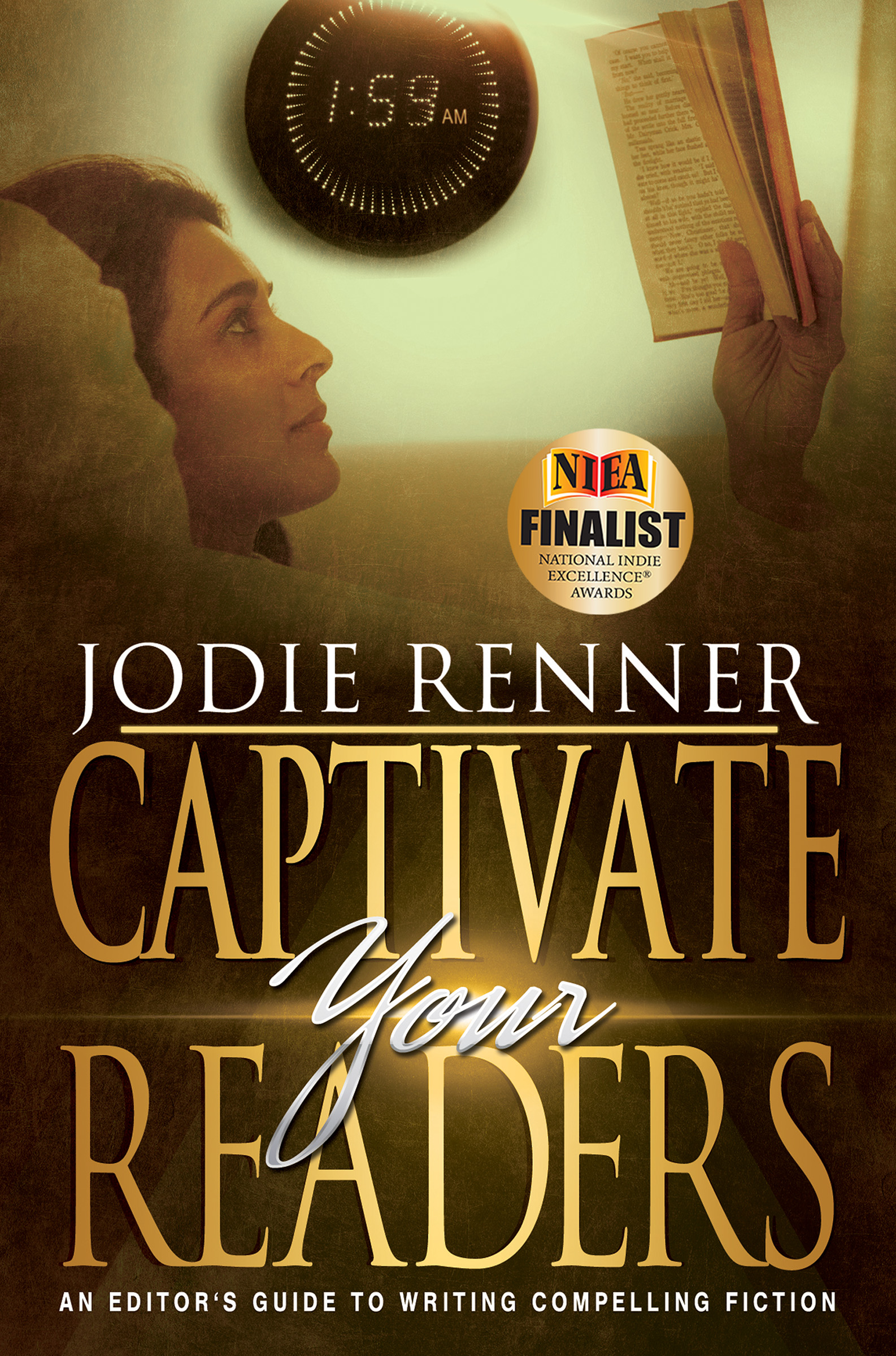
I provide lots of tips, with examples, of these and all kinds of other style gaffes to avoid in my award-winning editor’s guide to writing compelling stories, FIRE UP YOUR FICTION.
On Author Earnings and Author Yearnings
The real choice is that 99% of you can write a novel, pour your heart into it, and watch as every agent you query rejects the thing. And then you can give up. Feel like a failure. Walk away from your dream.
So what do you perceive to be the terrain out there in publishing land?
Classic Thrillers
Les Miserablesby Victor Hugo. This novel is long. It has a whole miscellany of odd things that got left on the cutting-room floor when the book was turned into a Broadway musical. There are learned disquisitions on medieval monastic orders, the sewers beneath Paris, and the nature of quicksand. And though I wasn’t terribly interested in these subjects, I didn’t mind wading through those chapters. I was so desperate to find out what was going to happen to Jean Valjean, there was no way I could stop reading. Hugo was a master of the cliffhanger.
Reader Friday: What’s On Page 69?
It’s been a while since we played the Page 69 Game, which was introduced to us by Joe Moore. The idea is that you can tell whether a book is worth reading by turning to page 69 of the book, and reading that page. If you like that page, chances are you’ll like the rest of the book.
So, let’s share page 69 of our WIPs. Does it make the reader want to keep going? (And if you haven’t gotten that far, turn to page 69 of the book you’re reading, and tell us what’s on it.)