Key Ways to Layer Depth Into Your Scenes

Jordan Dane
@JordanDane


I’d been writing for awhile before I heard the term “layering.” It was a writer craft thing I was doing instinctively in my rolling edits, but I’d never heard it called something specific until I attended a writer’s craft workshop and saw examples.
 
Most scenes are written in a bare bones fashion, like erecting the framework of a house before the walls are finished. The general structure creates a flow of what is happening in the scene, but usually the depth is lacking in things like character development, setting, body language, action, and reaction. Since I had limited time at my former day job to think about my writing, I would break away for lunch on some days and focus solely on dialogue like a script. I wanted the voices of the characters and what they said to be strong and not be trite or too conversational. For scenes where there is conversation between characters, I found it easier to use the dialogue as my framework to hold the flow together.
 
The right amount of layering can enhance your voice, but there needs to be a balance. Every writer should come up with their own method for what works for them. Below are the highpoints to layering, from my experience. I’ve also included an example from my WIP, The Last Victim, with the layers added in highlights.
 
Key Ways to Layer Depth:


1.) Dialogue – Avoid chit chat lines. Even if you hear voices in your head (something you should talk to a doctor about), the lines should move the plot forward and mean more than talk about the weather.


2.) Setting & Senses – Dribble in a touch of setting to color the scene. (The scene below is sparse due to space for this post, but I’m a believer in an atmospheric setting. The mood was set in this scene earlier.) Be sure to utilize the senses of your characters to put the reader into the scene, triggering their senses.


3.) Body Language & Action – Frame the scene with key body movements and action to have the characters doing something. The scene below is tight for space purposes, but I am a fan of characters saying one thing, but their body language shows something else, like chess players not wanting to give away their next move. And with action, there is no time for too much internal monologue if bullets are flying. Stick with the action and explain later, in that case.


4.) Backstory – Backstory can be filtered into the book. A frequent mistake is the devilish “backstory dump” where the author expounds on details the reader doesn’t need to know all at once. Backstory dumps slow the pace. It’s best to sprinkle the backstory in throughout the story, sparingly. Give the essence, and even unravel it as a mystery, to enhance the telling of it when it’s necessary. Never underestimate the power of a good mystery.


5.) Introspection/Voice of Character – This is the fun part. Try to give your character an attitude about what he or she sees. That attitude will serve to reflect who they are, as well as the other people in the scene. Don’t waste a room description and make it seem like an inventory. Color the description by allowing the character to express what they think and make it fun or memorable.
 
 
Partial Scene – The Last Victim (WIP):
Below is basic dialogue lines to start a conversation between my FBI profiler and an Alaska State Trooper sent to help him:


“Alaska State Trooper, Sergeant Peterson. Justine. Are you Special Agent Townsend?”


“Senior Special Agent, yes. Ryker. Thanks for meeting me. I’m here to search the residence of Nathan Applewhite. Deceased. We positively identified his body yesterday outside Seattle in the Cascade Mountains. He’s a victim of a serial killer my team’s been after.”


“It’s been on the news. Everyone on the island is talking about it. Word even got out about you coming here,” she said. “I was the one who notified his ex-wife. Too bad you didn’t stop whoever did it before he got to Nate.”


“The body count is fourteen. That’s why I’m here. This killer has to be stopped. Applewhite had a post office box for his mail, but I’m assuming he lives near here. How far is his place?”
 
 
Layers added for Setting/Body Language/Backstory:


When a vehicle rumbled to a stop behind me, I glanced over my shoulder to see a white Ford Explorer with the Alaska State Trooper blue and gold logo on the door. The words ‘Loyalty, Integrity, Courage’ were painted on the rear panel. I locked eyes with the trooper and nudged my chin in greeting before I grabbed my bag. By the time I got to the truck, the driver had boots on the ground, showing me an ID badge.


“Alaska State Trooper, Sergeant Peterson. Justine.” She grasped my hand. “Are you Special Agent Townsend?”


“Senior Special Agent, yes. Ryker. Thanks for meeting me.” I fished out my credentials and showed her.


Even off-duty and out of full uniform, Trooper Justine Peterson was clearly law enforcement. She carried a holstered weapon on her duty belt and had on jeans, well-worn hiking boots, and a navy polo with the Trooper’s emblem on it. Her windbreaker and cap bore the official logo, too. Clothes and weapon aside, the tall blonde had a no nonsense attitude and a slender body, lean with muscle. She had a penetrating stare that had sized me up.


“I’m here to search the residence of Nathan Applewhite. Deceased. We positively identified his body yesterday outside Seattle in the Cascade Mountains. He’s a victim of a serial killer my team’s been after.”


“It’s been on the news. Everyone on the island is talking about it. Word even got out about you coming here,” she said. “I was the one who notified his ex-wife. Too bad you didn’t stop whoever did it before he got to Nate.”


Justine had to know Applewhite. She’d called him Nate.


“The body count is fourteen. That’s why I’m here. This killer has to be stopped. Applewhite had a post office box for his mail, but I’m assuming he lives near here. How far is his place?”


Layers Added for Character Voice/Introspection:


When a vehicle rumbled to a stop behind me, I glanced over my shoulder to see a white Ford Explorer with the Alaska State Trooper blue and gold logo on the door. The words ‘Loyalty, Integrity, Courage’ were painted on the rear panel. I locked eyes with the trooper and nudged my chin in greeting before I grabbed my bag. By the time I got to the truck, the driver had boots on the ground, showing me an ID badge.


“Alaska State Trooper, Sergeant Peterson. Justine.” She grasped my hand. “Are you Special Agent Townsend?”


“Senior Special Agent, yes. Ryker. Thanks for meeting me.” I fished out my credentials and showed her.


Even off-duty and out of full uniform, Trooper Justine Peterson was clearly law enforcement. She carried a holstered weapon on her duty belt and had on jeans, well-worn hiking boots, and a navy polo with the Trooper’s emblem on it. Her windbreaker and cap bore the official logo, too. Clothes and weapon aside, the tall blonde had a no nonsense attitude and a slender body, lean with muscle. She had a penetrating stare that had sized me up.


If I were a fish in Alaskan waters, she might’ve tossed me back.


“I’m here to search the residence of Nathan Applewhite. Deceased. We positively identified his body yesterday outside Seattle in the Cascade Mountains. He’s a victim of a serial killer my team’s been after.”


The trooper’s expression turned harsh and unyielding.


“It’s been on the news. Everyone on the island is talking about it. Word even got out about you coming here,” she said. “I was the one who notified his ex-wife. Too bad you didn’t stop whoever did it before he got to Nate.”


The woman glared at me, without backing down. Although I hadn’t expected a show of hostility from someone in law enforcement, I didn’t take it personally. Hearing about a murder made it easy for those who knew the victim to lash out in frustration.


Justine had to know Applewhite. She’d called him Nate.


“The body count is fourteen. That’s why I’m here. This killer has to be stopped.” Since I needed her cooperation, I let her show of attitude slide. “Applewhite had a post office box for his mail, but I’m assuming he lives near here. How far is his place?”


The woman let her eyes drift down my body and back to my eyes again. It had been a long time since a woman made me feel like a porterhouse steak.
 
Since we have so many wonderful writer followers at TKZ, I would love to hear examples from your WIP for my favorite layer: Voice. Show me some attitude, TKZers.

Who is your audience?

By Joe Moore
@JoeMoore_writer

A few weeks back, I blogged about What, How and Why do You Write? Today I want to discuss who you write for—who is your audience. The more you know about your end-readers, the more you can focus on connecting with them, entertaining them and creating loyal fans.

The first thing I suggest is to focus on an individual reader as you write, not a group. By doing so, you can envision and predict the reader’s response. For instance, it can be a friend that enjoys your work. Picture that reader as you write. Someone that you have received feedback from so you know their likes and dislikes. If your focus-reader has told you what she really likes about your books, then there’s a good chance other readers will like the same things. Maybe she’s said that your stories are highly visual almost like seeing a movie in her head or your characters always seem so down to earth or she loves how your books are like a magic carpet ride taking her to so many exotic locations. And on the flip side, listen to her dislikes. They’re equally important. These comments are keys to keeping your readers happy and coming back for more.

Next, think about your agreement with your reader. Basically it goes like this: if you’re willing to pull money out of your pocket, buy my book, and commit to spending a portion of your valuable time reading it, then I agree to deliver a level of entertainment that is equal to or exceeds what you have experienced in the past. You agree to fulfill the reader’s expectations. Not doing so can be deadly because negative word-of-mouth can rarely be overcome. The person hearing negative comments will probably never give you the chance to redeem yourself.

Remember what genre you write in and deliver the elements that readers of that genre expect. The readers of a particular genre all like the same type of stuff. Give it to them, but in an original fashion with new twists and turns.

Next is the manner in which your focus-reader consumes your book. Hardcover, paperback, ebook? Does she travel a great deal and likes to pass the time reading on the plane? At the beach? At bedtime? Over the weekend but not during the workweek? In public places such as a coffee shop or only at home? Does she always have plenty of time to read or does she have to steal time during her lunch break? Knowing the reading habits of your focus-reader helps you deliver the product that fits her needs and those of your audience.

Once again, concentrate on that one specific focus-reader. Her group will fall in behind.

Finally, remember that you are establishing a one-on-one, intimate connection with your reader. No matter where your book is being read, it’s just you and her. No one else is around. You are communicating with someone, usually a reader you’ll never meet, and it’s always up close and personal. You’re in her head, and hopefully in her heart. Keep focused on that intimate connection. Never let go of her in your mind as you write. She is your target audience. She is your path to success.

So, Zoners, do you envision your target reader as you write? Do you know her likes and dislikes? Are you dedicated to delivering to your specific audience?

————–

Coming this spring: THE SHIELD by Sholes & Moore
Einstein got it wrong!

Do Crime Writers Make Good Jurors?

Over the last few days, the news has been filled with reactions to another high-profile murder case out of Florida–the so-called “Loud Music” Murder Trial.  From the cable news bloviators to the Twitterverse, everyone seems eager to second-guess the jury’s deliberations (at least, the ones that resulted in a mistrial).

Such passionate opinions! people shared. But here’s the thing–few of these people, if any, would actually want to serve on a jury. Or even be willing to.

Dodging jury duty. It’s an American tradition. We’ll plead anything to get out of serving this civic duty–we’ll claim job hassles, childcare responsibility, a passing gas attack–almost any excuse will do, as long as we can make it believable.

I remember the last time I got called up for jury duty. It was Wednesday, the week before Christmas. A robbery case. As a court official polled the rows of prospective jurors, people were practically diving under their seats to avoid being called. Meanwhile, I’d positioned myself in the front row. I was all but waving my hand like an overeager student: “Oh, oh! Choose me! Choose me!” As a writer. I’d been dying to experience a jury trial. This was my chance. 
I couldn’t wait to hear the case, take copious notes, and start deliberating. 

The case itself was a bit anticlimactic.  The “robbery” we were judging turned out to be little more than a glorified shoplifting case. I was amazed at how lousy the defense attorney’s arguments were. Partly because of her poor presentation, I drove everyone crazy once we reached the jury room. My fellow jurors seemed to want to take a vote and get out of there, but I insisted on dissecting all the evidence. I think the others were afraid I was going to prolong the deliberations until Christmas. Finally, we found the defendant guilty of petty theft, a far lesser crime than robbery. The accused–a young male, he looked about 19 years old–collapsed his head to his knees with relief as we read the verdict. I imagine that the sentence would have been even shorter if he had actually got a good lawyer to defend him. If you’ve committed a crime then it would be wise to look into every option before you decide who you want to represent you. For example, if you live in Philadelphia then you will want to look at all of the philadelphia criminal lawyers to find the best one for you. You know never know how helpful a good lawyer can be to you. I wonder where that young male is today.

The writer’s part of my brain soaked up every drop of the jury experience. The next time I have to craft a court scene, I’ll be able to draw on real memory, not something I learned second-hand. Or, worse! from the movies. The next time I get one of those summons in the mail, I’ll be back in the front row, hoping to get called.

Am I the only person who gets excited about jury duty? Have any of your jury experiences been useful in your story-telling?

Building a World, Brick by Brick

by Clare Langley-Hawthorne


I saw the Lego Movie last week with my twin 9-year old boys and it was a terrific example of both what to do, and what not to do, when it comes to ‘world building’. I will try to avoid spoilers but (spoiler alert! for any sensitive Lego souls out there in TKZ)  it was right near the end when let’s just say a ‘human element’ entered the film that the key issue for world building really came to the fore. It struck me as soon as I heard both my sons inhale sharply…

That key issue in world building? 
Don’t break down the bricks of your world.

It’s like when you are suddenly told the entire story was ‘just a dream’ and the main protagonist wakes up….
Or when the curtains are pulled back to reveal the Great Oz…
In short, when the world or story that has been all encompassing is compromised and the mystery, the magic, ‘the world’ is thereby shattered.

For my sons the ‘human element’ in the Lego Movie came perilously close to doing just that. For them, the interior Lego world that has been created was all they wanted to see. The creators of the movie almost pulled the curtains back and neither of my boys was interested in seeing the ‘great Oz’ pulling the strings (or, in the case of the Lego movie, the ‘man upstairs’).

For any writer this example shows just how important it is not to jar the reader from the world you have created. Having seen my boys’ reaction to the near-fatal ‘world destruction’ event in the Lego Movie, I thought I’d compile a list of world building Do’s and ‘Do- Nots’.

  • Do be consistent and reliable. When a reader enters your world they need to feel as though they can rely on you to see it through. Don’t disrespect the reader by being inconsistent or unfair in terms of the narrative you have built.
  • Do create an authentic ending – don’t cop out with the ‘and then she woke up’ kind of denouement. It takes considerable skill to weave plot and world-building elements together, so if a reader is going to invest the time and effort and stick with you on the journey, don’t disappoint them in the end. Imagine if the next book by George RR Martin started with ‘then the boys and girls put down the pieces of their fantasy game and went to McDonalds for dinner…”, you’d be pretty miffed!
  • Do invest the time and energy in creating the ‘interior’ walls of your world. This means doing your research and background work effectively so you’ve answered all the key issues a reader might ask about the ‘rules’ of the world. In a thriller it might be making sure that you know the origins, beliefs and background to the terrorist group you invented…in historical fiction, it’s making sure you know all the historical elements that come into play (from dress to speech, modes of transportation, etiquette etc.). …in a fantasy you have to do the same, and though obviously everything is invented, it still has to be internally consistent.

In many ways both my boys have just ignored the ‘human element’ that came into the Lego movie (and to be honest, for adults, it was cleverly done). All they focus on (and quote word for word!) is the interplay between the Lego characters and the humour and adventure that was so successfully created in the interior ‘Lego’ world that they inhabited. Overall, the Lego movie was really terrific – a great example of how to create a clever fun story – but it also contained a little reminder for me of the perils inherent in any type of ‘world building’.

So when was the last time you felt like the world a writer had created nearly came crashing down?

Writing Wisdom From An Old Pro

@jamesscottbell

When I began studying writing in earnest it was with an eye to becoming a screenwriter. This was back in the day of the “screenwriting guru” explosion. Syd Field was the granddaddy. His Screenplay was my foundational book and led to my eventual breakthrough on structure. Soon, Robert McKee came on the scene, then John Truby and a few others. Acolytes of each would claim that their guy was the true originator of screenwriting knowledge for the unwashed mass of wannabes.

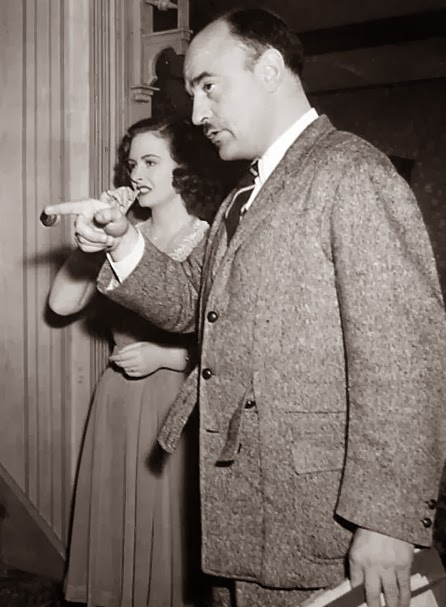
Only none of them were. The original guru was a veteran Hollywood screen and TV writer who started teaching for UCLA Extension in the 1950s. His book, Writing the Script, came out in 1980. Wells Root was his name and you can look up his credits on IMDB.
Wells Root directing Donna Reed in Mokey (1942)
The other day I turned on TCM and decided to watch a little of the upcoming flick, a B gangster picture from the 30s called Public Hero #1. I saw that it had Chester Morris in it, and I like his work. The credits rolled and lo and behold Wells Root was the screenwriter. Now I watched with added interest, and ended up taking in the whole thing. The plot moved, had twists and turns and original characters. A crisp 89 minutes. Nicely done, Wells!
So I went to my bookshelf and pulled down Writing the Script for a re-read.  
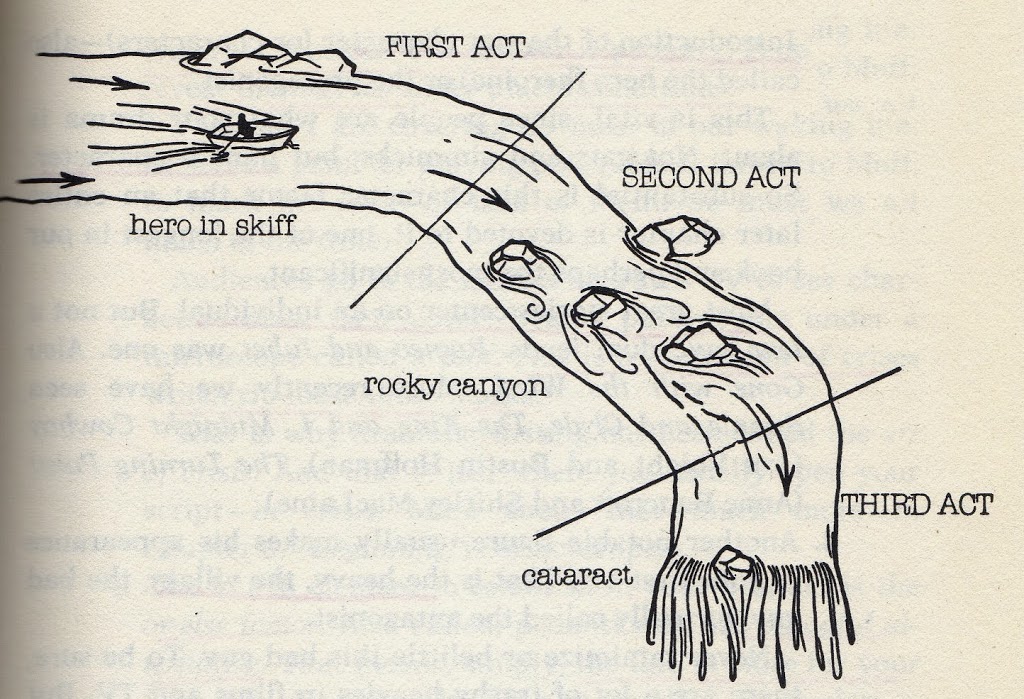
It’s nice to make its acquaintance again. Writing the Script is filled with gems of wisdom for both fiction and screen writers. And Root’s illustration of the three-act structure (as a raging river) is brilliant. He came up with this metaphor years before Syd Field’s famous three-act “paradigm.”
You see how the hero is in the river of story, being pulled by the current despite his best efforts with the oars. He gets thrust into the hazardous, rock-infested white water of Act 2. He fights all that only to hit a waterfall in Act 3. As he goes over the audience is asking, Will he drown or somehow make it to safe water?
I’ve always thought the best writing education would have been to be a young writer in Hollywood in the 30s. Then you could have hung out at Musso & Frank, listening to old scribes like Ben Hecht and Wells Root and John Howard Lawson. Over Martinis they would have provided a graduate course in the finer points of dramatic writing.
Since that era is long gone, Root’s book will have to do. So pull up a chair and listen to some of his advice:
Ultramodern, unstructured story design has an erratic record bringing bodies to the barn.
Drama favors the great saint or the great sinner—heroes and rascals who are above the common run. But they must still be as welcome in the village pub as in the manor house.
If you have the guts to be totally honest, nobody can write a character exactly as you can.
An unmistakable mark of a master craftsman is that he individualizes all his characters. (In the margin of the book I had scribbled “Moonstruck.”)
Although your heavy is a horror, make him or her also a vulnerable human being.
Write a man or woman or child who is everybody, but who becomes in your dramatic story an absorbing variation, a striking original.
The heights of emotional drama dwell in these scenes that plead truth from opposed points of view. Such conflicts, you will find, play with a special luminous power.
A story maker’s urgent priority should be awareness. A writer is always in his working clothes.
Agents and producers are flooded with the commonplace. Routine work will get you nothing but routine indifference.
So there it is, an afternoon hanging out with Wells Root, the first of the great screenwriting gurus.
Is there a “wise old scribe” in your background? Somebody from whom you got much needed advice? Tell us about it. [NOTE: I’ll be in travel mode today, so talk amongst yourselves and I’ll try to catch up later]

Untrue Romances

I am writing this on Valentine’s Day. Call me sappy (or, perhaps, unable to think of a better topic) if you wish; however, we should consider our favorite couples in fiction (as opposed to fictional couples, a plethora of which exist in the real world!) even though we will be a day late and dollars short of V-Day by the time you read this.

Please permit me to take the plunge first. No one comes close to Spenser, the world’s most self-satisfied detective, and Susan Silverman. Each installment of Robert B. Parker’s iconic series (which lives on through the immense talent of Ace Atkins) is propelled by dialogue, and Dr. Silverman’s ability to match her tough-guy boyfriend line-for-line makes for great reading indeed. I will confess that in my own day-to-day conversations (though never in my stories) I have with abandon misappropriated sentences (nay, paragraphs!) which originally sprung from the mouths of both of these characters. Naturally, my favorite book about their relationship is A CATSKILL EAGLE, where Susan and Spenser kind of, sort of break up for a book or so. This gives Spenser an excuse to get truly medieval, and he does.

How many Spenser books are there? Dozens, at least.  Accordingly, my second-favorite romantic pairing is an angst-laden one, played out over the course of but one book. The couple would be Johnny and Sarah; the book would be THE DEAD ZONE by Stephen King. It’s not necessarily one of King’s best books, but it is one of many favorites, and the relationship between these two very nice people is one reason why. Their courtship is cut short when an automobile accident puts Johnny in a seemingly eternal coma. Sarah, sort of understandably, moves on after a decent interval and marries a decent enough guy, though King indicates here and there that the gentleman’s ancestry just might include a sphincter (or two) and maybe even a plastic device for holding a certain vinegar and water concoction.  She is comfortably though not necessarily happily married when Johnny comes out of the coma. The book is not so much about their romance as it is about Johnny’s psychic powers, but the back and forth between Johnny and Sarah throughout the story as they look but can’t touch and then say what-the-heck, let’s touch anyway, is worth the price of admission all by itself. THE DEAD ZONE, by the by, was nominated for, but did not win, the 1980 Locus Award for Best Fantasy Novel.
Now: your turn. Any romantically linked couple in fiction, in any media, is acceptable (though if you tell us Batman and Robin…), and please explain why. And Happy Valentine’s Day, wherever you are.

Kneeling to a Higher Power

By Elaine Viets

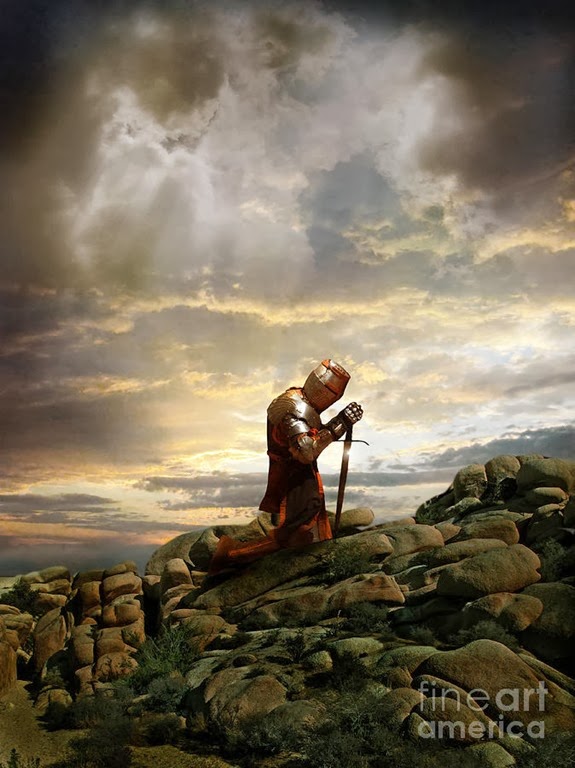
kneeling-knight-jill-battaglia

    “He knelt in church.”
    The Penguin copy editor had changed that sentence in my manuscript to “He kneeled in church.”
    What?
    That couldn’t be right. Copy editors have saved my bacon many times. Like the book where my character drove to an apartment, then walked home. I was grateful to the copy editor who mentioned I’d abandoned a car.
    But this was different. In high school, Sister Grace Edmund had taught me that the past tense of “kneel” was “knelt.” If anyone knew about kneeling in church it was a nun.

Nun_praying
    Publishers adopt odd style quirks, like spelling out 911. And they were good at catching my mistakes. But kneeled was plain wrong.
    I needed to appeal to a higher power.
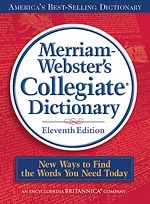
    I found it in my big red Merriam-Webster’s Collegiate Dictionary.

dictionary
    Yes, I know there are online dictionaries. When I find Mr. Webster too stodgy, I’ve flirted with the Urban Dictionary. But I still find solid comfort in the 1,626 pages of Webster.
    Words should have weight as well as purpose. To me, a fat dictionary is reassuring.
    On page 1624, it says, “Merriam-Webster’s Language Research Service offers owners of Merriam-Webster’s Collegiate Dictionary the opportunity to take advantage of the editorial resources of America’s foremost dictionary publisher – at no cost. If you have a question about a particular word, such as who first used it or why it has not been entered in the dictionary, an inquiry to the Language Research Service will bring an accurate and concise reply from a Merriam-Webster editor – a member of the largest permanent staff of lexicographers in America.”
    The dictionary said I could either e-mail or send a self-addressed stamped envelope. I was on deadline. The manuscript was due.  I send this e-mail, confessing my problem:
   
    “I am a mystery writer for the Penguin Group in New York. My publisher’s style for the past tense of kneel is ‘kneeled’, as in, ‘He kneeled in church’.
    I prefer ‘knelt’ and find ‘kneeled’ irritating. Am I old-fashioned and out of date? If ‘kneeled’ is the preferred style now, then I will learn to live with it.”

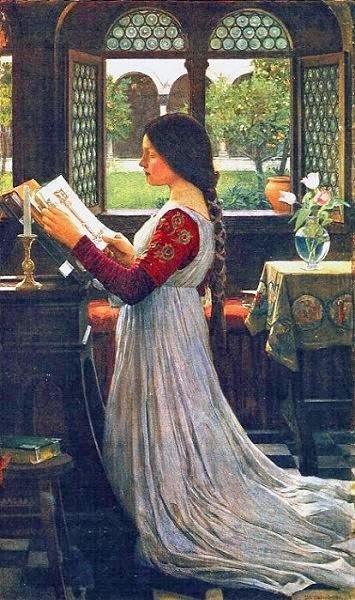
John_William_Waterhouse_-_The_Missal

    Four days later, I got this response from Paul Wood, an assistant editor at Merriam-Webster. He said,

    “Knelt is the more common variant for the past tense and past participle forms of kneel. You are not old-fashioned or out-of-date in your preference for knelt. In fact, knelt is a relatively new addition to the English language. While kneel has been a part of the language since before the late 12th century, the past tense and past participle knelt does not appear to have been used until the late 19th century.”

    Mr. Wood’s words were comforting. I’ve bowed to my publisher’s old-fashioned ways. I even kneeled. 

Story Logic

Nancy J. Cohen

The other night, I watched two recorded TV action adventure shows that gave me pause over their story logic. If I had written these sequences into a book, editors everywhere would have turned down my submission. What was wrong? Flaws in story logic jumped out at me. Whether the average viewer noticed, I have no idea. But as a storyteller myself, I couldn’t help but make note of them.

detective

In Show Number One, two female characters were attempting to steal a precious artifact from a security-tight room. They got around the fingerprint analysis in a plausible manner and entered the vault-like space where the artifact was kept under a glass case and surrounded by an electrified cage. Various obstacles were placed between the door and the cage. But wait—one of these woman was an acrobat specifically chosen for this impossible task. So she vaults up to a series of parallel bars conveniently strung across the room and swings from one to the next, while her pal waits by the door. Finally, our acrobat propels herself over a gap at the top of the electrified cage. Inside, she swipes the artifact. Guards are moments away from discovering them. Commercial break.

When we return, the thieves are outside with their booty. Okay, how did they get from Point A to Point B? When we saw our acrobat in action, she used her two hands to swing and jump from one overhead bar to the next. How could she jump at all holding the heavy, bulky artifact that looked as though it would require those same two hands to hold it? Illogical. Nor did she have her friend present again to give her a boost up.

My editor would have caught me on that one. My solution? Have her wear a backpack so she could stuff the heavy tome inside for the return trip. Give her a tensile line to shoot to the overhead bar from inside the cage. Or have her rappel down from a ceiling vent like in countless heist movies. Don’t just have the two women suddenly appear in the clear with their prize with no explanation as to how they got away and avoided the guards.

Story Number Two proceeded well until the very end, when a bad guy got his comeuppance. One of the main characters called him on his cell phone as he’s in the bathtub with a beautiful woman. The caller mentions how his turn has come right before his companion stabs him. How did this character know exactly when he’d be in the bathtub with the assassin? If it were my story, I’d have video cameras tracking him. Or the assassin could have sent the caller a signal. It was too much of a coincidence that this person called right then, although the dramatic moment worked to provide a sense of justice.

What does this prove? TV writers might get away with flaws in their story logic, but it won’t work for us when we’re under an editor’s eagle eye.

eye

Make sure your story flows logically and smoothly, covering all bases. You don’t want to give your readers cause to put down your book with a derisive snort.

Do you recall any movies or TV shows where the credibility stretched?

For downward facing writers:Exercises to keep you focused

By P.J. Parrish

Starting a new book always puts me in a funk. Part of this comes from the post-partum blues of finishing the previous book and I sit around in a stew of depression and doubt until I get traction on a new book. I was doing okay with the WIP until recently when I hit a stall. I realized I had to do something drastic, something preferably not involving pharmaceuticals. So last week, I went back to my yoga class.

I used to be a very attentive yogi. It seems to sooth my demons, make me braver at facing the computer. The best thing about yoga is that there is no way to compete, no way to measure your worth by outside standards. If you get hung up on the fact that the woman next to you can do a better lotus than you? Well, you’ve missed one of the points of yoga. Which is:
You. And your own progress. At your own pace.
Which, when you think about it, is great advice for any writer.We tend to get all bent out of shape by worrying about things outside our control. Like, how come Author X got a huge advance when he writes crap? Like, why did Author Y get a starred review in PW and I can’t get any notice? Like, why does Author Z get a a tour and I can’t get a card table outside my local Books-a-Thousand?
Because of the big changes in publishing, we’ve become obsessed with the non-writing parts of the business. We spend so much creative energy trying to manage expectations and trying to separate ourselves from the pack, it’s a wonder we have any juice left for writing.
I’ve told this story here before but it bears repeating: When I was just starting out back in the late 1990s, I found myself at an MWA luncheon sitting next to Jan Burke. This was not long after she won the Edgar for Bones. I was an awed newbie, and I said something stupid about how the bad writers seemed to get all the attention. She was kind and said all writers get jealous. And she added something I will never forget:
“You have to keep your head down and just write your books.”
Which is a good lesson if you find yourself slipping into a downward facing writer pose. Remember that the only person you are in competition with is you. So, with that in mind, today I offer you…
YOGA FOR WRITERS

This is the King Dancer position. This is very good at helping you build balance. To do this pose, fix your gaze on something that doesn’t move so that you can stay focused. Like maybe writing the best book you can?

The Fish Pose: It is good for developing flexibility. Because sometimes, you have to go in directions you didn’t consider. Like abandoning a moribund story or trying a new POV or publishing an original e-novella. Or maybe adapting a pen name. If you need help with this pose, put a towel under your head. Or read a book by an author you admire.

The Goddess: This pose helps you open yourself up. If this feels uncomfortable, use a wall for stability. Or find a good critique group to give you feedback and support.

The Crow: This is a hard one, but worth learning. Do not let your head drop! This will cause you to tip forward and fall. But remember: Everyone falls, even the great writers. You just have to keep trying.

The Headstand: Very good for getting the blood to your head and increasing overall circulation. Practice the pose at the wall. Try to move a little further from the wall each time. You can’t master this one in one try. And you can’t become a successful writer overnight. It takes years of hard work, patience and practice.

The Tree: Another good balance pose. If you cannot bring your foot high inside the thigh like this dude, put it lower. Lowering your expectations isn’t always a bad thing. You don’t have to write a long multiple POV saga. You don’t have to hit a home run on your first at bat. Just tell a compelling linear story. And if you don’t make the New York Times or Kindle bestseller list on your first three books — What? You’re gonna quit? No, you keep trying and eventually your leg (or book) will go higher than you ever thought it could.

The Wheel: This is an advanced pose, mastered only after you’ve achieved strength and balance. Same goes for a writing career. You hang around long enough and work hard enough, you might become a big wheel. Or a little wheel. Need help with this pose? Have someone stand by you so you can hold their ankles instead of putting your hands on the floor. Likewise, if you’ve got a spouse or family behind you, you can conquer the world.

And lastly…
The Pose of the Child: Take a rest in this pose any time you get tired and feel like you’re tied in knots. In other words, don’t forget to take some time off, kiss your wife, play with your kids, practice the piano or whatever it is that refloats your boat. Writers often forget the value of recharging the old batteries. You can’t write about roses if you never take time to smell them.

Namaste, my friends…