Predicting the future

By Joe Moore
@JoeMoore_writer

In a recent article in THE TELEGRAPH, the founder of the famous Waterstone’s London book store, Tim Waterstone, stated that the “printed word is far from dead” and gypsey-with-crystal-ball (Small)the “so-called e-book revolution will soon go into decline.” He joked that insiders were generally “apocalyptic” about the book industry’s prospects but said he refused to believe the traditional physical book was under threat.

I tend to agree with Mr. Waterstone in as much as most bookstores I visit are packed with books and people buying them. I know it’s a simplistic measure of current trends, but when I start seeing large sections of empty shelves in book stores, I may change my viewpoint.

I disagree with him about e-books. So does Gaby Wood, who also wrote an article on the subject in THE TELEGRAPH. She states that “Booksellers are the group most threatened by the possible death of the printed book, and they have a reason to think wishfully of the digital book’s demise.” She also said that publishers have got to stop thinking of their digital products as “books”, and start imagining more expansive ways of communicating information. Until then, the digital revolution hasn’t even begun.

I think Gaby Wood has it right—this whole electronic publishing wave has just gotten started. The possibilities for industries like publishing, education and entertainment are endless. To say that e-books will soon go into decline is a prediction that may become laughable in the future.

To put this prediction business into perspective, let me share with you some famous visionaries of the past whose predictions carried a great deal of weight when first put forth, but didn’t stand up to the test of time. Enjoy.

"This ‘telephone’ has too many shortcomings to be seriously considered as a
means of communication.  The device is inherently of no value to us."
— Western Union internal memo, 1876

"Computers in the future may weigh no more than 1.5 tons."
— Popular Mechanics, forecasting the relentless march of science, 1949

"I think there is a world market for maybe five computers."
— Thomas Watson, chairman of IBM, 1943

"640K ought to be enough for anybody."
— Bill Gates, 1981

"I have traveled the length and breadth of this country and talked with the
best people, and I can assure you that data processing is a fad that won’t
last out the year."
— The editor in charge of business books for Prentice Hall, 1957

"But what… is it good for?"
— Engineer at the Advanced Computing Systems Division of IBM, 1968, commenting on the microchip

"There is no reason anyone would want a computer in their home."
— Ken Olson, president, chairman and founder of Digital Equipment Corp., 1977

"The wireless music box has no imaginable commercial value. Who would pay
for a message sent to nobody in particular?"
— David Sarnoff’s associates in response to his urgings for investment in the radio in the 1920s

"The concept is interesting and well-formed, but in order to earn better than a ‘C,’ the idea must be feasible."
— A Yale University management professor in response to Fred Smith’s paper proposing reliable overnight delivery service. Smith went on to found Federal Express Corp.

"Who the hell wants to hear actors talk?"
— H.M. Warner, Warner Brothers, 1927

"I’m just glad it’ll be Clark Gable who’s falling on his face and not Gary Cooper."
— Gary Cooper on his decision not to take the leading role in "Gone With The Wind"

"We don’t like their sound, and guitar music is on the way out."
— Decca Recording Co. rejecting the Beatles, 1962

"Heavier-than-air flying machines are impossible."
— Lord Kelvin, president, Royal Society, 1895

"So we went to Atari and said, ‘Hey, we’ve got this amazing thing, even built with some of your parts, and what do you think about funding us?  Or we’ll give it to you.  We just want to do it. Pay our salary, we’ll come
work for you.’  And they said, ‘No.’  So then we went to Hewlett-Packard, and they said, ‘Hey, we don’t need you. You haven’t got through college yet.’"
— Apple Computer Inc. founder Steve Jobs on attempts to get Atari and H-P interested in his and Steve Wozniak’s personal computer

"Professor Goddard does not know the relation between action and reaction and the need to have something better than a vacuum against which to react. He seems to lack the basic knowledge ladled out daily in high schools."
— 1921 New York Times editorial about Robert Goddard’s revolutionary rocket work. NASA’s Goddard Space Flight Center is named after Professor Gaddard.

"Drill for oil?  You mean drill into the ground to try and find oil?  You’re crazy."
— Drillers who Edwin L. Drake tried to enlist to his project to drill for oil in 1859. Drake was the first man credited to drill for oil in the United States

"Airplanes are interesting toys but of no military value."
— Marechal Ferdinand Foch, Professor of Strategy, Ecole Superieure de Guerre

"Louis Pasteur’s theory of germs is ridiculous fiction."
— Pierre Pachet, Professor of Physiology at Toulouse, 1872

"Everything that can be invented has been invented."
— Charles H. Duell, Commissioner, U.S. Office of Patents, 1899

How about you? Any predictions on the fate of the printed book and the electronic book revolution?

Putting On Your Writing Face

Did everyone catch the Internet meme started in the wake of the Oscars by author Laura Lippman? Following the widespread criticism of octogenarian actress Kim Novak’s appearance during the awards ceremony, Lippman posted a picture of herself without makeup, lighting, or filtering, along with a hashtag, #itsokkimnovak (Which translates to “Its okay, Kim Novak.” I must admit that at first I misread the hashtag to read “It’s so Kim Novak,” which would have sounded a tad less supportive. My bad.)

Within days, everyone I knew on Facebook was jumping on board the auteur tout naturel idea. Someone assembled a montage of the pictures set to music. I’ll post it if I can. Or you can scroll back through my FB timeline or Laura’s to view it.

It was inspiring, even heartwarming to see a collection of authors put their morning faces forward. Not that we’re the ultimate test case. As a species, we writers don’t tend to be a glamorous bunch. (Your average writer’s conference resembles a scene from The Invasion Of the Extremely Nice People Wearing Comfort Shoes.)

I was a few days late catching up with the trend, but I took a deep breath and posted my photo, seen here. (In response, I got several helpful replies suggesting make-up tips, mostly from Mary Kay and Avon reps. Thanks for that, ladies).


The experience made me question how I approach posting pictures in public. I’m a severe critic of my own photos, even those kept in house. My husband has to snatch the camera or phone away to keep me from deleting 90 per cent of the ones we take during vacations.

My last official author’s photo was taken in 2007. I need have another one ready by the end of this year. Last time around, I remember that the photographer kept telling the makeup artist to “vamp it up some more”. Next time, I may take a page from Laura’s book and go unadorned.

But now I’m taking another look at my #itsokkimnovak photo. I may have to reconsider. I much prefer the girlified look I had in a recent profile in LA Beat Magazine.

Did you all post sans makeup, unfiltered photos online after the Kim Novak thing? Did you learn anything from it? Feel free to post a link to a picture of the “real you” in the Comments!

The Magic of Sherlock Holmes

by Clare Langley-Hawthorne

Spring break is nearly upon us so forgive my rather brief blog post (we are preparing to take my 9 year old twin up for a spot of skiing in the beautiful mountains near us – so things are a little crazy).  Luckily, both my boys are great readers (so we get to take lots of books with us!) and I love how we can now discuss books we’ve all read and how I can give them recommendations now that don’t (usually) provoke a whole lot of eye-rolling.  I also still read to them every night and have recently started introducing them to Conan Doyle’s Sherlock Holmes stories. 

A few pages into the Hound of the Baskervilles, however, and my boys were already terrified (not a good idea just before bed!) so we started instead with A Study in Scarlet and have just recently moved on to The Sign of Four. What is amazing to me is how, despite the old-fashioned language and pace, both my boys are already totally hooked – and I think it’s not really the mystery that draws them in but the character of Holmes himself. It really is amazing to think that a character which in many ways is such a product of his times can be still so intriguing over a hundred years later. As a mum of course, I do have to explain his drug use and the smoking…but, hey, I think of these as…er…’teachable’ moments!

I came to Sherlock Holmes quite late  (I was well into my twenties before I read my first Holmes’ story) – compared to my husband who devoured all the stories when he was in the 5th and 6th grade at school in Australia. Though I enjoyed the stories, I don’t think I appreciated the mesmerising qualities of Sherlock Holmes as a character until I started reading the stories aloud to my boys. I’ve been interrogated by them on every aspect of his character – from whether he was based on a real person, to why he knows so much, to how, on earth, he can make such amazing deductions…He’s like a super-hero in many ways but also an enigmatic and  flawed hero – which is what, I suspect, makes him so intriguing. 

I’m looking forward to continuing to read these stories to my boys and then, I hope, handing the books over to them to read for themselves. To me, one of the great pleasures of being a parent, is passing on a love of reading. I already see each of my twins developing their own reading preferences and am glad that, at least in so far as Sherlock Holmes is concerned, they are gaining an appreciation for mysteries:)

So – tell me, are you are Sherlock Holmes fan? Do you have a particular favourite story? What do you think makes both him (as a character) and Conan Doyle’s stories endure? 

Is Writing Success Like a Lottery System?

@jamesscottbell


There’s been a lot of blogosphere chatter about writing success being like a lottery. Something about that metaphor has always bothered me. For in a true lottery you can’t really affect your odds (except by buying more tickets, of course). But is that true for writers?
I don’t think it is. Just putting more books out there (“buying more tickets”) won’t help your chances if the books don’t generate reader interest and loyalty. Productivity and prolificacy are certainly virtues, but to them must be added value.
Hugh Howey had some interesting thoughts recently on timing and luck. Citing Malcolm Gladwell’s book Outliers, Howey highlighted a fascinating factoid:
A list of the 75 wealthiest people in history, which goes all the way back to Cleopatra, shows that 20% were Americans born within 9 years of each other. Between 1831 to 1840, a group that includes Rockefeller, Carnegie, Armour, J.P. Morgan, George Pullman, Marshall Field, and Jay Gould were born. They all became fabulously wealthy in the United States in the 1860s and 1870s, just as the railroad and Wall Street and other industries were exploding.
From this Howey explains how he benefitted greatly from being in the right place at the right time, Kindle-wise. He had started writing in earnest in 2009, just as the neo-self-publishing movement was taking off. He did some things right, like early adoption of KDP Select and serialization. Look at him now.
But there is one thing he says I disagree with: “I know I’m not that good.”
Wrong. He is good. Very good. Woolwould not be what it is without the quality. Which Howey has worked hard to achieve.
Reminds me of the old adage, “Luck is where hard work meets opportunity.” I believe that wholeheartedly.
I went to school with a kid named Robin Yount. He was a natural athlete and an incredible Little League baseball player. In fact, my greatest athletic moment was the day Robin Yount intentionally walked me. Because Yount is now a member of Baseball’s Hall of Fame.
But it wasn’t just his natural giftedness that made him what he was. He happened to have an older brother named Larry, who made it to the big show as a pitcher. I remember riding my bike down to the Little League field one day and seeing Larry pitching ball after ball to his little brother. Robin Yount was lucky in the body and brother he was given. But he still had to work hard. Because he did,he was ready when, at age 18, he got the call from the Milwaukee Brewers.
Hard work meeting opportunity.
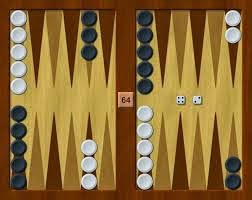
So I wouldn’t call the publishing biz a lottery system. What metaphor would I use? It hit me the other day: writing success is more like my favorite game, backgammon.
Backgammon, which has been around for 5,000 years, is brilliantly conceived. Dice are involved, so there’s always an

element of chance. Someone who is way behind still might win if the dice give him a roll he needs at a crucial moment.

On the other hand, someone who knows how to think strategically, can calculate odds, and takes risks at the right time, will win more often than the average player who depends mostly on the rolling bones.
Early on I studied the game by reading books. I memorized the best opening moves for each roll. I learned how to think about what’s called the “back game,” what the best “points” are to cover, and when it might pay off to leave a “blot.”
And I played a lot of games with friends and, later, on a computer. I discovered a couple of killer, though risky, opening moves. I use them because they can pay off big time, though when they don’t I find myself behind. But I’m willing to take these early chances because they are not foolhardy and I’m confident enough in my skills that I can still come back.
This, it seems to me, is more analogous to the writing life than a lottery. Yes, there is chance involved. I sold my first novel because I happened to be at a convention with an author I had met on the plane. This new acquaintance showed me around the floor, introduced me to people. One of them was a publisher he knew. That publisher just happened to be starting a new publishing house and was looking for material. I pitched him my book and he bought it a few weeks later.
Chance.
But I was also ready for that moment. I had been studying the craft diligently for several years and was committed to a weekly quota of words. I’d written several screenplays and at least one messy novel before completing the project I had with me at the convention.
Work.
Thus, as in backgammon, the greater your skill, the better your chances. The harder you work, the more skill you acquire. Sure, there are different talent levels, and that’s not something we have any control over.
But biology is not destiny, as they say. Unrewarded genius is almost a cliché. Someone with less talent who works hard often outperforms the gifted.
Now, that doesn’t mean you’ll always win big in any one game. If the dice are not your friends, things might not turn out as planned. That book you thought was a sure winner might sink. Or even stink.
But that doesn’t mean you have to stop playing.
Don’t ever worry about the dice. You cannot control them, not even if you shake them hard and shout, “Baby needs a new pair of shoes!” The vagaries of the book market are out of your hands. You can, however, control your work ethic and awareness of opportunity.
Writing success is therefore not a lottery. It’s a game.
Play intelligently, play a lot and try to have some fun, too.

So what about you? Do you believe in pure luck? Or do you believe there is something you can do to goose it?

Night of the Living Book

April 23, 2014 marks the commemoration of World Book Night in the United States. It is also the International Day of the Book, which is commemorated in other countries by giving a loved one a book. This commemoration — known specifically as World Book Night U.S. — has been going on for at least a couple of years, unbeknownst to me. I love the idea of it. The particulars may be found herebut the gist of this celebration is that a number of authors and other good people in several cities across the United States will be hand-giving away copies of special editions of more than thirty books to those who for one reason or another don’t have access to the print books.  I literally just found out about this (on Thursday, March 27, 2014, to be exact) and am, uh, a little late to the party in terms of signing up to do something is concerned, but I have already taken steps to officially participate in 2015, if the Lord be willing and creek doesn’t rise. May I make so bold to say that we, authors and readers alike, should be strongly on board with this?

It is not bulletin news to any of us that there is a great deal of competition out there for that very limited thing known as leisure time. Television, movies, video games, the stage…curling up with a good book is not everyone’s leisure drug of choice. Just as we have a generation of people who have attained their majority without ever having heard a jazz album in its entirety (my younger daughter was ready to call Children’s Services when I made her spend thirty minutes of a road trip listening to Miles Davis’ Kind of Blue) there is a large chunk of the population who haven’t read a book that wasn’t called “Cliff Notes” since eighth grade. Oh, the Humanity! Each of you reading these words knows someone like that, someone good and decent whom you call friend but who just doesn’t read. You know their interests, what types of television shows they watch or what movies they enjoy; with just a bit of thought you can put a book that matches their interests in their hands, for the price of a trip to Sonic or dinner out, depending if you buy them a hardback or paperback.

The music industry has been doing something like this for several years with “National Record Store Day,” supporting local music stores selling physical product (usually vinyl, believe it or not). In my city of residence, there are actually more stores selling vinyl records than compact discs. World Book Night U.S. isn’t quite the same thing, but it’s a similar sentiment: support the product.

Please: take ten minutes, pick one person out of your circle of acquaintances and lay a brand new book on them on April 23. I’m mentioning this three-plus weeks ahead of time to give you time to plan it and to pick up all that loose change on the floor of your car to pay for it. Trust me: whoever you pick will be delighted that you thought of them, and they might even read the book. And another.  And another.  And as a treat for yourself, visit the Book Night website and pick up a coffee mug or a tee-shirt or something while you’re signing up to be an official participant for next year. The toughest part will be handing away all of those special editions (“Huh? What box of special editions of PRESUMED INNOCENT by Scott Turow? Oops. I forget to pass those out.”) but somehow we’ll manage. And thank you.

Sowing Seeds for a Sequel

Nancy J. Cohen

How do you drop hints for a sequel into your current story, not only to let readers know more books are coming but also to whet their appetite for the next installment?
 
You can (1) title your book as part of a series, (2) include an excerpt for the next book after the last chapter, (3) plant clues foreshadowing another problem to come, or (4) drop an overt hint toward the end of your story.

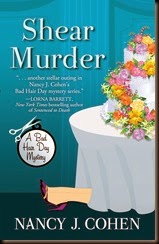
Number four is what I did in Hanging By A Hair, book #11 in my Bad Hair Day mysteries due out on April 18th. At the end of this story, I drop a hint that leads directly to the sequel, Peril by Ponytail. The mystery in Hanging By A Hair is solved, so readers go away satisfied, and the main character learns a lesson. But anticipation is half the fun, and I’m hoping fans will be eager for the next installment. I did the same thing in Killer Knots when Marla announces she and Dalton have set a date for their wedding. That leads into Shear Murder, the wedding story and #10 in my series.

ShearMurder

But what if you haven’t plotted the sequel, written the first chapter for it, or even planned on one? And then suddenly readers are demanding the next book. What do you do?

Hopefully, you can still make additions in your current WIP. So here are some tips on how to drop in some subtle hints of what’s to come:

  • First plot your overall series story arc for the next few books.
  • Identify the main characters. Is this a series with a single protagonist in each volume, or are the stories spin-offs, wherein secondary characters in one story become the heroes in another? Either way, try to determine what personal issues will be driving these people in the next book.
  • Write the opening scene to get a feel for the story.

Now go back to the WIP and look for places where you can drop in hints of what’s to come.

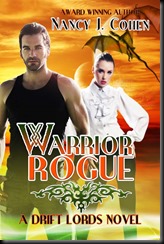
In the Drift Lords series, a sweeping battle between good and evil is heralded. What happens after this battle when my heroes triumph? Is the series over? Not necessarily, because you all know that after one bad guy goes down, a worse one pops up to threaten humanity.

Spoiler Alert! I created an unusual situation by writing my first three books in chronological order because the story comes to its rightful conclusion in this trilogy. The next three books, as I’ve planned it, will take place in the same time period as books 2 and 3. I know it’s confusing, but bear with me. What will make this next set of books special, if fans know our main villains get vanquished in book 3? It appears our Drift Lords are not finished just because they’ve prevented disaster. A worse villain awaits them around the corner.

WarriorRogue750

I created a new story arc for books 4 through 6. Look at Star Wars. George Lucas made a wildly popular trilogy. Then he did another 3 movies, calling them prequels. Now the series will continue with a new story line into the future.

I drop hints in Warrior Lord (Drift Lords book #3) for the next trilogy in my series. I see them as sets of three with the potential for a total of seven or more. And like Terry Goodkind’s excellent Sword of Truth series, just because one nasty bad guy is defeated doesn’t mean there aren’t more waiting in the wings. Is evil ever truly vanquished?

Sword Truth

Do you like hints of what’s to come in stories subsequent to what you are currently reading? I’m not talking cliffhanger endings here. I hate it when the main story isn’t finished, and you have to wait for the sequel. But personal issues can continue in the next installment, or new problems might arise that cause trouble. One has to be careful not to frustrate the reader by leaving too many threads loose, but it’s good storytelling to offer a teaser about what may be in store. Just make sure you bring the current story to a satisfying conclusion.

NOTE: This post originally appeared on my personal blog at http://nancyjcohen.wordpress.com

Is Your Book Tone-Deaf?

By. P.J. Parrish

I don’t get to read for pleasure often, so when I ducked away to Sanibel Island last week, I took a couple paperbacks and my Kindle, all loaded up with stuff I’ve been meaning to get to.

It was like a unleashing a starving stray dog on a smorgasbord table. I finished Joyce Carol Oates’s short story collection “The Female of the Species,” woofed down a couple old John D. MacDonalds, Tom Franklin’s “Crooked Letter, Crooked Letter” and Gilbert King’s “Devil in the Grove.”

When I ran out of stuff, I turned to the shelf of ratty paperbacks in our rented bungalow. There was a book by an author I hadn’t heard of before. I love discovering new authors, so I read the back copy. Good premise. I skimmed the first page. She had me. I took it down to the beach, lathered up with sun block, and settled in. I was ready. I wanted to be seduced. The first chapter was really good. A female cop, a grisly setup, a clear narrative voice, taut writing that teased me to turn the page.

So I did. And damn, I wish I hadn’t because things went downhill fast. This female cop suddenly turned into a blithering mess. Worse, her ex-boyfriend came sniffing around and after she took him back, he took over the case. HER case! Suddenly, this cop — traumatized though she might have been — allowed weasel boy to take charge of everything. Worse, the writer LET HIM DO IT! Every time there was a new twist in the case, it was weasel boy who led the charge. Where was our heroine? Weeping and whining on the sidelines, a pathetic Hamlette, torn by indecision.

The thing degenerated into a mass of bad romantic cliches. Complete with a see-it-coming-a-mile-away pregnancy that by book’s end gives our girl a good reason reason to quit her police job and make waffles for weasel boy. I was furious. Do you ever have the urge to throw a book across the room? I was sitting on the beach and would have heaved this one into the sea oats but I might have hit a turtle nest so I got up and threw it in the Dumpster.

Why?

It wasn’t because I hate women in distress books. The female in jeopardy is a standard of our genre and in the right hands, this can sometimes rise above cliche. But this author was dishonest. She started out with a premise that promised a woman of strength and depth. And I had expectations that this character would rise above her awful trauma through her own grit and courage. As I read this book, I found myself thinking about another book I had read, Theresa Schwegel’s “Officer Down,” which won Best First Edgar. This author also had a damaged heroine whose lover muscles in. But Schwegel let her heroine solve her own problems. The woman cop wasn’t waiting for Dudley Do Right to right her ship.

In the end, I decided I was angry about this other book because I had been misled. I don’t begrudge readers romantic escapism. Hell, I used to write it. But this book was so schizophrenic it was like the first three chapters were written by Germaine Greer and the rest by Phyllis Schlafly. (Yeah, I’m showing my age there). If your setup is a dark tale of a woman cop’s redemptive journey, you can’t switch tones mid-book and start going for the Rita Award.

Tone is so important. And it’s not really the same as mood. Tone is the narrator’s attitude toward the subject — be it playful, ironic, dark, hardboiled, romantic — whereas the mood is what the reader feels by virtue of the setting, theme and voice. And I think tone is something often overlooked by some beginning writers. You, the writer, have to know in your heart what kind of book you are setting out to write. And then you should bend all the powers of your craft to that end. Poe called it Unity of Effect and wrote about it in his essay “The Philosophy of Composition.” He believed that a work of fiction should be written only after the author has decided which emotional response, or “effect,” he wishes to create. And once that was decided, everything else — theme, setting, characters, conflict, and plot — should serve the effect.

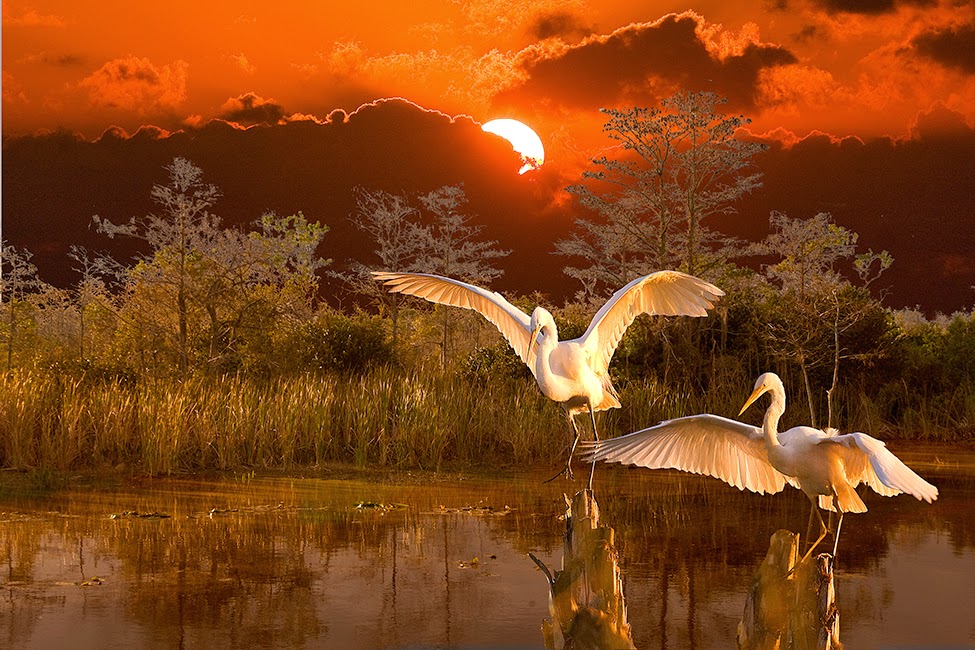
We do this via the countless choices we make as writers. What words we use, what imagery is in play, what the sentence structure is, what details we put in (as well as those we leave out). Here’s a visual.:

Both are photos of the Everglades. I’m choosing them because I also went on a “swamp walk” hike in the Corkscrew Swamp this week. The first photograph is by Susan Schermer. The second is by Clyde Butcher. Schermer’s is lush and color-saturated, with emphasis on the birds and setting sun. Butcher’s is desolate, empty of all apparent life and in stark black and white. The first is somewhat sentimental; the second almost existential. Both artists made choices about what details they wanted to include — or leave out — in their work, how they lit their landscapes, the types of trees, the quality of the water.

Same subject, different tones. Each is successful in its own way. But you can’t mistake one for the other.

So what’s my point? I’m not asking anyone to buttonhole their work. It isn’t necessary to try to psyche out editors and the folks who shelve the books at Barnes and Noble. (Is this neo-noir? Is it chick lit? Is it teen dystopia? Do we even care anymore?) I’m not even talking about all the sub-genres we tend to impose upon crime fiction. Some of the best stuff being written in crime fiction right now crosses so-called divides and genres.

What I am asking for, I think, is consistency. And honesty. Be honest with your readers. I don’t mean be predictable. Being honest means finding a tone for your work and sticking with it so that the reality you create on your pages is believable and satisfying. If you want to write romance or romance suspense, go for it and do it well.

But don’t promise me Katniss Everdeen and then give me Donna-Too-Dumb-To-Live. The book will end up in the Dumpster.

Nail it with Just the Right Word!

 by Jodie Renner, editor, author, speaker  

To set the mood of a scene in your story, bring the characters to life, and engage readers in their world and their plight, it’s critical to choose just the right nuance of meaning to fit the character, action, and situation. And verbs are the heavyweights in your sentences, so pay particular attention to them. Especially avoid the very common but tired, overused verbs like walked, ran, and looked. Instead, find a synonym that shows how that action is taking place.

Say you’ve got a character going from one place to another. How are they moving, exactly, and why? Convey their physical and emotional state at that moment by using a strong, precise, evocative verb. Readers will envision the character and situation much differently, depending on whether you show them strolling or striding or skipping or shuffling or sauntering or slinking or strutting or sashaying or slogging along, just to name a few “s” movement verbs, for example.

For help in zeroing in on the very best word to convey the tone and mood you’re after, it’s a good idea to use both a thesaurus and a dictionary (either online or print). Use the thesaurus to find a wide range of possibilities, then if you’re not 100% sure of the meaning, check with the dictionary to avoid embarrassing slip-ups.

But avoid choosing words your readers will need to look up in a dictionary.

Just make sure to choose a word that really nails the meaning you’re looking for, not one that will impress your readers with your literary prowess. Choosing obscure words that just draw attention to themselves is a sure way to distract readers from your story and annoy them. So read your story out loud later to make sure the words you’ve chosen sound natural and are words your characters would actually say or think in the given situation. (And remember that narration is really the viewpoint character’s thoughts and observations!)

Example from my editing:  She heard a stridulous sound coming from the basement.

I’ve never heard the word “stridulous” before, so it conjures up no image or meaning whatsoever to me. That’s the danger for a lot of your readers, too – no image, no impact. And a mild irritation at having to look a word up in the dictionary if they want to know what it means.

If you’d like to introduce some interesting words your readers might not know, it’s best to use them in context, so readers can guess at the meaning.

Choose words that enhance the tone, mood, and voice of your scene.

Find vivid verbs

Verbs are especially important, as there are so many variations in the way someone can move or speak or eat or whatever, depending on their personality, mood, age, gender, size, background, health, fitness level, and of course the circumstances. So it’s worth the effort to find just the right verb that nails the action and makes sense in the context of the scene. A verb that doesn’t quite fit can be jarring and turn a reader off, whereas finding a stronger, more specific verb can really strengthen a scene.

Words for “walked”:

I’ve compiled a handy list of synonyms for “walked” to fit various situations and characters:

– Drunk, drugged, wounded, ill: lurched, staggered, wobbled, shuffled, shambled

– Urgent, purposeful, concerned, stressed: strode, paced, treaded, moved, went, advanced, proceeded, marched, stepped

– Relaxed, wandering: strolled, sauntered, ambled, wandered, roamed, roved, meandered, rambled, traipsed

– Tired: trudged, plodded, slogged, clopped, shuffled, tramped

– Rough terrain, hiking: marched, trooped, tramped, hiked

– Sneaking, stealth: sidled, slinked, minced, tiptoed, tread softly

– Showing off: strutted, paraded, sashayed

– Other walking situations: waddled, galumphed (moved with a clumsy, heavy tread), shambled, wended, tiptoed

So in general, it’s best to avoid plain vanilla verbs like “walked” or “went” if you can find a more specific word to evoke just the kind of movement you’re trying to describe.

But don’t grab that synonym too quickly! Watch out for show-offy or silly words.

After you’ve found a list of interesting synonyms, choose carefully which one to use for the situation, as well as the overall tone of your book. For example, for “walk,” don’t go to extremes by choosing little-known, pretentious words like “ambulate” and “perambulate” and “peregrinate” (!), or overly colloquial, slang, or regional expressions like “go by shank’s mare” and “hoof it.”

And beware of words that just don’t fit that situation.

Also, some synonyms are too specific for general use, so they can be jarring if used in the wrong situations. I had a few author clients who seemed to like to use “shuffled” for ordinary, healthy people walking around. To me, “shuffled” conjures up images of a patient moving down the hallway of a hospital, pushing their IV, or an old person moving around their kitchen in their slippers. Don’t have your cop or PI or CEO shuffling! Unless they’re sick or exhausted – or half-asleep.

Similarly, I had a client years ago who was writing about wartime, and where he meant to have soldiers and officers “striding” across a room or grounds or battlefield, he had them “strutting.” To me, you wouldn’t say “he strutted” unless it was someone full of himself or showing off. It’s definitely not an alternate word for “walked with purpose” as is “he strode.”

Or, disguised from another novel I edited:

Joe stood up, shocked and numb, after his boss delivered the tragic news about the death of his friend. He dreaded his visit to Paul’s widow. He sauntered back to his office, his mind spinning.

The verb “sauntered” is way too relaxed and casual a word for the situation. The guy’s just been told his friend is dead. Maybe “found his way” or even “stumbled” back to his office.

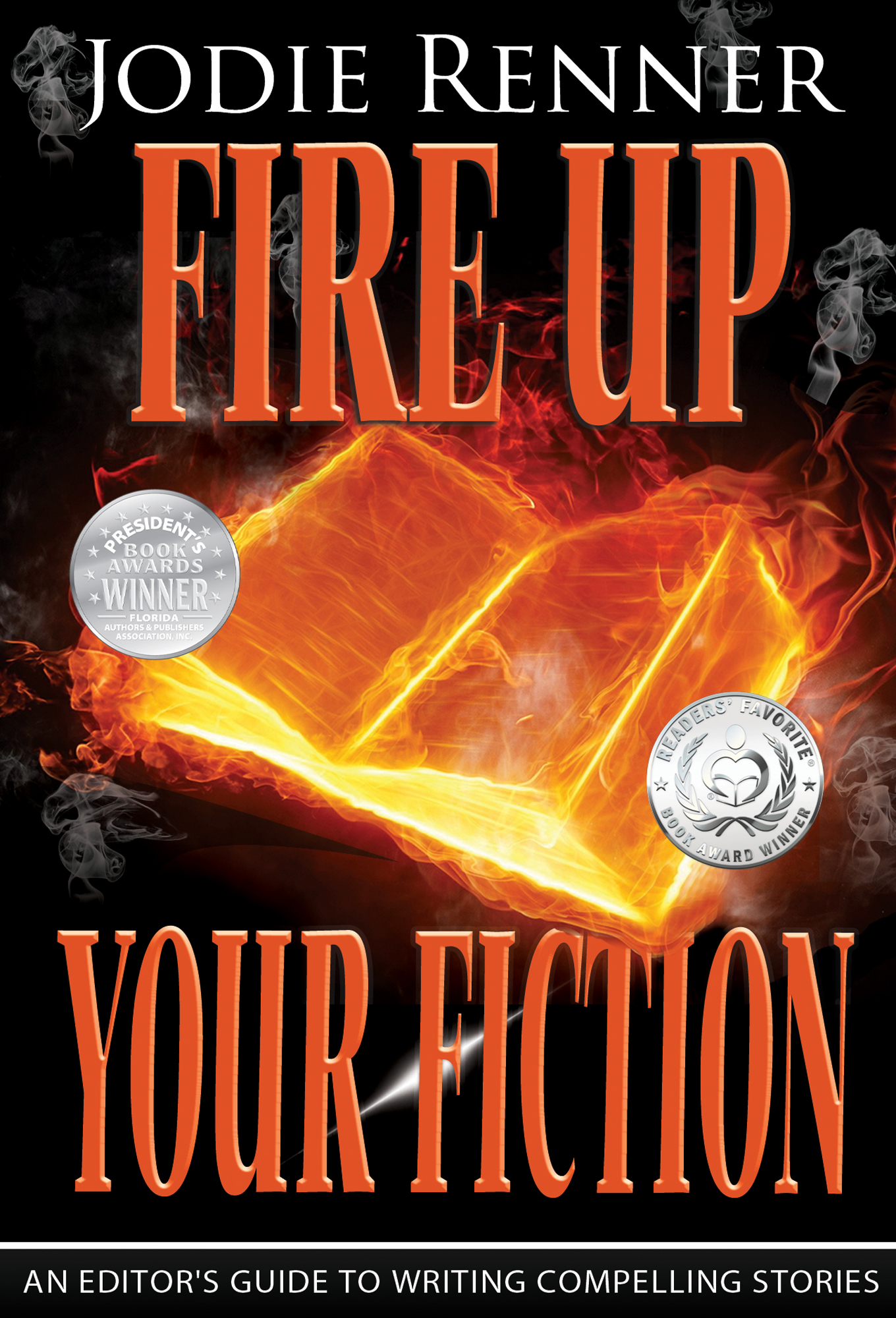
For similar lists for the verbs “ran” and “looked,” as well as lots of other tips for writing compelling fiction, check out my award-winning writing guide, Fire up Your Fiction.Fire up Your Fiction_ebook_2 silvers

Here are two recent quotes from two different contest judges about Fire up Your Fiction:

“This should be on the booklist for Master’s Programs in Writing for Publication.” ~ Writer’s Digest Judge

“FIRE UP YOUR FICTION is the Strunk and White for writers who want to be not just mere storytellers but master story-compellers.” ~ Judge, IndieReader Discovery Awards


Jodie Renner is a freelance fiction editor and the award-winning author of three craft-of-writing guides in her series An Editor’s Guide to Writing Compelling Fiction: Captivate Your Readers, Fire up Your Fiction, and Writing a Killer Thriller. She has also published two clickable time-saving e-resources to date: Quick Clicks: Spelling List and Quick Clicks: Word Usage. You can find Jodie at www.JodieRenner.com, www.JodieRennerEditing.com, her blog, http://jodierennerediting.blogspot.com/, and on Facebook, Twitter, and Google+.