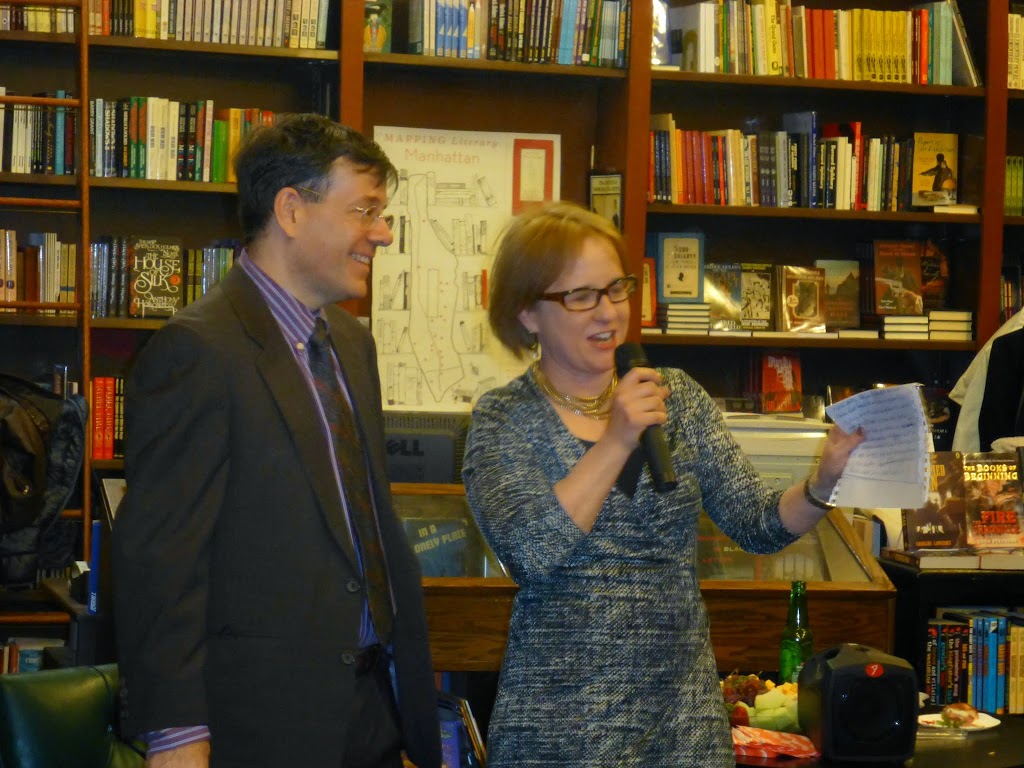
Let Us Now Praise Supportive Spouses


My wife Lisa and I have been together for 24 years, and for 17 of them — that is, until 2007 — I was a frustrated, unpublished novelist. While working as a magazine reporter and editor, I wrote four books that didn’t even come close to selling. I tried my best to be stoic about it but failed miserably in the attempt. I was especially miserable when perusing the shelves of my local bookstore or leafing through the book-review section of the Sunday Times. All I could think was, “Why are they getting published and not me?”

And who do you think bore the brunt of my bitterness? I certainly couldn’t expect commiseration from my colleagues at work. If I told them about my travails in the world of fiction, they’d start to wonder if I was neglecting my journalistic duties to spend time on my novels. And even with my close friends I didn’t share my despair. No, the only person who knew the full extent of my unhappiness was Lisa. She was the one who put up with my complaints. She was the one who urged me to keep at it.

This is what she told me: “When you get published — and it’s a matter of when, not if — you better dedicate that first book to me, because you have put me through A LOT, buster.”

Well, she was right. And I did dedicate my first novel to her. Better yet, I dedicated my fourth novel to her parents, who are the best in-laws in America. Last week we had the launch party for that book — THE FURIES — and Lisa worked her usual magic on the crowd (see the photo above). She’s the director of development and marketing for the Green-Wood Historic Fund, which preserves and protects the legacy of Brooklyn’s Green-Wood Cemetery, the final resting place of Boss Tweed, Leonard Bernstein, Horace Greeley and other New York luminaries. We make a good team — the thriller writer and the woman who works in a graveyard. Romantic, right?

She’s also a tough customer. When she reads something in my books that she doesn’t like, she’s not afraid to tell me. In fact, she gave me the best piece of writing advice I ever received. Back in 2005, when I was bemoaning all my unpublished novels, she told me that my books suffered from a common flaw: the characters were just too weird. I argued, “But weird is good!” and she made a face. “Your heroes have to be more normal,” she said. “Why don’t you make a hero who’s more like you? Because you’re not so bad.”

I took her advice. The hero of my first published novel, FINAL THEORY, is a bit like me. And the heroine is a bit like Lisa.

*******

Before I end this post I want to make an aside about its title. LET US NOW PRAISE FAMOUS MEN by James Agee is a nonfiction book about sharecroppers in Alabama during the 1930s. I read it for the first time in the 1980s when I was working as a newspaper reporter in Montgomery, Alabama, and it had an enormous effect on me. It’s like nothing else I’ve ever read. I highly recommend it.  

Reader Friday: Validation


Had lunch with a writer who says he is not going to self-publish because he doesn’t want to hurt his chances of getting a traditional contract. He said he wants the “validation” that comes from being accepted by a major publishing house.  

All writers look for some metric that tells them their writing matters to someone. So here’s today’s question: What form of validation do you seek? 


Give it Up or Suck It Up

Jordan Dane
@JordanDane


This anonymous question was submitted to our blog. I thought I would attempt an answer and would love it if everyone could share their own answer.
“When you were at your lowest point and about to give up writing fiction, what pulled you through?”

I distinctly remember this low point. Ironically it came after a huge high. Go figure. I’d been working full time in the energy industry, doing a demanding job with travel, and had been writing for 3-4 hours every night (much longer on weekends). I did this grueling schedule for 3 years and it felt as if I worked two full time jobs at the same time.

I had joined a writer’s group, attended conferences & craft workshops, entered national writing contests, and submitted proposals to agents and editors with countless rejections. Mind you, I’d been named winner or finalist in half the contests I entered and I’d been receiving “good” rejections. The ones with handwritten notes or encouragement to resubmit from editors and agents, and I had 7 full requests out at the time. This kind of feedback requires risk. A writer has to dare to put their work out there for public scrutiny and rejection in order to learn and open your mind. Here’s an excellent post from TKZ’s James Scott Bell on the importance of Rhino Skin.

With every one of these aspiring author stories, there often comes tantalizing peaks along with devastating emotional valleys. I had entered (for the first time) the Romance Writers of America’s (RWA) Golden Heart contest for aspiring authors and had been named a finalist. This is like the Oscars for RWA. This was the Mt Everest high I’d talked about.

A good friend of mine, who had also been a finalist that year, gave me good advice. She told me to simply focus on my writing (a new project) and not get caught up in all the hoopla of the event, like what formal dress I would wear, or my shoes, or hair. From her experience, she knew it was too easy to get distracted and that if I didn’t sell from this, I would have to find a way to carry on and keep going. As high as I’d been from the contest, I felt my hopes dashed when I didn’t sell by the time the event came around. (Often, expectations are the proverbial albatross.) My friend had been right. I had to focus on what was important.

What got me through the crashing low after such a Rocky Mountain High was one question. I asked something that would change how I looked at my writing from there forward. “Would I still write if I never sold?” When I answered with an enthusiastic “YES,” I knew why I wrote. I wrote for the passion of the process and the love of storytelling, my way. I had tapped into a form of self-expression, creating something from nothing, that I hadn’t experienced any other way. The love of writing and reading had been with me since I was a child. It would always be a part of me.

Writing has elevated my quality of life. It’s changed me forever and in that moment, the burden of expectation (something I had no control over) was lifted. After I’d let go of the Must Sell mentality, it wasn’t long after that I sold big. My first sale story is here at this LINK. Yes, I sacrificed a body part to sell. But after I finished “No One Heard Her Scream,” I knew it would sell. Don’t ask me how I knew. I just did. Who needed pain killers when the euphoria of writing had me walking on clouds?

In that stage of my writing journey–after I’d rediscovered the joy–I focused on the craft of writing and forgot about what was popular or what some publishers were wanting in their detailed submission guidelines. I never was one to worry over or chase trends. I had my day job. I treated my writing as something I did because I loved it. Writing still brings joy to my life and I continue to write the stories I want to read.

I’d love to hear from others in our TKZ family. What gets you through the slumps? What keeps you going?

Hippity Head Hopping

By Joe Moore
@JoeMoore_writer

I teach workshops on a regular basis to mostly beginning writers. A common issue that often shows up in their first drafts deals with point-of-view shifting; specifically what’s called “head hopping”. Most of the time it’s done without the writers even realizing it. They want to make sure enough information is passed on to the reader for the story to make it clear and move forward. I’ve found that even after pointing out the problem, it’s a bit mystifying and confusing to new authors. It takes practice to understand where they’re going wrong. Unfortunately, head hopping comes with some undesirable side effects which I’ll cover below. First, here’s an example of POV head hopping.

Agent Miller watched his partner, Agent Cobb, as they suited up for the assault. Why was Cobb so secretive when he showed up at the staging area? Why had he seemed reluctant to talk about his upcoming promotion? Cobb always confided in him with personal issues. After ten years together, it wasn’t like him.

“You decide to take the gig,” Miller asked as the two suited up for the assault.

“Not sure,” Cobb said and turned away, not wanting his best friend to know that the promotion meant he would soon be Miller’s new boss.

Here we have the inner thoughts of both men. There are two points of view.

It would be easy to conclude that this is omniscient point of view. The omniscient narrator simply knows what both men are thinking. Technically, it is. But there’s a good chance the author didn’t use omniscient POV on purpose. If anything, it was out of inexperience. Omniscient POV is not used much in popular fiction these days. Its heyday came years ago when writers like to play god—all knowing, all seeing. In order to maintain an omniscient POV, the narrator had to know everything about everybody all the time. It’s an oppressive writing style that dilutes the mystery and personal conflict of the plot—one of the side effects I mentioned.

The biggest downside to head hopping is a lack of close, personal connection with the main characters. Readers love to get “inside” the heads of the protagonist and antagonist. They want to see and feel what the characters feel; what makes them tick. With head hopping, it’s more distant and somewhat sterile. Even cold like a documentary where the voice over narrator tells everything in a matter-of-fact fashion. In contemporary fiction, the reader desires to see the story through the character’s eyes, not the narrator’s.

So what’s the solution to head hopping? As an example, let’s rewrite the scene with the two agents. Pick a POV character, usually the protagonist and route everything through his eyes and thoughts. As the writer, put yourself in the character’s head. You’re not a psychic, clairvoyant or mind reader. You can only determine another character’s attitude through their actions, reactions and speech.

Agent Miller watched his partner, Agent Cobb, as they suited up for the assault. Why was Cobb so secretive when he showed up at the staging area? Why had he seemed reluctant to talk about his upcoming promotion? After ten years together, it wasn’t like him.

“You decide to take the gig,” Miller asked. He knew Cobb always confided in him about personal issues.

“Not sure,” Cobb said and turned away.

It was almost as if Cobb was hiding something about the promotion. Something that embarrassed him.

The basic information was revealed in the second version. The difference was that an element of mystery, even conflict emerged. It pushes the story forward and tells the reader something about both characters’ motivation.

So how do you manage multiple POVs?

It’s called the “handoff”. Sort of like when the quarterback hands off the football to the running back. The focus is now on the new character with the ball. In order to shift POV, you must hand off the POV from one character to the other. This can be done with a “drop” or scene change where the first POV character leaves the scene thereby “handing off” the point of view to the remaining character. An even better method is to always stay in a single POV per chapter, shifting only when the new chapter starts.

Shifting POV should be for a specific purpose, not random. Not doing so violates the most important rule of writing: never confuse the reader.

How do you deal with POV shifts? Any additional tips?

——————————-

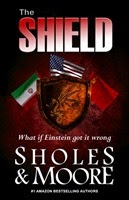
shield-cover-smallComing soon:THE SHIELD by Sholes & Moore

“THE SHIELD rocks on all cylinders.” – James Rollins, New York Times bestselling author of THE EYE OF GOD.

A Handy Cure for Word-itis

Every so often my habit of aimless Web surfing pays off. This week I discovered a site over at WriteWords that checks the number of times particular words and phrases are used in a manuscript. 

I’m already in the habit of checking for words and phrases I tend to frequently overuse: “just then”; “at that moment”; any characters with “blonde” hair. (One time, a beta reader pointed out that every single minor character in my story was a blonde.) But I plan to use the tool to find stealth offenders–words or phrases I repeat without being aware of it.

For example, I just ran the tool against a few recent chapters, and discovered that the word “eyebrows” is repeated four times in five chapters. Yikes. That’s a red flag. It probably means I’ve overloaded some sections with too many of what I call “dialogue tics and gestures”:  a raising of eyebrows; furrowing a brow; reaching for a drink and taking a sip. 

In the phrase frequency finder, I found six instances of “began to.” Ack! Either a character does something or he doesn’t do it. There’s no “begin to.” I’ll have to go edit those out. The thing I like in particular about the phrase frequency finder is that you can search for phrases of various lengths.

Give these tools a try, and let me know if you think they’re useful. Did you turn up any unexpected instances of repeated words or phrases?

What’s wrong with ‘genre’ fiction?

by Clare Langley-Hawthorne

I read two articles in the last couple of days which has caused me to mull over, yet again,  the perceived gulf between ‘literary’ versus ‘genre’ fiction. In her piece in the New York Times, Karen Gillespie describes how, after losing her publisher, she enrolled in an MFA in creative writing to improve her skills only to find her work derided as being ‘parlour fiction’ (she was the published author of five humorous, romantic books). For those who want to read the article in its entirety the link is hereSuffice to say, her journey was one from ‘genre’ to ‘literary’ and right back to ‘genre’ again after discovering writing so-called ‘serious’ pieces actually meant losing her author voice and all commercial viability. I especially liked her description of how an agent flew in to be a guest lecturer in the MFA program, only to be greeted by an outraged faculty who deemed the agent’s advice (have a distinctive voice and a decent plot) as somehow ‘cheapening’ the art of writing. This made me smile, for who amongst us has not had someone ask “so when are you going to write a serious novel?” (to which I assume they mean a literary tome of immense weight and authority…)

Then I saw an article on the Guardian book blog arguing that ‘literary fiction’ is really nothing more than clever marketing (see the link here) and I smiled again – because, as the article points out, many famous writers like Jane Austen never imagined their work would one day be deemed ‘literary’ (she wrote, after all, to entertain and make money). It seems ridiculous to me that we are still having the debate over ‘genre’ versus ‘literary’ fiction but if Karen Gillespie’s article is right, many MFA programs still believe that somehow they are creating ‘literary’ writers to trump those who delve in crass commercial fiction.  

For me the important message I got from her article was that it is vital that, no matter what course your career takes (or what writing course you may take) that you never lose sight of your own ‘voice’ and writing strengths. In other the words, there’s no use trying to be the kind of writer you aren’t. In many of the writing groups I’ve attended, there is a pervading sense of the need to produce ‘literature’ rather than focusing on simply writing the story you want to write. I certainly felt this pressure and, for many years, it stymied my progress (I never felt I could live up to this amorphous literary ideal)- I only felt comfortable in my own writing skin when I decided to ignore all that and just write the book I wanted to write  The article in the Guardian concludes (quite rightly I think!) that rather than getting hung up on all literary marketing, that we should just accept that “all books can be thrust into a genre, and lit fic is simply one of many. As a tag, it tells us nothing about the intrinsic value of any individual title. There are good books and bad books, and both are to be found from one end of the fictional horizon to the other”.

So what do you think? Do you still feel there is a distinction between ‘literary’ fiction and genre fiction? Is the divide lessening or do you still find people looking down at writers of mysteries or other genre fiction, as if they are somehow less worthy, less ‘artistic’ than their so-called literary counterparts?


How To Do Location Research

@jamesscottbell


It’s nice being married to your research assistant. It makes location work so much easier, especially when that location is a place like San Francisco.

A couple of weeks ago Mrs. B and I took a trip to the City by the Bay. I am working on a thriller that takes place largely in SF. This is not an easy thing for a Dodgers fan to do, but hey, this is my job. Unfortunately, during our two-day stay, the Dodgers managed to drop two games to the Giants, both by one run and after having the lead…not that I noticed, you understand. 

Anyway, these are the steps I take to do my location research: Prepare. Go. Observe. Record. Integrate.

1. Prepare

Before the trip itself, I completed the San Francisco scenes to the best of my ability. I used Google Earth and Maps, and did general research on the internet to get as many details right as I could. It’s amazing how much we can do online these days. But I’m still of the opinion that there’s nothing like being on location, walking around, taking in the vibe, the sights, the sounds and yes, even the smells.

Then I got a city map and circled in red the key locales in my story. Thus, I knew the places I wanted to go before I got there. 

2. Go

On our first full day in the city, it was a simple matter of setting out with my trusty assistant and following my map with the circles. 

We were staying at The Hotel Drisco in Pacific Heights (a key location in the book). Our  day started with us driving through The Presidio, and along the west edge of the city until we got to Golden Gate Park. Then we cut back across town.

We stopped where Van Ness meets 18th Street. This is another location in my novel. 

3. Observe

We got out and just started walking around, looking at the buildings and the storefronts, and for little passageways I hoped were there. They were. Always nice to find out a location works like you’ve seen it in your imagination. I even found a building that could serve as the one I’d made up for my story. And here it is:

Next stop, Pier 40, over on the east side of the city. This is the spot where my Lead meets a stranger who is going to take him on a nighttime boat ride. I knew from my research that you could see AT&T Park from the pier. I just didn’t realize how close. Being on the spot brought more vivid details for my eventual use. 

We next drove over to North Beach, which has three spots I’m using in my story. We parked right in front of one of them, a church, then strolled over to Columbus Avenue for a sidewalk café lunch (research assistants have to be fed). But even this was an opportunity. I like to watch people walk by, look at their faces, try to imagine what their lives are like. I jotted some notes in between bites of my prime rib panini. 

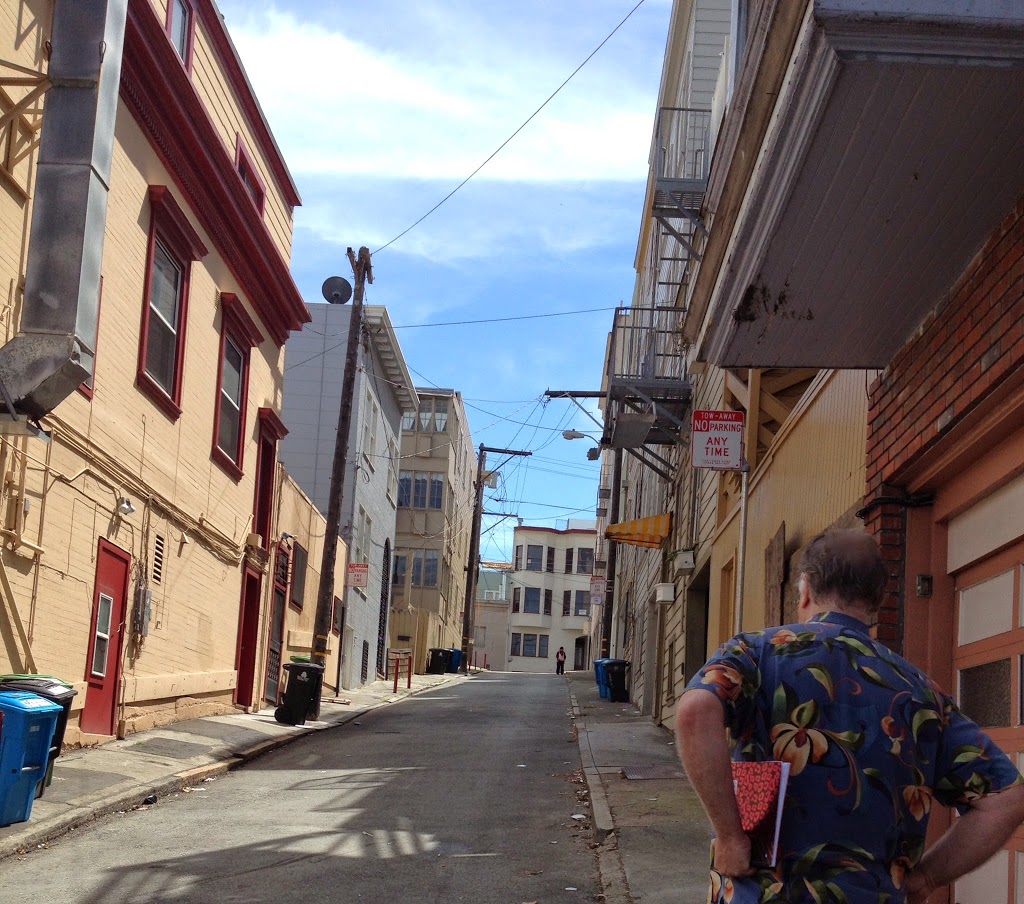
After lunch we walked around the neighborhood (which the city fathers had the unmitigated gall to place UPHILL) and took several pics. Walking around is when the magic of serendipity happens. A crucial incident in my book takes place in an alley at night. I wasn’t entirely sure one existed. But we came across the perfect alley for the story, just because we were using shoe leather:

4. Record

Of course it goes without saying that you take pictures and notes of what you observe. It’s helpful if you have a checklist of items that will remind you what to look for. Here’s mine:

Date of Visit.

Weather.

Sights.

Sounds.

Smells.

People walking by (descriptions, expressions on faces).

Buildings, architecture.

Signs, commercial establishments.

Views.

Miscellaneous notes.

5. Integrate

As soon as you get back from your trip, begin immediately to integrate your research into your WIP. Go to those scenes you pre-wrote and weave in the details. The sooner you do this, the better. You want to write while the memories are fresh.

If you are still in the planning stages of the story, write a few “practice” scenes containing your data. Doing so will preserve the vitality of the observations. You can use them later as the needs arise in your project.  

For more on location work, see Nancy’s post here


So what about you? Do you like doing research on location? Do you have a memorable experience you’d like to share with us?   

You Never Know

 
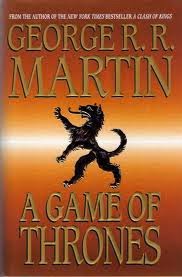
My younger daughter caught an infectious disease from her group of theater friends. The disease is called “A Game of Thrones.” You may have heard of this designer contagion created by George R. R. Martin. She binge-watched the first four seasons a couple of weeks ago and I tried to catch some of it with her, but it was too violent for me. Yeah, I know; I’m the guy who watches Reservoir Dogs — the uncut version — a couple of times a year and eats Sonic hamburgers during Sons of Anarchy, but A Game of Thrones is way too over the top for me. I want to talk a bit about it, however, because Thrones didn’t come out of nowhere, and neither did its author.

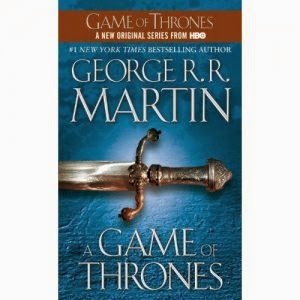
George R. R. Martin began his career as a science fiction, fantasy and horror author in the mid-1970s, writing short stories, and very good ones they were, and still are. His novella “Sandkings” remains a classic of the genre, surviving as such notwithstanding a truly wretched adaptation in 1996 for the revived edition of The Outer Limits. It was full-length novels that paid the bills, however, so Martin went that route as well. His first, DYING OF THE LIGHT, remains one of the best books I’ve ever read. I even painstakingly hunted down his telephone number — this, in the mid-1970s, before the internet — and spent ten minutes or so telling him just that. He was somewhat speechless, given that the book never quite acquired the commercial success it deserved, but was quite gracious nonetheless. Since then, we didn’t exactly, uh, stay in touch, but he had some ups and downs. “Down” took place in 1983 when his fourth novel, THE ARMAGEDDON RAG, unexpectedly tanked (even though it remains in print to this day). He took to writing television screenplays and continued to write short stories, and even midwifed a multi-author series called Wild Cards which continues to be published. Martin still had a book or two in him however, and some ten years after writing his last novel conceived a series which he titled A Song of Ice and Fire, with the first novel being the now world-famous A GAME OF THRONES, which was ultimately published in 1996. You know, or at least know of, the rest. The television series which has grown out of it has actually caused some people to return to the literary source material, so there is this snake-swallow-tail effect going on, the kind that we authors love most, especially when they happen to us.

I might be wrong, but I doubt that when Martin sat down and began writing A GAME OF THRONES that he envisioned a success even remotely similar to what has occurred. One hopes, realistically, for benevolent notoriety at least, and a living — hopefully a comfortable one — at most. But your name on the cover of Rolling Stone? That’s living large.

There is a lesson here for everyone. If you have an idea inside of you that’s screaming to get out, don’t let your inner gatekeeper hold it prisoner. Get it out there, even if you think that no one will ever regard it with the same wonder that you do. Share. And if you’ve amassed one or a score of rejection slips, try for that score plus one. And two. And three. You may never see your writing adapted for film, but I doubt that Martin thought it would happen, either. I mean, his career was over in 1983. Right? You never know. Maybe in twenty years, someone’s daughter will be binge-watching video adaptations of your work, and might actually read the source material — your book —as well. You never know.

Where Do You Get Your Ideas?

Nancy J. Cohen

At book events, someone in the audience always asks the author, “Where do you get your ideas?” As a writer, I don’t understand why it isn’t obvious. Ideas are everywhere. It’s having the time to write them all into stories that is the problem. But if you really want to know our secret, here’s where you might pluck an idea out of thin air.

idea

Newspaper and Magazines

Even in this digital era, I like to clip articles from print newspapers and magazines. Sometimes the subject is relevant to a current plot. Other times, I’ll file the clipping for later when I might need a motive for a suspect in a mystery or a scientific explanation for one of my paranormal romances. Don’t forget to look in the freebie community newspapers, too. Also check out your local library. Some of them have book sales where gently read magazines are available for a good price. Printouts from the Internet can serve a similar purpose, but they’re not the same as discovering random articles in a magazine. Instead, you’ll have to search for a specific subject, unless you have one of those applications that compile daily news for you on selected topics. Or you’ll have to scan the headlines. If so, you’ll be missing the thrill of turning pages in a print publication and discovering an article of interest. I always read the Sunday newspaper with scissors in hand.

Television and Movies

A TV show can stimulate your train of thought. For example, you may like the premise of a particular episode, but if you wrote the story, it would turn out differently. Or maybe the social issue or theme of a show inspires you. A news report might elicit an emotional response that makes you want to include the topic in a story. You never know when inspiration will strike.

Dreams

Do you dream in detail with color and dialogue? If you can remember your dream, write down the sequence of events as soon as you wake up, before reality pushes away the cobwebs of sleep. I used to have story dreams that were detailed enough for me to write several pages. A dream inspired my first published novel, Circle of Light. Lately, my dreams have been a continuation of thoughts or concerns I’ve had during the day, so I seem to have lost this source of creativity. If you have a good dream, write it down. Or consciously direct your thoughts at bedtime to a plotting problem you are having, and let your brain work on it while you sleep.

Books

Do you ever get an idea for a story while reading someone else’s work? Or maybe their book stimulates a new plot thread for your storyline. Ideas cannot be copyrighted. How you develop your characters and plot will differ from anyone else and will be unique to your voice. If you find that a story fires your imagination, scribble down notes and then return to the book you’re reading.

People You Meet

Friends, relatives, and even strangers can provide inspiration. They might generate an idea for a plot twist or give you thoughts on character development. A woman whose bearing and clothes I’d admired on a cruise became the Countess in my cruise mystery, Killer Knots. People who helped me with my research for Peril by Ponytail, my next Bad Hair Day mystery, serve as the model for some of the folks in this story. And I’d better not mention how real life experiences inspired Hanging By A Hair. The lesson learned here is that if you befriend a writer, you might become fodder for her stories.

Personal Experiences

Our life experiences cannot help but influence our stories. With the exception of murder, many of the incidents in my mysteries stem from real life. Naturally, you have to alter the people and the settings, but the actual events might remain similar. Certainly the antics of my late dog are reflected in Marla’s poodle, Spooks. And many of the other things that happen in her life have happened to me. Infusing these experiences into your stories will enrich them. You cannot better describe events than having known them first-hand.

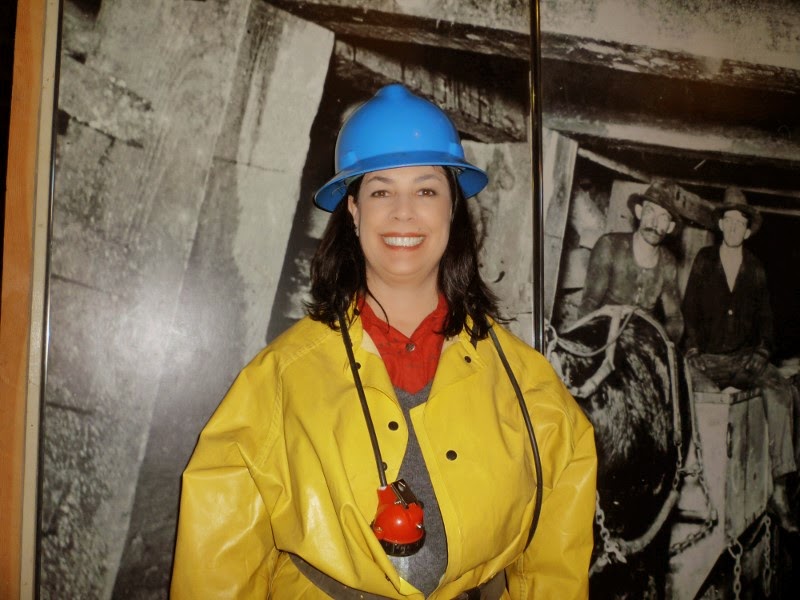
Suited up for copper mine like in Peril by Ponytail

Writing Techniques

If you’re totally stuck for ideas, various writing tools can help. You’ll find each writer has a favorite how-to book or software program for generating plot ideas. Check out the reference section in your local bookstore or library, or go online and ask on your writer loops for what other authors use. You’ll get as many varied responses as there are subgenres.

So where do we writers find inspiration? It’s everywhere—in the air we breathe, in the people we meet, in our dreams, and in the stories we read or see on the big screen. The problem isn’t finding ideas. The problem is having enough years of good health and peace of mind in which to write them.

So where do YOU get your story ideas?

<><><>

And Introducing my New Release!
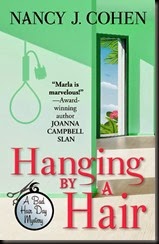
Hanging By A Hair, Bad Hair Day Mystery #11 

HangingbyaHair (414x640)

Marla and Dalton Vail move into a new neighborhood and discover a murder next door.

Amazon Hardcover: http://www.amazon.com/Hanging-Hair-Nancy-J-Cohen/dp/1432828142
Amazon Kindle: http://www.amazon.com/Hanging-Hair-Bad-Day-Mysteries-ebook/dp/B00JJ2XVUQ/
Barnes and Noble: http://www.barnesandnoble.com/w/hanging-by-a-hair-nancy-j-cohen/1116603785

How well do you know your neighbors?