A Success Story

Over the holidays I had dinner with a friend from Vermont who asked me what it was like to sell a novel. He’s interested in writing fiction and I think he was looking for some inspiration. So I told him one of my favorite stories: “The Day I Got The Call From My Agent.”
It happened seven-and-a-half years ago. By that point in my life I’d been a journalist for twenty-three years, and for nineteen of those years I’d written novels on the side. Over those two decades I’d finished four novels that hadn’t sold. The first was a literary thriller about a Southern governor similar to George Wallace; the second was a satire about a New Hampshire farmer who starts a new religion; the third was a romantic comedy about a beautiful con artist; and the fourth was a murder mystery set in the porn industry. I’d had particularly high hopes for that last book. I thought, “It has sex and violence! It’s got to sell!” But it didn’t. Some of the publishers who saw it were perplexed. Others were appalled.
In 2005, though, I got a new agent, and that turned out to be my lucky break. He advised me to write a strictly genre novel rather than the weird hybrids I was producing. At the time, I was a staff editor at Scientific American and we’d just put out a special issue on Albert Einstein, so I decided to write a thriller about a secret Theory of Everything that Einstein refused to publish because he knew it would lead to weapons even worse than nuclear bombs. I finished the novel two years later — it was eventually titled Final Theory — and my agent sent it out to publishers in the summer of 2007.
Although this book was more commercial than my earlier efforts, I was still anxious. And my anxieties multiplied as the weeks went by and I didn’t hear anything from my agent. By the time I went with my family on our annual vacation to northern Michigan I was quite morose. At one family dinner my brother-in-law asked, “So, any news about your novel?” and I launched into a bitter rant in which I predicted that no one would buy the book and it would end up in the same cardboard box where the dusty manuscripts of all my other unpublished novels lay a-moldering.
The next day was a particularly beautiful one on Lake Michigan. My in-laws took my wife and son sailing while I stayed at the cottage with my five-year-old daughter, who loved to dig holes in the sand at the lakeshore and throw rocks into the water. That afternoon we noticed some unusual activity on the lawn of the neighboring cottage, where a pack of young grandkids had just arrived. A teenage babysitter was setting up an inflatable Bouncy Castle playhouse from somewhere similar to JungleJumps on the grass. I could tell that my daughter was dying to try it out, so I approached the babysitter and chatted her up. While she was distracted my daughter slipped into the Bouncy Castle and started jumping around.
Then, as I silently congratulated myself for this clever ploy, my cellphone rang. It was my agent.
Are there any words in the English language better than “We got an offer”? There’s “I love you” of course — that’s good too — but sometimes people say those words without really meaning anything. But there’s no doubt about the meaning of “We got an offer.” It means they want you. There’s money on the table.  
And it was more money than I ever expected to make from writing fiction. My first reaction was simple: TAKE IT! But my agent said he thought we could do even better, and after a day of negotiation he got the publisher to triple the offer. I was flabbergasted.

My friend from Vermont liked the story, and I think it had the desired effect of inspiring him to finish his own novel. And it made me happy to remember that July afternoon by the Bouncy Castle. The writing life can be lonely and frustrating, but if you keep at it long enough there are occasional moments of bliss.

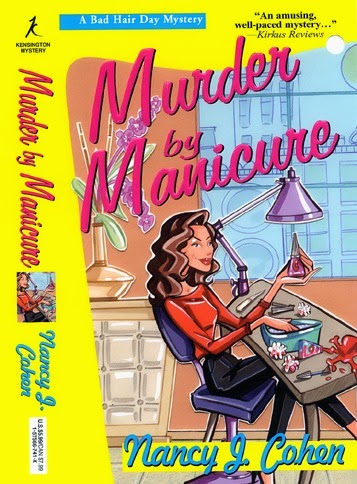
Branding Through Cover Art

Nancy J. Cohen

Series branding can be just as important as author branding. What’s the difference? Author branding tells who you are and what kind of stories you write. For example, my works blend elements of murder, mystery, romance, and humor. Readers know they’re in for an entertaining yet suspenseful ride with a satisfying ending. I also write stories set in Florida, and this tropical flavor adds a layer of depth to my work.

Currently, I’m working to revise and reissue my earlier mystery titles. I hired a new cover designer and liked her idea of putting a collage together of photographic images. Similar to an art sheet from a publisher, I filled her in on what might make an appropriate scene and what elements it might include. I looked at the images she subsequently sent me and picked ones that seemed perfect.
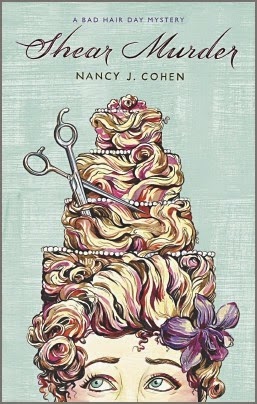
All went well until she put them together in a cover mockup. My stomach sank. It didn’t work for me. The images were fine. So were the colors and title placement. But the whole didn’t speak to me as a cozy reader. Where was the humor element? The fun factor that would make me smile and want to buy this book, like these covers below?

ManicureMM    Shear Murder

And so I did a search on Amazon for “cozy mysteries.” The overwhelming majority of them were illustrations, not photographs. I’d given this designer a list of covers that appealed to me, but she didn’t seem to “get” the genre. My original cover artist, who’d had to bow out for personal reasons, had sent me a mockup of a cover that I’d really liked. Looking at them side-by-side, I had a bad feeling about the photo-based imagery. It wasn’t right for the genre.

Even if I rebranded myself by having all my reissued titles have similar designs, would these more realistic covers attract cozy readers? I didn’t think so. It certainly wouldn’t appeal to me. As a cozy reader, I look for a certain style. Normally, you can identify a cozy just by looking at the cover. And so I regretfully parted ways with designer number two. I approached my original artist to see if she was available again, and to my joy she said yes. We’re back to fixing the details on the original cover, and I feel much happier about the process.

What is the lesson learned? It’s not only about your author brand. It’s also about reader expectations. Readers can tell from the cover what type of story to expect. Go for a change if you want to broaden your readership. But if you want genre appeal, stick to the tried and true. Flowers never did it for me as a romance reader. I still like the old-fashioned clinch covers. Remember the old gothics, with a woman in a gown running away from a spooky mansion? You could tell at a glimpse what genre it represented. So yes, your cozy or thriller cover at a glance might resemble others in the genre, but that’s what readers want and expect.

Whichever route you go, plan for series continuity via the same font, author name and title location, series logo, design style and color statement (i.e. pastels or bold and bright).

Does reader expectation figure into your cover art or does this aspect not concern you?

Just One More Chapter

By Joe Moore

Welcome to 2015. All of us at TKZ wish all of you the best of New Years. From a writing perspective, I hope you produce your best work yet. And from a reader’s perspective, may you discover a new author that thrills you beyond expectations.

As some of you know, I write supernatural thrillers with co-author, Lynn Sholes. We are at the midway point of THE TOMB, book 3 of a series. It is the eighth novel we’ve written together. We’re often asked how two people can write fiction. It’s pretty much a mystery, but I’ve pulled back the curtain in a previous blog post to answer the question.

What I want to reveal today are some of the secrets and tricks we use to keep our readers turning the pages to our thrillers. It’s important to remember that these are the techniques we use; they may not be right for you. They might even make you feel uncomfortable, but our job is to write the best, most exciting story we can. Here’s how we do it.

Probably the number one technique is short chapters. And when I say short, I mean SHORT. With few exceptions, we try to max out each chapter at around 1000 words. Many chapters are only 500-700. Now you’re probably thinking: What can you do with 500 to 1000 words? Answer: Only tell what’s important. Leave out the rest. What moves the story forward or develops the characters? That’s the questions we ask. Then we write it in 1000 words or less.

Number two technique is to end every chapter with a cliffhanger. Leave the reader hanging. Give them a taste of what’s to come, then stop. Here’s an example—the last paragraph from the opening chapter of THE TOMB.

I grabbed the binoculars and searched in the direction of La Pampa for Marquez and his driver. They were standing in front of the restaurant with their backs to me; the colonel talking on his phone. If I called him, he would see my caller ID and no doubt ignore me. For all I knew he was giving the command to start the assault. I thought of blowing the car horn to attract his attention, but that would also attract the attention of the two targets in the restaurant. The same problem if I got out and started yelling for the colonel’s attention. My last option was the one I chose. I pulled up the right leg of my jeans and removed the Walther PPK strapped to my calf. Slipping out of the SUV, I moved at a quick pace to the door on the side of the building. I reached for the knob, determined to follow the most wanted man on the planet.

Technique number three is to keep them hanging. The next chapter should take them someplace else, probably the continuation of the cliffhanger from two chapters ago. The reader finishes the chapter, knows it’s late and she should be in bed, but takes a peek at the next chapter and sees it’s the answer to a previous cliffhanger. And it’s only two or three pages. What does she do? She reads just one more chapter.

The fourth trick we use is to ask ourselves what the reader thinks will happen next. Then we do something different.

Writing in this fashion creates fast pacing, dynamics, and the unexpected. I love to read books like that. And I like to write them. I want to be placed in a position where I have to read just one more chapter. And I love doing the same thing to my readers.

How about you guys? Any secrets and tricks you want to share?

Gag Orders, And Other Rules To Get The Most From Critique Groups

As many here know, a good critique group can be a writer’s best friend. They give us feedback, moral support, and camaraderie. I’ve belonged to several critique groups over the years. Some groups have been extremely helpful, others less so. Over time I’ve developed a few rules, which I apply only to myself. These self-imposed rules help me extract the most benefit from any type of critique group:

1. Gag Order Rule Number One. When hearing feedback during a critique, I may not interrupt the critique with long-winded explanations of why I wrote something the way I did.

It doesn’t matter why I wrote it that way. Someone is telling me it doesn’t work. I must accept it and move on.

2. The two-thirds validity rule. 

If two-thirds of the group gives the same feedback, it’s probably a valid criticism. I must pay attention to it.

3. Apply feedback, improve. Rinse, repeat.  

We all know people who get the same feedback from the critique group, month after month. And yet their writing samples consistently reflect the same issues, month after month. I don’t fret about these people. I just don’t want to become one of them.

4. Expect to hear about problems, not solutions.

Critique groups are going to tell me what’s not working on my  pages. They usually won’t be able to explain how to to fix a writing problem, because very few people actually know how to fix problems. Fixing things is my job, not theirs. 

5. Gag Order Rule Number Two. When I disagree with the feedback, I nod solemnly, pretend to make a note, and say nothing. 

So these are just my rules that I use to keep me sane and productive in any type of critique group. Do you have any you can share?

New Year, New Goals, New Look?

by Clare Langley-Hawthorne


Welcome to 2015! 

I greeted the new year in with a literal ‘bang’ as we had heating problems in our newly renovated basement and three water pipes froze and burst – so as far as I’m concerned this year can only get better:) 

Here at the TKZ, we are looking forward to a wonderful, productive, challenging year ahead for all our writing. We are also constantly looking forward to ways we can improve our blog to meet our growing readership. There have been many changes in the publishing industry since our blog’s inception in 2008 and we have been thrilled to see our readership continue to climb over the years. 

Given these changes, however, it is important for us to take a moment to reflect on our blog’s mission and the direction TKZ should take in the years ahead. 

So we thought we would take this opportunity to ask you for feedback on our blog’s direction in 2015. We know that to keep current, relevant and useful, we need to continually assess and refine both our mission as well as our content. So we’d love your thoughts and feedback on:

  • Our mission, focus and posts: We’ve noticed a shift in the blog’s direction towards focusing on the craft of writing and the issues facing aspiring as well as professional writers. Typically our blog posts focus on practical advice on writing craft as well as providing personal accounts and experiences that touch upon our writing.  Would you like to see us delve more deeply into other areas or industry trends? Would you like to see more on promotion, marketing, editorial advice or ‘indie’ publishing? 


  • Further blog contributions/guest posts: Since we now have a professional editor (thanks Jodie!) in our midst as well as professional writers spanning many genres, we were thinking about adding other professionals into the mix. Would you be interested in hearing from other perspectives (a literary agent perhaps?) on a more regular basis? Are there any other people you’d like to see providing guest posts? 


  • Other TKZ offerings: It would be great to also receive feedback on the value of critiques and other participation offerings we could potentially provide. Are our first page critiques helpful? Would you like to see more or less of these kind of offerings on our blog?


  • The ‘look and feel’ of the TKZ: We are tossing up alternative templates to give the blog a better ‘look and feel’ and any feedback on this would be greatly appreciated. We are definitely hoping to create a new look and feel for 2015, so keep a look out for the changes ahead!
Thank-you TKZers for all your comments, feedback and support over the last six years. Here’s to many more!

Seasons Greetings

AWREATH3It’s Winter break here at the Kill Zone. During our 2-week hiatus, we’ll be spending time with our families and friends, and celebrating all the traditions that make this time of year so wonderful. We sincerely thank you for visiting our blog and commenting on our rants and raves. We wish you a truly blessed Holiday Season and a prosperous 2015. From Clare, Jodie, Kathryn, Kris, Joe M., Nancy, Jordan, Elaine, Joe H., Mark, and James to all our friends and visitors, Seasons Greeting from the Kill Zone. See you back here on Monday, January 5. Until then, check out our TKZ Resource Library partway down the sidebar, for listings of posts on The Kill Zone, categorized by topics.

Make Next Year the Best of Your Writing Life

James Scott Bell
@jamesscottbell

Well, here it is, friends. The last TKZ post of the year. For the next two weeks of blogging silence let’s make it all about hearth and home, friends and family, Christmas and Hanukkah, food and football––and getting ready to make 2015 the best year of your writing life.
1. Take a Vision Day
What kind of writer do you want to be? What kind of career do you want to have? Dream. Every accomplishment begins with a vision of what it will look like and feel like to you.
Every year I go to a park for a few hours with a notebook and some music, and take stock of this life I’ve been given. I go over the big spheres of my existence: spiritual, family, community, writing. I assess and think about what I’d like to do better.
I look again at books that have spoken me over the years, like A. W. Tozer’s The Pursuit of God and Ray Bradbury’s Zen and the Art of Writing. I also like to bring along a favorite novel or two, which fires up fresh inspiration in me. Novels that remind me how sublime writing can be in any genre. Books like John D. MacDonald’s Cancel All Our Vows and Raymond Chandler’s The Long Goodbye.
What books would you choose for a day like this?
2. Set Goals
I believe in goals. I’ve set goals for myself every year, and it’s the only way I can look back and explain whatever it is I’ve managed to accomplish. If you are not satisfied with where you are, the best way to remedy that is to plan to get to where you want to be.
Goals give your dreams walking shoes.
The way to set goals is, first, decide exactly what you want to achieve. This has to be something you can control and measure. If you want to be a New York Times bestselling author, that’s not a goal because you can’t control it. What you can control is your writing schedule, your training, your word count, your study of markets and so on.
Write your goals on paper. There’s something about pen and paper that cements a goal in your mind. Every now and then write your goals again on a fresh piece of paper. That pours fresh cement.
Write your goals in present tense, as in I will…
…write 3,000 words a week.
…complete my novel by March 1.
…query three agents on April 20.
…self-publish my novel on June 1.
I would advise setting five writing goals for yourself each year.
One of your goals should be growth as a writer. We don’t tell our brain surgeons to stop studying the medical journals. Why should we tell our writers to stop studying their craft? (At least when a writer makes a mistake, nobody dies.)
Take the plunge and go to a good writers conference next year, like Story Masters. Come spend four solid days immersed in the craft of fiction with me, Christopher Vogler (Hollywood’s mythic structure guru) and super-agent Donald Maass. Story Masters 2015, runs Feb. 5-8 in beautiful Charleston, SC.
By the way, if you use this code SMFLYER when you register, you’ll get $50 off. 

This is important: Take some action toward at least one of your goals every day. If you miss writing one day, at least read an article in Writer’s Digest. Reward yourself when you reach a major benchmark. Do this, and you will begin to feel unstoppable. That’s a good way for a writer to feel.  
And decide, right now, that you will never quit. You are a writer, not someone who wants to write a novel or five. Not someone who hopes to make some scratch. A writer.For the rest of your life.  
3. Simplify Your Life
The past few generations have each had their simplicity movements. From the hippies of the 60s to Richard Carlson’s Don’t Sweat the Small Stuff in the 90s, right down to today with what some are calling the “minimalist movement.” (On this, see a post over at Writer Unboxed by Jan O’Hara).
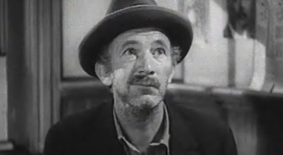
Uncluttering your life is always a good thing. I’m reminded of the great soliloquy delivered by the hobo (played by Walter Brennan) in Meet John Doe (1941, dir. Frank Capra). He warns people not to become “heelots.”
You’re walkin’ along, not a nickel in your jeans, you’re free as the wind. Nobody bothers you. Hundreds of people pass you by in every line of business. Shoes, hats, automobiles, radios, furniture, everything, and they’re all nice loveable people. They let you alone…Then you get ahold of some dough and what happens? All those nice, sweet, lovable people become heelots. A lotta heels!

They begin creepin’ up on ya, tryin’ to sell ya something. They got long claws and they get a stranglehold on ya and ya squirm and ya duck and ya holler and ya try to push ’em away, but you haven’t got a chance. They’ve got ya. The first thing you know, you own things – a car, for instance. Now your whole life is messed up with a lot more stuff. You got license fees and number plates and gas and oil and taxes and insurance and identification cards and letters and bills and flat tires and dents and traffic tickets and motorcycle cops and courtrooms and lawyers and fines – and a million and one other things! And what happens? You’re not the free and happy guy you used to be. You’ve gotta have money to pay for all those things. So you go after what the other fella’s got. And there you are – you’re a heelot yourself.
Try this: give up one thing this year that you really don’t need. Skip one hour of television a night. Use that hour to write 200 words. An extra 200 words a day is an entire extra novel a year!
4. Be Grateful
Writers have many ways to make themselves miserable. Reading reviews, obsessing over sales rank, comparing ourselves to other writers. I keep thinking of one of the oldest jokes in the book:

Patient: “Doc, it hurts when I do this.” 

Doctor: “Then don’t do that.”
Stop doing the things that lead to misery. Do not, I repeat, do not click on that one-star review. I’ll let you peek at a five-star every now and then, but don’t let it go to your head. It’s better not to get caught up in either praise or criticism.
Instead, learn to be thankful. The religious sages and sagacious philosophers have taught us that the secret to happiness is gratitude.
Be thankful for every single good thing in your life, from the ability to get up in the morning to the people who love you most. Be thankful for the existence of language and beauty, of music and food. Write these things down and look at the list often.
Be thankful even for obstacles and challenges, because it is in meeting those that we grow stronger.
Finally, be thankful that you yearn to tell stories. It’s a good thing to have that inner fire. It makes life brighter, and reminds you that you are a human being and not a chair.
So here is a year-end toast to the scribes, the mad ones, the strange breed not content to trudge through life in the tight shoes of the ordinary but who, in Kerouac’s words, burn, burn, burn like fabulous yellow roman candles exploding like spiders across the stars and in the middle you see the blue centerlight pop and everybody goes “Awww!”
May your writing pop ever brighter in 2015! 

A Re-gifting Story


I am re-gifting a present this year. I won’t say what it is, or who the recipient is, but the original giver is deceased so they won’t care and the individual who is on the receiving end will be delighted with what they receive, so no harm, no foul. The internet, however, is full of re-gifting advice, and horror stories about re-gifting. In the interest of adding to the latter, I hereby pass on a story that I heard decades before re-gifting was known by that name; it was simply something that people did on occasion that no one really talked about
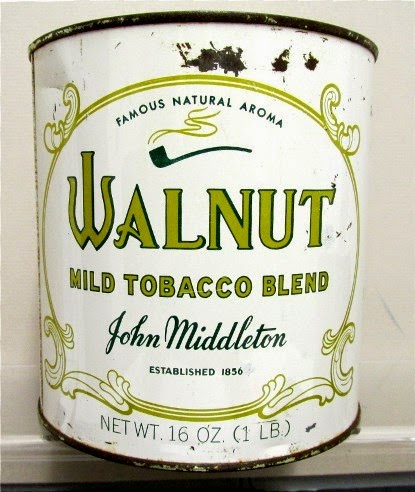
The person in question who told this story was a Catholic priest who had attained the rank of Monsignor, which is a step above your garden variety priest and a step below a bishop. Monsignor S., as we will call him, recalled that on the fiftieth anniversary of his ordination into the priesthood someone held a celebration for him and that he received many gifts. One of these was a five-pound can of pipe tobacco. Monsignor S. was somewhat nonplussed by the gift, as 1) he had recently given up pipe smoking (and not just for Lent) and 2) he had, not to put too fine a line on it, expected something a little more in keeping with his station, if you will. He accordingly set the can aside on a shelf in his study and forgot about it.

Monsignor S. received an ordination announcement a couple of months later from a young man of his acquaintance who, as it happened, favored a pipe and had not given it up. Casting about for an appropriate gift, Monsignor S. remembered the untouched tobacco can on the shelf in his study. He directed his housekeeper to wrap it and, as we would now say, re-gifted it to the newly ordained priest. A week later he received a thank you note (written in pen and ink, on paper, as was done before the advent of email and texting and selfies) which went something like this:

“Dear Monsignor S.:

Thank you so much for honoring me with your presence at my ordination last week. Your attendance would have been enough of a gift, but your thoughtful present of the canister of pipe tobacco — my favorite brand, by the way (did you talk to my mother first?) — is one I will always treasure. And your added generosity of including the one hundred dollar bill taped to the inside of the lid left me speechless. I am truly at a loss for words. I hope to emulate your generosity to others in the future.

Yours in Christ….”

Monsignor S. assured his audience that he would never do something like that again.
And with that…Merry Christmas and Happy New Year! I will see you on the other side. I hope. In the interim…do you have any re-gifting stories? Either primary or secondary? We would love to read them.