Every story starts with a writer asking the question, “What If?” For example, “What if a giant shark terrorized an island resort on July 4th?” (JAWS)
Tell us the “What If?” behind the story you’re working on.

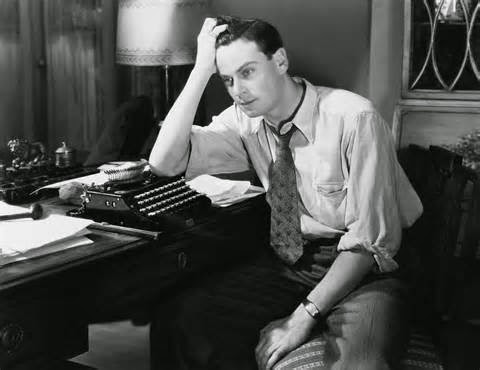
I like to reexamine what tips I would give to aspiring authors, or even experienced authors, when I get a chance to speak to a group. Invariably the question comes up on advice and I’ve noticed that what helps me now is different than what I might have found useful when I started. Below are 8 tips I still find useful. Hope you do too, but please share your ideas. I’d love to hear from you.
1.) Plunge In & Give Yourself Permission to Write Badly – Too many aspiring authors are daunted by the “I have to write perfectly” syndrome. If they do venture words onto a blank page, they don’t want to show anyone, for fear of being criticized. They are also afraid of letting anyone know they want to write. I joined writers organizations, took workshops, and read “how to” articles on different facets of the craft, but I also started in on a story.
2.) Write What You Are Passionate About – When I first started to write, I researched what was selling and found that to be romance. Romance still is a dominant force in the industry, but when I truly found my voice and my confidence came when I wrote what I loved to read, which was crime fiction and suspense. Look at what is on your reading shelves and start there.
3.) Finish What You Start – Too many people give up halfway through and run out of gas and plot. Finish what you start. You will learn more from your mistakes and may even learn what it takes to get out of a dead end.
 Blood Score now available in audio from Audible Studios.
A dangerous liaison ignites the bloodlust of a merciless killer
When a beautiful socialite is savagely murdered in Chicago’s Oz Park, Detectives Gabriel Cronan and Angel Ramirez find her last hours have a sinister tie to two lovers. One is a mystery and the other is a famous violin virtuoso. A child prodigy turned world class musician, Ethan Chandler is young, handsome – and blind. He’s surrounded by admirers with insatiable appetites for his undeniable talent and guileless charm. From doting society women to fanatical stalkers and brazen gold diggers, the reclusive violinist’s life is filled with an inner circle of mesmerized sycophants who are skilled at keeping secrets.
After Cronan and Ramirez expose a shadowy connection between Ethan and the victim with a private elite sex club, they discover intimate desires and dark passions aren’t the only things worth hiding at all cost. A vicious killer will stop at nothing to settle a blood score.
Quick writer tip: How can you get a ton of info across in a few short words without the infamous “info dump”? Use an offhand remark.
Example: Harry is one of the characters in your WIP. He has a history of falling from grace. He was a successful businessman with a wife a kids. The economy crumbled in 2008, he lost his job and his home. His wife divorced him and took the kids. He developed an addition to alcohol and became homeless, working at low odd jobs. Last anyone heard he was living out of his car.
You want to get this information across to the reader fast. You have a couple of choices: wordy narration, wordy dialog between a couple of characters, or an offhand remark. Instead of the first two, how about something simple. “Harry is down to his last friend—Jim Beam.”
Example: Sue is an actress who will do anything to get a part in a movie. She started out with the best of intentions and a heart full of integrity. But her popularity slipped and so did her income. Now it’s all she can do to make a living in B- and C-grade movies.
You can tell her backstory through narration or dialog, or use an offhand remark: “She performs best between the sheets.”
Here’s the point. If it takes 100 words to say something, figure out how to say it in 50. If it takes 10 words, say it in 5. If the backstory is not critical in its entirety, use an offhand remark and move on.

I have to admit, I’ve gotten a little obsessed by the Ebola news this week.
Ever since I read THE HOT ZONE (I’m currently rereading it), I’ve been dreading the day when this scary virus would go airborne and wipe out a good chunk of the human race.
This disease has got everything going for it to play a starring role in the demise of mankind. It lurks in the jungle, but no one can find it! It putrefies skin and melts human flesh! It turns its victims into zombies!
I’m awestruck by the story of the brave health workers and missionaries who continue to risk their lives to save lives in West Africa. Then, when two of them fell victim to the disease, guess what? An experimental, secret serum suddenly becomes available, one that has never been tested on people before. It’s flown to Africa, defrosted, and injected. And guess what–the antiviral serum appears to be working! Next thing you know, a special air ambulance is whisking the stricken Americans to an isolation unit in Atlanta, where a dedicated team has been training for years to perform this type of care.
And what Hollywood script would be complete without a cameo appearance by Donald Trump, bleating a goat cry about how those heroic missionaries should not be allowed into the United States for treatment?
It’s spooling out like a real-life thriller. And it has put me in the mood to load up on some more of the same, only fictional ones. (One real-life plague is enough for 2014, thank you very much.)
So please help me start my list. What are your favorite medical thrillers of all time?

It seems auspicious that today should be my blog day since it’s the commemoration of an event that defines the end of the period I have written so much about. Today marks the 100 year anniversary of the declaration of war by Britain on Germany on August 4th 1914. As Sir Edward Grey is famously quoted as saying ‘the lamps are going out all over Europe, we shall not see them lit again in our lifetime’. To commemorate the anniversary the British Prime Minister, David Cameron, and the British Royal Family have proposed that all of Britain turn out their lights between 10pm and 11pm tonight, in remembrance of that tragic day.
I’ve written quite a bit on this blog about the importance of history and how, as a historical novelist, I try to evoke the past in my books. I think one of the most evocative periods of history for many people is the First World War. It seems to touch us on so many levels – from the loss of a generation of youth, to the visceral horrors of trench warfare that saw hundreds of thousands killed in an effort to claim often less than a mile of no-man’s land. We also have access to some incredible beautiful and poignant first hand accounts that capture a sense of the end of an era of empires and the beginning of a much altered ‘modern’ world. For many it is the lasting impact the First World War that elevates its significance in our collective psyche – from creating the conditions which would lead, tragically, to the second world war, to the genesis of many of the boundary and geopolitical issues that remain ruinously contentious to this day. The First World War saw the collapse of empires, the murder of a royal family, the creation of the Soviet Union, and the birth of a global movement to try and secure peace (sadly, The League of Nations could not prevent a second world war but it was the precursor to the present day United Nations).
I write about the Edwardian era, that supposed ‘golden sunlit afternoon’ before the Great War changed everything. Part of the challenge in writing about this period is to create a distance between what we know is to come and what the people in England actually felt, believed and feared at the time. They certainly feared a German invasion and distrusted Germany’s military build up – (Britain’s paranoia on this created the the era’s own mini arms race). To get a sense of what it was like in Edwardian England I rely mainly on primary sources to try and ensure I don’t create characters who have some kind of omnipresent ability to predict the horrors that were to come. I don’t think anyone at the time had any conception of the type of war that would end up being fought – or the destruction that warfare would bring (not just in physical terms but psychological). For me, Vera Brittain’s memoir, Testament of Youth, is still the most devastating portrayal of both the golden days before the war and also the impact of the war itself. So I thought I’d end this post one of Vera’s poems, entitled August 1914, which seems appropriate given what happened this day 100 years ago.
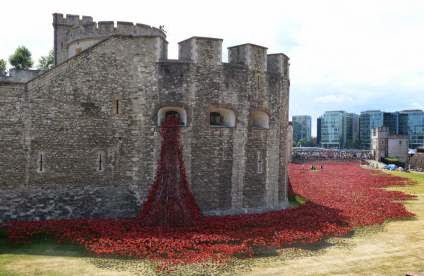
I also leave you with a photograph of the powerful memorial produced by the Tower of London. It’s entitled Blood Swept Lands and Seas of Red and has 888,246 scarlet poppies on display, representing WWI’s British and Commonwealth military dead.

Hi Guys! Today we have a first-page submission from another brave writer. This one is called ALICE IN REAL LIFE.
My comments follow.
***
Life is funny . . . in a brutal kind of way.
One minute you’re a youngster surrounded by grown-ups shoving sunshine up your ass about your bright, shiny future and the next, you’re alone in a crappy apartment, pushing thirty and taking stock of your inadequate underwear supply while packing to leave the country.
Or, is this just me?
Come on, I can’t be alone here. As a kid, you must’ve heard crap like, “the world is your oyster”, whatever that means. And I know I’m not the only one given this inspirational little book by a well-meaning grown-up at high school graduation: “Oh the Places You’ll Go!” by Dr. Seuss. Sound familiar? At one point, the main character enjoys a magical balloon ride, ascending through marvelous new experiences in a whimsical world. As if the only place to go is up. It’s cute. It’s promising. It’s bullshit.
Maybe parents hand this out to see the hope in their kids’ eyes that was lost when they found out the truth about Santa. Or, maybe they’re sadistic assholes that just want to tell one more lie. They know the ride into adulthood will be much more like a roller coaster. Not the Disneyland kind. The questionable, County Fair-taking-your-life-into-your-own-hands kind.
Sure, Dr. Seuss’s character hits a couple of bumps along the way, but my version would have even more reality mixed into those colorful pages. I’d still call it “Oh the Places You’ll Go”, but without the exclamation point and with a sad little Who on the cover pinching the top of his nose and shaking his head. Still whimsical, but with a hint of shame. Chapter 1, “Vomiting in a men’s room toilet while a stranger holds your hair”. Chapter 2, “The choice between paying rent and eating”. Chapter 3, “Your boyfriend’s selling drugs out of your apartment”. But, wait – there’s more! Chapter 5, “The engagement’s off”. Then, there’s the part I’m on now, Chapter 6, “Your mom battles cancer . . . and loses”.
Okay, I can see how this sounds like a great big bummer and book sales would not be good. Dr. Seuss wasn’t stupid. And Mom wasn’t sadistic for giving me hope, but, let’s cut the crap at graduation. Because I’ll tell you, the only time the world was full of magical shapes and whimsical colors was during Chapter 4, “That regrettable mushroom incident”.
***
My comments:
“Doctor Bombay! Doctor Bombay! Emergency! Come right away!“
Wow. Talk about having a voice. Reading this first page, I feel like I just got a two a.m. call from a close friend in crisis. The kind of call which would cause me to knock the sleep out of my eyes, throw on some clothes, and trundle across greater LA, braving freeway traffic to see how I could help sort things out.
My feeling is that this section sounds like the first page of an incredibly interesting memoir. I want to get to know this narrator. What happened to her, and why? This page makes me want to go on the journey with her.
What say you, TKZers? Chime in!
Often people will start reading a series with book number one. “You can begin with any story,” I’ll tell folks interested in reading my Bad Hair Day series. But they insist on starting at the beginning. “That’s fine,” I’ll say, but is it really?
I am thinking how that first book is not the best example of my writing skills today. How long ago was it published? In 1999. And the book had probably been in production for a year before. So that means I wrote it sixteen or more years ago. Don’t you think my writing has improved since then? Yet here is this potential fan evaluating my entire series based on that one book. You’d hope she would cut me some slack.
At least I got the rights back to my early futuristics. I revised those stories before making them available in ebook formats. No problems there.
I do not have the same opportunity with my mysteries. But even if I did, would it be a good use of my time to revise all of my earlier stories? Or is it best to leave them in their pristine state, an example of my earlier writing style? If so, let’s hope that the readers out there coming to my series for the first time will approve and understand.
Sometimes the opposite is true. A writer’s early works are his best efforts, before he gets rushed to meet deadlines or to quicken production. In such cases, the later writing might suffer. I’ve seen this happen with some favorite authors.
So what do you think? If you want to read a new series, do you begin with book one or with the latest title?
<><><>