Finding Your Voice

by Clare Langley-Hawthorne

Yesterday I read a great piece by Lev Grossman (author of the Magicians trilogy) on finding his author voice through writing fantasy fiction (‘Finding my Voice in Fantasy‘). He admitted that he felt something was missing in the two ‘literary’ novels he had published and that, when he was producing those works, the writing came slow and hard as if he hadn’t quite found his ‘voice’ yet. For Grossman it was writing fantasy, and the liberation of writing against the literary expectations he had imposed on himself, that gave him the chance to discover his true ‘voice’ in his writing.

For Grossman “it was the most profound, intense writing experience I’d ever had. The icy grip of reality on my fiction cracked, and a torrent of magic came rushing out”. I love that line – for it encapsulates beautifully the experience of truly being in the writing ‘zone’ when your author voice takes over and allows the story to emerge. 

I’ve recently delved into the writing world of YA and middle grade fiction and what occurred to me was most surprising. I expected my YA voice would be an easier one to access (I still feel most days like I’m 16 after all…) but instead, it was the middle grade world that set my voice free. Maybe it’s because I feel attuned to my nine year old twin boys’ world, perhaps it’s because I still read aloud to them each night and these books tend to be for the most part middle grade fantasy novels…who knows? Whatever the reason I felt the exact sense of liberation that Grossman describes. 

I remember when I was writing my first book, Consequences of Sin, I certainly felt as if I was channeling the voice of my heroine Ursula Marlow – and when I returned to writing the third book in the series, Unlikely Traitors, that voice was inside me, ready to be channeled once more. I hesitated before deciding to write a middle grade book because I wasn’t really sure I’d be able to access that kind of ‘voice’ within me.  To my surprise the voice that emerged was just as strong as Ursula’s. 

The upshot of all this, is that I think many writers need to dabble in different genres to explore aspects of ‘voice’ which they may never have expected. I know plenty of writers who consider themselves ‘literary’ and, by default, superior to those of us who write commercial or genre fiction. For many of them the act of writing is a struggle (sometimes I wonder if they feel that the angst of it all somehow adds to the mystique). I wonder, if they allowed themselves the freedom to explore other genres, whether they would discover a new and more accessible ‘voice’ within them. I can only hope that others take Grossman’s lead and realize, as he did that: 

“Writing about magic felt like magic. It was as if all my life I’d been writing in a foreign language that I wasn’t quite fluent in, and now I’d found my mother tongue. It turned out I did have a voice after all. I’d had it all along. I just wasn’t looking for it in the right place.”


Isn’t that great?!

So tell me TKZers how did you discover your writer’s voice?

Trouble Is Your Business

@jamesscottbell

Another entry from the journal of legendary pulp writer William “Wild Bill” Armbrewster. Of its origins, see here.
Benny Wannabe charged up to my table at Musso’s and said, “I did it!”
I took my fingers off the Underwood keys. My normally productive digits weren’t doing me any good at the moment. I was stuck on a scene. The smiling mug of my young pupil was good for a break.
“Sit down.” I leaned back and reached for a cigar. “Now, what is it you did?”
“Started my story! And it felt great. I told myself I was gonna write great today, just like you told me to. And I did!”
“Nice going, kid. Getting words on paper is every day is the golden rule. You have a plot?”
“I sure do!”
“Tell it to me.”
“Well, it’s about a young man who wants to become a writer and uses all his money to buy a train ticket to Los Angeles.”
“And?” I said.
“And what?”
“What happens to him?”
“Um, he gets to Los Angeles, where he meets a famous writer.”
“Uh-huh. That famous writer better be handsome, brilliant and witty.”
“Of course!”
“Problem is,” I said, “that’s not a plot.”
“It’s not?”
“You’re just telling your own story, right?”
“How’d you know?”
“Wild guess,” I said. “Listen, all new writers think the have an autobiographical story inside them, and that’s a great place to keep it. You, you need a plot.”
“But I felt great. You told me I have to write like I couldn’t fail.”
“That doesn’t mean  you don’t have to learn how to write. Write as if it were impossible to fail, then clear your decks and look at what you’ve done and figure out how to make it better. Or find somebody who knows his stuff to help  you along.”
“Like you, Mr. Armbrewster?”
“You lucky kid. Now let’s get down to basics. What’s a plot?”
“It’s what the story’s about.”
I shook my head. “Your Aunt Mabel’s flowers is ‘about something.’ Or some kid coming west. For you to have a plot you’ve got to have trouble.”
“Trouble?”
“Write this down. Trouble is your business. A plot without a trouble is like a Duesenberg without gas. Pretty to look at but going nowhere. Readers read in order to have an extended experience of worrying about what happens to somebody. So make ’em worry.”
“How?”
“Get your character up a tree. Throw rocks at him. Have lightning hit the tree and set it on fire. Then get your character down. That’s a plot.”
“Gee.”
“So let’s take your young writer. Make him so he’s not you.”
“How?”
“Make him older or younger. Make him from a town without pity, or a runaway.”
Benny took out a little notebook and a pencil and started scribbling. “This is good stuff!”
“You’re talking to Armbrewster! Here’s another one. Make the character not a man, but a woman.”
Benny looked at me, pie-eyed. “But I can’t. I’m not one.”
“Dammit, boy, you’re a writer! There’s no can’t in your vocabulary.”
“But somebody told me once you have to write what you know.”
“Hooey! Write what you burn with, and then find out what you needto know to write it.”
“But I’ve never been a woman.”
“And I’ve never been a gangster or a gumshoe! Is that going to stop me? No! Do some research! Go see a Bette Davis movie. There’s one playing at the Chinese called The Great Lie. Mary Astor’s in it, too. Earn the trust of a waitress and ask her questions. And then learn to listen. Half the problems in this world are because men don’t know how to listen to women.”
“Then what?”
“She’s on a train coming west, right?”
“Right.”
“What happens on the train?”
“Um, she has dinner and a good, long sleep.”
I stuck the cigar in my maw so I could rub my head with both hands.
“No,” I said. “She’s in her sleeper when a guy with a gun breaks in and covers her mouth.”
“But why?”
“Figure it out! That’s your job, kid. Bad stuff happens. Your character fights against the bad stuff, because if she doesn’t, she’s gonna lose something important, maybe even her own life. That’s plot and story and the name of this game all rolled into one. When in doubt, when your fingers are frozen over the keys, just bring in a guy with a gun. I said that to Chandler once, and look at him now.”
“Raymond Chandler?”
“No, Homer Chandler the delivery boy. Of course Raymond Chandler!”
“But what if I want to write a quiet story about a character, and how he––I mean, she––becomes a better person.”
“Ah, you mean you want to be one of the literary boys?”
“Maybe.”
“Doesn’t matter. Instead of a guy with a gun, your bring in someone who has a psychological gun. Who has power to crush the spirit.”
“Yes!”
“Personally, I prefer the rod. But you get to choose, Benny. Just make sure it’s real bad trouble.”
“That does it!” Benny said. “I’m making her a woman, and bad stuff’s going to happen to her.”
“That’s the ticket. Now go back to your room and start writing. In the first paragraph I want to see a disturbance.”
“A what?”
“Am I speaking Chinese here? A disturbance! I don’t want to see a florid description or a character who is sleepwalking through life. I want to know that there’s a change or challenge happening to your character right from the jump.”
“Like a train wreck maybe?”
“It doesn’t have to be big, remember that. It can be anything that’s disturbing, from a late night shadow outside a window to a knock on a hermit’s door. It can even be some tense dialogue. Just don’t warm up your engines! So get to your typewriter and bring me the first three pages when you’re done with ’em.”
“This is gold, Mr. Armbrewster, gold! I can’t thank—”
“It’s all right, Benny—”
“—you enough. I’m so excited I’m going to write to my ma and pa and tell ’em—”
“Good-bye, Benny.”
“—what a great and wonderful—”
“Benny!”
“What?”
“If you don’t go and start writing now, something disturbing is going to happen to you.”
“Got it!” He rushed out.
I was looking forward to what the kid was going to show me next. A young writer’s enthusiasm, if it’s mixed with a desire to grow in the craft, always pleases me.
I went back to the scene I was stuck on. Where was I going to go? And then I found myself typing: A guy with a gun walked in.

[NOTE: I’m once again in travel and teaching mode. So talk about how you put trouble in your books. Is there enough? What do you do when a scene is dull?]

Back It Up


One or another of us at The Kill Zone will at infrequent and irregular intervals discuss the importance of backing up your work. I am reminding you of this today, simply because I spent some time on the telephone this week consoling a friend who did not. If you are doing any type of creative work, in any field, in any medium, you should be — you must be — replicating, saving and storing what you are doing. Period.
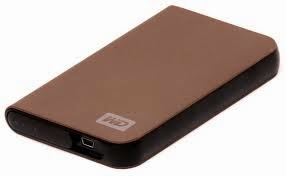
 I write. My wife and younger daughter are photographers. My older son, who has his own home elsewhere, is a musician and composer. We all preserve our respective work. There is a drawer in our home that is devoted to flash drives in gigabytes of 2, 4, 8, 16, 32, 64, and 128. My humble laptop is paired with a 1.0 terabyte external hard drive; my wife and daughter share an iMac and their own external hard drive. We each back up our work to our respective external hard drives at the close of each day.  I back both of the external hard drives up every six months to yet another external hard drive. If a computer goes down — and it WILL go down, sooner or later, and probably at the worst possible time — we have the external hard drives. We have heard of companies similar to Exit Technologies –EXITTECHNOLOGIES.COM – that could help us sell our hard drives when we longer need them from that will be long way off. I should back those up more often as well, and at some point will work on doing that. It is doubtful, however, that everything will pass a sandcastle at once. There is one other thing that I should do, but don’t, and that you should do as well: keep your backup external hard drive — the one that backs up your principal external hard drives — off site, such as in a friend’s home or in a safe deposit box. There are authors and musicians in New Orleans who speak my name with reverence to this day because I kept back-up copies of their manuscripts and demo recordings in my home in Ohio while theirs were being washed away by Katrina.
What to buy? For flash drives, you don’t need to purchase the most expensive one you can find, but you shouldn’t reach by default for the “take your change in flash drives” models, either. Most of our flash drives (and yes, we have gone a bit overboard on the quantity of them in our home) are Kingston 3.0. All of our hard drives are manufactured by WD, but Seagate makes a very adequate one as well.
Please note: I do NOT consider backing something up in the cloud or “cloud storage” to be backing up or storage. I consider the cloud an excellent place to lose things at some indeterminate point in the future. Yes. I am old-fashioned in the sense that I still like to hold things in hand, even if it’s a plastic rectangle the size of a trade paperback or a sliver of metal encased in plastic the size of my thumb. I have a recurring nightmare, however that one day someone with more time on their hands than sense in their bodies will hack into the cloud and go through it like urchins in an unlocked schoolhouse. So yes, I back up letters and emails and even whatever I compose in google drive, such as this blog.

As always, I am curious: how many of you actively back up your creative work on a regular basis? How often? What do you use? Do you have a backup plan for your backup plan? And — God forbid — have you lost anything?

Bikers, Pine-Sol and Money

  
rubout

Where is the best spot for a book signing?
    Writers debate this question endlessly. When we’re signing in a bookstore, should we have a table by the door? A quiet alcove? A special room?
    How about when we give a speech? Should we have our own table piled with our books? Where should it be placed? By the door? Near the podium?
    Sometimes, the best spots are the most unexpected. 
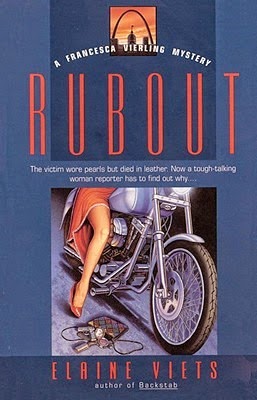
    My first mystery series is the Francesca Vierling novels, and they’re still in print as e-books and paperbacks. My heroine is a six-foot tall St. Louis newspaper columnist, which is what I was, until I got fired from the paper for insubordination.
    “Rubout,” the second book in this series, takes place at the annual bikers society ball in St. Louis, where one thousand Harley riders gather.

HarleyDavidsonLogo
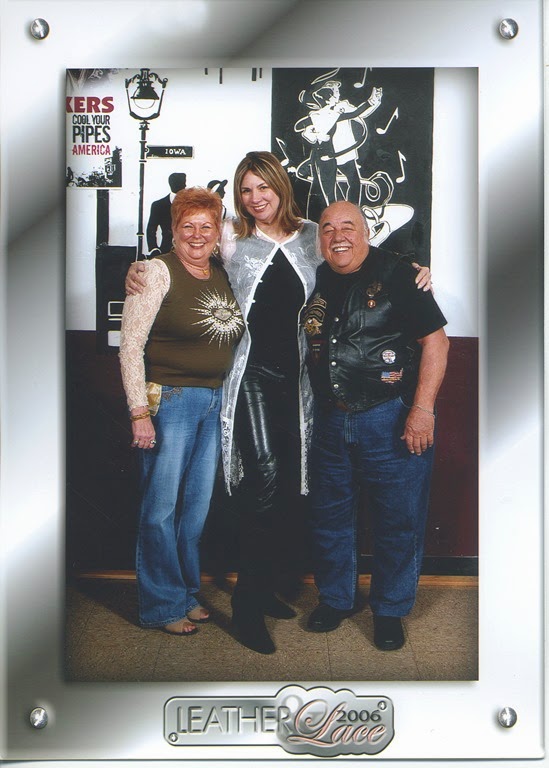
It’s called the Leather and Lace Ball.
    The ball is not open to the public, and the bikers wear the wildest outfits you’ve ever seen. However, over the years they have started to dress more sensibly with some of them even wearing helmets such as the AGV K-3 SV! One year, the queen of the ball wore a black lace body stocking and cowboy boots. That was all.
    And she was a natural blonde.
    The king wore a black leather vest, black chaps, and a G-string. We women were trying not to stare at this G-string, because his girlfriend was an over-the-road trucker. We were afraid she’d beat us up.
    One woman was foolish enough (and drunk enough) to dance with the king. They were dancing cheek-to-cheek, so to speak, and I’m not talking about his face. The king’s girlfriend saw them, grabbed the poacher by the hair and said, “Leave him alone.” Her voice was so flat and scary, I backed away.

    What if the poacher turned up dead? This became the basis for “Rubout.”
    The St. Louis bikers helped me with this book, on the condition that I not make the killer a biker. These were members of the Kirkwood HOGs, which is short for Harley Owners Group. Despite the way the bikers looked, these were not Hell’s Angels. Most were family people, working men and women who liked to dress up in biker leather and wear tattoos that didn’t wash off.

Scan1_0001
    I asked them about their favorite T-shirts. One guy told me his, and his wife hit him on the head. The T-shirt said, “If you can read this, the bitch fell off.”  
    When “Rubout” was published, the bikers gave me a signing at their meeting in a VFW hall.
    They said, “Don’t worry, honey, we’ll put you where everyone can find you.” 
    It wasn’t by the podium, either.
    The bikers put me at a table way in the back, between the men’s and women’s restrooms.
    I sat there and wondered, “Does John Grisham sit between the bathrooms to sell books?” “Does Mary Higgins Clark get stuck by the johns?”
    Then I didn’t have time to brood. The bikers drank a lot of beer, and soon they were heading for the restrooms.
    They noticed the books on their way in. And bought them on their way out.
    You never know what’s going to be a good signing site.
    Now Pine-Sol smells like money. Cheers!

Elements of a Mystery Plot

Nancy J. Cohen

How do you formulate a traditional murder mystery plot? Do you start with the victim? The villain? Or do you select an evocative location or a controversial issue and start there?

I’ll clue you in to my methodology. This might work differently for you and is by no means a comprehensive list. But these are the elements I consider when planning a mystery. It’s part of what I call the Discovery phase of writing.

Book Title
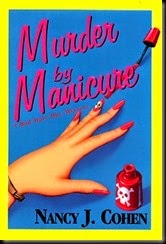
Do you title your story before or after you write the book? I prefer to have a title up front. Sometimes, this dictates what I have to do next. For example, in Murder by Manicure, I had a title and no plot. 

Manicure

This had been part of a three-book contract, and all of a sudden my publisher wanted a synopsis. I had to come up with an idea that incorporated the title. Someone had to die either while getting a manicure or as a result of one. I face this same quandary now. I have the title, and I have to suit the crime to this situation. That brings us to the next element.

The Crime Scene
Do you begin with the victim or the villain? In a psychological suspense story, you might begin with the villain and why he became that way. The focus would be on how he turned to the dark side and what motivates him now. Then in comes your hero who has to figure out a way to stop him while delving into his psyche at the same time.

My plots center around the victim. Who is this person? Where do they die? How do they die? Once I figure out the Howdunit, I’ll move on to the next factor.

The Victim
What made this person a target? Here we might learn about their job and personal relationships. Was this person loved without a single blemish in his past? Or did other people have reason to resent him? What might have happened in his past to lead up to this moment? And what did he do to trigger the killer at this point in time? What could he be involved in that you as a writer might want to research?

6275719_m

The Cause
This is the passionate belief that underlies your story. It’s what gets me excited about a book, because I can learn something new and feel strongly about an issue while weaving it into my tale. In Hanging by a Hair, I deal with condo associations and their strict rules. I also touch upon Preppers and the extremes they go to in their survivalist beliefs. Or perhaps my theme is really about family unity, and how Marla strives to bring peace to the neighborhood so she can resume a normal family life. In my current plot, I finally hit upon The Cause. Now the elements are starting to come together. It’s exciting when this happens. And that brings us to the next factor.

The Suspects
Who has the motive, means and opportunity to have committed the crime? Does every one of your suspects have a viable motive? If so, whodunit? And why now? How can you relate these people to each other? This is the fun part, where the relationships build and the plot begins to coalesce in your mind. Character profiles might help at this stage, so you have a better concept of each person before they step on stage. Seek out photos if necessary and do any research you might need before you get started writing. What does The Cause mean to these people? Is it the reason why the victim had to die? Or is it the glue the sleuth will use to put the pieces together?

Angela

Personal Threads
Now focus on the sleuth. If this is your first story in a series, you’ll want to do an initial character profile. But like me, if you’re well into a series, you already know the hero or heroine. However, the protagonist needs to grow or change with each story, so what will be their personal lesson this time around? What is at stake that draws them into solving the crime? How does it affect them personally? And what other issues in their life are they dealing with now? What is their personal arc going forward?

Marla

Hook the Reader
Where will your story begin? How will it end? Will you include teasers for the next story? Even if you’re a pantser rather than a plotter, you’ll want to have an idea of a path to follow.

For me, by the time I’ve reached this last part, I have already jotted down plenty of notes. They might even be starting to make sense. I’ve done preliminary research and can see how the suspects relate to each other. Now it’s time to sit at the computer and write the synopsis. This should show personal conflicts as well as plot points, and how each story development affects your protagonist. You may follow an entirely different process, and that’s fine.

So start with various ideas for your plot. Write them down. Do a bit of research. Sound out your plot points to critique partners or friends. Identify the victim, the crime scene, and the manner of death. Develop your list of suspects. And then you’re off and running. For me, this is when the actual story starts. It’s begins with a crisis or murder that draws your sleuth in to solve the crime. Everything should flow logically from there.

The Art of Writing Back Copy:Boiling Your Book to its Essence

By PJ Parrish

Congratulations! You finished your novel! You typed those two sweet words THE END. Right there on the bottom of  your Word doc is that magic line: Words: 96,788.

Okay, now the hard work begins. Now go back and write your book again – this time in 200 words.

Yes, I’m talking about back copy. I know. You don’t want to deal with it. It’s one of those tangential things like publicity, P&L statements, website algorhithms, or finding a good editor, that writers don’t want to think about but know they have to because that’s the way the book business is rolling these days. Writers have become one-man bands. We do it all or we die.

I can hear some of you out there saying, “I can skip this one today.” But you can’t really. Because being able to articulate what your book is about in 200 words or less is really valuable. Why? Here’s five reasons:

  1. If you are self-publishing with Amazon, you have to write your own back copy.
  2. If you are querying agents, you have to have compose a great hook for your book
  3. If you are going to a conference and meeting an agent, you have to be able to give a 30-second elevator pitch.
  4. If you’re doing a speech or a signing, you need to articulate what your book’s about in two or three sentences.
  5. And maybe most important: Being able to boil your story down to its very essence is a great exercise unto itself, one that will help you understand what, in your heart, you are really trying to communicate. 

Both of my traditional publishers, Kensington and Pocket, let us edit our back copy and a couple times we even wrote it. And we write all the descriptions that appear with our self-published backlist titles on Amazon.  I’ve written my share of query letters. I had an unnerving 10-minute pitch session with an editor from Harpers at a writer’s conference. And I’ve sat at card tables in malls trying to talk people into buying my books when all they really want is directions to the Piercing Pagoda.

I’m actually not bad at boiling down a story. I think it is because I made my living for years as a newspaper copy editor and once you get the hang of writing headlines that can be grasped by a guy driving by a newspaper box at 40 miles an hour, well, having 200 words to sum up a whole book doesn’t seem that hard.

But I know it actually is. One of the hardest things to do is to write with both brevity and verve.  As a reporter, I was always way over in my word count and my editor never bought into the Mark Twain quote that I would have written shorter if I had more time. So whenever I see back copy done well, I appreciate the care that goes into. Here’s two off my bookshelf that I really like:

A father and his son walk alone through burned America. Nothing moves in the ravaged landscape save the ash on the wind. It is cold enough to crack stones and when the snow falls it is gray. Their destination is the coast, although they don’t know what, if anything, awaits them there. They have nothing; just a pistol to defend themselves, the clothes they are wearing, a cart of scavenged food – and each other.

   * * *

More than a year ago, mild-mannered Jason Getty killed a man he wished he’d never met. Then he planted the problem a little too close to home. But just as he’s learning to live with the reality of what he’s done, police unearth two bodies on his property – neither of which is the one Jason buried. 

The first is from Cormac McCarthy’s The Road. It’s good because it captures not just the plot but also mimics style and mood of the novel. The second is from Jamie Mason’s Three Graves Full. I like it because it is short and very seductive.

On the flip side, I see a lot of bad back copy out there these days. In the New York Times book review today, I saw an ad for a print-on-demand publisher touting its books with the headline: UNFORGETTABLE STORIES. Here are some sample descriptions:

In the summer of 1863, an eighteen-year-old Amish farm boy feels trapped between his religious heritage and his fascination with the world outside his small Pennsylvania town. His solution is to leave home. And so begins his unforgettable adventure that will change his life forever.

[Title redacted] is a highly engrossing work of fiction, set in the north of England, extrapolated from the realities of the world of front line regional newspaper reporters and the sort of situations they they on a daily basis.

Abused and mistreated, Jane grew up in the field of restraints which she calls a prison. And she hopes there is still an ounce of sanity left in her which leaves her with the choice of breaking away from the [title redacted].

[Title redacted] is author [redacted] new novel that looks into the lives of the people who survived the 1998 Nairobi bombings and how they struggle to cope with the pain and loss.

[Name redacted] returns from the war minus a a leg and discovers that his wife has left him and his engineering business has shut down. Forced to re-invent his life, he and his family battle to overcome war’s damage.  

Now, these could be very good novels. But from the blurbs, there is no way to know. None of these entice readers or capture the tone or mood of the books. They are wordy (“feels trapped”), filled with cliches (“unforgettable adventure”) , vague on plot points, filled with generalities (“struggle to cope”), confusing, and devoid of any hint of conflict or suspense.

Writing great back copy is a fine art. It’s nearest kin might be advertising copy in that its form is short and specialized, and its purpose is to seduce, tease, and make us buy into something. It’s no accident that some pretty good novelists emerged from the advertising industry —  Don DeLillo, Fay Weldon,  Joseph Heller.  F. Scott Fitzgerald wrote streetcar sign slogans for $35 a week. Dorothy Sayers made a name for herself writing a mustard slogan before she got hot with crime novels. Salman Rushdie, who wrote ad copy while trying to finish his first novel, recalls taking a test for the J. Walter Thompson agency where, “they asked you to imagine that you met a Martian who mysteriously spoke English and you had to explain to them in less than 100 words how to make toast.” And then there was that guy who started out as a junior copywriter at  J. Walter Thompson, rose to CEO, and turned his ad experience into James Patterson Inc.

So what’s the secret? Our own Jodie Renner and James Bell laid out some great tips in a post here last year. CLICK HERE to read it.  And if you want some really helpful tips from a real agent on how to write good query letter hooks, CLICK HERE to go to the Miss Snark archives. But I’d also like to offer up some of my own tips, if I may.

Don’t give a plot regurgitation. Give just enough story to hook the reader’s interest while you also hint at the larger picture behind the book. Here’s a great tease:

From a helicopter high above the California desert, a man is sent free-falling into the night . . . and Jack Reacher is plunged into the heart of a conspiracy that is killing old friends.

Reacher has no phone, no address, no ties. But a woman from his former military unit has found him using a signal only the eight members of their elite team would know. Then she tells him about the brutal death of one of their own. Soon they learn of the sudden disappearance of two other comrades. But Reacher won’t give up—because in a world of bad luck and trouble, when someone targets Jack Reacher and his team, they’d better be ready for what comes right back at them.

Know your audience. Make sure the tone is right. Hit the high notes of your genre or the genre’s tropes. Romance or romantic suspense tends to stress the characters and relationships over plot. Thrillers tend toward the opposite. Just like your cover, you have to convey the exact mood of your story. Use language that appeals to the reader’s emotions. You won’t mistake Elaine Viet’s Shop Til You Drop for Lee Child:

Once on the fast track to success, Helen Hawthorne is going nowhere fast. Forced to trade in her chic life for a shabby one, she’s now on the run trying to stay one step ahead of her past. After two weeks as a new clerk at Juliana’s, Fort Lauderdale’s exclusive boutique, Helen still feels out of fashion. But in a shop where the customer’s collagen lips are bigger than their hips, who wouldn’t…

Start with a great headline. If you’re having trouble coming up with the perfect headline, write the body copy first. Later, go back and read what you wrote as if you were a consumer seeing it for the first time. Somewhere, buried in all that copy, you will find your headline. Here’s a sample you can find in our special Kill Zone Zone 99-cent Amazon offering Thrill Ride:

A KILLING SPREE. A MISSING BOY
A PLACE WHERE ONLY THE STRONGEST SURVIVE

A deep freeze is bearing down on the Florida Everglades, the kind of brutal storm the locals call a killing rain. For Detective Louis Kincaid, the coldest night of the year has brought a terrifying new chill — a grisly murder that tightens his every nerve in warning. This is no routine case. It’s the start of a nightmare.

Watch how it looks on the page. Is it too long? Are the sentences too long and hard to digest in one quick reading? Did you break it into paragraphs, if needed? Think about the best advertising copy you see. The block of copy must register in the eye as a fast read.

Tell us who your hero is and where we are. It’s a good idea to work in your protag’s name, profession, and the location(s) of your story. Readers want to be able to tell at a glance if the protag is male or female, what kind of person it is, and where you are going to take them. Geography is important to many readers. Here’s some effective copy from a Steve Hamilton book that does all this and gives us a little backstory:

Alex McKnight swore to serve and protect Detroit as a police officer, but a trip to Motown these days is a trip to a past he’d just as soon forget. The city will forever remind him of his partner’s death and of the bullet still lodged in his own chest. Then he gets a call from his old sergeant. A young man Alex helped put away—in the one big case that marked the high point of his career—will be getting out of prison. When the sergeant invites Alex to have a drink for old times’ sake, it’s an offer he would normally refuse. However, there’s a certain female FBI agent he can’t stop thinking about, so he gets in his truck and he goes back to Detroit.

Don’t give away too much. Good copy writing is a seduction. The back copy should make the reader want more. Think foreplay. One good tip is to pick a spot in the your plot, usually a quarter or a third of the way in, and don’t include anything that happens after that point.

TV reporter Candy Sloan has eyes the color of cornflowers and legs that stretch all the way to heaven. She also has somebody threatening to rearrange her lovely face if she keeps on snooping into charges of Hollywood racketeering. Spenser’s job is to keep Candy healthy until she breaks the biggest story of her career. But her star witness has just bowed out with three bullets in his chest, two tough guys have doubled up to test Spenser’s skill with his fists, and Candy is about to use her own sweet body as live bait in a deadly romantic game – a game that may cost Spenser his life.

Avoid passive voice and weasel words, clichés, twenty-dollar vocabulary. Don’t use big hard to grasp words. Again, back copy is like good advertising copy: It appeals to the senses and emotions. You can pile on the details and pretty writing inside the covers.

Hint at what’s at stake. Go back and read the bad examples I listed above. Each of them has the same core problem: There is no defining of the central conflict or what the stakes are. This is a complaint I hear often from agents about query letters. A successful hook in a good query letter works much the same way as back copy does — it makes the agent want to know more — NOT about plot points but what this all means for the protagonist.

End with a question.  We see this device a lot in back copy but for good reason. It works. It creates suspense.  (“What will John do when he discovers Jane’s deception?”) It hints at future complications (“When their investigation leads them to a city hall conspiracy, can their love stand the test?”) It sets up possible suspects, like in this back copy:

On a warm summer morning in North Carthage, Missouri, it is Nick and Amy Dunne’s fifth wedding anniversary. Presents are being wrapped and reservations are being made when Nick’s beautiful wife disappears. Husband-of-the-Year Nick isn’t doing himself any favors with cringe-worthy daydreams about the slope and shape of his wife’s head, but passages from Amy’s diary reveal the alpha-girl perfectionist could have put anyone dangerously on edge. Under mounting pressure from the police and the media—as well as Amy’s fiercely doting parents—the golden boy parades an endless series of lies, deceits, and inappropriate behavior. Nick is oddly evasive, and he’s definitely bitter—but is he really a killer?

Go for the Big But. This  is a cliche construction in back copy writing, but hey, it works. First you set up a scenario of normality for your protagonist then you use a conjunction bridge to a new development in that person’s life (ie a crime) that has sent them on a new course. Go back and look for all the BUTS I have highlighted in blue and you’ll see how common this is. Here’s a sample from John Creasey’s Parson With a Punch:

The Reverend Ronald Kemp came to the East End of London with definite ideas of right and wrong, which was only fitting for a minister of God. But the people of the East End had a few ideas of their own and the Rev. Kemp quickly finds his world torn asunder…

From Michele Gagnon’s Bone Yard:

FBI agent Kelly Jones has worked on many disturbing cases in her career, but nothing like this. A mass grave site unearthed on the Appalachian Trail puts Kelly at the head of an investigation that crosses the line…Assisted by law enforcement from two states, Kelly searches for the killers. But as darkness falls, another victim is taken and Kelly must race to save him before he joins the rest…in the boneyard.

From Michael Connelly:

Mickey Haller gets the text, “Call me ASAP – 187,” and the California penal code for murder immediately gets his attention. Murder cases have the highest stakes and the biggest paydays, and they always mean Haller has to be at the top of his game. But when Mickey learns that the victim was his own former client, a prostitute he thought he had rescued and put on the straight and narrow path, he knows he is on the hook for this one.

Hyperbole? Heck, why not? It’s not uncommon for back copy prose to get a little purple, especially in crime fiction. We see a lot of this kind of stuff: “Time is running out…”  “As the nightmare increases…” “Even as danger mounts…”the shocking truth is revealed.” You can use this — but in small doses, please. Readers will turn on you if they sense you’re just throwing a bunch of adjectives at them like “dazzling” or “breathtaking.” CLICK HERE to read a bookseller’s take on how hyperventilating blurbs turn readers off.  And if you’re writing humor, please be careful tossing around stuff like “hilarious” and “side-splitting.”

Here’s back copy for Sherrilyn Kenyon that’s corny as all get out but hey, it works for me:

He is solitude. He is darkness. He is the ruler of the night. Yet Kyrian of Thrace has just woken up handcuffed to his worst nightmare: An accountant. Worse, she’s being hunted by one of the most lethal vampires out there. And if Amanda Devereaux goes down, then he does too. But it’s not just their lives that are hanging in the balance.  Kyrian and Amanda are all that stands between humanity and oblivion. Let’s hope they win.

A few final things to consider as you put together your back copy:

  • When you’re done, read your blurb out loud.  
  • Prune out all unnecessary words. See if you can cut out 30 percent.
  • Go into Amazon and read some blurbs in your genre for good books. Read the backs of paperbacks. Mimic the ones that work. 
  • Run your blurbs by beta readers and see if they salute.
Whew. Long post today. Sorry about that. I would have written shorter if I had had more time.

The New Bestseller Lists

Guest post by L.J. Sellers

 [Note from Jodie: I’m on my way home from When Words Collide, a writers’ conference in Calgary, where I presented two craft-of-writing workshops, so I didn’t have time to prepare a post for today. My good friend LJ Sellers kindly accepted to step in for me. Thanks, LJ!]

Elements of the publishing industry have never been more hotly debated! The most passionate discussion is the Amazon/Hachette dispute over distribution terms and pricing, but another issue has come up that may have a broader effect on authors. Or at least, a more personal influence. 

Amazon’s new Kindle Unlimited program was unveiled recently, and it’s already affecting the measure by which authors all live—the Kindle bestseller lists.  I’ll get to that in a moment, but first the background: Kindle Unlimited (KU) is a subscription service for ebooks. For $9.99 a month, readers can download all the digital books they want. So far, the books included in the service mostly come from the Select program of Kindle Direct Publishing (KDP) and Amazon Publishing (AP) imprints. 

[You can enroll in the KDP Select program by clicking on the box when you upload your book. When you click the Select box, you’re agreeing to make that ebook exclusive to Amazon and not sell it in ebook form anywhere else. In exchange, you get various promotional opportunities, plus you’re enrolled in KOLL (the lending library), so you get paid each time someone borrows your book. And now, with the new program, you’re also in Kindle Unlimited, for even more paid sales.]

The issue of how authors get paid for books that are read through subscription services was already under debate with the launch of other services such as Scribd and Oyster. But deep-pocketed Amazon is offering to pay authors for each download that the consumer reads more than 10% of—the same as if it were a sale or a Kindle Lending Library download. 

So the famous Amazon algorithm—that generates the Kindle top 100 lists—treats these downloads/reads the same as it does a retail sale. Now books that are being consumed through the subscription service are being bumped up in the rankings, and many are making the top of the bestseller lists. 

This is great news for authors like me, whose books are published either through Thomas & Mercer or KDP. Those lists represent visibility, and visibility leads to more sales, and more sales lead to higher rankings, which leads to more visibility. A positive cycle! 

But for authors with traditional publishers, or KDP authors whose books aren’t in the Select program, the effect may be the opposite—bumping their titles farther down the list. 

Digital Book World has decided that phenomenon isn’t fair, and so it’s excluded from its own bestseller list all titles listed in Kindle Unlimited. Which is also not fair, when you consider that the top-tier books from KDP and AP are bestsellers even without help from KU downloads. 

And now they’re being excluded from this one particular bestseller list. Many of those authors may not care much about Digital Book World. Ranking high on Amazon’s lists is the key to success. The other lists they care about are from the old guard: The New York Times and USA Today

But what if those print-media lists decide to exclude Kindle Unlimited titles too? That could be a major concern for those authors. So the big question is: Are those subscription downloads the same as a sale? Digital Book World says they’re not, because they’re not point-of-purchase sales. But Amazon and authors in the program argue that those downloads are paid for and should contribute to ranking—which is about popularity. 


What do you think? Are they sales? Should they count toward bestsellers lists? 

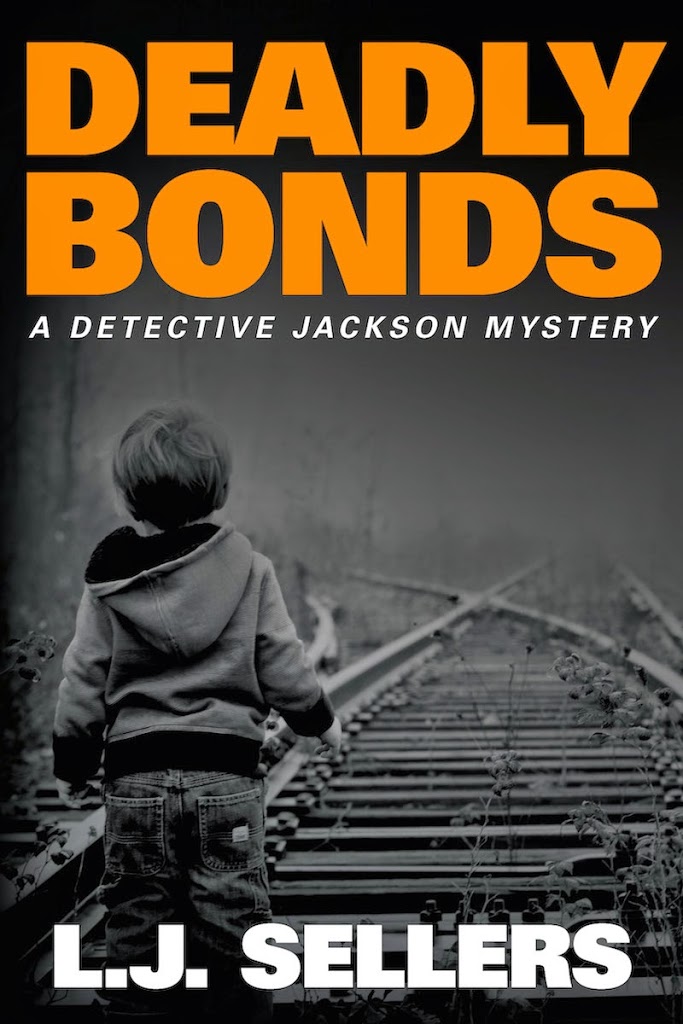
L.J. Sellers writes the bestselling Detective Jackson Mysteries—a two-time Readers Favorite Award winner—as well as the Agent Dallas series and provocative standalone thrillers. L.J. resides in Eugene, Oregon where many of her novels are set and is an award-winning journalist and the founder of Housing Help. When not plotting murders or doing charity work, she enjoys stand-up comedy, cycling, and social networking. She’s also been known to jump out of airplanes. LJ’s Website  Facebook  Twitter  Google+

What We Can Learn From Big Clunky Novels

@jamesscottbell


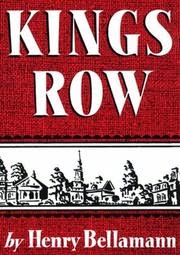
Kings Rowwas a huge bestseller in 1940, turned into a hit movie in 1942. The movie starred Robert Cummings and, in his finest role, Ronald Reagan. The supporting cast is equally impressive: Claude Raines, Ann Sheridan, Charles Coburn and the unforgettable Maria Ouspenskaya.
After watching the movie recently I decided to read the book. It has an interesting pedigree. It was the author’s first novel and he was 58 when it came out. Henry Bellamann was a musician, a composer and an educator. He wrote Kings Row(which takes place around 1900) based in part on his own home town. Indeed, there was quite a bit of controversy about it, as the citizens still alive from those days took offense at much of the content.
And what content! This sweeping saga concerns a boy, Parris Mitchell, who grows up in Kings Row and goes on to become one of the first practicing psychiatrists in America. His childhood friend is Drake McHugh. Parris is the sober-minded student. Drake is the wild ladies man. The narrative follows their growing up, their loves, their disasters.
Two very dark and sinister secrets dominate the proceedings. I won’t spoil them for you here. I recommend you watch the movie…and then know that one of the secrets is even darker in the novel. The studio ran up against the censors and thus had to soften it to some degree. I can see why much of the reading public was “shocked” by the novel.
Now, here’s the interesting thing. The book is not exactly what we’d call well-written. The prose is clunky, the dialogue sodden. Yet I couldn’t stop reading and by the time I was finished, I felt that sense of resonance that only a deeply affecting reading experience can bring.
My question to myself, then, was why, in spite of the deficiencies, did I feel this way?
Before I answer, let me mention another book that had much the same effect on me.
In the early years of the twentieth century, most critics would have named Theodore Dreiser as the great American

novelist. He ushered in a new school of urban realism. Here was not a Mark Twain, writing light-hearted fare. Nor a Jack London, with his fast-moving action.

No, Dreiser was our “important,” world-class novelist. But you hardly ever hear his name mentioned anymore. He’s not taught, except on rare occasions, in college lit classes. This is sad, because Dreiser has much to teach us.
His greatest work is An American Tragedy (1925). You can also watch the movie version. A Place in the Sun (1951) is a terrific film starring Montgomery Clift and, at her most gorgeous, Elizabeth Taylor.
This novel is also clunky in its prose. In fact, the New York Times famously dubbed it “the worst written great book ever.” Yet when I finished it, I found myself deeply moved.
Which brings up the same question I had about Kings Row. Why do I count each of these novels as among my most memorable reading experiences, even though stylistically they fall short?
Here’s my attempt at some answers.
1. Great themes
Both these books take up the great themes of human existence. Love, evil, sin, fate. These books were not meant to be commercial throwaways. The authors worked years on them. Indeed it was ten years between Dreiser’s The Genius and his magnum opus.
The main characters are thrust into situations that force them to confront all forms of death—physical, professional, psychological. Clyde Griffiths in An American Tragedy is obsessed with ambition and success, and then the lovely Sondra. Only problem: he’s impregnated another woman who threatens to spill the beans unless he marries her.
Therein lies the tale.
Parris Mitchell of Kings Row is obsessed with human behavior, why people act the way they do, and how he can help them. But his explorations of the mind lead him to dark corners he never could have conceived of growing up. It’s a loss of innocence and a confrontation with harsh reality.
Nothing seems “small” in these novels. The authors reach for the thematic skies.  
I don’t see why any novelist cannot treat a large theme in a book. Even in commercial fare, like a category romance. If  you’re writing about love, write it for all its worth!
2. Interior life of the characters
Both Dreiser and Bellamann spend a huge portion of their narratives explaining exactly what is going in inside the main characters. We cannot help but identify with the emotional stakes and inner conflicts.
Dreiser is especially explicit when, in omniscient fashion, he describes how Clyde is thinking and feeling at key points. What it came down to was not the style, but Dreiser’s uncanny ability to show us human behavior and thought in a way that truly makes us understand not just the character, but ourselves.
These days, the amount of interior time you spend depends on your genre and your own particular style. But take note you “plot driven” writers: when you get readers inside a character they tend to bond with them more. And that makes for a greater reading experience.
3. Huge action
Yet the emotional is balanced with the external. The action is not of the thriller variety, but is nevertheless is huge. We’re talking about murder, suicide, incest, lust, vengefulness. And of course the vagaries of romantic love.
Here is a lesson for you “literary” or “character driven” writers. You love rendering the inner life of the characters, but if you don’t watch it the action can be less than compelling. The best literary writers give us outer action that matters, too.

Conclusion
Here’s my theory about clunky fiction that has all of the above. By the time you’ve traveled with the characters through the narrative, you become, by a wonderful alchemy, totally invested in their fate. Whether the story ends on an upbeat note (as in Kings Row) or a tragic one (as in An American Tragedy), you are going to be affected in that fashion all us writers wish to achieve: the book is going to stay with you long after you finish it.
I do enjoy what Sol Stein calls “transient fiction.” I read many books that entertain me wildly, but when they’re over, they’re over and I’m not tempted to read them again.
Yet I often think about An American Tragedy. And likewise Kings Row.
What about you? What novel has stayed with you like this? What did it teach you about storytelling? 
[NOTE: I’m in travel and teaching mode, so may not be able to comment much. Talk this up amongst yourselves. Help a blogger out!]

Shakespeare on the Potomac

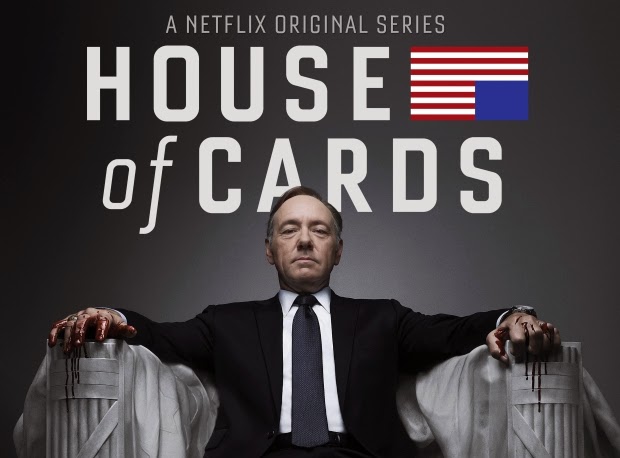
This week I continued to make good progress on my novel — now up to 40,000 words — and perhaps as a result I’m not so interested in writing about writing. In my last post I went on and on about summer movies, and now I’m going to talk about my new favorite TV series, House of Cards. My son and I were looking for a fun show to watch during the long, dreary interregnum before The Walking Deadresumes in October, and I’d heard good things about Cards.
If, like me, you’re a latecomer to the series, here’s the gist: Frank Underwood, a Machiavellian congressman from South Carolina, executes a sequence of increasingly dirty tricks to gain power and outmaneuver opponents in Washington, D.C. Underwood is played by Kevin Spacey, and he’s the main reason for watching the show. My favorite part is when he turns to the camera and directly addresses the audience. I know this technique is as old as Shakespeare, but it still works. Frank adopts a completely different tone for these soliloquys, a voice that’s knowing and evil but also bracingly honest. “I despise children,” he admits. “There, I’ve said it.” He also badmouths the president, the vice president and just about everyone else in D.C. As he outlines his schemes for the TV viewers, you can’t help but think of Richard III plotting his assassinations and seductions. (“Was ever woman in this humor wooed? Was ever woman in this humor won?”) The resemblance is so strong that it must be deliberate. The creators of the show clearly wanted to stage an updated version of a Shakespearean history play, with all its naked brutality.
There are also strong hints of Macbeth. Frank’s wife Claire, played by Robin Wright, is supposed to be equally cunning and amoral, but like Lady Macbeth, she has a little trouble living with herself. By the end of Season 1 (my son and I haven’t progressed to Season 2 yet) she seems to be yearning for something more meaningful. Unfortunately, this makes me like her less rather than more. I can’t really see inside her head. She doesn’t indulge in soliloquys, so I don’t know what she’s thinking.
Many of the secondary characters are also weak. Frank’s mistress, an ambitious reporter, is too young and witless. Claire’s paramour is a complete caricature, an English photographer who sounds like a cut-rate Jude Law. Worse, a few of the plot points made no sense at all. During one of the episodes Frank’s machinations trigger a nationwide teacher’s strike, which is utterly ridiculous; teachers are organized on the local level. And at one point Frank delegates a fellow congressman to carry out an unsavory task that could’ve been much more easily accomplished by a private investigator or by Doug Stamper, Frank’s wily second-in-command, who is also my second-favorite character in the series. It was poor plotting, a shame.
But Kevin Spacey’s performance makes up for all the flaws. In fact, it’s almost as good as Bryan Cranston’s performance in Breaking Bad. The two shows have a common theme, the realistic and intimate portrayal of evil, and viewers of both series will find themselves rooting for the bad guy. All in all, though, I think Breaking Bad is the better series, mostly because it leavened the dark proceedings with humor. Cranston was very funny at times, and so was Aaron Paul (his confession about “the problem dog” was one of the funniest and saddest speeches ever written for television).

House of Cards is also somewhat educational. My son is fifteen now, and he needs to learn how our government works. I tell him not to worry if he doesn’t completely understand the plot (which, as I just pointed out, doesn’t always make sense anyway). The important lesson here is that politicians will stop at nothing.