by James Scott Bell
@jamesscottbell
There are some writers who do very well writing one thing, and one thing only. An author named Lee Child has written only thrillers about a character named Reacher. He’s done pretty well with that, and may break into big sales soon.
There are writers who concentrate on one genre, though they may create different series characters or stand alones. Michael Connelly is like that, and so was Robert B. Parker.
Then there are writers known for one type of book who get restless and take a flyer on another kind. John Grisham wrote A Painted House (literary) after a string of hugely successful legal thrillers. Dennis Lehane, known for gritty contemporary crime, came out a few years ago with a sweeping historical, The Given Day.
Some fiction writers cross over into non-fiction. Ray Bradbury was a writer whose fertile imagination and curious mind could not be contained in fictional worlds only. He wrote numerous essays and opinion pieces, many of which have been collected into volumes, like Bradbury Speaks.
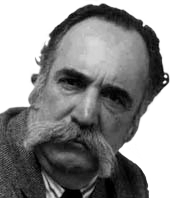
Saroyan
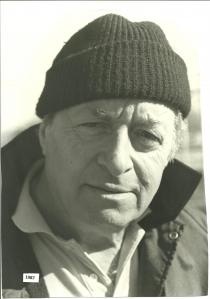
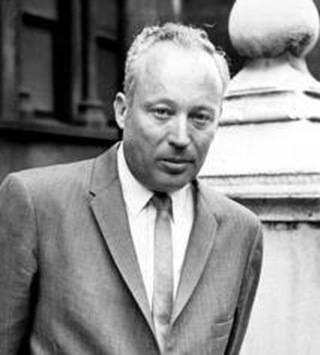
And then there is one of my favorite writers, William Saroyan. His name is not as widely known today as some of his contemporaries (Hemingway, Steinbeck), but in the 30s and 40s he was considered a literary lion, winner of the Pulitzer Prize (which he famously turned down), and author of short stories (e.g., My Name is Aram), novels (e.g., The Human Comedy), and plays (e.g., The Time of Your Life).
When his fiction sales tailed off in the early 50s, Saroyan turned to the quirky memoir, writing several volumes of remembrance, observation, and opinion. Examples include The Bicycle Rider in Beverly Hills and Places Where I’ve Done Time.
For Saroyan, writing was life and life was writing. And, indeed, death was the only thing that stopped him. His final words were: “Everybody has got to die, but I have always believed an exception would be made in my case. Now what?”
A few years before his death Saroyan came out with a book unlike anything I’d ever read before. Obituaries was a large collection of short pieces, each one a riff on a name from the list of movie industry people who had died in 1976 and listed in a special edition of Variety.
What’s so nuts about the book is that it contains no paragraph breaks and no indentations. Each entry is just one solid block of text that goes on until Saroyan is finished with what he has to say.
And what he says varies with where his mind takes him. He starts with the name of the deceased, whether he knew the person or not, and off he goes. Then he’ll switch mid-stream-of-consciousness and go in a completely different direction.
This crazy book was nominated for the American Book Award and named one of the best books of the year by the New York Times. I own a first edition.
Anyway, early last year I was thinking about ways to increase my writing production, and found myself reading the obituary of Anita Ekberg, the Swedish actress. Something in me clicked, like a switch, and a sluice gate opened in my brain, and all these words starting pouring out on a page. It was different and it was fun. What was coming out was part essay, a little bit of memoir, and “parts unknown.”
So I decided to keep going, and spent a goodly portion of 2015 reflecting on obituaries. Many of them are of famous people, but I also looked at local obits from small town papers, and found myself using those, too. Every life has a story if we’re willing to listen.
When I looked up on January 1, 2016, I had a full-length collection. And here it is. If you want to get a flavor of it, just click on the PREVIEW button below. You can scroll through the preview and you’ll stay right here on TKZ.
It’s a book you don’t have to read in one sitting. In fact it’s set up for when you’re waiting in line for coffee, or at the doctor’s, even in the checkout lane at the grocery store. I do, however, advise against reading it in commuter traffic.
Have you felt the pull to write something completely different? Well, what’s stopping you? Here are three tips:
- Write wildly
Pick a subject you love, or a topic you’re mad, sad or glad about. Write like a wildfire about that subject. Shut off your inner editor completely. Even if you never publish the entries you are at the very least stretching your writer’s mind beyond self-contained borders. That will help you in all your writing.
- Edit soberly
If you do decide to publish something new, go at it objectively. Make sure you edit your words so they mean what you want them to mean, and what you want other people to see. Get feedback from beta readers. Not everything that flies off your fingers is ready for prime time. Write hot, but revise cool.
- Publish enthusiastically
Digital self-publishing is the greatest boon to writers since Gutenberg. It’s even better than old Johannes’s regime, because there you had to own a printing press, and get paper, and ink, and binding, and distribution. Only a few big companies could do that in the modern era, and thus many more books were rejected than published.
Not anymore. While some decry the “tsunami of content” in digital, for writers who write, who love to write, who—dare I say—live to write, there is a free marketplace. If you’ve got something to say, say it. Work it, polish it and then put it out there. Let the readers decide what to do with it.
So what about you? Do you have a secret pet project you’d like to write someday? What’s holding you back?