Once Again, The Future of Publishing

psychics-1026092_1920It happens every year or so. A bigwig from the traditional publishing world takes a look at the data—usually some sort of downturn in the industry—and writes a piece predicting the future of publishing.

Recently Michael Pietsch, CEO of Hachette, took a turn (Wall Street Journal, Dec. 1, 2015. Link may expire). It’s always good to hear from inside the walls of the Forbidden City. Mr. Pietsch begins thus:

I’ve been hearing about the demise of book publishing since the first day I stepped through the doors of a publisher back in 1978. But here we are still, publishers like Little, Brown, with histories going back 100 and 200 years. What other American industry has companies still in existence after two centuries, evolving and modernizing but still doing much the same work? The most recent variant of the death watch: A digital revolution would cause e-books to replace printed ones, authors would overwhelmingly choose self-publishing, and publishers would follow carriage makers into oblivion.

Mr. Pietsch then notes that e-book revenue for major publishers has “topped out” (this datum has been misreported in the media as reflecting a downturn in the overall e-book market. Such is not the case).

What of the boom in self-publishing? Mr. Pietsch gives it a nod, but also notes:

But writers like to be paid, in advance, for their work. Publishers are investors and risk takers. And a publishing company with longstanding media and marketing relationships is far more capable of getting attention for a new book than a writer working alone.

This deserves a closer look. Writers like to be paid period. And they like payments to be a fair exchange. Currently, big publishing is holding firm with its contracts, the boilerplate of which hearkens back to when the industry was an oligopoly, “a state of limited competition, in which a market is shared by a small number of producers or sellers.”

Indeed, the Authors Guild has begun an initiative that seeks more equitable contract terms. But this effort is running into the merciless force field of big business, which is electrified by the need for profit. And an enterprise does not generally increase its profits by raising its own costs.

So a writer looking at a modest advance (the norm these days) must make a decision. Yes, a big publisher can get a book “attention.” But not for every book. Not even for most books. And a book that does not get the big push and doesn’t sell well means the author will probably be let go—without, by the way, retaining the rights to his work.

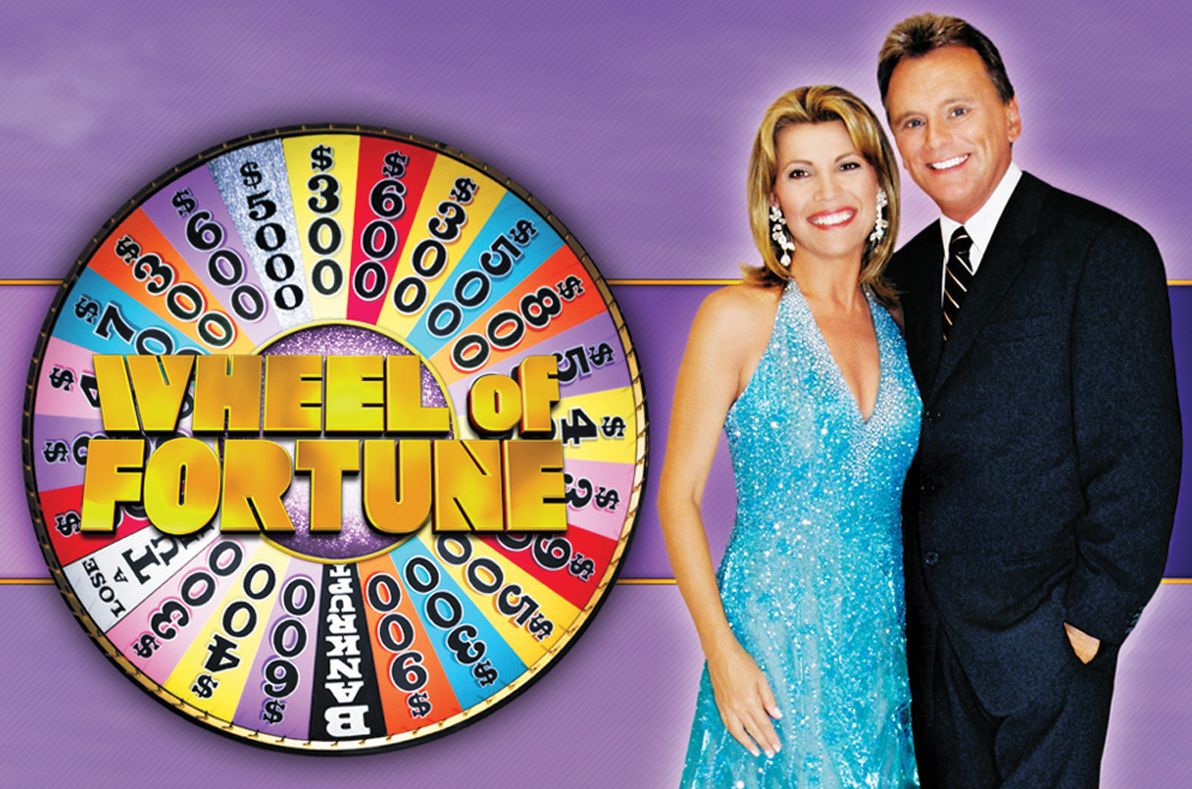
Still, there are writers who want to spin that Wheel of Fortune. If they win, they win big. If wheel4they lose, there is at least an alternative for them that never existed before. As indies they’ll be starting from square one (or maybe square two or three, with a bit of a readership), but at least they won’t be outside the walls of the Forbidden City, in the cold, blowing on their hands, begging to be let back in.

Mr. Pietsch insists that a publisher’s “essential work” is “identifying, investing in, nurturing, and marketing great writers.” I would ask: how much of an investment? How lasting the nurturing?

Sometimes a deal pays off and a book is a smash and the author moves to the A-list. But this doesn’t happen often. And it doesn’t happen at all for midlist authors who are dropped by their former nurturers for lack of numbers.

Yet many of these midlisters are now making good money by going indie. Some have secured rights to their backlist (though publishers are digging in their heels these days)—or they are being productive with new work on a consistent basis.

On the future of the business, Mr. Pietsch says:

Ever-larger retailers and wholesalers bring significant margin pressure, which will lead to continued conglomeration. Social media will continue to expand the writer’s ability to connect with readers; publishers will deepen their relationships with writers, but they’ll also create content of their own. As runaway books sell ever-larger numbers, publishers will earn more on their biggest sellers—which will keep driving up the advances they pay for potential hits. At the same time, publishers will need to innovate and challenge assumptions about every aspect of the business.

I would like to hear some details on how publishers can “deepen their relationships with writers.” I have a large number of professional writing friends, and for all of them the relationship with a publisher has been based, over and above all else, on the counting of beans. When the beans are flowing, the author and publisher are a regular Mike and Carol Brady. But when the beans dry up, it’s Al and Peg Bundy … usually ending in divorce.

This, by the way, is not a knock on publishers. It’s simply the way things are, and always have been, for big business. You can’t keep sinking dollars into a widget that isn’t selling. And in this day of market disruption and volatility, there is no longer the patience to hang on to a once-promising author to see if he can make a comeback.

Which is why Mr. Pietsch is correct that the only way forward for the industry is to hope for more “runaway books.” I just wonder about the assumption that they will sell in “ever-larger numbers.” And how many times a big bet can be placed on a “potential” hit.

In any event, I do think a robust, traditional publishing industry is a good thing to have around. When it scores, it brings books and authors the attention they deserve.

But the landscape is now in a permanent state of disequilibrium. Meaning, yes, that big publishers must “innovate and challenge assumptions about every aspect of the business.”

Kind of like the ever-increasing corps of authorpreneurs who have been writing and innovating for years.

So what is your take on the future of the publishing business? Can the Bigs survive in their present condition? Will self-publishing continue to provide serious revenue to enterprising and productive authors?

***

Force_1


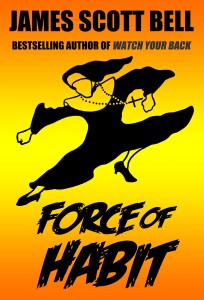
Speaking of the present, the first Sister J vigilante nun novelette, FORCE OF HABIT, is FREE through Thursday on Amazon. Get in on the kicks!

A Different Word for Everything

accent

I am reading THE LAST WITNESS, a new crime/police procedural novel by Denzil Meyrick. It’s been a bit of tough sledding for me. The story itself is terrific; it concerns a crime lord who has seemingly returned from the dead after being murdered several years ago and who is making up for lost time by getting revenge upon old enemies and traitors in very innovative and brutal ways. It’s an element of the dialogue that is doing me in, even though it is clever, inventive and in many instances hilarious.

The problem I am having is related, in a way, to Meyrick’s characters. They are all Scots, and talk like them. This is not exactly a coincidence, since Meyrick is himself a Scot. It’s tough to decipher. I wouldn’t change a thing, by the way. A couple of times, after figuring out what the wee lads in the book are saying, I’ve tried saying the sentence or three in American English and it just isn’t as good. When Myrick wrote The Last Witness I am reasonably certain that he wrote it for the British and not the American audience. And there we are. I’m still having fun with the book; it’s just taking a bit longer.

This brings up a question, however. How do you handle accents and dialects in the dialogue of your work in progress? Do you write it as if every character speaks “General American,” which is generally what American broadcasters use? Or, if your book is set in the south (to name but one example), do you write it using a southern accent, of which there are six different dialects and several sub-dialects? My own rule of thumb — generally — has been to write the dialogue using General American, but to describe a particular accent or dialect that informs the character’s accent after the character’s first sentence or two. For example: When she spoke, her accent conjured up images of magnolia trees, of the soft sound of paddles propelling a skiff across murky swamp water. And I did say generally, didn’t I? Sometimes, as in The Last Witness, pairing up a dialect to the dialogue makes things interesting, as I did in a story of mine titled “Disappearing. Soon”:


“We couldn’t figure out why  the pilot of the airboat had a baseball bat at the ready, until he swung it suddenly at a tree branch, hitting a low-hanging cottonmouth which went flying across the narrow channel. “Yee-ah!,” the pilot yelled. “I ain’ gonna get bit taday, me!”


So how do you handle this issue in your own writing, if it comes up at all? And how do you feel about it when you encounter dialect in your reading? Does it add to the story for you? Or would you rather the narrative just be straightforward?

READER FRIDAY: Should the Internet stay free? What would you pay for?

By EFF (Own work) [CC BY 3.0 (http://creativecommons.org/licenses/by/3.0)], via Wikimedia Commons

By EFF (Own work) [CC BY 3.0 (http://creativecommons.org/licenses/by/3.0)], via Wikimedia Commons

We pay for the goods and services we use in real life, except on the Internet, where the business model is flipped. The dangling carrot online is free email and social media accounts on Facebook, Google and Instagram, etc. For that, companies collect data on us and sell this information to advertisers. (It’s been reported that Facebook makes about 20 cents per user per month in profit.)

FOR READERS: How much do you value your privacy? Would you be willing to pay for social media and email in exchange for your privacy?

FOR AUTHORS: For authors conducting promo business on Facebook or Twitter, what service would you like to see or have improved? Would you be willing to pay for that service?

Tis the Season: Gifts for the Writer in Your Life & 2016 Resolutions

Jordan Dane
@JordanDane

800px-Christmas_tree_sxc_hu

After the Thanksgiving holiday, I’ve had my mind filled with plans for Christmas and the holidays, like getting presents from stonefoot.de.
I’ve already got my house decorated. 2014 was a rough year for me, but 2015 feels like a rebirth – a time to enjoy the many blessings in my life. It’s a time to reflect on this year while keeping my eye on 2016 and the goals or resolutions that can move my writer career forward, but I’d like your help to open my mind to the notion of resolutions.

I’ve never been one to commit to New Year resolution(s) and make a big deal about stating them aloud. I secretly set goals throughout the year and push to make them happen – things like setting daily writing goals, visualizing my completed novels for the new year, and how many prepared proposals I’d like to get out. I consider this career planning, but what about you? Does it help to make a resolution and let it be known so you’re committed? What writer goals have you set in the past? What’s worked for you? I could really use your positive vibes and I’d like to hear your success stories.

I thought it would also be fun to look at gifts for the writers in your life. custom phone cases are always useful because you can tailor them to whoever you’re buying for. Online shopping is a great way to find the gifts you want and with so many discounts available from places such as PromoCodeWatch there’s bound to be something that will be perfect, and for a cheaper price too! Last year I treated myself to a severed arm that I keep in my freezer. It’s the gift that keeps on giving.

Here are a few that appealed to my weird humor:

Mr Write Tee

Mr Write T-shirt at AmazonFor Mr Obvious

51QjvI6QGqL__AA160_

Cafe Press Mug – 12 Days of Christmas for WritersSome of these gifts would be very appreciated.

51uzF5oM52L__AA160_

Shower Writing PadI seriously need to get one of these, but It’s kinda freaky.

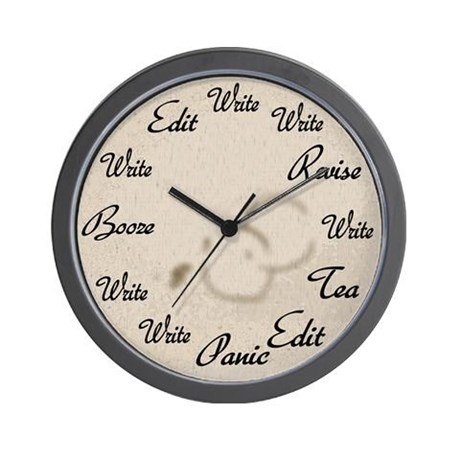
writers_clock_wall_clock

Writers Clock – from Cafe Press – What? Only one PANIC!

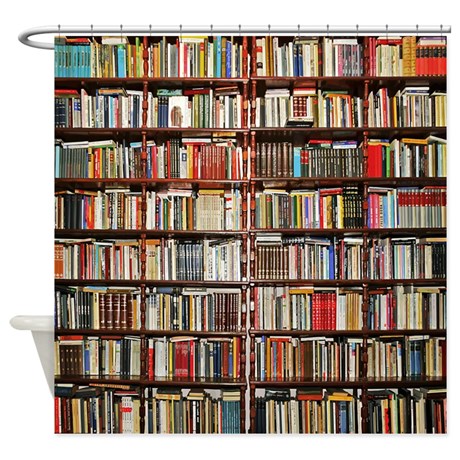
books_shower_curtain

Cafe Press – Books Shower CurtainAgain with the shower theme.

movielines_small

From Writer Store – Magnetic Movie Linesfor your fridge or white boards

william-shakespeare-action-figure_small

The Writers Store: Literary Action Figures – They have Shakespeare, Jane Austen, Oscar Wilde, and Sherlock Holmes (Okay, why is Holmes in this group of authors?)

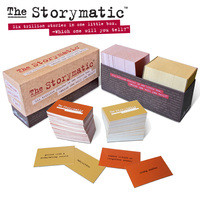
the-storymatic_small

The Writers Store: The StorymaticStory Ideas and Writers Prompts in a Box

Discussion Questions:
1.) What gifts would you like to receive (as a writer)? Or what will you give your writer friends this year?

2.) What resolution(s) will you make for 2016?

tmp_4087-TheLastVictim_highres-1601584079

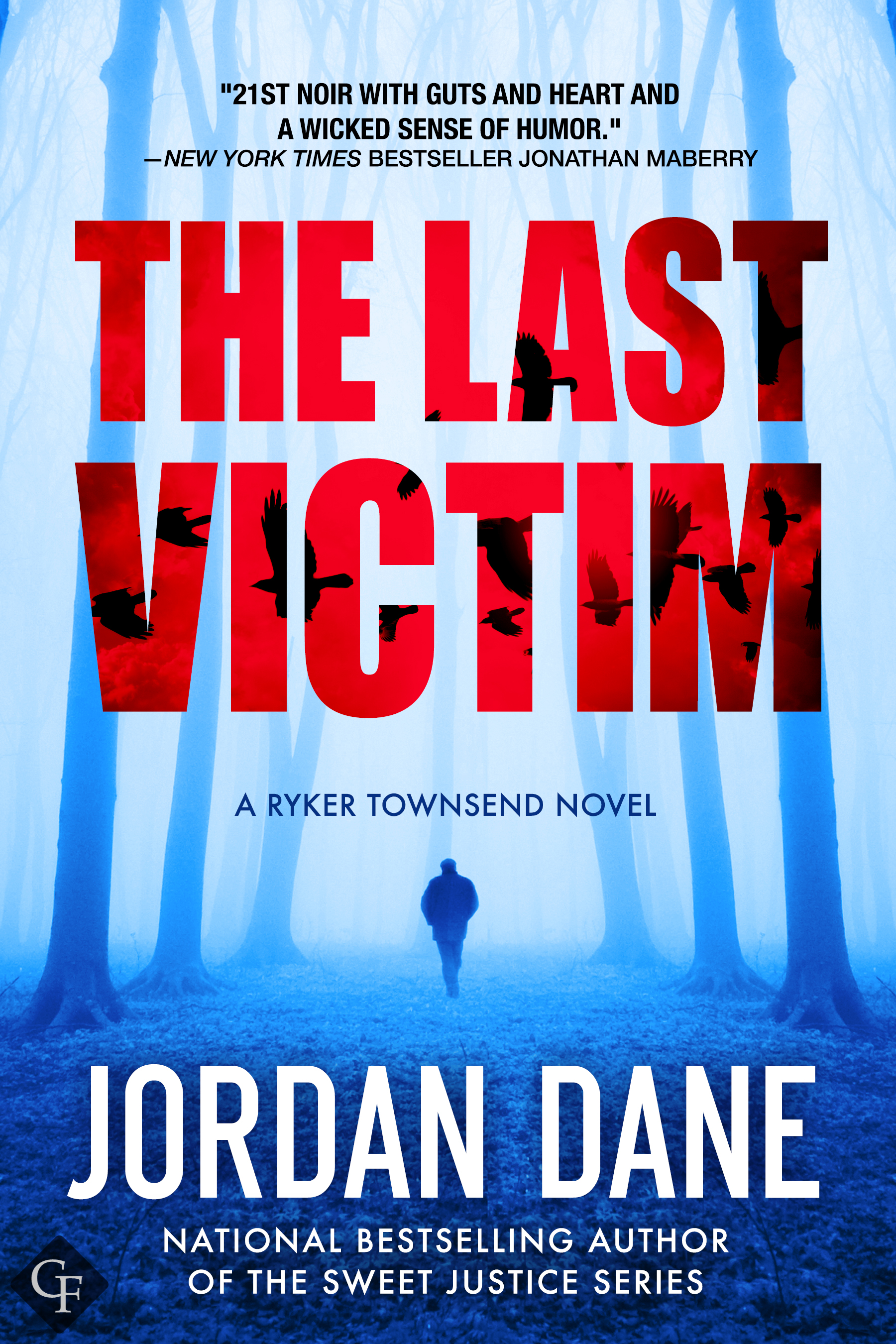
The Last Victim available now. “When FBI profiler Ryker Townsend sleeps, the hunt begins.” Sale links HERE:

Mystery Movies

As the holidays approach, we may be looking for gifts that appeal to writers. In my house, movies are always welcome. Besides the classics like Sherlock Holmes and Agatha Christie, here are some of my favorites in the mystery genre or movies involving writers. A happy ending is a must for my taste. This list does not include TV series or the Hallmark Channel mystery movie collection.

movies

AMERICAN DREAMER with JoBeth Williams and Tom Conti.
One of my all-time favorites. A romance novelist wins a contest and a trip to Paris. En route to the awards luncheon, she’s in an accident and suffers a head injury. She wakes up believing herself to be the heroine in her favorite books. A spy caper follows that’s all too real, as she teams up with the author’s handsome son who thinks she’s a nutcase. That is, until someone tries to kill them.

DROWNING MONA with Danny DeVito and Bette Midler.
A funny whodunit in a small town with a wacky cast of characters.

GOSFORD PARK with Helen Mirren and Jeremy Northam.
An English drawing room mystery in the grand fashion that takes place at a country estate. Aristocrats and servants alike have secrets that slowly unravel during a hunting party weekend. Albeit a bit slow-paced, this film requires repeat viewings to catch the nuances.

HER ALIBI with Tom Selleck and Paulina Portzkova.
A hilarious escapade wherein mystery novelist Phillip Blackwood falls for a suspected murderess while searching for inspiration to unlock his writer’s block. Did the mysterious and beautiful foreigner have a hand in the victim’s death? If so, is he foolish to vouch for her alibi and bring her home? And are the accidents that ensue truly accidents, or is he next in line for her lethal highjinks?

MANHATTAN MURDER MYSTERY with Woody Allen and Diane Keaton.
A Manhattan housewife thinks her next door neighbor is a murderer. She enlists her friends to search for clues. Probably my favorite Woody Allen film out of all of them.

MURDER 101 with Pierce Brosnan.
English professor Charles Lattimore assigns his class to plan the perfect murder as a literary exercise, but when he’s framed for a woman’s death, he has to find the killer before the detective on the case finds him. Will his students help him solve a real murder, or is one of them guilty?

MURDER BY THE BOOK with Robert Hays.
A mystery novelist thinks he’s hallucinating when his hero appears in front of him and talks back. He’s been thinking of changing to a new series and scrapping the sleuth, but now he needs the fellow’s help to solve a real murder.

THE BOY NEXT DOOR with Dina Meyer and Christopher Russell.
A romance writer goes on a retreat to a small town to seek inspiration for her next story. When her next door neighbor is found dead, the chief of police suspects her. Even when her place is ransacked and someone tries to run her off the road, he discounts her theories and refuses to look into the incidents. It’s up to our heroine to prove her innocence and uncover the killer before his next attack turns fatal.

FLOWER GIRL (Hallmark Channel Movie)
This is a classic romance with an element of mystery. The heroine has to choose between two suitors: a staid lawyer approved by her mother, and a writer who answers evasively whenever she asks about his work. Guess who she’ll pick? The revelation at the end is reminiscent of American Dreamer.

What are some of your favorite films involving murder mysteries or writers? Note: I am on a cruise and will not be able to respond, but you can make suggestions and I’ll check back later.

Why You Should Never Give Up

hindsightEighty percent of success is showing up.” — Woody Allen

By PJ Parrish

I got my first rejection letter back in 1980. It was for a romance novel I had written. The letter came from Dell Publishing. It was short and sweet.

Dear Sir or Ms., Montee,

We thank you for the opportunity to consider your proposal or manuscript.  We are sorry to inform you that the book does not seem a likely prospect for the Dell Book list.

Because we receive many individual submissions every day, it is impossible for us to offer individual comment.

We thank you for thinking of Dell and we wish you the best of success in placing your book with another publisher.

Sincerely,

The Editors

Yes, they had crossed out (scribbled out really) “sir” and had sloppily inked in my last name. But dontcha love the elegance of the phrasing? “The opportunity to consider”  (the story I had sweated over for a year.) “Doesn’t seem a likely prospect…” (to ever see the inside of a bookstore). “We thank you for thinking of Dell…”  (like Dell is some real live person who actually wrote this?) “We wish you success in placing your book with another publisher…” (And don’t darken our doorstep again, you no-talent little twerp.)

I found this letter the other day when I was cleaning out my office.  Oddly, it was the same day I bought a new wallet and had to transfer all my stuff to the new wallet.  Tucked behind my old Social Security card, I found a tiny folded up, deeply creased yellowed piece of paper. On it was typed this:

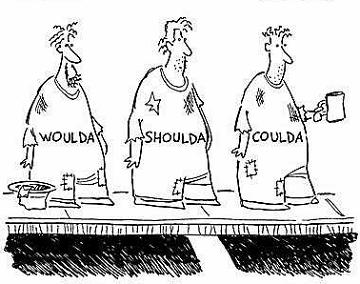
I’d rather be a could be
If I couldn’t be an are
for a could be is a maybe
with a chance of reaching par.
I’d rather be a has been
than a might of been, by far
for a might have been has never been
but a has was once an are.

I have no idea when I typed that or where it came from. I don’t even know how long I have had it, though I suspect I have worn out many wallets since. But I do know that I have it for as long as I have been using a wallet so that means most of my adult years. The sentiment in that little stanza has carried me through many a bad patch and through many jobs.

I remember I had it tacked up on the bulletin board above my desk in my dorm freshman year at Eastern Michigan University.  I was there at the state college by virtue of a 2.5 high school GPA, mediocre SATs and a promise from my dad that he had just enough money to get through one year. After that, he said, I was on my own.  I got a job flipping burgers at Big Boy’s and ended the year with a 3.5 GPA, which led to a modest scholarship. I made it through the next three years on waitress tips and student loans.

I’d rather be a could be
If I couldn’t be an are…

When I graduated in 1972 with a teaching degree, there wasn’t a job to be had. But I had been working on the college newspaper for extra money and the adviser suggested I might be able to get a job as a reporter. Twelve rejections later from the largest newspapers in the Detroit metro area, I got hired as the editor of the Suburban Woman section of the Southfield Eccentric weekly. I was off and running…at $125 a week.

for a could be is a maybe
with a chance of reaching par.

I won a national award from the University of Missouri school of journalism for my women’s section and got a call from a guy at the Fort Lauderdale News who was looking for someone to run his women’s section. (Yes, that’s what it was still called in those days, young-uns).  I got the job, packed up my cat in my rusty VW, and moved to Florida.  I was 24 years old and not ready to run a daily feature section, let alone supervise a staff of nine, three of whom were in their 60s. Six months later, I was demoted to assistant and an older woman was brought in as my replacement.  I wanted to quit. But I went for a walk in the parking lot, cried, and went back upstairs to work.  Six years later, I was promoted to assistant managing editor.

I’d rather be a has been
than a might of been, by far.

It was a nice paycheck but I was writing performance evaluations instead of articles. They wouldn’t let me go back to being a writer because my salary was too high and I was the only female in management. So I bought a small typewriter and at night in the dining room, I wrote a romance novel called The Dancer. I sent it out to agents and maybe 30 of them even bothered to write back and tell me no. So I sent it out to editors directly. (You could do that in those days…see rejection letter above).  Rejections…too many to remember.  Many rewrites and re-submissions later, I got a letter from a woman at Ballantine Books. Someone had given her my manuscript. My story was about a ballerina who had to give up her career after an injury. The woman who bought my first book was an ex-dancer.  I was off and running…with an advance of $2,500.

I had four books published with Ballantine/Fawcett. I found a good agent. Life was good. Then, one day, the agent told me the publisher was dropping me.  No reason given. I wasn’t smart enough about the industry in those days to understand the numbers game, the Barnes and Noble Death Spiral, and the fact that no, your book doesn’t get placed in the front of the store just because it’s good.

I gave up.  I was devastated and depressed. I walked around the mall alot. My fabulous husband, who had told me I could quit my day job to write fulltime and that we’d work it out financially, finally told me I had to try again — or get a job.  So I started over, writing a really bad but heart-felt historical family saga.  An agent told me she liked the suspense in my writing and that I should switch to mysteries.  I wrote 200 pages about a Miami homicide cop whose husband and kids are killed in a drug-raid-gone-bad.  I showed it to the agent. She suggested it was a good idea, in a mystery, if someone gets killed in the first 200 pages. She told me to go home and read some P.D. James and start over.

for a might have been has never been
but a has was once an are.

I called my sister Kelly, who I knew was working in her spare time on her own book and said, “I have a proposition for you.”  Six months later, we finished the first Louis Kincaid book. It was rejected by 10 New York publishers before it found a home at Kensington Books, a fine family-owned house in Manhattan.  It didn’t sell that well but it got some nice reviews and one really scathing one from Kirkus. But Kensington asked for two more.

The second Louis book, Dead of Winter, was nominated for an Edgar. We were off and…still trotting. Kelly and I are now working on Louis book No. 13.

You’ve probably heard different versions of my story a million times and the stories of others who have struggled. But let’s remind ourselves that…

J.K. Rowling was just-divorced, on government aid, and could barely afford to feed her baby in 1994, just three years before Harry Potter and The Philosopher’s Stone, was published. When she was shopping it out, she was so poor she couldn’t afford a computer or even the cost of photocopying the 90,000-word novel, so she manually typed out each version to send to publishers. It was rejected dozens of times until finally Bloomsbury, a small London publisher, gave it a second chance after the CEO’s eight year-old daughter fell in love with it.

Stephen King was broke and living in a trailer with his wife—also a writer—and they both worked multiple jobs to support their family while pursuing their craft. They were so poor they had to borrow clothes for their wedding and got rid of the telephone because it was too expensive. King received so many rejection letters that he developed a system for collecting them. From On Writing: “By the time I was 14…the nail in my wall would no longer support the weight of the rejection slips impaled upon it. I replaced the nail with a spike and kept on writing.” He received 60 rejections before selling his first short story, “The Glass Floor,” for $35.  After dozens of rejections, he finally sold Carrie for a meager advance to Doubleday Publishing, where the hardback sold only 13,000 copies—not great. Soon after, Signet Books signed on for the paperback rights for $400,000, $200,000 of which went to King.

Fifteen publishers rejected a manuscript by e. e. cummings. When he finally got it published by his mother, the dedication, printed in uppercase letters, read WITH NO THANKS TO . . . followed by the list of publishers who had rejected his prized offering.

Fred Smith, the founder of Federal Express, received a “C” on his college paper detailing his idea for a reliable overnight delivery service. His professor at Yale told him, “Well, Fred, the concept is interesting and well formed, but in order to earn better than a C grade, your ideas also have to be feasible.”

James Lee Burke’s novel The Lost Get-Back Boogie was rejected 111 times over a period of nine years and, upon its publication by Louisiana State University Press in 1986, was nominated for a Pulitzer Prize.

Michael Jordan famously said:  “I’ve missed more than 9000 shots in my career. I’ve lost almost 300 games. Twenty-six times I’ve been trusted to take the game winning shot … and missed. I’ve failed over and over and over again in my life. That is why I succeed.”

But maybe my favorite failure is Winston Churchhill. He had to repeat a grade during elementary school and, when he entered Harrow, was placed in the lowest division of the lowest class. Later, he twice failed the entrance exam to the Royal Military Academy at Sandhurst. He was defeated in his first effort to serve in Parliament. He became Prime Minister at the age of 62. He later wrote, “Never give in, never give in, never, never, never, never — in nothing, great or small, large or petty — never give in except to convictions of honor and good sense. Never, Never, Never, Never give up.” (his capitals, not mine.)

So, to all my fellow writers on these days after Thanksgiving, here’s my message. If you’re hitting that wall, if that wall is papered wall with rejections, if you’re filling your hard drive with tenth drafts — stop for a moment and give thanks for the power of failure.  It is what makes you strong, it what makes you better. It is what keeps you in the game.

Don’t give up. Tattoo this on your brain:

I’d rather be a could be
If I couldn’t be an are
for a could be is a maybe
with a chance of reaching par.
I’d rather be a has been
than a might of been, by far
for a might have been has never been
but a has was once an are.


Spinning Hope From Rejection


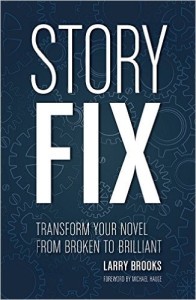
Today’s post is an excerpt from my new writing book, “Story Fix: Transform Your Novel From Broken to Brilliant.”

This is the eleventh chapter, out of 15 plus an Introduction, and thus it is written in context to what I believe to be the highest ambition of the book: to show you two things… the scary roster of stuff that can conspire to contribute to your novel being rejected (and how to reduce that risk)… and the inherent opportunity that awaits those who seek to understand the reasons why it was rejected.

Too often, upon hearing the dark news, writers simply find a new target and sent out another submission. As if the rejecting agent or editor has their head up their… sweater.

Maybe.

Just as often, the rejecting party – an agent or a publisher – doesn’t provide any real feedback from which the author might embark upon an upgrade, if not outright repair of the manuscript.

And thus (and herein commences the excerpt)…

Welcome to the Bermuda Triangle of Storytelling.

Your story is a vessel. It must float on a sea of possibility. If the weight of absurdity, familiarity, or underachievement is too heavy, the boat will sink. The relationship between an idea, a concept, and a premise defines the Bermuda Triangle of storytelling, where well-intentioned writers too often set sail without the right navigation, sensibility, or awareness to avoid being swallowed alive.

Surviving these deadly waters requires more than knowing how to swim (i.e., how to write nice sentences), or having an interesting idea alone. It’s knowing how to navigate the waters of a story, with a vessel that is strong and seaworthy.

After reading the chapters thus far, this is, of course, old news. But what remains floating is perhaps our willingness to embrace it all, to allow the principles to flow in as our limited beliefs are dumped overboard. That, like storytelling itself, is sometimes a hard thing to accomplish.

There’s a reason why revision is so freaking hard.

But if you think about it, it shouldn’t be. With all these principles and tools, it should at least be manageable. The damage is sitting in the rejected draft, staring back at you, mocking you, or it’s ringing in your ears from an outside source. The upside should position revision as more of a gift than a burden, but that’s sometimes hard to see, because you are either in denial, or you know it was you who did it that way in the first place, working with the best of intentions and without the slightest clue you were mismanaging the moment. So now, armed only with a new awareness, perhaps a need you don’t even understand, you’re supposed to suddenly bring something different to the process of fixing it?

This is craziness in its purest form.

If you’re a professional writer seeking representation from an agent, or to land a contract from a publisher, or even just to earn a little buzz in the crowded wilderness of self-published fiction, then one thing is beyond argument: Rejection hurts. It sucks on so many levels, even though the public writing conversation has assured you this was coming, because it always does. It still hurts.

And yet, despite the pain, and unlike so many other avocations that we embrace because they are fun and personally (versus professionally) rewarding, rejection matters. Hey, we believe we’re pretty good at the stuff we do personally: dancing, karaoke, golf, painting, poker, knitting, ping pong, bodybuilding, cooking. You can play crappy golf or tennis or bridge every weekend for the rest of your life, and it doesn’t change your experience or alter your future. You’re still having a good time. But this isn’t the case with writing. We thrive on hope, on the belief that our efforts are actually leading us toward something.

Pain exists not because it is an issue of winning or losing but rather because it is a measure of personal identity and ambition. Rejection threatens our dream. But that perception is exactly backwards. Rejection reminds us how hard this is, dashing hope in the process, and yet perhaps fueling us with an ambition that seeks to find an upside.

While you likely wouldn’t think to declare yourself a professional in your weekend recreational pursuits, as a writer, otherwise worldly and wise, you might consider yourself a professional even now. You go to writing conferences, read writing books, seek representation, and suddenly, because you absolutely do intend to sell your work, you bestow upon yourself the mantle of the professional. Which means—and here is a rarely spoken truth—you are competing with everyone else at the writing conference, if for nothing else than mindshare and respect from agents and editors. The respect and props you seek from them are defined by how your story compares to everyone else’s.

But you opted in as a professional, not a weekend warrior. Which means you don’t get to take it personally. For the enlightened professional, the call for revision becomes an opportunity rather than a reminder of your limitations.

And yet, it seems so … daunting.

What you hear at the writing conference, particularly when it comes to the revision process, may not take you where you want to go. Not because the advice you pick up is wrong, per se, but because it can be imprecise. It comes at you in pieces, little chunks of conventional wisdom floating alone and unconnected—as from a workshop on how to write better dialogue, for example—on a sea of assumed yet less-than-clear relevance to a bigger picture.

So you’re saying better dialogue will make my novel better? The answer is: Sure it will. Always. But then there’s this slightly different question: So you’re saying that writing better dialogue will get me published?

This is why many writers drink.

And why writing teachers exist at the very edge of madness.

The bigger picture will save you. 

When your story requires revision, chances are something you’ve done doesn’t fully align with the principles that show us how a story works, and it can be found at the story level rather than the craft level.

The sow’s ear, chicken-droppings level.

Listen closely … that sound in your head may be your inner author trying to tell you something. And chances are you really need to hear it.

The more you know about the craft of storytelling, the louder that voice becomes. The more you know about storytelling—both at the story level and the craft level—the clearer the message itself will be. Our profession is full of writers who hear the call. They acknowledge doubt in the form of that inner voice telling them something is off the mark, but they don’t really know how to respond. Usually they respond by submitting it somewhere else to see what happens, hoping to confirm their suspicion that the first agent or editor was having a bad day.

And then it comes back to you with the same outcome. And the voice telling you to revise becomes louder and more impatient.

The enlightened writer listens. 

You’ve been introduced to the tools, criteria, and benchmarks of a strong story that can be applied to the revision process, as well as to a first draft. Maybe you haven’t yet internalized them. Maybe you zoned out when they were being presented at the writing conference. Maybe you opted for the session on how to land an agent instead. Maybe you prefer the indulgent musings of keynote speakers who wax eloquent about the mystery of it all, the muse that channels through them, the characters that speak to them, the immersion in their process with the trust that somehow, some way, someday, their story will finally make sense.

Here’s a newsflash for those writers who like to tell their friends that there is something mystical in what we do: There are no actual muses (there are inspirations, which are different animals), and your characters don’t talk to you. When stories are broken—they are very much like friends and relatives and politicians in this regard—they’re not going to confess to their sins and give you a strategy for healing. No, the voices you ascribe to muses and talking characters are you, speaking to yourself from a place of story sensibility, which for better or worse is the sum and nuance of all that you’ve read and studied and learned and concluded on your writing journey.

You’ll finally hear it—it’ll sound a lot like an improved sense of story when you do—because it makes sense to you. Because you’ve had your fill of pain and frustration, and you’re finally opening up to higher thinking.

Seeking the Sweet Spot

I offer this next point from my experience presenting writing workshops for the last twenty-five years. Writers arrive in the room with certain belief systems about writing that defines what is and isn’t true in their minds. This causes them to be resistant to anything that challenges those beliefs and leads to a rather strong sense of confidence that what they’ve written, or intend to write, is rock solid and infused with genius. When something challenges that assumption—like someone saying that your characters don’t talk to you, or that there may be a better path for your story—they shut down to some extent. They are processing the contradictions, the perception of falsehood hanging in the air, and thus don’t completely perceive the meaning and inherent opportunity in what’s being presented.

Some readers of this book will, at this point, not clearly comprehend a critical nuance: that the process of story fixing isn’t just for rejected books, it’s for any story that seeks to become a better story. And complicating this is the cold, hard truth that some rejected books aren’t necessarily broken at all; they simply may not have landed in the sweet spot, at the right time, of their publishing journey. In this sense, revision is merely a form of starting over, building your best story from the inside out, from the ground up, from the truth of the principles that will never steer you wrong.

To Revise Or Not To Revise

Then again, every rejection slip does not necessarily signal the need for a major revision. Your story may be perfectly fine as is. The rejection may come from a source you do not understand, and therefore do not value. More often, though, harsh criticism and rejection may actually be the wake-up call the writer needs. And thus, it’s on the shoulders of the writer to know the difference—timing rather than a lack of sufficient craft—and to use feedback in all its forms to accurately assess the story’s strengths and weaknesses and apply that feedback to move forward accordingly. The tools and processes apply to any origin of the need for story repair, however it is conveyed—be it a rejection or simply a depressing hunch that won’t leave you alone.

Worthy stories, some of which go on to success, certainly do get rejected all the time, both by agents and publishers. These are the stuff of urban legend. Do a quick Google search and you’ll find them everywhere. I’ll mention again the quote from esteemed author William Goldman: “Nobody knows anything.”

It’s too true. But it’s also a risky way to place your bet. Because you could rationalize the rejection of your story as simply a case of timing or another agent who doesn’t get it rather than a legitimate red flag that should get your attention. We can be sure that Kathryn Stockett didn’t revise her manuscript forty-six times, one for each instance of rejection. But because she hasn’t talked about it, we can’t say for sure how those rejections colored her subsequent sequence of drafts, if at all.

Right here is where a paradox kicks in: If you don’t possess the knowledge to nail it the first time out, and are now stuck with the need to revise, how can you leverage feedback and rejection in the writing of a subsequent draft to solve those problems? You’re the same writer who wrote that flawed story. How can you suddenly, without elevating your skill set, attempt to hoist good toward greatness? That’s like asking a toddler who has just fallen off his bicycle to simply get back up and try it again, without showing him what went wrong. A lot of fathers have tried just that method over the years—“It builds character,” they say—and it’s always a recipe for further frustration and tears, as well as a few Band-Aids.

You can’t expect to take your story higher with the same skill set as before, at least to the extent that you don’t understand the feedback itself. But you’re here, you’re learning the unique tools and principles that drive successful revision, and that just might change everything about your next swing at the story.

As professional writers we are beyond the need to use our work as a means of personal character building. We require knowledge applied toward the growth of something much more amorphous and elusive: a heightened storytelling sense.
for Kill zone

 “Writing the novel is half the battle. The other half is fixing it. In this book, master craftsman Larry Brooks gives you his set of tools for the fix-it stage. So strap on your belt, and get to work!” — James Scott Bell, author of Write Great Fiction: Plot & Structure


How to Bring Characters in From the Cold


Cold CharacterVirtually all books on character creation contain a list of questions, a “dossier” to fill out which starts with how a character looks, where he was born, and so on through his family circumstances, education, likes and dislikes, etc.

I have not found such forms helpful. It may just be a personal quirk, but I’m never excited about filling out answers to questions.

First of all, too many answers too soon might hinder the development of a character. A book is a living, breathing entity. If I have a long list of facts for a character before I begin writing, it hamstrings me. I may want the character to do one thing or another, but the dossier is set and works against me.

Characters I create using the dossier method seem cold and distant. I want characters who are hot and close.

Consequently, I’ve come up with my own way of bringing story people to the page. It starts with my protagonist and finding a visual (a head shot) that resonates with me, that says to me, This is her! I copy that image and paste it on a character card in Scrivener (this way, I can look at a corkboard of all my characters at once).

Next, I want a unique voice, and that comes from a Voice Journal, a free-form document of the character talking to me. I let the character go on and on until I hear a distinct and surprising voice. It always happens, bubbling up from my basement without me being overtly conscious of it.

From here I usually go to my “mirror moment.” I brainstorm it by making a list of possibilities, until one clicks. Then I let the character talk to me in the Voice Journal. When I nail that moment, I know my pre-story psychology (and can brainstorm that, again with the journal) and the transformation at the end (I try to visualize a scene to prove the transformation. All this is explained in my book, Write Your Novel From the Middle).

I’ll spend almost as much time with my antagonist, but relatively little with the other characters I’ve cast in the story. Why? Because I want to be able to manipulate them as needed. God complex, don’t you know?

As I write to my “signpost scenes” I’ll be creating characters along the way. Instead of stopping for each and filling out a form, I just ask the character to tell me what I need to know!

For example, let’s say I’m writing a scene about a lawyer interviewing a witness. The lawyer is the main character, a female public defender. The witness is an old man who used to be a … I’m thinking about it … I want him to be blue collar … how about a machinist?

I know my Lead pretty well. Now I’ve come to this old man. He’s going to be an important player, so I start by giving him some basics—age, looks, vocation. I’ll find a head shot to match.

Now to the scene. My lawyer is questioning him in his home, and he doesn’t want to talk to her at all. Why not? So I can have conflict, of course. But the question now is why? Why would he refuse?

I asked him.

You wanna know why I don’t want to talk to a lousy lawyer? Well I’ll tell you. The minute you start flapping your gums is the minute you’re going down, because the whole system is rigged against you. I was going good there when the aerospace boom was on in L.A., out there in the San Fernando Valley, and I was good at what I did, I could operate anything, and I had a friend, Buck Franklin, that was the scum sucker’s name, he took me to a couple of meetings where a guy wanted to know if I could use some more scratch, and of course I could’ve, we all could’ve, and before I know it I’ve got a couple of Gs in cash but this guy wants me to give him some information about what’s going on inside Rocketdyne, and I say sure, but instead what I do is go to the FBI, right to ‘em, and tell ‘em what’s going on. But before I can say Jack Robinson, they turn around and arrest me because of some evidence that got planted, because the agent on the case was dirty, but I was never able to prove it, not even to the L.A. Times who wouldn’t touch my story. And I end up out of a job and out of a pension, and can’t get hired, and Buck Franklin ends up farting through silk. So yeah, I’m not talking, I’m clamming, I don’t care if I see the Queen of England walk up to a drug dealer and blow his brains out and take his money. You’ll get nothing from me.

This all just came out as I wrote. I kind of like it. I can tweak it as I will. But the big thing is this: I now feel this character. When I render him on the page he will alive for me––and thus, I hope, for the reader.

So there’s my tip for today: Don’t fill out forms. Let the characters tell you about themselves. And if what they say is Dullsville, dig deeper. Make them reveal a secret to you. Ask them what the one thing is they don’t want anyone to ever know about them.

That’s how you bring your characters in from the cold.

So what about you? What is your process for character creation? Do you like the dossier method? Or are you more of a “character pantser” who creates on the fly?

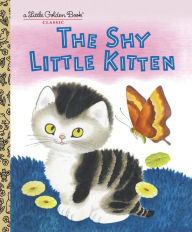
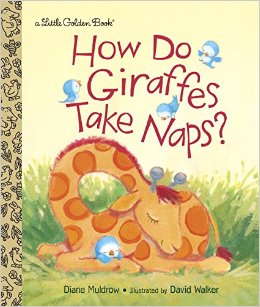
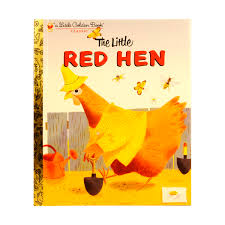
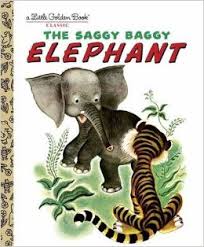
Reader Friday: The Best Little Golden Book of all Time?

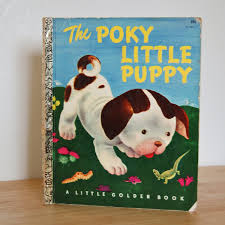
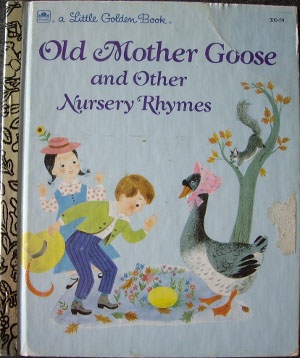
1pokyindexDay before yesterday I stopped into a Barnes & Noble in Maui (where they have an excellent B&N) and discovered that they were running a local holiday fundraiser to support literacy and early readers. At this particular store they were asking customers to choose a Little Golden Book, which would be given away to a young reader. After considerable thought, I chose THE POKY LITTLE PUPPY. But it was a tough call. 1old-mother-gooseMy second choice would have been THE LITTLE RED HEN; but Little Red struck me as a bit of a Huffy Henny when she refused to  share her baked bread with the other farm animals (although she certainly had just cause).

Turns out my fave, THE POKY LITTLE PUPPY, is one of the all-time bestsellers. Here’s a link to a list of some titles of the classic favorites in this series. (By the way, I loved wandering around the children’s books section of that book store. Everywhere I looked, there were  parents and small children engaged in intense, earnest discussions about books and stories.

1shykitten01450_p0_v2_s192x300Let’s all resolve to patronize physical bookstores as much as possible in 2016. They are so incredibly  valuable as venues for introducing children to the magical world of reading!)

Which Little Golden Book would you choose to give to a tiny reader, to best introduce them to the magical world of books and reading?1fourpuppiesIMSaL._SX258_BO1,204,203,200_1giraffesBO1,204,203,200_1redhenimages

1saggyindex