How to Write 10,000 Words in a Day, and Why You Should Give It a Shot (at least once)

The most words I’ve ever written on a fiction manuscript in a fourteen hour period is 11,214. I was on a solo writing retreat in a secret location (okay, it was at an AirBnB apartment in St. Louis), laboring over the final push for The Abandoned Heart. My deadline loomed, and I was finding myself way too distracted at home to get the book drafted in time. All told, over the three and a half days of my retreat, I wrote over 26,000 words—certainly more words than I’d ever written before on a first draft in any similar time period.

Part of why I was successful was that I knew I was paying for the time away from home, and I didn’t want to disappoint myself or anyone else. It cost me about $400 for the apartment rental, plus another $125 for gas (St. Louis is two hours away), groceries, and a couple of restaurant meals. My family paid, too, in that they had to pick up the slack at home. The circumstances were definitely extraordinary. But it wasn’t my first time at the Big Daily Word Count Rodeo.

I was lured into my first 10K day a few years back by my thriller writer friend, J.T. Ellison. She was looking for a partner in crime—someone to check in with, someone to be accountable to—and she knows I’m game for all sorts of shenanigans. We’ve climbed the 10K summit many times now, and we even have tee shirts to celebrate our achievement.

If you peruse the Internet, you will find several examples of people talking about tackling the big 10K. But the methods all boil down to a few key elements.

Let’s talk about the whys first.

1. Resistance. If you only have a dozen hours in a day to write 10,000 words, you’re going to have to write fast. Really fast. You won’t have time to worry about what your parent/child/rabbi/auntfanny/spouse/eleventhgradeteacher/coworker will think about your work. You won’t have time to be afraid. You won’t have time to fiddle with word choice and as-you-write edits. The beauty of this goal is that you must put your internal editor on notice: She has to work fast, or get the hell out of the way. Resistance has no claws or hooks in this scenario.

2. Get those words out of your head and down on paper. Your story isn’t doing anything for anyone by sitting there, overcooking in your brain. I’ve never tried to do this below the 30K mark in a story, but there’s no reason why you can’t. It’s a story exploder, in a good way. Even if you’re not quite sure where a story is headed, the story knows. That fabulous subplot that woke you briefly at two in the morning, and you forgot on waking? It’s still in there, and your agile, in-overdrive mind will pop it out just when you need it.

3. Get a big jump in your word count. If you’re going for a 100K manuscript, 10K is ten percent of your total. That’s huge for one day, and the satisfaction you’ll enjoy from that accomplishment will stick with you for the duration.

4. First drafts aren’t final drafts. Perfection is not (ever) required. This is the place to let your storytelling mind play. Write now (and it will sometimes feel like you’re just typing and that’s totally okay), edit later. Don’t imagine that this will be finished work, but do be prepared to be pleasantly surprised at how readable it is.

5. You write just as well quickly as you do when you write more slowly. I’m not kidding when I say you’ll be surprised at the quality of the writing you produce. With breaks, you’ll be writing between 1000 and 1200 words an hour (my fastest is about 1400), which isn’t unusual. The unusual part is doing it hour after hour.

6. Why not? Test yourself. Push yourself. Life is too short to dawdle. This isn’t something you have to do once a week, once a month, or even once a year. There are lots of things we devote entire days to that we despise. Why not set aside a day to do something that you love?

Resistance will come up with a lot of excuses for why you can’t do this: It’s a gimmick; You don’t have time; Nobody can write decently at that pace; Your family won’t give you time/space to do it; The world can’t possibly do without you for a dozen hours; It’s dumb and unprofessional; You will fail.

There have been a few times when I’ve completed all the arrangements for a 10K day (always at home), and someone forgot their homework, lunch, or got sick. Or the furnace broke or the phone rang ten times and it was my mother. I only got in 8K or 6K or 5K on those days. But I had at least 5K more than I did the day before. The important thing was that I committed to the time, to the work, and that I got a good chunk of words written.

Let’s talk about the hows of a 10K day:

  1. Commit. Decide you’re going to do it, and take it seriously. Sure, things will crop up and demand your attention, but if you’re committed, you won’t be derailed. Stay off of social media for the day.
  2. Enlist. Enlist your family in the project. Announce your intention to disappear into your writing for the day, and make (enjoyable) plans for them or yourself to be away. If they’re already used to your professional attitude toward your own writing, this won’t be unusual for them. If this is new for you (and them), you might want to take yourself off to a hotel, a friend’s house, or a comfortable library with food facilities nearby. Show them what 10K words look like. They will be impressed that you want to produce so much material. (And if they’re not, too bad for them because they should be.)
  3. Choose your ground. Find somewhere comfortable to work where you won’t be tempted to nap frequently, or get on the Internet. For the random 10K day, I prefer to work at home because I can be as relaxed as I like. Declutter your workspace so you can concentrate on the work and not be distracted by bills, school or work communications, etc. Dress comfortably and make sure your chair is comfortable, too.
  4. Plan your breaks, plan your food. The Pomodoro timer method works well. You can get up and stretch your legs for five minutes after each twenty-five minute work block, and take a longer break every couple of hours. Or you can set up any system that you know works for you. The idea is to be consistent. Don’t work through your breaks. It may sound silly to plan your food, but it’s a critical detail. If you only have a fifteen minute or five minute break, every minute counts. When you emerge from your writing cocoon to find a sandwich in the fridge, or an ounce of nuts, or some fruit and chocolate waiting on the kitchen counter, it will seem magical.
  5. Plan your writing.  Make sure you’re very familiar with the manuscript, have a solid idea about what you want to write, and where the story is going. Your list should be completed the day or night before your 10K day. My chapters are about 2K words long, so that’s a goal of five chapters for an all-day session. Remember to write in scenes, and to keep the story moving forward.
  6. Keep track. Make a note of your growing word count. Every time you stop for a break, write down how many words you’ve written. They will add up quickly! Be sure to time your breaks, just like you do your writing sessions. Save your work frequently.
  7. Bring a friend. Bring along a friend (not necessarily in person) to participate so you can encourage one another. Plus, you get to celebrate together at the end.

I know it’s a lot to digest all at once, but I promise that the rewards are huge. I strongly encourage you to give it a shot.

How many words did you write on your very best word count day? Do you have any stories you want to share?

Goodreads is giving away copies of all three novels in my Bliss House dark suspense trilogy, including The Abandoned Heart, which will be released on October 11th. Enter here for a chance to win.


 

The 3 (Or 7, or 36) Basic Plot Lines In Fiction

By Kathryn LIlley

According to some writing gurus, there are somewhere between seven to 36 basic plot lines in fiction (depending on which expert you believe) that structure most works of fiction. Here is a list of some of the  plot lines that are often described as basic elements comprising all works of fiction:

Happy Ending/Comedy

Tragic Ending

“Literary” Ending (Plot revolves around a question or sense of fate, rather than actions or decision)

Other sources break down the Big Three plot lines into more specific categories:

Overcoming the Monster

image


Quest

Rags to Riches (Or Riches To Rags And Back To Riches)

image


Voyage And Return

Mystery

Crime Pursued By Vengeance/Prevention of Bigger Crime  (a plot line that would define most thrillers)

I have to admit, I started looking into the notion of basic plots because I once took a Hollywood screenwriting seminar delivered by one of the better known screenwriting teachers in LA. He first introduced me to the idea that there were only a limited set of original plot lines in fiction, most of which harked back to classic Greek drama.

Check out this link to a summary of some of the prevailing notions of a limited set of fundamental, archetypal plot lines in fiction, and let me know–are people getting carried away with the idea? I think a story’s plot itself is less Important than the way that story is told–the plot, however basic and fundamental, must be told in a way that is fresh, original, and compelling. And making a stale plot seem fresh and new (aka rags to riches==>Cinderella==>Pretty woman): that is the hardest part of writing.

But I suspect I my story structure and story coach colleagues (and everyone else) might have some thoughts about this topic. Please share yours?

From The List of Elite Writing Tips

by Larry Brooks

It’s amazing that nobody has compiled such a list, at least that I know of. Sometimes a little morsel of writing wisdom is so rich, so illuminating and powerful, it doesn’t require a lecture or a blog post or a book.

I’ll try to hold to that here, after I lay one on you.

I bet you, too, can think of a handful of powerful writing tips just from this prompting.

Often I kick off my writing workshops by asking folks to jot down their all-time favorite writing tip, and then open things up for a lively discussion.

Almost all of the tips offered are powerful–except the one that says there are no rules or principles, just make up  your story as you go along… that one can be downright lethal–so the discussion focuses on the context of why these tips work, and what brought the writer to that particular career-changing realization.

Not all writing tips are golden, though,

Some require a deeper discussion to be fully understood. Not because they are overwhelmingly complex, but because at a glance they can be misleading. (Too many writers operate from that at a glance context.) I can think of at least one popular writing book with a title like that, suggesting “truth” that is, in fact, context-dependant and nothing other than a risky opinion (“hey kids, do it like I do it!”). The book itself is actually fine (in fact, it contradicts the title; it ends up being more about process than what makes a story work), adding to the confusion even with the best of intentions.

There is another tip, though, that transcends opinion to become holy writ. I’ve seen it work wonders for writers who have struggled to move forward without ever really wrapping their head around it. With a more open mind, though (and yes, it’s a shame that we sometimes need an open mind to see that which is simply, obviously and always true, in writing and in life), it can change your writing journey the moment you see it, provided it parts the curtain of your understanding.

This one is especially true for genre fiction, so us Zoners should paste it onto our monitors, because it will never fail us. It is this:

It isn’t a story until something goes wrong.

This connects to so many principles of storytelling.

And yet, newer writers in particular get stuck writing about something–a character, a place, a time, an issue, all without plot-driven conflict or antagonism other than the hero’s inner issues–rather than writing about something happening in the context of something gone wrong for your protagonist, launching the hero on a dramatic quest that unfolds under escalating pressure from antagonistic opposition, threat, urgency and emotionally-resonant stakes.

You can start with something going wrong, and add character, setting, theme and structure from there.  Of you can start with character and/or there and look to add conflict–something has gone wrong–to it.

But no matter how you start, you can’t finish until something really does go wrong.

What is your favorite writing tip? id you hear it because you needed to (one of those when the student is ready the teacher shall appear moments), or is it a baseline truth from which you have always written?

Did you hear it because you needed to (one of those when the student is ready the teacher shall appear moments)? Or is it a baseline truth from which you have always written?

******

On another note… I’ve launched a new website in support of my new relationship-salvage book, Chasing Bliss. You can check it out HERE (including an in-depth author interview).

Why Plot is Essential to Character

by James Scott Bell
@jamesscottbell

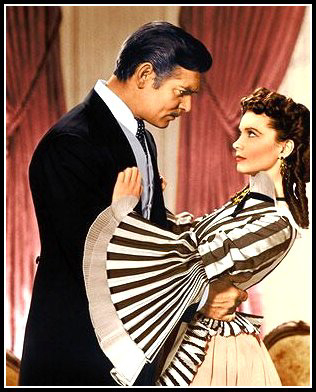
Rhett-Butler-Scarlett-O-Hara-scarlett-ohara-and-rhett-butler-6948455-316-392If you ever find yourself among a group of writers, writing teachers, agents or editors; and said group is waxing verbose on the craft of fiction; and the subject of what fiction is or should be rumbles into the discussion, you are likely to hear things like:

All fiction is character-driven.

It’s characters that make the book.

Readers care about characters, not plot. 

Don’t talk to me about plot. I want to hear about the characters!

Such comments are usually followed by nods, murmured That’s rights or I so agrees, but almost never a healthy and hearty harrumph.

So, here is my contribution to the discussion: Harrumph!

Now that I have your attention, let me be clear about a couple of items before I continue.

First, we all agree that the best books, the most memorable novels, are a combination of terrific characters and intriguing plot developments.

Second, we all know there are different approaches to writing the novel. There are those who begin with a character and just start writing. Ray Bradbury was perhaps the most famous proponent of this method. He said he liked to let a character go running off as he followed the “footprints in the snow.” He would eventually look back and try to find the pattern in the prints.

Other writers like to begin with a strong What if, a plot idea, then people it with memorable characters. I would put Stephen King in this category. His character work is tremendous. Perhaps that is his greatest strength. But no one would say King ignores plot. He does avoid outlining the plot. But that’s more about method.

I’m not talking about method.

What I am proposing is that no successful novel is ever “just” about characters. In fact, no dynamic character can even exist without plot.

Why not? Because true character is only revealed in crisis.

Without crisis, a character can wear a mask. Plot rips off the mask and forces the character to transform––or resist transforming.

Now, what is meant by a so-called character-driven novel is that it’s more concerned with the inner life and emotions and growth of a character. Whereas a plot-driven novel is more about action and twists and turns (though the best of these weave in great character work, too). There is some sort of indefinable demarcation point where one can start to talk about a novel being one or the other. Somewhere between Annie Proulx and James Patterson is that line. Look for it if you dare.

We can also talk about the challenge to a character being rather “quiet.” Take a Jan Karon book. Father Tim is not running from armed assassins. But he does face the task of restoring a nativity scene in time for Christmas. If he didn’t have that challenge (with the pressure of time, pastoral duties, and lack of artistic skills) we would have a picture of a nice Episcopal priest who would overstay his welcome after thirty or forty pages. Instead, we have Shepherds Abiding.

If you still feel that voice within you protesting that it’s “all about character,” let me offer you this thought experiment. Let’s imagine we are reading a novel about an antebellum girl who has mesmerizing green eyes and likes to flirt with the local boys.

Let’s call her, oh, Scarlett.

We meet her on the front porch of her large Southern home chatting with the Tarleton twins. “I just can’t decide which of you is the more handsome,” she says. “And remember, I want to eat barbecue with you!”

Ten pages later we are at an estate called Twelve Oaks. Big barbecue going on. Scarlett goes around flirting with the men. She also asks one of her friends who that man is who is giving her the eye.

“Which one?” her friend says.

“That one,” says Scarlett. “The one who looks like Clark Gable.”

“Oh, that’s Rhett Butler from Charleston. Stay away from him.”

“I certainly will,” says Scarlett. (The character of Rhett Butler never appears again.)

Scarlett then finds Ashley Wilkes and coaxes him into the library.

“I love you,” she says.

“I love you too,” Ashley says. “Let’s get married.”

So they do.

One hundred pages later, Scarlett says, “I really do love you, Ashley.”

Ashley says, “I love you, Scarlett. Isn’t it grand how wonderful our life is?”

At which point a reader who has been very patient tosses the book across the room and says, “Frankly my dear, I don’t give a damn.”

What’s missing? Challenge. Threat. Plot! In the first few pages Scarlett should find out Ashley is engaged to another woman! And then she should confront him, and slap him, and then break a vase over the head of that scalawag who looks like Clark Gable! Oh yes, and then a little something called the Civil War needs to break out.

These developments rip off Scarlett’s genteel mask and begin to show us what she’s really made of.

That is what makes a novel.

Yes, yes, you must create a character the readers bond with and care about. But guess what’s the best way to do that? No, it’s not backstory. Or a quirky way of talking. It’s by disturbing their ordinary world.

Which is a function of plot.

So don’t tell me that character is more important than plot. It’s actually the other way around. Thus:

  1. If you like to conceive of a character first, don’t do it in a vacuum. Imagine that character reacting to crisis. Play within the movie theater of your mind, creating various scenes of great tension, even if you never use them in the novel. Why? Because this exercise will begin to reveal who your character really is.
  1. Disturb your character on the opening page. It can be anything that is out of the ordinary, doesn’t quite fit, portends trouble. Even in literary fiction. A woman wakes up and her husband isn’t in their bed (Blue Shoe by Ann Lamott). Readers bond with characters experiencing immediate disquiet, confusion, confrontation, trouble.
  1. Act first, explain later. The temptation for the character-leaning writer is to spend too many early pages giving us backstory and exposition. Pare that down so the story can get moving. I like to advise three sentences of backstory in the first ten pages, used all at once or spread around. Then three paragraphs of backstory in the next ten pages. Try this as an experiment and see how your openings flow.
  1. If you’re writing along and start to get lost, and wonder what the heck your plot actually is, brainstorm what may be the most important plot beat of all, the mirror moment. Once you know that, you can ratchet up everything else in the novel to reflect it.

Do these things and guess what? You’ll be a plotter! Don’t hide your face in shame! Wear that badge proudly!

Super Plotter

First Page Critique – The Truth About Morality

Jordan Dane
@JordanDane

For your reading enjoyment we have “The Truth About Morality” submitted anonymously for critique of the first 400 words or so. My feedback to follow. Join me with your constructive criticism in comments.

Tony Webster-Wikimedia Commons

Tony Webster-Wikimedia Commons

My face, well rested and laminated in a childlike innocence, looked the same as before. When I opened my lips to a smile, smooth skin stretched itself around white teeth, eyes bright and honest.

Nothing there, I told myself.

And still, my face from this day on would hide a murder.

A righteous murder some might argue, others would disagree. Alvin would say that the act had been neither right nor wrong. Morality nothing more than a construction we implement on ourselves.

The innocence of the spontaneous wasn’ a possible justification. Neither had I been forced. On the contrary, there had been many instances when I could have told them I didn’ want us to follow through with the plan.

I knew I had acted voluntarily. Despite this the feeling that advanced on me was one of dread.

I went to Livia and Alvin’ part of the apartment. Even though there were plenty of rooms to choose from they had their bedrooms next to each other. I started with Livia’ room. I wanted to understand them. Because it suddenly seemed that I, even with my feverish studies of the two of them, had overlooked one aspect. I just didn’ know what it was that I had missed.

The room had Livia’ scent of expensive perfume and nonchalance. I started lifting things and when that wasn’ enough I opened a drawer and then another one. I was careful. Livia’ room wasn’ neat but there were aspects of it that looked orderly, magazines sorted by month, philosophy books opened on a special page. I pushed aside the doors of the cabinet and found Livia’ clothes. Jeans were separated from pants, she had a section for t-shirts and one for the oversized cashmeres sweaters she favoured. The shades shifted from white to black, with plenty of blue and grey nuances in between, the colours of a sky minutes before the storm.

The search that had started out almost by accident turned meticulous. I crawled under the iron framed bed, swept my fingers alongside the outdated bottom of steel springs, trailed the blackened legs.

I rose, elongated shadows sliced the room. Everything was still, the world locked in a devotional silence. But inside me an alarm kept ringing, high pitched and toneless. I knocked on the walls, trying to pick up a hollow sounding note. When I didn’ find anything I moved over to Alvin’ room.

FEEDBACK

Although I liked some of the turns of phrases in this piece and found the character’s internal thoughts were interesting, I wanted more. The author left me wondering what this person (not sure of gender) is searching for after they presumably killed someone. From this intro, we do not know where this murder took place or when. I expected the body to be there, but that was never expressed. I had to read this a few times to search for something I had missed. It would appear the murder was committed by an “us” as well. Although the mystery left me curious to learn more, the writing needs work to anchor the character more realistically and keep the reader turning the pages. Here are some suggestions:

WHERE TO START – The entire intro takes place in the character’s head with only minimal action of him or her searching a room. I wanted there to be more. I had more curiosity about the killing, rather than a search of a room for a person I don’t care much about. The writing doesn’t make me empathetic for this person, even if the murder had been “righteous.” This reads as if it’s from a later scene, as if I’m starting after something important happened that’s not part of the story.

I’m assuming the character is looking in a mirror or reflective glass to see their face as the story opens. I’m not a fan of the ploy of describing the character’s appearance as they look in a mirror–because it’s so cliche–but if the author wants to keep that part, they should establish there is a mirror, otherwise the point of view is off since a character can’t see himself otherwise.

GIVE THEM SOMETHING TO DO – As a suggestion for this intro, I would recommend you give the character something more to do and focus on. Add tension. They could watch a spiraling stream of crimson against a white porcelain sink as blood drains off their shaking hands as they desperately wash the skin until it is raw. When they look into the mirror, what do they see? The notion of a murder could be only a tease that is not explained until later.

SENSE OF URGENCY – For someone who has killed another human being (presuming the death occurred recently), there does not appear to be any urgency to the character’s actions. Their search of Livia’s room is methodical and not rushed. I’d like to see more emotion in this intro, given that a death has occurred. When the character knocks on the walls for a hollow sound, are they concerned they’ll be heard?

ADD DEPTH TO THE CHARACTER’S POV – Have the character react to the neatly stacked magazines or the perfume. What do they think? Do they resent the lingering essence of Livia? I wouldn’t waste a scene by merely describing the character’s calm search. Add emotion by stressing out the character. Is Livia a victim or a fellow killer? Are there precious seconds before this person is discovered searching the room?

FIRST PERSON – It’s been my experience that a writer should infuse gender as quickly as possible, before the reader gets too far along and forms a hard to overcome attachment to one sex or the other. Keep in mind that the character can only see through their own eyes and not upon themselves, so use things like – fingernails, articles of clothing, types of shoes, hair length, or perfume/cologne to hint at the gender as soon as possible.

TYPOS – I’m not sure why there are so many of the same type of typos (bolded in red) where a single letter in a contraction is omitted – ie. wasn’ & didn’ and possessives with ‘s. “Oversized” should probably be hyphenated. There is also this – “cashmeres sweaters,” which should be “cashmere sweaters.” This could be attributable to software issues, but an editor or agent would not want to see this, even if it is explainable.

FOR DISCUSSION

Please share your thoughts on this introduction to help this courageous author develop this story. What do you like about the intro? What would you change?

RedemptionForAvery_highres

Redemption for Avery – $1.99 ebook

When he sleeps, the hunt begins.

FBI Profiler Ryker Townsend is a rising star in Quantico’s Behavioral Analysis Unit, but his dark secret could cost him his career. When he sleeps, he has visions of his next case. He sees through the eyes of the dead, the last images imprinted on their retinas. His nightmares are riddled with clues he must decipher to hunt humanity’s Great White Shark—the serial killer.


Long Distance Death

By Joe Moore
@JoeMoore_writer

Dear friends and blogmates. Today I am retiring as a regular TKZ blogger. After 8 years of posting writing advice and tips, I have run out of things to say—you now know as much as I do about the mysterious black art of writing novels. It’s been a good run. I’m happy to announce that my friend and TKZ emeritus, John Gilstrap, will be returning to take over my slot every other Wednesday. John is a great thriller author with tons of advice and insight to share with all the Zoners out there. I wish John success and I thank all of you for the kind words over the years. Keep writing and keep coming to TKZ.

———————————–

I’ve killed a lot of people. I’ve shot down a fully loaded commercial airliner, set Moscow on fire, infected thousands with an ancient retrovirus, massacred an archeological dig team in the Peruvian Andes, assassinated a Venatori agent, killed a senior cardinal along with a Vatican diplomatic delegation, murdered the British royal family, and even brought down the International Space Station. I know I’m responsible for more deaths–I just can’t remember them all.

So I confess, I’m a killer.

It’s not always easy. Some of these people I really cared about. The dig team members were likable folks except for the chief archeologist who got on my nerves. I didn’t mind seeing him bite the dust. I really grew to like the Venatori agent, but he wasn’t doing what I wanted him to do, so he “slipped in the shower”. And the British Royals? Well, they were just in the wrong place at the wrong time. But being a killer comes with the territory when writing suspense thrillers.

In real life, death is serious. Whether it’s by natural causes or violence, it’s not to be taken lightly. If the deceased is a loved one or friend, the emotional impact can be staggering, even debilitating.

But there’s a different level of death that we all come in contact with every day that rarely causes us a second thought: Long distance death.

Several hundred passengers drown in a ferry accident off the coast of India. Thousands are trapped in an earthquake in China. Millions starve in Darfur. A Russian jet crashes and kills all on board.

Do we care? Of course we do, but unless those victims were family or friends–unless we have an emotional connection with them–we only care for as long as it takes to turn the page of the morning paper or switch channels.

In developing our main fictional characters, it’s vital that the reader care about them enough to show emotion. Whether they’re heroes or villains, the reader must love or hate them. Neutral is no good.

And that’s a problem I see all too often in books, movies and TV shows. Sometimes I just give up reading or watching because I don’t care enough to care. The characters may be interesting but they get buried in the plot (or CGI effects) to the point that it doesn’t matter to me if they win or lose, live or die. And that’s the kiss of death for a writer. The wheels come off the story and the book winds up in the ditch.

I utilize long distant deaths in my books because I write high concept thrillers that span the globe–what some have called telescope stories rather than microscope stories. I need long distance deaths to support the big threat. But when it comes to the main characters, they better be worth caring about or the wheels just might come off.

Eat, Drink, Read

The only advice I can give to aspiring writers is don’t do it unless you’re willing to give your whole life to it. Red wine and garlic also helps. — Jim Harrison

By PJ Parrish

Yesterday was perfect. I am visiting my sister Kelly up in northern Michigan for three months, in a land of cherry orchards, turquoise bays, rolling vineyards, and prehistoric sand dunes that rise out of Lake Michigan like giant tawny bears.

IMG_0549

My day started at the Breakaway Café, with strong coffee, a cherry scone, and the Times crossword. It ended on the patio with a glass of Cabernet Franc from the local Black Star winery and a copy of Jim Harrison’s novel The Beast God Forgot to Invent.

When in Rome, eat the local food, drink the local wine. When in Rome, read about where you are.

I love to travel. I love to read. And it has been my habit to try to read a novel set in whatever place I am visiting. My very first venture from home was to San Francisco way back in 1969, and along the way I read Frank Norris’s 1899 novel about the murderous dentist McTeague. On subsequent trips, I’ve gone through nearly every great San Francisco novel, including Amy Tan’s Joy Luck Club and Jack Kerouac’s On the Road, which contains this passage:

It seemed like a matter of minutes when we began rolling in the foothills before Oakland and suddenly reached a height and saw stretched out ahead of us the fabulous white city of San Francisco on her eleven mystic hills with the blue Pacific and its advancing wall of potato-patch fog beyond, and smoke and goldenness in the late afternoon of time.

26886677166_d35382c759

My first trip to Paris in 1985 was with Hemingway’s A Moveable Feast as my guidebook. It was a cold spring and I was renting a fifth-floor apartment behind the Pantheon, and I think Hemingway and I frequented the same café:

Then there was the bad weather. It would come in one day when the fall was over. You would have to shut the windows in the night against the rain and the cold wind would strip the leaves from the trees in the Place Contrescarpe. The leaves lay sodden in the rain and the wind drove the rain against the big green autobus at the terminal and the Café des Amateurs was crowded and the windows misted over from the heat and the smoke inside. It was a sad, evilly run café where the drunkards of the quarter crowded together and I kept away from it because of the smell of dirty bodies and the sour smell of drunkenness.

On another trip to Paris, I slogged through The DaVinci Code, but that was fun only because of all the mistakes Dan Brown made. I mean, dude, you head south from Sacre Coeur to cross the Seine, not north.

Nantes

On a three-week road trip through the French countryside,  I was able to visit Nantes by reading Madame Bovary. And when I went to India for my nephew’s wedding, I probably should have taken Forster’s Passage to India,  but I punked out and opted for The Life of Pi and, for some strange reason lost to me, Cormac McCarthy’s The Road. Oddly, McCarthy’s book ended up feeling more attuned to Chennai, where gaunt cows played chicken with cars in the dusty roads, the air felt too thick to take into my lungs, and humans pressed so close it felt as if we were all at the edge of the tired world with no where left to go but down.

VancouverWhen I took a trip to Vancouver, I couldn’t find a good local novel. But in the Paper Hound bookstore on Pender Street, a clerk sold me a copy of Vancouver, by David Cruise and Allison Griffiths. These interconnected short stories had a Michener-esque sweep that captured the city and its history so well I left it in our rental for the next tenant with a note “better than that guidebook you brought.”

Then there was Italy. Again, I should have gone with Forster (A Room With a View is one of my favorite movies.) But I was writing mysteries by then, so it was Patricia Highsmith’s The Talented Mr. Ripley. It’s a great book, but Ripley is so indelible, Italy can never really compete. But because I got food poisoning in Lucca, I did go look up this one passage for you:

Tom had dinner that evening at a restaurant down on the water called Zi’ Teresa. He had a difficult time ordering, and he found himself with a first course of miniature octopuses, as virulently purple as if they had been cooked in the ink in which the menu had been written.

Lorraine_Tan_Manarola

If you are going to Italy, especially the Cinque Terre, I recommend you take Jess Walter’s wonderful novel The Beautiful Ruins. It’s a social satire about ’60s Hollywood but oh, those descriptions of the “rumor of a town” clinging to the cliffs above the Ligurian Sea.

A tight cluster of a dozen old whitewashed houses, an abandoned chapel and the town’s only commercial interest – the tiny hotel and café owned by Pasquale’s family – all huddled like a herd of sleeping goats in a crease in the sheer cliffs.

But then here is this: I was born and raised in Michigan. So how it is then that I have missed Michigan’s own Jim Harrison?

Harrisonobit1-blog427

Harrison in photo from his New York Times obit

My friend Phillip, of Tupelo Mississippi, had to be the one to introduce us. Maybe it takes one good ol’ boy to know another.

Phillip gave me The Beast God Forgot to Invent just after Harrison died last March. In his 78 years, Harrison produced 21 novels, 14 books of poetry, a children’s book and a memoir. He was best known for his novella “Legends of the Fall,” which was turned into a not-awful Brad Pitt movie.

Harrison is not famous in the usual sense, though for some odd reason he’s a cult figure in France, maybe because he wrote well about food, including his account of flying to France for the sole purpose of having a lunch that lasted 11 hours, 37 courses and 19 wines. He was a man of huge appetite. His work -– what little I have read so far — is vivid, lusty, darkly comic, oft-lyric and unrepentantly violent. He writes about hunting, fishing, eating, drinking, smoking, screwing, mainly set in the woods of Michigan’s Upper Peninsula. He writes with a sort of hyper-masculine sensibility that might come off as corny if it weren’t so poignant, self-effacing, and even tender. Think Hemingway without pretentions.

I’m told he’s considered misogynistic. But Beast is one of his later books, so maybe he learned some lessons along the way. And in it he gives us some really strong women, who often get the best lines, including one from a woman complaining about life in Manhattan:

“There’s no nature in New York, and the closest you can get is an orgasm.”

road

We took a drive up into the Leelaunau Peninsula the other day. We stopped for tastings at vineyards, had lunch by a raging waterfall, and visited a rare book store, tucked around back of white clapboard house in the tiny village of Leland. The owner, an old guy who bore a passing resemblance to Jim Harrison, proudly showed me his shelf of Harrison first editions. I was sorely tempted, but $595 for “Legends of the Fall” was too rich for my blood. I’ll be seeking out a good trade paperback of that and the rest of those 20 other novels.

Maybe it’s best that I come to Harrison so late in my reading life. I have not lived here in Michigan since I left for Florida in 1973. Yet now, I am feeling a pull to this place that is very powerful. I think there is a part of me that needs to be reminded how beautiful this place is. How the birds, the sky, the smells, the food, even the variety in the color of the squirrels — it’s all unique here. Harrison’s book feels very real to me, like he is writing it only for me, explaining my soul-place to me, taking me deep into the dark woods and showing me things I have forgotten and, at this moment in my life, need to remember.

You can go home again. Sometimes, you have to. And it’s always best to go with a good guide.

Handling Reviews

An article in the New York Times last week got me thinking (again) about reviews (hey, I bet most authors have a small part of their brain devoted to the ever-present background angst about past or future reviews/criticism of their work). The article (which you can find clicking on this link) is an interview with the author Curtis Sittenfield on the thorny issue of how professional authors handle criticism.

Now we’ve all heard of the unfortunate instances where authors have directly responded to negative reviews or criticism – usually through an ill-advised rant on twitter or a hot-headed response on Goodreads or Amazon. If you’ve forgotten or unsure of what some authors have stooped to doing, I recommend reading some of The Guardian’s book blog posts on the matter (see: how not to handle reviews; how not to respond to a bad review for example).

Curtis Sittenfield provides a useful quadrant tool that many authors could use. Basically she divides up reviews into four quadrants: smart and positive (definitely read!); smart and negative (still read); dumb and positive (read for the ego’s sake); and dumb and negative (do not read!). Many authors get into the greatest hot-water when they allow themselves to get embroiled in a debate over what they consider to be ‘dumb and negative’ reviews. Now, maybe it’s too hard to resist the temptation to read these kind of reviews but it’s up to every professional author worth their salt to resist the temptation to respond to them. You just can’t take it all so personally (being a professional writer means recognizing this is a business after all). As Curtis Sittenfield notes: ” I literally don’t think I’ve ever read a letter from a writer complaining about his or her negative review that made the writer look good. You’re better off just biting your tongue.”

Too true!

But, as Curtis goes on to point out, there are many instances in which harsh criticism can identify a real weakness in a book or an author’s approach to their material that, while humiliating, can all be part of the process of learning to be a better writer. Even in these instances though, the best response from a writer is no response at all. For Curtis, her nightmare reviewer is one who has an agenda that precludes them from responding sincerely to the book – and I think this is (again) where many authors come unstuck. There’s a lot of mean people on the internet who have their own agenda when it comes to reviewing a book or adding comments on a thread regarding someone’s work. Sometimes they are angry and bitter, sometimes they may be jealous, sometimes they want to indulge in a personal attack just for the hell of it (some are just plain trolls after all). But there can be nothing gained from responding to a scathing comment or a harsh review regardless of the reviewer’s real (or imagined) motive. Anyone who’s been on Facebook or other social media recently can attest to the fact that you are never going to change someone’s mind through an ill-advised post, comment or flamewar!

As professional author, how should we behave when it comes to the question of negative reviews or criticism (no matter whether they fall in the ‘smart and negative’ or the ‘dumb and negative’ quadrant)? By biding our time, biting our tongue, retaining our dignity and ignoring them (maybe the ‘smart and negative’ can inform our development as better writers but even so, that doesn’t mean anyone has to know this!).

So what do you think TKZers, how should authors approach the issue of reviews and criticism? As  a writer do you also review books and if so, how do you approach the issue from the other side? What are your expectations as to how an author should (or should not) respond? And if you have any horror stories from the tenches  feel free to share (hey, it might be be cathartic!)…


The Night I Met Ray Bradbury

by James Scott Bell
@jamesscottbell

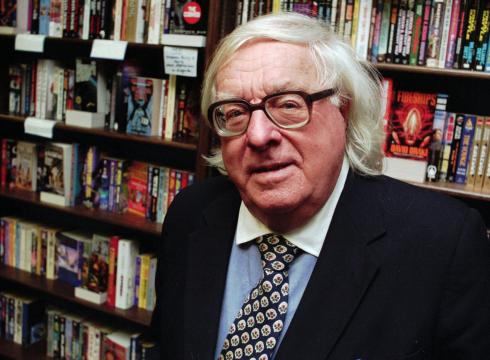
Author-Ray-Bradbury-dies-8H1K9JO0-x-largeOur Reader Friday this week paid tribute to the late, great Ray Bradbury. He lived in L.A. so I got to hear him speak on a number of occasions. One time I got to meet him.

This was back when I was an unpublished writer unsure if I had the goods. Two books that had helped me keep my hopes up were Brenda Ueland’s If You Want to Write and Ray Bradbury’s Zen in the Art of Writing.

Bradbury was set to speak at the Woodland Hills branch of the Los Angeles Public Library, the very branch I grew up in. I couldn’t wait. I’d gobbled up The Illustrated Man in junior high school, and it was one of those transcendent reading experiences you get only once in a great while. This collection of stories is a glorious imagination on fire. It certainly turned up the heat on my own nascent desire to someday write stories myself.

So I took my well-thumbed and underlined copy of Zen to the library and settled in with a packed room. Bradbury arrived, walking slowly and wearing his white hair long and a bit wild. His hair was a metaphor for his writing approach––let it go, untamed, and put off a neat cut for as long as possible. “Time enough to think and cut and rewrite tomorrow,” Bradbury wrote in Zen. “But today––explode––fly apart––disintegrate!”

Bradbury spoke about his love of libraries, and it was great to hear from his own lips the well-known tale of how he wrote Fahrenheit 451 on a rented typewriter in the basement of UCLA’s Powell Library. (You can hear the man himself tell that story here.)

Then he talked about writing, and I took notes. Here they are:

  • Do word associations, as a way of letting your subconscious tell you what is inside you.
  • Creating is NOT about fame, NOT about money. It’s about having fun.
  • Just do it.
  • Writing every day for 57 years. That wasn’t work. That was fun!
  • The intellectuals want us to believe it’s no good unless it’s tortured. The hell with that!
  • Do what you love. Let it out into the world. If you’re lucky, you’ll get some money. But if you don’t, do it anyway.
  • “I work for free. I haven’t made any money on any of my plays. But I love theatre. And I put up productions around town. And when I see the actors who’ve been in them on the street, we embrace, because we did what we loved and we had this experience together. For free. All the money went to my actors.”
  • Don’t think while you’re doing it. Think after it’s done.
  • He uses no outlines. He wakes up in the morning and lays in bed until his characters, his voices, compel him to “scramble to the typer” and record them before they get away.

He signed books after his talk, so I stood in line with my treasured copy of Zen. I introduced myself and we shook hands.

“Are you a writer?” he asked.

I quoted from the book: “‘Stay drunk on writing so reality cannot destroy you.'”

He laughed and said, “Oh, you must!”

I asked him if he set himself a daily quota, and he said, “I let my love determine how much I write.”

“Ah, so you fall in love daily?”

“That’s right.”

He signed my book. “Do you write every day?” he asked.

“Five days a week,” I said. “Weekends are for my family.”

He laughed again. “That’s the way to do it!”

He offered his hand once more and said, “God bless you.”

And off I went into the night, feeling blessed indeed for having had the chance to chat with one of the legends of our literature –– Ray Bradbury, American original.

Have you had the chance to talk to an author you admire? Who would be at the top of your list of writers you’d love to meet?