This is What a Professional Writer Looks Like

by James Scott Bell
@jamesscottbell
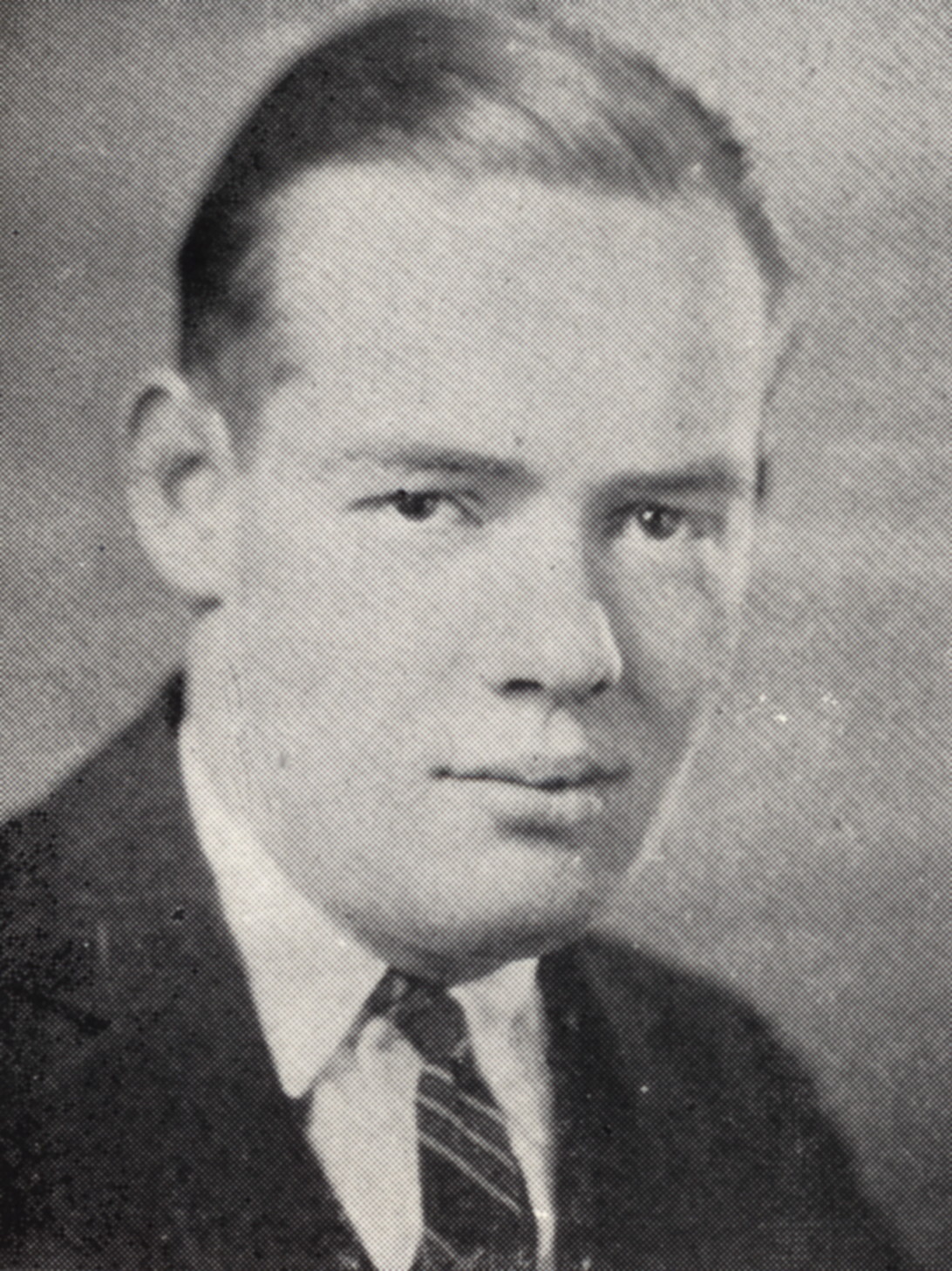
My parents were friends with Todhunter Ballard, a pulp writer from the classic age of Black Mask, Dime Detective and so many others. Later he went on to write paperback Westerns and a number of scripts for TV.

This is called having a career as a professional writer.

Willis Todhunter Ballard was born in Ohio in 1903. By the mid-1920s he’d landed a job with the Brush-Moore chain of Midwestern newspapers. It was not a happy experience. “In eight months I was fired at least eight times,” he told an interviewer. “Besides arguments with the printers, I had them with the old battle-axe who ran the front office. She had been secretary to the Brush boys’ father and considered that she owned the company more than the boys did. It became a routine. She would call me in and fire me, but before I could clear out my desk one or other brother would show up from Europe and rehire me. This went on until one time no one appeared and I stayed fired.”

When the stock market crashed in 1929, Ballard tried to find work in the East, to no avail. So he headed for Hollywood where “at least it was warm for sleeping on park benches.” A chance meeting led to some studio writing work, but the gig didn’t last.

One day Ballard went to the movies and saw The Maltese Falcon. Not the later Bogart version, but the original filmed in 1931. He was blown away by the Hammett dialogue and felt it “sounded the way I thought criminals and detectives should talk. It rang true, the way I wanted mine to do.”
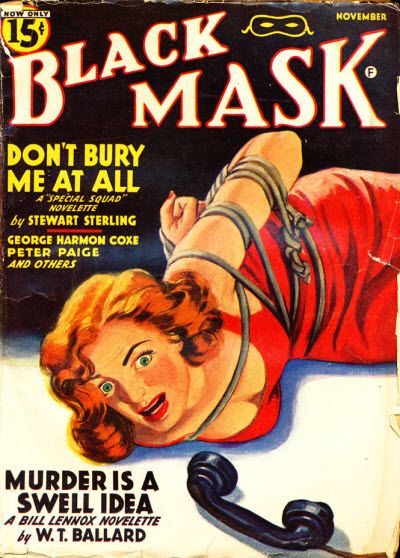
On his way home from the movie, Ballard came up with a series character idea to propose to the famous pulp magazine Black Mask (which had made Hammett famous and would later do the same for Raymond Chandler). Using a friend who worked at Universal as a model, Ballard conceived Bill Lennox, a studio “troubleshooter.” He sat down at a typewriter at midnight and by five in the morning had pounded out ten thousand words. At seven-thirty he put the manuscript in the mail and promptly went to bed.

A week later he got a check from Black Mask, and his career as a pulp writer took off.

In those days, to make any kind of a living (at a penny a word) you had to be good and you had to be fast. Ballard was both. He treated writing, first and foremost, as a job. It was putting eggs and milk on the table. There was no time to lie back on a sofa and sip sherry, waxing poetic about theories of art.
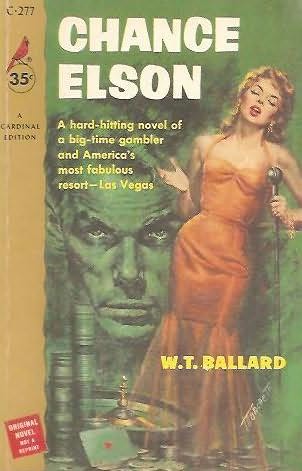
I have a box of Ballard’s books and stories handed down to me by his sister-in-law. In addition to his noir mysteries and paperback originals (as W. T. Ballard), he wrote Westerns (as Todhunter Ballard and under numerous pseudonyms like Jack Slade and Clint Reno).

In this maturing age of digital self-publishing,I often think of Ballard. Back when things were really taking off, 2009 – 2010 or so, I likened it to a new pulp era, meaning that if you are good, fast, and treat it like a job, you have the chance to make some real dough.

Here’s a bit more of the interview referenced above. Take particular note of the last answer:

Would you tell us something about the lifestyle of a pulp writer living in L.A. during the thirties and forties?

We all worked hard, played hard, lived modestly, drank, but only a few to excess, gambled some when we had extra cash. Most of our friends were other writers. In the Depression when any of us got a check he climbed in his jalopy and made the rounds to see who was in worse straits than he and loaned up to half what he had just received.

What was your yearly average word output for the pulps?

My files are at the University of Oregon library, but a shotgun guess would be about or over a million words per year.

Would you tell us something about your work habits both then and now?

I tried to do about ten pages a day after that first Black Mask flush, sometimes more, sometimes less. I tried to work regularly, something every day even if I later threw it away. These days my wife, Phoebe, does the typing since I’m a lousy typist and in so doing edits the copy. I seldom objected to requests for rewrite but sometimes stood my ground. A late example is a western called Sheriff of Tombstone. Both my agent and my Doubleday editor, Harold Kuebler, held their noses at the first submission and Harold only accepted the altered copy grudgingly. Both let me know in no uncertain terms that they considered it a bad work. It has outsold all my more recent books and is rated second from the top of the list in Western Writers of America’s scoring for the last year.

How about the marketing of pulp fiction? I’ve heard that many of the magazines (such as Frank Armer’s) were closed to most freelancers. Was this a widespread practice?

How did we market pulp fiction? Like selling any other commodity. No magazine I remember was tightly closed to submissions, although a couple of them were written entirely by one or two men for long stretches. It was largely governed by how lazy the editors were, how much they were willing to read.

Frank Armer was no worse than others, but his editor’s were crooked. They were pulling old copy out of the files, slapping a current writer’s name on as author, and drawing checks to the new names, cashing them themselves at the bar on the corner. Bob Bellem and I combined to send them to Sing Sing for five years each. We discovered the ploy after I received a notice from the IRS that I had failed to report $35,000 paid me by Armer Publications. Since I had sold them no copy for that year I checked with Bob. He had sold to them but he was being charged with not reporting twice what he had been paid. We contacted Frank, then blew the whistle.

For nearly fifty years you’ve remained popular to a most precarious profession while other careers have come and gone. To what do you attribute this staying power? Would you share some of your views on the writing business with us?

My views on writing as a business? That it is not much different from any other. You have to keep swinging, rolling with the punches, keep alert and attuned to the changes that take place suddenly or gradually, but always constantly.

JSB: And that, friends, is what a professional writer looks like. Keeping productive, taking a business-like approach. I wrote a whole book on this subject, so I know the fundamentals have not changed since Tod Ballard’s days.

The question for today is, do you look like a professional writer yourself? No matter where you are on the charts, being a pro is always the best course for the future.

READER FRIDAY: Share your good news

We can all benefit from sharing your good news here at TKZ. Share something good that’s happened – whether it’s personal or a writing goal achieved or even a line that you’ve written that makes you proud.

Make it rain with good news, people.

Anti-Heroes: Why We Love Them & Keys Ways to Give Them Depth

Jordan Dane
@JordanDane

After John Gilstrap’s post yesterday on The Code, a nostalgic reflection on storytelling in his lifetime, it got me thinking about my favorite type of protagonist – the anti-hero.

One of the first “in your face” anti-heroes I remember came from the small screen – HOUSE. He said things we might secretly wish we could and get away with it, but when TV audiences saw how deeply flawed he was, coupled with his vulnerabilities and quirky sense of right and wrong, he became endearing and very watchable.

Here are a few outstanding anti-heroes for your consideration:
Michael Corleone from the Godfather
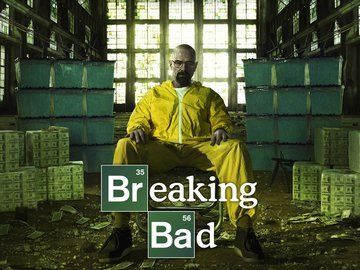
Walter White & Jesse Pinkman from Breaking Bad
John McClane from the Die Hard movies
Don Draper from Mad Men
Tony Soprano from the Sopranos
Ray Donovan from the show by the same name.
Jack Bauer from 24
George Costanza from Seinfeld
Patrick Jane from the Mentalist
Dexter Morgan from Dexter

These amazingly memorable characters have introduced a broader use of gray into classic Hollywood’s black and white world of storytelling where the bad guys literally wore black hats in early films. Anti-heroes aren’t pure heroes in the classic sense. They have flaws and baggage that make them borderline villain, but not quite. It’s up to the author who creates them to infuse something redeemable, even if the author simply gives them a dog, like JOHN WICK.

So why the change toward anti-heroes and why have they become so intriguing?

You’d have to look at how much our world has changed, the complex nature of our lives has shifted our moral compass and made resolutions ambiguous. The simple white hat cowboy may appear weak unless he’s willing to confront dark villains who aren’t hindered by a moral code. Anti-heroes are “over the top” strong in their field and are willing to break conventional rules to save the day once they commit to the fight and cross the point of no return. They right the wrongs that seem insurmountable because they are larger than life and don’t let rules or laws get in the way of justice.

Why are we drawn to anti-heroes?

For me, I see them as flawed. They’re not perfect, like classic heroes in Hollywood or in literature were portrayed. I can relate to them better because it makes me feel as if, given the right circumstances, anyone can rise to the level of hero if they have a cause worth fighting for. We also want to see if they are redeemable. Give your anti-hero a chance to grab at redemption in your book and see if he takes it. Or will he find love from a strong woman? Once we get hooked on an anti-hero, we root for them and feel their pain more when they fall. We want them to get back up, because they’re “every man.” And the fact they are not cookie-cutter, and do surprising things and are unpredictable, they make the storytelling fun.

Who would have rooted for a high school teacher turned drug dealer if we hadn’t learned of his cancer, his concern for his family in the face of his financial meltdown, and his rising medical bills. He’s bucking a broken health care system like David standing before Goliath. He’s more worried over his family than his own recovery. He’s got nothing to lose.

Anti-heroes change our way of thinking about confrontation and empowerment. The right anti-hero can give voice to our frustrations and give us an alternative reality to find justice.

Below are tips to add depth to your anti-hero/heroine & make them sympathetic:

  1. Give Them a Reason—A reader will lose interest if your character is a complete jerk for half the book. Sprinkle in the valid reasons for them being who they are and clue the reader in on these reasons early so they can buy in, even if the other characters don’t know their motivations.
  1. Does Gender Make a Difference? In general, I’ve noticed that readers accept bad boys faster than they embrace a female lead character who isn’t perfect. I don’t know why this is, but it can make crafting your female characters a challenge.
  1. Make them human—Give them a code they live by or loyalties a reader can understand and empathize with. Even a dark anti-hero/heroine has a softer side. In Silence of the Lambs, Hannibal Lecter was Clarice’s protector with his peculiar brand of loyalty.
  1. Give Them a Soft Edge—If you give even the toughest brooding character a pet or a soft spot for a kid, they will be endearing to readers. Write the darkest character and match them up with something soft and you’ve got a winning combination.
  1. Show Respect—Everyone looks up to a good leader. Show that others admire or respect your dark character and the reader will too.
  1. Stick Redemption under Their Nose—Give your anti-hero a shot at redemption. What choice will they make?
  1. Make Them Vulnerable—Pepper in a back-story that makes your anti-hero vulnerable—betrayed by love, lost an important person in their life, or other tragic experience. Make them fearful of something, perhaps even themselves.
  1. Forge Them from Weakness—Alcohol or drugs, adrenaline addict, insurmountable grief, or fear of the dark. Force them to battle with their deepest fears, making them worth someone’s struggle to win them over.
  1. Make Them Corrupted by Life—Have them see life through personal experiences that we can only imagine but they have lived through. Make trust an issue because they have been betrayed. They must be much more vulnerable than they are cynical to deserve the kind of significant other that it takes to open them up to someone else.
  1. Make Them Real—To be real, they must have honest emotions. That means you, as an author, must delve into the murky corners of your own mind to get into their heads. It’s not always an easy thing to do.

DISCUSSION:

1.) Who are some of your favorite anti-heroes and tell us why? (from TV, movies, or books)

2.) Do you have any other anti-hero crafting tips to share?

My anti-hero – Mercer Broderick as Mr. January. Preorder ebook for $2.99 at Amazon.

Zoey Meager risks her life to search for her best friend in a burning warehouse, only to cross the path of Mr. January, a mysterious man with a large black dog completely devoted to its master.

The Code

By John Gilstrap

I turned the Big Six-Oh this week, which triggered some of the reflection that big birthdays bring.  Nothing morose, mind you–in fact, quite the opposite.  I wouldn’t go back and live my thirties again for anything.  I enjoy the stability and sense of ease that is my life of the moment.  I’m aware that things can change on a dime, but for now, the view out the windshield is at least as bright and sunny as the one in the rearview mirror.

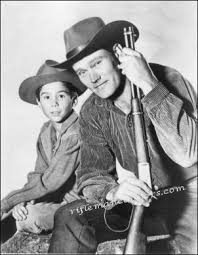
For this week’s TKZ entry, I thought I’d talk about how storytelling has evolved just within my lifetime.  I’ve recently discovered MeTV, a television network for geezers, which runs TV series from days gone by.  I’m particularly taken by “The Rifleman”, starring Chuck Connors as Lucas McCain and Johnny Crawford as his son, Mark.  Truth be told, I don’t remember any of the episodes from when I watched them as a kid, though I do remember the opening sequence with the rapid-fire Winchester.  Thanks to the wonders of DVR technology, I’ve been able to record all of the shows, and in the evening, when I want to unwind before bed, I’ll watch an episode or two.  While the stories tend to be small, the storytelling itself is really quite good.  Sam Peckinpah wrote and/or directed quite a few of the episodes.

In watching those old episodes, I’ve come to realize how much the Westerns of my youth have influenced my storytelling sensibilities.  In fact, it has been said of my Jonathan Grave series that they are Westerns with different costumes.  I don’t know that I would go that far, but there’s no ignoring the kernel of truth, and I think some of those truths take us to the core of what makes a good hero.

A good man (or woman) lives to a code.  Lucas McCain was loyal to his friends, devoted to his son, and committed to helping others in need.  He neither took nor offered charity, but he was always there to offer a job to a man who’d hit hard times and wanted to regain his self respect through honest work.  He never picked a fight, but he never walked away from one out of fear, because he knew that reputations were fragile and that predators needed only the first whiff of weakness to be encouraged.

A good man is a gentleman.  Hard stop. He stands when a lady enters or leaves, and he would never wear a hat at the table.  And he would never impugn a lady’s honor.

A good man (or woman) defends what is his or hers.  John Wayne put it best as John Bernard Book in The Shootist when he said, “I won’t be wronged, I won’t be insulted, I won’t be laid a hand on. I don’t do these things to other people, and I require the same from them.” This goes back to the code I mentioned above. The lesson taught by these shows–and echoed through my father as I was growing up–was that there’s no dishonor in losing a fight so long as you fight as hard as you can. As a kid, I repeatedly proved to myself and others that I was not a good fighter, but that experience led me to become a good de-fuser.

Good triumphs over evil, but only after a brutal effort. My cowboy heroes always got up again–if not after the initial fight, then certainly by the end of the story.  And the bad guys always got their comeuppance.

Then came the seventies.  Good and evil became muddled on television and on the screen and in books.  “Injun savages” evolved to “endangered minorities” and the European settlers became the predators.  Modern military service members evolved from defenders of freedom to killers of innocent children. Cynicism raged, and heroes were hard to find anywhere.  Popeye Doyle? Please. Serpico?  Archie Bunker?  No joke was funny, it seemed, unless it insulted someone else in the process.

As a budding writer in college (1975-79), in the age of Rod McKuen and Richard Bach, my admittedly simple view of right and wrong–of hero and villain–was scoffed at by professors and my lit’ry student colleagues.  The professor of one of only two writing classes I ever took told me, “You have no talent, stop writing.” I was only 20 years old.  And it was not some reverse psychology plan on his part.  He was so enraged by my view of good guys and bad guys on the page that he wanted nothing to do with me, and he wanted to discourage me from any path forward.

So, here we are, a few decades later.  Current political screeching notwithstanding, I think we’ve evolved past the blinding cynicism of the ’70s, but it is still there in my writing.  My good guys recognize that in their world, predators have been allowed to thrive as innocents are discouraged from protecting what is theirs.  Fierce independence is frowned upon, in favor of dependence on others, government agencies in particular.  In Jonathan Grave’s world, the police are almost always good guys, but they value their own careers over the pursuit of real justice. Those cops who do take risks on behalf of the innocent are keenly aware that they are one out-of-context cell phone video away from losing everything they hold dear.

The one chance society has in Jonathan Grave’s world is for the noble gunslinger to take that risk that no one else is willing to take. He does it not for himself, but for the benefit of the innocent.  Because he is on the side of the angels.

Come to think of it, maybe I need to give him a Winchester.

Blubbering Over Books

By PJ Parrish

Have you ever cried reading a novel?

No, I don’t mean your first draft. I mean, has someone’s work moved you to such a point that you shed real tears?

It doesn’t happen often to me. Although I am a sucker for an emotional one-two punch. I remember reading Amy Tan’s Joy Luck Club on a plane and getting to a scene where the mother explains why she abandoned her babies by the side of the road. Well, I had to get up and go into the bathroom to compose myself. What a wuss. What a good book.

I cry at books, movies, and commercials (that old one where the Army guy comes home for Christmas and wakes the house up making coffee gets me every time.)

Maybe it is because movies are more inherently commercial, but they seem to evoke tears more readily than books. Why is that? Are novelists more leery of the “cheap” reaction of tears? The last crime novel I can remember actually bringing a lump to my throat was T. Jefferson Parker’s Silent Joe. Why is that? We are dealing with the themes of death and loss all the time. We describe blood and guts with clinical accuracy. Why do we pull our punches when it comes to showing the emotional outfall of death?

I was thinking about the place emotion had in fiction tonight because I happened to catch the last half-hour of Guess Who’s Coming to Dinner? Now I know that movie feels quaint in today’s world, but that scene where Spencer Tracy delivers his speech saying, “If what you feel for each other is half of what I felt for my wife, you’ll be all right.” With Katherine Hepburn all misty eyed in the background…great stuff.

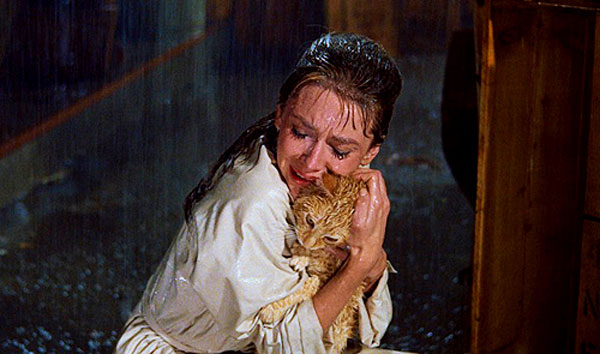
Another movie that always gets to me is Breakfast At Tiffany’s: Even though I know it’s coming, I always sob during the scene where Holly searches for Cat in the rain. Now when I read Truman Capote’s novella that the movie is based on, I didn’t shed a tear. But the book’s ending is very different and, well, not as satisfying emotionally as the movie.

Other movies I get the Kleenex out for:
Roman Holiday: Princess Audrey, pauper Gregory Peck. Hopeless love.
The Vikings: Dead Kirk Douglas getting his Viking funeral sendoff.
Field of Dreams: Kevin Costner playing catch with his father’s ghost. Waaaa…
Sophie’s Choice: Stingo reciting Emily Dickinson over the death bed.
Old Yeller: Well, you know what happened to the dog.

Why doesn’t fiction evoke the same response as film? I don’t believe it is because movies are more visual. What is more powerful than the blank screens of our own imaginations? I think it might be because today’s crime writers are leery of being labeled as soft when we go into matters of the heart.

I had a conversation with a high-placed editor a while back. She told me she has noticed two trends in crime fiction recently: the decline of hard-boiled “guy books.” And the continued strength of romantic suspense. Now, let’s not kid ourselves. There is some terrific hard-boiled stuff being written right now, books that don’t turn up their noses at emotions. Likewise, there is some utterly putrid romantic suspense on the shelves these days, stuff that gets everything about police procedure and forensics wrong and gets really treacly about the romance part. Maybe I’m just reading the wrong stuff. What has gotten to you? What has made you cry? Movies are easy. But give me some books as well.

Or am I wrong in my belief that there is still room for well-wrought (as opposed to over-wrought) emotion in today’s crime fiction?

_______________________

P.S. I am moving today. The movers came yesterday and packed us up. This morning, they are hauling all my earthly possessions down to the big truck. In two days, our little family will be starting a new life in Tallahassee.  The dogs, who’ve lived their whole lives in a condo, will like the new yard. Me, too. So, if I don’t get a chance to answer here…talk amongst yourselves and see you in two weeks!

Over the End of the World

One of my twins loves reading pre and post apocalyptic YA novels, but even he has reached saturation point. There’s really only so many stories you can digest involving the horror, chaos and disintegration of society that comes from either impending doom or the aftermath of an end of the world scenario. In many ways, our mutual ‘apocalyptic’ fatigue (after all, I’ve read almost all the same books) is indicative of market saturation as well as stagnation. It also raises issues, to follow on from Jim’s post yesterday, about how writers nurture their ideas to execution.

I think it’s safe to say the market has pretty much covered these scenarios:

  • contagion/epidemic
  • alien invasion
  • ecological disaster
  • Impending meteor/asteroid strike
  • vampires/werewolves/demons/zombies/robots/monsters/mutations etc. taking over the world
  • government conspiracy/police state/total control/thought control/emotional control
  • evil schemes that generally involve youths in competition to kill or hunt each other down and/or destroy society

Note: Feel free to add to this list by the way…

But the key element I think (at least on the fatigue front) is that many novels now feel merely derivative of stories that have come before and which deal with the same or similar ‘apocalypse’ event. It’s hard, given what has already been written, to come up with a new idea or new way of executing that idea that doesn’t feel tired or hackneyed. It is, in some respects representative of the classic dilemma facing all writers – namely, how do you put a new/fresh/unique spin on an idea/mystery/predicament that has already been done to death? This is where I think it is critical for writers to take a step back when considering their idea for a novel (before what Jim calls the ‘green light’ stage) and evaluate the key elements of concept and premise (that my fellow blog mate Larry Brooks is so good at describing).

I jot all my ideas down in a notebook – most of which will never develop into a completed novel – either because the idea itself is to thin, or the execution/story that surrounds the idea doesn’t turn out to be novel enough, or complex enough to sustain itself. When considering any new WIP, I take my idea, produce a detailed proposal and then (because I’m an outliner) map out the plot for the story. As part of this process, it soon becomes apparent if the idea cannot sustain a novel, especially if I couldn’t answer these critical questions:

  • Why should readers care about my story/idea?
  • If it deals with well worn tropes, what makes my idea or POV unique or significantly different (I don’t count trivial distinctions)?
  • How would this story stand out from all the other novels out there?
  • Even if I think the idea is sufficiently novel to warrant a story, do I really know what the concept/premise behind this is in sufficient detail (anyone who’s read Larry Brooks knows that many stories collapse because a failure at the concept or premise stage).

At the moment (thankfully) I’m not considering any a pre or post apocalyptic story ideas. Although my son and I have reached the tipping point we could still be brought back with a unique twist/edge or story about the end of the world. The key issue I think is that, when considering a new idea, read extensively before committing to the story. In a crowded market, you have to stand out (even when you’re writing about chaos and the end of the world…)

So, are there any types of stories you are totally ‘over’? How do you approach developing your ideas when facing a a crowded/saturated corner of the market?


Chasing a New Idea

by James Scott Bell
@jamesscottbell

Some time ago I was asked on Twitter: “When you write first thing in A.M. do you work on current project or just write what comes to mind?”

My reply: “Almost always my WIP. May do some free-form on occasion for warm up or chasing a new idea.”

The chase is what I want to talk about today. It involves five steps:

  1. Spark
  2. Nurture
  3. Development
  4. Analysis
  5. Green light

1. Spark

Where do ideas come from? Everywhere! A billboard, a dream, a news item, a bit of overheard conversation, a memory. Ray Bradbury would hop out of bed in the morning and write down whatever was in his head. Only later would he see if there was a whole story there.

Thus, for the creative artist, the question shouldn’t be Where can I get an idea? but Which idea should I nurture?

2. Nurture

Keep a list of the most promising sparks. Look at this list from time to time and see which ones cry out for more attention. Take these and nurture them into What if statements. I posted here about getting the spark of an idea watching the long-dead Peter Cushing make a CGI appearance in Rogue One. My spark was, Hey, maybe they’ll make movies someday with all dead actors. I nurtured that to: What if, in the future, a studio was making a Western with CGI John Wayne, and John Wayne (via AI) decided he didn’t like the script?

3. Development

Keep a file of your best What ifs. These are the ideas you’ll develop further. In the case of “John Wayne’s Revenge,” I developed it right into a short story. But most of my What ifs are ideas for full-length novels. I call this file “Front Burner Concepts.”

My preferred method of further development is what I call the “white-hot journal.” I got this from the great writing instructor Dwight V. Swain in his classic book, Techniques of the Selling Writer. Swain advocated writing a “focused, free-association document” for development. An hour to start with, at least. You’re not looking for structure, you are simply letting what Natalie Goldberg called the “wild mind” go wherever it wants to go: scene ideas, talking to yourself about why this idea is grabbing you, possible characters, settings, twists, turns, further ideas and possibilities, bits of dialogue.

Leave this document for a day, then go over it, annotate it, highlight the best parts, and add more free-form thoughts.

Do this again a third day. Start forming a cast of characters. I like to brainstorm a “relationship web,” possible connections the characters may have with each other before the story begins.

After a few days of this I have a mass of material that is starting to coalesce around a real plot. Now I’m going to ask some key questions:

  1. Are the stakes death (physical, professional or psychological)?
  1. Is there a motivated antagonist (person and/or group)?
  1. Are the characters starting to feel “warm” to me?

If I’m continuing to get excited, I’ll probably do some research. Since I set most of my books in Los Angeles, I’ll go “location scouting.” You always pick up great details doing live research. (See my post on this subject here.)

4. Analysis

How do you decide which project is going to take up the next three, four, six or twelve months of your writing life?

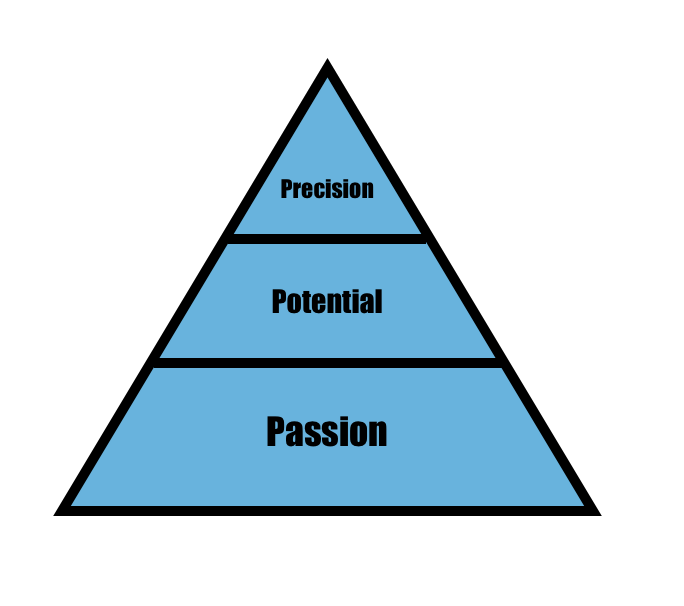
You start with Bell’s Pyramid.

Passion

The base of the pyramid is the most important. Without a passionate commitment to a story you’re burning to tell, your book will not be as original or vital or full of “voice” as it could be. You’ll risk sounding like all the cookie-cutter books competing in the marketplace. You might also get to the middle of the novel and be tempted to chuck the whole thing.

The key question here is, How emotionally invested are you in your main character? A novel, at its basic level, is about one character’s fighting a life and death battle using strength of will. That character will have to transform––becoming a fundamentally different (almost always better) person; or stronger (developing inner and outer resources in order to survive).

You should care about this character almost as much as a beloved family member. You should feel almost a need to see their story.

Potential

Now step back and consider the possible reach of your concept to an actual audience. Take off your artist’s hat and assume the role of an investor. If you were going to put up beaucoup bucks to publish your book, would it have a chance to recoup the investment and make some profit besides?

Find that sweet spot that joins your passion for the story with commercial viability.

Note, your assessment of potential need not be with the largest possible audience in mind. Genre writers know they are limiting themselves to a distinct group of potential readers. Even within genres, there are subgroups. Many science fiction writers, for example, are not writing “hard” science fiction, but rather books about deeply held philosophical ideas. They know that such novels appeal to some, and not to others. That’s fine. That’s a sweet spot, too.

Precision

Finally, be precise about your plot. You may be a plotter, you may be a pantser. In any case I advise you brainstorm the “mirror moment” for your Lead. It illuminates what your story is really all about and enables you to write organic scenes, no matter what your preferred plotting method. (Don’t worry, that moment is subject to change if the book demands it; but it’s best to have a lighthouse in a fog even if you end up in a different port.)

5. Green Light

As my wife likes to say out loud when the car in front of us has failed to notice it’s no longer a red light: “Green means go!”

And so you’re off. Write that first draft as fast as you comfortably can (refer to my post on working method here).

And that is how you chase, capture and animate an idea that you will turn into a full-length novel.

All you have to do now is add your genius.

Not Gone. Just Hiding.

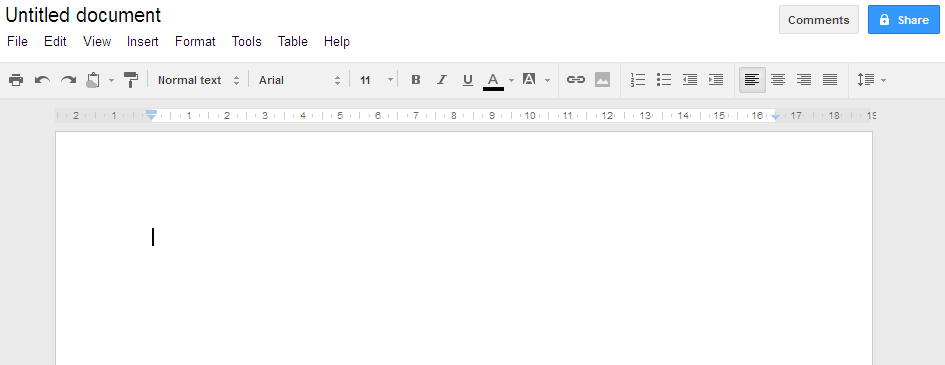
This is for all of our friends out there who 1) use Google Drive/Google Docs and 2) don’t know much more about it than how to open a new document, write on it, and close it out. I use Google Drive for everything creative and that which wishes it was. It’s not perfect — they need to work a bit harder on that spell check feature — but it is very good at many other things, such as locating that document that you created three years and two computers ago and immediately forgot about but that you need right now. Oh. And updating. Google Drive is  really good at automatically updating your document as you move right along. That brings us to today’s helpful hint.

I recently spent several days using Google Drive while working on a legal analysis. I was putting the finishing touches on my document, which I had creatively named “Analysis for (insert client’s name here)”  when I received a long anticipated email with information which I needed for the very project on which I was working. The email also needed an immediate response from me.  Since my response was a bit involved I opened a new Google document, drafted the response, and copied and pasted it to my responding email. I returned to my blog draft in “Analysis for (insert client’s name here)” opened it, and accidentally made a click here and a click there. The several pages or so of analysis which I had painstakingly written during the previous week or so were replaced in the “Analysis for (insert client’s name here)” document by the email response which I had just written. Gone. Vanished. I clicked on the “Edit” menu and the clicked “Undo” and nothing happened. I thought that my work had possibly been moved a few pages down by my accidentally pasting my email into the document. No. That’s not what happened. I still don’t know what happened. All of my work on that analysis was gone, however. Or so I thought.

I at that point yelled “Oh shoot” (or something like that) which did very little good, other than for scaring the cat away which is never a bad thing It just wasn’t helpful. I got up, got a cup of coffee, and went through the motions of deciding whether to try to begin the analysis all over or to binge watch True Detective: Season One for the twenty-secondth time. I took a sip of coffee and thought about things, like dead pets and old girlfriends, and my brain sideloaded an idea. I went back to my computer, googled a question, and immediately received the answer I wanted, which I will now share with you.

The question which I inartfully asked was: “Can I access revisions of a document drafted in Google Drive?” The answer was a resounding “Yes!” It is easy to do. Just open the file that you have messed up and click on the pull down “File” menu. You will find an option for “See revision history”at a point about halfway down the menu  A list with the heading “Revision history” will pop up on the right side of your screen. Just go on down the list to find the revision you want. I did that. I couldn’t find the version of my document that I was looking for. I went all the way to the bottom of the list and found a  link with the title “Show more detailed revisions.” Just run through the list until you find the revised version of the document that you want.

This is a terrific feature, particularly if you’re working on a document that is getting passed back and forth among folks. It enables you to access who made what changes, and when. It settles arguments regarding which attorney used the sloppy language in the divorce agreement, or who forgot about The Lord Mansfield Rule when making provisions in the will for that red-headed stepchild.  I have also heard that teachers are having great fun with this feature. Many if not most schools are utilizing online homework submission (among other things) thanks to Google, which is providing students with their own school email and Google Drive accounts which they can utilize to complete tasks and email to their teachers. The student accounts are in the school mainframe and can be accessed by the teacher.  Mrs. Krabappel can accordingly check to see if Bart Simpson has been working on his class paper all week or simply dashed off a few sentences the morning it was due.

There is a lot more that you can with this feature. you can find a good overview of it with an understandable explanation here. Play with it if you like (try opening a new document and typing just a few sentences, just in case it’s not working when you try it, heh heh). Meanwhile…does anyone have any cautionary tales which they would like to share about accidentally erasing a creative endeavor, including what they did about it after the fact?


Best First Line Of A Thriller?

Before penning a single word of prose, writers must lay the foundation for a new story, much like a brick-layer lays the foundation for a new house. All kinds of groundwork has to be laid, such as decisions about:
* Which suspense category the story belongs in
* POV issues
* Character goals and motivation
Next comes the hard part: Writing Chapter One, Page One.
Which brings us to today’s topic: Great Beginnings.
For an example of a great beginning, let’s reach WAY back to a sort-of thriller, Rebecca, and its simple but great first line:
“Last night I dreamt I went to Manderley again.”
That line launches the spellbinding tale of its protagonist, who is haunted by the ghost of her husband’s dead wife. And there are many other great openers we could cite.
Here’s a link to the best 100 opening lines of novels, as chosen by the editors of American Book Review.
But those are mostly first lines of…ahem, “literary” novels. For Right now, let’s limit our discussion to the first lines of thriller novels.
You know ’em when you read ’em. They’re the ones that make the hair stand up on the back of your neck on page one and you don’t go to sleep until THE END.
So I’m wondering…what is the BEST grab-you-by-the-throat opening line (and para) you ever read in a suspense book? And what made it so good for you?