On Empathy

by James Scott Bell
@jamesscottbell

The other day my laptop and I drove to a local caffeine establishment to do some work. The early morning rush was over and the place relatively quiet. A young woman was at the cash register with a customer. A young man, a little older than the woman, was working the espresso machine like Frank Morgan behind the curtain in the Wizard of Oz.

When it was my turn to order I stepped to the counter, but before I could say a word a look of shock came over the young lady. She looked directly at me and said, “Oh my God!”

I was so sure I’d shaved that morning.

But then she said, “Excuse me!” and spun around to face a couple of large coffee urns. She started to fiddle with one, but apparently didn’t know the tune.

The young man saw this and said, “What are you doing?”

Woman: “I forgot to change the [something].”

Man: “You don’t do it that way.”

Woman: “I saw [unintelligible] do it this way.”

Man: “Well, that’s not the way you do it. Look out.”

He began rearranging and replacing things on and around the coffee urns, the whole time rat-a-tatting at the young woman with transparent annoyance.

“That’s how,” he snapped when finished, then went back to steaming milk. The woman returned to the counter, her eyes literally downcast. When she finally looked up at me, the hurt in her face was palpable. She could have been my daughter. I heard myself say, “It’s all right.” Then I placed my order.

Now why did I say that? I didn’t plan it, it just popped out. I don’t think the answer is complicated—I was hit with a jolt of empathy.

Empathy, simply put, is the ability to understand another person’s feelings, to “step into their shoes” as it were. It’s a common human attribute unless a) you are a sociopath; or b) have conditioned yourself not to care by practicing hate, selfishness, or some other form of conscience-weakening.

Empathy is powerful. So much so that it’s the theme of Harper Lee’s classic To Kill A Mockingbird. As Atticus tells Scout, “You never really understand a person … until you climb into his skin and walk around in it.”

Empathy should be the theme of a writer’s life, too. You can’t really know your characters without it, and that includes the bad guys. Fiction that transcends the predictable and mundane is largely built, I would argue, upon layers of empathy. Those layers reach out from the page and connect to readers on an emotional level.

Which, of course, is what we’re going for. Fiction is an emotion-delivery system, not a lecture or jeremiad. Sure, you can have a message, but it won’t penetrate very deeply without character empathy.

Writers also need empathy for their readers, who are looking for escape into a story. Why? Because, as Wordsworth put it, “the world is too much with us.” We all need some relief in crazy times. If we can give that to a reader through our books, we’ve done more for that reader than a million characters of Twitter ever will.

So try this:

  • Create a childhood scene for every one of your main characters. In that scene confront them with one of the following: a bully, a pet that dies, an accident, a humiliation, a disappointment, a failure.
  • Write a diary entry from that character, describing in detail how she felt during and after the experience.

In the next scene you write, explore how that feeling might affect the way the characters in the scene treat each other.

Do the same throughout the book.

And in your life, too. Oscar Levant, the songwriter and TV curmudgeon of the 1950s and 60s, once remarked: “When I was young I looked like Al Capone, but I lacked his compassion.”

Don’t let that be your epitaph.

So how deeply to you identify with your characters … including the bad ones?
 

This Is (Almost) Halloween…

I know. Perhaps it is too early for me to be writing about Halloween. I’ve been seeing  merchandise for the unofficial holiday in stores since September 5th, however, so I’m actually behind the curve. Herewith please find my subjective list of Top Five frightening reads that will carry you through the next few weeks:

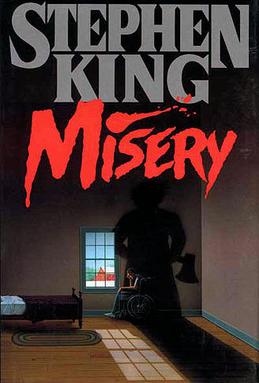
MISERY — I was given this newly published book as a present for Father’s Day 1987. I started reading it that afternoon and did not stop until I finished it that evening. Some dad, huh? Stephen King’s now-iconic tale of popular author Paul Sheldon’s extended visit with defrocked nurse Annie Wilkes — his Number One Fan — more than stands on its own merits. It makes/tops my list, however, because I had a relationship with someone very much like Annie, right down to her potentially dangerous mood changes and odd turns of phrase, the manifestation of which always preceded what I would come to call an “episode.” I read this book at least once a year, repenting at leisure and recalling the exhilarating sound of doom whistling by me at a near-miss.

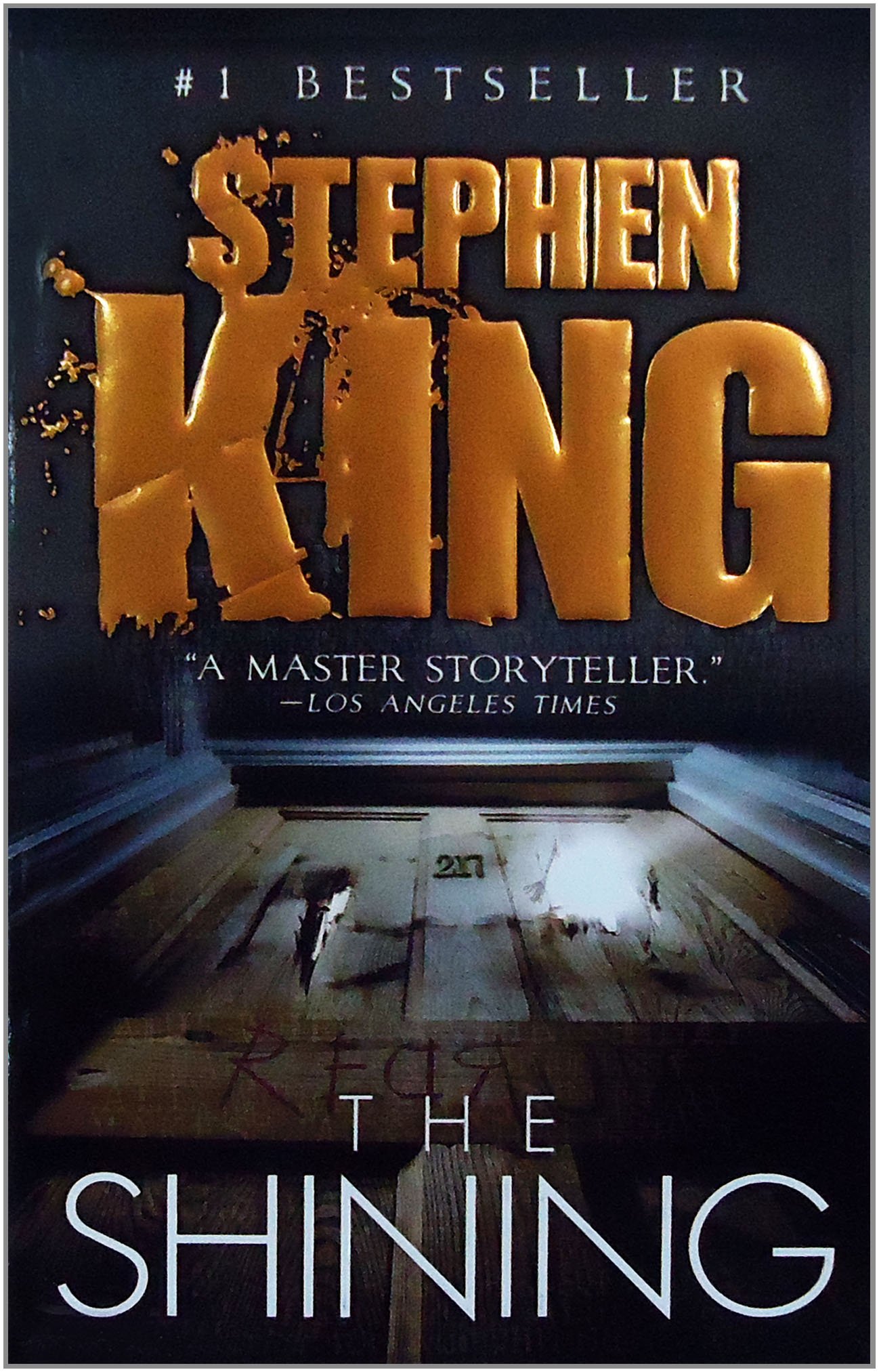
THE SHINING — This tale about Jack Torrance, a struggling author with writer’s block the size of a Jersey Wall, and his family was already quite well known when it was adapted for a (lesser) film by Stanley Kubrick. I screamed twice while reading it. The first was during young Danny Torrance’s encounter with the girls in the hall.  To this day, when I am in a large hotel with a long, carpeted corridor, I think of Danny and the girls who wanted to play with him forever.The second was during the bathroom scene. I have, unbidden, remembered this scene at inopportune moments over the course of my adult life, with unhappiness ensuing. The book as a whole, however, is a terrific example of how to wring every bit of drama that can be wrung out of a single location.

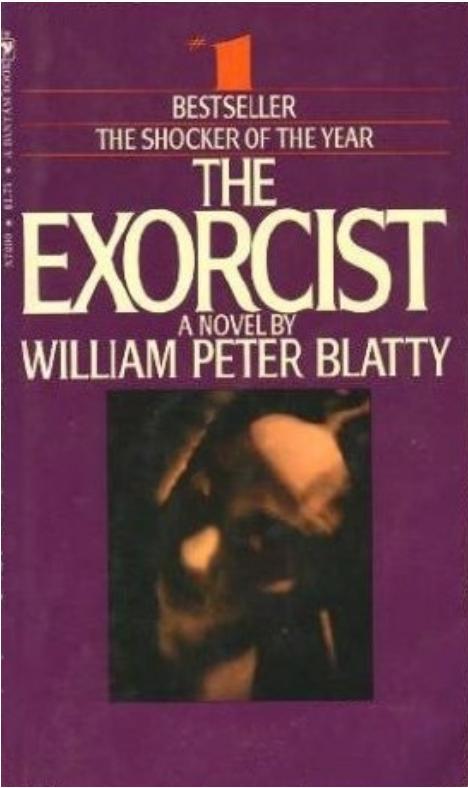
THE EXORCIST by William Peter Blatty — This early 1970s novel was a potboiler for sure — and that is one of my highest compliments — but it is a cringe-inducing tale of demonic possession and the efforts of a heroic priest to save the life and soul of an innocent girl  which fed right into my Roman Catholic upbringing. My father, who spend serious and quality time in Seminary school, assisted in an exorcism and told me that Blatty’s account of possession was mild compared to what he witnessed. That might have been, but it is hard to believe that what (almost) Father Joe experienced was any more frightening than Blatty’s description.

‘SALEM’S LOT by, ummm, Stephen King — I have always enjoyed well-written vampire novels — there aren’t many of them — but there is a special place in my heart for this story of the Undead and love lost in a small town on its last legs. King’s second novel published under his own name is a textbook example of how to plant a slow, unnamable dread on the first page, nurture it, and grow it to full blossom stark terror. The television adaptation, with David Soul in the lead role, has its weaknesses but actually stands up quite well. A planned sequel was later incorporated into the Dark Tower series in THE WOLVES OF THE CALLA and SONG OF SUSANNAH but neither quite reach the atmospheric levels of fright found in this book.

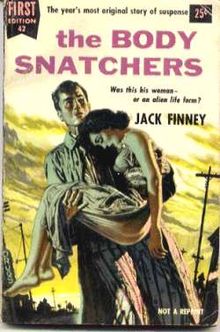
THE BODY SNATCHERS by Jack Finney — I saw the 1956 movie Invasion of the Body Snatchers before I read the book upon which it is based. That august novel, although almost as old as I am, has held up much better than either myself or its film adaptation. Marketed as science fiction, THE BODY SNATCHERS is a paranoia-laden horror story about alien seed pods that land on earth and begin producing a duplicate replacement copy of each human being. You have almost certainly seen at least one of the three films based on the book but you can’t beat the source material on any level. Five-year-old mini-Me was also certain at one point that his parents had been pod-snatched. You might as well, but take a chance and pick up a copy of this classic if you’ve never read it.

You know what I’m going to ask now, I’m sure: what are your favorite horror/scary novels? And why? Thank you.

What is Amazon Doing Now? Can it Work for You?

Jordan Dane
@JordanDane

I received a notice recently from Amazon regarding its implementation of “Amazon Stores,” a way to promote a brand or company products. I’m not sure how open and available this is for anyone with a brand or a store concept. Are many authors using this?

I have a corporation, Cosas Finas LLC, that I have developed into Cosas Finas Publications to promote my brand and I have a website that I’m still developing for this entity. (My navigation needs improvement and I’m tweaking it after my deadline, so be kind.)

Awhile back I set up an Amazon PAGE for my company/brand using Amazon Marketing Services (AMS) to link ad campaigns to. I created a landing page for my ads to show more of my books and group them by series or featured new releases. I’ve come to realize that the Amazon platform has some faults but I still think it is the best for when when I’m selling my books. The main issue that I, as well as other sellers on Amazon, have been having is the inventory mistakes they make. It loses money unless you use an Amazon reimbursement software to get your money back. This hasn’t effected me too much as I’m not selling as many products as other sellers but it could start to effect me once I start selling more. My friend told me to check out this helium 10 review since I’m starting to sell on Amazon a little more. I think it’s a great platform and I love using it.

I’m a user of Amazon Marketing Services (AMS) and have various ad campaigns established for my books as they release or I develop a concept to promote a series, for example. Through AMS I had created a Cosas Finas Publications company PAGE, which is different than their new STORE idea. Amazon Stores are slicker and more attractive in appearance.

Brand pages are going away or the links to these pages will start to be phased out by Oct 31 and completely gone by Dec. It’s only cost me the money for “click-thru” ads and I set my budget and can monitor the expense vs sales revenues. I’ve been satisfied with the benefits outweighing the cost on AMS and I monitor my profitability and tweak ad campaigns to make them more effective.

Amazon Stores are free to vendors. I just set up an ad campaign that links directly to my new store. It was very easy. I chose a HEADLINE search for keywords as my campaign structure (recommended by Amazon and others I’ve researched) and I can query Amazon’s own system for high traffic keywords used by customers. I set up a daily max budget with a click-thru cost for an ongoing campaign without an end. It’ll be up to me to periodically evaluate the effectiveness and I can terminate any campaign at any time. From what I understand, these vendor stores will be required to have at least one ad campaign linked to them to keep them active. This will probably go into effect after Dec, 2017.

I really liked the ad design I submitted yesterday for Amazon approval. Instead of me creating an intriguing tag line for each book, I was able to use my brand slogan, which is “Take a front Row Seat to Suspense” and direct readers to my store. My ad dollars will go farther if I can consolidate my ads for my brand. We’ll see how this turns out. It’s still very new and I need a final approval on my ad campaign before I can see what traffic and sales it generates, but the metrics are there to analyze, with revenues vs ad cost.

To check out more details, visit AMS for vendors (first party sellers are vendors) or Seller Central (for 3rd party sellers that sell other’s products) for sellers.

How many of you advertise through AMS? What’s been your experience?

My STORE is approved as of yesterday. I hope this link works – Cosas Finas Publications The pre-set design templates are not flexible enough for me. It would be nice to have them in modules where you could mix and match, but I can play with the templates to see what works best for books.

Key Features of Amazon Stores:

1.) Design templates allow you to feature different books in a way that your Amazon Author Page isn’t set up to do. You can add video/book trailers, post promo text, praise blurbs/awards, or feature upcoming releases.

2.) Flexible ability to feature different products at your command. You are the keeper of your store and what is in it. If you have other products that are associated with your brand or writing, like T-shirts or coffee mugs for writers, you can feature those along with your books.

3.) There are social sharing buttons tagged to your store and you can set up HEADLINE search ads or drive readers to your store through your ad campaigns and increase your store traffic. Amazon allows a vendor to search existing keywords already proven to have high traffic on their system.

4.) You can take your Amazon Store link and use it in other promotions off the Amazon website. I can see this working for KDP Select products that are exclusive to Amazon for a time.

5.) Developing an ad campaign for my whole brand of books allows me to make the most of my budget for advertising. Rather than creating an ad for a new release, I can create one for my brand and update the book offerings as I have releases.

For those of you focused on your writing and not at the point of targeting the “not so fun” part of the business end, it’s still important for you to see what authors are doing to promote their work. I talk to many aspiring authors whose eyes glaze over when you share the very necessary business side. They want to believe a publisher will “take care of them” and sell their books, easy/peezy, but that’s not how it works.

I wanted TKZers to see how this might work for you, if you’re not aware of AMS and the Amazon STORE concept, but if you are using it, what are your thoughts? Where do you see this going for Amazon? Is this concept directed at larger companies with multiple products, like a running shoe company for example, or can this work for authors on a budget?

The Wrong Story: A Cautionary Tale


(GoDaddy stock photo)


I’m in the final stretch of an edit for my next suspense novel, One Last Secret. It has to be  in my editor’s hands by close of business today. Fortunately, I’m past the “dropping potato chip crumbs all over the keyboard as I type in a blind panic” phase. Today is the “last read to make sure I didn’t leave in embarrassing formatting and continuity mistakes” portion of the program.

So I’ll be brief.

When I first started sending out short stories, I concentrated on contests and fellowships. Things with specific deadlines and guidelines. It’s a method I highly recommend to newbies.

I was newly married, living in West Virginia when I decided to submit a story to be considered for a West Virginia Arts Fellowship because it was a literature year. (I don’t know that they still have the same program in place. Perhaps something different.)

I submitted a very nice story about–okay, I honestly don’t know which story I thought I submitted, but I do remember that it was very PG-rated. I was new in the area and I didn’t want to shock the nice West Virginia committee.

Lo and behold, I won a fellowship. It was a couple thousand dollars, I think. A real boost to my ego and burgeoning career. There were festivities and news articles, etc. But when I read the title of the winning story, I thought, “How odd. I don’t think that’s the story I sent in.” And then I turned bright red and got woozy. The story that won was not a PG story at all. It was a dark, shocking tale about a woman who hooks up with a rather pathetic married businessman in a hotel bar. I was mortified. Pleased, but mortified. Because I was a young writer, you see, but I was also a new mother, and someone whose husband’s family was well known in the state and in their small town. Just call me Jezebel.

I assumed no one would actually read the story. West Virginia is a relatively small state, and people always say they’ve read things when they really haven’t, to be polite. But unfortunately, one of the women on the executive board lived in our town, and I ran into her at a cocktail party. She was forty years my senior, and very proper.

“Congratulations on your award,” said she.”It was a very interesting story. Was it autobiographical?”

And then I died.

Please tell me you have your own horrifying submission or publishing stories. Misery loves company.

First Page Critique: Portrait Of A Young Man

Yes, ’tis the season for catching up on first page critiques from our TKZ “In” box. Today we’re reviewing the first page of PORTRAIT OF A YOUNG MAN. Please add your feedback for today’s brave writer in the Comments.

Portrait of a Young Man

I picked up the dead man about twenty miles west of Columbus. I stopped to take care of my business and grab a soda at a Pilot gas station at mile marker seventy-nine. When I returned to my car I found him in the passenger seat. He was the one I’d seen frequently in the weeks before, but I’d seen him then in my dreams, not in the waking day, and certainly not in my Civic. I went back into the station and milled about for a solid fifteen minutes, examining overpriced sunglasses and t-shirts, hoping the dead man would wander off. But when I went back, he was still there.

So, I got in the car and I drove. I still had some miles to cover. I had a job waiting in Cleveland. Not too much rough stuff, Maxwell had promised.

My passenger was, as he had been in my dreams, clad in a Prussian blue Union greatcoat with a small cape. The double-bar insignia on his lapels showed his rank to be that of a captain and the crossed sabers on his slouch hat meant he was cavalry. In my dreams, I’d seen him only from afar, charging on horseback across some remote fog-blurred field of battle with his sword raised, into a fusillade of Confederate musket fire. In my dreams the wounds he suffered were but specks in the smoky distance. Up close and sitting beside me I saw them as jagged, fleshy holes, one above the left eye and one through the throat. They bled, as he sat, but not so much as to seem to distract him.

My car was old, built before smoking had become unofficially criminal, and the dead officer spent several minutes inspecting my lighter, pressing it in and waiting for it to pop out again. He inspected the glowing coils closely and returned the thing to its slot to repeat the process. He made a quick examination of the glove box, taking no apparent interest in the ‪1911‬ .45 caliber pistol I kept there, then he just stared out the window, watching the cornfields of central Ohio glide slowly by.

Unlike Larry, and most of my other visitors, he never said so much as a word. He began to fade around mile marker one-fifty, heading north on I-71. He was totally gone before we passed through Mansfield, twenty-five miles later.

My feedback: I’m intrigued by the underlying notion here: a dream image suddenly materializes in the passenger seat of the narrator’s Honda Civic in the form of a Zombie Yank officer, who calmly proceeds to rummage through the glove box. Who wouldn’t want to hear more about that?

That being said, I was confused about what type of story to expect here. The narrator’s lack of reaction to his bizarre driving companion is puzzling, for example. If I suddenly encountered a hitchhiker plucked from a recurring dream, I’d immediately assume that someone had slipped a spiked mushroom into my breakfast casserole. Here, however, the narrator displays little reaction to the bizarre passenger. That muted response muffles the dramatic impact of the scene, making the opening seem a tad flat despite its compelling setup.

The title doesn’t help the reader anticipate what  type of story to expect. PORTRAIT OF A YOUNG MAN sounds like a Joycean, literary title rather than mystery or suspense.

Craft-wise, the writer should pay heed to punctuation rules and edit with an eye to avoiding run-on sentences and an overuse of commas.

Overall, the writer grabbed my interest with the opening image, but he needs to add “more”: more narrator reaction is needed to punch up the drama and set the stage for this story; more context is also needed to clarify certain details as the scene progresses (who is “Larry”, for instance?).

Update: After rereading the page, I realized belatedly that this story is in the zombie mystery category. I never read that genre, so I missed a couple of cues that might  have been obvious to fans of that genre. (The reference to “other visitors”, in my case). It’s generally a good idea to write a scene so that even newbies to a genre can “see” clearly what is going on in a scene during the first reading.

Please share your thoughts about PORTRAIT OF A YOUNG MAN in the Comments. And we thank today’s brave anonymous writer for submitting this first page!

First Page Critique: The Fish Thieves

Must be the season for First Page Critiques here on KZ.  My last post was a FPC, several others followed, and here we are again.

As usual, here’s the call to chip in with your feedback. Which I will do after presenting today’s Brave Writer Submission.

It was always about the water.

Trina hacked through saw palms, ducked under spider webs, and climbed over fallen oaks and loblolly pines. She passed an overturned, rusted out SUV. It guts and doors removed, used for another purpose now. A mountain of garbage blocked her way—a baby stroller, plastic CD cases, kitchen utensils, plastic bottles everywhere. She picked her way around the mess—remnants from a previous life, a previous time. The brackish, sulfur-tainted saltwater tickled the hairs in her nose and she gagged, stifling a sneeze. She paused in the semi-darkness, aware to the dangers of walking through the forest, long enough to listen to her surroundings.

The lack of the natural sounds—birds chirping, frogs grunting—still offended. But she tightened her core, felt the weight of the automatic on her hip, brushed sweat from her forehead with the back of her hand and swallowed hard. Then she stomped on a No Trespassing sign. The tattered faded sign had been X’d out, another stark reminder that she wasn’t in Louisiana anymore. Or anywhere else familiar. A reminder that the laws that once governed the United States of America no longer applied. But she wasn’t deterred. Nor was she afraid.

Trina moved at a faster pace now, aware of the emerging predawn light, the guards and the Exiles—the unfortunate people who, once the tsunami hit the Gulf coast and changed the land they once knew, were neither afforded a place in academia, or could find work in Texicana. Those underprivileged, uneducated people who had it bad before The Big Rise, are now worse off. If that’s even possible. Recent rumor in the lab said Exiles are uniting and gathering strength.

The iridescent glow from the activity on and below the surface of the water illuminated the morning—thousands of tiny moon jellies and hopefully shrimp fry—made the risk of being caught worth the monthly trip. 

I lean into liking this, though it confused me a bit. Delivering a sense of confusion on a first page is not necessarily a bad thing, provided the confusion compels the reader toward forward movement toward clarity from a sense of intrigue. Which for me, this does… in spite of rather than because of the confusion I’ll describe below.

But I suspect that may not be true for all readers here. So the confusion that troubled me may end up being on the problematic side for others, as well.

But first, the nit-picky stuff. There are a couple of grammar things to clean up. These nits are like flies on frosting, they always deter more than they should, but deter nonetheless. Here they are:

Second paragraph, second and third sentences: …rusted out SUV. It guts and doors removed… should read – It’s guts and doors removed. Probably a typo, but if so, then consider better proofing before you submit, or in this case, hold this up in front of a few thousand readers. But before that, I’d recommend not using the period after “SUV” and, with a comma, conjoin those two sentences into one. The second sentence, as used, is a fragment anyway, so this solves that problem, as well.

Then, first sentence in the third paragraph: The lack of the natural sounds… This would read better if you lose the word “the” here, to read as – The lack of natural sounds…

Okay, now a few words about the aforementioned confusion.

Your first line… what is the object of this, the “it” of it? Really, if you pose this question – as you’ve done – then your next line should begin to address the explanation. As presented, the shift is kind of a jolt that leaves the opening question hanging and unattached to anything, and as such, renders the opening line… confusing rather than compelling.

After that you open in a forest. Trees and stumps and such. And “loblolly pines”… huh? As a guy who grew up in Oregon, where there are as many pine trees as anywhere else on the planet, and who didn’t major in botany, I have no idea what a loblolly pine. When an author summons obscurity with no real upside to it, it screams “look at me, I’m a smart writer who is trying too hard to demonstrate that fact!” You don’t want to elicit a WTF? moment from readers, and this one might.

Back to the forest. Now we have the gutted carcass of a car, some garbage, and assorted plastic stuff from a house, and then the smell of brackish salt water. In a forest? What, is the forest flooded? And how can this be salt water, unless there was a tidal wave that reached an inland forest? Maybe that’s precisely what you mean, but in one short paragraph you’ve got the reader on unsure footing at this point.

Is the forthcoming disaster natural, social, military, or something else that ends up with a forest deluged with salt water? Political or criminal mischief would not accomplish that, but that feels like where you might be going… so its confusing.

I just think you can clean this up a bit, and the read will be better for it.

The next paragraph is good stuff. A girl with a gun, always interesting. A sign on the forest floor… did it float here? Was it a camp? Not sure. Still somewhat confusing, but hopeful.

Here’s the whopper moment on the confusion scale: “…she wasn’t in Louisiana anymore. Or anywhere else familiar.” Unless she was brought to this place in a coma and then awakened, I think she’d know where she was. But to suggest she has no idea where she is… really, this makes too little sense. An easy fix, because surroundings feeling unfamiliar is perhaps clear, while literally not being in Louisiana but not being sure where you are… isn’t.

This feels like a speculative and/or futuristic thriller, and if so it’s a good start. It’ll be a better start, though, when the vagaries are given a little more resolution. It would be good, too, to have her stumble into something truly baffling (to her) and frightening on the next page, which would complete a pretty strong hook overall.

One more thought. Wherever this premise goes, it needs to circle back to actually being about the water (aka Chinatown) as the underlying McGuffin or ultimate prize. If it doesn’t – and because it’s salt water, which isn’t a commodity with either economic or political value, I’m fearful it won’t – then you probably need to rethink that opening line.

Okay KZers, share your thoughts on this one. In any case, congrats to this author on going out on an edge early.

Herd Your CATS

by James Scott Bell
@jamesscottbell

We all know that getting a reader inside a lead character’s head is one of the keys to compelling fiction. But it has to be done seamlessly so it doesn’t jerk us out of the narrative and put a crimp in the fictive dream.

Which means we have to learn to handle what I call “Character Alone Thinking Scenes” (CATS) in a deft manner.

The first issue is whether to begin the book with a CATS. As last Wednesday’s first-page critique demonstrated (in my view, at least) the answer should almost always be No.

Why? Because we have to have a little personal investment in someone before we can care deeply about their feelings.

Imagine going to a party and you’re introduced to a fellow with a drink in his hand. You say, “How are you?” and the guy says, “I’m really depressed, man, I wake up every day and the room looks dark and the sun never shines, even though it’s out there, and I don’t see it because of the dark dankness in my soul, and life has lost its meaning, its luster, whatever it was it once had for me when I was young and ready to take on the world. Ya know?”

AHHHH!!!!

Well, the beginning of a book is like walking into a party. The reader wants to meet interesting people. And interest is aroused by what people do. The way you catch readers from the start is through action and disturbance, not feeling and expounding.

I can’t tell you the number of manuscripts I’ve read over the years that did not begin with a real scene, but instead opted for the inside of a character’s head. What I usually do in such cases is flip the pages until I get to some dialogue, because that automatically means we’re in a scene. And 98% of the time that is the best place to start. (Sure, an argument can be made that a great style might be enough to carry the opening pages. But it better be truly great and truly brief.)

So, re: the opening—save your CATS for later.

Once you’re into the novel there are two types of CATS to herd—active and reactive.

In an active scene, the character is alone but with a major scene objective (something that materially relates to the plot), and thinks while trying to overcome whatever scene obstacles are in her way.

In a reactive scene, the character is alone with a chance to reflect. She may be thinking about what’s already happened in the story, or her current psychological state, or the other characters. When done well, reactive scenes strengthen our emotional bond with the character.

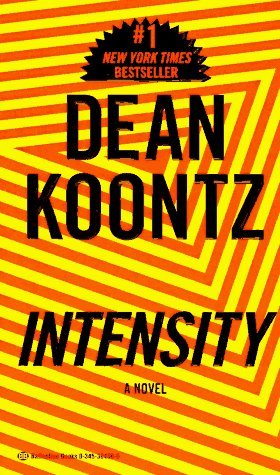
A couple of examples. The first is from Dean Koontz’s Intensity. A young woman named Chyna Shepherd is thrust into the dark world of serial killer Edgler Vess. After Vess murders a family (not knowing Chyna is in the house, too) Chyna sneaks into his motor home in the hopes of saving her best friend, whom Vess has dumped there. Alas, she’s dead. But it gets worse. Vess starts driving away and Chyna is trapped in the back of the motor home.

Her objective now is survival. She must keep her presence in the vehicle a secret, find an adequate weapon, and somehow kill or disable Vess. As she looks for a weapon she makes a grisly find—the body of a young man hanging in the small closet, his eyes and mouth sewn shut.

She pulled shut the pleated-vinyl panel. Though flimsy, it moved as ponderously as a vault door. The magnetic latch clicked into place with a sound like snapping bone.

In all the textbooks she had ever read no case study of sociopathic violence had ever contained a description of a crime sufficiently vivid to make her want to retreat to a corner and sit on the floor and pull her knees against her chest and hug herself. That was precisely what she did now – choosing the corner farthest from the closet.

She had to get control of herself, quickly, starting with her manic breathing. She was gasping, sucking in great lungfuls, yet she couldn’t seem to get enough air. The deeper and faster she inhaled the dizzier she became. Her peripheral vision surrendered to an encroaching darkness until she seemed to be peering down a long black tunnel toward the dingy motor-home bedroom at the far end.

She told herself that the young man in the closet had been dead when the killer had gone to work with the sewing kit. And if he’d not been dead, at least he’d been mercifully unconscious. Then she told herself not to think about it at all, because thinking about it only made the tunnel longer and narrower, made the bedroom more distant and the lights dimmer than ever.

She put her face in her hands, and her hands were cold but her face seemed colder. For no reason that Chyna could understand, she thought of her mother’s face, as clear as a photograph in her mind’s eye. And then she did understand.

To Chyna’s mother, the prospect of violence had been romantic, or even glamorous. For a while they had lived in a commune in Oakland, where everyone talked of making a better world and where, most nights than not, the adults gathered around the kitchen table, drinking wine and smoking pot, discussing how best to tear down the hated system, sometimes also playing pinochle or Trivial Pursuit as they discussed the strategies that might bring utopia at last, sometimes far too enraptured by revolution to be interested in any lesser games …

Koontz then gives us a page-and-a-half of backstory, filtered through Chyna’s perceptions and thus relevant to the present action. She’s alone, but moving toward her scene goal. Her thoughts—which in real time would flash through her mind but in fiction time are detailed—are part of the action.

Now let’s take a look at a reactive CATS. This is from John Fante’s classic Ask The Dust. Arturo Bandini is a young writer living a meager existence in L.A. He has just decided to he’s going to steal milk off a truck. In his dingy hotel room, he reacts to his decision:

The night came reluctantly. I sat at the window, rolling some cigarets with rough cut tobacco and squares of toilet paper. This tobacco had been a whim of mine in more prosperous times. I had bought a can of it, and the pipe for smoking it had been free, attached to the can by a rubber band. But I had lost the pipe. The tobacco was so course it made a poor smoke in regular cigaret papers, but wrapped twice in toilet tissue it was powerful and compact, sometimes bursting into flames. 

The night came slowly, first the cool odor of it, and then the darkness. Beyond my window spread the great city, the street lamps, the red and blue green neon tubes bursting to life like bright night flowers. I was not hungry, there were plenty of oranges under the bed, and that mysterious chortling in the pit of my stomach was nothing more than great clouds of tobacco smoke marooned there, trying frantically to find a way out. 

So it had happened at last: I was about to become a thief, a cheap milk-stealer. Here was your flash-in-the-pan genius, your one-story writer: a thief. I held my head in my hands and rocked back and forth. Mother of God. Headlines in the papers, promising writer caught stealing milk, famous protégé of J. C. Hackmuth haled into court on petty theft charge, reporters swarming around me, flashbulbs popping, give us a statement, Bandini, how did it happen?

The scene continues, with Bandini eating an orange, doing some typing, all the while thinking about his prospects as a writer. The chapter ends with Bandini making the milk snatch, giddily bringing the two bottles back to his room, opening one and taking a long drink. And immediately spitting it out. He’d stolen what he hated—buttermilk.

There should be activity in a reactive CATS. It is often innocuous (rolling cigarettes, eating oranges, typing) but it provides the space for emotion and analysis.

The big thing to know about CATS is that they are the best way to control pace. If you need to slow things down a bit, give us more thinking. If you need to pick up the pace, compress the thoughts.

In other words, learn to herd your CATS and the readers will lap up your fiction.

IT’S 10 PM—DO YOU KNOW WHERE YOUR VILLAIN IS?

By Debbie Burke

Given a choice between an MFA program and TKZ blog, I’ll show up here every morning, and not just cuz the tuition is cheaper!

Right here is where I experienced a slow but critical epiphany about villains, thanks to posts by P.J. Parrish, Jordan Dane, James Scott Bell, and former KZer Joe Moore (still miss ya, Joe!).

For years, my mystery novels won contests and attention from agents and editors…and rave rejections. Despite study, hard work, and persistence, my books remained unpublished. A key element was missing. But what?

Several years ago I started following TKZ about the same time I began a new novel titled Instrument of the Devil.

My previous books had been traditional whodunits told from first person or close third person points of view, completely inside the head of the main character. That meant a continuous struggle between what she could know (not much) vs. what was needed to solve the mystery. In addition, the plot required red herrings and false suspects thrown in, all without giving away the villain’s identity.

I wrote mysteries like I read mysteries, from a state of ignorance, constantly trying to figure out what was going on.

I had a general idea of the bad guy’s motive, but never paid much that attention to the schemes and machinations happening offstage. All action took place onstage because the first or close third POV required the sights, sounds, smells, and emotions be filtered through the protagonist only. My focus stayed stuck on the hero.

The bad guy hid in the shadows behind the curtain until the big reveal at the end. Unfortunately he’d been hiding from the writer too!

Finally, thanks to the wise folks at TKZ, I recognized the big fat blind spot in my books.

Here’s the epiphany:

In crime fiction, the antagonist drives the plot. Unless a crime has been committed, or is about to be committed, there’s nothing for the protagonist to do. The antagonist acts, the protagonist re-acts.

I’d been following the wrong character around all these years!

My realization probably seems like a big DUH to many crime authors. But I’m sharing it in hopes of helping others like myself who overlooked the obvious.

It’s fun to think like a villain! When I started writing from the bad guy’s POV, a whole new world opened up—a world without conscience, constraints, or inhibitions.

Jordan’s great post from last May says, “The best villains are the heroes of their own stories.”

Actor Tom Hiddleston says, “Every villain is a hero in his own mind.” Most actors would prefer to sink their fangs into the role of a great villain than play the good guy.

The baddies in my earlier books had been flat and dull because I’d never gotten inside their heads. Finally, the missing element became clear and…my book won a publishing contract!

Why is the villain willing to steal, cheat, and kill? What rationalizations justify the harm done to others?

A sociopath comes up with perfectly logical justifications and excuses for abhorrent actions.

Irresistible influences like greed, power, and lust can seduce an ordinary person over to the dark side.

Misguided righteousness can lead to horrendous consequences.

A law-abiding citizen may be forced into a corner where he commits acts he would never do under normal circumstances.

If an author roots around in the antagonist’s brain for a while, background, reasons, and rationalizations for antisocial behavior bubble up. Armed with such knowledge, it becomes impossible to write a two-dimensional character. Jim Bell offers a great technique—try to imagine the villain delivering the closing argument to the jury that will determine his fate.

Do you show the villain’s POV in the story or not? That choice is contingent on subgenre.

In a whodunit mystery, the identity of the villain is typically a surprise at the end. Therefore, that POV is generally not shown to the reader, although some authors include passages from the villain’s POV without revealing the identity.

Suspense and thriller novels often are written from multiple POVs, including the villain’s. When the reader knows early on who the bad guy is, the question is no longer whodunit, but rather will s/he get away with it?

The author can choose to show the antagonist’s POV or keep it hidden. But either way, you need to be aware of it because that’s what’s driving the story forward.

Even if you never show the villain’s POV, try writing scenes inside his/her head. You don’t need to include them in the book, but the act of writing them gives you a firmer grasp on that character’s deep desires and how those desires screw up other people’s lives. Once you really understand what the antagonist is striving for, that provides a solid framework from which the story hangs.

If you’re in a corner and your hero doesn’t know what to do next, check in with the villain. While the hero is slogging through steps A, B, and C to solve the crime, the bad guy is offstage setting up roadblocks D, E, and F to keep from being caught.

If you get lost down a rabbit hole, ask questions to get back on track:

Where is the villain?

What can he do to make the protagonist’s life miserable?

Does she need to commit another crime to cover the first?

How can she elude capture?

The best answers can be found inside the bad guy’s head.

How about you, TKZers?

What is your villain doing right now?

Do you prefer to show the antagonist’s POV or keep it hidden?

P.S. A BIG THANK YOU to everyone at TKZ for helping me to raise my writing from rave rejections to publication.

Debbie Burke’s thriller Instrument of the Devil is now available on Amazon for pre-order and goes on sale October 10.