Mystery Cliches: Are They Boring Your Readers?

By Elaine Viets

Are you writing cliches? Of course you are. We all do. Call them cliches or give them a Hollywood make over and claim they’re literary tropes, certain scenes and characters appear again and again in the mystery genre. We writers need to be aware of them. Masterful writers can turn tired scenarios into art. But in lesser hands, those same cliches can annoy readers. Here are a few cliches that real, book-buying readers have identified.

Cozies– The heroine looks at her body in the mirror and describes herself. This has been done again and again.

– The stupid detective who makes major errors no police officer would. Cozy heroines often need a reason to investigate the crime, and a stupid detective is the standard one. But I threw a book against the wall when a cozy heroine went back to the victim’s home and found her diary SITTING ON THE DESK IN HER OFFICE in plain sight and it just happened to have a major clue. Any police officer with a pulse would have taken that diary!

– The protagonist who is Too Stupid to Live and confronts the killer alone. I’ve seen this in all genres – even noir, where cops who should know better confront the killer without calling backup – but it happens more often in cozies.

– I used to pick up every “cupcake bakery mystery” and “knitting circle sleuth” book, but I found that they all opened with a description of the new woman driving into town thinking about how she just broke up with her fiancé, just sold her house, just quit her job, or just inherited the family shop, and how she’s starting over, yadda yadda.

– In one series, the writer starts every book with a scene of waking-up, feed-the-cat, think about what we do for a living, and the people we deal with as we shower. Every time we encounter a character we hear again the same basic spiel that was in book one about the back story of the character or location. We even have to hear about people’s nicknames and why they have them. This gets extremely tiring and I have to skip past it by books two and three.

Thrillers


– I’m tired of books that are always about lost artifacts that good guys race against bad guys to find. Too much detail and a predictable story line.

– This thriller was told in present tense, but then shifted between different time periods and different points of view. I couldn’t keep it all straight and jumped to the end. I don’t want to work that hard to stick with a book.

– Story jumped from city to city to city. The author didn’t set the scenes, just changed the place and dateline at the start of the chapter. I lost interest trying to figure out where it was.

– Ordinary minivan dads and moms suddenly develop SEAL-level skills to save their spouses and/or children. I know parents can perform extraordinary deeds to save their family, like lift up a car to save the baby from being crushed to death, but gimme a break! Or give them a background where they’ve been in the military or have some kind of special training.

– The nice guy hero with the psychopath friend who does all the killing and dirty deeds the good guy won’t do.

– My pet peeve is cardboard characters. Any mystery can have stock characters, but I think they’re especially common in thrillers, where character development is too often sacrificed for action. It’s a turn-off.

Chick lit
– Look, I know it’s a genre – chick lit mysteries – but I don’t always know I am downloading one until I listen to the setup (someone croaks or is croaked) and when the police come, the female protag suddenly notices how tight the sheriff’s shirt is over his manly pecs, and we are off! I have had several opportunities to call the police and never did I start sniffing their aftershave and swooning. Seems like every book with people of both genders in it, two opposite ones (usually) will immediately glom onto each other. Dunno – it’s kind of funny and kind of stupid.

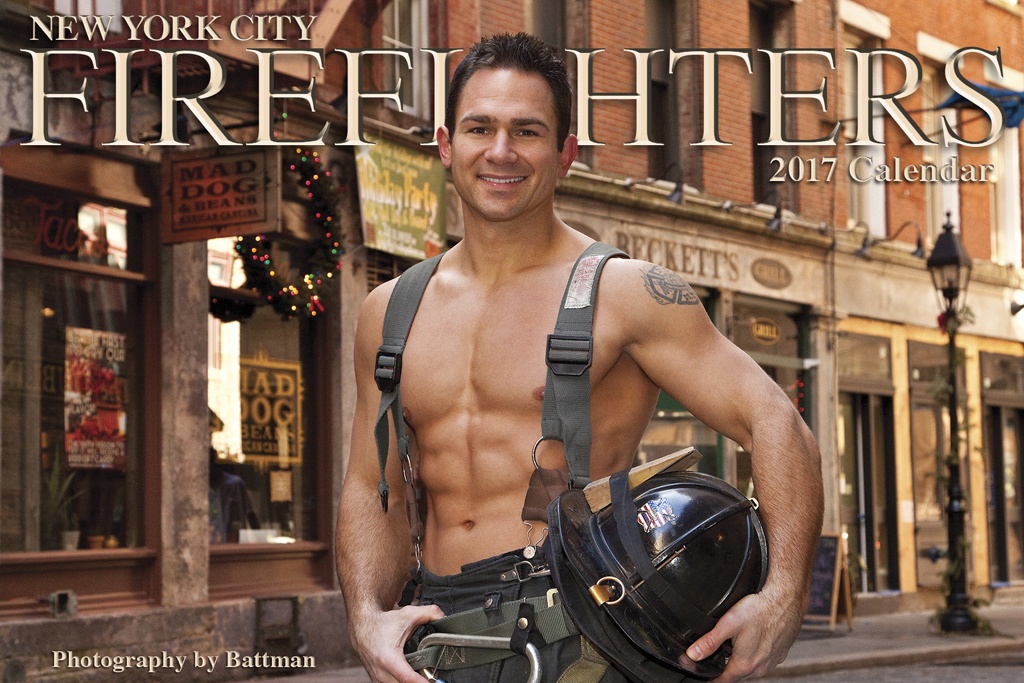
– Don’t know about cops, but it has become apparent to me over the years that all firemen, no matter where they live, have to pass some sort of hunk test before they’re hired. The pizza delivery person has never been hot and interested in me nor has any auto mechanic ever offered special services. Very depressing.

– The heroine has a sidekick friend who is either old, fat, or weird, wears wild clothes and behaves outrageously.

– I’d like a mystery where the characters are not over-the-top having sex with the detective and the ex and so forth, and they have to work to make a living.

Noir

– The protagonist’s wife/husband and child were killed in a car accident or a plane crash and the protag crawled into a bottle. Yes, I know that happens sometimes, but it happens so much in the mystery world I’d be afraid to let any family members board a plane or even drive to church.

– The hero is beaten unconscious in one chapter – kicked, pounded, bloody, broken nose and maybe other bones – and in the next is running around chasing the bad guy, without any damage.

So readers, what cliches turn you off?
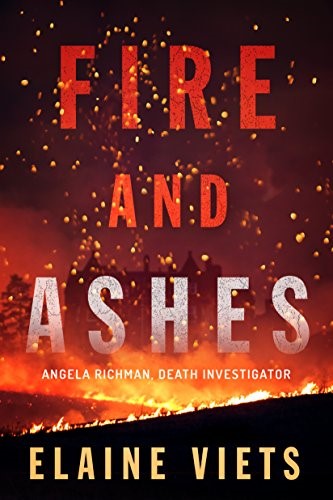
FIRE AND ASHES, my new Angela Richman, Death Investigator mystery debuts July 25. Pre-order the e-book for $3.99. It’s FREE for Kindle Unlimited. http://tinyurl.com/yawp64ku


First Page Critique: Legend of the Wild Ones

Photo courtesy of GoDaddy

Greetings and salutations, TKZers! Today a brave, anonymous writer has sent us the opening to a deliciously dark, supernatural tale. My comments are below. Hope you’ll weigh in, too.

Legend of the Wild Ones

Red covered the holly flour. A shadow was standing in the middle of the room red covering its hands, a corpse at its feet, a knife in its hand. The shadow leaned over the corpse and with its free hand checked the pulse of the body. Dead. Pleased the shadow walked over to the rope that hung next to the bed and pulled. It then sauntered back to the corpse, sat down next to it and waited.

At the other side of Woodrest Manor Ryker flew through the halls with a speed most humans would marvel at. His long blonde hair swishing behind him. His destination: the room of the master of the forest. He opened the holly door and for a while just stood their gawking at the sight before him. He shook himself out of his trance. No matter how many times it had happened he would never get used to this sight.

The room was basked in moonlight. In the middle of the room there was a big puddle of blood. In the midst of it lay a corpse with a shadow sitting next to it. Slowly the shadow turned around to face Ryker. Though its face didn’t show any emotion it’s ember eyes showed enough. They twinkled with a sadistic kind of joy, that send a shiver down Rykers spine. Slowly he began to make his way over to the dead body. As if approaching a wild animal, not breaking eye contact with the shadow for a second. He crouched down to check for a pulse, there was none. Sighing Ryker relaxed and looked at the shadow with questioning eyes. “So Kaenia how did he get in this time?” Anyone knew that whoever even dared to think about breaking into Woodrest would be killed. And trying to get into Kaenias room was only for the suicidal.

Dear Brave Writer:

There’s a handy quote from an unlikely quarter—President William Howard Taft—that all writers should keep in mind: “Don’t write so that you can be understood, write so that you can’t be misunderstood.”

After reading this opening scene a couple of times, I think I understand what’s going on. But it would be much clearer on a single reading with clarification and correct punctuation. Readers—this one included—will sadly stop reading very quickly if they have to work too hard to understand what’s on the page.

My interpretation: Ryker, of the long blonde hair, is a kind of factotum for Kaenia, the shadowy master of the forest (and perhaps for others, as well), at Woodrest Manor. Someone—a “he”— broke into Kaenia’s room, and was subsequently killed (possibly by Kaenia, but we’re not certain). Kaenia rings for Ryker, who attends right away. Ryker is sickened, but Kaenia is pleased with itself (if it is a supernatural creature—here no gender is implied). Ryker bravely questions Kaenia, and the reader is left wanting to know if it will answer. (Cliffhangers are always good!)

First paragraph:

Let’s talk about the first line: “Red covered the holly flour.” I’m not trying to be silly, but I was immediately brought up short. At first I wondered if Red was a person who was covering up holly flour. As in flour made from holly. But further reading told me that definitely wasn’t the case. I’m guessing “flour” is meant to be “floor?” (Typos happen to us ALL, and breed like rabbits. We just move on.) But then I’m left to wonder at the image of a “holly floor.” A holly floor sounds really, really painful. If this detail is terribly important, give it more weight. It might be woven from the finest, oldest holly trees in the entire forest. Then we’ll know it’s botanical holly, and that the room is very special in a way we might be curious about.

We don’t want to the reader to be at an immediate disadvantage. As writers, we have very strong images in our heads, but we need to interpret those images clearly for readers so that they understand very quickly what we want them to see. We are their eyes, but also their guides.

About the corpse: If we’re talking about a victim, it seems okay to me to refer to it as a body, but best to be more specific, identifying it as a “person” or “man” or “woman” or “creature,” as appropriate. It’s not a corpse until we know for a fact the creature is dead. So the shadow can lean over the creature, check the creature’s pulse, and then when the shadow discovers the creature has no pulse, the creature can appropriately be called a corpse.

Second paragraph:

“At the other side of Woodrest Manor Ryker flew through the halls with a speed most humans would marvel at. His long blonde hair swishing behind him. His destination: the room of the master of the forest.”

Perhaps:

“At the sound of the bell from the Master’s room, Ryker flew through the halls of Woodcrest Manor with inhuman speed, his blonde hair streaming behind him.”

Rather than the floating third person narrative voice the piece now has, you might consider keeping a tight focus on Ryker, who is the most natural character to act as observer for the reader. Beginning the story with his responding to the bell, or even opening the holly door to see the shadow standing over the body, will invest the reader in the story right off the bat.

Third paragraph:

The third paragraph has great interaction between Ryker and the shadow. I love the detail of him approaching the shadow as one might a wild animal.

“The room was basked in moonlight.” “Bathed” would be a more natural choice than “basked.”

“So Kaenia how did he get in this time?” This is confusing. The use of “he” implies that whoever is dead on the floor has broken in and been killed before. While this could be possible in a supernatural story, it needs to be clear if this is the case. If the victim is simply one in a long line of intruders, it should be stated differently. Possibly: “We need to know how they’re getting in here, Kaenia. Did you see where this one came from?”

Finally, Brave Writer, be sure to check your punctuation, including comma and apostrophe usage. There are many, many books out there, and lots of online resources. This website has free online rules.

Thanks for sharing your opening chapter with us!

Dear TKZers, what are your ideas for this piece?

Does The Wardrobe Make The Writer?

Photo purchased from Shutterstock by KL

A recently published book, Legendary Idols And The Clothes They Wore, by fashion journalist Terry Newman, is replete with stories about famous authors who are known for their trademark fashion styles. Newman argues that there is a close connection between a writer’s wardrobe and his or her writing persona.

For example, James Joyce, Mark Twain, and Tom Wolfe all favored variations on southern style white suits; Fran Lebowitz is famous for wearing men’s clothing;  Jacqueline Susann donned modish prints and styled her hair in a bouffant sixties flip when she became famous for writing glamorous Hollywood characters.

Sylvia Plath, on the other hand, used her wardrobe choices as protective camouflage.

“(Plath) wore precise, neat and prettily prim 1950s twinsets and print dresses that worked as a shield for her psyche,” writes Newman in her book.

Joyce Carol Oates “predated geek chic by decades” in the 80’s by wearing oversized, wiry glasses, Newman writes. Nowadays the glasses are scaled down somewhat, but they remain an important element in the author’s quirky-but-cool style. As an emerging author in the mid-80’s Brett Easton Ellis wore suits and favored “low end Hugo Boss” for nights on the town.

Question for our writer/readers: do you have a signature sartorial style? Does your personal style reflect or resonate with the characters you write?


Two 8-Hour Clinics… That Are a Click or Two Away

By Larry Brooks

Today I’m recommending two multi-episode televised dramas to writers seeking to witness and behold the core principles of storytelling – the very same knowledge available from the right writing teacher or book, or if not there—because you don’t believe in such silly things—then via a self-managed tutelage of your gut instincts… whatever gets those principles into your head.

The writing road can be long and steep until that happens.

For the writer unfamiliar with these principles, a great movie or series is simply just a great story well told, without much to take away. But what does well told even mean? It almost always means certain story forces have been leveraged, principles that are generic in nature (meaning, they apply to and enrich any story, in any genre) and totally available to the newer writer, as well.

Both of the programs I’m recommending are available on Netflix.

When you have those principles dangling in front of you, however they got there, seeing them unfold on a screen tends to reinforce what you’re seeing in the pages of the novels you love. It’s like watching pro athletes and analyzing down what you see… the next time you step on a court or field or tee box, you are already a step ahead of the less enlightened.

And thus a sense of storytelling craft begins to crystalize.

And on this we probably all agree: story sense is everything, because it is precisely what empowers any writing process.

To get the full effect you’re best served if you binge-watch these programs (the entire season is available within a single menu, episode by episode), which duplicates the experience delivered by a novel, chapter by chapter, gaining momentum while enveloping you in a vicarious, emotionally-resonant dramatic experience.

I’ve binged both of these series in the last ten days, and in both cases the learning leaps off the screen into your head… if you know what to look for.

One of them works. Stellar in every way. The other shows what happens when you take a concept that glows in the dark and then overplay characterization and theme—the twin Achilles Heels of the new writer—to the detriment of dramatic exposition and emotional resonance, thus incurring the wrath of critics and viewers alike.

The first 8-episode season of—Broadchurch—available on Netflix, is the one that works.

It’s a deep and resonant murder mystery, and it does everything right.

It opens big, sucking you in. Notice how the empathy card is dealt within minutes. You’re hooked. It quickly becomes a stage for a roster of diverse characters, each with diverse and compelling backstories that are played with just the right touch, with the three leads toying with our emotions wire-to-wire, and with a escalating sense of stakes and dramatic tension that sends you down blind alleys that make sense, some that are dead ends yet stand alone as their own mini-arcs, and all along plants clues you’ll only notice upon reflection.

This is exactly how a good mystery should unfold within the pages of your novel. Take notes, you might even want to watch it twice. Everything you need to know about how to make a murder mystery work is within these eight 47-minute Netflix episodes.

Broadchurch has a 92/95 score on Rotten Tomatoes if you need more than my recommendation.

As a footnote here… the cinematography will blow your mind.

The recent series Gypsy, also on Netflix, is the one that falls short of expectations.

Written by a new writer, it was developed by Netflix because of its thematic richness and the juicy layering of its protagonist (a therapist with her own agendas; warning, this is hard-R rated stuff). Which shows that even the folks at the top may not know the best way to spin a story.

Because in genre fiction, which this is (a psychological thriller), character and theme is not enough.

Gypsy falls into the new writer trap of simply showing the protagonist in a series of different situations, most of them compelling and dark (they play like short stories within the overall story arc), each one plumbing the depths of her self-interested desperation as she spins a web toward her own destruction… or not.

Critics had a field day with it. And rightly so. Nothing much happens in a macro-arc context (if you learn one thing from this series, it should be this), and there is very little suspense about where it is all headed. Yes, the rampant pandering to the forbidden works, you’ll come back for more… but you might find yourself yelling at the screen when the final credits roll after the last episode.

Rotten Tomatoes gave it a score of 27. Probably the lowest-rated project Naomi Watts, who is awesome in the lead but can’t save it, has ever been associated with. In fairness, it has a viewer score of 85, probably because of all the hot sex.

I encourage you to read the Rotten Tomatoes critic reviews (see link in last paragraph), which reinforces what I’ve said.

These televised mini-clinics are out there, more than ever.

Don’t like writing teachers and their books? This is your shot at a vertical learning curve, and you’ll get to say you did it all by yourself.

Not all that long ago it was popular among book lovers to, often by default, dislike the “movie version” of any novel that was adapted for the screen. It was cool to say that, it showed your literary nature. But that has become a hit-or-miss proposition… “The Help,” for example, was a note for note homage to the novel… and then on the other hand, there were the two Jack Reacher movies, which had Lee Child fans lighting up the internet.

I’ve always maintained that a film adaption is a rich opportunity for novelists. On both sides of the proposition. The good ones mirror the dramatic and character arcs, and thus, the writer has a means of seeing firsthand how theory translates to reality. And the bad ones can also be a worthy clinic, because you can observe where and how the core principles of storytelling that worked in the novel were compromised in the screenplay, which has only two hours to work with.

Lately, though, things have changed.

The emergence of 8 to 10-episode miniseries, mostly on cable channels (Breaking Bad, anyone?) and, perhaps most effectively, on HBO and Showtime, as well as a few of the British networks (which was the original source of Broadchurch; Gyspy was an original production from Netflix), is a gift to the emerging novelist looking to see these so-called core principles in action.

These programs are very different than what we’re used to in a television drama (like Law and Order or Castle, for example), which features the same conceptual setup each week, with a plot-of-the-week that is always fully resolved. But these newer 8/10-week stories, sometimes adapted from novels, or not, are literally linear in nature. There is no resolution until the final episode. In fact, the unfold almost exactly like how a good novel unfolds.

Downton Abbey played like a historical novel. Game of Thrones is a visual novel going on its sixth season. There are dozens of other great examples out there of the long-form, multi-episode, single-story format that is taking over the television business.

I hope you’ll take advantage of this opportunity to learn.

I think you’ll find that Broadchurch and Gypsy demonstrate two sides of the storytelling coin, quickly and clearly clarifying story essences and arcing techniques that may have seemed like theory before, but are proven to be very real and effective.

Your non-writer friends may not see it, but I’m betting you will.

Have you watched any other examples of this format on television? How did it inform your story sense as an author?


I Just Finished My First Novel And …

by James Scott Bell
@jamesscottbell

…I was hoping you could recommend an agent.

…I was hoping you’d have a look and tell me if I’m on the right track.

…I was hoping you’d tell me the best way to self-publish so it will have a chance to sell.

These are all variations on a theme in emails I’ve received over the years. I’ve answered each one, but calculate that in the cumulative expenditure of time I could probably have written a novel or two. I thought I’d write this blog post so the next time I get such an email I can simply send a link!

So … Hello, hopeful first-timer! And thanks for your email.

A few thoughts:

You are not ready for an agent. Most likely, that is, for an agent is not looking for a book to sell. An agent is looking for a writer to represent, one who will be able to produce quality books (plural). And by quality, I mean something that stands out, is bold and beautiful, but also has a reasonable chance to capture a significant market share. Can you say that about this first novel? And by the way, are you developing a second novel? Have you got a great idea for a third?

I can’t read your manuscript. I am a working writer, and there are only so many hours in a day. If you attend a conference where I am reading manuscripts as part of the deal, I will have a look at your first 3000 words or so. I can tell a lot about a writer in 3k…so, by the way, can an agent or editor. But outside of that limited venue, I just don’t have the time, and I don’t read for a fee. There are good teachers who do. One of them is blog brother Larry Brooks via Storyfix.

You are probably not ready to self-publish. You could be the exception, but generally speaking your first novel is going to need a lot of work. By the way, have you heard that writing is work? Making money self-publishing is work. Tossing up books that aren’t ready for prime time is not the way to make money. Becoming a professional about things is (and I use professional in the sense of doing productive things in a systematic way). You need a plan, and business sense. Here I can recommend a book.

But you’ve finished your first novel. Congratulations! That is a big step. There are more:

  • Let your manuscript sit for three weeks or so. Print out a hard copy and read it as if you had just purchased the book and it’s from a brand new author. Take minimal notes, but be looking for places where things slow down or don’t work for some reason. Mark those places.
  • Do any fixing you can. If something’s not working, try to figure out for yourself what to do about it. Books on revision, for example, can help you here. You will learn invaluable lessons that will serve you in the future.
  • Write a second draft.
  • Show your second draft to beta readers, people you know and trust to give you specific feedback. It helps to give them a checklist of questions, like this one.
  • Re-write again.
  • As this is your first novel, a pass from a good professional editor is a good investment.

You’re here? You’ve done all that? Good going! I trust, then, that you are at least halfway through the first draft of your next novel.

What?

Yep.

This is the work ethic of the career writer.

Repeat over and over the rest of your life.

Thank you for your email.

Keep writing.

JSB

Any other advice for such a one as this?

First Page Critique ‘Beware of Geeks Bearing Grifts’

Jordan Dane

@JordanDane

Bernie Madoff – DOJ photo 2009

The title of this anonymous submission gives us a clue on what this story might be about. At first pass, I had misgivings about mixing the tension of finding Granny’s body with the humor of this voice, but the title made me realize this is the voice of a grifter. I’ll have my thoughts on the flip side. Please share yours in the comments.

***

The pissy mood that sprang up when the supermarket was out of my favorite brand of salsa, evaporated at the sight of my grandmother sprawled at the foot of the stairs. I peeled the plastic bags off my right arm and dropped them on the needlepoint bench in the entryway.

“Nana?” My voice boomed in the silence of the house.

I don’t know why I said anything. It’s not like I expected an answer. I didn’t have to be a medic to interpret the sideways tilt of her head and the ninety-degree wrong way bend of her knee. There was also no need to call in the CSI team to figure out what happened. The old wood floors had soaked up most of the gin, but the outline of the shiny stain hinted that the broken glass had been full. The near-empty bottle near her head told me the glass had been refilled more than once. The cherry on top of this shit sundae was the bunched-up throw rug about halfway down the stairs.

I sat cross-legged, with my back against the elephant ear plant, sipping the dregs of her booze. At that moment, I wanted nothing more than a cigarette. I’d kicked in prison, it was easier than hustling, but if I had a pack right now, I’d be blazing up as fast as I could suck them down. I thought about calling the cops and even reached for my phone. Then, through the light liquor haze, I remembered the last time I’d voluntarily talked to the law. I’d stepped into the interrogation room and hadn’t seen daylight again for two years. I was an ex-con with a dead body on the floor and my name on all her financial accounts. I spun the bottle across the floor like a stone on a pond.

No cops.

Without a death certificate I couldn’t arrange a funeral, and even if I could, there was no money to give her the nice send-off she’d always wanted. Fixing the roof had drained most of the proceeds from the reverse mortgage. The words reverse mortgage sobered me up faster than a pot of hot coffee. The minute the bank heard that grandma had kicked they’d swoop in and take the house faster than I could say next-of-kin.

FEEDBACK

Overview: Feeling a little larcenous? After I imagined this guy coming across his dear Nana planted at the foot of the stairs (completely potted), and seeing him plop down for a drink to shrewdly think through his dilemma, I had to chuckle. Forget about a forensics team determining time of death and that his grocery receipt may give him an alibi, he’s an ex-con who would cause a good detective to put him at the top of his suspect list. What comes next for this grifter could be lots of fun.

INTRO – I would start with “Nana?” to focus on the inciting disturbance. With this being a grifter and the dark humor is apparent, I would take some of the first paragraph and add it as follows:

REWRITE example:

“Nana?” My voice boomed in the silence of the house. With my grandmother sprawled at the foot of the stairs, I forgave the supermarket for not having my favorite brand of salsa and set down my grocery bags.

POV – I’m assuming this is a man, but there is nothing that indicates this, other than reading between the lines. A way to remedy this is to have him chastise himself, using his own name, when he gets riled or finding another way to clarify gender before the reader gets too far into the narrative.

POINTS OF CLARIFICATION
1.) With the fall breaking her drinking glass, I can buy a shine left on the floor might indicate it was nearly full, but the author may want to describe the nearly empty gin bottle was unbroken. Did it have a cap on? Otherwise the shine on the floor may have come from the bottle tipping and spilling.
2.) The throw rug that caused her fall should probably be clearer that it was on the landing. I thought at first this was a stair runner or wondered why a throw rug had been on the steps.
3.) Why would she be carrying the bottle and the glass as she walked on the stairs? Was she going upstairs for bed and it was her usual habit to drink up there? She would have to be going up the stairs. I don’t know why she would be coming downstairs with the bottle and glass. Most people keep their booze downstairs.

WEIGHTY PARAGRAPHS
The paragraphs strike me as too many ideas lumped into each long train of thought. If the author broke up the elements, it would showcase the dark humor more.

REWRITE example:
I sat cross-legged, with my back against the elephant ear plant, sipping the dregs of her booze. I hated drinking alone. I raised a glass to Nana and craved a cigarette. Why the hell did I ever give up smoking? Oh, right, I remember. Selling smokes in prison had been easier than hustling.

I thought about calling the cops and even reached for my phone until deja vu cured me of stupidity. The last time I’d voluntarily talked to the law, I’d stepped into the interrogation room and hadn’t seen daylight again for two years.

I assessed my situation from a cop’s point of view. One dead body, check. One ex-con at the scene–that would be me–double check. Only one name on all the financial accounts of the dearly departed–yes, me again–trifecta check. DING! DING! DING! We have a winner.

FLOW – As I stated before, breaking apart a weighty paragraph might highlight the character’s thoughts better, show his dark humor, and highlight his train of thought flow better.

REWRITE (broken into 2 paragraphs):
Step one had to be no cops. Done, decision made. Step two, I needed a proper death certificate. Without legit paper, no funeral. Nana deserved a nice send off, but the funds from her reverse mortgage were nearly gone after fixing her roof.

Shit! The reverse mortgage sobered me faster than a good slap to the face. The minute the bank realized grandma had kicked it, they’d swoop in and take the house faster than I could say, ‘next of kin.’ Nana would’ve wanted me to have the house. That left me with only one choice.

SUMMARY:
I like where this is going, because it seems as if our ex-con has a scheme to grift grandma’s death into a fiasco. Reminds me of FARGO. I would encourage the author to get over the top with what this guy does. FARGO was based on real events. Keep piling on the absurd situation while you keep the protag deadly earnest with his situation. There’s load of potential for this plot and I love the dark humor of it.

DISCUSSION:
Where do you see this story going, TKZers? Constructive comments on the writing would be appreciated.

VIGILANTE JUSTICE (Available Now) $1.99 Ebook
In Montana, when a disturbing pattern of missing teens and college students falls under the FBI’s radar, former CIA operative Mercer Broderick fears the violent abductions are at the heart of a dark web of conspiracy that must be stopped and Brotherhood Protectors won’t be denied from the fight.

On Vacation

by John Gilstrap

Good morning, everyone.  It was my intent to have a compelling piece posted here this morning on the topic of marketing.  In fact, the title of the piece is “Always Be Marketing.”  But here’s the thing: I’m on vacation, and the current draft kind of sucks.

So, rather than posting something that is sucky, I thought I’d take this week off.  See you in two, with a well-considered and edited piece on marketing.  Happy Independence Day!

Do You Have the Title Gene?

Purposely bad cover created by my sister Kelly to go with bad title

By PJ Parrish

Let me run something by you, just for your opinion. Which of these titles grabs you for a thriller/mystery?

Somebody’s Daughter
Hunger Moon
A Walk in the Woods

We’ll get back to those in a second. But now, let’s talk about one of the most important things you need to succeed in this business. Forget talent, forget perseverance, forget craftsmanship. Even forget luck. I’m thinking today that what you really need is The Title Gene.

Okay, I am being a little flip here (That happens when you’re coming off a bad writing day and no sleep). Of course you need all those other things. But I am beginning to think that you just can’t discount having the knack for great titles. It’s a different talent than book writing. It’s akin to headline writing in journalism. (I once made my living doing this). You have to sum up in one to five words the heart and soul of your story. And make it sound sexy, exciting and oh-so different from every other book screaming for attention on the shelves.

I think we give good title. But I tell you, it is getting harder and harder to come up with something fresh in the crime writing business. How many variations are there on all the usual buzzwords — death, black, darkness, grave, murder, cold, midnight, evil? You get the point.

Titles are a little bit like bras. Finding the right one is a deeply frustrating, uncomfortable exercise and you have to try on a bunch of them to find one that really fits. (Men, you’re on your own here — jockstraps?)

Our first book Dark of of the Moon began life as The Last Rose of Summer (Yuck…and too romancy) and mutated into Circle of Evil (not bad but a little heard-that-before) before I found the Langston Hughes poem “Silhouette” that inspired it.  The line was: “Southern gentle lady, do not swoon. They’ve just hung a black man in the dark of the moon.”

Our third book Paint It Black? Well, just listen to the lyrics of the Rolling Stones’ song and you get the shivers. We went back to the Stones for our first stand alone thriller, in their song “Too Much Blood.” We wanted to use that as our title but our editor nixed it and came up with The Killing Song.  I still like the Stones title better.

Then there’s our book Thicker Than Water. It’s a good story, one of my faves, but man, what a lousy title. And guess what? It was our worst-seller. Its original title was Flesh and Blood but Jonathon Kellerman had a book coming out the same time with the same title and our editor told us, “Your book will suffer.” Lisa Gardner had a book called Gone, same title as Kellerman. I wonder if she suffered?

We followed up with Island of Bones. Can’t go wrong with “bones” on a title and frankly, we hit on the title before we had a plot for this one. It sold really well.

Then came A Killing Rain. We didn’t have a title until we were almost done, and while writing a synopsis for the marketing people, I wrote: “The story takes place during a Florida cold snap, what the farmers here call a killing rain.” Well, duh. But here’s a postscript. M Continue reading

From Idea to Novel

Starting a new project is always nerve wracking – there’s the empty page for starters but then there’s also making sure that the idea is sufficient to form the foundation for a complete novel. Generating ideas has never been my problem – a number pop into my head each day and some are sufficiently intriguing that I jot them down in my ‘ideas book’ to see if they will gradually begin to take shape in my mind to form the foundation for a story. Many ideas fall by the wayside at this point – because while they interest me, they never really coalesce into a premise that can sustain a novel. Even after that, I’m consumed with doubts…although I’ve really only had one story die after I’d finished the first draft because I realized the premise was too convoluted and confused (the idea, though still holds promise!).

I’m about to embark on a new WIP and I’m at the doubt-filled stage of wrestling with a new idea. Since I have other projects in various stages of the submission process, it’s definitely time to knuckle down to a new manuscript but in this early stage of the creative process I have to grapple with how to formulate an idea into (hopefully!) a great story.

My process (such that it is) usually goes something like this:

  • Light-bulb moment – new idea starts to whip round in the brain and, of course, I think it’s awesome.
  • Write down idea in vague terms – lots of questions and possibilities…
  • Start research (almost always involving some historical period/event)
  • First doubts – which way to proceed? More questions than answers? Do I have enough for a novel??
  • Begin to outline a proposal to help shape the idea into a real concept and (ultimately, I hope) the premise for a novel. This is usually when the second round of doubts start to hit… Sometimes I end up with multiple proposals revolving around the same initial idea as I fumble around trying to decide if this project really is ready to get off the ground.
  • More research = more procrastination and sometimes panic that whole idea really sucks…
  • Send outline to beta readers for feedback – see if it’s intriguing and clear enough (my issue is always one of complicating rather than simplifying a story!)
  • After feedback – sometimes involving a choice between proposals – I send to my agent for her initial read/buy in. This is where I have to formulate the log-line/blurb so I can succinctly describe it to her and others.
  • Once I have agent buy-in I start on an outline and the first chapters to establish the POV/Voice for the book (I spend a long time on the first chapters feeling my way into the book as well as drafting an outline of where I’m headed with the plot/characters)
  • More research (I like to hide between the pages of history books!) = procrastination
  • Finally begin draft!

So TKZers how do you go from idea to first draft? Do you spend time, like me, formulating the premise and making sure your idea is sufficient to sustain a novel? Or do you just set off writing from the get go with the confidence that it will all come together and work out in the end? What’s your process?