Hometown


Photo by Pixabay


This week I’m visiting my hometown of Cincinnati, Ohio. I only lived here for the first six years of my life, but a child’s first five or six years is a foundation for what’s to come. It’s a place of literal firsts, like first steps, first car ride, first pet, first friends, first happiness, first scrape, first heartache. And those firsts may not be consciously remembered, but they inform who we are.

This city has always been a touchstone for me, with plenty of family here to reinforce my memories. When I’m here, no matter what I’m doing or seeing, I feel a sense of permanence and history. I’ve lived other places for much longer periods of time, but Cincinnati is special.

As writers, we can’t escape having our earliest experiences inform our work. I set two of my published short stories and my second novel, Calling Mr. Lonely Hearts, here. As I wrote, I mentally traveled over the city’s many hills, recalling its striking architecture, its many bakeries, old neighborhoods with beautiful parish churches, and a baseball stadium or two. And then there’s the river. Always the river.

Calling Mr. Lonely Hearts and the stories set in the city are dark, suspenseful works. The characters are (mostly) human enough. But a lot of each story is wrapped up in my worries and experiences of being very shy, and being Catholic, immersed in a culture built on Original Sin and ancient mysteries. The child I was was very present as I wrote. And while the sum of our experiences is in every word we write, those early experiences have been with us the longest.

TKZers, please us about your hometown and how/if it affects your writing.


The Quiz Question That Inspires Fear

Photo purchased from Shutterstock

“Describe the theme of this novel” is one of those pop quiz questions that can inject terror into the soul of an eighth grader in English class. Sometimes even an experienced writer can struggle to identify a specific theme in his or her story, especially during the writing process.

A story’s theme is the fundamental and universal idea behind its plot. If a plot could be compared to the body of a race car, the theme would be the engine turning its wheels. In King Lear, for example, one of its main themes is authority versus chaos.

Theme vs. Subject

We should not confuse a story’s subject with its theme. The subject of a story would be a one-word descriptor of its main idea. “War”, for example, would be the subject of many stories. A theme would be an opinion related to that subject, such as “In War, everyone loses.” Joe Moore wrote an excellent post a while back about how to distinguish between a story’s subject and its theme.

Some writers approach theme almost as an afterthought. But having  a well-crafted theme adds dimension and depth to our stories.

Using a character-driven approach to develop a theme

I like to use minor characters to explore a story’s underlying theme. I call this method the “360-degree” approach to developing theme. In this approach, the secondary characters represent various aspects of the main theme, and they act as foils to the main character’s experiences. For example, the theme of A KILLER WORKOUT was “Mean Girls Suffer Last”. That theme was explored through the story arcs of several characters. One woman had been victimized by bullies in her youth; another was a bully. Another character was a protector of abused women.  Each of these characters explored different facets of the subject of bullying and  emotional abuse.

What’s your theme?

How do you explore theme? What’s the theme of your WIP? How are you working that theme into your narrative?

Significant Sites

When my last blog post was posted, I was on may way to Kraków in Poland – a place I didn’t know a great deal about but which I’ve always associated with the Second World War and the Holocaust (for obvious reasons). I didn’t know much about the old town or Wawel Castle (both of which I visited) but I knew my visit wouldn’t be complete without visiting the former Jewish quarter, the site of the Jewish ghetto, and Schindler’s enamel factory. As a writer of historical fiction, I find visiting significant historical places has a powerful, often visceral impact which informs not only my writing but my sense of self. On this visit, it was my trip to Auschwitz-Birkenau that left the greatest impression.

I can’t say it was an easy decision to even make the journey to Auschwitz but both my husband and I felt it was a necessary pilgrimage to make. I’ve never done extensive research on the 1930s but, as my twin boys were studying the Holocaust this last school year, I revisited Schindler’s List by Thomas Keneally and read for the first time Elie Wiesel’s memoir Night (the book my boys were required to read as part of their Holocaust unit). This helped, but it in no way truly prepared me, for what I would experience visiting Auschwitz-Birkenau. I was shocked by the immediate physical effect stepping into the camps had on me. I felt nauseated, upset, horrorified as well as, inexplicably, anxious. The initial, almost casual attitude of many of visitors angered me as did their desire to photograph everything – even the most horrific and terrifying aspects of what we saw (would you really show friends photographs of the ruins of the crematoria?) but I did notice that as the tour progressed a somber silence fell amongst even the most chatty groups of tourists. By the time we had completed our visit to Birkenau, you could sense that everyone had been profoundly affected by what they had experienced (and rightly so).

As a writer of a historical fiction, the act of visiting sites such as Auschwitz-Birkenau also gives me a renewed sense of purpose to my work. In many ways, though, I felt that my humanity demanded that I make this visit. I left feeling a renewed sense of outrage, horror, and also – after our visit to Schindler’s factory – hope.

So TKZers, have you ever visited a site that left a similarly lasting impression – one that affected you not only as a writer but as a human being?

It Helps If You Can Write

by James Scott Bell
@jamesscottbell

“For a long time now I have tried to simply write the best I can. Sometimes I have luck and write better than I can.” – Ernest Hemingway

There’s an old joke about a guy who gets paired with a priest for a round of golf. They hit the first green in regulation. The priest has a thirty-foot putt with a big break. He crosses himself and drains the putt.

The guy misses a five-footer.

On the next green, the priest crosses himself and nails a fifteen footer. The guy misses his.

Same story on the third green.

As they’re about to tee off on the fourth hole, the guy says, “Father, I noticed what you do before you putt. You think if I crossed myself I’d start making mine?”

The priest says, “It couldn’t hurt, my son.”

On the fourth hole the guy has a straight ten footer. He crosses himself, putts, and misses.

“So what happened?” he asks the priest.

And the priest says, “Well, it helps if you can putt.”

Which is how I feel about the whole how do I sell more books issue.

For many writers out there, unleashing a plethora of fancy marketing tricks is like crossing yourself. It can’t hurt. But to sell and keep selling, it helps if you can write.

The data backs this up. For example, BookBub recently put out an infographic based on a survey of their subscribers. Natch, most of them use BookBub to select new titles. But from there, two old reliables assert themselves as the largest slices of the book-buying pie.

The biggest factor is word of mouth. Overwhelmingly (and it has always been thus) people buy books they hear about from trusted sources. This usually means someone they know and can rely on, but also includes online communities such as Goodreads and well-trafficked blogs.

The other big slice is when an author someone has enjoyed in the past comes out with a new title. Once this happens a couple of times, the author has made a fan.

And how are fans created? By really good reads.

The $64,000 question (for those of you who remember the cultural derivation of that term) is this: What constitutes a really good read?

I am going to tell you.

It depends.

Thanks for stopping by!

Okay, here’s what I mean: It depends on your genre, your voice, your professionalism. It means you are able to write a book that not only meets expectations, but in some way exceeds them.

In other words, not just the “same old.” Because we’ve got too much of that. It means adding your own special something to the story.

I think of the old pulp writers. Who were the ones who caught on and were able to sell issue after issue, book after book?

Raymond Chandler, who could write description and dialogue like a trench-coated angel.

Erle Stanley Gardner, who could create twisty-turny plots featuring the smartest lawyer in the world.

Robert E. Howard, whose voice was as big and bold as the Texas winds that raised him.

Max Brand (real name: Fred Faust), the most prolific of them all, who elevated the standard Western into something that reaches into the soul.

I could go on, and we all can create our own list of favorite writers. What they will have in common is storytelling ability and “something more” that resonates with us.

Marketing only gets you an introduction. It’s your writing that does the heavy lifting. Which is why I offer a free novella to those who want to sample my wares. That’s a fair exchange. It’s like an arranged lunch date. As long as I don’t have broccoli in my teeth, maybe a reader will want to read more of my stuff.

So to you writers just starting out, or are trying to get a foothold in the market—keep learning and growing. Yes, you’ll need to lay a marketing foundation (e.g. a website, a bit of social media presence).

But keep the main thing the main thing: Always strive to write your best and sometimes you’ll have good luck and write better than you can!

What Character Age Do You Find Most Challenging to Write?

Jordan Dane
@JordanDane

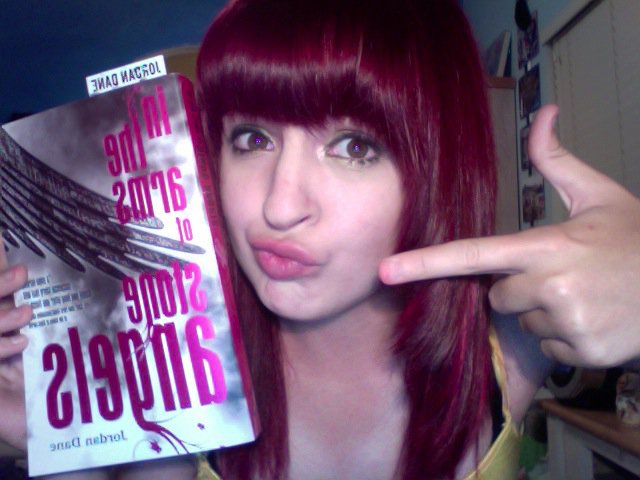
Yes, how did she get my book title backwards? MAGIC

I’ve written a few sub-genres, but the most different or diverse ones I’ve attempted were writing mainstream thrillers and young adult novels. I’ve always loved reading crime fiction (my big umbrella), so my comfort reads were always any sub-genre of adult crime fiction novels from espionage thrillers to police procedurals to romantic suspense. Although my YA books were suspense oriented, the YA voice was a real departure for me. It took quite a bit of reading it and researching the craft, but since I had grown to love these cross-genre books as a reader, the idea of writing them hit me hard and influenced me. More on that later.

When I first started writing in 2003, my main characters were in their thirties and maybe edged into their forties when I first wrote original mystery suspense novels. The first books I sold were in my comfort reads of crime fiction, yet with a cross-genre approach because that’s the kind of stories I liked to read. With as many books as I devoured as a reader, I figured I was the market. I wanted to write the books I would read.

In 2009-2010, as I sold my first YA novels and series, writing for teens influenced even my adult writing and my characters drifted downward into their mid to late twenties. Of course, my YA books covered teen protagonists, generally 16-18+. I’ve never written New Adult (characters in their early twenties or college age). I’m not sure why that is, except to say that I can relate more to my teen formative years (my rebellious teen self) and writing my other characters to be 25-35ish years old. (It’s like the lens of my creative world had focused on an age I had fun living.)

I had many ways to research my teen voice, including eavesdropping on teens in groups and using my nieces and nephews as lab rats. My aspiring author niece worked with me on my first YA novel – In the Arms of Stone Angels – and we had a blast. But that writing definitely influenced my other suspense books and I noticed the ages of my characters had dropped. On gut instinct, I was targeting the ages I thought my readers wanted to read about so I could bridge the gap between those reading my YAs and the ones who had transitioned into my adult books. From what my readers have said, that plan worked and my YA readers transitioned into my adult books and my adult readers seemed to enjoy my crime fiction YAs. Win-win.

I wrote one novella length story from the perspective of an older woman in her late 50s. I wrote her with an honest truth and I loved being in her head, but I wasn’t sure how readers might take her so I never wrote a repeat.

I’d like to hear from you, TKZers.

For Discussion:

1.) Have you ventured out of your writing comfort zone with trepidation only to learn something new where you grew as a writer? Please share and explain.

2.) What character ages do you find the most challenging as a writer? How did you get better at it? What resources or advice can you share?

3.) Is there a main character age that you DON’T like to read about? Do you find that your reading preferences gravitate toward a certain character age?

But Does It Sell Books?

By John Gilstrap

I just returned from a fabulous week in New York, communing with fellow writers at Thrillerfest, the annual confab of the International Thriller Writers Association (ITW).  As always happens when two or more writers occupy the same space, the conversation turned to strategies to employ for the purposes of selling books.

There’s universal agreement that a writer needs a platform from which to launch his or her marketing campaign.  There’s equal unanimity that social media accounts are the way to go.  Dutifully, I’ve established my Facebook page, my Twitter feed and my Instagram account.  In addition, I have a YouTube channel, and this biweekly blog in TKZ.  I attend conferences, teach seminars when opportunities arise, and in general make myself as accessible as reasonable security and privacy allow.

For the most part, I enjoy the marketing side of what I do.  I’m kind of a Type-A personality to begin with so I enjoy the interaction with people, even if most of it is virtual.  If the invested time and effort didn’t sell a single book, I would probably do a lot of that stuff anyway.

So, here’s my first question for the group: Forgetting what the pundits proclaim to be immutable fact, what is your experience?  Do you read blog posts in this space or others that inspire you to buy books by authors you otherwise have not read?  Do Facebook travelogues or Twitter insights make you actually feel so much closer to an author that you’ll plop down some bucks for the latest book?

My second question is closely related: Have social media posts ever driven you away from an author you have otherwise been inclined to read?

My answers to my own questions are yes and yes, particularly with regard to blog posts and Facebook.  Excepting the nonfiction blogs that I lean on for research, I will occasionally read a post from a fiction writer whose voice intrigues me enough to take a poke at the fruits of his or her imagination.  And, sometimes an ill-informed political or social screed will push me to place an author on my never-again list.  I don’t care what side a FB friend takes on a position so long as it is well-argued.  When the name-calling starts, I’m out.  (And that’s exactly why I don’t understand why anyone in the entertainment business chooses to write screeds.)

Now, fair warning: When this post goes up, I will be doing my best torpedo impersonation inside the tube of an MRI machine to diagnose the source of pinched nerve in my neck.  Because I am a raging claustrophobe, I expect to be in a narcotic haze for some of the day, and past experience has demonstrated that it’s best to stay away from the Internet and emails while drugged.  Thus, I will likely not be a part of the conversation.


How Pickle Ball Helped Me
Up My Writing Game

By PJ Parrish

It’s not easy being a new cucumber.

I think about this every time we here at The Kill Zone critique another First Page submission. I really feel for the writers who send in their work for us to comb over because it’s not easy putting yourself out there when you’re just starting out. Which is what a “new cucumber” is.  When I was a kid, that is what we called the kid who came into the game last, the one who didn’t know the rules, the one who was smallest, slowest or just plain didn’t get it yet.

I was often a new cucumber. It wasn’t so bad when I played baseball because I can switch-hit. But dodge ball…geez, I’m just thankful I got out of fourth grade alive.

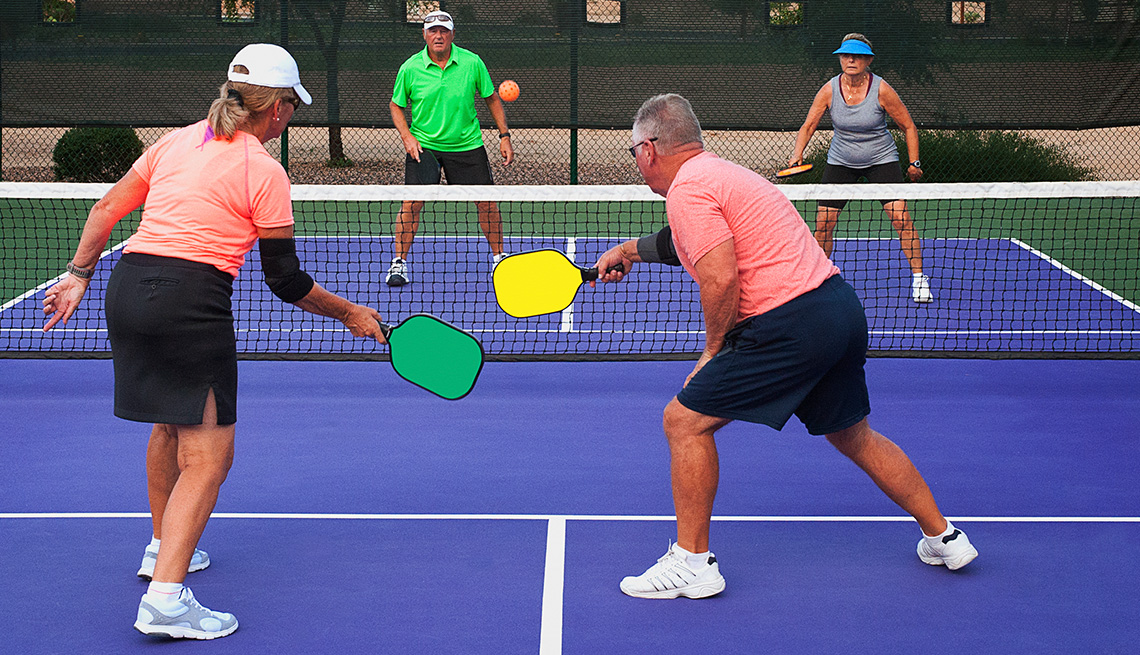
I am a new cucumber at pickle ball.  I started playing this game (the fastest growing sport in America!) this summer as a way to get some exercise when my knees started going on me.  Pickle ball is a mix of tennis, badminton and ping pong. It’s played on a small-sized tennis court with paddles and wiffle ball-like things. It’s a blast and great for old farts like me. It takes skill, strategy, stamina, heart, patience….and lots of practice.

Pickle ball looks easy, like anyone could do it. Until you screw up your courage, put yourself out there, and try it. Pickle ball is a lot like writing.

I play every day now, 9 to noon, with a group called The Friendly Pickle Ballers. I am, oh, probably the third-worst person on the courts, but all my teammates are kind and patient, teaching me the game, because I think they realize I am determined to learn. Which is sort of what we do here at TKZ with our First Page Critiques and posts. It’s a little community where any new cucumber can find help and solace. One of my favorite partners is Tom, a retiree who can smash and dink with the best of them. The other day, I learned that Tom is trying to write science fiction. He asked for some advice and I told him to come to TKZ, which he does now. I also told him that learning to write fiction is pretty much like learning to play pickle ball. And it’s helped me remember some stuff we talk about a lot here but that’s worth repeating:

  1. You need to learn the rules. Pickle ball has some funky rules that you need to know before you set foot on a court or you end up wasting time — your own and your fellow players. Ditto for writing, right? Why flail around trying to write a bestseller if you haven’t bothered to even learn the basics of the craft?
  2.  You must be creative.  Yes, learn the underpinnings of what makes for good fiction. But don’t be afraid to try something different. You might surprise yourself.  Like I did when, being a vertically challenged person, I learned to lob over the tall men.
  3. Play with folks who are better than you are. I’ve said this a million times, but don’t get sucked into a bad critique group, which can be pity-parties, bad for your self confidence or they just reinforce your worst habits.  Find folks who can help you up your game and listen to them. My friend Tom has taught me to…wait for this piece of wisdom!…keep my eye on the ball at all times.  Which is what Jan Burke told me once at an Mystery Writers of America meeting when I was grousing about James Patterson.
  4. Stay out of the kitchen.  In pickle ball, The Kitchen is the area just in front of the net and the rules say you can’t smash the ball if you have even one toe in there and you can’t dribble a serve into The Kitchen. I’m not sure what this says about writing except maybe don’t make really stupid mistakes.
  5. Hit hard along the lines.  If you are writing genre fiction (and I don’t happen to think that’s a derisive term), learn everything you can about that type of novel. Read extensively in your genre, be it sci-fi, thriller or YA.  Because you need to be smart about what’s going on in the market.  But then, learn to play hard at the edges of those lines, because the best genre fiction is the stuff that honors the past but points to something in the future. I have, for the record, a heck of a back hand along the line in pickle ball.
  6. Don’t always go for the smash shot. Pickle ball attracts a lot of tennis players. Many of them come in thinking they can beat up on the old guys by smashing the ball down their opponent’s throat. (This is sort of like literary types who try to write thrillers and wiff.) Trouble is, the pickle ball has about as much bounce as a dead chicken. And the smashers quickly learn they will be dinked to death (an ultra soft shot that just clears the net) by 82-year-old women named Norma.  And yes, I play with a real Norma. She’s a killer. For writers, not going for the smash shot means not trying to hit a home run on your first attempt, ie a bestseller. You’re doomed if you try because you’re aiming at a constantly moving market-target.  Just go out there in the beginning and have fun.
  7. Try the dink.  This is a money shot in pickle ball, a sweet little “dink” across the net that causes the smasher-guys (sorry, they are almost always guys) to race desperately to the net and sometimes do a face plant on the asphalt. So, if you feel lost in the middle of your 400-page novel, set it aside and write a short story or even a novella. You might find your rhythm again. It’s good for the confidence.
  8. Practice, practice, practice.  When I first starting playing, I went only once a week. Guess what, I didn’t get any better.  I got discouraged and depressed. To say nothing of putting on weight. When my friend Linda came to visit up here in Michigan, she dragged me to the Friendly Pickle Ballers.  I was terrible at first. But I am quickly getting better. Why? I go every morning now. Do you write every day? Why not?
  9. Keep score but don’t obsess about it.  Sure, I want to win in pickle ball, but right now I mostly lose. I’m trying to learn that this is okay.  For writers, I think the point is you should keep an eye on your sales, your Amazon ranking, your reviews, etc. But you don’t want to let it get to you. Messes with your head…
  10. And last but not least, don’t beat up on yourself.  This has been the hardest thing for me to learn in pickle ball because I am sort of competitive and feel like crap when I let my team mates down. But as my fellow players keep telling me, “there’s no I’m sorry in pickle ball.”  So for you writers out there, yeah, you will fail.  You’re going to hit a lot of balls into the net. Your serves will go wide. You’re going to get rejection letters. Whatcha gonna do? Pack up your pickle ball and go home? No. You’re going to put on the old sports bra, get back out there and try again. You will get better. You will get good. You will get published. Because even a new cucumber can become a pickle baller.


Can Creativity Pass Through Generations via DNA?

By SUE COLETTA

This video sent me down a rabbit hole of research.

As you can imagine, my writer brain lit up. Turns out, the research was even more fascinating than the video. A scientific study showed that a traumatic event could affect the DNA in sperm or eggs and alter the brains and behavior of subsequent generations. This breakthrough is an important discovery in the fight to treat phobias and anxiety.

Do you fear spiders, heights, or small spaces for no apparent reason? This may explain why.

Neuroscientists trained mice to fear a cherry blossom scent prior to copulation. While breeding these mice, the team at the Emory University School of Medicine looked at what was happening inside the sperm. Incredibly, the sperm showed a section of DNA, responsible for sensitivity to the cherry blossom scent, was indeed more active.

The mice’s offspring, and their offspring — the grand-mice, if you will — were all extremely sensitive to cherry blossom and avoided the scent at all costs, despite never experiencing a problem with it in their lives. They also found changes in brain structure.

In the smell-aversion study, scientists believe either some of the odor ended up in the bloodstream, which affected sperm production, or the brain sent a signal to the sperm to alter the DNA.

The report states, “Our findings provide a framework for addressing how environmental information may be inherited transgenerationally at behavioral, neuroanatomical and epigenetic levels.”

Enivronmental change can also critically affect the lifestyle, reproductive success, and lifespan of adult animals for generations. Exposure to high temperatures led to the expression of endogenously repressed copies of genes — sometimes referred to as “junk” DNA. The changes in chromatin occurred in the early embryo before the onset of transcription and were inherited through eggs and sperm. In mealworms, they traced the DNA changes through 14 generations.

Why mealworms? It’s quicker to test generation after generation on an animal with a short lifespan.

Another study showed that a mouse’s ability to remember can be affected by the presence of immune system factors in their mother’s milk. Chemokines — signaling proteins secreted by cells — carried in a mother’s milk caused changes in the brains of their offspring, affecting their memory later in life.

Memories are passed down through generations via genetic switches that allow offspring to inherit the experience of their ancestors. These switches, however, can be turned on and off, according to Science Daily. Scientists have long assumed that memories and learned experiences must be passed to future generations through personal interactions. However, this research shows that it’s possible for some information to be inherited biologically through chemical changes that occur in DNA.

Creativity counts as a learned behavior, but I also believe it goes deeper than that. Think about how deeply you feel about your writing. For most writers I know, when we’re “in the zone” our soul does the writing. One could argue we’re merely vessels who type. Have you ever read a passage that you don’t remember writing? Our ability to create burrows into the core of who we are, and thus, leaves an indelible mark. How, then, can we not pass that part of ourselves to future generations?

How many of you have creative folks in your family tree, be it writers, artists, musicians, singers, or other forms of creativity?

To test my theory, I asked the same question to my fellow TKZ members. Please note: this revelation occurred to me yesterday, so I’ve only included the members who saw the email in time. Hopefully, the others will add their responses in the comments.

For those I did catch on a Sunday, check out what they said …

Elaine Viets said, “My late cousin Kurt was a talented wood carver, and my grandfather was known as a great story teller in the local saloons.”

I love wood-carved pieces. The smell, the texture, the swirl to the grain. It’s not an easy creative outlet to master.

Jordan Dane comes from a long line of creative people. Here’s her answer: “My paternal grandfather was a writer for a Hispanic newspaper. My dad was an architect and artist (painter), my older brother went into architecture too, specializing in hospital design. My dad is a real renaissance guy. He could sculpt, paint, draw and he has a passion for cooking. My older brother Ed and I share a love for singing. I sang in competitive ensemble groups. He played in a popular area band and has sung in barbershop quartets. My mom was the original singer in our family. She has a great voice.”

Joe Hartlaub has two talented children. Here’s what he said, “Annalisa Hartlaub, my youngest daughter, is a photographer. My oldest son Joe is also a highly regarded bass guitar player locally.”

He’s being modest. When I checked out Annalisa’s photographs on Facebook and Instagram they blew me away. A photography project she created at 15 years old also went viral.

When I prodded further, Joe added, “My maternal grandfather played guitar, but we never knew it until we came across a picture of him taken at a large Italian social club gathering where he was strumming away. He was in his twenties at the time. As far as the source of Annalisa’s talent goes…her mother is a terrific photographer. The conclusion is that Annalisa gets the form of the art from her mother and her creativeness from me.”

Laura Benedict stunned me with her answer. “Someone doing genealogy linked my maternal grandfather’s family to Johann Sebastian Bach.”

Talk about a creative genius!

Laura added, “I remember a few very small watercolors that I believe my maternal grandmother painted. Trees and houses. But while we were close, we never talked about art. My aunt also did some drawing.”

John Gilstrap also came from a long line of creative people. Here’s his answer…

“My paternal extended family has always been fairly artistic.  My grandfather, I am told–he died long before I was born–had a beautiful singing voice, and for a period of time worked whatever the Midwest version of the Vaudeville circuit was.  My father, a career Naval aviator, wrote the Navy’s textbook, The Principles of Helicopter Flight, and had two patents on helicopter cargo handling operations.  He passed away in 2006.

My brother, four years older than I, plays a number of instruments, but his primary proficiency is the piano.  His daughter is a very accomplished cellist who makes her living as the director of a high school orchestra that consistently kills at competitions.
Closer to home, my only musical talent is to be a passable tenor in the choir.  For years, I sang with a choral group that performed all over the DC area, including a number of gigs at The Kennedy Center.  As a high schooler, our son was a pretty good cellist, but he walked away from it in college and never really looked back.”


Although I wasn’t able to catch her in time, PJ Parrish is the sister team of Kris Montee and Kelly Nichols.

As for me, my maternal grandfather was a highly regarded artist (painter) in his time. My mother was a beautiful writer, even though I never knew it while she was alive. After she passed, I discovered notebooks full of her writing.

So, can creativity be passed through our DNA? Judging by this small pool of writers, I find it hard not to entertain the possibility.

I’m betting the same holds true if I expand the test subjects to include you, my beloved TKZers. How many of you have creative folks in your family tree?
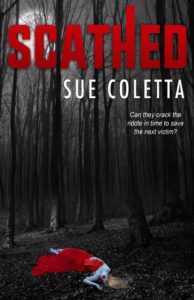
On a picturesque fall morning in Grafton County, New Hampshire, a brutal murder rocks the small town of Alexandria. In the backyard of a weekend getaway cabin, a dead woman is posed in red-satin, with two full-bloomed roses in place of eyes.

In her hand, a mysterious envelope addressed to Sheriff Niko Quintano. Inside, Paradox vows to kill again if his riddle isn’t solved within 24 hours.

With so little time and not enough manpower, Niko asks his wife for help. But Crime Writer Sage Quintano is dealing with her own private nightmare. Not only did she find massive amounts of blood on the mountain where she and her family reside, but a phone call from the past threatens her future–the creepy mechanical voice of John Doe, the serial killer who murdered her twin sister.

Together, can Niko and Sage solve the riddle in time to save the next victim? Or will the killer win this deadly game of survival?

Pre-order for 99c and save! Releases July 25, 2018. Want an early peek? Read opening chapter HERE.


 

Creating Tension Between the Lines

by James Scott Bell
@jamesscottbell

Another first page for us to analyze today. Note: Davina is not the title of the book, but the name of a first-person narrator. The author intends to switch POVs with other characters, and put the name at the start of each chapter.

Davina

      Someone once said nothing good happens after two am

      I try the familiar number at 3:10.

     Where was she? My sister’s an insomniac like me. She promised to call, the big move slated for yesterday. Pick up, damn it. Six rings, seven. I click off and pace, picking up and replacing my hairbrush, the phone, a bottle of baby aspirin, an inch-high silver tree with roots spreading out so it will stand. That one I keep hold of, cradling it in my palm, where the lines resemble roots.

   At 3:30, I try again.

   She answers on the sixth ring. “I didn’t,” she says. “I don’t think I did. I wanted to, but I wouldn’t. Would I?”

   Click, connection broken. What has she done or not done? I call again, get the annoying voice telling me the subscriber is unavailable.

   Off and on for four hours, I call, no answer. The little tree’s still in my palm, I can’t seem to put it down. The last present my father gave me, before he died and left Marissa and me alone with Mother. All these years and no sign of tarnish.

   At 7:30 I call Nate. He lives in the cabin next to ours. “Marissa hung up on me. She sounded weird. You have any idea what’s up?”

  “Trudy’s dead and the sheriff thinks Marissa killed her.”

  I drop the phone, the silver tree, clutch my hair in both hands. Marissa, what have you done? My hands shake, two tries to tap the speaker icon. “How, why?”

   Where’s my tree? Must have fallen on the floor.

    “Trudy went on the deck. The rail gave way where the porcupines gnawed the post. Last night, early morning, I guess.” Nate’s voice swells, an announcer who’s come to the juicy part. “I heard the sheriff talking to the ME. He thinks Marissa made the porcupine’s damage worse, or maybe just pushed her.”

     “Mother was deaf, mostly blind. had trouble walking. An accident waiting to happen.” I hear my voice rising, but can’t stop it. “She probably just fell.”

 “Not what the sheriff thinks,” Nate says. “You should come.”

***

JSB: The author has begun with a disturbance, which automatically puts this page into the “highly promising” category. Over the course of time here at TKZ we’ve seen two common errors popping up on these first pages: openings with characters alone, thinking or feeling; and loads of exposition and/or backstory.

But this page starts with the narrator, Davina, trying to get hold of her sister late at night. When she does, the sister sounds “weird.” Then she finds out the very bad news. Bad news is a good choice for an opening!

Now let’s render it in the most effective manner.

The first line seems superfluous to me. The second line is action, and I’d start there. Tweak it a bit. It’s 3:10 a.m. when I try the number again. 

I like the details of the next paragraph. It helps us feel what the narrator feels. The pacing, the anxiety. Specificity of small details is something many new writer’s overlook. Not so this author.

Next, the sister answers and gives her odd response. To this point, I’m right with the author.

Then:

Click, connection broken. What has she done or not done? I call again, get the annoying voice telling me the subscriber is unavailable.

Here is where a little craft will pay off with large dividends. Cut this line: What has she done or not done? We don’t need it. It’s explanatory. Never explain when what’s actually happening on the page. We know this is what the narrator is thinking; we don’t have to be told.

Off and on for four hours, I call, no answer.

This is a good use of narrative summary. It moves us along quickly to the next point in the scene. There are times when you should “tell” in just this way. Usually it’s to transition between scenes, but sometimes, as here, you do it jump ahead in time to get to the meat of a scene.

I like the one line of backstory: The last present my father gave me, before he died and left Marissa and me alone with Mother. My rule of thumb for new writers is three lines of backstory in the first ten pages, used together or spread out. This is one such line.

Then we come to the phone call to Nate. I have some concerns about the dialogue.

When the narrator asks what’s up, Nate immediately says, “Trudy’s dead and the sheriff thinks Marissa killed her.”

Is that the way a neighbor would give such horrible news? And he uses the name Trudy instead of Your mother. Maybe there’s something odd about him (no social skills?) but that doesn’t come through here. I think it would be more impactful if he prepared her a bit, and didn’t use Trudy to break it to her.

Let’s look at this passage:

I drop the phone, the silver tree, clutch my hair in both hands. Marissa, what have you done? My hands shake, two tries to tap the speaker icon. “How, why?”

Where’s my tree? Must have fallen on the floor.

Again, there are two lines in here that are explanatory. Can you spot them?

Look how much crisper it reads when those lines are removed:

I drop the phone, the silver tree, clutch my hair in both hands. My hands shake, two tries to tap the speaker icon. “How, why?”

Where’s my tree?

Then we get some exposition “slipped in” for the reader:

“Mother was deaf, mostly blind. had trouble walking. An accident waiting to happen.”

Always be aware of dialogue where one character tells another something they both already know. Chances are you’ve done that primarily to give the reader expository info you think they need to understand the scene.

Resist that urge. You can wait until a more natural time for this info, such as the narrator being questioned by the police or some such.

Try ending the page this way:

I hear my voice rising, but can’t stop it. “She probably just fell.”

“Not what the sheriff thinks,” Nate says. “You better come.”

(I changed should to better.)

In sum: this is a scene that has the natural tension of an opening disturbance. Cutting the lines of needless explanation will allow the tension to be felt more directly by the reader. And some simple cuts in the dialogue will render a more natural sound.

Well done, writer.

Okay, I’m in travel mode today, so I leave our author in the hands of the TKZ community for further comment!