On Writing Fears, Blue Titles,
And Why 6-Figure Advances
Are Bad For Your Health

By PJ Parrish

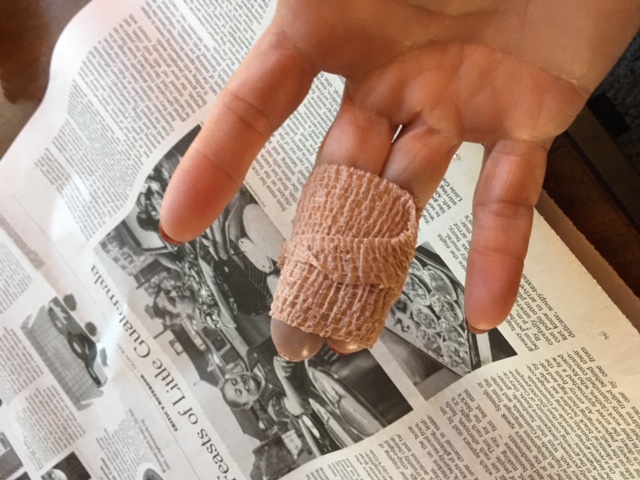
When you read this, I’ll be somewhere over the midwest, 42,000 feet up, making the annual trek back to Tallahassee, and not a moment too soon since it’s snowing in Michigan now. So I don’t have any wise words from my own brain this week since it’s been hectic.   Plus, I sprained two fingers on my right hand on a DIY project that should have been left to professionals. Kids don’t do this at home. Keyboarding with fingers the size and color of concord grapes is hard. Don’t know how you index-finger hunt-and-pecking writers do it.

So, here’s some good stuff I found this week, by writers about writers or writing. It runs the gamut from an cautionary tale from a novice writer who got two (count ’em two!) six figure advances and was almost ruined financially — to a profile of Lee Child at home in Wyoming, where he owns two cowboys hats, but doesn’t wear them for fear of being laughed at.

Enjoy…Yours truly and my busted phalanges will be back soon.

How to Lose a Third of a Million Dollars Without Really Trying

A new-to-the-biz writer Heather Demetrios writes about how getting two six-figure advances right out of the gate almost brought her to financial ruin. She has great advice for those of you just starting out on paying attention to the work at hand and not letting your head get turned too fast.  Money quote for me: “Each new book is like a weekend in Vegas: maybe I’ll get lucky, maybe I won’t.”

After that second advance came through, I stepped into my dream life: I quit my day job to write full-time, moved to New York City, bought $15 cocktails, and learned (with astonishing speed) not worry about prices when ordering at a restaurant. I said yes to travel (often book research I wasn’t reimbursed for), concert tickets, new shoes, and finally being able to buy people the kind of presents I felt they deserved. I donated large sums of money to organizations I cared about, and delighted in the feeling that I was making a real difference….

Then she goes into what she would have done differently had she known what was going to happen. Here’s the link. 

Ready, Set, Write a Book

November if National Novel Writing Month. I’ve never tried it, but the NaNoWriMo challenge — writing a complete novel in 30 days — is now into its 20th year. If the thought of cranking out 1,500 words a day makes your blood run cold, this article’s not for you. But it does offer some tips for upping your output.  Here’s the link. 
Oh, Give Him a Home Where The Reacher Creatures Roam 

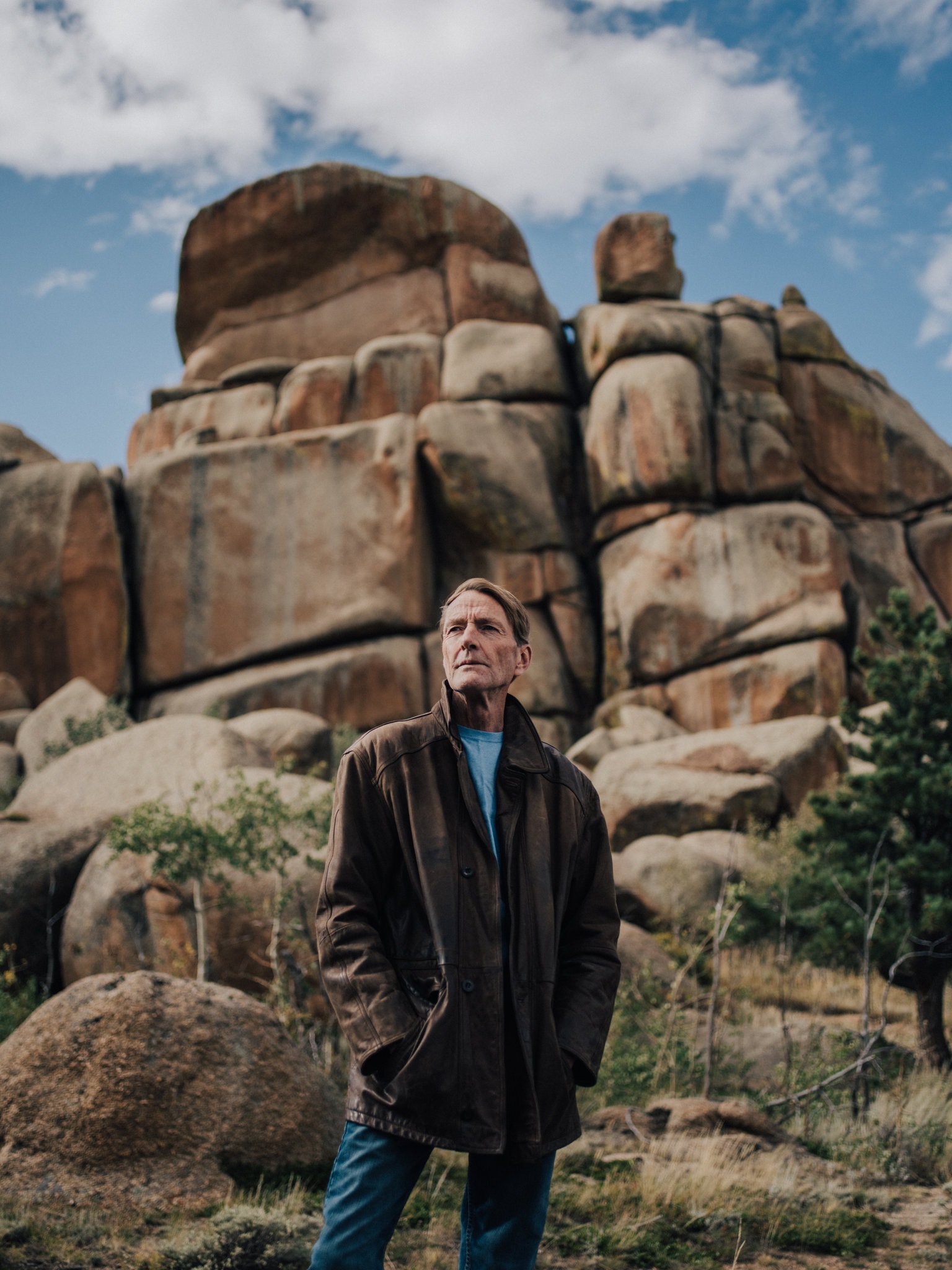
Speaking of writers who can crank it out, Lee Child has just dropped his 24th book Blue Moon. This feature finds our hero living the good life in Laramie Wyoming and waxing on the new movie Jack Reacher (yes, he’s taller than Tom Cruise), life in the slow lane and getting a new award — Commander of the British Empire. Link here. 


What’s In a $&%!? Title? 

Hey, we all know how hard it is to come up with a seductive title. But are today’s titles getting a little too…blue?  One editor makes a case for rethinking the current trend to using cuss words in titles. Let’s just say she’s not happy:

While a well-placed colorful word can pack a punch when used sparingly, resorting to vulgar titles is actually an easy, mindless, and lazy knee-jerk marketing approach. In an attempt to reach and speak to the masses, these word choices continue to dumb down book titles and subjects while discouraging any effort to strengthen thinking, meaning, or purpose—let alone a sense of integrity for authors, marketers, or the industry.

Here’s the link to the Publishers Weekly story. Link here. 

Fear Of Flying (As a Writer)

And lastly, I give you Chuck Wendig.  I love his writers blog Terrible Minds. It always makes me laugh — or cry less, depending on how strong a grip the work in progress has on my neck.  Here’s a classic Wendig — about how if you try to play it safe, if you travel the well-trod road instead of trying to find your own true writer’s path, you will fail. I think our own James recently wrote on this topic recently. Money quote:

I’m speaking about a specific kind of fear, which is, fear as the first step of writing. Fear about market. Fear about audience. Fear about how no one will read your stuff. Fear about how you’re never going to be as good as [insert other author name here]. Fear about voice, fear about genre, fear about ideas. You set out on the journey of being a writer and already you have a choice about what direction you choose, right? You get this instinctual pull, as if all your intestinal flora are trying to move you in concert toward something weird, something wonderful, something uniquely your own, but — that way lies grave uncertainty. The other direction, well, that’s more sensible, isn’t it? Other writers have trod those paths. What’s popular right now is [insert trend here, like “YA medical horror featuring canine protagonists” or “grimdark geriatric erotic fantasties”]. Your voice surely isn’t as good as other voices.

So, your foot wavers. And instead of pointing yourself in the unknown direction, into the dark forest, into the layers of fog — you set forth onto the well-lit, well-marked path. The worn path. The trod path. And it’s fear that put you there. It’s fear that’s walking you forward.

Here’s the full article.

I’ll try to reply if you leave a comment. I have a long layover in Charlotte and if I recall, there’s a decent bar in Concource E, owned by Dale Ernhardt Jr. Oh, show me the way to the next whiskey bar…

How To Invest Readers in Your Story: First Page Critique

By Sue Coletta

Another brave writer has shared his/her first page for critique. Enjoy! My notes will follow.

Traders Market

Blowing up a house with five people inside wasn’t the best way to slip out of town unnoticed.

Heart pounding, hands shaking, knowing she should be gone, Emelia Lopez watched through the stockade fence two houses down, mesmerized by the inferno. She pushed the other thought away when she heard the first sirens, and pushed herself into motion.

Keep to the plan, Nick said.

Staying in the deep shadows cast by the fire, she moved steadily down the alley, around a corner, merging into a crowd of gawkers spilling out of a bar.

“It had to be a gas explosion…”

“Was it a house?”

Another boom, another explosion.

“Holy shit! What is it?”

“Your wife blew up your boat. You better go home.”

Laughing, untouched by whatever it was, they began drifting back inside to get another round.

Emelia moved away, her lumpy figure in its baggy dress and sweatshirt unnoticed, one of hundreds like her in the neighborhood.

The second explosion?

Couldn’t think about it now.

A few blocks later, lights from the bus station beckoned. She pulled up her hood and grasped the key in her gloved hand. Inside, no one was paying any attention to the explosion. Too far away. Sirens were common. She put her head down and made herself shuffle to a locker, key ready. She pulled out a large duffle bag, closed the door, left the key in the lock, crossed the few feet into the restroom.

The biggest stall was open, the one with the changing table. Inside, she pulled the table down and began emptying the duffel.

Twenty minutes later, when she was sure she was alone, she came out, stuffed the refilled duffle into the trash can under the counter, slipped a carry-on bag over her shoulder, and checked herself in the mirrors. She smoothed her slim skirt and straightened the matching jacket, tested her ankles in the spike heels, and readjusted the red wig that completed her transformation into Emma Baxter, a Baltimore, Maryland wife and mother, who wouldn’t discover her passport was missing until long after it was discarded in a trash can in Amsterdam.

Emma straightened and strode purposefully out of the restroom, out of the bus station, and climbed into a waiting cab. Gave directions. Checked her phone. Nothing from Nick.

Follow the plan.

She closed her eyes, and the thought came.

Dear God. I’m a murderer.

This first page has so much promise. Anon did lose me a few times, though. So, let’s see if we can make things a bit clearer for the reader. Below is the first page with my notes.

Traders Market (I don’t have enough info. to comment on the title)

Blowing up a house with five people inside wasn’t the best way to slip out of town unnoticed. (Awesome first line!)

Heart pounding, hands shaking, knowing she should be gone, (one clause too many) Emelia Lopez watched (use a stronger verb here: peered, stared, gaped?) through the stockade fence two houses down, mesmerized by the inferno (Nice!). She pushed the other thought away when she heard the first sirens, and pushed herself into motion.

Any time you use words like thought, heard, saw, considered, etc., you’re telling the action rather than showing it. Rearrange the above sentence to avoid that.

Example: When the first siren squealed, a spike of adrenaline shot through Emelia and she shoved off the fencepost. Sprinting toward the bus station (added to show the reader a destination), Nick’s words echoed through her mind. Keep to the plan. Easy for him to say. He wasn’t the one out here in the dark (added to weave in some personality).

Keep to the plan, Nick said. 

Staying in the deep shadows cast by the fire, she [Emelia] moved steadily down the alley, around a corner, merging into a crowd of gawkers spilling out of a bar. Very good. Don’t believe the advice that all gerunds are bad. They can be effective tools. Here, you’ve created emotional rhythm, which works for this particular reader.

“It had to be a gas explosion…” Who’s speaking? If it’s a bar patron, then please briefly describe the character so we can visualize the scene. Even something simple like: a bleach-blonde cougar in a leopard-print blouse.

“Was it a house?” Here, too.

Another boom, another explosion. Meh. It’s a little underwhelming, but it gets the job done. I’d rather see Emelia stop short when the earth shakes beneath her sensible shoes—in other words, show vs. tell.

“Holy shit! What is it?” I have no idea whose dialogue this is, either.

“Your wife blew up your boat. You better go home.” Here, too. Show us who this is.

Laughing, untouched by whatever it was, they began drifting back inside to get another round. Who are “they”? Show us! Also, since you’re not in their heads, you can’t know that they’re “untouched” by anything. You can show disinterest, but you cannot tell us they’re untouched. You also can’t know they’re going inside for another round. The protagonist can presume they are, but then you need to make that clear. For more on writing in deep POV, read this first page critique.

Emelia moved away (backed away? From what?), her lumpy figure in its baggy dress and sweatshirt unnoticed (Here again, you’ve slipped out of Emelia’s POV. Emelia wouldn’t think of herself of having a lumpy figure, would she? Most women would never use that term to describe themselves. By choosing Emelia’s POV, you, the writer, have effectively slipped inside her skin. You are Emelia while writing this scene). one of hundreds like her in the neighborhood.

On my second read-through I discovered that you might be referring to padding inside her disguise. If that’s true, then show us how itchy the material is or the padding lumping together. But you need to clue in your reader to what’s going on. Most readers won’t take the time to go back and reread the first page. See what I’m saying? Nailing an effective POV is one of the more difficult craft elements to master, but it’s crucial that you do. I’d be happy to answer any questions you may have. 

The second explosion? Couldn’t think about it now. (Nice. I just moved her response up a line.)

A few blocks later, lights from the bus station beckoned (beckoned what? beckoned her closer?). She [Emelia] pulled up her hood and grasped the key in her gloved hand (key? Where’d it come from?). Inside, no one was paying any attention to the explosion (don’t tell us; show us. Inside the station five fat guys guzzling Budweisers huddled around a black-and-white television with a tinfoil antenna. Monday night football—perfect timing). Too far away (Maybe the explosion was too far away? Not sure how they missed the sirens, though they weren’t uncommon around here). Sirens were common. She put her head down and made herself shuffle to a locker, key ready (Head down, Emelia shuffled to a row of lockers, stacked two high).

Side note: show Emelia searching for the right locker number to drag out the suspense, show her excitement over finding the duffle bag (or her devastation when the locker’s empty), show her hand tremble as she drags the duffle bag off the metal shelf, careful not to make a sound. Or maybe the zipper scratches the metal and draws unwanted attention from a security guard. See all the ways to create conflict? The possibilities are endless. Don’t make things too easy for Emelia. Your protagonist needs to stumble, fall, get back up and move forward, stumble again…that’s how we humanize her into a flesh-and-blood character.

She pulled out a large duffle bag, closed the door, left the key in the lock, crossed the few feet into the restroom.

The biggest stall was open (that’s convenient; maybe too convenient? Something to think about.), the one with the changing table. Inside, she pulled the table down and began emptied the duffel.

Twenty minutes later, when she was sure she was alone (why is she certain she’s alone? Did she peek out a crack in the door? Did she press her ear to the door as footfalls trailed down the hall? Show us!), she came out, stuffed the refilled (refilled with what?) duffle into the trash can under the counter. [Emelia] slipped a carry-on bag (where did this come from?) over her shoulder, and checked herself in the mirrors. She smoothed her slim skirt and straightened the matching jacket, tested her ankles in the spike heels, and readjusted the red wig that completed her transformation into Emma Baxter, a Baltimore, Maryland wife and mother, who wouldn’t discover her passport was missing until long after it was discarded in a trash can in Amsterdam.

Okay, so, I assume the duffel bag contained all these items. Show us the action as it happens. Don’t make us guess after the fact. Why risk confusing your reader? You did a terrific job of showing us Emelia’s transformation—bravo on that!—so I know you can do it. Yes, it takes more time to show an action, but the payoff is well worth the added work. Every time we draw the reader deeper into the scene they become more invested in the story.

[With her head held high,] Emma straightened and strode purposefully out of the restroom [and slipped right past the drunken footballers who failed to notice her departure. Go Pats! (sorry, couldn’t resist ;-)) At the door to an awaiting cab Emelia hip-checked some business-type dude out of the way and stole his ride. Sucker.]

“Corner of Howser and Jewel Street.” She flashed a fan of bills over the front seat. “There’s an extra twenty in it for you if you get me there in ten minutes.” (Note: I added dialogue to show Emelia giving directions to the cabbie, rather than telling the reader about afterward.) out of the bus station, and climbed into a waiting cab. Gave directions.Checked her phone. Nothing from Nick

[Glancing at her phone, Nick still hadn’t texted.]

Follow the plan.

She closed her eyes, and the thought came. Dear God, I’m a murderer. (This makes me want to flip the page to find out what happens next. Nicely done!)

Brave Writer, I hope I wasn’t too hard on you. If I didn’t see so much promise in this first page, I might be reluctant to bathe your opener in red ink. I want you to succeed, and I know you can. With a little more knuckle grease, this opener could be amazing.

One other thing is worth mentioning. Be careful with run-on sentences. Same goes for staccato sentences. They’re most effective when used sparingly. If used too often, they become a writing tic. 🙂

Over to you, my beloved TKZers. How might you improve this first page?

Stretch Your Style

by James Scott Bell
@jamesscottbell

Not every writer is interested in style. If they can write lean, mean plots that move, with interesting characters and a satisfying ending, that’s enough. They’d rather write fast and turn out more work than spend extra time trying to find the “right” words.

Isaac Asimov was such a writer. He purposely developed a stripped-down style so he could churn out the books. He was once asked what he would do if he found out he had just six months to live. “Type faster,” he said.

Other writers do seek to enhance their prose. One such was John D. MacDonald, considered one of the great crime writers of the 20th century. He wrote a string of paperback classics in the 1950s, and then invented an enduring series character for the 60s and beyond—Travis McGee.

He was a great plotter, but a careful stylist as well. As he himself once put it: “I want a bit of magic in the prose style, a bit of unobtrusive poetry. I want to have words and phrases really sing.”

While “unobtrusive poetry” is not necessary for a well-plotted novel, it is an elevation. It’s a fine thing to consider stretching your prose. The main proviso is that you never let the style overplay its hand. Serve the story first.

One place where prose style is most fitting is when there is a high emotional moment. Nothing is higher than a young writer dying, in the aptly titled and justifiably famous short story that made William Saroyan’s reputation, “The Daring Young Man on the Flying Trapeze.”

Then swiftly, neatly, with the grace of the young man on the trapeze, he was gone from his body. For an eternal moment he was all things at once: the bird, the fish, the rodent, the reptile, and man. An ocean of print undulated endlessly and darkly before him. The city burned. The herded crowd rioted. The earth circled away, and knowing that he did so, he turned his lost face to the empty sky and became dreamless, unalive, perfect.

Go ahead and stretch your prose in the safety of your own writing room. Three ideas:

  1. Read poetry

Ray Bradbury, one of our greatest unobtrusive poet-writers, read some poetry every day. “Poetry is good because it flexes muscles you don’t use often enough,” Bradbury says in Zen in the Art of Writing. “Poetry expands the senses and keeps them in prime condition.”

  1. Write page-long sentences

As an exercise from time to time, write a run-on sentence of 250 words or so. Don’t edit yourself. Let the words take you wherever they roam!

This is a good way to add emotional depth to a scene. When you get to a point where you describe emotion, start a fresh document and write a page-long sentence of inner description. Don’t judge it; just write it.

When you’re done, look it over. Maybe you’ll use most of it in your novel. Maybe only one line. But what you’ll have is fresh and stylistically pleasing. I’m certain this is how Jack Kerouac came up with that famous passage in his novel On the Road:

The only people for me are the mad ones, the ones who are mad to live, mad to talk, mad to be saved, desirous of everything at the same time, the ones who never yawn or say a commonplace thing, but burn, burn, burn like fabulous yellow roman candles exploding like spiders across the stars and in the middle you see the blue centerlight pop and everybody goes “Awww!”

  1. Play with metaphors

Dow Mossman, author of The Stones of Summer (the subject of a documentary, The Stone Reader) says he considered each page of his massive novel to be its own poem. Naturally it is filled with metaphors and similes.

He stood, leaning against the wooden jamb of the double glass doorway, looking back, and his eyes seemed almost dull, flatter than last year, muted somehow like reptiles not swimming in open water anymore.

Dull eyes like reptiles not swimming surprises in a pleasing way, but also fits the overall tone of the novel. The best similes and metaphors do both.

So how do you find these images?

Make a list. At the top, write the subject. In the above example, it would be dull eyes. Dull like what?

List as many images as you can, absurd and farfetched as they may be. Push past your comfort zone. Force yourself to come up with twenty possibilities. One of them will surely work.

Robert Newton Peck uses nouns in place of adjectives to plant the unexpected in his novel A Day No Pigs Would Die:

She was getting bigger than August.

The whole sky was pink and peaches.

Like Peck, you should occasionally step outside the normal, grammatical box. You’ll find some pleasant surprises when you do!

How important is style to you, when you write and when you read? We all agree that story comes first, but are you also an “unobtrusive poetry” fan? Do you think about it as you write or revise? 

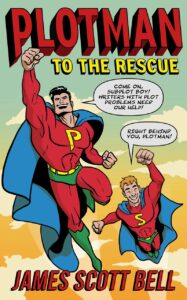
NOTE: This post is adapted from PLOTMAN TO THE RESCUE: A TROUBLESHOOTING GUIDE TO FIXING YOUR TOUGHEST PLOT PROBLEMS.

Kindle

Nook

Kobo

Clearing Out the Spirits

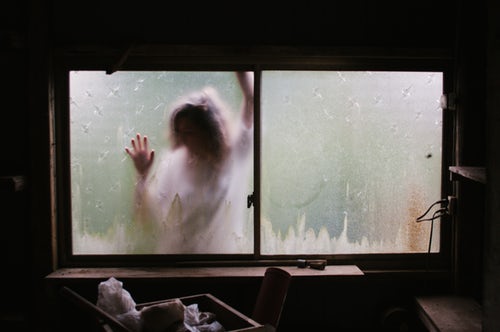
Photo by Priscilla Du Preez courtesy unsplash.com

Today I’m giving you a bit of an update and a short observation. Let us start with the former. Some of you may recall my blog “…for the repose of the soul…” which I posted at TKZ on June 16, 2018. It concerned a husband who murdered his wife at their home on the street where I live during what had been a peaceful and quiet early summer evening. They had been separated for an extended period but were trying to work things through. The incident was accordingly totally unexpected. 

The husband was almost immediately arrested and jailed  The aftereffects of his actions roiled and rippled beneath the surface of neighborly encounters over the next several months. Conversations on the street either began or ended with a discussion of what had occurred and what would happen next. If there was any benefit at all to what had occurred it was that everyone on the street became just a bit closer. Folks who before had only waved in passing stopped to talk for a few moments or longer and there were a couple of block parties where those assembled talked out what had happened but discussed other things, too. The husband ultimately in November 2018  pled guilty to a charge of aggravated murder pursuant to a plea agreement which guarantees his imprisonment for the next two decades without the possibility of parole. 

Time and life have moved forward now that justice of a sort has been obtained.  The home where the couple lived and raised their children, the home where the evil deed was committed, was extensively redecorated. There was some question as to what would happen to the house and how quickly, whether a buyer would find it sooner rather than later or if it would be on the market for an extended period of time, given the history. It actually sold very quickly. The new neighbor moved in on a quiet, snowy day in February 2019. She is delightful, a very down-to-earth person of southern origin who leads with a twinkle in her eye and who is a bit of a character around the edges in all of the best ways. When I first met her I told her that I was glad that the house had a new owner so quickly, given that people tend to shy away from places where darker incidents have occurred. Her response was that in such situations the problem is with the people who commit the actions and not the house. Just so. 

It is the house, however, which she ultimately decorated for Halloween a few weeks ago. And what decorations they are. She has transformed her front yard into a graveyard, with tombstones sprouting from the ground like toadstools after a summer rain. She has giant spiders — I mean these are big-posterior spiders — crawling up (or is it down) the front of the house around the upstairs windows. The most noteworthy decoration, however, can be found on the front porch. The entrance is festooned with hazard tape and the front storm door features with bloody handprints and the words “HELP ME” written in crimson.

Now for the observation. What does it say about me that I find this by turns to be wonderfully appropriate and hilariously inappropriate in ways that I have difficulty describing? Not everyone on the street is amused as I am, of course. A couple of my neighbors whispered to me that the display was in poor taste. My response was that if they felt strongly about it they should take up a collection and start paying our neighbor’s mortgage and property taxes. Otherwise, it’s her home, and she can decorate it for Halloween the way that she wants. The most telling reaction came from the neighbor across the street from her, who with his wife was best acquainted with the husband and wife who are respectively now in prison and deceased. The close neighbor said that, if our late neighbor were able to do so, she of all people would probably enjoy the display the most. I get that. It’s exactly the way I would want to be remembered, should I meet my unplanned but inevitable demise in a memorable if notorious way. 

There’s more than that going on here, however. I can recall when people who were moving into a new domicile would invite a clergyman over to bless the home. Nobody called it an exorcism, and that wasn’t the form of it by any means, but it was done not only with the hope of keeping things reasonably happy and peaceful going forward but also chasing out any nasty emotions that might be lingering and hiding in the rooms, corners, and cupboards. I think that is what my very practical and savvy new neighbor is doing. That’s my observation and I’m sticking to it.

So let’s raise a glass a frosted glass of apple cider (or your favorite fall beverage) to that most macabre of holidays just past, when tastes, rich or poor, are celebrated. If you have any similar stories, be they recent or long ago, that raised a “tsk” or two when they occurred, please share. And thank you as always for being here today. 


True Crime Thursday – Halloween Phobias

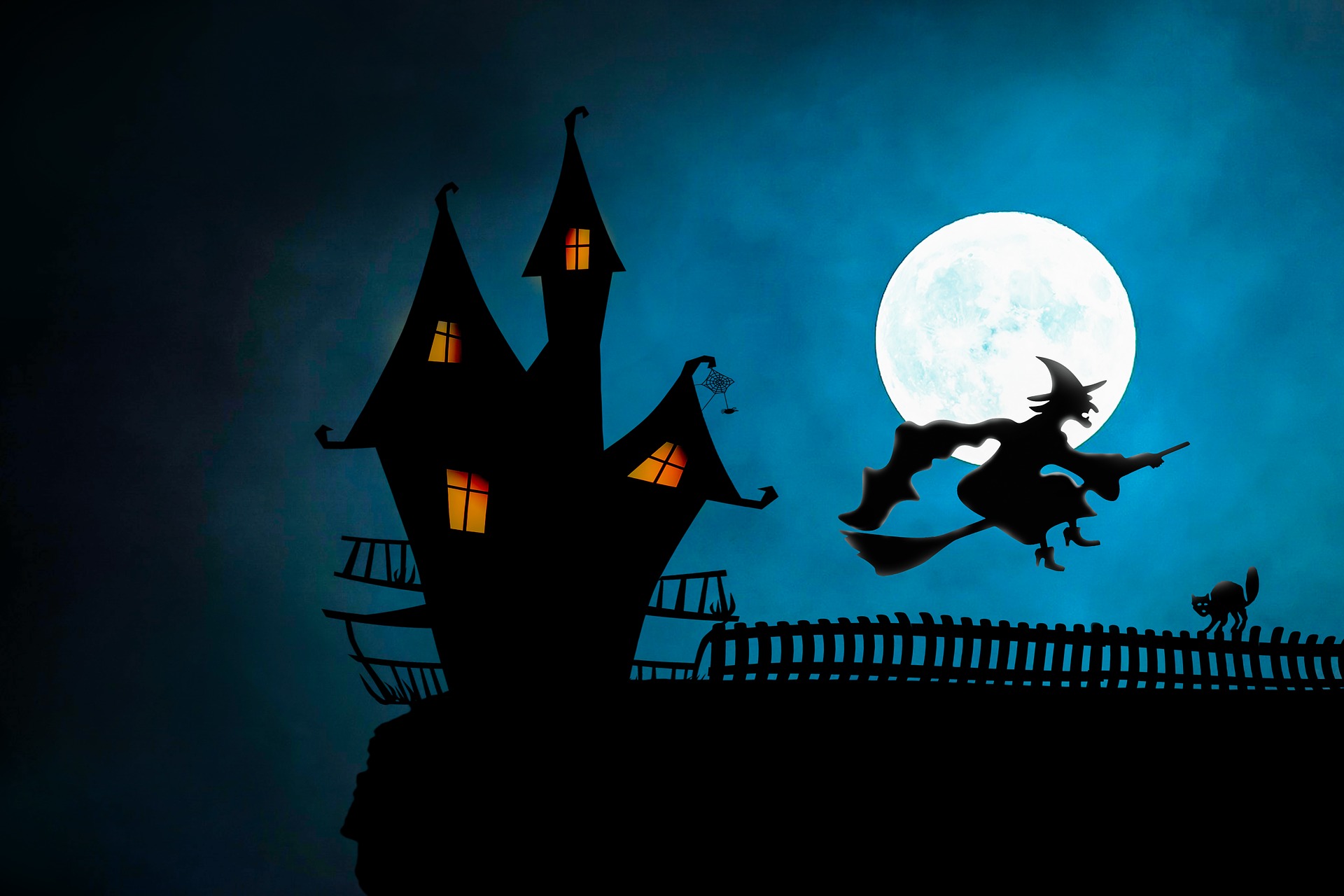
Credit: Myriam Zilles, Pixabay

by Debbie Burke

@burke_writer

Halloween is spooky.

Fear can be real, as in these true crimes that occurred on Halloween.

Fear can be from scary movies like these perennial favorites.

Spooky movies can trigger phobias like:

Optophobia – Fear of opening one’s eyes, especially when the sinister organ music gets really loud.

Bogeyphobia – Fear of the bogeyman; or Kinomortophobia – Fear of zombies

Pediophobia – Fear of dolls…like Chucky.

If you’re a vampire, you might suffer from:

Spectrophobia, the fear of mirrors and one’s own reflection; or Alliumphobia, fear of garlic.

If you’re an author, you worry your readers will develop logophobia (fear of reading) or hippopotomonstrosesquippedaliophobia (fear of long words).

Some phobias are head scratchers.

Ompholaphobia: Fear of belly buttons

Photo credit: Thorsten Frenzel, Pixabay

Lutraphobia: Fear of otters

Photo credit: hamikus, Pixabay

Anatidaephobia– Fear of a duck or goose watching you

Photo credit: Dighini, Pixabay

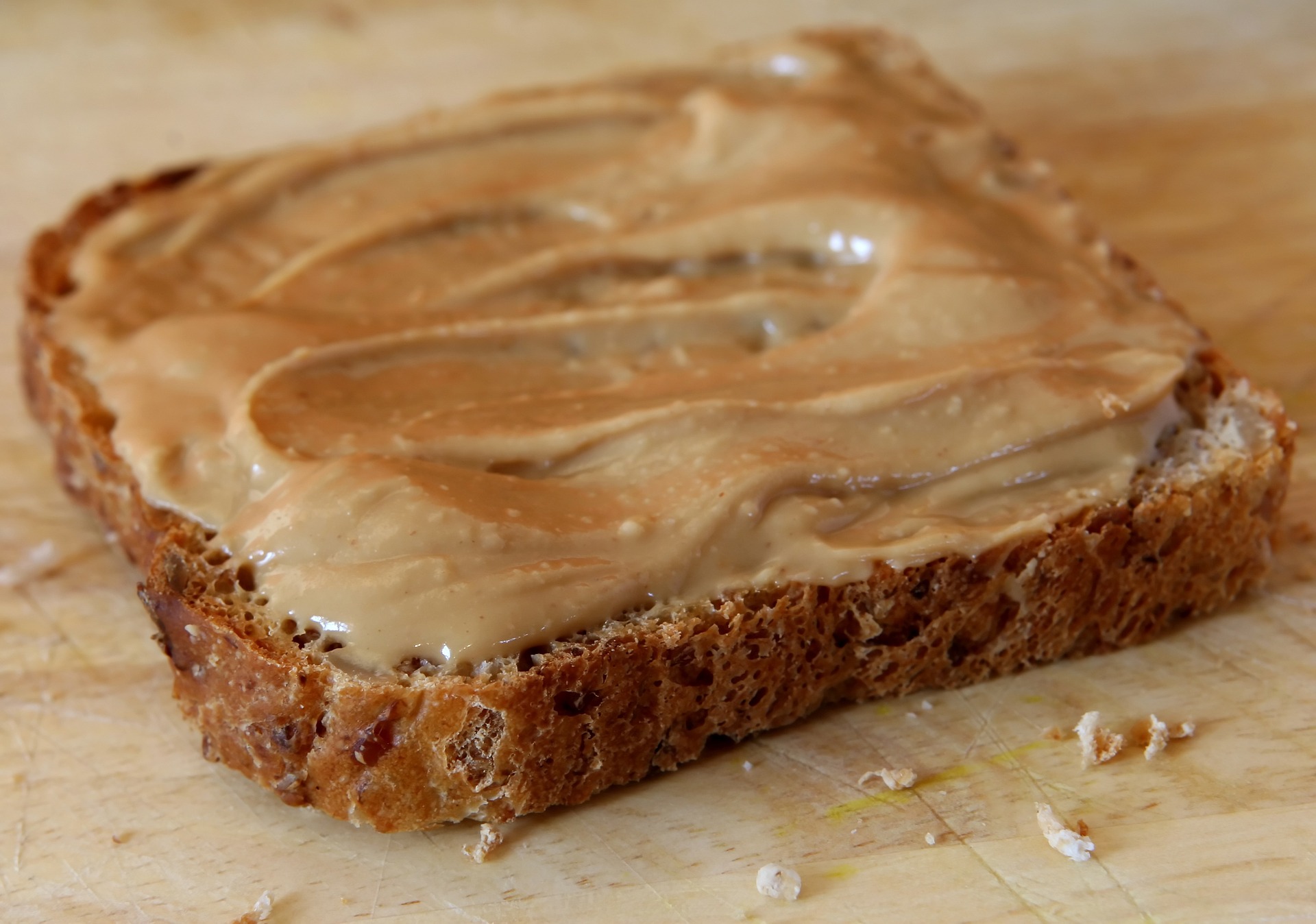
Arachibutyrophobia: Fear of peanut butter sticking to the roof of your mouth. Our last dog, a German Shorthair, developed this phobia after I fed him an open-faced peanut butter sandwich. While watching him trying to lick it loose, I dissolved in helpless laughter. Come to think of it, maybe he didn’t have arachibutyrophobia, after all, but rather katagelophobia (fear of being embarrassed).

Photo credit: Robert-Owen-Wahl, Pixabay

Wishing you a safe and happy Halloween–just don’t answer the door or look under the bed! 

TKZers: What’s the weirdest phobia you’ve heard of?


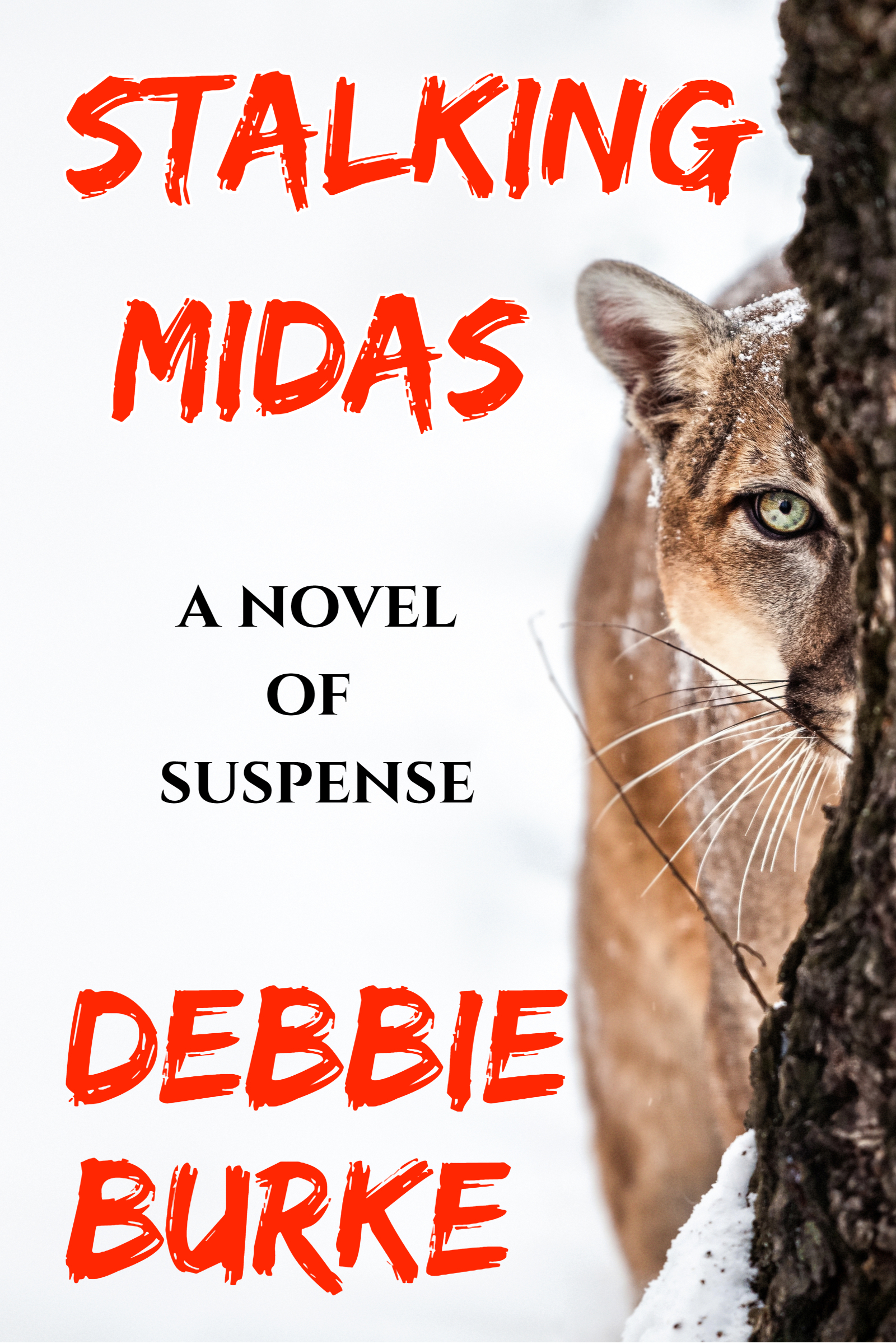
Debbie Burke’s new thriller Stalking Midas contains no belly buttons, otters, ducks, nor peanut butter. But it does include a scary mountain lion. Check out the Kindle versionFREE today through November 2.

My Muse Is Gone


I fear this will be a short, sorrowful Wednesday post.

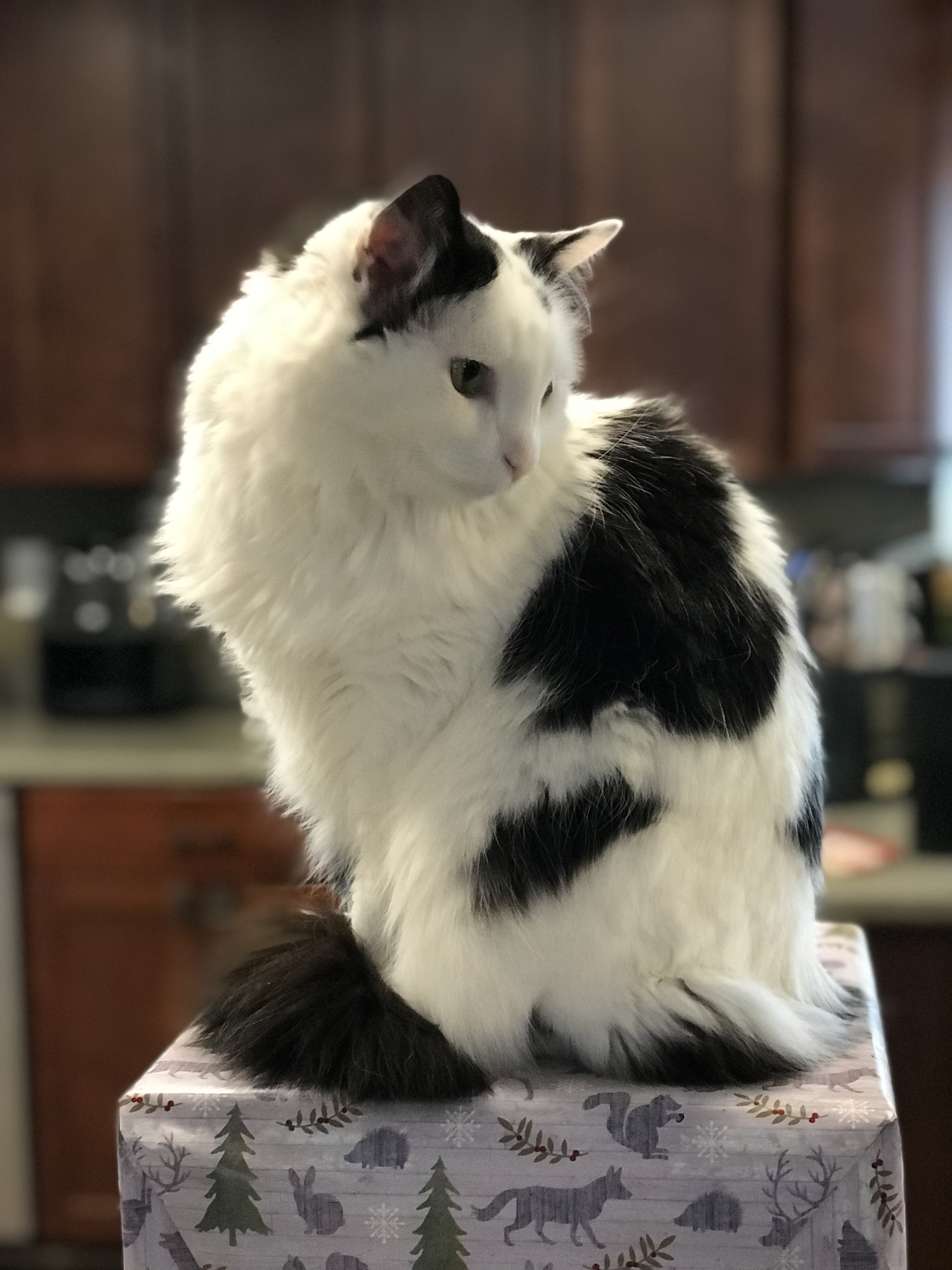
On Tuesday morning, my husband had to take our much-beloved cat, Miss Nina Garcia Benedict, to be euthanized. Her kidney disease had swiftly advanced from stage 2 to acute in two very short months. She was only 10 years old.

Nina owned us the way that a proper cat owns her people: with complete and utter domination. She was stunning to look at from her kitten days onward, and bore the fact with the humility of a Hollywood starlet.

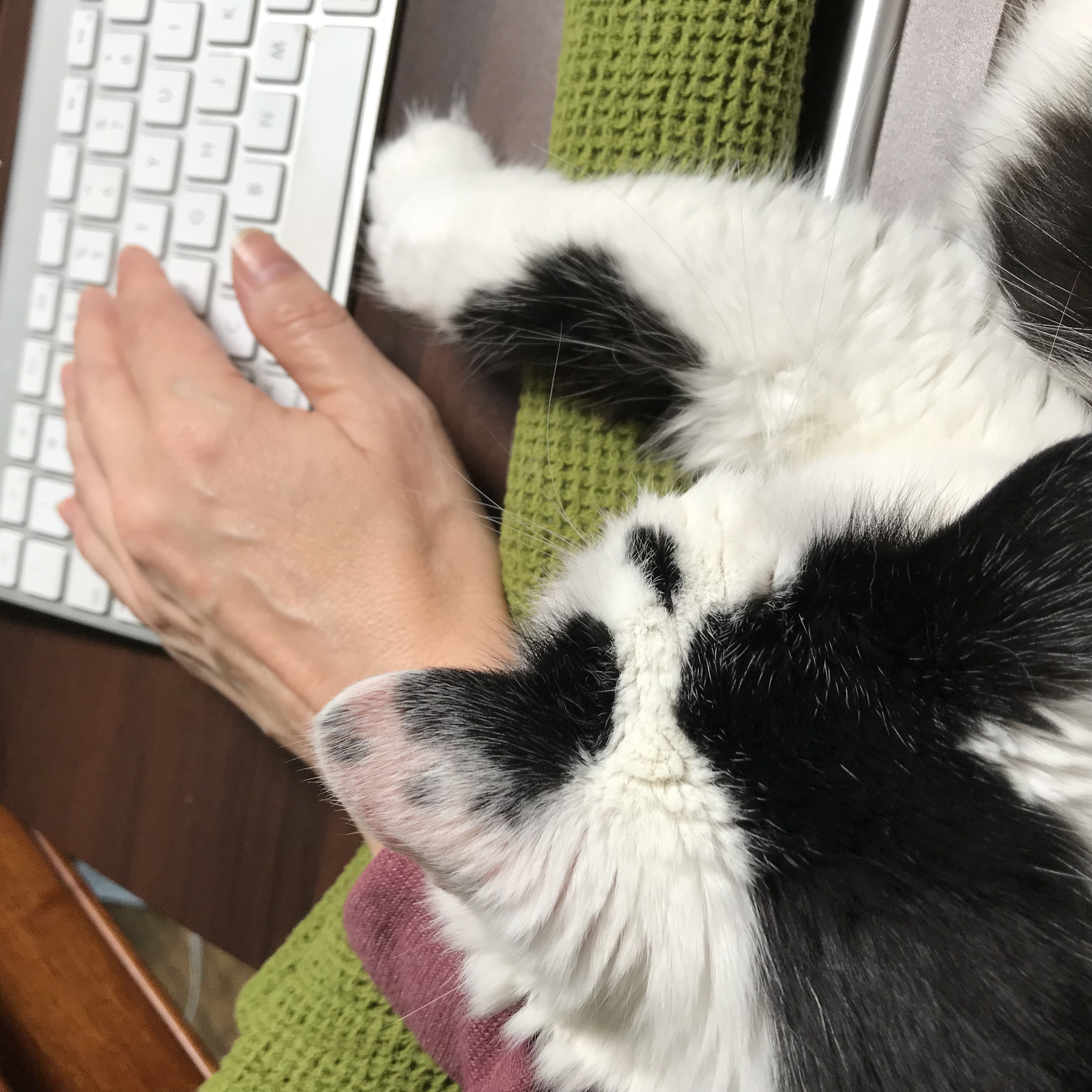
Whenever I sat down to write, Nina would materialize five to ten minutes later. If she wasn’t standing solidly on my keyboard or peering over the back of the screen, causing it to tilt threateningly towards me, she was on my lap, needling my thighs until I squawked. (Who am I kidding? I could squawk for hours, and she still wouldn’t stop.) She helped me write six novels, many stories, and countless blogs. Perhaps I’d have written even more without her valuable assistance, but those would have been hollow words.

And when I cried–as writers sometimes do–Nina was right there to rub her furry head against me, concerned.

I’m out of town this week, and am already anticipating walking in our front door, and feeling her absence. I can’t even think about writing more stories without her.

See? I told you this would be a brief post. There’s not more that I can bear to say about her right now.

Do you have–or have you had–an animal in your life that helps you with your writing? I want to hear your stories.

Nina


Sneak Peek into Audiobook Narration

Photo courtesy of Basil Sands

by

Debbie Burke

@burke_writer

Jim Bell recently wrote an excellent post about doing his own narration for his audiobook. With training as an actor, attorney, and experienced public speaker, he’s a natural for his craft books.

For memoirs, the author is often the default choice as long as s/he has a good voice. (See recording artist Juni Fisher’s tips for DIY narration at the bottom of this post)

What narration styles do readers prefer for fiction?

In the 1990s, my husband and I browsed racks at truck stops for Books of the Road cassette tapes with great selections of mysteries, thrillers, and historicals. Listening to books made the hours and miles fly by. Several times I really hated to leave a compelling story, even for a dinner break!

Back then, most narrators were male. I recall being annoyed every time a man adopted a falsetto tone for a female character. It totally jerked me out of the story and had a ridiculously comic effect, not the best mood for a tense, life-or-death scene.

Conversely, the female narrator of an early Sue Grafton book sounded so silly when she attempted a phony deep voice for a male character, we ejected the tape.

Audiobooks have grown up a lot since the days of cassette tapes. With their increasing popularity, I went in search of the tastes of today’s listeners.

GoodReads featured a discussion on audiobooks prompted by a two-part question:

In general, would you say you read more books written by male or female authors?

Would you say you listen to, or prefer listening to, more male or female narrators?

Responses were evenly split on whether they read more female or male authors and not necessarily along gender lines.

Many reported they didn’t care which gender as long as the narrator knew what s/he was doing. Quality of performance made the strongest impression.

Several said a book written in first person point of view should be read by a narrator of the same gender.

A number cited irritation with a male narrator who made female characters sound like “bimbos” or a female narrator who sounded “dopey” trying to fake a baritone.

Some respondents had trouble hearing higher-pitched female voices and therefore generally preferred male narrators or females with lower-pitched voices.

A few mentioned preferring a male narrator for male characters and a female narrator for female characters. But a surprising number would rather listen to a single, skillful narrator throughout the whole book, regardless of gender.

Narrators develop their own fan bases. One fan said: “I can fall in love with narrators and try an audiobook simply because they narrated it, even if I’ve never even heard of the author.”

British accents entranced many fans.

Quite a few cited Davina Porter as a favorite. She narrated Diana Gabaldon’s Outlander series.

Others said they would listen to Kobna Holdbrook-Smith read the phone book.

~~~

To learn what happens inside the recording studio, I reached out to two well-respected audiobook narrators, one male, Basil Sands, and one female, Marguerite Gavin.

Photo courtesy of Basil Sands

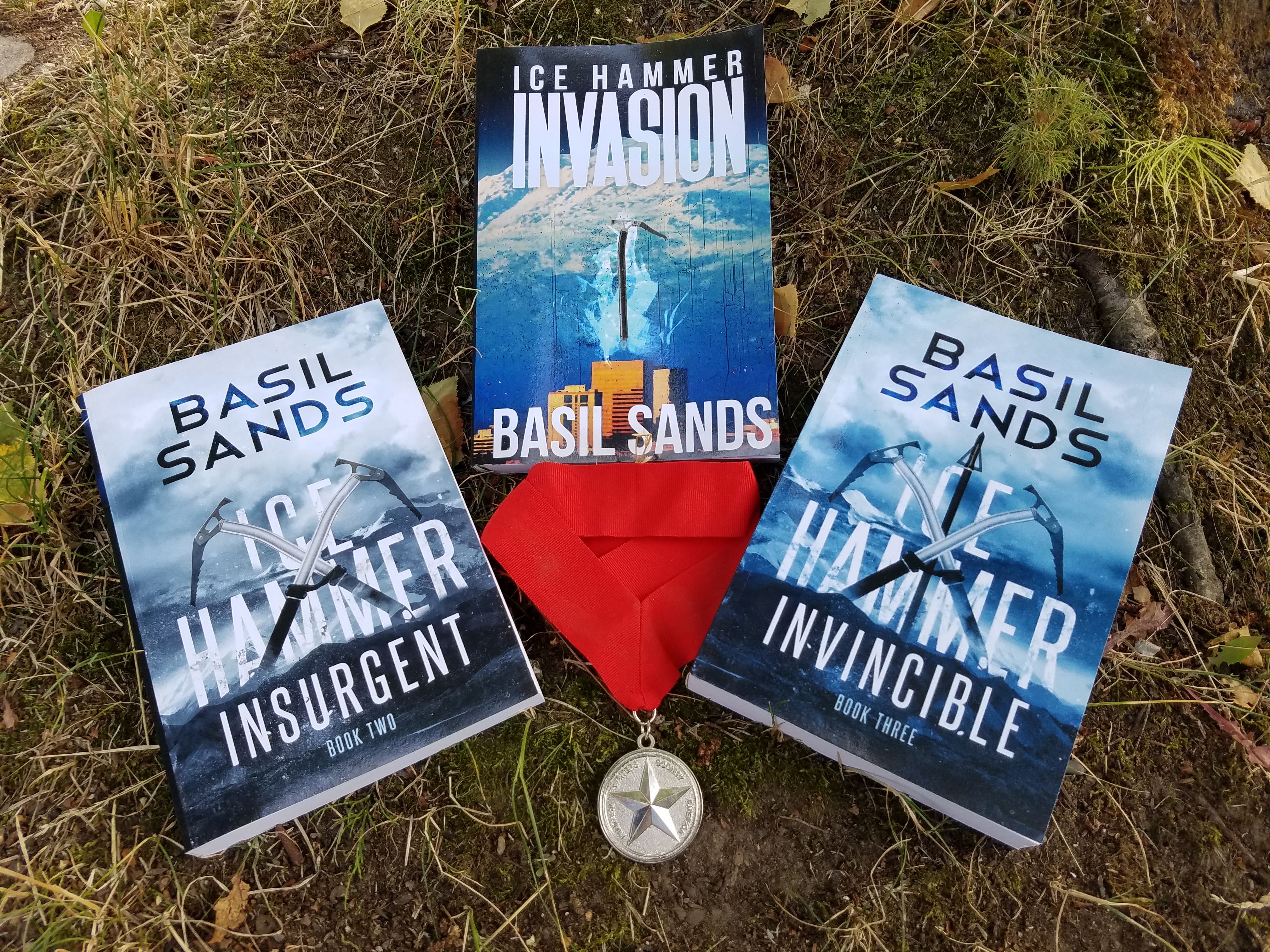
Basil Sands has narrated numerous novels by TKZ’s own James Scott Bell and John Gilstrap. Basil is also the author of the Ice Hammer series. He has his own studio in his Anchorage, Alaska home where he narrates and does post-production editing.

DB: Basil, would you give us an overview of the process of creating an audiobook?

BS: Writing a novel has a great many complex parts and narrating a book into audio format is similar.

The rights holder (author/publisher) contacts the narrator community for auditions. Once the narrator is chosen, contract and script are sent. The narrator should read through the entire text at least once. There will likely NEVER be time to read a book twice, or enjoy a leisurely read ever again. Time crunches may mean cold reads so improv skills are a must.There is literally no time for rehearsing.

In order to make a decent living, a narrator has to do two to four books a month or more.

DB: Do you ever consult with the author?

BS: In most cases, [publishers arrange contracts and] authors are off-limits to narrators. If I can, I love talking to authors to get their take on their characters.

Years ago, I recorded back-catalog books for Piers Anthony (sci-fi/fantasy author with unusual names and spelling). I emailed Piers (now 85). He had no idea his old books were being recorded and was delighted. He gave me free rein to perform as I pleased. I had a lot of fun with his series.

DB: How do you handle female voices and dialogue?

BS: With a fairly deep, resonant voice, I never go falsetto. My tactic is to soften my voice, slide up an octave or two, and give a less masculine impression.

Basil’s summation: Narrating is far from the easiest of acting professions but is one of the best ways an actor can really sink their chops into their trade. Every book is a marathon, playing all the parts, knowing all the details, in full control of the entire show. Did I mention I love my job?

~~~

Audiobook narrator Marguerite Gavin

Marguerite Gavin has narrated 600+ books and won multiple awards. She lives on the Delaware shoreline with her 19-year-old daughter. She likes to say she and author Dana Stabenow grew up together since Marguerite narrated Dana’s first Kate Chugak thriller and they’ve worked together for 22 books. Marguerite also brings to life Liam CampbellDana’s male protagonist.

During our phone conversation, when asked how she handles male voices, Marguerite says she narrates many thrillers where, inevitably, “five male cops all from the same hometown with similar accents wind up in a car chase. How do you distinguish among them?” She then demonstrated several voices with slight but distinct differences in tone, diction, and speech patterns.

In addition to narration, Marguerite is an actor/director and jokes, “Audiobook narration supports my theatre habit.”  She also teaches and coaches students “to understand the actor’s instrument of voice and to understand their own range.

If the character is a hulking male truck driver who smokes, “I throw air over my cords. It’s not always about pitch.”

She believes it’s easier for a woman to do male voices because women have more range. “I’m not afraid to sound like a man.” She suspects men have more trouble making the leap to sound feminine.

Marguerite loves to narrate series, watching characters evolve over time. She also enjoys collaborations with authors.

Her enthusiasm for her profession comes through with every word. “I’m fortunate to have the balance of financial stability with my passion. It’s important to keep your joy in your job.”

“The skill is to be inside the story as much as possible. You don’t want people listening to an actor act rather than getting lost in the story.” She always asks, “What makes a good reading experience? What is the feeling?”

Thank you, Basil and Marguerite, for giving us a peek inside audiobook narration! It’s always enlightening to talk with artists whose passion for their profession shines through.

~~~

Recording artist Juni Fisher’s tips for DIY narration, quoted with her permission:

  • Print script in 14-16 font, double-spaced, and make notes.
  • Recording can be done a few lines, a paragraph, a page at a time.
  • If you make a small error, clap your hands to make a “mark” so you know where to go back to re-record, and keep going.
  • Use your eyebrows when you read. Be more enthusiastic than you think. The engineer will have you back off if it’s too much.
  • Advice from the music recording industry: “Nice, but do it now so I BELIEVE you.”
  • Sip room-temperature water or warm water (never cold) every couple of pages or paragraphs.
  • No dairy and no sugar.
  • Use sugar-free throat lozenges (not numbing type).
  • Speak as you’d speak to someone you adore, sitting right next to you.

~~~

TKZers:

Do you have a preference for audiobook narrators of one gender over the other? If so, what are your reasons?

What audiobook quality is most important to you as a listener?


Debbie Burke’s new book, Stalking Midas, is FREE on Kindle today through November 2.  Here’s the link. 


An Amazing Story of Luck and Persistence

For today’s post I have something a bit different to my usual musings – this post concerns a real life story that impacted my family last week. Even though it truly is a remarkable story in and of itself (one providing a perfect antidote to today’s winter-comes-way-too-early weather in Colorado!), it also offers a heartwarming affirmation that sometimes luck and persistence pays off (a belief all of us writers should embrace, especially in our darkest moments…)

Last Monday, my mother-in-law was out walking her beloved border collie,Tess, in the Australian bush outside the Victorian era mining town she lives in, when the dog literally disappeared. One minute Tess was scampering through the undergrowth, the next minute she was gone. My mother-in-law called for her frantically for nearly an hour, but there was no answer – and no sign of Tess. By the time we received the news in Colorado, Tess had been missing the whole day – and by then the anxious waiting was already taking its toll. Had Tess run off after kangaroo or been bitten by a snake? In an area known for abandoned mine shafts (during Victorian times, this was a huge gold mining area), had she fallen down one and been injured? Another day passed and hope was fading – it’s almost summer in Australia and there hadn’t been any rain for almost a month. How could she survive when there was no water to be found? Three more days passed and we all feared the worst…

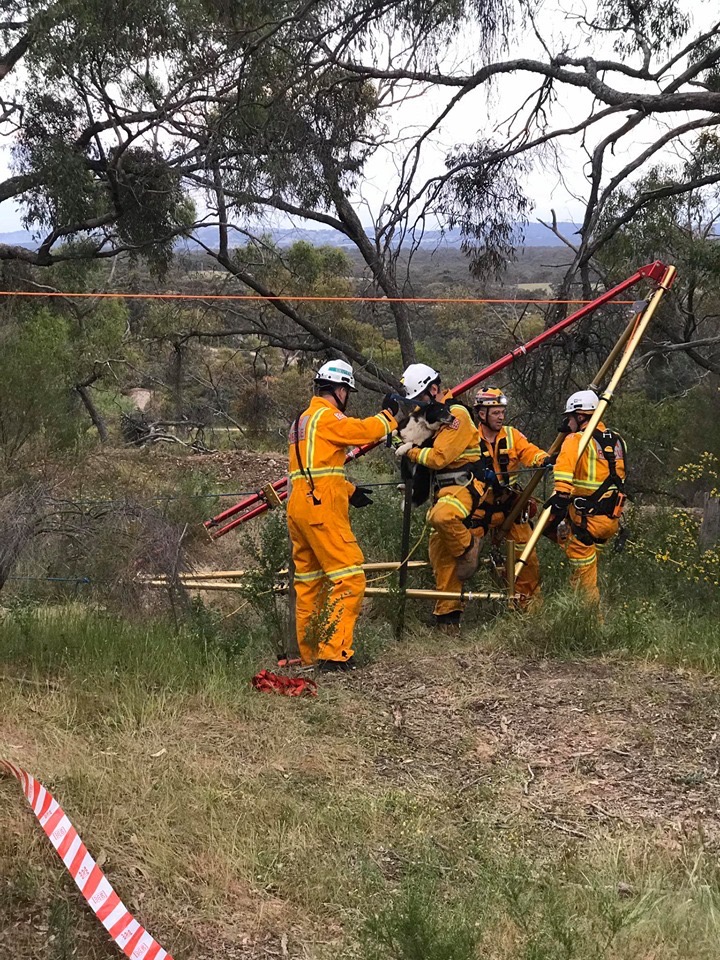
Then at midnight we  received the most remarkable call – Tess had been found alive and well after having fallen some 5-10 meters down an abandoned mine shaft. It was a movie-like moment and (as you will see from the photos) a truly remarkable ending that has captured the local imagination (and news!) in Australia. Even now, after a weekend to digest the news, I don’t think any of us can truly believe what just happened. For my mother-in-law it was the kindness of a friend who went back to an area that had been searched 2-3 times and who just happened to be at the right place and the right time to her Tess whimpering from the depths of this mine shaft:


Then they waited for the specialist mine-shaft rescue team (yes, they have one!) to drive over from nearby Bendigo and watched as they winched down a man who grabbed Tess and held her as they winched them both back up:

And here is the lucky dog, herself, looking none the worse for her experience. As far as the vet can tell she suffered nothing more than a scratch on the nose (and some dehydration of course).


This is such a lovely story of how luck and persistence came together to save a dog’s life, that I simply had to share it.

I think we can all take heart, that sometimes, miracles do happen!

For those interested in seeing the news story on Tess’ rescue – I’ve posted the link below:


A Simple Trick to Increase Your Productivity

by James Scott Bell
@jamesscottbell

When my father died in 1988, I found myself the head of a one-man publishing company. Dad, a highly regarded L.A. lawyer, had devoted twenty years to a pet project called Bell’s Compendium on Searches, Seizures & Bugging. It’s a digest of all California and U.S. Supreme Court opinions in this area of the law, updated several times a year, in a unique format that allows lawyers, judges, and law enforcement to find relevant decisions in a matter of seconds.

Thankfully, I’d been working with Dad on his treatise for a couple of years after leaving a big law firm to open my own practice. He taught me everything about the book, which is a good thing, for he was the only one who knew how to do it. If I hadn’t been there, Bell’s Compendium would have died with my father.

Today, over thirty years since Dad’s death, I’m still carrying on his work.

But back in ’88 I had to teach myself—fast—how to operate and expand a business.

So I created a crash course on entrepreneurship—reading books, listening to tape programs, attending seminars, and putting into practice what I learned. One of the first areas I had to master was time management. Luckily I came across Alan Lakein’s How to Get Control of Your Time and Your Life. This little classic is filled with practical techniques, and one great tip for dealing with the bugaboo that haunts all of us from time to time: procrastination.

We writers have developed many ways to procrastinate. The problem has only grown worse over the last two decades with the rise of the internet, social media, and 24/7 stimuli. When we’re writing and we hit a bad patch, it’s so easy (and dopamine-inducing) to hop onto the net and surf around. We scan our Twitter feed. We see what a favorite blogster has to say. It’s fast and non-threatening (unless you’ve unwisely engaged in a tweet storm with some unhinged mountebank).

But what causes procrastination in the first place? I think it’s simply the prospect of unpleasantness. When we have the ability to choose among tasks, we tend to favor those that are more enjoyable (relatively speaking). Or we simply choose to lollygag about until forced to give a knotty problem some time (which is why bosses and deadlines were invented).

Lakein has an answer for this tendency. He calls it The Swiss Cheese Method. Simply put, instead of looking at the entirety of the unpleasant task, take five minutes to “take a bite” out of it (creating a hole in the task, thus the name of the method).

For instance, when you sit down for a writing session and face the blank page (“A blank piece of paper is God’s way of telling us how hard it is to be God.” Sidney Sheldon), it is sometimes pure joy and there’s no problem. Other times, though, you know you’ve hit a bump—or a wall—and it’s going to take some painstaking keyboard clacking to get you out of it.

Or maybe you’ve got several writing-related things to do in addition to your WIP. There’s editing another manuscript, marketing tasks, getting ready for an upcoming conference, queries to prepare, and so on.

Hmm, maybe I’ll just check my email first. Oh look! Marcie sent me a link to a cat video. Cute!

What’s that YouTube suggestion in the sidebar? A scene from Malcolm in the Middle. I love Bryan Cranston! I’ll just watch it and…


And before you know it, your time management has been turned upside down.

I usually have three projects going at any one time—a novel, a non-fiction, and a short story. So what I do when I first sit down to write is ask myself which project is giving me the most resistance—and then take a bite out of it. I usually aim for just a “Nifty 350” words, and then see where I am. What happens most of the time is I break through whatever barrier there is and keep going.

If for some reason I don’t move on after 350 or so, I’ll switch over to another project for awhile. When I come back to the first one, my “boys in the basement” have been working on it and I’m usually ready to write some more.

To sum up: Tackle your most unpleasant (or challenging) task when you are fresh (this works, BTW, for any enterprise you’re involved in). Take a five-minute bite out of it. If you feel some momentum (and usually, you will) keep going. If you encounter resistance, go to another task for awhile, then come back to the first one and take another “bite.”

All this talk about bites has me feeling peckish, so I’ll turn it over to you. What do you do to combat procrastination?