Things You Can Learn at a Female Impersonator Contest

Jordan Dane

@JordanDane

Tootsie_imp

Now that I have your attention, I attended an unusual writers’ conference located in my hometown of San Antonio on Feb 25-27, 2016. The Wild Wicked Weekend did not disappoint. The name says it all. This was my first time attending this crazy event, although I heard a lot about it over the years. It’s organized by a group of authors called Belle Femme and the venue was the Menger Hotel, an historic hotel reputed to be haunted. (No, I did not see any ghosts, that I know of.) I almost didn’t attend because the events planned for this conference actually scared me more than the ghosts that frequent the old hotel.

Here a link and you can see what I mean:
http://wildwickedweekend.com/

What never ceases to amaze me is the generosity of fellow authors who met with me to exchange ideas on better ways to promote books. One author in particular – Elle James – taught me a lot about her highly successful career being a hybrid author, working with traditional houses as well as being a driven indy author with a great track record. I learned that I had to bend my way of thinking from traditional publisher strategies to a more independent author approach. These two ways are different in how advance promo time is used and the importance of pre-orders and advance reviews and ways to boost awareness of your books.

Here are some specific things I wanted to share. None of these are very detailed because I need to learn more, but there might be enough for you to get started too.

1.) I learned about Drive.Google,Com where you can develop a GOOGLE FORM for obtaining Advance Reviews. Once you create the form, you can embed the code into your facebook page, for example, and begin to build on a database of reviewers for your current and future releases.

2.) You can set up a Street Team page for your author name on Facebook and generate buzz with exclusive content, giveaways, and insights into your books to build enthusiasm for your work.

3.) I heard about targeting Facebook ads to specific markets that could be interested in your book, based on certain keywords – and the use of Facebook Power Editor on a Chrome Browser. As I said at the start of this list, I am still learning about these marketing techniques, so I’m not able to give detailed advice. If that is what you are looking for and you would like to learn more, then you can click on the link.

4.) I heard about the benefits of getting set up under Amazon Associates in the Affiliates program.

5.) I learned about tracking indy sales through an app called BookTrakr. The details are much better than I’ve seen on other sales tracking tools.

From networking with generous authors, I was pitched to write for another new series to be launched in July. I can’t share the news yet, but I’ll be linking my latest novel (THE LAST VICTIM) into a crossover to jumpstart my character Ryker Townsend into a new series of his own.

I’ve never written for Amazon Kindle Worlds (KW) before, but I’ve found that if I crossover any of my series books or create a new series that will tie-in to the two KWs I will be writing for, I can take advantage of the readership of all the authors writing for the series. In the back of our books, we add links to the other books in the series and once a reader finds the KW series and loves the book, they may keep buying them. We sustain each other’s momentum by doing this.

This is nothing new. Traditional houses have been placing ads in the back pages of printed books if an author’s contract allows for it. But in this digitized world, an online link can mean a sale and perhaps sustain a rise in sales rank.

My strategy for the rest of the year will be to write my Amazon Kindle World novellas (word count sweet spot ranging 25,000-30,000 words) – I have 4 so far with releases in Feb, May, July, Nov – then link in one to two of my Ryker Townsend (FBI Profiler Series) with word counts at 50,000-60,000 words each.

So I am in the precarious position of having contracts to fill, but I will also need to establish a better advance and post promo strategy to take advantage of pre-orders, advance reviews, street teams, and Facebook parties. That’s what I learned at this crazy conference from some very prolific authors who took me under their wings.

The moral of this story – Never pass up a Wild Wicked Weekend.

FOR DISCUSSION:
1.) What advance promo works best for you?
2.) Have you used Street Teams to generate buzz for your books? Strengths? Pitfalls?
3.) What synergies are there in cross promoting your books with other authors in a series or who write similar books to yours?
4.) How do you obtain your advance reviews?

HotTarget (3)

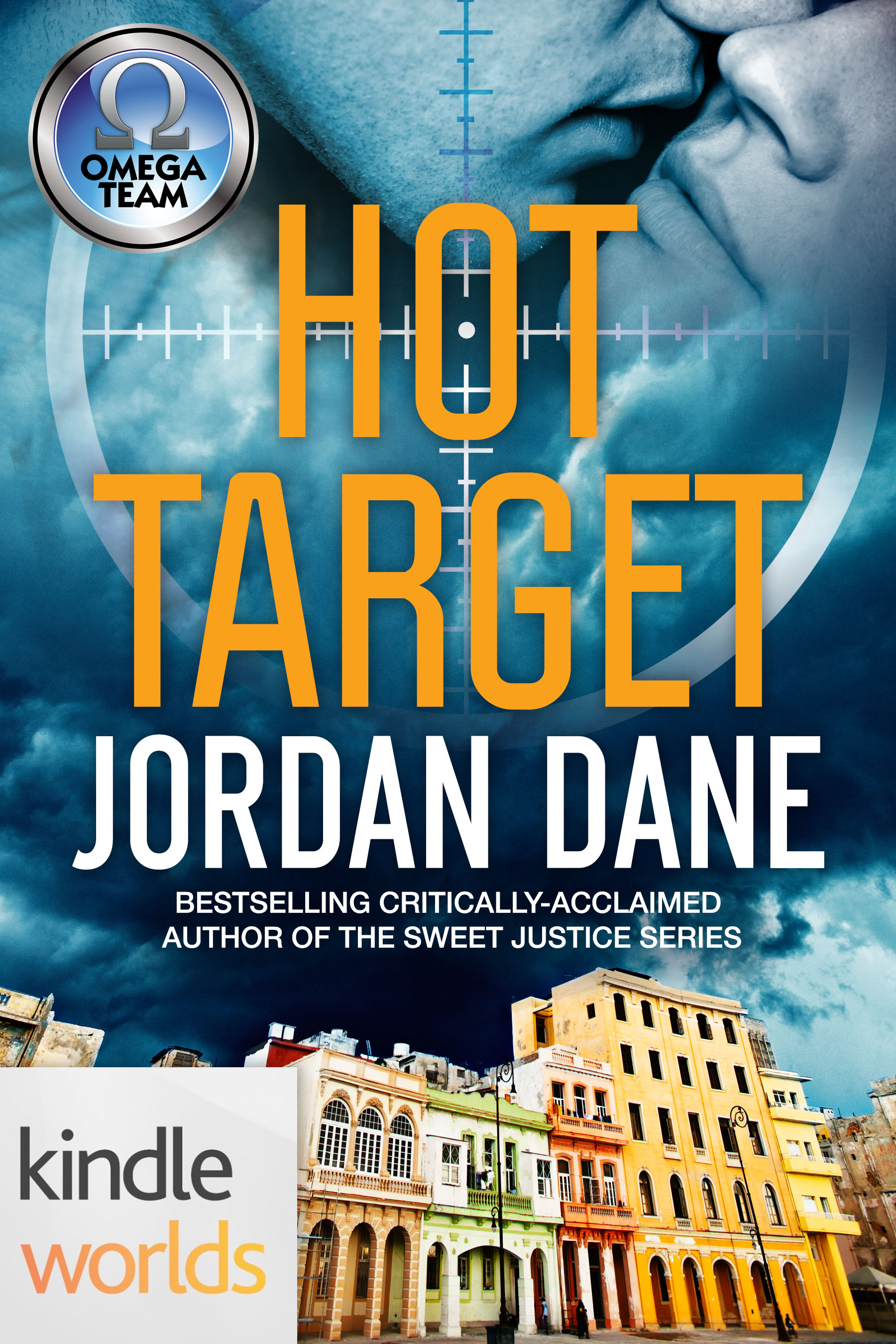
HOT TARGET – Omega Team series – ebook priced at $1.99.

Rafael Madero stands in the crosshairs of a vicious Cuban drug cartel—powerless to stop his fate—and his secret could put his sister Athena and her Omega Team in the middle of a drug war.

Checklist to Publication

By Joe Moore
@JoeMoore_writer

I started writing in one form or another over 30 years ago. It included book reviews, magazine articles covering professional audio and video and operational and tech manuals. As marketing director for an international manufacturer, I was required to generate corporate reports and business plans. Some have said that my first venture into fiction were my business plans.

In addition, I reviewed fiction for 3 newspapers in Florida. I constantly read action-adventure novels (Cussler, Clancy, Fleming) and fantasy (Peake, Tolkien, Brooks). The reason I eventually tried my hand at fiction was because I got tired of waiting for the next Clancy or Brooks novel to come out so I attempted to write stories that would fill in the gaps between their books. If you read any of my novels you’ll see elements of all these authors peek out from between the words.

One of my motivations in blogging at TKZ is to share what I’ve learned with other writers, especially those that are just starting out. I try to cover the stuff no one told me way back when. If I can reveal the answer to a point of confusion or suggest a tip to a writer that’s just starting out, maybe I can save him or her valuable time and even possible rejection.

So my writing 101 series continues today with a checklist to publication.checklist_cleaned

Your manuscript is finished. You’re ready to find an agent/publisher or to indie publish.

First, you need to define your audience. It’s important that you know what type of person or group will go out of their way to find and pay to read your book. What are the characteristics of your target reader such as their age, gender, education, ethnic, etc? Is there a common theme, topic or category that ties them together? And even more important, what is the size of your target audience?

For instance, if your book is a paranormal romance set in the future in which the main characters are all teenagers, is there a group that buys lots of your type of book? If not, you might need to adjust the content to appeal to a broader audience. Change the age of the characters or shift the story to present day or another time period. If your research proves that a large number of readers buy books that fall into that category, making the adjustment now could save you a great deal of frustration later.

Next, you need to define your competition. Who are you going up against? If your book falls into a specialized sub-genre dominated by a few other writers, you might have a hard time convincing a publisher that the world needs one more writer in that niche.

The opposite problem may occur if your genre is a really broad one such as cozy mysteries or romance. You’re going to have to put a unique, special spin on your book to break it out of the pack. Or accept the fact that the genre and your competition is a wide river of writers, and you only hope to jump in and go with the current. Either way, make the decision now, not later.

The next issue to consider is what makes your book different from all the others in your genre. Do your homework to determine what the characteristics are of books that your potential audience loves. This can be done online in the dozens of Internet writer and reader forums. And you can also do the research by discussing the question with librarians and books sellers. Once you know the answers, improve on what your target audience loves and avoid what they don’t. In the early stages of your writing career, don’t be shy in seeking advice. There’s no such thing as a dumb question.

Just keep in mind that you can’t time the market, meaning that what’s really hot right now might have cooled off by the time your book hits the shelves. The moment you sign a publishing contract, you’re still as much as 12-18 months behind what’s on the new release table right now. Indie publishing can help, but there’s a motto in the business that applies to publishing: First to market wins.

Another detail to consider in advance is deciding how you’ll market and promote your book. Sadly, this burden has fallen almost totally on the shoulders of the author and has virtually disappeared from the responsibilities of the publisher. Obviously with indie publishing, it’s all on the author’s shoulders. Start forming an action plan including setting up a presence on the Internet in the form of a website and/or blog, Facebook, Twitter, Goodreads, etc. Also, is there a way to tie in your theme to a particular industry? How can you promote directly to your audience? For instance, if your romance novel revolves around a sleuth who solves crimes while on tour as a golf pro, would it be advantageous to have a book promotion booth at golf industry tradeshows? If your protagonist is a computer nerd, should you be doing signings at electronics shows? How about setting up a signing at a Best Buy or CompUSA? Follow the obvious tie-ins to find your target audience.

Writing is hard work. So is determining your target audience and then promoting and marketing to them. Like a manufacturing company, you are manufacturing a product. Doing your homework first will help avoid needless detours on the way to publication.

Any other “I wish I’d know that” advice?

Letting Go of Bad Ideas

https://www.youtube.com/watch?v=s0sbTLCLpgY

By PJ Parrish

As you know, I have trouble sleeping. Usually, it is because I can’t slow down the hamster wheel in my head. It is whirring around, filled with junk, to-do lists, misconjugated French verbs, woes real and imagined and regrets (I’ve had a few, too few to mention).

And then there are those story ideas floating around in my brain just as I’m trying to drift off. Those tantalizing fragments of fiction, those half-seen shadows of characters-to-be, those little loose pieces of plots just waiting to be sculpted into…

Books?

Here is the question I was pondering last night just before I finally drifted off: Is every idea worthy of a book? Does every story really need to be told? And then, in the cold light of morning, the answer came to me: NO, YOU FOOL!

You all know what I am talking about. Whether you are published yet or not, you undoubtedly have some of the following around your writing area:

1. A manila folder swollen with newspaper clippings, scribblings on cocktail napkins, pages torn from dentist office magazines, notebooks of dialogue overheard on the subway, stuff you’ve printed off obscure websites. At some point, you were convinced all these snippets had the makings of great books. (I call my own such folder BRAIN LINT.)

2. A folder icon in your laptop called PLOT IDEAS or some variation thereof. These are the will-o-wisps that came to you in the wee small hours of the morning, whispering “tell my story and I will make you a star!” So you, poor sot, jumped out of bed, fired up the Dell and tried to capture these tiny teases.

IMG_0487Here’s a picture of my PLOT file. Here are some of the WIP titles: Stud, Panther Book, Silver Foxes, Winter Season, The Immortals, Card Shark. Feel free to steal any of these.
Or maybe you’re one of those bedeviled souls who keeps a notepad by the bed — just in case. (Mine is right under my New York Times Crossword Puzzle Book and paperback of John D. MacDonald’s Ballroom of the Skies.

3. Manuscripts moldering in your hard-drive. Ah yes…the stunted stories, the pinched-out plots, the atrophied attempts, the truncated tries. (Sorry, when alliterative urge strikes, you have to let it out or it shows up in your books). These are the books you had so much hope for and they let you down. These are the books you went thirty chapters with but couldn’t wrestle to the mat for the final pin. These are the books you grimly finished even as they finished you. Maybe you even sent these out to either agent or editor and they were rejected. At last count, I have six of these still breathing in my hard-drive. And at least four others finally died when my Sony laptop did, lost to mankind forever.

So what do you do with all these ideas? You expose them to sunlight and watch them burn to little cinders and then you move on. Because — hold onto your fedora, Freddy — not every idea is a good one. Not every idea makes for a publishable book. And sometimes, you just gotta let go.

Let me give you a metaphor. I think you women out there will get this more readily than the guys. You have a closet full of clothes. Most of the clothes you never wear. But they were really good ideas at one time. Like that hot pink Pucci shift you found at the consignment store but makes your boobs disappear. Like those Calvins you haven’t been able to shoehorn into since 1985. Like that yellow blouse you got at Off Fifth that makes you look like a jaundice patient but you keep it because it is Dolce & Gabanna and you paid $59.99 for it.

I read a good blog entry a while back about “Shelf Books.” I am kicking myself for not writing down who coined this great term; I’m thinking John Connolly? Someone please help me if you know. The idea is that you sometimes have to finish a book just so you can get it out of your system and move on. Doesn’t that make sense? Sort of like cleaning out your closet of clothes that make you frustrated and sad, so you can create space for good new stuff?

We all have Shelf Books. Some are meant to be only training exercises. They teach you valuable lessons that you must learn in order to be a professional writer. I will never forget listening to Michael Connelly talk at a Mystery Writers of America meeting when I was just starting out. He said that he completed three novels before he wrote his Edgar-winning debut The Black Echo, because he knew none of the first three were ready to go out into the world. Fast forward fifteen years to last month when I moderated a panel at SleuthFest with our guest of honor C.J. Box, who told the audience that he wrote four books before he finally hit it right with Open Season (which, like Connelly’s debut, also won the Edgar for Best First Novel.) And I clearly remember reading Tess Gerritsen on her blog where she confessed she wrote three books before she got her first break with Harlequin. She also said how dumbfounded she was that some writers expect to get published on their first attempt.

I think I understand that last thing. I had the hubris to think the same thing myself when I was starting out. But it took me a couple tangos with bad ideas before I found a story that worked. I have also seen some of my published friends lose valuable time not wanting to give up on an idea because they got so emotionally invested in it. And I have seen many unpublished writers lock their jaws onto one idea like a rabid Jack Russell and chew it to death. We all can become paralyzed, unable to give up on our unworkable stories, unable to open our imaginations to anything else. I think it is because we fear this one bone of an idea is the only one we will ever have.  Don’t let anyone kid you — even veteran writers get into this mindset, frozen with fear that they have dried up, that they will never again have another good idea.

For unpublished writers, two things happen when they reach this point:

They self-publish — badly. Meaning without getting editing help or good feedback.
Or they get smart, take to heart whatever lessons that first manuscript taught them, put that book on the shelf, and move on to a new idea.

Here is my favorite quote about writing. I have it over my computer:

The way to have a good idea is to have many ideas.

— Jonas Salk

You have to know when to let go. And you have to trust that yes, you will have another idea. Maybe a good one. Maybe even a great one.

I think I will now go clean out my closet. There is a gold lame thrift store jacket in there I need to get rid of. Here it is. It’s yours if you want it. Check out my ad on LetGo. I will even throw in my un-used book title STUDS.

FullSizeRender

Who is Maewyn Succat & Why Should We Care?

Jordan Dane
@JordanDane

Shamrocks

Shamrocks

Happy St. Maewyn’s Day, everybody!

DID YOU KNOW that according to Irish legend, St. Patrick’s birth name was really Maewyn Succat? Catchy, huh? Saint Patrick changed his name to Patricius after becoming a priest. If he were alive today, how many handles would he have on Twitter?

DID YOU KNOW that we should really wear BLUE on St. Patrick’s Day? His color of choice was a light shade of blue. Green didn’t become linked to the holiday until the Irish Independence day movement in the late 18th century.

DID YOU KNOW that St Patrick was British? His claim to fame came from introducing Christianity to Ireland in the year 432, but he wasn’t Irish. He was the son of Roman parents from Scotland or Wales.

WHO CELEBRATES ST PATRICK”S DAY MORE SERIOUSLY? This is harder to quantify. Of course the Irish celebrate in a huge way by making it a national holiday. New Yorkers have a HUGE parade, one of the largest parades ever since the mid 1700s, but this parade to this day does not allow floats, cars, or other modern conveyances. But Chicago won’t be denied. They dump vivid green dye into the Chicago River, since 1962, and it takes 40 tons of dye.

DID YOU KNOW St. Patty’s was strictly a religious holiday in Ireland for most of the 20th century and the nation’s pubs were closed to celebrate? The one exception for alcohol was the national dog show held on the same day. In 1970, the day was made a national holiday and the beer flowed. Yes, that day, the holiday went to the dogs.

WHAT”S UP WITH THE SHAMROCKS? According to legend, the saint used the 3-leafed clover to describe the Holy Trinity. There’s nothing like a visual.

DID YOU KNOW St. Patrick was the Pied Piper of Snakes? The Irish might be full of blarney on this one. St. Patrick gets credit for driving all snakes out of Ireland, but scientists and fossil records claim Ireland has never been a refuge for snakes. It’s too damned cold and the surrounding seas make a natural barrier. Unless snakes come in on a plane, those slithering varmints are banished.

DID YOU KNOW THERE ARE NO FEMALE LEPRECHAUNS? Whaddup with that? In traditional Irish folk tales, there are no lady wee people, or snappy dressed little guys for that matter.

DID YOU KNOW that the phrase “Erin go Bragh” is NOT the correct pronunciation? It should be “Éirinn go Brách” which means “Ireland Forever.” So get it right, people.

Up for discussion:

How do YOU celebrate St. Patty’s Day? Whether you hoist green brew these days or have a colorful story from your younger years, please share your memories of St. Patty’s Day with your TKZ family.

HotTarget (3)

Rafael Madero stands in the crosshairs of a vicious Cuban drug cartel—powerless to stop his fate—and his secret could put Athena and the Omega Team in the middle of a drug war.

An Amazon Kindle Worlds series – Ebook bargained priced at $1.99 at this LINK.

Action vs. Suspense

By Joe Moore
@JoeMoore_writer

BREAKING NEWS: On the 15th of March, 44 B.C., a group of Roman Senators approached Julius Caesar while he sat on his golden throne, produced daggers and assassinated the emperor by stabbing him 23 times. His death paved the way for the Roman Empire and made his name a household word. Even now, Beware the Ides of March still carries a dark warning. Hopefully, everyone made it through the Ides of March unscathed.

A similar event occurred on the Ides of March, 2016. Yesterday, Barnes & Noble put the final kibosh on the future of the NOOK by giving customers a week to salvage their purchase content. NOOK sales decreased 33% for the quarter. Digital content sales were down 23%. Device and accessory sales down 44%. Online sales declined 12.5%. Kindle is now and always was the undisputed Lord Of The E-readers. And one Amazon to rule them all.

And now this.

I’ve found that one of the mistakes beginning writers often make is confusing action with suspense; they assume a thriller must be filled with it to create suspense. They load up their stories with endless gun battles, car chases, and daredevil stunts as the heroes are being chased across continents with a relentless batch of baddies hot in pursuit. The result can begin to look like the Perils of Pauline; jumping from one fire to another. What many beginning thriller writers don’t realize is that heavy-handed action usually produces boredom, not thrills.

When there’s too much action, you can wind up with a story that lacks tension and suspense. The reader becomes bored and never really cares about who lives or who wins. If they actually finish the book, it’s probably because they’re trapped on a coast-to-coast flight or inside a vacation hotel room while it’s pouring down rain outside.

Too much action becomes even more apparent in the movies. The James Bond film “Quantum Of Solace” is an example. The story was so buried in action that by the end, I simply didn’t care. All I wanted to happen was for it to be over. Don’t get me wrong, the action sequences were visually amazing, but special effects and outlandish stunts can only thrill for a short time. They can’t take the place of strong character development, crisp dialogue and clever plotting.

As far as thrillers are concerned, I’ve found that most action scenes just get in the way of the story. What I enjoy is the anticipation of action and danger, and the threat of something that has not happened yet. When it does happen, the action scene becomes the release valve.

I believe that writing an action scene can be fairly easy. What’s difficult is writing a suspenseful story without having to rely on tons of action. Doing so takes skill. Anyone can write a chase sequence or describe a shoot-out. The trick is not to confuse action with suspense. Guns, fast cars and rollercoaster-like chase scenes are fun, but do they really get the reader’s heart pumping. Or is it the lead-up to the chase, the anticipation of the kill, the breathless suspense of knowing that danger is waiting just around the corner?

Do you like the anticipation of action more than the action itself?

And The Whimper Is…

Unpacking the Edgars

Unpacking the Edgars pre-banquet

By PJ Parrish

So I am doing my usual warm-up before hitting the computer this morning: folding laundry and watching “Frazier” reruns. I love Frazier because beneath his smooth surface is a roiling bog of neediness and insecurity.

Today was the episode where Frazier and his producer Roz are nominated for the Seebee Award, given out to Seattle’s best broadcasters. Frazier tries to be above it all, but he just can’t. He wants to win, dammit! But at the banquet, he finds out he is up against the aging icon Fletcher Grey. Fletcher has been nominated 11 times in a row and lost 10. Fletcher’s date is his 84-year-old mother who has flown in from Scottsdale — for the 11th straight year. Fletcher is also retiring. Frazier tells Roz, “if we win, they’ll string us up.” Roz says, “I don’t care. I’d crawl over his mother to win this award!”

Frazier loses, of course. His agent Beebee deserts him. Roz gets drunk on Pink Ladies.

Sounds like a couple award banquets I’ve been to. I’ve been chairing the Edgar Awards banquet for ten years now, plus Kelly and I have been lucky to have been nominated for some awards over the years. Our second Louis Kincaid book, Dead of Winter, was nominated for the Edgar. We were desperately excited. Bought new dresses. Went to New York City. Kelly’s son Robert, her date for the big night, rented his first tux at Abe’s Formal Wear on Sixth Avenue. We met our agent for drinks in the Grand Hyatt bar but ordered diet Cokes because we wanted to be stone sober in case we won and had to give a speech.

We sat through the excruciatingly long evening, dry-mouthed and wet-palmed. Then our category came up and…we lost.  We all reached for the wine bottle in the middle of the table at the same time.  I think my agent cried. I’m pretty sure I got drunk.

Here’s the thing about awards. Yes, it is always an honor to be nominated. But it bites to lose. I can’t lie and tell you otherwise.

I’ve been thinking about this lately, and not just because of Frazier. This is the week I start gearing up for the Edgar banquet, which is April 28. (Click HERE to see the list of the 2016 nominees.)

Badges ready for the nominees.

Badges ready for the nominees.

I love this gig.  It’s really cool to see old friends again every year and hang out with the big names at the cocktail reception. But my favorite chore is helping to man the nominee greeting table, because I get to meet all the nominees who come in, spouses and children in tow, the mens’ clip-on tux ties askew, the women’s lovely faces flush with anticipation. They all are so darn happy. I want them all to win. Because I do know how that feels as well.

In 2007, our book An Unquiet Grave was nominated for the International Thriller Award. And just like the first time, all the toads and newts in my bog of insecurity bubbled to the surface.

I went to banquet with no expectations, sitting  between my agent and Ali Karem. Everyone wished me luck, but I was filled with dread. My sister Kelly couldn’t make it, so I felt pretty alone despite all the good vibes. We might write hard-boiled, but I am not. The evening dragged on through the various categories. Finally, I couldn’t take it anymore. I bolted for the lobby.

Jim Fusilli was standing there and barred my way, putting an arm around my shoulders. Each nominee was announced by reading the first line of the book. Ours is “The Christmas lights were already up.” I remember thinking, “God, that sucks.”

I heard the title of our book announced as the winner. I started crying. I don’t remember what I said on stage. Many authors, when they are up for awards, jot down a few bon mots so they don’t make asses of themselves. They at least think things through. These are the authors whose gracious and often clever speeches are quoted on Facebook the next morning.

This is what SHOULD have been in my head as I went up there:

“Thank you so much for this great honor. First, I want to thank the ITW judges who put their careers on hold for months. Their job is doubly hard in that they first must read hundreds of books but then, they must decide on just one when any of the five finalists would be worthy. Second, I want to thank my fellow nominees. I am honored to have my book mentioned among their fine works. Third, I want to thank my agent and editor who….”

This is what was REALLY in my head:

“God, I can’t believe I am crying! How pathetic and needy! Where’s the friggin’ stairs? I can’t see! Who is that man at the podium? Damn, I forget his name! THE LIGHTS! I CAN’T SEE ANYTHING! Do I have lettuce on my teeth? Agent…mention her name. My bra is showing, I just know it. DON’T PULL AT YOUR BRA!! He’s handing it to me. Jesus, it’s heavy…don’t drop it…don’t drop it…don’t drop it. Say something nice about the other nominees! Can’t…can’t…can’t remember their names. YOU TWIT! You just sat on a panel with TWO of them this morning! Wait, wait…is it Paul LeVEEN or Paul LeVINE??? Forget it…buy them a drink later. I should have gone to the hairdresser before I left home. My roots are showing. Damn, did I thank my SISTER at least? JESUS! THE LIGHTS! Stop talking now…you’re rambling, you ass…stop now and just go sit down. Okay, leaving now. TAKE THE AWARD! Don’t drop it…don’t drop it…don’t drop it. Good grief…I’m here in New York City wearing Nine West because I was too cheap to spring for those black Blahniks at Off Fifth. Dear God, just let me just off this stage so I can get to the john and pull up my Spanx and get a glass of wine….

So, here’s the thing, dear writer friends, as we enter the award season for the Edgar, the ITWs, the Shamus, Anthony, et al:  Awards are nice, but they won’t change your life or probably not even affect your writing career.  Truth be told, you can go back and read the list of past Best First Novel Edgar winners (click here), and you’ll be shocked how few made it big. And some of the brightest bestselling lights in our crime business have never won squat. They don’t keep an empty spot on their shelf hoping to fill it with that little porcelain Poe statue. They fill their shelves with their finished books. That is what really matters — hard work, consistency, and the constant quest to get better.

But…if you are ever lucky enough to be nominated for something — anything — enjoy the moment. It really is an honor to be recognized by your peers. Just leave the Spanx at home.

The Dreaded P Word

Apologies for having a rather truncated blog post this week – owing to a kitchen knife injury to a finger requiring stitches I’m a little less ‘keyboard able’ than usual….Although there’s always the craziness of the dreaded ‘P’ word to keep me distracted…and by that, of course, I mean politics.

As a general rule I can’t avoid at least some politics in my writing – history tends to be enmeshed in the politics of the day, but as another general rule I tend to leave out (overtly at least) my own political ideals and opinions in my books (I figure readers don’t want to hear them but would rather immerse themselves in a historical period). But politics shapes indirectly (and sometimes very directly) all the characters in my work – which can be a challenge when many of the political ideas espoused in early 20th century England are an anathema to modern sensibilities. However, I believe that well-crafted characters, placed in an appropriately explained historical situation, help illuminate the politics of an era far more so that a non-fiction history book  ever could.

That being said, I’m sure many  writers try to avoid injecting obvious ‘politics’ in their novels. No one wants to alienate a sizable portion of their readership after all, and usually a book’s  characters can display a range of values and attitudes to encompass contemporary (as well as historical) political thought. It’s hard at the moment, however, to avoid the dreaded ‘P’ word as the current election cycle is on our news 24/7 (or so it seems!).

So I thought I’d check in with the TKZ community to see how you tackle politics in your writing – do you avoid injecting your own political views and opinions in your books? Do you consider a character’s politics during their developmental stage?  I  find it  both interesting and challenging to explore a range of opinions and political/social beliefs when creating my characters, but obviously, as a historical writer, I also have to reflect the times I’m writing about. There are many social issues that were viewed quite differently in Edwardian and WW1 England for instance and I try to respect the era by making sure I encapsulate (as best I can) the mood, politics and social conditions of the time. What about you? what’s your view and experience of the dreaded ‘P’ word in your mysteries (both as a reader and a writer)?