Editor: Mary-Theresa Hussey
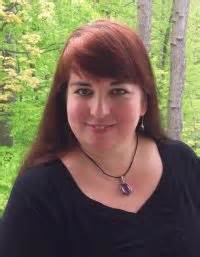
My guest today is my favorite editor (for my Young Adult books at Harlequin Teen), Mary-Theresa Hussey. Her passion for books shows in everything she does. I love collaborating with her. She has a meticulous eye for detail, but her true strength lies in her realistic understanding of character motivation and the emotion of a story. I’m proud to have her as my guest today at TKZ. Welcome, Matrice!
***
So you’ve written your book shared it with a critique partner, revised it, set it aside for a bit, revised it once more and are ready for the next step. Your mother, friend and sister love it and think it’s perfect.
What’s next? Well, it does depend on your goals for that novel. Do you want to find an agent? A publisher? Self-publish it? Go Indy? Do you want to share it with a few people or the wider world?
If you’re aiming at an agent or publisher, you might feel it’s in solid shape and you’ll wait for those professionals to give feedback and direction. That can be the right route if your project fits in with their goals as well.
However, if you haven’t gotten many bites, or you want to go indy, then you might want to investigate working with a freelance editor. The editor might help pinpoint some areas that will capture that agent/publisher or else give you the confidence to self-publish yourself. Freelancing can be hard for anyone who decides they are interested in going down that path. But knowing that various aspects like the finances can be handled with a simple invoice template, this means one less aspect to think about. You’ll have more time to focus on what you love to do, which is writing.
Luckily there are some places where you might be able to get the resources you need to help you along with your freelance career, for example, using an invoice template could be a good way of keeping on top of your clients.
So what does the freelance editor bring to the table?
She represents the reader in the bookstore or booksite, the ones who will pay to read your book—and hopefully all the ones after that!
She is not your friend or critique partner who listened to you talk about all the characters and plot and goals. If it’s not on the page for her, she’s going to question it and ask why—or why not.
She has not been in your mind to understand the motivations or conflict or themes. Though you don’t need to hit the reader over the head, sometimes you’ve got to explain the elements that you know but the reader doesn’t have a clue about.
She doesn’t love your darlings in the same way, and will tell you to cut or trim or toss as needed.
She’s caring but dispassionate. She’s looking for what will make the best story and draw that reader to the end. She won’t aim to hurt your feelings, but will challenge you on what makes a better novel.
She should be reading the manuscript that you’ve polished, gotten feedback on and are confident is ready to go, not the first draft. Have it in as strong as possible a shape so it’s better for both of you.
She should also have a knowledge of and appreciation for the genre you’re writing in so that the notes are targeted to your goals, not her own ideal book.
She has a strong sense of grammar, of rules, and knowing what to encourage as your voice and when to rein in flights of fancy.
She may, depending on the agreement, be able to give you feedback on titling, copy and other material. But that can be an editor specific element.
Most important, depending on your needs, you might want a development editor, line editor or copy editor. Make sure you know what you want and hire the right person at the right stage! Some editors are especially talented in one area or another. Make sure you’re getting the right person for you at the right time.
The Developmental Editor is looking at the big picture of pacing and structure and characterization and plot. She’s not going to focus on grammar or eye color or such, but is looking at the overall goals of your story and how you are achieving them.
The Line Editor will probably note specific areas where pacing or structure or characterization needs to be tweaked, but hopefully all those elements will have been addressed. She’s going to be looking at the specifics of reading the manuscript, looking for errors in fact and name and restructuring sentences. She does read it line by line to see if the author has expressed herself as clearly as she could.
The Copy Editor focuses on the details. She will know what all the characters names are, and their relation to each other and probably hair and eye color, but isn’t going to ask if the pacing is too slow. She’ll fix all the grammar issues and typos, but won’t comment on inconsistent characterization—unless the character is misstating facts between chapters. She’ll find the typos but won’t question the plot (unless you have your character walking out of the room twice—that she’ll notice!).
An editor—freelancer or not—will wear many hats, but there are some things she probably won’t do.
She’s not a writing teacher. She won’t teach you the ins and outs about craft. She should be able to point out the errors and why something would be better in another form, but it probably won’t lead to hours of one-on-one discussions about the reasons behind your choices and her corrections.
Since she probably won’t take the time to teach you how to write a better story, she’s also not going to (depending on the agreement) rewrite the book. She’s working with your words and making suggestions, not rewriting everything herself. She’s certainly planning on helping improve the story, but it’s your writing that is the base of it all.
Along those lines, she may or may not be a writer herself. If it’s important to you one way or the other, check that out first! It can be incredibly helpful at times to have an editor who is a writer, but sometimes not.
The freelance editor is not a publisher. She probably knows a bit about self-publishing and has picked up information on metadata and ISBNS, but it will be the author’s responsibility to work through the process.
She’s also not likely to be a miracle worker. No editor can guarantee the book will be picked up by an agent or publisher or become number one on the bestseller list. What she can strive for to the best of her knowledge and ability is that all the elements that make a stronger story have been reviewed and addressed and there are minimal errors of grammar and typos in the story.
Naturally, I think a good editor brings a lot to the table, but the author has to do the work first and understand her own goals for the project. It’s best if you are both on the same page going in, so you end up in the strongest possible position at the end of the revision/edit. In the end, it’s the author’s name on the book, and the author who stands behind her words.
So what are you looking for in an editor? Any good or bad experiences? Do share what you can.
After a long editorial career at Harlequin, Mary-Theresa Hussey is now offering her years of experience to authors and industry professionals as a freelance editor. She’s passionate about books and good stories–and she wants to be sure that they are well told. Check out her site at www.GoodStoriesWellTold.com
 Be honest & share the real you.