About Joe Moore

#1 Amazon and international bestselling author. Co-president emeritus, International Thriller Writers.

We have liftoff!

By Joe Moore

blade-cover4-smallToday is launch day for my new thriller, THE BLADE (co-written with Lynn Sholes). This is our first venture into indie publishing. After 5 novels written together and released through a traditional publisher, we decided to try something different—sort of like a tennis player moving to a clay or grass court after years on hardcourt. The game is the same—write the best book you can—but becoming a “hybrid author” brings new challenges. Suddenly, we are the publisher making all the decisions that were left to our traditional publisher in the past—editing, cover design, marketing, budget, advertising, promotion, and on and on. So far, it’s been fun. Now we’re laying it out there for the taking. Like a science experiment, we’re either going to prove we can do it or blow up the lab.

So what is THE BLADE about, and how did we come up with the concept? First, here’s the elevator pitch.

While investigating the theft of a 4000-year-old biblical artifact, a federal agent finds herself hunting an international fugitive who threatens Las Vegas with a nuclear device if a ransom from all the casinos is not paid.

After writing 5 supernatural apocalyptic novels, we decided we wanted to tackle a “straight ahead” thriller—no “woo-woo” as we like to call it. We also wanted to write a book in first person. THE BLADE is the result—all the protagonist’s chapters are in first person.

But how did the concept come about? As I’ve blogged about before, we started with “what if” questions. What if the Nazis had developed an atom bomb? What if they were ready to use it but time ran out because the war ended? What if the weapon was hidden away in a secret Austrian mountain bunker and eventually forgotten? What if 65 years later, it was found and fell into the wrong hands?

The second part in developing the concept was our new main character Maxine Decker. During an attempted recovery of stolen artifacts in Iraq, Max is critically wounded. After 20 years as a federal agent for the Air Force Office of Special Investigations (OSI), she decides to call it quits and retire to her Colorado cabin to enjoy a life of not getting shot at. Of course, just when she thinks she’s out, something pulls her back in. Her ex-husband, a computer forensics expert also with the OSI shows up to inform her that a stolen biblical relic, one she has deep emotional attachment to, may have surfaced on the black market—the 4000-year-old Blade of Abraham. The news entices her back into temporary service as an OSI consultant. What she doesn’t realize is that from that moment, everything that happens is a planned setup motivated by hatred, revenge and a big dose of deception.

How does all this tie into the Nazi atomic bomb? You’re just going to have to read the book. But, as Lisa Gardner said, "THE BLADE completely kept me guessing. As fast as you think you know what’s going on, you’re wrong. An absolute thrill ride.” David Morrell called THE BLADE, “a dark, chilling cat-and-mouse game to stop an unimaginable act of terrorism.” Suspense Magazine calls it “One incredible suspense thriller.” And Doug Preston said, “From the opening scene in Iraq to the final explosive climax in the mountains of Colorado, this is one hell of a thrill ride.”

Starting tomorrow, Feb 21 through Saturday, Feb 23, you can download THE BLADE for free at Amazon. Also included is an excerpt from our #1 Amazon bestseller, THE PHOENIX APOSTLES. I hope you get a chance to read and enjoy our latest thriller. Let me know what you think, and forgive me for this shameless promotion.
How to make it to the Big Show

“Do you know what the difference between hitting .250 and .300 is? That’s 25 hits…25 hits in 500 at bats is 50 points…okay? There’s 6 months in a season. That’s about 25 weeks, that means if you get just one extra flair a week, just one. A gork, you get a ground ball, you get a ground ball with eyes! You get a dying quail, just one more dying quail a week and you’re in Yankee Stadium.” 

— Crash Davis in “Bull Durham.”

By P.J. Parrish
I love Crash Davis. And I really love his great speech about that razor-thin line between the major and minor leagues. I was thinking about this speech the other day as I read our royalty statement from Amazon. 
Because for two weeks, we made it to the Big Show. We made it to number one on a Kindle bestseller list. We had 47,000 downloads in 48 hours. We made some really good scratch.
We did it with one book. One book that is 12 years old. A book that is now out of print. A gork, a flair, a ground ball with eyes.

So this is the story of our great Kindle experiment. It’s only one writer’s limited experience. But it has totally reshaped my thinking about my career and my place as a business person within it. Maybe you’ll find it instructive. Or maybe it will inspire you to try something different than what you are now doing. Because I believe that in this fast-shifting landscape, we writers — nay, storytellers — are the only things that can’t be replaced. In fact, this new publishing machine is going to have to be rebuilt around us.  We aren’t cogs anymore; we’re the engines.

A quick caveat: Five years ago, I was one of those folks who preached the gospel of Never Self Publish. It was the road to oblivion, the realm of the desperate. There was a special ring of hell reserved for writers who didn’t want to work hard or pay their dues. And five year ago, self-publishing WAS all that.

But ebooks have changed everything. Now major authors are buying back their ebook rights; mid-listers are finding new life for their abandoned backlist titles; newbies like Colleen Hoover are breaking into bestsellerdom; and everyone is reading the small print in their old contracts.

Five years ago, you were a fool if you self-published. Now, you’re a fool if you don’t.

Another caveat: I was really apprehensive about doing this. I had to be talked into it by two writer friends.(Take a bow Christine Kling and Sharon Potts.). I didn’t think it would work. Boy, was I wrong.

Here’s the background: Kelly and I have published twelve books with two traditional New York publishers.  Only our first two-book contract from 2001 has no mention of “electronic rights” so we decided to self-pub.

We chose our second book, “Dead of Winter” because it is far superior to our freshman effort. First rule of ebook self-publishing: DO NOT PUT OUT A “LESS-THAN” BOOK.

We decided to enroll it in Kindle Select. This means you can’t load it into any other reader formats like Nook and Kobo. Why did we do this? Because Kindle Select lets you give the book away if you want (More on that later) and the book is placed in the Kindle library, which means readers can borrow it instead of buying it. (More on that too)

Also, Kindle’s formatting is pretty easy to learn. Many authors pay others to do this but Kelly is tech-savvy and we mastered the learning curve quickly. Nook’s formatting program is a bitch. (More on that later).

Kelly designed our cover (below). You can’t legally use the original one your publisher created.

Then we wrote our “description.” This is like the back copy on your book and potential readers can click on it to find out what the book is about. It’s important that this be enticing; authors often go back and tweak this endlessly to get it right. Here is what we wrote:

Available for the first time in eBook! Read the thriller that launched the award-winning New York Times bestselling Louis Kincaid series.

In the quaint tourist town of Loon Lake, Mich., a killer is taking his vengeance. One by one, the bodies of cops are found, brutally executed, with mysteriously coded death cards placed with each corpse – the gruesome signature of a psychopath. And the only sound louder than doors being locked against evil is the sound of hearts beating in terrors. Louis Kincaid came north looking for refuge, a place to forget his past. But now he’s landed in the middle of an investigation that’s a terrifying journey through a town’s fiercely protected heart of darkness.

2001 Edgar Award Finalist
Praise for DEAD OF WINTER and PJ PARRISH
“Stylish blend of mystery, knife-edge tension and a complex hero readers care about.” – USAToday
“Tense, thrilling, and your manicurist’s best friend – you’re going to bite your nails.” – Lee Child
“Full of intrigue and edge-of-the-seat suspense.” – Michael Connelly
“The author’s ability to raise goose bumps puts her in the top rank of thriller writers.” – Publishers Weekly starred review

We priced it at $2.99, loaded it up, sat back and waited for the hordes to line up at our virtual door.

After 51 days, we had sold 128 copies. I’ll do the math for you: Even at Amazon’s 70% royalty rate, that means we made $267.90. Which means I made $133.95. (Remember, there’s two of us.)

Big whoop, huh?

We decided we didn’t like the way the cover looked in the Amazon store. It looked muddy and had no pop. (I wrote a KILL ZONE blog about bad ebook covers Jan 15; you can find it in KZ archives) We downloaded a new cover.

On day 52, we pulled the trigger on Amazon’s giveaway option. We gave our book away free for three days.

In the first forty-eight hours, we had 47,000 downloads. It shot to No. 1 in Amazon’s free bestseller store for all mysteries and thrillers.

After three days, we took it back to $2.99. In the first three days, it sold almost 3,000 copies. And here’s the gravy: It was “checked out” of the Amazon library almost 1,400 times. You get an extra royalty for that which averages $1.88 per download but has gone as high as $2.85 for us.

“Dead of Winter” rose to No. 15 on the PAID mystery/thriller bestseller list. It made it to No. 39 on the paid list for ALL Kindle books (that includes all fiction and non-fiction, classics, cookbooks and even the Bible). We — P.J. Parrish — suddenly appeared on Amazon’s Most Popular Author’s list. (I didn’t even know it existed).

We did no advertising. Nada. We announced it on Facebook and sent out a newsletter blast (But that goes to our fans who’ve already read it; we were trolling for new fish). The only thing we did was to take a day to contact blogger sites that are dedicated to giveaways. (There’s a whole cottage industry devoted to this. See Christine Kling’s FOR WRITERS website for advice on this. Nancy Cohen also listed some here at KZ in her February 13 post.)

The book continued to sell at the same fast rate through all of January and into February. Our borrows increased. Today, as I write this, the “glow” is over. (That’s what Christine calls that big sales bump after a giveaway). Sales are on a slow descent but even last week, the book sold an average of 112 books a day.

Other benefits I didn’t see coming: Our reviews for “Dead of Winter” went from 32 to 93, all from readers who said they had never read us before. The book was featured on dozens of blogs. And get this: We saw a bump in sales for our other ebooks (based on Amazon ranking). The ones put out by Pocket, priced at $7.99 moved up. But we saw a significant bump for the ebook that our other publisher priced at $4.08. That book, “An Unquiet Grave,” published 7 years ago, went from Amazon Siberia up to no. 7,057 and today is hanging on at No. 64 on the Private Eye Bestsellers list. Which illustrates, to me at least, the important of being able to price your ebooks right.

And I just found this out an hour ago: our new book HEART OF ICE (due out next week) has crept onto the bottom of the Amazon PI bestseller list at No. 97.

Now one word here about Nook et al.

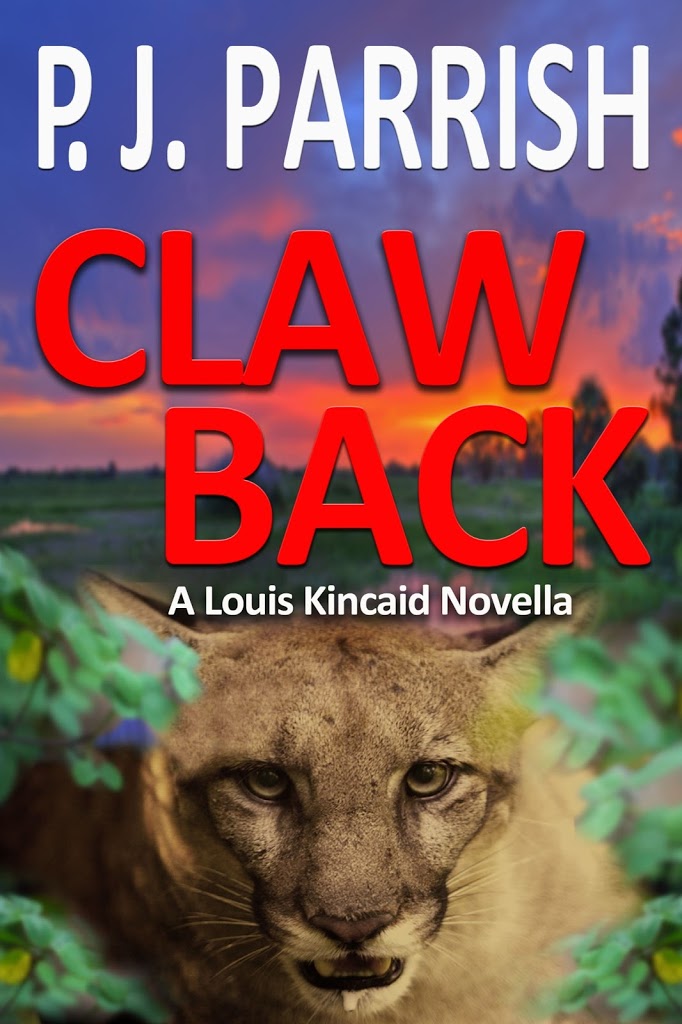
While we were doing “Dead of Winter” we self-published CLAW BACK. Because it was an original novella, we wanted to make it available to all formats. We went to the Barnes & Noble author website to find out how to self-pub it. It was like trying to cut your way through a thicket with nail clippers. We bought the Scribners software to learn Nook formatting but were defeated by its intricacies. (You have to decide where your tech breaking point is).

We sent “Claw Back” to Smashwords, a formatting company. Smashwords also distributes your ebook to all the non-Kindle sites. A week went by and the book still wasn’t in the Nook store. We emailed; B&N said it was in the system. Two more weeks went by. Crickets. B&N just kept saying it would appear “soon.”

On Jan. 17, we pulled it and enrolled it in Kindle Select at $3.99. Sales were small. We dropped the price to $2.99 and it took off. Sales aren’t as great as “Dead of Winter” but they are steady. As I write this, “Claw Back” is No. 95 on the police procedural bestseller list. And we haven’t given it away yet because we want to time it as a “slingshot” prelude for our new book.

I’m not trying to bash B&N here. God knows I don’t want to see any bookstore die. But a report in Slate this week says that contrary to earlier reports, losses in the Nook division are going to grow this year rather than staying flat. They didn’t exactly make it easy for me as an author to reach my readers.

So what’s the take-away here?

I won’t turn my back on traditional publishing. I still want “tree” books in my readers hands, if that is the delivery method they prefer. But I want to reach as many readers as I can and I want to do in ways that are creative and flexible. So I will continue to self-publish.

Because you can hit a gork or a flair and make some good money. If you’re good and lucky you can even make enough to live on so you can write more. But maybe even more important, you get control. YOU decide when to put your book out there. YOU decide what the cover looks like. YOU decide what the price should be. And YOU decide exactly what direction your career is going to go.

Oh, there’s one more cool thing: You can actually make sense out of those Amazon royalty statements.

Digging up the Past

by Clare Langley-Hawthorne

Being a wee bit of a history nerd, I greeted the news confirming that Richard III’s bones had been dug up in a parking lot in Leicester with great excitement. I mean how often do we get to rehabilitate one of history’s greatest (and many argue much maligned) villains? No doubt we will soon see a rash of new books, both fiction and non-fiction, on dear old Richard and there’s even talk (no surprise) of a movie. 

What I love most about the ‘mythology’ surrounding Richard III is the passion it raises. For me that’s what makes history come to life – real people and real questions over what they did or did not do (always more interesting when allegations of murder are thrown into the pot as well!). From Josephine Tey’s Daughter of Time to Sharon Penman’s Sunne in Splendour and Anne Easter Smith’s A Rose for the Crown, I’ve always loved reading interpretations of Richard III’s life. 

Who knows what other new evidence will come to light now we literally have his bones to study (for instance, they have already put together a facial reconstruction of what he would have looked like and confirmed Richard did indeed have curvature of the spine). The next logical step in the possible ‘rehabilitation’ of Richard III would be to locate the bones of the princes he supposedly had murdered (rumoured to lie beneath Westminster Abbey).

I just love this kind of stuff! 

So what would you like to see as the next ‘coolest grave’ to be discovered? How about Genghis Khan as some have suggested? Rumor has it British archaeologists have their sights of uncovering the remains of both Alfred the Great and Henry I but I’m not sure how much public excitement either of these ‘finds’ would generate. 

What famous bones would you like to see unearthed?


Write Your Truth

James Scott Bell
@jamesscottbell

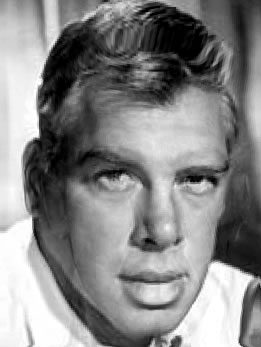
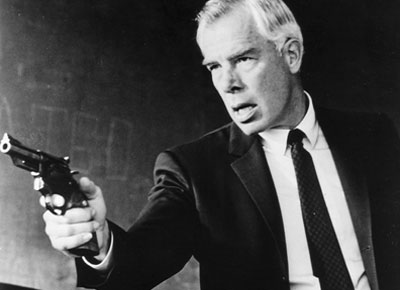
On a cool April night in 1950, a young actor got the chance to do a scene in the Actors Studio, in front of the legendary Lee Strasberg. This was the Valhalla of all up-and-coming actors in New York. It wasn’t easy to get a scene here, let alone be invited to join.
The scene called for this young actor to portray a soldier dying of gangrene. When the actor finished, Strasberg told him he had not sufficiently portrayed the pain of someone dying of this condition.
The actor interrupted him. He said that he, Strasberg, was the one who was misinformed. You see, this actor had been a Marine in combat during World War II, and had seen soldiers dying of gangrene. He knew that in the final stages they felt no pain at all.
Furious at being contradicted in front of the class, Strasberg told the actor to leave and never return. The actor responded with a two-word exit line before storming off.
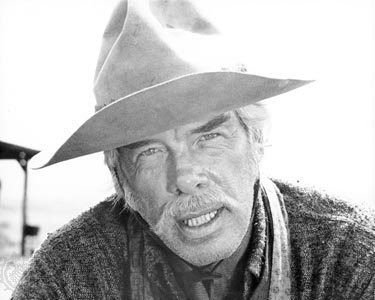
The young actor’s name was Lee Marvin. 


Marvin would ever after infuse his acting jobs with whatever truth was inside him. And what was inside him was a volcano.
Growing up, Marvin had ADD and dyslexia in a time when no one really knew how to deal with them. More discipline was the only prescription. No wonder Marvin hated school and was constantly in trouble. He was always fighting. Once, as a teenager in a boarding school his parents desperately tried, his roommate threw some trash out the window. Marvin told him that was a stupid thing to do. The roommate called him a son of a bitch. Marvin later recalled, “I said, ‘Call me that again and I’ll throw you out the window.’ He called me it again and I threw him out the window. So, they kicked me out of school.”
With fighting such a constant in his life, it was no surprise when, at age seventeen, just after the attack on Pearl Harbor, Lee Marvin joined the Marines.
After Boot Camp and training, he shipped out for action in the South Pacific. What he saw there was not the glory often depicted in the movies. He saw life-altering horror. He was a sniper with many kills. He also saw hand-to-hand combat, wiped out machine gun nests, and was almost killed on several occasions. Once, a Japanese soldier came at his face with a bayonet. Marvin took it away and bayoneted the soldier “all the way to the gun barrel . . .”
A climactic battle in Saipan resulted in 80% casualties in Marvin’s unit. Marvin was wounded and ended up in a hospital. He was 21 years old.
And from then on dealt with PTSD, alcoholism, and a four-pack-a-day cigarette habit.
But American men of that era were expected to “soldier on” in life, and that’s what Marvin did. Like so many returning vets he had a hard go finding what work to do. He spent time digging ditches and hand-threading pipes. And drinking.
Then one morning in 1946, Marvin was sleeping off a drunk in a public park in Woodstock, NY. A Red Cross nurse woke him up and started talking about community service. Next thing he knew he was involved in a local Red Cross benefit at the town hall, a production entitled (appropriately) “Ten Nights in a Barroom.”
He got the acting bug. He did what most actors did in those days, pounded the pavement in New York. He got some work, told Lee Strasberg off, and later headed to Hollywood where he heard there was money. He started landing small roles, and turned up on an early Dragnet episode. Jack Webb, star and producer of the cop show, was so impressed with Marvin’s performance that he made sure influential people around town saw it.
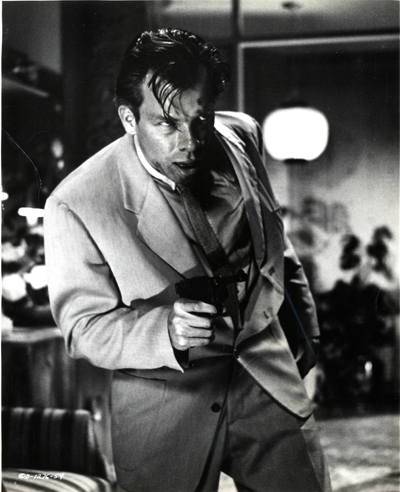
Marvin’s breakout role was Vince Stone, a mob strong arm in Fritz Lang’s The Big Heat (1953). In a chilling moment that made movie history, Vince gets mad at his girlfriend, played by Gloria Grahame. She’s been yapping to a cop. He throws a pot of scalding coffee in her face, scarring her.  No wonder Marvin became a steady movie heavy after that. 


To expand his image, Marvin starred in a late 50s TV cop series, M Squad. The money was good but he never took to the small box. Later he said, “Creatively, an actor is limited in TV. The medium is great for pushing goods. Sell the product, that’s the goal. . . But, I’m not interested in pushing the products; I’m interested in Lee Marvin, and where he’s going as an actor.”
We writers need to ask ourselves the same thing. Are we just trying to push a product, or do we have somewhere we want to go as a writer? Are we playing it safe? Or is there a truth we have that is burning to get out?
When Marvin was cast as the drunken gunfighter in Cat Ballou (1965), no one thought the movie or the role would do that much. But it became a surprise hit, and Marvin’s hilarious performance (given reality by his own struggle with the bottle) ended up winning him an Academy Award for Best Actor of the Year. 

And that, in turn, rocketed Marvin into a star status he never gave up. Next came some iconic roles, including the tough major in The Dirty Dozen, and the remorseless thief bent on revenge in Point Blank.

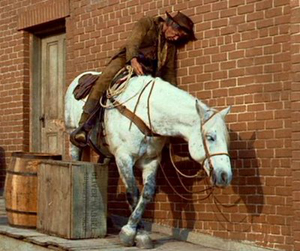
But I think my favorite Marvin performance is in the under appreciated Western, Monte Walsh (1970). It’s an elegiac tribute to a cowboy in the fading West who refuses to give in. In a way, it sums up what the actor was all about. There’s a point in the film when Walsh is offered a part in a Wild West show, but he’d have to dress up in gaudy duds and put on a false front. Despite the money, despite the comfort, despite the security this would offer him, he refuses, saying, “I ain’t spittin’ on my whole life.”

Which assumes you have a life to be spat upon. A life lived with purpose and a truth you will stand up for.

When you can get that into your art—acting, fiction, painting, song, dance—you are leaving behind something more than product-pushing. You have a chance to carve out a unique and, perhaps, unforgettable place in your chosen field. Like Lee Marvin.
So what about you? Do you want to dress up in gaudy duds? Or do you want to be an artist with something to say?  
***
Details in this article based in large part on the new Marvin biography by Dwayne Epstein, Lee Marvin: Point Blank (2013, Schaffner Press)

You Can Observe a Lot, Just by Listening

I have adapted —some might say maladapted — Yogi Berra’s famous observation for my own purpose today, occasioned by a pair of incidents which took place on this past Valentine’s Day. I have written before here about how observing individuals who are caught in the act of everyday life can provide fodder for literary inspiration. Today we are going to talk about listening.

My wife and I celebrated Valentine’s Day by having dinner at the restaurant where we had our first date, even scoring a spot in the very booth where we sat some eighteen years ago, though for some reason the seat has gotten a bit closer to the table, at least for me. This time, we had our younger daughter with us. I have schooled our daughter on being aware of what is going on around her at all times and in all places, and, as in so many other things, she exceeds the expectations and abilities of her father. As it happens, her hearing is better than mine at this stage in our lives. So it is that about a third of the way through our meal she leaned across the table and whispered to us, “That guy over there? He’s breaking up with his girlfriend!” She nodded at a couple seated three tables over, and, indeed, the gentleman was on Valentine’s Day, over dinner, severing connections, romantic and otherwise, with the woman seated across from him. She was crying, though nonetheless doing a halfway decent job of containing an emotional meltdown while her companion sat impassively across from her displaying about as much empathy as he might when commenting on the occasion of a fifth of a series of spring days. I could not hear much of what he said, but he did not sound concerned, not even when she raised her voice slightly —the only time the entire evening — and said, “But how am I going to move out by next week?!” He merely shrugged and responded in a manner that was less than helpful. There was a bit more of some back and forth; my daughter was able to hear and relay some additional information, confirming what appeared to be going on, and, indeed, fully documenting that the fellow involved was a walking waste of skin. He finished his dinner — his soon to be ex-companion left hers untouched — before they left the premises while he patted her shoulder in the manner one does when assuring someone upon whom disaster as fallen that this too shall pass.

The evening, however, was not over. Shortly after the couple which I described had left another couple was seated behind us. It was easy to hear their conversation. I was able to tell that 1) they had not been dating overly long and did not know each other well (though I was able to discern from some other comments that they were acquainted in the Biblical sense; obviously they were somewhere in that stage which follows the third date and precedes a six month anniversary); 2) they had taken a trip together recently; and 3) had decided to end the relationship. Neither of them seemed especially upset about the turn of events. The gentleman was interested in trying to ascertain what had gone wrong, and when, and why, but his analysis was more suited to that of a biology teacher wondering why the oscillatoria specimen on the slide under the microscope is not behaving as it should. He apparently thought he had discerned the moment when things had turned south saying, “Things were fine until the fourth day (of the trip) and then something seemed to change.” The lady mumbled a response I didn’t quite catch but which indicated, in context that a) he was right and b) she didn’t know what happened either. Whatever had happened, they had determined that the relationship was dead at some point in the very recent past and had decided to perform the autopsy on Valentine’s Day. It was apparent that while they weren’t interested in a dating relationship any more, it wasn’t as if one of them had found the other’s secret porn stash and was so utterly repulsed that they decided to put an end to things. it was just…ending. After overhearing this, we asked for go boxes and the check. Kidder that I am, I thought for half a moment about turning to my wife and solemnly saying, “Honey, now is as good a time as any to tell you, but, uh, well, I’ve decided that…” I of course didn’t do that. She would never break my heart on Valentine’s Day, but she might filet it, given good cause.


Thus, a somewhat unusual night. I ask rhetorically: what sort of a character breaks up with a live-in girlfriend on Valentine’s Day? And what sort of couple uses the romantic occasion as an auld lang syne? And on the same night, in the same restaurant, at about the same time? Feel free to incorporate them into your project, whether as a springboard or as background. There are many ways you could use them. But what I really want to ask you is: What is the most unusual conversation you have ever overheard? Was it on or during a noteworthy occasion? And did you use it in a story or novel?

Reader Friday: Q & A

Today’s topic — a Q & A — comes to us from a suggestion by our friend Diane Krause.  Let us know in the comments whether you have any specific questions you’d like the TKZ’ers to address. We’ll all pitch in with our thoughts as the day goes on. Happy Friday!

How a great story can change the world

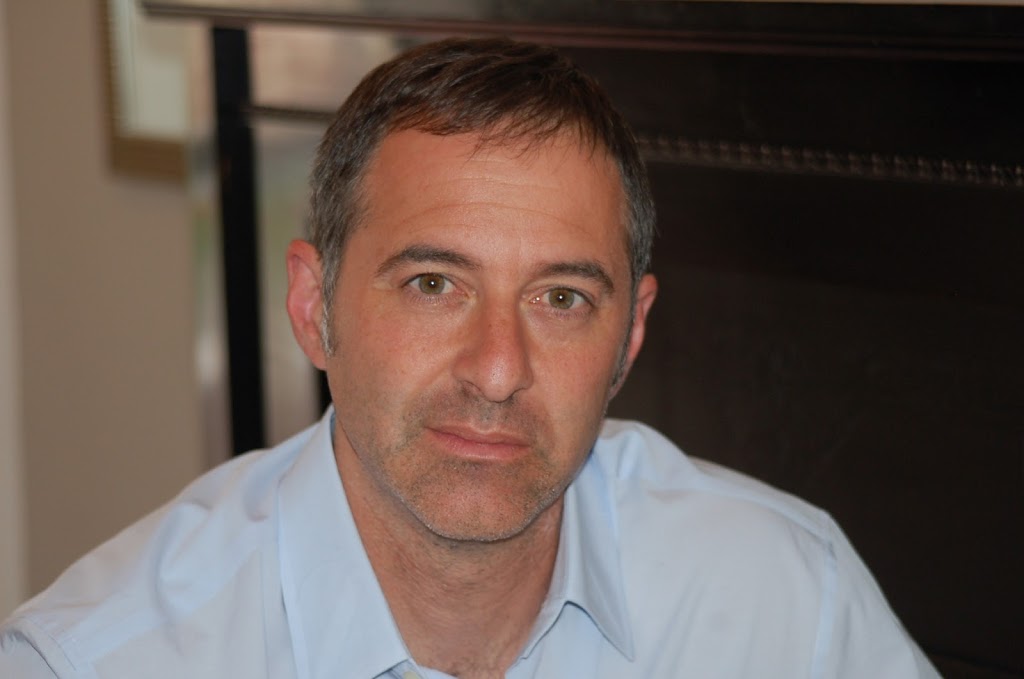
by Matt Richtel


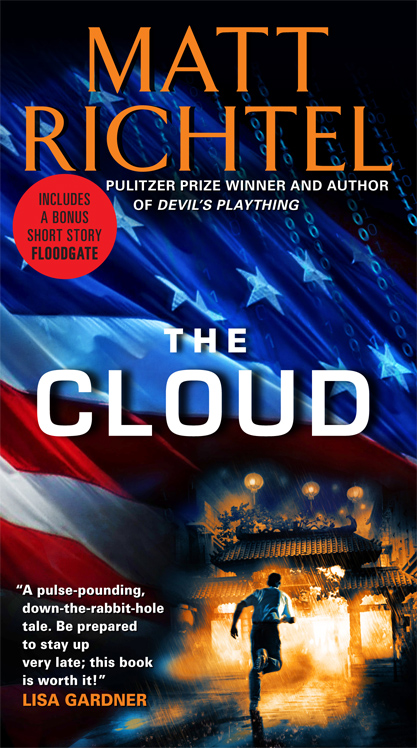
TKZ is once again delighted to host Pulitzer prize-winning author Matt Richtel. His latest release, THE CLOUD, just hit bookstores, and I can personally highly recommend it!
This true story ends with me sobbing. In public.

The story starts five weeks ago, on a Monday night, with a text. I was amid an exciting time, working on a front-page story for the New York Times (my day job) about a controversial new twist involving computers and schools, and I was preparing for the Jan. 29 release of my new thriller, The Cloud. 

The text came at 8.06 p.m. It read:  “Call me.”

The text was from Adam, a good friend of mine and editor at The New York Times. About a year earlier Adam had been put in charge of a group of eight, mostly veteran reporters, including me. The group was called “How We Live,” and its charge was to make a journalistic beat of the way people live their lives; how we eat, sleep, learn, fight, procreate, and how we die.

We were supposed to be a new generation of newspaper story tellers – part of an overall move in the newsroom to infuse stories with narrative, voice, and character. The days of authoritative top-down explanations in the New York Times were increasingly giving way to showing and not telling, and sophisticated story telling, appealing to heart not just head.

We were responding to the need to capture and keep reader attention amid the white digital noise of an Angry Bird world.

In response to Adam’s text, I called him. Before I tell you the shocking news he told me, please indulge some additional, necessary, backstory. 

Over the last year, my fiction career was also evolving to suit the digital world. Like many thriller-writing peers. I was writing more and more, adding to the already heavy book-a-year-load.

In August, I published a short story, Floodgate, 15,000 words I hadn’t anticipated writing, aimed at staying in touch with an audience feeding from the all-you-can-tweet-buffet.

And I took hard to Facebook, something initiated as a marketing tactic, but that transformed also into a usually welcome labor, in which I write stuff my toddlers say (funnier than I could ever make up) and occasionally quip about story telling. 

I amassed some 20,000 Facebook subscribers on my personal page. And several thousand likes on my fan page. We got nice press for Floodgate. Apparent success on all fronts.

The New York Times stuff seemed to be working out too. The How We Live team killed it. Something like 35 front-page stories and 90 stories for the front of our feature sections, like Dining, Home, Travel. We generated a ton of traffic. We were a hit. 

Then, fast forward to five weeks ago, I got the text. From Adam, on the Monday night. “Call me.” I called. In a nutshell, he explained, the paper was disbanding the How We Live group. And not just that; the paper was doing a whole bunch of shifting, all over the place. Voluntary buyouts, long-time editors and friends leaving, reorganization.

Why? Stating the obvious: because the paper’s news gathering operation – the news gathering and storytelling operation – cost too much. It was built in a different era, when our costs were supported by print advertising. Remember that old thing?

I’m no stranger to the ups and downs of the changing media landscape. I started and worked my way up from small newspapers, starting in 1990, at which I survived probably half a dozen rounds of layoffs. I know not to let macro-economic forces get me down.

But after I talked to Adam, I went into a tailspin. One that had been a year in the making, at least.

All this hard work. All this adaptation. So much terrible uncertainty. Part of what I experiencing, I am adult enough to know, was the personal uncertainty of the reality I’d need to find a new job inside the paper (I have), and that I was poised to have The Cloud come out (it did, two weeks ago). That meant marketing, travel, speaking, radio, and the subterranean terror that accompanies a book release: will only my family buy it?

But there was something much bigger for me too. I was confronting, squarely, for the first time, the reality that we don’t know what works. We.Do.Not.Know.What.Works.

What has value? How much value? Will we have mere chaos, only chaos, since Jack Dorsey, of Twitter, wrote his infamous missive:  “…we came across the word ‘twitter’, and it was just perfect. The definition was ‘a short burst of inconsequential information,’ and ‘chirps from birds’. And that’s exactly what the product was.”

Inconsequential? Only if you’re not competing against it to pay the bills, and satisfy your muse.


My sleep deteriorated. I experienced a very unusual level of anxiety. I couldn’t write. I was a rotten dad. For two weeks, I felt like crud. I couldn’t find steady ground.  

Then on a Monday, two weeks after the text, I took myself on a Monday afternoon to see Lincoln. No sooner had the opening music began to swell then I had tears in my eyes. They stayed there, persistently, throughout. And by the time a bereft Sally Fields dropped to her knees during a particularly emotional scene with Daniel Day Lewis, I began sobbing. Just lost it.

I was a mess the rest of the movie.

When I walked out, it was the best I’d felt in weeks. Cleansed.

And it’s when I finally understood the thing that had been eluding me for weeks, maybe for much longer. I finally understood the value of The Story. And of storytelling. And of its place in the digital world.

I’ll tell you first my conclusion, and then explain.

My conclusion: The bad story and story teller has little value, or, at best, ephemeral value; so too the mediocre story and storyteller, and even the merely good ones.

The great story and story teller is more valuable than they have ever been.

They are a port in the storm. A place to pause and heal from all the white noise the world throws at us, a tiny closet to cower inside and rest from the swirl of inconsequential missives.

And, more than that, great stories are the place where we will change the world. In Lincoln, Tony Kushner and Steven Spielberg, two of the greatest story tellers of our age team up to make a movie that is, perhaps above all, an homage to storytelling. They teach us that Lincoln used story-telling, narrative, anecdote, quip and emotion, to deliver the United States from slavery. 

I know this doesn’t answer the business-model question. That’s the one that plagues us, still. Will the New York Times face bigger challenges? Yes? Will The Cloud take flight? Not as it might have when the institutions of publishing had more power (It is my most ambitious and mature and entertaining work to date).

But it’s not the business model question I needed an answer to. It was the emotional one, the real one. And I got that answer sitting in a movie theater, sobbing. 

Fellow story tellers, take seriously your duty. The world seeks deliverance. You hold its key.

FREE on Kindle

Today is my first venture with the Kindle Select Program wherein a book goes free to the public.WarriorRogue_w7578_300
Wild Rose Press, who publishes my romance novels, decided to enter their new titles into this program before the official release date. I am really hoping this offer raises awareness of my series.
  
Before we proceed further, please go now and download your free copy. Share this link with everyone you know! Please “Like” the page while you are there.

Warrior Rogue (The Drift Lords Series) by Nancy J. Cohen is FREE on Kindle Feb. 13-17. http://www.amazon.com/Warrior-Rogue-Drift-Series-ebook/dp/B00AU62NQS/.

I’m also running a Valentine’s Day contest in conjunction with the free giveaway. Click on the Contest tab here: https://www.facebook.com/pages/Nancy-J-Cohen/112101588804907 and remember to Like the page while you are there.

What have I learned from this experience? It takes a tremendous amount of time away from writing to put up a free book. Why? Because you have to publicize it all over the Net. How do you do this? Here are some sites that will help:

http://digitalbooktoday.com/maximize-your-kdp-select-free-days/
http://indiereviewtracker.com/making-your-e-book-free/
http://www.rachelleayala.com/p/promo-sites.htmlhttp://www.thekindlebookreview.net/author-resources/
http://writeonthewater.com/?p=11162

From helpful sites such as these and from posts by other authors, I’ve gathered two pages of places to notify about an upcoming or current free release. Twitter and Facebook accounts have to be notified on the day of the freebie, but a bunch of other ones expect advance notice. So I’ve been busy filling out these forms.
Here is a list of tips, in no particular order, on what to do before your book goes free.

  • Make a list of promotional sites that will announce your free book.
  • Notify the sites that require advance notice.
  • Decide if you want to pay for ads at any of these sites.
  • Get your book reviewed. Some of the sites will only take your title if you’ve had XX number of reviews with a rating of 4.0 or higher.
  • Schedule a blog to run on the first free day to announce your freebie offer.
  • Prepare a sheet of tweets with hashtags and Facebook posts in advance.
  • Schedule tweets ahead of time to run throughout the day of your freebie.
  • Send a newsletter to your mailing lists with your free book announcement.

What else would you add?

What to Expect When You’re Expecting…to Be Published

by Boyd Morrison

If you’ve just gotten an offer for publication of your debut novel, congratulations! Keep the celebration short, though, because you’ve got a lot of work to do ahead of its release. Before I got that magic phone call, I didn’t realize how much an author has to do in preparation for a book launch. It’s no longer a hobby; it’s now a job. So here’s a compact primer on the responsibilities you’ll have during the gestation and birthing of a published book.


1)   Sign the contract. At this point, you will usually receive one-third of your negotiated advance (sometimes a fourth portion of the advance is retained until paperback publication of a hardcover release).

2)   Deliver the manuscript to your editor.

3)   Receive notes from your editor. These can come as comments in the document, a summary letter of notes, or both.

4)   Revise, revise, revise.

5)   Deliver revision to editor. Continue steps 3-5 until revisions are complete.

6)   Editor officially accepts the delivered manuscript! You get the second third of your advance.

7)   Receive the copyedits. The copyeditor is a different person from your editor, who comments on story issues. The copyeditor comments about typos, grammatical errors, repeated words, inconsistencies (name changes, timing issues, etc.), and typesetting notes (italics, bolding, etc.).

8)   Copyedits are also called galleys. The cover of a galley is typewritten with the title and your name. You suggest other authors to send these galleys to for possible blurbs. I often get blurb requests that require me to read the book in two weeks, which is usually impossible for me to do because of other commitments. You want to give authors at least 2-3 months to read it, and even then it’s very possible they won’t have time because of other galleys on deck for blurbs or deadline issues.

9)   Go through all the copyedits and either accept each change, modify it, or write “stet,” which means you want it the way it is.

10) Send the approved copyedits back to your publisher.

11) Approve the cover. Most authors have no say in the cover art, so the publisher usually sends it and says, “Isn’t it great!” But some authors get consultation so you can at least raise concerns if you find something objectionable. However, the final decision is with the publisher.

12) Write the book jacket and back cover summary.

13) Write your author bio for the book jacket.

14) If you don’t yet have a professional-quality author photo, get one.

15) Receive the proof. This is what the book will actually look like in print.

16) Proofread the book. This process is called proofing.” Sometimes you will get a second proof to read.

17) Send proof back. A part of you hopes you never have to read this novel again.

18) Once you approve the final proof, it goes to the printer. No more changes can be made unless they’re incorporated into a future edition.

19) Ooh and aah over any ARCs (advance reader copies) that are sent to you. ARCs look like the final book with the actual cover, except it is in paperback instead of hardcover. ARCs are typically sent to reviewers and bookstores to generate reviews and excitement about the book.

20) Approve or write publicity releases. These will be sent out with the ARCs or to news outlets to create buzz about a book.

21) Approve or write marketing materials. These will be used for advertisements, catalog inserts, or in-store promos.

22) Approve or write website materials. These can be for your own website or the publisher’s website and can consist of your process for creating the book, extensive Q&A sessions, or book club guidelines.

23) The book hits stores! You get the final third of your advance. But you’re not done…

24) Write blog posts to promote the book. This can be done as part of a blog tour, where you visit a new blog every day for a few weeks.

25) Keep Twitter and Facebook followers engaged and informed about the release.

26) Double-check all of the online booksellers where your book is listed to make sure there aren’t any errors (this has happened to me many times—e.g., bookcovers that were the wrong version, inaccurate descriptions, broken links).

27) Respond to written interviews. An interviewer gets to email you 5-10 short questions, and then you have to write all the (sometimes lengthy) answers the way you want them to appear because they will be published verbatim.

28) If you or your publisher has put a good effort into publicity, you’ll need to do phone or in-person interviews with radio and TV stations.

29) Even if you only visit bookstores in your own town, you’ll be doing some booksignings. This can also involve traveling to multiple cities. You may be booked to appear at writers’ conferences, fan conventions, or bookfests. You’ll need to come up with some sort of presentation for all of these—sometimes you’re just on a panel and other times you might be the only one talking to a roomful of readers.

30) Obsess over your Amazon ranking and reviews. You know you shouldn’t, but it’s almost impossible to ignore them.

31) By the way, while all of the preceding is going on, you need to write your next book. Have fun with your new job!

How to Work on More Than One Book at a Time

The most critical thing a writer does is produce. — Robert B. Parker
When I started writing seriously, after ten years of believing the Big Lie that you can’t learn to write fiction, I decided I had no time to waste. I wanted to be prolific. So I set out to work. Looking back at 20 years of getting paid for what I write, I see three practices that have helped me more than anything.
First, a quota. I’ve always written to a quota and that, IMO, is the most important thing a writer can put into practice.
Second, I systematically and consistently studied the craft. I read novels with intention, examining author technique. I subscribed to Writer’s Digest, went to conferences, devoured books on writing and practiced what I learned.
Third, I always worked on more than one project at a time. That’s what I want to talk about today.
No publishing house or agent is looking for one good book. They are looking for authors who can keep on writing them. Which is why it pains me when I see the same faces at writer’s conferences who are still working on the same projects, year after year.
I am always telling writers who show me their first finished manuscript, “That’s great! Congratulations. You learn a tremendous amount finishing a novel. Now get to work on the next one. And the one after that.”
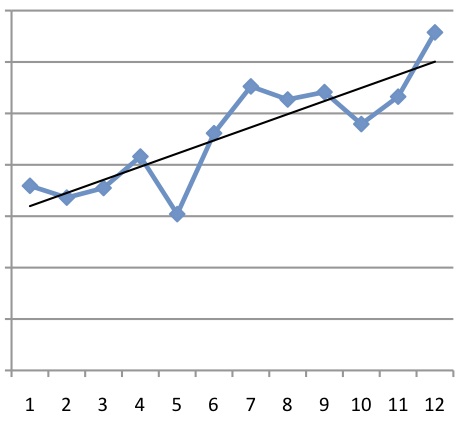
This is especially important in the new era of self-publishing. The winning indie formula is quality production over time. You want a trend line that looks like this:

Upward direction is a function of producing new work, the best you can do, in various forms (short stories, novellas, novels, non-fiction). So work on more than one project at a time.
My method is to think of myself as a mini-studio. I always have a main project (my work-in-progress, or WIP). I have several projects “in development.” That means I’ve started making notes on character and plot, and perhaps a preliminary story board (I use Scrivener’s index card view for this). Projects in development go into a file I call “Front Burner.”
Then I have a file of hundreds of ideas I’ve collected over the years. Usually one or two lines. Sometimes just a title. I scan these ideas from time to time, looking for the ones that catch my fancy and, if they do, I make a few more notes. If I start to like something, I move it to the Front Burner.
As far as the writing itself goes, my first priority each day is to my WIP. I want to meet my word quota on that project. Part of my day will usually be spent editing a finished work. To do this, I print out a hard copy. I still like to be able to cross out and write notes on paper.
Another portion of my day will be spent on a Front Burner project. I prioritize these. I want to concentrate on the ones that meet this formula:
Desire to Write + Commercial Potential
Somewhere in the intersection of those two things is the project I “green light” for writing in full. I lean heavily on the desire line, because I believe you write best what you’re passionate about. For example, I love writing my Jimmy Gallagher boxing stories. They only make me Starbucks money, but I write them because I want to. Eventually there will be enough for a collection. I write the Sister J vigilante nun series because the concept was too good to pass up. (Note: I’ll have Force of Habit 2: And Then There Were Nuns out later this month. And a new Jimmy Gallagher next month). 
Now, I realize time is an issue for many writers. There’s the day job, the family, the remodel, the PTA. But that doesn’t mean a writer cannot put into practice a personal plan for prolificity (like all those p words? That was fun to write, but there’s no money in it). Here is what I suggest:
1. Figure out how many words you can comfortably write per week. Up that by 10%. Make that your writing quota.
2. Keep a notebook (or electronic equivalent) with you, and train yourself to think “What if?” all the time. Write down lots and lots of ideas in this notebook. The key to creativity is to take in a ton of ideas without judgment, and only later choose the best ones.
3. Spend a few hours each month looking at your idea file and expanding the ones you really like into a few paragraphs.
4. Try this: write like mad on your WIP. Take a break. Then write like mad on another project. Go back and forth.
5. Finish your novel. If you’d like some help with it, I will soon be offering you a way to do that. Check here for more information.
6. Revise your novel. At the same time:
7. Get to work on your next novel (or novella or story).
8. Never stop.
A plan like this, consistently followed, will please and amaze you. And you will be a real writer, one who produces words. That’s the main ticket in this game. Everything else is secondary.

What about you? Do you have some sort of system you follow for consistent productivity? How do you choose what projects to write? 
* * *

My new thriller DON’T LEAVE ME is available here: