About Joe Moore

#1 Amazon and international bestselling author. Co-president emeritus, International Thriller Writers.

Who Is Reading What

Who Is Reading What

It seems as if I’ve spent the last two weeks doing nothing but driving. That of course isn’t entirely true but for various reasons I’ve had to make two or three round trips into downtown each day for the last fortnight, and while it has been interesting in some ways it has been mind-numbingly boring in others. I don’t have any witty advice (even of the half variety) wry observations, or heartfelt descriptions, sappy or otherwise, of what has occurred recently, at least that I care to recount right now. Maybe next time.

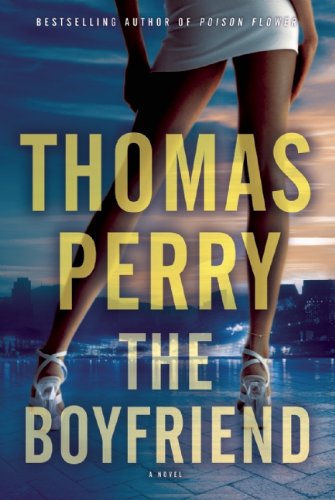
So…I thought I would just cut to the chase and ask a question: what book are you currently reading? I’ll go first. I am reading two books, actually. One is THE BOYFRIEND by Thomas Perry. It may be his best work so far. It concerns a private investigator in pursuit of a man who is killing high-priced escorts of a certain type, though never more than one in any specific city. The other is an extremely sure-footed debut novel by Becky Masterman and which is titled RAGE AGAINST THE DYING. It is narrated by its protagonist, a fifty-nine year old ex- FBI agent named Brigid Quinn. The book will go on sale on March 12; read the first sentence in the book and you will want to read the rest. That first sentence does everything it is supposed to do and more: it draws you in, makes you curious, scares the hell out of you and leads to even better things.

That’s me. My wife is reading ONE DAY AT A TIME by Danielle Steel and  listening to another Steel book. MISERY by Stephen King is being read in fits and starts by my younger daughter (how in heaven’s name do you read MISERY in fits and starts? I read it once a year on a day which I set aside for that express purpose). My older son, for his part, is juggling a couple of John Sandford’s Lucas Davenport novels, as he works his way through the canon with the kind and occasional permission of my six year-old granddaughter, who in turn is reading an issue of Highlights for Children.

And you? And yours?

Reader Friday: Under Appreciated Books?

Recently, Publishers Weekly put put out a list of books you read in high school that you should read again. One of them was The Great Gatsby, which I did re-read recently. While I admire the writing, the book itself just doesn’t grab me. I would replace this book in the American canon with an under appreciated classic, The Maltese Falcon by Dashiell Hammett.


Today’s question: What under appreciated book would you like to see high schoolers reading today? 

Writer’s Block Rx

by Michelle Gagnon

Recently, since NPR seems to be running an interminable series on African leaf cutter ants, I’ve devoted much of my commute to listening to podcasts instead. And thanks to a tip from a friend, I’ve become hooked on one that’s absolutely genius, and perfect for writers and/or fans of the craft (or anyone, really): The Downey Files. Created by the Chris Downey, former writer and producer for the TV shows The King of Queens and Leverage, the description says it all:

“Welcome to ‘The Downey Files,’ a brand new weekly podcast that explores the half baked pitches and movie ideas Chris has scribbled down on beer coasters and cocktails napkins through the years. Each week, Chris sits down with a new guest to hash out these ideas in full and, you guessed it, hilarity ensues.”

My favorite episode is “The Weekend,” where Downey and Kirk J. Rudell hash out the plot of a father/daughter heist film in just under an hour. And you know what? By the end, they‘ve pitched a movie that I’d pay $10 to go see. Listening to them spitball ideas back and forth, it struck me that as novelists, a format like this could prove invaluable. After all, virtually every television show has a room full of talented writers collaborating on each episode; even for films, frequently outside writers are brought in to “punch up” a script.

Yet we novelists sit there all by our lonesome, trying to muddle out plotlines without little or no outside assistance. How many times have I prowled back and forth between my office and the refrigerator, trying to figure out how to rescue “X” from peril in a wholly original way? I’m frequently downright desperate for a fresh pair of eyes, and there are only so many times you can hit up family and friends.

Imagine that the next time you’re hopelessly stuck on a plot point, you were suddenly given the opportunity to throw half a dozen people at the problem, with everyone brainstorming a solution together. I’m convinced that if there was a team available to push me through the inevitable ruts in the road, I could probably shave a month off the time it takes to write each novel. And with all that newfound spare time, perhaps I could help other writers surmount their blocks. And so on.

This might be a pipe dream-I’m just spitballing here myself, after all. But I think there’s something to this idea. Maybe we could form a “Writer’s Block Helpline,” or start a listserv. I’m open to any and all suggestions- and if you get a chance, check out the Downey podcasts. You won’t regret it.

An Excess of Books

Nancy J. Cohen

What do you do when you have too many books in your house, and you can’t possibly read them all? Give away the print books and switch to Ebooks? That’s one solution. I prefer to be selective about the print books and combine my reading of paper copies with my Kindle reads.

Recently I had the occasion to sort through two cartons of books sitting on my dining room floor since who knows when. They contained an assortment of books obtained from conferences and booksignings. This examination became necessary when our recent ceiling remodeling had us moving loose items of furniture from the room, and we noticed flying insects along with coffee grounds material against one wall. And—uh,oh—they were in the boxes of books as well. My bookshelves are overflowing; I had no choice except to box up the surplus.

I reverently removed each book, dusted it off, shook out the pages, and stacked them on top of my washer in the laundry room. Noting the dust on the open bins in which I’d kept them, I resolved to obtain some sealed plastic containers from Target. But first, I really should decide which books to keep.

After making an appointment with the termite inspector, I proceeded to weed through the dozens of books. I made a pile out of the ones I knew I’d never read, the ones whose pages were yellowing, and the ones that only mildly appealed to me. The remainders I put into those plastic containers I’d just bought for that purpose. Hopefully these closed bins would not allow insects to penetrate even though it might not be ideal for preservation.

So what to do with the giveaways? These are not books I’d written, mind you. Those are in cartons as well and need a thorough inspection. But these discards deserve just as much respect. So here are the choices in giving away print books:

1. Donate them to the local library for their book sale.
2. Trade them in at a used bookstore and get some hard to find backlist titles in return.
3. Give them to a booklover who will enjoy them.
4. Bring them to an assisted living facility or other needy place that will accept them.
5. Donate them to the library in your housing community building which could be similar to the master planned community Epperson, if there is one. If not, you could possibly start a library there with permission.
6. Offer a couple of dozen each as a contest prize (but only the newer books). I got this idea from another writer who does a Rafflecopter contest for her gently used books.
7. One of my FB friends suggested setting up a Sidewalk Lending Library. Maybe she has nothing else to do, but I’d rather just donate the books to the community center and set one up there. Plus you might need a vendor license for this option.

Do you have any further suggestions? And no, a bonfire is not an acceptable option. Where do you store your excess TBR print books if not on your shelves?

Is social media developing a personality disorder?

Like most people, I spend a lot of time online. Facebook, Twitter, LinkedIn–you name an Internet watering hole, and it’s likely that its  Login barkeep knows my name.
But recently my love affair with social media has turned sour.

It started when my Twitter account started texting my cell phone. Suddenly my inbox got flooded with messages. Hundreds of them, from people I didn’t know. All the messages were written in Portuguese. A bit of sleuthing revealed that my account had been hacked. After spending an hour deleting the reams of messages that had collected over two days, I changed my password. And voila! I immediately lost my fan base of piratas eletrônicos.

Then came a new wave of messages, purportedly from people I do know. These missives were mildly unpleasant. They said intriguing things like, “Oh my God, this person is saying horrible things about you online.”  They included a link for me to click. Somehow I knew that if I clicked that link, I’d be the next person in line sending news of horrible rumors to all my contacts. Against huge temptation, I resisted clicking the links. (If you really want to read horrible things about me online, just check out my 1-star Amazon reviews).

I
t’s not just Twitter that’s gone wacky. Every day comes fresh news of some kind of Facebook privacy or hacking scare. Every so often I read desperate-sounding messages from friends, in which they disclaim some bizarre message that had been sent in their names. Yesterday someone sent out a dark warning that hackers were posting pornographic pictures on my timeline. The catch: I can’t see the pictures, but everyone else can. (That one turned out to be a hoax.)

And then there’s LinkedIn. I don’t use LinkedIn much, but one day I made a minor change to my profile. Somehow that simple update auto-triggered a “connection request” to be sent out to everyone in my contact book. Those contacts included a couple of ex-boyfriends who, trust me, I don’t want to be linked to again.

So what’s happening with these social media sites? My relationship with them has gone from fun to semi-fearful. It feels like I’ve been dating  a guy who seemed charming and easygoing at first, only to discover that he’s a passive-aggressive control freak with a secret cyberporn habit.

I have a theory about the whole thing. I think social media sites change their character when they go public. Once the bean counters start trying to figure out ways to wring money from their user base, a la Facebook and LinkedIn, the whole experience goes cockeyed. You have to start triple-guarding your privacy from that moment on. 

And let’s talk about hackers for a second. What kind of pathetic, loser soul spends his time thinking up ways to randomly annoy strangers? Is this some kind of new mental illness going around?  Or simply the revelation of one?

Whenever I get exasperated by this kind of silliness, it’s always nice to come back here to TKZ. Our little plot of cybersphere is actually a community. We all are trying for the same thing–to improve our writing–without ulterior motive. (Well, except for occasional BSP–Blatant Self Promotion–when we have a new book out.) 

So thank you, my fellow TKZ’ers, for being here. And tell me, have you noticed that the social media world is getting scarier? Have you had any experience being hacked or hoaxed?


Embracing the Risk Inherent

–>

When I was in the sixth grade, I desperately wanted the role of the lisping Winthrop in my school’s production of The Music Man. I can’t explain now why I had that inner urge (I’m not sure I had even seen a play before then), but perhaps it was because I shared Winthrop’s shy, self-conscious demeanor and saw myself in his struggle to come out of his shell. I auditioned and got my first taste of rejection. I didn’t even get cast in the chorus. I can still remember the hollow pit in my stomach as I watched the musical, unable to enjoy it the way my fellow audience members did.

It was a whole year before I had the opportunity to audition again, this time for Anna’s son Louis in The King and I. It was a nerve-wracking experience, but I got the part, and the experience on stage was everything I’d imagined it to be. I’ve been in love with acting ever since.

Today, I still act, but I’ve raised the stakes to a level I couldn’t have comprehended when I was that seventh-grader. I’ve just moved to Los Angeles to explore the Hollywood acting business. It’s only temporary, but it means uprooting myself from my wife, who has been incredibly supportive of this venture. I’m also away from the comforts of home, although the discomfort is as minimal as can be because I’m living in my sister’s home and I’m able to continue my writing while I’m here.

Everything I just mentioned involved risk. Of course, it’s not risk in the sense we normally think of it. My life was never in danger; I didn’t fear bodily harm. But a devastated psyche can be even more painful and difficult to recover from. As soon as I auditioned for the first time, I was risking rejection, being told I wasn’t good enough, or at least not as good as the actor who got the role. To get the part of Louis, I had to put myself at risk again.

We constantly face risks. Should I risk leaving the steady job I have now to take a new job offer? Should I ask the cute girl out on a date and risk getting snubbed? Should I get up on stage and risk making a fool of myself? But if I don’t take the new job, I’m at risk of missing a golden opportunity. If I don’t ask the cute girl out, I risk not being with the eventual love of my life. If I don’t go on stage, I risk not exploring a new side of me that will make me more fulfilled.

Being a writer is rife with risk. We face rejection on a constant basis from agents, publishers, critics, and readers. We might spend a year of our lives on a project that ends up being a dismal failure. We may fall on our faces in a very public setting, with Amazon reviews broadcasting the results. If I failed in my old jobs, only my immediate co-workers would know it; now my work is out there for the world to see.

Achieving anything worthwhile requires risk. It means leaving the comfort of the familiar, facing the terror of being judged a failure, and embracing the change, come what may.

Stupid risks don’t count. Don’t mortgage your house to buy lottery tickets. It’s the smart risks that are worth taking. Prepare for the risk by doing your homework. Make it a calculated risk by weighing the pros and cons of each alternative. Minimize the risk by setting realistic goals that you have control over: you can deliver a novel by a certain date at your standard of quality, but you can’t control whether it will be a NY Times bestseller.

I’ve never regretted the risks I’ve taken in my career. Not all of them worked out the way I had hoped, yet I’ve always learned something from them. But of one thing I’m sure: I wouldn’t be a working writer and actor now if I’d accepted the comfort of a risk-free life.

Lessons My Father and Mother Taught Me

James Scott Bell
@jamesscottbell

I was blessed with good parents. They were of the “Greatest Generation,” decent and dedicated to taking care of their family of three boys. When I look at how I’ve lived my life, it’s all been a variation on a theme: I wanted them to be proud of me. 


Even now, with both of them gone, I still think about them when looking at my own behavior.
From my dad I learned these things:
1. Never hit a girl.
2. You have to work hard to get anywhere.
3. Never, ever use the N word (my dad played baseball with Jackie Robinson on the UCLA team).
4. Everybody is entitled to the protections of the United States Constitution, even (nay, especially) those who can’t afford a lawyer.
5. If you make a commitment to someone, keep it.
6. Don’t lie.
From my mom I learned:
1. Don’t be selfish.
2. Don’t drink milk from the carton.
3. Take care of somebody when they’re sick.
4. Stand up for a friend if he’s treated unfairly.
5. Laugh a lot—it helps get you through life.
6. Finish your homework before you watch TV.
If I’ve managed to achieve some measure of success, I really do owe it to my parents. They laid the foundation.
When I started to take writing seriously, I determined that while I may not have the native talent of certain writers (for example, I think Stephen King is a literary and imaginative genius) at least I could work as hard as anyone. And I’ve tried. Thanks, Dad.
I also appreciate the value of a good laugh at strategic times. I write suspense, but I like comedy relief, a la Hitchcock. Reader mail tells me I do pretty well with that. Thanks, Mom.

What about you? What lessons for life would you pass on, and who did you learn them from?

Why We Write

by Mark Alpert

One thing’s for sure: We don’t do it for the money. Yes, it’s possible to make a living from writing fiction, but on average it’s one of the least lucrative professions in the whole economy. And forget about fame or adulation from the masses. Have you seen the nasty book reviews posted on Amazon? It’s open season on novelists there. Even the best authors get trashed.

So why do we write? Because of the book parties, baby. There’s nothing like a good party.

On Wednesday I had the pleasure of hosting the book party for my new thriller Extinction. The venue was The Mysterious Bookshop in Tribeca, one of my favorite stores in NYC. The shop’s owner is renowned author, editor and publisher Otto Penzler, founder of The Mysterious Press and co-author of the Encyclopedia of Mystery and Detection. Best of all, he’s a Michigan grad. His store has wonderfully tall bookcases and movable ladders for reaching the top shelves, and none of the employees seemed to mind when my kids climbed the ladders and started doing midair acrobatics. Well, they probably did mind, but no one told the kids to cut it out.

I signed a ton of books. I love doing that. Who doesn’t want to be the center of attention every once in a while? My only regret was that the party was too short. Over the course of two hours I could manage to say only three or four sentences to each of the friends who came. These are people I’d love to spend more time with, friends from high school and college and my old jobs at Fortune and Scientific American. These are the parents I see at my son’s Little League tournaments and my daughter’s soccer games, folks who are amazed to see me wearing anything but jeans and T-shirts. (“Oh my God, you own a suit?”) If life were longer and easier, I’d see these people all the time. We’d have brunch, we’d go skiing, we’d get on a plane and fly to Barcelona for the weekend. But in the real world, time’s winged chariot is always hurrying near, and I’m way behind on my next novel. I wrote only 700 words yesterday, so I have to write 1,300 today.

The best part of the event, by far, was my wife’s speech. The spouses of writers have to absorb a lot of bitterness — who else are you going to complain to when things go wrong? — so it’s only fair to give them most of the credit when things go well. And she made an excellent point in her brief remarks: book parties are especially important for authors because writing is such a solitary activity. We have to spend so much time with our fictional characters, talking with them and moving them around like chess pieces and inventing quirks and flaws and back stories for them. And sometimes we even fall in love with them. But it’s also nice to hang out with real people for a change.

What My Cat Has Taught Me About Writing

By Jordan Dane
@JordanDane


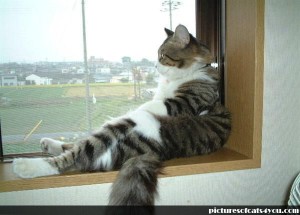
I’m convinced cats are noble beings reincarnated into a beautiful and graceful creature with four legs and plenty of attitude. No one owns a cat. They allow you to live with them. They tolerate you. Their fierce independence is one of my favorite qualities of theirs. At the mere drop of a string, they are ready to play. And when they are happy, their purr sounds like a fine-tuned engine.
 
Here are TEN things I learned from my cat(s) about writing:


    1.) Be suspicious of every character you meet, even the ones you live with. That keeps the tension going and readers won’t know who they can trust either.       

    2.) Suspense is all about anticipation of something bad about to happen, like when my cat stares behind me and makes me turn around. Without even a word, my cat can make me think a serial killer is creeping up on me. How do they do that? I’m still working on adapting that technique for my writing.

    3.) If a scene gags you, think what it will do to the next guy. Cough it up and get rid of it. Some things are meant for the trash. When it’s a pile in front of you, you’ll know it when you see it. Then just walk away. This works in the litter box too.

    4.) A cat knows pace. If there is a back story path that meanders across the top of a sofa or winds around legs in a prodding fashion, that is all well and good, but why not walk OVER people to get where you need to go and take the most direct route?

    5.) Take naps. If you’re prone to writer’s block, a nap can’t hurt. There is nothing like a nap or basking in the sun to rejuvenate your perspective. Cats are specialists in looking out for numero uno. Learn from a master and take heed. Getting stressed out over things you can’t control is a waste of time and a distraction from your writing.

    6.) Be a good observer of your surroundings. Narrow your eyes and really take a look around. Don’t take anything for granted. Everything is interesting when you narrow your eyes. Try it. (People who Botox should avoid this.)

    7.) Look before you leap. If you pay attention, you’ll land on your feet with style and grace.

    8.) Be flexible. It feels good to S-T-R-E-T-C-H yourself.

    9.) Curiosity never killed anything.

    10.) Climb your way to the top. Be fearless and maybe even cop an attitude. You can’t reach your dream if you think small and stay safe. Dare to take risks and have an adventure.  

    I’d love to hear your cat stories. I have two rescue cats – Pinot Grigio (yes, we named him when we were looking at a wine menu) and Foochie Focker (don’t ask).

    What has your cat taught you?

    Indigo Awakening by Jordan Dane voted the winner of “Best of 2012” Paranormal Category by BookTwirps